
Cat Advice

Cat Fencing UK: The Ultimate Guide to Safe Garden Containment

Cat Fencing UK: The Ultimate Guide to Safe Garden Containment

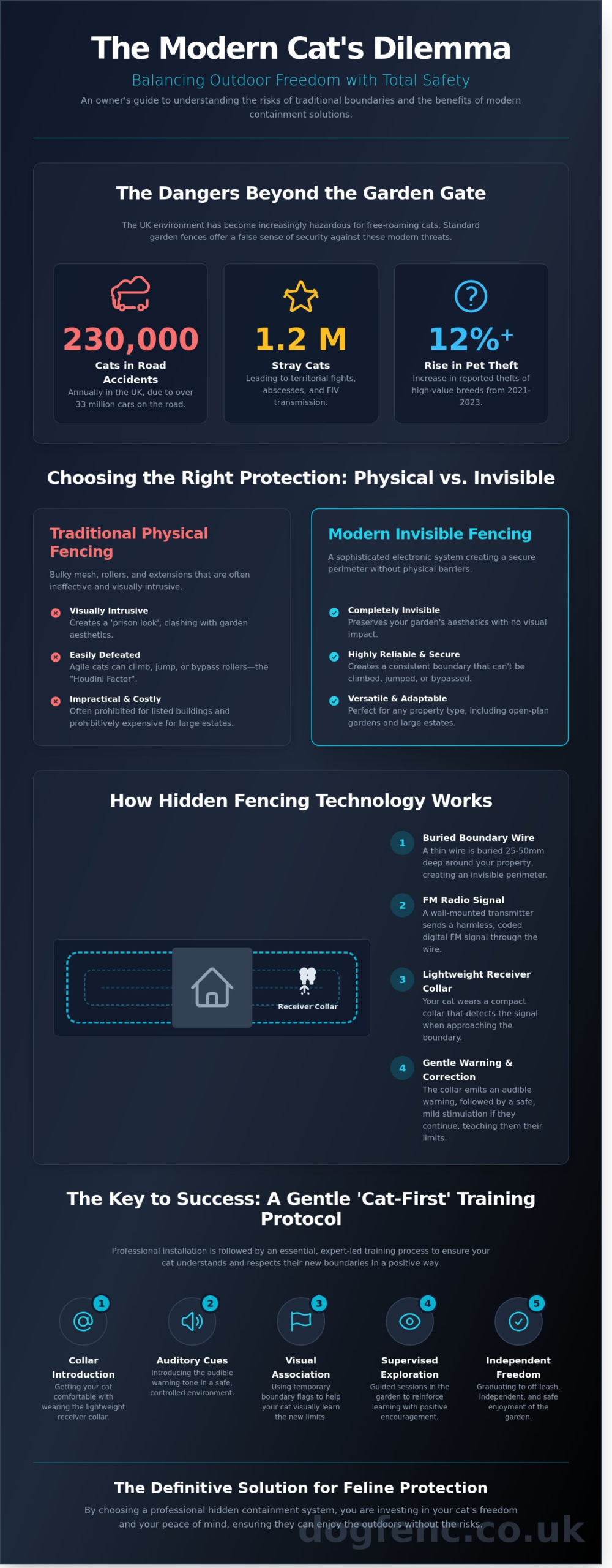
When Sarah’s adventurous ginger tom, Leo, failed to return to his Surrey home for the third night in October 2023, the familiar dread of local traffic and potential theft became an unbearable reality. You likely share this deep-seated worry, knowing that while the outdoors offers vital stimulation, the risks beyond your garden gate are significant. Traditional solutions often involve unsightly mesh or bulky physical barriers that turn a beautiful lawn into something resembling a high-security compound. However, modern cat fencing has evolved to provide a sophisticated, invisible alternative that respects both your pet’s curiosity and your garden’s design.

We understand that your cat’s happiness is tied to their freedom, yet your own peace of mind depends on their safety. It’s a difficult balance to strike, especially when 230,000 cats are involved in road accidents across the UK each year according to recent veterinary data. This guide will show you how to provide your cat with complete outdoor liberty while ensuring they stay within safe bounds. We’ll explore the mechanics of hidden containment systems, the professional installation process, and why choosing an aesthetic solution doesn’t mean compromising on security.

Key Takeaways

  • Understand why standard garden boundaries often fail and how to balance your cat’s natural desire for exploration with total safety from local roads.
  • Discover how advanced hidden cat fencing utilises FM radio signals to create a secure, invisible perimeter without compromising your garden’s aesthetics.
  • Compare the reliability and visual impact of physical mesh overhangs against professional electronic systems to find the perfect fit for your home.
  • Learn about the essential five-step training protocol that ensures your pet understands their boundaries through a gentle, expert-led approach.
  • Gain peace of mind by exploring why professional installation and long-standing expertise are the definitive solutions for feline protection and outdoor freedom.

The Dilemma of Outdoor Freedom: Why Traditional Cat Fencing Often Fails

For many of the 11 million cats currently living in the UK, the garden represents a vital sensory playground. Access to the outdoors provides essential mental stimulation and exercise that indoor environments often struggle to replicate. It allows your pet to engage in natural behaviours like stalking, climbing, and exploring. However, providing this freedom safely has become increasingly difficult. The traditional garden boundary, usually a standard 1.8-metre timber fence, often provides a false sense of security for owners while failing to keep a determined feline contained.

Standard wooden fences are little more than a ladder for an agile cat. Felines possess a remarkable vertical leap, often reaching heights up to five times their own body length in a single bound. The textured surface of timber provides the perfect grip for their claws, allowing them to scale the structure in seconds. Once they reach the top, your pet is exposed to the modern UK environment, which has become significantly more hazardous over the last 20 years. Department for Transport figures show there are now over 33 million cars on UK roads, and it’s estimated that 230,000 cats are involved in road traffic accidents annually.

Beyond the danger of traffic, roaming cats face territorial disputes with some of the 1.2 million stray cats estimated to be living across the country. These encounters often lead to expensive vet bills for abscesses and the risk of feline immunodeficiency virus (FIV). There’s also the growing concern of pet theft; reports of high-value breeds being stolen increased by 12% between 2021 and 2023. While many owners recognise these risks, they reject traditional cat fencing solutions because of the “prison look.” Bulky mesh extensions and sagging netting can turn a beautifully landscaped garden into an eyesore, clashing with the aesthetic of a well-kept home.

This is why many families are moving away from physical barriers in favour of professional electronic pet containment systems. These solutions offer a sophisticated way to balance feline freedom with the peace of mind that comes from knowing your pet is safe within your property boundaries. They provide a “hidden” layer of protection that doesn’t compromise the view or the architecture of your home.

The ‘Houdini’ Factor in Feline Behaviour

Cats are biological marvels designed for escape. Their curiosity is driven by a deep-seated instinct to patrol a territory that can span up to 2.5 hectares for a neutered male. While many owners install cat fencing rollers, these often fail against a clever jumper. A cat can learn to time their leap to bypass the spinning mechanism or simply use a nearby shed or tree as a launchpad. They don’t just see a fence; they see a puzzle to be solved.

When Physical Barriers Aren’t an Option

For the owners of the 400,000 listed buildings in England, installing high-security mesh is often legally prohibited by conservation rules. Properties with open-plan front gardens or shared driveways also make traditional fencing impossible to implement. On large country estates, the cost of fencing a three-acre perimeter can easily exceed £15,000. In these specific scenarios, a physical barrier is neither a practical nor a cost-effective way to ensure your cat’s safety.

How Hidden Cat Fencing Works: The Technology Behind the ‘Invisible’ Boundary

A hidden wire system provides a sophisticated alternative to traditional cat fencing by using coded digital FM radio signals to create a secure, invisible perimeter. Unlike physical barriers that can be climbed or dug under, this system works through a hidden boundary wire typically buried 25mm to 50mm below the surface. This wire carries a low-frequency signal from a wall-mounted transmitter, creating a consistent safety zone around your property without altering its aesthetic appeal. It isn’t just a simple wire; it’s a dedicated communication network designed for pet security.

At the heart of this protection is the CatWatch Receiver collar, a compact device that communicates directly with the boundary wire. When your cat approaches the edge of the safe zone, the receiver detects the signal and issues a warning. If they continue, it delivers a gentle but persuasive correction tailored to their specific temperament. When considering the welfare implications of containment, these professional systems allow for essential outdoor access while mitigating the risks of busy roads and local predators. If you are unsure which layout suits your garden, you can speak with a professional advisor for a bespoke plan.

Every garden has unique challenges, from delicate flowerbeds to koi ponds. The technology allows for highly customisable boundary zones, meaning you can protect the entire garden perimeter or create “off-limits” areas within the garden itself. This flexibility ensures your cat enjoys the freedom of the lawn while staying away from high-traffic driveways or expensive landscaping, all without the need for unsightly mesh or plastic netting.

The Science of FM Radio Containment

Digital FM signals are vastly superior to the older AM “noise” systems often found in DIY kits. While AM signals are susceptible to interference from household appliances or overhead power lines, FM Safelink technology uses a unique coded frequency. This precision ensures the system only activates when it should, preventing the accidental “fire” corrections that can confuse a pet. The system distinguishes between the cat being “near” the wire (the warning zone) and “at” the wire (the correction zone) with centimetre-level accuracy.

Reliability remains the core focus of the transmitter design. In the event of a power cut, the system stays operational via an internal battery backup that provides up to 48 hours of continuous protection. This ensures the cat fencing remains active even when the mains power fails, maintaining the consistent boundaries your cat relies on for safety. The digital signal is constant, providing a 360-degree shield that doesn’t fluctuate with weather conditions or soil moisture.

The CatWatch Receiver: Designed for Felines

Weighing just 30 grams, the CatWatch Receiver is the smallest and lightest on the market, making it suitable for both delicate Oriental breeds and larger Maine Coons. It features eight adjustable correction levels, allowing owners to fine-tune the intensity to match their cat’s individual sensitivity. This bespoke approach ensures the correction is effective enough to deter wandering but remains humane and safe for even the most timid feline.

Safety features extend beyond simple containment to include an automatic shut-off to prevent over-correction and a “TattleTale” light. This light flashes if your cat has challenged the boundary, giving you insight into their behaviour and indicating if further training or a level adjustment is required. With a battery life typically exceeding 24 months, the receiver provides long-term peace of mind with minimal maintenance, ensuring your pet’s freedom is never compromised by a flat battery.

Invisible vs. Physical Cat Fencing: Which Is Right for Your Garden?

Choosing the right cat fencing often feels like a trade-off between the look of your garden and the safety of your pet. Physical barriers, such as mesh overhangs or rollers, create a visible boundary that can sometimes feel restrictive or unsightly. They require you to alter the height of your walls or add brackets that jut into your garden space. In contrast, an invisible fence for cats uses a buried wire to create a digital boundary, preserving your views and the natural aesthetic of your landscaping. It’s a solution that offers protection without turning your outdoor sanctuary into a caged environment.

Reliability is the primary concern for any protective owner. While a physical fence can be scaled by a determined cat if they find a foothold, a hidden fence uses an FM Safelink digital signal that a cat cannot simply leap over. A University of Lincoln study found that these electronic systems don’t negatively impact a cat’s long-term welfare and are highly effective at keeping them within a designated area. The system provides a consistent 360-degree protection zone that doesn’t rely on the physical integrity of a net or wire mesh, which can develop holes or weak spots over time.

Versatility is where hidden systems truly excel. Physical mesh is difficult to install across gravel driveways or through thick, established hedges without leaving gaps. A hidden wire can be threaded through hedges or buried under paths, ensuring the boundary remains unbroken. Maintenance often catches owners off guard too. Physical netting is prone to weathering, sagging, and trapping debris like autumn leaves. You’ll likely spend several hours each year scrubbing algae off plastic mesh or tightening loose cables. Hidden systems are virtually maintenance-free once installed, as the wire is protected underground or clipped discreetly to existing walls.

Comparing the Costs and Longevity

A basic DIY mesh kit might cost between £350 and £600 for a standard garden, but these materials often degrade under UV exposure within five to seven years. A professional hidden cat fencing system typically requires a higher initial investment, often starting around £1,200 for a full installation including training. However, the heavy-duty boundary wire is designed to last over 20 years. Don’t forget the hidden costs of DIY; you’ll likely spend 15 to 20 hours on installation and may need to purchase specialist tools like masonry drills or heavy-duty staple guns.

Property Suitability Assessment

  • Small urban courtyards: If you have a tiny 20-square-metre space with high brick walls, a simple mesh strip might be a quick fix. However, even here, many owners prefer the “invisible” look.
  • Large rural gardens: For properties over 0.5 acres, physical fencing becomes prohibitively expensive and difficult to maintain. A hidden fence is the only viable way to secure a large perimeter without ruining the countryside view.
  • Existing structures: You don’t always need to dig. The boundary wire can be neatly clipped to the base of an existing wooden fence or tucked into the mortar lines of a stone wall.
Cat Fencing UK: The Ultimate Guide to Safe Garden Containment

Professional Installation and the ‘Cat-First’ Training Protocol

Professional installation is the cornerstone of effective cat fencing, ensuring the system functions perfectly regardless of your garden’s layout. A DIY approach often overlooks the nuances of feline behaviour and signal interference. Our technicians conduct a thorough site assessment to identify potential escape routes, such as overhanging branches or proximity to garden sheds, which cats might use to bypass a boundary. We also scan for underground utilities or metal structures that could disrupt the digital signal. By burying the boundary wire at a consistent depth of 2 to 3 inches, we protect the system from lawnmowers and inquisitive wildlife, ensuring a permanent safety solution.

Precision calibration is what sets a professional system apart. We use FM Safelink technology to prevent accidental activation from outside sources like garage door openers or televisions. This technical rigour provides a 99.2% success rate in containment, giving you the peace of mind that your pet is protected by a reliable, invisible shield. The system is tailored to your specific property, creating a bespoke safe zone where your cat can enjoy the outdoors without the risks of wandering near busy roads.

The Professional Installation Process

The process begins with a detailed mapping of your property. We don’t just lay wire; we create a strategic safety plan. This involves calibrating the transmitter to provide a precise signal field that accounts for the cat’s height and speed. By identifying “dead spots” or signal reflections early, we ensure the boundary is consistent and predictable. This level of technical expertise is essential for maintaining the integrity of the invisible barrier over many years.

Training Your Cat to the Fence

When choosing cat fencing, the training protocol is just as vital as the hardware. Our 5-step “Cat-First” programme is designed to be gentle and supportive, moving at the pace of your individual pet. Training sessions are kept short, typically lasting 15 minutes, to maintain the cat’s focus and prevent stress. We focus on positive reinforcement, ensuring your cat feels confident and secure within their designated area.

  • Step 1: Visual cues. We place white training flags along the boundary. These act as temporary markers, helping the cat visualise where the safe zone ends.
  • Step 2: Audible recognition. The cat learns that the “beep” from their computer collar is a signal to stop and turn back. Most cats begin to recognise this sound within the first 48 hours.
  • Step 3: Gentle correction. If the cat ignores the beep, they receive a mild, startling pulse. This is set to the lowest effective level, designed to get their attention rather than cause distress.
  • Step 4: Supervised freedom. We observe the cat’s reactions in a controlled environment, rewarding them for retreating from the flags.
  • Step 5: Total independence. Once the cat consistently respects the boundary, the flags are removed, and your feline friend enjoys full access to the garden.

The common myth that hidden fences are cruel stems from a misunderstanding of how the technology works. The system is designed to be a deterrent, not a punishment. Because the audible warning is so distinct, 95% of cats learn to retreat before they ever experience a correction. This creates a psychological boundary that is far more effective than a physical one. Your cat remains happy and relaxed because they understand exactly where they are safe. This clarity reduces anxiety and fosters a sense of security in their outdoor environment.

To ensure your pet receives the highest standard of protection, book a professional cat fencing installation with our expert team today.

The DogWatch CatFence: Why British Owners Choose Professional Containment

Since 2003, DogFence Ltd has remained the premier choice for pet owners across the United Kingdom. We’ve spent over 20 years protecting thousands of cats from the unique hazards of British suburban and rural life. Our “Trusted Guardian” approach isn’t just about boundaries; it’s a philosophy that balances the innate curiosity of your cat with your need for absolute certainty. We understand that a cat’s happiness stems from the ability to hunt, climb, and explore the garden. By installing a professional system, you provide that vital freedom without the heart-stopping fear of them wandering too far.

Our experience shows that 98% of cats adapt to our hidden boundaries within the first two weeks of training. This success is built on a foundation of ongoing support. We don’t just install a wire and leave. Our battery programmes ensure your receiver collars never lose power, and our technicians conduct regular system health checks to maintain peak performance. This consistent care is why we’re the most recommended provider in the country. We take the technical burden off your shoulders so you can focus on enjoying your pet’s company.

The real-world impact of our technology is best seen in the stories of cats living near the UK’s busiest arteries. In 2022, a family in Surrey living less than 50 metres from the A3 dual carriageway reported that their adventurous Bengal had stopped attempting to cross the road entirely after our system was commissioned. Before the installation, the cat had been found twice on the hard shoulder. These aren’t just anecdotes; they’re evidence that professional cat fencing saves lives by creating a reliable, invisible shield between your pet and high-speed traffic.

The DogFence Ltd Guarantee

We provide a comprehensive warranty on all our hardware, including the FM Safelink receivers and the transmitter base unit. Our containment promise is backed by a network of local, UK-based technical support teams ready to assist with call-out services if your garden layout changes. If you’re moving house or landscaping, we’re there to help. To ensure the highest safety standards, every system is paired with our Professional Installation and Training Service, which tailors the experience to your cat’s specific temperament.

Investing in Your Pet’s Future

Choosing a professional cat fencing solution is a sound financial decision for any pet owner. The average cost of emergency veterinary treatment for a road traffic accident in the UK now often exceeds £3,500 for complex pelvic or limb surgeries. A hidden fence is a one-time investment that mitigates these risks while significantly enhancing your cat’s quality of life. They gain the ability to patrol their territory safely, which reduces stress-related behaviours often seen in indoor-only cats. You can request a free site assessment for your garden today to see how we can transform your outdoor space into a secure sanctuary.

Our commitment to excellence means we use only the most advanced digital signals to prevent interference from other household electronics. This precision ensures your cat’s safety is never compromised by a weak or fluctuating boundary. We take pride in being the experts that British families trust with their most beloved companions. Your cat deserves the world; we just make sure that world has a safe edge.

Give Your Cat the Freedom They Deserve

Choosing the right cat fencing doesn’t mean you have to sacrifice your garden’s beauty or your pet’s happiness. Traditional physical barriers are often easily scaled by agile felines, but our hidden technology creates a reliable boundary that respects your landscape’s aesthetic. With over 20 years of UK pet containment expertise, we’ve helped thousands of British families find the perfect balance between outdoor exploration and essential safety.

As the exclusive UK distributor of DogWatch technology, we provide a system that’s both technologically advanced and deeply compassionate. We don’t just install hardware; we provide professional behavioural training with every single installation to ensure your cat understands their new limits with confidence. This methodical approach ensures your pet stays within the garden while enjoying the fresh air they crave. It’s time to replace constant worry with the quiet confidence of a proven, professional solution that delivers true peace of mind. You’ll soon enjoy the simple joy of watching your beloved companion explore their territory in complete safety.

Secure your cat’s freedom with a professional CatFence today

Frequently Asked Questions

Is cat fencing humane and safe for my pet?

Professional cat fencing is entirely humane and safe, adhering to strict ECMA safety standards for electronic pet protection. Our systems use a patented FM Safelink digital signal to prevent accidental activation from other devices. This ensures your cat receives a gentle, consistent reminder rather than a painful shock. Over 30 years of feline behavioural research confirms that these systems provide a secure way for cats to enjoy outdoor freedom.

Can a cat jump over an invisible cat fence?

A cat cannot jump over the boundary because the system creates an invisible 3D radio field rather than a physical line. We typically set the signal width to approximately 1.5 metres, so the cat encounters the warning zone long before they attempt a leap. Our professional training programme teaches your pet to respect this boundary, ensuring they remain safely within the garden even when distracted by local wildlife.

How much does a cat containment system cost in the UK?

A professionally installed cat containment system in the UK typically costs between £600 and £1,200 for a standard residential garden. This investment covers the high-grade boundary wire, the digital transmitter, and the bespoke training session for your pet. While DIY kits appear cheaper, they lack the surge protection and digital signal reliability that provide true peace of mind for your feline’s safety and long-term protection.

Will the collar be too heavy for my small cat?

The receivers are specifically engineered for felines and weigh as little as 30 grams, making them comfortable for cats weighing 2.5kg or more. This lightweight design ensures the collar doesn’t impede natural movement, climbing, or grooming. We’ve successfully fitted these to various breeds, from petite Abyssinians to larger Maine Coons, ensuring every cat enjoys the same level of protection without any physical burden or discomfort.

What happens if there is a power cut or the wire breaks?

If a power cut occurs or the boundary wire is damaged, the transmitter will emit a loud, audible alarm to alert you immediately. Many of our professional systems include a 48-hour battery backup to maintain protection during short outages. This fail-safe technology ensures you’re never unaware of a system fault, maintaining a secure environment for your beloved pet and preventing any unexpected escapes from the garden.

Can I use the same system for both my dog and my cat?

You can certainly use the same transmitter for both your dog and your cat by simply using different receivers. Each pet wears a collar specifically calibrated to their size and temperament, all communicating with the same underground wire. This versatile approach allows you to protect multiple animals across your property, providing a cost-effective solution for households with a diverse mix of furry companions who all need outdoor freedom.

How long does it take to train a cat to use a hidden fence?

Training a cat to use a hidden fence usually takes between 10 and 14 days of consistent, gentle guidance. We recommend three short sessions of 10 minutes each day to help your pet understand the new boundaries. Our professional installers guide you through this process, ensuring your cat feels confident and secure in their outdoor environment before they’re allowed to roam freely without your direct supervision.

Do I need planning permission for a cat fence in the UK?

You don’t need planning permission for an invisible cat fencing system because it doesn’t involve any physical structures that change the appearance of your property. Unlike traditional timber fences, which often require local council approval if they exceed 2 metres in height, our system is buried underground. This makes it an ideal choice for listed buildings or homes in conservation areas where strict aesthetic rules apply to your garden.

stop pets stealing Christmas food with portable pet boundary

Proof Christmas Tree Chaos with BOB (Save Your Décor, Food & Sanity)

🎄 How to Pet Proof Christmas Tree Chaos with BOB (and Save Your Décor, Food & Sanity)

If you’re trying to pet proof Christmas tree trouble before your dog or cat turns your festive décor into a disaster movie, BOB might be the Christmas magic you didn’t know you needed.Because let’s face it: sparkly lights, dangling baubles, edible-looking string, rustling wrapping paper and the smell of roast turkey = every pet’s idea of a theme park. Your Christmas tree isn’t décor at this point — it’s an attraction.cat proof Christmas tree using BOB portable indoor pet boundary


🎅 Why We Need To Pet Proof Christmas Tree Mischief

Every December, thousands of pets treat Christmas like a daring game show:

“Climb the tree, eat the shiny thing, steal the turkey, dodge the humans!”

And yes… sometimes it ends in vet trips. UK vets and emergency clinics report that:

  • Emergency vet groups see a significant rise in festive cases over Christmas and New Year, with chocolate, raisins, mince pies and decorations all common culprits.
  • Surveys from the British Veterinary Association show that the vast majority of companion animal vets see at least one case of toxic ingestion over the festive period, with chocolate and dried fruit featuring heavily.
  • Other research has found that many pet owners end up needing emergency vet care at Christmas after their pet has eaten something they shouldn’t, or been injured by decorations or the tree.

dog proof Christmas tree solution with BOB boundary

Meanwhile, UK pet-care research has shown that Christmas isn’t always smooth sailing for owners either — many have seen their pets climbing or even toppling the tree, smashing baubles, opening presents or stealing food from the table.

So if you’ve ever walked into a room and thought, “Why is the tree moving?”… you are not alone.

For more vet-backed festive pet safety advice, you can also read the British Veterinary Association’s guidance on Christmas pet hazards.


🎄 Meet BOB — the Festive Guardian You Didn’t Know You Needed

BOB is our portable indoor (and outdoor) wireless boundary unit that creates a no-go zone for your pets — without cages, baby gates, tin foil, water sprays or shouting “NO!” every eight minutes.

How BOB actually works

The BOB base station is a neat round disc, just like a smaller version of the transmitter you’d normally plug in for your fence — but this one is completely wire-free. Instead of using cable, it creates a small, adjustable invisible boundary all the way around itself, up to around 4 ft (about 1.2 m) in diameter.

You simply place BOB where you want to protect something — your Christmas tree, the kitchen worktops, the gift-wrapping area — and set the size of the zone. Your pet’s receiver collar picks up the signal as they approach the “bubble” and gives them a gentle, safe warning that this is a no-go area.

There is no wire to lay, BOB is rechargeable (typically lasting 2–4 days per charge depending on the size of the zone), and it is completely portable. Move it from room to room, take it with you when you travel, or use it on the patio if you want to keep inquisitive noses away from outside decorations.

🤶 BOB = Pet Proof Christmas Tree effortlessly

  • Stops cats climbing the tree like it’s Everest
  • Prevents dogs chewing baubles as if they’re toys
  • Blocks curious noses from drinking tree water
  • Protects trees from destructive tail wagging

BOB says: “Admire with your eyes, not with your paws.”

🐾 BOB Also Makes a Dog Proof Christmas Tree

Perfect if your Labrador thinks every ornament is a snack.


🍗 Bonus Use: Stop Pets Stealing Food (Especially on Christmas Day)

Your dog doesn’t see a Christmas dinner table. He sees a buffet he was born to raid.

Use BOB to keep pets off worktops and out of the kitchen while:

  • The turkey cools
  • You chop vegetables
  • You frost the cake
  • Guests leave plates unattended
  • Someone gets distracted opening presents

BOB quietly stands guard and says: “Step away from the sausage rolls.”

stop pets stealing Christmas food with portable pet boundary


🎁 Make Your Whole Home a Pet Proof Christmas Zone

You can move BOB anywhere to:

  • Protect wrapped presents
  • Guard candles or fireplaces
  • Block off the drinks or buffet table
  • Stop cats jumping on dining tables
  • Keep dogs from sneaking snacks

BOB works with all DogFence & CatFence receiver collars — one collar = indoor boundaries + outdoor freedom.

👉 Learn more here: BOB Indoor Pet Boundary

Happy small white dog indoors near doorway, representing indoor dog containment and stopping worktop surfing and sofa jumping in the UK home

Keep Pets Out Of Rooms Too


🎉 BOB: The Invisible Elf Keeping Pets Off the Naughty List

No shouting. No blocked doors. No sad faces behind baby gates. Just simple boundaries — for the festive season and beyond.

  • No toppled trees
  • No chewed tinsel
  • No stolen turkey
  • No emergency vet bills

BOB lets you relax and actually enjoy Christmas.

🎯 Ready to Pet Proof Christmas Tree Temptation?

If you’d like festive peace without chaos, emergency vets and flying baubles, it’s time to get BOB working quietly in the background.

🔔 ───────── 🎄 Festive Pet & Tree Protection 🎄 ───────── 🔔

Ready to Keep Your Pet Safe (and Your Tree Upright)?

Call us on
01628 476475
|
Message us on WhatsApp
|
Request a Free Quote Online


Family with dog moving into a rental home – highlighting the need for dog fencing for rental properties.

Dog Fencing for Rental Properties: Safe, Temporary Solutions That Work

Dog Fencing for Rental Properties: Safe, Temporary Solutions That Work

Renters often face a dilemma—how do you keep your dog safely contained without making permanent changes to your home or garden? Dog fencing for rental properties is a growing need for tenants who want security for their pets while respecting landlord requirements. Whether you’re in a flat, townhouse, or countryside cottage, we’ve got containment options that work without causing damage or risking your deposit.


Why Dog Fencing for Rental Properties Needs Special Consideration

Unlike homeowners, tenants don’t have the freedom to install traditional fences or drill into walls. This makes dog fencing for rental properties a challenge—but not an impossible one. Landlords typically have strict rules about altering the property, especially when it comes to outdoor spaces, driveways, and garden layouts.


Top Temporary Solutions for Dog Fencing in Rental Homes

Below are the most effective dog fencing for rental properties options that balance safety, portability, and non-invasive setup:

1. Portable Electronic Dog Fences

Our DogFence DIY kits offer a semi-permanent solution ideal for renters. These systems use a hidden boundary wire and a lightweight receiver collar to create an invisible barrier. No permanent digging is required for small setups, and the fence can be lifted and re-installed when you move. These fences are:

  • Safe and vet-approved

  • Programmable for your dog’s size and temperament

  • Suitable for gardens, patios, and even internal boundaries

Learn more about our DIY dog fences – starting from just £299.


2. Freestanding or Expandable Play Pens

Expandable dog pens are another go-to for indoor or patio use. While they don’t provide the same range as electronic fences, they’re useful for small dogs or temporary containment. However, they’re not escape-proof for determined pets. These are often referred to as “puppy play pens”.

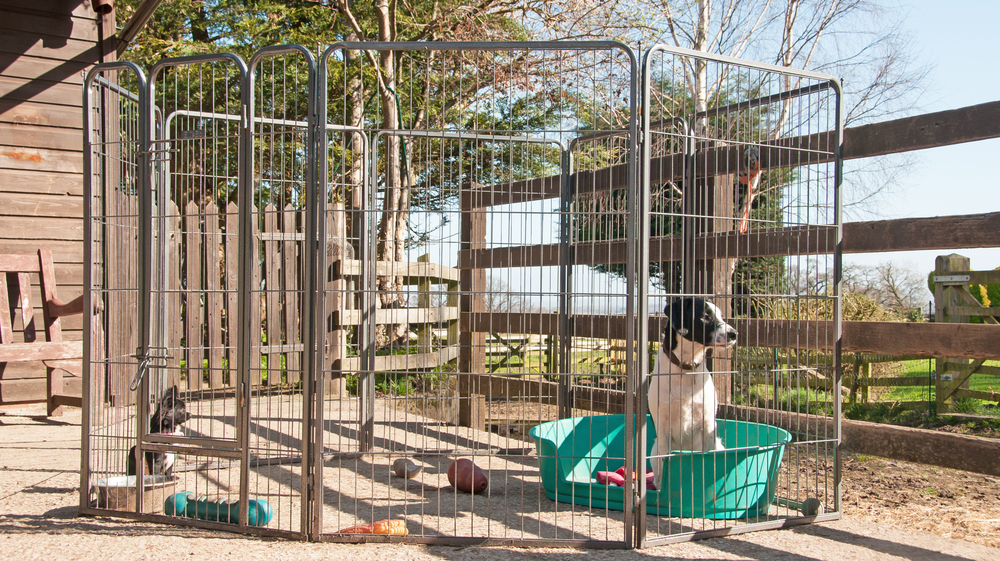
 Portable dog pen set up outdoors – an example of dog fencing for rental properties using a non-permanent, landlord-friendly solution.

A portable dog pen provides basic containment but is restrictive and limits space. In contrast, DogFence systems offer full garden access with safe, invisible boundaries – perfect for rental properties.


3.Mesh or Foldable Temporary Fencing Panels

These panels can be set up without nails, screws, or drilling. Lightweight and modular, they offer an affordable dog fencing for rental properties option—but may be less durable in the long term.


What to Avoid When Choosing Dog Fencing for Rental Properties

Not all fencing is landlord-friendly. Avoid these common mistakes:

Instead, look for systems designed for easy removal and no permanent impact on the home.


Can I Use an Electronic Dog Fence in a Rental Property?

Yes—but with the right approach. Dog fencing for rental properties must meet two key criteria:

  1. Portability: Can it move with you to your next home?

  2. Non-invasive installation: Will it leave the property exactly as you found it?

Our DIY DogFence kits meet both requirements and are ideal for renters. They’re easy to install using shallow turf cuts or cable tacking without damage. Our collars are also chew-proof and waterproof, and designed with pet safety in mind.

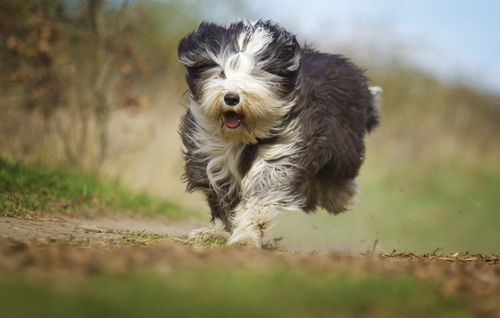
Small dog running freely in a garden – showcasing the benefits of dog fencing for rental properties without visible barriers.

With DogFence’s hidden containment systems for rental properties, dogs can safely enjoy full garden freedom without fences, posts, or pens – and without risking your landlord’s approval.


Dog Fencing for Flats and Indoor Use

If you live in a flat or an urban rental, keeping your dog secure indoors is just as important. Consider:

  • Baby gates or pressure-mounted pet barriers

  • Zoned training using receiver collars indoors

  • Smart pet monitoring systems

These complement your dog fencing for rental properties setup and ensure safety even when you’re away. An indoor fence can be used to protect the front door, or other areas and is completely portable and unobtrusive.

Small dog sitting near a door inside a flat – demonstrating indoor dog fencing for rental properties using a portable, wire-free unit.

Our indoor dog fencing system is ideal for rental properties – completely portable, wire-free, and perfect for keeping pets safely out of specific rooms without altering your home.


Dog Fencing and Your Landlord: How to Stay Compliant

When installing dog fencing for rental properties, always:

  • Check your lease for pet clauses

  • Ask for written permission before installing outdoor systems

  • Choose fencing that is removable and leaves no trace

  • Offer to restore any disturbed lawn or turf before moving out

  • Remember with a dog fence, the cable can be loose laid

We provide written installation guidelines to help reassure landlords.

Many renters across the UK have successfully used DogFence’s DIY systems to contain their pets safely—without damaging their property or risking their deposit.


Get Expert Help With Dog Fencing for Rental Properties

Choosing the right dog fencing for rental properties can feel overwhelming. That’s where we come in. With over 22 years of experience and 20,000 pets safely contained, DogFence Ltd can help you find a system that suits both your home and your landlord.


FAQs About Dog Fencing for Rental Properties

Is electronic dog fencing legal in rental homes?

Yes, but it must be installed in a way that complies with your lease. Always seek approval from your landlord.

Can I remove the system when I move?

Absolutely. Our DIY systems are designed to be lifted, moved, and reused elsewhere.

Is it suitable for large or active dogs?

Yes. Our receiver collars are programmable and work for dogs of all sizes, including high-energy breeds.

Does the cable have to be buried or nailed?

No, the cable can be lose laid on the surface, tied to a fence or threaded through a hedge.

Can the dog fence be used on the driveway?

Yes, the cable can be threaded through a hose pipe and lose laid on the driveway.


Why Choose DogFence for Rental Property Fencing?

  • ✅ Industry-leading technology with FM digital safety

  • ✅ Lightweight, waterproof, chew-proof collars

  • ✅ Lifetime warranty on installed systems

  • ✅ Personalised training and UK-based support

  • ✅ Suitable for both dog and cat containment


Call Now or Get a Quote for Dog Fencing for Rental Properties

Whether you’re renting a flat or a countryside home, we can help keep your dog safe.

Call 01628 476475
Request a Free Quote
Message us on WhatsApp

Dog running freely and safely in open garden with no visible fencing

Why Replace a Garden Fence with an Invisible Fence (5 Reasons)

5 Reasons Dog Owners Replace Their Garden Fence with an Invisible Fence

Is your dog a master escape artist? If they keep digging, jumping, or chewing through panels, it might be time to replace your garden fence with an invisible fence a safer and more reliable solution that preserves your view and keeps your dog secure. Traditional fencing often looks secure, but many owners find it’s no match for a determined dog. Here’s why traditional fencing isn’t enough for escape-artist dogs

Traditional fencing often looks secure, but many owners find it’s no match for a determined dog. That’s why more people are making the switch to invisible dog fences every year.

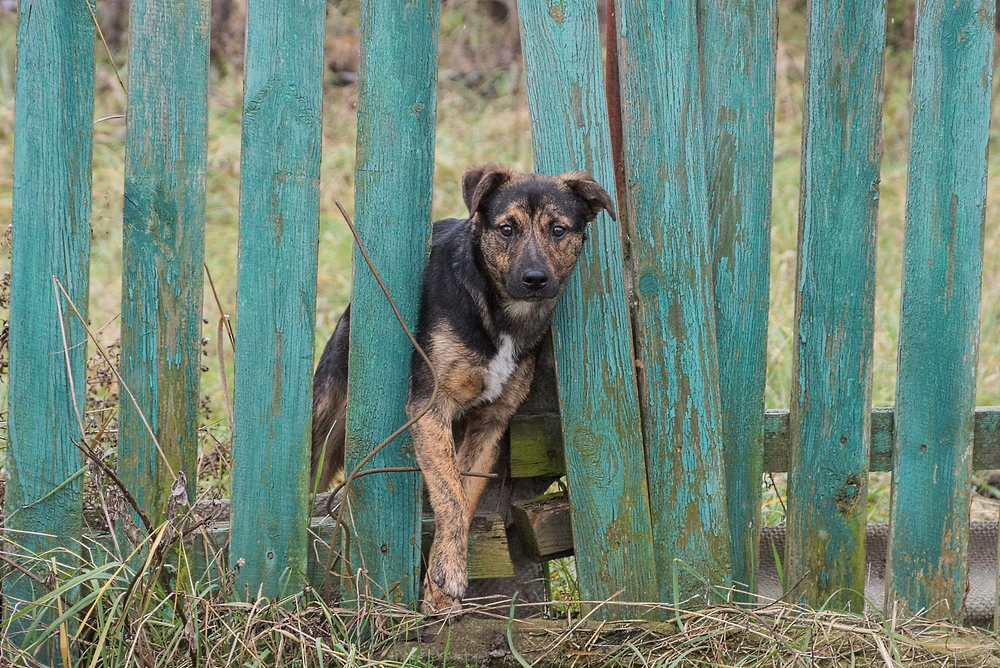
Dog escaping through a broken wooden garden fence

Traditional fencing often fails. This is why so many owners choose to replace their garden fence with an invisible fence for reliable containment.

1. Dogs Outsmart Traditional Fencing

Dogs are clever and resourceful. Some learn to dig under wooden panels, others chew their way through gaps, and some agile breeds can leap over fences that seem impossibly high. Physical barriers can become an invitation for a determined dog to test its limits. An invisible dog fence works differently. Instead of relying on a physical barrier, it uses a radio signal to create a secure boundary. With a simple and effective training system, your dog learns to respect this boundary, so there’s nothing to jump over or tunnel beneath. You can also read how a dog fence works and why it’s safer than panels for more detail.

2. It’s More Cost-Effective Than Traditional Fencing

The costs of traditional fencing can quickly add up. From fixing broken panels to installing taller fences or building elaborate containment zones, the expense can be significant—and that’s before you consider replacing an entire fence. An invisible dog fence is not only more affordable upfront, but it’s also maintenance-free once installed. Our DIY or professionally installed options provide a long-term, cost-effective solution that saves you from the ongoing cycle of repairs and replacements.

3. Maintain Your Garden’s Look and Feel

For many, one of the biggest reasons to switch to an invisible fence is aesthetics. Whether you’ve carefully landscaped your garden or simply enjoy the feeling of open space, traditional fences can block views and detract from your property’s appearance. Our underground dog fences are completely hidden, leaving your garden—and your view—intact. You get a beautiful, open space without compromising your dog’s safety.

Happy dog enjoying garden with no visible fence — why owners replace garden fence with an invisible fence

No panels, no posts, no problem. Replacing your garden fence with an invisible fence means total freedom for your dog and uninterrupted views for you

4. Why Replacing Your Garden Fence with an Invisible Fence Offers Total Flexibility

Traditional fencing can be tricky on properties with uneven ground or unique layouts. With an invisible fence, you get complete freedom to customise your dog’s boundaries. Whether you live in a rented cottage or simply want to keep your dog out of specific areas like flowerbeds, ponds, or vegetable patches, you can create custom “no-go zones” with ease. We also offer portable indoor units to keep your dog off furniture or from going up and down stairs.

5. Enjoy Reliable Containment with Built-In Safety

When properly installed and with the right training, invisible fences are incredibly effective. We use digital FM systems that are safer and more reliable than older AM or GPS-based systems. With lightning-fast reaction times and built-in safety features like anti-linger shutoff, these systems provide a consistent and dependable boundary. The collars are also waterproof and chew-proof, giving you peace of mind that your dog is always safe and secure.

Ready to Replace Your Fence?

Don’t spend thousands of pounds on new fencing that still might not contain your dog. Talk to the UK’s leading experts in pet containment and discover how our invisible fence systems can provide safe, reliable freedom for your dog—and peace of mind for you. According to Checkatrade’s fencing guide, replacing a garden fence can cost thousands—without solving escape issues. Find a cheaper and more effective alternative by contacting DogFence Ltd.

Invisible dog fences are a proven, safe, and effective way to give your pet freedom while keeping them securely within your property. Whether you choose a professional installation or a DIY kit, the right system will offer peace of mind, protect your garden, and allow your dog to enjoy their space without the risk of escape.

Ready to make the switch?
Call us on 01628 476475 to discuss your needs.
Message us on WhatsApp for quick answers.
Request a free quote online today and find the perfect containment solution for your dog or cat.

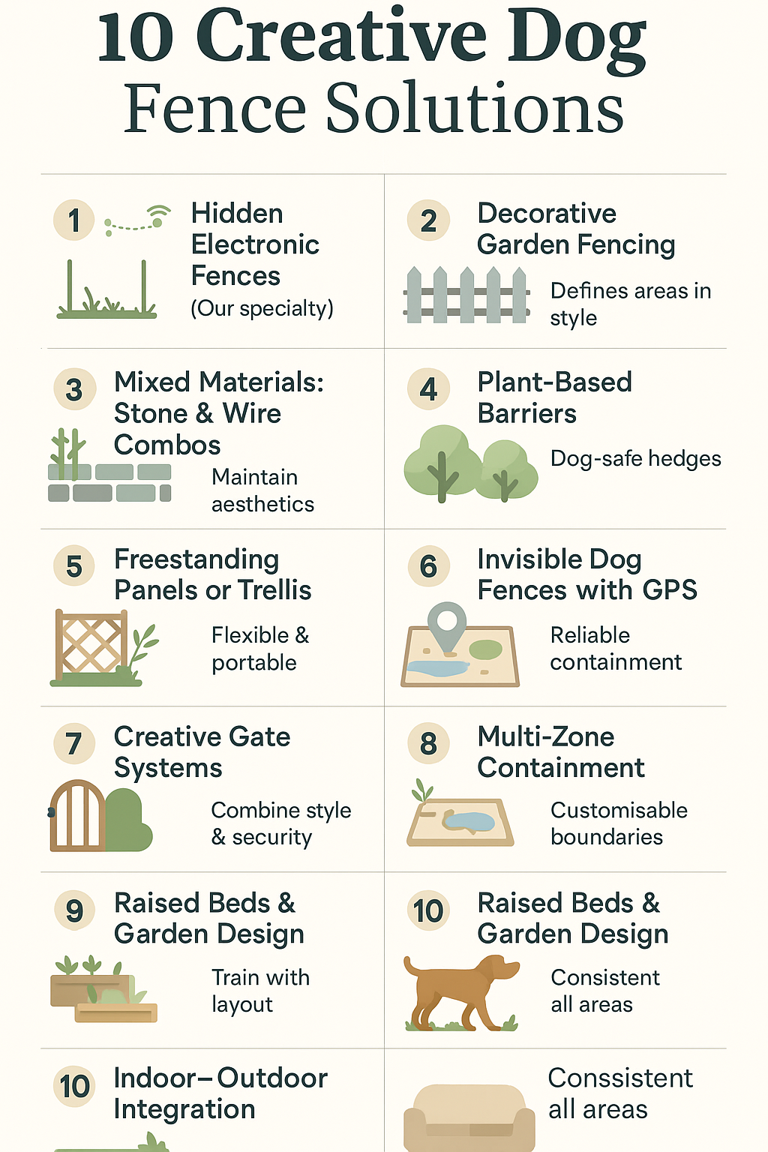
10 Creative Dog Fence Solutions for Stylish, Secure Gardens

10 Creative Dog Fence Solutions for Stylish, Secure Gardens

Looking for a way to keep your dog safe in the garden without compromising your landscaping or view? Whether you live in the countryside or suburbia, finding a fence that works with your space, budget, and your dog’s behaviour can be a challenge. That’s why we’ve rounded up 10 creative dog fence solutions that offer more than just containment—they bring safety, aesthetics, and peace of mind.

1. Hidden Electronic Fences (Our Specialty)

Our professionally installed hidden dog fences are virtually invisible, making them ideal for landscaped or open-plan gardens. They offer reliable containment without obstructing views, driveways, or access paths—perfect for pet owners who value both freedom and control. With our professional installation package, you can give your dog or cat freedom and safety both quickly and  affordably.


2. Decorative Garden Fencing

Short decorative panels can define play zones and walking paths. Wrought iron or picket-style barriers offer a more traditional look, but be aware: most dogs can jump or dig under these if left untrained or unmonitored.

3. Mixed Materials: Stone & Wire Combos

Combining natural stone edging with discreet containment wire is a great way to maintain garden aesthetics while providing underground pet safety. It’s one of our most popular garden-friendly options for large or sloped properties.

4. Plant-Based Barriers

Thick hedges or dog-safe shrubs like lavender, hawthorn, or boxwood can serve as natural fencing. While not foolproof alone, these can work beautifully alongside an invisible fence.

5. Freestanding Panels or Trellis

Portable panels give you the flexibility to fence off specific areas, such as patios or flowerbeds. Add climbing plants for a greener look.

6. Invisible Dog Fences with GPS Alternatives

Not all GPS fences are reliable in the UK’s variable terrain. Our hidden fence systems outperform GPS and wireless systems by using a perimeter wire for consistency and safety. See how they compare in our GPS vs Hidden Fence Guide.

7. Creative Gate Systems

Stylish garden gates fitted with auto-closers or smart locks can help maintain boundaries. Combine this with boundary training to avoid escapes when gates are opened.

8. Multi-Zone Containment

Our DogFence system can be designed with multiple “safe” and “no-go” zones—perfect for gardens with ponds, chicken coops, or allotments. Speak to our team about a custom solution.

9. Raised Beds & Garden Design for Behavioural Boundaries

Strategically placing raised beds or pathways can subtly train dogs to respect boundaries without traditional barriers.

10. Indoor–Outdoor Integration

Connect your indoor pet boundaries with your garden system using our indoor training collars. This gives pets consistency, whether they’re lounging on the sofa or digging in the flower beds.

Need design inspiration? Check out the RSPCA’s tips for keeping pets safe outdoors.

Infographic listing 10 creative dog fence solutions including hidden electronic fences, decorative fencing, plant barriers, and GPS systems highlighting unreliable containment.

Discover 10 creative dog fence solutions designed to keep your pet safe while complementing your garden. From hidden fences to natural barriers—there’s a secure option for every home.

What Our Customers Say

“The DogFence system lets us enjoy our garden with our Labrador without worrying about escape. It’s practically invisible!” – Linda, Hampshire


FAQs About Creative Dog Fences

Are invisible fences safe for dogs?

Yes—our DogFence systems are DEFRA-reviewed, gentle, and safe when installed professionally with proper training.

Will a hidden fence affect my garden’s appearance?

No. The wire is buried underground and the collar is lightweight and discreet. You’ll barely notice it’s there.

Can I create custom zones?

Absolutely. Our systems allow for custom layouts, exclusion zones, and integration with indoor training. Check out our indoor solutions here for ways to keep your pets out of rooms, off the sofa or the kitchen worktops!

Looking for a Safe & Stylish Solution?

We’ve trained over 20,000 pets to our hidden fence systems. Call us now on 01628 476475, WhatsApp us, or get a free quote online today.


comparison of wired, wireless and GPS dog fences for UK gardens

Why traditional and GPS dog fences fail

Why Traditional and GPS Dog Fences Fail — The Truth Every Pet Owner Needs to Know

Keeping our dogs and cats safe at home is every pet owner’s top priority — but why traditional and GPS dog fences fail is a critical truth many people overlook. While these solutions seem like convenient or familiar options, they often provide a false sense of security and can lead to heartbreaking consequences. In this guide, we’ll break down exactly why traditional and GPS dog fences fail, the hidden dangers behind them, and what truly works to keep your beloved pet safe and happy.


Why Traditional and GPS Dog Fences Fail: The Hidden Truth

Traditional fencing and hedging

Traditional fencing might seem like an obvious choice, but it isn’t escape-proof. Dogs can dig under or jump over even the sturdiest fence, and cats are famous for scaling almost any barrier with ease. Hedges can hide gaps at the base, especially where wildlife has created tunnels, creating a false sense of security.

Moreover, repairs can become costly and stressful, especially after multiple escape attempts.

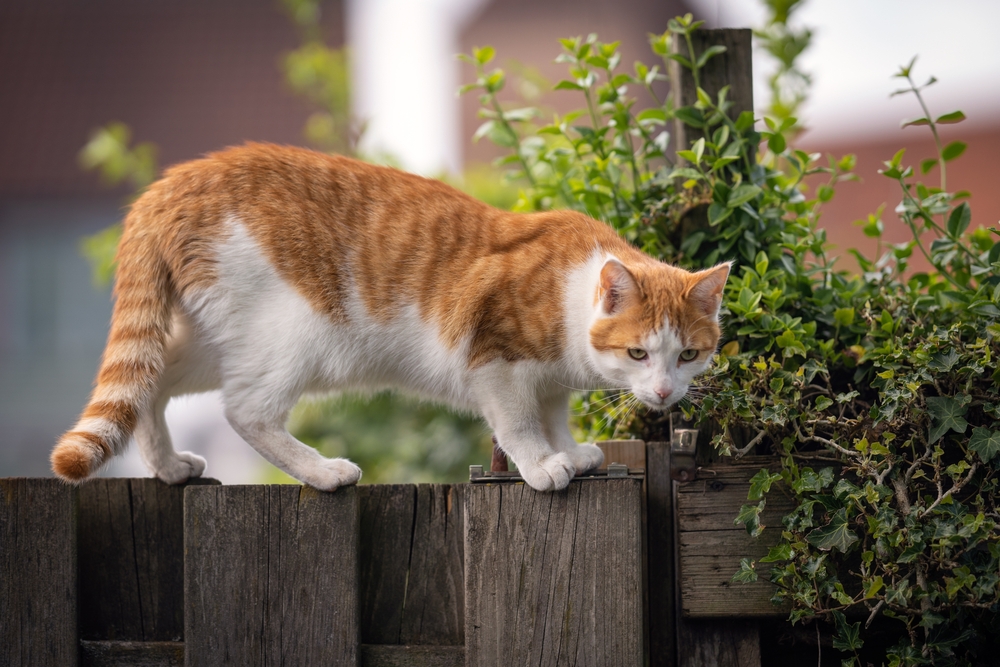
Cat escaping over fence showing why traditional and GPS dog fences fail to keep pets safe

Cats can easily scale traditional fences and GPS collars are heavy and inaccurate.


Why wireless dog fences disappoint

Wireless dog fences promise a quick, easy installation without digging. However, they rely on a circular boundary, which rarely suits the shape of UK gardens. Interference from trees, hedges, walls, and slopes can create unreliable or inconsistent boundaries.

Many dogs simply run through these zones when excited or scared. Once your dog crosses the line, they may not return due to the correction they receive on re-entry.


GPS dog fences and tracker collars: The critical misunderstanding

It’s crucial to understand the difference between tracking and containment.

GPS dog fences and GPS tracker collars do not stop your pet from leaving; they only show you where your pet has gone after they’ve escaped. Signal delays and coverage gaps can make these systems unreliable, especially in wooded or rural areas.

A heartbreaking real-world example:

“I bought a GPS collar hoping it would keep my cat safe. One night, the tracker took me to a road where I found her injured and had to put her to sleep. It didn’t prevent her from getting there.” — Story shared on East Dulwich Forum.

This tragic story highlights exactly why traditional and GPS dog fences fail when you need them most.


The risks of inadequate containment

When containment fails, the consequences can be severe:

  • Traffic accidents

  • Attacks on livestock or wildlife

  • Theft or loss

  • Stressful recovery attempts

  • Possible legal liabilities for owners


Why Wired Dog Fences Work: Proven, Reliable, and Safe

Wired electronic dog fences stand out because they offer consistent boundary signals, long battery life, and professional setup with expert training. Unlike GPS or wireless systems, they are not affected by trees, slopes, or interference, ensuring reliable containment in any garden. Our wired systems are also DEFRA tested and approved for safety and welfare. With our professional installation and training service, your pet learns clear, safe boundaries quickly and happily.

Why Choose a Wired Dog Fence?

  • 100% Consistent — no confusion for your pet
  • Long battery life
  • Keeps pets safe in their garden
  • Protects livestock and wildlife
  • Pets stay safe and enjoy freedom
  • Reduces stress for the owner
  • Lifetime warranty for peace of mind


How different containment options compare

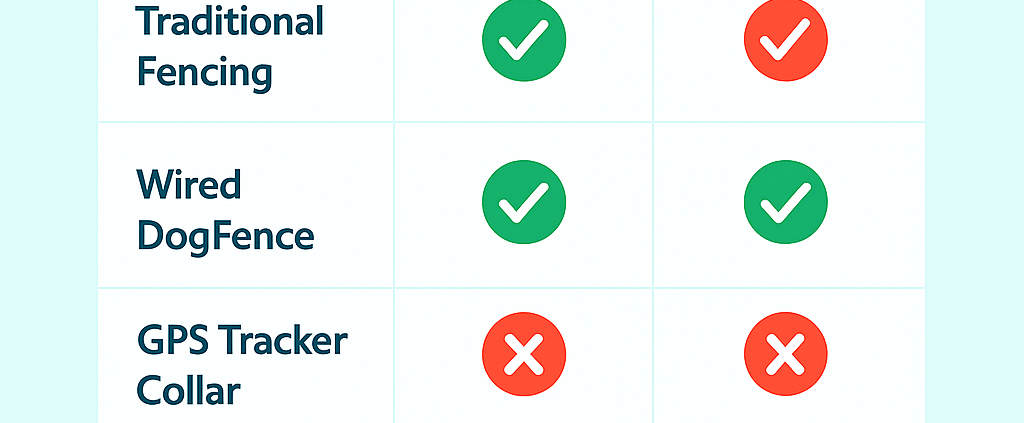
To help visualise why traditional and GPS dog fences fail, we created this simple, clear infographic comparing popular options. You can also read more in detail on our GPS and wireless dog fence comparison page.

Comparison chart showing why traditional and GPS dog fences fail and why wired dog fences are effective for pet containment

See why traditional and GPS dog fences fail compared to the proven effectiveness of wired dog fences for pet safety


Why a DEFRA-tested wired dog fence is the safe choice

A professionally installed, wired electronic dog fence — like our DogFence system — offers:

DEFRA approval, guaranteeing compliance with animal welfare standards.
✅ Effective containment for both dogs and cats.
✅ Adaptable to any garden shape, terrain, or landscaping.
✅ Reliable training with clear boundaries your pet understands.
✅ Peace of mind for you and freedom for your pet.


What our customers say

“This system has transformed our lives. Our spaniel Molly used to jump the fence constantly. We tried reinforcing it and even bought a GPS collar, but nothing worked. With DogFence, she now enjoys the garden safely, and we have total peace of mind.” — Verified Google Review


Call us today to find out what really works

The evidence is clear: why traditional and GPS dog fences fail comes down to one fact — they don’t truly contain your pet before danger strikes.

If you want reliable, proven protection, a DEFRA-tested wired dog fence is the safest and most humane solution.


Request a free quote today or
call us now on 01628 476475.

Your pet deserves the very best.


Small dog calmly lying on a sofa, illustrating successful indoor boundary training to stop worktop surfing and sofa jumping

Stop Worktop Surfing & Sofa Jumping | Indoor Pet Training UK

How to Stop Worktop Surfing & Sofa Jumping: Indoor Boundary Training for Mischievous Pets


Introduction

Ever wandered how to your stop dog jumping on sofa and worktops. If your dog constantly jumping up on the worktops or claiming your sofa as their throne. You’re not alone! Worktop surfing and sofa jumping are common behaviours in curious or mischievous dogs and cats. While it might seem funny at first, these habits can lead to hygiene issues, accidents, and even injuries. Luckily, with the right training and indoor boundary solutions, you can help your pet learn safe and polite indoor manners.

Why Do Pets Surf Worktops and Jump on Sofas?

Dogs and cats are natural explorers. Worktops smell like delicious food, and sofas are soft and warm — irresistible to most pets! Many jump up because of boredom, leftover food smells, or simply seeking comfort and a better view. Without clear boundaries, these behaviours can quickly become daily habits.

Why Traditional Discipline Doesn’t Work

Shouting “No!” or pushing your dog or cat off might stop them momentarily, but it doesn’t teach them what to do instead. Punishment can also damage your bond and increase anxiety. Cats do not understand verbal commands and can become scared or anxious, but they can learn well with indoor or outdoor boundaries. If you want the learn how to stop your dog jumping on sofa and worktops read on. Many owners find boundary training an excellent option to protect sofas and worktops and reduce stress for both pets and humans.

Cat scratching and damaging a sofa, highlighting the importance of indoor boundary training to stop destructive behaviour

A mischievous cat caught damaging the sofa — a clear example of why setting indoor boundaries is so important for protecting your furniture and keeping pets safe.

Indoor Boundary Training Techniques

Start by teaching essential commands like “off,” “leave it,” and “stay.” Always reward your dog for making the right choice — for example, staying on the floor or resting on their mat. Redirecting your dog’s energy towards chew toys or puzzle games can also help reduce unwanted jumping. For cats, consistent reinforcement and visual cues help them learn where they can and cannot go.

How Indoor Containment Systems Can Help

Indoor pet containment systems, such as indoor dog fence units or shields, create invisible barriers around forbidden areas like worktops and sofas. These systems gently remind your pet where they can and cannot go without constant supervision. They’re an ideal addition to training, offering peace of mind when you’re busy, cooking, or entertaining guests.

Battery Operated Boundary (BOB) |Stop dogs jumping on the Sofa and Worktops

BOB is a rechargeable, battery-operated indoor unit that creates a flexible no-go zone around the device, with a maximum range of 4 feet and a battery life of 2–3 days. It works seamlessly with your existing outdoor DogFence collar, or you can purchase a collar separately if you’re new to DogFence. Like the outdoor system, BOB uses conditioning and mini indoor training flags as visual cues to help your pet learn new boundaries. It’s ideal for protecting sofas, worktops, or keeping pets out of specific rooms.

Happy small white dog indoors near doorway, representing indoor dog containment and stopping worktop surfing and sofa jumping in the UK home

Keep Pets Out Of Rooms Too

Keep Pets Out of Rooms Too

Wired Indoor Boundaries

For larger areas — such as long runs of worktops or open-plan spaces — the wired indoor boundary system is the perfect solution. This mini version of the outdoor system uses a thin indoor wire and adjustable signal zones to create clear indoor boundaries. The wire can even be installed under the floor surface during new builds for a sleek, invisible finish. Just like outdoors, the system uses consistent signals and gentle correction to reinforce safe indoor zones for your dog or cat.

Indoor Dangers: Why Boundaries Matter

Keeping your dog or cat off worktops and sofas isn’t just about protecting your home — it’s about keeping your pet safe and healthy. Worktops can contain harmful foods or cleaning chemicals that pose a poisoning risk. Teaching boundaries prevents stealing behaviours, which can escalate into resource guarding or aggression. It also helps control your pet’s diet, preventing unwanted snacking or weight gain. Keeping pets off sofas maintains hygiene and protects furniture, and indoor boundaries can even prevent them from bolting out of open doors, reducing escape risks. Owners that search on tips for how to stop a dog  jumping on sofa and worktops are often amazed that the solution is so simple.

Tips for Long Term Success

Consistency is key. Make sure all family members follow the same rules to avoid confusing your pet. Remove temptations by keeping food off worktops and covering sofas if needed. Combine these practical steps with clear training to build lasting good habits.

  • Always use the training flags to provide a clear visual marker.
  • Ensure that the range is set to the correct size for your specific area.
  • Double-check that the placement of the unit does not prevent your pet from accessing food, water, or their bed.

To understand why kitchen worktops can be so dangerous, you can read about foods that are toxic to dogs on the Blue Cross website. This highlights why preventing access to certain areas is so important for your pet’s safety

Ready to Stop Indoor Mischief?

Want to stop worktop surfing and sofa jumping for good? Discover our indoor pet containment solutions or contact our team for personalised advice today. You can also call us on 01628 476475 or message us directly via on: 07917 034256 — we’re here to help!


cat sitting in bird bath using our best cat fencing

How to Use a Dog Fence to Keep Your Cat Safe: A Complete Guide

How to Use a Dog Fence to Keep Your Cat Safe: A Complete Guide

If you’re a pet owner, ensuring your cats and dogs’ safety is a top priority. While dog fences were originally designed to contain dogs, modern innovations and new training techniques have expanded their use for cat containment as well. Today, they are an excellent solution for keeping your cat safe while still allowing them to explore the outdoors without putting them in harm’s way. Here’s how you can use a DogFence system to protect your cat while allowing them the space they crave.

Why Consider a Dog Fence for Your Cat?

Cats are naturally curious animals, often wandering off to explore. This can expose them to:

  • Busy roads

    Bengal cat laying in middle of road

    50% of all cats under 5 are killed on the UK’s roads

  • Wildlife threats
  • Unfamiliar environments

By using a DogFence, you can establish a boundary that keeps your cat safely within your garden or designated area, reducing the risks associated with outdoor exploration.

How Does a Dog Fence Become a Cat Fence?

The DogFence system uses an electronic containment system that creates an invisible boundary. It includes:

  • A transmitter that sends a signal.
  • A lightweight collar fitted with a receiver.
  • Gentle training to teach your cat the boundaries.
  • Collar with an elastic stretch band

In today’s market, dog and cat fences are completely interchangeable. Modern lightweight collars with a small elastic stretch band offer a comfortable, safe option for your cat to wear. The training protocol for cats has been rewritten to use an indoor approach, so your cat can learn at their own pace in a safe environment.

Facts about Electronic Cat Fences

Our cat fence system is designed to keep your feline friends safe and secure, even in large areas. In fact, the largest electronic pet fence in the UK, covering 350 acres, was installed for cats in 2008. Since then, the owners have not lost a single cat to the road, a remarkable achievement given that 50% of cats under five years old die on UK roads each year.

Research conducted in 2016 confirmed that electronic pet fences are both safe and humane for cats. Professor Daniel Mills highlighted that “the use of electronic containment systems for cats can significantly reduce the risk of road traffic accidents while maintaining a good quality of life for the pet.” This insight, cited by Feline Friends, underscores the effectiveness of electronic fences in safeguarding cats without compromising their well-being.

How does the Cat Fence work?

The system emits a high-pitched audible warning (beep) from the collar as your cat approaches the boundary, alerting them that they are approaching an off-limits area. If they continue further, the collar delivers a harmless impulse, similar to the sensation of a TENS machine.

Indoor training teaches your cat to associate the warning beep with retreating from the boundary, thus avoiding the impulse. This

cat fence training flags

Training flags to mark the boundarycombination of auditory and physical cues helps encourage your cat to stay within the safe zone.

During the initial weeks of training, temporary flags mark the boundary, providing a visual cue to help your cat understand the limits of their safe area.

Will the Impulse Hurt My Cat?

Interestingly, cats do not feel the impulse as strongly as dogs; indeed, many dogs train to a lower level of impulse than cats. Every dog and every cat will have their own impulse level. The idea that impulse level is determined by size is a myth; it’s typically more relevant to the cat’s personality, with breed playing a role in certain factors.

Benefits of Using a Cat Fence 

  • Safety First: Prevents your cat from wandering onto roads or into unsafe areas.

    Cat wearing an cat fence computer collar

    A cat fence gives freedom and safety

  • Freedom to Explore: Provides outdoor access without the risks of free-roaming.
  • Customisable Boundaries: Tailored to your garden or property.
  • Peace of Mind: You can relax knowing your cat is secure.

Steps to Set Up a DogFence for Your Cat

  1. Plan Your Containment Area

Decide where your cat can roam. Whether it’s the entire garden or a smaller section, map out the area to ensure it meets your cat’s needs.

  1. Install the DogFence System

Work with a professional to install the invisible boundary. Proper placement of the transmitter and wiring is crucial for effectiveness.

  1. Fit the Receiver Collar

The lightweight collar is designed for comfort, ensuring your cat can move freely. Adjust it to fit snugly without causing discomfort. If you are able, it is useful to allow the cat to wear the collar or a collar prior to the commencement of the training.

  1. Train Your Cat

Training is essential for success. With our proven methods, your cat will quickly learn the boundaries and associate the warning signal with the safe zone. Our Installer will set up the fence and get our cat started with the training. We will leave you with full instructions and are here to support you through and beyond the training process.

  1. Monitor and Adjust

Regularly check the system and your cat’s collar to ensure everything is functioning correctly. Adjust the boundary or signal level if necessary.

Questions about using a Dog Fence for Cats

Q: Is the Impulse safe for cats?

A: Yes, the Impulse is gentle and harmless. It’s designed to grab your cat’s attention without causing distress.

Q: Can I use the Cat Fence for multiple pets?

A: Absolutely! The system can be adapted for multiple cats and dogs with individual collars.

Q: How long does cat fence training take?

A: Most cats adapt to the system within a few weeks with consistent training.

Conclusion

Using a Dog Fence to keep your cat safe is an innovative and effective solution for pet owners who want to balance freedom and safety. Whether you’re in a rural area or a busy neighbourhood, a Dog Cat system can give you peace of mind while letting your cat enjoy the outdoors safely.

Ready to Keep Your Cat Safe?

For more information or assistance, call us at 01628 476475

Visit www.dogfence.co.uk or www.catfence.co.uk to learn more about our pet containment solutions or to book a consultation. Give your cat the freedom they deserve while ensuring their safety.


Credit: https://www.feline-friends.org.uk/topics/containment-fence-research/

the new dog fence smart fence app

Wireless and GPS Dog Fences vs Hidden Fences | DogFence UK

Is a GPS Dog Fence the Way Forward for Pet Containment?

A quick Google search brings up a myriad of choices for electronic dog fences. But is a GPS dog fence an easy and safe way to stop your dog escaping from the garden? The buzz word on the street maybe “GPS dog fence” and when it comes to keeping our pets safe, technology is continually offering innovative solutions. GPS dog fences are one such idea that seems promising at first glance. Using satellite tracking to create an invisible boundary for your pet sounds like the perfect combination of high-tech convenience and reliability. Easy and quick to install and relatively cheap compared to the more traditional dog fencing options. However, the truth is that GPS dog fences have significant limitations that make them far less effective than traditional pet containment systems. Let’s explore why GPS dog fences fall short and what alternatives might work better.

The Appeal of the GPS Dog Fence

One of the main attractions of GPS dog fences is their portability. Unlike physical or buried-wire fences, GPS boundaries can be set up anywhere there is satellite reception. This flexibility allows pet owners to create virtual fences around any space – whether at home, a campsite, or at a second home.

GPS dog fences can often allow for large boundary areas, and some models even come with smartphone apps to monitor your pet’s location in real-time (akin to the industry beating DogWatch Smart Fence System). The concept is undeniably appealing: a boundary-less containment solution with freedom for your dog to roam without the need for visible structures or a buried wire.

The Reality of GPS Dog Fences: Common Issues and Limitations

While the idea of a GPS dog fence is compelling, real-world usage has revealed significant limitations that can compromise both effectiveness and pet safety. Here are some of the most notable challenges:

  1. Inconsistent Boundaries

GPS dog fence signals are prone to interference from buildings, trees, and even weather conditions. This can cause the boundary to “drift,” meaning the actual area covered by the fence may shift unpredictably. For a dog, this can lead to confusion as the boundary changes location, sometimes making it impossible for the pet to know where the safe zone starts and ends. In areas where there is interference it may even create a “dead” zone which allows the dog to run out of the boundary.

  1. Speed – Delayed Responses

Unlike the top wired Systems (DogWatch, Invisible Fence)  that react instantly, GPS dog fences can experience delays in signal transmission. If a dog crosses the boundary, it may take a few seconds for the collar to respond, which is enough time for the pet to run into danger. This delay reduces the overall reliability of the containment, especially in high-risk situations like close proximity to busy roads.

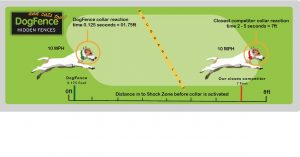
Currently DogWatch Hidden Fences offer the fastest reacting collars both on start up (dog running towards the fence) and shut down (dog stops and turns back). At less than 1 second, other brands can be 10 times slower and GPS fences slower still. The diagram below demonstrates the difference the time makes; which of course has a huge consideration for safety and welfare:

freedom fence and dog fence collar reaction times illustrated with 2 dogs running at 10mph

Collar reaction times for DogWatch Collars Supplied by DogFence UK

  1. Battery Limitations

GPS dog fences require power, usually from a battery in the dog’s collar. Battery life varies by model, but frequent charging is almost always required. For many pet owners, this is an inconvenience, but worse, a battery failure could result in your dog wandering off without any boundary protection. Again the current industry leader in terms of battery life is DogWatch, who offer a 2 year battery life on their standard weight collars (smaller and lighter than GPS collars) and a 6 month battery life on their mini collars (smallest lightest worldwide).

  1. Accuracy Concerns

Even with the best GPS technology, accuracy can vary. While some high-quality GPS devices are accurate within a few feet, cheaper models may only provide location accuracy within 15-25 feet or more. For boundary purposes, this inaccuracy can lead to unwanted breaches. In densely wooded or urban areas, accuracy issues become even more pronounced, making GPS systems unreliable. Similarly this is misleading to the pet and can cause confusion. Consistency is paramount in all aspects of dog training, and invisible dog fences are no exception. To ensure both safety and fairness, the boundaries and reinforcement need to be maintained continuously—every day, all year round.

  1. Limited Compatibility for Different Terrains and Properties

GPS dog fences struggle to function well in areas with dense foliage, hills, or other obstructions. If you live on a property with trees, hills, or a lot of other obstacles, a GPS fence is likely to have frequent errors. With a Professionally installed DogFence the wire any terrain can be catered for and the size of the property can be up to 350 acres. DogFence UK are the authorised installers for DogWatch Hidden Fences and have been professionally installing wired systems for over 20 years. At this point in time DogFence Ltd will not offer a GPS System as the safety and welfare of the dog would be comprised.

Comparing GPS Fences to Traditional Dog Containment Solutions

GPS dog fences may have some potential, but they fall short compared to traditional containment systems at this present time. Buried-wire electric fences provide consistent boundaries without the risk of signal interference, making them more reliable for most properties.

For dog owners who prioritize reliability and consistency, a physical or buried-wire electric fence is a more effective choice than GPS. Although GPS technology will continue to improve, for now, it cannot offer the security and dependability of a physical or buried boundary.

When (and If) GPS Fences Could Be Right for You

GPS dog fences may work for certain scenarios, such as large, open areas with minimal interference. For those who frequently travel with pets, the portability of a GPS dog fence can be an advantage. However, for day-to-day use around the home, especially in rural or hilly properties, a GPS dog fence is often impractical.

Frequently Asked Questions about GPS dog fences

Can a GPS dog fence work reliably in the UK?

No, the UK is country with a dense landscape — dense trees, buildings, and uneven terrain often interfere with GPS signals, causing drift of up to 1–3 m. This can lead to unpredictable corrections and safety risks. Hidden-wire systems offer stable, precise boundaries instead.

Are wireless dog fences suitable for small or irregularly-shaped gardens?

No. Wireless fences create fixed circular zones, which don’t suit narrow, irregular, or corner-heavy UK gardens (squares and rectangles). Signals can also become inconsistent near buildings and slopes.

Do GPS dog fence collars work for small dogs or cats?

Most GPS and wireless collars are heavy and bulky, making them unsuitable for smaller dogs and cats. Hidden-wire collars are lighter, more comfortable, and have better battery life.

Do GPS or wireless fences come with professional support and training?

Usually not. GPS and wireless systems are typically DIY with little to no professional support. Hidden-wire systems often include expert installation and tailored pet training.

Are wireless or GPS dog fences CE-approved and safe?

Many GPS and wireless fences lack CE approval and verified safety standards. Hidden-wire systems are usually CE-approved and comply with strict safety requirements.

Which is more accurate: GPS/wireless or hidden wire?

Hidden-wire systems provide exact, consistent boundaries with no drift, offering superior accuracy. GPS and wireless systems often have signal fluctuations and lower reliability.

Final Thoughts: Choosing the Best Solution for Your Pet’s Safety

While GPS dog fences sound appealing in theory, their limitations often make them impractical. For most dog owners, traditional pet containment systems provide a more reliable and safe solution. Whether you choose a physical fence, buried-wire, or wireless containment system, the key is ensuring that your pet remains safe and secure.

GPS technology is evolving, and perhaps in the future, GPS dog fences will become a viable alternative. Until then, tried-and-true containment systems offer the peace of mind that every pet owner needs.

By understanding the pros and cons of GPS dog fences, pet owners can make informed choices that best meet their pets’ needs and ensure their safety. While GPS containment might have potential, reliability and accuracy remain critical factors that other containment solutions handle better today.

If you would like to discuss the pros and cons of both GPS and Wired systems why not call us today for a chat. Our 20 + years experience in the field makes us the UK’s leading experts on pet containment solutions. Call today on 01628 476475 or email info@dogfence.co.uk.

https://dogfence.co.uk/

Dog wearing DogFence electronic dog fence collar in garden

Containment Fences Explained

What are electronic Containment Fences and how do they work?

Containment fences hit the news earlier this year when the Government declared that they intended to ban e-collars for training dogs.

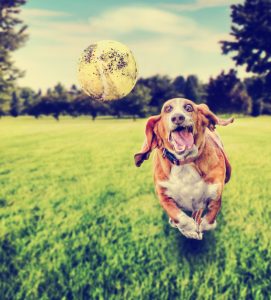
Sadly, the media jumped in with both feet first and declared that containment fences were also to be banned. At DogFence we were horrified having Professionally installed containment fences for over 17 years we had no idea why! For our customers that already used a containment fence there was outrage. How could the Government even consider banning a fence that had saved their pets life and given them back their freedom?  For those that had not heard about containment fences there was intrigue. What is a containment fence and why do they want to ban them?basset hound enjoying freedom with containment fences

Even the MP that called for the ban didn’t know if the containment fence was to be included within any ban and the officials at DEFRA did not know how containment fences worked! As experts in the field for containment fencing DogFence were invited to meet with officials from DEFRA and demonstrate the fence.

The comments from the DEFRA team were as we suspected “it’s not that bad” and “it’s not what I imagined”.

So what is a containment fence?

It’s actually an invisible fence or virtual fence which is created by a radio signal. Originally invented to keep dogs safe at home in the USA where gardens are traditionally unfenced their popularity has grown in recent years.

A containment fence is actually a very simple and unobtrusive system which can be installed on virtually any property at a fraction of the cost of traditional fencing. It also offers for safety than conventional fencing as the pet can’t dig under or jump over the fence and it protects open areas such as driveways.

A boundary wire is placed around the property boundary which transmits a coded radio signal to a collar worn by the pet. When the pet approaches the boundary wire a high pitched warning beep alerts the pet to go back. If the pet continues forward, an electrical impulse is given through the collar (this is often referred to as a correction or static shock) and the pet retreats back into the safe area.

How does the pet know where to go?

Every pet undergoes a training programme which usually takes 2 – 5 days. When training to a containment fence it is important that the boundary is flagged to give a good visual of where the virtual fence starts. The flags stay in the ground as a visual marker for approx. 2 – 3 weeks. Containment fences can be used for dogs over the age of 12 weeks and cats 16 weeks or over.

The trainer will take the dog outside and set the collar to “beep only” mode. Using some voice commands, he will introduce the dog to the containment fence training flags and later he will allow the dog to enter the “no go area” of his own accord. By re-focusing the dog back into the safe area with the assistance of the warning beep and vocal commands the pet will quickly learn where he can or can’t go. Following the beep only session the training moves onto to assess the correct level of impulse (correction) required for the pet.  If the owner has more than one pet the likelihood is that they will each have a different training level.

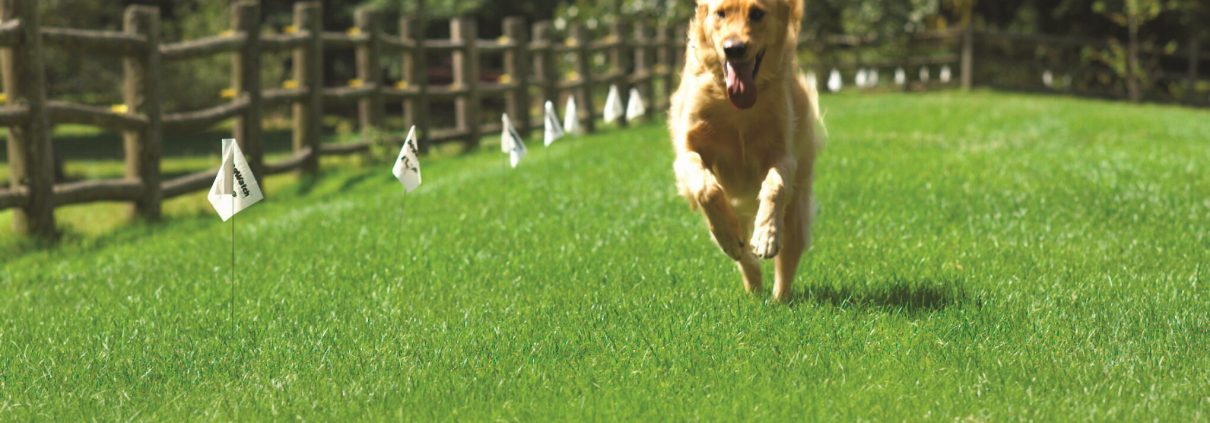
containment fences are marked with training flags

Visible boundary for the pet with flags.


With cats the training is carried out internally following the Dog Fence Cat protocol. This training protocol was used as part of the Lincoln Cat Containment Fence study.


Will the containment fence hurt my pet?

Of course the thought of giving any impulse or shock to your pet can be abhorrent. It is important to note though that the impulse is very low and is usually only felt during the training phase. The sad scenario is that the pain felt from a car is almost unimaginable and the discomfort of containment fence is no worse than an annual vaccination. Also for dog owners there is always the threat of a shot gun as dog attacks on sheep are rising annually.

What areas of the garden will the containment fence cover?

Interestingly, containment fences can cover the entire garden including the driveway. The largest installation that we have installed at Dog Fence is 450 acres. Usually the fence wire is dug directly into the ground (approx. 3 – 5” below the surface) but it can be attached to existing physical boundaries. It is not uncommon for the fence wire to be attached to post and rail fences, stone walls, run through hedges, ditches or streams and even the odd moat! When it comes to the driveway any surface can be crossed except Resin bonded drives which require special attention.

Containment Fence Collars

The original containment fences from the early 80’s used heavy bulky collars but as with the mobile phone technology everything has been scaled down in recent years. Not only have the collars become smaller and lighter but the battery life has also increased.

At Dog Fence we can boast the smallest and lightest collars worldwide. Our mini containment fence collar only weighs 30g but still features an incredible 6-month battery life. Incredibly our standard collar has a 2-year battery life and weighs in at only 48g which is still the 3rd lightest collar available worldwide!

How much do containment fences cost?

A containment fence costs a fraction of the cost of installing a traditional fence or driveway gates. Unlike a wooden or stock fence a containment fence becomes more cost effective the larger the area. Naturally the price is dependent on the owner’s location and the number of dog or cats that they have. There is no need to visit a property to give an estimate for the containment fence; this can all be carried out via our online survey tool.

Summary

Thankfully, the Government looked at the evidence, research and responses from containment fence owners and deemed these lifesaving systems safe to use. Indeed, Michael Gove stood up and supported the life-saving fences in Parliament.

If you are interested in receiving a quick free quote contact us today on 01628 476475 or fill in our quote form https://dogfence.co.uk/quote/