Tag Archive for: Dog Safety

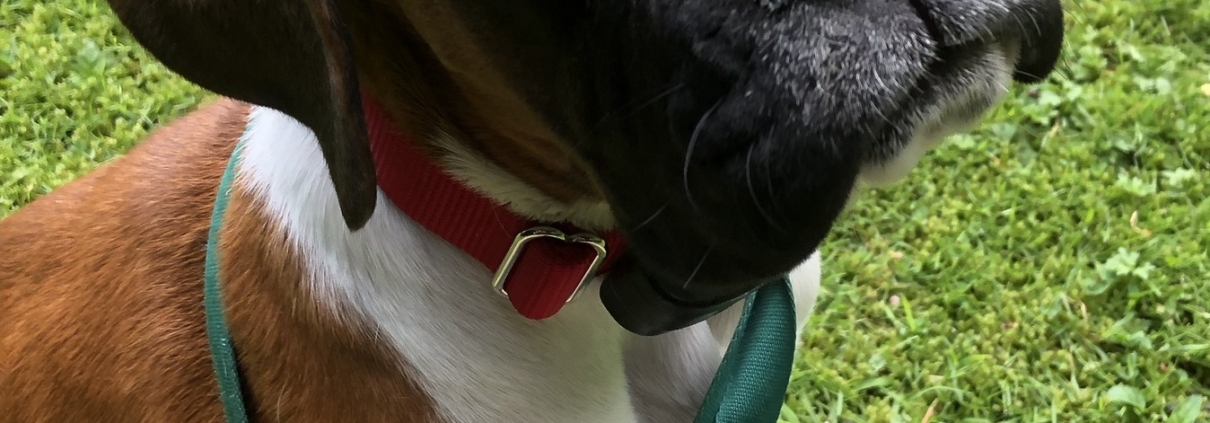
“Young Boxer puppy sitting on grass wearing a red collar and lead during DogFence boundary training session

What Age Can a Dog Use an Invisible Fence? | DogFence UK

What Age Can a Dog Use an Invisible Fence? A Complete Guide for UK Pet Owners

What age can a dog use an invisible fence? It’s one of the most common questions families ask when researching an electronic dog fence, hidden dog fence, or underground pet containment system. The truth is that most puppies can start gentle boundary training from around 12–16 weeks old, but the right time ultimately depends on your dog’s confidence, temperament, and developmental stage rather than age alone.

Over the last 22 years, DogFence Ltd has professionally installed and trained more than 20,000 pets across England using DEFRA-tested containment systems. Our expertise allows us to assess when a puppy is ready and ensure they learn calmly and confidently — without stress, confusion, or fear. This is where professional training truly makes a difference.

“Young Boxer puppy sitting on grass wearing a red collar and lead during DogFence boundary training session

The Ideal Age to Start Invisible Dog Fence Training

The general guideline is that dogs can begin training between 12–16 weeks. At this age, puppies have typically reached key developmental milestones:

  • They can focus for short periods.
  • They understand basic cues like “come” or “sit”.
  • They are alert, curious, and eager to learn boundaries.

However, it’s important to understand that age is only one part of the equation. Confidence level, sensitivity, and personality play a far greater role in determining readiness.

Why Temperament Matters More Than Age

Just like children, puppies develop at different speeds. Two 14-week-old puppies may behave completely differently during boundary training:

  • A confident puppy may take to the boundary system quickly.
  • A nervous or cautious puppy may need a slower, gentler approach.

Because we install thousands of systems each year, our trainers are skilled at identifying micro-signals that indicate whether a dog is comfortable, overwhelmed, confused, or progressing well. These subtle body-language cues include:

  • Ear movements
  • Pacing or hesitation
  • Yawning, lip-licking, or head-turning
  • Tail position changes
  • Tension across the shoulders

These are signs most owners never notice, but they are crucial to ensuring safe, gentle, and effective invisible fence training — especially for young dogs.

Benefits of Starting at the Right Time

When introduced at the right stage of development, puppies pick up boundary training extremely quickly. They enjoy the freedom of the garden, understand where they can and can’t go, and learn to respect the boundary tone without stress.

Starting too early, however, can create confusion if your puppy is not yet ready. That’s why we always assess readiness gently and individually rather than relying on a strict age rule.

Why Professional Training Is Essential for Puppies

Invisible fences, also known as electronic dog fences, underground containment systems, and invisible boundary training systems, are completely humane when introduced correctly. The technology alone won’t train your puppy — the training method is what makes the experience safe and positive.

With professional installation, your dog benefits from:

  • Gentle, step-by-step conditioning based on confidence level
  • Correct collar programming (not one-setting-fits-all)
  • Perfectly placed boundary flags for clear visual learning
  • Behaviour-sensitive training that adapts to your dog’s signals
  • A stress-free learning process using praise and positive reinforcement

DIY invisible fence kits often fall short because owners unintentionally skip steps, move too quickly, or don’t notice subtle signs of stress. Professional training prevents this, helping puppies achieve calm, consistent boundary learning.

How DogFence Ltd Trains Puppies Safely and Comfortably

At DogFence Ltd, we have refined our training method over two decades to ensure your puppy learns with confidence. Here’s how our training process works:

1. Behaviour Assessment

We begin by evaluating your puppy’s confidence, personality, responsiveness, and sensitivity. This determines the pace and approach of training.

2. Gentle Introduction to the Boundary Tone

We first teach your puppy a positive, calm association with the audible boundary tone. Our goal is to build familiarity and trust before introducing the avoidance zone.

3. Controlled Exposure to the Zone

This is done carefully, slowly, and without pressure. We watch closely for body language clues to ensure your dog feels safe and secure.

4. Praise and Reward-Based Reinforcement

Your puppy learns that stepping back into the safe zone earns praise and encouragement, building confidence and clarity.

5. Family Training

We teach you how to continue the training consistently, ensuring your puppy gets the same clear messaging from every family member.

Our structured approach is why DogFence Ltd has been trusted for over 22 years and why thousands of puppies and adult dogs now enjoy safe freedom in their gardens.

What Age Can a Dog Use an Invisible Fence – Can Very Young Puppies Use a Dog Fence?

If your puppy is under 10–12 weeks, we recommend waiting until they are developmentally ready. In the meantime, families often use temporary solutions including:

  • Puppy pens or play zones
  • Short, supervised outdoor sessions
  • Temporary fencing panels
  • Our indoor boundary systems for early safety

Once your puppy reaches the right stage, proper training can begin — and training almost always progresses extremely quickly with professional support.

Invisible Fences for Adult Dogs

Many owners assume the systems only work for puppies, but adult dogs of all ages — including senior dogs — learn the boundary system just as well. In fact, older dogs often learn faster because they are calmer and have better concentration.

We have successfully trained:

  • Nervous rescue dogs
  • High-energy working breeds
  • Independent thinkers like Terriers and Huskies
  • Dogs recovering from previous escape behaviour

No dog is ever “too old” to learn an invisible fence safely.

Why Choose DogFence Ltd?

As the UK’s longest-established installer of hidden dog fences, DogFence Ltd provides:

  • DEFRA-tested equipment
  • 22+ years of specialist installation experience
  • The longest battery life in the industry
  • Lifetime warranties on installed systems
  • Expert trainers skilled in reading dog behaviour
  • Coverage across all of England

Choosing a professional installation means your dog learns safely, your system works optimally, and you receive ongoing support whenever you need it.

Small terrier puppy standing on a sunny lawn during early DogFence boundary training

Book Professional Training & Installation Anywhere in England

If you’re considering an invisible dog fence for your puppy or adult dog, professional guidance ensures your pet learns calmly, confidently, and without confusion. We combine technology, behavioural expertise, and decades of experience to give your dog safe, reliable freedom in your garden. Our Professional Installation team will set up your fence and train your puppy for you.

Ready to protect your pet with expert training?

Ready to Keep Your Pet Safe?

Call us on
01628 476475
|
Message us on WhatsApp
|
Request a Free Quote Online
comparison of wired, wireless and GPS dog fences for UK gardens

Why traditional and GPS dog fences fail

Why Traditional and GPS Dog Fences Fail — The Truth Every Pet Owner Needs to Know

Keeping our dogs and cats safe at home is every pet owner’s top priority — but why traditional and GPS dog fences fail is a critical truth many people overlook. While these solutions seem like convenient or familiar options, they often provide a false sense of security and can lead to heartbreaking consequences. In this guide, we’ll break down exactly why traditional and GPS dog fences fail, the hidden dangers behind them, and what truly works to keep your beloved pet safe and happy.


Why Traditional and GPS Dog Fences Fail: The Hidden Truth

Traditional fencing and hedging

Traditional fencing might seem like an obvious choice, but it isn’t escape-proof. Dogs can dig under or jump over even the sturdiest fence, and cats are famous for scaling almost any barrier with ease. Hedges can hide gaps at the base, especially where wildlife has created tunnels, creating a false sense of security.

Moreover, repairs can become costly and stressful, especially after multiple escape attempts.

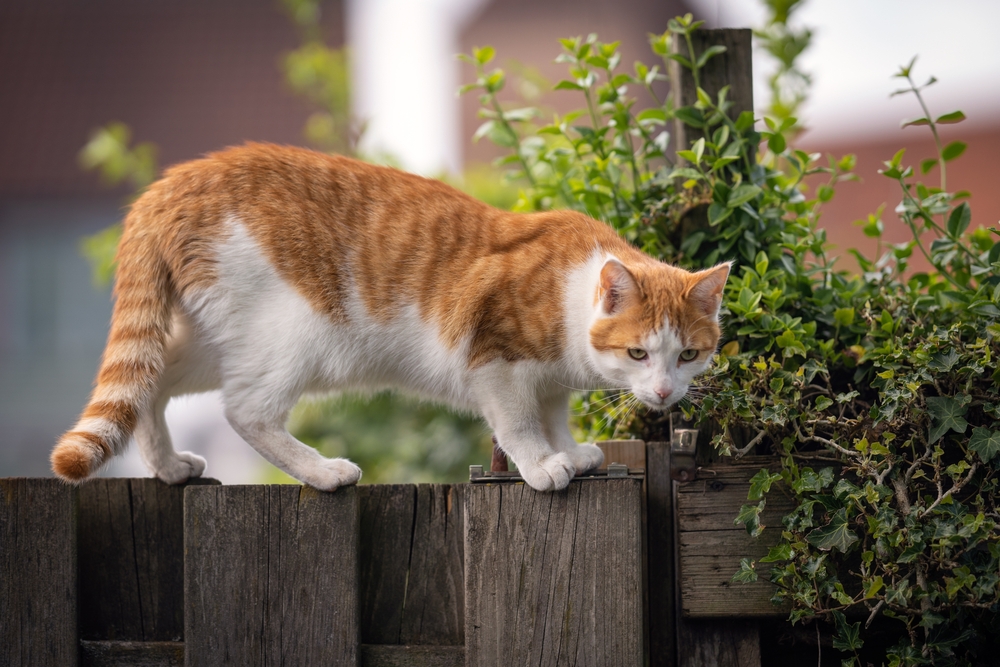
Cat escaping over fence showing why traditional and GPS dog fences fail to keep pets safe

Cats can easily scale traditional fences and GPS collars are heavy and inaccurate.


Why wireless dog fences disappoint

Wireless dog fences promise a quick, easy installation without digging. However, they rely on a circular boundary, which rarely suits the shape of UK gardens. Interference from trees, hedges, walls, and slopes can create unreliable or inconsistent boundaries.

Many dogs simply run through these zones when excited or scared. Once your dog crosses the line, they may not return due to the correction they receive on re-entry.


GPS dog fences and tracker collars: The critical misunderstanding

It’s crucial to understand the difference between tracking and containment.

GPS dog fences and GPS tracker collars do not stop your pet from leaving; they only show you where your pet has gone after they’ve escaped. Signal delays and coverage gaps can make these systems unreliable, especially in wooded or rural areas.

A heartbreaking real-world example:

“I bought a GPS collar hoping it would keep my cat safe. One night, the tracker took me to a road where I found her injured and had to put her to sleep. It didn’t prevent her from getting there.” — Story shared on East Dulwich Forum.

This tragic story highlights exactly why traditional and GPS dog fences fail when you need them most.


The risks of inadequate containment

When containment fails, the consequences can be severe:

  • Traffic accidents

  • Attacks on livestock or wildlife

  • Theft or loss

  • Stressful recovery attempts

  • Possible legal liabilities for owners


Why Wired Dog Fences Work: Proven, Reliable, and Safe

Wired electronic dog fences stand out because they offer consistent boundary signals, long battery life, and professional setup with expert training. Unlike GPS or wireless systems, they are not affected by trees, slopes, or interference, ensuring reliable containment in any garden. Our wired systems are also DEFRA tested and approved for safety and welfare. With our professional installation and training service, your pet learns clear, safe boundaries quickly and happily.

Why Choose a Wired Dog Fence?

  • 100% Consistent — no confusion for your pet
  • Long battery life
  • Keeps pets safe in their garden
  • Protects livestock and wildlife
  • Pets stay safe and enjoy freedom
  • Reduces stress for the owner
  • Lifetime warranty for peace of mind


How different containment options compare

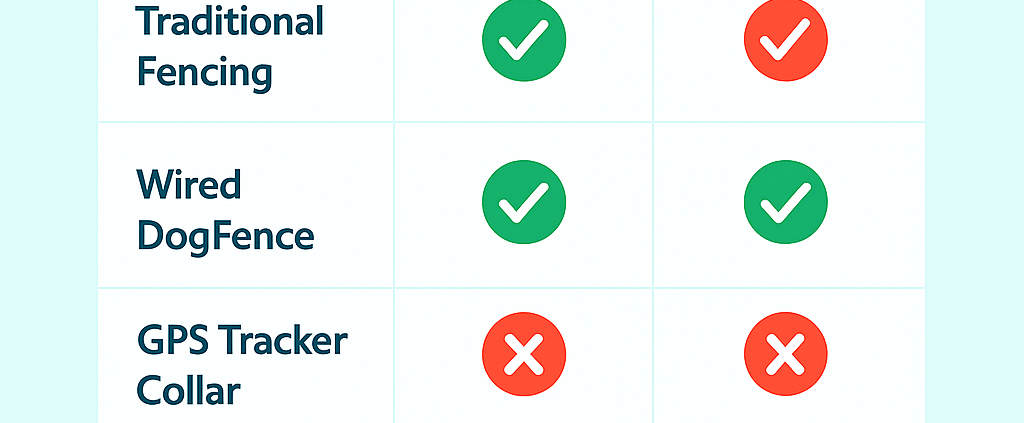
To help visualise why traditional and GPS dog fences fail, we created this simple, clear infographic comparing popular options. You can also read more in detail on our GPS and wireless dog fence comparison page.

Comparison chart showing why traditional and GPS dog fences fail and why wired dog fences are effective for pet containment

See why traditional and GPS dog fences fail compared to the proven effectiveness of wired dog fences for pet safety


Why a DEFRA-tested wired dog fence is the safe choice

A professionally installed, wired electronic dog fence — like our DogFence system — offers:

DEFRA approval, guaranteeing compliance with animal welfare standards.
✅ Effective containment for both dogs and cats.
✅ Adaptable to any garden shape, terrain, or landscaping.
✅ Reliable training with clear boundaries your pet understands.
✅ Peace of mind for you and freedom for your pet.


What our customers say

“This system has transformed our lives. Our spaniel Molly used to jump the fence constantly. We tried reinforcing it and even bought a GPS collar, but nothing worked. With DogFence, she now enjoys the garden safely, and we have total peace of mind.” — Verified Google Review


Call us today to find out what really works

The evidence is clear: why traditional and GPS dog fences fail comes down to one fact — they don’t truly contain your pet before danger strikes.

If you want reliable, proven protection, a DEFRA-tested wired dog fence is the safest and most humane solution.


Request a free quote today or
call us now on 01628 476475.

Your pet deserves the very best.


Are dog fences legal in the UK overview of relevant legislation including Dangerous Dogs Act and Animals Act

UK Dog Fence Law: Your 2025 Guide to Legal Compliance

UK Dog Fence Law: Are Dog Fences Legal in the UK? (2025 Guide)

Are Dog Fences Legal in the UK?

Yes. Electronic dog fences are legal in the UK.

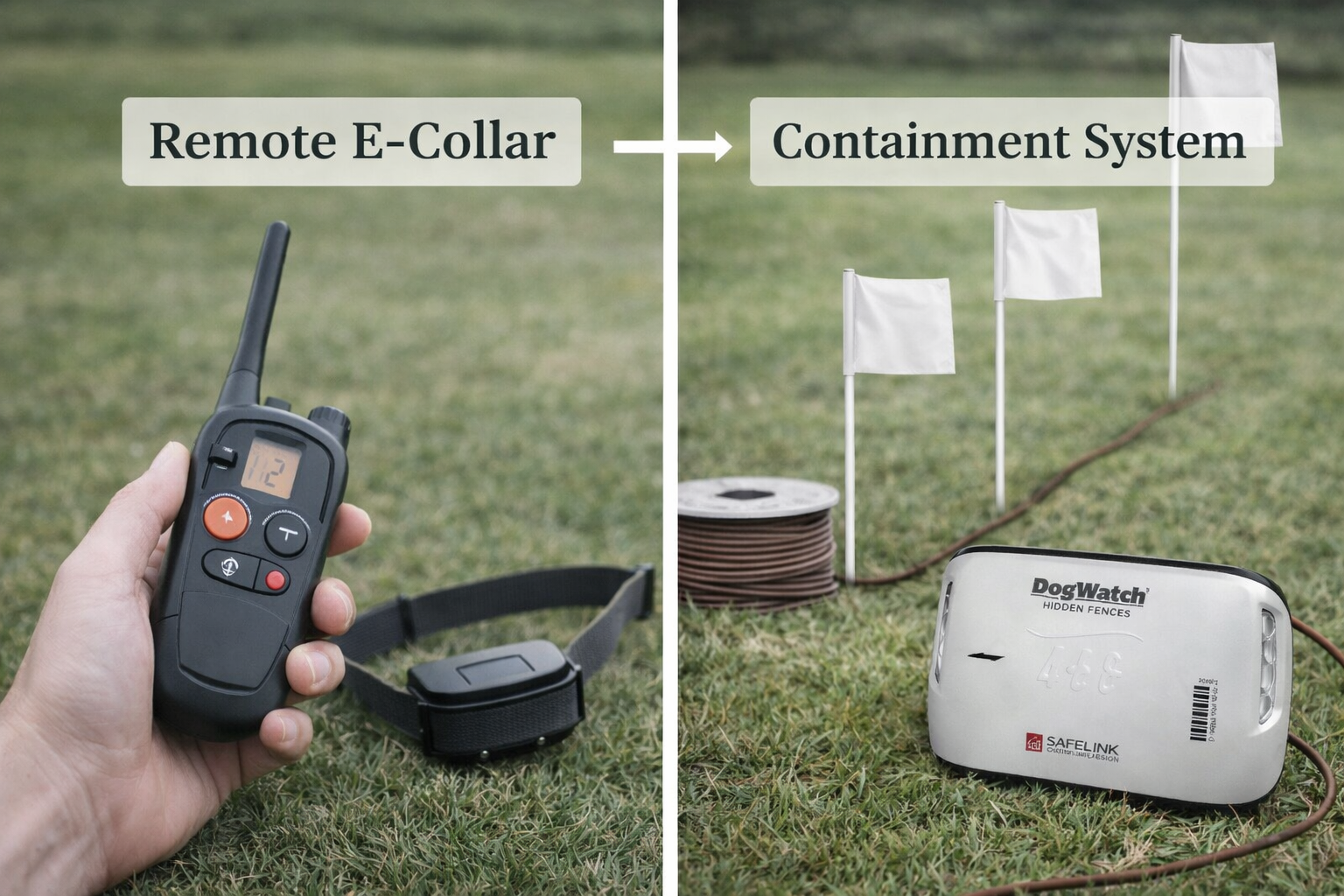
Electronic containment systems — often called invisible dog fences or underground dog fences — are not banned under UK law. The confusion arises from legislation that banned certain hand-held remote training collars, not containment systems.

Understanding UK dog fence law is essential before installing any boundary system. This guide explains what is legal, what is banned, and how responsible containment fits within UK animal welfare legislation. Many owners also ask, are invisible fences humane, particularly in light of the UK electric collar ban.

Comparison between remote e-collar and electronic dog fence containment system with brown boundary wire and white training flags


What Does the UK Electric Collar Ban Actually Cover?

In 2018, the UK government announced a ban on hand-held remote controlled e-collars under amendments to the Animal Welfare Act 2006.

The key distinction:

  • ❌ Hand-held remote training collars (designed to deliver a stimulus at the press of a button) — restricted.
  • ✅ Electronic containment systems (automatic boundary systems triggered by crossing a defined line) — not banned.

The government stated clearly it did not intend to ban invisible fencing containment systems.

This is the critical legal distinction many articles fail to explain.


What Law Governs Dog Fences in the UK?

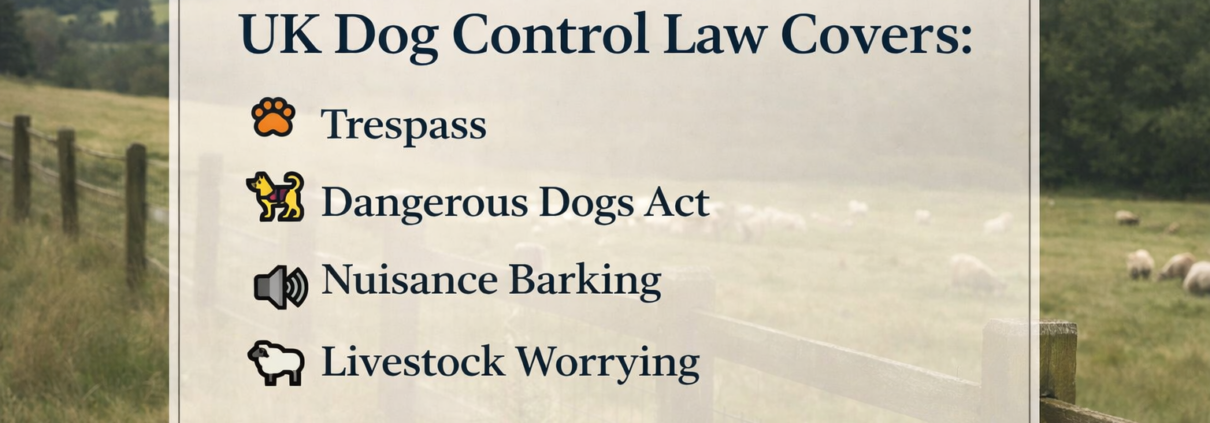
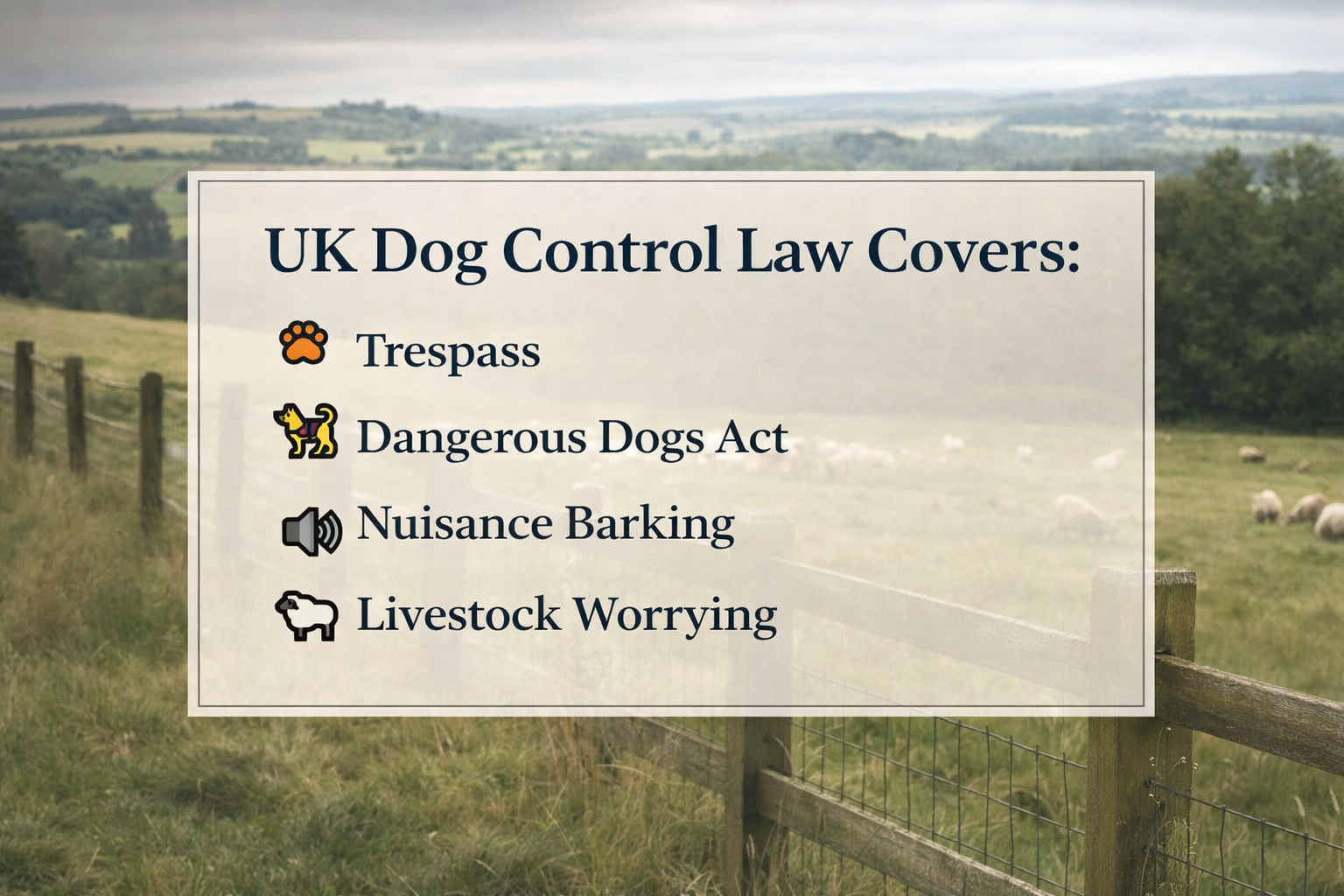
Several areas of UK legislation apply when considering whether dog fences are legal in the UK. Electronic containment systems are not regulated by a single “dog fence law”, but instead fall under broader animal welfare, dog control, and livestock protection legislation. Understanding how these laws interact helps clarify the legal status of invisible and electric dog fences in England. Dog fences fall under general animal welfare and control legislation, including:

Graphic outlining UK dog control law including trespass, Dangerous Dogs Act, nuisance barking and livestock worrying

  • Animal Welfare Act 2006
  • Dangerous Dogs Act 1991
  • Dogs Act 1871
  • Animals Act 1971
  • Protection of Livestock Act 1953

None of these prohibit containment systems.

However, owners remain legally responsible for:

  • Keeping their dog under control
  • Preventing livestock worrying
  • Preventing injury to people or property

A containment fence can support compliance — but it does not replace responsible ownership. Owners regularly ask, “Can I use an electric dog fence in the UK?” The answer is yes — provided it is used responsibly and in line with animal welfare legislation.


Are Electric Dog Fences Illegal?

No. Electric dog fences are legal in England.

They are classed as containment systems, not remote punishment devices.

The key legal and welfare factors are:

  • The system must be used responsibly
  • Training must be appropriate
  • The dog must not suffer unnecessary harm
  • The system must be suitable for the dog’s size and temperament

Poor installation or misuse could raise welfare concerns under the Animal Welfare Act 2006 — but the system itself is not unlawful.


Are Invisible Fences Humane?

When professionally installed and correctly introduced, containment systems are widely considered humane because they:

  • Use a warning tone before correction
  • Deliver a brief, proportionate static stimulus (not a continuous shock)
  • Stop correction immediately once the dog retreats
  • Create a predictable, consistent boundary

The differences between an invisible dog fence over an electric collar:

  • Use a warning tone before correction
  • Deliver a brief static stimulus (not continuous shock)
  • Stop correction once the dog retreats
  • Prevent dogs entering dangerous areas

In rural settings especially, containment can help prevent:

  • Road accidents
  • Livestock worrying offences
  • Legal disputes with neighbouring landowners

Used correctly, they function as a boundary training tool rather than a punishment device.


Do I Need Planning Permission for a Dog Fence?

Underground containment systems do not require planning permission because they involve no visible structure and do not alter boundary height.

  • There is no visible physical structure
  • No permanent fence panels are erected
  • No height restrictions apply

This makes containment particularly attractive in:

  • Conservation areas
  • Listed properties
  • Open countryside
  • Large rural estates

What About Rural Properties and Livestock Law?

Under the Protection of Livestock Act 1953 and Animals Act 1971, dog owners are legally responsible if their dog worries livestock.

A secure boundary system can significantly reduce the risk of:

  • Criminal prosecution
  • Civil compensation claims
  • A farmer exercising legal defence rights

In this context, containment systems often act as a preventative legal safeguard rather than merely a convenience.


Can Using a Dog Fence Help Me Stay Within the Law?

Yes — if used correctly.

A well-installed containment system can:

  • Demonstrate proactive control measures
  • Reduce escape risk
  • Protect livestock
  • Protect neighbouring property
  • Support responsible ownership

However, no system removes your legal responsibility entirely.

You must still:

  • Train your dog
  • Maintain equipment
  • Supervise appropriately

Common Questions About UK Dog Fence Law

Are dog fences banned in England?

No.

Are invisible fences illegal?

No.

Is the UK electric collar ban the same thing?

No. The ban relates to hand-held remote trainers, not automatic containment boundaries.

Can I install one myself?

Yes, but professional installation ensures correct calibration and welfare compliance.


The Bottom Line on UK Dog Fence Law

Electronic dog fences are legal in the UK. The UK electric collar ban did not include electronic containment systems.

They are not included in the electric collar ban and remain lawful when used responsibly under existing animal welfare legislation. Much of the confusion comes from misunderstanding the difference between remote training collars and fixed containment systems.

When professionally installed and correctly introduced, a containment fence can:

  • Improve safety by preventing escapes
  • Reduce legal risk and potential liability
  • Support compliance with UK dog control and livestock laws
  • Protect neighbouring property and livestock
  • Give owners peace of mind in both rural and residential settings

However, no system replaces responsible ownership. Proper training, correct collar fitting, and ongoing management are essential to ensure both legal compliance and animal welfare.

A well-implemented containment system is not about restriction — it is about creating safe, clear boundaries that protect dogs, livestock, and owners alike.

Stay Safe. Stay Legal. Protect Your Dog.

If you’re unsure whether a dog fence is legal for your property, or want to ensure full compliance with UK dog fence law, our experienced team can guide you clearly and responsibly.

Call us on
01628 476475
|
Message us on WhatsApp
|
Request a Free Quote Online
New Pet Travel Rules for Dogs

Call: 01628 476475
WhatsApp: 07917 034256
Email: info@dogfence.co.uk

New Pet Travel Rules for Dogs Coming into Force in June 2025

From 4 June 2025, pet owners in Great Britain (England, Scotland, and Wales) will experience new rules when travelling with dogs (and cats or ferrets) to Northern Ireland, thanks to the newly introduced Northern Ireland Pet Travel Scheme (NIPTS).

These updated dog travel rules UK wide have been put in place to streamline the previous process, which included obtaining an Animal Health Certificate, rabies vaccinations, and (for dogs) tapeworm treatments. The NIPTS aims to simplify everything for pet owners while keeping biosecurity high.


Dog Travel Rules – What’s Changing?

Under the new scheme, pet owners will need to apply for a free Northern Ireland Pet Travel Document (PTD) instead of the previous complex requirements. This PTD will be valid for the lifetime of the pet, making it easier to travel with your pet to Northern Ireland in the future.

Dog owner holding pet passport complying with new Northern Ireland pet travel scheme

Preparing your dog’s pet travel document is essential for complying with the new UK and Northern Ireland pet travel rules coming into effect in June 2025. Make sure your furry friend is microchipped and ready for stress-free travel with the Northern Ireland Pet Travel Scheme.


How to Qualify for a Pet Travel Document

To get a PTD, you’ll need:

  • A microchipped pet
  • Proof of residence in Great Britain
  • A signed declaration confirming you won’t use the PTD to travel on into the EU or Republic of Ireland

You can apply for the PTD through the GOV.UK website.


Travelling with Your Dog to Northern Ireland

If you’re planning on travelling with pets from England to Northern Ireland, here’s what you need to know:

  • Ferry Travel: You’ll need to scan your dog’s microchip at the port. If the chip can’t be read or you have an issue, report to the Sanitary and Phytosanitary (SPS) Inspection Facility upon arrival.
  • Air Travel: Notify DAERA (Department of Agriculture, Environment and Rural Affairs) at least 10 working days in advance by emailing daeratradeimports@daera-ni.gov.uk.

Remember, if you plan to continue your trip into the EU (including the Republic of Ireland), the PTD will not be valid. You’ll still need a rabies vaccine, an Animal Health Certificate, and (for dogs) tapeworm treatment.


What if You Live in Northern Ireland?

If you’re a Northern Ireland resident, you do not need a PTD to return home from Great Britain. However, your pet must be microchipped.

These pet travel restrictions UK 2025 are particularly important for families who regularly travel between England and Northern Ireland or holiday with their pets.


Final Thought for Travelling with Your Dog

The new dog travel rules coming into effect in June 2025 mark an important update for pet owners travelling between Great Britain and Northern Ireland. These changes simplify the process by introducing the Northern Ireland Pet Travel Document (PTD), making it easier and more convenient for families to take their beloved pets on trips without the previous paperwork hassle.

However, it’s crucial to prepare ahead—ensuring your dog is microchipped, understanding when the PTD applies, and knowing the restrictions if you plan to travel onward to the Republic of Ireland or the EU.


✈️ Planning a trip this summer? Ensure your dog is safe at home while you’re away. Check out our smart pet fencing solutions designed for rural properties and large gardens.

At DogFence Ltd, we know how much your pet’s wellbeing matters, both at home and when you’re away. While you plan your travels and make sure your dog meets the new travel requirements, consider how secure and comfortable your pet is in your own garden. Our smart electronic dog fences offer reliable containment tailored for country properties, giving you peace of mind and your dog the freedom they deserve.

Travel confidently this summer knowing you’re fully prepared—and your dog is safe, whether on the road or at home.

At DogFence Ltd, we care about keeping your pets safe—whether you’re at home or away. If you have any questions about containment or safety, we’re always happy to help. Call us today:

Call: 01628 476475
WhatsApp: 07917 034256
Email: info@dogfence.co.uk

Training Your Dog to an Electronic Fence the Right Way

{
“@context”: “https://schema.org”,
“@type”: “Article”,
“headline”: “Training Your Dog to an Electronic Fence: A Positive Approach to Pet Safety”,
“image”: “https://dogfence.co.uk/wp-content/uploads/2018/10/ward-training-dog-caroline.jpg”,
“author”: {
“@type”: “Organization”,
“name”: “DogFence Ltd”
},
“publisher”: {
“@type”: “Organization”,
“name”: “DogFence Ltd”,
“logo”: {
“@type”: “ImageObject”,
“url”: “https://dogfence.co.uk/wp-content/uploads/2021/09/dogfence-logo.png”
}
},
“datePublished”: “2025-05-10”,
“dateModified”: “2025-05-10”,
“description”: “Training your dog to an electronic dog fence is an essential part of using any dog containment system. At DogFence Ltd, we offer professional and self-install kits, with full guidance and training to ensure your dog understands their boundaries and stays safely contained.”,
“mainEntityOfPage”: “https://dogfence.co.uk/posts/training-your-dog-to-an-electronic-fence-a-positive-approach-to-pet-safety/”,
“review”: {
“@type”: “Review”,
“author”: {
“@type”: “Person”,
“name”: “Edward Trewhella”
},
“datePublished”: “2024-06-05”,
“reviewBody”: “This company are top rank. They quoted over the phone, a gentleman came and installed the cable around a large area and trained the wayward dog to beware it. He was excellent with all our four dogs and extremely nice and helpful – he had also come a long way to install our system – in Cornwall. Since then the fence has worked fantastically with the dog hearing the audible warning and as far as we know has never even been ‘zapped’ such was the excellent training given by the installer. All in all a truly excellent experience, superlatives fail me.”,
“name”: “Excellent Training and Service”
},
keywords”: “electronic dog fence, dog fence training, self-install dog fence, pet containment, dog safety, dog training
}

Training Your Dog to an Electronic Fence: A Positive Approach to Pet Safety

Training your dog to an electronic dog fence is an essential part of using any dog containment system. Whether you have a professionally installed fence or a self-installed dog fence, proper training ensures your pet understands their boundaries and stays safely contained. At DogFence Ltd, we provide on-site training with all our professional installations, and offer full guidance for self-install kits, so your dog can be trained safely and successfully.

Why is training so important?

An electronic dog fence works by sending a radio signal through a wire placed around the boundary of your property. Your dog wears a small receiver collar which emits a warning tone as they approach the boundary. If they ignore the tone and continue forward, they receive a mild static impulse—enough to discourage them from crossing the line, but not strong enough to cause harm.

However, dogs don’t instinctively understand these signals. Without training, they may become confused or anxious, or simply ignore the warnings. That’s why the training process is so vital—it teaches your dog to understand the audio warning and to respond by retreating to the safe area.

Positive, dog-friendly training methods

We believe in kind, clear, and consistent training. Our methods are based on decades of experience and are designed to suit all dog breeds and temperaments. Here’s what makes our training so effective:

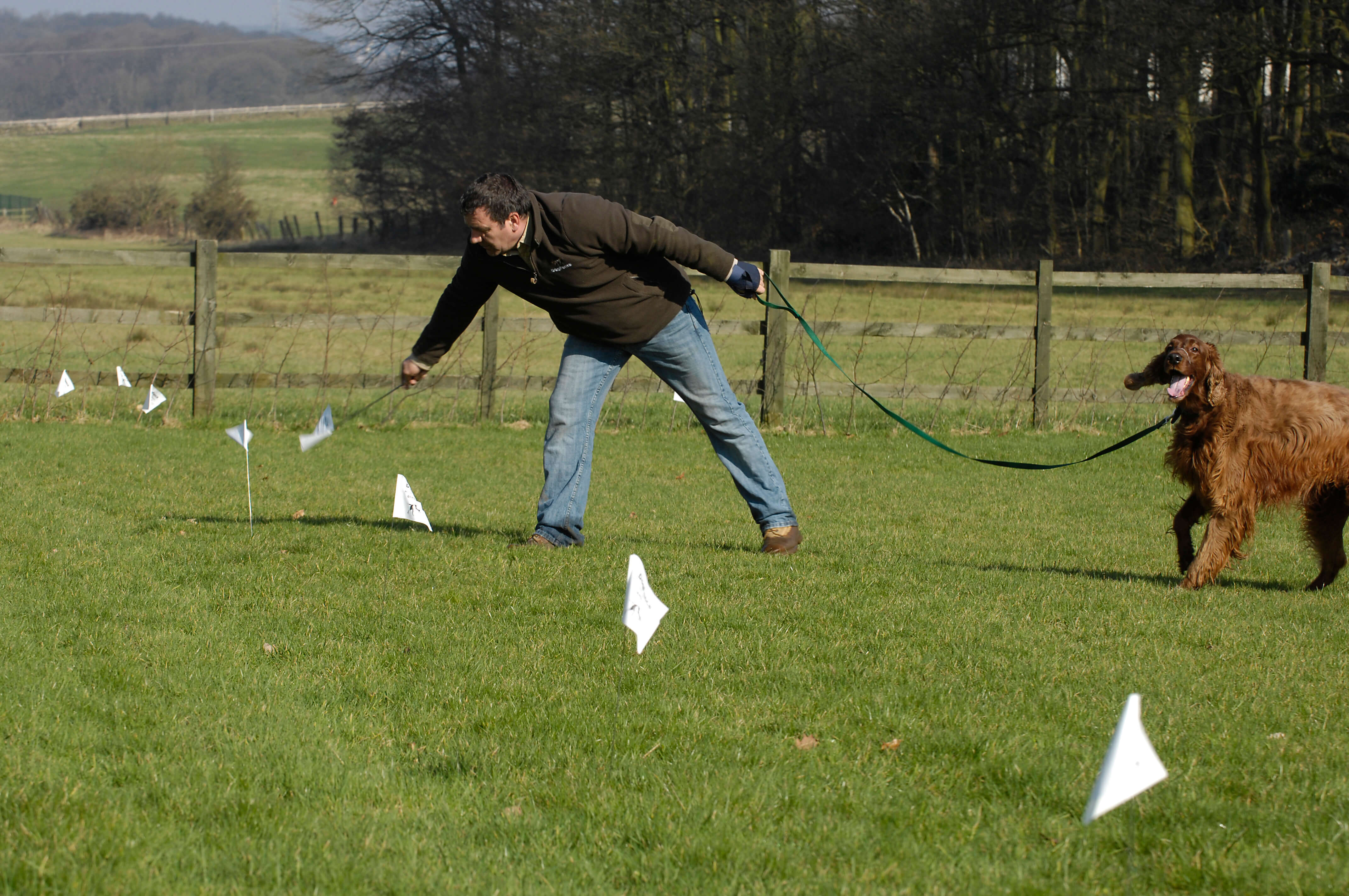
  • Gentle introduction: We start with visual cues (white training flags) and lead training before introducing the collar.
  • Step-by-step approach: Training is phased over several days so your dog can build confidence at their own pace.
  • Calm environment: We always begin training when the dog is relaxed and focused.
  • Owner involvement: You play a key role in reinforcing good behaviour with praise and encouragement.
Top Tip: Keep initial training sessions short and always end on a positive note. A few successful minutes is far more effective than a long, stressful session.

What to expect on installation day

If you choose a professionally installed system, one of our experienced trainers will guide you and your dog through the first training session. We’ll walk the boundary together, introduce the audio tone, and demonstrate how to guide your dog back to safety.

We also explain how to read your dog’s behaviour and how to build up off-lead confidence over the coming days. Most dogs learn the system within just a few sessions.

dog-fence-training-day.jpg

Dog in training to the electronic dog fence

Self-install kits: Can I train my dog myself?

Yes! Our self-install kits include comprehensive training guides, videos, and access to expert support. We’ll talk you through how to set up the system, fit the collar, and train your dog in a safe and structured way. Many owners choose this option and achieve excellent results.

The key is consistency—train your dog every day for short sessions, use clear commands and plenty of praise, and don’t rush the process.

Common training challenges (and how to overcome them)

  • My dog ignores the tone: Ensure the collar is fitted snugly and that you’re reinforcing the warning with leash guidance in the early stages.
  • My dog is nervous: Go slowly. Reassure your dog and use high-value treats and gentle praise to build confidence.
  • Multiple dogs: Train each dog individually before letting them out together. This helps avoid distraction and builds understanding.

What Our Customers Say

At DogFence Ltd, we pride ourselves on delivering exceptional service and training for every pet. Here’s what one of our customers had to say about their experience:

“This company are top rank. They quoted over the phone, a gentleman came and installed the cable around a large area and trained the wayward dog to beware it. He was excellent with all our four dogs and extremely nice and helpful – he had also come a long way to install our system – in Cornwall. Since then the fence has worked fantastically with the dog hearing the audible warning and as far as we know has never even been ‘zapped’ such was the excellent training given by the installer. All in all a truly excellent experience, superlatives fail me.”

– Edward Trewhella

We are proud to help pet owners across the UK, and this feedback is just one example of the great experiences our customers have with us. If you’d like to learn more about our systems or book an installation, don’t hesitate to get in touch.

A lasting result

With proper training, your dog will learn to stay within the boundaries—even without wearing the collar. It becomes a habit, a part of their understanding of the home environment. That means freedom for your dog and peace of mind for you.

Thousands of families across the UK trust DogFence to protect their pets. If you’re thinking about installing a dog fence, or if you’re unsure how to train your dog to an existing system, get in touch with us—we’re happy to help. Electronic pet fencing has been safely used for over 50 years but in the UK it is still relatively unheard of – read what the US Pet Meds say about electronic pet fences.


Want to speak with a dog training expert?
Call us on 01628 476060 or email info@dogfence.co.uk. We’re here to help you every step of the way.


Pet Trackers vs Invisible Dog Fences: Which Is Safer?


Pet Trackers vs Invisible Dog Fences: Which is Best for Your Dog’s Safety?


Dilemma? Confused about Pet Trackers vs Invisible Dog Fences? In an increasingly tech-savvy world, pet owners have more options than ever to ensure their furry friends stay safe. Two popular technologies that often get compared are pet trackers and invisible dog fences. While both aim to protect your pet, they serve different purposes and are suited to different types of dogs, cats, homes, and lifestyles. So, which is right for you?

Comparison of a pet tracker and invisible dog fence, highlighting the differences in protecting pets with GPS tracking versus a boundary-containment system

Pet Tracker vs Invisible Dog Fence: A comparison of two technologies designed to keep your dog safe

What Are Pet Trackers?

Pet trackers, often GPS-enabled collars or tags, allow you to monitor your pet’s location in real time. They’re typically connected to a mobile app and offer features like:

  • Real-time GPS tracking
  • Activity monitoring (like Fitbits for pets)
  • Geo-fencing with alerts when your pet leaves a defined area

These devices are great for urban settings or on-the-go lifestyles—like if your dog comes to work with you or joins you on hikes.

However, they have limitations:

  • They don’t prevent your pet from leaving the property.
  • They rely on a mobile network and battery life.
  • There’s often a monthly subscription fee.

Explore more about keeping dogs safe in urban environments.

What Are Invisible Dog Fences?

Invisible dog and cat fences, such as the professionally installed DogFence.co.uk electronic pet containment system, create a safe boundary using a buried wire or wireless signal. When your dog approaches the boundary, a warning beep is followed by a mild correction if they continue.

Benefits include:

  • 24/7 containment—even when you’re not home
  • Effective for large properties and rural areas
  • Customisable boundaries for gardens, driveways, ponds, etc.
  • Safe for multi-pet households

Unlike pet trackers, invisible dog fences actively prevent your pet from escaping, giving you peace of mind when your dog is outside unsupervised.

Curious how it works? Visit our Invisible Dog Fence page.

Side-by-Side Comparison

Feature Pet Tracker Invisible Dog Fence
Function Tracks pet location Prevents pet from leaving a boundary
Real-time alerts Yes Yes (audible/correction cues for pets)
Relies on signal Yes – needs GPS & phone signal No – uses radio signal – buriedPet Tracker vs Invisible Dog Fence: A comparison of two technologies designed to keep your dog safewire
Subscription needed Often yes No
Battery powered Yes (rechargeable) – Heavy Yes (collar receiver) – Lightweight
Installation Plug and play Professional or DIY setup available
Best for Walks, travel, urban pets Home and garden containment

Why Choose One Over the Other?

If you are still confused over Pet Trackers vs Invisible Dog Fences this may help?

  • Use a pet tracker if your dog is often with you, you enjoy tracking their activity, or you need a backup in case of escape.
  • Choose an invisible fence if your top priority is preventing your dog from leaving your property in the first place.

In fact, some of our customers use both! The tracker gives them peace of mind when out and about, while our invisible dog fence protects their pet at home.

Thinking about installing a dog fence? Check out our DIY SmartFence system or contact us for professional installation.

Final Thoughts

Your pet’s safety is everything. While pet trackers offer real-time location updates, they don’t stop your dog from wandering into danger. Our invisible dog fences offer a proactive solution—training your pet to stay safe within a defined boundary.

Still unsure? Contact our team and let us help you choose the best fit for your lifestyle.

Call us: 01628 476475


pet containment fence - stop adder bites for dogs who escape

Adder Alert: Protecting Dogs from Snake Bites in the UK

Adder Bites in Dogs: A Growing Concern for UK Pet Owners

Vet warns dog owners of the risks of  dog adder bites in warmer weather after a family dog was left fighting for his life.

Five-year-old field spaniel, Buddy, was believed to have been bitten by an adder while sniffing out sand dunes in North Wales and spent almost two weeks fighting for his life at a Veterinary Hospital in Hartford. This harrowing experience serves as a stark reminder of the hidden dangers that can lurk in seemingly harmless environments, especially during warmer months when adders are most active.

Understanding the Threat: The Seriousness of Adder Venom

The venom was so toxic, it caused the skin on Buddy’s abdomen to blacken, die, and peel off, while simultaneously causing severe damage to his liver, leaving vets extremely concerned. This case highlights the potentially devastating impact of adder venom on a dog’s internal organs and skin.

Veterinary surgeon, said, “Obviously, these things are very difficult to predict. It’s more about getting the message out there that it is a risk and to follow the necessary advice. Snakes are more common in some places than others, and tall grassland is a particular risk. It’s definitely something to bear in mind if you have a wandering dog.pet containment fence - stop dog adder bites for dogs who escape

“The majority of bitten dogs make a full recovery with appropriate treatment. However, Buddy was really, really poorly when he came to us and it is only through extensive supportive liver medications, broad spectrum antibiotics and fluid therapy that he came through.

“We’ve not seen a case as severe as this before and we believe the dog had multiple bites.”

The dogs owners, were on holiday in North Wales when their pooch was suspected of being bitten while investigating a recently strimmed area of grassland close to the sand dunes. Although he continued to play and fetch his ball normally, he became lethargic when they returned home and later developed soreness and pain on his left side.

The couple sought veterinary advice on holiday and it was suspected their dog had pulled a muscle but his condition gradually deteriorated and they were forced to return to their home early. “We were told we were not out of the woods, even with his liver enzyme levels started to come down. It really was touch and go.”

This case underscores that while many dogs recover well, severe cases can be life-threatening and require intensive veterinary care. The multiple bites likely contributed to the severity of Buddy’s condition.

Recognising the Signs: What to Look For After a Dog Adder Bite

Buddy’s owners did not notice the bites until they returned home from their trip. Buddy had started to develop bruising around his groin area when he returned home and his owners took him to the vets for  investigation. Upon inspection and testing his owner noted “his bloods and his liver enzymes were through the roof.”

Key takeaway for dog owners: Symptoms of an adder bite might not be immediately apparent, often taking one to three hours to manifest. Be vigilant for:

  • Lethargy and unusual quietness
  • Pain and swelling, particularly around the bite site (often on the limbs, face, or chest)
  • Bruising, especially around the affected area
  • Vomiting or diarrhoea
  • Lameness
  • Increased heart rate
  • In severe cases, collapse or difficulty breathing

“Quite a number of people who are dog owners have no idea this can happen. Of course we don’t want to scare people but if there’s any chance a dog has been bitten you need to know what to do quickly because the symptoms might not show for one to three hours.

The dog had started to develop bruising around his groin area when he returned home from North Wales. “his bloods and his liver enzymes were through the roof.”

Dog adder bites and even other snake bites in dogs are uncommon in the UK but they can occur, particularly in spring and summer and interestingly between 3pm and 4pm in the afternoon when the adders are most active.

You can identify an adder as a greyish snake, with a dark and very distinct zig-zag pattern down its back, and a red eye. Males tend to be more silvery-grey in colour, while females are more light or reddish-brown.

The message is, if you notice anything unusual, take your dog to a vet immediately. It’s better to err on the side of caution.

There are so many dangers out there for your pet, especially one who has escaped and is roaming unsupervised. As a responsible pet owner, it is important to ensure your pet is contained. Dog Fence provides a pet containment system in the form of a wireless dog fence which works on radio frequency as opposed to electric dog fences and is an effective solution for pet owners with the most cunning of escape artist dogs. Get in touch with our friendly team to discuss your needs today!

Adder Hotspots and Peak Activity Times

Snake bites in dogs are uncommon in the UK, but they can occur, particularly in spring and summer when adders emerge from hibernation and are more active. Interestingly, adders are often most active between 3 pm and 4 pm in the afternoon. Some Vets have reported increases in cases year-on-year, from May 2025 (referring to data between 2023 and 2024) indicated a 44% rise in adder-related pet emergencies seen by Vets. Dog adders bites are the most deadly and with rising statics it is important to bring awareness to UK dog owners,

You can identify an adder as a greyish snake with a dark and very distinct zig-zag pattern down its back and a red eye. Males tend to be more silvery-grey in colour, while females are more light or reddish-brown.

Common Adder Habitats in the UK:

  • Heaths and moorlands
  • Woodlands and areas with dense undergrowth
  • Sand dunes and coastal areas
  • Rough grasslands

Immediate Action: What to Do if Your Dog is Bitten

The message is clear: if you notice anything unusual, take your dog to a vet immediately. It’s better to err on the side of caution. Even if you’re unsure if it was a snake bite, prompt veterinary attention is crucial.

If you suspect your dog has been bitten by an adder:

  1. Stay calm: Keep your dog calm and still to minimise the spread of venom.
  2. Carry, don’t walk: If possible, carry your dog to your car to reduce physical exertion.
  3. Contact your vet immediately: Call ahead to your veterinary practice so they can prepare for your arrival.
  4. Do NOT try to suck out the venom or apply a tourniquet.
  5. Do NOT wash the wound.
  6. Do NOT apply ice or heat.

Preventing Adder Bites: Responsible Pet Ownership

While you cannot completely contain your pet when out walking, especially if they are off the lead, there are steps you can take to minimise the risk:

  • Keep dogs on a lead in high-risk areas: Especially in tall grass, heathlands, or areas known for adder populations.
  • Be aware of your surroundings: Look out for adder habitats and observe where your dog is exploring.
  • Consider recall training: A strong recall can help you quickly remove your dog from a potentially dangerous situation.

If you want to learn more about the risk and effects of snakes bites the Animal Poison Line gives helpful information.

The Importance of Pet Containment for Overall Safety

There are so many dangers out there for your pet, especially one who has escaped and is roaming unsupervised. As a responsible pet owner, it is important to ensure your pet is contained, not just for protection against adders, but also from roads, other animals, and getting lost. Whilst dog adder bites are relatively low, the consequences and dangers make it imperative to know what to do and how to recognise a bite.

Dog Fence Ltd provides pet containment solutions, our electronic dog fences  work on a radio frequency and create an invisible but safe boundary around your property to keep your safe and free. Learn more here. This offers an effective solution for pet owners with even the most cunning of escape artist dogs, providing peace of mind and enhanced safety for your beloved companion within your property.

Get in touch with our friendly team to discuss your needs today and find out how we can help you create a secure environment for your pet.

Please share this post to increase awareness amongst pet owners! Thank you! For further information on how we can keep your dogs and cats safe call us today on 01628 476475 or email us info@dogfence.co.uk.