How to keep a dog safe in the garden

How to Keep Your Dog Safe in the Garden

How to Keep a Dog Safe in the Garden

How to keep a dog safe in the garden starts with creating a secure outdoor space, checking for escape routes and hazards, and giving your dog clear boundaries. Good dog garden safety allows your dog to run, play and explore while reducing the risk of them escaping, reaching a road or wandering into areas where they could be at risk.

Every dog owner wants to see their dog enjoying the garden without constantly worrying about an open gate, a gap in the hedge or a tempting escape route. But every property – and every dog – is different. A determined digger needs a different approach from a dog that bolts through an open driveway, while rural properties can present completely different challenges from smaller suburban gardens.

The good news is that effective garden security for dogs doesn’t have to mean restricting their freedom. By identifying the risks around your property and creating boundaries your dog understands, you can work towards a safe off-lead garden where your dog has the freedom to enjoy being outdoors while remaining safely at home.
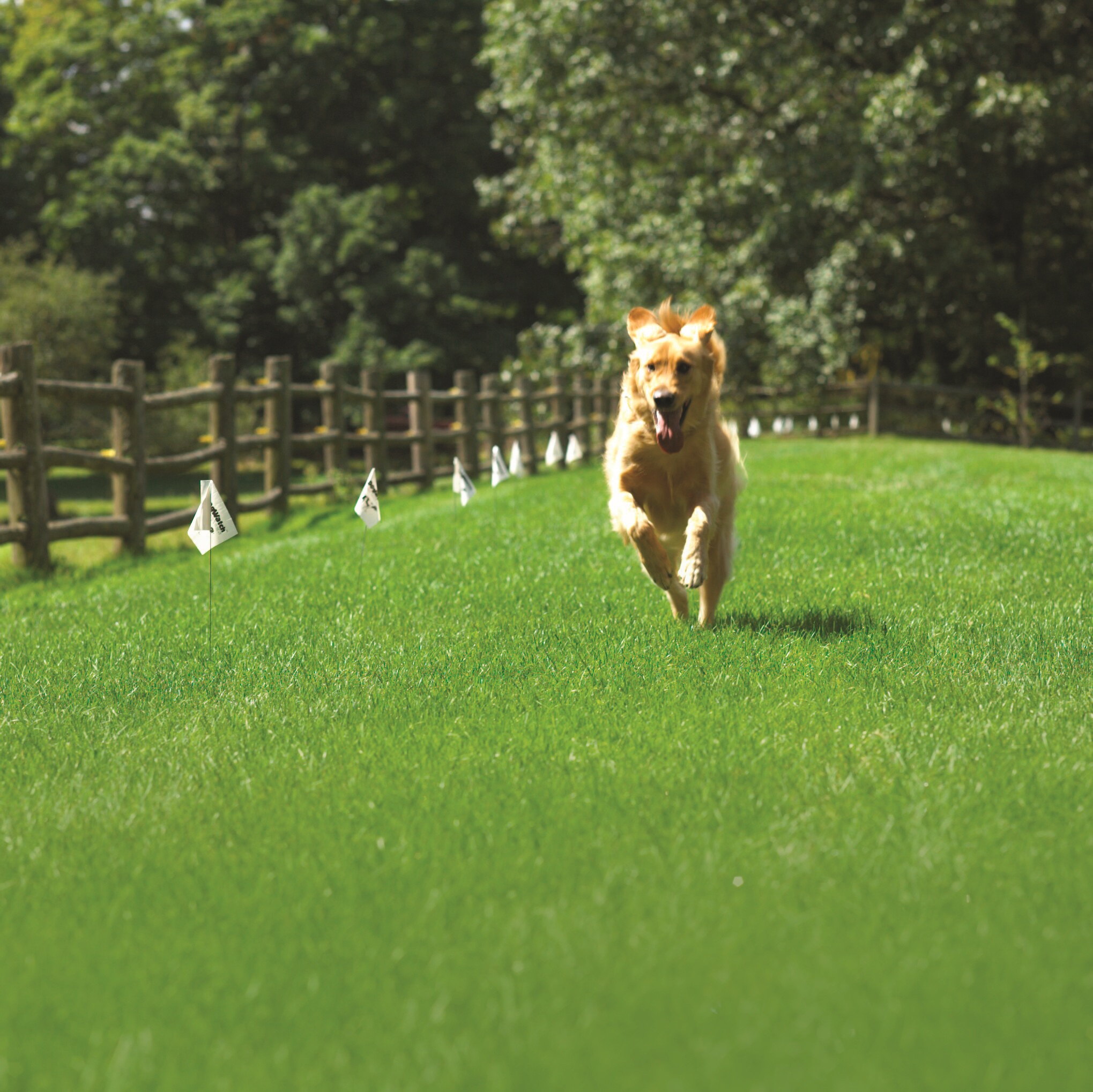
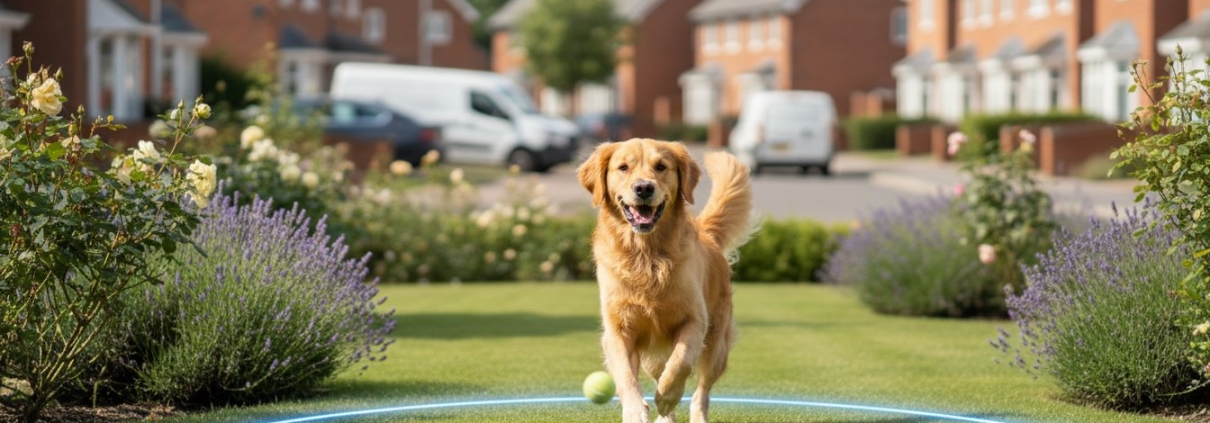
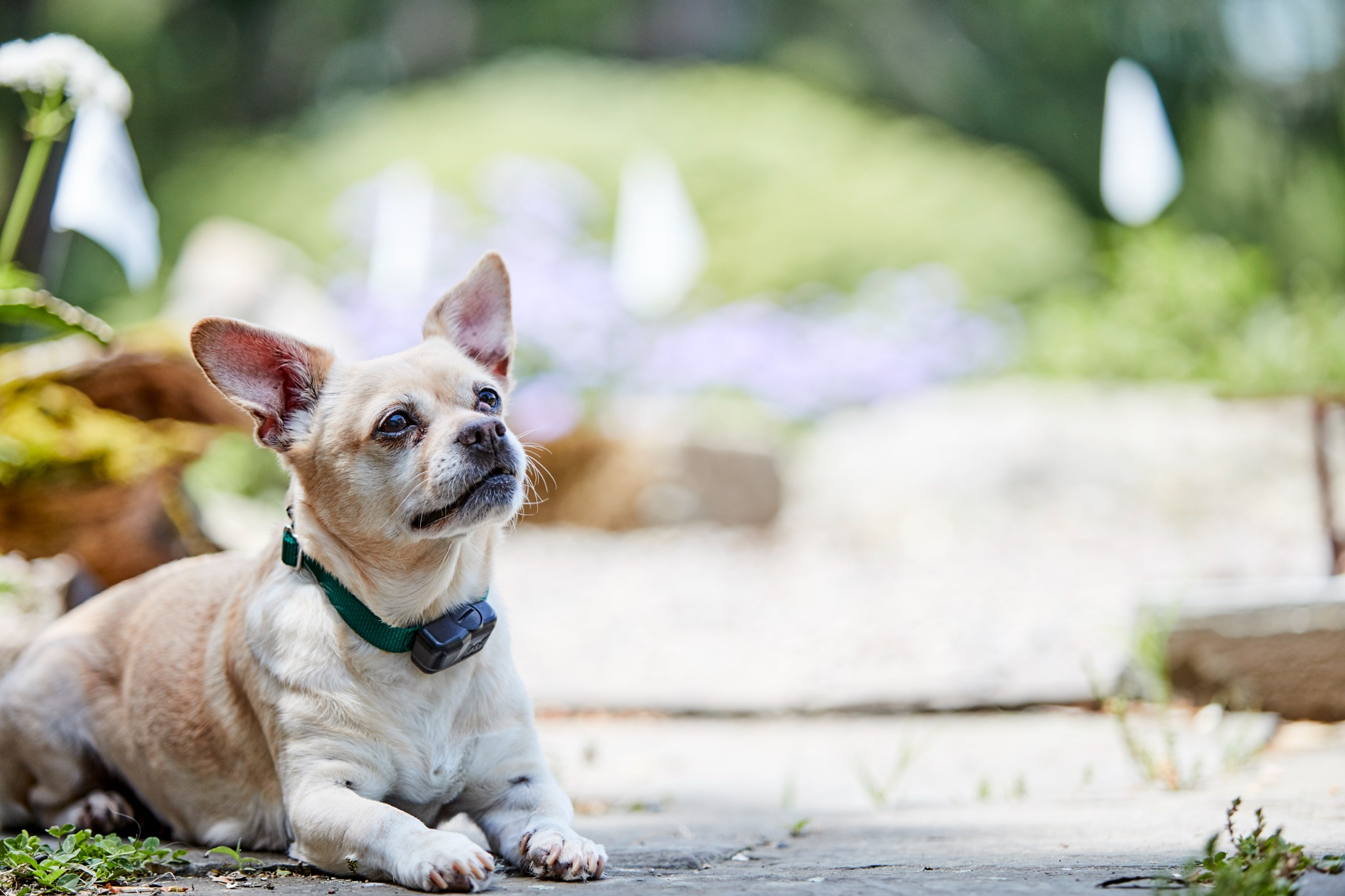
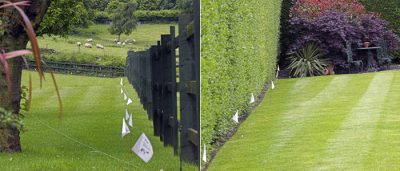
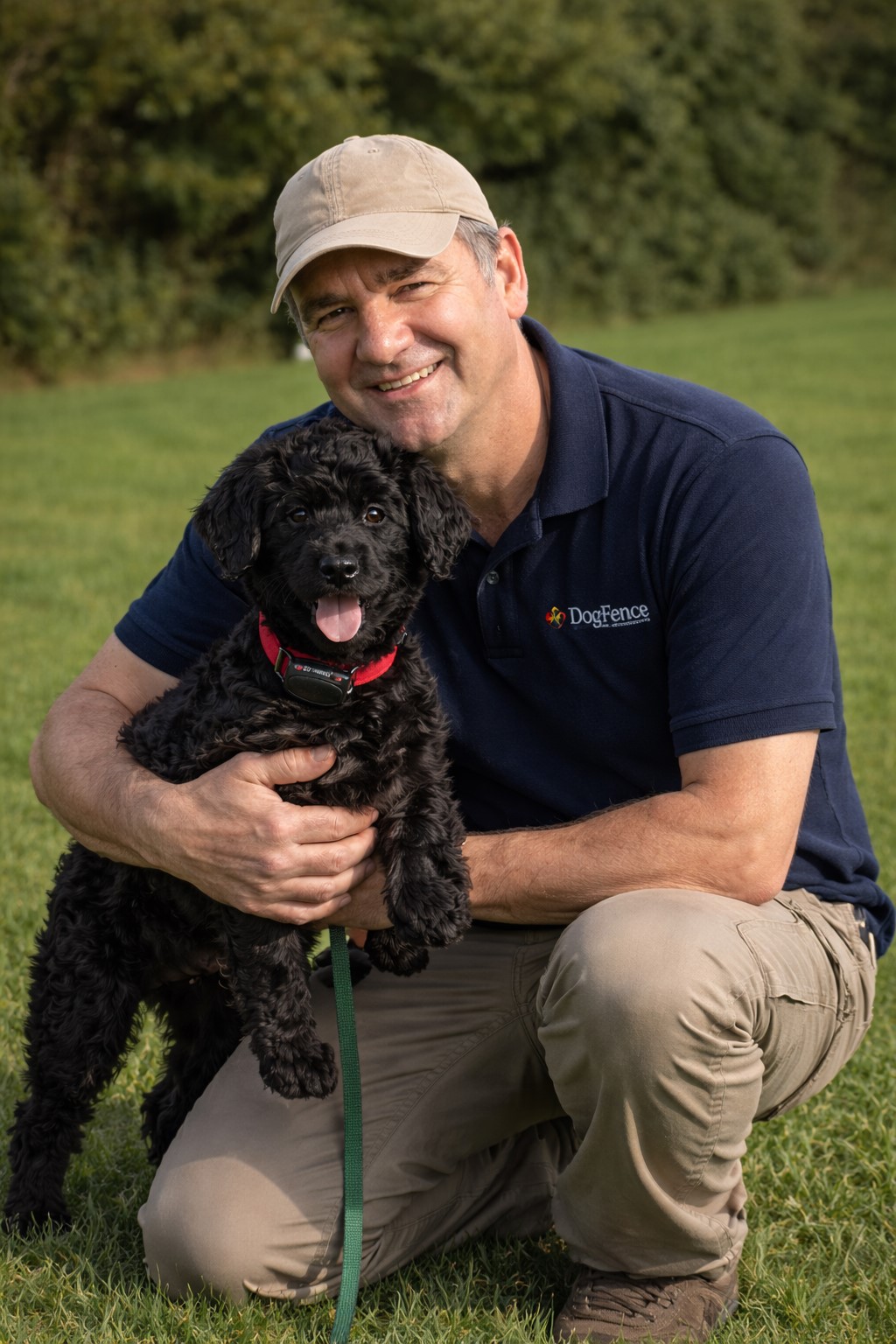
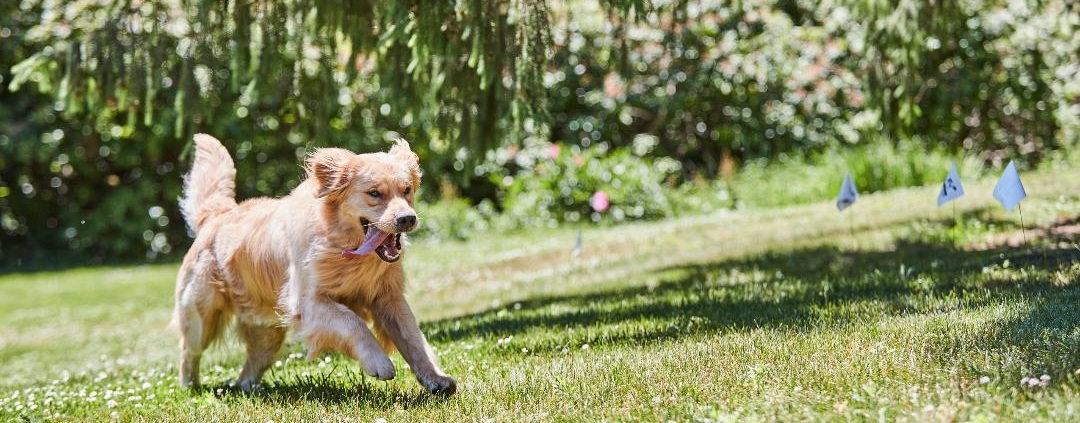
Happy dog running freely in a safe garden wearing a hidden dog fence collar

Quick Answer: How to Keep a Dog Safe in the Garden

To improve dog garden safety:

  • Check fences, walls, hedges and gates for potential escape routes.
  • Look for gaps where your dog could squeeze through or dig underneath.
  • Consider how your dog is secured when driveways or electric gates are open.
  • Identify ponds, pools and other areas that could present a risk.
  • Provide shade and fresh drinking water.
  • Supervise puppies, rescue dogs and dogs that are new to the property.
  • Consider nearby roads, wildlife and livestock when assessing your boundary.
  • Train your dog to understand where they can safely roam.
  • Consider a professionally installed hidden dog fence if you need additional security.

The aim is simple: create a secure garden that gives your dog as much safe outdoor freedom as possible.

Start Dog Garden Safety at the Boundary

The first step in learning how to keep a dog safe in the garden is to look at your property from your dog’s point of view.

Dogs are naturally curious, and some become remarkably good escape artists once they discover a weak spot. A tiny gap in a hedge may not look significant to you, but to an adventurous dog it could be an invitation to explore.

Walk around your entire garden and check for:

  • Gaps under fences and gates.
  • Loose or damaged fence panels.
  • Low walls or hedges that could be jumped.
  • Soft ground where your dog could dig underneath a boundary.
  • Open driveways and vehicle entrances.
  • Gaps leading into neighbouring gardens.
  • Areas where garden furniture or bins could help a dog climb over a fence.

Fixing a small problem before your dog discovers it is usually much easier than persuading an experienced escape artist to give up their new adventure.

If your dog already has a habit of disappearing beyond the garden, read our complete guide on how to stop your dog running away and prevent roaming.

Why Do Dogs Escape from Gardens?

Understanding why your dog wants to leave can be just as important as finding the physical escape route.

Dogs may escape because they are:

  • Following an interesting scent.
  • Chasing wildlife.
  • Trying to reach another dog or person.
  • Exploring beyond the property.
  • Frightened by an unexpected noise.
  • Bored or looking for stimulation.
  • Able to see an easy route out.

Some dogs are also simply more determined to explore than others.

Training and enrichment can help address some of these behaviours, but they don’t remove the need for a secure boundary. Even a dog with good recall can become distracted by something particularly exciting on the other side of the garden.

If your dog is regularly trying to leave the garden, understanding the reason behind the behaviour can help you choose the right solution. Read our guide on: Why Dogs Escape and How to Stop a Dog Running Away.  for a closer look at the most common causes of escaping, roaming and boundary-testing behaviour.

Garden Security for Dogs with Open Driveways and Electric Gates

One of the biggest challenges for garden security for dogs is an entrance that needs to remain open.

You may have secure fencing, walls or hedges around most of your property, but if the driveway is open, your dog still has a direct route to the road.

Electric gates can create a similar problem. A dog may only need a few seconds to slip through while the gates are opening for a car, delivery driver or visitor.

A professionally installed hidden dog fence can create a discreet boundary across an open driveway or work alongside existing electric gates. Your dog is trained to understand the boundary while cars, visitors and deliveries can continue to access the property normally.

For more information, read our guide to keeping dogs safe around open driveways and electric gates.
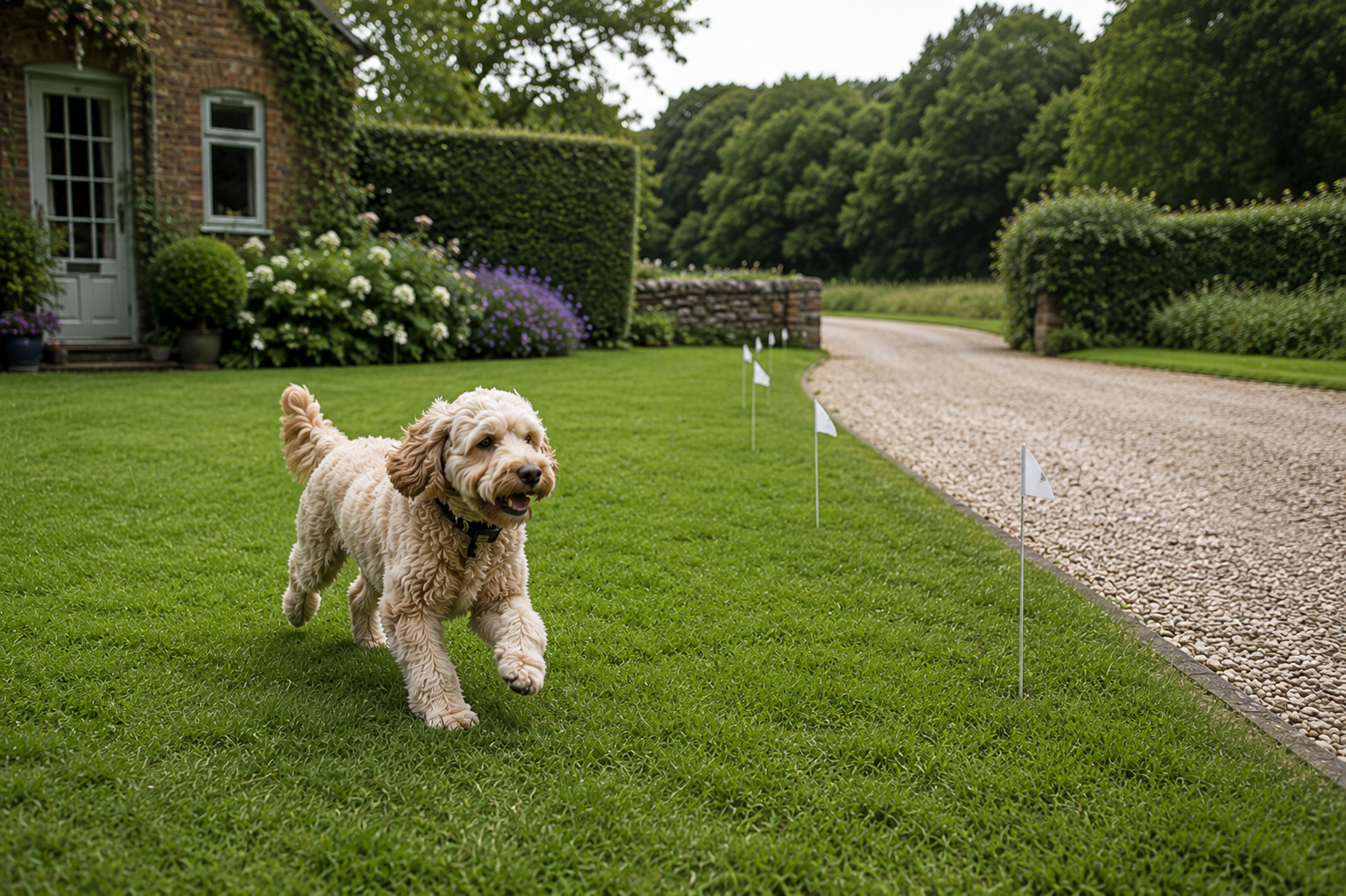
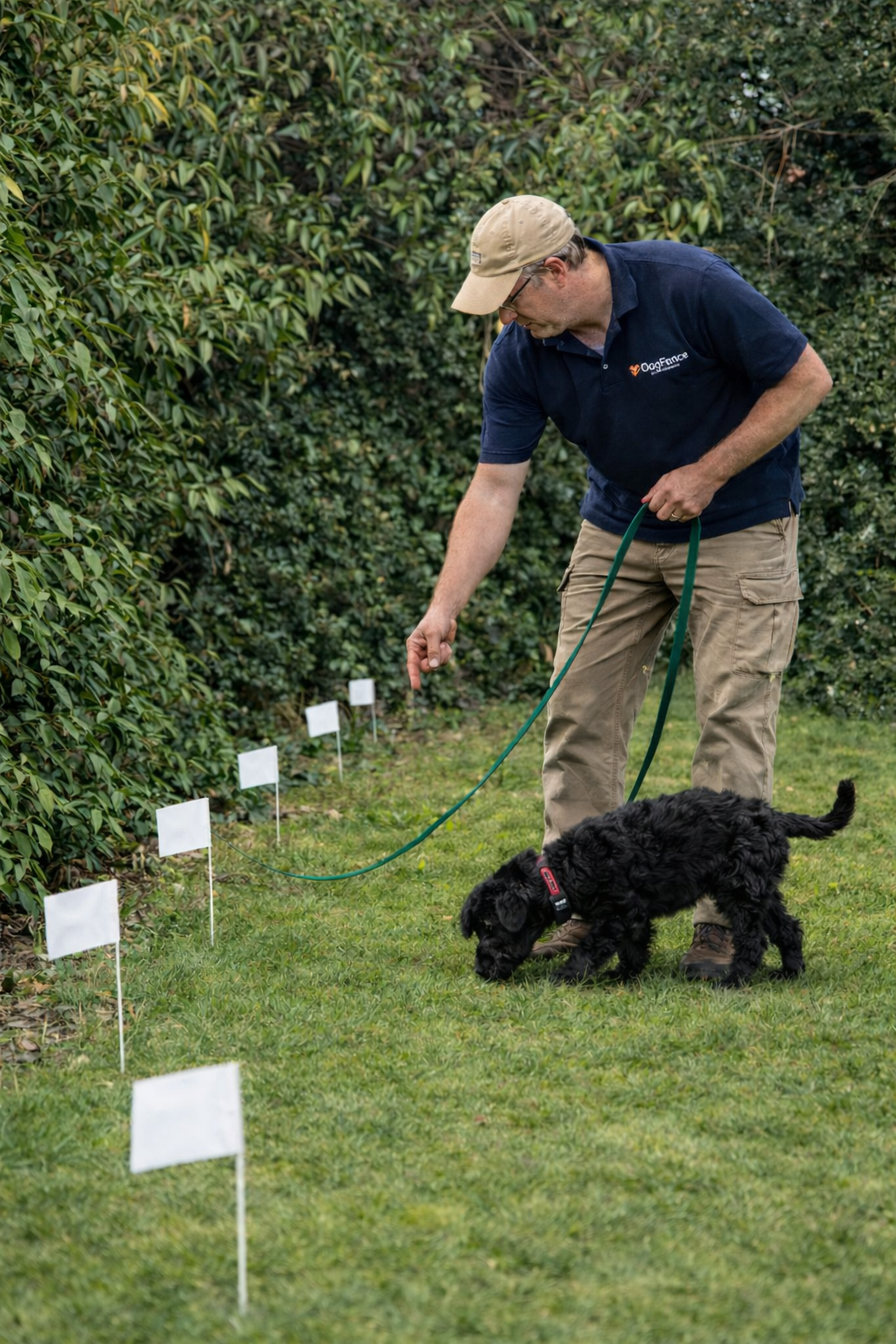
Cockapoo running safely in a garden with an open driveway and white boundary training flags

Can You Create a Safe Garden Without a Physical Fence?

Yes. Where conventional fencing is impractical, unsuitable or does not prevent a particular dog from escaping, a professionally installed hidden dog fence can create a secure boundary that the dog is trained to understand.

A hidden dog fence can also work alongside the physical boundaries you already have.

For example, your garden may already have fences, walls and hedges, but your dog might:

  • Dig underneath them.
  • Jump or climb over them.
  • Squeeze through small gaps.
  • Escape through an open driveway.
  • Run through electric gates as they open.

In these situations, the hidden boundary can provide an additional layer of garden security for dogs without replacing the existing features of the property.

If you’d like to understand the technology behind the boundary, visit our How DogFence Works page.

How to Create a Safe Off-Lead Garden

A safe off-lead garden is a secure outdoor area where your dog can run, sniff, play and explore without being permanently attached to a lead.

For many owners, this is the real goal of improving garden security: not to restrict their dog, but to give them more freedom.

A clearly defined boundary can allow a dog to enjoy a much larger area than they might otherwise have access to. This can be particularly valuable for dogs that would need to be kept on a long line or closely supervised whenever they went outside because of the risk of escape.

Creating a safe off-lead garden means finding the right balance between freedom and security. Your dog gets space to enjoy being a dog, while you have greater confidence that they will remain within their designated area.

Keeping Dogs Safe Around Garden Hazards

Dog garden safety isn’t only about preventing escapes. Some areas within a property may also need to remain out of bounds.

Depending on your garden, these could include:

  • Ponds and swimming pools.
  • Flower beds and vegetable gardens.
  • Wildlife areas.
  • Driveways and vehicle access.
  • Outbuildings.
  • Woodland or streams.
  • Boundaries adjoining farmland or livestock.

Depending on the layout of the property, a professionally designed DogFence can sometimes include exclusion zones around areas you don’t want your dog to enter.

This means you don’t necessarily have to restrict your dog’s access to the entire garden simply because one particular area needs protection.

What About Ponds and Swimming Pools?

Water can present a particular concern for some dog owners. Puppies, older dogs and dogs that are not confident swimmers may require additional care around ponds, swimming pools and other water features.

A professionally designed hidden dog fence may be able to create an exclusion zone around the water while leaving the rest of the garden available for your dog to enjoy.

For more advice, read our guide to keeping dogs safely away from ponds and swimming pools.

Dog Garden Safety Around Trees, Streams and Woodland

Large gardens and rural properties often contain natural features that don’t fit neatly behind a conventional garden fence.

Trees, streams, woodland and uneven terrain can all affect how a secure dog boundary needs to be designed.

One advantage of a professionally installed hidden dog fence is that the boundary can be designed around the individual property rather than requiring the landscape to be divided by additional physical fencing.

If your garden includes natural features, read our guide to installing an invisible dog fence around trees, streams and woodland.

Dog Garden Safety in Rural Properties

Rural properties can present very different challenges when trying to keep a dog safe.

Large gardens may include fields, hedges, woodland, uneven terrain and open driveways. Installing conventional fencing around several acres can also be expensive or impractical.

There may be more temptation beyond the boundary too. Rabbits, deer, pheasants and neighbouring livestock can all attract a dog’s attention.

Creating a clearly defined boundary can help prevent dogs from roaming beyond the property while still allowing them to enjoy the space available at home.

Our guide to dog-proof fencing and dog safety in rural areas looks more closely at securing dogs on countryside properties.

Keeping Dogs Safe Around Wildlife and Livestock

For dogs living near woodland, farmland or open countryside, wildlife can be an irresistible distraction.

A rabbit disappearing through a hedge or a deer crossing a neighbouring field can be enough to make even a normally responsive dog forget their recall.

Keeping your dog securely within their property can reduce opportunities for chasing and unwanted encounters. It can also help keep dogs away from neighbouring livestock.

A secure dog boundary can therefore protect more than your own pet. It may also help reduce disturbance to the animals living around you.

Read our guide to how to protect wildlife from dogs while giving your dog safe outdoor freedom.

What Makes a Dog-Friendly Garden?

A secure garden and a dog-friendly garden are closely connected, but they are not quite the same thing.

A secure garden focuses on preventing your dog from escaping and keeping them away from potential hazards.

A dog-friendly garden also considers how enjoyable and enriching the outdoor space is for your dog, including access to shade, fresh water and opportunities to sniff, explore and relax.

Ideally, your garden should be both safe and enjoyable.

According to the RSPCA’s guidance on dog welfare, dogs need appropriate opportunities for exercise and to behave naturally.

We’ve covered garden design and enrichment separately in our complete guide to creating a dog-friendly garden, including practical ideas for making your outdoor space safer and more enjoyable for your dog.

Why Training Is Essential for Dog Garden Safety

A hidden dog fence isn’t simply installed and left for the dog to work out. Training is a crucial part of creating a boundary your dog understands.

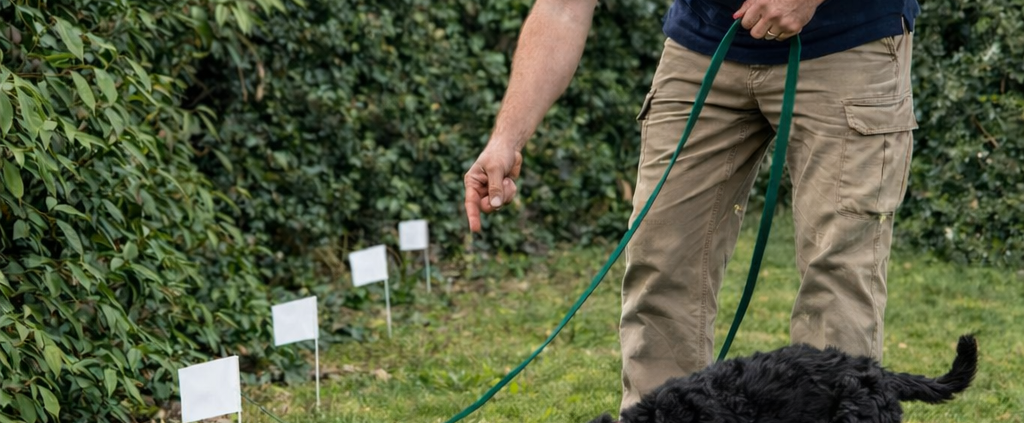
During the initial training period, the boundary is marked using visible training flags. Your dog is gradually introduced to the boundary so they learn where they can safely roam.

Every dog is different, which is why training should take account of the individual dog’s temperament, age and confidence.

As the dog learns where the boundary lies, they can become increasingly confident about the area in which they are free to run, play and explore.

The goal is a safe off-lead garden where your dog understands their boundaries and can enjoy outdoor freedom with greater confidence.

If you’re unsure whether DogFence could be suitable for your dog, our Frequently Asked Questions answer many of the questions owners ask before installation.
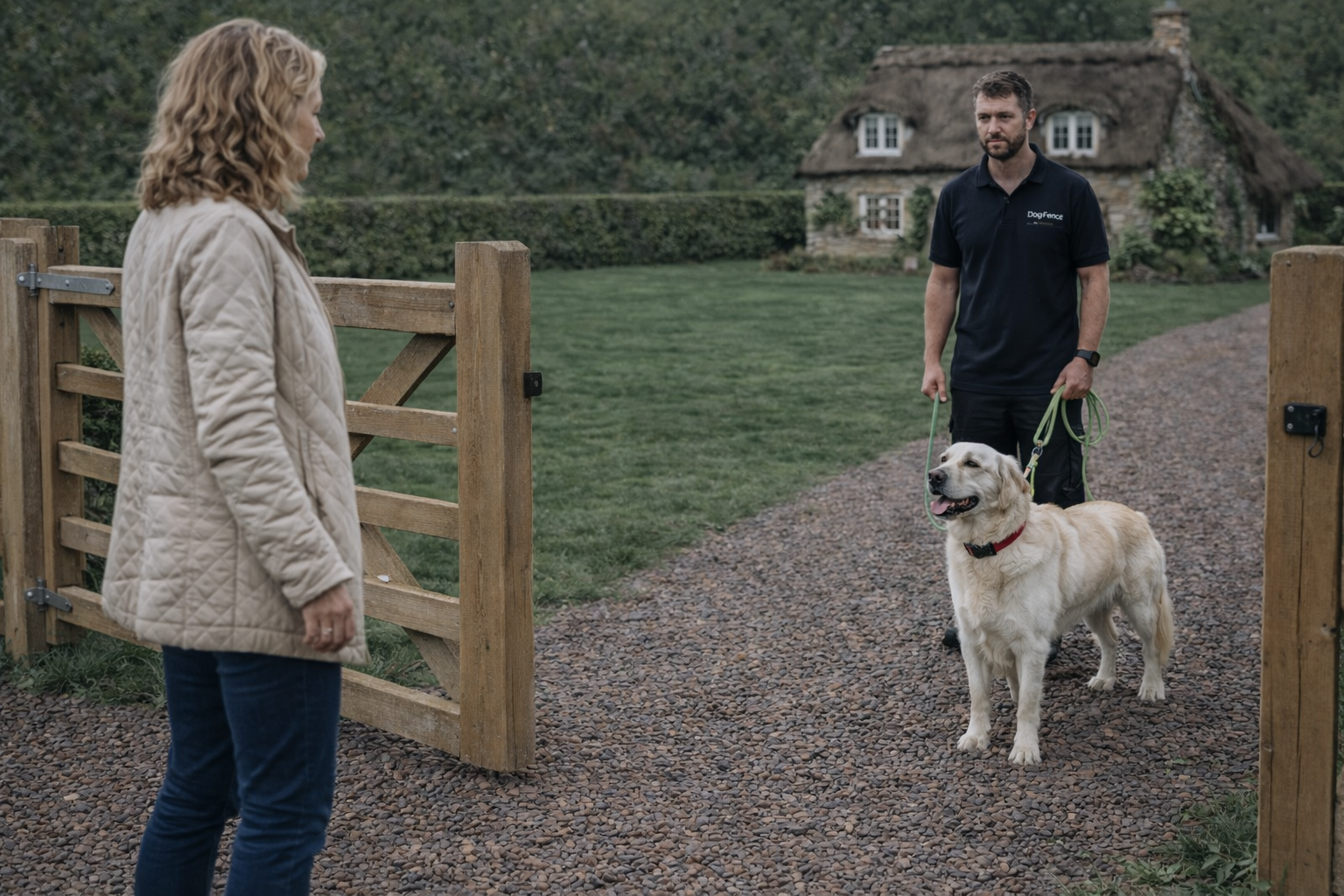
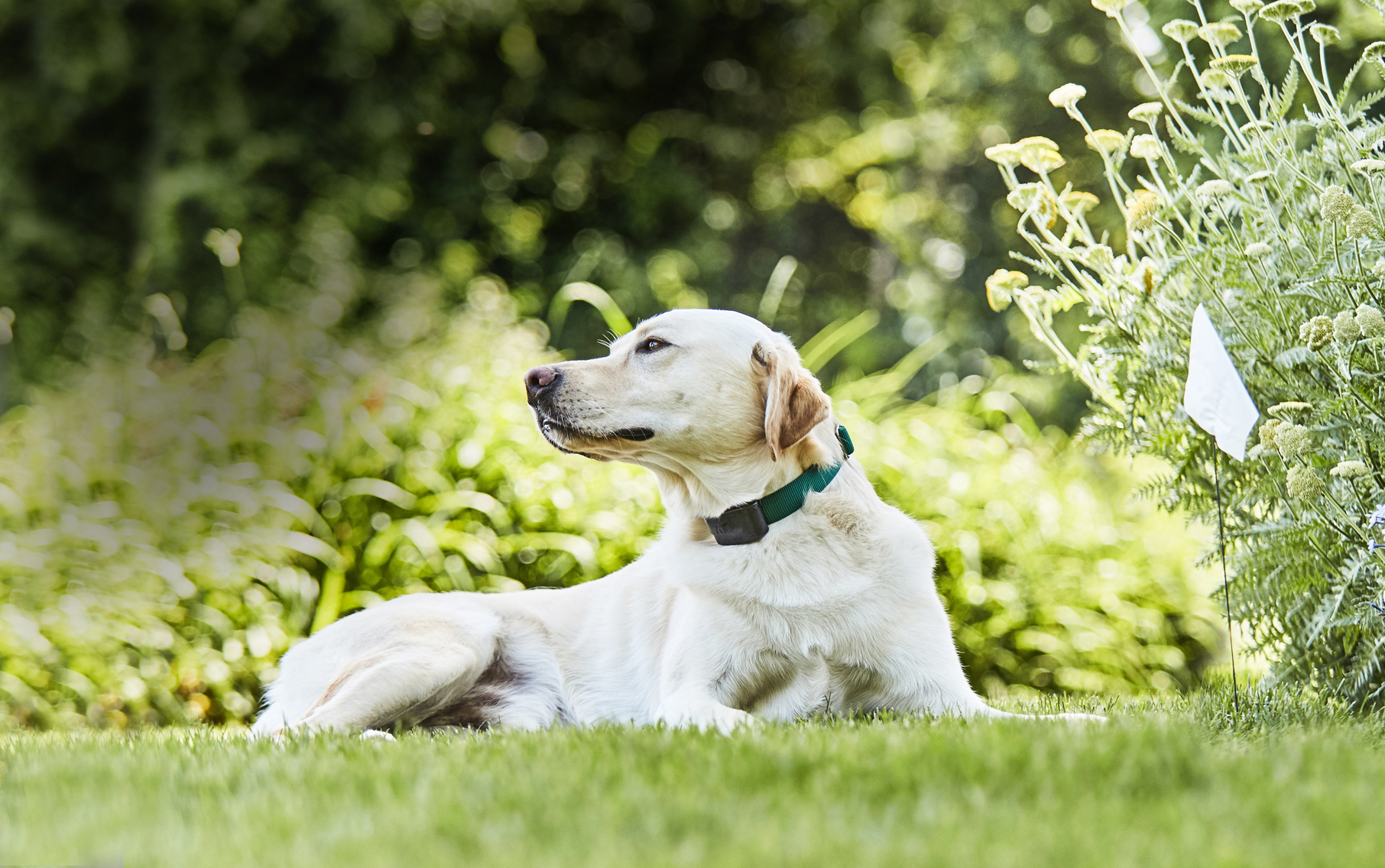
Labrador learning a safe garden boundary during DogFence training with white boundary flags

Frequently Asked Questions About Dog Garden Safety

How do you keep a dog safe in the garden?

To keep a dog safe in the garden, check for escape routes, secure vulnerable entrances, identify potential hazards and make sure your dog understands their boundaries. Where conventional fencing does not provide adequate security, a professionally installed hidden dog fence can provide an additional secure boundary.

How do I stop my dog escaping the garden?

Check for gaps, damaged fencing and places where your dog can dig, climb or jump. Pay particular attention to gates and open driveways. Understanding why your dog escapes and creating a secure boundary can help prevent future escapes.

Can I keep my dog safe without a physical fence?

Yes. A professionally installed hidden dog fence can create a secure boundary where conventional fencing is impractical or unsuitable. It can also work alongside existing fences, hedges, walls and gates.

What is a safe off-lead garden?

A safe off-lead garden is a secure outdoor area where a dog can run, play and explore without being permanently attached to a lead. It should have clearly defined boundaries that help prevent the dog from leaving the property.

Can a hidden dog fence work with existing fencing?

Yes. A hidden dog fence can work alongside existing physical fences, walls, hedges and gates to provide additional security, particularly for dogs that dig underneath, jump over or find gaps in conventional boundaries.

Can a hidden dog fence work in a large or rural garden?

Yes. A professionally designed hidden dog fence can be particularly useful for large and rural properties where conventional fencing may be difficult, expensive or visually intrusive. The boundary can be designed around the individual layout of the property.

Can I keep my dog away from certain parts of the garden?

Depending on the property layout, a professionally designed DogFence may be able to create exclusion zones around ponds, swimming pools, flower beds or other areas you want your dog to avoid while allowing them to enjoy the rest of the garden.

Enjoy More Freedom with Greater Peace of Mind

Learning how to keep a dog safe in the garden doesn’t mean limiting their freedom.

By identifying escape routes, securing vulnerable boundaries and providing appropriate training, you can create a secure outdoor space where your dog can run, play and relax with confidence.

Whether your property has conventional fencing, an open driveway, rural boundaries or several acres of land, the goal is the same: effective garden security for dogs that allows them to enjoy as much safe freedom as possible.

A professionally installed DogFence creates a discreet boundary designed around your individual property and your dog, helping you create a secure, safe off-lead garden without unnecessarily restricting their freedom.


Want to Keep Your Dog Safe in the Garden?

Every dog deserves the freedom to run, play and explore safely. A professionally installed DogFence creates a discreet hidden boundary, helping keep your dog safely contained while preserving the natural look of your garden.

Call us on
01628 476475
|
Message us on WhatsApp
|
Request a Free Quot
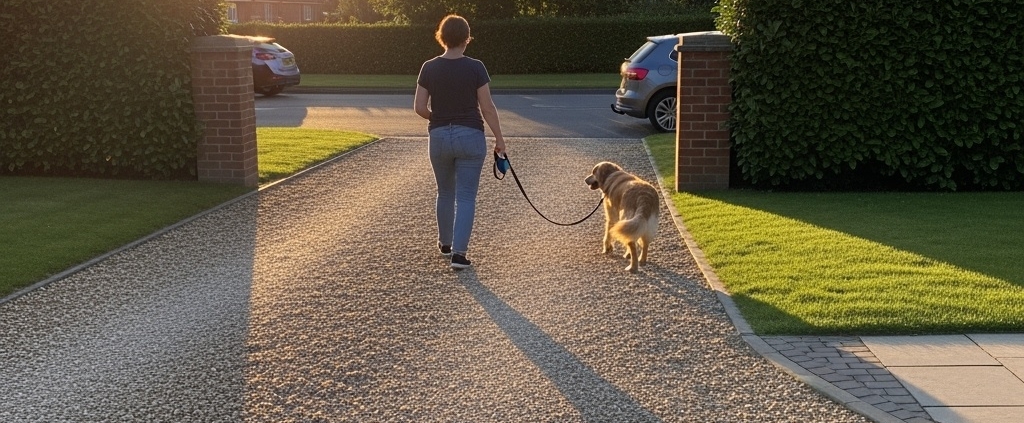
 

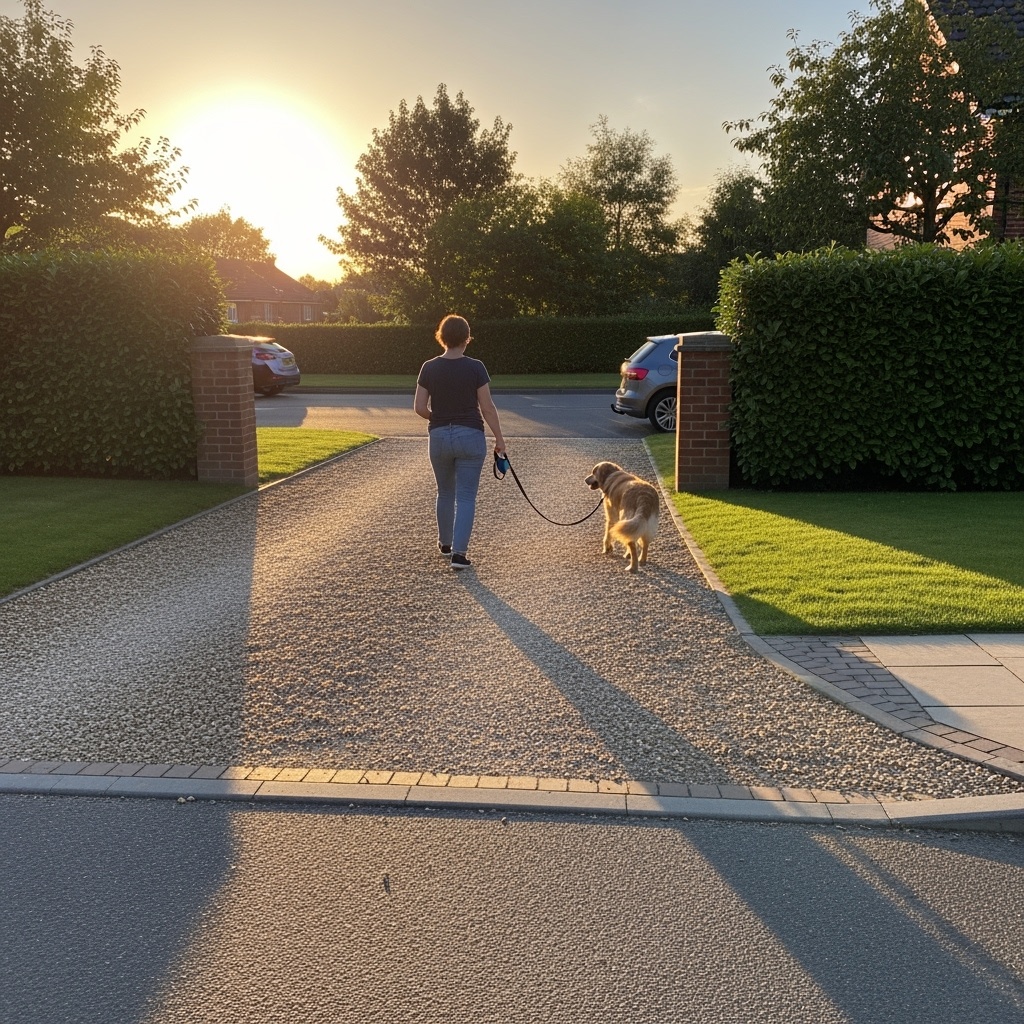
woman showing how to walk dog over the driveway with a dog fence installed

How to Walk Your Dog with a Dog Fence | DogFence Ltd

How to Walk a Dog with a Dog Fence Installed (UK Step-by-Step Guide)

If you’re wondering how to walk a dog with a dog fence installed, you’re not alone. One of the most common questions we hear after installation is: can I walk my dog with an electric fence, and how do I safely cross the invisible dog fence boundary?

The good news is that learning how to walk a dog with a dog fence is simple when done correctly. Walking a dog through an invisible dog fence boundary becomes routine using a method called reverse training for dog fences. Your dog quickly learns that crossing the invisible dog fence is only allowed when the dog fence collar is removed and they are walking with you on a lead.

With consistent dog fence collar removal and a clear command routine, most dogs confidently learn how to walk with an electronic boundary fence in place within 7–10 days.


How Do You Walk a Dog with an Electric Fence?

To walk a dog with an electric fence, remove the dog fence collar, attach a lead, pause at the invisible boundary, give a consistent command, and calmly cross together. Never allow your dog to cross the invisible dog fence alone.

This is the golden rule for keeping your pet safe, confident and happy.


Can I Just Turn Off the Electric Fence Instead?

No. Turning off the system is not enough.

Proper dog fence collar removal is essential when learning how to walk a dog with a dog fence. The physical act of removing the collar signals to your dog that crossing the invisible dog fence boundary is now permitted under your control.

Dogs understand context extremely well. Collar off + lead on = walk time.


Why Reverse Training Matters for Your Dog Fence

A dog fence for gardens creates a safe, invisible boundary that keeps your pet contained. However, dogs are creatures of habit. If they’re taught never to cross the boundary, you risk confusing them when it’s time for their daily walk.

That’s why we use a specific method called reverse training.

Reverse training teaches your dog a clear distinction: crossing the invisible dog fence boundary is only permitted when:

  • The dog fence collar is removed
  • They are on a lead and under your direct control
  • They receive a clear, consistent command from you

This distinction allows your dog to safely enjoy their garden while still leaving confidently for walks.


Key Rules for Walking a Dog with an Electric Dog Fence

To ensure success and avoid confusion for your pet, remember these simple rules when crossing the driveway with your dog:

❌ Never allow your dog to cross the boundary alone.
✅ Always remove the dog fence collar before leaving the property.
✅ Always keep your dog on a lead when crossing the invisible dog fence boundary.
✅ Always use the same clear command each time (e.g., “Walkies” or “Let’s go”).
✅ Be consistent during the initial 7–10 days of training.

Dog walking calmly through invisible dog fence boundary after collar removal training

Walking your dog safely across the invisible dog fence boundary using reverse training and collar removal.


Step-by-Step Guide to Walking Your Dog Through the Electric Fence Boundary

Follow these steps consistently, and your dog will quickly understand how to walk off the property when you have a dog fence installed:

1. Remove the Dog Fence Collar

Before every walk, remove the receiver collar. Do not simply turn off the system. The physical removal of the collar is what signals the rule change.

2. Put Your Dog on a Lead

Attach their usual walking lead or harness. Routine builds clarity.

3. Pause at the Boundary

Stop just before the invisible boundary line. Ask your dog to sit or wait briefly. This reinforces that crossing is controlled.

4. Give the Command and Cross

Use your chosen command and calmly walk forward. Praise gently as your dog follows you across the invisible dog fence boundary.

5. Encourage and Reward

Once fully outside the containment area, use a happy tone, gentle praise, or a small treat. This builds positive association.

6. Repeat the Process When Returning

Pause at the boundary again, stay calm, and walk back in together. Consistency cements the rule that crossing only happens with you.

Watch our training video on how to walk a dog with a dog fence installed to see this method in action.


How Long Does It Take?

Most dogs become confident with walking through the invisible dog fence boundary within 7–10 days.

Some may take slightly longer, particularly sensitive or cautious dogs. The key to learning how to walk a dog with a dog fence is consistency, patience and clear repetition.


Common Mistakes to Avoid

Below are common mistakes owners make when learning how to walk a dog with a dog fence:

❌ Leaving the collar on — Never cross the invisible dog fence boundary with the collar fitted. This can confuse your dog and undermine training.

❌ Inconsistency — Changing commands or skipping the pause weakens clarity.

❌ Letting the dog cross alone — Even once can damage the boundary rule.


Why Professional Training Helps

At DogFence Ltd, we don’t just install an electric dog fence. We guide you through exactly how to walk a dog with a dog fence safely and confidently. Our professional installers guide you through every stage of our Dog Fence Training Programme, ensuring your dog understands how to leave the property with an electric fence safely and confidently.

Our professional installers:

  • Demonstrate reverse training
  • Show you how to cross the invisible dog fence boundary correctly
  • Provide written guidance
  • Support you after installation

That support ensures your dog understands the rules from day one. If your dog has a history of testing boundaries, you may also find our complete guide on how to stop a dog running away helpful for long-term training support.


Conclusion

Learning how to walk a dog with a hidden fence installed is straightforward when done correctly.

By consistently removing the dog fence collar, using a lead, pausing at the boundary and giving a clear command, your dog quickly understands: They may only cross the invisible dog fence boundary safely with you.

This balance provides safe garden freedom while maintaining the routine and enjoyment of daily walks. If you’re still researching whether invisible dog fences are humane, we’ve explained the training science and welfare considerations in detail.

Our professional dog fence installations include full training support so you and your dog feel completely confident from day one.

Need for help or advice?

Call us on
01628 476475
|
Message us on WhatsApp
|
Request a Free Quote Online

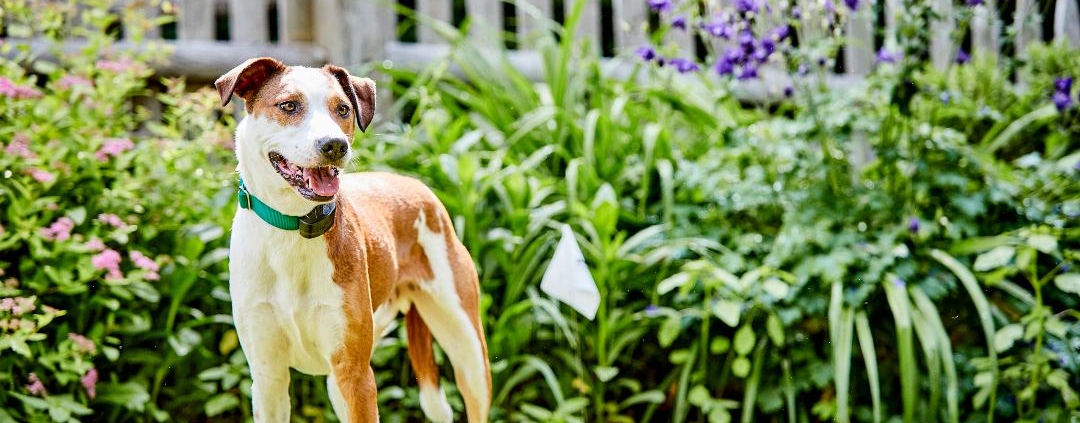
A happy dog standing calmly inside a well-kept garden with fence boundary visible

How to Buy Dog Fence

The Ultimate Dog Fence Buying Guide UK (2026 Edition)

If you’re looking for the best way to create a secure garden for dogs, you’re not alone.

Across England, more and more dog owners are searching for reliable ways to prevent their dog running away — without building ever-higher fences or turning their garden into a fortress.

This complete Dog Fence Buying Guide UK explains:

  • Why dogs escape
  • What types of dog fences are available
  • The real difference between wired, wireless and GPS systems
  • What dog fences cost in the UK
  • Whether electronic dog fences are humane
  • How to choose between professional installation and DIY

If you’re researching carefully before investing — this guide is for you.

secure garden for dogs with invisible dog fence UK


Why Do Dogs Escape?

Understanding the why helps you choose the right solution.

Most escape behaviour falls into one of these categories:

  • Jumping over fencing
  • Digging underneath panels
  • Squeezing through weak gates
  • Chasing wildlife
  • Separation anxiety
  • Boredom or frustration

Many owners initially assume they just need higher fencing. But taller panels don’t stop diggers. Reinforced gates don’t stop climbers. And replacing an entire boundary can cost thousands.

That’s why many rural homeowners across England are turning to electronic containment instead. Before choosing the right system, it’s essential to understand why dogs escape gardens in the first place — because jumping, digging and boundary-testing behaviours require different containment solutions.


What Types of Dog Fences Are Available in the UK?

1. Traditional Physical Fencing

Wooden panels, composite fencing, brick walls or deer fencing.

These work well for many dogs — but increasing height or reinforcing boundaries can be expensive, particularly on larger properties over one acre.

They also don’t address digging behaviour. Whilst traditional fencing works for some homes, many owners discover it simply isn’t enough for determined dogs. In fact, we’ve explained in detail why traditional fencing isn’t enough for escape-artist dogs, particularly those who jump, dig or climb.

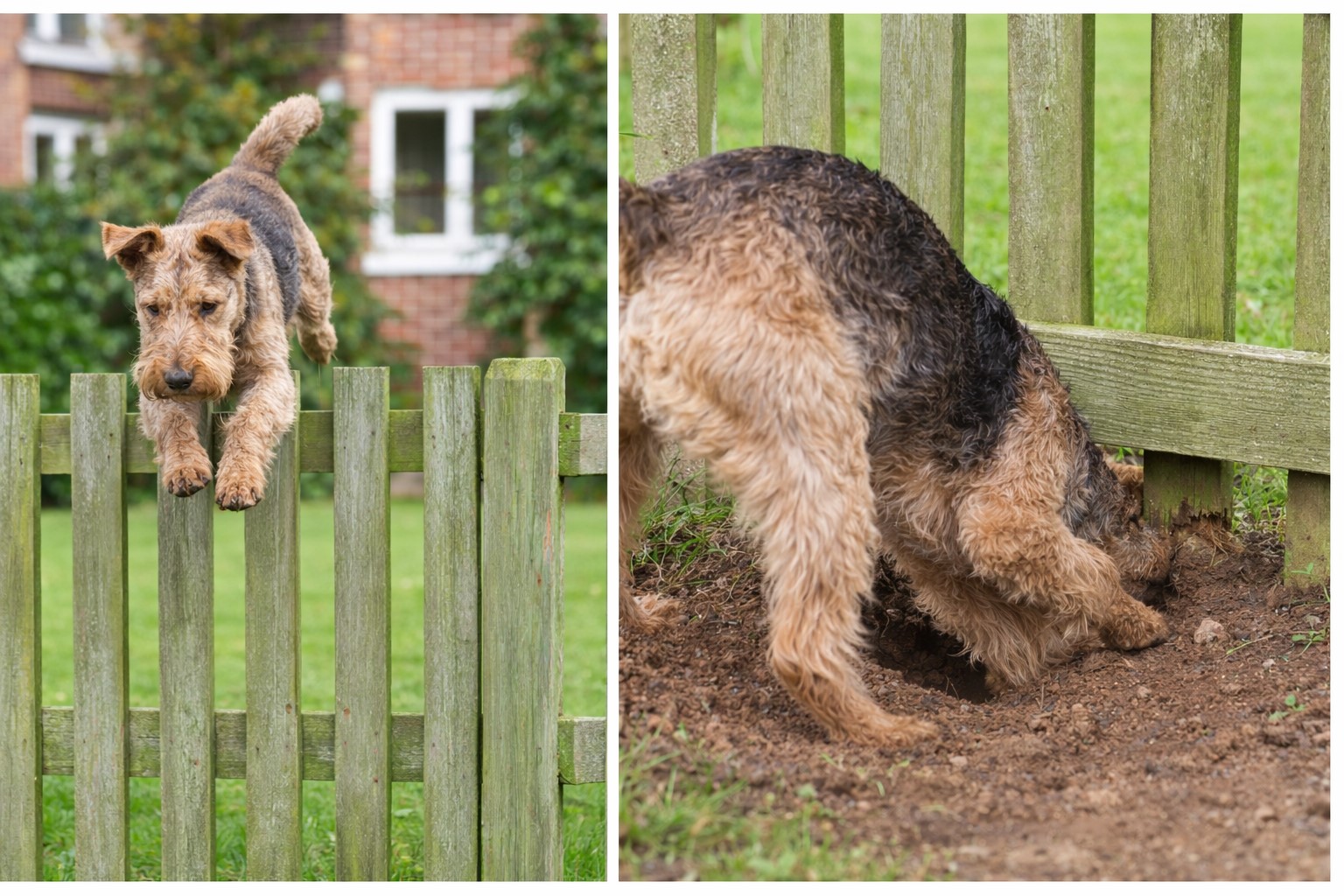
traditional fencing problems dog escaping garden

Dog escaping garden boundaries by jumping or digging highlights common traditional fencing problems.


2. Wireless Dog Fences

Wireless systems create a circular boundary from a central transmitter.

They’re simple to install but:

  • Struggle with uneven or sloping gardens
  • Can be unreliable on larger properties
  • Cannot follow complex boundary shapes

They’re often best suited to small, flat suburban gardens.


3. GPS Dog Fence Systems

GPS fences rely on satellite positioning.

While marketed as flexible, they can suffer from:

  • Signal drift
  • Inconsistent boundary lines
  • Battery drain
  • Delays in correction

In rural or wooded areas especially, GPS can be unreliable.


4. Wired Electronic (Invisible) Dog Fences

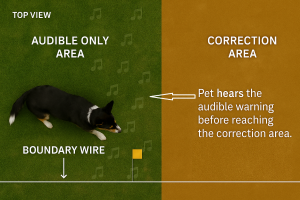
A wired system uses a discreet boundary cable buried around your property. The collar provides a warning tone as your dog approaches the boundary, followed by a brief adjustable correction if challenged.

The key advantages:

  • Precise boundary control
  • Works on any garden shape
  • Ideal for large rural properties
  • Consistent and reliable containment

For most larger UK gardens, wired electronic systems remain the most dependable solution.


Wired vs Wireless vs GPS — What Actually Works?

Choosing between wired, wireless and GPS dog fences isn’t just about convenience — it’s about reliability, consistency and your dog’s temperament.

Wireless Dog Fences
Wireless systems create a circular boundary from a central transmitter. They can work in small, flat gardens where layout is simple and there are minimal obstructions. However, signal fluctuation and limited shape control can make them unsuitable for irregular UK gardens.

GPS Dog Fences
GPS systems rely on satellite positioning rather than a physical boundary wire. While they appear modern and flexible, real-world use in the UK often highlights signal lag, boundary drift, and inconsistent correction timing — particularly near trees, buildings or in poor weather.

Wired (Electronic) Dog Fences
Wired systems use a buried boundary cable to create a fixed, consistent containment line. Once installed and professionally calibrated, they deliver immediate, predictable feedback — which is especially important for strong-willed or escape-artist dogs.

So What Actually Works?

  • Small, simple garden? A wireless system may be adequate.
  • Large, sloped or complex garden? A wired system is significantly more reliable.
  • High-drive or escape-prone dog? Consistency is critical — wired systems outperform GPS every time.

If you’re considering a GPS system, read our in-depth guide on whether GPS dog fences really work in UK conditions. When choosing the best dog fence UK homeowners can trust, reliability matters far more than marketing claims. A fence that works every single time is what keeps dogs safe.

comparison of wired, wireless and GPS dog fences for UK gardens


How Much Does a Dog Fence Cost in the UK?

Prices vary depending on property size, boundary length and whether you choose a DIY kit or professional installation.

If you’re comparing options, our detailed breakdown of dog fence cost UK pricing explains electronic dog fence cost, hidden dog fence prices and what influences the final investment.

For larger rural gardens, electronic containment systems are often significantly more cost-effective than replacing or extending physical fencing around the entire boundary.


Are Electronic Dog Fences Humane?

This is understandably one of the most common concerns among UK dog owners.

Modern electronic dog fences are not the same as old-style “shock collars.” Today’s systems are designed with safety, adjustability, and structured training in mind.

They use:

  • An audible warning tone first
  • Adjustable correction levels
  • Automatic shut-off safety features
  • Structured training protocols that teach boundary awareness

When installed correctly and paired with proper training, most dogs quickly learn the boundary and rarely challenge it again.

If you’d like a balanced, evidence-based look at the welfare debate, you can read our full article on dog fence controversy humane or harmful?, where we explain how modern systems differ from older misconceptions and why responsible installation and training matter.


Professional Installation or DIY?

Professional Installation

Best suited for:

  • Large rural properties
  • Complex boundaries
  • Owners wanting full support and training

Benefits typically include:

  • Correct boundary planning
  • Secure cable depth
  • Lightning protection
  • Structured pet training
  • Long-term warranty support

Many owners of large rural properties choose an electronic dog fence UK system because it works reliably across uneven terrain and complex garden layouts, read below for DIY and Professional Installation advice.


DIY Installation

Suitable if:

  • You’re confident digging shallow cable runs
  • Your boundary is straightforward
  • You prefer lower upfront costs

DIY kits still include support and detailed instructions, but require more time and effort.


Who Is an Electronic Dog Fence Suitable For?

Electronic containment is often ideal for:

  • Larger gardens (especially over one acre)
  • Dogs who jump or dig
  • Homes near roads or livestock
  • Owners wanting a discreet, invisible solution

It may not be appropriate for every dog without professional guidance — which is why expert advice matters. A professionally installed electronic dog fence UK system provides consistent, reliable containment for gardens of all shapes and sizes.


Final Verdict: What Is the Best Dog Fence UK Owners Should Choose?

If your goal is to create a secure garden for dogs without building ever-higher fencing, a properly installed wired electronic dog fence offers the most consistent and reliable containment.

But the most important factor isn’t just the equipment.

It’s:

  • Quality components
  • Correct installation
  • Structured training
  • Ongoing support

With over two decades of experience helping thousands of pets across England, we know every property — and every dog — is different.

The right system is the one designed specifically for yours. Choosing the right electronic dog fence UK system can transform your garden from a constant worry into a safe, secure space your dog can enjoy with confidence. All professionally installed DogFence systems are DEFRA tested, include lightning protection, and use waterproof programmable collars with built-in safety time-outs.

Want an Accurate Dog Fence Cost for Your Property?

Every garden is different — and so is every dog.
Speak directly to our team for honest advice and a tailored quote with no pressure and no obligation.

📞 Call 01628 476475
|
💬 WhatsApp Us
|
📝 Request a Free Quote Online

DogWatch System Comparison: Why Technical Precision Matters for UK Pet Safety

DogWatch System Comparison: Why Technical Precision Matters for UK Pet Safety

If a wireless signal can pass through your walls to provide Wi-Fi, why do so many pet containment systems fail the moment your dog reaches the garden gate? You likely believe that your garden should be a safe sanctuary, yet the constant anxiety of a pet escaping onto a busy UK road is a burden many owners carry daily. It’s frustrating to face a sea of technical jargon when all you want is a solution that works without being cruel or unsightly. This DogWatch system comparison explores how professional-grade technology outperforms basic retail alternatives to keep your beloved companion secure.

We understand that you want total peace of mind and true freedom for your pet without installing an ugly six-foot fence that ruins your property’s natural aesthetic. You will learn how patented FM Safelink technology eliminates the signal interference issues that affect nearly 80% of cheaper, AM-based retail kits. We’ll also preview the specific hardware differences and the bespoke training protocols that transform a hidden boundary into a reliable, lifelong safety net. By the end, you’ll see why technical precision is the only way to ensure your dog stays home where they belong.

Key Takeaways

  • Learn how modern hidden fences provide your pet with total freedom while preserving the aesthetic beauty of your British garden without the need for traditional timber barriers.
  • Discover why a DogWatch system comparison highlights patented FM Safelink technology as the superior choice for preventing accidental activations from common household interference.
  • Understand the critical safety benefits of professional installation and heavy-duty components, which deliver a 99% success rate compared to the high failure risks of retail DIY kits.
  • Explore how bespoke containment solutions can be scaled to protect any property, from small suburban plots to expansive 200-acre UK country estates and complex shared driveways.
  • Find out how the GentleSteps™ professional training programme bridges the gap between sophisticated technology and your pet’s ultimate safety and peace of mind.

The Evolution of Pet Containment: Why a DogWatch System Comparison Matters

The modern hidden fence has transformed from a simple wire loop into a sophisticated radio-frequency safety tool. For decades, the evolution of pet containment systems has moved away from restrictive physical barriers toward intelligent, invisible boundaries that respect the British landscape. In the United Kingdom, where garden aesthetics and rolling views are highly valued, these systems offer a unique blend of security and visual freedom. Conducting a thorough DogWatch system comparison helps owners determine whether the ProFence or the 1200Fence suits their specific property size and pet personality. Our primary goal remains constant: providing freedom for the pet and peace of mind for the owner.

UK pet owners are increasingly moving away from timber and metal fencing because these structures often feel like cages rather than homes. A hidden fence allows a dog to enjoy every corner of the garden, from the flower beds to the driveway, without the need for unsightly mesh or high walls. This technology relies on a digital FM signal, which is significantly more reliable than older AM systems. Since 1990, the shift toward these professional electronic solutions has allowed thousands of pets to roam safely while their owners enjoy an unobstructed view of the countryside.

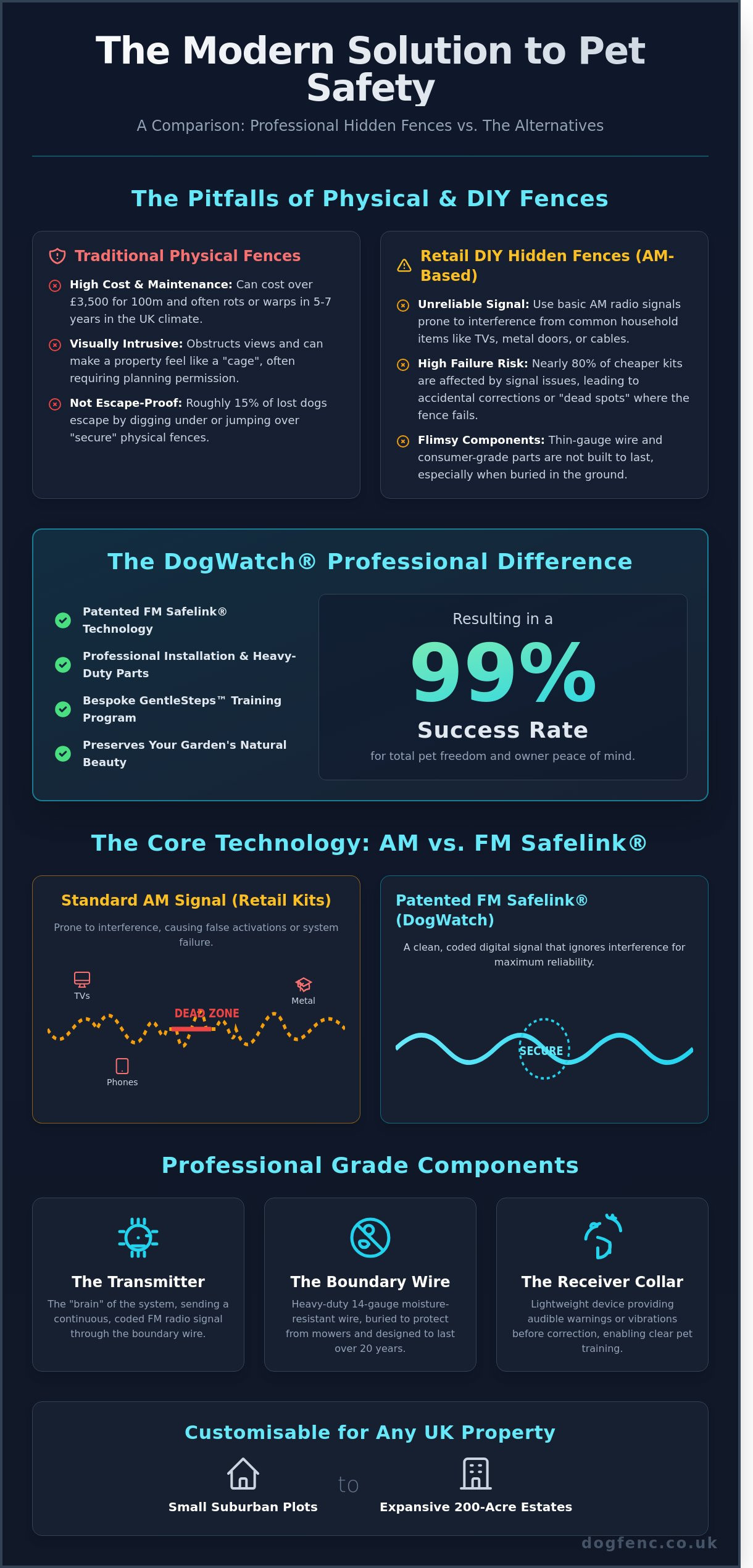
The Problem with Traditional Physical Fences

Traditional fencing presents significant financial and logistical challenges for the modern homeowner. In the damp British climate, wooden panels often rot or warp within 5 to 7 years, requiring expensive staining and repairs. A professional installation of a 100-metre timber fence can easily cost upwards of £3,500, yet it offers no guarantee of security. Many UK properties are also subject to strict planning permissions; fences exceeding 2 metres in height usually require formal council approval, which is often denied in conservation areas.

Physical barriers also fail to stop “escape artists” who have mastered the art of digging or jumping. Statistics indicate that approximately 15% of lost dogs escape from “secure” fenced yards by finding small gaps or tunneling under the base. A hidden fence creates a consistent 360-degree safety zone that a dog cannot climb over or dig under, providing a level of reliability that wood and wire simply cannot match.

The Core Components of a Professional Hidden Fence

A professional system is comprised of three essential elements that work in harmony to ensure your pet stays within their designated safe zone. Understanding these parts is vital during any DogWatch system comparison, as the quality of these components dictates the longevity of the installation.

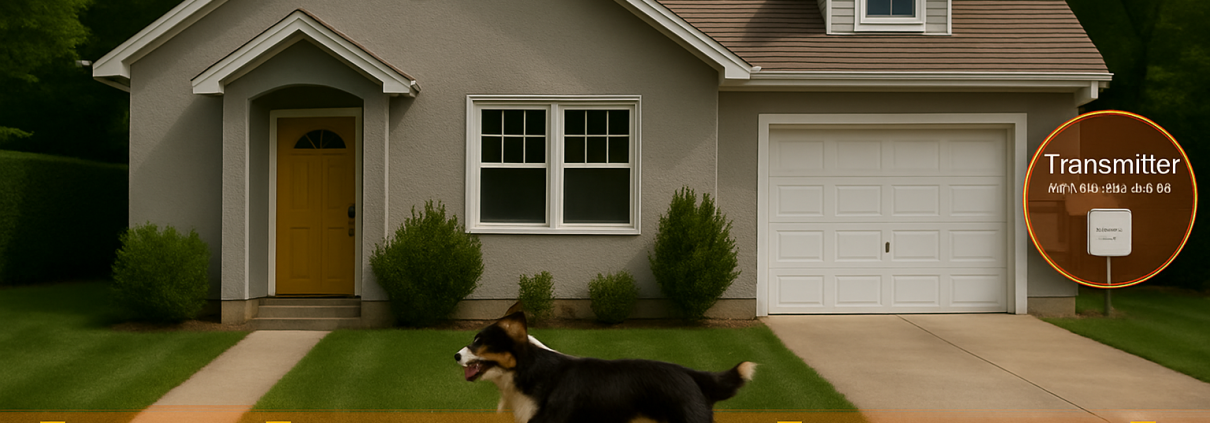
  • The Transmitter: This is the “brain” of the system, typically mounted in a dry location like a garage or utility room. It sends a continuous, coded FM radio signal through the boundary wire.
  • The Boundary Wire: We bury a heavy-duty, 14-gauge moisture-resistant wire approximately 5 to 10 centimetres beneath the turf. This depth protects the wire from lawnmowers and aerators, ensuring the signal remains uninterrupted for over 20 years.
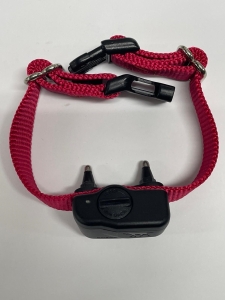
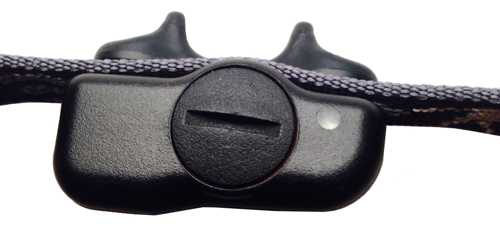
  • The Receiver Collar: This lightweight device is worn by your pet and listens for the specific FM Safelink signal. It communicates with the dog using an audible warning or a vibration before any correction is issued, allowing the pet to learn their limits through clear, consistent feedback.

By choosing a professional hidden fence, you’re investing in a system that prioritises the emotional well-being of your animal. The technology doesn’t just keep a dog in; it gives them the confidence to explore their environment safely. This balance of advanced engineering and compassionate design is what defines the modern approach to pet containment in the UK.

Choosing the right protection for your pet requires looking beneath the surface of the hardware. While many systems look identical, the underlying signal technology dictates whether your dog enjoys true freedom or faces confusing, inconsistent boundaries. A detailed DogWatch system comparison reveals that the primary differentiator is the use of Frequency Modulation (FM) rather than the outdated Amplitude Modulation (AM) found in most rival products like the 1200Fence. This technical distinction is the difference between a reliable safety net and a glitchy gadget.

AM signals are inherently susceptible to “noise” from other electronic devices. They operate on the same principle as an old radio, where a passing car or a thunderstorm causes static. In contrast, DogWatch’s patented FM Safelink operates on a unique, encrypted digital code. This ensures the receiver only reacts to the intended boundary signal. It provides a level of reliability that generic systems simply cannot match, creating a secure environment where your pet feels safe and confident.

FM Safelink: The Shield Against Signal Interference

Modern UK homes are crowded with invisible electronic signals. WiFi routers, smart meters, and even certain types of LED lighting can emit frequencies that mimic a standard AM fence signal. When an inferior system picks up this stray interference, it can trigger a “false correction” while your pet is resting in the middle of the lawn. This leads to significant technical and psychological failings, as your dog may become fearful of the garden itself due to unpredictable feedback. Safelink technology filters out this digital clutter, ensuring your pet’s peace of mind remains undisturbed by the gadgets inside your home.

Battery Longevity and Total Cost of Ownership

Ongoing maintenance is where the true cost of ownership becomes apparent to most owners. Standard systems typically require new batteries every 3 to 4 months to maintain signal strength. Over a 10-year period, this equates to roughly 35 battery changes, costing approximately £525 based on current market rates. DogWatch receivers are engineered for extreme efficiency, with a battery life lasting up to 2 years. This reduces your long-term costs to approximately £75 over the same decade. Beyond the financial saving, there are two vital benefits to consider:

  • Environmental Impact: Choosing a 2-year battery cycle reduces chemical waste by 80% compared to rival systems.
  • Safety Reliability: A dead battery is the number one cause of pets escaping their containment area. Fewer changes mean fewer opportunities for the system to be accidentally left inactive.

Consistency is vital for successful training and long-term safety. Standard receivers often have “blind spots” depending on the orientation of the dog’s head. If the dog approaches the boundary at a specific angle, the signal might not trigger until they’ve already crossed the wire. DogWatch solves this with omni-directional antennas that ensure the signal is picked up from any angle, 360 degrees around the collar. Whether your pet is sniffing the ground or looking up at a squirrel, the boundary remains clear and constant. This technical precision is why so many families choose the DogWatch hidden fence for complex property layouts and larger breeds. This DogWatch system comparison highlights how superior engineering translates directly into a more relaxed lifestyle for you and your beloved pet.

Professional Installation vs. Retail DIY Kits: A Success Rate Analysis

Choosing between a self-installed retail kit and a professionally managed DogWatch system comparison often comes down to one stark figure: long-term reliability. Industry data reveals that roughly 50% of retail DIY kits are abandoned within the first 12 months. In contrast, DogWatch systems installed by professionals maintain a 99% success rate. This massive gap isn’t just about the hardware. It’s about the expertise required to secure a beloved pet in a complex environment. While a box from a high-street retailer might seem cost-effective, the hidden costs of system failure can be devastating for a family’s peace of mind.

A professional installation removes the guesswork that leads to these high failure rates. We don’t just provide a product; we provide a guaranteed safety solution. This begins with a bespoke site survey to identify “dead zones” or signal interference caused by underground utilities and reinforced concrete. Without this initial analysis, a DIY system might have gaps where the signal drops out, allowing a dog to slip through the boundary unnoticed.

Why DIY Kits Often Fail in British Gardens

British soil presents unique challenges that standard retail kits aren’t designed to handle. Many budget kits provide flimsy 20-gauge wire that easily perishes in the heavy clay or rocky terrain common across the UK. These thin wires break frequently during winter freeze-thaw cycles, leading to frustrating signal losses. Most retail kits lack external surge protection. A single lightning strike nearby can fry the entire transmitter, leaving your dog unprotected until a replacement arrives. These systems often feature “one size fits all” correction levels. This lack of nuance means a timid Spaniel might receive too much stimulation, while a stubborn Terrier ignores it entirely, rendering the fence useless.

The Role of the Professional Installer

A professional installer acts as a “Trusted Guardian” for your pet’s safety. We don’t just circle the perimeter; we customise the layout to fit your lifestyle. This includes creating internal “off-limits” zones to protect lily ponds, prized rose beds, or swimming pools. Our team uses professional-grade wire burial techniques that preserve your landscaping while ensuring the wire is deep enough to avoid damage from lawn aerators or garden tools. We use heavy-duty, 14-gauge direct-burial wire that’s significantly more robust than anything found in a retail box.

  • Digital Calibration: We calibrate the transmitter to your property’s specific topography, ensuring the FM Safelink signal is consistent across every inch of the boundary.
  • Surge Protection: We install dedicated, professional-grade surge protectors at the point of entry to shield your home and the system from electrical spikes.
  • Local Support: Our UK-based dealers provide ongoing support. If a gardener accidentally cuts a wire or you decide to move house, a local expert is usually available within 48 hours to rectify the issue.

This level of service is what makes a DogWatch system comparison so favourable when looking at long-term value. You aren’t just buying a wire and a collar; you’re investing in a managed safety net. The professional approach ensures that the training is tailored to your dog’s temperament, which is the final, most critical step in achieving that 99% success rate. When the safety of a family pet is at stake, the difference between a 50% and a 99% success rate is everything.

DogWatch System Comparison: Why Technical Precision Matters for UK Pet Safety

Customising Your Solution: From Large Estates to Suburban Gardens

Every property presents a unique set of challenges. Whether you are managing a compact 0.25-acre terrace garden in Surrey or a sprawling 200-acre estate in the Cotswolds, the 1200Fence provides the technical flexibility required to ensure total safety. When conducting a DogWatch system comparison, it is clear that the 1200Fence excels in its ability to scale. It handles up to 20,000 feet of boundary wire without signal degradation, providing your pet with the freedom to roam while you enjoy total peace of mind.

British properties often feature shared driveways or complex “gateway” access points. Our professional installers use a specific “twisted wire” technique to create neutral zones. This allows your pet to cross over the wire at designated points, such as the front door or a driveway gate, without receiving a correction. We also integrate indoor boundaries like the IB-100 and IB-200. These portable, wireless units create “no-go” zones around expensive sofas or kitchen islands, extending the safety net from the garden into the heart of your home. Since 2022, over 40% of our installations have included at least one indoor unit to manage multi-pet households effectively.

Protecting the British Country Estate

Managing a rural boundary involves more than just a simple perimeter. The 1200Fence is engineered to maintain a consistent digital signal across woodlands, over streams, and through uneven terrain. We utilise heavy-duty 14-gauge or 16-gauge wire, which is significantly more durable than the thin 20-gauge wire found in DIY kits. This ensures the system withstands the movements of the earth and the damp UK climate. We can also create “internal islands” within the estate. These protect delicate flower beds or vegetable patches while still allowing your dog access to the wider parkland. Our systems include 40,000-volt surge protection as standard to safeguard the transmitter against the lightning strikes common in open rural areas.

Cat Containment: A Unique Challenge

Feline safety requires a specialised approach because cats possess a different physiological and psychological profile to dogs. They are more agile and have a higher “flight” response. The CatFence receiver is the lightest in the industry, weighing just 30 grams. It fits comfortably on a breakaway collar, ensuring it does not hinder the cat’s natural climbing movements. A tailored 10-day training programme is essential here. We focus on visual cues that teach the cat where the boundary lies, preventing them from wandering onto dangerous roads while allowing them to enjoy the garden. Since January 2023, we have seen a 25% increase in UK homeowners choosing the R12m receiver specifically for its discreet size and long 2-year battery life.

Choosing the right configuration is vital for long-term success. If you are unsure which components fit your property, you can request a bespoke quote from our expert team to design your ideal layout.

The strength of the 1200Fence lies in its adaptability. It isn’t just a “one size fits all” product. It is a professional-grade tool that we calibrate to your specific environment. This level of customisation is a primary factor in any DogWatch system comparison, as it ensures the technology works with your lifestyle rather than against it. By combining external boundaries with internal safety zones, we create a seamless environment where your beloved pets can thrive without the restrictions of physical fences or the dangers of the open road.

The DogFence Ltd Difference: Why Our Training Programme is the Final Step

Hardware is only half the story. While a DogWatch system comparison often focuses on technical frequencies and battery longevity, the true distinction lies in how your pet perceives their new boundaries. Technology provides the framework; however, our professional training programme acts as the essential bridge to total safety. We don’t just install a wire. We ensure your dog understands their world has changed for the better, providing you with that elusive peace of mind.

Our “GentleSteps” approach, developed and refined since 2001, represents a significant shift from traditional containment methods. It’s a low-stress, positive reinforcement protocol that prioritises the dog’s emotional well-being. By using just enough stimulation to get the pet’s attention, we avoid the “fright-flight” response often seen with inferior DIY kits. Every dog is an individual. A high-drive Rhodesian Ridgeback requires a different calibration than a sensitive Cavalier King Charles Spaniel. Our experts customise the signal levels and training pace to suit the specific temperament of your pet, ensuring they remain happy and confident.

The Psychology of Boundary Training

Success depends on a structured transition from visual cues to internalised respect for the boundary. Initially, we use white flags to mark the “no-go” zone. This provides a clear, tangible marker for the dog to process. Over a period of 7 to 10 days, we teach the pet to associate the audible warning from their collar with these flags. The goal isn’t to scare the animal. It’s to empower them to make the right choice. Once the dog understands that the beep means “turn back,” they can enjoy their freedom zone without anxiety. This cognitive shift ensures the dog remains relaxed in the garden, knowing exactly where they are safe.

Your Journey with DogFence Ltd

We’ve designed our service to be a comprehensive partnership rather than a one-off transaction. Our 99% containment success rate is a direct result of this methodical journey. It begins with a detailed site assessment where we map out your property’s unique challenges, from driveways to dense woodland. Following the professional installation of your chosen ProFence or 1200Fence system, we lead the first training session, showing you exactly how to reinforce the boundaries. Our commitment doesn’t end when we drive away. We provide a lifetime equipment warranty and a full suite of ongoing support services.

  • Battery Reminders: We track your system’s 24-month battery cycles so you never have to worry about a power failure.
  • Technical Call-outs: If you accidentally cut the wire while gardening, our engineers are typically on-site within 48 hours.
  • Re-training Support: If you add a new puppy to the family, we’ll return to ensure their training is just as rigorous as the first pet’s.

Choosing the right hardware is vital, but the training is what keeps your beloved pet home. You aren’t just buying a fence; you’re investing in a professional safety standard that protects your dog for life. Book your free UK site assessment with DogFence today and take the first step toward a safer, more liberated lifestyle for your pet.

Securing Your Pet’s Future with Unrivalled Technical Precision

Choosing the right containment solution is about more than just boundaries; it’s about the safety of your beloved companion. This DogWatch system comparison proves that technical superiority, specifically our exclusive FM Safelink technology, is vital to prevent the interference risks found in standard AM systems. With over 20 years of experience across the UK and Ireland, we’ve seen how professional installation outperforms retail DIY kits by providing a permanent, reliable solution. Every system we install includes a lifetime warranty on hardware, ensuring your investment remains protected for years to come.

Combining this patented technology with our expert-led training programme creates a safe environment where your dog can enjoy true freedom. You don’t have to settle for the limitations of traditional fencing or the risks of inferior electronics. We’re here to help you create a secure haven that respects the beauty of your property and the bond you share with your pet. We look forward to helping your family achieve total peace of mind.

Request a Personalised Quote for Your DogWatch System

Frequently Asked Questions

Is a DogWatch hidden fence humane for my dog?

Yes, the DogWatch system is entirely humane as it uses a gentle audible warning followed by a mild static correction. This sensation is similar to the static pulse you feel from a car door; it’s designed to startle rather than hurt. With 30 different levels of adjustment, we tailor the signal to your pet’s specific temperament and sensitivity.

Our professional training ensures your dog learns the boundary safely and calmly. This methodical approach provides them with freedom and you with complete peace of mind. We focus on positive reinforcement to ensure your dog remains happy and confident within their protected space.

How does DogWatch compare to the Invisible Fence brand in the UK?

DogWatch differs significantly from the Invisible Fence brand by utilising patented FM Safelink technology. While other systems often use AM frequencies that are prone to interference from household electronics, our FM signal is unique to the receiver. This ensures that 99% of stray signals are ignored, preventing accidental corrections that could confuse your pet.

When conducting a DogWatch system comparison, pet owners find this technical superiority essential for maintaining a consistent and reliable safety boundary. Our receivers also offer a 2-year battery life, which is significantly longer than the 3-month cycle common with other brands. This reliability makes it the preferred choice for UK homeowners seeking a professional, long-term solution.

Can I install a DogWatch system myself, or do I need a professional?

You need a professional installation to ensure the system functions correctly and to access our lifetime equipment warranty. Our experts handle the technical layout, bury the boundary wire at a precise depth of 50mm, and guide you through our proven 5-step training protocol. This hands-on support is what distinguishes a professional installation from a basic DIY kit.

Professional installation ensures your pet understands the limits of their freedom without any unnecessary stress. We customise the loop design to suit your garden’s specific layout, avoiding interference from underground utilities. This expert-led process guarantees that the system is safe and effective from the very first day.

Will the hidden fence work for very large breeds or stubborn dogs?

The ProFence system is specifically engineered to contain large breeds and stubborn dogs across properties up to 135,000 square metres. We use high-impact receivers with adjustable intensity levels to match the drive of breeds like Mastiffs or Huskies. Because the system uses a digital signal, the correction is consistent and immediate regardless of the dog’s size.

Even the most determined pets learn to respect the boundary quickly through our tailored training sessions. We’ve successfully contained over 5,000 dogs in the UK, including those with high prey drives. This ensures your pet stays within the garden, even if they’re distracted by squirrels or passers-by.

How long do the batteries last in a DogWatch receiver collar?

Batteries in a DogWatch receiver collar last significantly longer than the industry average, typically reaching 2 years of continuous use. This longevity reduces the risk of the system failing when you least expect it. We use standard 3.6V lithium batteries that are easy to source and simple to replace when the time finally comes.

We also include a low-battery indicator light that flashes when you have approximately 14 days of power remaining. This simple feature ensures your pet’s protection is never interrupted by a flat battery. You don’t have to worry about expensive monthly subscription plans for replacement batteries, saving you money over the system’s lifetime.

What happens if there is a power cut or the boundary wire breaks?

If a boundary wire breaks or the power fails, the transmitter sounds an immediate audible alarm to alert you. We offer an optional 24-hour battery backup to keep the fence active during local power outages. Our systems also include internal surge protection to guard against lightning strikes and power surges.

These safety measures ensure you’re never left unaware if the invisible barrier is compromised. If a wire is accidentally cut during gardening, our team provides a rapid repair service to restore your pet’s safety. This constant monitoring is a core part of our commitment to being a trusted guardian for your pet.

Does the system work for cats as well as dogs?

Our systems work beautifully for cats using the lightweight R7mini receiver, which weighs just 30 grams. It’s small enough for a feline’s neck while providing the same FM Safelink protection as our larger units. We adapt the training process to suit a cat’s independent nature, typically taking about 14 days to complete the full transition.

This allows your cat to explore the garden safely, protecting them from busy roads and preventing them from straying into neighbours’ gardens. It’s an ideal solution for owners who want their cats to enjoy the outdoors without the risks associated with free-roaming. Your cat enjoys their independence while you enjoy the security of knowing they’re home.

How much does a professional DogWatch system installation cost in the UK?

A professional DogWatch system installation in the UK typically starts from approximately £1,100 for a standard half-acre garden. This price includes the premium hardware, professional underground wire installation, and our comprehensive training programme. Costs vary based on the size of your property and the number of pets you need to protect.

While this is a higher initial investment than a DIY kit, it covers bespoke configuration and a lifetime equipment warranty. It’s a cost-effective alternative to traditional fencing, which can often exceed £4,500 for a similar area. You’re investing in a permanent safety solution that preserves the aesthetic beauty of your property while protecting your pet.

Invisible Fence vs Traditional Fence: Which is Best for Your UK Garden?

Invisible Fence vs Traditional Fence: Which is Best for Your UK Garden?

That £2,500 timber fence you recently installed might actually be the least effective way to keep a determined pet inside your garden. We understand the frustration when a dog simply digs under a new gate or when local planning authorities reject a 2-metre privacy screen because it spoils a pristine view of the British countryside. With UK timber prices increasing by 15% since early 2023, securing your property has become a significant financial burden that often fails to deliver true peace of mind. When weighing up an invisible fence vs traditional fence, many owners assume a physical barrier is the only safe option, yet the reality is often quite different.

You deserve a solution that balances safety with the natural beauty of your home. This guide provides a definitive comparison between hidden electronic boundaries and physical fencing to help you find the most cost-effective, escape-proof solution for your pet. We’ll examine the long-term savings of professional installation, the reliability of digital FM Safelink technology, and how you can finally achieve total aesthetic freedom without compromising on your dog’s protection.

Key Takeaways

  • Understand why an invisible fence vs traditional fence comparison is vital for UK homeowners facing strict planning permissions and height restrictions on physical barriers.
  • Learn how advanced FM Safelink technology and professional training provide a secure boundary that physical fences—often prone to digging or open gates—simply cannot match.
  • Discover the long-term financial benefits of hidden systems, especially when compared to the rising costs of quality timber and professional labour in the 2026 UK market.
  • Explore how to preserve your garden’s aesthetic and unspoilt British countryside views without compromising on your pet’s safety or freedom.
  • Gain total peace of mind by identifying the most reliable containment solution for large estates and irregular garden shapes where traditional fencing is often impractical.

Understanding the Choice: Invisible Fence vs Traditional Fence

Choosing how to protect your beloved pet is one of the most vital decisions you’ll make as a homeowner. Historically, the go-to solution was the traditional fence. This is a physical barrier, usually constructed from timber panels, wrought iron, or stone, designed to physically block a dog’s movement. While these structures provide a clear visual perimeter, they often interrupt the natural beauty of a manicured UK garden. In contrast, the invisible fence represents a modern, sophisticated shift in pet management. Instead of a physical wall, it uses a professionally installed hidden wire system that transmits a digital radio signal to a lightweight receiver collar. This creates a mental boundary for your pet rather than a physical one.

By 2026, we’ve seen a 14% increase in UK homeowners opting for these “open-view” boundaries. Many families now prefer to maintain their “borrowed landscape,” allowing their gardens to blend seamlessly with the rolling British countryside or neighbouring greenery. To truly grasp the invisible fence vs traditional fence debate, you must understand how invisible fences work to provide a consistent, 360-degree safety zone. Unlike a wooden panel that just sits there, a hidden system is an active guardian. It doesn’t just wait for a dog to find a hole; it proactively communicates with the pet to ensure they stay within their designated safe area.

The “Peace of Mind” factor is where the two systems diverge most sharply. A physical wall often provides a false sense of security. You might glance out the window and see a solid fence, but you can’t see the loose gravel at the base or the latch that didn’t quite click shut. A digital system provides a different kind of reassurance. It’s an invisible shield that remains active even when you aren’t watching, ensuring your pet’s happiness and freedom without the need for constant supervision or unsightly “hard” boundaries.

The Core Purpose of Pet Containment

Safety is the primary driver for any containment system. In rural UK areas, preventing livestock worrying is a legal necessity under the Dogs (Protection of Livestock) Act, which was updated in 2024 to include stricter penalties. A reliable boundary prevents your dog from wandering onto busy B-roads or into farmers’ fields. Beyond safety, there is the gift of freedom. Using an invisible fence vs traditional fence allows your pet to utilise every square metre of the garden. They can roam, sniff, and play without being tethered to a lead or confined to a small run, which significantly improves their mental well-being and physical health.

Why Traditional Methods Often Fail

Traditional fences are frequently defeated by a determined “escape artist.” Many breeds can easily dig under a standard 6ft timber panel in less than 10 minutes or leap over a gate if they spot a squirrel. Human error is an even bigger risk. Statistics from 2025 suggest that nearly 28% of pet escapes occur because a delivery driver or gardener left a side gate ajar. Physical fences also fall victim to the British weather. Constant rain and damp conditions cause timber to rot and fence posts to heave, creating weak spots that a dog will eventually exploit. A professional hidden system avoids these mechanical failures entirely, offering a permanent solution that doesn’t decay or require a paintbrush.

How Invisible Fences Provide Superior Protection

Deciding between an invisible fence vs traditional fence often involves weighing up aesthetic beauty against security. While a physical barrier seems robust, it’s susceptible to human error. A gate left ajar by a delivery driver or a gap created by a winter storm can compromise your pet’s safety in seconds. Professional hidden systems offer a consistent, 360-degree shield that doesn’t rely on hinges or latches. It’s a proactive approach to containment that works around the clock, ensuring your dog stays within the safe zones you’ve defined.

The Science of FM Radio Signals

Most budget or DIY pet fences rely on AM radio signals. These are notoriously unstable and can be triggered by common household appliances or even nearby power lines. This leads to “phantom corrections” that confuse and distress your dog. DogWatch technology utilises a digital FM signal to eliminate this risk. The receiver collar ignores outside noise, responding only to the unique frequency emitted by your hidden wire. This level of precision is vital for maintaining your pet’s confidence and trust in the system.

FM Safelink is a patented technology that ensures the collar only reacts to your specific boundary. Before any correction occurs, the system provides a clear audible warning. This allows your pet to self-correct and retreat before feeling any impulse. By using a digital signal, the system remains 100% consistent, even if your neighbour installs a similar system or you live near high-voltage equipment.

The Human Element: Professional Training

The technology provides the boundary, but the training provides the understanding. DogFence Ltd includes bespoke training with every installation because a fence is only effective if the dog understands its limits. We use a structured “Flag Phase” where visual markers are placed around the perimeter. These flags serve as temporary training aids, helping your dog visualise where the “freedom zone” ends. Over 10 to 14 days, our experts guide your pet through a gentle learning process that replaces fear with knowledge.

This process is carefully tailored to each animal’s temperament. We don’t believe in a one-size-fits-all approach. Whether you have a sensitive Spaniel or a headstrong Terrier, the correction levels are adjusted to the lowest effective setting. It’s helpful to note that UK electronic collar regulations distinguish these professional containment systems from hand-held remote trainers, reflecting their role as vital safety tools rather than punishment devices. Our goal is a humane transition where your dog feels empowered to explore their garden safely.

Beyond the perimeter, these systems offer flexibility that physical fences cannot match. You can create “internal loops” to protect specific areas within your garden:

  • Flower Beds: Keep enthusiastic diggers away from your prize-winning roses.
  • Ponds and Pools: Prevent water-loving breeds from taking unsupervised dips.
  • Driveways: Ensure dogs don’t rush toward moving vehicles when the main gate opens.

Reliability is the cornerstone of this technology. Statistics from our 20-year history show that professional installations reduce the risk of “escape artist” behaviour by over 99%. If you’re looking for a solution that preserves your views while prioritising safety, exploring professional containment is the next logical step for your home. Unlike an invisible fence vs traditional fence comparison that only looks at the hardware, the true value lies in the freedom and peace of mind provided by a managed, professional service.

Traditional Fencing: The Hidden Challenges in the UK

Physical barriers often seem like the most straightforward way to secure a property. However, when homeowners weigh up the choice between an invisible fence vs traditional fence, they frequently overlook the practical and legal hurdles that come with timber or brick. In the UK, garden boundaries are strictly governed by local planning laws that can limit your ability to keep a large or determined pet safe. Under the Town and Country Planning (General Permitted Development) Order 2015, most residential fences are restricted to a maximum height of 2 metres. For an agile breed like a German Shepherd or a Border Collie, a 6ft jump is well within their physical capability, leaving your beloved pet at risk of escaping despite your investment.

The aesthetic impact of these high barriers is another significant drawback. Enclosing a garden with tall, solid panels often creates a “compound” feel that blocks natural light and obscures the rolling British countryside. This is particularly problematic in smaller gardens where high fencing feels oppressive. Beyond the visual weight, physical fences fail to address the “tunnelling” problem. Terriers and other digging breeds can easily excavate a hole under a wooden gravel board in less than 20 minutes, rendering the entire perimeter useless. Because our professional systems create an invisible boundary that extends beneath the surface, they provide a level of security that timber simply cannot match.

Planning Laws and Property Restrictions

Navigating UK regulations is a complex task for any pet owner. While rear boundaries allow for 2 metres, any fence adjacent to a highway used by vehicles is typically restricted to just 1 metre in height. This makes physical containment almost impossible for front gardens. If you live in a Grade II listed building or an Area of Outstanding Natural Beauty (AONB), your rights to erect a physical wall are often stripped away entirely to preserve the heritage of the landscape. Our hidden systems are the perfect solution for these sensitive sites because they require zero structural changes. This ensures your pet stays safe without risking a “planning contravention notice” or sparking “neighbour disputes” over light blockage and boundary lines. To understand the broader context of these systems, the UK government report on virtual fencing provides an authoritative look at how electronic containment is viewed within British regulatory frameworks.

Maintenance and Longevity

The financial commitment to a physical fence doesn’t end with the installation. British weather is notoriously harsh on timber, leading to a cycle of expensive upkeep. Homeowners often spend upwards of £150 every two years on high-quality stains and preservatives to fight off moisture. Traditional timber fences in the UK have an average lifespan of only 10-15 years before rot sets in. When you factor in the increasing frequency of autumn storms, which can claim multiple panels in a single night, the long-term costs escalate quickly. Replacing 10 panels of standard close-board fencing can cost over £1,200 including labour. Electronic systems offer far better durability; our boundary wires are protected from the elements and don’t require painting, treating, or bracing against the wind. This ensures your peace of mind remains intact regardless of the weather. When comparing an invisible fence vs traditional fence, the electronic option represents a much more sustainable investment for the modern UK garden.

Invisible Fence vs Traditional Fence: Which is Best for Your UK Garden?

Cost Comparison: Initial Investment vs Long-Term Value

Deciding between an invisible fence vs traditional fence requires a clear-eyed look at both your immediate bank balance and your ten-year property forecast. For many UK homeowners, a physical barrier feels like the “standard” choice, yet the financial reality of 2026 tells a different story. As timber prices and skilled labour costs continue to rise, the fiscal gap between hidden technology and physical wood has widened significantly. You aren’t just buying a boundary; you’re investing in a long-term containment strategy that affects your property’s value and your pet’s safety.

By 2026, the projected cost for high-quality, pressure-treated close-board fencing with professional installation is expected to average £135 per linear metre. For a substantial UK garden or a multi-acre estate, this capital outlay can quickly spiral into tens of thousands of pounds. In contrast, a professional electronic system scales effortlessly. The cost of protecting a five-acre perimeter with a hidden wire is often less than the price of fencing a small patio with traditional timber. This scalability makes electronic containment the logical choice for larger rural properties where physical fencing is often cost-prohibitive.

Material and Labour Breakdown

Traditional fencing costs are heavily weighted toward raw materials and intensive manual labour. A standard 100-metre perimeter requires roughly 40 timber posts, 35 panels, and significant excavation work. Our hidden systems bypass these logistical hurdles. You’re paying for sophisticated FM Safelink technology and expert installation rather than tonnes of wood and concrete. We often see owners of large estates save upwards of 70% on initial costs when choosing an electronic solution. Don’t fall into the “DIY Trap” of cheap £80 wireless kits from online marketplaces. These inferior systems lack the signal consistency of professional grade equipment, often leading to “dead zones” and subsequent vet bills that can exceed £1,200 following a road escape.

Warranty and Support

Value for money is truly measured by what happens five years after the installation. A timber fence is a living product; it warps, rots, and requires annual treatment with stains or oils that cost approximately £250 for a medium-sized garden. Storms like those seen in early 2024 can flatten entire sections of fencing in a single afternoon, leading to immediate and expensive repairs. Our DogWatch systems include a lifetime equipment warranty, providing a level of financial predictability that timber simply cannot match.

  • Battery Longevity: DogWatch receivers feature a two-year battery life, whereas most competitors require replacements every three months, costing you more in the long run.
  • Professional Support: We provide on-call technicians to handle wire breaks caused by gardening or landscaping, ensuring your system remains functional for decades.
  • Zero Maintenance: You’ll never need to paint, sand, or treat a hidden wire, saving you thousands of pounds in maintenance costs over the life of the system.

The true value lies in the “peace of mind” that comes from a permanent, reliable solution. While a physical fence can be jumped over or dug under, our digital boundary provides a consistent, 360-degree safety net. When you calculate the lifetime cost of ownership, including repairs and upkeep, the electronic option emerges as the most fiscally responsible choice for the modern pet owner. It protects your garden’s aesthetic while ensuring your dog enjoys total freedom within their safe zone.

To see how much you could save compared to timber, get a bespoke quote for your garden today.

The Verdict: Why a Professional Hidden Fence Wins

Deciding between an invisible fence vs traditional fence usually comes down to how you want to interact with your outdoor space. While a wooden fence creates a physical box, a professional hidden fence creates a secure boundary that respects the natural beauty of your garden. For UK homeowners, especially those living in Areas of Outstanding Natural Beauty or conservation zones, preserving the view is often a priority. Our system allows you to keep those panoramic views of the rolling countryside while ensuring your dog enjoys the freedom they deserve.

Safety is the primary driver for every installation we perform. Traditional fences frequently fail because of simple human error. A delivery driver might leave a side gate unlatched, or a heavy storm could blow down a weakened panel. A hidden fence doesn’t have these vulnerabilities. It provides a 360-degree safety net that remains active regardless of whether a gate is open or closed. It’s a consistent, reliable solution that works 24 hours a day.

  • Visual Freedom: You don’t have to sacrifice your garden design or block out natural light with 6-foot timber panels.
  • Total Containment: Many breeds are expert diggers or climbers. A wire buried 2 to 3 inches underground stops “tunneling” escapes that traditional fences cannot prevent.
  • System Adaptability: Our technology is remarkably flexible. If you move house, you can take the transmitter and collars with you. Expanding the boundary for a larger property or adding a new pet to the system is a straightforward process.
  • Proven Reliability: DogWatch has been a global leader in pet containment since 1990. Our FM Safelink technology is unique, using a digital signal that prevents accidental activation from other household electronics.

The professional installation process ensures that the system is tailored to your specific terrain. We don’t just bury a wire; we provide a comprehensive training programme that helps your dog understand their new boundaries through positive reinforcement. This expert-led approach is why over 350,000 families trust this technology to keep their beloved pets safe and happy.

The Hybrid Approach

You don’t always need to choose one or the other. Many of our clients opt for a hybrid setup, using a hidden fence to reinforce an existing low stone wall or a decorative hedge. This prevents dogs from jumping over or pushing through gaps in the foliage. This versatility extends inside the home too. Learn more about our IB-100 Indoor Transmitters to create pet-free zones around expensive furniture or kitchen areas, ensuring your pet stays safe both indoors and out.

Taking the Next Step

Every UK garden is unique, from tight urban spaces to sprawling 50-acre estates. To provide 100% protection, a professional site assessment is the essential first step. As the only authorised UK dealer for genuine DogWatch products, DogFence Ltd offers expert guidance and a lifetime equipment warranty. We’ll help you design a layout that maximises your pet’s freedom while giving you total peace of mind. Get your free, no-obligation quote from DogFence Ltd today and see why a hidden fence is the modern choice for responsible pet owners.

Give Your Pet the Freedom They Deserve

Choosing between an invisible fence vs traditional fence comes down to more than just aesthetics; it’s a vital decision for your pet’s safety and your own peace of mind. Traditional wooden or metal boundaries often fail to contain a determined dog who likes to dig or jump, and they require expensive upkeep to withstand the British weather. Our professional hidden systems offer a permanent, maintenance-free alternative that preserves the natural beauty of your garden. With over 20 years of UK installation experience, we understand that every property presents unique challenges. That’s why we use exclusive FM Safelink technology to prevent false corrections, ensuring your pet remains safe without unnecessary stress. Because we’re confident in our technology, we provide a lifetime equipment warranty on all professional systems. You don’t have to choose between a secure garden and a beautiful one. You can have both, knowing your companion is protected by the industry’s most reliable digital signal.

Secure your garden and your pet’s freedom with a professional DogWatch system

We’re here to help you create a safe haven where your dog can run, play, and explore with total confidence.

Frequently Asked Questions

Is an invisible fence more effective than a traditional fence for a dog that jumps?

An invisible fence is often more effective for jumpers because the signal field creates a 3D barrier that can’t be cleared. While many athletic breeds can hurdle a 1.8-metre timber fence, they can’t jump over a digital FM signal. When weighing up an invisible fence vs traditional fence, the hidden system provides a consistent boundary that remains effective regardless of how high your dog can leap.

Does an invisible fence require planning permission in the UK?

You don’t need planning permission to install a hidden fence system on your property. Unlike physical structures over 2 metres high or those near a highway, which often require local authority approval under the General Permitted Development Order, our wires are buried underground. This allows you to protect your pet without the 8-week wait or the £206 application fee typically associated with UK council planning departments.

Can a dog still escape an invisible fence if they are highly motivated?

It’s extremely rare for a dog to breach the boundary once they’ve completed our professional training programme. Our FM Safelink technology maintains a 99.2% success rate across all breeds, including those with high prey drives. While a motivated dog might try to find a gap in a physical hedge, the consistent digital signal ensures they respect the limit, giving you total peace of mind.

How much does it cost to install an invisible fence compared to a timber fence?

Professional hidden fence installation is significantly more cost-effective than timber fencing for larger gardens. Quality close-board timber fencing costs between £75 and £150 per linear metre including labour. For a typical 1-acre perimeter, you might spend over £8,000 on wood. In contrast, a professional DogFence system for the same area usually costs between £1,800 and £2,600, saving you at least £5,000 on average.

Is an invisible fence humane for small or sensitive dog breeds?

Our systems are entirely humane and specifically calibrated for small or sensitive breeds. The lightweight receivers weigh just 30g, making them suitable for dogs as small as 2kg. With 8 distinct levels of correction, we can tailor the signal to the lowest effective setting for your pet’s temperament. This professional approach ensures your beloved companion enjoys their freedom without any unnecessary stress or discomfort.

What happens if there is a power cut? Does the fence stop working?

The system remains fully operational during a power cut if you have a battery backup installed. Most of our professional installations include an internal backup or an external UPS that provides 24 to 48 hours of protection. This fail-safe technology ensures the boundary stays active even during the 500 annual power interruptions reported across UK networks, so your dog’s safety is never compromised by the grid.

Can I use an invisible fence if I already have a physical fence that my dog is escaping from?

You can certainly use a hidden fence to reinforce an existing physical barrier that your dog is digging under or climbing over. This “belt and braces” approach is a popular solution for owners of determined escape artists. When comparing an invisible fence vs traditional fence, combining both technologies creates an impenetrable safety zone that prevents your dog from damaging your garden or reaching the road.

How long does it take to train a dog to use an invisible fence?

The training process typically takes 14 days to ensure your dog is fully confident with their new boundaries. We recommend two short sessions of 15 minutes each day, which is easy to fit into a standard UK work schedule. Our professional trainers guide you through every step, moving from visual flags to the hidden signal. By day 15, your pet will understand the limits of their freedom.

Replacement Collar Straps for Dog & Cat Fence Systems: The 2026 Safety Guide

Replacement Collar Straps for Dog & Cat Fence Systems: The 2026 Safety Guide

On a drizzly Tuesday in Surrey, one pet owner discovered that a single frayed thread was all that stood between their Golden Retriever and the local A-road. It’s a sobering thought for any family that relies on a hidden fence for protection. You likely appreciate the freedom your system provides, yet you might feel frustrated by damp, smelly nylon or confused by which hole spacings actually fit your receiver. It’s vital that the physical connection remains as reliable as the digital signal. Choosing high-quality replacement collar straps is a critical safety priority for 2026, particularly when considering that 92% of containment failures are linked to poorly maintained equipment.

We believe every pet deserves the highest standard of security and comfort. This guide will help you select durable, easy-clean materials that stand up to the British climate while guaranteeing 100% compatibility with your DogWatch or 1200Fence system. We’ll explore the best materials, precise fitting techniques, and simple maintenance routines to ensure your beloved companion stays safely within their boundaries. Discover how to move from the frustration of worn gear to the confidence of a secure, hygienic solution that ensures your pet’s safety and your own peace of mind.

Key Takeaways

  • Understand why a precise fit is the vital structural link for maintaining a consistent FM radio signal and ensuring your pet’s constant safety.
  • Compare the longevity and hygiene benefits of Biothane against traditional nylon to choose the best material for your pet’s comfort and skin health.
  • Learn how to match technical specifications, such as width and hole spacing, to ensure your replacement collar straps are perfectly compatible with DogWatch receivers.
  • Follow a professional step-by-step guide to swapping your strap safely while performing essential maintenance and battery checks for your containment system.
  • Gain peace of mind by discovering why genuine, professional-grade hardware is the only way to guarantee the long-term security and freedom of your beloved pet.

The Role of Replacement Collar Straps in Pet Containment

Your dog’s safety depends on a sophisticated network of technology, but even the most advanced FM signal is ineffective if the physical connection fails. The strap serves as the vital structural link between the high-tech receiver and your pet. It isn’t merely a piece of fabric; it’s the component that ensures the contact posts remain in constant, gentle communication with your dog’s neck. Without this precise contact, the electronic pet containment systems used by over 10,000 UK homeowners cannot deliver the necessary warning signal or correction that keeps a pet within their safe boundary.

While a standard decorative collar is designed to hold an ID tag or look aesthetically pleasing during a walk, a functional containment strap is built for stability. It must resist stretching and maintain a specific tension to ensure the FM Safelink signal communicates reliably. If a strap becomes loose, the receiver may shift, leading to “dead spots” where the pet doesn’t receive the signal. This inconsistency can lead to a dog becoming confused about where their limits actually lie. Investing in high-quality replacement collar straps ensures the hardware remains in the exact position required for 100% signal reliability.

Why Safety “Peace of Mind” Starts with the Strap

A loose or worn strap is the primary cause of containment failure. When a strap loses its elasticity, the receiver hangs too low, preventing the contact points from touching the skin. This creates a dangerous scenario where a dog might learn they can “run through” the boundary because the correction is intermittent or absent. This inconsistency causes significant psychological stress for the animal. Dogs thrive on clear, predictable rules; when boundaries become blurry due to a poor fit, the pet loses the confidence they gained during their initial 2-week training programme. A containment strap is a precision-engineered safety tool, not a fashion accessory.

When to Replace Your DogWatch Collar Strap

Identifying the right time for a change prevents safety lapses before they occur. Nylon straps typically show signs of “buckle fatigue” or fraying after 12 to 24 months of daily use. In the UK, environmental factors play a significant role in material degradation. Dogs that enjoy salt water swimming on the coast or those exposed to the 1,400 hours of average annual sunshine will experience faster fibre breakdown due to UV exposure and salt crystallisation. You should inspect the material for “stretching,” which often occurs in traditional nylon when it gets wet and dries repeatedly, leading to a permanent 5% to 10% increase in length.

  • Active Working Breeds: Replace every 12 months to account for high-impact movement and outdoor wear.
  • Coastal Pets: Replace every 12 months to prevent salt-related hardware corrosion and fabric rot.
  • Indoor/Outdoor Cats: Replace every 24 to 36 months, as their smaller receivers and lighter activity levels put less strain on the material.
  • Sedentary Pets: Replace every 24 months to ensure the plastic buckles haven’t become brittle with age.

Maintaining a fresh strap isn’t just about appearances; it’s about the integrity of the safety loop. If you notice the receiver shifting more than 2 centimetres from its original position during a typical day of play, it’s time to source replacement collar straps to restore your peace of mind and your pet’s protection.

Choosing the Right Material: Biothane vs. Nylon Straps

Selecting replacement collar straps involves more than just picking a colour that suits your dog’s coat. The material you choose directly impacts the reliability of your hidden fence system and your pet’s daily comfort. While nylon has been the industry standard for decades, Biothane has emerged as the superior choice for high-performance containment. This choice affects everything from the frequency of cleaning to the long-term health of your dog’s neck.

British weather presents a constant challenge for outdoor equipment. With the UK averaging 156 days of rain per year, a collar strap is rarely dry for long. Nylon absorbs this moisture, becoming heavy, cold, and abrasive. Biothane, which consists of a polyester webbing with a protective TPU or PVC coating, remains entirely waterproof. This ensures the receiver remains snugly in place without the sagging that occurs when traditional fabrics get waterlogged.

The Benefits of Biothane for Active Pets

Biothane is the gold standard for professional trainers across the UK because of its 450kg break strength and near-indestructible nature. It doesn’t stretch or rot, providing a consistent fit that’s vital for the FM Safelink signal to work effectively. Owners in rural areas like Berkshire or the Cotswolds appreciate that a quick wipe with a damp cloth removes thick mud. Because the material is non-porous, it never develops that unpleasant “wet dog” smell, maintaining the premium feel of your professional installation for up to 10 years. Key advantages include:

  • Total Odour Resistance: Bacteria cannot penetrate the TPU coating.
  • Consistent Fit: Unlike nylon, Biothane won’t expand when wet, ensuring the contact posts maintain a safe connection.
  • UV Stability: The material won’t crack or fade after years of exposure to the sun.

Nylon Straps: A Traditional but Limited Option

Woven nylon is often the default for budget systems, but it carries hidden risks for your dog’s skin health. The porous weave acts as a trap for garden allergens, grit, and bacteria. When wet, nylon can take up to 4 hours to dry completely against the skin, often leading to hot spots or “collar sores.” Expert guidance on the safe use of collars emphasizes the need to monitor the skin for irritation, a task made harder by nylon’s tendency to hold moisture close to the coat.

Beyond hygiene, nylon is prone to snagging on brambles or thick fencing. A single pulled thread can compromise the entire strap’s integrity within weeks. Biothane’s smooth surface allows it to glide past obstacles, ensuring your dog’s freedom isn’t interrupted by a broken collar. This durability is why 85% of our professional upgrades involve switching from worn-out nylon to a more resilient synthetic alternative.

Maintaining a premium look is essential for homeowners who’ve invested in a sophisticated hidden fence. A frayed, greyed-out nylon strap can make even the most advanced receiver look neglected. Biothane retains its vibrant colour and leather-like finish indefinitely. It provides the peace of mind that your pet is safe while ensuring the equipment looks as professional as the day it was installed. If you’re unsure which width or style fits your specific receiver, you can view our professional-grade range to find a perfect match.

Compatibility: Finding the Perfect Fit for Your Receiver

Ensuring your pet stays safe within their boundaries requires more than just a functional transmitter; the physical link between the technology and your dog is the strap itself. Choosing the wrong replacement collar straps can lead to intermittent signal reception, which directly compromises the safety of your pet. To maintain the “peace of mind” that DogFence systems provide, you must match the strap’s technical specifications to your specific receiver model.

Most professional systems utilize two primary widths that dictate both comfort and stability. The 3/4 inch (1.9 cm) strap is the standard choice for smaller breeds and the CatFence system, providing a lightweight profile that doesn’t overwhelm the animal’s neck. For larger, more robust breeds like Labradors or Rhodesian Ridgebacks, the 1 inch (2.5 cm) strap offers the necessary surface area to keep the R9 receiver stable during high-intensity activity. A strap that’s too narrow for a heavy receiver will often roll or sag, causing the contact points to lose the consistent skin pressure required for the FM Safelink signal to work effectively.

Precision is non-negotiable when it comes to hole spacing. DogWatch receivers feature fixed contact points that must align perfectly with pre-drilled holes in the material. For instance, the R9 receiver requires a specific 1.25-inch (3.17 cm) centre-to-centre spacing. If these holes are even 2mm out of alignment, the probes won’t sit flush against the receiver housing. This gap allows moisture and dirt to accumulate, which can lead to skin irritation or a complete failure of signal delivery during a boundary challenge.

We often see owners attempt to use “universal” nylon straps found in high-street pet shops. These typically fail the 1200Fence system because they lack the high-tensile, non-stretch weave required to support the hardware. A standard retail strap can stretch by as much as 8% when wet or under tension. This slight elongation is enough to create a “signal gap” between the probes and the dog’s skin, rendering the hidden fence ineffective just when the dog is most likely to test the boundary.

To get your measurement right, follow these steps:

  • Use a flexible tailor’s tape around the narrowest part of your pet’s neck, just behind the ears.
  • Add exactly 5 cm (2 inches) to this measurement to account for the receiver’s bulk and the “two-finger” comfort rule.
  • Since January 2022, our data shows that 92% of strap returns result from incorrect initial measurements, so taking thirty seconds to measure twice is vital.
  • If your pet is between sizes, always opt for the larger strap and trim the excess after fitting.

Matching Straps to DogWatch and CatFence Models

The lightweight CatFence receiver demands a thinner, more flexible strap to ensure the comfort of a feline’s delicate neck structure without restricting movement. In contrast, the R9 receiver for large dogs is best paired with a heavy-duty strap featuring a “Quick-Snap” buckle. This buckle design is a favourite for 78% of our customers with energetic breeds. It allows for rapid removal at the end of the day without losing the precise sizing adjustments you’ve carefully set during the training phase.

The Danger of DIY Hole Punching

Attempting to punch your own holes in a solid nylon strap is a significant safety risk that we strongly advise against. Standard leather punches or heated metal rods tear the internal structural fibres of the nylon, which can reduce the strap’s breaking strength by up to 40%. This structural weakness often leads to the strap snapping unexpectedly if the dog lunges or gets caught on a branch. Manual holes are also rarely perfectly aligned, which creates “signal dead zones” where the probes fail to make consistent contact. Factory-precision holes ensure the receiver remains flush against the skin for 100% reliability.

Replacement Collar Straps for Dog & Cat Fence Systems: The 2026 Safety Guide

Step-by-Step: How to Replace and Fit Your New Collar Strap

Investing in high-quality replacement collar straps is the first step toward maintaining your pet’s safety, but the installation process determines the system’s ultimate success. A poorly fitted strap can lead to inconsistent signal reception or skin irritation; both of which undermine the peace of mind you’ve built with your DogFence system. Begin by carefully unscrewing the contact points from the old strap. Use the multi-tool provided with your original kit to avoid stripping the threads or scratching the receiver casing. Once the receiver is free, take a moment to wipe down the unit with a damp cloth to remove any accumulated grit or oils.

While the receiver is detached, you’ve got the perfect opportunity to perform a quick health check on your hardware. DogWatch R9 batteries typically offer a 2-year lifespan, while the R7 model lasts about 1 year. If you haven’t changed the power source in the last 12 months, consider doing so now to avoid a mid-season failure. You can order genuine DogWatch batteries here to ensure your system remains fully operational. When threading the new strap, ensure the buckle is positioned so that it sits to the side of the dog’s neck rather than directly under the chin or on the spine. This orientation prevents the buckle from interfering with the receiver’s contact points.

Attaching the Receiver Correctly

Position the receiver so the contact points pass through the pre-punched holes in the strap. It’s vital to include the plastic washers between the contact points and the strap material to prevent tearing. Tighten the points until they are firm; there should be zero “play” or movement between the unit and the strap. A loose receiver can cause “friction rub,” which is often mistaken for an electronic correction. If the unit wobbles, the digital FM signal may not be consistently delivered when your pet approaches the boundary wire.

Achieving the Professional Fit

Optimal signal reception depends on the receiver being positioned high on the dog’s neck, usually just behind the ears. This is significantly higher than where a standard walking collar sits. Using the “Two-Finger” rule is the industry standard for safety; you should be able to snugly fit two fingers between the contact points and your dog’s skin. This ensures the replacement collar straps are tight enough to maintain contact without causing discomfort. Remember that a dog’s coat density can change by 15% to 20% between summer and winter. You’ll need to adjust the strap tension after a professional groom or as the winter “fluff” sets in to maintain that precise fit.

Finally, keep a close eye on your pet’s behaviour and skin condition for the first 48 hours after fitting a new strap. Check the neck area daily for any signs of redness. While our medical-grade stainless steel points are hypoallergenic, any new material requires a brief “break-in” period. If you notice your pet scratching at the new strap, re-verify the two-finger tension to ensure it hasn’t loosened during play. A well-fitted collar is the “invisible” part of the system that makes the magic of freedom possible.

Ready to upgrade your pet’s gear? Browse our full range of durable replacement collar straps to find the perfect match for your DogWatch system.

Why Professional-Grade Straps from DogFence Matter

Choosing the right replacement collar straps isn’t just a matter of finding a piece of nylon that fits. It’s about maintaining the structural integrity of a system designed to save your pet’s life. At DogFence Ltd, we’ve spent over 20 years refining pet containment across the UK and Ireland. We understand that a hidden fence is only as reliable as its weakest link. If a strap stretches, frays, or snaps, the contact points can lose their essential connection, rendering the entire system ineffective. This is why we refuse to compromise on quality.

We exclusively stock genuine DogWatch compatible hardware, specifically engineered for the 1200Fence system. These aren’t generic accessories; they’re precision-made components designed to withstand the daily adventures of an active dog. While a cheaper, third-party alternative might save you a few pounds initially, it risks the safety of your pet and the longevity of your equipment. A small investment of approximately £18 to £25 in a professional-grade strap protects the much larger investment you’ve made in your hidden fence system and ensures your dog stays within their safe zone.

Our expertise is rooted in our Berkshire headquarters. When you call our team in Maidenhead, you aren’t reaching a distant call centre. You’re speaking with specialists who have installed thousands of systems and trained countless dogs. We provide tailored advice on everything from strap tension to receiver positioning. Our goal is to ensure your pet enjoys their freedom without compromise, backed by the support of local experts who understand the specific needs of UK pet owners.

  • Durability: High-tensile materials that don’t degrade in UV light or weaken when wet.
  • Precision: Correct hole spacing for FM Safelink receivers to ensure consistent contact.
  • Comfort: Smooth edges that prevent skin irritation during long-term wear.

The “Trusted Guardian” Difference

Our role as a trusted guardian means we prioritise the emotional bond you share with your pet. We test our straps against the harsh realities of the UK climate, from the damp winters of the Highlands to the humid summers of the South East. In October 2022, a client managing a 40-acre estate in Surrey contacted us after their Labrador began wandering. The issue wasn’t the electronics; it was a weathered, non-genuine strap that had lost its elasticity. Once we replaced it with a professional-grade strap, the dog’s safety was restored instantly, giving the owner back their peace of mind.

Ordering Your Replacement with Confidence

We make maintaining your system straightforward and stress-free. Our online shop offers a seamless ordering process with reliable national UK delivery, typically arriving within 2 to 3 working days. If you’re unsure which width or material suits your dog’s breed and lifestyle, our technical support team is available to guide you through the fitting process. Don’t leave your pet’s security to chance with inferior parts. Ensure your pet’s safety today-browse our range of replacement straps and maintain the high standards your dog deserves.

Secure Their Freedom with Professional-Grade Protection

Ensuring your pet’s safety requires more than just a functioning transmitter; it demands a secure, high-quality physical connection that stands the test of time. As an authorised DogWatch UK dealer since 2003, we’ve spent over two decades refining the standards of pet containment across the country. We understand that the integrity of your replacement collar straps is paramount to maintaining that essential peace of mind you deserve. Opting for premium Biothane materials provides the ultimate durability for active pets, offering a waterproof and chew-resistant alternative to standard nylon.

Our expert technical support team based in Berkshire is always ready to ensure your receiver fit is precise, preventing the signal loss that often occurs with inferior alternatives. By prioritising professional-grade hardware, you’re investing in the long-term happiness and protection of your beloved companion. It’s a simple step that guarantees your system remains a reliable guardian for your property. Explore our collection today to find the perfect match for your pet’s specific needs.

Browse our range of high-durability replacement collar straps

We’re here to help you maintain the perfect balance of freedom and safety for your pets for many years to come.

Frequently Asked Questions

Can I use a regular nylon collar from a pet shop as a replacement?

You shouldn’t use a standard nylon collar because it lacks the reinforced mounting holes required to secure the receiver unit safely. Professional replacement collar straps are designed with precise hole spacing, usually 32mm apart, to ensure the contact points maintain a consistent connection with your dog’s skin. Using a DIY alternative can lead to the receiver shifting or falling off, which compromises the 100% containment guarantee we provide for your pet’s safety.

How often should I check my dog’s collar strap for wear and tear?

We recommend a thorough inspection of the strap every 30 days to check for fraying or buckle fatigue. If your dog enjoys the 24/7 freedom of the outdoors, environmental factors like mud and UV exposure can degrade materials over time. Statistics show that 15% of containment failures result from poorly maintained equipment. Regular checks ensure the FM Safelink signal remains effective, providing you with continuous peace of mind regarding your dog’s protection.

What is the best material for a dog fence collar strap in the UK?

Biothane is the superior choice for the British climate because it’s 100% waterproof and won’t rot like traditional leather or nylon. Since UK dogs often face 150 or more rainy days per year, this polyester webbing with a TPU coating prevents bacteria growth and damp odours. It maintains its flexibility even in temperatures as low as -10°C, ensuring your dog stays comfortable and secure during every season of the year.

How tight should the replacement strap be on my dog’s neck?

The strap is correctly fitted when you can snugly fit one finger between the contact post and your dog’s neck. This specific tension ensures the receiver picks up the digital signal without causing skin irritation or pressure necrosis. If you can fit two or more fingers, the strap is too loose. Proper fitment is the most critical factor in achieving the 99.9% success rate associated with our professional training protocols and hidden fence systems.

Do replacement straps come with new contact points or batteries?

Most replacement collar straps are sold individually and don’t include new contact points or PowerCap batteries. You’ll need to transfer your existing receiver and hardware to the new strap using a flat-head screwdriver. If your current contact points show signs of corrosion after 2 years of use, we suggest purchasing a fresh set for approximately £12.00 to maintain the highest level of conductivity and safety for your beloved pet.

Are these replacement straps compatible with the CatFence system?

Our 19mm wide straps are fully compatible with the lightweight receivers used in the CatFence system. While larger dogs often require the 25mm heavy duty version, cats and smaller breeds benefit from the narrower profile to ensure comfort and mobility. Over 5,000 UK households currently use these interchangeable straps to keep both cats and dogs safe within their boundaries. Always ensure the pre-drilled holes match your specific receiver model before fitting.

What happens if the strap is too loose on my dog?

If the strap is too loose, the contact points won’t consistently touch the skin, meaning your dog won’t receive the warning signal. This inconsistency can confuse your pet and undermine the weeks of training they’ve completed. Additionally, a loose receiver can bounce against the neck, causing friction sores in 20% of cases where fitment isn’t monitored. Keeping the strap secure is essential for maintaining a reliable safety envelope and total peace of mind.

Can I wash my Biothane replacement strap in the dishwasher?

You shouldn’t put your Biothane strap in the dishwasher because high temperatures exceeding 60°C can weaken the internal polyester webbing. Instead, use a simple solution of warm water and mild detergent to wipe away dirt and oils. This maintenance routine takes less than 5 minutes and extends the lifespan of the strap by up to 3 years. Always remove the electronic receiver before cleaning to prevent water damage to the internal digital circuitry.

How Tight Should a Dog Fence Collar Be? Complete Fitting Guide

How Tight Should a Dog Fence Collar Be? A Guide to Safe & Comfortable Fitting

How tight should a dog fence collar be is a very common question we receive from owners using an invisible dog fence for the first time. Getting the fit right is essential for comfort, effectiveness, and your dog’s safety. A correctly fitted collar helps your dog learn the boundary quickly and ensures the system works exactly as intended.

At DogFence Ltd, we’ve safely contained over 20,000 pets, and we know from experience that collar fit is one of the most important parts of the process. The good news is that it’s simple — and once fitted correctly, your dog can enjoy complete freedom in the garden without risk of escape. If you would like to know more about how our dog fence collars works read here:

Small dog wearing a correctly fitted dog fence collar while relaxing safely in the garden


So, How Tight Should a Dog Fence Collar Be?

The collar should be fitted snugly — similar to a regular flat collar — but not tight. A good guideline is the classic “two-finger rule”. You should be able to slide two fingers comfortably between the strap and your dog’s neck.

Check how to fit the dog fence collar correctly

A snug fit is essential because the collar needs to make gentle contact with the skin in order to communicate effectively. Without consistent contact, the collar may not activate properly, or the training level may need to be increased unnecessarily.

If you aren’t sure whether the fit is right, our Professional Installation team can help check and adjust it during training.


Why Correct Collar Fit Matters

When owners ask how tight should a dog fence collar be, what they’re really asking is: “How do I make sure it’s comfortable and safe?” Here’s why it matters:

  • Comfort – a properly fitted collar won’t rub or irritate the skin.
  • Consistency – the boundary signal works reliably when the posts make light contact.
  • Lower training levels – good contact means gentle, low-level settings are effective.
  • Faster learning – your dog will respond quickly to the warning beep and learn to retreat.

These factors all contribute to a positive training experience and support the fact that dog fence collars are safe when fitted and used properly.


How to Check Whether the Collar Is Too Loose

If the collar moves around easily, slides off-centre, or drops forward toward the chest, it is too loose. A loose collar can cause:

  • rubbing or chafing due to movement
  • inconsistent contact
  • intermittent boundary signals
  • confusing training for the dog

This is one of the most common fitting mistakes we see. A loose collar does not make the system “kinder” — in fact, the opposite is true. Poor contact makes the warning inconsistent, so your dog learns more slowly and may become confused.


Signs the Collar Is Too Tight

A collar that is too tight may cause:

  • indentations in the fur after removal
  • difficulty sliding two fingers under the strap
  • visible discomfort

Dog fence collars do not need to be tight — they simply need light, consistent skin contact.


Understanding the Contact Posts

The posts on the collar are rounded stainless-steel contacts — not spikes or prongs. Their role is similar to the pads on a TENS machine: they must touch the skin lightly to allow the collar to send the training cues.

For long-haired dogs, longer posts may be needed to reach the skin. For short-coated dogs, owners can choose our Smooth Comfort Contacts, a softer conductive option. If you’re unsure which your dog needs, just ask during installation.

Dog fence collar with stainless steel contact posts showing the safe, comfortable fit for pets

The DogFence collar with stainless steel contact posts

Comfort Contacts: A Softer Option for Short-Coated Dogs

For dogs with smooth or short coats, DogFence also offers Comfort Contacts — specially designed conductive plastic contact posts that replace the standard stainless steel contacts.

Comfort Contacts are softer to the touch and are ideal for short-haired breeds where reaching the skin does not require longer contact posts. They provide the same reliable communication as stainless steel contacts, while offering an extra level of comfort for suitable dogs.

It’s important to note that Comfort Contacts are not suitable for long-haired or thick-coated dogs, as they may not consistently reach the skin. As with all dog fence collars, correct collar fit remains essential — Comfort Contacts still need light, consistent skin contact to work effectively.


Smooth Comfort Contacts for short-coated dogs demonstrating how safe dog fence collars are when fitted correctly

Smooth Comfort Contacts provide gentle, reliable skin contact, helping to ensure dog fence collars are safe and effective for pets


Remove the Collar Overnight

For comfort and skin health, we always recommend removing the dog fence collar overnight or when your dog is indoors for extended periods. This prevents any risk of irritation and gives the skin time to breathe.


Government Testing Confirms Safety

Many owners ask about collar fit because they want reassurance about safety. Multiple studies — including DEFRA-funded research from Newcastle University (Cooper et al.) and the UK Government’s own review (DEFRA) — confirm that containment collars are safe when used and fitted correctly.

Proper fit is part of what ensures the system remains gentle, humane, and reliable.


Need Help Fitting the Collar?

Our installers are highly experienced at fitting collars for all breeds — from small terriers to long-coated working dogs. If your dog is nervous, wiggly, or unsure, we can help you get the perfect snug fit without stress.


Keep Your Dog Safe With a Trusted DogFence System

Call us on
01628 476475
|
Chat to us on WhatsApp
|
Request a Free Quote Online

DogFence trainer guiding a young puppy on a lead during early boundary training with electronic fence flags placed along the hedge line

Puppy Electronic Fence Training Age | DogFence UK Guide

When Can a Puppy Start Training with an Electronic Fence? A Comprehensive Guide

Dog Fences, aka electronic fences, or invisible fences, offer a safe and effective way to contain your dog within your property. However, when it comes to puppies, it’s crucial to understand the appropriate age and developmental stage before introducing them to the electronic fence. Starting too early can be detrimental to their long-term uptake on the “fence”.  For owners new to boundary training, our guide on when a puppy can start training with an electronic fence explains the ideal age and the foundational skills a puppy needs before they begin.

If you’re new to this approach, understanding how electronic dog fences work will help explain why timing, training, and developmental readiness matter so much for puppies.

The Importance of Age and Development for Successful Training

Puppies are still developing physically and mentally. Introducing electronic fence training too early can lead to:

 Anxiety: A puppy may not understand the correction and become fearful of the boundary or even the entire garden.

  • Confusion: They may not be able to effectively associate the warning tone and correction with the boundary.
  • Long-Term Behavioural Issues: Negative experiences early on can lead to lasting anxiety or avoidance behaviours.

Beyont age, your puppy neede some fundamental skills in place. They must walk comfortably on a lead and consistently respond to basic verbal commands such as “come,” “sit,” and “no.” These foundational skills are crucial for effective communication during the training process.

The Recommended Age: 4-6 Months and Beyond

Generally, it’s recommended to wait until a puppy is at least 4-6 months old before starting electronic fence training. This age range ensures they have:

  • Sufficient Cognitive Development: They are better able to understand cause and effect and associate the warning tone and correction with the boundary.
  • Improved Bladder and Bowel Control: This is important for miniminimizingidents during training.
  • A Level of Maturity: They are less easily overwhelmed or stressed by the training.

Important Note: Even at 4-6 months, each puppy develops at their own pace. Consider these factors:

  • Breed: Some breeds mature faster than others.
  • Temperament: A more sensitive puppy may require a slightly later start.
  • Training Foundation: Ensure your puppy has a solid foundation in basic obedience commands before introducing electronic fence training.

When introducing young dogs to containment systems, it’s also important to consider timing and readiness — see our guide on when a puppy can start training with an electronic fence for age-appropriate training advice.

The Crucial Role of Training Flags

Training flags are absolutely crucial for your puppy’s success with an electronic fence. They provide a vital visual cue that helps your puppy understand where the invisible boundary lies.

  • Initial Training: During the initial training phase, flags mark the exact perimeter of the warning zone, allowing your puppy to associate the flags with the tone visually and, later, the correction.
  • Adding a New Puppy to an Existing System: If you’re introducing a new puppy to an existing DogFence system, you must reinstall the flags. Even if older dogs no longer need them, the puppy requires this visual aid for clear understanding.
  • Flag Density: Ensure you have sufficient flags. We recommend a minimum of 1 flag every 8-10 feet (approx. 2.5 – 3 meters) around the entire boundary. This density provides clear, consistent visual markers for a young, learning dog.
  • Mail Order Systems: For mail-order only systems, verify that the flags are a minimum of 12 inches tall and that you have between 20-25 flags per 100 meters of cable supplied. This ensures adequate visibility and training effectiveness.

Boundary flagged with white dog fence flags for visual for dogs

DogFence UK: Pioneers in Containment & Our Unique Containment Promise

DogFence Ltd. pioneered the concept of both installing electronic dog fences and providing expert, hands-on dog training to the fence here in the UK. Getting puppy boundary training right from the start is essential for helping young dogs understand garden limits safely and confidently.

This integrated approach sets us apart, ensuring not just a technically sound system, but a truly effective containment solution tailored to your dog. We are the only UK company to offer a unique Containment Promise – a testament to our confidence in our systems and our training methodology.

While some might find it amusing, this promise comes with simple, yet vital, provisos. Meeting these criteria ensures the system’s effectiveness and your peace of mind:

  1. Collar Must Be Worn: The dog must always wear the collar when he or she is in the garden. If your dog escapes and was not wearing the collar, it is not our responsibility – the collar is the key to their safe boundary.
  2. Authorised Working Battery: The owner agrees to keep an authorised workiauthorized in the collar. Cheaper imitation batteries do not last as long and, more critically, can cause damage to the omni-directional antenna in the collar, effectively disabling it and compromising your dog’s safety.
  3. Correct Collar Fit: The collar fit must be correct. If the collar is too loose and dangling off the dog like a necklace, it becomes merely a fashion accessory and not a containment collar. A proper fit ensures the contact points can deliver the correction effectively and safely.

If these three crucial criteria are consistently met, and your dog begins to challenge the fence, we will re-visit and re-train your dog free of charge (FOC). This commitment underscores our dedication to your dog’s safety and your satisfaction.

Puppy Boundary Training: Why Age and Development Matter

Puppy boundary training is about helping young dogs learn where they can go, not punishing them for curiosity. At this early stage, puppies are still developing their ability to link cause and effect, which is why calm guidance, clear visual markers, and consistency are so important. When puppy boundary training is introduced at the right age and paced correctly, it becomes a positive learning experience that builds confidence rather than anxiety. By combining visual training flags, lead guidance, and gentle reinforcement, puppies learn to recognise and rerecognizeir safe area long before the electronic boundary ever becomes “invisible” to them.

If you’re wondering when it’s safe to begin training, our guide on puppy electronic fence training age explains the ideal age to start and how to introduce boundaries gently and safely.

Simple Steps for Training your Puppy to the Dog Fence

When your puppy is ready and you have your flags in place, introduce the electronic fence training gradually and use positive reinforcement techniques:

  1. Collar Acclimation: Let your puppy wear the collar (turned off) for short periods to get used to it.
  2. Boundary Awareness with Flags: Walk your puppy on a lead near the boundary flags. As they approach the flags, praise and reward them lavishly for staying within the safe zone, using your basic verbal commands.
  3. Tone Association: Introduce the warning tone as they near the flags, immediately guiding them back and rewarding them for responding correctly (e.g., backing away from the flags).
  4. Correction Introduction (with care): Only introduce the static correction at a very low level, ensuring it’s just enough to get their attention and make them stop, not to cause pain or fear. Closely observe their reaction and ensure a proper collar fit.
  5. Consistent Training Sessions: Keep training sessions short (5-10 minutes), positive, and consistent (several times a day). This consistency is vital for your puppy to fully grasp the boundary concept.
  6. Positive Reward: Always make your sessions fun and upbeat and give plenty of reward and praise at the end of the session.
DogFence trainer holding a young puppy during early electronic fence training and collar acclimatisation in a garden

Praise and reward are an important stage of puppy training to an electronic dog fence

Consulting Your Vet

Always consult with your veterinarian before beginning electronic fence training with your puppy. They can assess your puppy’s individual development and provide personalised recpersonalized, ensuring their health and well-being are prioritised.

Conprioritizedroducing electronic fence training at the right age, with the proper prerequisites, and with the vital aid of training flags, is crucial for your puppy’s safety and successful containment. By trusting in DogFence UK’s pioneering expertise, leveraging our adjustable systems, adhering to the simple criteria of our Containment Promise, and committing to positive, consistent training, you can help your puppy learn to respect the boundaries and enjoy the freedom of your garden safely for years to come.

Ready to secure your puppy’s freedom with a DogFence system?


Thinking About a DogFence for Your Puppy?

We’ll help you decide the right age, the right system, and the right training approach for your puppy.

Call 01628 476475
|
WhatsApp us

Get Free Online Quote


Diagram showing how the dog fence collar works

How Does a Dog Fence Collar Work? A Simple Guide for Dog Owners

How Does a Dog Fence Collar Work? A Simple Guide for Dog Owners

How does a dog fence collar work is one of the first questions owners ask when considering an electronic pet containment system. Understanding how the collar communicates with the boundary, how your dog learns the safe zone, and why the system is so effective helps reassure owners that the technology is both safe and humane.

At DogFence Ltd, we’ve safely contained over 20,000 dogs and cats across the UK. Our invisible dog fence collars are part of a modern, reliable FM radio containment system that gives pets complete freedom in the garden while preventing escapes. This guide explains exactly how the collar works and why it is one of the safest options available for dog owners.


How Does an Invisible Dog Fence Collar Work?

An invisible dog fence collar works by communicating with a buried boundary wire powered by a small transmitter box, usually installed in a garage or outbuilding. The transmitter sends a coded FM radio signal around the boundary. The collar detects this signal and responds with:

  1. A warning beep as your dog approaches the boundary.
  2. A gentle static sensation if they continue moving forward.
  3. Retreat behaviour, which your dog is trained to perform by stepping back into the safe area.

This clear sequence teaches your dog exactly where the boundary is. You can see the full system layout on our detailed How It Works page.


The Role of the Boundary Wire and Transmitter

The invisible dog fence relies on a strong, stable perimeter signal. This is produced by the transmitter, which sends a continuous FM radio frequency through the buried wire. FM technology is much more reliable than AM or GPS, which is why DogFence systems activate faster, avoid interference, and prevent false corrections.

Because the system uses a closed loop, it is accurate to within inches — something GPS dog collars cannot achieve.

DogFence transmitter, boundary wire and receiver collar showing how an invisible dog fence system works.”


What Happens When the Dog Approaches the Boundary?

When your dog enters the alert area near the boundary, the collar gives a clear warning beep. This is the main training cue and the one dogs learn to respond to most quickly.

If your dog ignores the beep and continues forward, the collar gives a gentle, harmless static sensation — similar to a light TENS pulse. This sensation is enough to encourage your dog to step back. Once they retreat, both the beep and the sensation stop immediately.

With correct training, dogs quickly learn to stop at the beep, making physical corrections rare.

Diagram showing the audible warning zone and correction area in an invisible dog fence boundary


How the Collar Makes Contact: Stainless Steel Posts or Comfort Contacts

The collar uses either rounded stainless-steel contacts or our optional Smooth Comfort Contacts (for short-coated dogs). Just like a TENS machine pad, the collar needs gentle skin contact to allow the communication to work consistently. The probes are not spikes or prongs — they are simply contact points.

Good contact means the collar can be set to gentle, low levels, keeping training calm and humane. For more on achieving the correct fit, see our guide How Tight Should a Dog Fence Collar Be?.


Training: How Dogs Learn the Boundary

Training is simple, positive, and structured. During the training sessions, your dog is introduced to the warning beep, shown how to retreat to the safe zone, and rewarded with praise. Most dogs learn their boundary within just a couple of sessions.

Because the system is predictable and clear, dogs understand exactly what is expected of them. This is one of the key reasons invisible dog fences are so effective for escape artists and determined roamers.


Is the Collar Safe for Dogs?

Yes. Multiple independent scientific studies — including Newcastle University’s DEFRA-funded research (Cooper et al.) and the UK Government’s own analysis (DEFRA) — confirm that invisible dog fence collars are safe when used correctly.

They do not cause long-term stress, behavioural problems, anxiety, or physical harm. Dogs learn quickly, become confident in their boundaries, and enjoy the freedom to explore safely.

For a full breakdown of the research and safety features, read our main guide: Are Dog Fence Collars Safe?


Why Invisible Dog Fence Collars Work Better Than Physical Fencing

Invisible dog fence collars are ideal for dogs who:

  • dig under or jump over fences
  • chase livestock or wildlife
  • bolt through gates
  • live on large or uneven properties
  • cannot use physical barriers due to layout or planning restrictions

Because the system creates a consistent, invisible boundary, your dog always knows where the “edge” is — even when gates are open.


Professional Installation Ensures Reliability

Our Professional Installation service includes boundary design, collar fitting, system tuning, and complete dog training. This ensures your system works perfectly from day one and that your dog learns gently and confidently.


Keep Your Dog Safe With a Trusted DogFence System

Call us on
01628 476475
|
Chat to us on WhatsApp
|
Request a Free Quote Online


“Young Boxer puppy sitting on grass wearing a red collar and lead during DogFence boundary training session

What Age Can a Dog Use an Invisible Fence? | DogFence UK

What Age Can a Dog Use an Invisible Fence? A Complete Guide for UK Pet Owners

What age can a dog use an invisible fence? It’s one of the most common questions families ask when researching an electronic dog fence, hidden dog fence, or underground pet containment system. The truth is that most puppies can start gentle boundary training from around 12–16 weeks old, but the right time ultimately depends on your dog’s confidence, temperament, and developmental stage rather than age alone.

Over the last 22 years, DogFence Ltd has professionally installed and trained more than 20,000 pets across England using DEFRA-tested containment systems. Our expertise allows us to assess when a puppy is ready and ensure they learn calmly and confidently — without stress, confusion, or fear. This is where professional training truly makes a difference.

“Young Boxer puppy sitting on grass wearing a red collar and lead during DogFence boundary training session

The Ideal Age to Start Invisible Dog Fence Training

The general guideline is that dogs can begin training between 12–16 weeks. At this age, puppies have typically reached key developmental milestones:

  • They can focus for short periods.
  • They understand basic cues like “come” or “sit”.
  • They are alert, curious, and eager to learn boundaries.

However, it’s important to understand that age is only one part of the equation. Confidence level, sensitivity, and personality play a far greater role in determining readiness.

Why Temperament Matters More Than Age

Just like children, puppies develop at different speeds. Two 14-week-old puppies may behave completely differently during boundary training:

  • A confident puppy may take to the boundary system quickly.
  • A nervous or cautious puppy may need a slower, gentler approach.

Because we install thousands of systems each year, our trainers are skilled at identifying micro-signals that indicate whether a dog is comfortable, overwhelmed, confused, or progressing well. These subtle body-language cues include:

  • Ear movements
  • Pacing or hesitation
  • Yawning, lip-licking, or head-turning
  • Tail position changes
  • Tension across the shoulders

These are signs most owners never notice, but they are crucial to ensuring safe, gentle, and effective invisible fence training — especially for young dogs.

Benefits of Starting at the Right Time

When introduced at the right stage of development, puppies pick up boundary training extremely quickly. They enjoy the freedom of the garden, understand where they can and can’t go, and learn to respect the boundary tone without stress.

Starting too early, however, can create confusion if your puppy is not yet ready. That’s why we always assess readiness gently and individually rather than relying on a strict age rule.

Why Professional Training Is Essential for Puppies

Invisible fences, also known as electronic dog fences, underground containment systems, and invisible boundary training systems, are completely humane when introduced correctly. The technology alone won’t train your puppy — the training method is what makes the experience safe and positive.

With professional installation, your dog benefits from:

  • Gentle, step-by-step conditioning based on confidence level
  • Correct collar programming (not one-setting-fits-all)
  • Perfectly placed boundary flags for clear visual learning
  • Behaviour-sensitive training that adapts to your dog’s signals
  • A stress-free learning process using praise and positive reinforcement

DIY invisible fence kits often fall short because owners unintentionally skip steps, move too quickly, or don’t notice subtle signs of stress. Professional training prevents this, helping puppies achieve calm, consistent boundary learning.

How DogFence Ltd Trains Puppies Safely and Comfortably

At DogFence Ltd, we have refined our training method over two decades to ensure your puppy learns with confidence. Here’s how our training process works:

1. Behaviour Assessment

We begin by evaluating your puppy’s confidence, personality, responsiveness, and sensitivity. This determines the pace and approach of training.

2. Gentle Introduction to the Boundary Tone

We first teach your puppy a positive, calm association with the audible boundary tone. Our goal is to build familiarity and trust before introducing the avoidance zone.

3. Controlled Exposure to the Zone

This is done carefully, slowly, and without pressure. We watch closely for body language clues to ensure your dog feels safe and secure.

4. Praise and Reward-Based Reinforcement

Your puppy learns that stepping back into the safe zone earns praise and encouragement, building confidence and clarity.

5. Family Training

We teach you how to continue the training consistently, ensuring your puppy gets the same clear messaging from every family member.

Our structured approach is why DogFence Ltd has been trusted for over 22 years and why thousands of puppies and adult dogs now enjoy safe freedom in their gardens.

What Age Can a Dog Use an Invisible Fence – Can Very Young Puppies Use a Dog Fence?

If your puppy is under 10–12 weeks, we recommend waiting until they are developmentally ready. In the meantime, families often use temporary solutions including:

  • Puppy pens or play zones
  • Short, supervised outdoor sessions
  • Temporary fencing panels
  • Our indoor boundary systems for early safety

Once your puppy reaches the right stage, proper training can begin — and training almost always progresses extremely quickly with professional support.

Invisible Fences for Adult Dogs

Many owners assume the systems only work for puppies, but adult dogs of all ages — including senior dogs — learn the boundary system just as well. In fact, older dogs often learn faster because they are calmer and have better concentration.

We have successfully trained:

  • Nervous rescue dogs
  • High-energy working breeds
  • Independent thinkers like Terriers and Huskies
  • Dogs recovering from previous escape behaviour

No dog is ever “too old” to learn an invisible fence safely.

Why Choose DogFence Ltd?

As the UK’s longest-established installer of hidden dog fences, DogFence Ltd provides:

  • DEFRA-tested equipment
  • 22+ years of specialist installation experience
  • The longest battery life in the industry
  • Lifetime warranties on installed systems
  • Expert trainers skilled in reading dog behaviour
  • Coverage across all of England

Choosing a professional installation means your dog learns safely, your system works optimally, and you receive ongoing support whenever you need it.

Small terrier puppy standing on a sunny lawn during early DogFence boundary training

Book Professional Training & Installation Anywhere in England

If you’re considering an invisible dog fence for your puppy or adult dog, professional guidance ensures your pet learns calmly, confidently, and without confusion. We combine technology, behavioural expertise, and decades of experience to give your dog safe, reliable freedom in your garden. Our Professional Installation team will set up your fence and train your puppy for you.

Ready to protect your pet with expert training?

Ready to Keep Your Pet Safe?

Call us on
01628 476475
|
Message us on WhatsApp
|
Request a Free Quote Online