How to train a dog to an invsible dog fence fence: 7 Steps
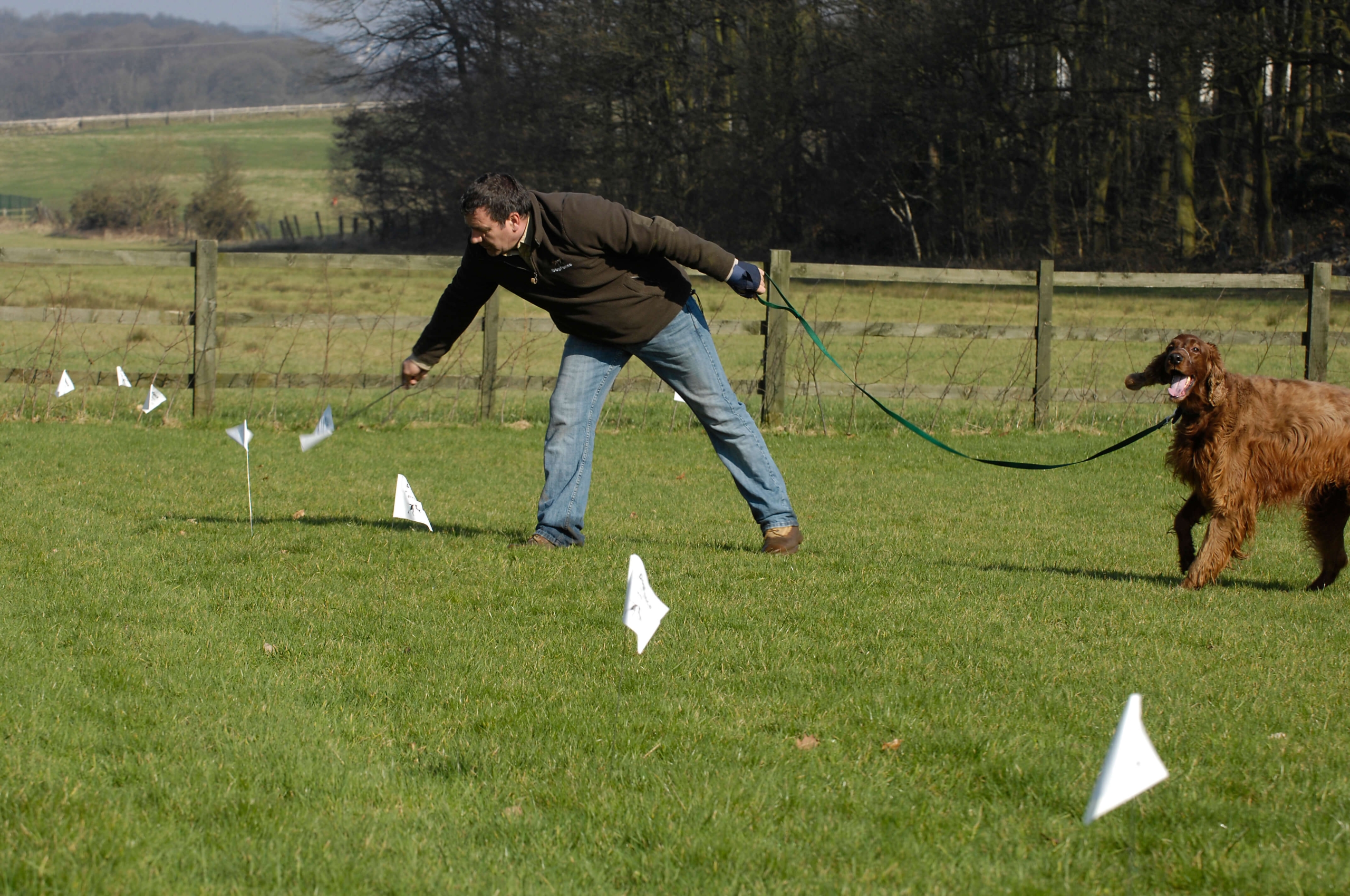
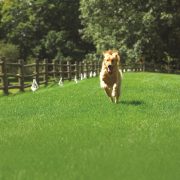
Professional invisible dog fence training starts with clear visual boundary flags, helping your dog learn where the safe area ends.
How Do I Train My Dog to an Invisible Dog Fence?
Quick answer: To train your dog to an invisible dog fence, introduce visible boundary flags, teach your dog to recognise the warning tone and reward them for returning to the safe area. Gradually practise around distractions while your dog remains on a lead. Only increase freedom when your dog consistently understands the boundary and is relaxed and confident.
Learning how to train a dog to an invisible fence requires patience. Every dog is different, and the training programme should be adapted to your dog’s temperament, age and previous experience.
For additional practical advice, see our existing guide to training your dog to an electronic dog fence.
Why Is Dog Fence Training So Important?
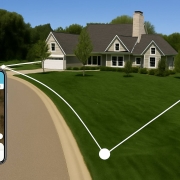
An electronic dog fence works by creating a hidden boundary around your property. A transmitter sends a signal through a buried boundary wire, while your dog wears a compatible receiver collar.
As your dog approaches the boundary, the collar gives an audible warning. Depending on the system and settings, further stimulation may follow if the dog continues towards the boundary.
However, dogs don’t automatically understand what these signals mean. That’s why structured dog fence training is essential.
Your dog needs to learn three important things:
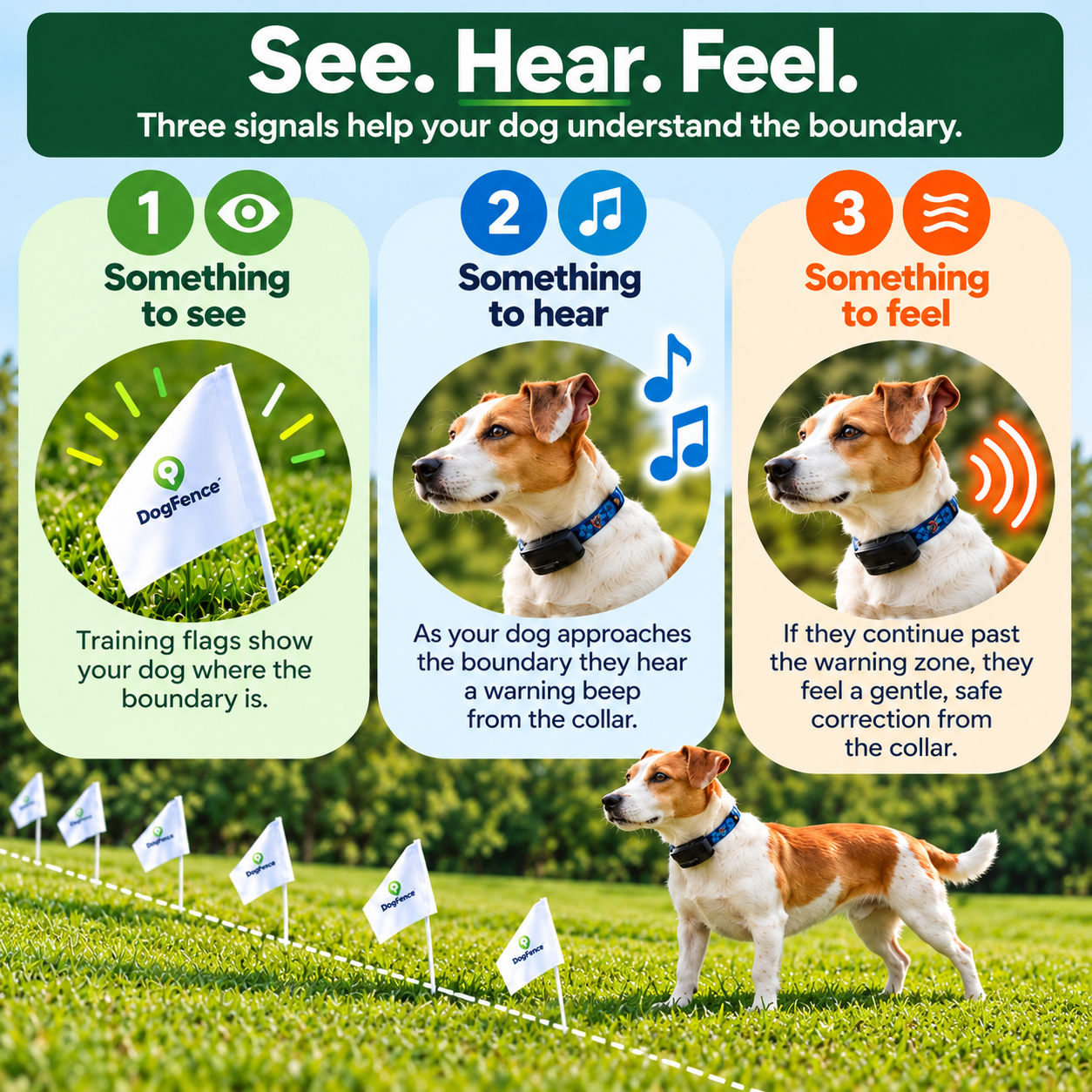
- Something to see: Training flags provide a clear visual reference for the boundary.
- Something to hear: The audible warning signals that your dog should turn back towards the safe area.
- Something to feel: Depending on the training stage and collar settings, a static correction may follow if your dog continues into the boundary zone.
Most importantly, your dog needs to understand where to return. Praise and rewards reinforce the correct decision to move back into the garden.
Find out more about how dogs learn where the hidden dog fence boundary is.
The Three Pillars of Successful Invisible Dog Fence Training: See, Hear, Feel
At DogFence Ltd, our professional training programme is built around three fundamental principles: something to see, something to hear and something to feel.
Whether we’re teaching a dog or training a cat to an invisible pet fence, these three elements work together to help each pet recognise, understand and respect its boundaries. Although our training methods differ for dogs and cats, the underlying principles remain the same.
1. Something to See – The Training Flags
The first essential element is a clear, visible boundary. We place white training flags along the invisible fence line so your dog or cat has something physical to associate with the boundary. These visual markers are particularly important during the early stages of training, before the pet has learnt where the hidden fence begins.
2. Something to Hear – The Audible Warning
The second element is the warning beep emitted by the receiver collar. As your pet approaches the boundary, the collar produces an audible signal. Through consistent training, your dog or cat learns that this sound means they should stop, turn around and return to the safe area.
3. Something to Feel – The Static Correction
The third element is a brief static correction from the receiver collar, which occurs if the pet continues beyond the warning zone. This provides a distinct physical signal that reinforces the boundary and helps the pet understand why it should avoid that area.
The correction level is individually selected, taking account of the pet’s size, temperament and response. Training must be carefully supervised to avoid unnecessary distress.
See. Hear. Feel.
These are the three pillars of the DogFence training approach. By combining clear visual markers, an audible warning and appropriate physical feedback with consistent guidance and positive reinforcement, we help pets learn where their boundaries are and when to turn back.
How to Train a Dog to an Invisible Fence: Step-by-Step Guide
At DogFence UK, our training method follows a carefully structured process designed to help your dog understand the invisible boundary before being given greater freedom in the garden.
The key to successful invisible dog fence training is teaching your dog to associate the visible training flags with the audible warning from the receiver collar. Only once your dog begins making this connection do we introduce the next stage of training.
Step 1: Introduce the Boundary Flags
The first stage of dog fence training is to establish a clear visual reference for the hidden boundary.
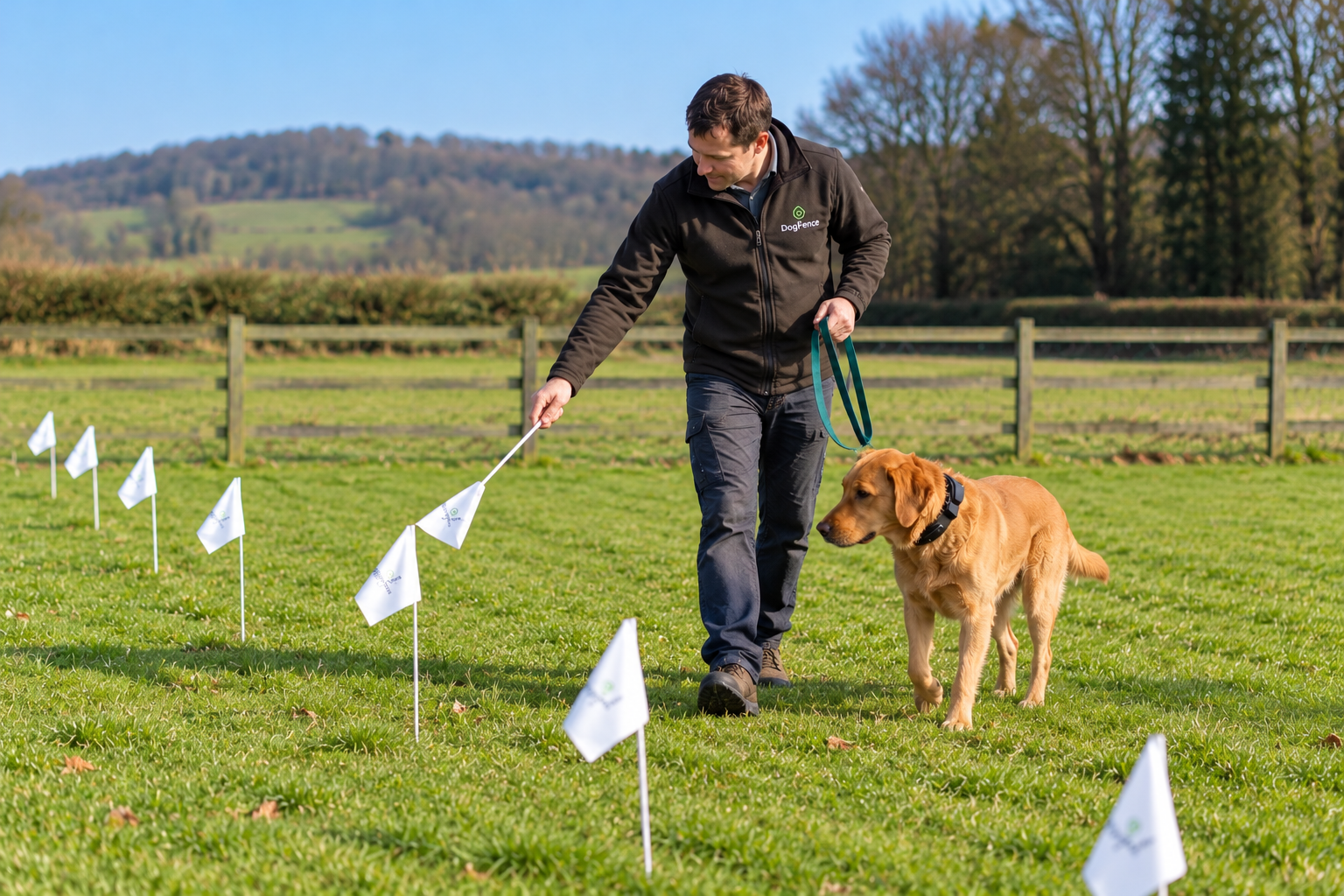
Small white training flags are placed along the invisible fence line, precisely where the receiver collar begins to emit its warning beep. This is fundamental to the training process: the flags must correspond with the audible warning zone, allowing your dog to associate what they see with what they hear.
The flags should be a minimum of 30 cm (1 ft) tall and positioned approximately 2–3 metres (6–10 ft) apart, ensuring they are clearly visible.
Initially, the receiver collar is set to Level 0 (beep only). At this stage, your dog will hear the audible warning but will not receive any static stimulation.
Walk your dog around the safe area on a lead, keeping a comfortable distance from the flags.
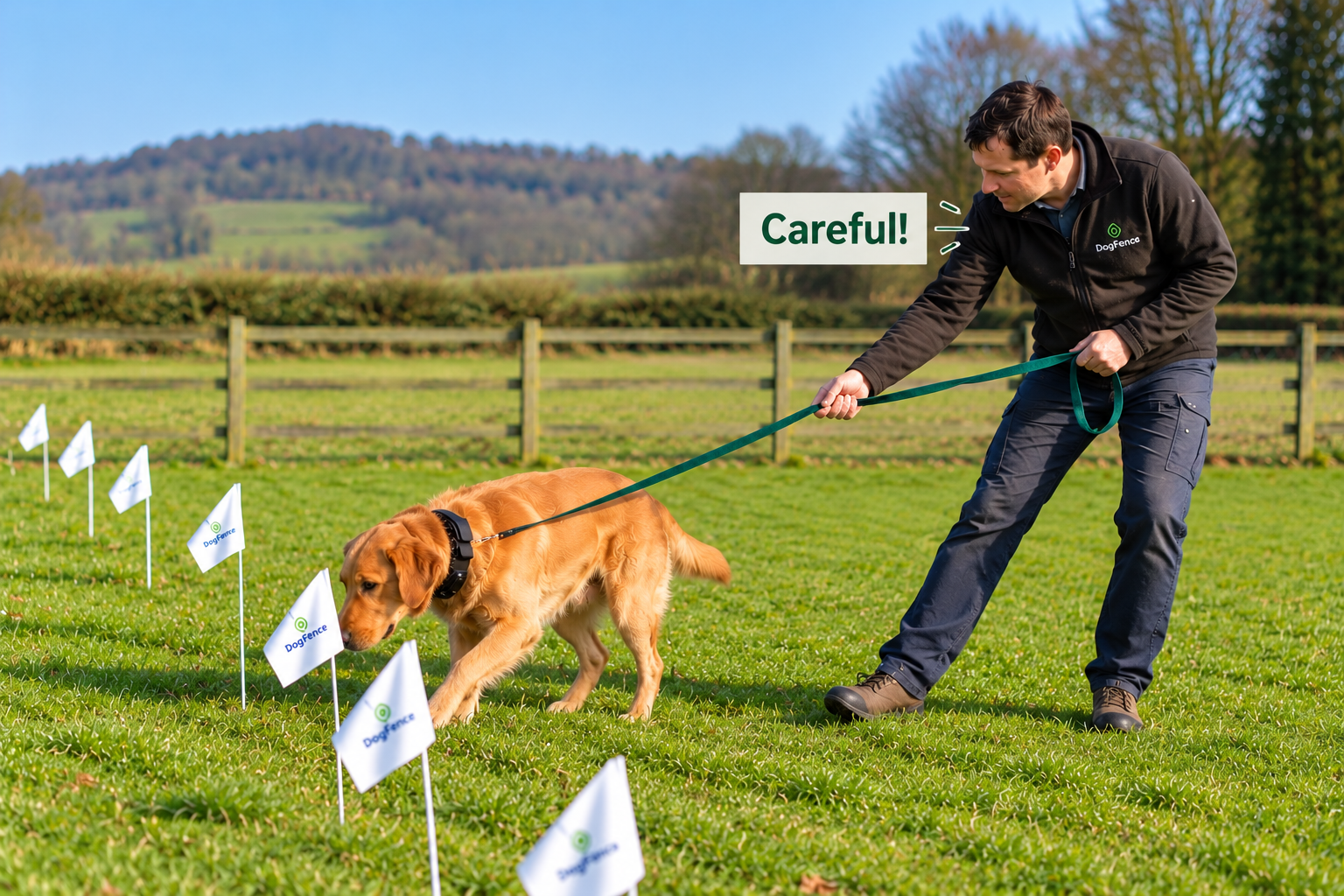
Your trainer will gently tap or move individual flags while using a consistent verbal cue such as “Careful” or “Watch out”, helping your dog become familiar with the visual markers.
DogFence training tip: The flags are a temporary visual training aid. They are positioned to coincide with the collar’s warning beep, creating the foundation for your dog’s understanding of the invisible boundary.
Step 2: Connecting the Flags with the Warning Beep
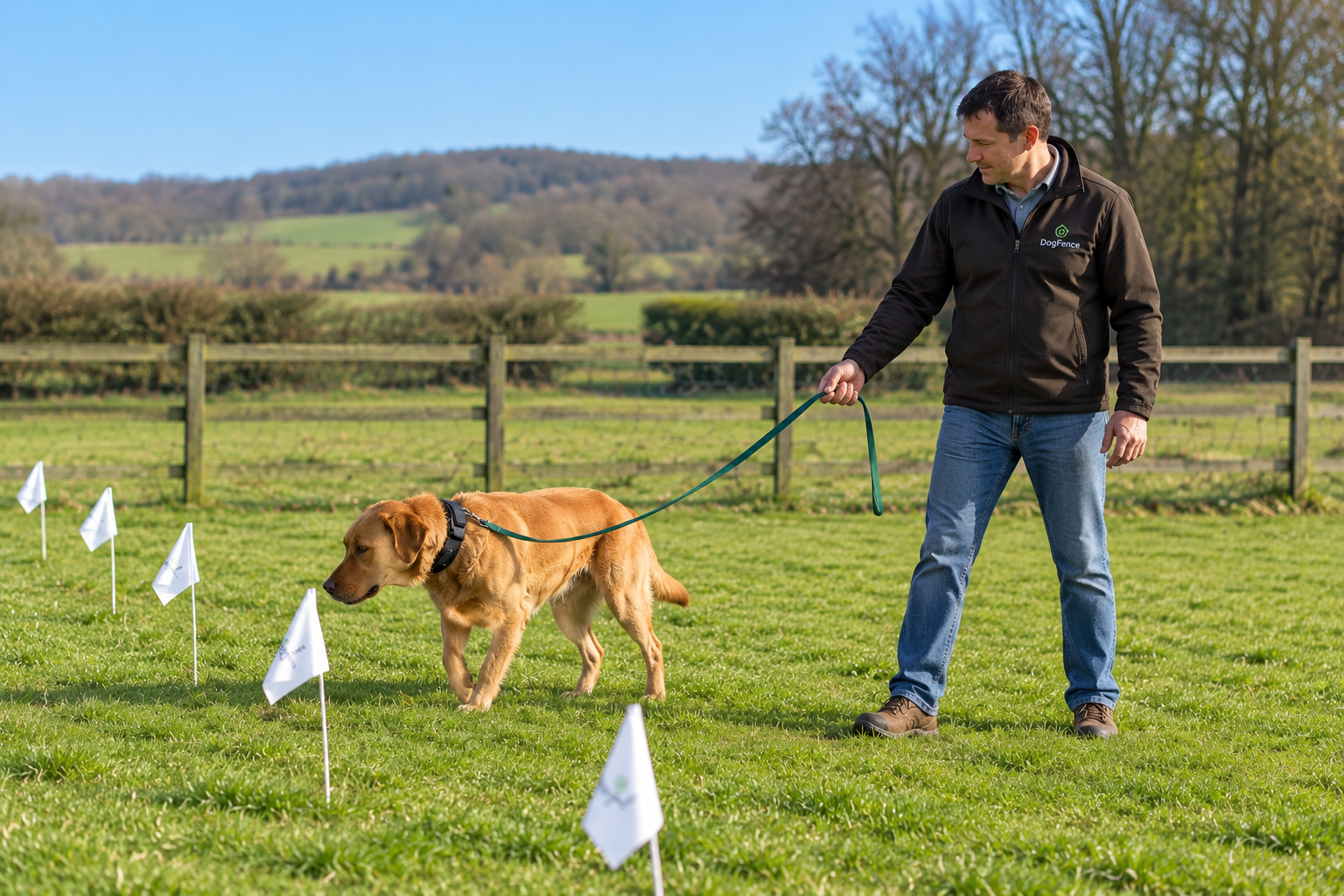
With the collar still set to Level 0 (beep only), allow your dog to approach the boundary flags naturally, keeping the lead as loose as possible.
As your dog approaches the flags, the receiver collar will emit its audible warning. The aim is for your dog to begin associating the sight of the flags with the sound of the beep.
During these early sessions, your dog may show signs of making that connection by:
- Stopping briefly when the collar beeps.
- Looking towards or investigating the flags.
- Pausing to listen when the warning sounds.
- Beginning to turn away from the flagged boundary.
Some dogs may initially investigate or even play with the flags. This is part of becoming familiar with the visual markers, although the aim is for the dog to recognise their connection with the warning tone.
If your dog steps beyond the flags, change your voice to a firmer, cautionary tone and give the familiar “Careful” or “Watch out” command.
Gently guide your dog back into the safe area, using a happy, encouraging voice and plenty of praise once they return.
Repeat this exercise calmly around different parts of the boundary.
DogFence training tip: Do not rush this stage. Your dog should begin recognising the connection between the flags and the warning beep before progressing to static stimulation.
Step 3: Introducing the Static Correction
Once your dog has begun associating the training flags with the audible warning, the next stage is to introduce the collar’s static stimulation under professional supervision.
Until this point, all training has taken place on Level 0 (beep only).
Your DogFence trainer will now assess your dog’s response and determine an appropriate stimulation setting.
The process begins at the lowest available stimulation level, increasing gradually only if necessary while carefully observing your dog’s behaviour.
The objective is to identify the lowest level at which your dog clearly notices the stimulation.
This response is often extremely subtle. For example, your dog may:
- Flick an ear.
- Make a small movement of the head.
- Briefly pause or change their expression.
- Show a slight muscle movement or momentary acknowledgement.
These small responses may indicate that your dog has detected the stimulation.
We are not looking for your dog to jump, yelp, panic or show signs of distress. These are not desirable training responses, and training should stop immediately if they occur.
Once a clear, comfortable response has been identified, there is no reason to increase the level simply to produce a stronger reaction.
DogFence training tip: The aim is to identify the lowest detectable stimulation level, not to provoke a dramatic reaction. Every dog responds differently, so careful observation and individual assessment are essential.
Step 4: Reinforcing the Boundary with the Warning Command
Once the appropriate stimulation level has been established, training continues with your dog on a lead.
Allow your dog to approach the flags naturally, keeping the lead loose wherever possible.
Your dog should already recognise that the flags coincide with the audible warning. If they continue beyond the flags into the correction zone, they may experience the static stimulation.
At this point, give your established “Careful” or “Watch out” command in a firm, cautionary voice and promptly guide your dog back into the safe area.
As soon as your dog turns back, change to a happy, encouraging tone and offer plenty of praise.
The aim is to reinforce the association between the three training signals:
Something to see – the training flags.
Something to hear – the warning beep.
Something to feel – the static correction, if your dog continues beyond the warning zone.
With consistent training, your dog can learn that turning away from the flagged boundary and returning to the safe area is the correct response.
DogFence training tip: Never deliberately hold your dog in the correction zone or repeatedly expose them to stimulation. The purpose of the exercise is to teach the return response, not to prolong the correction.
Step 5: Building Confidence Within the Safe Area
Successful invisible dog fence training is not simply about teaching your dog where the boundary is. It is equally important to help them feel relaxed and confident within the garden.
Spend time playing, practising familiar commands and rewarding calm behaviour well inside the safe area.
Continue walking around different parts of the garden on a lead, allowing your dog to explore while reinforcing the boundary training.
The goal is for your dog to understand that the garden is a safe, enjoyable space and that the warning signals indicate when they should turn back.
Some dogs progress quickly, while others require additional reassurance and repetition.
For particularly sensitive dogs, read our guide to training a nervous dog with a dog fence.
DogFence training tip: A dog that appears fearful, reluctant to explore or anxious near the boundary needs their training reassessed rather than pushed forward.
Step 6: Introducing Everyday Distractions
Once your dog understands the relationship between the flags, warning beep and boundary, the next stage is to introduce everyday distractions.
This is particularly important for dogs that are easily distracted by movement, people or other animals.
Common distractions include:
- Other dogs walking past the property.
- Rabbits, squirrels and wildlife.
- Delivery drivers and visitors.
- Children playing nearby.
- Cyclists, runners and passing vehicles.
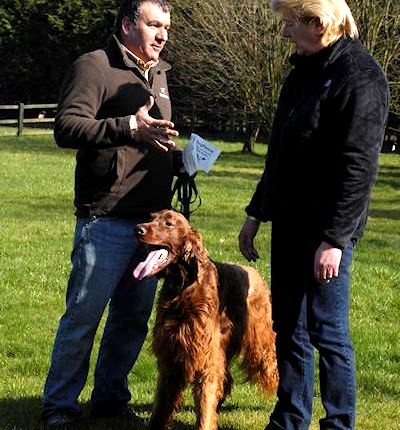
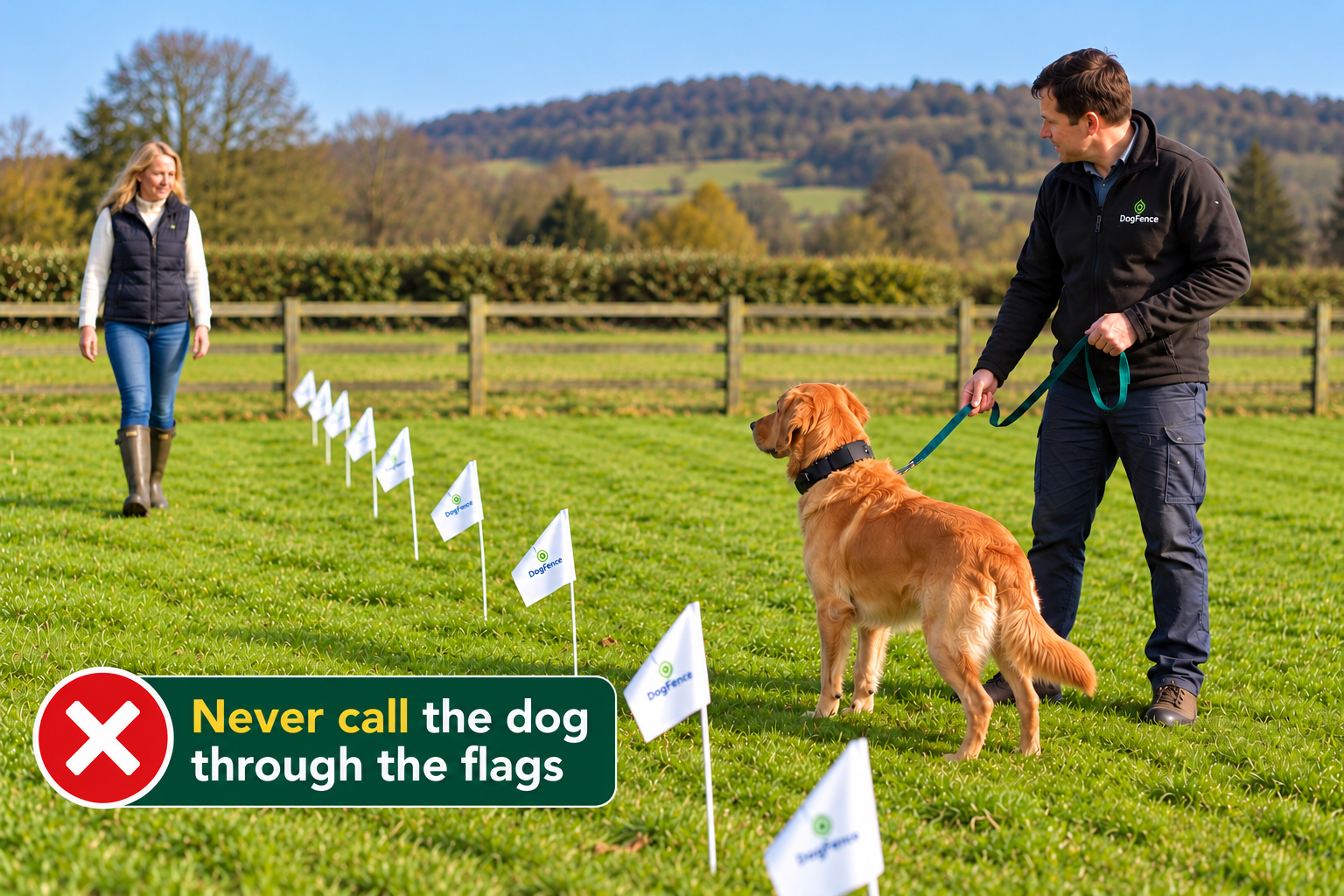
Start with mild, controlled distractions while your dog remains securely on a lead. For example, your trainer may stand with your dog comfortably inside the safe area while the owner stands on the opposite side of the flagged boundary.
The owner should remain calm and neutral, without calling or encouraging the dog to cross.
The purpose is to establish whether your dog can remain responsive to their training when something interesting is happening beyond the boundary.
Praise and reward your dog for remaining within the safe area and responding appropriately.
Gradually introduce more realistic distractions as your dog becomes confident.
DogFence training tip: Distraction training should be progressive. Never deliberately encourage your dog to charge through the boundary or create situations intended to provoke a strong correction.
Step 7: Gradually Increasing Your Dog’s Freedom
Once your dog consistently recognises the boundary, responds to the warning signals and remains confident around everyday distractions, you can begin gradually increasing their freedom under professional guidance.
Initially, continue supervising your dog and reinforcing their training.
The white training flags can then be removed gradually as your dog demonstrates a reliable understanding of the boundary.
There is no fixed timetable for this stage. Some dogs learn more quickly than others, and training should always progress according to the individual dog’s behaviour and confidence.
Remember that an invisible dog fence is not a physical barrier and cannot guarantee containment in every situation.
DogFence training tip: Successful training is about helping your dog understand where the boundary is, recognise the warning signals and confidently return to the safe area. Consistency, patience and professional guidance are essential.
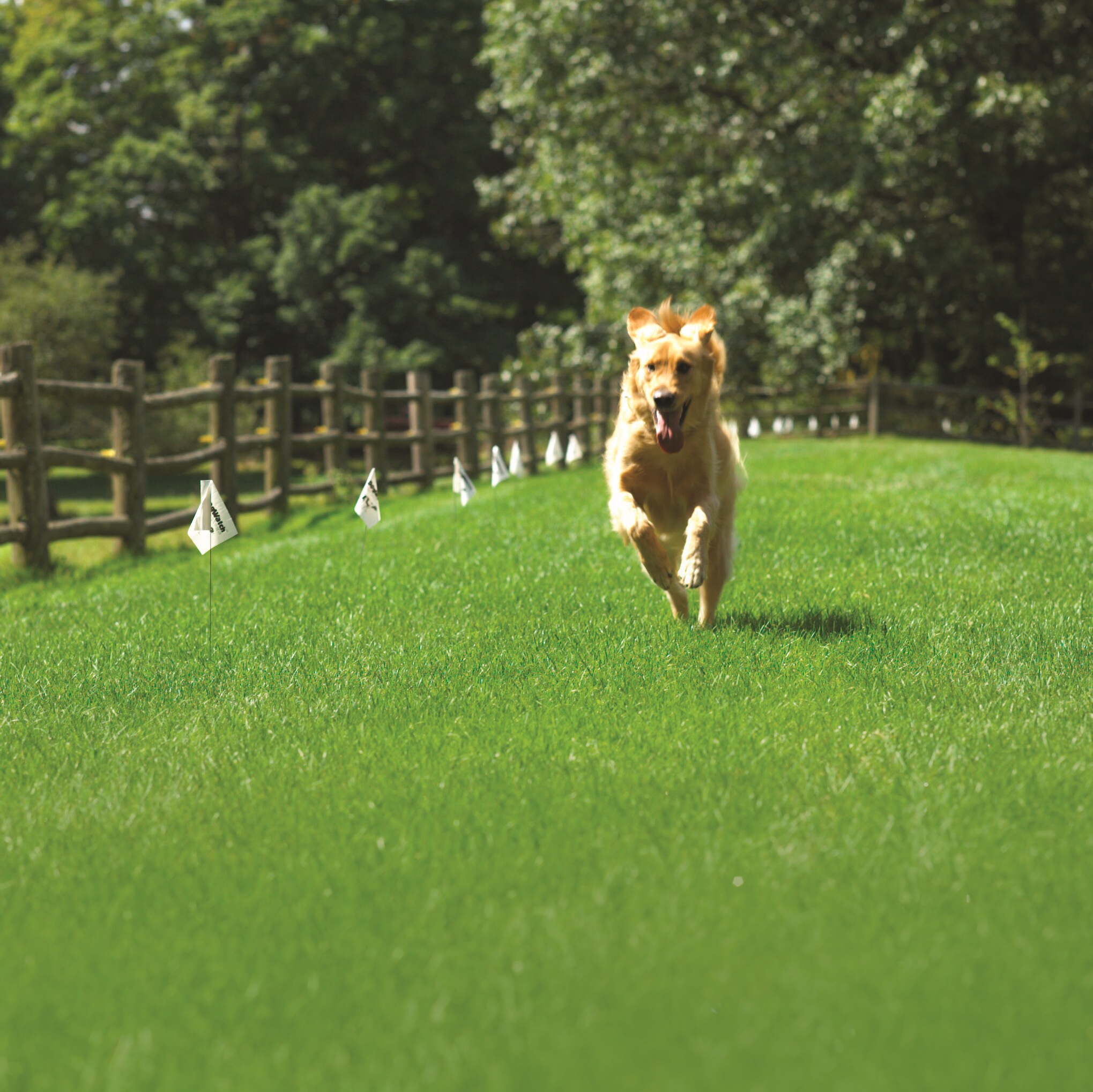
After gentle, consistent training, dogs gain confidence and freedom — safely contained within their DogFence boundary.
How Long Does It Take to Train a Dog to an Invisible Fence?
There is no guaranteed training period for an electronic dog fence. Some dogs begin understanding the boundary after several short sessions, while others need longer and more gradual reinforcement.
The time required depends on several factors:
- Your dog’s age and maturity.
- Temperament and confidence.
- Previous obedience training.
- Motivation to chase wildlife or other distractions.
- The layout of your garden.
- Consistency between family members.
At DogFence UK, we believe that successful invisible dog fence training should progress at your dog’s individual pace.
If training is not progressing as expected, our electronic dog fence training troubleshooting guide covers common problems and how to recognise when additional support is needed.
Can You Train a Stubborn or Strong-Willed Dog to an Invisible Dog Fence?
Many owners considering an invisible dog fence have dogs that are determined explorers, persistent escape artists or particularly interested in wildlife.
Some dogs are naturally more independent, while others have a strong prey drive or become easily distracted.
However, a dog that repeatedly escapes isn’t necessarily stubborn. They may be bored, anxious, highly motivated by something outside the property or simply unaware of the boundaries.
Before beginning electronic dog fence training, it’s important to understand why your dog is escaping and whether this type of containment is appropriate.
Dogs with significant anxiety, fear or reactivity may be better suited to secure physical fencing and reward-based boundary training.
What Is the Difference Between an Invisible, Electric and Electronic Dog Fence?
The terms invisible dog fence, electric dog fence and electronic dog fence are frequently used interchangeably when owners search for hidden pet containment systems.
- Invisible dog fence: A descriptive name for a containment boundary without a visible physical fence.
- Electronic dog fence: A system using a transmitter, buried boundary wire and electronic receiver collar.
- Electric dog fence: A popular search term that may refer to hidden containment or, alternatively, traditional electrified livestock fencing.
DogFence UK specialises in professionally installed DogWatch hidden dog containment systems, rather than exposed electric livestock fencing.
For a more detailed explanation, read our guide to electric fences for dogs and how they work.
Are Invisible Dog Fences Legal in the UK?
The legal position for electronic dog containment systems differs across the UK. Legislation may also distinguish between remote-controlled training collars and electronic containment systems.
Before purchasing or using a system, check the current rules for your location and consider the relevant animal welfare requirements.
Read our article on whether electric dog fences are illegal for further background. As legislation can change, historical articles should be read alongside current official guidance.
Why Choose Professional Dog Fence Training Instead of DIY?
Installing an electronic containment system and teaching a dog to understand it are two different things.
Although DIY systems are available, professional installation and training can provide important advantages.
- Individual assessment: Your dog’s temperament, age and suitability can be considered before training begins.
- Professional boundary design: The installation can accommodate gardens, driveways, woodland and other property features.
- Correct receiver fitting: Your installer can check that the collar is appropriate and correctly fitted.
- Personalised training: The programme can be adapted to your dog’s confidence and response.
- Ongoing support: Advice is available if your dog becomes confused or your circumstances change.
DogFence UK has supplied DogWatch systems in the UK since 2003, combining specialist equipment with professional installation and personalised training.
Our qualifying systems also include lifetime hardware warranty cover and protection against collar chews, subject to the relevant warranty terms.
7 Common Dog Fence Training Mistakes to Avoid
- Rushing the training: Every dog learns at a different pace.
- Removing boundary flags too early: Visual markers should only be phased out when appropriate.
- Using unsuitable collar settings: Always follow professional guidance and prioritise welfare.
- Introducing distractions too quickly: Build confidence before attempting challenging situations.
- Ignoring signs of stress: Fear, freezing or avoidance indicate that training needs to stop and be reassessed.
- Assuming the system guarantees containment: No electronic boundary can prevent every escape.
- Forgetting the walking routine: Your dog needs to understand how to leave the property safely with you.
Good dog fence training is about consistency, understanding and helping your dog feel secure within their environment.
For dogs that are particularly sensitive, our article Training a Nervous Dog to a Dog Fence: 7 Common Mistakes explores how to avoid common setbacks.
Frequently Asked Questions About Invisible Dog Fence Training
How do I train my dog to an invisible dog fence?
Introduce visible boundary flags, reward your dog for remaining in the safe area and teach them to recognise the warning tone under professional guidance. Gradually practise around controlled distractions and increase freedom only when your dog consistently understands the boundary.
How long does invisible dog fence training take?
Training time varies depending on the individual dog. Some dogs learn the basic boundary after several short sessions, while others need longer. Progress should be based on understanding and confidence rather than a fixed timetable.
Does an invisible dog fence hurt my dog?
Some electronic dog fences use static stimulation, which may be unpleasant or painful and can cause fear or anxiety in some dogs. Individual responses vary, so owners should understand the equipment, consider welfare concerns and seek qualified advice before choosing this type of containment.
For a closer look at the different viewpoints, read our article Dog Fence Controversy: Humane or Harmful?, which explores the debate surrounding electronic containment and animal welfare.
Can puppies be trained to an electronic dog fence?
Puppies can begin learning boundaries through positive reinforcement, but this does not mean they are ready for an electronic receiver collar. Physical maturity, confidence and temperament must be considered.
Read our puppy electronic fence training age guide for more information about developmental readiness.
Can you train a nervous dog to an invisible fence?
Nervous dogs require particular care. Electronic stimulation may increase anxiety or avoidance, and some dogs may not be suitable candidates. Reward-based boundary training and secure physical fencing may be more appropriate.
Can a stubborn dog learn an invisible dog fence boundary?
Some independent or highly motivated dogs can learn boundary rules with consistent training, but no system guarantees containment. Understanding why a dog escapes and assessing their suitability are important before choosing an electronic fence.
Will my dog still be able to leave the garden for walks?
Yes. Your dog should learn a consistent exit routine under professional guidance. Follow your installer’s instructions for removing or disabling the receiver collar and using a designated exit. Never lead your dog through an active correction boundary.
What happens if my dog runs through an invisible dog fence?
An electronic dog fence cannot guarantee containment. If your dog crosses the boundary, keep them safe, check the equipment and review the training with a professional. Do not simply increase the stimulation level.
For practical equipment checks, see our DogFence troubleshooting and receiver collar guide.
Do I need professional dog fence training?
Professional training is strongly recommended. Correct installation alone does not ensure that a dog understands the boundary. Individual assessment, structured guidance and ongoing support can help identify problems and determine whether the system is suitable.
Expert Electronic Dog Fence Training Advice from DogFence
Since 2003, DogFence UK has helped owners explore hidden dog containment solutions using DogWatch technology, professional installation and personalised training support.
Whether you’re considering an invisible dog fence for the first time or need advice about existing electronic dog fence training, our experienced team can help you make an informed decision.
Contact DogFence UK today for friendly, experienced advice about finding the right containment solution for your dog.
🐾 Ready to Give Your Dog More Freedom?
Expert advice, professional installation and personalised training from the UK’s DogWatch specialists since 2003.
📞 01628 476475
|
💬 WhatsApp Us
No pressure. Just experienced advice about keeping your dog safe.
It is important to remember, an electronic dog fence is a learned boundary, not a physical barrier. During fireworks, a frightened dog may panic and run through the boundary, potentially becoming too scared to cross back. That’s why we recommend keeping pets safely indoors during fireworks. Read our guide to keeping dogs and cats safe during fireworks for practical advice on protecting your pets during Bonfire Night and New Year’s Eve.
Some images within this guide are AI-generated illustrations designed to show typical hidden dog fence layouts and training flag positions