Tag Archive for: professional dog fence installation

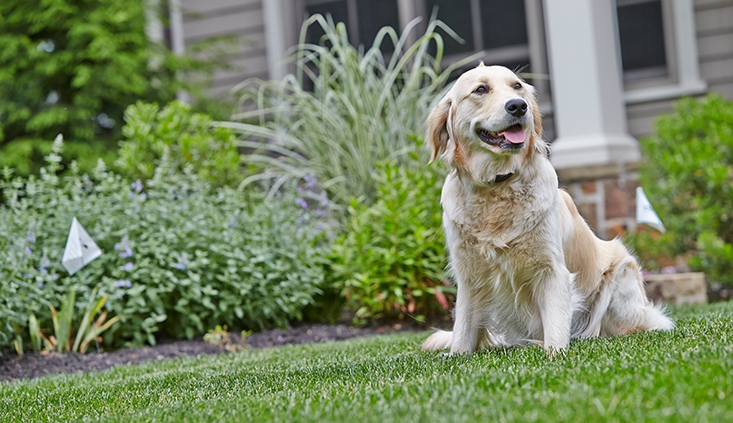
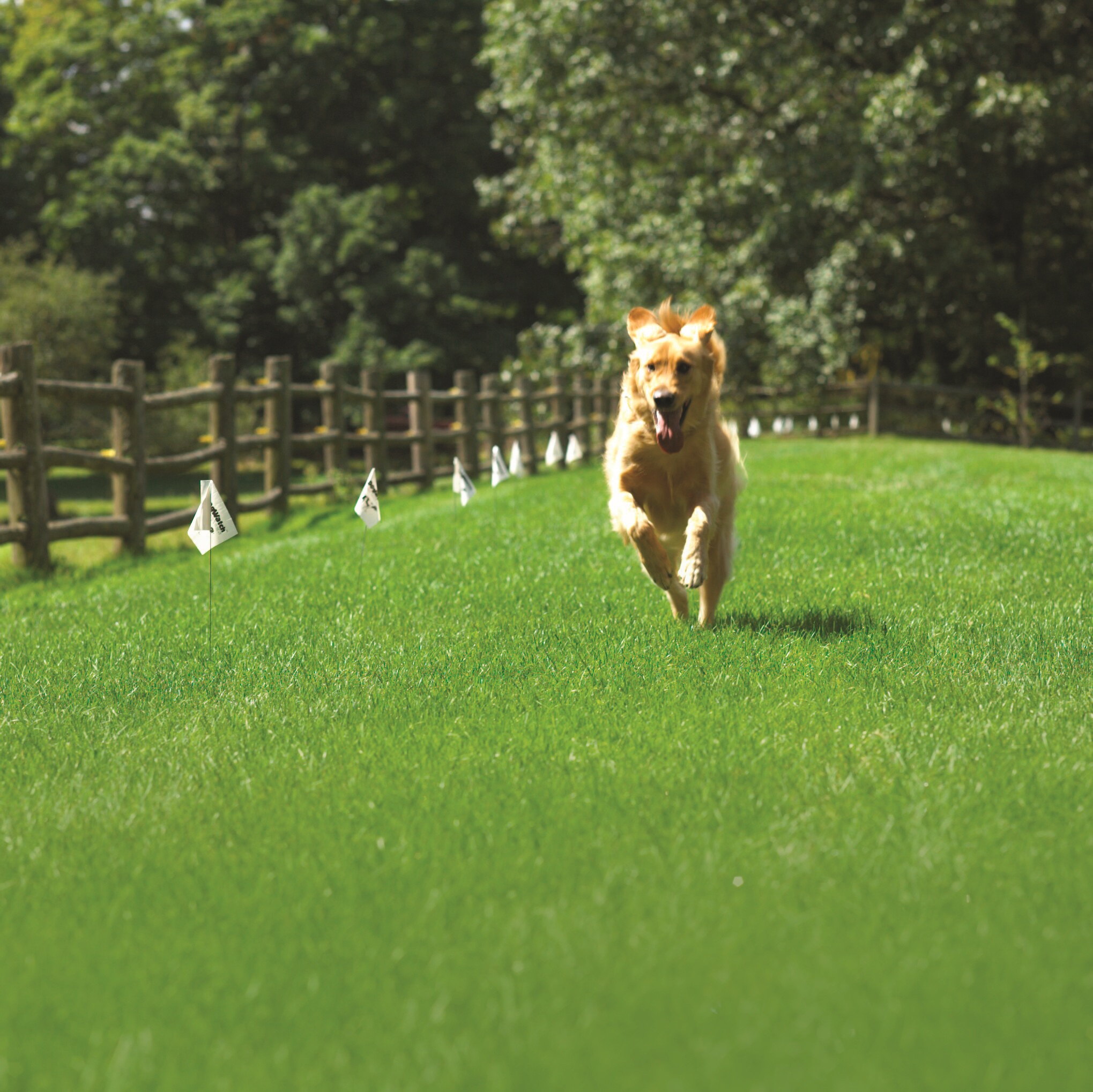
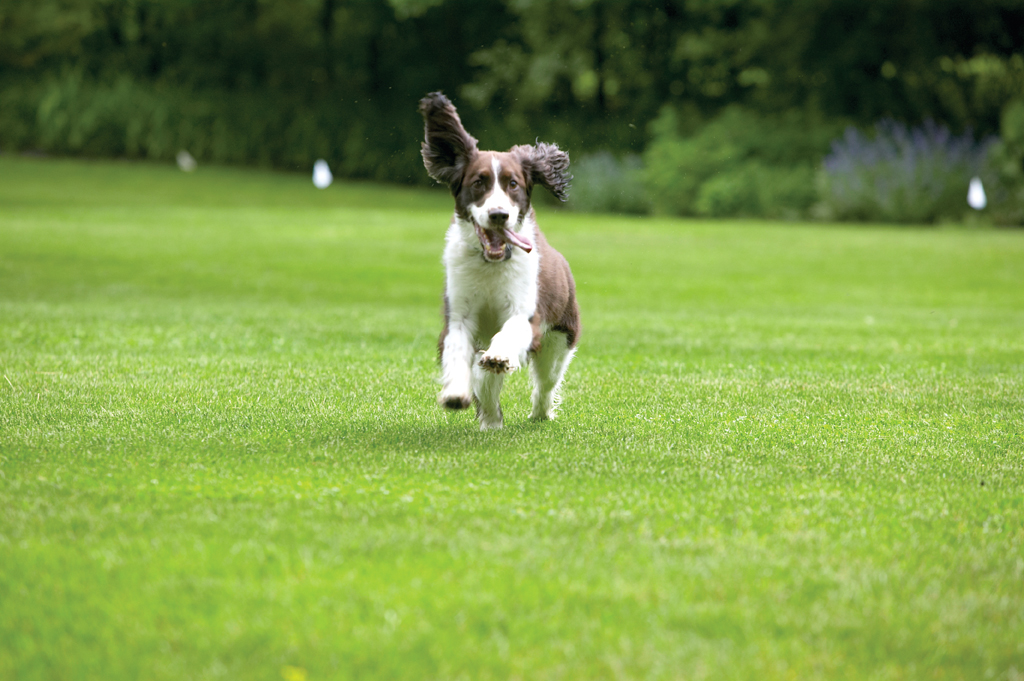
Dog running freely inside a wired or wireless dog fence boundary

Can I Self-Install a Wireless or Wired Dog Fence? | DogFence

Can I Self-Install a Wireless or Wired Dog Fence??

Yes, you can self-install both wired and wireless dog fences, but the installation process and the type of boundary they create are very different. A self-install wired dog fence uses a boundary wire that can be positioned to follow the shape of your garden, while a wireless dog fence generally creates a boundary using a central transmitter or, in the case of GPS systems, satellite positioning.

Choosing between a self-install wired dog fence, wireless dog fence or GPS dog fence depends on your garden layout, the size of the area you want to contain and, importantly, your dog. A system that is quick and easy to install is not necessarily the system that will provide the most suitable or reliable boundary for your property.

At DogFence, we have specialised in pet containment since 2003 and offer both self-install dog fence systems and professional installation with dog training. In this guide, we compare wired, wireless and GPS options, explain what is involved in installing them yourself, and help you understand which type of dog fence may be most suitable for your dog and garden.

Can I install a dog fence myself?

Yes. A wired electronic dog fence can be self-installed if you are comfortable planning the boundary, positioning the transmitter, laying the boundary wire, testing the system and following a structured dog training programme.

A typical DIY dog fence installation involves:

  • planning the safe area and boundary layout;
  • choosing a suitable position for the transmitter;
  • laying or burying the boundary wire around the property;
  • crossing driveways, paths or gateways where necessary;
  • creating any required exclusion or no-go zones;
  • connecting and testing the system;
  • setting up and correctly fitting the receiver collar;
  • placing temporary training flags along the boundary; and
  • training your dog to understand and respect the new boundary.

The physical installation is only part of the process. Training is fundamental to successful dog containment.

If you are considering doing the installation yourself, read our self-installing dog fence guide before you begin.

How does a DIY dog fence work?

With a wired hidden dog fence, a discreet boundary wire is installed around the area where your dog is allowed to roam. The wire carries a coded radio signal from a transmitter.

Your dog wears a lightweight receiver collar. As your dog approaches the boundary, the collar gives an audible warning. During training, your dog learns that the warning means they should turn back towards their safe area.

If you are new to electronic pet containment, our How the DogFence Works guide explains the boundary wire, receiver collar, warning zone and training process in more detail.

Watch: How does a DogFence work?

Before deciding between a self-install dog fence and professional installation, it helps to understand exactly how the system creates a safe boundary.

VIDEO: How the DogFence Works

Is a wireless dog fence easier to install yourself?

Usually, yes. A traditional wireless dog fence generally requires less physical installation because there is no boundary wire to lay. A transmitter creates a signal around a central point, which can make setup relatively quick.

However, easier installation does not automatically mean a wireless dog fence is the best solution for your property.

Wireless systems generally create a predetermined or circular containment area. That may work for some simple, open properties but can be restrictive where a garden is irregularly shaped or contains buildings, driveways, ponds, landscaping or areas your dog needs to avoid.

A wired dog fence allows the boundary to follow the actual shape of the property and can also create internal exclusion zones.

For a detailed comparison, read GPS & Wireless Dog Fences vs Hidden Fences and our article Wireless Dog Fence – The Truth: Do They Work?.

DIY wired dog fence vs wireless dog fence installation

The main difference is control over the boundary.
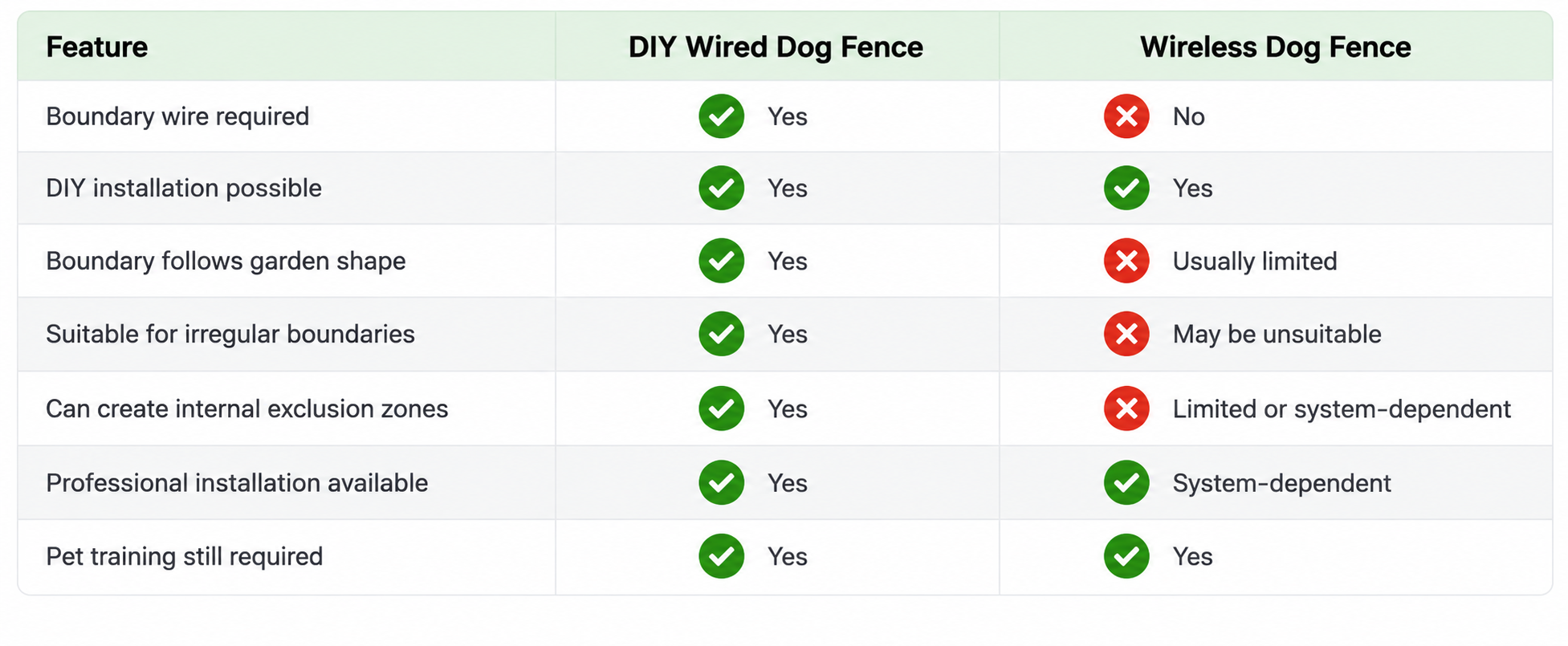
DIY wired dog fence vs wireless dog fence comparison showing installation and boundary features

This is why choosing a dog fence based purely on which one is easiest to install can be a mistake. The priority should be creating a consistent, appropriate boundary for your dog and property.

What are the advantages of a self-install dog fence?

For the right owner and property, a self-install dog fence has several advantages:

  • Lower installation cost: you provide the labour yourself.
  • Flexibility: you can carry out the work at a time that suits you.
  • Good for straightforward layouts: a simple garden can make DIY installation relatively manageable.
  • You know where the wire is: because you planned and installed the boundary yourself.

For a practical owner who is prepared to follow the installation and training instructions carefully, DIY dog fence installation can therefore be a perfectly viable option.

When is professional dog fence installation worth it?

Professional dog fence installation is particularly useful when the property or the dog’s requirements make the job more complicated.

You may prefer professional installation if:

  • you have a large or unusually shaped garden;
  • the boundary crosses several driveways or hard surfaces;
  • you need multiple exclusion zones;
  • your property includes woodland, slopes or difficult terrain;
  • you have several dogs;
  • your dog is an experienced escape artist;
  • you are unsure about choosing or fitting the correct receiver collar;
  • you don’t want to install and troubleshoot the boundary yourself; or
  • you would prefer an experienced trainer to introduce your dog to the system.

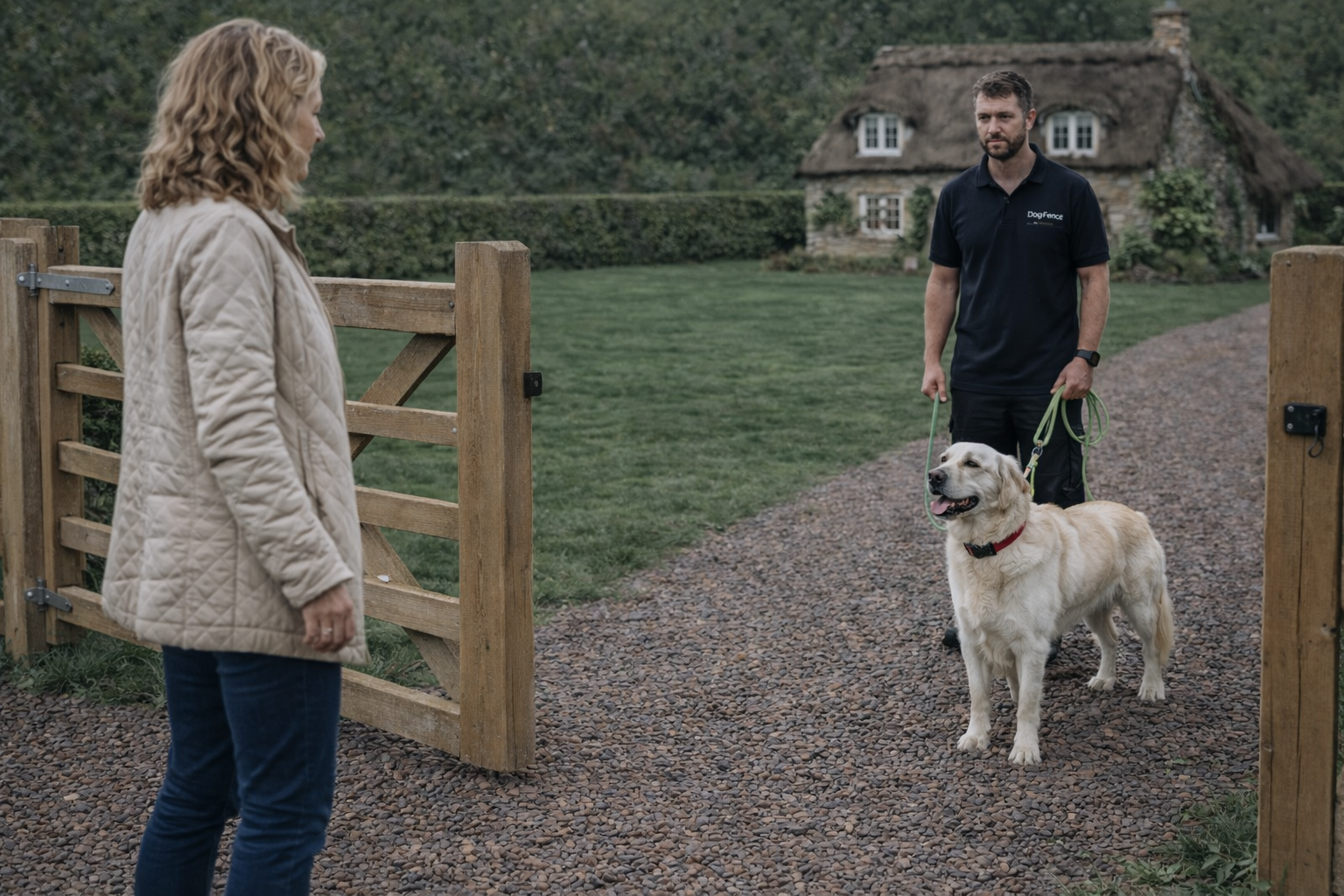
With a professionally installed DogFence system, the boundary is designed around the individual property, the equipment is installed and tested, and your dog’s initial training is carried out with you.
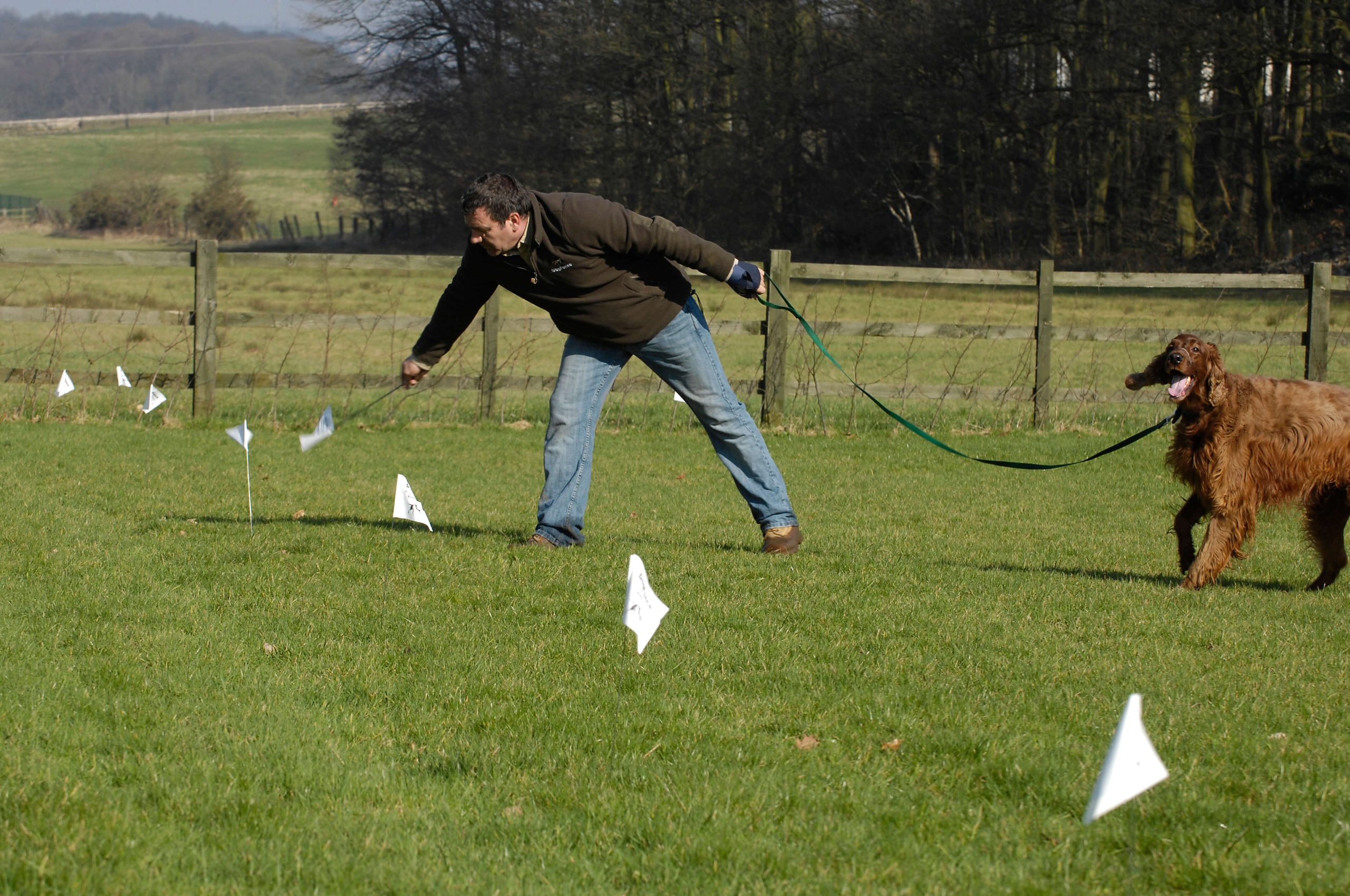
Professional dog fence training with dog learning the flagged boundary

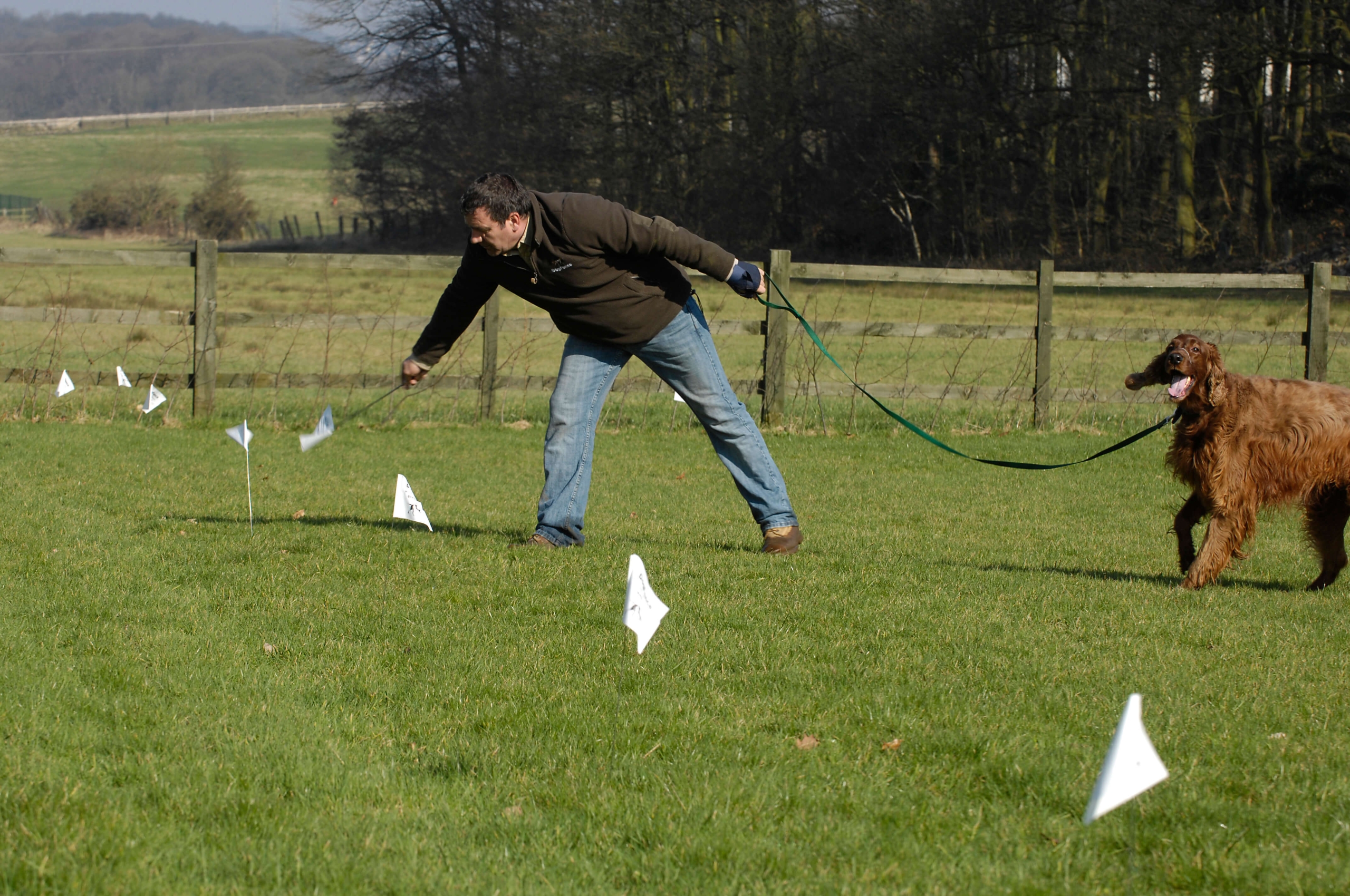
Professional dog fence training helps your dog learn to recognise the warning tone and retreat safely from the flagged boundary.

Is professional training important with a hidden dog fence?

Training is one of the most important parts of any electronic dog fence, whether the system has been professionally installed or fitted by the owner.

A dog does not automatically understand an invisible boundary. Temporary training flags make the boundary visible while the dog learns to associate the location with the audible warning from the receiver collar.

Training should be gradual, consistent and appropriate for the individual dog. The objective is for the dog to hear the warning and confidently retreat back into the safe area.

Our professional installations include personalised pet training. You can read more about the process in our professional hidden fence training guide and our guide to training your dog to an electronic fence.

Can I install the fence myself and still train my dog myself?

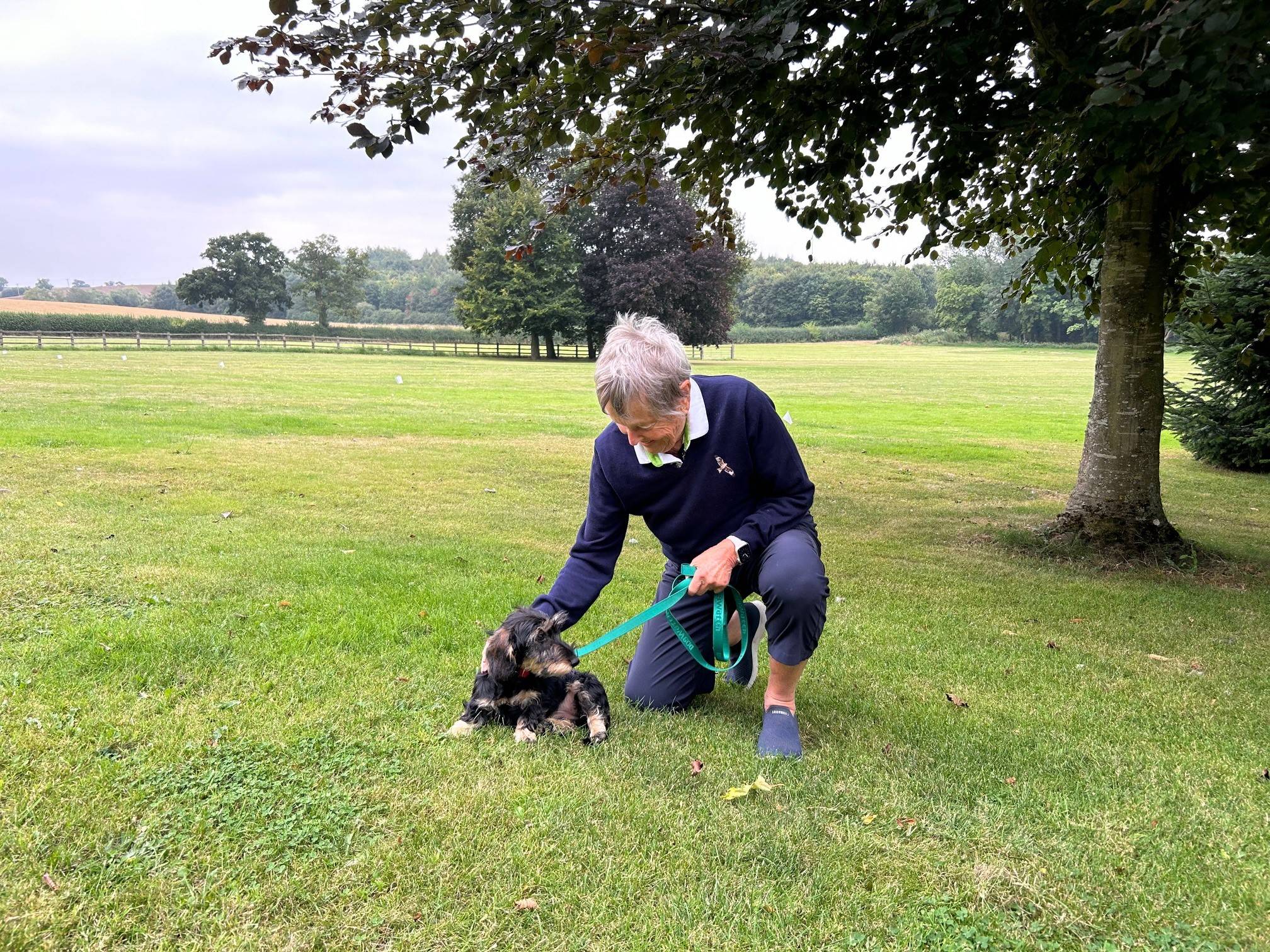
Yes. Owners choosing a suitable self-install system can carry out both the installation and training themselves, provided they follow the manufacturer’s instructions and do not rush the training process.

Consistency matters more than speed. Short, calm training sessions allow your dog to understand where the boundary is and what the warning tone means.

If your dog appears confused, anxious or is repeatedly challenging the boundary, stop and seek advice rather than simply increasing the collar setting.

How difficult is underground dog fence installation?

The difficulty of underground dog fence installation depends heavily on the property.

A relatively small lawn with soft ground and a straightforward perimeter can be considerably easier to self-install than a large rural property with long driveways, walls, gates, woodland and multiple areas that need protecting.

The boundary wire does not necessarily need to be deeply buried. Its purpose is to carry the radio signal and define the boundary, so installation should follow the requirements of the particular system and the conditions of the property.

Planning the route correctly before starting is important. A poorly planned boundary can create unnecessary installation work and may not provide the containment area you actually need.

Should I choose DIY or professional dog fence installation?

There isn’t one answer that is right for every owner.

DIY dog fence installation may suit you if your property is reasonably straightforward, you are comfortable carrying out the installation and you have the time and confidence to train your dog correctly.

Professional dog fence installation may be preferable if your property is large or complicated, your dog has challenging escape behaviour, or you simply want the reassurance of having the system designed, installed, tested and introduced to your dog by an experienced specialist.

Most importantly, don’t choose solely on the basis of installation convenience. The best dog fence is the one that provides a reliable boundary appropriate for your particular dog and your particular garden.
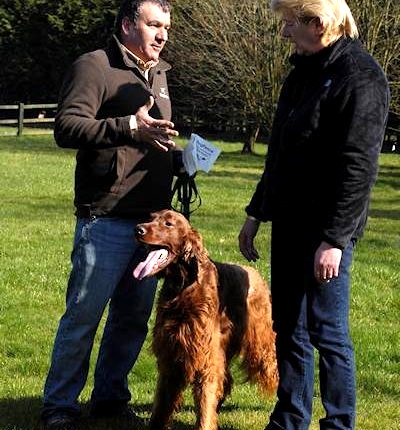
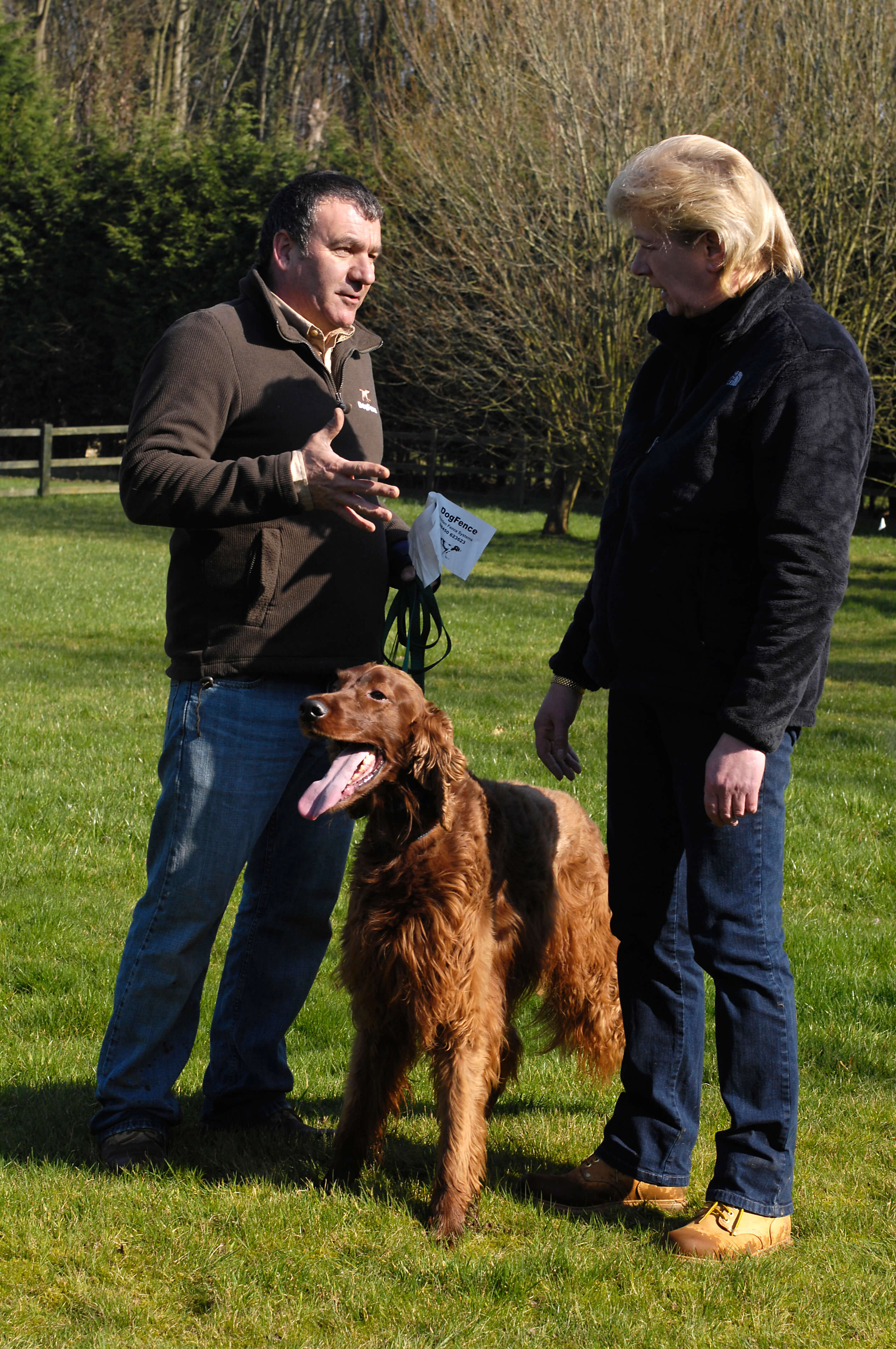
Installer giving dog fence safety tips to a customer

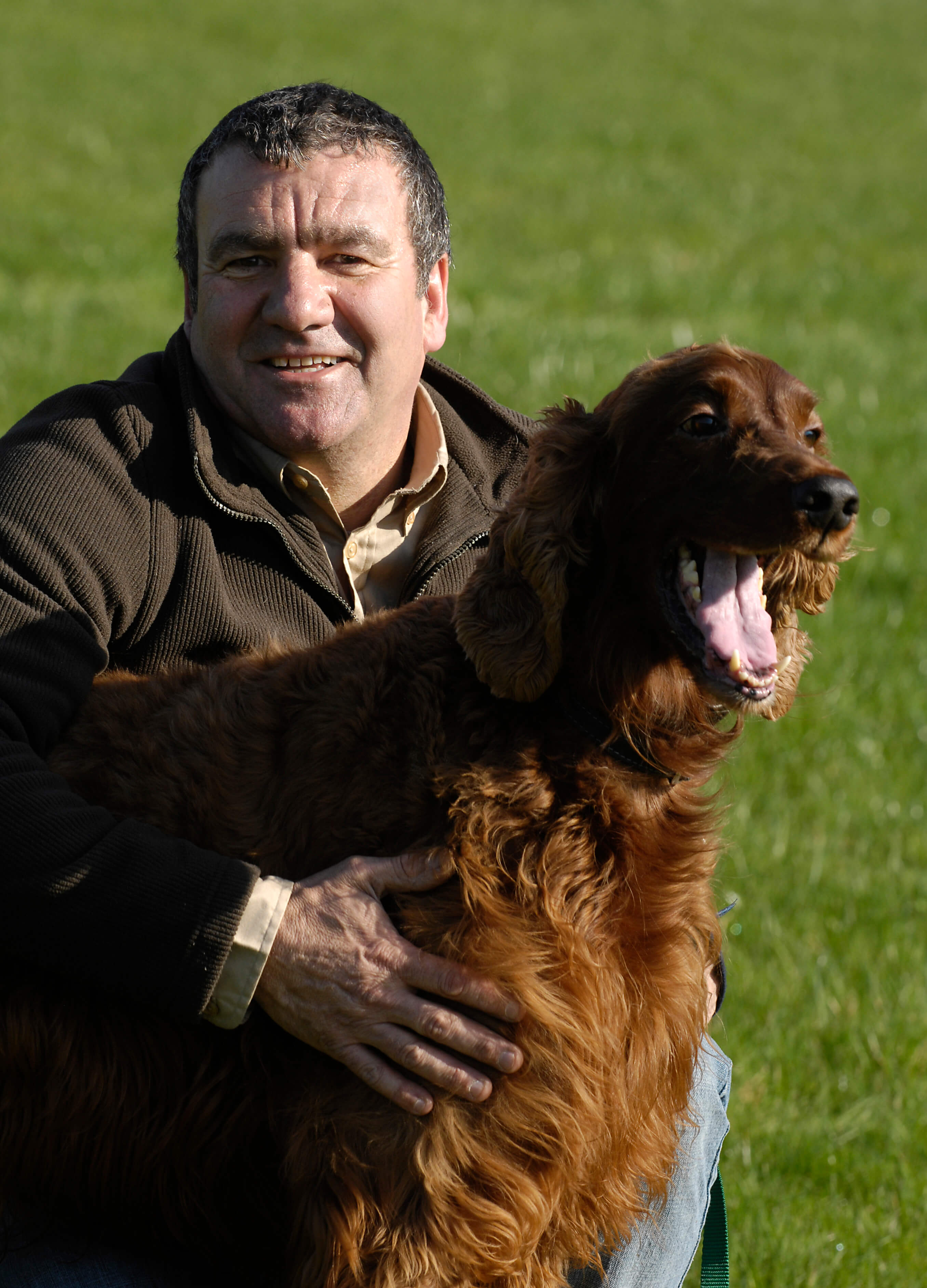
A DogFence trainer giving the owner practical training advice while introducing their dog to the flagged boundary

Frequently Asked Questions About DIY Dog Fence Installation

Can I install an electronic dog fence myself?

Yes. Some electronic dog fences are designed for self-installation. A wired system requires you to plan and install the boundary wire, connect and test the transmitter and receiver collar, place training flags and then train your dog to understand the boundary.

Do I need an electrician to install a dog fence?

Not normally for a standard self-install dog fence system, provided you have a suitable power supply and follow the manufacturer’s installation instructions. More complicated electrical work should always be carried out by an appropriately qualified person.

Does an underground dog fence wire have to be buried?

Not always. Depending on the system and location, boundary wire can sometimes be secured at ground level or incorporated into existing features. Burying it can help protect the cable from gardening, mowing and other accidental damage.

Is a wired or wireless dog fence better for an irregular garden?

A wired dog fence generally offers greater control over the shape of the boundary because the wire can follow the actual perimeter of the garden and create specific exclusion zones. Traditional wireless systems are usually more restricted in the shape of the containment area they can create.

Can I install a dog fence around a large property?

Yes. Wired electronic dog fences can be used for large and rural properties, but the greater the area and the more complicated the terrain, the more valuable professional boundary planning and installation may become.

Do dogs still need training after DIY installation?

Absolutely. Installing the equipment does not teach the dog where the boundary is. Structured boundary training is an essential part of both DIY and professionally installed electronic dog fence systems.

Not sure whether to self-install or have your DogFence professionally installed?

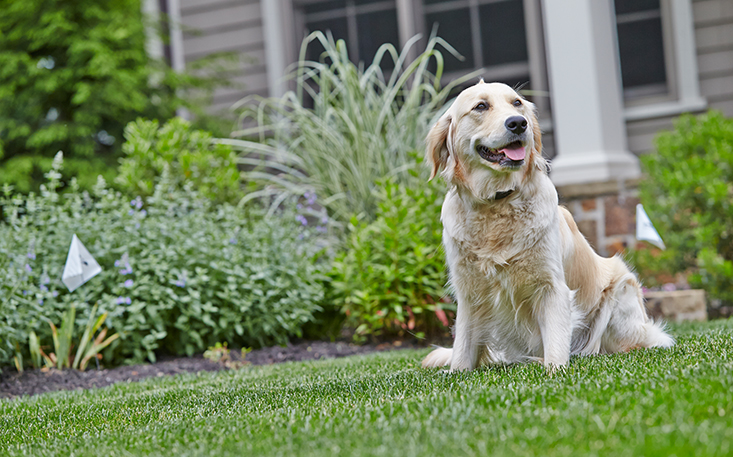
Dog running freely inside a self-installed wired dog fence boundary

A correctly installed and trained DogFence gives dogs the freedom to enjoy their garden safely within their boundary.


Tell us about your dog, your garden and what you’re trying to achieve. With more than 20 years’ experience in pet containment, we’ll tell you whether we think a DogFence is suitable – and we’ll tell you if we don’t.

📞 Call us on 01628 476475
💬 Chat to us on WhatsApp

GET MY FREE QUOTE

No pressure. No one-size-fits-all solution. Just experienced advice about the safest way to give your dog more freedom.

This article is intended as general information about dog containment and does not replace individual advice about your dog, property or training requirements. Some content has been prepared with the assistance of AI and reviewed and edited by DogFence Ltd based on our experience of pet containment systems in the UK.
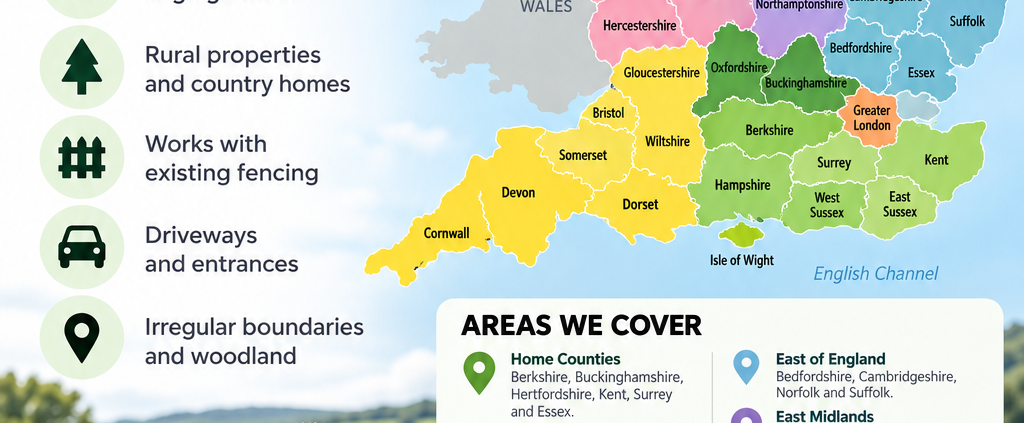

 

Underground dog fence installation across England showing DogFence coverage areas and counties

Who Can Install an Underground Dog Fence Near Me?

Who Can Install an Underground Dog Fence Near Me?

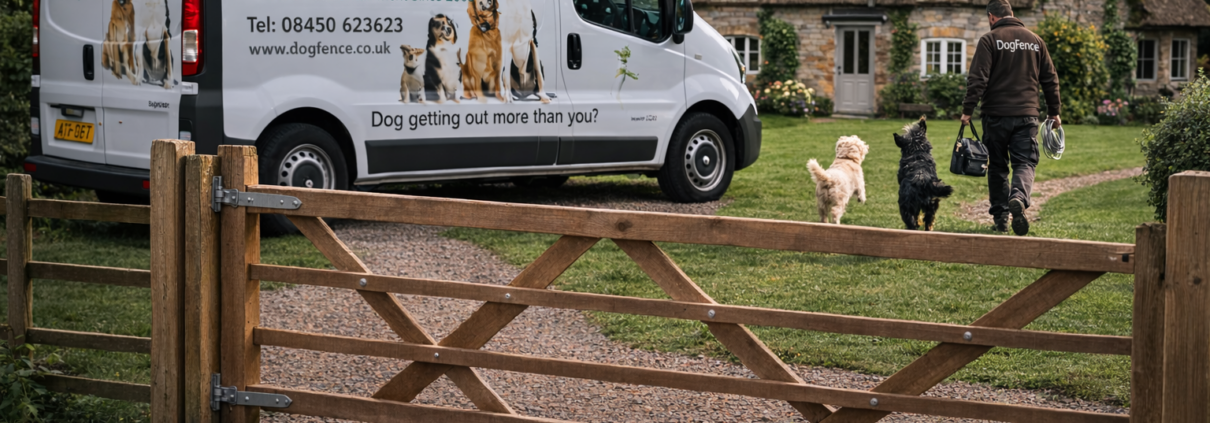
If you are searching for an underground dog fence installer near me, DogFence provides professional installation across England. From small residential gardens to large rural properties, our installers design the boundary, install the underground cable, set up the electronic dog fence and provide individual training for your dog.

Quick Answer: Who Can Install an Underground Dog Fence Near Me?

DogFence Ltd installs underground and invisible dog fences throughout England. If you live in England, contact us with your postcode and we can advise about professional installation in your area.

Our underground dog fence installers work with ordinary gardens, country homes, rural properties and large estates. Professional installation includes boundary planning, installation of the hidden cable, system setup and personalised dog training.

Is There an Underground Dog Fence Installer Near Me?

Very possibly. DogFence provides professional underground dog fence installation across England, rather than operating only within one local area.

Our installers travel to customers throughout the country, so searching for an invisible dog fence installer near me does not mean you need to find a company based in your own town or county.

The easiest way to check installation for your property is to provide your postcode, approximate garden or property size, number of dogs and some information about the boundary you would like to secure.

You can request a DogFence installation quote here and send photographs or video of your property if this helps explain the proposed boundary.

Underground dog fence installation across England showing DogFence coverage areas and counties

Underground Dog Fence Installation Across England

DogFence installs professional electronic dog containment systems throughout England, from the South Coast and South West to the Midlands, East Anglia, North West and North East.

Our installation service covers English counties including:

Home Counties

Berkshire, Buckinghamshire, Hertfordshire, Kent, Surrey and Essex.

DogFence regularly installs invisible dog fences throughout the Home Counties, covering everything from suburban gardens to larger country homes and rural properties.

South East England

East Sussex, Hampshire, Isle of Wight, Oxfordshire and West Sussex.

South West England

Bristol, Cornwall, Devon, Dorset, Gloucestershire, Somerset and Wiltshire.

London

Greater London and all London boroughs.

East of England

Bedfordshire, Cambridgeshire, Norfolk and Suffolk.

East Midlands

Derbyshire, Leicestershire, Lincolnshire, Northamptonshire, Nottinghamshire and Rutland.

West Midlands

Herefordshire, Shropshire, Staffordshire, Warwickshire, West Midlands and Worcestershire.

North West England

Cheshire, Cumbria, Greater Manchester, Lancashire and Merseyside.

Yorkshire

East Riding of Yorkshire, North Yorkshire, South Yorkshire and West Yorkshire.

North East England

County Durham, Northumberland and Tyne and Wear.

If your property is anywhere in England and you are unsure whether we cover your location, simply send us your postcode and ask.

What Happens When I Contact a Local Dog Fence Installer?

The first stage is understanding your property and your dog. Unlike conventional fencing, an underground dog fence boundary can be designed specifically around the areas in which you want your dog to have freedom.

An experienced electronic dog fence installer will consider:

  • the size and shape of your property;
  • where your dog currently escapes;
  • existing fencing, walls and hedges;
  • driveways and entrances;
  • woodland and changes in terrain;
  • ponds, play areas or other internal no-go zones;
  • the number of dogs using the system; and
  • the breed, age and individual temperament of your dog.

If you’d like to understand the complete process before requesting a quotation, read our guide to professional dog fence installation.

Can an Underground Dog Fence Installer Cover a Rural Property?

Yes. Wired underground dog fencing is particularly useful for rural properties because the boundary does not have to form a standard circle or follow conventional garden fencing.

An underground dog fence installer can design the cable route around the actual property, including post-and-rail fencing, paddocks, woodland, long driveways and irregular boundaries.

This can provide a practical alternative where physically dog-proofing acres of countryside boundary would be difficult or prohibitively expensive.

If you live in the countryside, our guide to dog proof fencing for rural properties looks specifically at post-and-rail fencing, five-bar gates, open driveways and other common countryside containment problems.

Can My Underground Dog Fence Cross the Driveway?

Yes. A professionally installed boundary can cross many types of driveway, including gravel, block paving and tarmac.

This is important because the driveway is often one of the most vulnerable points in a garden boundary, particularly where gates are routinely opened for cars, visitors and deliveries.

A professional invisible dog fence installer can incorporate the driveway into the overall boundary design rather than leaving an unprotected gap at the entrance.

Read our guide to installing an invisible dog fence across a driveway to learn more about the different installation options.

Do I Need an Installer Who Lives in My County?

No. What matters is whether the company provides a professional installation service to your area and has the experience and equipment required to install and train the system correctly.

When people search for an electronic dog fence installer near me, it is natural to assume the installer needs to be based a few miles away. Specialist dog containment is different from many local trades because experienced installers can cover much larger geographical areas.

DogFence provides professional installation throughout England, so your postcode is the simplest way for us to determine the appropriate installation arrangements.

Does Professional Underground Dog Fence Installation Include Training?

With DogFence, installation is not simply a matter of putting cable into the ground.

Professional installation includes setting up the system for the property and training your dog to understand the new boundary.

Temporary boundary flags provide a visual marker during the initial training period. Your dog is taught to recognise the audible warning from the receiver collar and turn back towards the safe area of the garden.

Training is an important reason to look carefully at what is included when comparing underground dog fence installers. The equipment, installation and training should work together as one containment system.

professional dog fence installer training dog to respect driveway boundary

A professional DogFence installer works with the dog and owner to establish a safe boundary across an open driveway, combining accurate installation with individual dog training.

How Much Does an Underground Dog Fence Installer Cost?

The cost of professional installation depends on the size and layout of the property, boundary length, number of dogs, driveway crossings and the complexity of the installation.

A small residential garden and a multi-acre country property will naturally require different amounts of cable, equipment and installation time.

We’ve created a separate guide explaining the factors that affect price and the difference between professional and self-installed systems.

Read our Dog Fence Cost UK guide: DIY vs Professional Installation.

How Do I Find a Good Invisible Dog Fence Installer Near Me?

Don’t choose an installer purely because they appear to be the closest company geographically.

Before choosing an invisible dog fence installer, check what is actually included in the service. Ask about the equipment being installed, the type of boundary technology used, how the cable will be installed, warranty and aftercare, and how your dog will be trained.

We’ve created a separate guide to what to look for in an invisible dog fence installer, including the questions worth asking before choosing a system.

Frequently Asked Questions

Who can install an underground dog fence near me?

DogFence Ltd provides professional underground dog fence installation throughout England. Send us your postcode and details of your property and dogs to check installation in your area.

Are there invisible dog fence installers near me?

If you live in England, DogFence provides professional invisible dog fence installation across the country. Our installers work with residential gardens, rural homes and large properties.

Does DogFence install throughout England?

Yes. DogFence installs professional underground and invisible dog fences throughout England, including the South East, South West, East of England, Midlands, North West, Yorkshire, North East and London.

Can an underground dog fence be installed on a large property?

Yes. A wired boundary can follow irregular property shapes and is suitable for anything from residential gardens to large rural properties. The proposed layout and equipment required will depend on the individual property.

Can an underground dog fence cross a driveway?

Yes. Professional installations can incorporate many gravel, block-paved and tarmac driveways into the containment boundary.

Does an electronic dog fence installer train my dog?

DogFence professional installation includes individual dog training. The dog is introduced to the flagged boundary and taught how to respond correctly to the receiver collar’s audible warning.

How do I check whether DogFence installs in my area?

Send DogFence your postcode along with some information about your garden and dog. Photographs or video of the property can also help when assessing the proposed installation.

Find an Underground Dog Fence Installer in Your Area

DogFence has specialised in electronic pet containment since 2003 and provides professional installation throughout England.

Whether you have a suburban garden, open driveway, existing fencing your dog keeps escaping from or a large rural property, we can assess your requirements and design an underground dog fence around your property.

Dog running safely in a garden protected by an underground dog fence

An underground dog fence gives dogs the freedom to enjoy their garden while helping owners keep them safely within their chosen boundary.

Do We Install Underground Dog Fences Near You?

If you’re in England, send us your postcode and tell us about your dog and property.

We can advise on professional installation and the most suitable boundary for your garden.

Call: 01628 476475

WhatsApp: 07917 034256

Check Installation in Your Area

Professional invisible dog fence installer in the UK

Who Installs Invisible Dog Fences in the UK?

Who Installs Invisible Dog Fences in the UK?

If you’re looking for someone to professionally install an invisible dog fence in the UK, you may be wondering who actually provides this specialist service and what professional installation involves.

Quick Answer: Who Installs Invisible Dog Fences in the UK?

DogFence Ltd professionally installs invisible dog fences for homes and properties across England. Established in 2003, we specialise in electronic dog containment and provide the complete service: planning the boundary, installing the underground cable, setting up the system and, importantly, training your dog to understand and respect their new boundary.

Our systems can be installed in ordinary gardens, rural properties, country homes and large estates, and can be designed around existing fencing, hedges, driveways, woodland and other garden features.

Professional installer fitting an invisible dog fence at a UK property

What Is a Professionally Installed Invisible Dog Fence?

An invisible dog fence – also known as an underground dog fence, hidden dog fence or electronic dog containment system – creates a boundary without requiring a physical fence around the entire property.

A boundary cable is installed around the area where the dog is allowed to roam. The cable carries a coded digital FM radio signal from a transmitter, while the dog wears a small receiver collar.

As the dog approaches the boundary, the collar gives an audible warning. If the dog continues towards the boundary, the receiver provides an adjustable correction.

However, the technology is only part of the system.

Correct training is one of the most important elements of an invisible dog fence. The aim is to teach the dog where the boundary is so that they learn to stop and turn back when they hear the warning tone.

Want to understand the technology behind the boundary? Read our guide to how an invisible dog fence works, including the transmitter, boundary cable and receiver collar.


What Does an Invisible Dog Fence Installer Do?

A professional invisible dog fence installation involves considerably more than simply putting a cable into the ground.

At DogFence, an installation typically involves:

  • planning a suitable boundary around the property;
  • deciding the safest position for the underground boundary cable;
  • creating a complete return loop for the system;
  • installing the cable discreetly around the garden or property;
  • crossing driveways or paths where required;
  • configuring the transmitter and receiver collar;
  • setting the system appropriately for the individual dog;
  • placing temporary training flags to create a visible training boundary;
  • training the dog and owner to use the system correctly; and
  • providing ongoing support after installation.

This is particularly important on complicated properties where the boundary may need to pass through hedges, woodland or existing fencing, cross driveways, or create areas within the garden that the dog should not enter.

Invisible dog fence installer explaining the DogFence system to a UK customer

A professional invisible dog fence installer does more than install the boundary cable – they explain the system, plan the boundary and provide the training needed to help your dog understand it.

Can an Invisible Dog Fence Be Installed in Any Garden?

One of the advantages of a wired invisible dog fence is the flexibility of the boundary.

Unlike a circular wireless system, an underground boundary cable can follow the actual shape of a property.

That means a professionally designed system can often accommodate:

  • small and large gardens;
  • irregularly shaped boundaries;
  • existing fences and walls;
  • hedges;
  • woodland;
  • gravel, block-paved and tarmac driveways;
  • gates and entrances;
  • rural properties and paddocks; and
  • internal areas that need to remain off limits.

The installer can assess how the dog uses the property and design the boundary accordingly rather than forcing the garden to fit a standard circular signal. For larger gardens, paddocks and country homes, read our guide to invisible dog fencing for rural properties to see how a professionally installed system can be designed around large or more complex boundaries.

Can an Invisible Dog Fence Work With an Existing Fence?

Yes. An invisible dog fence does not have to replace an existing physical fence.

In fact, many DogFence installations are used to reinforce an existing garden boundary where a dog has discovered that it can jump over, climb through or dig underneath conventional fencing.

The boundary cable can usually be buried, attached discreetly to an existing fence or wall, or routed through hedging depending on the property.

This can be particularly useful for determined escape artists because the electronic boundary teaches the dog to remain a set distance away from the physical perimeter.

Already have fencing around your garden? Find out how an invisible dog fence works with an existing fence, hedge or wall, including options for dogs that jump or dig under traditional fencing.

Can an Underground Dog Fence Cross a Driveway?

Yes. A professionally installed underground dog fence can cross many types of driveway, including gravel, block paving and tarmac.

This allows the boundary to continue across entrances and gateways without installing a physical gate solely for dog containment.

For properties with more complicated entrances or multiple driveways, the proposed layout should be discussed before installation so the complete boundary can be designed correctly.

If your property has a driveway or gated entrance that needs “fencing”, read our guide to installing an invisible dog fence across a driveway for more information on how the boundary can be continued across different driveway surfaces.


Does Professional Installation Include Dog Training?

With DogFence, professional installation includes training because the system and the training work together.

A fast, accurate containment system establishes the boundary, but the dog must also be taught what the warning tone means and how to respond to it.

Temporary training flags are normally placed along the boundary so the dog initially has both a visual and audible indication of where to stop.

The training is introduced gradually and consistently so the dog learns that hearing the warning means to turn back towards the safe area of the garden.

This is why choosing an installer should not be based solely on who can bury a wire. Ask what training and aftercare are included as part of the installation.

You can also read more about how hidden dog fence training works and why correct training is such an important part of a successful containment system.


Professional invisible dog fence installer training a dog at the boundary

Professional DogFence installation includes training. The installer works with your dog at the flagged boundary, teaching them to recognise the warning and turn back into the safe area.

How Much Does Professional Invisible Dog Fence Installation Cost?

The cost of installing an invisible dog fence depends on factors including the size and layout of the property, the amount of boundary cable required, driveway crossings, the number of dogs and the complexity of the installation.

Rather than comparing headline prices alone, it is worth checking exactly what is included – particularly the equipment, quality of the boundary cable, installation, dog training, warranty and ongoing support.

We have put together a separate guide explaining current professional and DIY pricing:

Read our Dog Fence Cost UK guide: DIY vs Professional Installation

Who Installs Invisible Dog Fences Near Me?

DogFence provides professional invisible dog fence installation across England, with installations ranging from residential gardens to rural and multi-acre properties.

If you are searching for an installer in your area, the first step is normally to provide your postcode together with some information about your property, your dog and the approximate area you would like contained.

You can also send photographs or a video of your garden to help us understand the proposed boundary.

We are also preparing a detailed guide specifically for people searching for “Who can install an underground dog fence near me?”, including what information to have ready when requesting a quotation.

How Do I Choose an Invisible Dog Fence Installer?

Before choosing an installer, ask more than simply how much the system costs.

You should understand what type of technology is being installed, how the boundary will be designed, what safety features are built into the system, what warranty and aftercare are provided and – crucially – how your dog will be trained.

We will cover this in detail in our forthcoming guide: What Should I Look for in an Invisible Dog Fence Installer?

A professional underground dog fence installer will assess the property before deciding the best route for the boundary cable. This is especially important where there are driveways, hedges, woodland, existing fencing or areas that need to remain off limits to the dog.

Frequently Asked Questions

Who installs invisible dog fences in the UK?

DogFence Ltd provides professional invisible dog fence installation across England. The service includes boundary planning, installation of the wired containment system, system setup and individual dog training.

Who installs underground dog fences near me?

DogFence installs underground dog fences across England. Availability for your property can be checked using your postcode. The team can also assess photographs or video of the garden when preparing a quotation.

Do invisible dog fence installers bury the wire?

The boundary cable can be buried where appropriate, but this is not always necessary. Depending on the property, it can also be discreetly attached to existing fencing or walls or routed through hedging.

Can an invisible dog fence cross my driveway?

Yes. Underground dog fence cable can be installed across many gravel, block-paved and tarmac driveways, allowing the containment boundary to continue across the entrance to the property.

Does professional dog fence installation include training?

DogFence professional installation includes dog training. Training is an essential part of the containment system because the dog needs to learn what the audible warning means and how to retreat back into the safe area. Choosing an experienced electronic dog fence installer also means looking beyond the equipment itself. Correct system setup and individual dog training are essential parts of a successful installation, helping the dog learn exactly where the safe boundary is and how to respond to the warning tone.

Can an invisible dog fence be installed on a large property?

Yes. Wired invisible dog fences are particularly useful for large or irregularly shaped properties because the boundary cable can be designed to follow the required perimeter rather than relying on a fixed circular wireless boundary.

Professional Invisible Dog Fence Installation in the UK

DogFence has specialised in electronic pet containment since 2003. Whether you have a small garden, an awkward boundary, an existing fence your dog keeps defeating or a large rural property, we can help determine whether an invisible dog fence is suitable and design an appropriate boundary for your dog and property.

DogFence customer with her dog enjoying their garden safely

A professionally installed invisible dog fence gives dogs the freedom to enjoy their garden while helping owners keep them safely within their chosen boundary.

Need Help Containing Your Dog?

Talk to DogFence about professional invisible dog fence installation for your property.

Send us your postcode and some details about your garden and dog and we can advise on the most suitable next step.

Call: 01628 476475

WhatsApp: 07917 034256

Request a DogFence Quote

“`

Dog safely enjoying freedom in a secure garden

Electric Collar Ban Consultation: Why Containment Fences Are Excluded

The New Electric Collar Ban Consultation: Is Your Containment Fence Safe?

The Short Answer: Yes. The electric shock collar consultation UK process has raised questions about how legislation may affect different types of training and containment systems. The proposed electric collar ban UK legislation has created confusion between remote training collars and professionally installed containment systems. The following guide should answer all questions relating to whether containment fences are legal in the UK.

Dog safely enjoying freedom in a secure garden thanks to the exemption of containment fences from the 2018 electric collar ban consultation

In late December 2025 the Government announced plans to run a future consultation on an Electric collar ban. The proposed consultation, which currently has not date, is to once again discuss the banning of “electric shock collars”. So what about Containment (Invisible) Fences? These valuable fences were explicitly excluded from the previous ban announcement because they were recognised as life-saving tools.

The 2018 DEFRA consultation already settled this debate, confirming that containment systems prevent road accidents and provide pets with safety and freedom. For owners unfamiliar with this approach, understanding how electronic dog fences work can help explain why containment systems are treated differently from training collars.


Quick Fact Check: The 2018 DEFRA Ruling

The electric collar ban consultation in 2018 produced the following results:

The Decision:
DEFRA ruled to ban hand-held remote collars but kept containment fences legal.

The Regulation:
The Government announced it would change legislation to ensure containment fences are professionally installed and paired with appropriate training, recognising that correct setup and education are essential for safety.

The Reason:
Government data proved these systems are “life-saving” and fundamentally different from punitive training devices.

The Support:
Roughly 56% of all 7,334 consultation respondents specifically wrote in to defend containment fencing.

Professional dog containment fence training using boundary flags in a rural UK garden - explicitly excluded from the 2018 electric collar consultation


Why Is There a New Consultation to Ban Electric Collars?

In December 2025, the Government launched its new Animal Welfare Strategy, which includes a commitment to consult “later in this Parliament” on a ban of electric shock collars.

It is important to note that a previous attempt to ban, known as the Animal Welfare (Electronic Collars) (England) Regulations 2023, never actually became law. Although it was debated in 2023, the legislation was withdrawn before it could pass through the House of Commons. Consequently, that ban “died” with the last government, leading the current administration to start the process fresh with a new consultation.

Are containment fences legal in the UK?

Yes. Professionally installed containment fence systems remain legal in the UK because they differ from handheld remote training devices covered under current legislation.  Owners are confused and continue to ask, are containment fences legal in the UK, due to media coverage of electric collar legislation. It’s important to understand that professionally installed containment systems operate differently from handheld remote training collars.


How Do Containment Fences Improve Animal Welfare?

Rather than being “aversive” training tools, the 2018 consultation identified containment fences as protective technology. According to official DEFRA findings and industry evidence:

Road Safety:
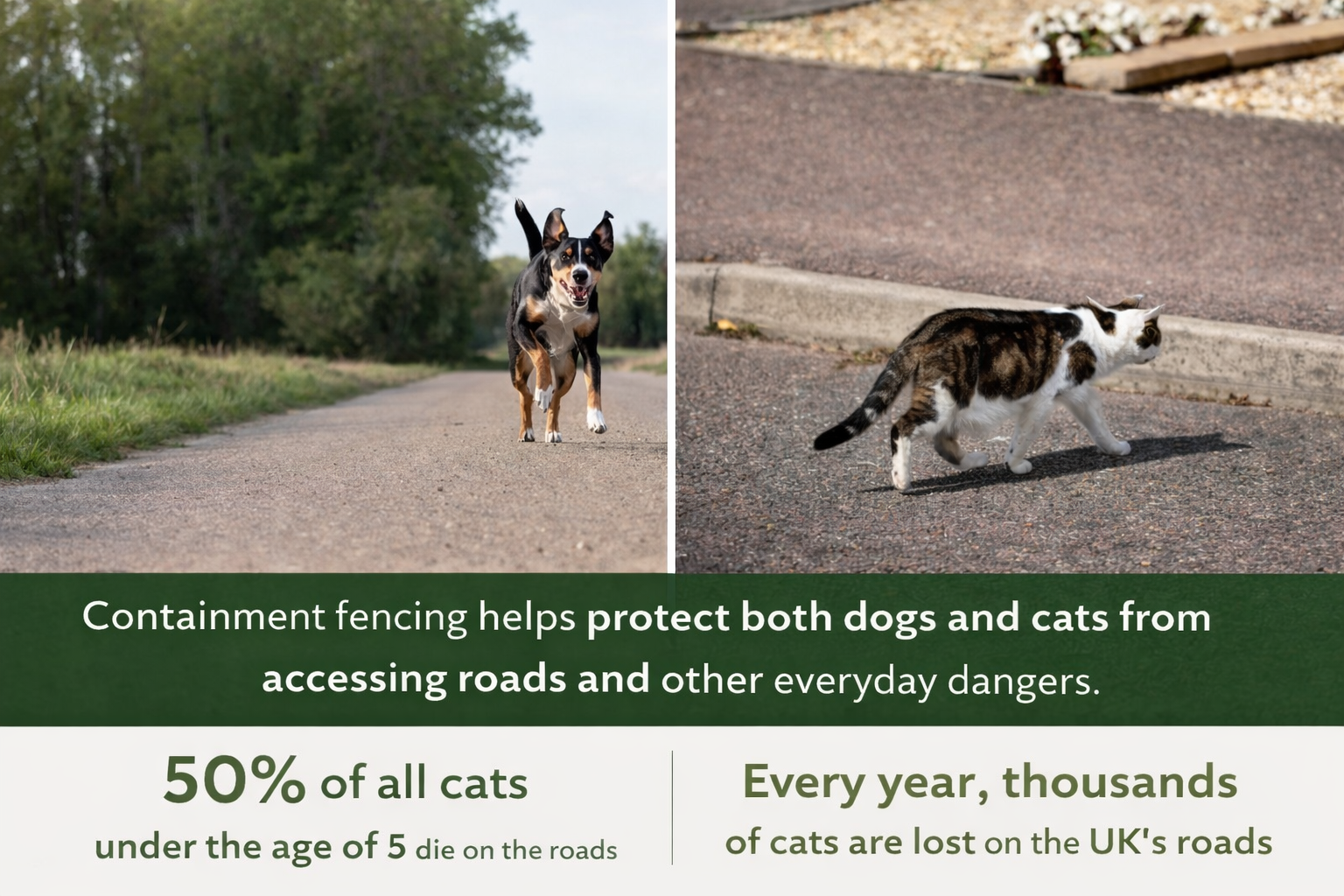
They prevent cats and dogs from wandering into traffic, a leading cause of pet mortality. Independent veterinary charities also highlight that road safety remains one of the leading risks for pets.

Livestock Protection:
They prevent “worrying” by ensuring pets cannot enter fields with vulnerable animals.

Mental Wellbeing:
They allow pets to enjoy outdoor freedom within a safe, defined boundary, which is vital for their physical and mental health.

These risks can be heightened by seasonal escape triggers, such as wildlife movement and scent trails, particularly in winter months.

Dog and cat near roads highlighting the life-saving role of pet containment systems which was flagged as part of the 2018 electric collar ban consultation


Why the 2018 DEFRA Precedent Is Final for Containment

This isn’t a debate that needs to be reopened. The 2018 consultation was one of the most comprehensive ever held on the topic, receiving 7,334 formal responses.

2018 Consultation Metric The Result
Total Responses 7,334
Pet Owner Defence Over 6,000 individuals provided evidence
Government Verdict Containment excluded due to life-saving benefits

Expertise Matters: DogFence and the Law

We are not just a retailer; we helped provide the real-world evidence that protected these systems in 2018.

DogFence was the only UK specialist invited to meet with DEFRA in person to demonstrate how professional installation and calm boundary training ensure pet safety without causing distress.

We stand by that evidence today:
a containment fence is a boundary, not a punishment.


The Bottom Line for Pet Owners

The 2018 consultation proved that containment fencing is widely supported, clearly differentiated from shock collars, and recognised by the Government as a protective tool.

If you use a containment system to keep your pet safe, you are using a tool that the Government has already agreed is a life-saver.


Verified Fact-Check & Authoritative Sources

Verified Data:
Statistics are derived from the 7,334 responses to the 2018 DEFRA Consultation on Electronic Training Collars.

Expert Evidence:
DogFence provided the expert testimony and live demonstrations that informed the Government’s 2018 distinction between containment and training devices.

Official Citation:
The original Government response confirming the exclusion of containment fences can be viewed on the Gov.uk website.


Why Professional Installation and Training Matter

One of the key reasons containment fencing was treated differently in 2018 was the emphasis on correct installation and structured training.

When professionally installed and introduced calmly, containment systems help pets clearly understand their boundaries without fear or confusion. This ensures containment fencing is used as preventative safety infrastructure, not as a shortcut for behaviour correction.

This structured approach is particularly important for instinct-driven behaviour in certain breeds, where roaming and scent following are natural traits.

Professional dog fence training was used as part of the 2018 electric collar ban consultation.


Why Containment Fencing Saves Lives

Containment fencing addresses risks that traditional fencing and recall training alone cannot:

  • Prevents pets accessing roads and driveways
  • Reduces roaming triggered by scent or wildlife
  • Protects both dogs and cats, who face daily road risks — especially free-roaming cats
  • Creates predictable boundaries pets can trust

This is why containment fencing was repeatedly described by respondents as life-saving during the 2018 consultation.


Electric Collar Ban Consultation – Frequently Asked Questions

Are containment fences included in the new electric collar consultation?
To date we do not know but given that there is no new evidence to support a ban and that containment fencing was explicitly excluded from the previous ban it is highly unlikely that containment fences will be included in this new consultation. DEFRA previously recognised containment fencing as a welfare-positive and life-saving system when correctly installed and trained.

Why are containment fences different from electric shock collars?
Containment fences create a consistent boundary to prevent danger. Shock collars are hand-held training devices. DEFRA recognised these as fundamentally different in both function and welfare impact.

Will the new electric collar consultation ban consider previous studies?
Any future review would need to consider the same evidence assessed in 2018, which clearly supported containment fencing as a protective tool for animal welfare. Importantly, to our knowledge, no new studies or evidence have been published since that consultation that would alter DEFRA’s original conclusions. In the absence of new evidence, the established position remains valid.


Why Containment Fencing Still Matters

Ultimately, this issue has already been examined through one of the most detailed consultations ever conducted on electronic pet systems. Containment fencing was assessed on evidence, expert input and real-world outcomes — and recognised as a welfare-positive, life-saving solution when professionally installed and correctly trained.

In the absence of new evidence to the contrary, those conclusions remain valid. For pet owners, the message is clear: containment fencing continues to offer a proven, responsible way to protect dogs and cats while supporting safe, calm freedom at home.

The image below reflects the outcome discussed in the electric collar ban consultation: dogs kept safe through professionally installed containment fencing rather than training collars.

Dog safely running within a professionally installed invisible containment fence in a UK garden

Want to Know More About Safe Pet Containment?

If you’d like to understand how professionally installed containment fencing works, or have questions about pet safety and training,

Call us on
01628 476475
|
Message us on WhatsApp: 07917 034256
|
Request a Free Quote Online

Rhodesian ridgeback trying to escape so he needs a dog fence!

Dog Fence Installation: DIY vs. Hiring a Professional

Dog Fence Installation: DIY vs Hiring a Professional

DIY vs Professional Dog Fence Installation – What’s Right for You? DIY vs professional dog fence installation is a common dilemma for dog owners who want reliable containment without unnecessary cost. In this guide, we compare both options to help you decide what’s right for your property and your pet. Dog fence installation is one of the most important stages in setting up a safe and reliable electronic containment system. Whether you are considering a DIY kit or professional dog fence installation, the way the system is installed directly affects performance, safety and long-term reliability.

Many problems attributed to dog fences are not caused by the technology itself, but by incorrect installation, poor cable placement or inadequate training.


What Is Involved in Installing a Dog Fence?

The Installation typically involves:

  • Planning the boundary layout
  • Burying or securing the boundary wire
  • Programming the receiver collar
  • Setting appropriate correction levels
  • Training the dog to understand the boundary

When done correctly, the buried boundary system creates a consistent invisible perimeter that your dog learns to respect.

If you’re still exploring how these systems work before deciding on installation, our guide to an electric fence for dogs explains how modern containment technology operates in practice.

dog fence installation trenching machine cutting boundary wire channel

Cutting a narrow trench for a buried dog fence boundary wire during installation.


DIY vs Professional Dog Fence Installation: Key Differences

Some homeowners choose DIY dog fence installation kits. When comparing DIY vs professional dog fence installation, the main differences come down to cost, expertise and long-term reliability.

Pros of DIY Installation

  • Lower upfront cost
  • Flexibility to install at your own pace
  • Suitable for simple, flat garden layouts

Cons of DIY Installation

  • Incorrect wire depth or placement
  • Lighter cable used instead of professional-grade wire
  • Poor driveway crossings
  • Incorrect collar programming
  • Inadequate training support

Many DIY installations fail not because the system is flawed, but because the boundary wire is not installed securely or consistently.

Improper dog fence installation can lead to signal breaks, inconsistent correction zones and confusion for the dog.


Professional Dog Fence Installation: What’s Different?

When a dog fence is installed professionally is should include:

  • Property survey and boundary planning
  • Correct driveway and pathway crossings
  • Heavy-duty boundary cable
  • Lightning protection
  • Bespoke collar programming
  • Structured training sessions

A professionally installed electronic containment system is designed to last for years with minimal disruption.

If you’re weighing up welfare concerns as part of your decision, it can also help to read our article on the controversy surrounding dog fences and whether they are cruel or necessary.


Can Dog Fence Wires Cross a Driveway?

Yes.

One of the most common concerns about dog fence installation is whether the boundary wire can cross driveways.

Professional installers can:

  • Cut a narrow channel in concrete or tarmac
  • Seal the cable safely below the surface
  • Run cable beneath block paving
  • Protect wiring against long-term wear

Correct driveway crossing is one of the biggest differences between DIY and professional dog fence installation.


Is Professional Dog Fence Installation Safer?

A Professional installation itself does not determine whether a system is humane — but correct installation plays a major role in safe operation.

Poor installation can cause:

  • Inconsistent correction zones
  • Delayed warning tones
  • Signal gaps
  • Dog confusion

When a dog fence is fitted out, the system delivers a predictable, programmable boundary that most dogs quickly understand.

If you are still deciding whether electronic containment systems are suitable for your pet, our evidence-led guide on whether electric dog fences are cruel or kind may help clarify the welfare and training considerations.


How Long Does it Take to Install a Dog Fence?

For an average suburban garden, professional dog fence installation is often completed in a day.

Larger rural properties may take longer depending on:

  • Boundary length
  • Terrain
  • Driveway crossings
  • Woodland or uneven ground

Once installation is complete, structured training begins immediately.


Should You Choose DIY or Professional Installation?

Installing a DogFence is not just about burying a wire — it is about creating a reliable training boundary. Not sure whether to choose DIY or professional dog fence installation?

DIY installation may be suitable if:

  • Your property is small and simple
  • You are confident with cable routing
  • You understand programming and training principles

Professional installation may be better if:

  • Your dog has a strong escape drive
  • Your property has driveways, slopes or complex boundaries
  • You want long-term reliability
  • You prefer guided training support

At DogFence Ltd, we have completed dog fence installation projects across England — from compact urban gardens to large rural estates.

Correct installation helps ensure the containment system functions consistently, predictably and safely.

professional dog fence installation consultation with owner and trained dog in garden

Considering an Electric Fence for Dogs?

Whether you choose DIY or professional installation, we’ll help you decide if an electric fence for dogs is the right solution for your property and your pet.

Call us on
01628 476475
|
Message us on WhatsApp
|
Request a Free Quote Online