Tag Archive for: dog fence training

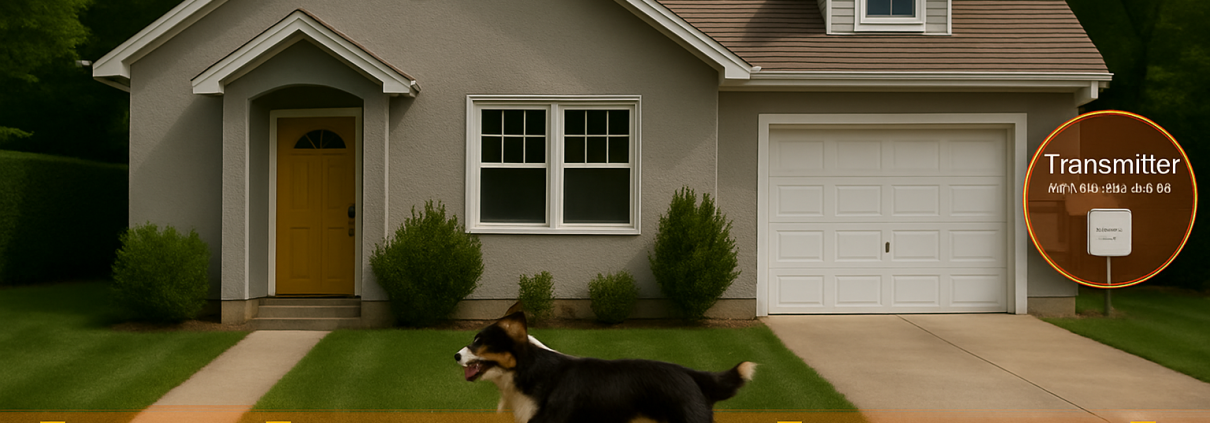
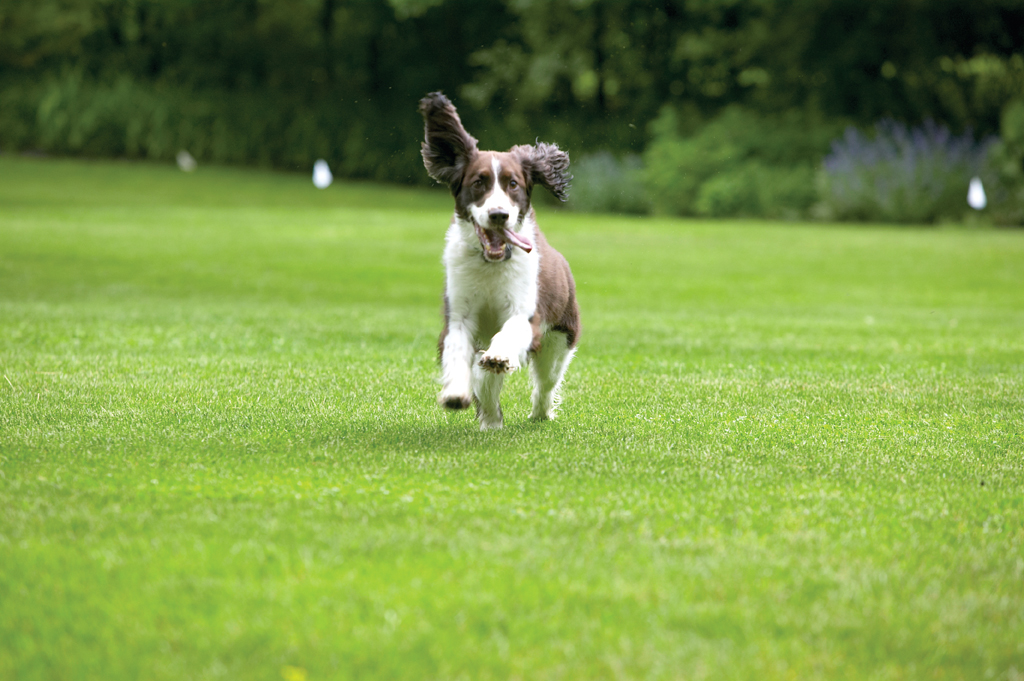
Dog running freely inside a wired or wireless dog fence boundary

Can I Self-Install a Wireless or Wired Dog Fence? | DogFence

Can I Self-Install a Wireless or Wired Dog Fence??

Yes, you can self-install both wired and wireless dog fences, but the installation process and the type of boundary they create are very different. A self-install wired dog fence uses a boundary wire that can be positioned to follow the shape of your garden, while a wireless dog fence generally creates a boundary using a central transmitter or, in the case of GPS systems, satellite positioning.

Choosing between a self-install wired dog fence, wireless dog fence or GPS dog fence depends on your garden layout, the size of the area you want to contain and, importantly, your dog. A system that is quick and easy to install is not necessarily the system that will provide the most suitable or reliable boundary for your property.

At DogFence, we have specialised in pet containment since 2003 and offer both self-install dog fence systems and professional installation with dog training. In this guide, we compare wired, wireless and GPS options, explain what is involved in installing them yourself, and help you understand which type of dog fence may be most suitable for your dog and garden.

Can I install a dog fence myself?

Yes. A wired electronic dog fence can be self-installed if you are comfortable planning the boundary, positioning the transmitter, laying the boundary wire, testing the system and following a structured dog training programme.

A typical DIY dog fence installation involves:

  • planning the safe area and boundary layout;
  • choosing a suitable position for the transmitter;
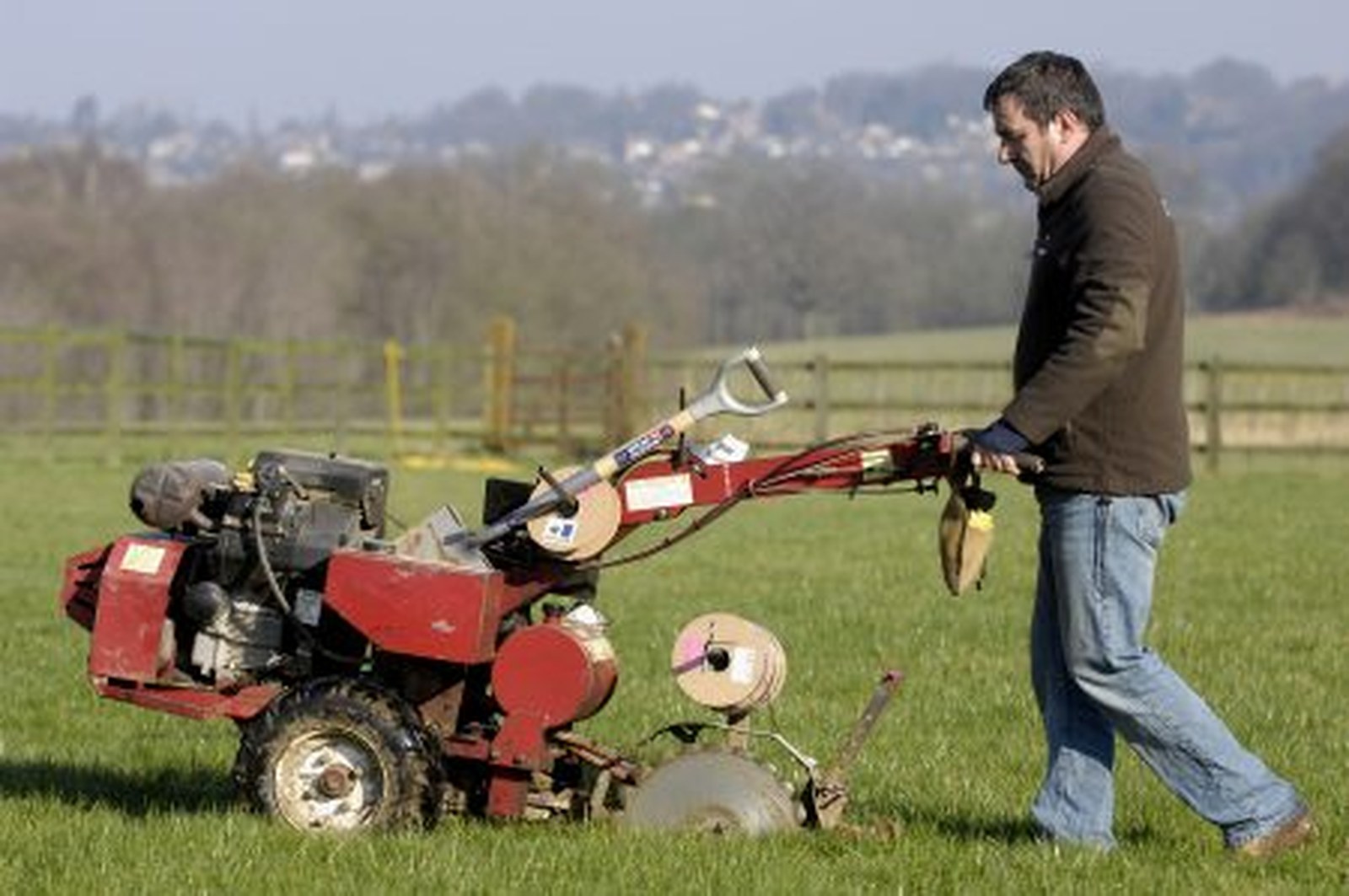
  • laying or burying the boundary wire around the property;
  • crossing driveways, paths or gateways where necessary;
  • creating any required exclusion or no-go zones;
  • connecting and testing the system;
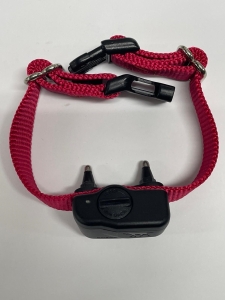
  • setting up and correctly fitting the receiver collar;
  • placing temporary training flags along the boundary; and
  • training your dog to understand and respect the new boundary.

The physical installation is only part of the process. Training is fundamental to successful dog containment.

If you are considering doing the installation yourself, read our self-installing dog fence guide before you begin.

How does a DIY dog fence work?

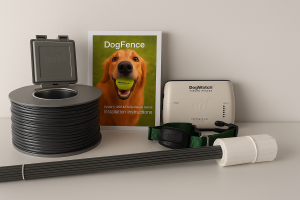
With a wired hidden dog fence, a discreet boundary wire is installed around the area where your dog is allowed to roam. The wire carries a coded radio signal from a transmitter.

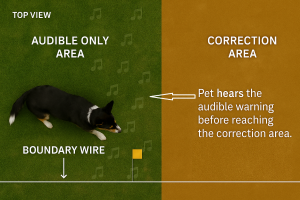
Your dog wears a lightweight receiver collar. As your dog approaches the boundary, the collar gives an audible warning. During training, your dog learns that the warning means they should turn back towards their safe area.

If you are new to electronic pet containment, our How the DogFence Works guide explains the boundary wire, receiver collar, warning zone and training process in more detail.

Watch: How does a DogFence work?

Before deciding between a self-install dog fence and professional installation, it helps to understand exactly how the system creates a safe boundary.

VIDEO: How the DogFence Works

Is a wireless dog fence easier to install yourself?

Usually, yes. A traditional wireless dog fence generally requires less physical installation because there is no boundary wire to lay. A transmitter creates a signal around a central point, which can make setup relatively quick.

However, easier installation does not automatically mean a wireless dog fence is the best solution for your property.

Wireless systems generally create a predetermined or circular containment area. That may work for some simple, open properties but can be restrictive where a garden is irregularly shaped or contains buildings, driveways, ponds, landscaping or areas your dog needs to avoid.

A wired dog fence allows the boundary to follow the actual shape of the property and can also create internal exclusion zones.

For a detailed comparison, read GPS & Wireless Dog Fences vs Hidden Fences and our article Wireless Dog Fence – The Truth: Do They Work?.

DIY wired dog fence vs wireless dog fence installation

The main difference is control over the boundary.
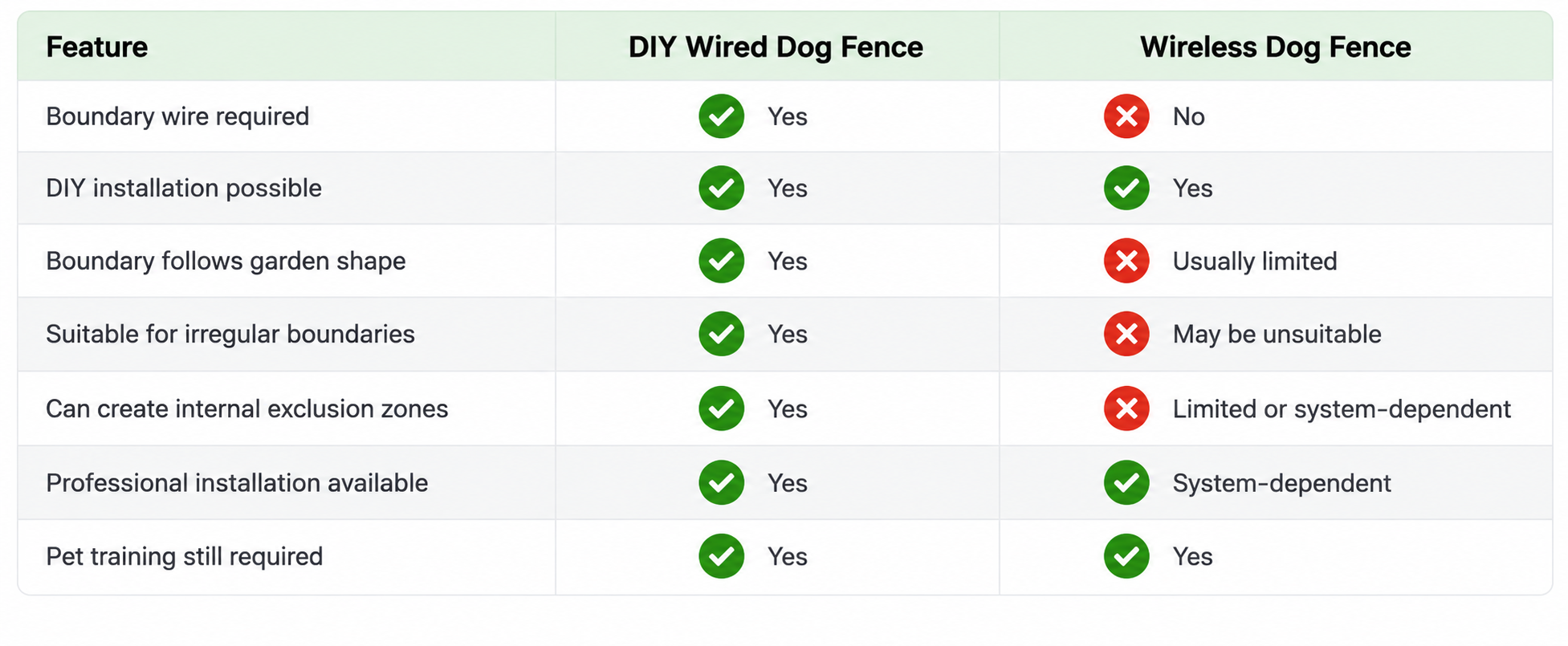
DIY wired dog fence vs wireless dog fence comparison showing installation and boundary features

This is why choosing a dog fence based purely on which one is easiest to install can be a mistake. The priority should be creating a consistent, appropriate boundary for your dog and property.

What are the advantages of a self-install dog fence?

For the right owner and property, a self-install dog fence has several advantages:

  • Lower installation cost: you provide the labour yourself.
  • Flexibility: you can carry out the work at a time that suits you.
  • Good for straightforward layouts: a simple garden can make DIY installation relatively manageable.
  • You know where the wire is: because you planned and installed the boundary yourself.

For a practical owner who is prepared to follow the installation and training instructions carefully, DIY dog fence installation can therefore be a perfectly viable option.

When is professional dog fence installation worth it?

Professional dog fence installation is particularly useful when the property or the dog’s requirements make the job more complicated.

You may prefer professional installation if:

  • you have a large or unusually shaped garden;
  • the boundary crosses several driveways or hard surfaces;
  • you need multiple exclusion zones;
  • your property includes woodland, slopes or difficult terrain;
  • you have several dogs;
  • your dog is an experienced escape artist;
  • you are unsure about choosing or fitting the correct receiver collar;
  • you don’t want to install and troubleshoot the boundary yourself; or
  • you would prefer an experienced trainer to introduce your dog to the system.

With a professionally installed DogFence system, the boundary is designed around the individual property, the equipment is installed and tested, and your dog’s initial training is carried out with you.
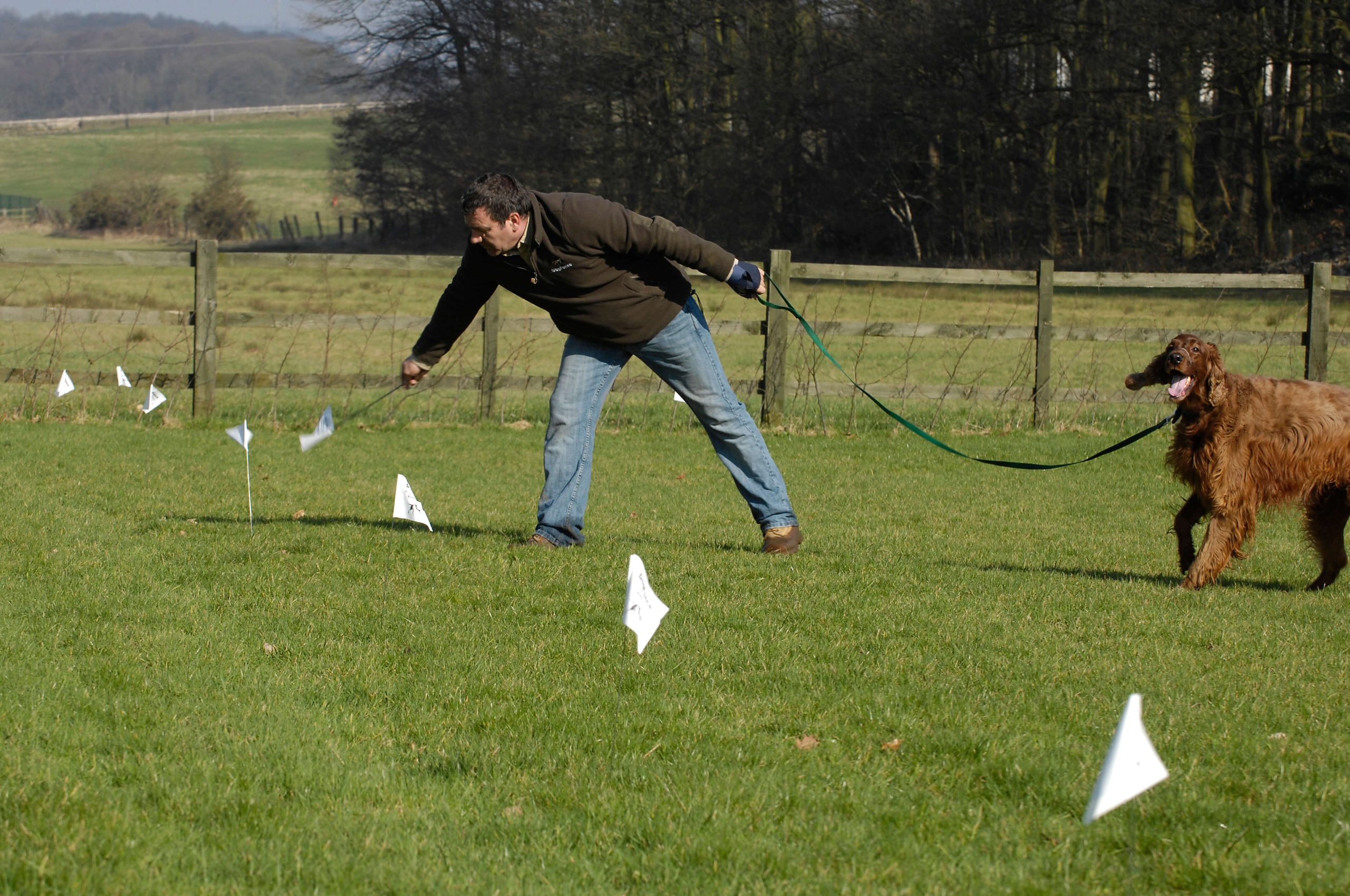
Professional dog fence training with dog learning the flagged boundary

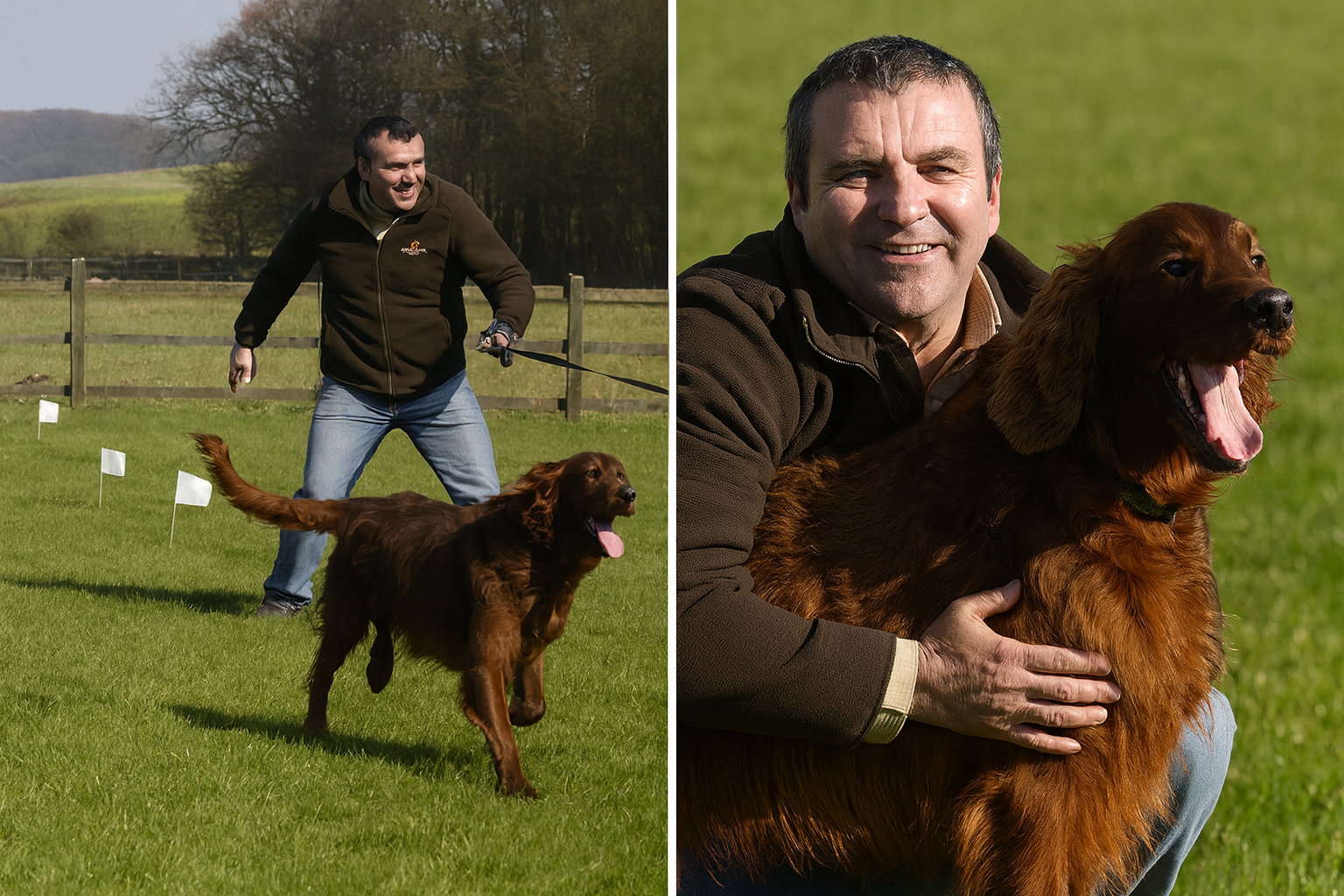
Professional dog fence training helps your dog learn to recognise the warning tone and retreat safely from the flagged boundary.

Is professional training important with a hidden dog fence?

Training is one of the most important parts of any electronic dog fence, whether the system has been professionally installed or fitted by the owner.

A dog does not automatically understand an invisible boundary. Temporary training flags make the boundary visible while the dog learns to associate the location with the audible warning from the receiver collar.

Training should be gradual, consistent and appropriate for the individual dog. The objective is for the dog to hear the warning and confidently retreat back into the safe area.

Our professional installations include personalised pet training. You can read more about the process in our professional hidden fence training guide and our guide to training your dog to an electronic fence.

Can I install the fence myself and still train my dog myself?

Yes. Owners choosing a suitable self-install system can carry out both the installation and training themselves, provided they follow the manufacturer’s instructions and do not rush the training process.

Consistency matters more than speed. Short, calm training sessions allow your dog to understand where the boundary is and what the warning tone means.

If your dog appears confused, anxious or is repeatedly challenging the boundary, stop and seek advice rather than simply increasing the collar setting.

How difficult is underground dog fence installation?

The difficulty of underground dog fence installation depends heavily on the property.

A relatively small lawn with soft ground and a straightforward perimeter can be considerably easier to self-install than a large rural property with long driveways, walls, gates, woodland and multiple areas that need protecting.

The boundary wire does not necessarily need to be deeply buried. Its purpose is to carry the radio signal and define the boundary, so installation should follow the requirements of the particular system and the conditions of the property.

Planning the route correctly before starting is important. A poorly planned boundary can create unnecessary installation work and may not provide the containment area you actually need.

Should I choose DIY or professional dog fence installation?

There isn’t one answer that is right for every owner.

DIY dog fence installation may suit you if your property is reasonably straightforward, you are comfortable carrying out the installation and you have the time and confidence to train your dog correctly.

Professional dog fence installation may be preferable if your property is large or complicated, your dog has challenging escape behaviour, or you simply want the reassurance of having the system designed, installed, tested and introduced to your dog by an experienced specialist.

Most importantly, don’t choose solely on the basis of installation convenience. The best dog fence is the one that provides a reliable boundary appropriate for your particular dog and your particular garden.
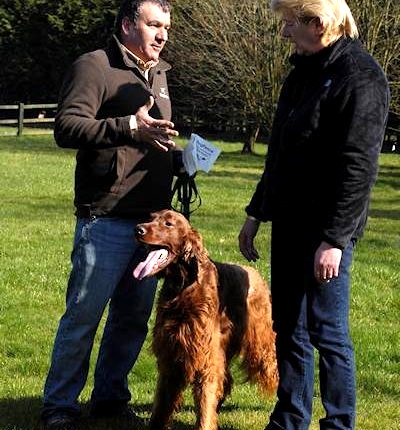
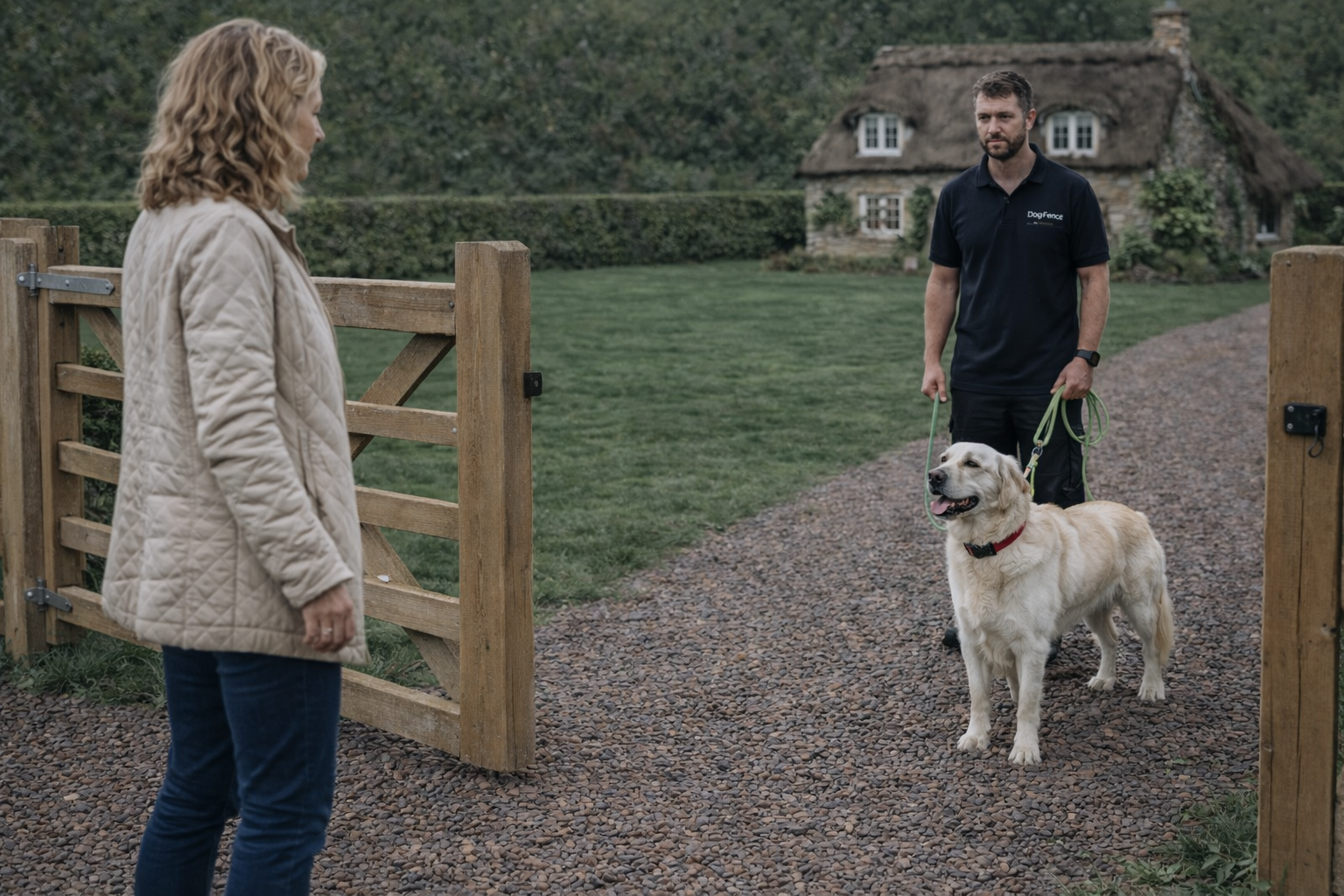
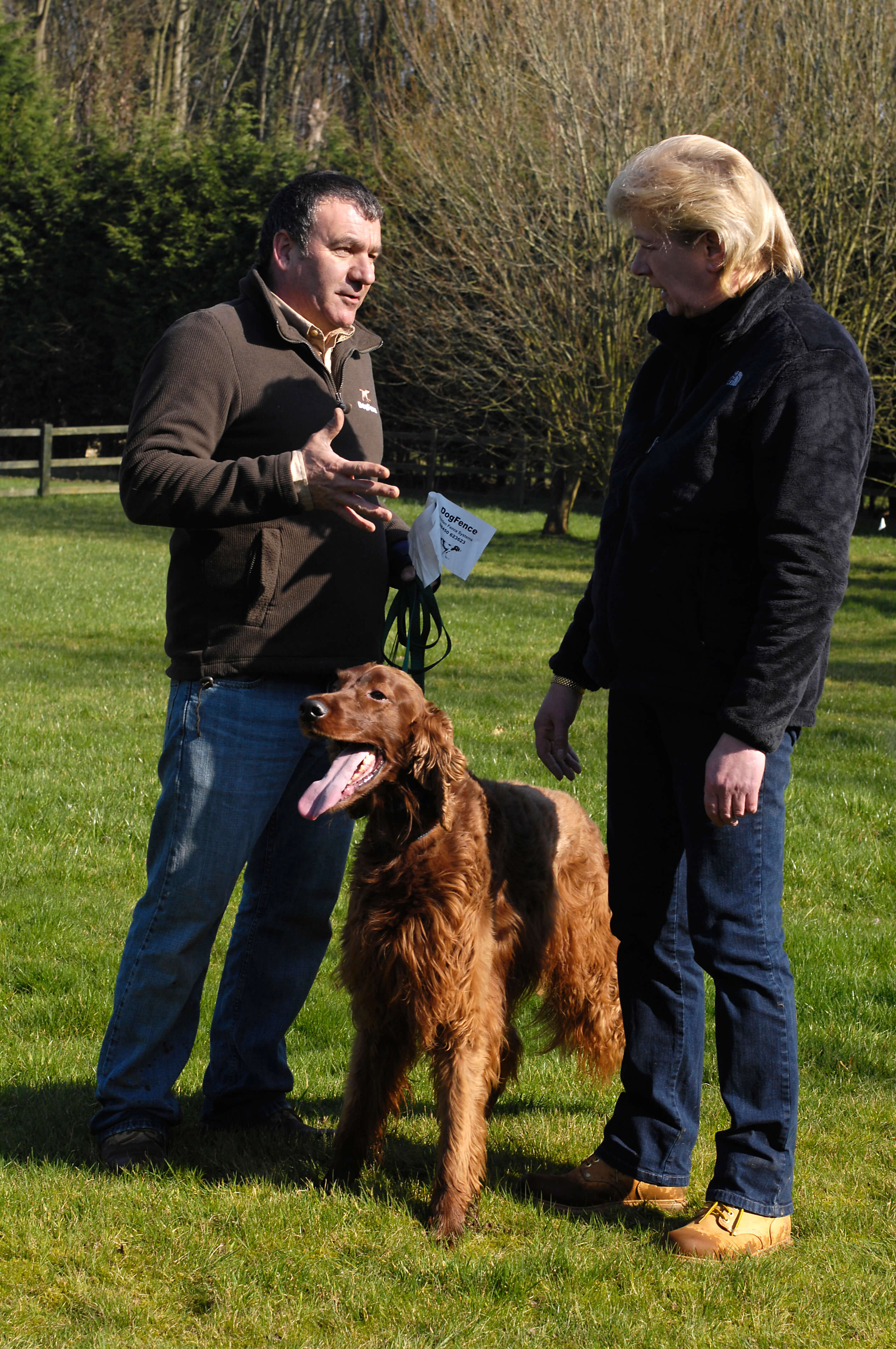
Installer giving dog fence safety tips to a customer

A DogFence trainer giving the owner practical training advice while introducing their dog to the flagged boundary

Frequently Asked Questions About DIY Dog Fence Installation

Can I install an electronic dog fence myself?

Yes. Some electronic dog fences are designed for self-installation. A wired system requires you to plan and install the boundary wire, connect and test the transmitter and receiver collar, place training flags and then train your dog to understand the boundary.

Do I need an electrician to install a dog fence?

Not normally for a standard self-install dog fence system, provided you have a suitable power supply and follow the manufacturer’s installation instructions. More complicated electrical work should always be carried out by an appropriately qualified person.

Does an underground dog fence wire have to be buried?

Not always. Depending on the system and location, boundary wire can sometimes be secured at ground level or incorporated into existing features. Burying it can help protect the cable from gardening, mowing and other accidental damage.

Is a wired or wireless dog fence better for an irregular garden?

A wired dog fence generally offers greater control over the shape of the boundary because the wire can follow the actual perimeter of the garden and create specific exclusion zones. Traditional wireless systems are usually more restricted in the shape of the containment area they can create.

Can I install a dog fence around a large property?

Yes. Wired electronic dog fences can be used for large and rural properties, but the greater the area and the more complicated the terrain, the more valuable professional boundary planning and installation may become.

Do dogs still need training after DIY installation?

Absolutely. Installing the equipment does not teach the dog where the boundary is. Structured boundary training is an essential part of both DIY and professionally installed electronic dog fence systems.

Not sure whether to self-install or have your DogFence professionally installed?

Dog running freely inside a self-installed wired dog fence boundary

A correctly installed and trained DogFence gives dogs the freedom to enjoy their garden safely within their boundary.


Tell us about your dog, your garden and what you’re trying to achieve. With more than 20 years’ experience in pet containment, we’ll tell you whether we think a DogFence is suitable – and we’ll tell you if we don’t.

📞 Call us on 01628 476475
💬 Chat to us on WhatsApp

GET MY FREE QUOTE

No pressure. No one-size-fits-all solution. Just experienced advice about the safest way to give your dog more freedom.

This article is intended as general information about dog containment and does not replace individual advice about your dog, property or training requirements. Some content has been prepared with the assistance of AI and reviewed and edited by DogFence Ltd based on our experience of pet containment systems in the UK.
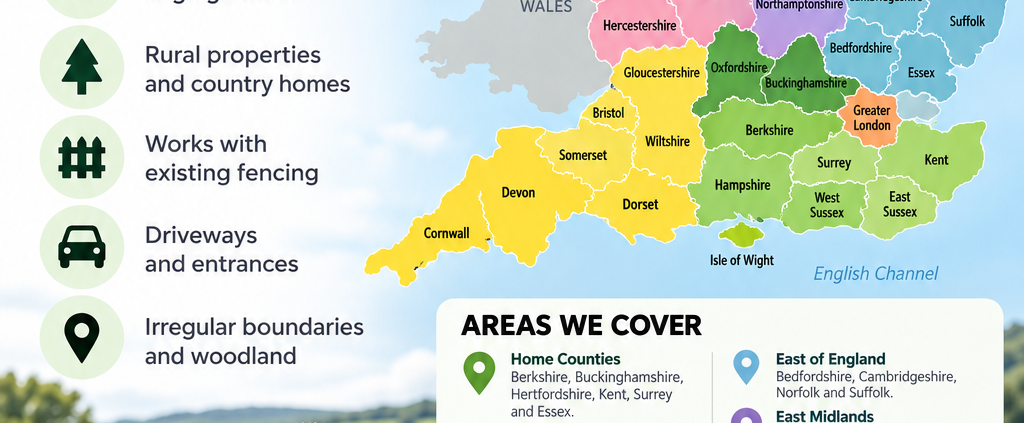
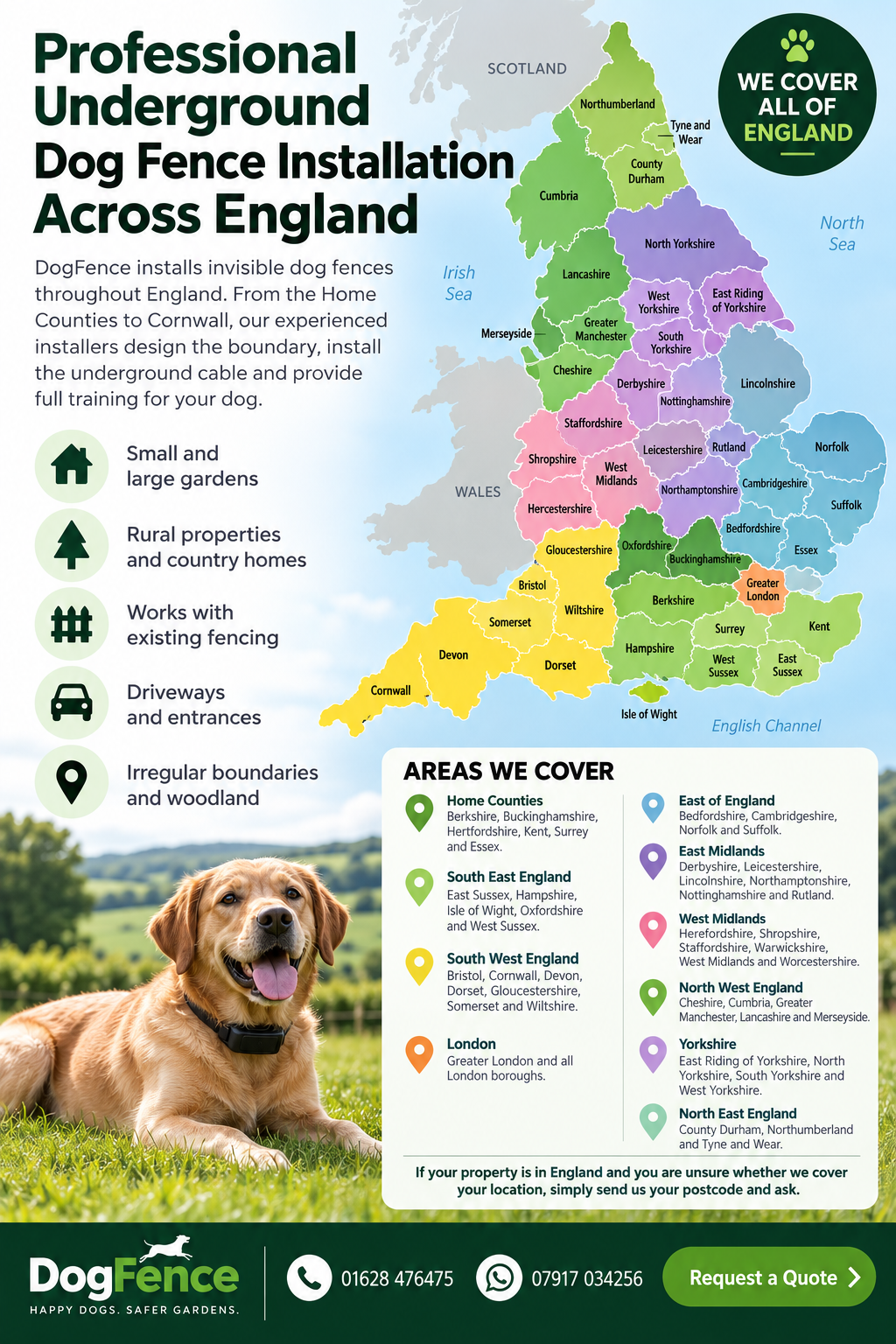
 

Underground dog fence installation across England showing DogFence coverage areas and counties

Who Can Install an Underground Dog Fence Near Me?

Who Can Install an Underground Dog Fence Near Me?

If you are searching for an underground dog fence installer near me, DogFence provides professional installation across England. From small residential gardens to large rural properties, our installers design the boundary, install the underground cable, set up the electronic dog fence and provide individual training for your dog.

Quick Answer: Who Can Install an Underground Dog Fence Near Me?

DogFence Ltd installs underground and invisible dog fences throughout England. If you live in England, contact us with your postcode and we can advise about professional installation in your area.

Our underground dog fence installers work with ordinary gardens, country homes, rural properties and large estates. Professional installation includes boundary planning, installation of the hidden cable, system setup and personalised dog training.

Is There an Underground Dog Fence Installer Near Me?

Very possibly. DogFence provides professional underground dog fence installation across England, rather than operating only within one local area.

Our installers travel to customers throughout the country, so searching for an invisible dog fence installer near me does not mean you need to find a company based in your own town or county.

The easiest way to check installation for your property is to provide your postcode, approximate garden or property size, number of dogs and some information about the boundary you would like to secure.

You can request a DogFence installation quote here and send photographs or video of your property if this helps explain the proposed boundary.

Underground dog fence installation across England showing DogFence coverage areas and counties

Underground Dog Fence Installation Across England

DogFence installs professional electronic dog containment systems throughout England, from the South Coast and South West to the Midlands, East Anglia, North West and North East.

Our installation service covers English counties including:

Home Counties

Berkshire, Buckinghamshire, Hertfordshire, Kent, Surrey and Essex.

DogFence regularly installs invisible dog fences throughout the Home Counties, covering everything from suburban gardens to larger country homes and rural properties.

South East England

East Sussex, Hampshire, Isle of Wight, Oxfordshire and West Sussex.

South West England

Bristol, Cornwall, Devon, Dorset, Gloucestershire, Somerset and Wiltshire.

London

Greater London and all London boroughs.

East of England

Bedfordshire, Cambridgeshire, Norfolk and Suffolk.

East Midlands

Derbyshire, Leicestershire, Lincolnshire, Northamptonshire, Nottinghamshire and Rutland.

West Midlands

Herefordshire, Shropshire, Staffordshire, Warwickshire, West Midlands and Worcestershire.

North West England

Cheshire, Cumbria, Greater Manchester, Lancashire and Merseyside.

Yorkshire

East Riding of Yorkshire, North Yorkshire, South Yorkshire and West Yorkshire.

North East England

County Durham, Northumberland and Tyne and Wear.

If your property is anywhere in England and you are unsure whether we cover your location, simply send us your postcode and ask.

What Happens When I Contact a Local Dog Fence Installer?

The first stage is understanding your property and your dog. Unlike conventional fencing, an underground dog fence boundary can be designed specifically around the areas in which you want your dog to have freedom.

An experienced electronic dog fence installer will consider:

  • the size and shape of your property;
  • where your dog currently escapes;
  • existing fencing, walls and hedges;
  • driveways and entrances;
  • woodland and changes in terrain;
  • ponds, play areas or other internal no-go zones;
  • the number of dogs using the system; and
  • the breed, age and individual temperament of your dog.

If you’d like to understand the complete process before requesting a quotation, read our guide to professional dog fence installation.

Can an Underground Dog Fence Installer Cover a Rural Property?

Yes. Wired underground dog fencing is particularly useful for rural properties because the boundary does not have to form a standard circle or follow conventional garden fencing.

An underground dog fence installer can design the cable route around the actual property, including post-and-rail fencing, paddocks, woodland, long driveways and irregular boundaries.

This can provide a practical alternative where physically dog-proofing acres of countryside boundary would be difficult or prohibitively expensive.

If you live in the countryside, our guide to dog proof fencing for rural properties looks specifically at post-and-rail fencing, five-bar gates, open driveways and other common countryside containment problems.

Can My Underground Dog Fence Cross the Driveway?

Yes. A professionally installed boundary can cross many types of driveway, including gravel, block paving and tarmac.

This is important because the driveway is often one of the most vulnerable points in a garden boundary, particularly where gates are routinely opened for cars, visitors and deliveries.

A professional invisible dog fence installer can incorporate the driveway into the overall boundary design rather than leaving an unprotected gap at the entrance.

Read our guide to installing an invisible dog fence across a driveway to learn more about the different installation options.

Do I Need an Installer Who Lives in My County?

No. What matters is whether the company provides a professional installation service to your area and has the experience and equipment required to install and train the system correctly.

When people search for an electronic dog fence installer near me, it is natural to assume the installer needs to be based a few miles away. Specialist dog containment is different from many local trades because experienced installers can cover much larger geographical areas.

DogFence provides professional installation throughout England, so your postcode is the simplest way for us to determine the appropriate installation arrangements.

Does Professional Underground Dog Fence Installation Include Training?

With DogFence, installation is not simply a matter of putting cable into the ground.

Professional installation includes setting up the system for the property and training your dog to understand the new boundary.

Temporary boundary flags provide a visual marker during the initial training period. Your dog is taught to recognise the audible warning from the receiver collar and turn back towards the safe area of the garden.

Training is an important reason to look carefully at what is included when comparing underground dog fence installers. The equipment, installation and training should work together as one containment system.

professional dog fence installer training dog to respect driveway boundary

A professional DogFence installer works with the dog and owner to establish a safe boundary across an open driveway, combining accurate installation with individual dog training.

How Much Does an Underground Dog Fence Installer Cost?

The cost of professional installation depends on the size and layout of the property, boundary length, number of dogs, driveway crossings and the complexity of the installation.

A small residential garden and a multi-acre country property will naturally require different amounts of cable, equipment and installation time.

We’ve created a separate guide explaining the factors that affect price and the difference between professional and self-installed systems.

Read our Dog Fence Cost UK guide: DIY vs Professional Installation.

How Do I Find a Good Invisible Dog Fence Installer Near Me?

Don’t choose an installer purely because they appear to be the closest company geographically.

Before choosing an invisible dog fence installer, check what is actually included in the service. Ask about the equipment being installed, the type of boundary technology used, how the cable will be installed, warranty and aftercare, and how your dog will be trained.

We’ve created a separate guide to what to look for in an invisible dog fence installer, including the questions worth asking before choosing a system.

Frequently Asked Questions

Who can install an underground dog fence near me?

DogFence Ltd provides professional underground dog fence installation throughout England. Send us your postcode and details of your property and dogs to check installation in your area.

Are there invisible dog fence installers near me?

If you live in England, DogFence provides professional invisible dog fence installation across the country. Our installers work with residential gardens, rural homes and large properties.

Does DogFence install throughout England?

Yes. DogFence installs professional underground and invisible dog fences throughout England, including the South East, South West, East of England, Midlands, North West, Yorkshire, North East and London.

Can an underground dog fence be installed on a large property?

Yes. A wired boundary can follow irregular property shapes and is suitable for anything from residential gardens to large rural properties. The proposed layout and equipment required will depend on the individual property.

Can an underground dog fence cross a driveway?

Yes. Professional installations can incorporate many gravel, block-paved and tarmac driveways into the containment boundary.

Does an electronic dog fence installer train my dog?

DogFence professional installation includes individual dog training. The dog is introduced to the flagged boundary and taught how to respond correctly to the receiver collar’s audible warning.

How do I check whether DogFence installs in my area?

Send DogFence your postcode along with some information about your garden and dog. Photographs or video of the property can also help when assessing the proposed installation.

Find an Underground Dog Fence Installer in Your Area

DogFence has specialised in electronic pet containment since 2003 and provides professional installation throughout England.

Whether you have a suburban garden, open driveway, existing fencing your dog keeps escaping from or a large rural property, we can assess your requirements and design an underground dog fence around your property.

Dog running safely in a garden protected by an underground dog fence

An underground dog fence gives dogs the freedom to enjoy their garden while helping owners keep them safely within their chosen boundary.

Do We Install Underground Dog Fences Near You?

If you’re in England, send us your postcode and tell us about your dog and property.

We can advise on professional installation and the most suitable boundary for your garden.

Call: 01628 476475

WhatsApp: 07917 034256

Check Installation in Your Area

Professional invisible dog fence installer in the UK

Who Installs Invisible Dog Fences in the UK?

Who Installs Invisible Dog Fences in the UK?

If you’re looking for someone to professionally install an invisible dog fence in the UK, you may be wondering who actually provides this specialist service and what professional installation involves.

Quick Answer: Who Installs Invisible Dog Fences in the UK?

DogFence Ltd professionally installs invisible dog fences for homes and properties across England. Established in 2003, we specialise in electronic dog containment and provide the complete service: planning the boundary, installing the underground cable, setting up the system and, importantly, training your dog to understand and respect their new boundary.

Our systems can be installed in ordinary gardens, rural properties, country homes and large estates, and can be designed around existing fencing, hedges, driveways, woodland and other garden features.

Professional installer fitting an invisible dog fence at a UK property

What Is a Professionally Installed Invisible Dog Fence?

An invisible dog fence – also known as an underground dog fence, hidden dog fence or electronic dog containment system – creates a boundary without requiring a physical fence around the entire property.

A boundary cable is installed around the area where the dog is allowed to roam. The cable carries a coded digital FM radio signal from a transmitter, while the dog wears a small receiver collar.

As the dog approaches the boundary, the collar gives an audible warning. If the dog continues towards the boundary, the receiver provides an adjustable correction.

However, the technology is only part of the system.

Correct training is one of the most important elements of an invisible dog fence. The aim is to teach the dog where the boundary is so that they learn to stop and turn back when they hear the warning tone.

Want to understand the technology behind the boundary? Read our guide to how an invisible dog fence works, including the transmitter, boundary cable and receiver collar.


What Does an Invisible Dog Fence Installer Do?

A professional invisible dog fence installation involves considerably more than simply putting a cable into the ground.

At DogFence, an installation typically involves:

  • planning a suitable boundary around the property;
  • deciding the safest position for the underground boundary cable;
  • creating a complete return loop for the system;
  • installing the cable discreetly around the garden or property;
  • crossing driveways or paths where required;
  • configuring the transmitter and receiver collar;
  • setting the system appropriately for the individual dog;
  • placing temporary training flags to create a visible training boundary;
  • training the dog and owner to use the system correctly; and
  • providing ongoing support after installation.

This is particularly important on complicated properties where the boundary may need to pass through hedges, woodland or existing fencing, cross driveways, or create areas within the garden that the dog should not enter.

Invisible dog fence installer explaining the DogFence system to a UK customer

A professional invisible dog fence installer does more than install the boundary cable – they explain the system, plan the boundary and provide the training needed to help your dog understand it.

Can an Invisible Dog Fence Be Installed in Any Garden?

One of the advantages of a wired invisible dog fence is the flexibility of the boundary.

Unlike a circular wireless system, an underground boundary cable can follow the actual shape of a property.

That means a professionally designed system can often accommodate:

  • small and large gardens;
  • irregularly shaped boundaries;
  • existing fences and walls;
  • hedges;
  • woodland;
  • gravel, block-paved and tarmac driveways;
  • gates and entrances;
  • rural properties and paddocks; and
  • internal areas that need to remain off limits.

The installer can assess how the dog uses the property and design the boundary accordingly rather than forcing the garden to fit a standard circular signal. For larger gardens, paddocks and country homes, read our guide to invisible dog fencing for rural properties to see how a professionally installed system can be designed around large or more complex boundaries.

Can an Invisible Dog Fence Work With an Existing Fence?

Yes. An invisible dog fence does not have to replace an existing physical fence.

In fact, many DogFence installations are used to reinforce an existing garden boundary where a dog has discovered that it can jump over, climb through or dig underneath conventional fencing.

The boundary cable can usually be buried, attached discreetly to an existing fence or wall, or routed through hedging depending on the property.

This can be particularly useful for determined escape artists because the electronic boundary teaches the dog to remain a set distance away from the physical perimeter.

Already have fencing around your garden? Find out how an invisible dog fence works with an existing fence, hedge or wall, including options for dogs that jump or dig under traditional fencing.

Can an Underground Dog Fence Cross a Driveway?

Yes. A professionally installed underground dog fence can cross many types of driveway, including gravel, block paving and tarmac.

This allows the boundary to continue across entrances and gateways without installing a physical gate solely for dog containment.

For properties with more complicated entrances or multiple driveways, the proposed layout should be discussed before installation so the complete boundary can be designed correctly.

If your property has a driveway or gated entrance that needs “fencing”, read our guide to installing an invisible dog fence across a driveway for more information on how the boundary can be continued across different driveway surfaces.


Does Professional Installation Include Dog Training?

With DogFence, professional installation includes training because the system and the training work together.

A fast, accurate containment system establishes the boundary, but the dog must also be taught what the warning tone means and how to respond to it.

Temporary training flags are normally placed along the boundary so the dog initially has both a visual and audible indication of where to stop.

The training is introduced gradually and consistently so the dog learns that hearing the warning means to turn back towards the safe area of the garden.

This is why choosing an installer should not be based solely on who can bury a wire. Ask what training and aftercare are included as part of the installation.

You can also read more about how hidden dog fence training works and why correct training is such an important part of a successful containment system.


Professional invisible dog fence installer training a dog at the boundary

Professional DogFence installation includes training. The installer works with your dog at the flagged boundary, teaching them to recognise the warning and turn back into the safe area.

How Much Does Professional Invisible Dog Fence Installation Cost?

The cost of installing an invisible dog fence depends on factors including the size and layout of the property, the amount of boundary cable required, driveway crossings, the number of dogs and the complexity of the installation.

Rather than comparing headline prices alone, it is worth checking exactly what is included – particularly the equipment, quality of the boundary cable, installation, dog training, warranty and ongoing support.

We have put together a separate guide explaining current professional and DIY pricing:

Read our Dog Fence Cost UK guide: DIY vs Professional Installation

Who Installs Invisible Dog Fences Near Me?

DogFence provides professional invisible dog fence installation across England, with installations ranging from residential gardens to rural and multi-acre properties.

If you are searching for an installer in your area, the first step is normally to provide your postcode together with some information about your property, your dog and the approximate area you would like contained.

You can also send photographs or a video of your garden to help us understand the proposed boundary.

We are also preparing a detailed guide specifically for people searching for “Who can install an underground dog fence near me?”, including what information to have ready when requesting a quotation.

How Do I Choose an Invisible Dog Fence Installer?

Before choosing an installer, ask more than simply how much the system costs.

You should understand what type of technology is being installed, how the boundary will be designed, what safety features are built into the system, what warranty and aftercare are provided and – crucially – how your dog will be trained.

We will cover this in detail in our forthcoming guide: What Should I Look for in an Invisible Dog Fence Installer?

A professional underground dog fence installer will assess the property before deciding the best route for the boundary cable. This is especially important where there are driveways, hedges, woodland, existing fencing or areas that need to remain off limits to the dog.

Frequently Asked Questions

Who installs invisible dog fences in the UK?

DogFence Ltd provides professional invisible dog fence installation across England. The service includes boundary planning, installation of the wired containment system, system setup and individual dog training.

Who installs underground dog fences near me?

DogFence installs underground dog fences across England. Availability for your property can be checked using your postcode. The team can also assess photographs or video of the garden when preparing a quotation.

Do invisible dog fence installers bury the wire?

The boundary cable can be buried where appropriate, but this is not always necessary. Depending on the property, it can also be discreetly attached to existing fencing or walls or routed through hedging.

Can an invisible dog fence cross my driveway?

Yes. Underground dog fence cable can be installed across many gravel, block-paved and tarmac driveways, allowing the containment boundary to continue across the entrance to the property.

Does professional dog fence installation include training?

DogFence professional installation includes dog training. Training is an essential part of the containment system because the dog needs to learn what the audible warning means and how to retreat back into the safe area. Choosing an experienced electronic dog fence installer also means looking beyond the equipment itself. Correct system setup and individual dog training are essential parts of a successful installation, helping the dog learn exactly where the safe boundary is and how to respond to the warning tone.

Can an invisible dog fence be installed on a large property?

Yes. Wired invisible dog fences are particularly useful for large or irregularly shaped properties because the boundary cable can be designed to follow the required perimeter rather than relying on a fixed circular wireless boundary.

Professional Invisible Dog Fence Installation in the UK

DogFence has specialised in electronic pet containment since 2003. Whether you have a small garden, an awkward boundary, an existing fence your dog keeps defeating or a large rural property, we can help determine whether an invisible dog fence is suitable and design an appropriate boundary for your dog and property.

DogFence customer with her dog enjoying their garden safely

A professionally installed invisible dog fence gives dogs the freedom to enjoy their garden while helping owners keep them safely within their chosen boundary.

Need Help Containing Your Dog?

Talk to DogFence about professional invisible dog fence installation for your property.

Send us your postcode and some details about your garden and dog and we can advise on the most suitable next step.

Call: 01628 476475

WhatsApp: 07917 034256

Request a DogFence Quote

“`

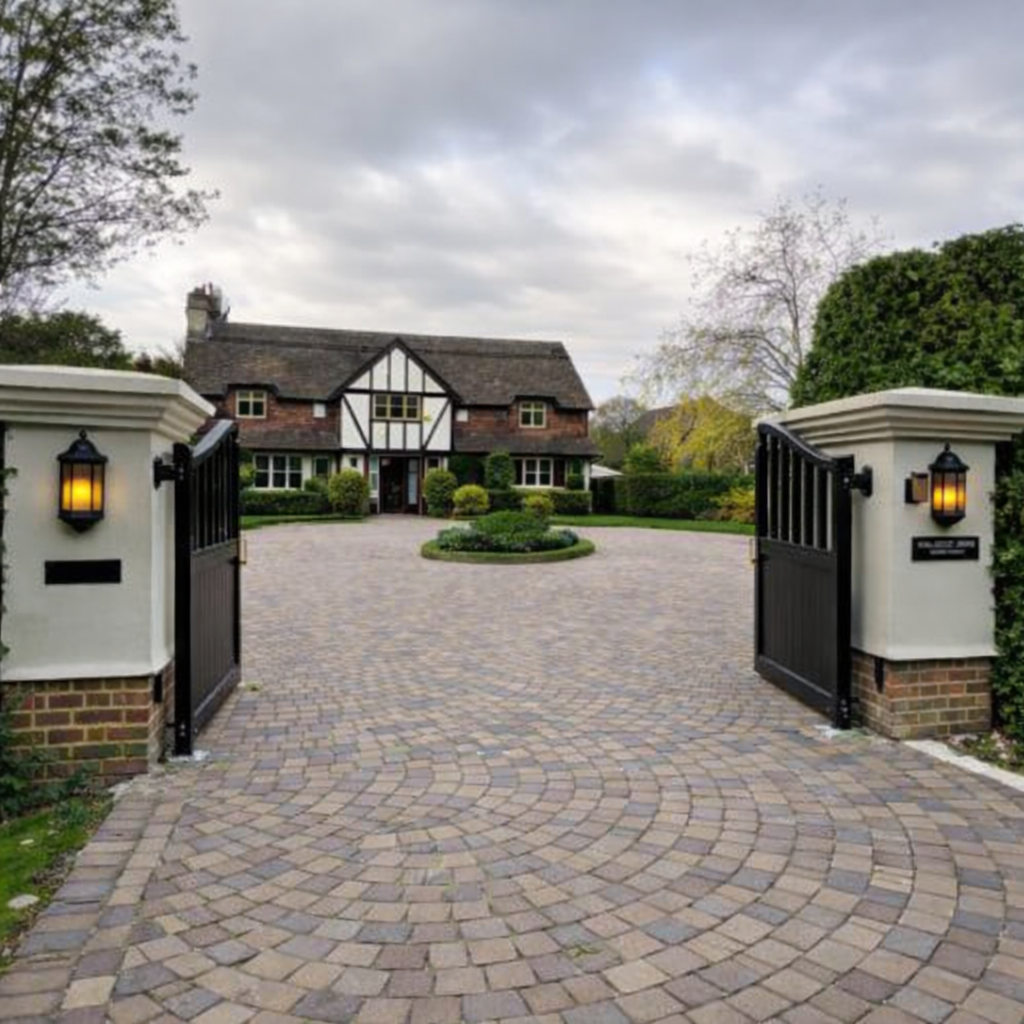
block paved driveway with electric gates showing where invisible dog fence cable can be installed across driveway entrance

Keeping Dogs Safe Around Open Driveways and Electric Gates in the UK

How to Stop a Dog Running Out of an Open Driveway or Electric Gate

The issue of a dog escaping an open driveway is particularly common in areas such as Surrey, Sussex and the wider Home Counties including Berkshire, Oxfordshire and Hampshire. While these features create an elegant entrance to the property, they can also lead to a surprisingly common problem — a dog running out of the driveway when visitors arrive or when the electric gate opens.

Dogs quickly learn the sound of a buzzer, gate motor or approaching vehicle. Before long, some begin escaping through an open driveway whenever the opportunity appears. If you are trying to stop a dog running out of a gate, dealing with a dog escaping an electric gate, or looking for ways to secure a driveway for dogs without installing large fences, understanding why this behaviour happens is the first step toward preventing it

For many homeowners, the garden itself feels secure — but the driveway entrance can unintentionally become the weakest point in the boundary.

open electric gates leading to circular block paved driveway at large countryside home

Open electric gates and a circular block-paved driveway can create an easy escape route for dogs if there is no boundary in place.


Why does my dog run out of the driveway when the gate opens?

Many dogs learn to associate the sound of a gate motor, driveway buzzer or approaching vehicle with excitement or activity. When the gate opens, curiosity can lead them to investigate beyond the property boundary. Dogs are naturally territorial and inquisitive, so an open entrance can feel like an invitation to explore.

Once a dog successfully leaves the driveway, the behaviour can quickly become a habit. The dog may begin waiting near the gate whenever it hears visitors arriving.


Are electric gates enough to stop dogs escaping?

Electric gates improve security for vehicles and property access, but they are not designed to contain pets. Once the gate opens for a vehicle or visitor, dogs can easily walk or run through the entrance.

For properties with open driveways or automated gates, a secondary boundary solution is often needed to keep dogs safely contained within the garden.


How can I secure my driveway so my dog cannot escape?

The safest way to secure a driveway without installing visible fencing is to create a clear boundary that dogs can understand and respect.

Solutions may include:

  • improving gate management and supervision
  • strengthening garden boundaries
  • using discreet containment systems along the driveway edge

With proper training, most dogs quickly learn where they are allowed to roam and will stop before reaching the driveway exit.


Why Dogs Run Out of Open Driveways

A dog running out of a driveway is rarely about stubbornness or bad behaviour. In most cases, it is a natural response to activity near the boundary of the home.

Dogs are instinctively curious and alert to movement. When something happens at the entrance of the property — a delivery van arriving, a visitor approaching or wildlife passing by — they often feel compelled to investigate.

Common triggers include:

  • excitement when family members return home
  • curiosity about visitors or delivery drivers
  • chasing squirrels, cats or passing dogs
  • guarding behaviour around the property boundary

Once a dog discovers it can leave the property through the driveway, the behaviour can quickly become habitual. Many owners notice their dog beginning to wait near the gate whenever they hear the intercom or gate motor.


Dog Escaping Electric Gates

Automated gates are designed to improve security and convenience, but they are not intended to act as a pet barrier.

A dog escaping an electric gate usually occurs because the gate opens frequently throughout the day. Every time a visitor arrives, the gate may slide open automatically, creating a clear route out of the garden.

Some common situations include:

  • delivery drivers triggering the intercom
  • visitors arriving throughout the day
  • gardeners or tradespeople entering the property
  • family members coming and going

Dogs are quick learners. Many soon associate the sound of the gate motor with activity outside the property and will run towards the driveway as soon as they hear it.

Even normally calm dogs may be tempted to explore beyond the boundary once the gate opens.

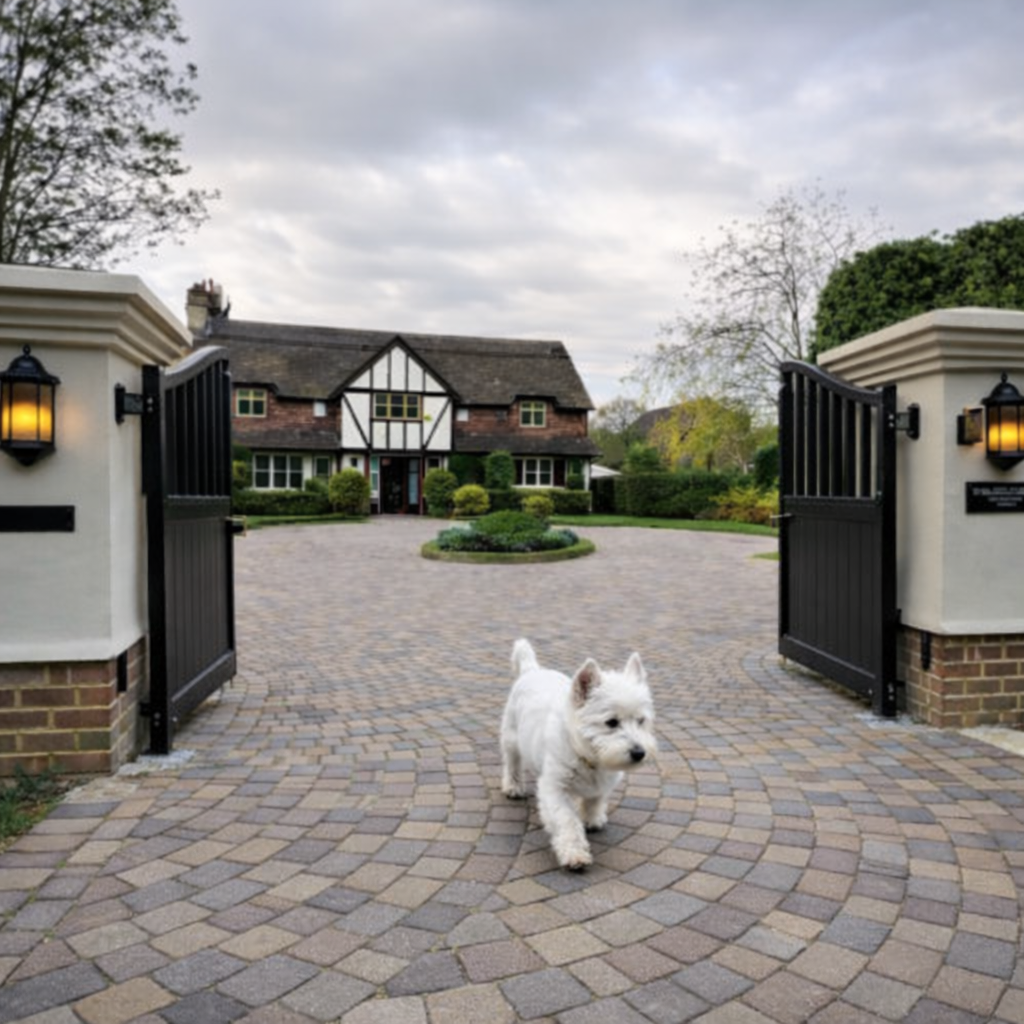
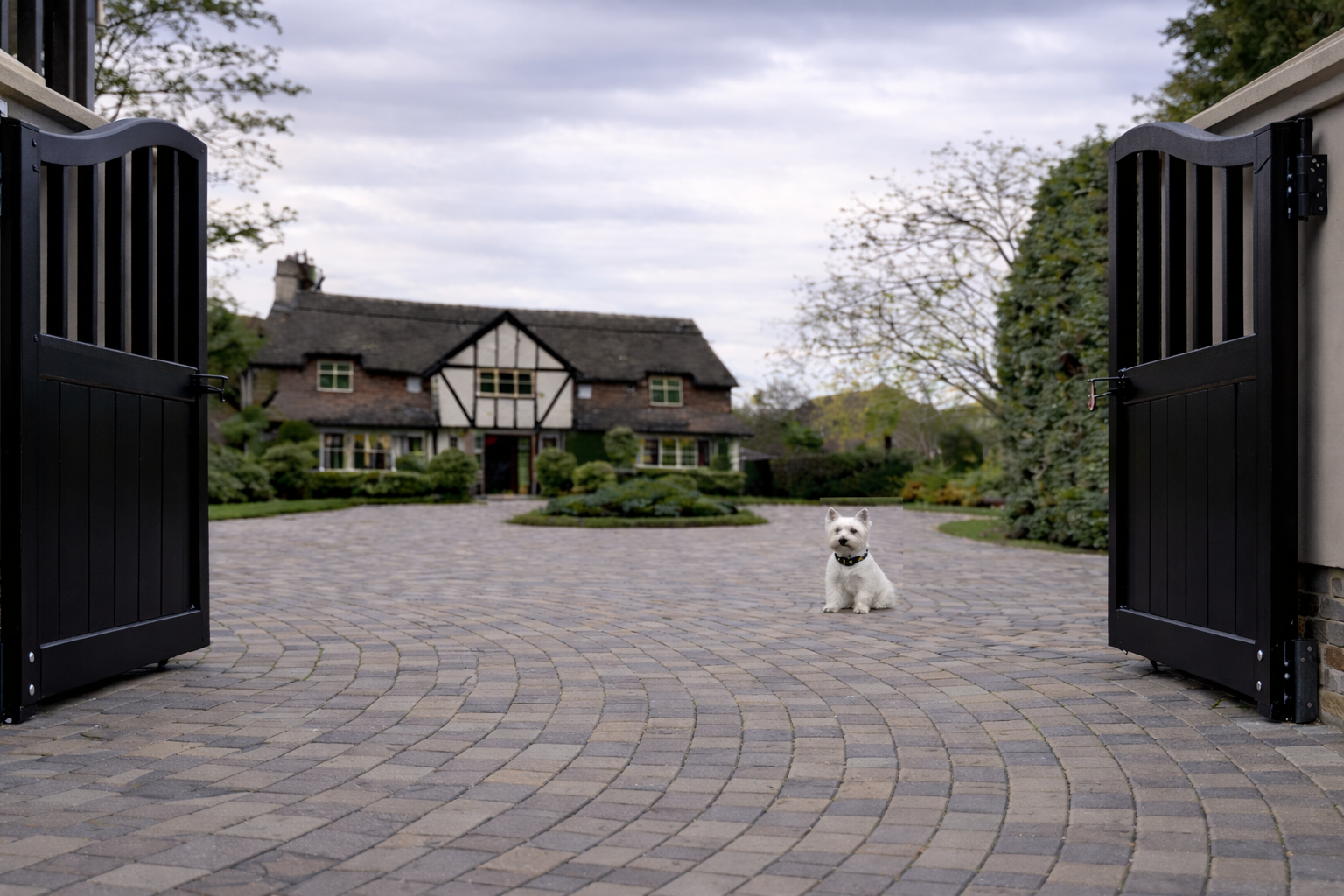
West Highland Terrier walking out through open electric gates on block paved driveway

A curious Westie walking through open electric gates — a common situation where dogs wander out of driveways when gates open for visitors.


Dog Escaping Open Driveways in the Home Counties

The issue of a dog escaping an open driveway is particularly common in areas such as Surrey, Sussex, Berkshire, Oxfordshire and Hampshire.

Properties in these areas often share several design features:

  • large landscaped front gardens
  • open plan frontage without fencing
  • long gravel or paved driveways
  • electric sliding or swing gates

Many homeowners intentionally avoid installing visible fencing at the front of the property because they want to maintain the appearance of the garden and approach to the house.

While this creates a beautiful entrance, it also means that once the gate opens there may be no physical barrier preventing a dog from leaving the property.


Why Driveway Escapes Can Be Dangerous

A dog leaving the driveway may seem harmless at first. However, it can quickly lead to dangerous situations.

Potential risks include:

  • dogs running into nearby roads
  • approaching unfamiliar people or other dogs
  • chasing cyclists or pedestrians
  • becoming lost or disoriented

Even well-behaved dogs can become unpredictable once they leave the safety of the property.

According to guidance from the PDSA on keeping dogs safe, dogs that escape from gardens are at increased risk of injury, traffic accidents and becoming lost.

For many owners, the first escape is enough to realise that the driveway entrance needs better protection.


How to Secure a Driveway for Dogs Without Visible Fencing

One of the biggest challenges for homeowners is how to secure a driveway for dogs without changing the appearance of the property.

Traditional fencing across the front of the garden can sometimes feel intrusive, especially on properties with long driveways or landscaped entrances.

An increasingly popular alternative is a discreet underground containment system.

A boundary wire can be installed along the edge of the driveway or front boundary, creating an invisible containment area for the dog. This allows the garden to remain visually open while still preventing dogs from leaving the property.

When combined with proper training, dogs quickly learn where the boundary lies and will stop before reaching the driveway entrance — even when the gate opens.

At DogFence, we frequently see this situation in large properties across Surrey, Sussex and the Home Counties where electric gates create an unintentional escape point for curious dogs.


Training Dogs to Respect the Driveway Boundary

Training plays an important role in teaching dogs where they can safely roam.

Most boundary systems use a simple and structured training approach involving:

  • temporary training flags along the boundary
  • guided walks along the safe area
  • consistent reinforcement during training sessions

Over time, dogs begin to recognise the boundary markers and understand where they should stop.

This approach allows dogs to enjoy the freedom of the garden while remaining safely contained within the property.


Check for Other Garden Escape Routes

If your dog is escaping through the driveway, it is also worth checking for other potential weak points around your garden boundary.

For example, some dogs escape through small gaps in gates or fencing. If that sounds familiar, our guide explaining how to stop a dog squeezing through a gate can help identify the problem and possible solutions.

Other dogs attempt to leave the garden by jumping over fences. Our article on why dogs jump fences and how to stop them explores the behavioural reasons behind this escape behaviour.

If your dog regularly attempts to leave the garden entirely, you may also find our complete guide on how to stop a dog running away from the garden useful.

Understanding every possible escape route helps ensure your garden remains safe and secure.


FAQs: Dogs Escaping Driveways and Gates

Why does my dog run out of the driveway when the gate opens?

Dogs often associate the sound of the gate motor or buzzer with excitement, visitors or activity outside the property. Curiosity and territorial behaviour can lead them to investigate beyond the boundary.


Are electric gates safe for dogs?

Electric gates provide security for vehicles but they do not act as a reliable barrier for pets. Once the gate opens, dogs can easily walk through the entrance.


How do I stop my dog running out of the gate?

Consistent training, improving boundary security and using discreet containment systems can help prevent dogs leaving the driveway when the gate opens.


Can dogs be trained not to leave the driveway?

Yes. With clear boundaries and consistent training, most dogs quickly learn where the safe area ends and will avoid crossing that boundary.


Keeping Dogs Safe Around Open Driveways and Electric Gates in the UK

For many homeowners across Surrey, Sussex and the Home Counties, open driveways and electric gates are part of what makes their property feel spacious and welcoming. But these same features can unintentionally create the perfect opportunity for a dog running out of the driveway when the gate opens for visitors or deliveries.

If your dog has already started escaping an open driveway or attempting to follow cars through the entrance, it’s important to address the issue early before the behaviour becomes a habit. Once dogs learn that the driveway leads to the outside world, they may begin waiting for the moment the gate opens.

Understanding why dogs leave the garden, improving boundary awareness and choosing the right containment solution can help stop dogs running out of gates while still preserving the appearance of your property.

With the right approach, it’s entirely possible to secure a driveway for dogs without installing large or intrusive fencing. That means your dog can continue to enjoy the freedom of the garden — while you enjoy the peace of mind that they remain safely within it. For many families, solving the driveway escape problem restores confidence that their dog can safely enjoy the garden without constant supervision.

If an open driveway or electric gate is your dog’s escape route, see how our DogFence for escaping dogs can continue the boundary across an entrance without installing a physical gate or fence.

Westie sitting safely inside open electric gates wearing invisible dog fence collar on circular driveway

Thanks to training and the invisible dog fence boundary, this Westie stays safely inside the property even when the electric gates are open.

Worried Your Dog Could Run Out of the Driveway?

Many of our customers have beautiful homes with open driveways or electric gates — but once the gate opens, curious dogs can easily wander out.
A professionally installed DogFence creates a discreet boundary along your driveway or garden edge, keeping your dog safely contained without changing the look of your property.

Call us on
01628 476475
|
Message us on WhatsApp
|
Request a Free Quote

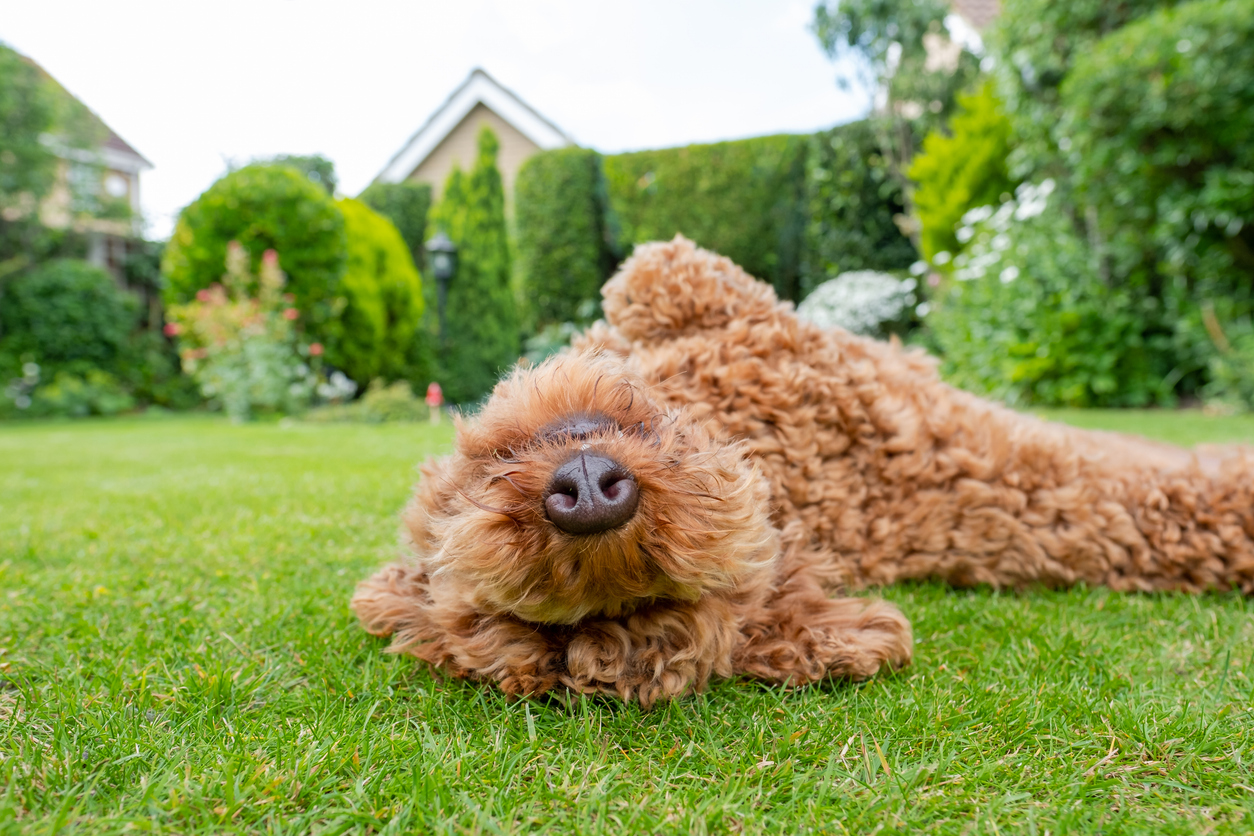
Man’s best friend enjoying a carefree moment rolling in the grass at home

A Valentine’s Day Tribute: Celebrating the Mans’ Best Friend

A Valentine’s Day Tribute: Why Dogs are Truly Man’s Best Friend

Man’s best friend enjoying a carefree moment in a secure garden

This Valentine’s Day, while many are focused on roses and chocolates, let’s celebrate the most loyal relationship in history: the bond between humans and dogs. For over 15,000 years, dogs have been our protectors, workers, and most importantly, our family.

At DogFence Ltd, we specialise in electronic dog containment systems that allow your pet to enjoy the garden safely. We, believe the ultimate way to show your dog love is by balancing dog safety and freedom. In this tribute, we explore the history of “man’s best friend” and how we can repay their loyalty by upholding their fundamental rights through professional dog training and secure boundaries.


A History of Loyalty: From Wolves to Valentines

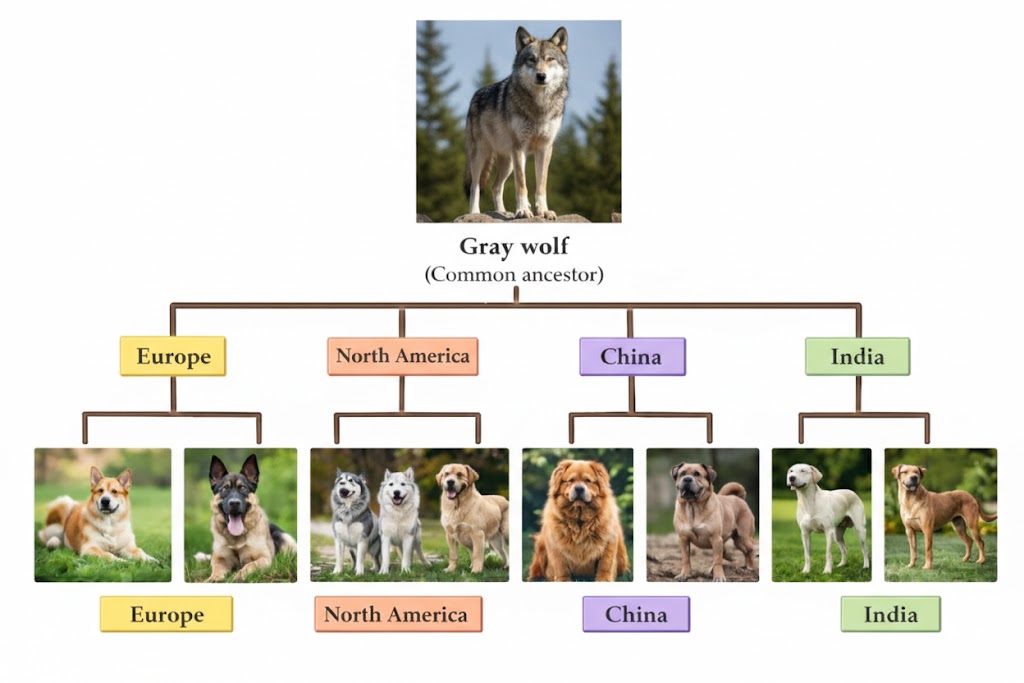
The connection between humans and dogs began in the Ice Age. From ancient Egyptian deities like Anubis to the working dogs of Medieval Britain, our history is intertwined.

Today, dogs have evolved from hunters to essential modern partners. Whether they are serving in the military or providing emotional support, their role as man’s best friend has never been more vital. To keep these modern heroes safe, our hidden fence technology ensures they stay within the safety of your home.

Evolution of man’s best friend from gray wolf to domestic dog

Extraordinary Ways Dogs Help Us

  • Medical Assistance: Dogs like Labradors and Golden Retrievers are trained to detect seizures or low blood sugar before they happen.
  • Police & Military Heroes: The Belgian Malinois, like Cairo of the Navy SEALs, provides bravery that saves human lives in high-risk zones.
  • Support for Independence: Guide Dogs UK empower the visually impaired to navigate busy streets like London or Manchester with total confidence.

Why “Man’s Best Friend” is More Than Just a Phrase

The title “man’s best friend” isn’t just a cliché; it is backed by the depth of their devotion.

  • Unconditional Love: A dog doesn’t care about your job title. This bond is proven to lower blood pressure and reduce human stress.
  • Emotional Intelligence: Dogs sense our grief and anxiety. A simple nuzzle or a wagging tail can provide more comfort than words.
  • The Gift of Presence: Dogs teach us to find joy in the “now,” whether it’s a walk in the park or playing in a securely fenced garden.

Protecting the “Five Freedoms” of Your Dog

As dog lovers, we must ensure our pets live by the Five Freedoms, the gold standard of animal welfare. This Valentine’s Day, consider how your home environment supports these:

  • Freedom from Hunger & Thirst: High-quality nutrition and constant fresh water.
  • Freedom from Discomfort: A warm bed and a secure environment.
  • Freedom from Pain & Disease: Regular vet checks and preventing accidents.
  • Freedom to Express Normal Behaviour: This is where dog safety and freedom intersect. Dogs need to run and sniff safely. Our DIY Dog Fence options or professionally installed systems make this possible.
  • Freedom from Fear: A predictable, secure routine.

Our electronic dog containment solutions help uphold the freedom to express normal behavior by providing a secure boundary.

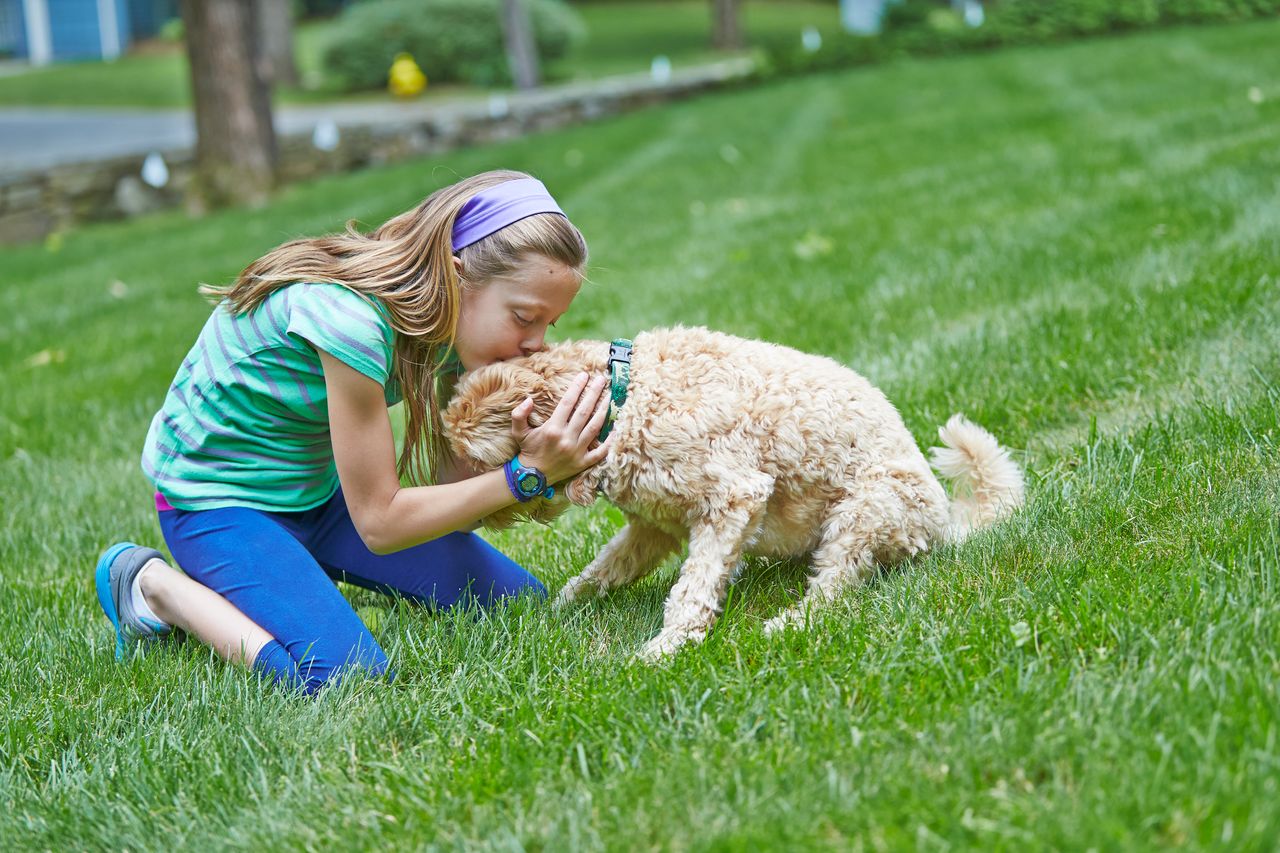
Dog enjoying safe outdoor play in a secure garden environment

A secure garden allows dogs to relax, play, and interact confidently with the people around them.


Electronic Dog Containment: Enhancing Freedom in the UK

Traditional fences can be unsightly or ineffective for “escape artists.” This is why many UK owners turn to electronic dog containment.

In 2018, DogFence Ltd was consulted by DEFRA regarding electronic fences. The conclusion recognised that, when combined with professional training, our FM Safelink systems save lives by preventing road accidents and livestock worrying.

Our invisible dog fencing UK solutions allow your dog to roam your entire garden—whether it’s a small patch or a sprawling estate—without the risk of them bolting into traffic.


Show Your Dog Love This Valentine’s Day

Valentine’s Day is the perfect time to upgrade your dog’s lifestyle. Give them the gift of the great outdoors without the worry of them wandering off.

Why Choose DogFence Ltd?

  • 20+ Years of Experience: We are the UK’s trusted experts in pet containment.
  • Over 20,000 pets safely contained
  • DEFRA approved systems
  • Professional Training: We don’t just install; we teach your dog their boundaries humanely.
  • Tailored Solutions: See our gallery of installations for inspiration on your property.

Ready to give your best friend more freedom?


❤️ Give Your Dog Love This Valentine’s Day ❤️

A safe garden is one of the best ways to show you care — freedom to explore, without the worry.

Call us on
01628 476475
|
Message us on WhatsApp 07917034256 💬
|
Request a Free Quote Online 💚

Diagram showing how the dog fence collar works

How Does a Dog Fence Collar Work? A Simple Guide for Dog Owners

How Does a Dog Fence Collar Work? A Simple Guide for Dog Owners

How does a dog fence collar work is one of the first questions owners ask when considering an electronic pet containment system. Understanding how the collar communicates with the boundary, how your dog learns the safe zone, and why the system is so effective helps reassure owners that the technology is both safe and humane.

At DogFence Ltd, we’ve safely contained over 20,000 dogs and cats across the UK. Our invisible dog fence collars are part of a modern, reliable FM radio containment system that gives pets complete freedom in the garden while preventing escapes. This guide explains exactly how the collar works and why it is one of the safest options available for dog owners.
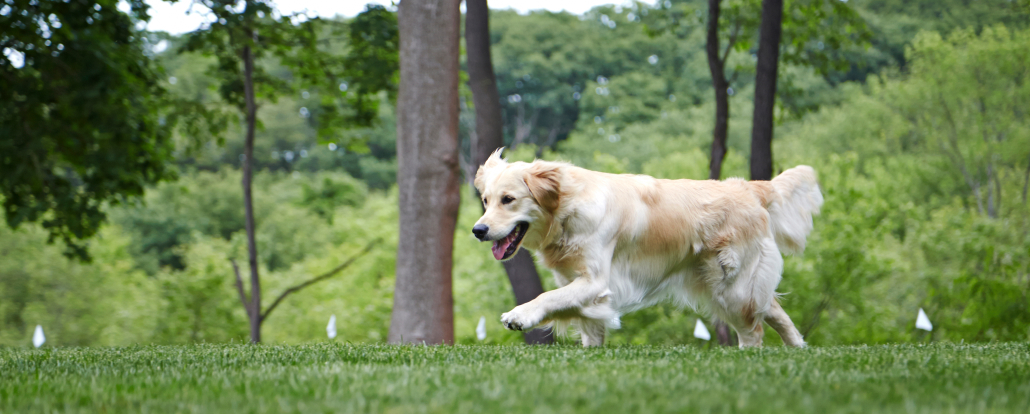

How Does an Invisible Dog Fence Collar Work?

An invisible dog fence collar works by communicating with a buried boundary wire powered by a small transmitter box, usually installed in a garage or outbuilding. The transmitter sends a coded FM radio signal around the boundary. The collar detects this signal and responds with:

  1. A warning beep as your dog approaches the boundary.
  2. A gentle static sensation if they continue moving forward.
  3. Retreat behaviour, which your dog is trained to perform by stepping back into the safe area.

This clear sequence teaches your dog exactly where the boundary is. You can see the full system layout on our detailed How It Works page.


The Role of the Boundary Wire and Transmitter

The invisible dog fence relies on a strong, stable perimeter signal. This is produced by the transmitter, which sends a continuous FM radio frequency through the buried wire. FM technology is much more reliable than AM or GPS, which is why DogFence systems activate faster, avoid interference, and prevent false corrections.

Because the system uses a closed loop, it is accurate to within inches — something GPS dog collars cannot achieve.

DogFence transmitter, boundary wire and receiver collar showing how an invisible dog fence system works.”


What Happens When the Dog Approaches the Boundary?

When your dog enters the alert area near the boundary, the collar gives a clear warning beep. This is the main training cue and the one dogs learn to respond to most quickly.

If your dog ignores the beep and continues forward, the collar gives a gentle, harmless static sensation — similar to a light TENS pulse. This sensation is enough to encourage your dog to step back. Once they retreat, both the beep and the sensation stop immediately.

With correct training, dogs quickly learn to stop at the beep, making physical corrections rare.

Diagram showing the audible warning zone and correction area in an invisible dog fence boundary


How the Collar Makes Contact: Stainless Steel Posts or Comfort Contacts

The collar uses either rounded stainless-steel contacts or our optional Smooth Comfort Contacts (for short-coated dogs). Just like a TENS machine pad, the collar needs gentle skin contact to allow the communication to work consistently. The probes are not spikes or prongs — they are simply contact points.

Good contact means the collar can be set to gentle, low levels, keeping training calm and humane. For more on achieving the correct fit, see our guide How Tight Should a Dog Fence Collar Be?.


Training: How Dogs Learn the Boundary

Training is simple, positive, and structured. During the training sessions, your dog is introduced to the warning beep, shown how to retreat to the safe zone, and rewarded with praise. Most dogs learn their boundary within just a couple of sessions.

Because the system is predictable and clear, dogs understand exactly what is expected of them. This is one of the key reasons invisible dog fences are so effective for escape artists and determined roamers.


Is the Collar Safe for Dogs?

Yes. Multiple independent scientific studies — including Newcastle University’s DEFRA-funded research (Cooper et al.) and the UK Government’s own analysis (DEFRA) — confirm that invisible dog fence collars are safe when used correctly.

They do not cause long-term stress, behavioural problems, anxiety, or physical harm. Dogs learn quickly, become confident in their boundaries, and enjoy the freedom to explore safely.

For a full breakdown of the research and safety features, read our main guide: Are Dog Fence Collars Safe?


Why Invisible Dog Fence Collars Work Better Than Physical Fencing

Invisible dog fence collars are ideal for dogs who:

  • dig under or jump over fences
  • chase livestock or wildlife
  • bolt through gates
  • live on large or uneven properties
  • cannot use physical barriers due to layout or planning restrictions

Because the system creates a consistent, invisible boundary, your dog always knows where the “edge” is — even when gates are open.


Professional Installation Ensures Reliability

Our Professional Installation service includes boundary design, collar fitting, system tuning, and complete dog training. This ensures your system works perfectly from day one and that your dog learns gently and confidently.


Keep Your Dog Safe With a Trusted DogFence System

Call us on
01628 476475
|
Chat to us on WhatsApp
|
Request a Free Quote Online


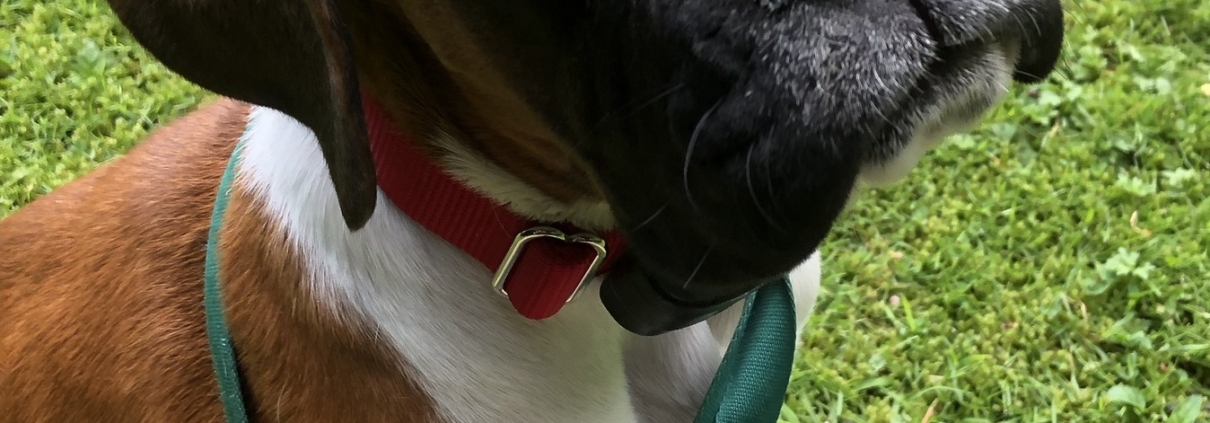
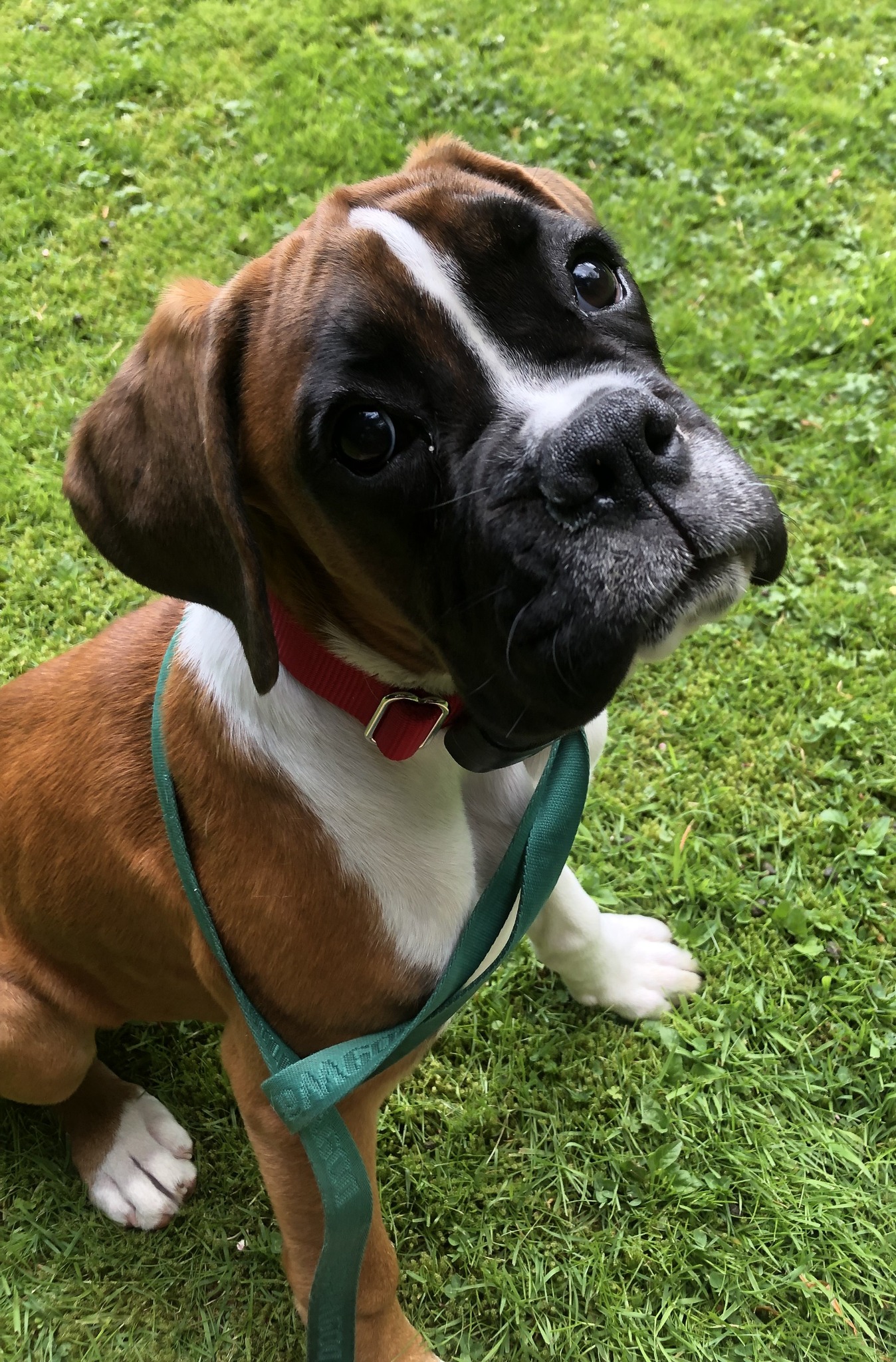
“Young Boxer puppy sitting on grass wearing a red collar and lead during DogFence boundary training session

What Age Can a Dog Use an Invisible Fence? | DogFence UK

What Age Can a Dog Use an Invisible Fence? A Complete Guide for UK Pet Owners

What age can a dog use an invisible fence? It’s one of the most common questions families ask when researching an electronic dog fence, hidden dog fence, or underground pet containment system. The truth is that most puppies can start gentle boundary training from around 12–16 weeks old, but the right time ultimately depends on your dog’s confidence, temperament, and developmental stage rather than age alone.

Over the last 22 years, DogFence Ltd has professionally installed and trained more than 20,000 pets across England using DEFRA-tested containment systems. Our expertise allows us to assess when a puppy is ready and ensure they learn calmly and confidently — without stress, confusion, or fear. This is where professional training truly makes a difference.

“Young Boxer puppy sitting on grass wearing a red collar and lead during DogFence boundary training session

The Ideal Age to Start Invisible Dog Fence Training

The general guideline is that dogs can begin training between 12–16 weeks. At this age, puppies have typically reached key developmental milestones:

  • They can focus for short periods.
  • They understand basic cues like “come” or “sit”.
  • They are alert, curious, and eager to learn boundaries.

However, it’s important to understand that age is only one part of the equation. Confidence level, sensitivity, and personality play a far greater role in determining readiness.

Why Temperament Matters More Than Age

Just like children, puppies develop at different speeds. Two 14-week-old puppies may behave completely differently during boundary training:

  • A confident puppy may take to the boundary system quickly.
  • A nervous or cautious puppy may need a slower, gentler approach.

Because we install thousands of systems each year, our trainers are skilled at identifying micro-signals that indicate whether a dog is comfortable, overwhelmed, confused, or progressing well. These subtle body-language cues include:

  • Ear movements
  • Pacing or hesitation
  • Yawning, lip-licking, or head-turning
  • Tail position changes
  • Tension across the shoulders

These are signs most owners never notice, but they are crucial to ensuring safe, gentle, and effective invisible fence training — especially for young dogs.

Benefits of Starting at the Right Time

When introduced at the right stage of development, puppies pick up boundary training extremely quickly. They enjoy the freedom of the garden, understand where they can and can’t go, and learn to respect the boundary tone without stress.

Starting too early, however, can create confusion if your puppy is not yet ready. That’s why we always assess readiness gently and individually rather than relying on a strict age rule.

Why Professional Training Is Essential for Puppies

Invisible fences, also known as electronic dog fences, underground containment systems, and invisible boundary training systems, are completely humane when introduced correctly. The technology alone won’t train your puppy — the training method is what makes the experience safe and positive.

With professional installation, your dog benefits from:

  • Gentle, step-by-step conditioning based on confidence level
  • Correct collar programming (not one-setting-fits-all)
  • Perfectly placed boundary flags for clear visual learning
  • Behaviour-sensitive training that adapts to your dog’s signals
  • A stress-free learning process using praise and positive reinforcement

DIY invisible fence kits often fall short because owners unintentionally skip steps, move too quickly, or don’t notice subtle signs of stress. Professional training prevents this, helping puppies achieve calm, consistent boundary learning.

How DogFence Ltd Trains Puppies Safely and Comfortably

At DogFence Ltd, we have refined our training method over two decades to ensure your puppy learns with confidence. Here’s how our training process works:

1. Behaviour Assessment

We begin by evaluating your puppy’s confidence, personality, responsiveness, and sensitivity. This determines the pace and approach of training.

2. Gentle Introduction to the Boundary Tone

We first teach your puppy a positive, calm association with the audible boundary tone. Our goal is to build familiarity and trust before introducing the avoidance zone.

3. Controlled Exposure to the Zone

This is done carefully, slowly, and without pressure. We watch closely for body language clues to ensure your dog feels safe and secure.

4. Praise and Reward-Based Reinforcement

Your puppy learns that stepping back into the safe zone earns praise and encouragement, building confidence and clarity.

5. Family Training

We teach you how to continue the training consistently, ensuring your puppy gets the same clear messaging from every family member.

Our structured approach is why DogFence Ltd has been trusted for over 22 years and why thousands of puppies and adult dogs now enjoy safe freedom in their gardens.

What Age Can a Dog Use an Invisible Fence – Can Very Young Puppies Use a Dog Fence?

If your puppy is under 10–12 weeks, we recommend waiting until they are developmentally ready. In the meantime, families often use temporary solutions including:

  • Puppy pens or play zones
  • Short, supervised outdoor sessions
  • Temporary fencing panels
  • Our indoor boundary systems for early safety

Once your puppy reaches the right stage, proper training can begin — and training almost always progresses extremely quickly with professional support.

Invisible Fences for Adult Dogs

Many owners assume the systems only work for puppies, but adult dogs of all ages — including senior dogs — learn the boundary system just as well. In fact, older dogs often learn faster because they are calmer and have better concentration.

We have successfully trained:

  • Nervous rescue dogs
  • High-energy working breeds
  • Independent thinkers like Terriers and Huskies
  • Dogs recovering from previous escape behaviour

No dog is ever “too old” to learn an invisible fence safely.

Why Choose DogFence Ltd?

As the UK’s longest-established installer of hidden dog fences, DogFence Ltd provides:

  • DEFRA-tested equipment
  • 22+ years of specialist installation experience
  • The longest battery life in the industry
  • Lifetime warranties on installed systems
  • Expert trainers skilled in reading dog behaviour
  • Coverage across all of England

Choosing a professional installation means your dog learns safely, your system works optimally, and you receive ongoing support whenever you need it.

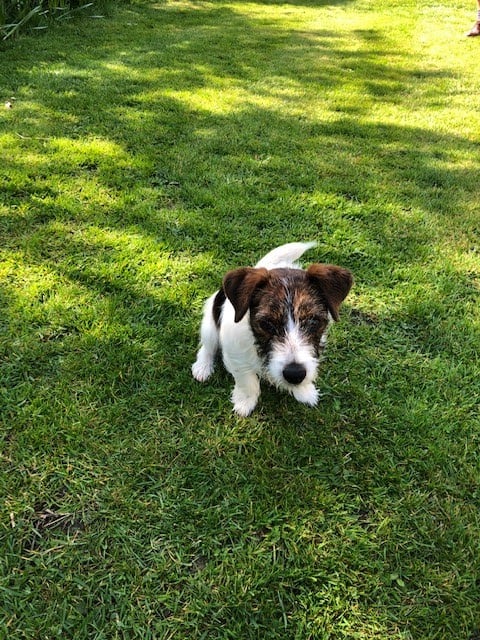
Small terrier puppy standing on a sunny lawn during early DogFence boundary training

Book Professional Training & Installation Anywhere in England

If you’re considering an invisible dog fence for your puppy or adult dog, professional guidance ensures your pet learns calmly, confidently, and without confusion. We combine technology, behavioural expertise, and decades of experience to give your dog safe, reliable freedom in your garden. Our Professional Installation team will set up your fence and train your puppy for you.

Ready to protect your pet with expert training?

Ready to Keep Your Pet Safe?

Call us on
01628 476475
|
Message us on WhatsApp
|
Request a Free Quote Online

Dog safely enjoying garden freedom with invisible dog fence system

Are Dog Fence Collars Safe? What Owners Should Know

Are Dog Fence Collars Safe for Dogs? A Complete Expert Guide

Are dog fence collars safe is one of the most common questions dog owners ask when researching an invisible dog fence. With so much conflicting information online, it’s natural to want straightforward, fact-based reassurance. The truth is that dog fence collars are safe when used correctly, professionally installed, and fitted properly. At DogFence Ltd, we have safely contained more than 20,000 dogs and cats, and our system has been independently tested by the UK Government, confirming there are no adverse effects when used as intended.

This guide explains how the collar works, why the technology is safe, and how correct fitting ensures comfort, humane training, and long-term reliability.

Small dog wearing a safe dog fence collar enjoying the garden during gentle boundary training

Gentle DogFence training helps even small or sensitive dogs enjoy their garden safely and confidently


Are Dog Fence Collars Safe? (The Short Answer)

Yes — dog fence collars are safe. They use a gentle, momentary static sensation that feels similar to a light TENS machine pulse rather than a “shock”. It is not painful, not harmful, and the training process is designed to be calm, controlled, and dog-friendly.

Scientific research — including multiple Government studies and DEFRA-funded research from Newcastle University (Cooper et al.) — shows that properly used electronic containment collars:

  • Do not cause physical harm
  • Do not create long-term stress
  • Do not cause behavioural problems
  • Are not associated with anxiety or fear when used correctly

In fact, many owners report calmer, happier dogs because they can enjoy safe outdoor freedom without constant supervision. Our How It Works page explains more about why invisible fencing is both safe and effective.


How Do Dog Fence Collars Work?

A dog fence collar works together with a boundary wire and a small transmitter unit, which is usually installed in a garage, shed, or outbuilding. The transmitter sends a coded FM radio signal through the buried wire, creating a precise, stable boundary around your garden.

When your dog approaches the boundary during training, the collar responds in a predictable sequence:

  1. Warning beep – alerts the dog that they are nearing the boundary.
  2. Gentle static sensation – similar to a light TENS pulse, and only if they continue forward.
  3. Retreat behaviour – with training, your dog learns to step back to turn off the warning.

This combination of sound + mild sensation teaches your dog to retreat calmly and consistently. The goal is not to “correct” the dog repeatedly — it is to teach them where the safe area is. Most dogs learn this within a few training sessions.

More detail on the technology is available on our How It Works page.


Why Dog Fence Collars Are Safe (Backed by Independent Research)

The question “are dog fence collars safe?” has been thoroughly examined by scientists, veterinarians, and behaviour specialists. DEFRA-funded research, including the well-known Cooper et al. study, concluded that electronic containment systems:

  • did not increase long-term cortisol (stress hormone) levels
  • did not cause behavioural signs of distress
  • were used successfully without negative welfare impact

The Government’s own summary confirmed the same findings. When used correctly, dog fence collars are safe, humane, and effective.


Modern Safety Features Built Into Our Collars

Our collars use advanced DogWatch FM technology, which is specifically designed for safety, reliability, and fast response. This ensures clean communication between the collar and boundary wire without interference or false activations — issues more commonly seen with AM or GPS-based systems.

Key safety features include:

  • Soft-start training levels for timid or sensitive dogs
  • 15-second safety shut-off to prevent continuous activation
  • Anti-linger mode to avoid unnecessary corrections
  • Fail-safe radio encoding to prevent interference
  • Waterproof and robust collar casings

This combination ensures the system remains humane, predictable, and safe for long-term use.


Contact Posts: Why Proper Fit Matters for Safety

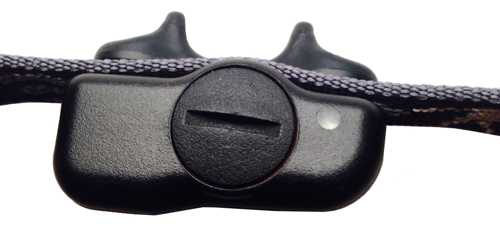
As with a TENS machine used for humans, the gentle static sensation needs light contact with the skin. The rounded stainless-steel contact posts on the collar simply ensure this connection — they may look like prongs but they sit comfortably when the collar is fitted correctly— they are smooth and rounded probes and designed simply to reach through the coat so the collar can communicate correctly.

Dog fence collar with stainless steel contact posts showing the safe, comfortable fit for pets

The DogFence collar uses rounded stainless steel contact posts to provide safe, consistent skin contact for gentle boundary training

The probe length is chosen to suit your dog’s coat type:

  • Short-coated dogs use standard contacts
  • Long-coated dogs may need slightly longer contacts so they reach the skin

When the collar is fitted correctly and snugly, the contact is consistent, comfortable, and does not cause rubbing. A well-fitted collar also means the training level can be set lower, because the signal is clearer and more reliable.

Smooth Comfort Contacts for short-coated or smooth-coated dogs

We also offer Smooth Comfort Contacts — conductive plastic probes designed to look softer and more discreet. They deliver the same gentle training sensation but offer a more aesthetically pleasing option for owners of smooth-coated breeds. We can advise whether your dog is suitable during your installation or consultation.

Smooth Comfort Contacts for short-coated dogs demonstrating how safe dog fence collars are when fitted correctly

Smooth Comfort Contacts provide gentle, reliable skin contact, helping to ensure dog fence collars are safe and effective for pets


Why Professional Installation Makes Dog Fence Collars Safer

The safety of a dog fence collar depends heavily on the quality of the installation, the layout design, and the training. That’s why DogFence Ltd provides:

  • On-site boundary surveys
  • Professional training tailored to your dog’s personality
  • Correct collar fitting guidance
  • Support for nervous or sensitive dogs
  • Follow-up assistance whenever required
  • Our exclusive Containment Guarantee

This ensures your dog learns calmly, confidently, and safely. More information is available on our Professional Installation page.


The Benefits of Using a Dog Fence Collar

Because dog fence collars are safe and humane, they offer significant real-world advantages:

  • Prevents escapes and road accidents
  • Stops livestock chasing
  • Allows safe off-lead freedom
  • Works where traditional fences fail
  • Ideal for large, awkward, or open gardens
  • More accurate and reliable than GPS collars

Most importantly, dogs gain the freedom to enjoy their garden while staying safely within your boundary.


Ready to Keep Your Dog Safe?

Keep Your Dog Safe With a Trusted DogFence System

Call us on
01628 476475
|
Chat to us on WhatsApp
|
Request a Free Quote Online


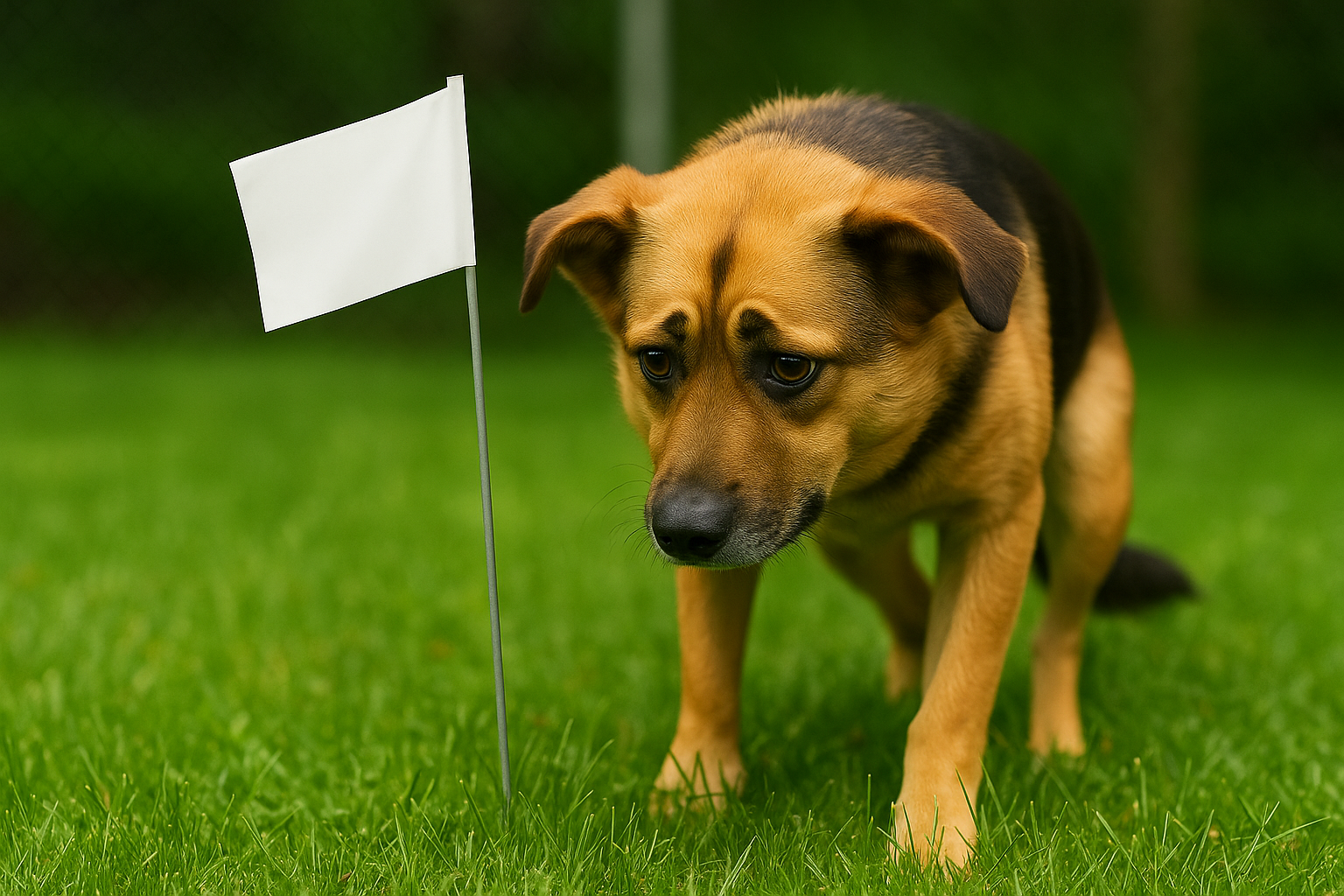
Nervous dog looking cautiously at a white dog fence training flag during boundary training

Training a Nervous Dog to a Dog Fence: 7 Common Mistakes

Training a Nervous Dog to a Dog Fence: Common Mistakes and How to Fix Them

Training a nervous or anxious dog to a dog fence can feel stressful, especially if your pet is shy, timid, or easily startled. While a dog fence can be a brilliant way to keep sensitive dogs safe in the garden, some common training mistakes can accidentally increase their anxiety or slow down progress. In this guide, we’ll walk through the most frequent issues owners face when training a nervous dog to a dog fence – and how to fix them with gentle, confidence-building methods.

Nervous dog looking cautiously at a white dog fence training flag during boundary training

Why Nervous Dogs Need a Different Training Approach

Nervous, fearful, or anxious dogs often react strongly to new sensations, sounds, and changes in their environment. A dog who is already worried about the outside world may find boundary training overwhelming if it’s rushed or inconsistent.

That’s why gentle dog fence training for anxious dogs needs to be:

  • Slow and structured – lots of small, positive steps rather than one long session.
  • Predictable – clear boundaries, clear signals, and calm reactions from their owner.
  • Supportive – using treats, praise, and reassurance to build confidence.
  • Positive – Always be positive and upbeat with your dog

With the right approach, a dog fence can actually help nervous dogs feel safer because they understand exactly where their secure zone ends.

7 Common Mistakes When Training Nervous Dogs to a Dog Fence

Mistake 1: Going Too Fast on Day One

One of the biggest mistakes is trying to “get it done” in a single long session. For a nervous or timid dog, this can be overwhelming and may make them anxious about the garden itself.

How to fix it: Keep sessions short and gentle – around 3–5 minutes at a time is ideal. Aim for several calm, successful sessions over a few days rather than one big push.

Mistake 2: Skipping Familiarisation Time

Some owners put the collar on and start training straight away. For sensitive dogs, this can feel like too much change all at once.

How to fix it: Spend a day or two simply letting your dog explore the garden on a loose lead without any collar activity. Then introduce the receiver collar switched off so they get used to wearing it comfortably before the fence is active.

Mistake 3: Poor Collar Fit or Incorrect Level

If the receiver collar is too loose or the contact posts aren’t touching the coat properly, the dog may not feel the gentle correction at all – or only feel it unpredictably. On the other hand, setting the level too high can be unfair for a nervous dog.

How to fix it: Make sure the collar fits snugly (you should be able to slide one finger under the strap). With our DogFence collars, start at the lowest suitable level for your dog’s size and temperament and adjust gently if needed. If you’re unsure, speak to our team for guidance.

Mistake 4: Inconsistent Use of Training Flags

Flags are a vital visual aid, especially for anxious dogs who rely on clear, consistent cues. Taking them away too soon or placing them randomly can confuse your dog.

How to fix it: Mark the boundary clearly with flags, spaced evenly. During training, always guide your dog back from the flags using the same word, such as “back” or “wait”. Only begin to remove flags once your dog is consistently responding to the warning beep.

Mistake 5: Training When You’re Rushed or Stressed

Nervous dogs are very good at picking up their owner’s mood. If you’re tense, in a hurry, or feeling frustrated, they may associate training with stress.

How to fix it: Choose a quiet time of day when you can stay calm and patient. Use a soft voice, relaxed body language, and plenty of praise. If either of you feels frazzled, stop and try again later.

Mistake 6: Making Sessions Too Long

Long training sessions can easily tip nervous or easily overstimulated dogs into shutdown or frantic behaviour.

How to fix it: Short, frequent sessions work best. A few minutes of successful training, followed by play or a cuddle, will build your dog’s confidence far more effectively than a long, intense session.

Mistake 7: Not Checking the Equipment Regularly

If the collar battery is flat, the collar is damaged, or the boundary wire has been cut, the system can’t do its job. Owners may think the fence has “failed” when in reality it needs a simple check.

How to fix it: Test the system regularly and check the collar’s battery, fit, and condition at least once a month. Our DogWatch FM technology is extremely reliable, but like any safety system, it needs basic maintenance.

White dog fence training flags marking the garden boundary during DogFence installation

Training flags to mark the boundary essential for gentle dog fence training

Gentle DogFence Training Checklist for Anxious Dogs

When training a nervous dog to a dog fence, use this checklist as a guide:

  • Allow calm familiarisation time in the garden before activating the system.
  • Introduce the collar gradually, pairing it with treats and praise.
  • Use training flags to make the boundary clear and visible.
  • Start with the warning beep only, then add the gentle correction when your dog understands the flags.
  • Keep sessions short, positive, and consistent.
  • Always guide your dog back into the safe zone with calm reassurance.
  • Celebrate successes – nervous dogs thrive on confident, happy feedback from you.

When to Ask for Professional Help

Every nervous dog is different. Some adapt quickly with a little reassurance; others need a more tailored approach. If your dog has a history of severe anxiety, is a very nervous rescue, or you’re simply unsure where to start, it can be reassuring to have expert support.

At DogFence Ltd, our installers are experienced in working with anxious, timid, and sensitive dogs. We’ll help you choose the correct settings, show you exactly how to introduce the system gently, and support you through the training process so both you and your dog feel confident. If you’d like expert help from the start, our professional installation service (https://dogfence.co.uk/installation/) ensures the system is set up correctly and your nervous dog receives gentle, confidence-building training.

Professional DogFence installer helping a nervous Irish Setter during boundary training, followed by a confident, happy dog after gentle guidance

Our professional DogFence installers are highly experienced in training nervous and sensitive dogs—helping them gain confidence and enjoy safe freedom in the garden.

Need Help Training a Nervous Dog to a Dog Fence?

Call us on
01628 476475
|
Message us on WhatsApp
|
Request a Free Quote Online

For a full step-by-step guide, read our main article How to Train a Nervous Dog with a Dog Fence, or visit our Dog Fence FAQ page for more answers.

owner gently training anxious dog with invisible dog fence in garden

Can Anxious Dogs Use an Invisible Dog Fence? | by DogFence Ltd

Can Anxious Dogs Use an Invisible Dog Fence?

Can anxious dogs use an invisible dog fence? Absolutely — when introduced with gentle, structured training, an invisible fence can help anxious dogs feel calm, confident, and secure outdoors. At DogFence Ltd, we specialise in training that builds trust, using our humane FM-based containment system to guide rather than startle your pet.
owner gently training anxious dog with invisible dog fence in garden

Calm, positive training helps anxious dogs feel safe and confident when learning their invisible fence boundary.

Understanding Anxiety in Dogs

Just like people, dogs can experience anxiety for many reasons — new environments, loud noises, separation, or a lack of clear boundaries. When asking yourself, can anxious dogs use an invisible dog fence safely, it’s important to remember that the success lies in calm, consistent training that gives your dog a sense of predictability and security.

At DogFence Ltd, we’ve worked with thousands of sensitive and anxious dogs across the UK. Our approach focuses on clear communication, trust, and repetition — the key ingredients for helping anxious pets feel calm and in control.
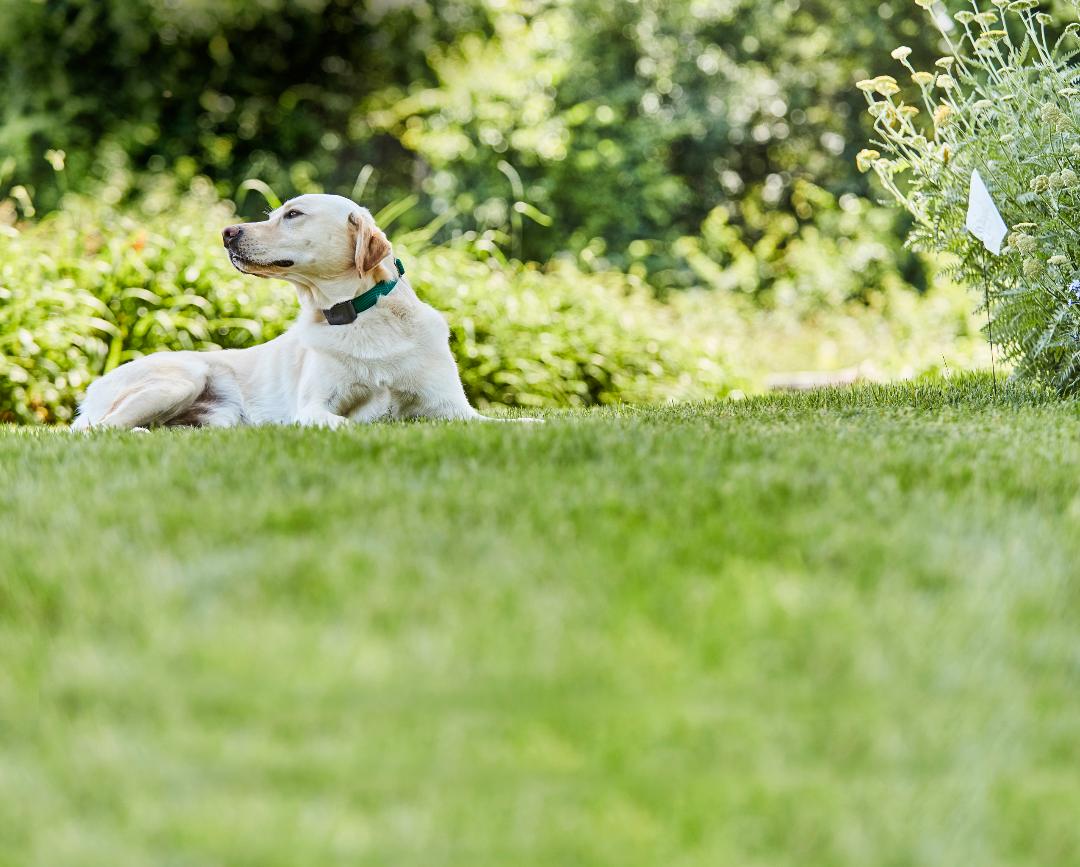
How an Invisible Dog Fence Works for Anxious Dogs

An invisible dog fence, sometimes called a hidden or wireless containment system, uses a boundary wire carrying a harmless FM radio signal. Your dog wears a lightweight collar that picks up the signal and emits a warning beep as they approach the boundary. If they continue forward, the collar delivers a brief, mild static pulse — similar to a light static tap — to remind them to step back into the safe area.

The goal is not punishment but communication. With careful training, anxious dogs learn to associate the warning beep with retreating to safety, giving them clear, reliable feedback every time.

Gentle Training: The Key to Success

When people ask, can anxious dogs use an invisible dog fence without feeling frightened, our answer is yes — provided the training is slow, positive, and supportive. Our installers use a calm, step-by-step method that introduces the boundary gradually using training flags, voice cues, and praise. Sessions are short to prevent overstimulation and ensure every experience builds confidence.

If your dog tends to be nervous, read our related post Are Electric Fences OK for Nervous Dogs? to learn how similar gentle principles help sensitive pets adjust safely.

happy golden retriever walking calmly after invisible dog fence training

Gentle invisible dog fence training helps dogs build confidence and enjoy safe freedom outdoors.

Behavioural Benefits for Anxious Dogs

Invisible dog fences provide more than containment — they offer structure and clarity. When anxious dogs understand exactly where their boundaries are, their anxiety often decreases. Over time, this clear structure helps them relax, explore, and play confidently within the safe zone.

We’ve seen countless examples of anxious rescue dogs that initially feared open spaces, but with patient DogFence training, began to enjoy their gardens freely and calmly. Predictability builds trust, and trust reduces anxiety.

Safety and Welfare Recognition

DogFence systems are DEFRA-tested and recognised as safe and humane when used correctly. Our FM-based technology ensures there are no false activations, unlike cheaper AM systems. Every collar is individually programmed to your dog’s size and temperament, and the correction shuts off automatically after 15 seconds for complete peace of mind.

Even for anxious or sensitive dogs, this system provides consistent feedback without fear or confusion — a key factor in responsible, welfare-friendly training.

Can Anxious Dogs Use an Invisible Dog fence Outdoors?

So, can anxious dogs use an invisible dog fence? Absolutely. With gentle introduction and calm reinforcement, the fence becomes a reassuring guide rather than a source of worry. The result is a happier, more confident dog who understands their boundaries and enjoys outdoor freedom safely.

If you’d like advice on whether an invisible dog fence is suitable for your pet, visit our Dog Fence FAQ page or speak with our experienced team — we’re always happy to help.

calm dog resting confidently in garden after invisible dog fence training

After gentle training, anxious dogs relax and feel secure within their invisible dog fence boundary.