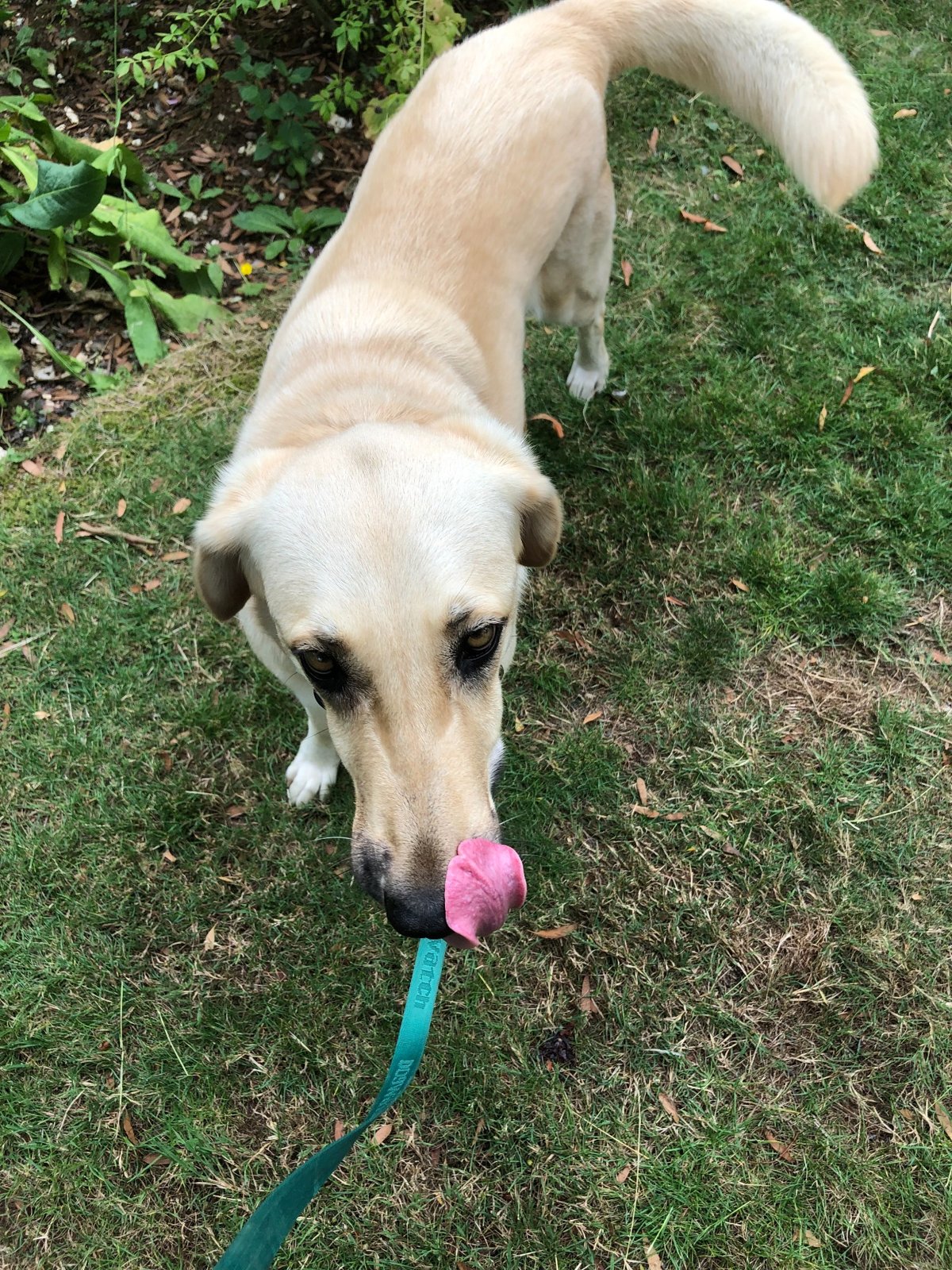
The Renter’s Guide to Dog Safety: Dog Fencing for Rental Properties That Protects Your Deposit
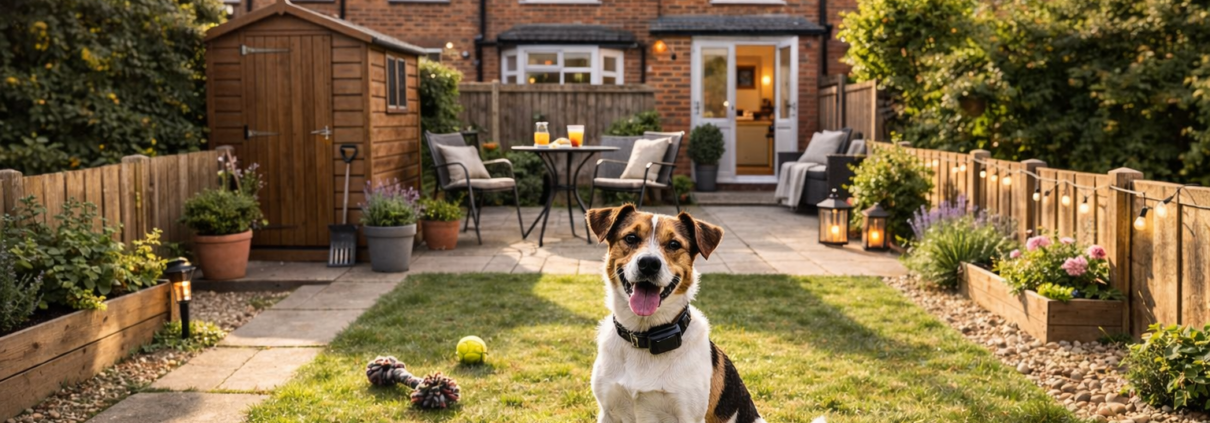
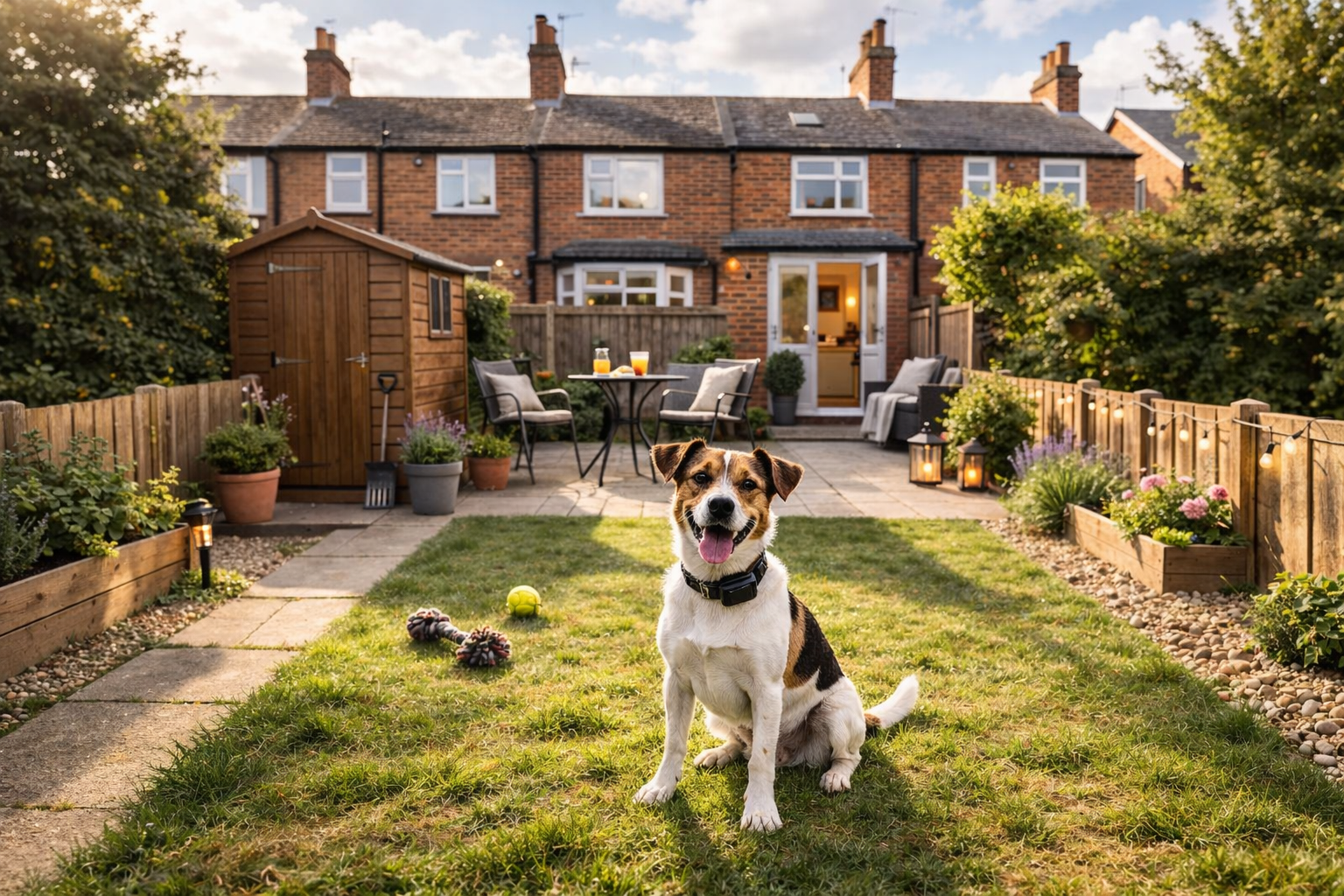
Dog fencing for rental properties is one of the biggest challenges for tenants renting with a dog in the UK. Whether you’re looking for a temporary dog fence for renters, a landlord-approved dog fencing solution, or a portable dog containment system that won’t damage the property, keeping your dog safe without risking your deposit requires the right approach. Installing a dog fence in a rental property is possible — but only if it’s removable, non-invasive, and fully compliant with your tenancy agreement.
For many renters, safety isn’t just about containment — it’s about protecting your dog, your home, and your relationship with your landlord.
What Is Dog Fencing for Rental Properties?
Dog fencing for rental properties refers to temporary or removable containment systems designed to keep dogs safely within set boundaries without making permanent changes to the home or garden.
These systems are:
Portable
Removable
Landlord-friendly
Safe for dogs of all sizes
Suitable for both indoor and outdoor use
Unlike traditional fencing, they do not require structural alterations to the property.
Can You Install a Dog Fence in a Rental Property?
Yes — you can install a dog fence in a rental property provided:
The system does not require permanent structural changes
It leaves no visible damage
It can be fully removed when you move
It complies with your tenancy agreement
Always check your lease and seek written permission before installing outdoor containment systems.
The Biggest Dog Safety Risks in Rental Homes
Renting with a dog in the UK presents unique safety challenges that homeowners don’t always face.
Shared Driveways and Open Front Gardens
Many rental homes have open access areas, increasing escape risk.
Decorative or Weak Fencing
Some landlords install fencing for privacy rather than pet security.
Communal Gardens
Flats and converted buildings often share outdoor spaces with no secure perimeter.
Front Doors Opening Directly to the Street
A common risk in urban rentals and terraced homes.
Temporary or Poorly Maintained Boundaries
Rental gardens are not always fully enclosed or well maintained.
For many tenants, dog fencing for rental properties becomes essential — not optional.
If you’re unsure whether the existing boundary is secure, you may want to read our guide on why traditional fencing isn’t enough for escape-artist dogs, which explains why even solid-looking panels can fail with determined breeds.
Temporary Dog Fence for Renters: Safe, Removable Solutions
When choosing a temporary dog fence for renters, the key factors are portability, safety, and zero permanent impact. Many tenants assume a 6ft panel is enough to prevent escape, but depending on breed and athletic ability that isn’t always true. We explore this in detail in our article oncan a dog jump a 6ft fence.
1. Portable Electronic Dog Fences
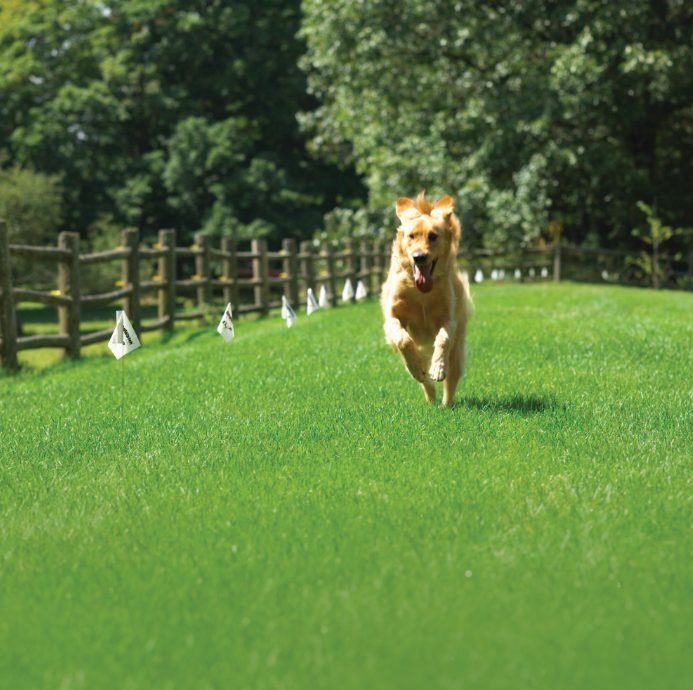
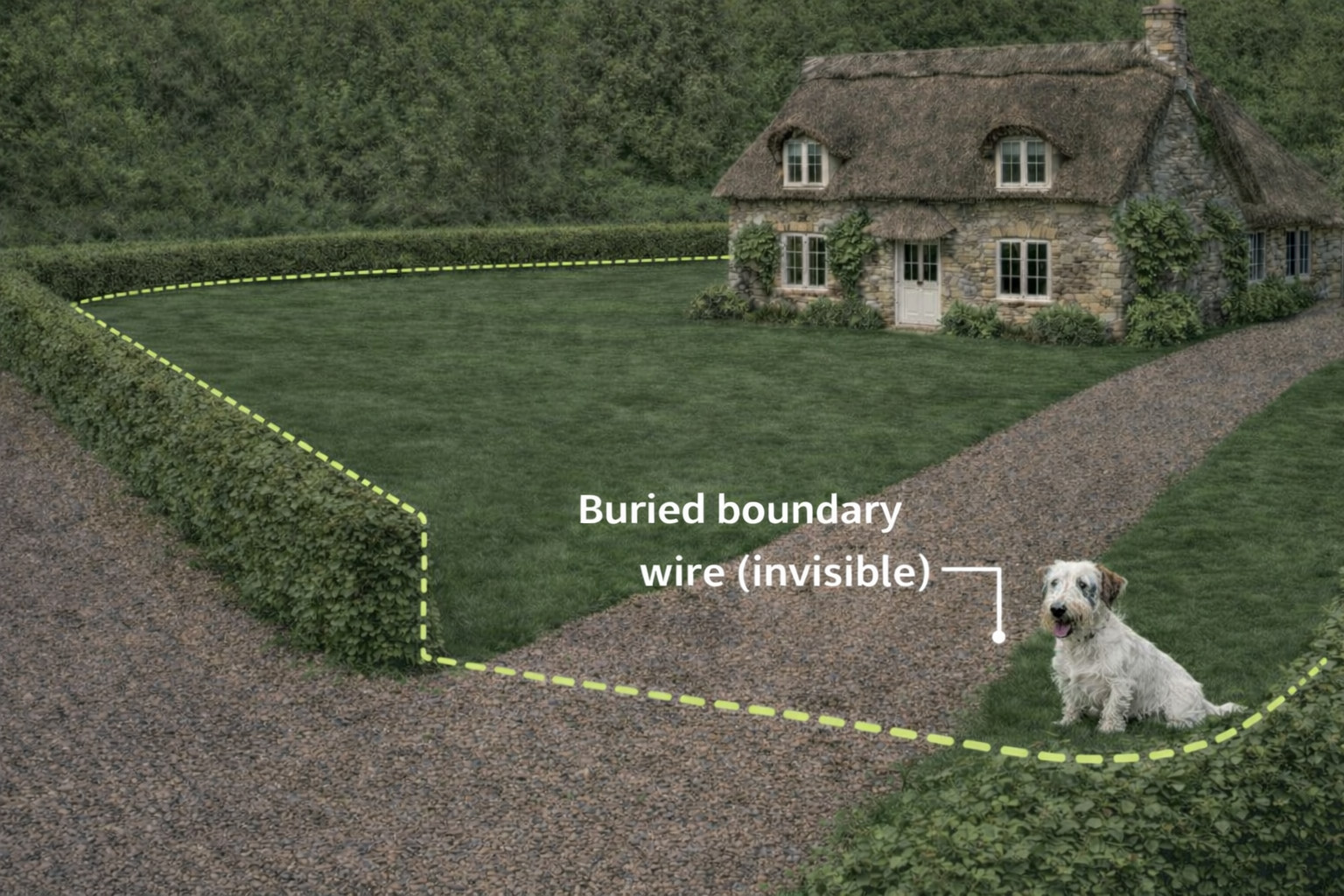
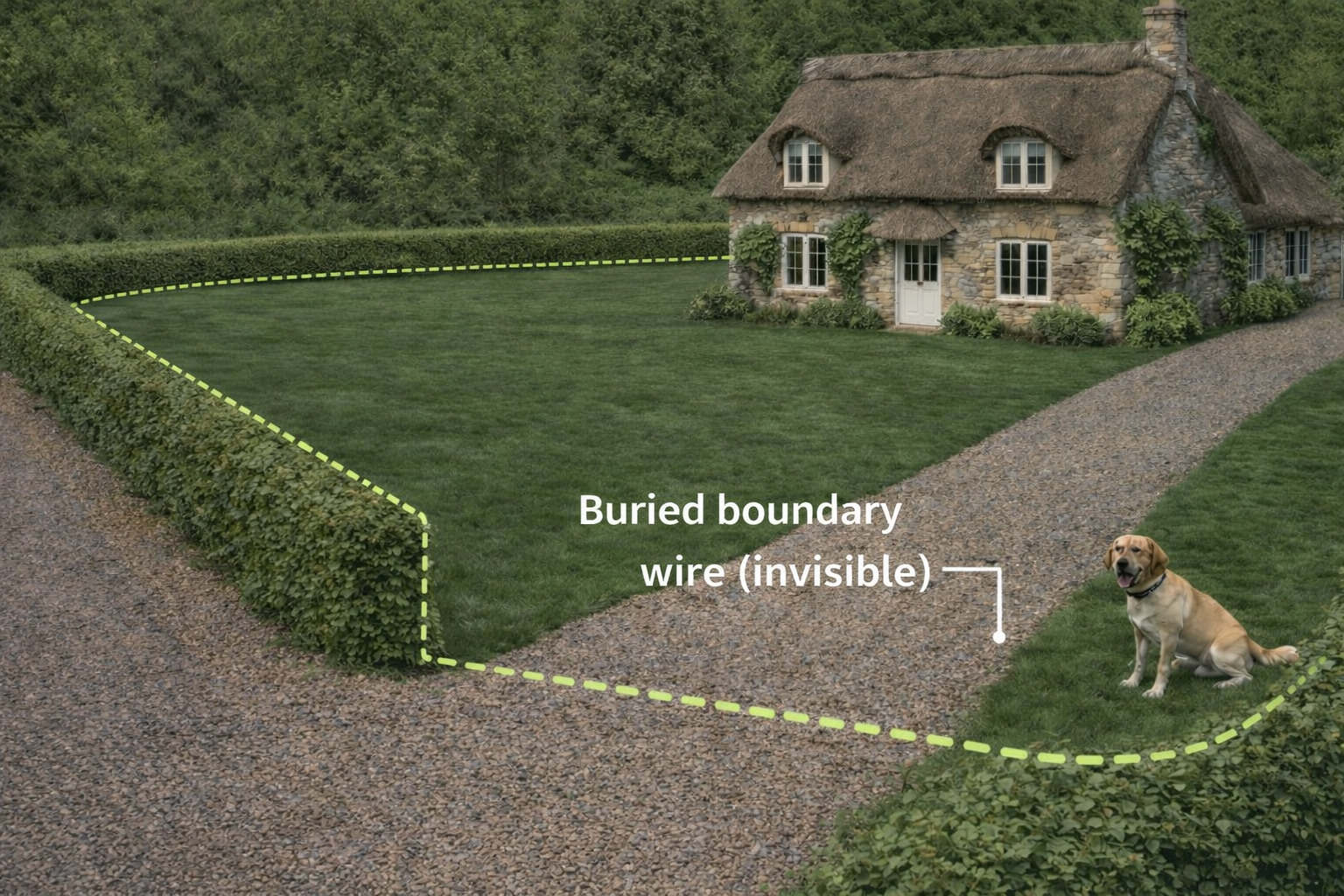
A portable dog containment system uses a hidden boundary wire and lightweight receiver collar to create an invisible boundary.
For rental properties, the advantages include:
Wire can be loose laid on the surface
No drilling into walls
No permanent trenching required
Fully removable when you move
Moves with you to your next property
Unlike physical fencing, it doesn’t alter the structure or appearance of the home.
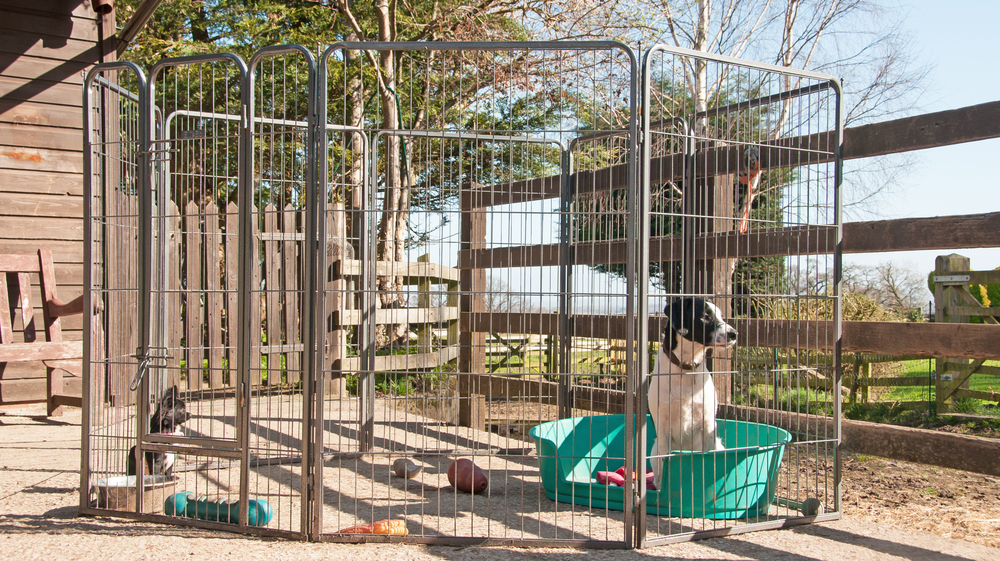
2. Freestanding or Expandable Dog Pens
Useful indoors or on patios, these provide short-term containment for small dogs. However, they restrict movement and are not ideal for larger or active breeds.
3. Foldable Mesh or Temporary Fence Panels
Lightweight and modular, these can work in small gardens but may lack durability for determined escape artists.
What to Avoid in a Rental Property
Not all fencing options are landlord-friendly. Avoid:
Digging trenches without written permission
Screwing fence posts into patios or brickwork
Leaving visible cable remnants when you move
Cheap containment systems with unreliable collars
The goal is landlord-approved dog fencing that protects both your dog and your deposit.
How to Keep Your Landlord Happy
If installing dog fencing for rental properties:
Check your tenancy agreement carefully
Ask for written approval
Choose a removable system
Restore any disturbed turf before moving out
Provide reassurance about non-invasive installation
Most landlords are far more comfortable when they understand the system is temporary and fully removable.
Indoor Dog Safety for Flats and Apartments
If you live in a flat or urban rental property, indoor containment can be just as important as garden security.
Consider:
Pressure-mounted pet gates
Portable indoor boundary systems
Zoned containment to protect front doors or staircases
Indoor portable systems are ideal for protecting entryways without altering walls or floors.
Is Electronic Dog Fencing Humane?
Modern containment systems are designed with safety in mind. Professional systems are programmable to suit your dog’s size and temperament, include safety shut-off features, and are used alongside structured training.
When installed and used correctly, they provide clear, consistent boundaries without physical barriers. If you’ve heard conflicting opinions online, our detailed guide on the dog fence controversyexplores the debate and explains how modern systems differ from outdated methods.
FAQs About Dog Fencing for Rental Properties
Is electronic dog fencing allowed in rental homes?
Yes, provided it is non-invasive, removable, and landlord approved.
Does the boundary wire have to be buried?
No. In rental properties the cable can be loose laid on the surface, attached to fencing, or threaded through hedges.
Can I remove the system when I move?
Yes. A portable dog containment system is designed to move with you.
Is it suitable for large or active dogs?
Yes. Modern systems are programmable and suitable for dogs of all sizes.
Can it be used on a driveway?
Yes. The boundary wire can be threaded through protective tubing and laid safely across driveways.
Why Choose DogFence for Rental Properties?
With over 22 years of experience installing invisible dog fence systems across the UK, DogFence has provided solutions specifically designed for real homes — including rented properties.
Our systems are:
Portable and removable
Waterproof and chew-proof
Programmable for different breeds
Designed for safe, humane containment
Suitable for both dogs and cats
Need Advice on Dog Fencing for Rental Properties?
Whether you’re in a countryside cottage, suburban semi, or city flat, we can help you find a solution that keeps your dog safe — without risking your deposit.
Looking for Landlord-Approved Dog Fencing That Protects Your Deposit?
We specialise in landlord-approved dog fencing for rental properties across the UK — safe, removable, and designed
to keep your dog secure without damaging your garden or home.
After a crisp morning walk through the tall grasses of the South Downs, you’re settling down for a grooming session when your fingers brush against a small, hard lump that wasn’t there yesterday. It’s a moment that triggers an immediate sense of revulsion and anxiety for any owner. You aren’t alone in this concern; with tick populations in the UK rising by 17% in certain regions over the last five years, these parasites are an increasingly common threat to our beloved companions. It’s natural to feel a wave of disgust or fear that you might cause your pet unnecessary pain while attempting to help.
We understand that your dog’s safety is your highest priority. Mastering the professional technique for removing ticks in dogs is the most effective way to protect them from Lyme disease and ensure your own peace of mind. This guide provides a disciplined, step-by-step protocol to ensure a clean extraction every time. You’ll learn how to distinguish a parasite from a simple skin tag, understand the specific symptoms to monitor, and gain the confidence to keep your pet protected long after the walk has ended.
Key Takeaways
Learn to identify these eight-legged parasites by their distinct “grey-brown bean” appearance before they pose a health risk to your pet.
Understand the critical dangers of incorrect extraction, including why stressing the parasite can lead to the transmission of harmful bacteria.
Master the professional twisting technique for removing ticks in dogs using specialised tools to ensure a clean and safe extraction every time.
Discover essential post-removal care steps and how to monitor the site for a normal healing response versus more serious symptoms.
Gain peace of mind by combining veterinary-prescribed preventatives with a secure garden environment to keep your beloved dog safe from future infestations.
Identifying Ticks on Your Dog: What to Look and Feel For
Ticks are parasitic arachnids, meaning they’re eight-legged relatives of spiders rather than insects. They begin as tiny, flat, egg-shaped dots, but their appearance shifts dramatically as they feed on your dog’s blood. Once they’ve attached to your beloved pet, their bodies swell into a distinct shape. An engorged tick often resembles a small, smooth, grey-brown bean that sits proud of the skin.
When you’re checking your dog, you’re looking for a hard, stationary bump. Unlike a scab or a bit of dried mud, a tick won’t move when you gently slide the skin back and forth. It feels like a small, smooth pebble anchored to one spot. In the UK, tick activity peaks between March and October. During these months, parasites thrive in long grass, woodland, and bracken-heavy areas like the New Forest or the Scottish Highlands. Identifying these parasites early makes the process of removing ticks in dogs much safer and provides you with essential peace of mind.
During your daily routine, a thorough “hands-on” grooming session is the best way to ensure your dog’s protection. This isn’t just about aesthetics; it’s a vital safety check. By running your fingers through their coat, you can detect these tiny intruders before they have a chance to transmit diseases. It’s a professional approach to pet care that reinforces the bond between you and your animal.
Common Hiding Spots: The Post-Walk Checklist
Ticks prefer warm, thin-skinned areas where blood vessels are close to the surface. After every walk in rural areas, perform a systematic check of these specific zones:
The Paws: Carefully feel between each toe and around the pads.
The Head: Check the muzzle and around the eyelids where dogs often sniff in deep grass.
The Ears: Look inside the ear flap and deep into the folds at the base.
The Undercarriage: Inspect the “armpits” and the groin area where the fur is often thinner.
Tick vs. Skin Tag: How to Tell the Difference
It’s easy to mistake a skin tag for a parasite, but a few quick checks will clarify the situation. Use the “Leg Test” first. If you look closely with a magnifying glass, a tick has eight tiny, visible legs at the base where it meets the skin. Skin tags are smooth extensions of the dermis and lack these appendages. Colour is another giveaway; skin tags are usually flesh-coloured or pink, while ticks appear grey, silver, or dark brown. Finally, check the attachment point. A tick is anchored at a single point of entry, whereas a skin tag is a continuous growth of the dog’s own skin. Distinguishing between the two is a critical step before removing ticks in dogs to avoid accidental injury.
The Dangers of Incorrect Removal: Why Precision Matters
Precision is the cornerstone of safety when you find a parasite on your beloved pet. While your instinct might be to pull the intruder away immediately, haste without the right technique often leads to complications. When a tick is stressed by improper handling, it triggers a biological reflex known as regurgitation. This response causes the tick to vomit its stomach contents, which are frequently laden with bacteria and pathogens, directly into your dog’s bloodstream. Ensuring you use the correct approach to removing ticks in dogs isn’t just about cleanliness; it’s about preventing a preventable infection.
The physical structure of the tick makes extraction delicate. Their mouthparts are covered in backward-facing barbs designed to lock into the skin. If you pull or twist incorrectly, these mouthparts can snap off and remain embedded. Veterinary data suggests that approximately 12% of improperly removed ticks leave the head behind, which often results in a painful granuloma or a localized abscess. Using professional, veterinary-approved tools provides the peace of mind that you’ve cleared the entire parasite without leaving a source of secondary infection. For owners who prioritise a safe and protected environment for their pets, mastering these technical skills is essential.
Methods to Avoid: Myths That Increase Risk
Burning with matches: This is a highly dangerous practice that fails 100% of the time to remove the tick safely. The heat causes the tick to release fluids instantly into the bite site before it can detach.
Smothering with Vaseline or alcohol: These methods aim to suffocate the parasite, but ticks breathe slowly. This process can take several hours, significantly increasing the window for disease transmission.
Squeezing with fingers: Applying pressure to the tick’s body acts like a syringe. This force pumps the tick’s internal fluids and any carried diseases directly into your dog.
Understanding the Infection Window
Timing is as critical as technique. Research from Public Health England indicates that disease transmission, particularly Lyme disease, typically occurs between 24 and 48 hours after the tick has attached itself. This delay provides a vital opportunity for intervention. Finding and removing ticks in dogs within the first day of attachment reduces the risk of serious illness to near zero. Regular grooming sessions after walks in tall grass or woodland are your best defence against long-term health issues.
The infection window is the critical time for safe extraction, defined as the period between initial attachment and the point where pathogens begin migrating into the host’s bloodstream.
How to Remove a Tick Safely: The Professional Twisting Method
When removing ticks in dogs, precision is your greatest ally. Standard household tweezers are often unsuitable because they compress the parasite’s body, which can force potentially infected fluids back into your pet’s bloodstream. Instead, you should use a dedicated tick-twister tool, such as the O’Tom Tick Twister. This professional-grade instrument is designed to hook around the parasite without applying pressure to its abdomen.
Begin by calming your dog and parting the fur thoroughly around the bite site. You must have a direct, unobstructed line of sight to the point of attachment. Once the skin is visible, follow these steps:
Engage the tool: Slide the ‘V’ or ‘U’ shaped slot of the twister under the tick’s body, keeping it as close to the skin as possible.
The rotation: Rotate the tool steadily in one direction. It doesn’t matter if you choose clockwise or anti-clockwise, but do not pull upwards.
The release: After two or three full rotations, the tick will release its grip naturally.
Site inspection: Lift the tick away and examine the bite area. Ensure there are no tiny black specks left behind, as these indicate the mouthparts have snapped off.
Why Twisting Beats Pulling
Tick mouthparts aren’t smooth needles; they’re covered in microscopic, backward-facing barbs. Data from the University of Bristol’s Big Tick Project, which examined over 14,000 dogs, suggests that pulling a tick straight up frequently causes these barbs to lock. This mechanical resistance often leads to the head snapping off under the skin, which can trigger localised infections or granulomas. Twisting collapses these barbs, allowing for a clean, professional extraction that protects your pet’s health.
Safe Disposal and Record Keeping
Never crush a tick with your fingernails. This can expose you to pathogens like Borrelia burgdorferi. Instead, drop the parasite into a small container of high-proof alcohol or flush it down the toilet. If your dog shows signs of lethargy or a loss of appetite within 14 to 30 days, your vet may need to test the parasite. Store the tick in a sealed jar with a damp piece of cotton wool to keep it intact for analysis.
Always record the date and the specific geographical location of the bite on your calendar. This simple log provides your vet with vital diagnostic data, ensuring your beloved companion receives the right care quickly. Methodical record-keeping is a hallmark of responsible pet ownership, providing the same peace of mind that a professional safety system offers your home.
Post-Removal Care and Monitoring for Lyme Disease
Once you’ve finished removing ticks in dogs, the priority shifts to wound care and diligent observation. Start by cleaning the bite site thoroughly with a pet-safe antiseptic or simple soap and water to reduce the risk of localized infection. You’ll likely notice a small, red bump within 24 hours of the procedure. This is a perfectly normal “foreign body” reaction, much like a human response to a mosquito bite, and it should settle without intervention. However, you must keep a close eye on the area for an Erythema migrans, or ‘Bullseye’ rash. While this classic Lyme disease marker is often obscured by a thick coat, it remains a primary indicator that requires immediate professional attention from your vet.
Symptoms That Require a Veterinary Visit
Lyme disease symptoms often take time to manifest, usually appearing between 2 and 30 days after the initial bite. You should monitor your dog for a sudden loss of appetite or unusual lethargy. If your beloved companion loses interest in their favourite walk or refuses treats they usually adore, it’s time to call the surgery. Watch for “shifting” lameness, where a dog appears to have painful, swollen joints that affect different legs on different days. A fever or a sudden change in behaviour often signals that the body is fighting a systemic infection. Mark the date of the tick removal on your calendar to ensure you remain vigilant for the full 30-day window.
What if the Head is Left In?
While removing ticks in dogs can sometimes result in the mouthparts being left behind, there’s no need for immediate panic. The dog’s body will usually expel the head naturally over 7 to 14 days, acting much like a splinter. You should resist the urge to “dig” into the skin with tweezers, as this often causes unnecessary trauma and increases the risk of a secondary infection. Warning signs that require a vet’s help include the presence of pus, extreme heat at the site, or redness that expands beyond 1 centimetre. Keeping your pet calm and comfortable during this monitoring period is essential for your peace of mind.
Providing your pet with the freedom to explore safely is the best way to ensure their long-term happiness and peace of mind for the whole family.
Long-Term Prevention: Creating a Tick-Safe Environment
Mastering the skill of removing ticks in dogs is an essential part of pet ownership, but the most effective strategy involves preventing the encounter entirely. A robust prevention plan starts with a consultation with your vet to select the right preventative products. Modern veterinary-prescribed treatments, such as oral tablets that offer up to 12 weeks of protection or medicated collars that remain effective for 8 months, work by killing ticks shortly after they attach. This rapid action is crucial for preventing the transmission of pathogens like Lyme disease, which can occur within 24 to 48 hours of a bite.
Beyond medication, your garden’s physical environment serves as a critical line of defence. Ticks are highly sensitive to desiccation and struggle to survive in dry, sunny areas. You can significantly reduce the local parasite population by making specific landscaping choices:
Maintain lawns at a height of 5cm or less to reduce moisture levels.
Install 1-metre wide borders of gravel or woodchips between the lawn and any wooded areas.
Remove leaf litter and garden debris where larvae often congregate during the spring.
Managing Your Garden Boundary
Ticks are most prevalent in “edge” habitats. These are the transitional zones where a tidy garden meets wilder elements like perimeter hedges, tall meadow grass, or woodland. These areas are often frequented by deer and foxes, which drop questing ticks into the dense foliage. A DogWatch hidden fence allows you to organise your outdoor space by creating precise “no-go” zones near these high-risk perimeters. By keeping your pet away from dense scrubland through the use of a digital FM Safelink signal, you provide them with freedom to play while ensuring they don’t wander into tick-heavy zones. This professional containment offers genuine peace of mind for owners of adventurous dogs.
The Professional Approach to Pet Safety
A single solution is rarely enough to guarantee safety. The most effective approach is multi-layered, combining reliable veterinary preventatives, smart garden containment, and a regular routine of physical checks after every walk. Maintaining this proactive safety cycle ensures your dog’s happiness and protects the deep bond you share. Our professional systems are designed to be invisible, preserving your garden’s beauty while offering a sophisticated shield for your pet. Discover how a DogWatch system provides freedom and safety for your pet.
Prioritising Your Pet’s Safety and Outdoor Freedom
Mastering the professional twisting method for removing ticks in dogs is a vital skill for every UK owner. By acting swiftly and monitoring your pet for 30 days after a bite, you significantly reduce the risk of Lyme Disease. While reactive care is essential, the most effective strategy involves managing your dog’s environment to prevent them from wandering into high-risk, tick-heavy undergrowth. You can provide this protection without sacrificing their love for the outdoors.
With over 20 years of UK pet safety experience, we understand the unique challenges of protecting your companion. As the authorized DogWatch UK & Ireland distributor, we offer a professional solution that includes expert installation and tailored behavioural training. Our systems provide a secure boundary that gives your dog the freedom to play while you enjoy lasting confidence. You don’t have to compromise on your garden’s aesthetics to keep your beloved pet safe from harm. It’s a simple, expert-led transition to a more relaxed way of living.
Your pet’s happiness is the heart of everything you do, and we’re here to help you protect it.
Frequently Asked Questions
Can I use standard household tweezers to remove a tick?
You shouldn’t use standard household tweezers because their flat, blunt tips often crush the parasite’s body rather than gripping the head. Instead, use a specialised tick hook or a precision removal tool designed specifically for removing ticks in dogs. Using the wrong tool increases the risk of leaving the mouthparts embedded in the skin by 30%, which often leads to localised infections or painful abscesses.
What happens if I accidentally squeeze the tick’s body during removal?
Squeezing the tick’s body is dangerous because it can cause the parasite to regurgitate its stomach contents into your dog’s bloodstream. This action increases the probability of transmitting infections such as Lyme disease or Anaplasmosis by 50% compared to a steady pull. If you’ve accidentally compressed the body, clean the area with surgical spirit and monitor your dog for lethargy over the next 14 days.
Is Lyme disease common in dogs across the UK?
Lyme disease is a growing concern, with cases in the UK rising by roughly 300% since the early 2000s. While not every bite results in infection, the UK Health Security Agency notes that certain regions, such as the South West and parts of Scotland, have much higher concentrations of infected ticks. Ensuring your pet’s freedom in the countryside requires vigilant checks after every walk to maintain peace of mind.
Should I take my dog to the vet every time I find a tick?
You don’t need to visit the vet for every tick you find, provided you’ve successfully removed the entire parasite. Statistics show that 95% of tick bites in the UK don’t lead to serious illness if the tick is removed within 24 hours. However, if the head remains stuck or you notice a fever within 30 days, a professional consultation is essential to protect your beloved pet’s health.
How long does a tick stay on a dog if it isn’t removed?
A tick will generally remain attached to your dog for between 3 and 10 days if it isn’t interrupted. During this time, the parasite undergoes a significant transformation, often swelling to the size of a small pea as it feeds. Removing ticks in dogs within the first 24 hours is vital; the risk of pathogen transmission increases significantly after the 48-hour mark once the feeding process is established.
Can I get ticks from my dog?
You can’t catch a tick directly from your dog’s skin once it has attached, but ‘hitchhiking’ ticks are a real risk. A 2021 study revealed that 15% of pet owners found unattached ticks on their own clothing or skin after grooming an infested dog. To maintain your family’s safety, always check yourself after walking in tall grass or wooded areas with your pet to prevent accidental bites.
Does a ‘bullseye’ rash always appear if a dog has Lyme disease?
A bullseye rash is a poor indicator of infection in pets, as it appears in fewer than 10% of canine Lyme disease cases. In contrast, 70% of humans develop this visible sign, making it much easier to spot in people. For dogs, you should watch for clinical symptoms like shifting lameness or swollen joints. These signs typically manifest between 2 and 5 months after the initial bite occurs.
Will my dog’s flea treatment also kill ticks?
It depends entirely on the specific product you use, as not all flea treatments are formulated to target arachnids. Research shows that roughly 40% of over-the-counter flea collars and drops don’t provide protection against the Ixodes ricinus tick. Always check the packaging for specialised tick coverage to ensure your dog has the comprehensive protection they need. This provides the ultimate peace of mind while they enjoy their outdoor freedom.
https://dogfence.co.uk/wp-content/uploads/2026/03/article_448857_1774671824.jpg7681344Sam Folleyhttps://www.dogfence.co.uk/wp-content/uploads/2015/10/dogfences_logo_main_cats_orange2.pngSam Folley2026-03-27 01:00:002026-04-01 05:10:10How to Extract Ticks from Dogs: A Safe, Step-by-Step Guide for UK Owners
The Sealyham Terrier: Britain’s Rare Welsh Terrier With a Big Personality
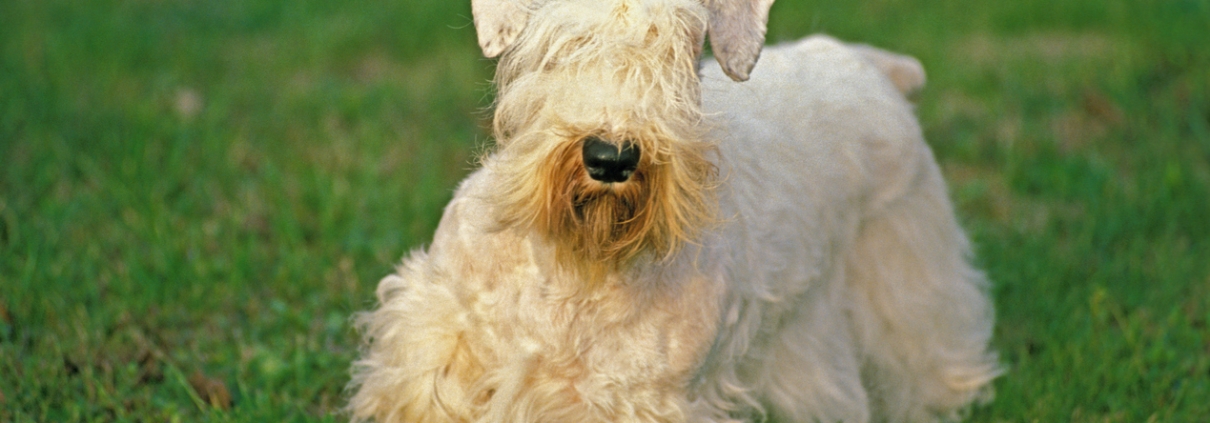
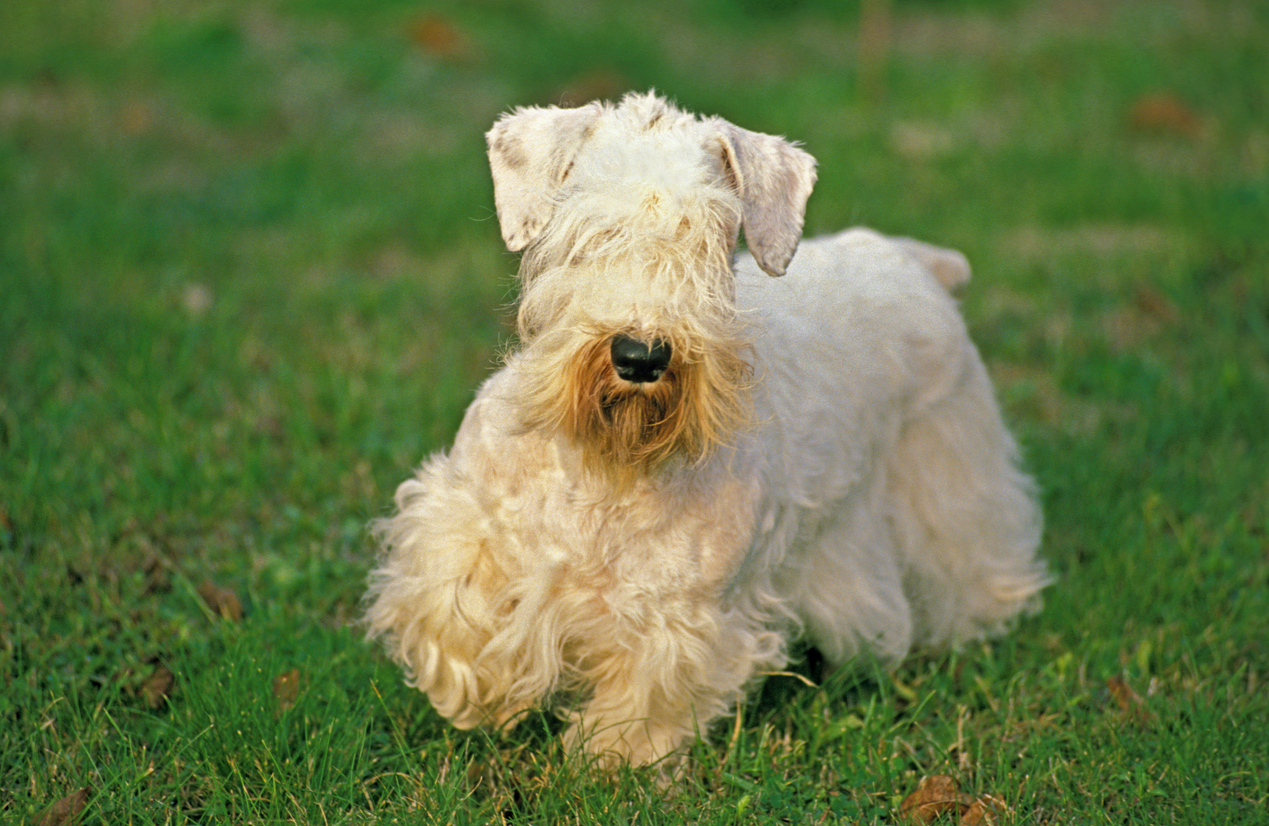
Sealyham Terrier Dog, Adult standing on Grass
The Sealyham Terrier is one of the UK’s rare British dog breeds, representing an important part of the country’s working-dog heritage that is now at risk of being forgotten. This rare British dog breed is actually one of the UK’s rarest native dog breeds — yet for the right owner, it’s an absolute gem. Originally bred in rural Wales, the Sealyham Terrier combines classic terrier determination with a surprisingly calm and affectionate nature. This post is part of our series on unusual British dog breeds and why they struggle with garden boundaries, exploring how heritage and instinct influence modern behavior.
Once favoured by actors, royalty, and country households, this distinctive white terrier has quietly slipped under the radar in recent decades. For modern dog owners living in semi-rural or countryside locations, understanding this breed’s instincts, strengths, and containment needs is essential.
A Brief History of the Sealyham Terrier
The Sealyham Terrier is part of a small group of traditional Welsh terrier breeds, developed to work independently in rugged countryside conditions where confidence and determination were essential. The Sealyham Terrier originated in Pembrokeshire, Wales, in the mid-19th century. Captain John Edwardes of Sealy Ham House developed the breed to hunt badgers, foxes, and otters — requiring a dog that was:
Brave underground
Independent yet trainable
Tough enough for rugged terrain
Their distinctive white coat helped hunters distinguish them from quarry underground, while their compact build allowed them to work in tight spaces.
Today, the breed is recognised by The Kennel Club breed standard, but remains one of the UK’s most vulnerable native breeds.
Temperament: A Terrier — But Not as You’d Expect
Like many Welsh terrier breeds, the Sealyham Terrier combines a calm indoor presence with strong outdoor instincts shaped by generations of working alongside humans in rural environments. Unlike many high-energy terriers, Sealyhams are known for being:
Calm indoors
Loyal and people-focused
Confident without being frantic
Independent thinkers
That said, they retain strong prey drive and territorial instincts, particularly when outdoors and exposed to wildlife scents.
This combination — relaxed at home, determined outside — is exactly why secure boundaries matter.
Exercise & Roaming Tendencies
Sealyham Terriers don’t require endless exercise, but they do need:
Traditional fencing often fails with terriers — not because they jump, but because they persist. This is a common issue for owners trying to prevent dogs running away in rural areas, where gardens are large and boundaries aren’t always obvious.
Why Secure Garden Boundaries Matter for Sealyham Terriers
Sealyhams were bred to work independently, often out of sight of their handler. That independence can translate into selective listening once they’re outdoors.
Owners in rural and semi-rural locations frequently struggle with:
Large or irregular plots
Shared land, bridleways, or footpaths
Wildlife triggers
Inconsistent fencing
For instinct-driven breeds like this, understanding how electronic dog fences work helps explain why they’re often more effective than traditional panels alone — particularly when professionally installed and paired with calm, structured training.
A Sealyham Terrier safely enjoying a rural garden within an invisible boundary system.
Are Sealyham Terriers Easy to Train?
Yes — with the right approach.
They respond best to:
Calm, consistent guidance
Clear cause-and-effect boundaries
Positive reinforcement
Short, focused sessions
They do not respond well to harsh correction or unclear rules. Boundary-based training systems often work well because they align with the breed’s logical, independent mindset rather than fighting against it.
Are Sealyham Terriers Good Family Dogs?
Yes — Sealyham Terriers can make excellent family dogs. They are affectionate, calm indoors, loyal to their owners, and generally good with children when properly socialised. However, due to their strong prey drive and independent nature, they benefit from secure garden boundaries and consistent training, especially in rural or semi-rural environments.
Grooming & Maintenance
The Sealyham’s wiry white coat is practical but does require upkeep:
Regular brushing
Occasional hand-stripping (preferred over clipping)
Professional grooming every few months
They shed very little, which makes them appealing for allergy-sensitive households.
Is the Sealyham Terrier Right for You?
Among today’s rare British dog breeds, the Sealyham Terrier stands out for its calm temperament, loyalty, and suitability for rural or semi-rural homes. A Sealyham Terrier may be a great fit if you:
Live in the countryside or a village setting
Want a calm but characterful companion
Enjoy daily walks without hyperactivity
Can provide secure outdoor boundaries
They may not suit owners who expect flawless recall without containment planning — particularly in wildlife-rich areas.
If you enjoy learning about distinctive breeds, you may also like reading about other rare British terrier breeds in our ongoing series.
Final Thoughts: A Rare British Treasure
The Sealyham Terrier is a reminder of Britain’s rich working-dog heritage — intelligent, determined, affectionate, and quietly confident. With the right balance of training, stimulation, and secure boundaries, this rare Welsh terrier can enjoy real freedom without unnecessary risk.
📞 Worried About Your Dog Wandering Off?
If you live in a rural or semi-rural area and your dog’s instincts sometimes override recall, you’re not alone. Many owners find that modern containment systems work with natural behaviour rather than against it.
https://dogfence.co.uk/wp-content/uploads/2026/01/Sealyham-Terrier-outdoors.jpg8261269Sam Folleyhttps://www.dogfence.co.uk/wp-content/uploads/2015/10/dogfences_logo_main_cats_orange2.pngSam Folley2026-03-13 07:00:212026-03-02 12:00:54Is the Sealyham Terrier Right for You? Temperament, History & Care
Sussex Spaniel Breed Traits: The Methodical Hunter Under Your Fence
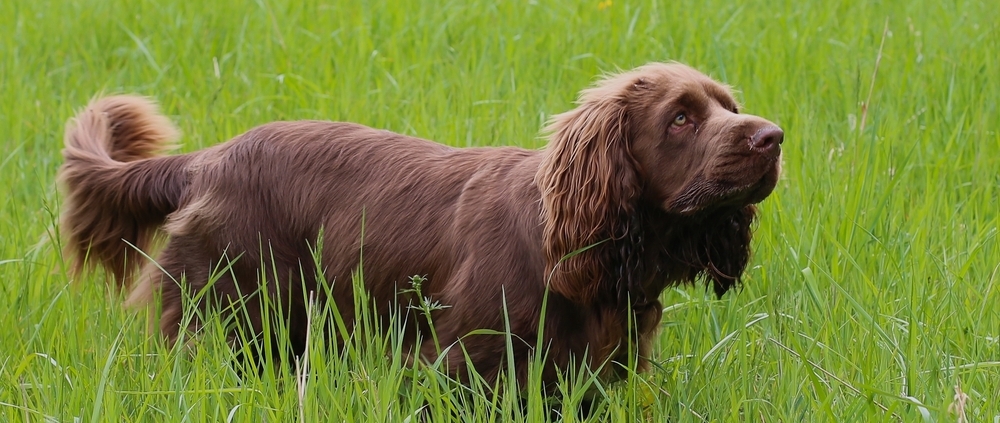
Sussex Spaniel breed traits are among the most unique of the British gundogs, making this rare breed both a loyal companion and a challenge to keep contained. The Sussex Spaniel is one of Britain’s oldest and rarest gundog breeds—and perhaps one of the most misunderstood. Often described as calm, slow-moving, and even a little stubborn, the Sussex Spaniel was never designed for speed or show-ring precision. Instead, this sturdy, low-slung dog was bred to work methodically through dense undergrowth, following scent for hours without distraction. However, those same Sussex Spaniel breed traits that make them world-class hunters can also make them persistent escape artists in a modern garden setting.
Originating in the county of Sussex in the 18th century, this dog was developed specifically for the heavy clay soils and dense hedgerows of the South of England. Unlike a flashy Springer or a frantic Cocker, the Sussex is a rare British gundog that prioritises steady, heavy-duty tracking over fast pursuit. Historically, they were the only spaniel bred to “give tongue”—to bark or whimper when they find a scent—to alert the hunter of their location in thick cover.
Key spaniel characteristics specific to the Sussex include:
Exceptional Scenting Ability: They don’t just see the world; they smell it in 4D.
Powerful Low-Slung Build: Their deep chest and short legs give them a low centre of gravity, perfect for pushing through gaps.
The “Sussex Throm”: A characteristic rolling gait that allows them to trot for miles without tiring.
Independent Problem Solving: Because they often worked out of sight of the hunter, they are used to making their own decisions.
As the Sussex Spaniel is currently listed on the Kennel Club’s Vulnerable Native Breeds list, owners have a significant responsibility to keep these dogs safe. With fewer than 300 registrations a year, every individual dog is precious to the breed’s survival.
Why the Sussex Spaniel Temperament Leads to Garden Escapes
Many owners are surprised by how a seemingly “lazy” dog manages to disappear from a secure garden. The Sussex Spaniel temperament is a unique mix of gentle companionship and quiet, dogged persistence. They don’t usually attempt to leap over high fences; instead, they find the one weak point at the bottom of a hedge and dig or squeeze through.
Common owner experiences with the Sussex Spaniel temperament include:
Persistent Digging: They will return to the same spot daily, working a hole like a professional contractor until they break through.
Scent Drifting: A passing fox or even a neighbour’s barbecue can trigger a “scent-trance,” where the dog follows a trail out of the garden without even realising they’ve left home.
Selective Hearing: When a Sussex is “on a line,” auditory recall often fails because their brain is entirely focused on the olfactory input.
The Challenge of Caring for a Rare British Gundog
Because they are classified as a vulnerable breed, owners have a significant responsibility to keep these dogs safe. With fewer than 300 registrations a year, every individual dog is precious to the breed’s survival.
Traditional wooden fencing often proves inadequate for these specific spaniel characteristics. They are “low-to-ground” specialists; if a rabbit can get under a gate, a Sussex Spaniel believes it can too. Furthermore, they are a sensitive breed. Harsh, shout-based training or high-pressure containment can leave them despondent. They require a boundary solution that provides a clear, consistent signal that the dog can understand and respect on its own terms.
How Hidden Fencing Supports Scent-Driven Instincts
For a breed driven by scent, a professional containment system offers a sophisticated advantage. It creates a 360-degree “safety bubble” that physical fences often lack.
Predictable Boundaries: Unlike a hedge that might have a new hole dug by a fox, a hidden fence signal never moves.
Respects the Nose: The system uses an audible warning zone. For a dog that is already tuned into “giving tongue” and listening for cues in the field, the beep is an easy signal to process.
Freedom to Roam: It allows the Sussex Spaniel to exercise its natural curiosity and scenting drive within the safety of your property, preventing them from wandering onto dangerous rural roads.
Rather than relying on height or physical barriers, a professionally installed dog fence works with the dog’s intelligence to create a consistent, reliable boundary.
Final Thoughts for Sussex Spaniel Owners
Owning a Sussex Spaniel means preserving a piece of living British history. They are affectionate, sombre-faced, and incredibly loyal companions. By understanding their unique Sussex Spaniel breed traits and providing a garden environment that respects their hunting heritage, you can keep them safely contained for years to come.
Need Help Keeping Your Sussex Spaniel Safe at Home?
If your Sussex Spaniel follows scent, tests boundaries, or quietly wanders beyond the garden, we’re happy to help you explore safe, proven containment options.
How to Stop Dog Escaping When in Season (UK Guide)
Stop dog escaping when in season early, and you can prevent a stressful and potentially dangerous situation for both you and your dog.
When a dog in season is trying to escape — or when a male dog is escaping because a nearby female is in heat — behaviour can change dramatically and very quickly. Even normally calm, well-trained dogs can become persistent, focused, and surprisingly determined.
Understanding why this happens — and how to secure your garden properly — is key to preventing dog running away during heat.
For broader guidance on preventing escape behaviour in all situations, read our complete guide on how to stop a dog running away, which explains how training, boundary security and containment work together.
Why Do Dogs Try to Escape When in Season?
To stop dog escaping when in season, it helps to understand the biological drive behind it.
Female dogs release powerful pheromones during their heat cycle. These scents can travel significant distances, especially in rural or open areas. Male dogs may detect them from streets away and begin searching for the source.
This can lead to:
Persistent fence-line pacing
Digging under boundaries
Jumping or climbing panels
Squeezing through weak points
Increased vocalisation or agitation
A dog in season trying to escape is not being disobedient — they are responding to instinct.
The Blue Cross provides helpful guidance on understanding the heat cycle and behaviour changes during this time</a>.
How Long Does a Dog Stay in Season?
A typical heat cycle lasts around 2–3 weeks.
However, heightened escape behaviour often peaks during the most fertile stage, which usually occurs around days 10–14.
If you are trying to stop dog escaping when in season, it’s important to increase supervision and security for the entire cycle — not just when symptoms first appear.
How to Stop Dog Escaping When in Season
Preventing dog running away during heat requires temporary management combined with secure containment.
1. Supervise Outdoor Time
Never leave a dog in season unattended in the garden.
Even a secure boundary can be tested repeatedly during this period.
Supervised outdoor access dramatically reduces the risk of escape.
If you live in a rural or semi-rural area, you may notice male dog escaping when female in season behaviour nearby as well.
Neighbouring dogs may attempt to enter your property, which is why simply “keeping her in” is sometimes not enough.
Creating a truly secure garden for dog in season situations means considering both outbound and inbound risk.
If broader roaming is becoming an issue, read our complete guide on how to stop your dog running away.
4. Increase Mental Stimulation Indoors
During peak fertility days, limiting unsupervised garden time and increasing indoor enrichment can help:
Scent games
Puzzle feeders
Short training sessions
Calm structured interaction
Reducing frustration reduces escape attempts.
Will Neutering Stop Dog Escaping When in Season?
Neutering male dogs may reduce hormone-driven roaming behaviour, but it does not eliminate instinct entirely.
Female dogs in season will still attract attention, and unneutered males may remain highly motivated.
If seasonal escape attempts are persistent, long-term boundary clarity becomes essential.
What If Fencing Isn’t Enough?
Traditional fencing can struggle during seasonal escape behaviour.
Digging, climbing, squeezing and repeated testing can escalate quickly when instinct overrides training.
If you are trying to stop dog escaping when in season on a larger property, driveway boundary, or post-and-rail setup, you may need a more consistent perimeter solution.
Hormone-driven roaming is just one escape trigger — our article on why dogs escape gardens explores the full range of behavioural causes.
A professionally installed electronic dog fence system can secure the full boundary — including hedges, open driveways, and uneven terrain — without altering the appearance of your garden.
When paired with structured training, most dogs quickly understand their limits, even during hormonally heightened periods.
When Should You Be Concerned?
Take action immediately if:
Your dog has already escaped once during a season
You live near a road
Livestock or public footpaths are nearby
Male dogs are gathering outside your boundary
Seasonal escape attempts can escalate rapidly.
Stopping dog escaping when in season early prevents the behaviour becoming learned and repeated in future cycles.
Final Thoughts: Secure Containment During Heat Cycles
To stop dog escaping when in season safely and responsibly, you must combine supervision, management, and reliable containment.
At DogFence, we’ve worked with countless rural and semi-rural UK properties where traditional fencing alone wasn’t enough during heat cycles. When the full boundary is clearly defined and properly introduced, escape attempts typically settle quickly — even during hormonally heightened periods.
If you’d like tailored advice on creating a secure garden for dog in season situations, our team can assess your property and recommend the most appropriate containment solution.
Worried About Your Dog Escaping During a Season?
If your dog is in season — or reacting to one nearby — we can help you secure your garden properly and prevent escape attempts before they happen.
https://dogfence.co.uk/wp-content/uploads/2026/02/Dog-in-Season-at-Garden-Boundary-scaled.jpg25601441Sam Folleyhttps://www.dogfence.co.uk/wp-content/uploads/2015/10/dogfences_logo_main_cats_orange2.pngSam Folley2026-02-19 14:28:042026-03-02 12:05:08Stop Dog Escaping When in Season (UK Guide for Secure Gardens)
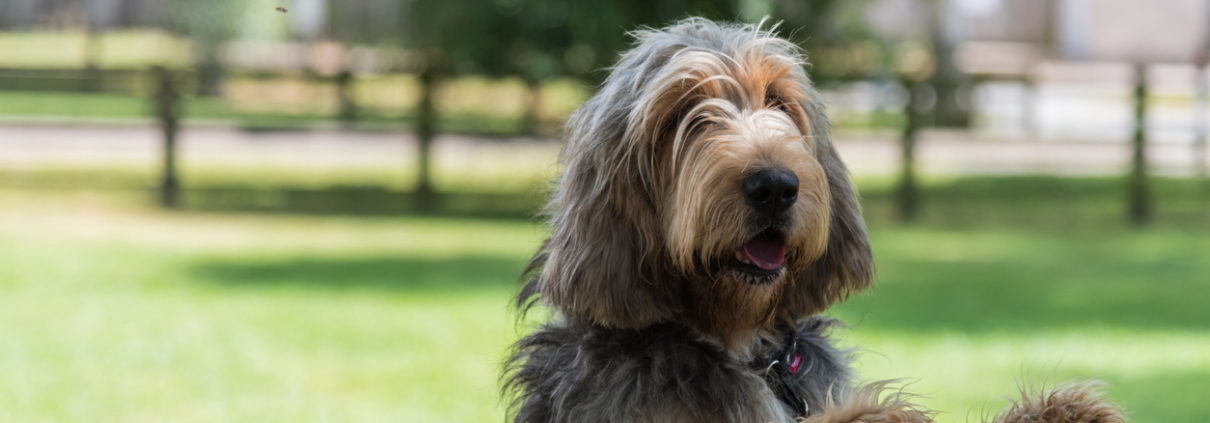
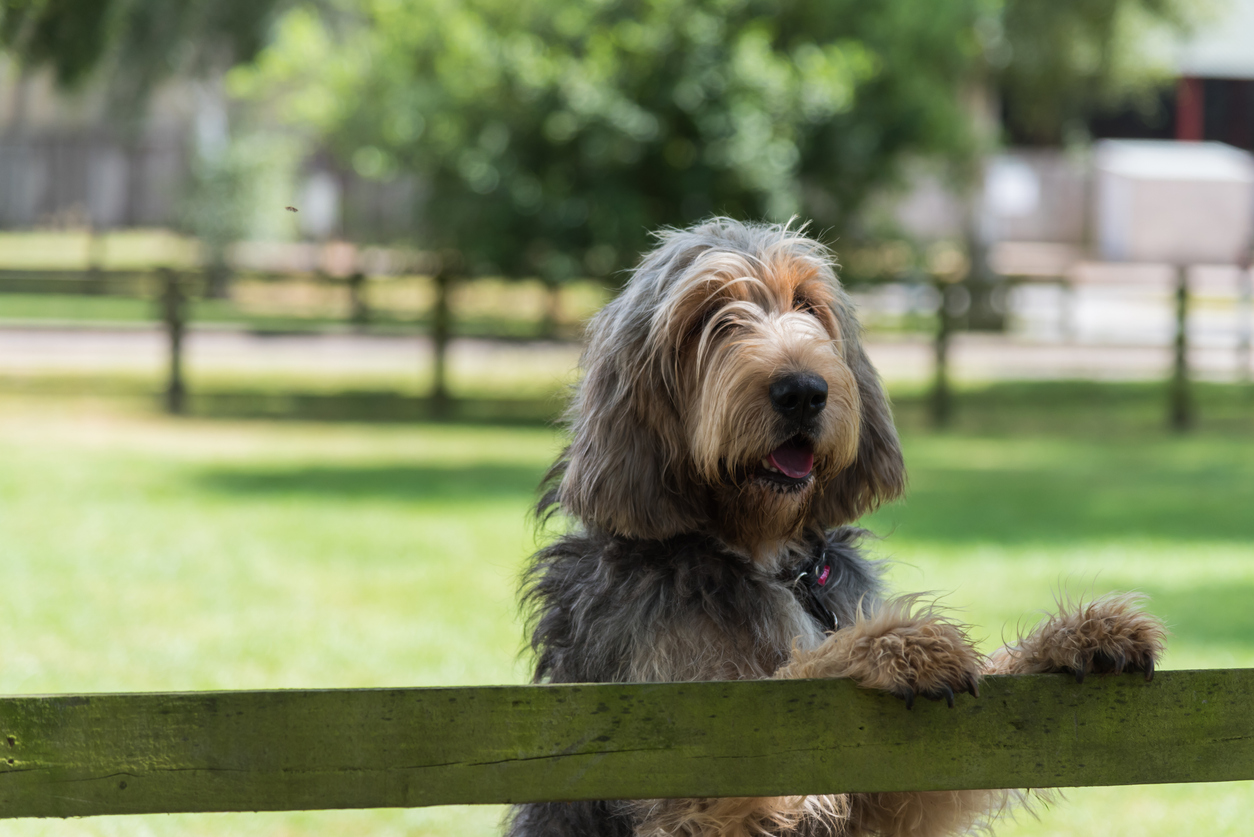
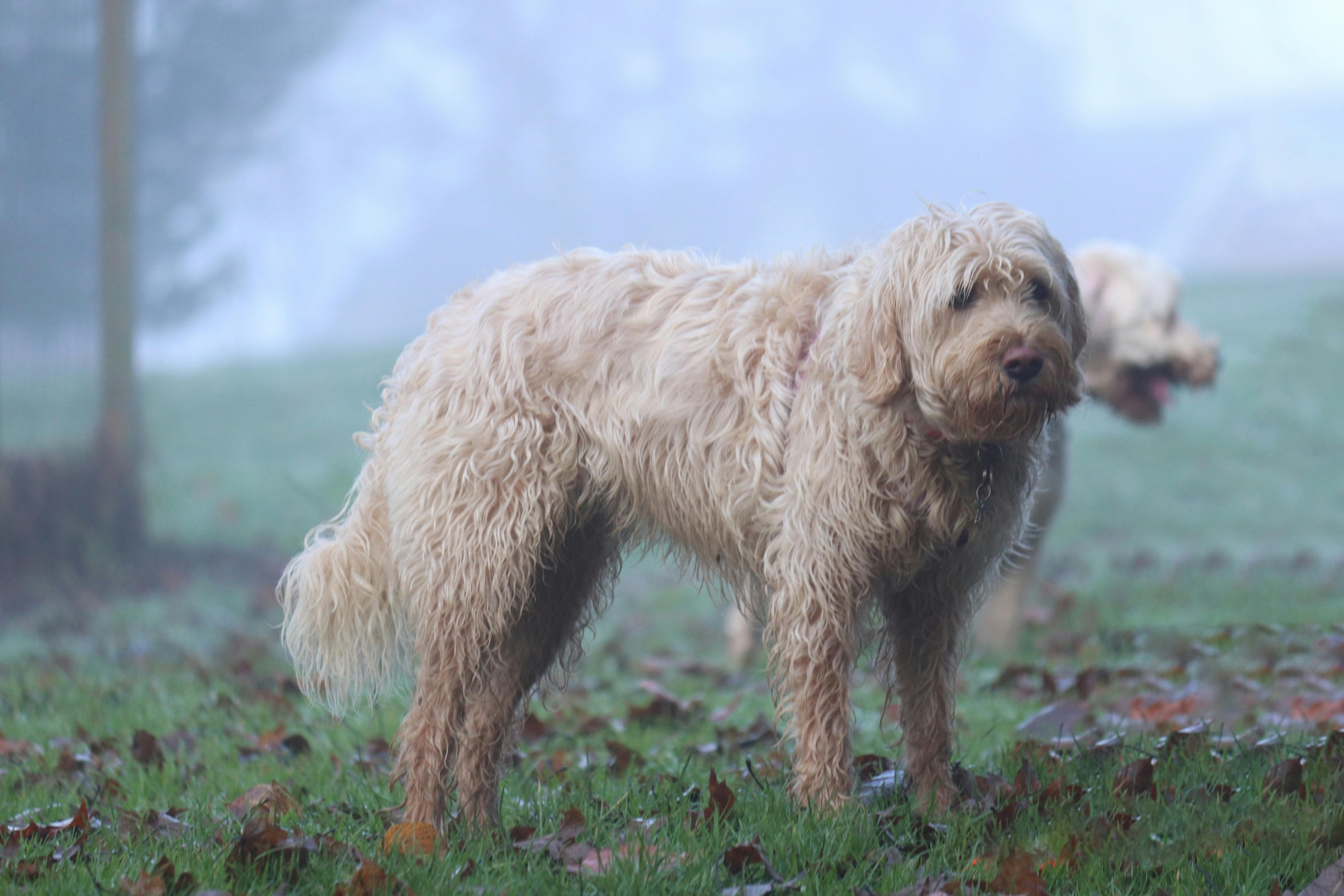
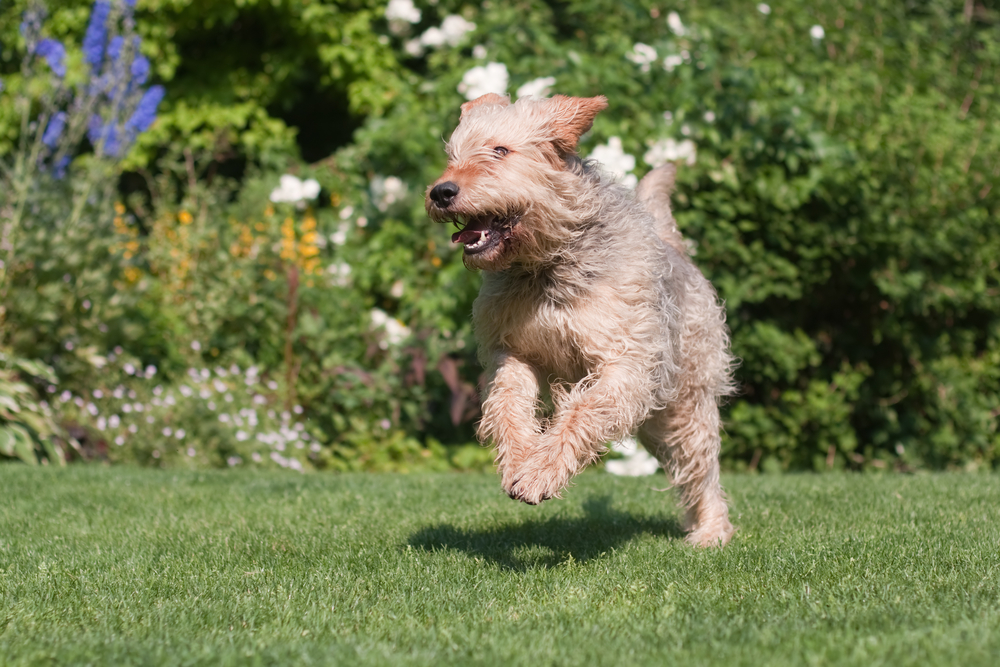
Originally bred to follow scent along rivers, wetlands and open countryside, the Otterhound was never designed to stay close, wait for instruction or recognise neat boundaries. Long before modern gardens, roads and fencing existed, these dogs worked across vast areas of land, often out of sight of their handlers for long periods.
Although their original working role has disappeared, their instincts have not. According to the Otterhound breed profile published by The Kennel Club, the breed remains one of the rarest native dogs in the UK.
For modern dog owners — particularly in rural and semi-rural parts of the UK — that heritage can present a very real challenge. When traditional fencing and recall training fall short, understanding how electronic dog fences workcan help explain why they’re often more effective for instinct-driven breeds than relying on physical barriers alone.
A Breed Designed to Range
The Otterhound’s defining feature is its nose.
With one of the most powerful scenting abilities of any dog breed, Otterhounds were developed to track scent trails for miles — through water, mud and dense terrain — without hesitation or distraction.
To do this successfully, they needed to be:
Highly independent
Physically resilient
Confident decision-makers
Unaffected by distance or separation
Handlers followed the dog, not the other way around.
This history matters because it explains why Otterhounds often struggle in modern settings. When a dog has been bred for generations to prioritise scent above all else, visual boundaries alone simply don’t register once instinct takes over.
Traditional British scent hounds were developed to work across open land, not confined spaces.
Why Modern Gardens Don’t Make Sense to an Otterhound
Most garden boundaries rely on human logic:
Fences you can see
Recall training
Assumptions about where “home” ends
To an Otterhound following scent, those concepts are meaningless.
Owners often describe dogs that:
Wander far beyond expected limits
Ignore recall once focused
Push through, climb over or dig under traditional fencing
Appear calm and settled indoors but highly driven outdoors
This contrast can feel confusing and frustrating — especially when training has been consistent and well-intentioned.
But this isn’t poor behaviour. It’s deeply ingrained working instinct.
For scent-driven breeds like the Otterhound, instinct often overrides visual boundaries.
Instinct Is Not Disobedience
One of the most important things to understand about Otterhounds — and many traditional British breeds — is that they were never bred to wait for permission. This pattern appears again and again across traditional British working breeds, many of which were developed long before modern gardens, roads and clearly defined boundaries existed.
Independent thinking was essential to their success. A dog that constantly checked back or stayed close would have been ineffective in its original role. We see the same pattern in other native breeds, including terriers such as the Sealyham, which were bred to work underground and make decisions without human guidance. These dogs haven’t changed — only the world around them has.
Understanding this helps owners move away from frustration and towards realistic, welfare-focused solutions.
Managing the Otterhound Dog Instincts in a Modern World
This is where boundary management becomes crucial.
Traditional fencing often fails instinct-driven breeds — not because it’s badly built, but because it doesn’t communicate boundaries in a way the dog understands once instinct takes over.
At DogFence Ltd, we regularly speak to owners of scent-driven breeds who feel torn between wanting to give their dog freedom and worrying about safety — particularly near roads, rivers, livestock or neighbouring land.
A properly designed electronic dog fence doesn’t suppress instinct. Instead, it provides clarity.
A buried boundary system creates a clear, consistent perimeter without relying on physical fencing.
By creating a consistent, invisible boundary that the dog learns through calm, progressive training, Otterhounds are able to:
Explore freely within a defined area
Follow scent trails safely
Relax at home without constant supervision
For dogs bred to work independently, knowing exactly where their safe zone begins and ends is often far more reassuring than physical barriers that can be climbed, dug under or ignored.
Why Boundary Clarity Matters for Welfare
Roaming isn’t just inconvenient — it can be dangerous.
Otterhounds that wander freely may encounter:
Fast-moving traffic
Rivers and waterways
Livestock and farmland
Conflict with neighbouring landowners
None of this reflects badly on the dog. It simply highlights the gap between ancient instincts and modern landscapes. Responsible ownership means recognising that gap and managing it thoughtfully — in a way that protects both the dog and the environment it lives in.
A Pattern Across British Dog Breeds
The Otterhound dog is an extreme example, but it is not unique. Many traditional British breeds were developed for stamina, independence and problem-solving across open land. Whether scent hounds, terriers or setters, the same theme appears again and again: These dogs were bred for freedom.
This series explores how those instincts still influence behaviour today — and how modern owners can support their dogs safely, calmly and responsibly.
Looking Ahead
This is the first breed from our new blog series Unusual British Dog Breeds: Next in the series, we’ll explore another British breed shaped by open countryside and independent thinking — and why traditional garden boundaries often fail them too.
If you’re living with a traditional British working breed and feel anxious about escaping, roaming or unreliable boundaries, you’re not alone — and you’re not doing anything wrong. Sometimes, a calm conversation about options can make all the difference.
https://dogfence.co.uk/wp-content/uploads/2026/01/iStock-821283152.jpg8371254Sam Folleyhttps://www.dogfence.co.uk/wp-content/uploads/2015/10/dogfences_logo_main_cats_orange2.pngSam Folley2026-02-06 07:00:012026-03-02 12:13:48Otterhound Dog Breed: Why This Rare British Breed Struggles With Garden Boundaries
Unusual British Dog Breeds: Why Our Native Dogs Still Struggle with Boundaries
Britain is home to some of the world’s oldest and most distinctive dog breeds. Long before fences, roads and neat garden boundaries existed, these dogs were developed to work across open countryside — tracking scent, covering ground and thinking independently.
Today, many of those same instincts remain. And for modern dog owners, particularly in rural and semi-rural parts of the UK, this can lead to a familiar challenge: dogs that wander, escape or simply don’t recognise where “home” ends.
This blog series explores unusual British dog breeds — not because they are new or fashionable, but because they are increasingly rare in everyday homes and often misunderstood in modern settings.
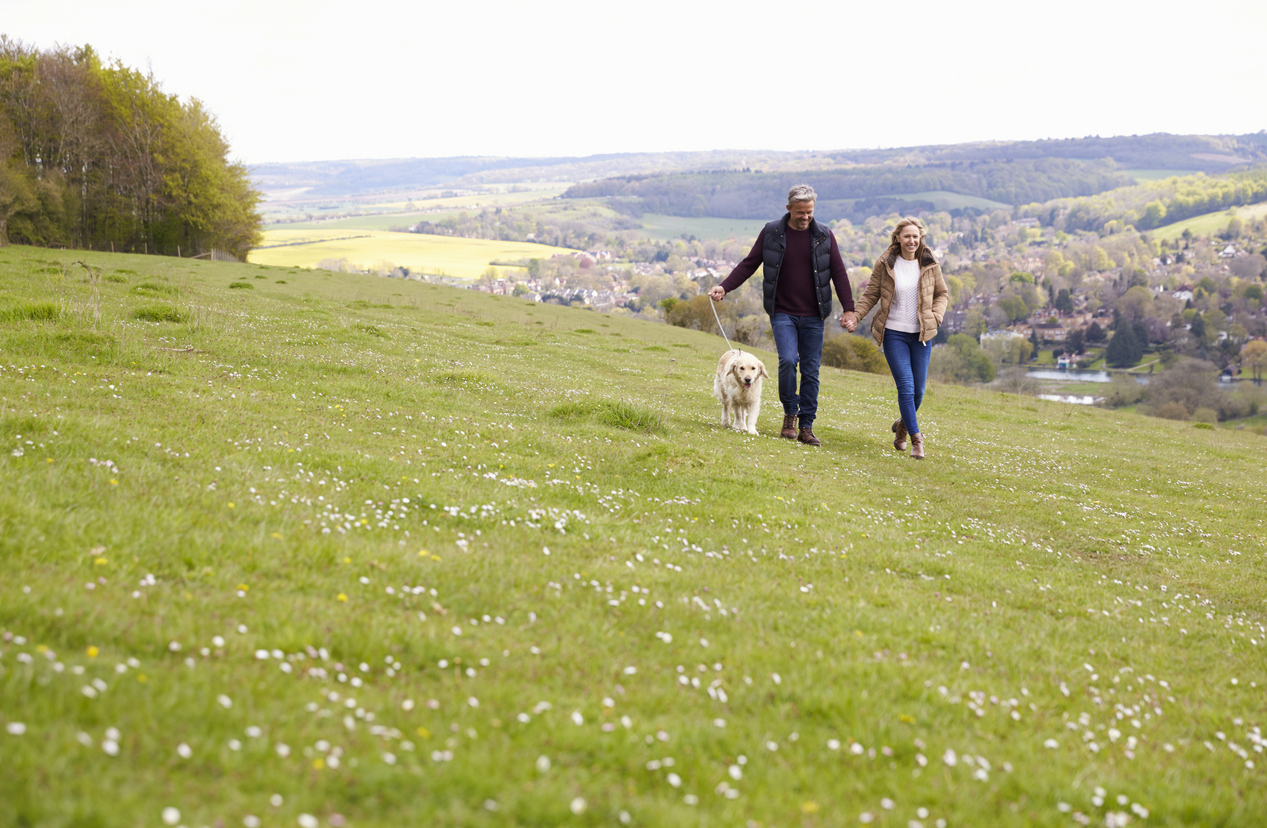
Mature Couple Taking Golden Retriever For Walk
What Makes a Dog Breed “Unusual” in Britain Today?
When we talk about unusual British dog breeds, we’re not necessarily referring to dogs that are rare in history. In fact, many were once familiar working companions on farms, estates and country properties across Britain.
Breeds such as the Otterhound, Clumber Spaniel, Sealyham Terrier, Lakeland Terrier and English Foxhound all played practical, everyday roles in rural life. They were bred to track, range, hunt or work independently over large areas of land — often far beyond the sight of their handlers.
They are considered “unusual” today because:
They are less commonly kept as household pets
Their original working roles are no longer widely understood
They are often overshadowed by imported or designer breeds
Their behaviour doesn’t always fit neatly into modern lifestyles and garden boundaries
British dog breeds were shaped by the land itself.
For centuries, dogs in Britain were developed not for confinement, but for function. Before modern roads, fences and clearly defined property boundaries, much of the countryside was open, shared or loosely managed. Dogs were expected to work across large areas of land, often without direct supervision.
Across generations, breeders selected dogs that could:
Track scent over long distances, sometimes for miles at a time
Work independently, making decisions without constant human input
Ignore distractions while staying focused on a task
Move freely across farms, moorland, estates and waterways, adapting to varied terrain and conditions
These traits were essential for success. A dog that hesitated, waited for instruction or stayed close at heel was often less effective in a working role.
The result was a group of dogs that are intelligent, determined and highly instinct-driven. They were bred to think for themselves, follow their nose or their eye, and keep going even when their handler was out of sight.
In today’s world, those same qualities can clash with modern expectations. Fences, garden boundaries and recall training are relatively recent concepts, while instinct is deeply ingrained. What once made these dogs exceptional workers can now appear as wandering, boundary testing or selective listening — not because the dog is disobedient, but because it is behaving exactly as it was designed to.
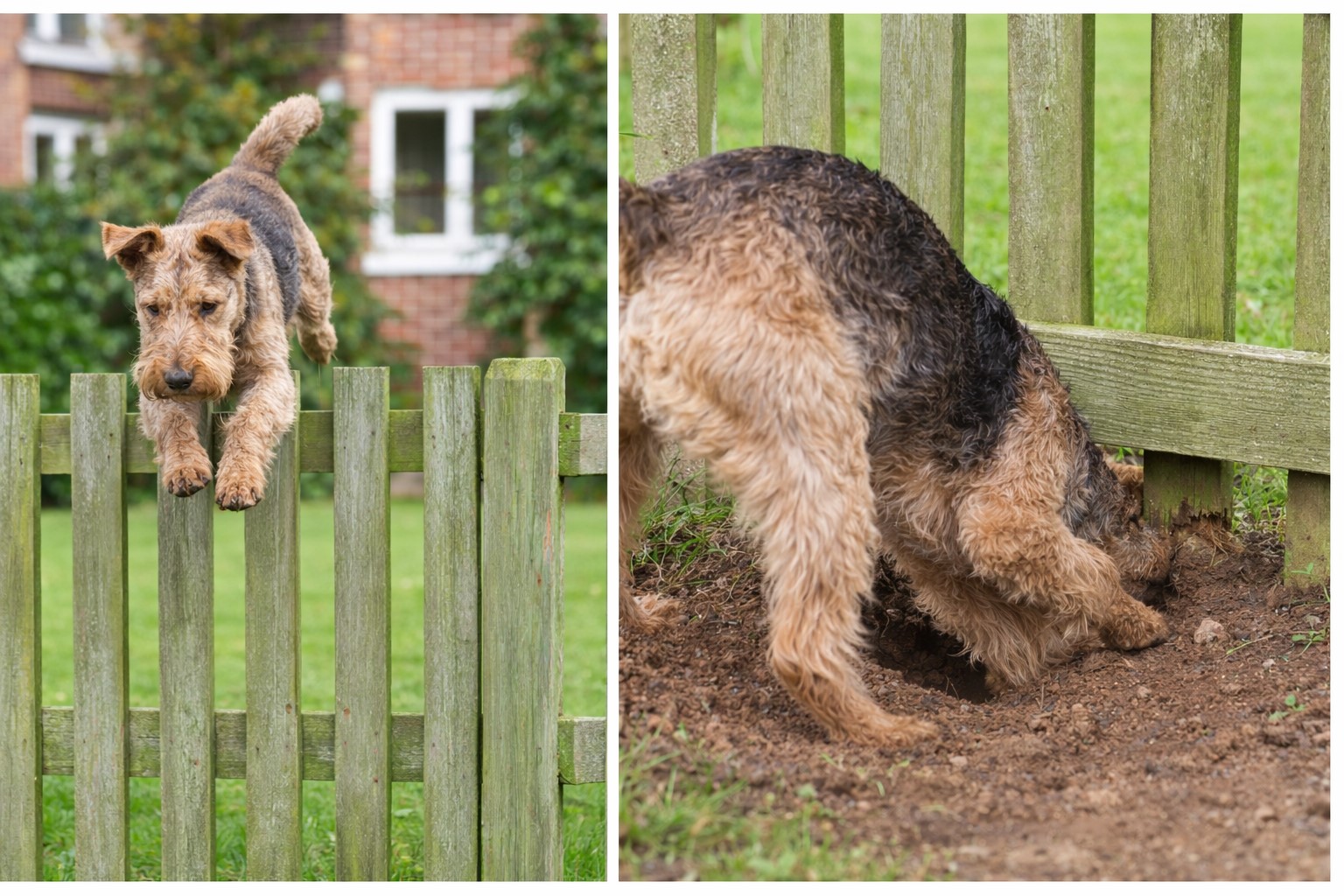
Instinct-driven behaviours like digging and jumping are not defiance — they’re rooted in how working dogs were bred to interact with their environment.
Instinct Is Not Bad Behaviour
One of the most important messages of this series is this:
A dog following instinct is not being naughty.
Many British breeds were never intended to stay within visible limits. When those instincts surface, it doesn’t mean training has failed or that an owner has done something wrong.
In reality, it means the dog is doing exactly what it was bred to do — just in a very different world.
Understanding this distinction is essential for:
Safer management
Better training outcomes
Reduced stress for both dogs and owners
Why We’re Writing This Series
After years of working with dogs across the UK — particularly in rural and semi-rural settings — the same patterns appear again and again.
Certain British breeds:
Are more likely to roam
Struggle with traditional fencing
Require a different approach to boundaries
Benefit from management that respects instinct rather than fighting it
This series is not about promoting quick fixes or labelling breeds as “difficult”. It’s about education, realism and responsible ownership.
British Dog Breeds We’ll Be Exploring
Each month, we’ll focus on a different native British breed, looking at:
Where they came from
What they were bred to do
Why those instincts still matter today
Common challenges UK owners face
Practical, welfare-led considerations for modern homes
Breeds we’ll be covering include:
The Otterhound
The Sealyham Terrier
The Clumber Spaniel
The Lakeland Terrier
The English Foxhound
The Gordon Setter
Each article will stand alone, but together they form a broader picture of how Britain’s dog-breeding heritage still influences behaviour today.
Looking Ahead
If you live with one of Britain’s traditional working breeds — or are considering one — understanding instinct is key to keeping them safe, settled and fulfilled.
This series is designed to help owners make informed, compassionate decisions that respect both heritage and modern life.
The first breed in the series will explore one of Britain’s rarest native dogs — the Otterhound — and why its remarkable nose still leads it far beyond garden boundaries.
Understanding instinct is the first step to helping dogs feel settled and safe at home. When boundaries are clear and consistent, even highly driven dogs can relax — not because their instincts have been suppressed, but because they know exactly where they stand.
For owners of traditional British breeds, the goal isn’t restriction. It’s freedom with clarity, designed around how dogs actually think and behave.
If you’re worried about your dog testing garden boundaries, escaping, or heading towards roads, livestock or neighbouring land, a calm conversation can make all the difference.
https://dogfence.co.uk/wp-content/uploads/2025/12/iStock-546200500.jpg8281267Sam Folleyhttps://www.dogfence.co.uk/wp-content/uploads/2015/10/dogfences_logo_main_cats_orange2.pngSam Folley2026-01-09 07:00:392026-03-10 18:25:35British Dog Breeds That Struggle with Garden Boundaries
🎄 How to Pet Proof Christmas Tree Chaos with BOB (and Save Your Décor, Food & Sanity)
If you’re trying to pet proof Christmas tree trouble before your dog or cat turns your festive décor into a disaster movie, BOB might be the Christmas magic you didn’t know you needed.Because let’s face it: sparkly lights, dangling baubles, edible-looking string, rustling wrapping paper and the smell of roast turkey = every pet’s idea of a theme park. Your Christmas tree isn’t décor at this point — it’s an attraction.
🎅 Why We Need To Pet Proof Christmas Tree Mischief
“Climb the tree, eat the shiny thing, steal the turkey, dodge the humans!”
And yes… sometimes it ends in vet trips. UK vets and emergency clinics report that:
Emergency vet groups see a significant rise in festive cases over Christmas and New Year, with chocolate, raisins, mince pies and decorations all common culprits.
Surveys from the British Veterinary Association show that the vast majority of companion animal vets see at least one case of toxic ingestion over the festive period, with chocolate and dried fruit featuring heavily.
Other research has found that many pet owners end up needing emergency vet care at Christmas after their pet has eaten something they shouldn’t, or been injured by decorations or the tree.
Meanwhile, UK pet-care research has shown that Christmas isn’t always smooth sailing for owners either — many have seen their pets climbing or even toppling the tree, smashing baubles, opening presents or stealing food from the table.
So if you’ve ever walked into a room and thought, “Why is the tree moving?”… you are not alone.
For more vet-backed festive pet safety advice, you can also read the British Veterinary Association’s guidance on Christmas pet hazards.
🎄 Meet BOB — the Festive Guardian You Didn’t Know You Needed
BOB is our portable indoor (and outdoor) wireless boundary unit that creates a no-go zone for your pets — without cages, baby gates, tin foil, water sprays or shouting “NO!” every eight minutes.
How BOB actually works
The BOB base station is a neat round disc, just like a smaller version of the transmitter you’d normally plug in for your fence — but this one is completely wire-free. Instead of using cable, it creates a small, adjustable invisible boundary all the way around itself, up to around 4 ft (about 1.2 m) in diameter.
You simply place BOB where you want to protect something — your Christmas tree, the kitchen worktops, the gift-wrapping area — and set the size of the zone. Your pet’s receiver collar picks up the signal as they approach the “bubble” and gives them a gentle, safe warning that this is a no-go area.
There is no wire to lay, BOB is rechargeable (typically lasting 2–4 days per charge depending on the size of the zone), and it is completely portable. Move it from room to room, take it with you when you travel, or use it on the patio if you want to keep inquisitive noses away from outside decorations.
https://dogfence.co.uk/wp-content/uploads/2025/12/dog-stealing-Christmas-food.jpg6671000Sam Folleyhttps://www.dogfence.co.uk/wp-content/uploads/2015/10/dogfences_logo_main_cats_orange2.pngSam Folley2025-12-09 11:47:082026-03-12 21:47:54Proof Christmas Tree Chaos with BOB (Save Your Décor, Food & Sanity)
If you’re wondering how to train a nervous dog with a dog fence, the key lies in gentle, consistent training that builds confidence. When it comes to keeping a timid or anxious pet safe outdoors, many owners ask if it is even possible to train a nervous dog with a dog fence without causing stress. At DogFence Ltd, we use a structured, calm, and gentle dog fence training method that helps pets gain confidence while learning clear, safe boundaries around the garden.
Key Takeaways
Training nervous dogs requires calm, consistent, and positive methods.
DogFence systems are individually programmed to suit each dog’s temperament.
Professional installation includes personalised support and follow-up guidance.
Understanding Nervous Dogs and Dog Fence Training
Every dog has a unique personality. Some are bold and curious, while others are more cautious. Nervous dogs often react to new sounds, sensations, or environments, so training nervous dogs to a dog fence must be gradual and reassuring. Our system allows you to set the tone for each session, focusing on calm voice cues, gentle encouragement, and short, positive experiences. When training young dogs to the system it is important to take the training slowly at the correct age. If you are looking to add a young dog to a dog fence system read our comprehensive blog on training a puppy to the dog fence.
Our Gentle Dog Fence Training Approach
We specialise in gentle dog fence training designed to build confidence, not fear. Each DogFence receiver collar is fully adjustable, ensuring that nervous pets experience only a mild, momentary correction — if any at all. In most cases, dogs learn to respond to the warning beep and never need further reinforcement.
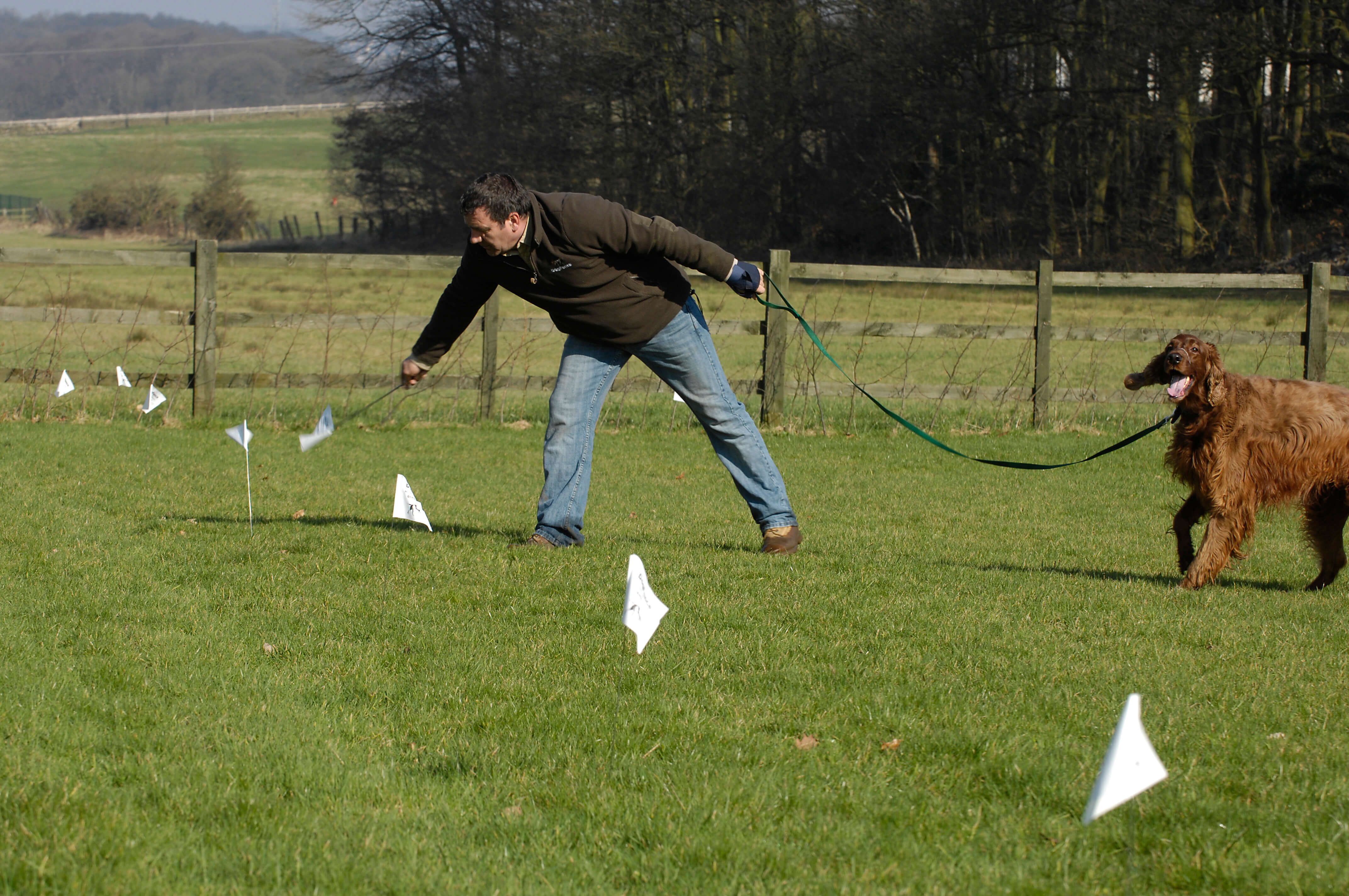
Training a nervous dog using marker flags as part of gentle dog fence training.
1. Start with Familiarisation
Before any correction levels are introduced, we walk your dog around the boundary with visible training flags in place. These flags are the most important part of the early training process — they act as clear, visual markers that help your dog understand where the boundary begins and ends. For a confident dog, the flags are simply new objects in the garden. For a nervous dog, however, they can be the scariest part of training.
Some dogs find the movement of the flags — even the simple flicking back and forth in the wind — unsettling at first. It’s completely normal. The key is to stay upbeat and calm. Your tone of voice, posture, and energy set the emotional temperature for your dog. Nervous dogs take their lead from you, so remaining confident, positive, and cheerful helps them feel secure and reassured.
Think of it this way: to a nervous dog, the garden is full of invisible “gremlins.” Every sound, scent, or sudden movement can be a source of uncertainty. By introducing the flags gently, pairing them with beep-only training, and rewarding calm curiosity, you show your dog that there’s nothing to fear. With patience, praise, and consistency, even the most anxious dog will soon view the training flags — and the boundary itself — as just another safe part of their familiar outdoor world.
2. Introduce Beeps and Voice Cues
During the early sessions, your dog will hear a warning beep as they approach the boundary. Pairing this sound with a consistent command such as “Careful or Watch out” helps them link the tone with returning to safety. The focus is on communication, not correction.
3. Gradual Correction, Minimal Intensity
If your pet continues into the zone after the beep, the collar delivers a mild static pulse. For all dogs regardless of their personality we start at the bottom. When training on a dog fence for anxious dogs, we always begin at the lowest possible level and adjust only if absolutely necessary. Each training session lasts around 10–15 minutes and ends with plenty of praise and playtime. Slow and steady wins the race.
Case Study: Daisy the Kangal’s Confidence Journey
Daisy, a gentle Kangal, was initially fearful of new environments and noises. Her owners worried that containment training might overwhelm her. Using our gentle dog fence training process, Daisy quickly learned to associate the beep with boundaries, not punishment. Within a week, she was confidently exploring her large garden, tail wagging, safe from nearby livestock and traffic.
Daisy the Kangal during gentle dog fence training. Licking and yawning are common signs in nervous dogs as they process new experiences and build confidence.
Professional Support for Nervous Dogs
When training nervous dogs to a dog fence, the aim is to build trust and confidence through repetition and reward. Our experienced installers and trainers understand how to adapt sessions for dogs with anxiety or trauma backgrounds. We never rush or force progress. Instead, we combine proven behavioural principles with humane technology to help your pet feel secure. You can read more about our approach in our detailed guide to electric fences for nervous dogs. With patience and positive reinforcement, even anxious pets adapt beautifully to a dog fence for anxious dogs.”
Over 22 years’ experience with all breeds and temperaments.
DEFRA-tested and approved containment system.
Lifetime warranty and ongoing customer support.
Tailored dog fence for anxious dogs programmes designed to suit your pet’s individual needs.
When done correctly, training nervous dogs to a dog fence is a calm, confidence-building experience. It teaches boundaries safely and gently — giving your dog freedom to roam while ensuring peace of mind for you. Our system is designed to work equally well for confident pets and for those needing a gentle dog fence for anxious dogs.
https://dogfence.co.uk/wp-content/uploads/2025/10/daisy-kangal-dogfence-training-2-resized.jpg16001200Sam Folleyhttps://www.dogfence.co.uk/wp-content/uploads/2015/10/dogfences_logo_main_cats_orange2.pngSam Folley2025-10-31 07:00:062026-03-10 18:34:42How to Train a Nervous Dog with a Dog Fence in the UK
Dog Fencing for Rental Properties: Safe, Temporary Solutions That Work
Renters often face a dilemma—how do you keep your dog safely contained without making permanent changes to your home or garden? Dog fencing for rental properties is a growing need for tenants who want security for their pets while respecting landlord requirements. Whether you’re in a flat, townhouse, or countryside cottage, we’ve got containment options that work without causing damage or risking your deposit.
Why Dog Fencing for Rental Properties Needs Special Consideration
Unlike homeowners, tenants don’t have the freedom to install traditional fences or drill into walls. This makes dog fencing for rental properties a challenge—but not an impossible one. Landlords typically have strict rules about altering the property, especially when it comes to outdoor spaces, driveways, and garden layouts.
Top Temporary Solutions for Dog Fencing in Rental Homes
Below are the most effective dog fencing for rental properties options that balance safety, portability, and non-invasive setup:
1. Portable Electronic Dog Fences
Our DogFence DIY kits offer a semi-permanent solution ideal for renters. These systems use a hidden boundary wire and a lightweight receiver collar to create an invisible barrier. No permanent digging is required for small setups, and the fence can be lifted and re-installed when you move. These fences are:
Safe and vet-approved
Programmable for your dog’s size and temperament
Suitable for gardens, patios, and even internal boundaries
Learn more about our DIY dog fences – starting from just £299.
2. Freestanding or Expandable Play Pens
Expandable dog pens are another go-to for indoor or patio use. While they don’t provide the same range as electronic fences, they’re useful for small dogs or temporary containment. However, they’re not escape-proof for determined pets. These are often referred to as “puppy play pens”.
A portable dog pen provides basic containment but is restrictive and limits space. In contrast, DogFence systems offer full garden access with safe, invisible boundaries – perfect for rental properties.
3.Mesh or Foldable Temporary Fencing Panels
These panels can be set up without nails, screws, or drilling. Lightweight and modular, they offer an affordable dog fencing for rental properties option—but may be less durable in the long term.
What to Avoid When Choosing Dog Fencing for Rental Properties
Not all fencing is landlord-friendly. Avoid these common mistakes:
Digging trenches without permission
Screwing posts into external walls or patios
Leaving visible damage or cable remnants upon moving out
Instead, look for systems designed for easy removal and no permanent impact on the home.
Can I Use an Electronic Dog Fence in a Rental Property?
Yes—but with the right approach. Dog fencing for rental properties must meet two key criteria:
Portability: Can it move with you to your next home?
Non-invasive installation: Will it leave the property exactly as you found it?
Our DIY DogFence kits meet both requirements and are ideal for renters. They’re easy to install using shallow turf cuts or cable tacking without damage. Our collars are also chew-proof and waterproof, and designed with pet safety in mind.
With DogFence’s hidden containment systems for rental properties, dogs can safely enjoy full garden freedom without fences, posts, or pens – and without risking your landlord’s approval.
Dog Fencing for Flats and Indoor Use
If you live in a flat or an urban rental, keeping your dog secure indoors is just as important. Consider:
These complement your dog fencing for rental properties setup and ensure safety even when you’re away. An indoor fence can be used to protect the front door, or other areas and is completely portable and unobtrusive.
Our indoor dog fencing system is ideal for rental properties – completely portable, wire-free, and perfect for keeping pets safely out of specific rooms without altering your home.
Dog Fencing and Your Landlord: How to Stay Compliant
When installing dog fencing for rental properties, always:
Choose fencing that is removable and leaves no trace
Offer to restore any disturbed lawn or turf before moving out
Remember with a dog fence, the cable can be loose laid
We provide written installation guidelines to help reassure landlords.
Many renters across the UK have successfully used DogFence’s DIY systems to contain their pets safely—without damaging their property or risking their deposit.
Get Expert Help With Dog Fencing for Rental Properties
Choosing the right dog fencing for rental properties can feel overwhelming. That’s where we come in. With over 22 years of experience and 20,000 pets safely contained, DogFence Ltd can help you find a system that suits both your home and your landlord.
FAQs About Dog Fencing for Rental Properties
Is electronic dog fencing legal in rental homes?
Yes, but it must be installed in a way that complies with your lease. Always seek approval from your landlord.
Can I remove the system when I move?
Absolutely. Our DIY systems are designed to be lifted, moved, and reused elsewhere.
Is it suitable for large or active dogs?
Yes. Our receiver collars are programmable and work for dogs of all sizes, including high-energy breeds.
Does the cable have to be buried or nailed?
No, the cable can be lose laid on the surface, tied to a fence or threaded through a hedge.
Can the dog fence be used on the driveway?
Yes, the cable can be threaded through a hose pipe and lose laid on the driveway.
Why Choose DogFence for Rental Property Fencing?
✅ Industry-leading technology with FM digital safety
✅ Lightweight, waterproof, chew-proof collars
✅ Lifetime warranty on installed systems
✅ Personalised training and UK-based support
✅ Suitable for both dog and cat containment
Call Now or Get a Quote for Dog Fencing for Rental Properties
Whether you’re renting a flat or a countryside home, we can help keep your dog safe.
https://dogfence.co.uk/wp-content/uploads/2025/08/shutterstock_2637115769.jpg10241024Sam Folleyhttps://www.dogfence.co.uk/wp-content/uploads/2015/10/dogfences_logo_main_cats_orange2.pngSam Folley2025-10-07 07:00:192025-08-22 14:16:59Dog Fencing for Rental Properties: Safe, Temporary Solutions That Work