Tag Archive for: invisible dog fence

our mini receiver R7m is suitable for Pomeranian dogs

Electronic dog fences – are they safe for small dogs?

Are electronic dog fences safe to use for small dogs?

Electronic dog fences have been around for over 40 years. Unsurprisingly in the early years this type of electronic dog fencing was most certainly not suitable for small dogs. Why were they not suitable? Size and weight of the computer collars!  Many of the early collars used a 9 volt battery to power the collar which was both bulky and heavy. As with mobile phones recent advances in technology have enabled the size and weight of the computer collars to be dramatically decreased.

At DogFence we are proud to be able to offer the smallest and lightest electronic dog fence collars on the market today. Our mini computer collars weigh only 30g including the small 3.0 volt battery. Our electronic dog fence collars are suitable for all breeds of dogs and cats and with the increasing popularity of toy breeds our sales of mini collars has risen significantly in the last 5 years.

Bengal cat wearing R7m mini electronic dog fence collar

Small enough for cats too!

Will the electronic dog fence hurt my dog?

Naturally a common concern is that the “correction” or impulse will hurt the dog. Naturally, at DogFence we are all dog lovers and the last thing we would want to do is inflict pain or suffering onto any dog or cat. The impulse level is set to each dog or cats personality. People often asks does it hurt? can I feel it?  In reality, once they feel the impulse the next reaction is usually “how will that keep my dog in?” or “oh it’s not that bad!”.

Electronic dog fences have been tested by leading Universities and pet professionals across the world. The results have proved that these fences are safe to use with both dogs and cats. The amount of impulse delivered is not determined by the size of the pet but their personality. The average setting for most dogs is level 2 this would equate to some 250 times lower that a cattle of electric stock fence.

Interesting, the impulse is generally only received during the training phase. All our electronic dog fence collars give out a warning beep prior to giving out the impulse. During the training phase the pet also has a visual marker with training flags. If the training is carried out correctly the pet will rarely receive any activation after the initial period. All our DogFence installers are qualified to train your dog or cat to the containment system. DogFence is a member of the IACP an international organisation set up for training dogs using electronic stimulation alongside conventional training protocols.

Will I have to use the electronic dog fence forever?

This is always a difficult question to answer. It really depends on your dog’s personality and hunting drive. As a rule we find that dogs and cats that are trained before the escaping behavior begins will train quickly and easily and never challenge the fence. However, if you have livestock or game birds nearby and a dog with a high drive then it is advisable to use the system everyday. With electronic dog fencing consistency is king. If every time the dog enters the zone they hear the warning beep they will not “challenge” the fence. Issues can arise  if they can go through the zone one day because they are not wearing the electronic dog fence collar and not on another day it becomes confusing to the pet.

What do the Experts Say?

Professor Daniel Mills headed the study into the use of electronic dog fences

Prof. Daniel Mills
RCVS

Recent studies through Lincoln University, headed by the well revered Prof. Daniel Mills, and the Governments research have proved that electronic dog fences are  only safe and also save the lives of dogs and cats. With modern technology size is no longer a barrier to pet containment with an electronic dog fence. Read more about what the experts say on our web site.

If you would like to learn more about how an electronic dog fence can keep your pet safe contact us on 01628 476475 or email us @ info@dogfence.co.uk.


dog fence most reliable hidden fence worldwide

Freedom Fence vs. DogFence: How Does a Freedom Fence Work? (2025 Guide)

Freedom Fence vs. DogFence: How Does a Freedom Fence Work? (2025 Guide)

Introduction
A freedom fence is an electronic containment system designed to keep dogs within a designated area without a physical barrier. It uses a transmitter connected to a buried boundary wire to create a radio-signal “no‑go zone”. When your dog, wearing a receiver collar, approaches this zone it first emits a warning beep followed by a static correction. With consistent training, most dogs learn to stay within the safe zone.

If you are researching freedom fences you may have also come across Invisible Fence® and generic dog fence systems. While all of these devices share a similar principle, there are important differences in technology, speed and safety. This guide explains how a freedom fence works and why DogFence’s digital FM systems offer a quicker reaction time and safer containment for your pet.

Disclaimer: “Freedom Fence” is a brand name used by one of our competitors. DogFence Ltd is an independent company and is not affiliated with, endorsed by or authorised by Freedom Fence Ltd or its parent company. The comparisons in this guide are provided for informational purposes only.


How does a freedom fence work?

  1. Transmitter and boundary wire – A transmitter is installed at your property and connected to a boundary wire that carries a continuous radio signal around the containment area. The signal must start and finish at the transmitter to complete the loop.

  2. Receiver collar – Your dog wears a receiver collar programmed to detect the signal. When the collar enters the signal zone it beeps, then delivers a mild static correction to discourage crossing the boundary.

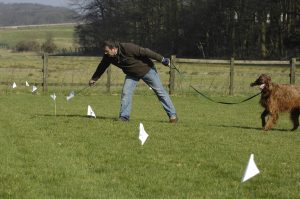
  3. Training flags – During training, temporary boundary flags help your dog visualise the invisible line and learn the safe zone.

Freedom fence vs. DogFence: key differences

Signal technology

  • Freedom Fence: Uses a digital AM radio signal. AM is prone to false activations from other household electronics, so the collar checks for two signals before activating, slowing reaction time.

  • DogFence (our solution): Uses a digital FM signal which is immune to interference. The collar only checks for one signal, so it reacts 15 times faster than a freedom fence.

Reaction time

  • Freedom Fence: A dog running at 10 mph could travel up to 7 feet into the no‑go zone before the correction activates. The collar’s shutdown can take 2–5 seconds.

  • DogFence (our solution): The DogFence collar reacts almost instantly – at 10 mph a dog will only enter the zone by 0.125 ft before activation, and the shut‑down time is less than one second.

Warranty & durability

  • Freedom Fence: Limited lifetime warranty that excludes lightning strikes, electrical surges and damage from dog chewing. Manufacturing moved to China around 10 years ago.

  • DogFence (our solution): Full lifetime warranty covering lightning strikes, surges, chewing and accidental damage. Each unit is individually tested at DogWatch HQ in Boston.

Support & training

  • Freedom Fence: Installation and training may vary by dealer; often limited to basic set‑up.

  • DogFence (our solution): Professional installation is performed by our internal team and includes tailored pet training so your dog adapts quickly and safely. This is all backed up by our containment guarantee where applicable.

Battery life & maintenance

  • Freedom Fence: Shorter battery life (3 months max); replacement costs add up.

  • DogFence (our solution): Longer battery life (6 months or 2 years depending on collar type) and optional service plans to minimise maintenance.

How do I train my dog to the invisible (freedom) fence?

We provide on‑site training for your pet and cannot emphasise enough how important the training flags are. The trainer places flags around the boundary to give your dog a clear visual marker. We start with the collar in warning‑beep only mode, walking your dog on a lead around the boundary, tapping each flag and using a command word. This teaches your dog that the flag is a boundary and the beep is a cue to turn back. Only when your dog understands the visual and auditory cues do we introduce the mild static correction. The combination of the flag and beep training, the trainer’s vocal guidance and the gentle impulse helps your dog learn the boundary reliably and humanely. Our professional installers and trainers will guide you through this process and provide post‑installation support.
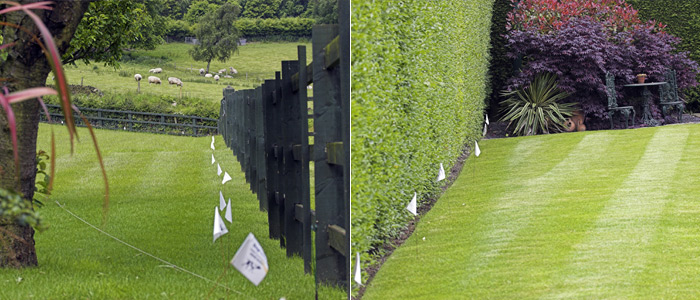
Training flags marking the boundary of an invisible dog fence in a garden

Training flags mark the hidden boundary – giving your dog a clear visual cue during freedom‑fence training.

Frequently asked questions (FAQs)

Is a freedom fence the same as an invisible fence?
“Freedom Fence” is often used generically for underground pet containment, but it’s also a specific product brand. “Invisible Fence®” is a separate brand that invented the technology more than 50 years ago. Both use buried wires and radio signals, but DogFence’s digital FM technology provides quicker, safer corrections than older AM systems.

Is it safe for my dog?
When used correctly, electronic pet fences are safe and humane. The static correction is mild and designed to surprise rather than punish. The key to success is consistent training. DogFence’s professional trainers help your dog learn boundaries quickly and avoid confusion, and the FM signal ensures there are no false activations.

What happens if my dog ignores the signal?
If your dog is highly driven (for example, chasing a squirrel), the reaction time of the collar matters. In freedom fence systems, the delay allows dogs to travel further into the no‑go zone. DogFence’s fast reaction time (15× quicker) corrects the dog before momentum carries them across the boundary, improving containment.
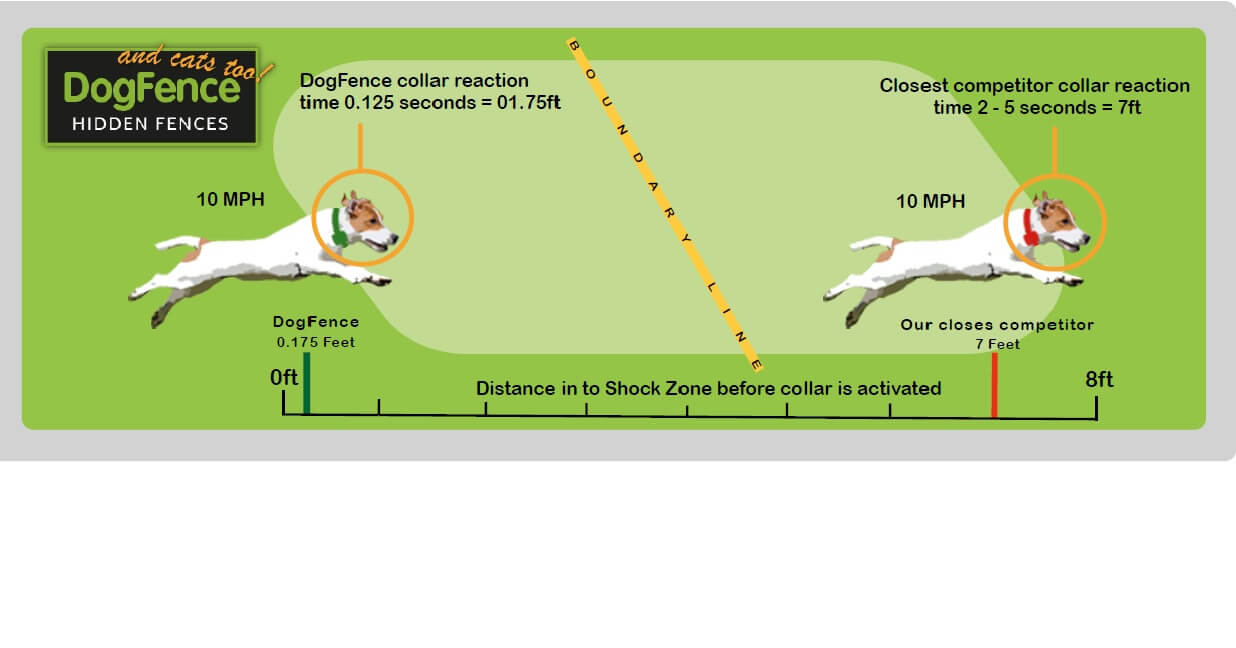
Infographic comparing DogFence and Freedom Fence collar reaction times—when a dog runs at 10 mph into the boundary, the DogFence collar activates in about 0.125 seconds (stopping the dog within roughly 0.175 ft), whereas a Freedom Fence collar takes 2–5 seconds, letting the dog travel up to 7 ft into the no‑go zoneResponse Hang‑On Time: Why Shutdown Speed Matters

Many people focus on how quickly a collar activates, but the shutdown time is just as important. With DogFence, the collar reacts almost instantly in both directions: when your dog crosses the boundary it triggers in about 0.125 s, and when your dog retreats back into the safe zone it switches off just as quickly. In contrast, Freedom Fence collars can take 2–5 seconds to shut down (a delay known as response hang‑on time). That means even if your dog does the right thing and stops or turns around, the collar may continue to beep and deliver a correction for several seconds. Our FM technology avoids this unfair “extra” correction, giving your pet clear feedback and a true safe zone.

Quality & Warranty: Built to Last, Covered When It Counts

Manufacturing and warranty policies are often overlooked, yet they reveal a lot about the quality of a system. Freedom Fence systems were originally made in the USA but production moved to China about a decade ago, and their limited lifetime warranty excludes many common issues. For example, lightning strikes or power surges aren’t covered, nor are dog chews or accidental damage, and the equipment itself is only covered for around three years.

By contrast, every DogFence unit is hand‑tested at DogWatch HQ in Boston and assigned a unique identification number. Our lifetime warranty includes what most pet owners worry about:

  • Lightning strikes & surges: the transmitter is fully covered even if a surge box is fitted.

  • Dog chews: if your pet chews the receiver collar, we’ll repair or replace it.

  • Accidental damage: dogs will be dogs; we expect wear and tear and stand behind our products.
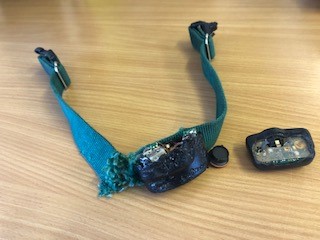
Chewed DogFence receiver collar covered under warranty.

Chewed collar covered by DogFence’s warranty – competitors’ limited warranties don’t cover damage caused by dog chews.

This level of coverage—paired with individual quality testing—means DogFence systems are designed to withstand real‑world use and give you peace of mind for the life of your fence.

What about cats or multiple pets?


DogFence systems can be customised for cats and multi‑pet households. Each collar is individually programmed for your pet’s size, temperament and training level, and our FM signal eliminates crosstalk between collars.

Receiver Collar Size & Weight: DogFence vs. Freedom Fence

For owners of small dogs or cats, the size and weight of the receiver collar matter a lot. Our DogFence mini receiver is one of the smallest on the market and weighs just 30 g, battery included. Even our standard collar comes in at 48 g, whereas the comparable Freedom Fence collar weighs around 54 g. That difference might not sound like much, but when it’s hanging around a tiny pet’s neck all day, every gram counts. If you’re choosing between a DogFence or a Freedom Fence system, size and comfort are areas where we really stand out.
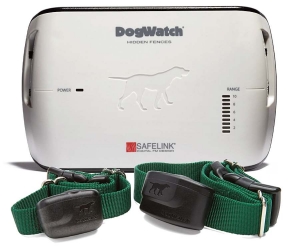
DogFence SafeLink transmitter with two lightweight receiver collars; mini collar weighs 30 g and standard collar 48 g.

DogFence SafeLink transmitter and receiver collars – the mini collar weighs just 30 g and the standard 48 g, compared with around 54 g for a Freedom Fence collar

Boundary Wire: Heavy‑Duty Protection vs. Freedom Fence’s Wire

The boundary wire is the lifeline of any hidden fence—it carries the signal that keeps your dog safe. Freedom Fence kits typically include a 1.5 mm wire, which is adequate but thinner than our heavy‑grade options. DogFence systems offer 2.5 mm and 4 mm gauge wires; the thicker the wire, the less prone it is to damage once it’s buried. A heavier grade wire resists corrosion and accidental breaks far better, meaning fewer disruptions and less maintenance over the life of your freedom‑fence‑style system.

Why choose DogFence?

With over two decades of experience, DogFence provides modern, reliable hidden fence systems that keep your pets safe while giving them the freedom to enjoy your garden. Our FM technology reacts quickly, avoids false activations and comes with a lifetime warranty that covers lightning, surges and chewing. We offer professional installation and training, ensuring your pet learns the boundaries confidently.

Ready to protect your dog with the latest hidden fence technology? Get a free quote from DogFence and discover how our system can give your pet the freedom they deserve – safely.

Professional Installation: DogFence vs. Freedom Fence

Both DogFence and Freedom Fence offer professional installation, but the level of service is very different. DogFence’s installers are full‑time employees—they’re fully trained, IACP‑approved and work from vans equipped with cable‑burial trenchers and wire‑detection systems. We also have a dedicated cat‑fence team because training felines requires a different approach.

By comparison, Freedom Fence relies on subcontracted installers. They’re trained on the product, but many work part‑time and only some have trenching equipment. The result is a less consistent installation experience. When you choose DogFence, you get a specialist team with the right tools and expertise for your property and your pet.

SmartFence: Real‑Time Monitoring Sets DogFence Apart from a Freedom Fence

DogFence has continued to innovate beyond basic “freedom fence” technology. In 2018 we launched the UK’s first hidden pet‑containment system with two‑way communication. Our SmartFence uses an app to feed real‑time information back to a base station so you can monitor your dog’s movements and check the system status wherever you are. This level of insight isn’t available with standard Freedom Fence systems and underscores how DogFence keeps pushing the boundaries of pet safety technology.
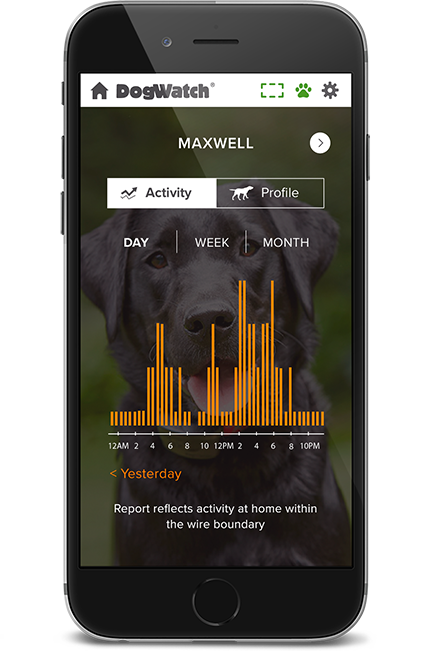
SmartFence app displayed on a smartphone, showing a dog’s activity graph and system status — highlighting DogFence’s two‑way communication and real‑time monitoring

SmartFence app displaying a dog’s activity – DogFence’s two‑way communication system lets you monitor movements and fence status in real time

Conclusion
For more than two decades, DogFence has been helping UK pet owners keep their dogs and cats safely contained. Our digital FM technology reacts faster and shuts down quicker than older AM systems, our boundary wires are tougher, and our lifetime warranty even covers dog chews and accidental damage. With professional installation, tailored training and innovative SmartFence app monitoring, DogFence offers the safest and most reliable solution on the market.

Ready to see how a modern hidden fence can work for your property?

Call us on 01628 476475 or WhatsApp us on 07917 034256 for a free, no‑obligation quote, or fill in our quote form. We look forward to giving your pets the freedom they deserve – safely.

Related posts:



containment fence lets dog run free in field

Dog fences are NOT banned!

Dog fences & Cat fences are not banned!

After the government bought containment fences to a public consultation, it was decided that Dog fences are NOT banned. This landmark decision also has had a positive impact for all you cat lovers – Cat fences are not banned either! Considering the statistics of cats that are injured and killed on the UK’s roads each year this is fantastic decision. Farmers are also relieved that dog fences (aka containment fences) are exempt from the proposed e-collar ban. In the last few years dog attacks on livestock have risen dramatically.

So what is a Dog fence?

A dog fence is an invisible fence that will give your pets freedom in your garden. As pet owners, it gives you peace-of-mind knowing your pet is not escaping, chasing livestock or getting onto the roads. It works silently, invisibly 24/7 covering all boundaries including driveways and open areas. Dog fences have been around for over 40 years. Sadly the modern systems are often maligned without people really understanding how they work.

How do Containment fences work?

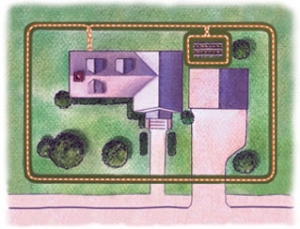
dog fence wire layout, cat fence wire layout

Typical boundary wire layout for dog fence

A central control box is connected to a boundary wire that usually runs around the perimeter of the property. The control box sends a coded radio signal through the boundary wire that has been laid around the property. The size of the signal emitted by the control box can be enlarged or reduced according to the customers’ requirements.

The collar that your pet wears, houses a tiny FM receiver.  As the pet moves towards the signal the collar emits an audible signal to indicate to stop. If the pet continues towards the wire the collar gives a small “corrective impulse” set to the pet’s individual requirements. To some this idea is unthinkable but the impulse is akin to a static shock that you might get if you touch a door knob. When considering a cat fences the containment fences are the only option for giving cats complete freedom and safety in one package.

Why is it so important that Containment fences are not Banned?

With Dog’s & Cats accounting for 16% of reported animal deaths on major roads in the UK over the past 24 months, it is more important than ever to keep your pets safe at home. With over 80% of the people surveyed admitting that they would swerve to avoid hitting a Dog, the question would then be – By swerving what others accidents could this cause? Nobody wants to see Dogs killed on our roads and this is why the message of “Dog fences are not banned” is critical.

And its not just the roads which will be a safer place – Farmers around the UK are also celebrating. Dogs form a critical function on the farms, including companionship, protection and the herding of animals. Just as important though – properties that border the farms with livestock generally use these containment fences to stop the dogs entering the fields and attacking the livestock.

Containment fences are NOT banned! Why Not?

The Consultation lasted 6 weeks ending in April’18 and it was clear that banning containment fences would be a mistake. The public spoke and Over 64% of all the responses received were in favour of retaining Containment fences. The study by Lincoln University which was published in 2016 gave cat fences a positive thumbs up.

In a letter from DEFRA dated February’18 (Before the announcement of the consultation) it was stated:

The evidence from the studies was not strong enough to support a ban on the devices under the Animal Welfare Act 2006. The claim that electronic training aids may be no more effective than other training methods is not in itself a reason to introduce a ban or to impose restrictions on their use. Having said that, our advice is that electronic training aids should only be used as a last resort and on the recommendation of a professional such as a vet, a suitably qualified dog behaviourist, or a dog trainer, and should only be used by competent operators.”

If nothing else the consultation into the use of containment fences has proved that they are a valuable and effective system. Thankfully thousands of owners submitted stories of how the dog fence or cat fence had saved their pets life. It goes without saying that these positive stories were instrumental in assisting the Government to exempt dog fences.

Changes to dog fence legislation

The Government has announced that they will implement new regulations into the installation of dog fences. These regulations will be to  ensure that dog fences and cat fences are correctly installed and that the owners are given the correct training for their pets. DEFRA consulted with DogFence Ltd as our Company pioneered the full installation and training service to the UK. Since 2003 DogFence Ltd have been offering full installation with training for their pets to the dog fence or cat fence systems.

dog fence training with trainer and flags

Dog in training

Where can I find out more about Dog fences?

DogFence Ltd are the UK leading installers of containment fences offering full installation and training for your pets. If you would like more information about the system and the costs call us on (01628) 476475 or click here. 

Electric dog fences will give keep dogs free to run

Are electric dog fences legal?

Are electric dog fences legal?

So you’ve read the recent media reports and are confused about whether electric dog fences are legal. If you are concerned about your pet’s safety and want to use an electric dog fence read on …..


The good news is if you are considering installing an electric dog fence they are completely Legal to use in England. Our dogs and cats can have their freedom and safety!

In March 2018 the Government launched a consultation into the use of all electronic dog and cat collars.  Over a 6 week consultation period 7000+ people responded. Interestingly, the majority of people (64%) were opposed to a ban. The Government looked at the evidence and the  research for both the hand held units (aka remote training collars) and containment fences (aka electric dog fences). In August the Government announced that they would not ban invisible dog fence systems. They went on to state that these fence systems offer safety to pets.

Are there any regulations for installing a electric dog fence?

After considering the evidence the Government noted that in the interests of pet welfare containment fences must be Professionally installed. They . From Autumn 2018 all containment fences will have to be professionally installed with onsite training for the cat or dog.

What do I get with Professional Installation?

So what does Professional Installation give the customer? Firstly extensive knowledge as well as advise and a good standard of product. Companies that offer full installation will have correctly trained their operatives. The operatives will be trained to  know where to place the wire and how to correctly train the pet. These Companies will have also researched the best products in terms of durability and safety. If a product is constantly breaking down due to poor quality of wire or hardware it will leave the pet vulnerable.

When installing an electric dog fence correct placement of the cable is crucial. Ideally the cable will be buried to avoid damage. In situations where burial is not possible the Installer will find a safe position above the ground.  The product sold should have in-built safety features to protect the pet. This will include automatic shutdowns, a low battery warning and a good long battery life.  It is important to consider that if the battery runs out the pet could run out! When installing the cable advice should be given on areas to avoid and where possible the cable should follow natural boundaries.

Once the fence has been installed the Professional should train the cat or the dog for the owner. Ongoing  guidance and support should be part of the service.  A reputable Installation Company should keep records of the pets individual requirements and offer a follow up service for the future.

How do I know if I am getting a Professional Installation?

Companies that offer full installation will have a proven track record  so it will be easy to ask for references and check reviews. They should also offer installation using the trenching equipment and post installation service. Using a one man band or sub-contractor may not meet the Professional Installation regulations require. Due to the high cost of the installation equipment it is unlikely that these individuals will have access to correct installation tools and are most likely not trained. Furthermore a reputable installation Company will usually offer a good guarantee regarding their product and service.

Intrigued and want to learn more? call us on:  03450 623 623 or email us on: info@dogfence.co.uk today.

https://dogfence.co.uk/quote/