Using turmeric for dogs

Using Turmeric for dogs to assist with Health Problems

Is it possible to use Turmeric for dogs?

So we’ve all been hearing about Turmeric recently for use with treating everything from Arthritis to cancer. Has it occurred to you could could also utilize it’s amazing healing properties for your dog? Using Turmeric for dogs is a relatively new concept but Ayurvedic and Chinese medicines have long known the benefits of turmeric. The Health benefits of Turmeric can be seen both internally and externally and recent studies are unveiling amazing results.

What is Turmeric?

A member of ginger family, Turmeric is classed as a herb.  It’s beautiful deep yellow colour has been used to in recipes and to create dyes for thousands of years.  Turmeric may be commonly used to flavour and colour dishes but it is it’s healing powers that are it’s real miracle. A powerful antioxidant and natural and effective anti-inflammatory; Turmeric is a hidden gem. Turmeric can be used to treat Arthritis, allergies, digestive disorders and even Dementia . The use of  Turmeric for dogs has shown interesting results in conjunction with mainstream treatment for battling against Cancers.

Turmeric contains Curcumin. In the USA The Department of Small Animal Clinical Scientists conducted studies that show that curcumin can inhibit tumour growth. The studied also discovered that using Turmeric may even shrink existing tumours. Somehow the Curcumin is able to shut down blood vessels that feed tumours. Whilst conventional methods for the treatment of Cancer should not be dis-guarded the new can be viewed as an additional option under medical guidance.

What are the dosage levels  with Turmeric for dogs?

Dosage is roughly one eighth to one quarter teaspoon per 5kg of your dog’s body weight. Start slow and work up.

Put a teaspoon (or smaller) of turmeric powder in a cup, add boiled hot water to the ingredients until the cup is 1/3 full and then let it cool for a few minutes.  Once cooled add 16 grinds of freshly cracked pepper and a dessertspoon of Olive Oil, Coconut Oil or Rapseed Oil.

Add the mix as a gravy to your dog’s food bowl and let it soak in. You can make up a match and store in the fridge to use over a few days.

Side Effects for using Turmeric for dogs

  • Can cause constipation as it’s a binding agent – use plenty of water with Turmeric.
  • Not not use with Dogs that are prone to Kidney stones.
  • If your dog has a sensitive stomach the Turmeric may cause an upset. If this happens, it’s possible that you’re giving too much or that your dog is simply sensitive to the  Turmeric.
  • Avoid giving turmeric and diabetic drugs together, and if you’re giving your dog aspirin, it is not advisable to give the two together.

As with any holistic treatment it is always best to consult with your vet if your dog has any serious health issues before administering a treatment. There are now many vets that will openly promote alternative therapies and some that offer completely holistic treatments.

Turmeric plant

Turmeric plant


Labrador wearing an electric dog fence collar - these collars are also called containment fences

Are electric dog fences illegal?

Are Electric Dog Fences Illegal? The UK Ban Explained for 2026

Are electric dog fences illegal in the UK? Electronic dog containment fences are not specifically banned in England as of October 2026. However, Wales prohibits collars designed to deliver an electric shock, including electronic containment collars, and Scotland has government guidance advising against their use. Much of the confusion comes from the proposed electric shock collar ban announced in 2018, which never came into force in England.

For a complete breakdown of the current legislation across England, Wales, Scotland and Northern Ireland, read our UK Dog Fence Law Guide, which explains the rules for electronic containment systems and what they mean for dog owners.

For dog owners considering a hidden dog fence, understanding the difference between a remote training collar and an automatic boundary system is essential. This guide explains what the Government proposed, what actually happened and what the latest developments mean for dog owners.

Last reviewed: October 2026.

Why Did People Think Electric Dog Fences Were Going to Be Banned?

In March 2018, the Department for Environment, Food and Rural Affairs (Defra) launched a public consultation on electronic training collars for cats and dogs.

The consultation considered devices that deliver an electric stimulus, including handheld remote training collars and electronic containment systems.

More than 7,300 responses were received. In August 2018, the Government announced that it intended to ban handheld remote-controlled electric shock collars in England but would not extend the proposed ban to invisible fencing containment systems.

This distinction was particularly important for owners using hidden dog fences to help keep pets away from roads and other hazards.

Read the official Defra consultation and Government response.

What Did the Government Actually Say About Invisible Dog Fences?

In its August 2018 announcement, Defra recognised the difference between remote training collars and electronic containment fences.

The Government stated that it did not intend to include invisible fencing containment systems in its proposed ban, although it would keep their use under review.

It also proposed strengthening welfare guidance around containment systems, including professional installation, appropriate training and use as a last resort.

These proposals were widely reported at the time, creating understandable confusion about what would become compulsory.

Did Professional Dog Fence Installation Become a Legal Requirement?

No. Although professional installation was proposed as part of the Government’s 2018 approach to animal welfare guidance, it did not become a general statutory requirement in England.

Dog owners are therefore not legally required simply by virtue of using an electronic containment fence to employ a professional installer.

Nevertheless, professional installation can offer practical advantages, particularly when positioning boundary wires, assessing the property, checking equipment and providing structured training.

Did the Electric Shock Collar Ban Ever Become Law in England?

No. The Government’s 2018 announcement did not itself change the law.

Further regulations were proposed in 2023 to prohibit the use of certain electronic shock collars in England, but the proposed ban did not come into force.

As of October 2026, England has no general statutory prohibition specifically banning electronic dog containment fences.

Owners must still comply with the Animal Welfare Act 2006, including requirements to avoid unnecessary suffering and meet their dogs’ welfare needs.

Will Electric Dog Fences Be Banned in 2026?

There is no confirmed ban on electronic dog containment fences in England as of October 2026.

However, the Government has indicated that the subject of electric shock collars remains under consideration.

Defra’s Animal Welfare Strategy for England, published on 22 December 2025, states that the Government intends to consult later in this Parliament on whether to ban electric shock collars.

The consultation will gather evidence and views to inform any future decision. Its eventual scope and outcome cannot be assumed.

Read the Animal Welfare Strategy for England.

What Is the Difference Between an Electric Dog Fence and a Remote Shock Collar?

Although both types of equipment may involve an electric stimulus, they operate differently.

Electronic dog fenceRemote training collar
Responds automatically to a defined boundary signal.Activated by a person using a remote transmitter.
Designed to help contain a dog within a designated area.Designed to influence behaviour through remote activation.
May provide an audible warning before a static stimulus.May deliver a stimulus when activated by the handler.
Usually requires boundary setup and familiarisation training.Does not require a fixed property boundary.

The distinction was central to the 2018 policy decision, but it does not mean containment systems are exempt from animal welfare requirements.

For a full explanation of the law across all four nations, see our UK Dog Fence Law guide.

Are Electric Dog Fences Illegal in Wales?

Yes, if the system uses a collar designed to administer an electric shock. The Animal Welfare (Electronic Collars) (Wales) Regulations 2010 prohibit attaching such a collar to a dog or cat, causing it to be attached or being responsible for an animal wearing one.

The prohibition includes shock-delivering electronic containment collars, not just handheld remote training devices.

Read the Welsh electronic collar regulations.

Are Electric Dog Fences Illegal in Scotland?

Scotland has not introduced an equivalent specific statutory prohibition on electronic dog containment systems. However, Scottish Government guidance advises against electronic containment systems and other aversive training methods.

Animal welfare legislation still applies, and owners must avoid causing unnecessary suffering.

Read the Scottish Government guidance on dog training aids.

Why Do Some Dog Owners Choose Electronic Containment Fences?

Owners sometimes consider electronic containment systems when conventional fencing is difficult, expensive or unsuitable for the property.

Common situations include:

  • Large rural gardens and country properties.
  • Dogs that repeatedly escape through gaps or beneath fencing.
  • Properties with open driveways.
  • Gardens where traditional fencing would significantly change the appearance of the landscape.
  • Homes close to roads or farmland.

However, electronic containment systems are not physical barriers and cannot guarantee that a dog will remain within a boundary. Owners must consider their dog’s welfare, temperament and individual circumstances.

What Should Owners Look for in a Professionally Installed Dog Fence?

Although professional installation is not a legal requirement in England, owners who choose an electronic containment system may benefit from experienced technical support.

At DogFence, we have supplied and installed DogWatch hidden dog fence systems in the UK since 2003.

Our professional installation service includes:

  • Property assessment: Planning the boundary layout around the garden, driveway and relevant hazards.
  • Boundary installation: Positioning the cable to suit the property and reduce the likelihood of accidental damage.
  • Receiver setup: Selecting and fitting appropriate equipment for the individual dog.
  • Boundary training: Introducing the dog to training flags and warning signals through a structured programme.
  • Ongoing support: Helping owners understand equipment maintenance, collar checks and training requirements.

DogWatch systems also incorporate features such as audible warnings and automatic safety shut-off functions. These features do not eliminate every welfare concern, so individual assessment and appropriate use remain essential.

Are Electronic Dog Fences Humane?

Electronic containment systems remain a subject of animal welfare debate. Some owners value their potential to reduce escapes, while animal welfare organisations raise concerns about fear, anxiety and aversive stimuli.

Professional installation alone does not establish that a system is humane or suitable for every dog.

Owners should consider physical fencing and other alternatives, use reward-based training wherever possible, monitor their dog’s response and seek qualified behavioural advice where appropriate.

Frequently Asked Questions About the Electric Dog Fence Ban

Are electric dog fences banned in England?

No. As of October 2026, electronic dog containment fences are not specifically banned in England. General animal welfare legislation continues to apply.

Did the Government ban invisible dog fences in 2018?

No. In 2018, the Government announced plans to ban handheld remote-controlled shock collars but specifically excluded invisible containment systems from the proposed ban. The proposed legislation did not subsequently come into force.

Is professional dog fence installation compulsory?

No. Professional installation is not a general statutory requirement in England. It was discussed in the 2018 policy proposals but did not become compulsory by law.

Are electric dog fences legal in Wales?

Shock-delivering electronic containment collars are prohibited in Wales under regulations introduced in 2010. The prohibition applies regardless of whether the shock is triggered by a remote control or boundary system.

Could the law change in the future?

Yes. Defra has announced plans to consult on electric shock collars later in this Parliament. Any future legislation will depend on the consultation, Government decisions and the parliamentary process.

Are underground dog fences the same as electric livestock fences?

No. Underground dog containment systems use a boundary signal detected by a receiver collar. Conventional electric livestock fencing uses an electrified physical fence. Their operation and relevant safety considerations differ.

The Bottom Line: Are Electric Dog Fences Illegal?

Electronic dog containment fences remain legal in England as of October 2026. The proposed 2018 ban did not become law, and professional installation was not made compulsory.

However, Wales prohibits shock-delivering containment collars, Scottish Government guidance advises against electronic containment systems, and animal welfare obligations remain important wherever dogs are kept.

For the most complete explanation, read our Are Dog Fences Legal in the UK? 2026 Law Explained guide.

If you are considering a hidden dog boundary in England, DogFence can explain how our professionally installed systems work, the training involved and the practical considerations for your property.

Give Your Dog Freedom. Keep Them Safe.

Considering a hidden dog fence? Talk to the DogFence team about professional installation, personalised boundary training and a system suited to your property.

Get Your Free Dog Fence Quote

Call 01628 476475WhatsApp Us

Some images in this article may be AI-generated for illustrative purposes.

This article provides general information rather than legal advice. Laws and government guidance may change.

electric shock collar

What is an electric shock collar?

So what is an an electric shock collar?electric shock collar

Oh how ghastly an electric shock collar for pets! Firstly, we need to remove the words “electric and shock”. These words are misleading implying a degree of intensity which does not accurately reflect the nature of the stimulus.  Shock is too much of an emotive word. These electric shock collars deliver an aversive stimulus but do not induce a state of shock. The stimulus is lower than the sensation delivered by a tens machine and is similar to the static shock received from a nylon carpet. It is not an electric shock that is delivered.

There are two types of “electric shock collar” – the handheld devices used for dog training and those linked to containment fences. One may well ask what the difference is between a remote trainer collar and a containment fence collar. There are principally 3 differences:

  1. The training levels are lower on a containment fence collar.
  2. With a containment fence the pet is in contro;l with a remote trainer a human is in control.
  3. The containment fence collars are small and lighter.

What are the benefits of a remote training collar?

Some may argue that there are no benefits to using a remote training collar. It is usually from the people who refer to the collars as “electric shock collars”. When used correctly by a qualified trainer these collars can be a life saver for many dogs. Dog’s that have not responded to solely positive training protocols and have behavioral issues can be re-trained with an e-collar. This may well save the dog from being euthanized or shot by a farmer. Respected dog trainer Jamie Penrith of Take the lead Training is a supporter and user of the collars has been instrumental in changing people’s opinions on their use. He has talked openly about the benefits and posted videos to his facebook page and you tube channels to demonstrate these devices.

Frustratingly many of those opposed to training collars have never even used or seen a collar in action. Just as people dogs are not a one size fits all and what works for one dog may not work for another. All dog training involves an element of negative reinforcement you cannot train a dog with a solely reward based training. Many well respected trainers use an advocate the use of these collars.

Big Leash electric shock collar

Remote Trainer Collar

What are the benefits of a containment fence?

Freedom and safety are the key words to use when considering a containment fence.  Again, an electric shock collar is completely inaccurate. The stimulation delivered by the containment fence is 250 times lower than a stock fence. For many cats and dogs they are a life-saver. Each year in the UK there are 300,000 pets killed or injured on the UK’s roads. Many owners have tried all types of traditional fencing and are concerned for their pets safety.

A loose dog can cause an accident or kill livestock; they could even be run over or stolen. Of course, some cats are happy to be kept indoors but other require their freedom. Also, housing cats solely indoors can cause obesity and urological problems. By installing a containment fence the owner can give their cat access to the garden but keep them safe and away from the road. A containment fence is also very flexible and can be used to fence areas that are not suitable for traditional fences at a fraction of the cost.

electric shock collar for containment fence

Containment fence collar

Those against electric shock collars will argue that the collars cause pain, fear and suffering and yet the scientific evidence speaks for it’s self. Owners and users of both remote trainers and containment fences are highly supportive of these products. The research into containment fences carried out by Lincoln University proved there were no adverse welfare affects and bizarrely until Feb 2018 DEFRA maintained that there was no evidence to support a ban for the use of remote trainers collars. In August 2018 the Government announced that they intend to ban remote trainer collars but exempted containment fences. This seems a strange position to take when there have been no new studies. Why the U-turn?

To learn more about our fences call us on:  03450 623 623 or email us on: info@dogfence.co.uk today.

Electric dog fences will give keep dogs free to run

Are electric dog fences legal?

Can I Use an Electric Dog Fence in the UK? 2026 Guide

Can I use an electric dog fence in the UK? Yes, electronic dog containment fences are not specifically banned in England as of October 2026. However, the law differs across the UK. Wales prohibits shock-delivering electronic containment collars, while Scottish Government guidance advises against electronic containment systems. In England, owners must still comply with animal welfare legislation and consider whether a hidden dog fence is suitable for their pet.

At DogFence, we have been supplying and professionally installing DogWatch hidden dog fences since 2003. In this guide, we explain how electronic dog fences work, whether professional installation is compulsory, how boundary training works and what to consider before choosing a system.

Last reviewed: October 2026.

What Is an Electric Dog Fence and How Does It Work?

An electric dog fence, also known as an invisible dog fence or electronic dog containment system, creates a hidden boundary around a garden or property.

Unlike traditional electric livestock fencing, an underground dog fence does not electrify the boundary wire. Instead, a cable transmits a radio signal which is detected by a receiver collar worn by the dog.

With a typical DogWatch wired system:

  1. Boundary installation: A cable is installed around the area where the dog is to be contained.
  2. Radio signal: The transmitter sends an FM radio signal through the boundary cable.
  3. Audible warning: The receiver collar emits a warning tone as the dog approaches the boundary.
  4. Static stimulus: If the dog continues towards the boundary, the receiver may deliver a brief static correction.
  5. Boundary training: Training flags and structured sessions help the dog learn where the boundary lies.

The aim is to teach the dog to recognise and respect the designated boundary rather than relying on a physical barrier.

However, no electronic containment system can guarantee that a dog will never cross the boundary.

Can I Legally Use an Electric Dog Fence in England?

Yes. Electronic dog containment fences are not specifically prohibited in England as of October 2026.

The Animal Welfare Act 2006 nevertheless requires owners to meet their dogs’ welfare needs and protect them from unnecessary suffering.

This means that owners should consider:

  • Whether the system is appropriate for their dog’s temperament, age and health.
  • Whether the dog can understand the boundary through suitable training.
  • Whether the receiver collar fits correctly.
  • Whether the dog shows signs of fear, anxiety or distress.
  • Whether physical fencing or another form of containment would be more suitable.

For a detailed explanation of the legal differences between England, Wales, Scotland and Northern Ireland, read our UK Dog Fence Law guide.

Do Electric Dog Fences Have to Be Professionally Installed?

No. Professional installation is not a general legal requirement in England.

In 2018, Defra announced proposals concerning electronic dog training collars and discussed safeguards for electronic containment systems, including professional installation and training.

However, the proposed requirement for professional installation did not become law.

Although DIY systems are available, professional installation can offer important practical advantages.

Why Choose Professional Dog Fence Installation?

A professionally installed dog fence can be designed around the individual property, taking into account the dog’s behaviour, access points, driveways, existing boundaries and areas that should remain off-limits.

At DogFence, our installation service includes:

  • Property assessment: Planning the boundary layout around gardens, driveways and other features.
  • Boundary cable installation: Installing the cable in a suitable position, normally underground where practical.
  • Equipment setup: Selecting and fitting the receiver collar for the individual pet.
  • Personalised training: Introducing the dog to the boundary using temporary training flags and a structured programme.
  • Aftercare: Providing guidance on maintenance, batteries and ongoing training.

Professional installation does not remove all welfare risks or guarantee containment, but it can help owners understand the equipment and the importance of appropriate training.

What Safety Features Should an Electronic Dog Fence Have?

When comparing electronic dog fences, owners should look beyond the initial purchase price and consider the quality of the equipment, reliability and available support.

Automatic Safety Shut-Off

DogWatch systems incorporate safety features designed to prevent continuous stimulation if a dog remains near the boundary. Owners should understand how these features operate and follow the manufacturer’s instructions.

Audible Boundary Warning

An audible warning allows a trained dog to recognise that it is approaching the boundary before a static stimulus is delivered.

Receiver Battery Monitoring

A receiver collar depends on a functioning battery. Owners should check battery condition and replace batteries at the recommended intervals.

Reliable Boundary Signal

DogWatch uses FM radio technology to transmit the boundary signal. Correct installation and maintenance are important to help maintain consistent operation.

Backup Power

A battery backup can help keep a compatible wired system operating during a temporary mains power interruption. Owners should check the backup capacity and understand its limitations.

How Long Does It Take to Train a Dog to an Invisible Fence?

Boundary training is one of the most important parts of introducing an electronic dog fence.

At DogFence, we generally advise allowing approximately 7 to 10 days for a dog’s initial boundary training, although individual dogs may need longer.

Training normally involves:

  1. Introducing temporary flags to show the boundary position.
  2. Teaching the dog to recognise the warning area.
  3. Using positive reinforcement to encourage the dog to move back into the safe area.
  4. Gradually introducing everyday distractions at a level the dog can manage.
  5. Continuing supervision until the dog demonstrates a reliable understanding of the boundary.

Owners should never force a frightened dog towards a boundary or assume that every dog will respond in the same way.

Read more in our dog training and containment advice articles.

Can I Install an Electric Dog Fence Myself?

DIY electronic dog fence systems are available, and self-installation is not generally prohibited in England.

However, there are several important considerations before attempting an installation.

  • The cable must be positioned correctly to establish the intended boundary.
  • Driveways, paths and other obstacles may require specialist installation methods.
  • Incorrect cable layouts can create unintended signal areas.
  • Collar settings and fitting must be appropriate for the dog.
  • The owner must understand the training programme and equipment limitations.
  • Existing underground services should be identified before digging.

Professional installation may be particularly useful for larger properties, complicated garden layouts and owners who want ongoing technical support.

Can Electric Dog Fences Be Used on Large Rural Properties?

Wired electronic containment systems can be designed for properties ranging from small gardens to substantial rural estates, depending on the equipment and site conditions.

They may be considered where traditional fencing is difficult because of:

  • Long or irregular property boundaries.
  • Open driveways and access routes.
  • Woodland, slopes and uneven ground.
  • Existing hedges or walls.
  • Large gardens and paddocks.

However, electronic containment does not provide a physical barrier and should not be relied upon as the sole protection against every hazard, particularly around livestock or busy roads.

Learn more about underground dog fences for large properties.

Are Electric Dog Fences Suitable for Every Dog?

No. Every dog is different, and an electronic containment system may not be appropriate for some animals.

Particular care is needed with dogs that are highly fearful, anxious, reactive or have relevant health or behavioural concerns.

Owners should also consider whether a physical fence, supervised outdoor access or reward-based training without an electronic collar would better meet their dog’s needs.

Electronic containment is a subject of animal welfare debate. Some owners value its potential to reduce escapes, while welfare organisations raise concerns about aversive stimuli and possible stress.

DogFence recommends considering each dog’s circumstances before selecting a containment solution.

Are Electric Dog Fences Legal Throughout the UK?

No. The legal position is not identical across the four nations.

CountryPosition
EnglandElectronic containment fences are not specifically banned. Animal welfare legislation applies.
WalesShock-delivering electronic containment collars are prohibited.
ScotlandGovernment guidance advises against electronic containment systems.
Northern IrelandNo specific electronic containment collar prohibition identified; general animal welfare law applies.

For the complete legal explanation, see Are Dog Fences Legal in the UK?.

Frequently Asked Questions About Using an Electric Dog Fence

Can I use an electric dog fence in my garden?

In England, electronic dog containment fences are not specifically banned. Owners must comply with animal welfare legislation and consider whether the system is suitable for their dog and property.

Do I need permission to install an underground dog fence?

A buried boundary wire will not normally require planning permission simply because it is installed in a garden. However, property restrictions, protected sites, underground services and other circumstances may require additional checks or consent.

Can I use a dog fence with an open driveway?

A wired containment boundary can be designed to cross a driveway without installing a physical gate. However, a hidden fence is not a physical barrier, so the dog’s training and the reliability of the system are particularly important.

Will an electric dog fence work if my dog digs under fencing?

A hidden boundary may be considered for dogs that dig beneath existing fences because it does not depend on the height or depth of the physical fence. However, effectiveness varies and no system guarantees containment.

Can an electric dog fence work alongside my existing garden fence?

Yes. In suitable circumstances, an electronic containment system can be installed alongside existing fencing, walls or hedges. The physical fence remains in place while the electronic system provides a trained boundary.

Read our guide to using an invisible dog fence with an existing fence.

Is a professional installation legally required?

No. Professional installation is not a general statutory requirement in England. It was discussed during the 2018 policy process, but the proposal did not become law.

What happens if there is a power cut?

A wired system normally requires electrical power. Compatible battery backup equipment can provide temporary operation during a power cut, but its duration is limited and should be checked.

Should I Choose a Professionally Installed Electric Dog Fence?

If you are considering an electronic dog containment system in England, it is worth assessing your dog’s individual needs, the layout of your property and the alternatives available.

DogFence has been installing DogWatch hidden dog fence systems since 2003. Our team can explain the equipment, installation process, boundary training and ongoing maintenance requirements.

We believe that understanding the system properly is essential before deciding whether it is suitable for your dog.

Give Your Dog Freedom. Keep Them Safe.

Thinking about an electric dog fence for your property? Speak to our experienced team about professional installation, personalised training and the right boundary solution for your dog.

Get Your Free Dog Fence Quote

Call 01628 476475WhatsApp Us

Some images in this article may be AI-generated for illustrative purposes.

This article provides general information and is not a substitute for professional legal or veterinary advice. Legislation and official guidance may change.

stop dogs from escaping through driveway with dog fence

How to stop the dog escaping from the garden?

Ways to stop the dog escaping from the garden?

A common question that we hear from owners is how can I stop the dog escaping from the garden. Dogs will be dogs, some escape because they have a high prey drive or they are bored, sometimes it’s food driven. When considering dog proofing the garden there numerous options available. An escaping dog is not only dangerous but can be very stressful.

Traditional Fencing:

Close board or wooden fencing is a popular option for smaller properties. The cost of close board fencing starts from around £80.00 per meter installed but it depends on the property location and terrain. Stock fencing is a slightly more cost effective solution for some properties but may not be secure enough for small dogs and of course dogs will be dogs and they can dig and burrow under both close board or stock fences.  In general the weakest part of the property is the driveway. To dog proof a driveway can run into thousands depending on the type of gates chosen. If the dog is escaping onto a road then securing this area is a priority but will be costly and so a traditional fence may not be the best solution to stop the dog escaping from the garden

Radio dog fences

Radio dog fences have been available for over 40 years but many people still do not know that they exist. They are often referred to as invisible fences or a freedom fence. A radio dog fence is usually a much cheaper method to help prevent the dog escaping from the garden. The fence is more like a virtual fence – there is nothing to see and the fence can cover large areas or areas that would not easily be fenced by a traditional fence. A radio fence is a simple solution to stop the dog escaping and in monetary terms an inexpensive solution.

So what is a radio dog fence. In simple terms it is just a radio transmitter, a boundary wire that surrounds the boundary or the area to be “fenced” and an innovative computer collar which is worn by the pet. The transmitter sends a coded signal through the boundary wire and a “no go zone” is set when the pet enters the no go zone the computer collar activates and lets out a high pitched warning beep to alert the pet that they are in the wrong area. If the pet continues further info the zone the collar then gives out a small static shock (correction) which is set to the pets personality. With the assistance of some temporary training flags and training from the fence installer the pet quickly learns where the boundary is.

The great advantage of radio dog fence is that is covers all areas including the driveway so if someone leaves the gate open the pet cannot wander in the road. Also the radio signal is 360 degrees around the cable so dog or cat cannot climb over or dig under the signal. With the DogFence system the signal is also quicker than any other pet fence worldwide so that dog or cat cannot out run the fence.

Electric stock fencing:

Electric fencing or electric stock fencing can be used for pet containment but it is not advisable and the shock given out by an electric dog fence is 250 times higher than the output on a radio dog fence. Also with an electric fence if the pet gets stuck in the fence they will continue to be shocked until the fence stops or they are rescued but with a radio dog fence the fence shuts down after 15 seconds to ensure the pet is not over corrected. Of course an electric fence is not only more expensive but cannot cover gateways or driveways and if there are children or members of the public close by they are also affected by the electric fence.

Dog Runs

Dog runs are a great solution for keeping your dog within a confined area of the garden but these can be very costly and unsightly and of course will only give the dog a limited area to use. It is also advisable to install a dog kennel within the run so that dog has somewhere to go to if it is very hot or rainy. In some areas planning restrictions may apply and it is always advisable to check with our local council.

Other Solutions to stop the dog escaping maybe to try to train the dog to stay in the garden, for some breeds this maybe a workable solution but for those with a high prey drive or who have had a previous history of constantly escaping the drive to leave the property may be too great.

Summary

Here at DogFence Ltd we meet customers with different breeds and personalities but they all have one thing in common! they want a solution to the stop the dog escaping. Many have tried other forms of fencing and many are sceptical as to whether a radio dog fence will work. Our customers are our best advertisement (Customer Testimonials).

If you would like to learn more about our radio dog fences please call us on 03450 623623 or visit our web site www.dogfence.co.uk.

Active dogs safely contained by a robust dog fence on vast, uneven ground in a beautiful, hilly landscape."

Top Tips to Stop your Dog from Escaping Out of The Garden

Top Tips to Stop your Dog from Escaping Out of The Garden

stop dogs escaping from garden

Yipee – let’s go guys!

Boredom, loneliness, territory protection, prey instincts and separation anxiety are reasons that may lead a dog to stray. So how do you stop your dog from escaping? The answer may be more straight forward than you think.  Firstly it is important to assess the reasons why the dog is escaping.  What is it that draws him off, is it food, livestock another dog or boredom? It goes without saying that every dog owner wishes to prevent their dog from escaping and getting into danger. Outside the safety of the garden your dog risks getting into a fight, being hit by a vehicle, being stolen or even eating something poisonous. There is also responsibility; a free roaming dog is a threat to children, livestock and even other dogs on a lead.

Train your dog?

You may have already asked your trainer how to stop your dog from escaping. Many owners report that the dog develops the habit of escaping through the front door as soon as it is opened. They may also get rewarded for escaping. They get to roam the neighbourhood, scour bins and possibly enjoy a game with another dog! Hence, this then becomes a hard to break habit. Teach your dog to wait at the door until you open it for him and to never go out on its own. Always rewards his good behavior. Your dog will stop getting out of the garden to enjoy treats from you.

Secure your garden

Ensure that your garden area is well secured to stop your dog from escaping. You may be able to use a 6-foot fence to secure the area because most dogs cannot jump over it – you could also consider digging in a chicken wire along the fence line below ground. When a dog is determined to escape, it can do anything to gain access to digging under the 6-foot fence. The chicken wire will be uncomfortable for the dog, and may prevent deter the dog from digging. You can also place concrete or wood blocks at the bottom of your fence to discourage digging. Try to avoid picket fencing as this can cause serious injury to your dog or cat if they impale themselves on the stakes. The issue with a lot of fencing is that wildlife can damage the wire and make holes within the fencing.

Containment fencing

If you have an uneven garden terrain, consider having a smaller dog run that could be confined to one corner. Another alternative for securing the garden is installing underground or invisible fencing. The hidden fence uses a small computer collar that interacts with a signal that surrounds the property. When the dog enters the “no go zone” the dog’s collar reacts to the radio signal and gives the dog a high pitched warning beep to alert the dog that he or she is in the wrong area. If the dog continues the collar gives out a low level static shock (correction). The dog will have been trained to know where the “no go zone” area is located through a training protocol that uses both vocal and visual indicators. The advantage of an invisible dog fence is that they can be installed on nearly any terrain.

Over the years there has been negative press on the use of electronic dog fences, often referred to as electric dog fence but recent studies have dispelled the myths, indeed a study into cat containment reported that there are no negative long term effects with using an electronic fence. (Lincoln 2016) https://www.lincoln.ac.uk/news/2016/09/1265.asp.

The issue of how to stop your dog from escaping is always going to be a difficult subject but below are few tips:-

Driveways and open boundaries

Driveways are always going to be a weak point, as are open areas which cannot be fenced due to planning restrictions. These areas really are ideal for using electric dog fences. Escaping dogs will always use the weakest point on a property and an open gateway or clear area is a golden opportunity for a dog to make a bid for freedom. An underground dog fence will operate invisibly and effectively 24/7 to prevent the dog or cat from escaping through the vulnerable area. Owners often install electric gates to keep dogs and cats off the roads, however, most dogs will quickly learn that when they hear the buzzer they have an open opportunity to not just run out but amble out at a steady pace. An underground dog fence can be fitted in conjunction with electric gates to prevent the pet from escaping when they hear the buzzer.

stop dogs from escaping through driveway

An open driveway is difficult to secure.

Consequences of an escaping dog

If your dog escapes and is caught by a council dog warden you may be issued with a warning, a caution or a fixed penalty fine. If your dog is considered out of control you may even be prosecuted and fined. The penalty is up to 6 months in prison or an unlimited fine!  This is surely a big enough incentive to stop a a dog from escaping! Also further controls can be given to the owner.  In some cases the dog may be transferred to a local kennels whilst the owner is located at a heavy daily cost or even transferred to shelter and possibly re-homed. Recent media reports have also found out that the RSPCA is too quick to euthanise. Sadly owners pets have been permanently separated from their vets within a matter of weeks.


Exercise your dog

A dog that only stays and plays in the garden will eventually get bored, stressed, frustrated and unhappy. Dog’s need a change of scenery. Just like people a change is as good as a rest. If your dog is bored it will look for ways to break the tedium.  For you and your dog’s sanity it is advisable to walk your dog every day if possible. This way he can experience a new environment, remain engaged and interact with other dogs. Exercises not only boosts your dog’s socialization skills but also stimulates its mind. Country walks or walks in the park are a great way to stimulate your dog. The sounds, scents and interaction with nature and other dogs will keep him fresh. If you exercise your dog daily or regularly then this should help to stop your dog escaping from the garden.

Conclusion

Just like human beings, dogs like adventure and to discover new things. If you want to stop your dog from escaping you need to break the cycle. It may be that you need to install a containment fence or that you need to train your dog or exercise him more. If the issue is not tackled then the habit will continue. As an owners we must look at the issue from two angles. Primarily we need to be responsible for our dog’s welfare, state of mind and health. However, we also have a responsibility to those people, livestock and property that a wandering dog may come in contact with.  An engaged happy dog will be less likely to wander.


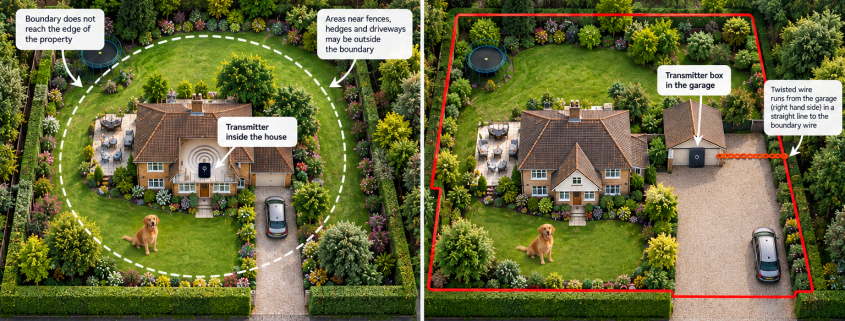
Wireless dog fence vs wired dog fence showing a circular wireless boundary compared with a wired boundary following the full garden perimeter

Wireless dog fence – the truth – do they work?

Wireless Dog Fence vs Wired Dog Fence: Which Is Best for Your Garden?

A wireless dog fence and a wired dog fence are both designed to help keep a dog safely within a defined area, but they create that boundary in very different ways. A wireless dog fence generally creates a circular boundary around a transmitter, while a wired dog fence follows a boundary cable positioned around the actual shape of your garden.

That difference can be particularly important in UK gardens, where boundaries are rarely perfect circles and properties may include slopes, woodland, outbuildings, open driveways or neighbouring roads. Your dog’s personality, behaviour and drive also matter when choosing any form of electronic dog containment.

At DogFence, we have specialised in electronic pet containment in the UK for more than 20 years and professionally install wired dog fence systems. We don’t believe one solution is right for every dog or every property, so this guide explains the practical differences between a wireless dog fence and a wired dog fence – including situations where a wireless system may be perfectly suitable.
Wireless dog fence vs wired dog fence showing a circular wireless boundary compared with a wired boundary following the full garden perimeter

Wireless vs wired dog fence: a wireless system typically creates a circular boundary around the transmitter, while a wired dog fence can follow the full shape of your property, including gardens, hedges and driveways.


What is a wireless dog fence?

A wireless dog fence uses a transmitter to create an electronic containment area without installing a boundary wire around the perimeter of the property.

The transmitter is normally positioned inside the property and sends out a radio signal. The dog wears a compatible receiver collar and is trained to recognise the warning given as it approaches the edge of the permitted area.

Because there is no perimeter wire to install, wireless dog fences can be relatively quick and simple to set up. For the right dog and the right property, this can be a significant advantage.

However, a traditional wireless dog fence generally creates a circular or radial boundary around the transmitter. The electronic boundary therefore does not necessarily follow your fences, hedges, driveway or actual property line.

Wireless systems can also be more affected by the environment in which they are used. Uneven or undulating ground, dense woodland, trees and buildings can potentially affect how consistently a wireless signal reaches different parts of a property.

What is a wired dog fence?

A wired dog fence uses a boundary cable to establish the containment area. The cable can be positioned around the perimeter of the garden or property, allowing the electronic boundary to follow its actual shape.

The dog wears a receiver collar and, just as with a wireless dog fence, must be properly trained to recognise the boundary and respond appropriately to its warning.

Because the boundary is determined by the position of the wire rather than the transmission of a wireless signal across the whole property, a wired electric dog fence can be designed around:

  • irregularly shaped gardens
  • existing fences and hedges
  • driveways and entrance gates
  • long or narrow gardens
  • woodland and heavily wooded areas
  • undulating or sloping ground
  • outbuildings
  • large gardens and rural properties
  • farms and equestrian properties
  • areas within the property where the dog should not have access
  • ponds, swimming pools and other exclusion zones

This flexibility is one of the principal reasons DogFence specialises in professionally installed wired dog fence systems.

Wireless vs wired dog fence: what’s the difference?

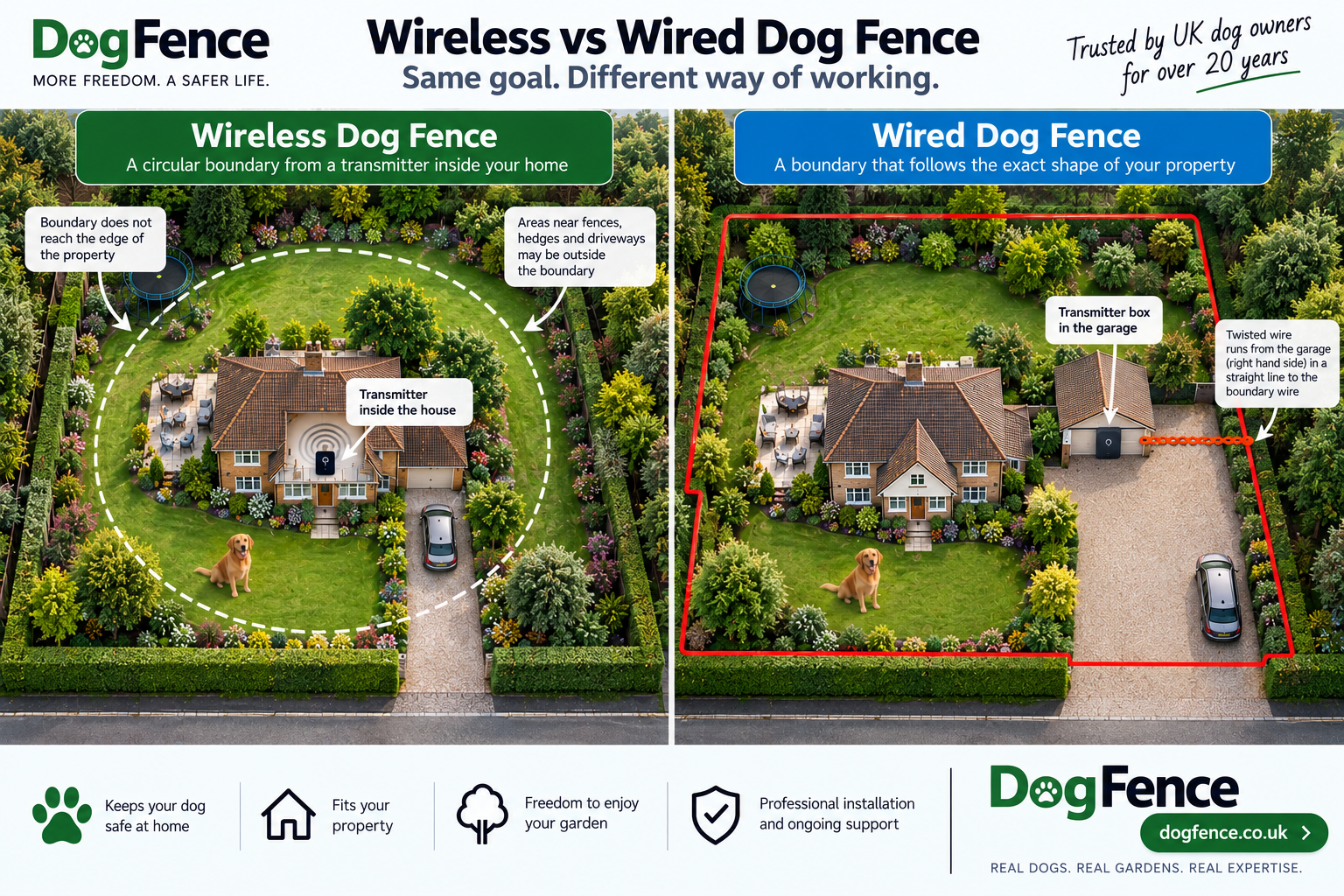
Wireless dog fence vs wired dog fence UK comparison showing differences in boundary shape, uneven terrain, woodland, buildings and driveways

Wireless vs wired dog fence comparison. Wireless systems typically create a circular radio boundary, while a wired dog fence can follow the actual shape of a property, including irregular gardens, woodland, slopes, driveways and outbuildings.

Neither type of electronic dog fence is automatically right for every dog or every property. The most appropriate system depends on the layout of the land, nearby hazards, terrain, buildings and how accurately the containment boundary needs to be positioned. Your dog’s personality, behaviour and drive are equally important considerations.

When can a wireless dog fence work well?

A wireless dog fence can be a practical option where the property has plenty of relatively level, open space and a circular containment area can be positioned safely away from roads and other hazards.

It may also appeal to owners who want a system that can be installed relatively quickly without laying a boundary cable.

The important question is not simply whether a wireless dog fence works. It is whether the boundary created by that particular system works for your property and your dog’s personality, behaviour and drive.

If the permitted wireless area fits comfortably within the safe part of the garden and the property is suitable for a radio-based boundary, a wireless dog fence may be sufficient.

When is a wired dog fence more suitable?

A wired dog fence can be particularly useful when the electronic boundary needs to follow the actual shape and features of the property.

This is common in UK properties where a garden may have hedges on one side, fencing on another, an open driveway at the front, neighbouring properties nearby or uneven ground.

Instead of fitting the garden inside a predetermined wireless containment area, the wired boundary can be designed around the property.

A wired dog fence can be particularly suitable for:

  • long or narrow gardens
  • L-shaped or irregular plots
  • open driveways
  • properties bordered by roads
  • dogs escaping through hedges
  • dogs digging underneath existing fencing
  • dogs jumping or climbing physical fences
  • properties requiring specific exclusion areas
  • properties with undulating or sloping ground
  • properties with outbuildings
  • woodland and heavily wooded properties
  • farms and equestrian properties
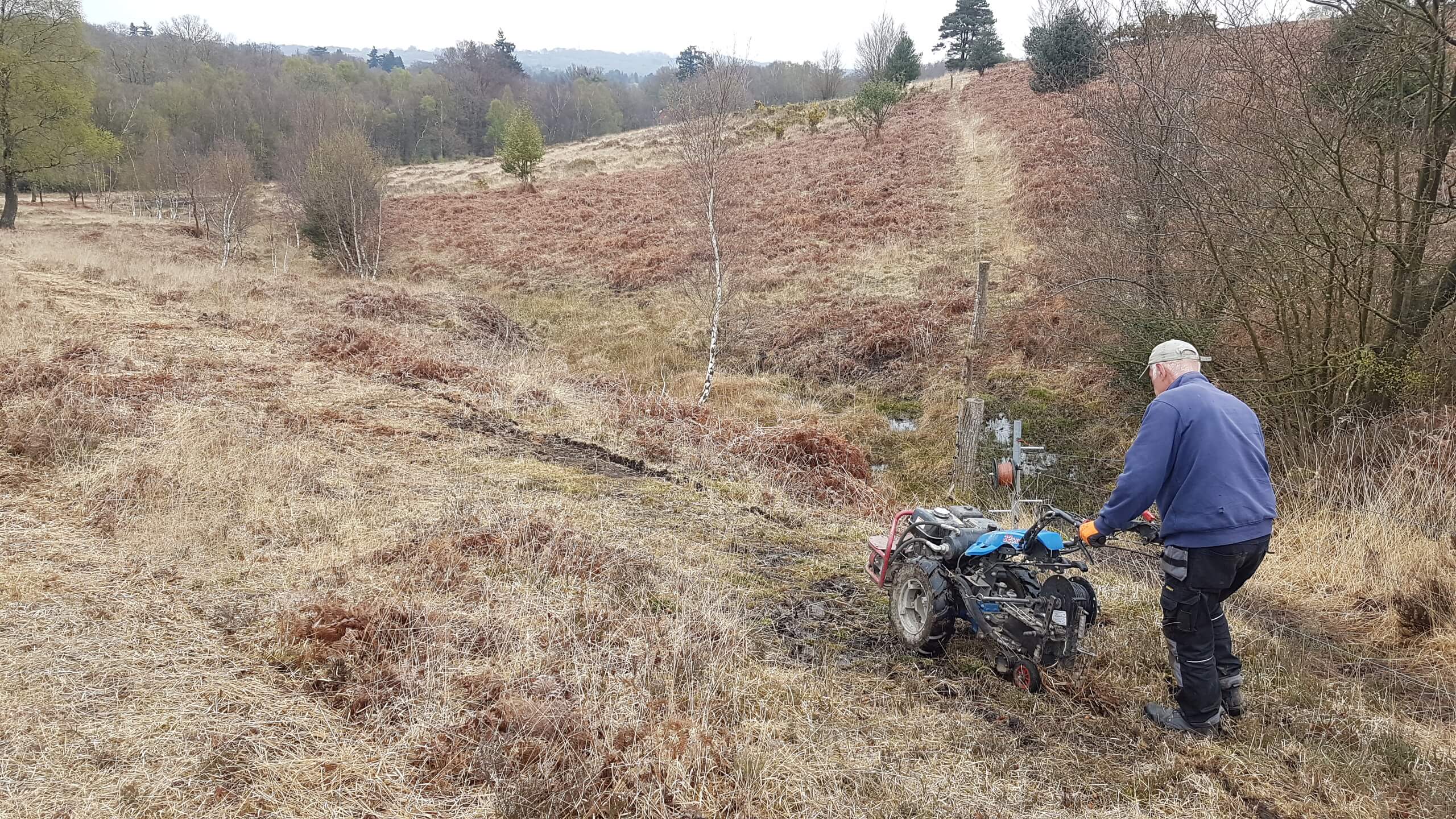
DogFence wired dog fence installation across steep and undulating ground

Unlike wireless systems, a wired dog fence can follow the contours of steep and undulating ground. Here, the DogFence boundary wire is being installed across challenging rural terrain.

Can a wireless dog fence follow the shape of my garden?

A traditional wireless dog fence generally cannot follow an irregular property boundary in the same way as a wired dog fence. Its containment area is determined by the radio signal produced by the transmitter and is typically circular or radial.

This may not matter on a large, open property. However, it becomes much more important when the safe boundary needs to run close to fences, hedges, roads, neighbouring gardens or an open driveway.

A wired dog fence provides greater control because the boundary is established by the position of the cable.

Can a dog fence create exclusion zones within the garden?

One of the advantages of a properly designed wired dog fence is the ability to create boundaries around specific areas within a property, not just around its outer perimeter.

Depending on the system design, dogs can be kept away from areas such as swimming pools, ponds, children’s play areas, vegetable gardens, flower beds or other places where you don’t want them to go.

This can be particularly useful on larger or more complex properties where the dog can have considerable freedom without necessarily having access to every part of the land.

Read more about using DogFence to create dog exclusion zones around areas of your garden.

Can wireless and wired dog fences work with existing fencing?

Yes. An electronic dog fence does not necessarily replace an existing fence or hedge.

Many DogFence customers already have physical boundaries but have a dog that has discovered a way to escape – perhaps by digging underneath a fence, jumping or climbing it, squeezing through gaps or pushing through a hedge.

In these situations, a wired dog fence can be positioned to work alongside the existing physical boundary and provide an additional layer of containment.

Read our guide to dog-proofing your garden and preventing common escape routes.

Can I install a wireless dog fence myself?

Yes. Many wireless dog fences are specifically designed for DIY installation, and this is one of their main attractions. Some wired dog fence systems can also be self-installed, while others are supplied as part of a professional installation and training service.

However, installing the equipment is only one part of establishing a successful electronic containment system. The position of the boundary is important, but training is one of the most important parts of any dog fence set-up.

Whether the dog fence is wired or wireless, the complete recommended training programme should be carried out. The dog needs to learn where the boundary is, understand the warning and know exactly how to respond to it. Good training helps create a successful outcome in which the dog can confidently enjoy the freedom available within its safe area.

If you are installing a system yourself, check that it is supplied with enough training flags to mark the boundary clearly. As a practical guide, we recommend at least 20 training flags for every 100 metres of boundary, together with comprehensive, easy-to-follow training instructions.

Support is also worth considering before choosing where to buy your dog fence. If purchasing through a general third-party online retailer, check what specialist dog-fence training and technical support will actually be available after purchase. A reputable specialist dog fence supplier should be able to help not only with the initial set-up and training, but also with questions and ongoing support after the system has been installed.

At DogFence, our professionally installed systems include an assessment of the property, boundary design, installation and structured training with the dog and owner, together with ongoing support.

Why is training so important with a wireless or wired dog fence?

Training is fundamental whether you choose a wireless dog fence or a wired dog fence. The technology establishes the boundary, but the training teaches the dog what that boundary means.

A receiver collar should never simply be placed on a dog and the dog left to discover the boundary for itself. The dog should be introduced to the boundary in a structured way so that it learns to recognise the warning and retreat confidently into the safe area.

DogFence has always regarded training as part of the containment system rather than an optional extra.
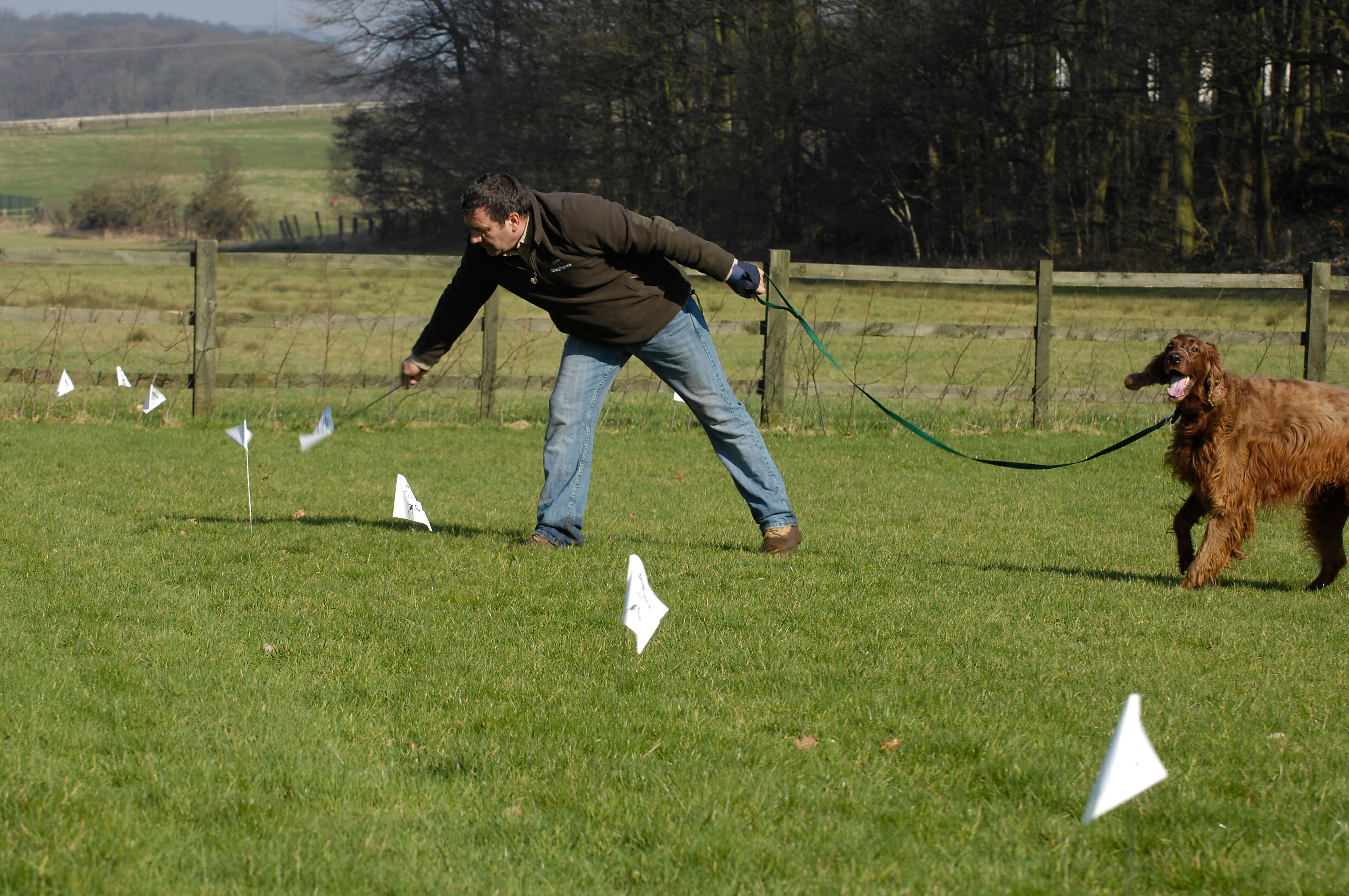
A dog in training on a DogFence electronic dog fence systems

Training the dog using the marker flags

DogFence and the UK Government: why installation and training matter

DogFence consulted directly with the UK Government in 2018 during discussions surrounding electronic training collars and electronic containment fences.

At that time, the Government’s proposals envisaged electronic containment systems being supplied with professional installation and training, reflecting the importance placed on correct system set-up and proper training when using this type of containment.

That principle remains central to the way DogFence works today. When an electronic dog fence is correctly specified, installed and introduced through appropriate training, it can help prevent dogs escaping from their property, becoming lost or reaching hazards such as nearby roads, while allowing them greater freedom to enjoy their garden.

Whether you choose a wired or wireless dog fence, the technology is only part of the solution. Correct boundary design and thorough training are fundamental to a successful outcome and a confident, happy dog.

Can a dog run through a wireless or wired dog fence?

Because neither a wireless nor a wired electronic boundary is a physical barrier, a dog can technically cross it. Effective electronic containment therefore depends on appropriate system design and, importantly, the dog learning where the boundary is and how to respond to its warning.

The objective is for the dog to recognise the warning and turn back before crossing the containment boundary.

The dog’s personality and drive also need to be considered. A dog with a strong chase instinct, for example, needs to be assessed and trained appropriately rather than assuming that simply installing a dog fence will solve the problem.

Read our full guide: Can a Dog Run Through an Invisible Fence?

Why does DogFence use a wired dog fence?

DogFence has specialised in electronic pet containment in the UK for more than 20 years. We use professionally installed wired dog fence technology because it allows us to design the containment boundary around the individual property rather than requiring the property to fit within a predetermined wireless boundary.

That can be particularly important around roads, driveways, neighbouring properties, woodland, undulating terrain, outbuildings, irregular garden boundaries and areas within the property where access needs to be restricted.

For farms, equestrian properties and larger rural homes, it also means the containment boundary can be designed around the way the property is actually used.

But we don’t believe that means everyone should buy a wired DogFence.

A wireless dog fence may be perfectly adequate for some dogs and properties. Equally, there are dogs and circumstances where we may advise that an electronic containment system isn’t appropriate at all.

Find out when an electronic dog fence may not be suitable for your dog.

Wireless dog fence vs wired dog fence: which should I choose?

If you have a large, relatively level and open area where a circular containment zone can sit comfortably inside the safe part of your property, a wireless dog fence may offer a convenient solution without installing a boundary cable.

If your garden is irregularly shaped, has an open driveway, sits close to a road, contains woodland or outbuildings, has undulating ground, or you need the electronic boundary to follow existing fences and hedges accurately, a wired dog fence offers considerably more flexibility over where the boundary can be positioned.

The most important consideration is not simply whether the system is wireless or wired. It is whether the containment system, boundary design and training programme are appropriate for your dog, your dog’s drive and personality, your property and the hazards around it. 

Wireless vs wired dog fence FAQs

Is a wired dog fence better than a wireless dog fence?

Not in every situation. A wired dog fence offers much greater flexibility over the shape and position of the containment boundary. A wireless dog fence can be quicker to set up and may work well on a relatively level, open property where a circular containment area is appropriate.

What is the main disadvantage of a wireless dog fence?

One of the principal limitations of a traditional wireless dog fence is the shape and consistency of its containment area. Because the boundary is created by a radio signal from a transmitter, it cannot normally follow an irregular garden perimeter as precisely as a wired boundary, and terrain, trees or buildings may affect some systems.

What is the main advantage of a wired dog fence?

A wired dog fence allows the containment boundary to be designed around the actual shape and features of the property. This provides greater flexibility around fences, hedges, driveways, gates, woodland, uneven ground and outbuildings.

Does a wired dog fence have to be underground?

Not necessarily. Although wired systems are sometimes called underground dog fences, the purpose of the boundary cable is to establish the electronic boundary. The most appropriate installation method depends on the property and the particular system.

Do wireless dog fences work in UK gardens?

Yes. A wireless dog fence can work in a UK garden where its containment area can be positioned safely within the property and the site conditions are appropriate. For irregularly shaped gardens, woodland, undulating ground or properties where the boundary needs to follow existing fences, hedges or driveways closely, a wired system may provide greater flexibility.

How many training flags do I need for a dog fence?

The boundary should be clearly marked during training so that the dog has a strong visual reference while learning where it is. As a practical guide, DogFence recommends at least 20 training flags per 100 metres of boundary. Follow the training programme supplied with your particular system and make sure you have enough flags before beginning.

Are wireless and wired dog fences suitable for every dog?

No. No dog containment method is appropriate for every dog. The dog’s age, health, temperament, behaviour, personality and drive, together with the property itself, should all be considered before choosing an electronic dog fence.

The aim of any dog fence is to give your dog freedom while keeping them safe. DogFence has been surrounding pets with freedom since 2003 and has safely contained more than 20,000 pets – real-world evidence that hidden dog fencing can work effectively when it is correctly set up and supported by thorough training and ongoing support.

Golden Retriever running towards an invisible dog fence boundary

Dog running freely within a hidden dog fence boundary marked by training flags

Wireless or wired? Not sure what’s right for your dog?

Tell us about your dog, your garden and what you’re trying to achieve. With more than 20 years’ experience in pet containment, we’ll tell you whether we think a DogFence is suitable – and we’ll tell you if we don’t.

📞 Call us on 01628 476475
💬 Chat to us on WhatsApp


GET MY FREE QUOTE

No pressure. No one-size-fits-all solution. Just experienced advice about the safest way to give your dog more freedom.

Image note: Some images used in this article may be AI-generated for illustrative purposes. They are not intended to show a specific DogFence installation, product or individual dog. All advice and information in this article is written and reviewed by DogFence based on more than 20 years’ experience in electronic pet containment.

Large group of dogs with no dog fence collars

What is the most dangerous dog breed in the UK?

Dog attacks in the UK has increased by 76% in 10 years and sadly this figure still seems to be increasing. Is this because there has been a trend toward a certain dog breed or are there just more dogs in the UK now? The numbers were collated from hospital admission records of all patients admitted to National Health Service hospitals. Sadly 16% of these attacks were recorded on children and of those 2/3 were recorded as fatalities.

Large group of dogs

What is the UK’s most dangerous dog breed?

The records show that 7,227 people were admitted to hospitals due to dog-inflicted injury between March 2014 and February 2015. This is a significant increase from the 4,110 dog attack admissions in 2005.

Is there a reason for the rise in dog related injuries?

The rise in the attacks coincides with the exemption of Staffordshire pit bulls from the Dangerous Dogs Act. Interestingly years ago the majority of attacks were on infants (nearly two thirds) but in the last few years this figure has reversed. It seems that the Bull type breeds are not fazed by the size on an adult human, whereas most other dog breeds are subdued by people who are significantly larger than themselves.

The Pit Bull has been banned dog breed in Britain since 1991. Interesting 3% of “bull type breeds” match the characteristics of the Pit Bull breed. Staffordshire Terriers, a pit bull line were exempted from the ban in 1997. In 2015 Doohan and Richardson reporting for The Mirror reported, “More than 3,000 banned Pit Bull terrier-type dogs have been discovered in Britain– almost 25 years after they were banned”.

Doohan and Richardson reported “A Freedom of Information request showed that legislation introduced following fatal attacks on children a quarter of a century ago has failed to halt the animals. Greater London had the largest amount of Pit Bulls with 1,060, and Merseyside was next with 237 followed by Greater Manchester with 223, and the West Midlands with 161.”

The police have the power to seize a dog that deemed as being from the banned dog breed list even if it has not shown signs of aggression. The owner must then prove it is not a banned breed and if the case is taken to court and the owner is found guilty. The punishment is severe; up to £5,000 or even six months in prison but it seems this is not a sufficient deterrent.

What should you do if you come face to face with an aggressive dog?

In recent years media attention has focused on specific breeds, mainly the Bull type breeds and Rottweilers but of course any breed of dog can become aggressive and bite. It is always advisable to follow certain safety procedures around new or strange dogs.

It is strongly recommended not to approach unfamiliar dogs, never to run from a dog or shout or scream at them. Try to remain motionless when confronted by an unfamiliar dog and never look a dog straight in the eye. If a dog is eating or sleeping let him be and do not disturb a mother with her puppies.

Request a call back or more information

[contact-form-7 id=”5″ title=”Contact form 1″]

What are the UK’s most popular dog breeds?

The Top 10 of UK dog breeds in 2018

Just as fashions change so do peoples preferences for their dog breeds. This could be down to life style changes or even social media. Here at DogFence we have seen a trend towards smaller breeds and poodle crosses. It’s good to see, however, that still firmly in the #1 position is the Labrador/Retriever.

Young Retriever in training with Dog Fence

Labrador Retriever in dog fence training

1. The Labrador/Retriever – Always a firm favourite as a family pet , they are loyal, biddable and also highly intelligent. On the negative side they are often quite food orientated which has earned them the nickname of the hoovers in the DogFence office! Interestingly they were the #1 breed that we contained on the system until 2014 when they were overtaken by the Cockapoo!.

2. Cocker Spaniel – A popular choice for both families and also as a working dog the Cocker Spaniel is also a highly intelligent breed but often a good choice for those who don’t want a large breed dog. They are also an extremely handsome breed and have consistently been placed first as best in show at Crufts. They can be a little strong willed and when mixed with the poodle to create the Cockapoo the result can be a very intelligent but stubborn Houdini.

3. Springer Spaniel (English) -Another Gun dog meaning that the top 3 places are held by working dogs. Traditionally a little more sensitive than the Cocker Spaniel and extremely loyal they have a wonderful nature and make excellent family pets. We describe the Springers as fun loving and busy!

4. German Shepherd – The German Shepherd (aka The Alsatian) is a very loyal and intelligent breed. Known for their bravery they are an interesting breeds as they are also quite sensitive and are often misunderstood by those that do not know the breed. They are often used by the Police or armed forces as a service dog because of their fearless nature and intelligence

5.  Staffordshire Bull Terrier – The Staffordshire Bull Terrier is again a breed that comes with a reputation that they do not deserve. When homed in a loving family this loyal breed is both affectionate and inquisitive. Sadly in recent years they have become popular because of their stocky stature and fearless nature and are often the subject of abuse and neglect. Luckily when re-homed into a loving home they make excellent and loyal pets.

6.  Border Terrier -Formerly our #2 breed that we contained on the System Border Terrier is a small rough-coated dog originating from the Scottish borders. They have a wonderful personality and are a popular choice of breed for vets as they both hardy and fun loving. These little dogs love children but don’t be fooled by their sweet looking faces as they are also avid hunters and have a high prey drive (hence the need to contain them effectively with the hidden fence).

7. Cavalier King Charles Spaniel – The Cavalier King Charles Spaniel, is a popular choice for families who like the kind nature found within the Spaniel family but want a small dog. They are friendly and affectionate and love to be sat on someone’s lap.

8. The Golden Retriever – The Golden Retriever or “steady Eddy” as we call them! This breed has the kindest temperament. They are extremely intelligent but do be warned as they love water and if you are not a fan of that “wet dog” smell then this may not be the breed for you.  Known for their loyalty and ability to work with people they  can be found in many working roles such as search and rescue, assistance for blind or deaf people.

9.  Pug –  The Pug breed has increased in popularity over the last few years – they are loved because of looks, small and stocky (almost a mini Boxer with a curly tail) they are entertaining and good-natured.

10. Boxer – The boxer dog, (one of our favourites) was named because of the ‘boxing’ moves they make when fighting or play fighting. Sadly their popularity has fallen in in recent years, but they do make excellent family pets provided you are prepared for the fact that they are bouncy and not nearly as intelligent as the Lab or Springer. They are always looking to please and extremely good natured.


cat safe outdoors with her cat fence

The results of the first study into electronic cat fences.

So what is an electronic cat fence?

An electronic cat fence! Really, how does that work?

It’s actually a very simple but effective solution to keep cats safe in the garden and away from the roads. A simple transmitter is installed in the owners house. This transmitter is attached to wire that surrounds the property. A coded signal is sent through the wire. The wire can be installed above or below ground but it must form a continuous circuit. The signal that surrounds the wire is picked up by the cat fence collar. Should the cat approach the wire the cat fence collar activates by giving a high pitched warning beep. If the cat continues further the collar then sends out a mild static impulse (similar to a tens machine).

pt4 transmitter

The Cat Fence Transmitter

How does the cat know what to do?

Training, the Company that installs the cat fence system will also train the owner and cat. Training for the cat fence is carried out internally using a portable unit. Once the cat understand how to use the internal system the training continues outside. To assist the cat with the position of the cat fence temporary training flags are placed around the boundary.

cat fence training flags

Training flags to mark the boundary


How does the cat know what to do?

Training, the Company that installs the cat fence system will also train the owner and cat. Training for the cat fence is carried out internally using a portable unit. Once the cat understand how to use the internal system the training continues outside. To assist the cat with the position of the cat fence temporary training flags are placed around the boundary.

Similar systems have been used for dogs for over 40 years. Until recently the technology meant that the computer collars were too big for cats. The new cat fence computer collars are both sleek and light weight. Similarly, dog fence and cat fence training protocols are different. Working with animal behaviorists CatFence have developed a simple internal training protocol. Until 2013 there had been no official studies into using electronic fences for cats.

How do I know that the cat fence is safe for my cat to use?

The results of the long awaited study into containment cats using the electronic cat fence system were released in 2016.  Over a three year period the animal welfare researchers at the University of Lincoln, UK, studies all aspects of the fence. They assessed three groups of cats; those allowed to wander freely, those contained with the cat fence and those kept solely indoors.

The study found no evidence of long-term welfare problems for cats living using these fences. More interestingly they also noted that the cats who were able to roam freely in and out of their owners’ gardens had a more distant relationship with their owners.

“Taken together, the findings do not suggest that long-term (at least 12 months) exposure to the system had a significant negative impact on the behaviour and welfare of contained cats. Indeed cats subject to electronic confinement appear to be less neophobic than unrestrained cats.”

Naturally those cats that were left to wander were at more risk from injury or death when left to roam but indoor cats were also at risk. Furthermore the study noted that cats kept solely indoors where more prone to health issues.

cat in house

Keeping cats indoor can cause health and other issues

“In contrast, housing cats solely indoors to remove such risks is associated with increased prevalence of a range of health problems including obesity, Feline Urologic Syndrome and dental disease. Long-term exposure to common flame retardants widely used in homes may also have toxic side effects for cats.”

As cat all cat owners know they are an extension to your family. Sadly there are unscrupulous people around who will steal and sell on pedigree cats. In recent years there has been a surge in the ownership of high value pedigree and naturally this has also increased theft rates. By installing a cat fence an owner is able to allow their cat freedom but also keep a safe eye on them.

Protecting wildlife

Whilst protecting our pets is the primary reason to install a cat fence a bi-product is safety to wildlife. Using the cat fence system also protects wildlife from cats that hunt. In the UK we love our cats and own over 8.1 million but sadly they also do significant damage to our wildlife. Each year our domestic cats are responsible for the  death of 55 million small mammals and birds.

grey cat with cat fence collar

Flissy modelling her pink cat fence collar!

Without the amazing research from the team at Lincoln owners would be unaware of the benefits electronic cat fences offer. With the 300,000+ pets that get injured or killed on the UK’s roads increasing year on year cat fencing  gives owners food for thought.