Tag Archive for: containment fence

Black cat laying on sofa wearing cat fence collar

Cat Fence – how a cat fence saved my cat!

Cat Fence Saved my Cats Life!

I wanted to take a moment to tell you all about how a Cat Fence saved our cat’s (Figaro’s) life. You may have heard them called containment fences or even electric cat fences.

Without our Cat Fence I really fear that Figaro would not be with us anymore and I would not be able to tell you all his tail.

Figaro came to us when he was 6 years old we rescued him from a local cat shelter. The whole family fell in love the second we met him. He was so handsome; his glossy black fur and bright shiny eyes. I couldn’t believe my whiskers when the lady at the cat shelter told us Figaro had been tricky to re home due to the colour of his fur. Would you believe that black cats aren’t as popular because they don’t look as good in ‘selfies’? At this point in time we all felt that our garden was safe and had not even considered a containment fence or cat fencing.

Figaro settled into his new home nicely. We kept him inside for a week or so but he was so inquisitive about the outside world. I couldn’t keep him indoors any longer. Figaro had missed his freedom being in the cat shelter and I couldn’t wait to let him explore the garden.

black cat wearing cat fence collar sat on tool box

Figaro helping with the DIY!

At first he stayed within the garden and loved lazing in the bushes and hunting mice. Over the next few weeks Figaro began to explore further afield. At first it was the neighbour’s garden, then a visit to the tabby cat down the road. His adventures grew longer and longer but he always bought himself home in time for dinner. We never knew quite how far he went but he always returned.

That dreaded moment when the cat did not come home!

Then it came that awful night he didn’t come home for his dinner. It was getting late and he still wasn’t home. I went into the garden and called him…nothing. I tried to tempt him with his favourite – Tuna! But still nothing. I decided to leave his cat flap open and went to bed, he would be home in the morning, I was sure.

Morning came and he wasn’t home. I searched everywhere for him. As the days went on I started to fear the worst. We lived a reasonable distance from a few busy roads and knew two families that had lost their fur babies in road traffic accidents. Trying to remain positive I decided to visit as many neighbouring houses as I could to ask if they had seen him.

There had been no sightings. One of my neighbours (who had previously lost several cats to the road) told me about this amazing device called a

A small lightweight collar that the cat wears and a wire installed around the garden. The cat is trained to know how the collar works and receives a warning beep followed by a small static impulse to stop them from straying outside of the garden. She let me feel the collar as I had visions of my cat leaping out it’s skin for it’s life. I have to admit that I was skeptical as to how it would work because when I felt the sensation it was very small and not at all how I imagined.

My neighbour told me it’s the only way she’s been able to have a cat again after the devastating losses of her other cats. It enables her cat to explore its natural environment but keeps them safe at the same time and gives you piece of mind – How amazing!

I walked home furious with myself that I hadn’t discovered Cat Fence before. If I had just known about it, Figaro would still be at home safe in his garden. I brushed a tear away as I reached my front door. How could I have let this happen? I was probably never going to see my beautiful boy again.

Several days went passed and I resigned myself that he was gone. It was the not knowing that hurt the most, had been injured, killed or had he just found a new family. I hope it was the latter.

The day I decided to research Containment Fences.

One wonderful day after turning the key in front door and letting myself in I heard his little meow.  He came straight over brushing against my leg and purring. Actually he looked fine, a little thinner and obviously relieved to be home. We had had a lucky escape and I vowed not to let it happen again. I went straight around to my neighbour and got the details for the cat fence Company. Within an hour I had booked for our new Cat Fence to be installed.

The installer was excellent and explained all about the cat fence to me. He did some indoor training with myself and Figaro which allows Figaro to learn about the “no go zone” before using it in the garden. After 20 minutes Figaro knew what the beep meant and he was no longer entering the “no go Zone”. We had to keep indoors for a few days to ensure that he really knew how the cat fence worked.

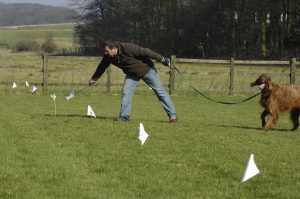
The gentleman explained that cats are very intelligent and pick things up quickly and that I would need to use Flags in my garden for the first few weeks to mark out the “no go zone” but could take them out once he fully understood.

cat fence training for containment fence is carried out inside using indoor unit.

Cat in training.

It’s been 4 years now since our Cat Fence has been installed and I am able to relax Knowing that Figaro will always be home for dinner. As I type this I can see him out of the window, happily hunting the mice in the sun and enjoying his freedom whilst being safely contained in his haven.

Thank You Cat Fence!

containment fence lets dog run free in field

Dog fences are NOT banned!

Dog fences & Cat fences are not banned!

After the government bought containment fences to a public consultation, it was decided that Dog fences are NOT banned. This landmark decision also has had a positive impact for all you cat lovers – Cat fences are not banned either! Considering the statistics of cats that are injured and killed on the UK’s roads each year this is fantastic decision. Farmers are also relieved that dog fences (aka containment fences) are exempt from the proposed e-collar ban. In the last few years dog attacks on livestock have risen dramatically.

So what is a Dog fence?

A dog fence is an invisible fence that will give your pets freedom in your garden. As pet owners, it gives you peace-of-mind knowing your pet is not escaping, chasing livestock or getting onto the roads. It works silently, invisibly 24/7 covering all boundaries including driveways and open areas. Dog fences have been around for over 40 years. Sadly the modern systems are often maligned without people really understanding how they work.

How do Containment fences work?

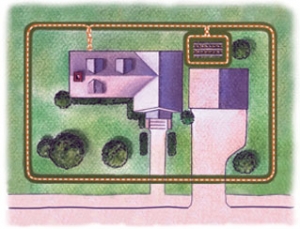
dog fence wire layout, cat fence wire layout

Typical boundary wire layout for dog fence

A central control box is connected to a boundary wire that usually runs around the perimeter of the property. The control box sends a coded radio signal through the boundary wire that has been laid around the property. The size of the signal emitted by the control box can be enlarged or reduced according to the customers’ requirements.

The collar that your pet wears, houses a tiny FM receiver.  As the pet moves towards the signal the collar emits an audible signal to indicate to stop. If the pet continues towards the wire the collar gives a small “corrective impulse” set to the pet’s individual requirements. To some this idea is unthinkable but the impulse is akin to a static shock that you might get if you touch a door knob. When considering a cat fences the containment fences are the only option for giving cats complete freedom and safety in one package.

Why is it so important that Containment fences are not Banned?

With Dog’s & Cats accounting for 16% of reported animal deaths on major roads in the UK over the past 24 months, it is more important than ever to keep your pets safe at home. With over 80% of the people surveyed admitting that they would swerve to avoid hitting a Dog, the question would then be – By swerving what others accidents could this cause? Nobody wants to see Dogs killed on our roads and this is why the message of “Dog fences are not banned” is critical.

And its not just the roads which will be a safer place – Farmers around the UK are also celebrating. Dogs form a critical function on the farms, including companionship, protection and the herding of animals. Just as important though – properties that border the farms with livestock generally use these containment fences to stop the dogs entering the fields and attacking the livestock.

Containment fences are NOT banned! Why Not?

The Consultation lasted 6 weeks ending in April’18 and it was clear that banning containment fences would be a mistake. The public spoke and Over 64% of all the responses received were in favour of retaining Containment fences. The study by Lincoln University which was published in 2016 gave cat fences a positive thumbs up.

In a letter from DEFRA dated February’18 (Before the announcement of the consultation) it was stated:

“The evidence from the studies was not strong enough to support a ban on the devices under the Animal Welfare Act 2006. The claim that electronic training aids may be no more effective than other training methods is not in itself a reason to introduce a ban or to impose restrictions on their use. Having said that, our advice is that electronic training aids should only be used as a last resort and on the recommendation of a professional such as a vet, a suitably qualified dog behaviourist, or a dog trainer, and should only be used by competent operators.”

If nothing else the consultation into the use of containment fences has proved that they are a valuable and effective system. Thankfully thousands of owners submitted stories of how the dog fence or cat fence had saved their pets life. It goes without saying that these positive stories were instrumental in assisting the Government to exempt dog fences.

Changes to dog fence legislation

The Government has announced that they will implement new regulations into the installation of dog fences. These regulations will be to  ensure that dog fences and cat fences are correctly installed and that the owners are given the correct training for their pets. DEFRA consulted with DogFence Ltd as our Company pioneered the full installation and training service to the UK. Since 2003 DogFence Ltd have been offering full installation with training for their pets to the dog fence or cat fence systems.

dog fence training with trainer and flags

Dog in training

Where can I find out more about Dog fences?

DogFence Ltd are the UK leading installers of containment fences offering full installation and training for your pets. If you would like more information about the system and the costs call us on (01628) 476475 or click here. 

Labrador wearing an electric dog fence collar - these collars are also called containment fences

Are electric dog fences illegal?

Are Electric Dog Fences Illegal? The UK Ban Explained for 2026

Are electric dog fences illegal in the UK? Electronic dog containment fences are not specifically banned in England as of October 2026. However, Wales prohibits collars designed to deliver an electric shock, including electronic containment collars, and Scotland has government guidance advising against their use. Much of the confusion comes from the proposed electric shock collar ban announced in 2018, which never came into force in England.

For a complete breakdown of the current legislation across England, Wales, Scotland and Northern Ireland, read our UK Dog Fence Law Guide, which explains the rules for electronic containment systems and what they mean for dog owners.

For dog owners considering a hidden dog fence, understanding the difference between a remote training collar and an automatic boundary system is essential. This guide explains what the Government proposed, what actually happened and what the latest developments mean for dog owners.

Last reviewed: October 2026.

Why Did People Think Electric Dog Fences Were Going to Be Banned?

In March 2018, the Department for Environment, Food and Rural Affairs (Defra) launched a public consultation on electronic training collars for cats and dogs.

The consultation considered devices that deliver an electric stimulus, including handheld remote training collars and electronic containment systems.

More than 7,300 responses were received. In August 2018, the Government announced that it intended to ban handheld remote-controlled electric shock collars in England but would not extend the proposed ban to invisible fencing containment systems.

This distinction was particularly important for owners using hidden dog fences to help keep pets away from roads and other hazards.

Read the official Defra consultation and Government response.

What Did the Government Actually Say About Invisible Dog Fences?

In its August 2018 announcement, Defra recognised the difference between remote training collars and electronic containment fences.

The Government stated that it did not intend to include invisible fencing containment systems in its proposed ban, although it would keep their use under review.

It also proposed strengthening welfare guidance around containment systems, including professional installation, appropriate training and use as a last resort.

These proposals were widely reported at the time, creating understandable confusion about what would become compulsory.

Did Professional Dog Fence Installation Become a Legal Requirement?

No. Although professional installation was proposed as part of the Government’s 2018 approach to animal welfare guidance, it did not become a general statutory requirement in England.

Dog owners are therefore not legally required simply by virtue of using an electronic containment fence to employ a professional installer.

Nevertheless, professional installation can offer practical advantages, particularly when positioning boundary wires, assessing the property, checking equipment and providing structured training.

Did the Electric Shock Collar Ban Ever Become Law in England?

No. The Government’s 2018 announcement did not itself change the law.

Further regulations were proposed in 2023 to prohibit the use of certain electronic shock collars in England, but the proposed ban did not come into force.

As of October 2026, England has no general statutory prohibition specifically banning electronic dog containment fences.

Owners must still comply with the Animal Welfare Act 2006, including requirements to avoid unnecessary suffering and meet their dogs’ welfare needs.

Will Electric Dog Fences Be Banned in 2026?

There is no confirmed ban on electronic dog containment fences in England as of October 2026.

However, the Government has indicated that the subject of electric shock collars remains under consideration.

Defra’s Animal Welfare Strategy for England, published on 22 December 2025, states that the Government intends to consult later in this Parliament on whether to ban electric shock collars.

The consultation will gather evidence and views to inform any future decision. Its eventual scope and outcome cannot be assumed.

Read the Animal Welfare Strategy for England.

What Is the Difference Between an Electric Dog Fence and a Remote Shock Collar?

Although both types of equipment may involve an electric stimulus, they operate differently.

Electronic dog fenceRemote training collar
Responds automatically to a defined boundary signal.Activated by a person using a remote transmitter.
Designed to help contain a dog within a designated area.Designed to influence behaviour through remote activation.
May provide an audible warning before a static stimulus.May deliver a stimulus when activated by the handler.
Usually requires boundary setup and familiarisation training.Does not require a fixed property boundary.

The distinction was central to the 2018 policy decision, but it does not mean containment systems are exempt from animal welfare requirements.

For a full explanation of the law across all four nations, see our UK Dog Fence Law guide.

Are Electric Dog Fences Illegal in Wales?

Yes, if the system uses a collar designed to administer an electric shock. The Animal Welfare (Electronic Collars) (Wales) Regulations 2010 prohibit attaching such a collar to a dog or cat, causing it to be attached or being responsible for an animal wearing one.

The prohibition includes shock-delivering electronic containment collars, not just handheld remote training devices.

Read the Welsh electronic collar regulations.

Are Electric Dog Fences Illegal in Scotland?

Scotland has not introduced an equivalent specific statutory prohibition on electronic dog containment systems. However, Scottish Government guidance advises against electronic containment systems and other aversive training methods.

Animal welfare legislation still applies, and owners must avoid causing unnecessary suffering.

Read the Scottish Government guidance on dog training aids.

Why Do Some Dog Owners Choose Electronic Containment Fences?

Owners sometimes consider electronic containment systems when conventional fencing is difficult, expensive or unsuitable for the property.

Common situations include:

  • Large rural gardens and country properties.
  • Dogs that repeatedly escape through gaps or beneath fencing.
  • Properties with open driveways.
  • Gardens where traditional fencing would significantly change the appearance of the landscape.
  • Homes close to roads or farmland.

However, electronic containment systems are not physical barriers and cannot guarantee that a dog will remain within a boundary. Owners must consider their dog’s welfare, temperament and individual circumstances.

What Should Owners Look for in a Professionally Installed Dog Fence?

Although professional installation is not a legal requirement in England, owners who choose an electronic containment system may benefit from experienced technical support.

At DogFence, we have supplied and installed DogWatch hidden dog fence systems in the UK since 2003.

Our professional installation service includes:

  • Property assessment: Planning the boundary layout around the garden, driveway and relevant hazards.
  • Boundary installation: Positioning the cable to suit the property and reduce the likelihood of accidental damage.
  • Receiver setup: Selecting and fitting appropriate equipment for the individual dog.
  • Boundary training: Introducing the dog to training flags and warning signals through a structured programme.
  • Ongoing support: Helping owners understand equipment maintenance, collar checks and training requirements.

DogWatch systems also incorporate features such as audible warnings and automatic safety shut-off functions. These features do not eliminate every welfare concern, so individual assessment and appropriate use remain essential.

Are Electronic Dog Fences Humane?

Electronic containment systems remain a subject of animal welfare debate. Some owners value their potential to reduce escapes, while animal welfare organisations raise concerns about fear, anxiety and aversive stimuli.

Professional installation alone does not establish that a system is humane or suitable for every dog.

Owners should consider physical fencing and other alternatives, use reward-based training wherever possible, monitor their dog’s response and seek qualified behavioural advice where appropriate.

Frequently Asked Questions About the Electric Dog Fence Ban

Are electric dog fences banned in England?

No. As of October 2026, electronic dog containment fences are not specifically banned in England. General animal welfare legislation continues to apply.

Did the Government ban invisible dog fences in 2018?

No. In 2018, the Government announced plans to ban handheld remote-controlled shock collars but specifically excluded invisible containment systems from the proposed ban. The proposed legislation did not subsequently come into force.

Is professional dog fence installation compulsory?

No. Professional installation is not a general statutory requirement in England. It was discussed in the 2018 policy proposals but did not become compulsory by law.

Are electric dog fences legal in Wales?

Shock-delivering electronic containment collars are prohibited in Wales under regulations introduced in 2010. The prohibition applies regardless of whether the shock is triggered by a remote control or boundary system.

Could the law change in the future?

Yes. Defra has announced plans to consult on electric shock collars later in this Parliament. Any future legislation will depend on the consultation, Government decisions and the parliamentary process.

Are underground dog fences the same as electric livestock fences?

No. Underground dog containment systems use a boundary signal detected by a receiver collar. Conventional electric livestock fencing uses an electrified physical fence. Their operation and relevant safety considerations differ.

The Bottom Line: Are Electric Dog Fences Illegal?

Electronic dog containment fences remain legal in England as of October 2026. The proposed 2018 ban did not become law, and professional installation was not made compulsory.

However, Wales prohibits shock-delivering containment collars, Scottish Government guidance advises against electronic containment systems, and animal welfare obligations remain important wherever dogs are kept.

For the most complete explanation, read our Are Dog Fences Legal in the UK? 2026 Law Explained guide.

If you are considering a hidden dog boundary in England, DogFence can explain how our professionally installed systems work, the training involved and the practical considerations for your property.

Give Your Dog Freedom. Keep Them Safe.

Considering a hidden dog fence? Talk to the DogFence team about professional installation, personalised boundary training and a system suited to your property.

Get Your Free Dog Fence Quote

Call 01628 476475WhatsApp Us

Some images in this article may be AI-generated for illustrative purposes.

This article provides general information rather than legal advice. Laws and government guidance may change.


electric shock collar

What is an electric shock collar?

So what is an an electric shock collar?electric shock collar

Oh how ghastly an electric shock collar for pets! Firstly, we need to remove the words “electric and shock”. These words are misleading implying a degree of intensity which does not accurately reflect the nature of the stimulus.  Shock is too much of an emotive word. These electric shock collars deliver an aversive stimulus but do not induce a state of shock. The stimulus is lower than the sensation delivered by a tens machine and is similar to the static shock received from a nylon carpet. It is not an electric shock that is delivered.

There are two types of “electric shock collar” – the handheld devices used for dog training and those linked to containment fences. One may well ask what the difference is between a remote trainer collar and a containment fence collar. There are principally 3 differences:

  1. The training levels are lower on a containment fence collar.
  2. With a containment fence the pet is in contro;l with a remote trainer a human is in control.
  3. The containment fence collars are small and lighter.

What are the benefits of a remote training collar?

Some may argue that there are no benefits to using a remote training collar. It is usually from the people who refer to the collars as “electric shock collars”. When used correctly by a qualified trainer these collars can be a life saver for many dogs. Dog’s that have not responded to solely positive training protocols and have behavioral issues can be re-trained with an e-collar. This may well save the dog from being euthanized or shot by a farmer. Respected dog trainer Jamie Penrith of Take the lead Training is a supporter and user of the collars has been instrumental in changing people’s opinions on their use. He has talked openly about the benefits and posted videos to his facebook page and you tube channels to demonstrate these devices.

Frustratingly many of those opposed to training collars have never even used or seen a collar in action. Just as people dogs are not a one size fits all and what works for one dog may not work for another. All dog training involves an element of negative reinforcement you cannot train a dog with a solely reward based training. Many well respected trainers use an advocate the use of these collars.

Big Leash electric shock collar

Remote Trainer Collar

What are the benefits of a containment fence?

Freedom and safety are the key words to use when considering a containment fence.  Again, an electric shock collar is completely inaccurate. The stimulation delivered by the containment fence is 250 times lower than a stock fence. For many cats and dogs they are a life-saver. Each year in the UK there are 300,000 pets killed or injured on the UK’s roads. Many owners have tried all types of traditional fencing and are concerned for their pets safety.

A loose dog can cause an accident or kill livestock; they could even be run over or stolen. Of course, some cats are happy to be kept indoors but other require their freedom. Also, housing cats solely indoors can cause obesity and urological problems. By installing a containment fence the owner can give their cat access to the garden but keep them safe and away from the road. A containment fence is also very flexible and can be used to fence areas that are not suitable for traditional fences at a fraction of the cost.

electric shock collar for containment fence

Containment fence collar

Those against electric shock collars will argue that the collars cause pain, fear and suffering and yet the scientific evidence speaks for it’s self. Owners and users of both remote trainers and containment fences are highly supportive of these products. The research into containment fences carried out by Lincoln University proved there were no adverse welfare affects and bizarrely until Feb 2018 DEFRA maintained that there was no evidence to support a ban for the use of remote trainers collars. In August 2018 the Government announced that they intend to ban remote trainer collars but exempted containment fences. This seems a strange position to take when there have been no new studies. Why the U-turn?

To learn more about our fences call us on:  03450 623 623 or email us on: info@dogfence.co.uk today.

Electric dog fences will give keep dogs free to run

Are electric dog fences legal?

Can I Use an Electric Dog Fence in the UK? 2026 Guide

Can I use an electric dog fence in the UK? Yes, electronic dog containment fences are not specifically banned in England as of October 2026. However, the law differs across the UK. Wales prohibits shock-delivering electronic containment collars, while Scottish Government guidance advises against electronic containment systems. In England, owners must still comply with animal welfare legislation and consider whether a hidden dog fence is suitable for their pet.

At DogFence, we have been supplying and professionally installing DogWatch hidden dog fences since 2003. In this guide, we explain how electronic dog fences work, whether professional installation is compulsory, how boundary training works and what to consider before choosing a system.

Last reviewed: October 2026.

What Is an Electric Dog Fence and How Does It Work?

An electric dog fence, also known as an invisible dog fence or electronic dog containment system, creates a hidden boundary around a garden or property.

Unlike traditional electric livestock fencing, an underground dog fence does not electrify the boundary wire. Instead, a cable transmits a radio signal which is detected by a receiver collar worn by the dog.

With a typical DogWatch wired system:

  1. Boundary installation: A cable is installed around the area where the dog is to be contained.
  2. Radio signal: The transmitter sends an FM radio signal through the boundary cable.
  3. Audible warning: The receiver collar emits a warning tone as the dog approaches the boundary.
  4. Static stimulus: If the dog continues towards the boundary, the receiver may deliver a brief static correction.
  5. Boundary training: Training flags and structured sessions help the dog learn where the boundary lies.

The aim is to teach the dog to recognise and respect the designated boundary rather than relying on a physical barrier.

However, no electronic containment system can guarantee that a dog will never cross the boundary.

Can I Legally Use an Electric Dog Fence in England?

Yes. Electronic dog containment fences are not specifically prohibited in England as of October 2026.

The Animal Welfare Act 2006 nevertheless requires owners to meet their dogs’ welfare needs and protect them from unnecessary suffering.

This means that owners should consider:

  • Whether the system is appropriate for their dog’s temperament, age and health.
  • Whether the dog can understand the boundary through suitable training.
  • Whether the receiver collar fits correctly.
  • Whether the dog shows signs of fear, anxiety or distress.
  • Whether physical fencing or another form of containment would be more suitable.

For a detailed explanation of the legal differences between England, Wales, Scotland and Northern Ireland, read our UK Dog Fence Law guide.

Do Electric Dog Fences Have to Be Professionally Installed?

No. Professional installation is not a general legal requirement in England.

In 2018, Defra announced proposals concerning electronic dog training collars and discussed safeguards for electronic containment systems, including professional installation and training.

However, the proposed requirement for professional installation did not become law.

Although DIY systems are available, professional installation can offer important practical advantages.

Why Choose Professional Dog Fence Installation?

A professionally installed dog fence can be designed around the individual property, taking into account the dog’s behaviour, access points, driveways, existing boundaries and areas that should remain off-limits.

At DogFence, our installation service includes:

  • Property assessment: Planning the boundary layout around gardens, driveways and other features.
  • Boundary cable installation: Installing the cable in a suitable position, normally underground where practical.
  • Equipment setup: Selecting and fitting the receiver collar for the individual pet.
  • Personalised training: Introducing the dog to the boundary using temporary training flags and a structured programme.
  • Aftercare: Providing guidance on maintenance, batteries and ongoing training.

Professional installation does not remove all welfare risks or guarantee containment, but it can help owners understand the equipment and the importance of appropriate training.

What Safety Features Should an Electronic Dog Fence Have?

When comparing electronic dog fences, owners should look beyond the initial purchase price and consider the quality of the equipment, reliability and available support.

Automatic Safety Shut-Off

DogWatch systems incorporate safety features designed to prevent continuous stimulation if a dog remains near the boundary. Owners should understand how these features operate and follow the manufacturer’s instructions.

Audible Boundary Warning

An audible warning allows a trained dog to recognise that it is approaching the boundary before a static stimulus is delivered.

Receiver Battery Monitoring

A receiver collar depends on a functioning battery. Owners should check battery condition and replace batteries at the recommended intervals.

Reliable Boundary Signal

DogWatch uses FM radio technology to transmit the boundary signal. Correct installation and maintenance are important to help maintain consistent operation.

Backup Power

A battery backup can help keep a compatible wired system operating during a temporary mains power interruption. Owners should check the backup capacity and understand its limitations.

How Long Does It Take to Train a Dog to an Invisible Fence?

Boundary training is one of the most important parts of introducing an electronic dog fence.

At DogFence, we generally advise allowing approximately 7 to 10 days for a dog’s initial boundary training, although individual dogs may need longer.

Training normally involves:

  1. Introducing temporary flags to show the boundary position.
  2. Teaching the dog to recognise the warning area.
  3. Using positive reinforcement to encourage the dog to move back into the safe area.
  4. Gradually introducing everyday distractions at a level the dog can manage.
  5. Continuing supervision until the dog demonstrates a reliable understanding of the boundary.

Owners should never force a frightened dog towards a boundary or assume that every dog will respond in the same way.

Read more in our dog training and containment advice articles.

Can I Install an Electric Dog Fence Myself?

DIY electronic dog fence systems are available, and self-installation is not generally prohibited in England.

However, there are several important considerations before attempting an installation.

  • The cable must be positioned correctly to establish the intended boundary.
  • Driveways, paths and other obstacles may require specialist installation methods.
  • Incorrect cable layouts can create unintended signal areas.
  • Collar settings and fitting must be appropriate for the dog.
  • The owner must understand the training programme and equipment limitations.
  • Existing underground services should be identified before digging.

Professional installation may be particularly useful for larger properties, complicated garden layouts and owners who want ongoing technical support.

Can Electric Dog Fences Be Used on Large Rural Properties?

Wired electronic containment systems can be designed for properties ranging from small gardens to substantial rural estates, depending on the equipment and site conditions.

They may be considered where traditional fencing is difficult because of:

  • Long or irregular property boundaries.
  • Open driveways and access routes.
  • Woodland, slopes and uneven ground.
  • Existing hedges or walls.
  • Large gardens and paddocks.

However, electronic containment does not provide a physical barrier and should not be relied upon as the sole protection against every hazard, particularly around livestock or busy roads.

Learn more about underground dog fences for large properties.

Are Electric Dog Fences Suitable for Every Dog?

No. Every dog is different, and an electronic containment system may not be appropriate for some animals.

Particular care is needed with dogs that are highly fearful, anxious, reactive or have relevant health or behavioural concerns.

Owners should also consider whether a physical fence, supervised outdoor access or reward-based training without an electronic collar would better meet their dog’s needs.

Electronic containment is a subject of animal welfare debate. Some owners value its potential to reduce escapes, while welfare organisations raise concerns about aversive stimuli and possible stress.

DogFence recommends considering each dog’s circumstances before selecting a containment solution.

Are Electric Dog Fences Legal Throughout the UK?

No. The legal position is not identical across the four nations.

CountryPosition
EnglandElectronic containment fences are not specifically banned. Animal welfare legislation applies.
WalesShock-delivering electronic containment collars are prohibited.
ScotlandGovernment guidance advises against electronic containment systems.
Northern IrelandNo specific electronic containment collar prohibition identified; general animal welfare law applies.

For the complete legal explanation, see Are Dog Fences Legal in the UK?.

Frequently Asked Questions About Using an Electric Dog Fence

Can I use an electric dog fence in my garden?

In England, electronic dog containment fences are not specifically banned. Owners must comply with animal welfare legislation and consider whether the system is suitable for their dog and property.

Do I need permission to install an underground dog fence?

A buried boundary wire will not normally require planning permission simply because it is installed in a garden. However, property restrictions, protected sites, underground services and other circumstances may require additional checks or consent.

Can I use a dog fence with an open driveway?

A wired containment boundary can be designed to cross a driveway without installing a physical gate. However, a hidden fence is not a physical barrier, so the dog’s training and the reliability of the system are particularly important.

Will an electric dog fence work if my dog digs under fencing?

A hidden boundary may be considered for dogs that dig beneath existing fences because it does not depend on the height or depth of the physical fence. However, effectiveness varies and no system guarantees containment.

Can an electric dog fence work alongside my existing garden fence?

Yes. In suitable circumstances, an electronic containment system can be installed alongside existing fencing, walls or hedges. The physical fence remains in place while the electronic system provides a trained boundary.

Read our guide to using an invisible dog fence with an existing fence.

Is a professional installation legally required?

No. Professional installation is not a general statutory requirement in England. It was discussed during the 2018 policy process, but the proposal did not become law.

What happens if there is a power cut?

A wired system normally requires electrical power. Compatible battery backup equipment can provide temporary operation during a power cut, but its duration is limited and should be checked.

Should I Choose a Professionally Installed Electric Dog Fence?

If you are considering an electronic dog containment system in England, it is worth assessing your dog’s individual needs, the layout of your property and the alternatives available.

DogFence has been installing DogWatch hidden dog fence systems since 2003. Our team can explain the equipment, installation process, boundary training and ongoing maintenance requirements.

We believe that understanding the system properly is essential before deciding whether it is suitable for your dog.

Give Your Dog Freedom. Keep Them Safe.

Thinking about an electric dog fence for your property? Speak to our experienced team about professional installation, personalised training and the right boundary solution for your dog.

Get Your Free Dog Fence Quote

Call 01628 476475WhatsApp Us

Some images in this article may be AI-generated for illustrative purposes.

This article provides general information and is not a substitute for professional legal or veterinary advice. Legislation and official guidance may change.