When Can a Puppy Start Training with an Electronic Fence? A Comprehensive Guide
Electronic fences, also known as Dog Fences or invisible fences, offer a safe and effective way to contain your dog within your property. However, when it comes to puppies, it’s crucial to understand the appropriate age and developmental stage before introducing them to this type of training. Starting too early can be detrimental to their learning. This comprehensive guide, from DogFence UK, will help you determine the right time to begin electronic fence training with your puppy, built upon our expertise in both installation and training over a 22 year period.
The Importance of Age and Development for Successful Training
Puppies are still developing physically and mentally. Introducing electronic fence training too early can lead to:
- Anxiety: A puppy may not understand the correction and become fearful of the boundary or even the entire garden.
- Confusion: They may not be able to associate the warning tone and correction with the boundary effectively.
- Long-Term Behavioral Issues: Negative experiences early on can lead to lasting anxiety or avoidance behaviours.
Beyond just age, your puppy needs to have some fundamental skills in place. They must be walking comfortably on a lead and consistently accepting basic verbal commands like “come,” “sit,” or “no.” These foundational skills are crucial for effective communication during the training process.
The Recommended Age: 4 Months and Beyond
Generally, it’s recommended to wait until a puppy is at least 4 months old before starting electronic fence training. This age range ensures they have:
- Sufficient Cognitive Development: They are better able to understand cause and effect and associate the warning tone, visual (flags) and correction (impulse) with the boundary.
- Improved Bladder and Bowel Control: This is important for minimizing accidents during the training process.
- A Level of Maturity: They are less easily overwhelmed or stressed by the training.
Important Note: Even at 4 months, each puppy develops at their own pace. Consider these factors:
- Breed: Some breeds mature faster than others.
- Temperament: A more sensitive puppy may require a slightly later start.
- Training Foundation: Ensure your puppy has a solid foundation in basic obedience commands before introducing electronic fence training.
Ready to prepare your puppy for safe containment? Learn more about our overall approach to successful dog fence training on our Dog Fence Training Support page.
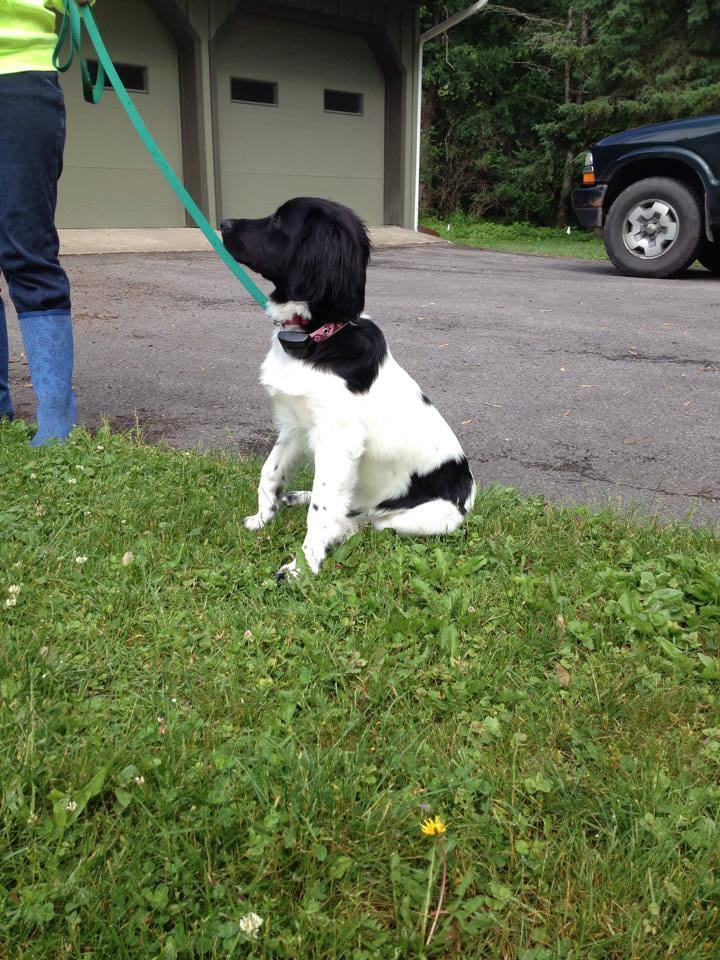
Springer puppy – always ready to learn!
The Crucial Role of Training Flags
Training flags are absolutely crucial for your puppy’s success with an electronic fence. They provide a vital visual cue that helps your puppy understand where the invisible boundary lies.
- Initial Training: During the initial training phase, flags mark the exact perimeter of the warning zone. The flags should ideally be a maximum of 10ft apart. This allows your puppy to visually associate the flags with the tone and, later, the correction (imuplse).
- Adding a New Puppy to an Existing System: If you’re introducing a new puppy to an existing DogFence system, you must reinstall the flags. Even if older dogs no longer need them, the puppy requires this visual aid for clear understanding.
- Flag Density: Ensure you have sufficient flags. We recommend a minimum of 1 flag every 8-10 feet (approx. 2.5 – 3 meters) around the entire boundary. This density provides clear, consistent visual markers for a young, learning dog.
- Mail Order Systems: For mail-order only systems, verify that the flags are a minimum of 12 inches tall and that you have between 20-25 flags per 100 meters of cable supplied. This ensures adequate visibility and training effectiveness.
Need more flags for your puppy’s training? Contact us today for advice on flag quantities and placement!
DogFence UK: Pioneers in Containment & Our Unique Containment Promise
DogFence Ltd. pioneered the concept of both installing electronic dog fences and providing expert, hands-on dog training to the fence here in the UK. This integrated approach sets us apart, ensuring not just a technically sound system, but a truly effective containment solution tailored to your dog. We are the only UK company to offer a unique Containment Promise – a testament to our confidence in our systems and our training methodology. Our training processes and protocol were used as part of the DEFRA Study in 2018 which were deemed both safe and humane for dogs and cats.
While some might find it amusing, this promise comes with simple, yet vital, provisos. Meeting these criteria ensures the system’s effectiveness and your peace of mind:
- Collar Must Be Worn: The dog must always wear the collar when he or she is in the garden. If your dog escapes and was not wearing the collar, the containment promise will be void – the collar is the key to their safe boundary.
- Authorised Working Battery: The owner agrees to keep an authorised working battery in the collar. Cheaper imitation batteries do not last as long and, more critically, can cause damage to the omni-directional antenna in the collar, effectively disabling it and compromising your dog’s safety.
- Correct Collar Fit: The collar fit must be correct. If the collar is too loose and dangling off the dog like a necklace, it becomes merely a fashion accessory and not a containment collar. A proper fit ensures the contact points can deliver the correction effectively and safely.
If these three crucial criteria are consistently met, and your dog begins to challenge the fence, we will re-visit and re-train your dog free of charge (FOC). This commitment underscores our dedication to your dog’s safety and your satisfaction.
Discover the DogFence difference. Explore our range of professional systems and see how our unique approach can benefit you and your dog: Browse Our Dog Fence Systems.
Gradual Introduction and Positive Reinforcement in Practice
When your puppy is ready introduce the electronic fence training gradually and use positive reinforcement techniques:
- Collar Acclimation: Let your puppy wear the collar (turned off) for short periods to get used to it. Let him or her wear it in the house as well as outside to avoid association with the garden only.
- Boundary Awareness with Flags: Insert the flags so that they are on the edge of the avoidance zone (follow our Installation instructions for placement) Walk your puppy on a lead near the boundary flags. As they approach the flags, praise and reward them lavishly for staying within the safe zone, using your basic verbal commands.
- Tap the flags: Tap the training flags and shout “careful” when your puppy is next to the flag.
- Tone Association: As they reach the flag the collar will start to “beep”, give the careful command.
- Correction Introduction (with care): After 1 or 2 sessions of “beep” only training Only Training introduce the static correction at the lowest level. This is to ensure that it’s just enough to get their attention, not to cause pain or fear. Closely observe their reaction and ensure a proper collar fit.
- Retreat Training: When you puppy goes past the flags and into the correction zone. Quickly shout the “careful” command is high pitched worried voice and direct your dog back into the safe zone. Then praise your dog for making the right decision.
- Consistent Training Sessions: Keep training sessions short (5-10 minutes), positive, and consistent (several times a day). This consistency is vital for your puppy to fully grasp the boundary concept.
- Reinforce the rest of the garden: Remind your puppy that the garden is a happy, safe place, play with your puppy in the garden. If you roll a ball, always roll it away from the boundary.
- First Weeks: In the first few weeks do not leave your puppy in the garden unsupervised and always have them on a lead so that they do not inadvertently run into the zone.
- Always wear the collar outdoors: Your dog should never be allowed into the garden without the electronic dog fence collar. Inconsistency causes confusion.
- Time off: Give you puppy time off. Too much training will tire him or her out. Always remove the dog fence collar overnight and in the first few weeks for at least an hour during the day.
For a step-by-step guide on training your puppy, refer to your Installation and Training Handbook or call us for a hands on approach. Alternatively why not have your Dog Fence professionally installed – contact us today for a free quote.
For further valuable insights into positive, reward-based training and responsible dog ownership, we recommend exploring resources from professional bodies like the Association of Pet Dog Trainers (APDT, UK).

Dogs need time off – praise and play with your puppy too!
Puppy Training on an electronic dog fence|Conclusion
Introducing electronic fence training at the right age, with the proper prerequisites, and with the vital aid of training flags, is crucial for your puppy’s safety and successful containment. By trusting in DogFence UK’s pioneering expertise, leveraging our adjustable systems, adhering to the simple criteria of our Containment Promise, and committing to positive, consistent training, you can help your puppy learn to respect the boundaries and enjoy the freedom of your garden safely for years to come.
Ready to secure your puppy’s freedom with a DogFence system?
Call us today to discuss your needs: 01628 476475
Prefer to email? Reach us at info@dogfence.co.uk