Tag Archive for: secure gardens for dogs

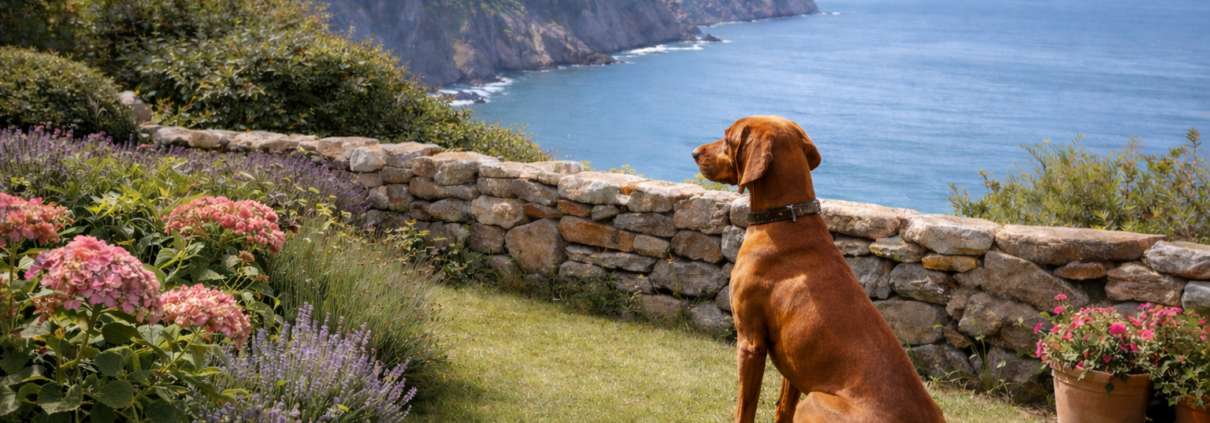
vizsla sitting safely in coastal garden near cliff edge overlooking the sea

Cliff-Top Dog Safety: Protecting Dogs in Coastal Gardens

Cliff-Top Dog Safety: Protecting Dogs in Coastal Gardens

Living by the sea is one of the great joys of the UK. From the dramatic cliffs of Cornwall and Devon to the Jurassic Coast in Dorset, the white cliffs of East Sussex, and the rugged coastal paths of Northumberland, many homes enjoy spectacular sea views.

But for dog owners, those views can come with a hidden risk. Coastal dog safety is becoming an increasing concern for homeowners in cliff-top locations, including areas such as Cornwall, Devon, Dorset and the Isle of Wight, where gardens may sit close to steep coastal drops.

For properties located near these edges, cliff top dog safety becomes an important consideration. Curious dogs following scents, chasing seabirds, or exploring unfamiliar ground can easily wander too close to dangerous cliff edges. Owners are continually searching solutions to prevent dogs falling from cliffs.

Unlike inland gardens, coastal properties often have natural boundaries rather than fences, which can increase the risk of dogs reaching cliff edges. Cliff top garden containment is nightmare scenario for both dog and cat owners.

Many owners only start researching boundaries after dealing with escape attempts. If your dog has already shown signs of testing the garden limits, our guide How to Stop a Dog Running Away explains why dogs escape and how consistent training and secure boundaries can prevent it long-term.
vizsla sitting safely in coastal garden near cliff edge overlooking the sea


What Is Cliff Top Dog Safety?

Cliff top dog safety refers to protecting dogs from dangerous cliff edges, steep coastal drops, and unstable ground near coastal homes and gardens.

For homeowners living near cliffs, this usually involves combining secure boundaries, training, and safe garden design so dogs can enjoy the outdoors without the risk of falling.

Because dogs rely heavily on scent and movement, they can easily follow wildlife or new smells toward dangerous terrain.


Why Cliff-Top Gardens Can Be Dangerous for Dogs

Coastal gardens often present challenges that aren’t found in typical suburban gardens.

Cliff-top homes may have:

  • Sloping land leading toward the cliff edge
  • Natural boundaries rather than fences
  • Long grass hiding sudden drops
  • Rabbits, seabirds or other wildlife attracting dogs

This is why dog safety near cliffs is such an important issue for coastal homeowners.

Dogs don’t naturally understand the danger of height in the way humans do. A rabbit or gull moving toward the edge can quickly trigger instinctive chasing behaviour.


Why Dogs Sometimes Fall from Coastal Cliffs

Sadly, incidents involving dogs falling from cliffs happen every year around the UK coastline.

Common causes include:

  • Dogs chasing seabirds or rabbits
  • Loose or eroding cliff edges
  • Unfenced garden boundaries
  • Dogs exploring unfamiliar coastal terrain

Even well-trained dogs can react instinctively when wildlife appears.

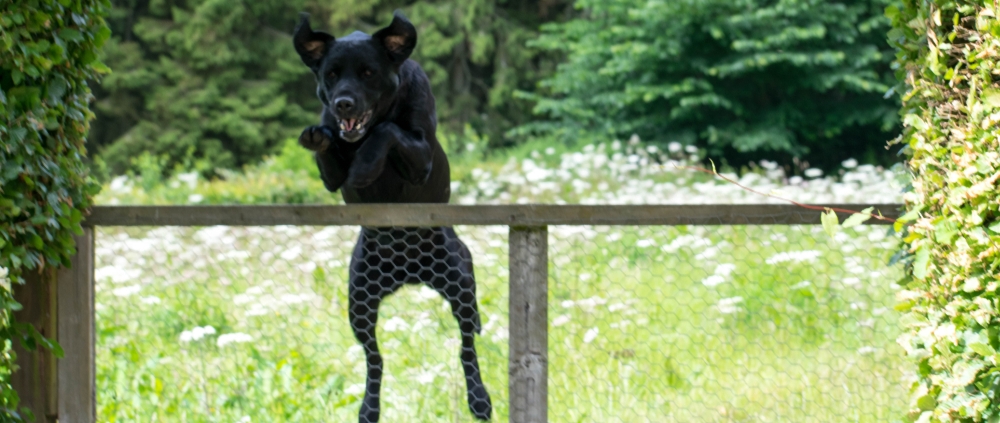
Some dogs may even attempt to leap over low garden barriers while chasing birds or rabbits. If you’re unsure what height dogs can clear, our guide Can a Dog Jump a 6ft Fence? explains how surprisingly athletic many dogs can be.

Taking steps to prevent dogs falling from cliffs is therefore essential for properties located near steep coastal terrain.
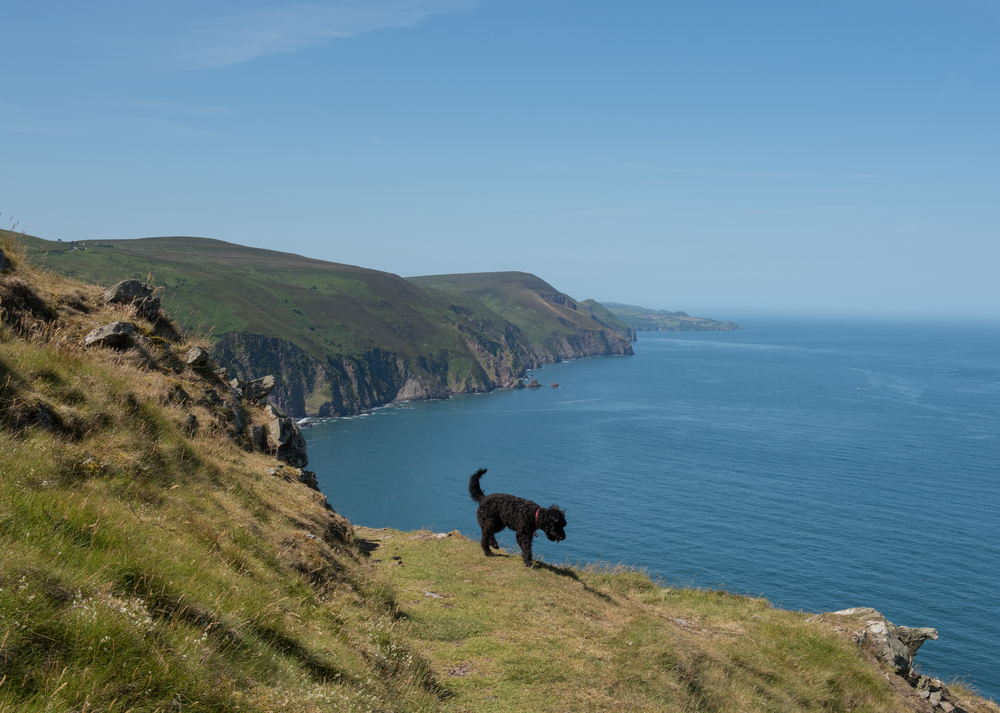
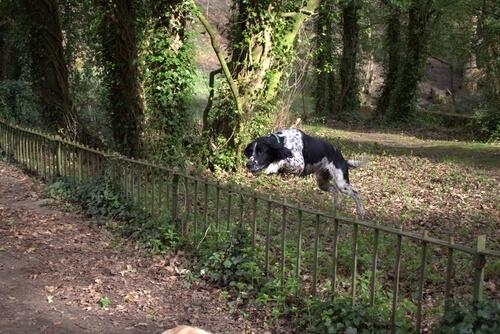
Alt Tagdog walking close to cliff edge on coastal path highlighting cliff top dog safety risks

Curious dogs following scents or wildlife can easily wander too close to cliff edges along coastal paths


Challenges of Fencing Cliff-Top Gardens

Traditional fencing is not always suitable for cliff-top properties.

Many coastal homeowners face challenges such as:

  • Planning restrictions in conservation areas
  • Fragile ground where fence posts cannot be installed
  • Uneven or sloping terrain
  • The desire to preserve uninterrupted sea views
  • Large fence panels can also spoil the natural landscape of coastal gardens.

For this reason, many homeowners look for solutions focused on coastal garden dog safety without installing bulky physical fencing.


Creating Safe Boundaries Without Blocking the View

Modern containment systems allow homeowners to create safe boundaries without visible fencing.

Instead of installing panels or rails, a buried boundary wire can define the safe area of the garden and train dogs where it is safe to roam.

This approach works particularly well for cliff top garden dog containment, because it:

  • Preserves coastal views
  • Works on uneven ground
  • Follows irregular garden shapes
  • Prevents access to dangerous edges

If your dog regularly tests physical boundaries or jumps fences, you may also find our guide How to Stop a Dog Jumping a Fence
helpful for understanding the behaviour and training process.


Coastal Areas Where Dog Safety Is a Growing Concern

Cliff-top homes across the UK — from St Ives and Newquay in Cornwall to Lulworth Cove in Dorset and Whitby on the Yorkshire coast — often have gardens that slope towards the sea, making dog safety near cliffs particularly important. Areas that are of a particular concern are:

Interest in containment systems is increasing in coastal regions including:

  • Cornwall (St Ives, Newquay, Padstow)
  • Devon (Salcombe, Ilfracombe, Woolacombe)
  • Dorset’s Jurassic Coast (Lyme Regis, Lulworth, Swanage)
  • Isle of Wight coastal homes
  • Northumberland villages along the coastal path

Many cliff-top homeowners are looking for ways to allow their dogs to enjoy the garden while improving dog safety near cliffs and reducing the risk of dangerous falls.


Peace of Mind for Coastal Dog Owners

For most owners, the goal isn’t restricting freedom.

Instead, it’s about allowing dogs to enjoy the garden safely.

A carefully designed boundary system allows dogs to run, explore, and relax while preventing them from reaching dangerous edges — dramatically improving cliff top dog safety for coastal homes.


FAQs: Cliff-Top Dog Safety

How can I improve cliff top dog safety at home?

The safest approach is to create a secure boundary between your dog and the cliff edge. This may involve training, traditional fencing where suitable, or containment systems designed for uneven terrain.


Can dogs really fall from cliffs near homes?

Yes. Dogs often chase birds or wildlife without recognising the danger of steep drops. Coastal rescue teams regularly report incidents involving dogs falling from cliffs.


Are fences allowed near coastal cliffs?

Sometimes planning restrictions apply in conservation areas or protected landscapes. Many homeowners therefore look for discreet solutions that protect dogs without changing the appearance of the property.


What is the best way to prevent dogs falling from cliffs?

Creating a secure garden boundary and training dogs to recognise safe areas is the most reliable way to prevent dogs falling from cliffs while still allowing them to enjoy outdoor space.


Protecting Dogs in Cliff-Top Gardens

Cliff-top homes offer some of the most beautiful views in the UK — from the rugged coastline of Cornwall and Devon to the dramatic cliffs of Dorset and the sweeping sea views of Northumberland. But for dog owners, those landscapes can also present hidden dangers.

Improving cliff top dog safety doesn’t mean restricting your dog’s freedom. Instead, it’s about creating a garden where your dog can run, explore, and enjoy the outdoors without the risk of reaching dangerous cliff edges.

Over the years, we’ve spoken to many dog owners who only realise the risk after a near miss — a dog chasing seabirds, following a scent trail, or simply wandering too close to the edge of a coastal garden. In many cases, the issue isn’t behaviour or training. The boundary simply isn’t clear to the dog.

We’ve even installed containment systems for homes in cliff-top locations where owners wanted to protect both dogs and cats from accessing steep coastal drops while still allowing them the freedom to enjoy the garden safely.

With the right combination of training, secure boundaries, and thoughtful garden design, most pets quickly learn where it is safe to roam.

If you live in a coastal property and are concerned about cliff top dog safety, creating a clear boundary may be one of the simplest ways to protect your pet.
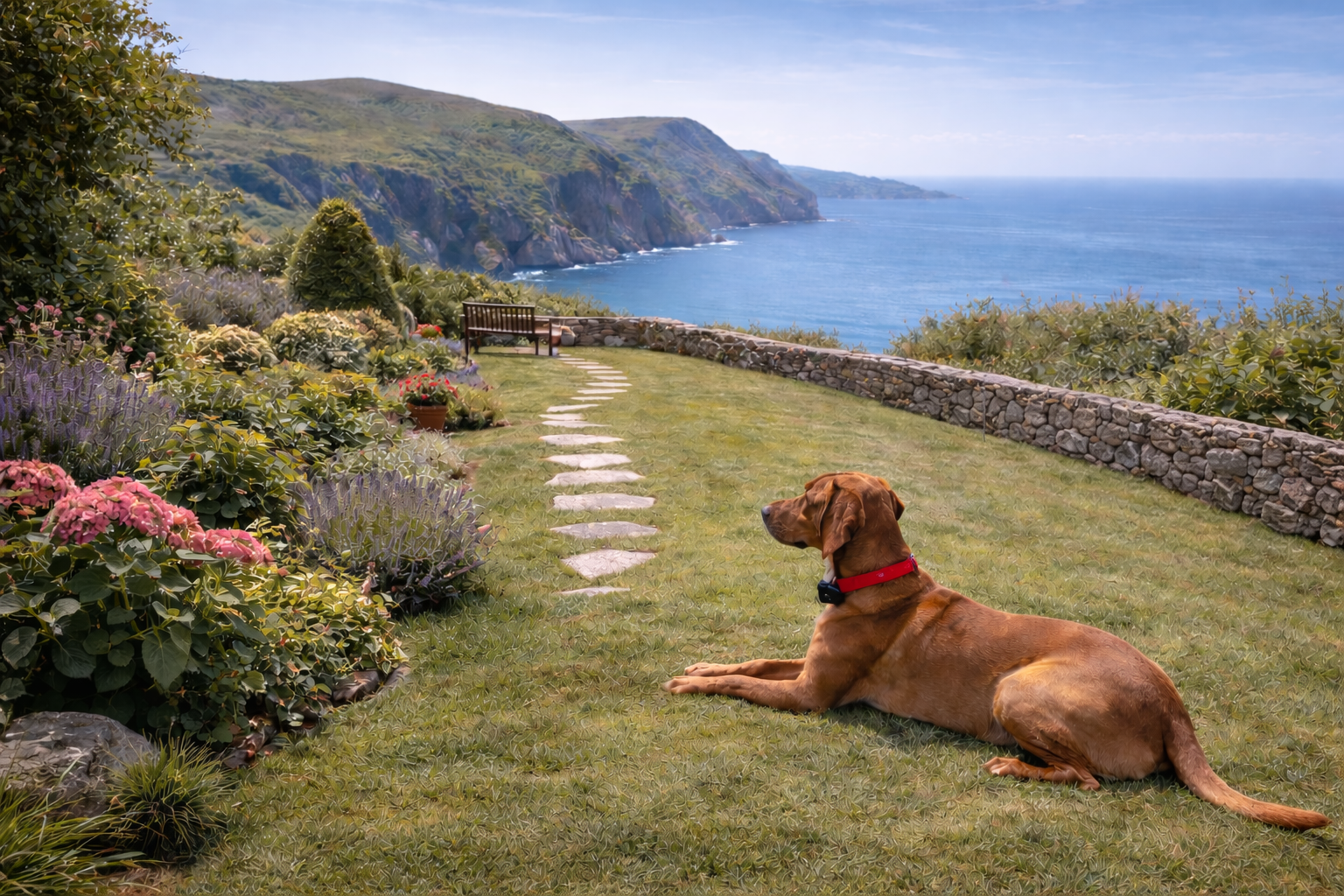
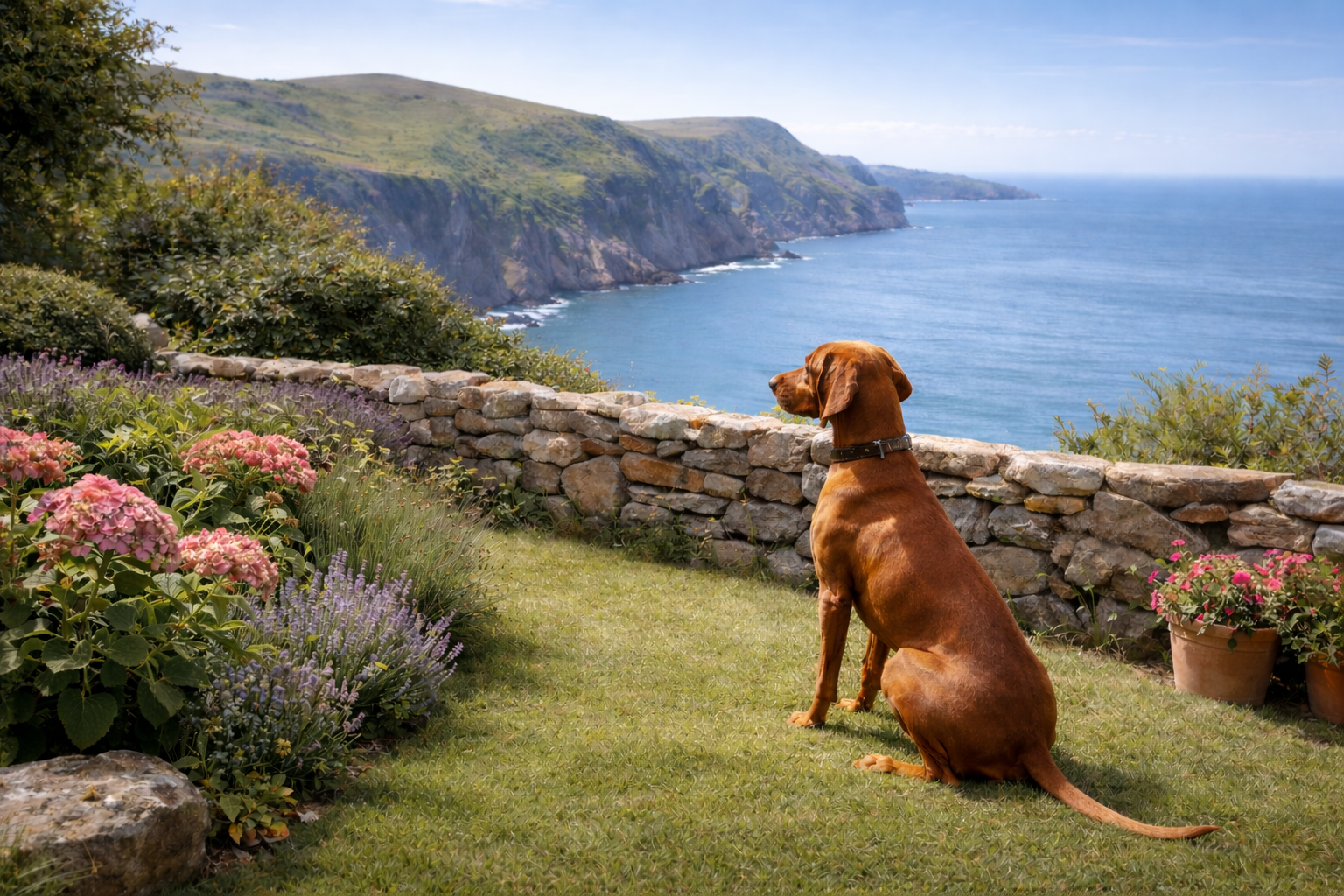
vizsla relaxing in coastal garden safely set back from cliff edge overlooking the sea

A Vizsla relaxing in a cliff-top garden where clear boundaries allow pets to enjoy coastal views safely

Live by the Sea? Protect Your Dog (and Cat) from Cliff-Edge Risks

If your garden sits near steep coastal drops, a clear boundary can dramatically improve cliff top dog safety
without blocking your sea view. We’ve installed systems for both dogs and cats in cliff-top locations across England.

Call
01628 476475
|
WhatsApp us
|
Request a Free Quote

Tell us your location and garden layout — we’ll recommend the safest boundary plan for your coastal property.
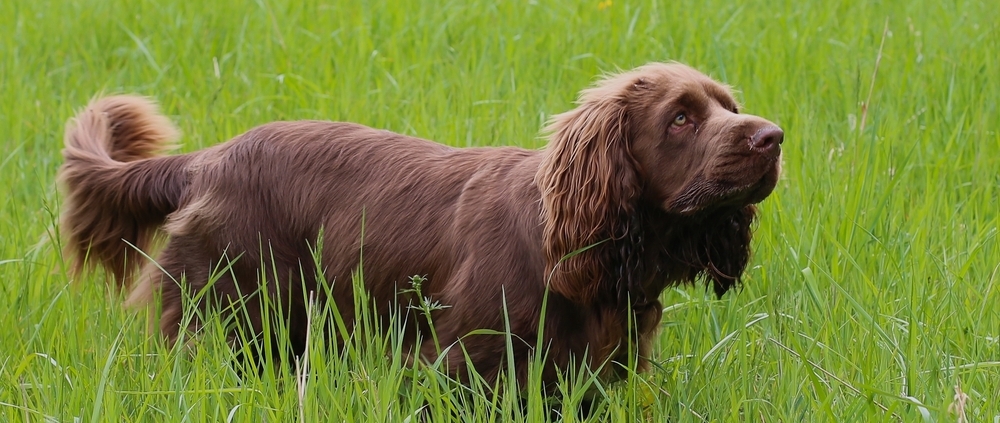
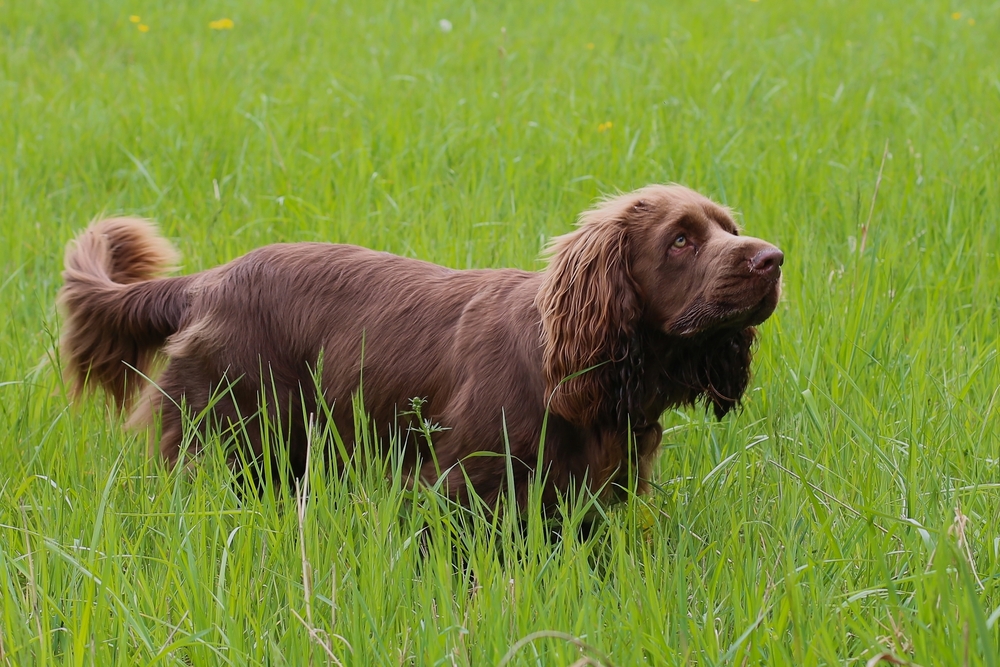
A golden-liver Sussex Spaniel standing in a garden showing its low-slung breed traits

Sussex Spaniel: Instinct, Scent & Why Modern Gardens Don’t Always Work

Sussex Spaniel Breed Traits: The Methodical Hunter Under Your Fence

A golden-liver Sussex Spaniel standing in a garden showing its low-slung breed traits

Sussex Spaniel breed traits are among the most unique of the British gundogs, making this rare breed both a loyal companion and a challenge to keep contained. The Sussex Spaniel is one of Britain’s oldest and rarest gundog breeds—and perhaps one of the most misunderstood. Often described as calm, slow-moving, and even a little stubborn, the Sussex Spaniel was never designed for speed or show-ring precision. Instead, this sturdy, low-slung dog was bred to work methodically through dense undergrowth, following scent for hours without distraction. However, those same Sussex Spaniel breed traits that make them world-class hunters can also make them persistent escape artists in a modern garden setting.

This post is part of our series on unusual British dog breeds and why they struggle with garden boundaries, exploring how heritage and instinct influence modern behaviour.

Rare British Breed Designed for Endurance

Originating in the county of Sussex in the 18th century, this dog was developed specifically for the heavy clay soils and dense hedgerows of the South of England. Unlike a flashy Springer or a frantic Cocker, the Sussex is a rare British gundog that prioritises steady, heavy-duty tracking over fast pursuit. Historically, they were the only spaniel bred to “give tongue”—to bark or whimper when they find a scent—to alert the hunter of their location in thick cover.

Key spaniel characteristics specific to the Sussex include:

  • Exceptional Scenting Ability: They don’t just see the world; they smell it in 4D.

  • Powerful Low-Slung Build: Their deep chest and short legs give them a low centre of gravity, perfect for pushing through gaps.

  • The “Sussex Throm”: A characteristic rolling gait that allows them to trot for miles without tiring.

  • Independent Problem Solving: Because they often worked out of sight of the hunter, they are used to making their own decisions.

As the Sussex Spaniel is currently listed on the Kennel Club’s Vulnerable Native Breeds list, owners have a significant responsibility to keep these dogs safe. With fewer than 300 registrations a year, every individual dog is precious to the breed’s survival.

Why the Sussex Spaniel Temperament Leads to Garden Escapes

Many owners are surprised by how a seemingly “lazy” dog manages to disappear from a secure garden. The Sussex Spaniel temperament is a unique mix of gentle companionship and quiet, dogged persistence. They don’t usually attempt to leap over high fences; instead, they find the one weak point at the bottom of a hedge and dig or squeeze through.

Common owner experiences with the Sussex Spaniel temperament include:

  • Persistent Digging: They will return to the same spot daily, working a hole like a professional contractor until they break through.

  • Scent Drifting: A passing fox or even a neighbour’s barbecue can trigger a “scent-trance,” where the dog follows a trail out of the garden without even realising they’ve left home.

  • Selective Hearing: When a Sussex is “on a line,” auditory recall often fails because their brain is entirely focused on the olfactory input.

Sussex Spaniel tracking a scent

The Challenge of Caring for a Rare British Gundog

Because they are classified as a vulnerable breed, owners have a significant responsibility to keep these dogs safe. With fewer than 300 registrations a year, every individual dog is precious to the breed’s survival.

Traditional wooden fencing often proves inadequate for these specific spaniel characteristics. They are “low-to-ground” specialists; if a rabbit can get under a gate, a Sussex Spaniel believes it can too. Furthermore, they are a sensitive breed. Harsh, shout-based training or high-pressure containment can leave them despondent. They require a boundary solution that provides a clear, consistent signal that the dog can understand and respect on its own terms.

How Hidden Fencing Supports Scent-Driven Instincts

For a breed driven by scent, a professional containment system offers a sophisticated advantage. It creates a 360-degree “safety bubble” that physical fences often lack.

  • Predictable Boundaries: Unlike a hedge that might have a new hole dug by a fox, a hidden fence signal never moves.

  • Respects the Nose: The system uses an audible warning zone. For a dog that is already tuned into “giving tongue” and listening for cues in the field, the beep is an easy signal to process.

  • Freedom to Roam: It allows the Sussex Spaniel to exercise its natural curiosity and scenting drive within the safety of your property, preventing them from wandering onto dangerous rural roads.

Rather than relying on height or physical barriers, a professionally installed dog fence works with the dog’s intelligence to create a consistent, reliable boundary.

Final Thoughts for Sussex Spaniel Owners

Owning a Sussex Spaniel means preserving a piece of living British history. They are affectionate, sombre-faced, and incredibly loyal companions. By understanding their unique Sussex Spaniel breed traits and providing a garden environment that respects their hunting heritage, you can keep them safely contained for years to come.

Need Help Keeping Your Sussex Spaniel Safe at Home?

If your Sussex Spaniel follows scent, tests boundaries, or quietly wanders beyond the garden, we’re happy to help you explore safe, proven containment options.

Call us on
01628 476475
|
Message us on WhatsApp.
|
Request a Free Quote Online

Dog walking in the British countryside, reflecting the heritage of traditional working dog breeds

British Dog Breeds That Struggle with Garden Boundaries

Unusual British Dog Breeds: Why Our Native Dogs Still Struggle with Boundaries

Ready to Keep Your Pet Safe?

Call us on
01628 476475
|
Message us on WhatsApp
|
Request a Free Quote Online


Dog jumping a garden fence showing why owners ask how to stop my dog jumping the fence

How to Stop My Dog Jumping the Fence | Proven Solutions from DogFence

How to Stop Your Dog Jumping the Fence: Practical Solutions That Work

If your dog keeps jumping the garden fence, the best solution is to work out why they are escaping, remove anything that makes the fence easy to jump or climb, and create a secure boundary they cannot repeatedly test.

Some dogs can be stopped by improving the existing fence, removing launch points and reducing whatever is tempting them on the other side. But determined escape artists may continue to jump, climb or simply find another weak point.

At DogFence, we have been helping UK dog owners contain persistent escape artists since 2003. One option for dogs that repeatedly challenge a physical fence is to create a hidden trained boundary inside the existing garden boundary, so the dog learns not to approach the fence in the first place.

If jumping is only one of the ways your dog escapes, start with our complete guide to how to stop your dog escaping from the garden.

Why Do Dogs Jump Garden Fences?

Dogs jump fences for many different reasons. Understanding what is motivating your dog can make it much easier to choose the right solution.

Common reasons include:

  • Wildlife and prey drive – squirrels, rabbits, deer, cats and livestock can be powerful triggers.
  • Other dogs – your dog may be trying to investigate or reach another dog nearby.
  • People or activity outside the garden – footpaths, roads and neighbouring gardens can create excitement.
  • Boredom – an under-stimulated dog may start looking for entertainment elsewhere.
  • Separation-related behaviour – some dogs attempt to escape to follow their owner.
  • Learned behaviour – once a dog discovers that jumping the fence works, they may repeat it.

This is why simply adding another foot to the fence does not always solve the problem.

How Can I Stop My Dog Jumping the Fence?

There isn’t one solution that works for every dog or every garden. The best approach is usually to look at both the physical boundary and the dog’s behaviour.

1. Check the Whole Garden Boundary

Walk around the garden and look at the fence from your dog’s point of view.

Check for:

  • low sections of fencing
  • broken or loose panels
  • raised ground next to the fence
  • horizontal rails that can be climbed
  • gaps between fences, hedges and gates
  • bins, benches, planters or furniture that can be used as launch points

Don’t just inspect the place where your dog escaped last time. Once one route is blocked, a determined dog may simply look for another.

For a complete garden check, see our guide to how to dog proof your garden properly.

2. Remove Anything Your Dog Can Use to Gain Height

A dog that cannot clear a fence from ground level may manage it surprisingly easily with the help of a raised flower bed, retaining wall, storage box, bench or other garden object.

Move anything climbable away from the boundary wherever possible.

3. Reduce What Your Dog Can See Beyond the Fence

Sometimes the fence itself isn’t the attraction – it’s what’s happening on the other side.

If your dog becomes excited by passing dogs, people, livestock or wildlife, reducing their view may help. Depending on the garden, this could include solid fence panels, screening or suitable planting.

It won’t stop every determined escape artist, but removing the trigger can significantly reduce repeated fence-running and jumping behaviour.

4. Make Sure Your Dog Has Enough Exercise and Enrichment

Physical exercise and mental stimulation can reduce escape behaviour caused by boredom.

Scent games, food puzzles, retrieving games, training sessions and regular walks can all help make the garden less of a launching pad for adventures elsewhere.

However, if your dog already has a history of escaping, enrichment should be used alongside secure containment, not instead of it.

5. Improve the Physical Fence — or Add a Trained Hidden Boundary

Depending on the dog and the property, you could consider:

  • increasing fence height
  • adding suitable trellis
  • using inward-facing extensions
  • installing fence rollers
  • replacing climbable fencing with smoother panels

These solutions work well for some dogs. For persistent jumpers, however, continually raising the physical barrier can get expensive and still won’t address other escape routes such as digging or an open driveway.

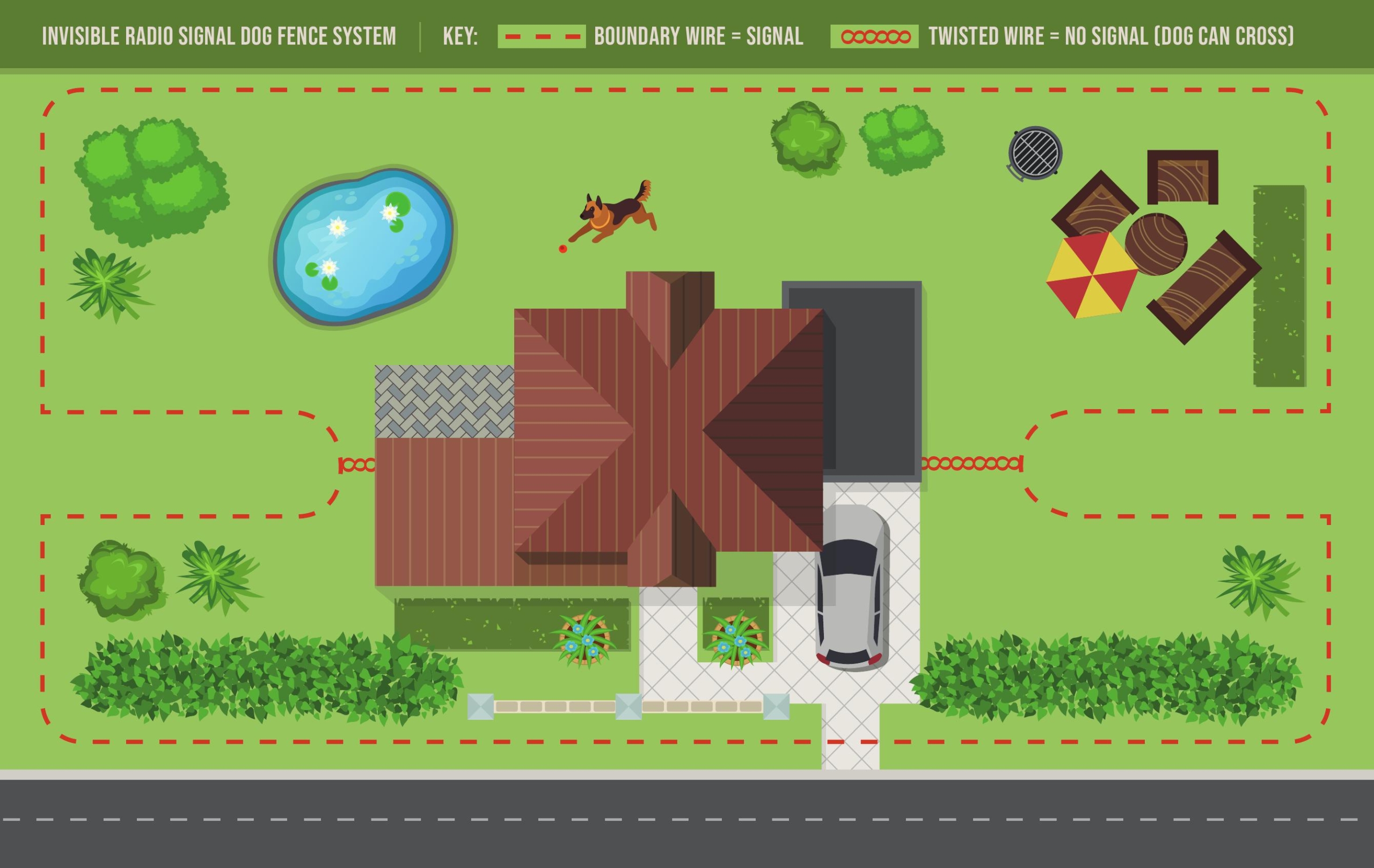
Where a dog keeps testing the physical fence regardless of height, a professionally installed hidden dog fence gives you another option: instead of relying on the fence itself, it creates a trained boundary before the dog ever reaches it. The DogFence system uses a boundary wire carrying a coded FM radio signal; the dog wears a small receiver collar, and temporary training flags mark the boundary during the initial training period. As the dog approaches, the collar gives an audible warning and, if they continue, a brief adjustable training impulse — so with consistent training the dog learns to turn away well before the fence line.

See our illustrated guide to how a hidden DogFence system works.

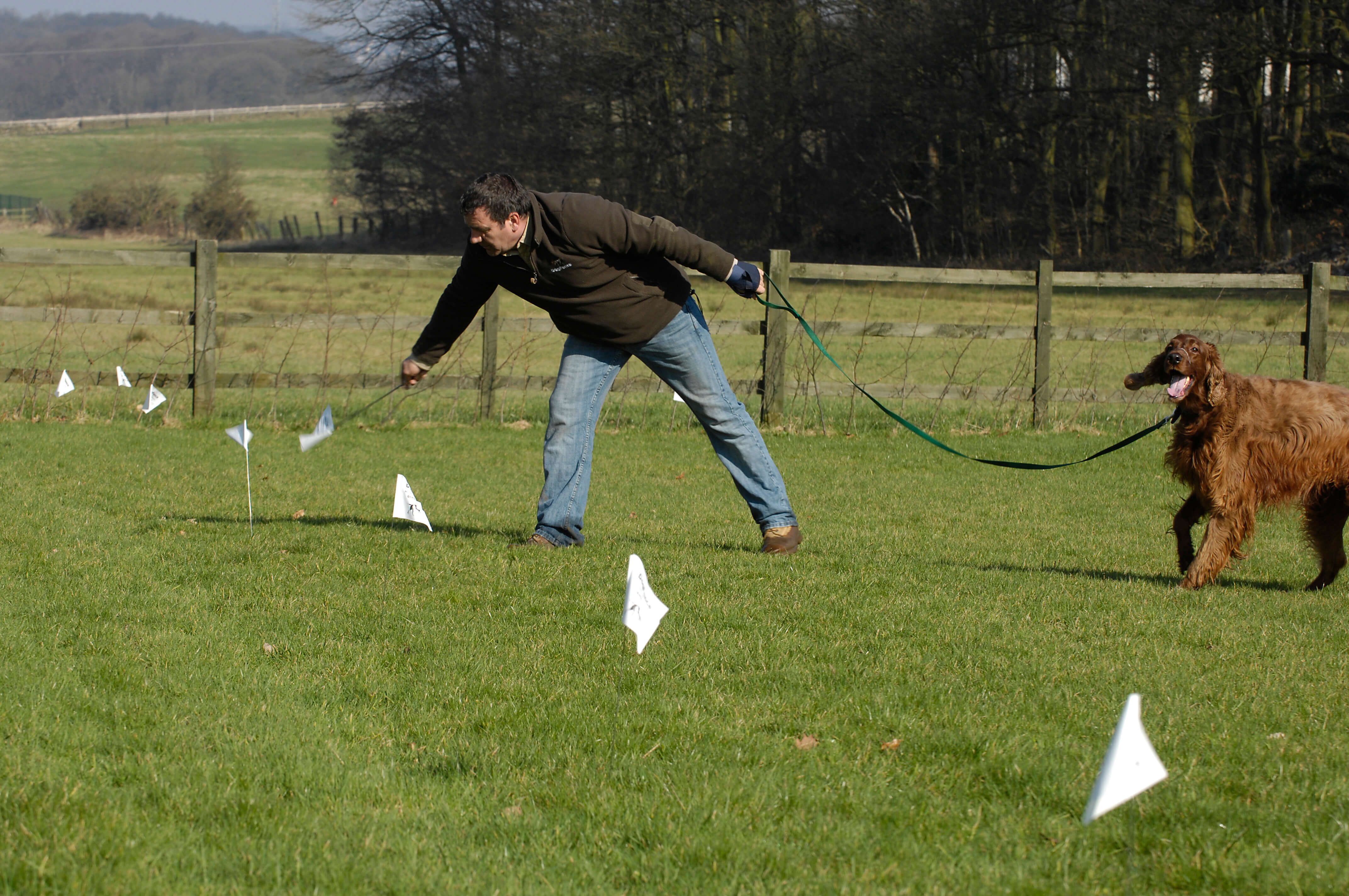
DogFence trainer using temporary training flags to teach a dog where a hidden fence boundary is located
Temporary training flags help the dog see and learn the position of the hidden boundary.

Can a Dog Jump a 6ft Fence?

Yes. Some dogs can jump or climb a six-foot fence.

Whether they can do it depends on their size, breed, athletic ability, age, fitness, the type of fence and – importantly – how motivated they are to reach whatever is on the other side.

A dog may also appear to have jumped six feet when they have actually used a horizontal rail, raised ground or an object beside the fence to gain extra height.

We’ve covered this particular problem in more detail here: Can a Dog Jump a 6ft Fence?

Not sure a physical fence alone will solve it? We can assess your garden and dog’s specific escape pattern for free.

Request a Free Quote →

Can I Use a Hidden Dog Fence With My Existing Fence or Hedge?

Yes. In many gardens the hidden boundary works alongside an existing physical fence, wall or hedge.

This can be particularly useful where the existing boundary is perfectly adequate for privacy or appearance but isn’t enough to contain a determined dog.

It can also avoid the need to replace an attractive hedge, post-and-rail fence or other boundary simply because your dog has discovered how to get over it.

What If My Dog Jumps AND Digs Under the Fence?

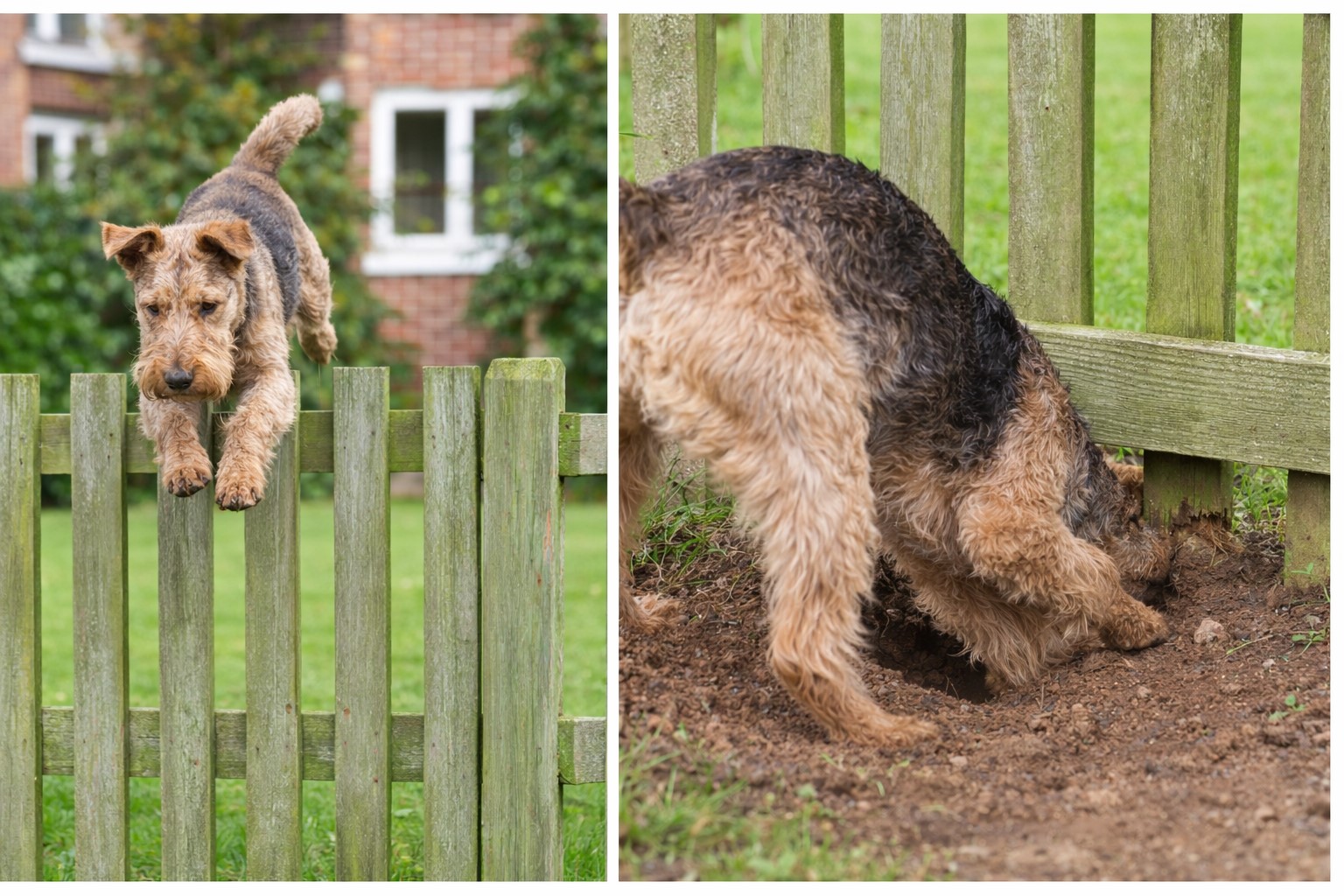
Some dogs don’t limit themselves to one escape technique. If jumping becomes difficult, they may start digging underneath instead.

A trained hidden boundary can help because it does not depend on whether the dog tries to go over or under the physical fence – the dog learns to remain away from the boundary itself.

For more specific advice, read our guide to stopping dogs digging and escaping under fencing.

What About Open Driveways and Gates?

This is another reason simply making the garden fence higher may not solve the whole escape problem.

A garden may have six-foot fencing around three sides but still have an open driveway, automatic gates or another entrance where a physical barrier is impractical.

A hidden boundary can cross these areas without requiring another visible gate or fence.

See how to stop a dog running out of an open driveway or electric gate.

How Is a DogFence Installed?

For a professional installation, we first assess the property and agree with you where the safe boundary should run.

The boundary wire is then installed around the chosen area and connected to the transmitter. Temporary training flags are positioned along the boundary so your dog has a clear visual reference during the initial training period.

Our installer introduces your dog to the system and shows you how to continue the short reinforcement sessions afterwards.

Because the wire follows the chosen boundary, the system can be designed around gardens that would be difficult to contain with a simple circular wireless or GPS boundary.

Find out more about our professionally installed DogFence systems.

What Boundary Layouts Can Be Used?

The layout depends on your property and where you want your dog to have access.

Common designs include:

  • Full perimeter – secures the complete garden or property boundary.
  • Single boundary or driveway protection – useful where there is one particular escape route.
  • Banana or pinch loops – useful for certain semi-detached properties or where access between front and rear gardens needs to be controlled.
  • Internal exclusion zones – keep dogs away from ponds, pools, flower beds, vegetable gardens or other areas.
Diagram of a pinch-loop hidden dog fence layout used to control access between front and rear garden
A pinch-loop layout is one of several ways a hidden boundary can be designed around a property.

Frequently Asked Questions About Dogs Jumping Fences

How do I stop my dog jumping over the garden fence?

Check the entire boundary, remove objects your dog can use as launch points, reduce visual triggers, provide sufficient exercise and enrichment, and improve weak or low sections of fencing. If your dog repeatedly challenges the physical fence, a trained hidden boundary inside it is another option.

Why has my dog suddenly started jumping the fence?

Look for something that has changed. A new dog nearby, wildlife, livestock, people using a neighbouring path, changes in routine or increased boredom can all give a dog a new reason to investigate the other side of the fence.

Will making my fence higher stop my dog escaping?

It may do, particularly if fence height is the only problem. However, determined dogs may climb, dig, use nearby objects for extra height or find another weak point in the boundary.

Can training stop a dog jumping the fence?

Training can be extremely useful, particularly when combined with a secure boundary. If a dog has a strong drive to escape, training alone should not be relied upon as the only form of containment.

Can a hidden dog fence work with a wooden fence?

Yes. A hidden boundary can normally be installed inside an existing wooden fence so the dog learns to remain away from the physical boundary.

Can a hidden dog fence work with hedges?

Yes. Because the containment boundary is created by the buried wire rather than the hedge itself, it can be useful where hedges have gaps or are difficult to make completely dog-proof.

Can a hidden dog fence stop a dog digging as well as jumping?

It can help with both escape behaviours because the dog is trained to respect the boundary before reaching the physical fence, rather than the system relying on the height or base of that fence.

Can a hidden dog fence cross a driveway?

Yes. The boundary can be designed to cross a driveway, making it particularly useful for properties where installing a conventional physical gate would be difficult or undesirable.

More Advice for Escape-Artist Dogs

If your dog is determined to find a way out of the garden, these guides cover the other common escape routes and solutions:

Ready to Stop Your Dog Jumping the Fence?

If your dog keeps jumping, climbing, digging or finding another way out of the garden, we can help you create a boundary designed around your property and your dog.

DogFence has been installing professionally designed hidden pet containment systems across the UK since 2003.

Call us: 01628 476475
WhatsApp: 07917 034256

Request a Free Quote →

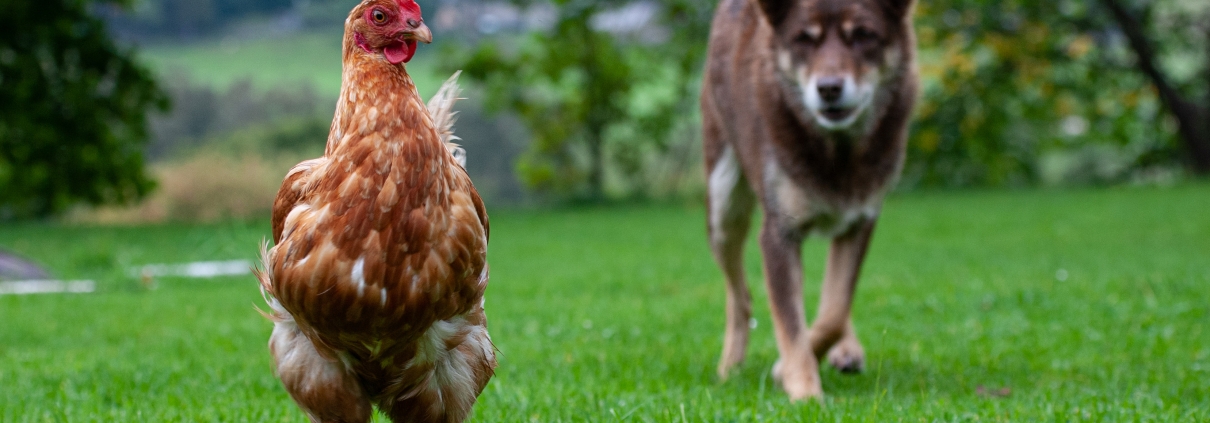
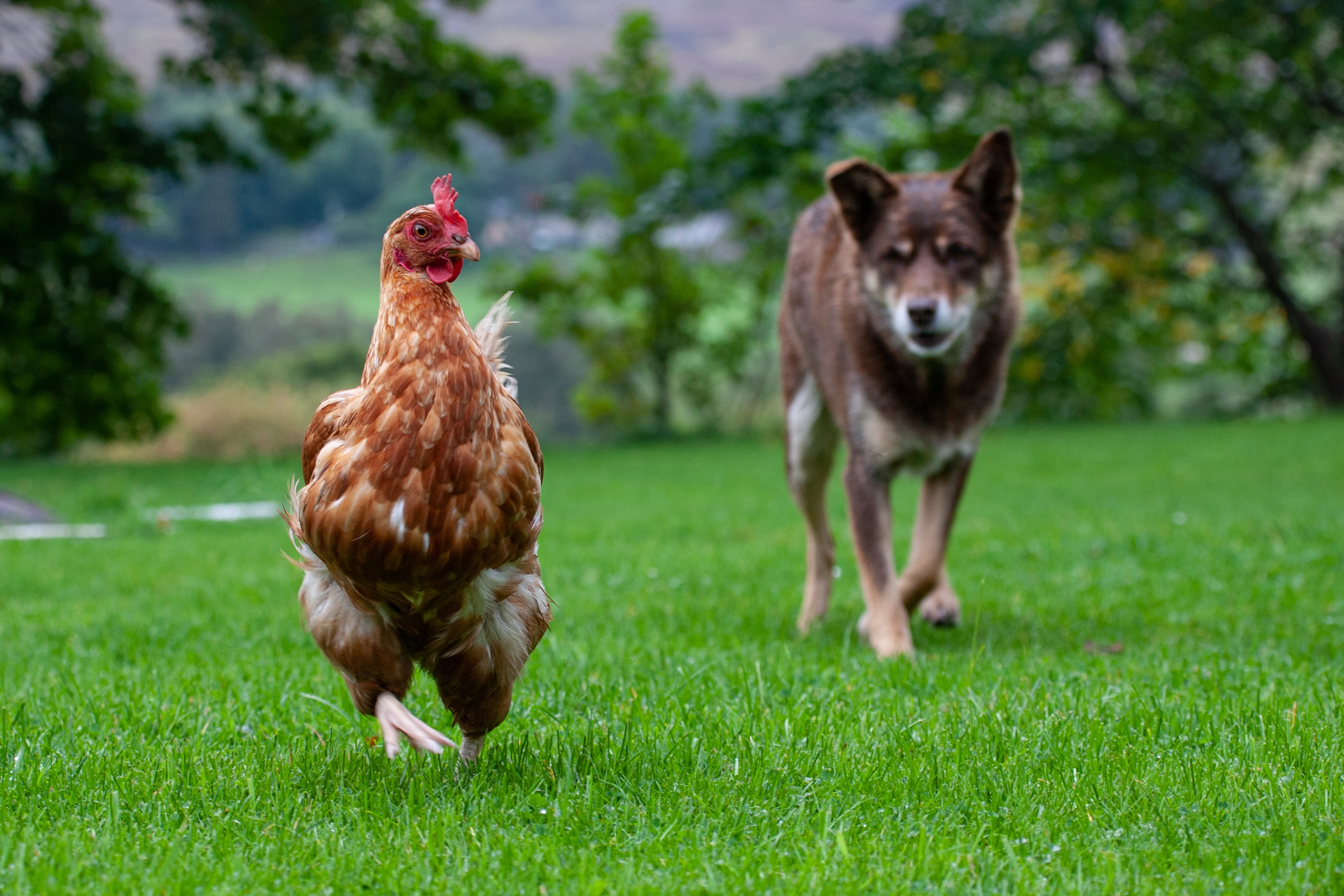
alt="Dog chasing chicken in garden highlighting need for secure pet containment system"

Prevent Dog Escapes | Secure Garden Fence from DogFence

Keep Pets Safe with DogFence

Don’t Wait Until Your Dog Goes Missing or Chases Livestock: How to Secure Gardens for Dogs and Keep Pets Safe with DogFence

Living in the countryside brings freedom, fresh air, and space for your dog to run — but it also brings unique challenges. How can an owners create secure gardens for dogs? If your property borders farmland, woods, or open spaces, it’s critical to have a reliable containment system to keep your dog safe and prevent them from chasing livestock or wildlife. Otherwise, you risk your dog getting lost, injured, or causing harm to your neighbours’ animals.

⚠️ The Legal and Financial Risks of Dogs Worrying Livestock

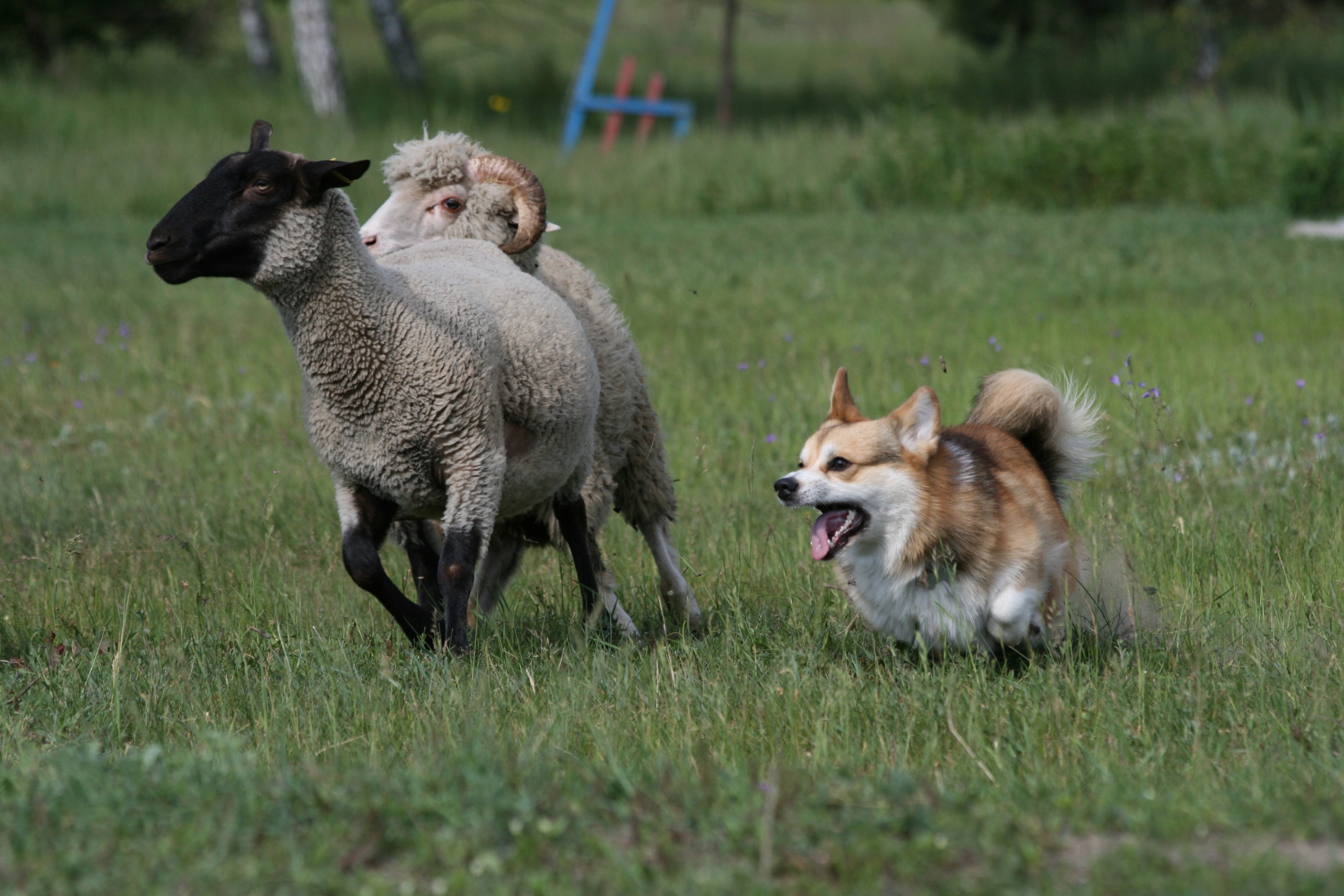
While dogs are often just inquisitive, to a farmer, livestock represents their livelihood. In the UK, under the Animals Act 1971, farmers are legally permitted to protect their livestock. This can include shooting a dog that is actively worrying their sheep, provided there are no other reasonable means to end or prevent the worrying .

Allowing a dog to worry livestock is a criminal offence under the Dogs (Protection of Livestock) Act 1953, punishable by a fine of up to £1,000, plus potential costs and compensation orders .

Recent data highlights the growing concern:

  • In 2023, farm animals worth an estimated £2.4 million were severely injured or killed by dogs, marking a nearly 30% increase from the previous year .

  • A 2024 survey revealed that 78% of rural crime teams reported an increase in dog attacks on sheep over recent years .

Dog chasing sheep in countryside illustrating the risk of livestock worrying without proper containment"

Livestock attacks by dog are on the increase

Why Traditional Fencing Often Isn’t Enough

Challenges of Physical Fences in Rural Areas

Traditional physical fencing is often expensive, time-consuming, and impractical on rural or uneven terrain. Worse, traditional fences can be dug under, jumped over, or damaged by wild animals such as badgers, foxes, deer etc leaving your dog vulnerable to escape.

Limitations of Traditional Fencing to Create Secure Gardens for Dogs

  • Cost: Traditional fences typically start around £35 per metre, while DogFence systems start from about £6 per metre, including professional installation and training.
  • Installation Time: Building a physical fence can take weeks or months, especially if your land is uneven or expansive.
  • Vulnerability: Animals such as badgers or foxes can dig holes underneath fences, and dogs can jump over or even break through physical barriers.
  • Aesthetics and Permissions: Traditional fences can affect the look of your property and may require planning permission in some areas.
  • Lack of Flexibility: Once installed, a physical fence is fixed. If you want to expand or change your containment area, it can be costly and difficult.

Why Choose an Electronic Dog Fence from DogFence?

UK’s Experts in Electronic Dog Containment

DogFence is the UK’s leading expert in electronic dog containment, having safely installed and trained over 20,000 pets on our advanced systems. Unlike basic mail-order kits, our digital dog fencing solutions are designed for long-lasting reliability, maximum safety, and adaptability to almost any environment. Find out more here.

Creating secure fencing on Almost Any Terrain

Our systems can be installed on nearly any terrain, including:

  • Slopes, hills, and uneven ground
  • Gardens surrounded by streams or shallow rivers (our cables are waterproof and can run underwater)
  • Open fields and driveways, creating secure boundaries exactly where you need them

What’s more, our system is transportable — if you move house, you can easily take the dog fence transmitter and collars with you and reinstall it at your new property, making it a smart long-term investment.

More Than Just a Boundary: Customisable Pet Protection

Our electronic dog fences don’t just keep dogs contained; they can be used to protect specific areas within your property, keeping your pets away from:

  • Swimming pools or ponds
  • Chicken coops and rabbit runs
  • Flower beds or vegetable patches

This flexibility means your dog can enjoy a large safe area without compromising your property or causing damage.

Neil’s Story: Real Success with DogFence

A Perfect Example from the Orkney Islands

Neil lives in a rural location on the Orkney Islands surrounded by sheep, cows, and a neighbour with over 200 free-roaming chickens. His Whippet x Saluki is a fast, natural hunter — which posed a real risk to the local wildlife and his dog’s safety.

After choosing DogFence’s advanced electronic dog fence, Neil found installation easy and the training effective. After just one week, his dog fully understood the boundaries.

alt="Dog chasing chicken in garden highlighting need for secure pet containment system"

Dog chasing chicken in garden

“The dog has not been able to get out of our 1-acre land since the fence was installed. I cannot recommend this system highly enough. My dog can run freely, and the animals in neighbouring fields are safe. Also, when I’ve called for advice, I always get through to a real person, not an automated menu—which is a nice change. 10 out of 10 for the product and service.”

Neil’s experience is typical of many of our satisfied customers who want to secure gardens for dogs and prevent dogs running away — even in the most challenging rural environments.

Why DogFence is the UK’s Expert to Create Secure Gardens for Dogs

Advanced Technology and Professional Training

At DogFence, we don’t just supply collars and wires; we deliver complete peace of mind with:

  • Advanced digital software that delivers consistent, safe impulses tailored to your dog’s personality and size
  • Lightweight, comfortable collars that your pet can wear all day without discomfort
  • Heavy-grade boundary wire designed to last decades and resist damage from weather or animals
  • Fully trained, professional installers who handle the setup and provide thorough, onsite training for you and your pet
  • Our exclusive Containment Promise, which backs the reliability and safety of our system

Our team has installed systems on properties ranging from small city gardens to expansive country estates — and we adapt to your needs.

Take Action Now: Protect Your Pet and Peace of Mind

Don’t wait for an emergency to happen — prevent your dog running away or chasing livestock before it’s too late. With DogFence, you can create a safe, secure space where your dog can enjoy freedom without risk.

Call us today on 01628 476475 for a free consultation and personalised quote.

➡️ Or visit dogfence.co.uk to learn more about how our systems can work for your property.

Let DogFence help you secure your garden for dogs and keep your pets safe — wherever you live, whatever your terrain.


dog fence ideas - dog with question mark

Dog Fence Options Compared: Wooden, Mesh & Invisible Systems

Dog Fence Options Compared: Wooden, Mesh, and Invisible Systems

When you’re researching dog fence options, you’ll quickly see there are many different choices — from traditional wooden panels and wire mesh to modern invisible dog fences. But not all solutions are equal when it comes to keeping your dog safe and secure.

In this guide, we’ll compare the most common types of dog fence options, their pros and cons, and explain why an invisible FM frequency fence is often the safest and most cost-effective choice.

Why Do You Need A Fence?

Most pet owners will experience a dog that loves to escape — whether it’s jumping a 6ft fence, digging under the hedge, or simply heading off on an unplanned walk. While this may seem harmless, an escaping dog can:

  • Put themselves in danger from cars, livestock, or poisoning.

  • Cause accidents on the road.

  • Knock over or frighten strangers.

  • Risk unexpected vet bills or even fines from the dog warden.

A secure fence isn’t just about protecting your dog — it protects others too and gives you peace of mind.

Dog escaping over wooden fence showing need for secure dog fence options

Some dogs see traditional fences as just another challenge.


Wooden Panel Fencing

Wooden fencing may look sturdy, but it isn’t fool-proof.

  • Panels often sit slightly above the ground, making it easy for dogs to dig underneath.

  • Athletic dogs may simply jump over, even if the fence is 6ft tall.

  • Regular maintenance is required to stop rotting or repair storm damage.

  • Costs can quickly mount if you need to replace panels or add extra barriers.

For determined dogs, wooden fencing can be little more than a temporary fix.


Wire Mesh Fencing

Wire mesh is another common option, but it often causes more problems than it solves:

  • Dogs can see through the mesh, leading to barking, fence-running, and frustration.

  • Neighbours or passers-by can tease or even harm your dog.

  • Digging under is still possible.

While affordable, wire mesh is rarely a long-term solution for escape-prone dogs.


Why Chaining Is Never the Answer

Some owners resort to chaining a dog when fences fail. But chaining:

  • Severely restricts exercise.

  • Causes stress, boredom, and frustration.

  • Increases aggression and behavioural problems.

It’s unsafe and unfair for the dog — and definitely not a recommended containment method.


Wireless & Invisible Dog Fences

This is where technology offers a smarter solution. Invisible fences use a boundary wire, transmitter, and a computer collar to create a safe containment zone. But not all systems are equal.

AM Frequency Fences (Old Technology)

  • Can be disrupted by Wi-Fi, TVs, or even light dimmers.

  • Slow response times mean pets can “outrun” the signal.

  • Risk of false activations, shocking your dog unnecessarily.

FM Frequency Fences (Modern Technology)

  • Use secure, fast, digital signals that ignore interference.

  • Quick reaction time keeps pets safely contained.

  • Safety cut-off prevents over-correction.

  • Can be installed around any property size — from small gardens to estates of 350+ acres.

  • Invisible and planning-friendly.

Learn more about how an invisible dog fence system works.


Why FM Invisible Fences Are the Best Option

Compared to traditional fencing, an FM invisible fence:

  • Costs a fraction of installing tall panels or mesh.

  • Works on all terrains, including driveways, hedges, and wooded areas.

  • Is safe, proven, and recommended by vets.

  • Gives your dog freedom within safe boundaries.

Learn more about how an invisible dog fence system works.

Dog safely contained with an invisible dog fence system

Invisible dog fences keep pets safe without changing your view.


The Benefits of Secure Fencing

Choosing the right dog fence isn’t just about stopping escapes — it brings peace of mind and real protection for both your pet and the wider community:

  • Your dog stays safe from roads, poisons, livestock, and other dangers.

  • Others are protected — no risk of your dog knocking someone over or frightening passers-by.

  • Lower costs — avoid dog warden fees (often £50+ per incident) and unexpected vet bills.

  • Prevent accidents — escaped dogs can cause road traffic collisions, which are sadly on the rise.

  • No unwanted litters if your dog hasn’t been neutered.

  • Protect other animals — you won’t be liable for injuries to neighbouring pets or livestock.

  • Peace of mind knowing your dog can enjoy freedom without escaping.

If you also own cats, our cat fence system is designed to keep them safely contained too.

Cat sitting on a garden statue – safe alternatives to roaming with a cat fence system

Even adventurous cats need safe boundaries — our cat fence system keeps them secure without restricting freedom.

Final Thoughts

If you want complete peace of mind, an FM invisible fence is the safest and most reliable option to stop escapes and keep your dog secure.

Call us today on 01628 476475

Request a Free Quote

  Message us on WhatsApp