
Tag Archive for: electric dog fence

Girl comforting dog wearing electric dog fence collar in UK garden

Electric dog fences cruel or kind?

Are Electric Dog Fences Cruel or Kind? The Evidence Explained (UK Guide)

Are electric dog fences cruel or kind? It’s one of the most common and emotionally charged questions dog owners ask when considering ways to keep their pet safe at home.

The word “electric” can sound alarming. Many owners understandably worry about welfare, pain, or long-term stress. But modern electronic containment systems are very different from what people often imagine.

In this guide, we explain how electric dog fences work, what independent research says, and whether they are truly cruel — or in fact a responsible solution for protecting dogs in the UK.


What Is an Electric Dog Fence?

Despite the name, an electric dog fence is not the same as a livestock electric fence. It is an electronic containment system designed specifically for domestic pets.

If you would like to see the full specification of a professionally installed system, you can read more about our electric fence for dogs solutions on our dedicated product page.

Modern systems consist of:

  • A central transmitter
  • A boundary wire (for wired systems)
  • A lightweight receiver collar worn by the dog

The boundary wire carries a coded radio signal around the perimeter of your property. If you’d like a full technical explanation, you can read more about how our electronic dog fence systems work.

When a dog approaches the boundary:

  • The collar emits a warning beep.
  • If the dog continues forward, a brief, programmable static impulse is delivered.

The impulse is not a continuous electric shock. It is a controlled, momentary static correction, adjusted to suit your dog’s size, temperament and sensitivity.


Types of Electric Dog Fence Systems

Understanding system types is important when asking, are electric dog fences cruel or kind?

Wired Dog Fences

A wired system involves installing a boundary wire around your property. The wire is typically buried a few inches underground for protection.

Wired systems are:

  • Flexible in shape and layout
  • Suitable for slopes and uneven ground
  • Able to create “no-go zones” around ponds or driveways
  • Reliable in complex UK gardens

At DogFence Ltd, we specialise in wired systems because they offer superior reliability and safety. You can learn more about our professional dog fence installation and training process.

Wireless Dog Fences

Wireless systems create a circular signal from a central base unit.

They are generally only suitable for:

  • Flat, open spaces
  • Clear line-of-sight environments
  • Simple garden layouts

They cannot adapt easily to buildings, trees or irregular boundaries, which makes them less suitable for many UK properties.


How Does an Electric Dog Fence Work?

The boundary wire acts as an antenna, transmitting a coded radio signal around your garden.

The receiver collar:

  • Detects proximity to the boundary
  • Emits a warning tone
  • Delivers a brief static impulse only if necessary

The correction level is individually programmed. It is never “one size fits all.”

With structured training, most dogs quickly learn to respond to the warning beep alone. After the initial learning phase, many rarely experience the static correction.


Are Electric Dog Fences Cruel or Kind? Looking at Welfare

So, are electric dog fences cruel or kind?

When professionally installed and properly introduced through training, modern electronic containment systems are designed to prioritise safety and welfare.

The static impulse is comparable to the mild static sensation you might experience when touching a metal car door after walking across carpet — momentary and surprising, but not harmful.

Importantly, the goal of the system is not punishment. It is boundary awareness.

What Does Research Say About Whether Electric Dog Fences Are Cruel or Kind?

Researchers at the University of Lincoln found no evidence of long-term welfare problems in cats living with electronic containment systems compared to animals able to roam freely.

You can read the published findings on the official University of Lincoln website.

When asking whether electric dog fences are cruel or kind, it’s important to compare them with the real-world risks dogs face without reliable containment.


What Happens When Dogs Escape?

Dogs are naturally curious. Some will dig, jump or squeeze through traditional fencing.

Common consequences of escape include:

  • Road traffic accidents
  • Livestock chasing (which can lead to prosecution or fatal outcomes)
  • Injury from other animals
  • Getting lost
  • Legal liability for property damage
  • Neighbour disputes

In rural and semi-rural England, livestock incidents can have devastating consequences for both farmer and dog.

Responsible containment is often about prevention — protecting the dog, livestock and the wider community.


How Dogs Learn to Respect the Boundary

Professional training is essential to humane use.

During installation:

  • Visual training flags are positioned along the boundary
  • Dogs are introduced on lead
  • The warning tone becomes the primary cue
  • The static impulse is introduced only if necessary

Most customers report that after training, their dog rarely triggers more than the warning beep.

If you still have questions about suitability or safety, our Dog Fence FAQs page  answers many of the most common concerns.
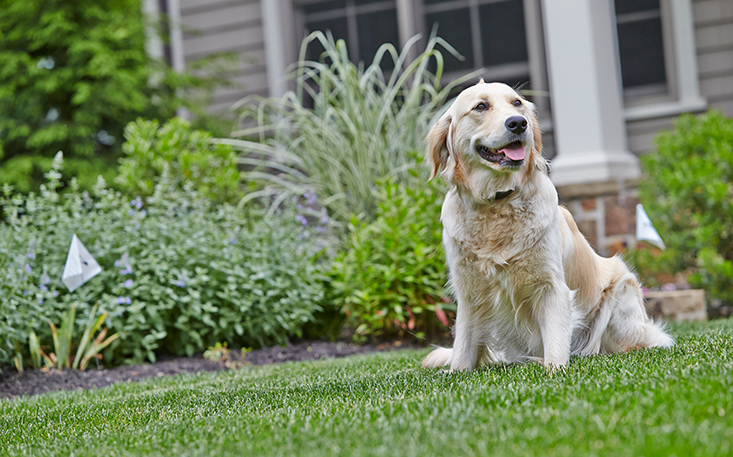
Golden retriever trained to electric dog fence boundary with flags

With professional training, most dogs quickly learn to recognise boundary flags and respond to the warning tone alone.


When Electric Dog Fences May Not Be Suitable

To answer honestly whether electric dog fences are cruel or kind, it’s important to acknowledge that they are not suitable in every case.

They may not be appropriate for:

  • Extremely anxious or highly nervous dogs
  • Situations without professional training
  • Owners unwilling to follow structured guidance

Used incorrectly, any training tool can cause confusion. Used responsibly, electronic containment systems are predictable, consistent and safe.

This is one reason professional installation is so important. Poorly installed systems, incorrect collar settings, or inconsistent training can undermine both safety and welfare. If you are weighing up your options, our guide on dog fence installation: DIY vs hiring a professional explains the key differences and risks to consider.


So, Are Electric Dog Fences Cruel or Kind?

When professionally installed, carefully programmed and supported with structured training, electric dog fences are a responsible containment solution.

They allow dogs to:

  • Enjoy freedom within their own garden
  • Display natural behaviour
  • Avoid roads and livestock
  • Remain safely at home

For over 22 years, DogFence Ltd has installed systems across England — from compact gardens to 350-acre estates — always prioritising safety, welfare and responsible ownership.

Experience matters. Training matters. Quality matters.

While some critics remain concerned, the debate around electronic containment has been ongoing for years. If you would like to explore both sides of the discussion in more depth, you can read our article on the controversy surrounding dog fences and whether they are cruel or harmful


FAQs: Are Electric Dog Fences Cruel or Kind?

Do electric dog fences give dogs an electric shock?

No. Despite the name, these systems do not deliver a continuous electric shock. They use a warning beep first, followed (only if the dog ignores the warning) by a brief, programmable static impulse.

Do electric dog fences hurt dogs?

When set correctly for the individual dog and introduced through professional training, the sensation is mild and momentary. Most dogs learn to respond to the warning beep and rarely need more than the audible cue.

Are electric dog fences legal in the UK?

Yes. Electronic dog containment systems are legal in the UK. As with any training tool, they must be used responsibly, with appropriate set-up and training.

Will an electric dog fence stop my dog running out of the garden?

A professionally installed wired system is designed to contain dogs within the boundary you set. Success depends on correct installation, correct collar programming, and training that teaches the dog what the warning beep means.

Are wireless dog fences as reliable as wired systems?

Wireless systems can work in very open, flat areas, but they are usually less flexible and less reliable in typical UK gardens with buildings, trees, slopes or complex boundaries. Wired systems are generally the safer, more consistent option.

How long does it take to train a dog to an electric dog fence?

Most dogs learn the boundary quickly with structured sessions over several days. The key is consistency: flags, lead work, the warning tone and positive reinforcement.

Final Thoughts

If you are still wondering are electric dog fences cruel or kind, the answer lies in how the system is installed, programmed and introduced. When professionally fitted and supported by structured training, modern electronic containment systems are designed to protect both welfare and safety.

With over 22 years of experience installing wired dog fences across England, DogFence Ltd focuses on responsible containment that allows dogs freedom within safe boundaries.


Ready to Keep Your Pet Safe?

Call us on
01628 476475
|
Message us on WhatsApp
|
Request a Free Quote Online

dog wearing an old invisible dog fence collar

Freedom fence, Invisible Fence, What are they?

What is a freedom fence or  Invisible fence?

So what is a freedom dog fence? it’s actually is a generic name for an electronic dog fence. Very similar to a “hoover”, a freedom fence, invisible fence or DogFence are often used to describe the containment fences. These dog fences were first produced in the USA over 40 years ago.

The History of Invisible Fences

Electronic pet containment systems originated in the year 1973. The overall concept began due to humanitarian emotion from American Richard Peck. Peck was a salesman in Pennsylvania selling his company’s metal cutting and welding services.

Richard Peck original inventor of the freedom dog fence

Richard Peck with his original Patents

“I traveled the United States and everywhere I went, I literally saw hundreds of dogs that had been slaughtered by cars. They were all over the roadway,” Peck said years later. “I loved dogs and knew there had to be a way to stop this.”

The development of dog fences

In 1973, Peck partnered with an electronic engineer and patented the first electronic dog fence system. The collar was placed on a pet and received radio waves from a wire buried beneath the ground. The radio waves were transmitted through the wire from a transmitter protected inside the house. When the radio waves are received by the collar, it sends a brief uncomfortable static shock under the pet’s skin. The “shock” deters the pet from traveling farther into a designated zone. In todays’ world date the word “shock” should be replaced by stimulation as the impulse produced is incredibly low and incapable of inducing a state of shock.

Always concerned for dog safety, Peck worked with the University Of Pennsylvania School Of Veterinary Medicine. Together they conducted extensive research on the short-and long-term effects the new system would have on animals. The study proved it was extremely effective for influencing behavior of animals and keeping them contained in a specified area. Furthermore, the study proved that pets that were contained by a freedom dog fence had no long-term ill effects from the stimulation.

No boundary gardens

The late 1970s in the USA there was a rise in the popularity of housing estates forbidding traditional fencing. This made it almost impossible to have a large dog. Naturally with the new “invisible fence systems”  quickly became popular. Peck initially sold the systems through catalogs and direct mail. The growth of the company was very slow. There were only 50 systems sold the first year. The fences were promoted by two nationally distributed dog magazines, Dogs and Dog Fancy.

Peck retired in the early 1980s and sold his company to private entrepreneurs outside of Philadelphia. These entrepreneurs invested in product improvements and named the product “Invisible Fence.” The engineering staff began refining the technology of the existing product. The company began selling a compact, lighter version of the receiver collar that went from 13 ounces down to 3 ounces. Thus the market was opened so that smaller dogs and cats could utilize the Invisible Fence solution.

New Manufacturers enter the market

In 1990, the overall patent for the technology expired and other companies to began to appear. This led to the rise in other manufacturers, PetSafe, DogWatch, and Innotek. These Companies have produced their own version of the original invisible fence. The early systems were not available for self-installation and Freedom Fence Dealers were part of the PetSafe network that started offering installation across the USA.

The market went worldwide

Dog Fence, Invisible Fence and Freedom Fence dealers started to import the technology into Europe and Australia. These markets were mainly self-installation markets and over time some dealerships started to offer a limited installation service through agents and part-time sub-contractors.

In the UK there were 3 Companies offering Installation for freedom dog fences:

Invisible Fence

The original Invisible Fence UK Dealer has recently retired after selling both Invisible Fence and Innotek systems for over 25 years. Most of the Invisible dog fences were sold for self-installation.

Freedom Fence

This business model is slightly different and is made up of a large number of representatives who work on a sub-contract basis. These individuals will install the PetSafe and PetSafe Professional brand of dog fence. PetSafe fences use the same AM technology that was used to produce the original Invisible Fence systems. As these are part time representatives they do not all offer the same level of service.

DogFence

DogFence  Ltd were the first Company to offer complete onsite Professional Installation & Training for dogs and cats. This Company uses the DogWatch brand of hidden fence which was developed using an FM radio frequency. When it comes to technology the FM signal is far safer and faster than the AM operated fences. DogFence Ltd pioneered bringing the full installation & training service to the UK. Unlike Freedom Fence the installers are all employed by DogFence. This gives consistency in quality of service and equipment standards.

Why is Technology Important?

Arguably most peoples pets are part of their family, they are as important as children or siblings. Naturally one wants to do everything they can to protect them which is why they install a dog fence. As with your car it is important to look at safety features within each product.

The Original Invisible Fence used an AM radio signal. This was mirrored by all manufacturers except DogWatch (DogFence). DogWatch inc were concerned about the high numbers of false activation on the receiver collars with AM. The dog may not be in the zone but the collar was activated because the collar picked up a similar signal. It is for this reason that they decided to explore using an FM signal. After developing and patenting the FM signal it quickly became clear that this was a far superior channel.

Why is the FM signal safer? The reason for the FM signal is to ensure that nothing else can activate the dog or cats computer collar. The Freedom Fence and Invisible Fence brands use OOK (on/off keying).  With OOK the collar is open to picking up other signals when it is in the “down” time. This means that the collar can activate when the pet is not in the “no go zone” as it has “heard” another signal.

With the DogFence system the signal is constant and the collar can only read the programmed signal. In order to reduce case of false activation freedom fence and invisible fence systems use a 2nd signal to reduce confusion. Naturally checking for 2 signals slows down the reaction time on the collar.

Why does speed affect the dog fence?

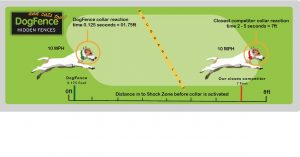
Put simply if your dog is racing towards the no go zone the collar needs to stop him before he runs into the road. With the DogFence system if he runs at 10mph he will only get 0.125ft into the zone before the collar has given a warning beep and impulse. With a freedom fence he will be at 7ft before the collar has activated. Conversely many people never consider the shut down time on the fence. What happens if the dog retreats? How quickly will the collar stop? Again, speed is crucial the start up and the shut down times are equal. If your dog retreats the FM fences will shut down in less than 1 second. With the PetSafe, Invisible Fence and Freedom Fences AM brands the time is 2 – 5 seconds. Food for thought!

freedom fence and dog fence collar reaction times illustrated with 2 dogs running at 10mph

Collar reaction times for DogFence and Freedom Fence. DogFence is 15 times quicker!

Conclusion

Today there are well more than 2 million freedom dog fence systems installed worldwide. Recent studies by Lincoln University and the UK Governments consultation have proved that these fences save the lives of dogs and cats. It maybe that you are skeptical or adverse to the idea of using a Freedom dog fence but those that use them swear by them. A few of the comments from the Government consultation can be read here:-

If you would like to obtain more information on our containment fences call us (01628) 476475 or click here.


Electric dog fences will give keep dogs free to run

Are electric dog fences legal?

Are electric dog fences legal?

So you’ve read the recent media reports and are confused about whether electric dog fences are legal. If you are concerned about your pet’s safety and want to use an electric dog fence read on …..


The good news is if you are considering installing an electric dog fence they are completely Legal to use in England. Our dogs and cats can have their freedom and safety!

In March 2018 the Government launched a consultation into the use of all electronic dog and cat collars.  Over a 6 week consultation period 7000+ people responded. Interestingly, the majority of people (64%) were opposed to a ban. The Government looked at the evidence and the  research for both the hand held units (aka remote training collars) and containment fences (aka electric dog fences). In August the Government announced that they would not ban invisible dog fence systems. They went on to state that these fence systems offer safety to pets.

Are there any regulations for installing a electric dog fence?

After considering the evidence the Government noted that in the interests of pet welfare containment fences must be Professionally installed. They . From Autumn 2018 all containment fences will have to be professionally installed with onsite training for the cat or dog.

What do I get with Professional Installation?

So what does Professional Installation give the customer? Firstly extensive knowledge as well as advise and a good standard of product. Companies that offer full installation will have correctly trained their operatives. The operatives will be trained to  know where to place the wire and how to correctly train the pet. These Companies will have also researched the best products in terms of durability and safety. If a product is constantly breaking down due to poor quality of wire or hardware it will leave the pet vulnerable.

When installing an electric dog fence correct placement of the cable is crucial. Ideally the cable will be buried to avoid damage. In situations where burial is not possible the Installer will find a safe position above the ground.  The product sold should have in-built safety features to protect the pet. This will include automatic shutdowns, a low battery warning and a good long battery life.  It is important to consider that if the battery runs out the pet could run out! When installing the cable advice should be given on areas to avoid and where possible the cable should follow natural boundaries.

Once the fence has been installed the Professional should train the cat or the dog for the owner. Ongoing  guidance and support should be part of the service.  A reputable Installation Company should keep records of the pets individual requirements and offer a follow up service for the future.

How do I know if I am getting a Professional Installation?

Companies that offer full installation will have a proven track record  so it will be easy to ask for references and check reviews. They should also offer installation using the trenching equipment and post installation service. Using a one man band or sub-contractor may not meet the Professional Installation regulations require. Due to the high cost of the installation equipment it is unlikely that these individuals will have access to correct installation tools and are most likely not trained. Furthermore a reputable installation Company will usually offer a good guarantee regarding their product and service.

Intrigued and want to learn more? call us on:  03450 623 623 or email us on: info@dogfence.co.uk today.

https://dogfence.co.uk/quote/


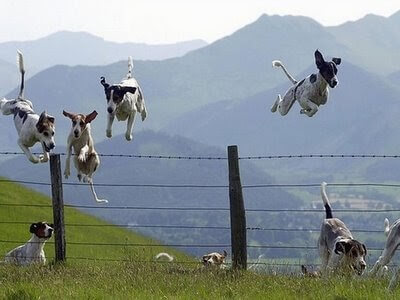
Active dogs safely contained by a robust dog fence on vast, uneven ground in a beautiful, hilly landscape."

Top Tips to Stop your Dog from Escaping Out of The Garden

Top Tips to Stop your Dog from Escaping Out of The Garden

stop dogs escaping from garden

Yipee – let’s go guys!

Boredom, loneliness, territory protection, prey instincts and separation anxiety are reasons that may lead a dog to stray. So how do you stop your dog from escaping? The answer may be more straight forward than you think.  Firstly it is important to assess the reasons why the dog is escaping.  What is it that draws him off, is it food, livestock another dog or boredom? It goes without saying that every dog owner wishes to prevent their dog from escaping and getting into danger. Outside the safety of the garden your dog risks getting into a fight, being hit by a vehicle, being stolen or even eating something poisonous. There is also responsibility; a free roaming dog is a threat to children, livestock and even other dogs on a lead.

Train your dog?

You may have already asked your trainer how to stop your dog from escaping. Many owners report that the dog develops the habit of escaping through the front door as soon as it is opened. They may also get rewarded for escaping. They get to roam the neighbourhood, scour bins and possibly enjoy a game with another dog! Hence, this then becomes a hard to break habit. Teach your dog to wait at the door until you open it for him and to never go out on its own. Always rewards his good behavior. Your dog will stop getting out of the garden to enjoy treats from you.

Secure your garden

Ensure that your garden area is well secured to stop your dog from escaping. You may be able to use a 6-foot fence to secure the area because most dogs cannot jump over it – you could also consider digging in a chicken wire along the fence line below ground. When a dog is determined to escape, it can do anything to gain access to digging under the 6-foot fence. The chicken wire will be uncomfortable for the dog, and may prevent deter the dog from digging. You can also place concrete or wood blocks at the bottom of your fence to discourage digging. Try to avoid picket fencing as this can cause serious injury to your dog or cat if they impale themselves on the stakes. The issue with a lot of fencing is that wildlife can damage the wire and make holes within the fencing.

Containment fencing

If you have an uneven garden terrain, consider having a smaller dog run that could be confined to one corner. Another alternative for securing the garden is installing underground or invisible fencing. The hidden fence uses a small computer collar that interacts with a signal that surrounds the property. When the dog enters the “no go zone” the dog’s collar reacts to the radio signal and gives the dog a high pitched warning beep to alert the dog that he or she is in the wrong area. If the dog continues the collar gives out a low level static shock (correction). The dog will have been trained to know where the “no go zone” area is located through a training protocol that uses both vocal and visual indicators. The advantage of an invisible dog fence is that they can be installed on nearly any terrain.

Over the years there has been negative press on the use of electronic dog fences, often referred to as electric dog fence but recent studies have dispelled the myths, indeed a study into cat containment reported that there are no negative long term effects with using an electronic fence. (Lincoln 2016) https://www.lincoln.ac.uk/news/2016/09/1265.asp.

The issue of how to stop your dog from escaping is always going to be a difficult subject but below are few tips:-

Driveways and open boundaries

Driveways are always going to be a weak point, as are open areas which cannot be fenced due to planning restrictions. These areas really are ideal for using electric dog fences. Escaping dogs will always use the weakest point on a property and an open gateway or clear area is a golden opportunity for a dog to make a bid for freedom. An underground dog fence will operate invisibly and effectively 24/7 to prevent the dog or cat from escaping through the vulnerable area. Owners often install electric gates to keep dogs and cats off the roads, however, most dogs will quickly learn that when they hear the buzzer they have an open opportunity to not just run out but amble out at a steady pace. An underground dog fence can be fitted in conjunction with electric gates to prevent the pet from escaping when they hear the buzzer.

stop dogs from escaping through driveway

An open driveway is difficult to secure.

Consequences of an escaping dog

If your dog escapes and is caught by a council dog warden you may be issued with a warning, a caution or a fixed penalty fine. If your dog is considered out of control you may even be prosecuted and fined. The penalty is up to 6 months in prison or an unlimited fine!  This is surely a big enough incentive to stop a a dog from escaping! Also further controls can be given to the owner.  In some cases the dog may be transferred to a local kennels whilst the owner is located at a heavy daily cost or even transferred to shelter and possibly re-homed. Recent media reports have also found out that the RSPCA is too quick to euthanise. Sadly owners pets have been permanently separated from their vets within a matter of weeks.


Exercise your dog

A dog that only stays and plays in the garden will eventually get bored, stressed, frustrated and unhappy. Dog’s need a change of scenery. Just like people a change is as good as a rest. If your dog is bored it will look for ways to break the tedium.  For you and your dog’s sanity it is advisable to walk your dog every day if possible. This way he can experience a new environment, remain engaged and interact with other dogs. Exercises not only boosts your dog’s socialization skills but also stimulates its mind. Country walks or walks in the park are a great way to stimulate your dog. The sounds, scents and interaction with nature and other dogs will keep him fresh. If you exercise your dog daily or regularly then this should help to stop your dog escaping from the garden.

Conclusion

Just like human beings, dogs like adventure and to discover new things. If you want to stop your dog from escaping you need to break the cycle. It may be that you need to install a containment fence or that you need to train your dog or exercise him more. If the issue is not tackled then the habit will continue. As an owners we must look at the issue from two angles. Primarily we need to be responsible for our dog’s welfare, state of mind and health. However, we also have a responsibility to those people, livestock and property that a wandering dog may come in contact with.  An engaged happy dog will be less likely to wander.