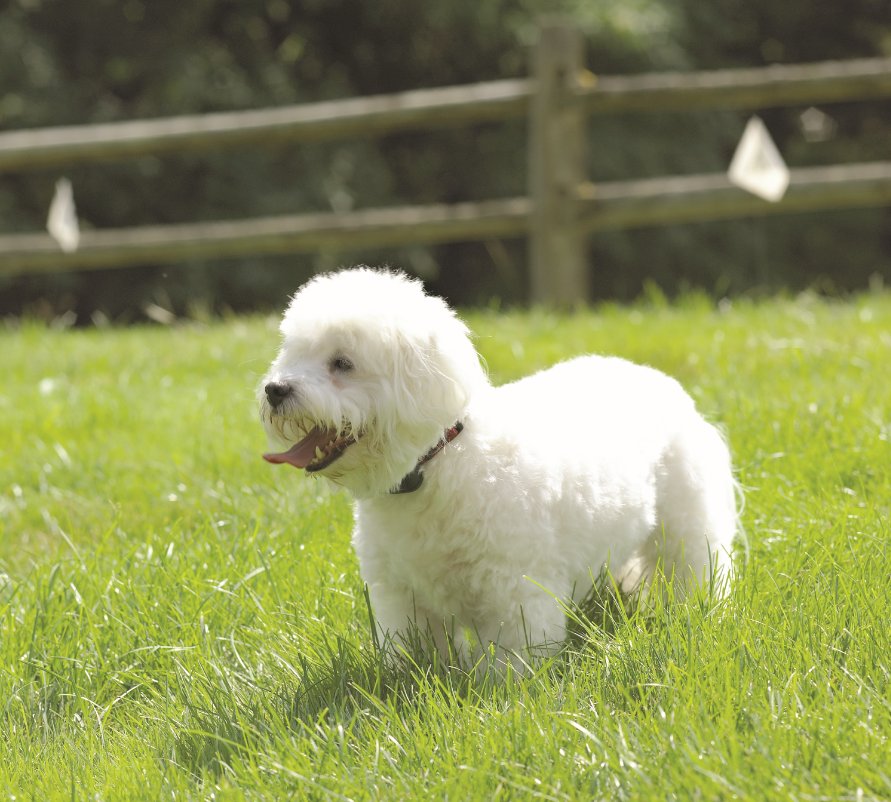
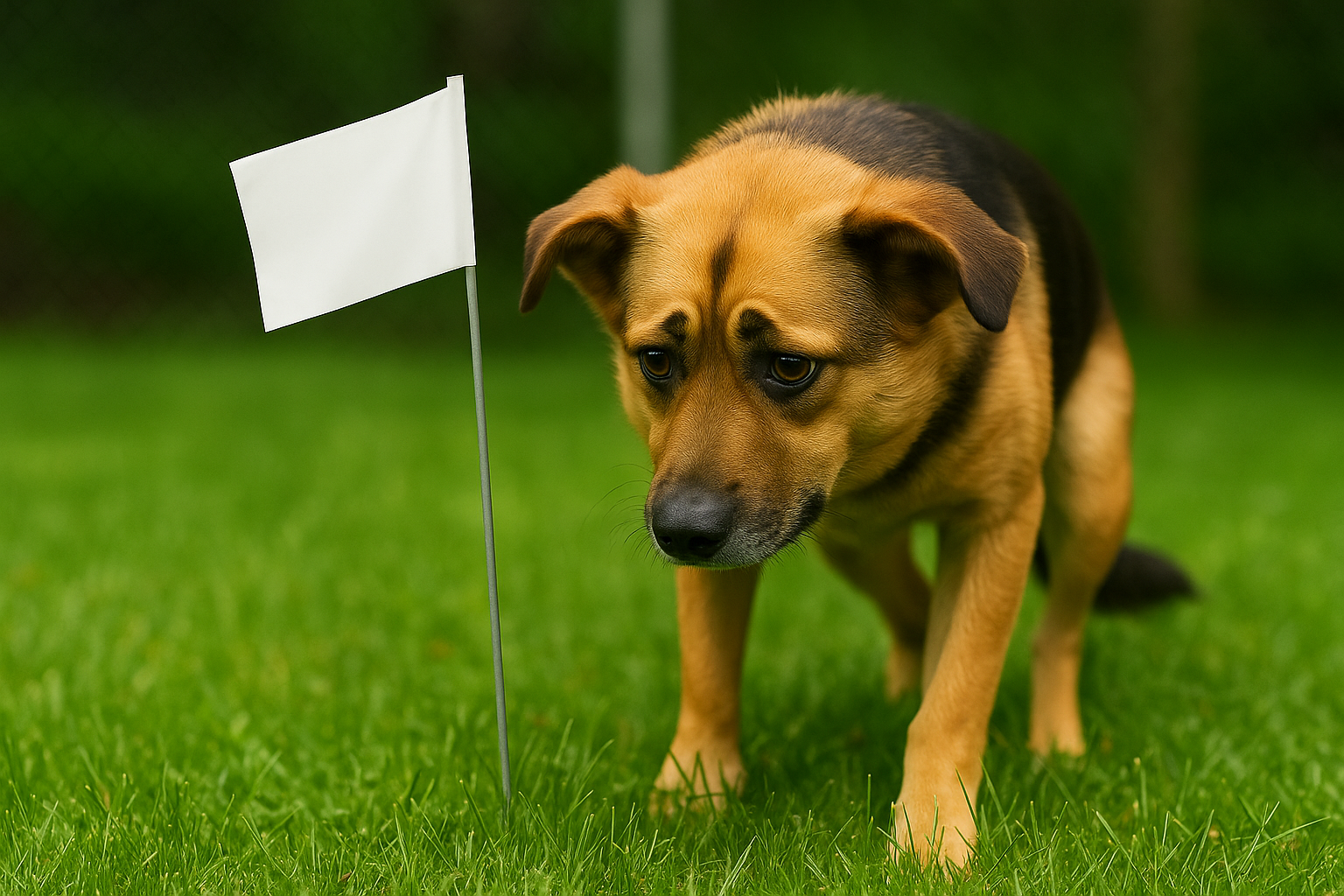
Nervous dog looking cautiously at a white dog fence training flag during boundary training

Training a Nervous Dog to a Dog Fence: 7 Common Mistakes

Training a Nervous Dog to a Dog Fence: Common Mistakes and How to Fix Them

Training a nervous or anxious dog to a dog fence can feel stressful, especially if your pet is shy, timid, or easily startled. While a dog fence can be a brilliant way to keep sensitive dogs safe in the garden, some common training mistakes can accidentally increase their anxiety or slow down progress. In this guide, we’ll walk through the most frequent issues owners face when training a nervous dog to a dog fence – and how to fix them with gentle, confidence-building methods.

Nervous dog looking cautiously at a white dog fence training flag during boundary training

Why Nervous Dogs Need a Different Training Approach

Nervous, fearful, or sensitive dogs often react strongly to new sensations, sounds, and changes in their environment. A dog who is already worried about the outside world may find boundary training overwhelming if it’s rushed or inconsistent.

That’s why gentle dog fence training for anxious dogs needs to be:

  • Slow and structured – lots of small, positive steps rather than one long session.
  • Predictable – clear boundaries, clear signals, and calm reactions from their owner.
  • Supportive – using treats, praise, and reassurance to build confidence.
  • Positive – Always be positive and upbeat with your dog

With the right approach, a dog fence can actually help nervous dogs feel safer because they understand exactly where their secure zone ends.

7 Common Mistakes When Training Nervous Dogs to a Dog Fence

Mistake 1: Going Too Fast on Day One

One of the biggest mistakes is trying to “get it done” in a single long session. For a nervous or timid dog, this can be overwhelming and may make them anxious about the garden itself.

How to fix it: Keep sessions short and gentle – around 3–5 minutes at a time is ideal. Aim for several calm, successful sessions over a few days rather than one big push.

Mistake 2: Skipping Familiarisation Time

Some owners put the collar on and start training straight away. For sensitive dogs, this can feel like too much change all at once.

How to fix it: Spend a day or two simply letting your dog explore the garden on a loose lead without any collar activity. Then introduce the receiver collar switched off so they get used to wearing it comfortably before the fence is active.

Mistake 3: Poor Collar Fit or Incorrect Level

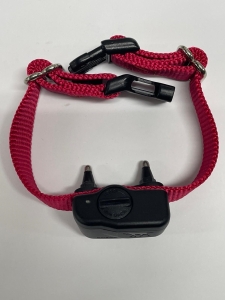
If the receiver collar is too loose or the contact posts aren’t touching the coat properly, the dog may not feel the gentle correction at all – or only feel it unpredictably. On the other hand, setting the level too high can be unfair for a nervous dog.

How to fix it: Make sure the collar fits snugly (you should be able to slide one finger under the strap). With our DogFence collars, start at the lowest suitable level for your dog’s size and temperament and adjust gently if needed. If you’re unsure, speak to our team for guidance.

Mistake 4: Inconsistent Use of Training Flags

Flags are a vital visual aid, especially for anxious dogs who rely on clear, consistent cues. Taking them away too soon or placing them randomly can confuse your dog.

How to fix it: Mark the boundary clearly with flags, spaced evenly. During training, always guide your dog back from the flags using the same word, such as “back” or “wait”. Only begin to remove flags once your dog is consistently responding to the warning beep.

Mistake 5: Training When You’re Rushed or Stressed

Nervous dogs are very good at picking up their owner’s mood. If you’re tense, in a hurry, or feeling frustrated, they may associate training with stress.

How to fix it: Choose a quiet time of day when you can stay calm and patient. Use a soft voice, relaxed body language, and plenty of praise. If either of you feels frazzled, stop and try again later.

Mistake 6: Making Sessions Too Long

Long training sessions can easily tip nervous or easily overstimulated dogs into shutdown or frantic behaviour.

How to fix it: Short, frequent sessions work best. A few minutes of successful training, followed by play or a cuddle, will build your dog’s confidence far more effectively than a long, intense session.

Mistake 7: Not Checking the Equipment Regularly

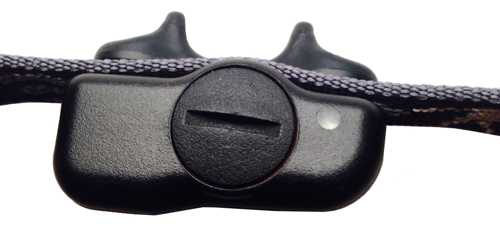
If the collar battery is flat, the collar is damaged, or the boundary wire has been cut, the system can’t do its job. Owners may think the fence has “failed” when in reality it needs a simple check.

How to fix it: Test the system regularly and check the collar’s battery, fit, and condition at least once a month. Our DogWatch FM technology is extremely reliable, but like any safety system, it needs basic maintenance.

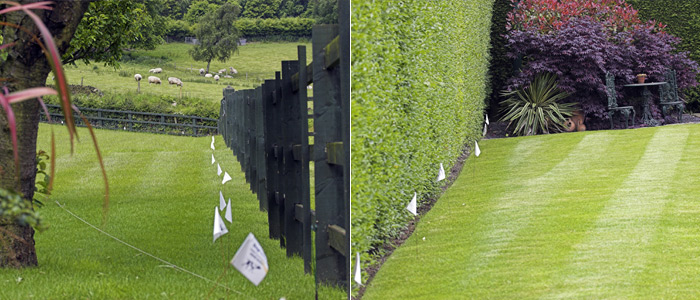
White dog fence training flags marking the garden boundary during DogFence installation

Training flags to mark the boundary essential for gentle dog fence training

Gentle DogFence Training Checklist for Anxious Dogs

When training a nervous dog to a dog fence, use this checklist as a guide:

  • Allow calm familiarisation time in the garden before activating the system.
  • Introduce the collar gradually, pairing it with treats and praise.
  • Use training flags to make the boundary clear and visible.
  • Start with the warning beep only, then add the gentle correction when your dog understands the flags.
  • Keep sessions short, positive, and consistent.
  • Always guide your dog back into the safe zone with calm reassurance.
  • Celebrate successes – nervous dogs thrive on confident, happy feedback from you.

When to Ask for Professional Help

Every nervous dog is different. Some adapt quickly with a little reassurance; others need a more tailored approach. If your dog has a history of severe anxiety, is a very nervous rescue, or you’re simply unsure where to start, it can be reassuring to have expert support.

At DogFence Ltd, our installers are experienced in working with anxious, timid, and sensitive dogs. We’ll help you choose the correct settings, show you exactly how to introduce the system gently, and support you through the training process so both you and your dog feel confident. If you’d like expert help from the start, our professional installation service (https://dogfence.co.uk/installation/) ensures the system is set up correctly and your nervous dog receives gentle, confidence-building training.

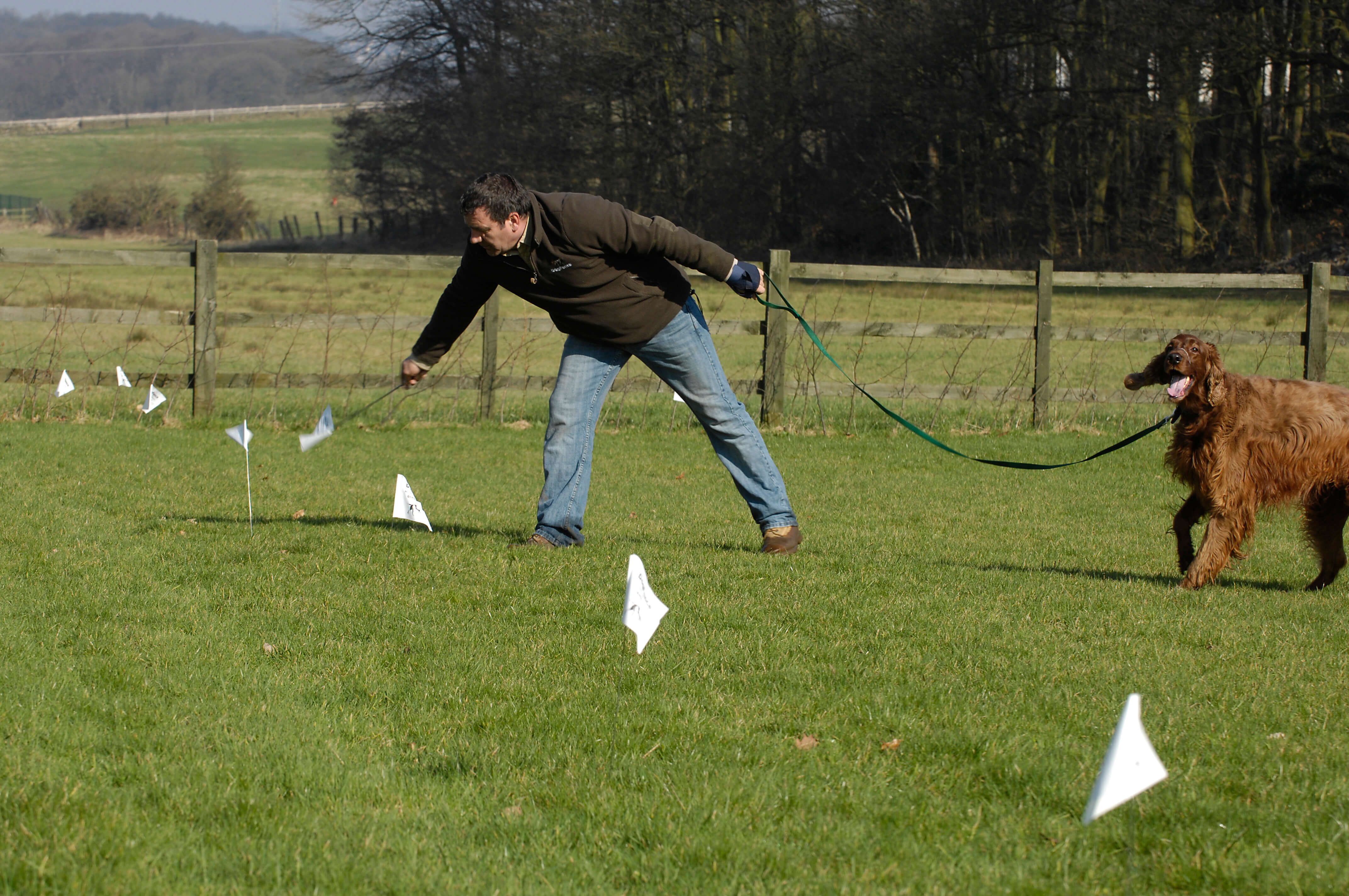
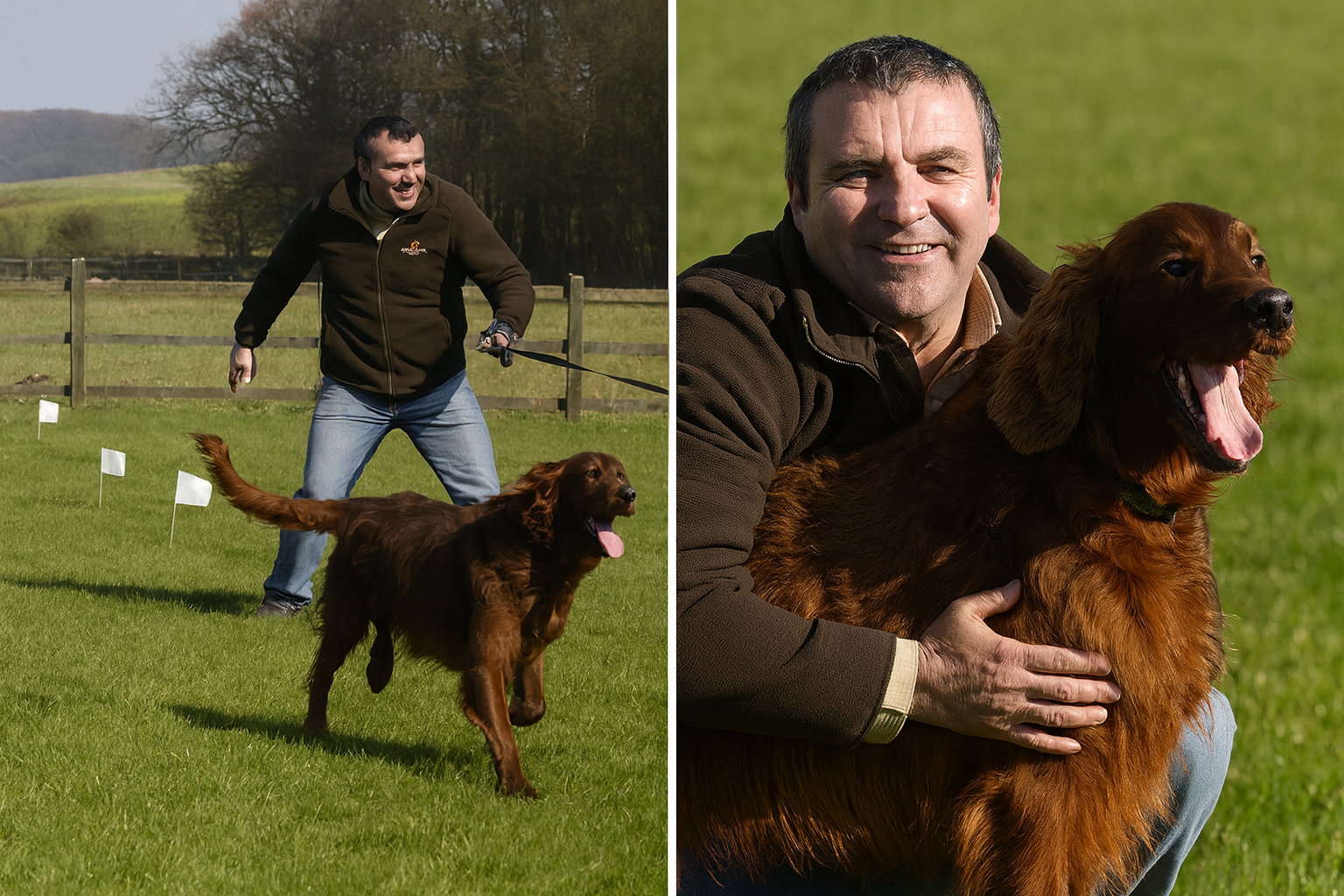
Professional DogFence installer helping a nervous Irish Setter during boundary training, followed by a confident, happy dog after gentle guidance

Our professional DogFence installers are highly experienced in training nervous and sensitive dogs—helping them gain confidence and enjoy safe freedom in the garden.

Need Help Training a Nervous Dog to a Dog Fence?

Call us on
01628 476475
|
Message us on WhatsApp
|
Request a Free Quote Online

For a full step-by-step guide, read our main article How to Train a Nervous Dog with a Dog Fence, or visit our Dog Fence FAQ page for more answers.

Daisy the Kangal showing confidence during gentle dog fence training

How to Train a Nervous Dog with a Dog Fence | Gentle Dog Fence Training for Anxious Dogs

How to Train a Nervous Dog with a Dog Fence

If you’re wondering how to train a nervous dog with a dog fence, the key lies in gentle, consistent training that builds confidence. When it comes to keeping a timid or anxious pet safe outdoors, many owners ask if it is even possible to train a nervous dog with a dog fence without causing stress. At DogFence Ltd, we use a structured, calm, and gentle dog fence training method that helps pets gain confidence while learning clear, safe boundaries around the garden.

Key Takeaways

  • Training nervous dogs requires calm, consistent, and positive methods.
  • DogFence systems are individually programmed to suit each dog’s temperament.
  • Gentle dog fence training builds confidence and prevents anxiety.
  • Professional installation includes personalised support and follow-up guidance.

Understanding Nervous Dogs and Dog Fence Training

Every dog has a unique personality. Some are bold and curious, while others are more cautious. Nervous dogs often react to new sounds, sensations, or environments, so training nervous dogs to a dog fence must be gradual and reassuring. Our system allows you to set the tone for each session, focusing on calm voice cues, gentle encouragement, and short, positive experiences. When training young dogs to the system it is important to take the training slowly at the correct age. If you are looking to add a young dog to a dog fence system read our comprehensive blog on training a puppy to the dog fence.

Our Gentle Dog Fence Training Approach

We specialise in gentle dog fence training designed to build confidence, not fear. Each DogFence receiver collar is fully adjustable, ensuring that nervous pets experience only a mild, momentary correction — if any at all. In most cases, dogs learn to respond to the warning beep and never need further reinforcement.

A nervous dog in training on a DogFence electronic dog fence system using marker flags for gentle boundary learning

Training a nervous dog using marker flags as part of gentle dog fence training.

1. Start with Familiarisation

Before any correction levels are introduced, we walk your dog around the boundary with visible training flags in place. These flags are the most important part of the early training process — they act as clear, visual markers that help your dog understand where the boundary begins and ends. For a confident dog, the flags are simply new objects in the garden. For a nervous dog, however, they can be the scariest part of training.

Some dogs find the movement of the flags — even the simple flicking back and forth in the wind — unsettling at first. It’s completely normal. The key is to stay upbeat and calm. Your tone of voice, posture, and energy set the emotional temperature for your dog. Nervous dogs take their lead from you, so remaining confident, positive, and cheerful helps them feel secure and reassured.

Think of it this way: to a nervous dog, the garden is full of invisible “gremlins.” Every sound, scent, or sudden movement can be a source of uncertainty. By introducing the flags gently, pairing them with beep-only training, and rewarding calm curiosity, you show your dog that there’s nothing to fear. With patience, praise, and consistency, even the most anxious dog will soon view the training flags — and the boundary itself — as just another safe part of their familiar outdoor world.

2. Introduce Beeps and Voice Cues

During the early sessions, your dog will hear a warning beep as they approach the boundary. Pairing this sound with a consistent command such as “Careful or Watch out” helps them link the tone with returning to safety. The focus is on communication, not correction.

3. Gradual Correction, Minimal Intensity

If your pet continues into the zone after the beep, the collar delivers a mild static pulse. For all dogs regardless of their personality we start at the bottom. When training on a dog fence for anxious dogs, we always begin at the lowest possible level and adjust only if absolutely necessary. Each training session lasts around 10–15 minutes and ends with plenty of praise and playtime. Slow and steady wins the race.

Case Study: Daisy the Kangal’s Confidence Journey

Daisy, a gentle Kangal, was initially fearful of new environments and noises. Her owners worried that containment training might overwhelm her. Using our gentle dog fence training process, Daisy quickly learned to associate the beep with boundaries, not punishment. Within a week, she was confidently exploring her large garden, tail wagging, safe from nearby livestock and traffic.

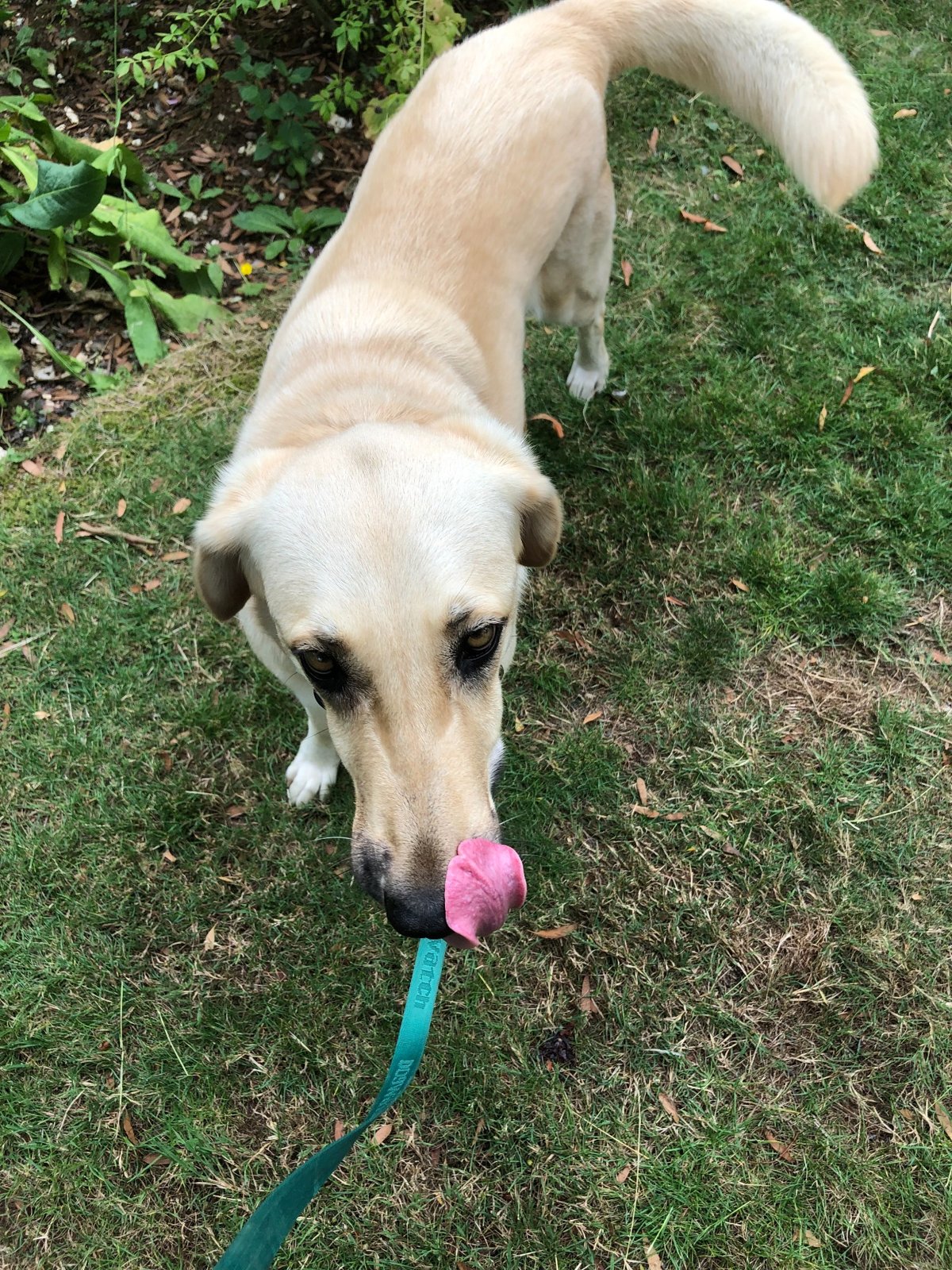
Daisy the Kangal licking her nose during gentle dog fence training, showing a common calming signal in nervous dogs

Daisy the Kangal during gentle dog fence training. Licking and yawning are common signs in nervous dogs as they process new experiences and build confidence.

Professional Support for Nervous Dogs

When training nervous dogs to a dog fence, the aim is to build trust and confidence through repetition and reward. Our experienced installers and trainers understand how to adapt sessions for dogs with anxiety or trauma backgrounds. We never rush or force progress. Instead, we combine proven behavioural principles with humane technology to help your pet feel secure. You can read more about our approach in our detailed guide to electric fences for nervous dogs. With patience and positive reinforcement, even anxious pets adapt beautifully to a dog fence for anxious dogs.”

Learn More About Dog Fence Training

If you’d like to understand how the system works technically, see How a Dog Fence Works. You can also review our FAQ on training nervous dogs for further reassurance.

Why Choose DogFence for Nervous Dogs?

  • Over 22 years’ experience with all breeds and temperaments.
  • DEFRA-tested and approved containment system.
  • Lifetime warranty and ongoing customer support.
  • Tailored dog fence for anxious dogs programmes designed to suit your pet’s individual needs.

When done correctly, training nervous dogs to a dog fence is a calm, confidence-building experience. It teaches boundaries safely and gently — giving your dog freedom to roam while ensuring peace of mind for you. Our system is designed to work equally well for confident pets and for those needing a gentle dog fence for anxious dogs.

Ready to Keep Your Pet Safe?

Call us on
01628 476475
|
Message us on WhatsApp
|
Request a Free Quote Online
owner gently training anxious dog with invisible dog fence in garden

Can Anxious Dogs Use an Invisible Dog Fence? | by DogFence Ltd

Can Anxious Dogs Use an Invisible Dog Fence?

Can anxious dogs use an invisible dog fence? Absolutely — when introduced with gentle, structured training, an invisible fence can help anxious dogs feel calm, confident, and secure outdoors. At DogFence Ltd, we specialise in training that builds trust, using our humane FM-based containment system to guide rather than startle your pet.
owner gently training anxious dog with invisible dog fence in garden

Calm, positive training helps anxious dogs feel safe and confident when learning their invisible fence boundary.

Understanding Anxiety in Dogs

Just like people, dogs can experience anxiety for many reasons — new environments, loud noises, separation, or a lack of clear boundaries. When asking yourself, can anxious dogs use an invisible dog fence safely, it’s important to remember that the success lies in calm, consistent training that gives your dog a sense of predictability and security.

At DogFence Ltd, we’ve worked with thousands of sensitive and anxious dogs across the UK. Our approach focuses on clear communication, trust, and repetition — the key ingredients for helping anxious pets feel calm and in control.

How an Invisible Dog Fence Works for Anxious Dogs

An invisible dog fence, sometimes called a hidden or wireless containment system, uses a boundary wire carrying a harmless FM radio signal. Your dog wears a lightweight collar that picks up the signal and emits a warning beep as they approach the boundary. If they continue forward, the collar delivers a brief, mild static pulse — similar to a light static tap — to remind them to step back into the safe area.

The goal is not punishment but communication. With careful training, anxious dogs learn to associate the warning beep with retreating to safety, giving them clear, reliable feedback every time.

Gentle Training: The Key to Success

When people ask, can anxious dogs use an invisible dog fence without feeling frightened, our answer is yes — provided the training is slow, positive, and supportive. Our installers use a calm, step-by-step method that introduces the boundary gradually using training flags, voice cues, and praise. Sessions are short to prevent overstimulation and ensure every experience builds confidence.

If your dog tends to be nervous, read our related post Are Electric Fences OK for Nervous Dogs? to learn how similar gentle principles help sensitive pets adjust safely.

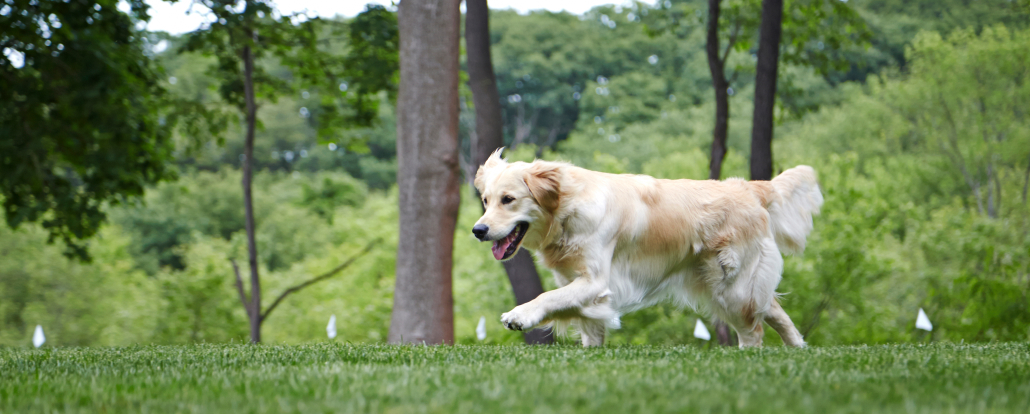
happy golden retriever walking calmly after invisible dog fence training

Gentle invisible dog fence training helps dogs build confidence and enjoy safe freedom outdoors.

Behavioural Benefits for Anxious Dogs

Invisible dog fences provide more than containment — they offer structure and clarity. When anxious dogs understand exactly where their boundaries are, their anxiety often decreases. Over time, this clear structure helps them relax, explore, and play confidently within the safe zone.

We’ve seen countless examples of anxious rescue dogs that initially feared open spaces, but with patient DogFence training, began to enjoy their gardens freely and calmly. Predictability builds trust, and trust reduces anxiety.

Safety and Welfare Recognition

DogFence systems are DEFRA-tested and recognised as safe and humane when used correctly. Our FM-based technology ensures there are no false activations, unlike cheaper AM systems. Every collar is individually programmed to your dog’s size and temperament, and the correction shuts off automatically after 15 seconds for complete peace of mind.

Even for anxious or sensitive dogs, this system provides consistent feedback without fear or confusion — a key factor in responsible, welfare-friendly training.

Can Anxious Dogs Use an Invisible Dog fence Outdoors?

So, can anxious dogs use an invisible dog fence? Absolutely. With gentle introduction and calm reinforcement, the fence becomes a reassuring guide rather than a source of worry. The result is a happier, more confident dog who understands their boundaries and enjoys outdoor freedom safely.

If you’d like advice on whether an invisible dog fence is suitable for your pet, visit our Dog Fence FAQ page or speak with our experienced team — we’re always happy to help.

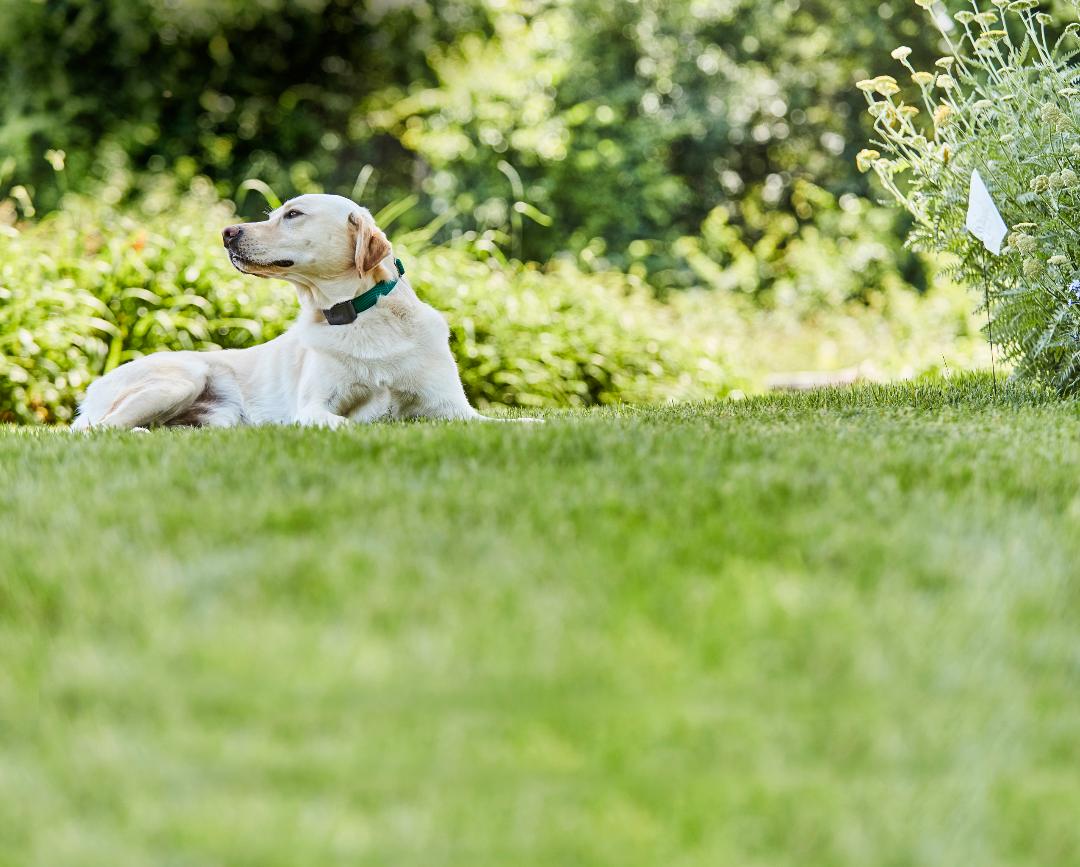
calm dog resting confidently in garden after invisible dog fence training

After gentle training, anxious dogs relax and feel secure within their invisible dog fence boundary.

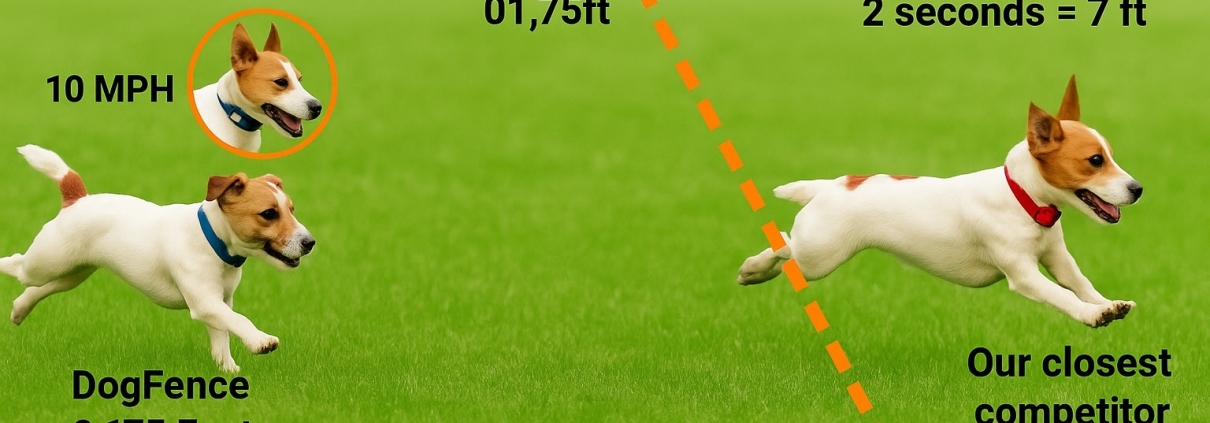
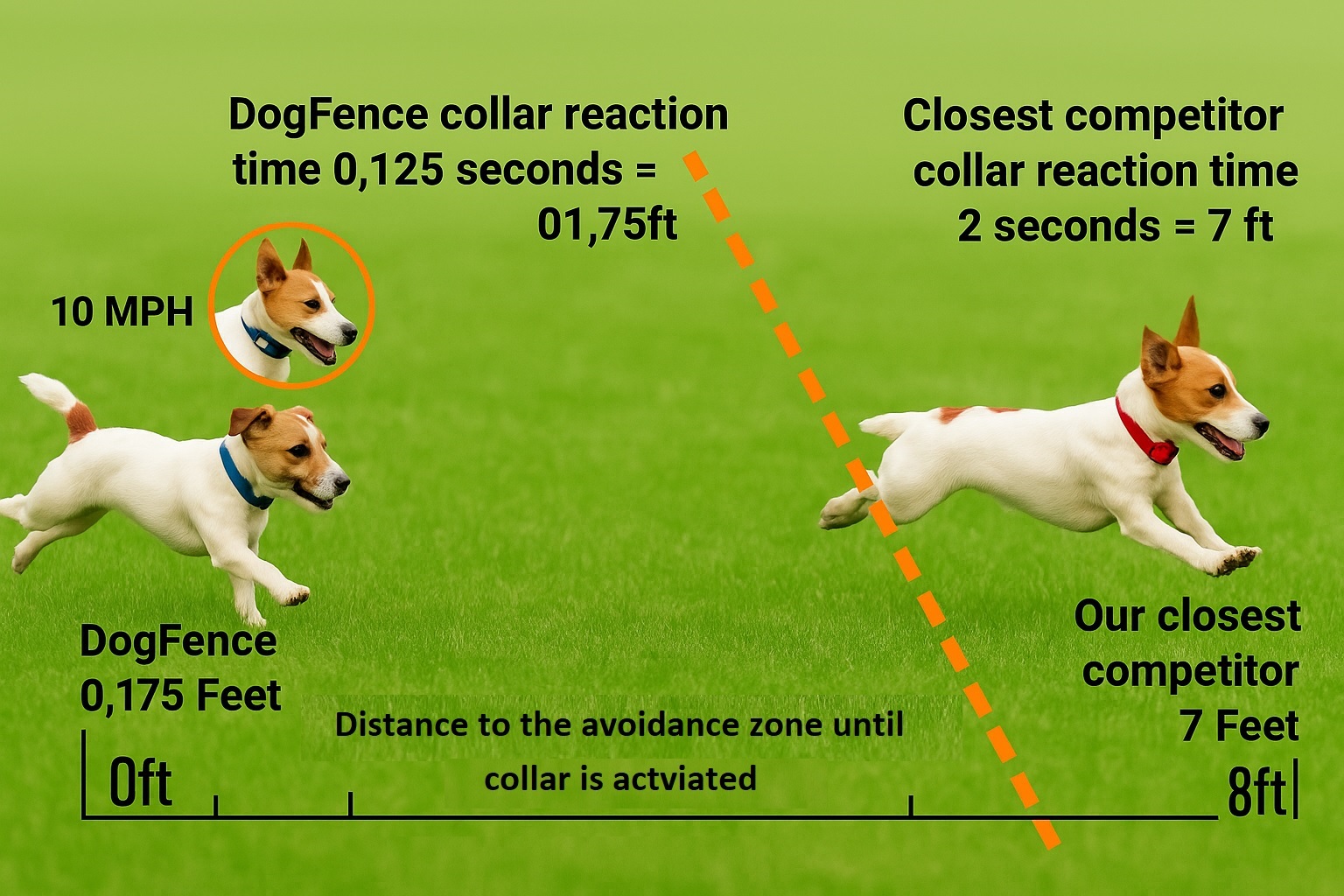
At 10mph, DogFence’s FM collar reacts in just 0.125 seconds—stopping your dog after only 1.75ft. The nearest competitor reacts in 2 seconds, allowing a 7ft run into the avoidance zone

What is a Radio Dog Fence: FM vs AM Explained | DogFence Ltd

What Is a Radio Dog Fence?

A radio dog fence works by sending  either a coded AM or  FM signal through a small boundary wire that’s laid around your garden or designated safe zone. The system does not carry any electric current in the wire — it’s completely safe to touch, even if the wire is cut or damaged.

Instead, the boundary wire acts as an antenna, carrying the AM or FM radio signal from the transmitter. This creates an invisible 360-degree signal field around the wire. The width of that field — known as the avoidance zone — can be adjusted to suit the size of your garden, your pet’s temperament, and the layout of your property. An average setting is around 4 ft on either side of the wire.

Your pet wears a receiver collar that’s programmed to recognise only the unique AM or FM signal produced by your DogFence transmitter. As your pet moves towards the boundary:

  • The collar emits a warning beep as they enter the avoidance zone.
  • If they continue forward, the collar delivers a gentle impulse alongside the beep.

At DogFence all our systems use a digital FM signal.

With professional training, your pet quickly learns that the warning tone means “stop and return to the safe area.” Once your pet moves back into the safe zone, our FM receiver collar instantly shuts down — there’s no lingering correction or delay.

In contrast, AM-based systems typically have a slower response and hang-on time (often 2–5 seconds), meaning the correction can continue even after the pet has turned back. The FM system avoids this issue entirely, offering a faster, safer, and more reliable response.

The result? A containment fence that offers both freedom and safety for your pets — and peace of mind for you.

Learn more about how our DogFence system works.


Radio Dog Fence: FM vs AM Compared

The difference between AM and FM is easy to understand if you think about car radios:

  • AM radio often sounds crackly and suffers interference.

  • FM radio is clearer and more reliable.

The same principle applies to radio dog fences:

Feature AM Radio Dog Fence FM Radio Dog Fence (DogFence)
Signal type Step signal with “down” gaps Continuous FM waveform
False activations More likely — collar can pick up stray signals Rare — FM reacts only to the true signal
Response speed Slower — must double-check Faster — checks one clear signal
Interference risk High — Wi-Fi, gates, electrics Very low — FM filters out background noise
Pet safety Timing can be inconsistent Clear, accurate boundary feedback

Technical explainer: How Stuff Works – AM vs FM

Why Choose an FM Radio Dog Fence?

DogFence uses FM technology because it’s safer, faster (up to 15 times faster in some cases), and more consistent than AM:

  • No weak spots — FM signals are continuous (wave form, not step form).
  • Fewer false activations — corrections happen only at the boundary (FM signals do not pick up interference).
  • Faster reaction — collars check once, not twice (faster start up and shut down).
  • Gentler training — pets learn quickly when the boundary is clear.

With an FM system, your pet gains freedom without confusion.

  • AM (Amplitude Modulation) systems have to check for two separate signals — a carrier and a modulation pulse — before reacting. This makes them slower and creates brief “gaps” in the signal where interference from Wi-Fi, garage doors, or electric gates can slip through.

  • FM systems like DogFence need to recognise only one smooth, continuous waveform, so the collar responds almost instantly and isn’t confused by external signals.

Because FM operates in a wave form rather than a step pattern, it’s both faster and more stable. That means your dog’s collar activates at the correct point — every time — giving precise correction only at the true boundary, nowhere else.

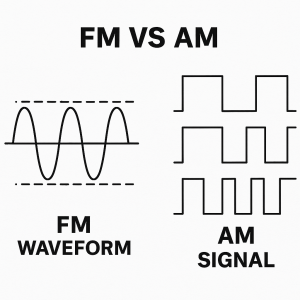
FM vs AM radio dog fence signals showing smooth FM waveform compared to step-like AM signal

FM vs AM radio dog fence signals – FM uses a smooth, continuous waveform while AM uses a step signal that can cause interference and false activations.


Why is Training Important with a Radio Dog Fence

Training ensures your pet learns the system quickly and confidently. DogFence provides full installation and onsite training for both you and your dog/s or cat/s or even cats and dogs!

What are the important elements of radio dog fence training?

  • Training flags for clear visual markers. A visual for you pet to see.
  • Audible tones as early warnings. An audible tone for your pet to hear
  • Short daily sessions of 5–10 minutes. Little and often – we all learn better in bite size chunks!
  • Custom settings suited to your pet’s breed and temperament. Impulse something to feel.

Most pets understand their new radio dog fence within a week. Many people think a radio dog fence is only for dogs, but with the right technology and smaller receiver collars, these systems are also ideal for safely containing cat

Explore how this also works for Cat Containment.


Aren’t All Digital Systems the Same?

Not quite. Some suppliers advertise “digital” systems, but:

  • Digital AM is still AM — step signals, weak points, interference risk.

  • Digital FM combines programmable digital collars with a strong, interference-free FM signal.

DogFence only uses FM digital radio dog fences — the safest option for UK gardens. Our FM dog fences react almost instantly — up to ten times faster than AM fences. That means if your dog is running at 10mph, they’ll stop about 7 feet sooner, keeping them safely inside your garden.”

At 10mph, DogFence’s FM collar reacts in just 0.125 seconds—stopping your dog after only 1.75ft. The nearest competitor reacts in 2 seconds, allowing a 7ft run into the avoidance zone

At 10mph, DogFence’s FM collar reacts in just 0.125 seconds—stopping your dog after only 1.75ft. The nearest competitor reacts in 2 seconds, allowing a 7ft run into the avoidance zone


DogFence: Trusted UK Experts

DogFence Ltd has been installing radio dog fences across England since 2003. We were proud to be the only UK company consulted by DEFRA during the government’s review of electronic collars, where our input helped secure the official exemption of pet containment systems.

This exemption recognised not only the importance of correct training and professional installation, but also the built-in safety features unique to our DogFence system.

When announcing the exclusion of containment fences from the wider e-collar ban, the government also indicated plans to introduce legislation requiring all electronic pet fences to be professionally installed.
At the time of writing, these proposed changes — along with the formal e-collar ban — have not yet been enacted into law.

Why are dog fence are the best option to install your electronic pet fence?

  • Over 22 years’ experience

  • Trusted by 20,000+ pets

  • Lifetime warranty & containment promise on installed systems

Want to learn more about how to install a radio dog fence or keep your pet safely contained?

Join thousands of UK pet owners who trust DogFence to keep their dogs and cats safe at home.
Our systems are proven, reliable, and backed by a lifetime warranty.

Contact us today:
01628 476475
info@dogfence.co.uk
Chat with us on WhatsApp


Request a Free Quote

are electric fences OK for nervous dogs gentle training with owner in garden

Are Electric Dog Fences OK for Nervous Dogs? | by DogFence Ltd

Are Electric Fences OK for Nervous Dogs?

Understanding Nervous Dogs and Their Behaviour

Many owners ask are electric dog fences OK for nervous dogs  and can they really be used safely — the answer is yes, when introduced gently and correctly. At DogFence Ltd, we specialise in helping nervous or anxious dogs build confidence and enjoy freedom outdoors using our safe, FM-based containment system.

Just like people, every dog has its own personality and confidence level. Some dogs are naturally bold and curious, while others can be shy, anxious, or easily startled by new sounds or experiences. These “nervous” dogs often need extra reassurance and consistency — especially when introducing new boundaries or training tools.

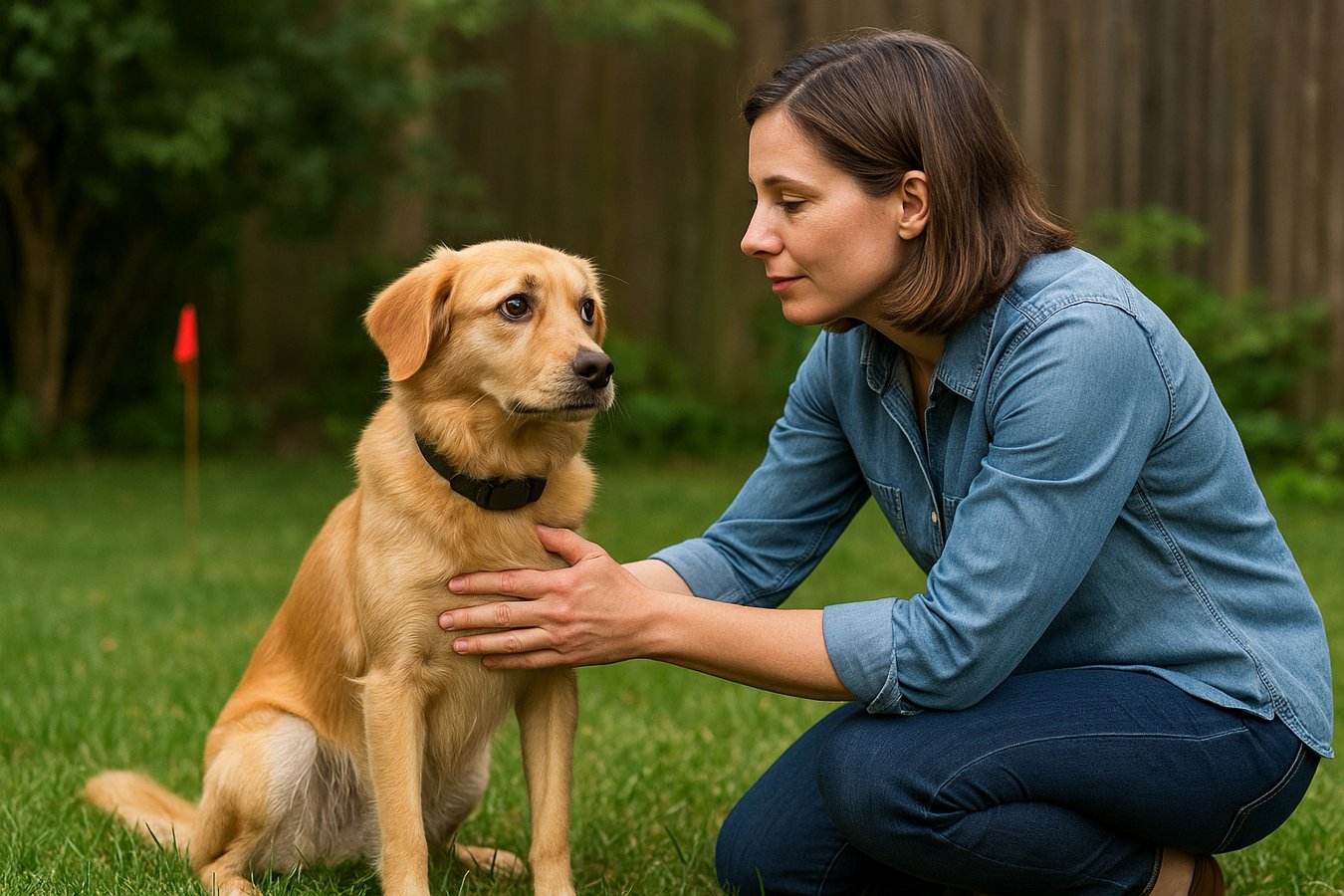
are electric fences OK for nervous dogs gentle training with owner in garden

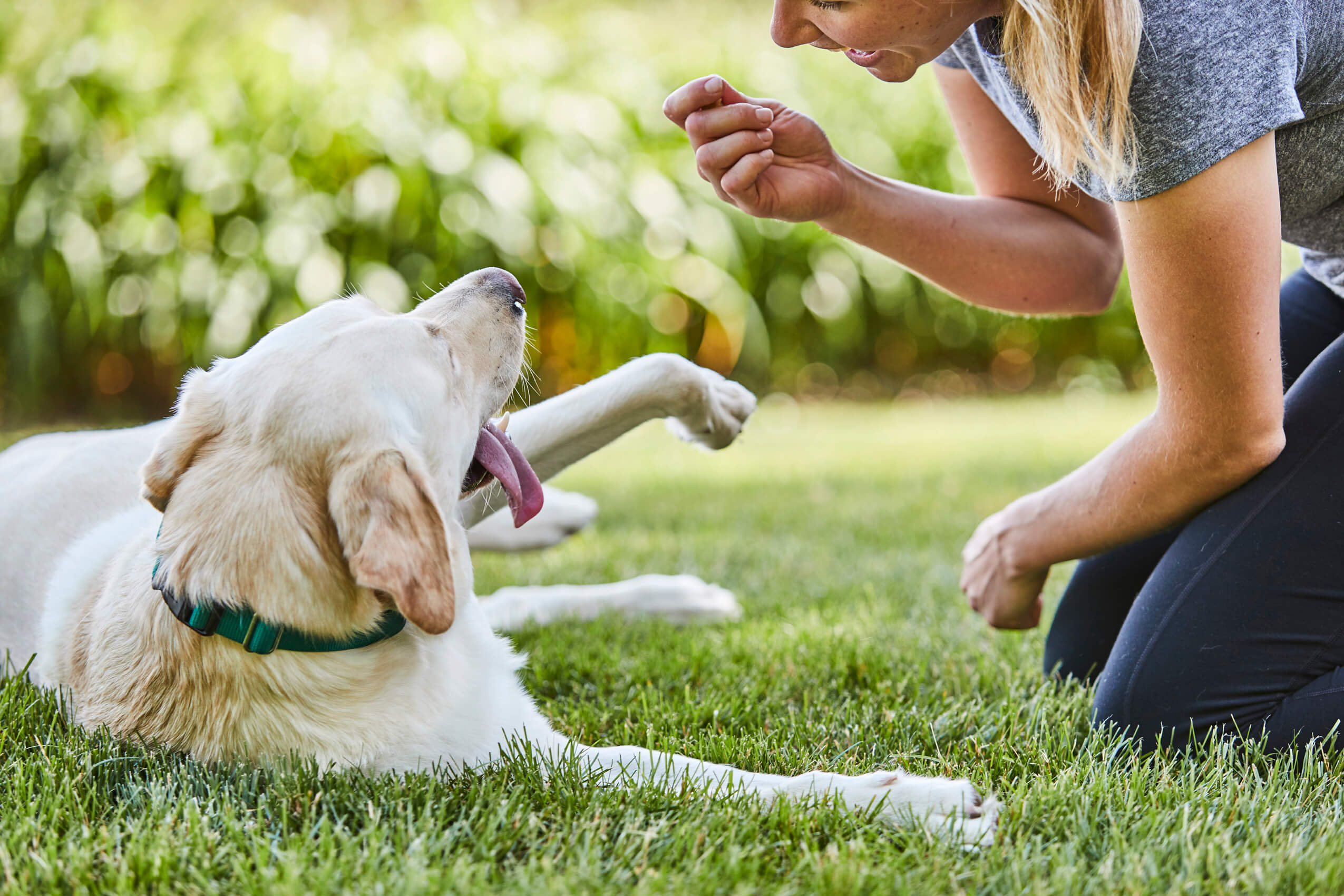
A calm, reassuring training moment between an owner and her nervous dog — showing how gentle, FM-based DogFence training builds confidence and trust outdoors.

At DogFence Ltd, we’ve worked with thousands of nervous and sensitive dogs across the UK. From timid rescues to easily startled spaniels, we’ve seen first-hand how calm, consistent training helps build confidence. The key is always gentle guidance and positive reinforcement, never fear.

How Our Dog Fences Work for Nervous Dogs

A common misconception is that electronic dog fences “shock” or frighten pets. In reality, our FM-based DogWatch® systems work through gentle conditioning and clear communication:

    • A hidden boundary wire carries a harmless FM radio signal around your garden.
    • Your dog wears a lightweight receiver collar, which picks up that signal.
    • As your dog approaches the boundary, the collar emits a warning beep.
    • If they continue forward, the collar gives a brief, mild static pulse — similar to a light static tap from a jumper.
    • They key to this is our gentle training programme.

UK veterinary behaviour experts, including Professor Daniel Mills, have explained that a dog’s experience of the mild static sensation from a modern electronic fence can be compared to touching a warm oven by accident — it’s a brief, harmless surprise that teaches awareness, not fear. Just as that moment wouldn’t stop a person from going back into the kitchen, a nervous or sensitive dog doesn’t become afraid of the garden after training. The key is gentle, steady guidance so your dog learns what to do and where to go with confidence.

Professor Daniel Mills, University of Lincoln, has conducted extensive research into canine learning, welfare, and behavioural medicine, helping owners and professionals better understand how dogs and cats respond to different forms of training.

Many owners ask us, are electric fences OK for nervous dogs? In our experience, the answer depends on the training approach, not the technology itself.

Most dogs learn from the audio cue alone, and never trigger a correction again once training is complete. The goal is to help your pet understand where they can safely play, not to punish them.

Our systems include advanced features that make them ideal for nervous dogs:

  • Programmable correction levels – tailored to your pet’s size and temperament.
  • Gentle learning curve – structured training plan designed to build confidence.
  • Auto shut-off safety – collar stops correcting after 15 seconds if the dog remains near the line.
  • FM technology – avoids false activation and interference common with cheaper AM systems.
nervous dog calmly exploring garden after DogFence training

Gentle DogFence training helps even sensitive dogs enjoy their garden safely and confidently.

Behavioural Benefits for Anxious or Sensitive Dogs

For nervous or anxious dogs, clear boundaries create a sense of security. Once they understand where they can go safely, their confidence grows rapidly. With a DogFence system, they quickly learn the limits of their outdoor freedom and begin to feel more secure — not less. The process mirrors how dogs learn to sit, stay, or walk on a lead: through consistency and repetition.

During training, our installers use calm body language, reward-based praise, and step-by-step introduction. This method helps anxious pets connect the warning tone with retreating to safety — a behaviour that soon becomes automatic. Once your dog understands the fence, you’ll likely notice them becoming more relaxed and confident outdoors. They can enjoy freedom without the constant worry of escaping or getting into danger — and you’ll have peace of mind knowing they’re protected.

What About Nervous Rescue Dogs?

Rescue dogs often arrive with unpredictable backgrounds and fears, which can make traditional fencing or recall training difficult. Our trainers adapt the DogFence introduction to each dog’s pace — starting with visual markers like flags and calm, leash-led practice sessions.

Many rescue owners tell us their dogs actually become calmer after fence training, because they finally understand where they’re allowed to roam. The fence becomes a source of security, not anxiety.

Is It Humane and DEFRA-Recognised?

Yes. DogFence systems are DEFRA-tested and recognised as a safe, humane training aid when used correctly. They’re specifically designed to reinforce learning, not to cause pain or distress. The static correction is mild, momentary, and fully adjustable — and the system is completely safe to touch, even if the wire is damaged.

We’ve successfully contained more than 20,000 pets across England, with many owners reporting that their previously nervous dogs became more confident and relaxed once they understood their safe zone.

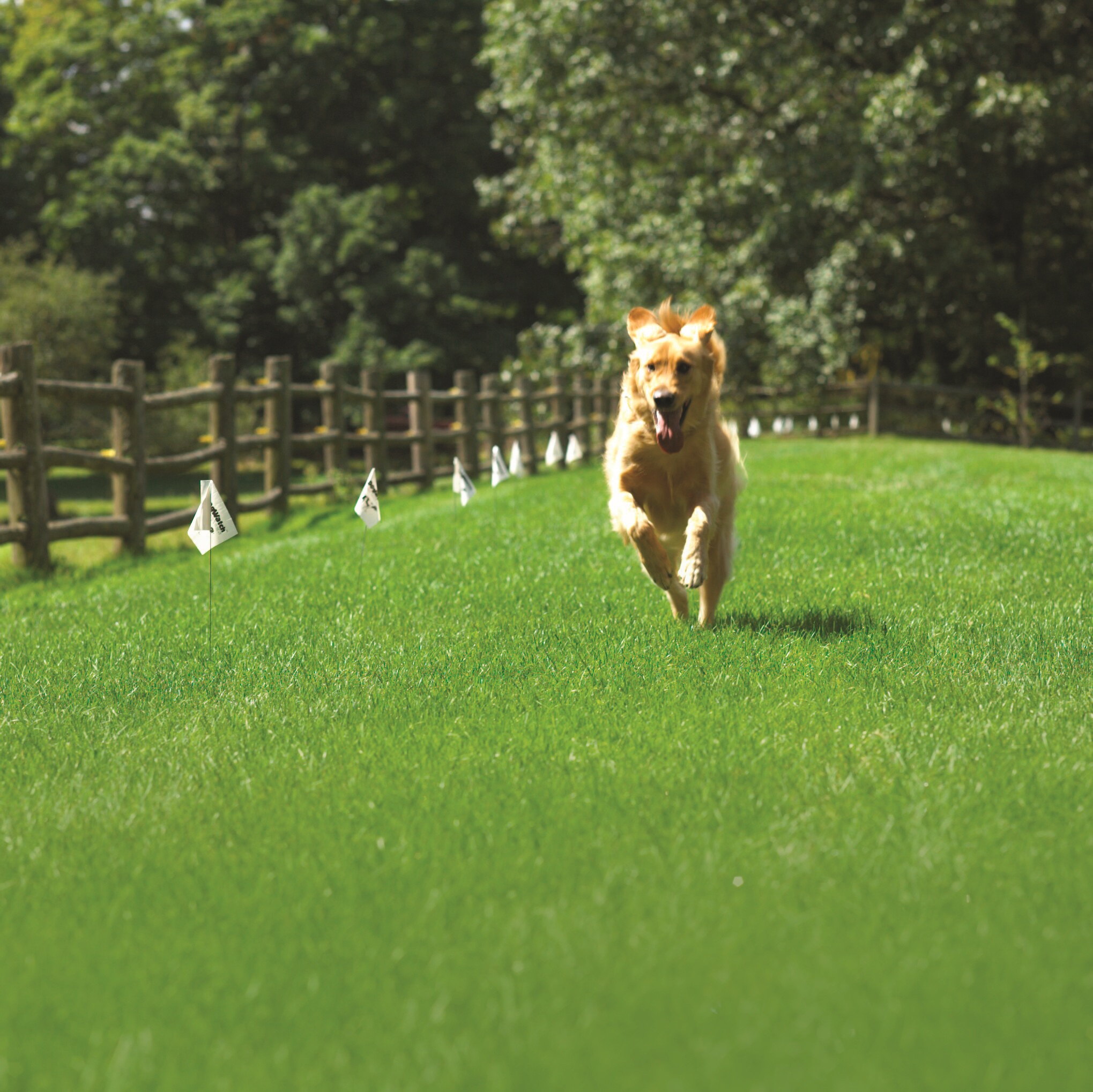
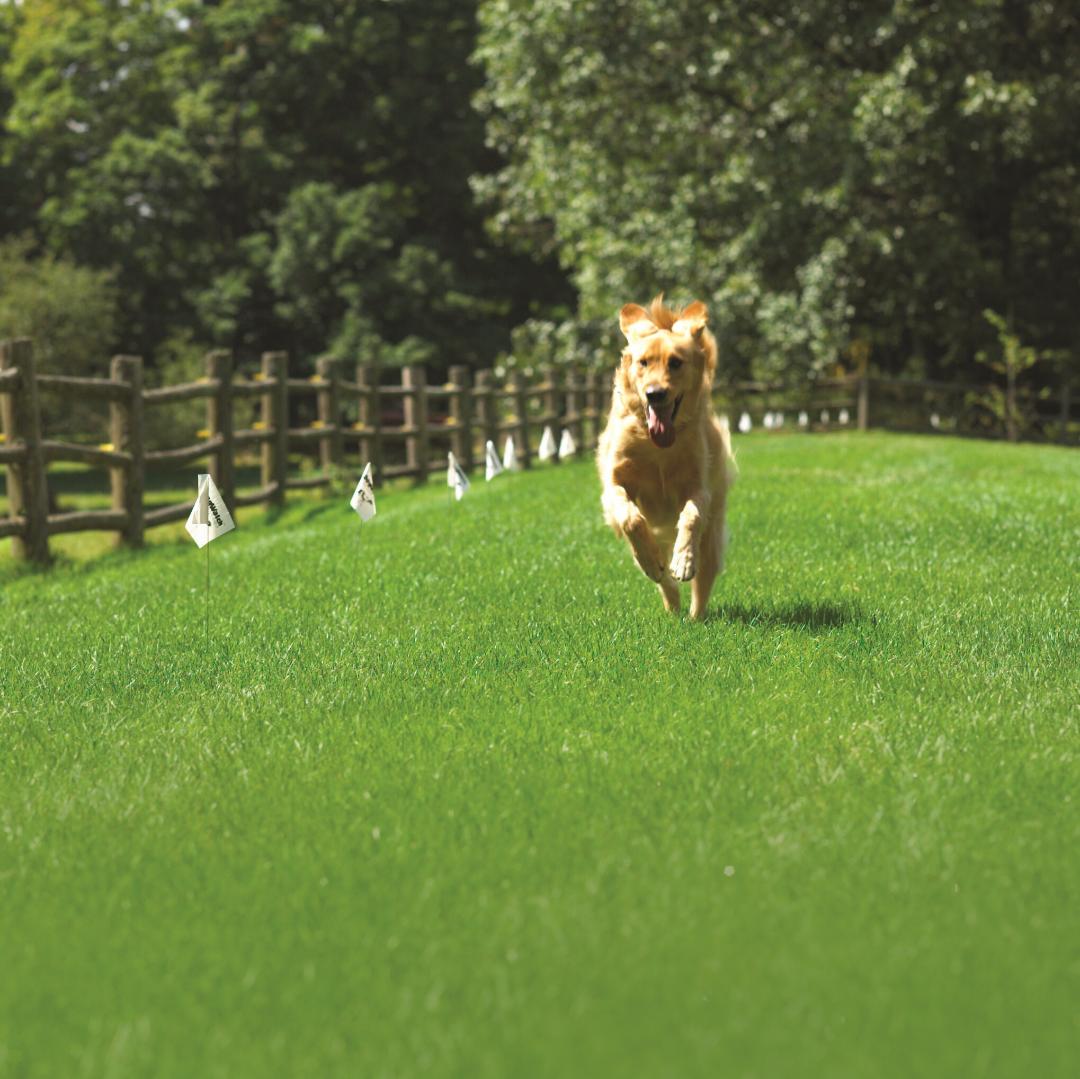
retriever-running-flagged-fence-dogfence.jpg

After gentle, consistent training, dogs gain confidence and freedom — safely contained within their DogFence boundary.

Want to Learn More?

If you’re wondering how an electronic dog fence could help your nervous or anxious pet, take a look at our full FAQ:

FAQ about nervous and anxious dogs and dog fences

And if you’d like to explore how our system could work for your home and garden, speak with our team today for free advice.

Ready to Keep Your Pet Safe?

Call us on
01628 476475
|
Message us on WhatsApp
|
Request a Free Quote Online


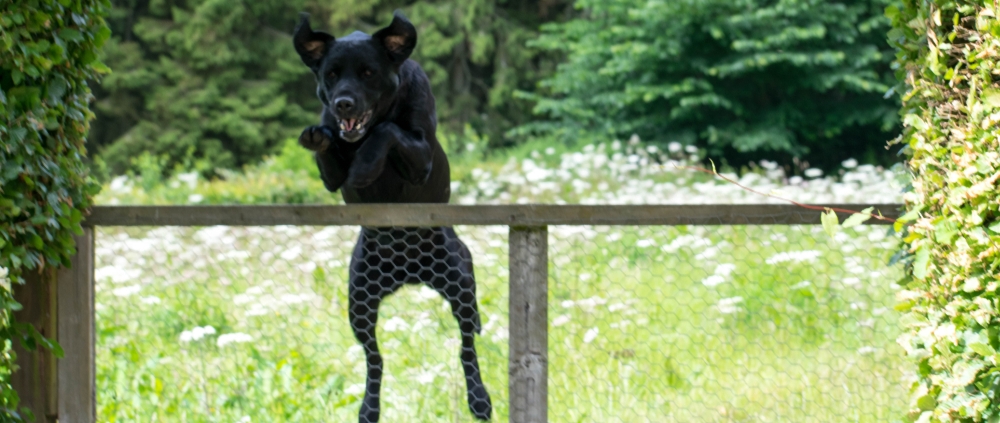
Dog jumping a garden fence showing why owners ask how to stop my dog jumping the fence

How to Stop My Dog Jumping the Fence | Proven Solutions from DogFence

How to Stop My Dog Jumping the Fence: Proven Solutions for Escape-Proof Gardens

If your dog has turned fence-jumping into a hobby, you’re not alone and you want to stop your dog escaping the garden read on! Many owners search for “how to stop my dog jumping the fence”, because it’s one of the most stressful — and potentially dangerous — behaviours for pets. Luckily, there are effective ways to stop dogs from jumping fences — without turning your garden into a fortress. If you’re researching dog jumping fence solutions, it’s important to choose a method that prevents escape without damaging your garden or causing stress to your pet. Have you ever considered or even heard of an Invisible dog fence?

Why Do Dogs Jump Fences?

Before finding a solution, it helps to understand the cause. Dogs often leap over fences because of:

  • Boredom – lack of stimulation leads to curiosity beyond the garden.
  • Hunting instinct – especially strong in breeds like terriers, collies, and hounds.
  • Separation anxiety – wanting to find you when you leave.
  • Mating instinct – unneutered dogs may roam in search of a mate.

Understanding the cause is the first step to stop dog escaping garden behaviour before it becomes a repeated habit. There are several traditional approaches, but many prove unreliable:

  • Taller fences – dogs can still scale or dig under.
  • Fence toppers & rollers – add-ons that deter some but not all dogs.
  • Supervision – works short-term, but impractical 24/7.
  • Training – useful, but even the best-trained dogs may act on instinct if triggered.

Understanding the reason behind the behaviour is the first step to stop dog escaping garden problems before they escalate. Many owners focus only on height, but stopping a dog escaping garden boundaries usually requires consistent training combined with reliable containment. If escape behaviour is already a pattern, you may find our article on why traditional fencing fails for escape-artist dogs helpful.


Common Fixes Owners Try

There are several traditional approaches, but many prove unreliable:

  • Taller fences – dogs can still scale or dig under.
  • Fence toppers & rollers – add-ons that deter some but not all dogs.
  • Supervision – works short-term, but impractical 24/7.
  • Training – useful, but even the best-trained dogs may act on instinct if triggered.

Taller fences – dogs can still scale or dig under. In fact, many owners are surprised to learn can a dog jump a 6ft fence depends heavily on breed, drive, and motivation.


The Invisible Dog Fence Solution

At DogFence Ltd, we specialise in electronic dog fences that create a safe, invisible boundary around your garden. Unlike panels or toppers, our system doesn’t rely on physical barriers. Instead, your dog wears a small receiver collar that gives an audible warning as they approach the boundary. If they ignore the warning, a mild static correction reinforces the training — keeping them safely inside your garden. An invisible dog fence UK system is one of the most reliable ways to stop determined dogs from clearing panels or scaling traditional fencing.

Dog jumping the fence showing need for invisible dog fence

The training flags are the key to stop a dog jumping over the garden fence by marking the new invisible fence boundary.

Our Invisible dog fence is DEFRA tested, waterproof, chew-proof, and backed by a lifetime warranty when professionally installed. It’s the only long-term solution that works for determined escape artists without spoiling your garden’s look.


How Does an Invisible Dog Fence Work?

The DogFence system creates a hidden boundary around your garden using a transmitter, a buried wire, and a lightweight collar. Training flags mark the boundary line at first so your dog learns the new rules visually. As your pet approaches the limit, the collar gives a warning beep. If they continue, a mild static correction reinforces the training. Within just a few days, most dogs learn to stay well within their safe zone.

Unlike GPS collars, our system is accurate to within 3 feet and isn’t affected by clouds, trees, or weak satellite signals. The collars are waterproof to 10ft, chew-proof, and feature an automatic shutdown if your dog lingers in the correction zone for more than 15 seconds — making it one of the safest systems on the market.


How Much Does It Cost to Stop My Dog Jumping Over the Fence?

One of the most common questions we’re asked is about cost. DIY dog fence kits start at around £599.00 and include everything you need to secure a small garden. For larger properties, or if you prefer our team to handle installation and training, professional systems usually start from £1,200.00 – full boundary and driveway approx 1/4 acre (includes installation and training, lifetime warranty and containment promise,  although the exact cost depends on the size of your property, your locations in the UK and how many pets will use the system.

When compared to the cost of replacing tall panels, repairing escape damage, or the risks of a lost pet, most owners find the system pays for itself in peace of mind.


How Is the Dog Fence Installed?

Installation is quick and tidy. Our team will walk your property with you to agree on the boundary layout. We then bury the cable a few inches underground, connect it to the transmitter in your home or garage, and mark the training line with temporary flags. Once the system is live, we train your dog to understand the boundaries using a gentle step-by-step process. Our installers will then hand over to the pet owner to continue a short “reinforcing programme” (approx 10 to 15 mins for 4 – 5 days).

Prefer to install it yourself? Our DIY kits come with heavy-grade cable, full instructions, and video guides — but you’ll still have access to our expert support if you need it.


What Do Boundary Layouts Look Like?

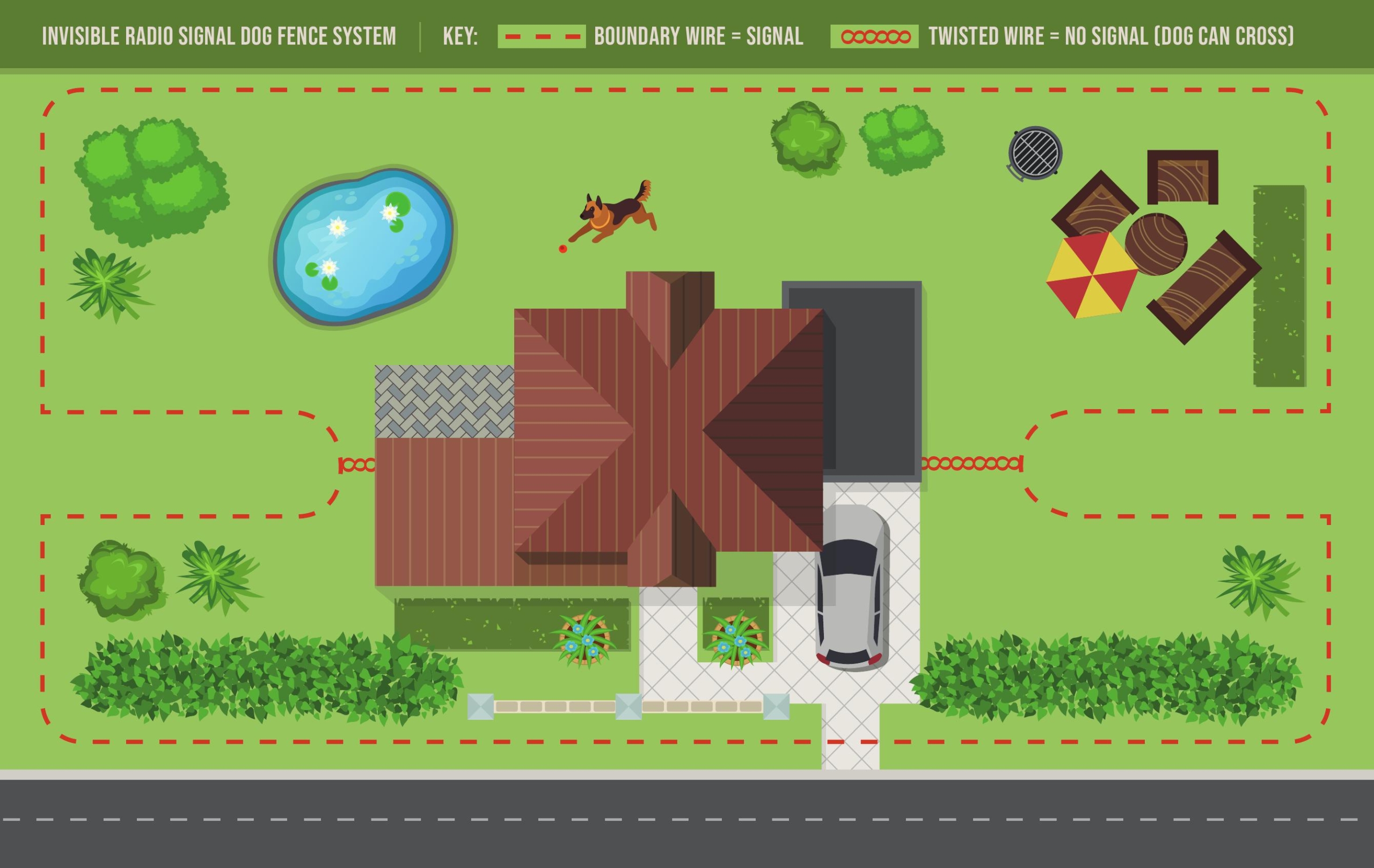
The boundary wire can be laid out in several ways depending on your property:

  • Full Perimeter – secures the entire garden or estate, ideal for large properties.
  • Banana loops – for semi detached properties or single boundaries.
  • Exclusion Zones – create ‘no-go’ areas for ponds, driveways, or flowerbeds.
  • Custom Layouts – flexible design means you can protect multiple areas or even secure two properties with one system.
Invisible dog fence boundary layout showing how to stop my dog jumping the fence.

A “pinch loop” – covers the full boundary but allows the dog either front or rear access.

Success Stories

“Our terriers were clearing the fence daily. Since installing DogFence five years ago, not a single escape. Brilliant service and peace of mind knowing our dogs are safe.” – Sue W., Trustpilot Review


FAQs: Stopping Dogs from Jumping Fences

Can puppies use an invisible fence?

Yes — typically from around 4–6 months old, once they understand basic commands and can focus during short training sessions.

While some companies suggest starting as early as 8 weeks, we believe training should match the dog’s maturity. At 8 weeks, most puppies simply aren’t developmentally ready to understand boundary conditioning safely and consistently.

Our professional training programme ensures calm, structured learning suited to your dog’s age and temperament.


Is it safe in bad weather?

Yes. The boundary cable is buried underground and fully weatherproof. The transmitter remains safely indoors, and the receiver collars are waterproof up to 10ft — tested in both fresh and salt water.

Rain, frost, or typical UK conditions will not affect performance.


What size garden can it cover?

From a small courtyard to 350 acres.

The average UK system secures around 2 acres, but every installation is custom-designed to match your property layout, boundary shape, and terrain.


Costs of Not Stopping Your Dog Jumping the Fence

Allowing a dog to escape isn’t just stressful — it can also be costly. Under the Anti-Social Behaviour, Crime and Policing Act 2014 and the Dogs Act, owners have a legal duty to keep their pets under control. If a dog escapes and causes trouble, you may face:

  • Fines of up to £1,000 if your dog is found dangerously out of control in a public place.
  • Unlimited fines or prosecution if your dog injures a person or livestock.
  • Compensation claims if your dog causes damage to property, gardens, or vehicles.
  • Vet or recovery costs if your dog is injured while roaming free.

Sadly, many escape cases also end with pets being injured on roads — a heart-breaking consequence for something that is preventable. Investing in a secure containment system is far cheaper, safer, and kinder than facing the risks of repeated escapes. If you are looking for dog jumping fence solutions then you just hit the jackpot!


Ready to Stop Your Dog Jumping the Fence?

If your dog keeps jumping over panels or clearing boundary fencing, you’re not alone.
Our professionally installed electronic dog fence systems provide reliable, invisible containment —
without building higher fences or ruining your garden.

Call us on
01628 476475
|
Email Us
|
Chat on WhatsApp

dog fence controversy example showing a happy labrador running safely within an electronic boundary

Dog Fence Controversy: Humane or Harmful?

Dog Fence Controversy: Are Electronic Dog Fences Cruel or Necessary?

The dog fence controversy centres on one emotionally charged question: are electronic containment systems cruel, or are they a responsible way to protect pets?

For years, debate around electronic containment systems has divided opinion. Critics argue that static correction is unethical and unnecessary. Supporters — including many experienced dog owners and professionals — argue that when properly installed and correctly used, containment systems prevent road accidents, livestock attacks and tragic escapes.

Understanding this debate requires separating assumption from evidence.

This article forms part of our wider containment guide series. If you’re looking for evidence-based research, read our in-depth guide on whether electric dog fences are cruel or kind. If you’re still exploring how modern systems work, our explanation of electric fence systems for dogs provides a clear technical overview.

dog fence welfare debate showing calm trained dogs in garden boundary

Proper training ensures dogs remain calm and confident within containment boundaries.


Why Does the Controversy over Dog Fences Exist?

Much of the controversy stems from misunderstanding terminology.

Many people imagine agricultural electric fencing — exposed live wires designed for livestock. Modern electronic dog containment systems are very different.

They:

  • Do not electrify physical panels or gates
  • Do not expose live wiring
  • Use a buried boundary wire
  • Deliver a brief, programmable static impulse only after a warning tone

The word “electric” creates confusion, which fuels much of the dog fence controversy.

If you’re unsure how these systems operate, our guide to electric fence for dogs in the UK explains how modern containment technology works.


Are Dog Fences Cruel? The Core of the Controversy

At the heart of the dog fence controversy is the welfare debate.

Critics argue that static correction may cause stress or anxiety. However, research referenced in UK government reviews has not demonstrated long-term welfare harm when systems are professionally installed and paired with structured training.

In practice, most dogs quickly learn to respond to the warning tone alone, rarely requiring correction after initial training.

Many owners ask, are invisible dog fences humane, particularly when they first encounter the wider dog fence controversy. The answer depends largely on correct installation, tailored training and responsible use.

If you would like a detailed breakdown of welfare evidence, you can read our full analysis on whether electric dog fences are cruel or kind.


Does a Dog Fence Deliver an Electric Shock?

No.

This is one of the most common misunderstandings within the dog fence controversy.

Electronic containment collars work in stages:

  1. A warning tone alerts the dog
  2. A brief static impulse follows only if the dog ignores the tone
  3. The correction stops immediately once the dog returns to the safe area

The sensation is often compared to everyday static discharge — momentary and adjustable.

It is not continuous, and it is not delivered without warning.


Can Static Correction Harm a Dog?

When professionally installed, the correction level is adjustable and tailored to the dog’s temperament and sensitivity.

Most dogs learn boundary awareness through conditioning rather than repeated correction.

As Professor Daniel Mills of the University of Lincoln has previously explained in relation to containment systems, a dog learns to avoid a specific boundary in the same way a person learns not to touch a hot oven — without developing fear of the environment itself.

This nuance is often missing from discussions surrounding electronic containment systems.


Alternatives Often Raised in the Dog Fence Debate

Those critical of containment systems often suggest alternatives, including:

  • Higher physical fencing
  • Fully enclosed runs
  • GPS tracking devices
  • Supervised outdoor access only

GPS trackers may help locate a dog after escape, but they do not prevent escape.

Higher fencing may fail with determined climbers or diggers and may be restricted by planning regulations.

Every option involves trade-offs between freedom, safety and practicality.

If you are weighing up installation approaches, our comparison of DIY vs professional dog fence installation explains how setup quality affects long-term reliability and training success.


Risks Often Overlooked in the Dog Fence Discussion

One aspect frequently overlooked in the wider debate is the risk of unsecured gardens.

When dogs escape, consequences may include:

  • Road traffic accidents
  • Injury or death
  • Livestock chasing or worrying
  • Legal liability
  • Neighbour disputes
  • Property damage

For rural properties in particular, livestock incidents can result in severe outcomes for both pet and owner.

A common question within the dog fence controversy is, are invisible dog fences humane when used in everyday homes? Research suggests that when professionally installed and properly programmed, welfare concerns are significantly reduced. For many families, containment systems are chosen not for convenience, but to prevent these risks.


Balancing Safety and Welfare in the Dog Fence Welfare Debate

The dog fence  welfare debate ultimately comes down to balance.

A containment system is not a substitute for training, exercise or engagement. It is a boundary tool.

When correctly installed and supported with structured training, electronic containment systems can:

  • Provide consistent, predictable boundaries
  • Reduce escape behaviour
  • Preserve garden freedom
  • Improve owner peace of mind

The welfare debate becomes less about cruelty and more about responsible implementation.


Frequently Asked Questions About the Dog Fence Confusion

Are dog fences legal in the UK?

Yes. Electronic dog containment systems are legal in England when used responsibly.


Are dog fences cruel?

This is the central issue in the dog fence controversy. Research has not demonstrated long-term welfare harm when systems are professionally installed and paired with appropriate training as recognised by UK Government.


Do dog fences hurt dogs?

Modern systems use adjustable static correction that is brief and programmable. Most dogs learn to respond to the warning tone without requiring repeated correction.


Why is there so much debate about dog fences?

Much of the dog fence controversy arises from confusion between agricultural electric fencing and modern electronic containment systems.

relaxed dog wearing electronic containment collar in garden

Most dogs quickly learn to respond to warning tones and remain relaxed within their boundary.


Conclusion: Understanding the Dog Fence Controversy

The dog fence controversy is unlikely to disappear, because it touches on welfare, emotion and personal belief.

However, informed discussion requires understanding how modern electronic containment systems actually function.

One of the most frequent questions we hear is: are invisible dog fences humane? When used responsibly and supported with structured training, they are designed to provide safety without causing harm.

A professionally installed, correctly programmed containment fence will be supported with training, and can provide a humane and effective way to keep dogs safe at home. Professional setup plays a significant role in welfare and effectiveness. You can learn more about our approach to professional dog fence installation across England here.

Considering Professional Dog Fence Installation?

Call us on
01628 476475
|
Message us on WhatsApp
|
Request a Free Quote Online
Cheap DIY dog fence idea using wooden pallets to create a safe garden boundary

Cheap Dog Fence Ideas for Dogs | Cost-Effective Pet Containment That Works

Cheap Dog Fence Ideas for Dogs: What You Need to Know Before You Buy

Updated July 2025

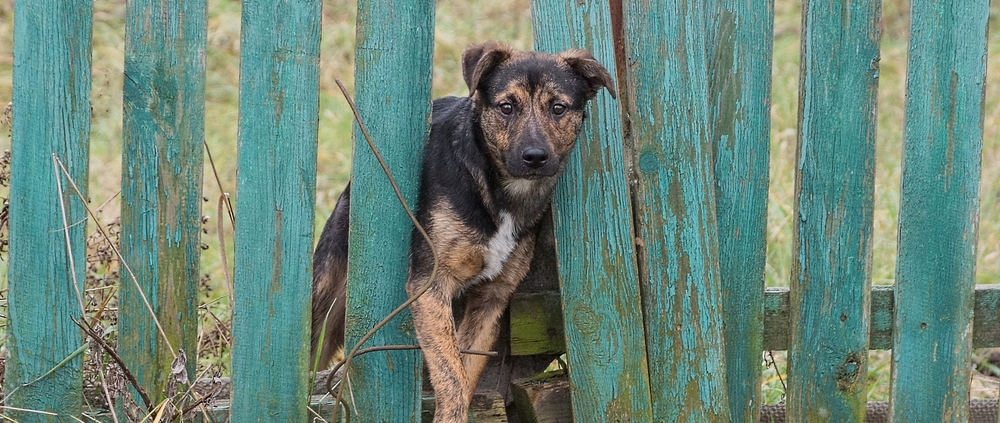
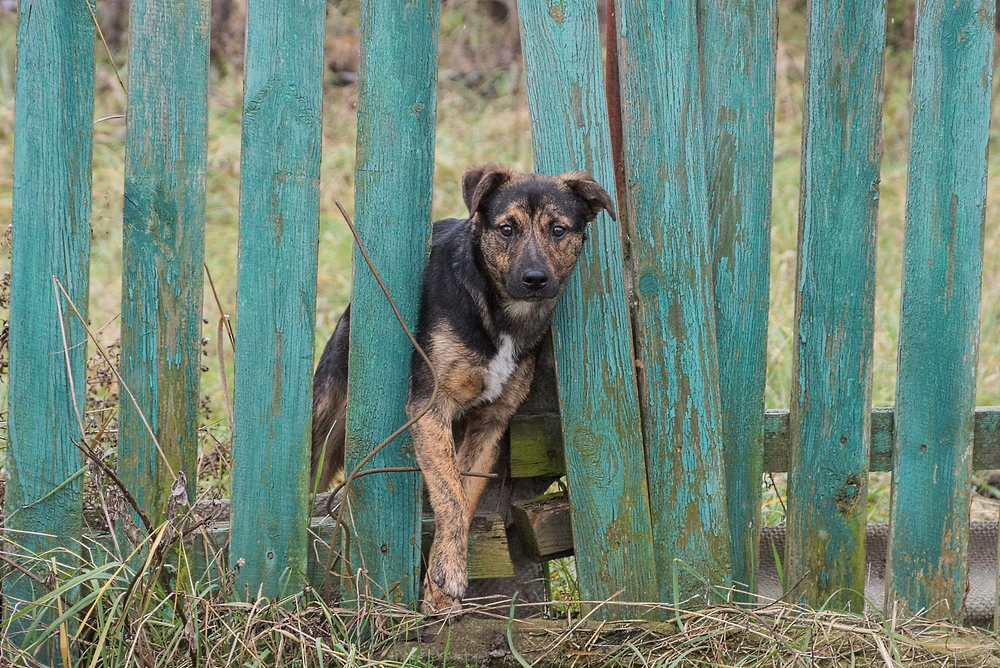
Dog escaping through broken fence — common risk with cheap dog fence ideas in UK gardens

This is what a cheap fence can lead to — a determined dog and an escape route

Looking for cheap dog fence ideas? You’re not alone. Pet owners across the UK are searching for budget-friendly solutions to keep their dogs safe and contained. But not all fencing options are created equal — and some “cheap” fences could cost you more in the long run.

Let’s explore the pros and cons of common cheap dog fence ideas, and how DogFence offers a cost-effective, long-term alternative trusted by over 20,000 UK pets.

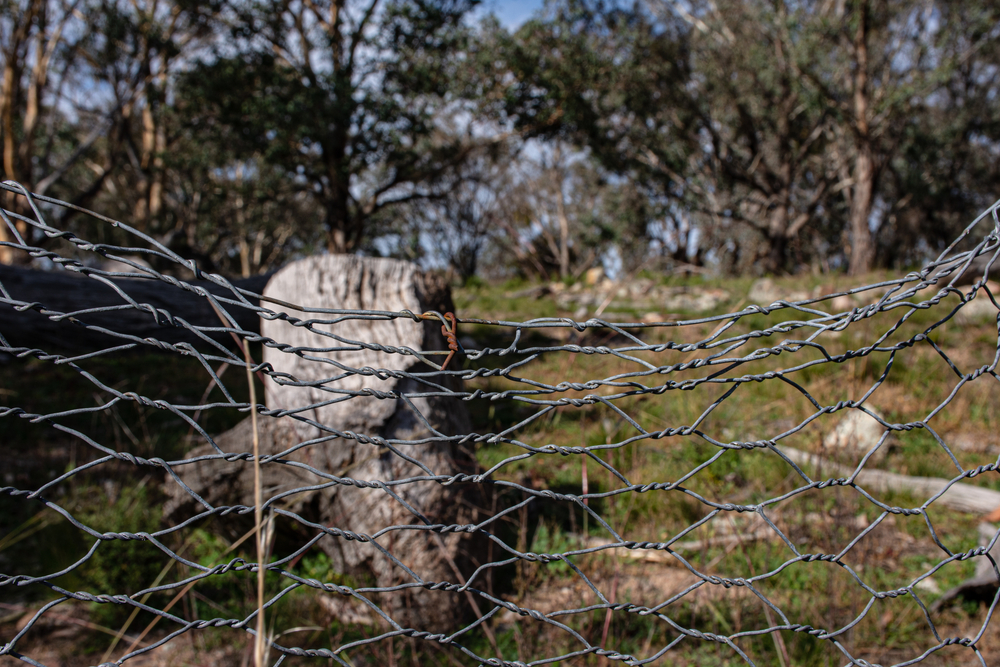
Sagging chicken wire dog fence — example of a cheap garden fencing option that fails over time

Cheap wire fences may seem like a quick fix, but they often sag, rust, and fail to keep dogs safely contained.”

The Most Common Cheap Dog Fence Ideas (and Why They Often Fail)

1. Chicken Wire or Garden Mesh

Affordable and easy to find, chicken wire fences seem like a quick fix. But for many breeds, they’re no match for determined diggers or chewers. Over time, the wire can sag, break, or corrode, making it unreliable. Does not cover the driveway.

2. Chain Link Fencing

Strong and secure — but not cheap. Installing chain link fencing can cost thousands depending on your property size. It’s also not always escape-proof for agile or climbing dogs and can be an eyesore in a landscaped garden. Gates are still required at extra cost.

3. Close-Boarded or Panel Fencing

These timber fences are popular in the UK but expensive to install and maintain. Persistent dogs can still dig under or find weak spots, and wood can warp or rot over time, especially in wet climates. The driveway and in some areas the front of the property will need aesthetically pleasing fencing.

4. DIY “Invisible” Fences from Online Marketplaces

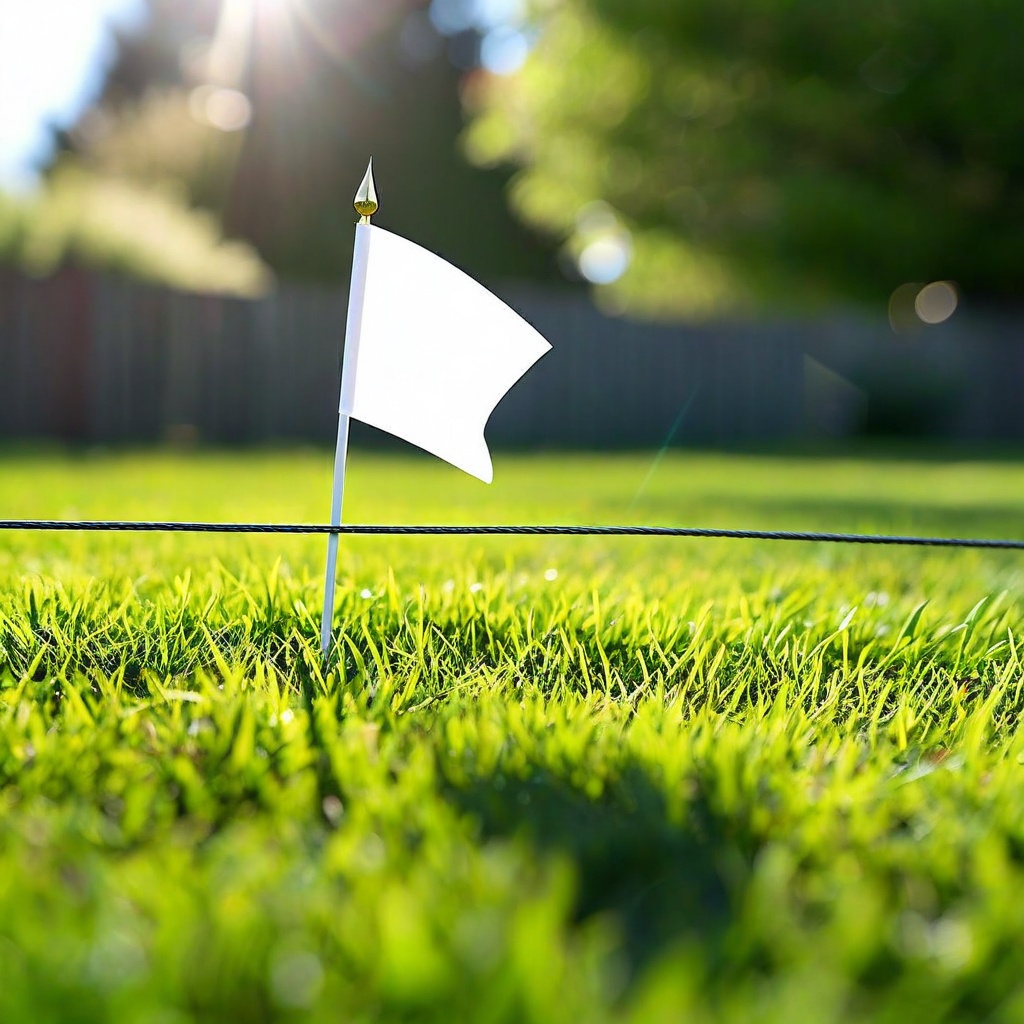
Some budget dog fences found online are little more than toys. One customer even sent us a photo of their so-called DIY dog fence: the wire looked like cotton, and the flags were the size of cocktail sticks. Great for a mouse — not for a dog! DIY dog fences will cover the driveway but the cable is extremely thin and prone to breakage so buried installation is difficult.

Thin dog fence wire and tiny training flags — not suitable for burial or effective containment

Thin wire and tiny flags like these aren’t designed for long-term use — they’re easily damaged and offer poor visibility during training.

A Smarter Long-Term Solution: DogFence Hidden Fence Systems

DogFence isn’t the cheapest option upfront — but when you factor in reliability, longevity, and effectiveness, it’s up to 80% cheaper than chain link or wooden fencing. And unlike bargain-bin systems, it works.

Here’s why:

  • ✅ DEFRA-Tested and Approved
    Our system has been independently tested and meets UK welfare standards. You can trust it to be safe, effective, and humane.
  • ✅ Robust, Dog-Proof Receiver Collars
    Our collars are:

    • Waterproof to 10ft in salt and fresh water
    • Covered against dog chews
    • Lightweight and custom-programmable (not one-size-fits-all)
    • Equipped with the longest battery life in the industry – because when the battery runs out, so does the dog.
  • ✅ Built-In Pet Safety Features
    • Auto Shut-Off: If your dog gets stuck in the warning zone, the collar stops correcting after 15 seconds.
    • Auto Re-Start: The collar resumes as soon as your pet is safe again.
    • Anti-Linger: Prevents battery drain by giving a quick correction if your dog lingers too long in the warning zone.
  • ✅ Reliable Hardware Built to Last
    • Heavy-duty boundary cable (included even in DIY kits)
    • Full-size, visible training flags 18″ – 24ft tall.
    • Professional installation option includes onsite training
    • Lightning protection
    • Containment promise (dogs only)
    • Lifetime warranty on Pro Install systems
    • 2–4 year warranties on DIY kits

See how our hidden fence works →

2ft DogFence training flags and heavy-grade buried cable — safe, visible containment for pets

Our 2ft training flags and heavy-duty buried cable create a visible, secure boundary that keeps your pet safely contained.

What Does “Cheap” Really Cost You?

Cutting corners on fencing can lead to:

  • Repeated repairs or replacements
  • Dogs escaping (with risks to traffic, livestock, and safety)
  • Inconsistent containment = confused, untrained dogs
  • Higher costs over time

DogFence is designed to be a one-time investment that protects your pet and your peace of mind for years to come.

Compare the Costs

Fence Type Approx. Cost Maintenance Long-Term Reliability
Chicken Wire Fence £100–£300 High Low
Close-Boarded Fence £2,000+ Moderate Moderate
Chain Link Fence £2,000–£4,000 Low Moderate
Cheap DIY Electronic Fence £50–£200 High Low
DogFence DIY Kit From £450 Low High
DogFence Pro Install From £1,200 Very Low Highest (Lifetime Warranty)
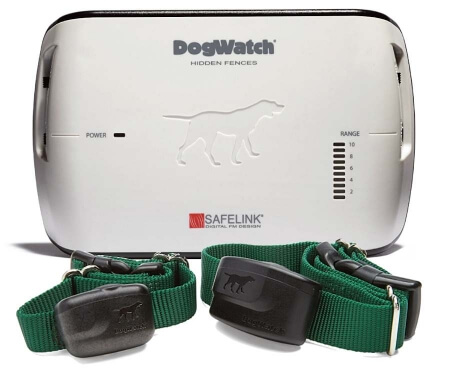
High-quality DogFence system with lightweight dog fence collars — better alternative to cheap dog fence ideas

Our DogFence system includes two compact, lightweight collars — with battery lives of 6 months to over 2 years and full accidental damage cover.

Cheap Dog Fence Ideas Are Everywhere. Quality Ones Aren’t.

DogFence offers both DIY and professionally installed systems that balance quality, safety, and cost-effectiveness. We’re not the cheapest — and there’s a reason for that. Our systems are designed to work reliably for years, offering a smarter, safer solution that keeps your pets secure without compromising their freedom.

Just look at the result:
A happy, confident dog running freely and safely in the garden — no ugly fences, no risky escapes, and no constant supervision. With DogFence, you get more than just containment — you give your pet the freedom they deserve, with the safety you need.

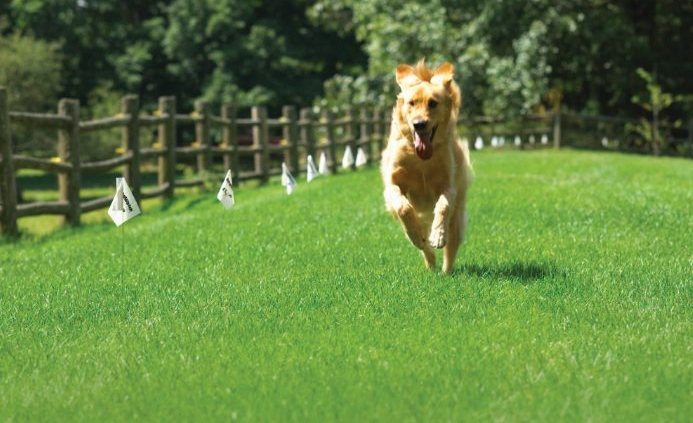
Happy dog running safely in garden protected by DogFence hidden fence system

Freedom and safety combined — this happy dog is running free thanks to a DogFence hidden fence

Need Help Choosing the Right Option?

Whether you’re exploring cheap dog fence ideas or planning your garden for the long-term, we’re here to help. Our expert team will guide you to the safest and most practical solution for your dog — and your budget.

Looking for more inspiration on how to keep your dog secure and your garden looking great? Don’t miss our expert guide on the best dog fence designs for UK gardens — packed with practical ideas and design tips that go beyond just price.

Ready to Keep Your Pet Safe?

Call us on
01628 476475
|
Message us on WhatsApp
|
Request a Free Quote Online

Happy owner embracing a white puppy, representing the secure and loving environment provided by a puppy electronic dog fence

Puppy Electronic Fence Training Age | DogFence UK Guide

When Can a Puppy Start Training with an Electronic Fence? A Comprehensive Guide

Electronic fences, also known as Dog Fences or invisible fences, offer a safe and effective way to contain your dog within your property. However, when it comes to puppies, it’s crucial to understand the appropriate age and developmental stage before introducing them to this type of training. Starting too early can be detrimental to their learning. This comprehensive guide, from DogFence UK, will help you determine the right time to begin electronic fence training with your puppy, built upon our expertise in both installation and training over a 22 year period.

The Importance of Age and Development for Successful Training

Puppies are still developing physically and mentally. Introducing electronic fence training too early can lead to:

  • Anxiety: A puppy may not understand the correction and become fearful of the boundary or even the entire garden.
  • Confusion: They may not be able to associate the warning tone and correction with the boundary effectively.
  • Long-Term Behavioral Issues: Negative experiences early on can lead to lasting anxiety or avoidance behaviours.

Beyond just age, your puppy needs to have some fundamental skills in place. They must be walking comfortably on a lead and consistently accepting basic verbal commands like “come,” “sit,” or “no.” These foundational skills are crucial for effective communication during the training process.

The Recommended Age: 4 Months and Beyond

Generally, it’s recommended to wait until a puppy is at least 4 months old before starting electronic fence training. This age range ensures they have:

  • Sufficient Cognitive Development: They are better able to understand cause and effect and associate the warning tone, visual (flags) and correction (impulse) with the boundary.
  • Improved Bladder and Bowel Control: This is important for minimizing accidents during the training process.
  • A Level of Maturity: They are less easily overwhelmed or stressed by the training.

Important Note: Even at 4 months, each puppy develops at their own pace. Consider these factors:

  • Breed: Some breeds mature faster than others.
  • Temperament: A more sensitive puppy may require a slightly later start.
  • Training Foundation: Ensure your puppy has a solid foundation in basic obedience commands before introducing electronic fence training.

Ready to prepare your puppy for safe containment? Learn more about our overall approach to successful dog fence training on our Dog Fence Training Support page.

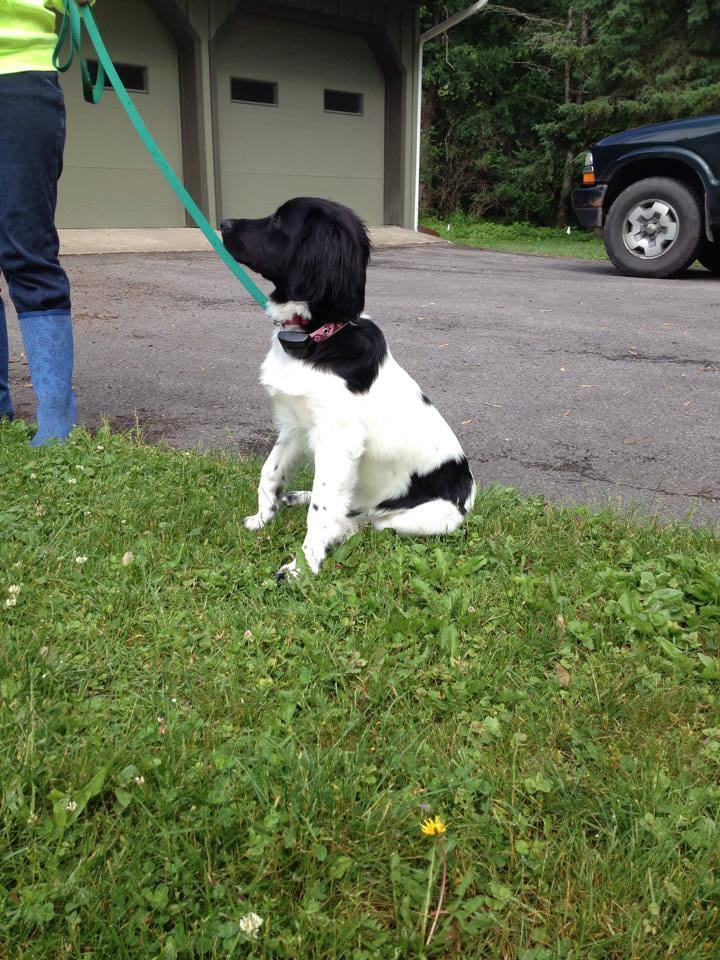
Young Springer Spaniel puppy learning obedience on lead

Springer puppy – always ready to learn!

The Crucial Role of Training Flags

Training flags are absolutely crucial for your puppy’s success with an electronic fence. They provide a vital visual cue that helps your puppy understand where the invisible boundary lies.

  • Initial Training: During the initial training phase, flags mark the exact perimeter of the warning zone. The flags should ideally be a maximum of 10ft apart. This allows your puppy to visually associate the flags with the tone and, later, the correction (imuplse).
  • Adding a New Puppy to an Existing System: If you’re introducing a new puppy to an existing DogFence system, you must reinstall the flags. Even if older dogs no longer need them, the puppy requires this visual aid for clear understanding.
  • Flag Density: Ensure you have sufficient flags. We recommend a minimum of 1 flag every 8-10 feet (approx. 2.5 – 3 meters) around the entire boundary. This density provides clear, consistent visual markers for a young, learning dog.
  • Mail Order Systems: For mail-order only systems, verify that the flags are a minimum of 12 inches tall and that you have between 20-25 flags per 100 meters of cable supplied. This ensures adequate visibility and training effectiveness.

Need more flags for your puppy’s training? Contact us today for advice on flag quantities and placement!

DogFence UK: Pioneers in Containment & Our Unique Containment Promise

DogFence Ltd. pioneered the concept of both installing electronic dog fences and providing expert, hands-on dog training to the fence here in the UK. This integrated approach sets us apart, ensuring not just a technically sound system, but a truly effective containment solution tailored to your dog. We are the only UK company to offer a unique Containment Promise – a testament to our confidence in our systems and our training methodology. Our training processes and protocol were used as part of the DEFRA Study in 2018 which were deemed both safe and humane for dogs and cats.

While some might find it amusing, this promise comes with simple, yet vital, provisos. Meeting these criteria ensures the system’s effectiveness and your peace of mind:

  1. Collar Must Be Worn: The dog must always wear the collar when he or she is in the garden. If your dog escapes and was not wearing the collar, the containment promise will be void – the collar is the key to their safe boundary.
  2. Authorised Working Battery: The owner agrees to keep an authorised working battery in the collar. Cheaper imitation batteries do not last as long and, more critically, can cause damage to the omni-directional antenna in the collar, effectively disabling it and compromising your dog’s safety.
  3. Correct Collar Fit: The collar fit must be correct. If the collar is too loose and dangling off the dog like a necklace, it becomes merely a fashion accessory and not a containment collar. A proper fit ensures the contact points can deliver the correction effectively and safely.

If these three crucial criteria are consistently met, and your dog begins to challenge the fence, we will re-visit and re-train your dog free of charge (FOC). This commitment underscores our dedication to your dog’s safety and your satisfaction.

Discover the DogFence difference. Explore our range of professional systems and see how our unique approach can benefit you and your dog: Browse Our Dog Fence Systems.

Gradual Introduction and Positive Reinforcement in Practice

When your puppy is ready introduce the electronic fence training gradually and use positive reinforcement techniques:

  1. Collar Acclimation: Let your puppy wear the collar (turned off) for short periods to get used to it. Let him or her wear it in the house as well as outside to avoid association with the garden only.
  2. Boundary Awareness with Flags: Insert the flags so that they are on the edge of the avoidance zone (follow our Installation instructions for placement) Walk your puppy on a lead near the boundary flags. As they approach the flags, praise and reward them lavishly for staying within the safe zone, using your basic verbal commands.
  3. Tap the flags: Tap the training flags and shout “careful” when your puppy is next to the flag.
  4. Tone Association: As they reach the flag the collar will start to “beep”, give the careful command.
  5. Correction Introduction (with care): After 1 or 2 sessions of “beep” only training Only Training introduce the static correction at the lowest level. This is to ensure that it’s just enough to get their attention, not to cause pain or fear. Closely observe their reaction and ensure a proper collar fit.
  6. Retreat Training: When you puppy goes past the flags and into the correction zone. Quickly shout the “careful” command is high pitched worried voice and direct your dog back into the safe zone. Then praise your dog for making the right decision.
  7. Consistent Training Sessions: Keep training sessions short (5-10 minutes), positive, and consistent (several times a day). This consistency is vital for your puppy to fully grasp the boundary concept.
  8. Reinforce the rest of the garden: Remind your puppy that the garden is a happy, safe place, play with your puppy in the garden. If you roll a ball, always roll it away from the boundary.
  9. First Weeks: In the first few weeks do not leave your puppy in the garden unsupervised and always have them on a lead so that they do not inadvertently run into the zone.
  10. Always wear the collar outdoors: Your dog should never be allowed into the garden without the electronic dog fence collar. Inconsistency causes confusion.
  11. Time off: Give you puppy time off. Too much training will tire him or her out. Always remove the dog fence collar overnight and in the first few weeks for at least an hour during the day.

For a step-by-step guide on training your puppy, refer to your Installation and Training Handbook or call us for a hands on approach. Alternatively why not have your Dog Fence professionally installed – contact us today for a free quote.

For further valuable insights into positive, reward-based training and responsible dog ownership, we recommend exploring resources from professional bodies like the Association of Pet Dog Trainers (APDT, UK).

Happy owner embracing a white puppy, representing the secure and loving environment provided by a puppy electronic dog fence

Dogs need time off – praise and play with your puppy too!

Puppy Training on an electronic dog fence|Conclusion

Introducing electronic fence training at the right age, with the proper prerequisites, and with the vital aid of training flags, is crucial for your puppy’s safety and successful containment. By trusting in DogFence UK’s pioneering expertise, leveraging our adjustable systems, adhering to the simple criteria of our Containment Promise, and committing to positive, consistent training, you can help your puppy learn to respect the boundaries and enjoy the freedom of your garden safely for years to come.

Ready to secure your puppy’s freedom with a DogFence system?

Call us today to discuss your needs: 01628 476475

Prefer to email? Reach us at info@dogfence.co.uk

alt="Dog chasing chicken in garden highlighting need for secure pet containment system"

Prevent Dog Escapes | Secure Garden Fence from DogFence

Keep Pets Safe with DogFence

Don’t Wait Until Your Dog Goes Missing or Chases Livestock: How to Secure Gardens for Dogs and Keep Pets Safe with DogFence

Living in the countryside brings freedom, fresh air, and space for your dog to run — but it also brings unique challenges. How can an owners create secure gardens for dogs? If your property borders farmland, woods, or open spaces, it’s critical to have a reliable containment system to keep your dog safe and prevent them from chasing livestock or wildlife. Otherwise, you risk your dog getting lost, injured, or causing harm to your neighbours’ animals.

⚠️ The Legal and Financial Risks of Dogs Worrying Livestock

While dogs are often just inquisitive, to a farmer, livestock represents their livelihood. In the UK, under the Animals Act 1971, farmers are legally permitted to protect their livestock. This can include shooting a dog that is actively worrying their sheep, provided there are no other reasonable means to end or prevent the worrying .

Allowing a dog to worry livestock is a criminal offence under the Dogs (Protection of Livestock) Act 1953, punishable by a fine of up to £1,000, plus potential costs and compensation orders .

Recent data highlights the growing concern:

  • In 2023, farm animals worth an estimated £2.4 million were severely injured or killed by dogs, marking a nearly 30% increase from the previous year .

  • A 2024 survey revealed that 78% of rural crime teams reported an increase in dog attacks on sheep over recent years .

Dog chasing sheep in countryside illustrating the risk of livestock worrying without proper containment"

Livestock attacks by dog are on the increase

Why Traditional Fencing Often Isn’t Enough

Challenges of Physical Fences in Rural Areas

Traditional physical fencing is often expensive, time-consuming, and impractical on rural or uneven terrain. Worse, traditional fences can be dug under, jumped over, or damaged by wild animals such as badgers, foxes, deer etc leaving your dog vulnerable to escape.

Limitations of Traditional Fencing to Create Secure Gardens for Dogs

  • Cost: Traditional fences typically start around £35 per metre, while DogFence systems start from about £6 per metre, including professional installation and training.
  • Installation Time: Building a physical fence can take weeks or months, especially if your land is uneven or expansive.
  • Vulnerability: Animals such as badgers or foxes can dig holes underneath fences, and dogs can jump over or even break through physical barriers.
  • Aesthetics and Permissions: Traditional fences can affect the look of your property and may require planning permission in some areas.
  • Lack of Flexibility: Once installed, a physical fence is fixed. If you want to expand or change your containment area, it can be costly and difficult.

Why Choose an Electronic Dog Fence from DogFence?

UK’s Experts in Electronic Dog Containment

DogFence is the UK’s leading expert in electronic dog containment, having safely installed and trained over 20,000 pets on our advanced systems. Unlike basic mail-order kits, our digital dog fencing solutions are designed for long-lasting reliability, maximum safety, and adaptability to almost any environment. Find out more here.

Creating secure fencing on Almost Any Terrain

Our systems can be installed on nearly any terrain, including:

  • Slopes, hills, and uneven ground
  • Gardens surrounded by streams or shallow rivers (our cables are waterproof and can run underwater)
  • Open fields and driveways, creating secure boundaries exactly where you need them

What’s more, our system is transportable — if you move house, you can easily take the dog fence transmitter and collars with you and reinstall it at your new property, making it a smart long-term investment.

More Than Just a Boundary: Customisable Pet Protection

Our electronic dog fences don’t just keep dogs contained; they can be used to protect specific areas within your property, keeping your pets away from:

  • Swimming pools or ponds
  • Chicken coops and rabbit runs
  • Flower beds or vegetable patches

This flexibility means your dog can enjoy a large safe area without compromising your property or causing damage.

Neil’s Story: Real Success with DogFence

A Perfect Example from the Orkney Islands

Neil lives in a rural location on the Orkney Islands surrounded by sheep, cows, and a neighbour with over 200 free-roaming chickens. His Whippet x Saluki is a fast, natural hunter — which posed a real risk to the local wildlife and his dog’s safety.

After choosing DogFence’s advanced electronic dog fence, Neil found installation easy and the training effective. After just one week, his dog fully understood the boundaries.

alt="Dog chasing chicken in garden highlighting need for secure pet containment system"

Dog chasing chicken in garden

“The dog has not been able to get out of our 1-acre land since the fence was installed. I cannot recommend this system highly enough. My dog can run freely, and the animals in neighbouring fields are safe. Also, when I’ve called for advice, I always get through to a real person, not an automated menu—which is a nice change. 10 out of 10 for the product and service.”

Neil’s experience is typical of many of our satisfied customers who want to secure gardens for dogs and prevent dogs running away — even in the most challenging rural environments.

Why DogFence is the UK’s Expert to Create Secure Gardens for Dogs

Advanced Technology and Professional Training

At DogFence, we don’t just supply collars and wires; we deliver complete peace of mind with:

  • Advanced digital software that delivers consistent, safe impulses tailored to your dog’s personality and size
  • Lightweight, comfortable collars that your pet can wear all day without discomfort
  • Heavy-grade boundary wire designed to last decades and resist damage from weather or animals
  • Fully trained, professional installers who handle the setup and provide thorough, onsite training for you and your pet
  • Our exclusive Containment Promise, which backs the reliability and safety of our system

Our team has installed systems on properties ranging from small city gardens to expansive country estates — and we adapt to your needs.

Take Action Now: Protect Your Pet and Peace of Mind

Don’t wait for an emergency to happen — prevent your dog running away or chasing livestock before it’s too late. With DogFence, you can create a safe, secure space where your dog can enjoy freedom without risk.

Call us today on 01628 476475 for a free consultation and personalised quote.

➡️ Or visit dogfence.co.uk to learn more about how our systems can work for your property.

Let DogFence help you secure your garden for dogs and keep your pets safe — wherever you live, whatever your terrain.