Cat Advice

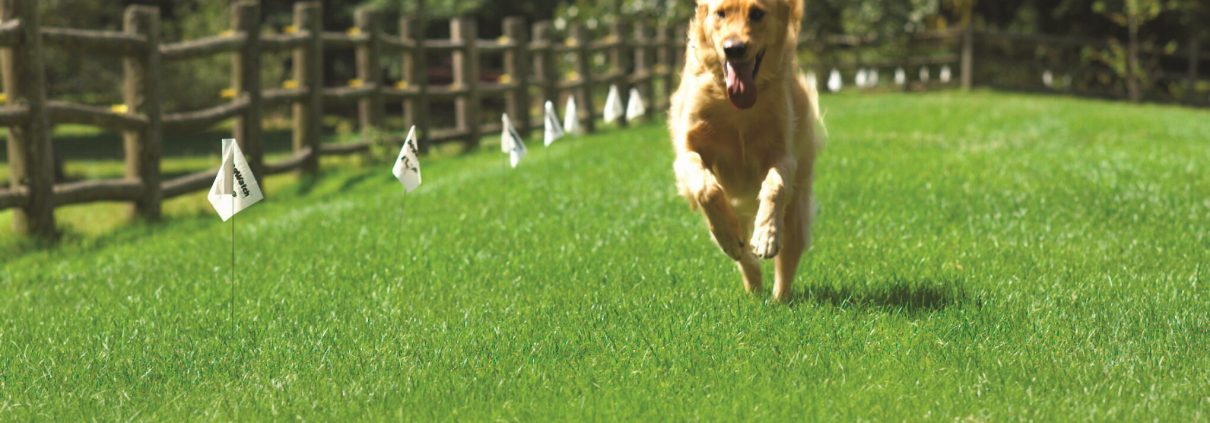
Dog wearing DogFence electronic dog fence collar in garden

Containment Fences Explained

What are electronic Containment Fences and how do they work?

Containment fences hit the news earlier this year when the Government declared that they intended to ban e-collars for training dogs.

Sadly, the media jumped in with both feet first and declared that containment fences were also to be banned. At DogFence we were horrified having Professionally installed containment fences for over 17 years we had no idea why! For our customers that already used a containment fence there was outrage. How could the Government even consider banning a fence that had saved their pets life and given them back their freedom?  For those that had not heard about containment fences there was intrigue. What is a containment fence and why do they want to ban them?basset hound enjoying freedom with containment fences

Even the MP that called for the ban didn’t know if the containment fence was to be included within any ban and the officials at DEFRA did not know how containment fences worked! As experts in the field for containment fencing DogFence were invited to meet with officials from DEFRA and demonstrate the fence.

The comments from the DEFRA team were as we suspected “it’s not that bad” and “it’s not what I imagined”.

So what is a containment fence?

It’s actually an invisible fence or virtual fence which is created by a radio signal. Originally invented to keep dogs safe at home in the USA where gardens are traditionally unfenced their popularity has grown in recent years.

A containment fence is actually a very simple and unobtrusive system which can be installed on virtually any property at a fraction of the cost of traditional fencing. It also offers for safety than conventional fencing as the pet can’t dig under or jump over the fence and it protects open areas such as driveways.

A boundary wire is placed around the property boundary which transmits a coded radio signal to a collar worn by the pet. When the pet approaches the boundary wire a high pitched warning beep alerts the pet to go back. If the pet continues forward, an electrical impulse is given through the collar (this is often referred to as a correction or static shock) and the pet retreats back into the safe area.

How does the pet know where to go?

Every pet undergoes a training programme which usually takes 2 – 5 days. When training to a containment fence it is important that the boundary is flagged to give a good visual of where the virtual fence starts. The flags stay in the ground as a visual marker for approx. 2 – 3 weeks. Containment fences can be used for dogs over the age of 12 weeks and cats 16 weeks or over.

The trainer will take the dog outside and set the collar to “beep only” mode. Using some voice commands, he will introduce the dog to the containment fence training flags and later he will allow the dog to enter the “no go area” of his own accord. By re-focusing the dog back into the safe area with the assistance of the warning beep and vocal commands the pet will quickly learn where he can or can’t go. Following the beep only session the training moves onto to assess the correct level of impulse (correction) required for the pet.  If the owner has more than one pet the likelihood is that they will each have a different training level.

containment fences are marked with training flags

Visible boundary for the pet with flags.


With cats the training is carried out internally following the Dog Fence Cat protocol. This training protocol was used as part of the Lincoln Cat Containment Fence study.


Will the containment fence hurt my pet?

Of course the thought of giving any impulse or shock to your pet can be abhorrent. It is important to note though that the impulse is very low and is usually only felt during the training phase. The sad scenario is that the pain felt from a car is almost unimaginable and the discomfort of containment fence is no worse than an annual vaccination. Also for dog owners there is always the threat of a shot gun as dog attacks on sheep are rising annually.

What areas of the garden will the containment fence cover?

Interestingly, containment fences can cover the entire garden including the driveway. The largest installation that we have installed at Dog Fence is 450 acres. Usually the fence wire is dug directly into the ground (approx. 3 – 5” below the surface) but it can be attached to existing physical boundaries. It is not uncommon for the fence wire to be attached to post and rail fences, stone walls, run through hedges, ditches or streams and even the odd moat! When it comes to the driveway any surface can be crossed except Resin bonded drives which require special attention.

Containment Fence Collars

The original containment fences from the early 80’s used heavy bulky collars but as with the mobile phone technology everything has been scaled down in recent years. Not only have the collars become smaller and lighter but the battery life has also increased.

At Dog Fence we can boast the smallest and lightest collars worldwide. Our mini containment fence collar only weighs 30g but still features an incredible 6-month battery life. Incredibly our standard collar has a 2-year battery life and weighs in at only 48g which is still the 3rd lightest collar available worldwide!

How much do containment fences cost?

A containment fence costs a fraction of the cost of installing a traditional fence or driveway gates. Unlike a wooden or stock fence a containment fence becomes more cost effective the larger the area. Naturally the price is dependent on the owner’s location and the number of dog or cats that they have. There is no need to visit a property to give an estimate for the containment fence; this can all be carried out via our online survey tool.

Summary

Thankfully, the Government looked at the evidence, research and responses from containment fence owners and deemed these lifesaving systems safe to use. Indeed, Michael Gove stood up and supported the life-saving fences in Parliament.

If you are interested in receiving a quick free quote contact us today on 01628 476475 or fill in our quote form https://dogfence.co.uk/quote/

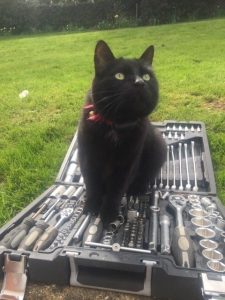
Black cat laying on sofa wearing cat fence collar

Cat Fence – how a cat fence saved my cat!

Cat Fence Saved my Cats Life!

I wanted to take a moment to tell you all about how a Cat Fence saved our cat’s (Figaro’s) life. You may have heard them called containment fences or even electric cat fences.

Without our Cat Fence I really fear that Figaro would not be with us anymore and I would not be able to tell you all his tail.

Figaro came to us when he was 6 years old we rescued him from a local cat shelter. The whole family fell in love the second we met him. He was so handsome; his glossy black fur and bright shiny eyes. I couldn’t believe my whiskers when the lady at the cat shelter told us Figaro had been tricky to re home due to the colour of his fur. Would you believe that black cats aren’t as popular because they don’t look as good in ‘selfies’? At this point in time we all felt that our garden was safe and had not even considered a containment fence or cat fencing.

Figaro settled into his new home nicely. We kept him inside for a week or so but he was so inquisitive about the outside world. I couldn’t keep him indoors any longer. Figaro had missed his freedom being in the cat shelter and I couldn’t wait to let him explore the garden.

black cat wearing cat fence collar sat on tool box

Figaro helping with the DIY!

At first he stayed within the garden and loved lazing in the bushes and hunting mice. Over the next few weeks Figaro began to explore further afield. At first it was the neighbour’s garden, then a visit to the tabby cat down the road. His adventures grew longer and longer but he always bought himself home in time for dinner. We never knew quite how far he went but he always returned.

That dreaded moment when the cat did not come home!

Then it came that awful night he didn’t come home for his dinner. It was getting late and he still wasn’t home. I went into the garden and called him…nothing. I tried to tempt him with his favourite – Tuna! But still nothing. I decided to leave his cat flap open and went to bed, he would be home in the morning, I was sure.

Morning came and he wasn’t home. I searched everywhere for him. As the days went on I started to fear the worst. We lived a reasonable distance from a few busy roads and knew two families that had lost their fur babies in road traffic accidents. Trying to remain positive I decided to visit as many neighbouring houses as I could to ask if they had seen him.

There had been no sightings. One of my neighbours (who had previously lost several cats to the road) told me about this amazing device called a

A small lightweight collar that the cat wears and a wire installed around the garden. The cat is trained to know how the collar works and receives a warning beep followed by a small static impulse to stop them from straying outside of the garden. She let me feel the collar as I had visions of my cat leaping out it’s skin for it’s life. I have to admit that I was skeptical as to how it would work because when I felt the sensation it was very small and not at all how I imagined.

My neighbour told me it’s the only way she’s been able to have a cat again after the devastating losses of her other cats. It enables her cat to explore its natural environment but keeps them safe at the same time and gives you piece of mind – How amazing!

I walked home furious with myself that I hadn’t discovered Cat Fence before. If I had just known about it, Figaro would still be at home safe in his garden. I brushed a tear away as I reached my front door. How could I have let this happen? I was probably never going to see my beautiful boy again.

Several days went passed and I resigned myself that he was gone. It was the not knowing that hurt the most, had been injured, killed or had he just found a new family. I hope it was the latter.

The day I decided to research Containment Fences.

One wonderful day after turning the key in front door and letting myself in I heard his little meow.  He came straight over brushing against my leg and purring. Actually he looked fine, a little thinner and obviously relieved to be home. We had had a lucky escape and I vowed not to let it happen again. I went straight around to my neighbour and got the details for the cat fence Company. Within an hour I had booked for our new Cat Fence to be installed.

The installer was excellent and explained all about the cat fence to me. He did some indoor training with myself and Figaro which allows Figaro to learn about the “no go zone” before using it in the garden. After 20 minutes Figaro knew what the beep meant and he was no longer entering the “no go Zone”. We had to keep indoors for a few days to ensure that he really knew how the cat fence worked.

The gentleman explained that cats are very intelligent and pick things up quickly and that I would need to use Flags in my garden for the first few weeks to mark out the “no go zone” but could take them out once he fully understood.

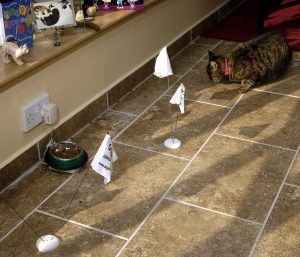
cat fence training for containment fence is carried out inside using indoor unit.

Cat in training.

It’s been 4 years now since our Cat Fence has been installed and I am able to relax Knowing that Figaro will always be home for dinner. As I type this I can see him out of the window, happily hunting the mice in the sun and enjoying his freedom whilst being safely contained in his haven.

Thank You Cat Fence!

Labrador wearing an electric dog fence collar - these collars are also called containment fences

Are electric dog fences illegal?

Are electric dog fences illegal – what you need to know

With new legislation on the way, the question everyone is asking is: are electric dog fences illegal in the U.K.? The straight answer is an electric dog and cat fences ARE  LEGAL. Electronic dog and cat fences are completely legal in the U.K.

Why the confusion? Electric dog fences (which can also be used for cats) were included in the government consultation into electronic training aids for pets through a lack of understanding of the subject. However, Michael Gove, an ardent dog-lover who is heading up the legislation, realised the error and ensured that electric dog and cat fences were not included in the new law due later this year. Thankfully DEFRA has realised that to make dog fences illegal would comprise the safety of both dogs and cats.

Michael Gove with dog

Michael Gove declares containment systems safe.

So whether you need an electric dog or cat fence because you have a tricky boundary, escapee pet or simply need to keep your dog or cat within a specific area of your garden or home, breathe a sigh of relief and read on for a clear and easy explanation of why  dog and cat fences are still legal in the U.K.

The confusion over electric dog fences explained

We all know that making dog and cat fences illegal in the U.K. would be a complete disaster because they save lives. However, civil service ignorance meant that when the department set out to consult on the legality of electronic training collars, the mistakenly included electric containment fences in the mix.

Any animal lover knows that electronic collars and containment fences are two completely different things.

So when experts like Ward Chapman, DogFence.co.uk founder (who has been in the business for over twenty years), were invited to consult on the proposed legislation with The Department for Environment, Food and Rural Affairs (DEFRA), they immediately pointed out the error.

In fact, it was the experts and pet-owners that had to remind the government that in previous years DEFRA had themselves, excluded electric dog fences for pets from their past research. 

Thus, began a series of high-profile requests for the distinction to be made between electronic training collars and containment fences. Ross Thomson, Member of Parliament for Aberdeen South, was unaware that the government was consulting on making containment fences illegal too. Thomson’s request had referred to the electronic training collars, not containment fences.

When confronted by the Countryside Alliance in March 2018, Ross Thomson was quick to clear things up, stating that he had no problem with containment fences. With the backing of dog charities, his issue was with electronic training aids.

Luckily, knowing how containment fences work, Michael Gove, a dog owner himself, stepped in and removed containment fences from the legislation. So your pets can stay safe and you can remain hassle-free because electric dog fences and cat fences will not be illegal later this year.

Installation of Containment Fences

What did come out of the consultation was a need for the government to ensure that containment fences across the U.K. are high-quality products. Most importantly it was noted that they should be installed properly by professionals along with proper training delivered to owners during installation.

So from later this year, it will be a requirement that any electric dog fence or cat fence is installed by a professional, and full training is given to both the pet and owner.

At DogFence.co.uk we have been professionally installing high quality, modern and safe hidden fences for over twenty years. With full training for owners and a lifetime warranty included, we have been ahead of the game for years.

How do electric dog fences work?

If you have happened across this post and are wondering how electric dog fences for pets actually work, let me explain:

Firstly, the word “electric” is incorrect – these fences do not emit an electric shock. A lack of understanding over how dog and cats fences work can mean that containment fences for pets can be classed as the same thing as a dog training collar. However, as recent events have shown, the two are completely different.

Training collars for dogs

There are many different types of training collars that are used by trainers and owners for dogs, these include shock collars, spray collars, and sonic collars. The controversial ones are electronic training collars. However, many dog training tools inc; leads, flat collars, head halters,  and even harnesses can harm a dog. All training tools need to be used correctly. It goes without saying that vets will have come across dogs that have been injured by incorrect use of a training tool. I would hazard a guess that very few have come across an injury from an electronic training collar though.

Why do people use training collars?

Although many dog trainers rely on positive reinforcement methods, there are some dogs or occasions where some dogs need negative training for a particular situation. In these cases where a reward is not sufficient or reward-based training has failed they may choose to use a negative response as a learning tool.

There are many myths that surround the use of electronic training collars, so let’s take a quick look at the facts.

Electronic training collars

Electronic training collars are sometimes referred to as “shock collars”. You may be horrified to hear that they do exist, however, with around 170 different types of electronic collars available around the world, here in the U.K. we only have five that are actually in use.

Each of the five approved electronic collars, meet British and E.U. safety and protection requirements for animal safety. The standards that we use here in the U.K., and across the European Union, were drawn up by The Electronic Collar Manufacturer’s Association (ECMA).

One of the biggest myths is that training collars are wired up to the mains electricity! Clearly, this is not true. When you use an electronic collar, the dog receives a “mild stimulation”, which distracts them from the hazard that the owner wants them to avoid.

The stimulation is to gain the dog’s attention. A good analogy would be “tapping the dog on the head to say – excuse me I’m talking to you!”. These collars can keep the animal safe by preventing them from chasing livestock and assisting with recall and other training issues. They do not as reported cause them pain, fear or distress. Instead, they keep the animal protected, and in some cases avoid the animal being re-homed or shot.

Why the controversy?

Some observers suggest that because the collar is operated by humans, it may be open to abuse. However, the reality is that there have been no convictions in the U.K. of animal cruelty resulting from electronic training collars or electric dog fences. Indeed, the cost of a training collar would make it a cruel and long-winded choice for a means to abuse a dog!

How are dog containment fences different?

Why is a containment fence different to a training collar?

The dog or cat is in control.

A containment fence is a passive Pavlovian system governed by the animal’s own behaviour. A containment fence collar releases a small static impulse if the dog or cat enters an exclusion area.  The impulse mimics the ‘nip’ that an adult animal would give its young to alert them of a threat. Before the impulse is given the collar gives a warning “beep”. The pet decides whether to continue or retreat. In the initial training phase, the exclusion zone is marked with temporary marking flags.

containment fence training with red setter

Dog in training using vocal commands and training flags

The impulse itself is a secondary measure because, during the training delivered by professional staff, we at DogFence.co.uk will train the dog and owner. We use vocal commands and visual training flags to understand that the areas in question are out of bounds.

In this way, the impulse from the electric dog fence should be minimal and only in the training phase. Once trained it is rare for the pet to activate the containment fence collar.

At DogFence.co.uk, our customers report time, after time that because of our training, their pet stays away from the fence thus the impulse from the fence is never needed. It is merely a precautionary measure. The pet is firmly in control. Watch our video of Lionel Demonstrating the fence!

Is there any research that says that electric dog fences and cat fences should be illegal?

No, there are no studies that suggest that these fences should be illegal. Indeed, research by Professor Mils at Lincoln University proved that containment fences are a safe and effective way to protect cats from hazards.

Professor Daniel Mills

Prof. Daniel Mills
RCVS

Why are containment fences exempt from the ban?

Once the Department for Environment, Food, and Rural Affairs (DEFRA) looked at all of the evidence, they were able to conclude that containment fences were indeed different from electronic dog collars. Further, they recognised that containment fences can, in fact, save lives, enabling cats and dogs to roam freely outside, safe from dangerous roads. To make dog fences illegal would have a negative impact on animal welfare.

Why are electric dog fences illegal in Wales if the Government has proved they are safe?

With the current furor, it is expected that the Welsh Assembly will revisit their hasty and poorly researched ruling, to separate containment fences and electronic collars. With the original ban rushed through before the consultation was completed, the large rural population in Wales are up in arms.

There is a widespread call from farmers and dog owners for the review to take place sooner, rather than later. Further support for the Welsh campaign can be found on their Facebook page at: “Save our Welsh cats & dogs from death on the roads”.

Thankfully, through proper consultation, here in England we were able to ensure that the distinction was made between containment fences and electronic dog collars. As a result, containment fences are not illegal in England, now, or in the future, with Wales looking to follow suit soon.

Although, what you will need by law, is a high-quality containment fence that is properly installed by professionals, along with the delivery of full training for the animal and owner. Naturally, we are glad that DEFRA has chosen not to make dog fences illegal but the confusion has been worrying for pet owners across the UK. We can now put a line through the dark cloud that has been hanging over the fence and continue to offer dogs and cats safety and freedom.

At DogFence.co.uk, we are proud to have been installing and training high-quality, modern and safe electric dog fences for over twenty years. For more about how we can help you to keep your dog or cat safe both outside or indoors, call us on:  03450 623 623 or email us on: info@dogfence.co.uk today.


Links:

Hidden dog or cat fence

https://www.dogfence.co.uk

DogFence.co.uk

https://www.dogfence.co.uk

DogFence.co.uk

how we can help you to keep your dog or cat safe

https://dogfence.co.uk/customer-service/

cat safe outdoors with her cat fence

The results of the first study into electronic cat fences.

So what is an electronic cat fence?

An electronic cat fence! Really, how does that work?

It’s actually a very simple but effective solution to keep cats safe in the garden and away from the roads. A simple transmitter is installed in the owners house. This transmitter is attached to wire that surrounds the property. A coded signal is sent through the wire. The wire can be installed above or below ground but it must form a continuous circuit. The signal that surrounds the wire is picked up by the cat fence collar. Should the cat approach the wire the cat fence collar activates by giving a high pitched warning beep. If the cat continues further the collar then sends out a mild static impulse (similar to a tens machine).

pt4 transmitter

The Cat Fence Transmitter

How does the cat know what to do?

Training, the Company that installs the cat fence system will also train the owner and cat. Training for the cat fence is carried out internally using a portable unit. Once the cat understand how to use the internal system the training continues outside. To assist the cat with the position of the cat fence temporary training flags are placed around the boundary.

cat fence training flags

Training flags to mark the boundary


How does the cat know what to do?

Training, the Company that installs the cat fence system will also train the owner and cat. Training for the cat fence is carried out internally using a portable unit. Once the cat understand how to use the internal system the training continues outside. To assist the cat with the position of the cat fence temporary training flags are placed around the boundary.

Similar systems have been used for dogs for over 40 years. Until recently the technology meant that the computer collars were too big for cats. The new cat fence computer collars are both sleek and light weight. Similarly, dog fence and cat fence training protocols are different. Working with animal behaviorists CatFence have developed a simple internal training protocol. Until 2013 there had been no official studies into using electronic fences for cats.

How do I know that the cat fence is safe for my cat to use?

The results of the long awaited study into containment cats using the electronic cat fence system were released in 2016.  Over a three year period the animal welfare researchers at the University of Lincoln, UK, studies all aspects of the fence. They assessed three groups of cats; those allowed to wander freely, those contained with the cat fence and those kept solely indoors.

The study found no evidence of long-term welfare problems for cats living using these fences. More interestingly they also noted that the cats who were able to roam freely in and out of their owners’ gardens had a more distant relationship with their owners.

“Taken together, the findings do not suggest that long-term (at least 12 months) exposure to the system had a significant negative impact on the behaviour and welfare of contained cats. Indeed cats subject to electronic confinement appear to be less neophobic than unrestrained cats.”

Naturally those cats that were left to wander were at more risk from injury or death when left to roam but indoor cats were also at risk. Furthermore the study noted that cats kept solely indoors where more prone to health issues.

cat in house

Keeping cats indoor can cause health and other issues

“In contrast, housing cats solely indoors to remove such risks is associated with increased prevalence of a range of health problems including obesity, Feline Urologic Syndrome and dental disease. Long-term exposure to common flame retardants widely used in homes may also have toxic side effects for cats.”

As cat all cat owners know they are an extension to your family. Sadly there are unscrupulous people around who will steal and sell on pedigree cats. In recent years there has been a surge in the ownership of high value pedigree and naturally this has also increased theft rates. By installing a cat fence an owner is able to allow their cat freedom but also keep a safe eye on them.

Protecting wildlife

Whilst protecting our pets is the primary reason to install a cat fence a bi-product is safety to wildlife. Using the cat fence system also protects wildlife from cats that hunt. In the UK we love our cats and own over 8.1 million but sadly they also do significant damage to our wildlife. Each year our domestic cats are responsible for the  death of 55 million small mammals and birds.

grey cat with cat fence collar

Flissy modelling her pink cat fence collar!

Without the amazing research from the team at Lincoln owners would be unaware of the benefits electronic cat fences offer. With the 300,000+ pets that get injured or killed on the UK’s roads increasing year on year cat fencing  gives owners food for thought.

cat laying in the road not contained by dog fence

How to keep your cat safe outdoors

A new solution to keep  your cat safe outdoors

Cat are naturally active and love to do their own thing.  I’s a continual concern for owners as to how to keep their cats safe outdoors, particularly when they have unlimited access to the big wide world.  Unfortunately their tendency to wander leads to around 300,000 cat deaths on UK roads every year, a staggering number considering how much we take care of them when they are at home.

On top of the danger posed by roads, an outdoor cat also faces potential run-ins with other animals on neighbouring properties, dogs walking off the lead nearby, or bigger cats protecting their territory.

A cat’s natural prey drive will also drive them to explore further afield into tempting wildlife rich areas, such as woods or local parks.  Not only does this pose a problem to preserving local wildlife, but can also cause your kitty to take unnecessary risks dashing across busy roads to catch prey, or getting stuck in buildings or trees as they hunt.

cat safe outdoors

Enjoying the garden.


As a concerned cat owner, there are a couple of ways that you can keep your cat safe and sound. One solution is to set up a wire fencing system around your garden that is angled to stop your cat being able to escape.  However these are generally costly, can ruin the look of your garden and be an eye-sore to your neighbours.  Cats are also notorious escape artists and have been known to climb these fences to reach overhanging branches to make their getaway.

The other option is to try a CatFence, an invisible barrier system that trains your cat not to stray over a safe boundary you create.  Providing a stress free and safe environment for your kitty. A CatFence is revolutionary system to keep cats safe outdoors. The fence was trialed by Feline Friends a charity in Derbyshire.

This unobtrusive barrier is a hidden fence consisting of a central control box that transmits a coded FM radio signal through a boundary wire that has been laid around the property. To train your cat not to stray over this set boundary, they wear a computer collar that houses a tiny FM receiver.  As your cat moves towards the signal the collar emits an audible signal to indicate they should stop and turn back. If the cat continues towards the wire the collar gives a small “corrective shock” set to you cat’s individual requirements.

After completing the training cats quickly learn to understand the warning beep, and will immediately turn back into the allowed zone, thus avoiding correction.

Advantages of a CatFence system

A safe and simple training programme to keep your cat safe outdoors

As any cat owner will know, your cat is the king of its domain and will not do anything that it does not want to.   This is why the CatFence system uses a form of training specifically designed for the needs of your cat.

Our  training  accounts for each cat’s natural personality, curiosity, and movement and starts in the home, where the cat is most comfortable.   When your cat is ready, we take training outside to allow your feline friend to learn where it can and cannot go.

You set the safe boundary

You are in control of where you set the CatFence boundary to allow your cat to wander through your garden without a care, whilst keeping them clear of any potential dangers such as poisonous plants, neighbouring properties and busy roads.  When setting the boundary you can also protect areas of your property from your pet such as a fish filled pond.

Tackle in house worries

There is the possibility that you live on a street without feline dangers, but you have a home sized scratching post. Cats need to scratch to get rid of dead cells on their claws, as well as to help them stretch out their bodies and paws. Unfortunately for you, your cat may not always use the expensive scratching post that you bought, choosing instead your furniture, carpets or curtains. If this is the case then your cat’s collar works with the special indoor system that allows you to cordon off parts of your home keeping rooms and furniture out of bounds.  It can be set on almost any surface and can stuck to door frame if you want to section off a whole room from a feline fiend.

Let your cat know there is always safety at home. The CatFence containment system is the perfect way to ensure that your cat stays happy and healthy whilst still enjoying a life outdoors. If you have any concerns about how to keep your cat safe outdoors, due to busy roads or other potential threat, please call us for a quote on 01628 476475.

Links: https://www.feline-friends.org.uk/

Feeding a wild cat

The problems with feeding a cat that isn’t yours

Feeding a catFeeding a cat that is not yours, may not be doing the right thing

Cat owner or cat lover, we are all fond of cats. We appreciate it when they are around, we want to please them and make them happy. And what’s better for this purpose than a nice bit of food? But for several reasons, leaving cat food outside your house or feeding the nice cat that is coming to visit is perhaps not as good an idea as it may initially seem.

First, if the cat belongs to someone else, it might eat less at home. This may be interpreted as a loss of appetite by the owner, who then takes the cat to the veterinarian to have it checked over, causing unnecessary stress for both owner and cat. There are also the not inconsiderable financial consequences for the owner, as the vet may do tests because there is nothing obvious to explain this apparent loss of appetite. If the cat doesn’t eat less, then there is obviously the risk of obesity as the cat eats more than it needs and starts to put on weight. This not only puts a stress on the heart and the like, but also on the joints, resulting in painful arthritis sooner or later.

Second, if it’s not your cat, you won’t know if it has a health condition that is being controlled with a special diet. For example the cat could have a dietary sensitivity or diabetes, (which might be linked to obesity) and need to be on a specific diet to avoid problems. Feeding a routine food, may not have an obvious immediate effect, and the cat won’t avoid what might be tastier, just because it isn’t good for it in the long run. Such a choice could result in delayed complications, such as diarrhoea or a more serious crisis in the case of a condition like diabetes.

Some people like to offer visiting cats raw meat as a treat, after all, cats are strict carnivores, and feeding them with raw meat seems only natural.

sausages

Unfortunately, raw meat can carry disease, such as toxoplasmosis. This can be very serious, or may not appear to affect the cat very much (see Toxoplasmosis page here), but the cat can spread it to people including children, where the consequences can be much more serious. Feeding a cat that is not yours might not be the right thing to do, but feeding it raw meat is certainly not the right thing to do.

Finally, another sad potential consequence of feeding is that you may encourage cats to cross roads in order to come to visit and inadvertently increase the risk of them being run over. There are over 300 000 cats killed on the roads in UK each year and we don’t always know why they felt the need to cross this particular road. Getting food seems a pretty good reason, after all, many cats cross roads to head for fields where they can hunt.

crossing

So, what should we do about cats wandering in the neighbourhood? You should decide to do one or two things: First you should not feed any cat, and so avoid any problems linked to feeding them; next you can try to identify if the cats are owned or cared for? Where do they come from? Do they have to cross any road to come and see you? If they are owned, are they in good health and body condition? All this information and strong community contacts may give you the answers you need to make the right decision, and if it is not-owned, then it is better to take it to a rescue centre, where it can be fully cared for. Cat owners can also take measures to ensure that their cats are not put in “feeding- danger”. If they are on a strict diet, they can put a collar with the message “do not feed” on their cat. They can also talk to the neighbours and warn them about their cat’s special needs. Alternatively, if it is felt that it is better to keep it indoors, it must have plenty of stimulation and places to explore, so it doesn’t get frustrated.

vets3

By Dr Naima Kasbaoui and Prof Daniel Mills
University of Lincoln, Animal Behaviour Cognition & Welfare Group.