How to Dog Proof Your Garden Properly (UK Guide)
How to Dog Proof Your Garden
Top Tips for a Safe & Secure Outdoor Space
How to dog proof your garden properly starts with identifying risks — from escape points to toxic plants and boredom-related damage.
As dog owners, we all want our pets to enjoy outdoor freedom safely. But without the right precautions, gardens can quickly become areas of risk — whether that’s escaping, digging, chewing plants, or damaging borders.
In this guide, we’ll explore practical ways to dog proof your garden while keeping it attractive and functional.
If your dog is actively trying to escape, you may also want to read our complete guide on why dogs escape and how to stop them for good.
1. Secure Your Garden Boundaries
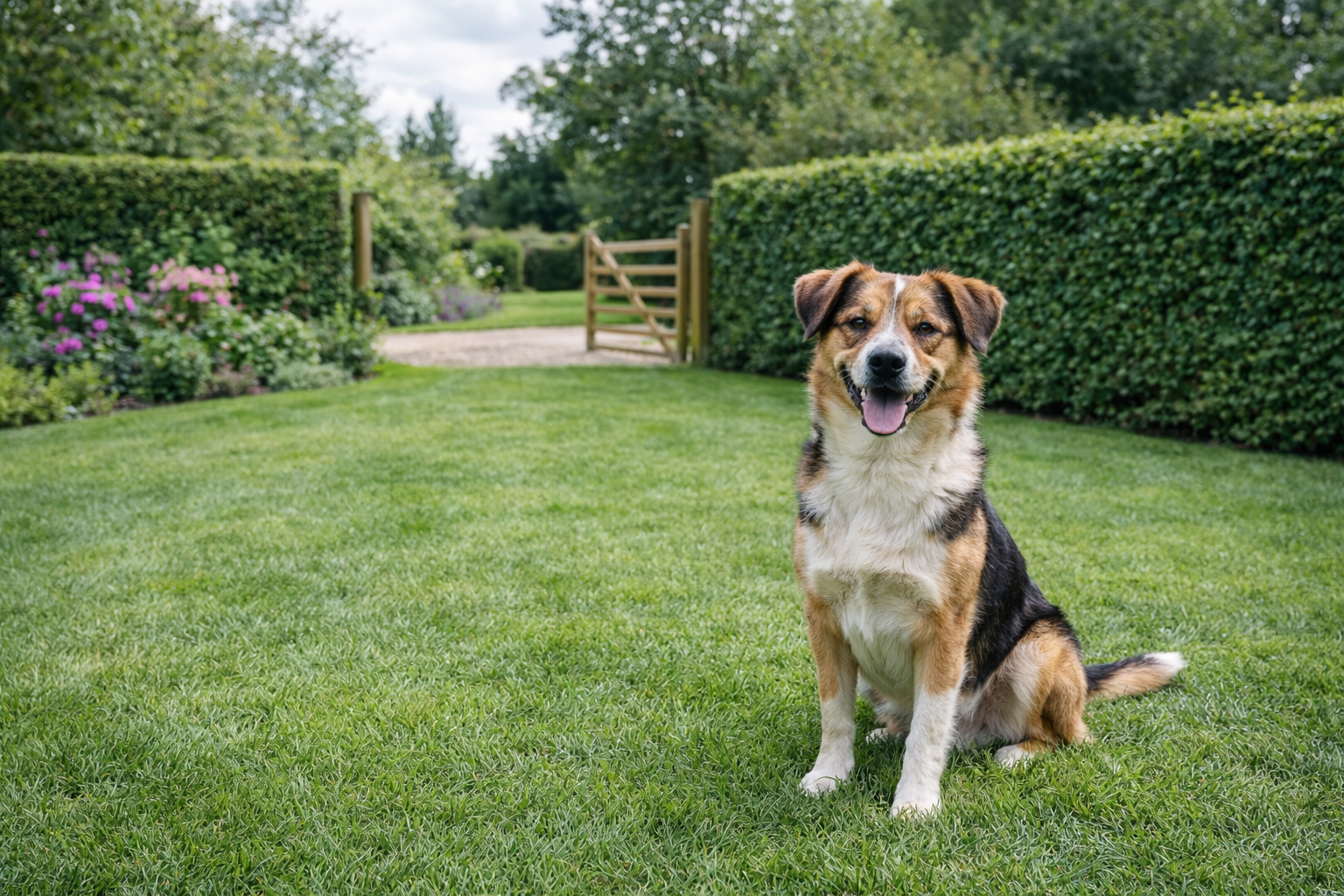
The first step to dog proof your garden is ensuring your boundaries are secure.
Check for:
- Loose fence panels
- Gaps between posts
- Weak gate hinges
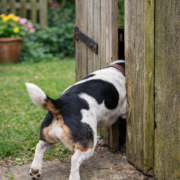
- Gaps under fencing
- Open driveways
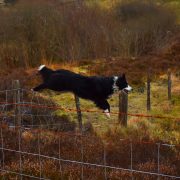
For most medium to large breeds, fencing should be at least 6ft high.
If your dog is digging under fencing, see our guide on how to stop dog digging under fence
If you live in the countryside with livestock nearby, you may find our rural-specific guide on how to dog proof a rural garden in the UK more relevant.
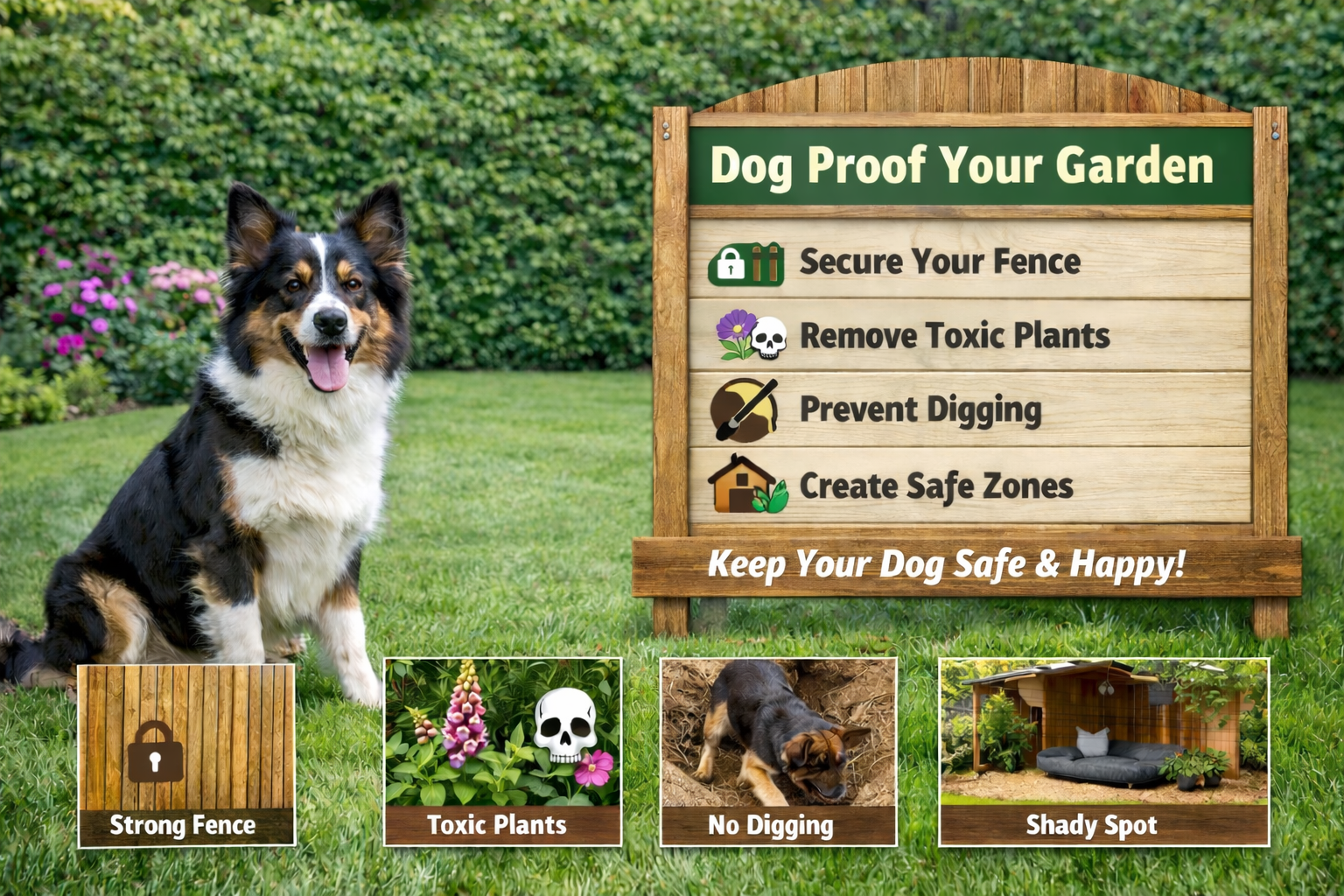
2. Prevent Digging & Garden Damage
Dogs dig for many reasons:
- Boredom
- Cooling down
- Hunting
- Attempting to escape
To reduce digging:
- Increase daily exercise
- Provide enrichment toys
- Create shaded rest areas
- Reinforce fence bases if necessary
Understanding why your dog digs is key to solving it long term.
3. Remove Hazardous Plants & Chemicals
To properly dog proof your garden, consider plant safety.
Common toxic garden plants include:
- Foxglove
- Yew
- Azaleas
- Rhododendrons
- Daffodil bulbs
Fertilisers, slug pellets and weed killers also pose risks.
For official guidance on toxic plants for pets, the PDSA provides helpful information here:
https://www.pdsa.org.uk/pet-help-and-advice/looking-after-your-pet/poisoning/toxic-plants
4. Create Safe Zones for Play & Rest
A well-designed garden reduces destructive behaviour.
Consider:
- Shaded areas
- Water access
- Defined pathways
- Designated digging areas
- Clear boundaries
A mentally stimulated dog is far less likely to test fencing or destroy borders.
5. Consider Containment for Extra Peace of Mind
For properties with open driveways or boundary concerns, additional containment may be worth considering.
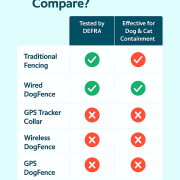
A professionally installed electronic dog fence system can create a defined perimeter without altering your garden’s appearance.
Learn more in our guide on how electronic dog fences work.
Final Thoughts: Creating a Dog Safe Garden
To dog proof your garden effectively, combine:
- Secure boundaries
- Behaviour understanding
- Plant safety
- Enrichment
At DogFence, we’ve helped thousands of UK pet owners create safer outdoor spaces for their dogs and cats.
If you’d like tailored advice for your property, contact our team for a free, no-obligation consultation.
Ready to Dog Proof Your Garden Properly?
If you’re looking to dog proof your garden and prevent escape, digging or boundary problems, we can help you create a safe, secure outdoor space tailored to your property.
Call us on
01628 476475
|
Message us on WhatsApp
|
Request a Free Quote Online