Tag Archive for: prevent dog escaping garden

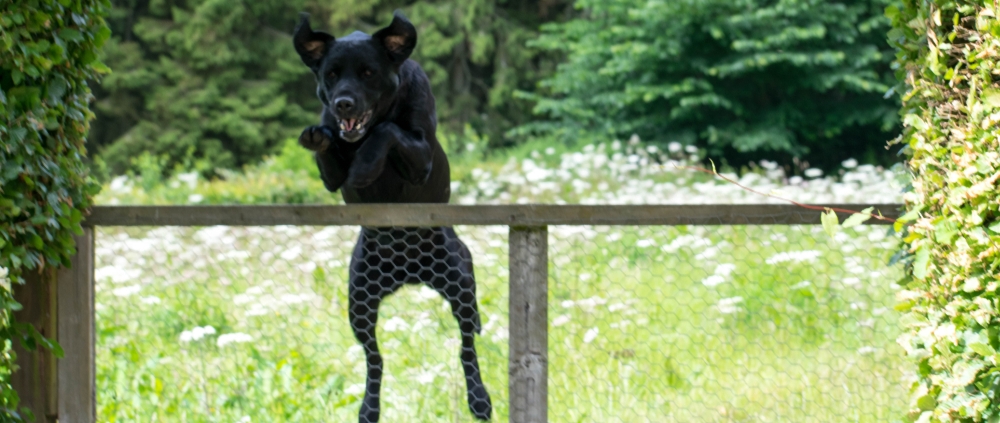
Dog jumping a garden fence showing why owners ask how to stop my dog jumping the fence

How to Stop My Dog Jumping the Fence | Proven Solutions from DogFence

How to Stop Your Dog Jumping the Fence: Practical Solutions That Work

If your dog keeps jumping the garden fence, the best solution is to work out why they are escaping, remove anything that makes the fence easy to jump or climb, and create a secure boundary they cannot repeatedly test.

Some dogs can be stopped by improving the existing fence, removing launch points and reducing whatever is tempting them on the other side. But determined escape artists may continue to jump, climb or simply find another weak point.

At DogFence, we have been helping UK dog owners contain persistent escape artists since 2003. One option for dogs that repeatedly challenge a physical fence is to create a hidden trained boundary inside the existing garden boundary, so the dog learns not to approach the fence in the first place.

If jumping is only one of the ways your dog escapes, start with our complete guide to how to stop your dog escaping from the garden.

Why Do Dogs Jump Garden Fences?

Dogs jump fences for many different reasons. Understanding what is motivating your dog can make it much easier to choose the right solution.

Common reasons include:

  • Wildlife and prey drive – squirrels, rabbits, deer, cats and livestock can be powerful triggers.
  • Other dogs – your dog may be trying to investigate or reach another dog nearby.
  • People or activity outside the garden – footpaths, roads and neighbouring gardens can create excitement.
  • Boredom – an under-stimulated dog may start looking for entertainment elsewhere.
  • Separation-related behaviour – some dogs attempt to escape to follow their owner.
  • Learned behaviour – once a dog discovers that jumping the fence works, they may repeat it.

This is why simply adding another foot to the fence does not always solve the problem.

How Can I Stop My Dog Jumping the Fence?

There isn’t one solution that works for every dog or every garden. The best approach is usually to look at both the physical boundary and the dog’s behaviour.

1. Check the Whole Garden Boundary

Walk around the garden and look at the fence from your dog’s point of view.

Check for:

  • low sections of fencing
  • broken or loose panels
  • raised ground next to the fence
  • horizontal rails that can be climbed
  • gaps between fences, hedges and gates
  • bins, benches, planters or furniture that can be used as launch points

Don’t just inspect the place where your dog escaped last time. Once one route is blocked, a determined dog may simply look for another.

For a complete garden check, see our guide to how to dog proof your garden properly.

2. Remove Anything Your Dog Can Use to Gain Height

A dog that cannot clear a fence from ground level may manage it surprisingly easily with the help of a raised flower bed, retaining wall, storage box, bench or other garden object.

Move anything climbable away from the boundary wherever possible.

3. Reduce What Your Dog Can See Beyond the Fence

Sometimes the fence itself isn’t the attraction – it’s what’s happening on the other side.

If your dog becomes excited by passing dogs, people, livestock or wildlife, reducing their view may help. Depending on the garden, this could include solid fence panels, screening or suitable planting.

It won’t stop every determined escape artist, but removing the trigger can significantly reduce repeated fence-running and jumping behaviour.

4. Make Sure Your Dog Has Enough Exercise and Enrichment

Physical exercise and mental stimulation can reduce escape behaviour caused by boredom.

Scent games, food puzzles, retrieving games, training sessions and regular walks can all help make the garden less of a launching pad for adventures elsewhere.

However, if your dog already has a history of escaping, enrichment should be used alongside secure containment, not instead of it.

5. Improve the Physical Fence — or Add a Trained Hidden Boundary

Depending on the dog and the property, you could consider:

  • increasing fence height
  • adding suitable trellis
  • using inward-facing extensions
  • installing fence rollers
  • replacing climbable fencing with smoother panels

These solutions work well for some dogs. For persistent jumpers, however, continually raising the physical barrier can get expensive and still won’t address other escape routes such as digging or an open driveway.

Where a dog keeps testing the physical fence regardless of height, a professionally installed hidden dog fence gives you another option: instead of relying on the fence itself, it creates a trained boundary before the dog ever reaches it. The DogFence system uses a boundary wire carrying a coded FM radio signal; the dog wears a small receiver collar, and temporary training flags mark the boundary during the initial training period. As the dog approaches, the collar gives an audible warning and, if they continue, a brief adjustable training impulse — so with consistent training the dog learns to turn away well before the fence line.

See our illustrated guide to how a hidden DogFence system works.
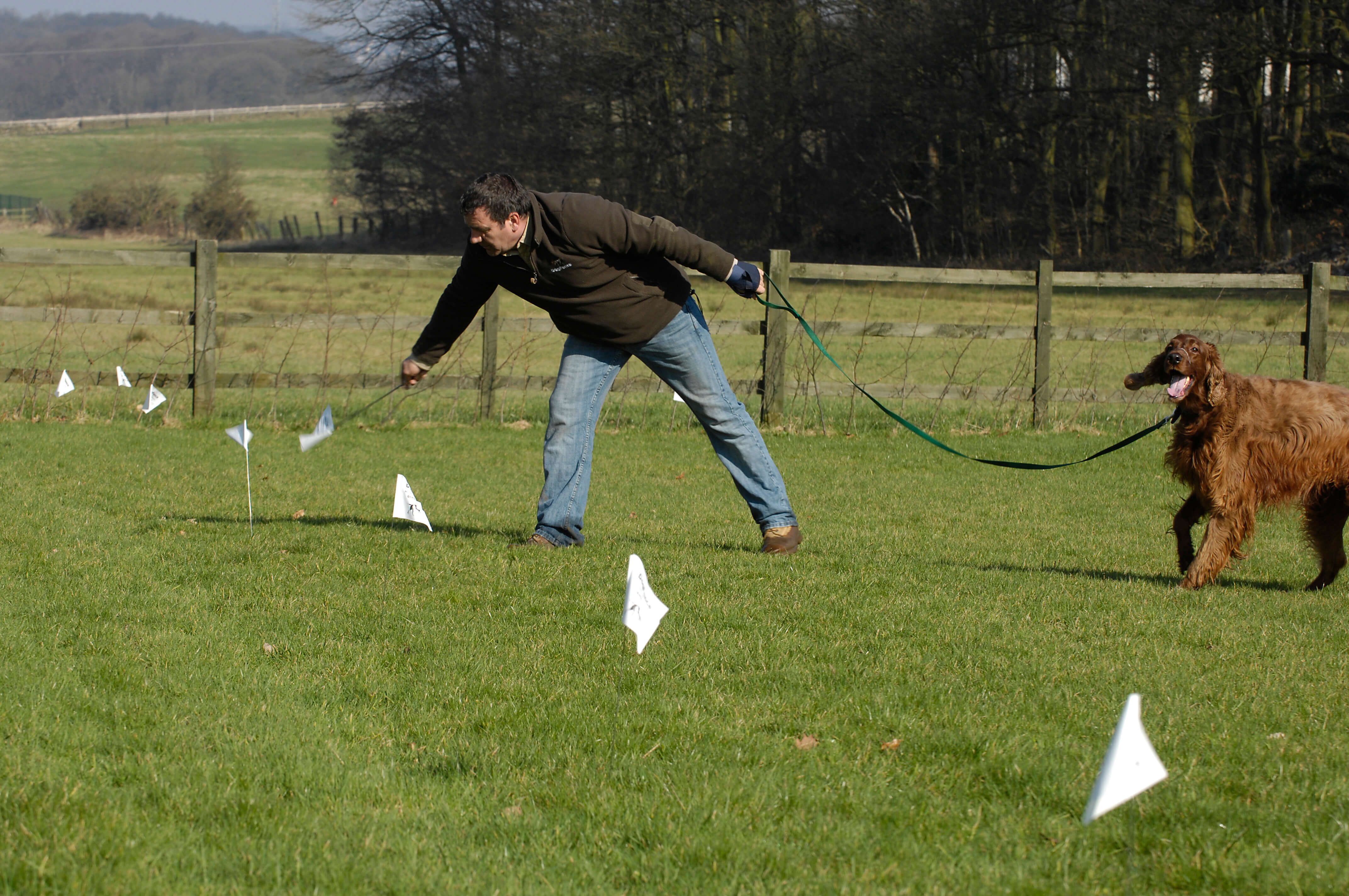
DogFence trainer using temporary training flags to teach a dog where a hidden fence boundary is located
Temporary training flags help the dog see and learn the position of the hidden boundary.

Can a Dog Jump a 6ft Fence?

Yes. Some dogs can jump or climb a six-foot fence.

Whether they can do it depends on their size, breed, athletic ability, age, fitness, the type of fence and – importantly – how motivated they are to reach whatever is on the other side.

A dog may also appear to have jumped six feet when they have actually used a horizontal rail, raised ground or an object beside the fence to gain extra height.

We’ve covered this particular problem in more detail here: Can a Dog Jump a 6ft Fence?

Not sure a physical fence alone will solve it? We can assess your garden and dog’s specific escape pattern for free.

Request a Free Quote →

Can I Use a Hidden Dog Fence With My Existing Fence or Hedge?

Yes. In many gardens the hidden boundary works alongside an existing physical fence, wall or hedge.

This can be particularly useful where the existing boundary is perfectly adequate for privacy or appearance but isn’t enough to contain a determined dog.

It can also avoid the need to replace an attractive hedge, post-and-rail fence or other boundary simply because your dog has discovered how to get over it.

What If My Dog Jumps AND Digs Under the Fence?

Some dogs don’t limit themselves to one escape technique. If jumping becomes difficult, they may start digging underneath instead.

A trained hidden boundary can help because it does not depend on whether the dog tries to go over or under the physical fence – the dog learns to remain away from the boundary itself.

For more specific advice, read our guide to stopping dogs digging and escaping under fencing.

What About Open Driveways and Gates?

This is another reason simply making the garden fence higher may not solve the whole escape problem.

A garden may have six-foot fencing around three sides but still have an open driveway, automatic gates or another entrance where a physical barrier is impractical.

A hidden boundary can cross these areas without requiring another visible gate or fence.

See how to stop a dog running out of an open driveway or electric gate.

How Is a DogFence Installed?

For a professional installation, we first assess the property and agree with you where the safe boundary should run.

The boundary wire is then installed around the chosen area and connected to the transmitter. Temporary training flags are positioned along the boundary so your dog has a clear visual reference during the initial training period.

Our installer introduces your dog to the system and shows you how to continue the short reinforcement sessions afterwards.

Because the wire follows the chosen boundary, the system can be designed around gardens that would be difficult to contain with a simple circular wireless or GPS boundary.

Find out more about our professionally installed DogFence systems.

What Boundary Layouts Can Be Used?

The layout depends on your property and where you want your dog to have access.

Common designs include:

  • Full perimeter – secures the complete garden or property boundary.
  • Single boundary or driveway protection – useful where there is one particular escape route.
  • Banana or pinch loops – useful for certain semi-detached properties or where access between front and rear gardens needs to be controlled.
  • Internal exclusion zones – keep dogs away from ponds, pools, flower beds, vegetable gardens or other areas.
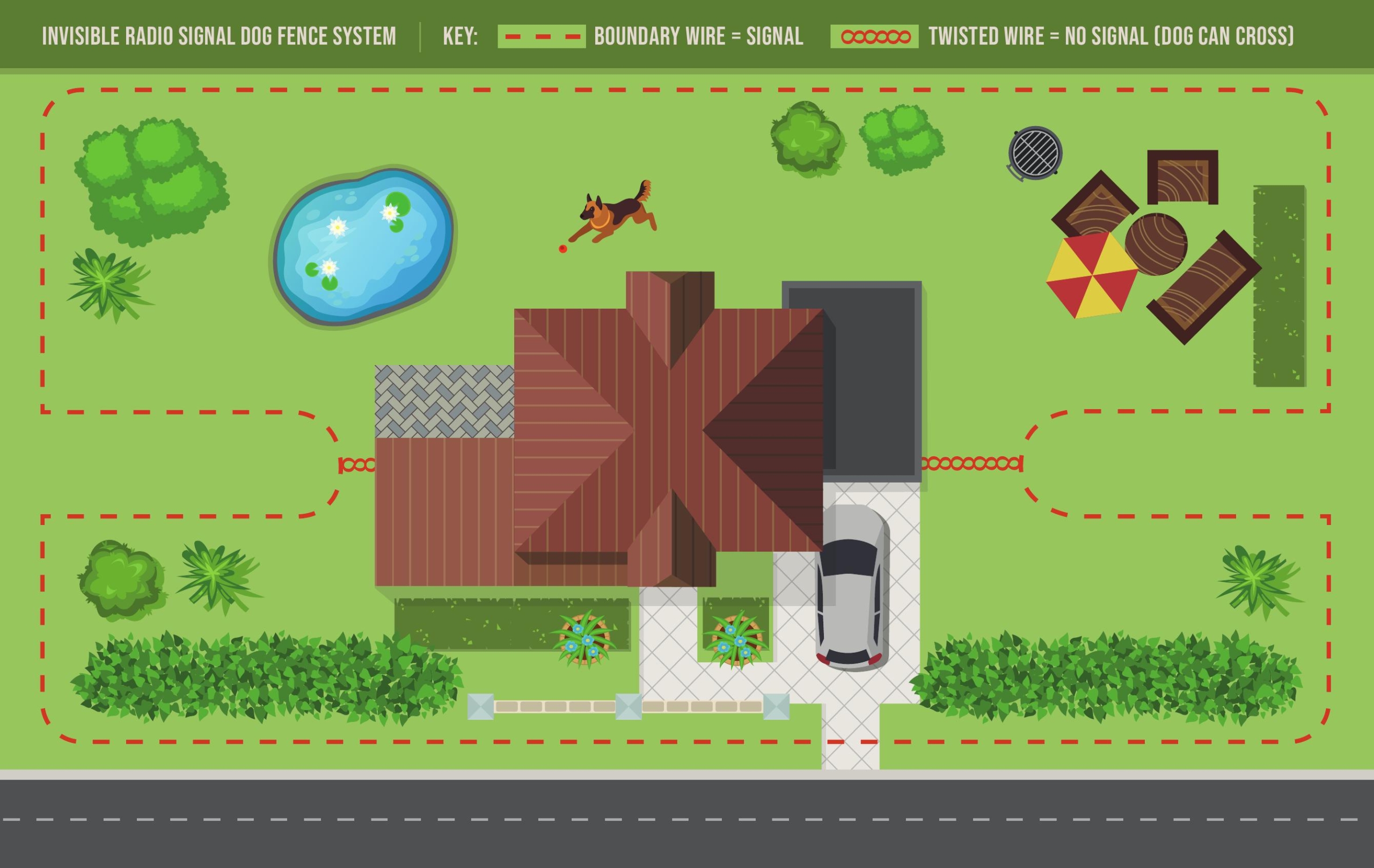
Diagram of a pinch-loop hidden dog fence layout used to control access between front and rear garden
A pinch-loop layout is one of several ways a hidden boundary can be designed around a property.

Frequently Asked Questions About Dogs Jumping Fences

How do I stop my dog jumping over the garden fence?

Check the entire boundary, remove objects your dog can use as launch points, reduce visual triggers, provide sufficient exercise and enrichment, and improve weak or low sections of fencing. If your dog repeatedly challenges the physical fence, a trained hidden boundary inside it is another option.

Why has my dog suddenly started jumping the fence?

Look for something that has changed. A new dog nearby, wildlife, livestock, people using a neighbouring path, changes in routine or increased boredom can all give a dog a new reason to investigate the other side of the fence.

Will making my fence higher stop my dog escaping?

It may do, particularly if fence height is the only problem. However, determined dogs may climb, dig, use nearby objects for extra height or find another weak point in the boundary.

Can training stop a dog jumping the fence?

Training can be extremely useful, particularly when combined with a secure boundary. If a dog has a strong drive to escape, training alone should not be relied upon as the only form of containment.

Can a hidden dog fence work with a wooden fence?

Yes. A hidden boundary can normally be installed inside an existing wooden fence so the dog learns to remain away from the physical boundary.

Can a hidden dog fence work with hedges?

Yes. Because the containment boundary is created by the buried wire rather than the hedge itself, it can be useful where hedges have gaps or are difficult to make completely dog-proof.

Can a hidden dog fence stop a dog digging as well as jumping?

It can help with both escape behaviours because the dog is trained to respect the boundary before reaching the physical fence, rather than the system relying on the height or base of that fence.

Can a hidden dog fence cross a driveway?

Yes. The boundary can be designed to cross a driveway, making it particularly useful for properties where installing a conventional physical gate would be difficult or undesirable.

More Advice for Escape-Artist Dogs

If your dog is determined to find a way out of the garden, these guides cover the other common escape routes and solutions:

Ready to Stop Your Dog Jumping the Fence?

If your dog keeps jumping, climbing, digging or finding another way out of the garden, we can help you create a boundary designed around your property and your dog.

DogFence has been installing professionally designed hidden pet containment systems across the UK since 2003.

Call us: 01628 476475
WhatsApp: 07917 034256

Request a Free Quote →

Dog relaxing safely in the garden

How to Dog Proof Your Garden Properly (UK Guide)

How to Dog Proof Your Garden Properly (UK Guide)

Dog proofing your garden means preventing escape routes, securing gates and boundaries, removing hazards and creating a safe space where your dog can enjoy freedom outdoors.

The right solution depends largely on your dog. Some dogs jump fences, some dig underneath them, some squeeze through tiny gaps in hedges and others wait for the moment a gate or driveway is left open.

At DogFence, we’ve been helping UK owners keep dogs safely contained in their gardens since 2003. In this guide, we’ll look at practical ways to dog proof a garden, including improving existing fencing, dealing with common escape routes and using a hidden dog fence when conventional boundaries aren’t enough.

If escaping is already a problem, start with our complete guide on how to stop your dog escaping from the garden.

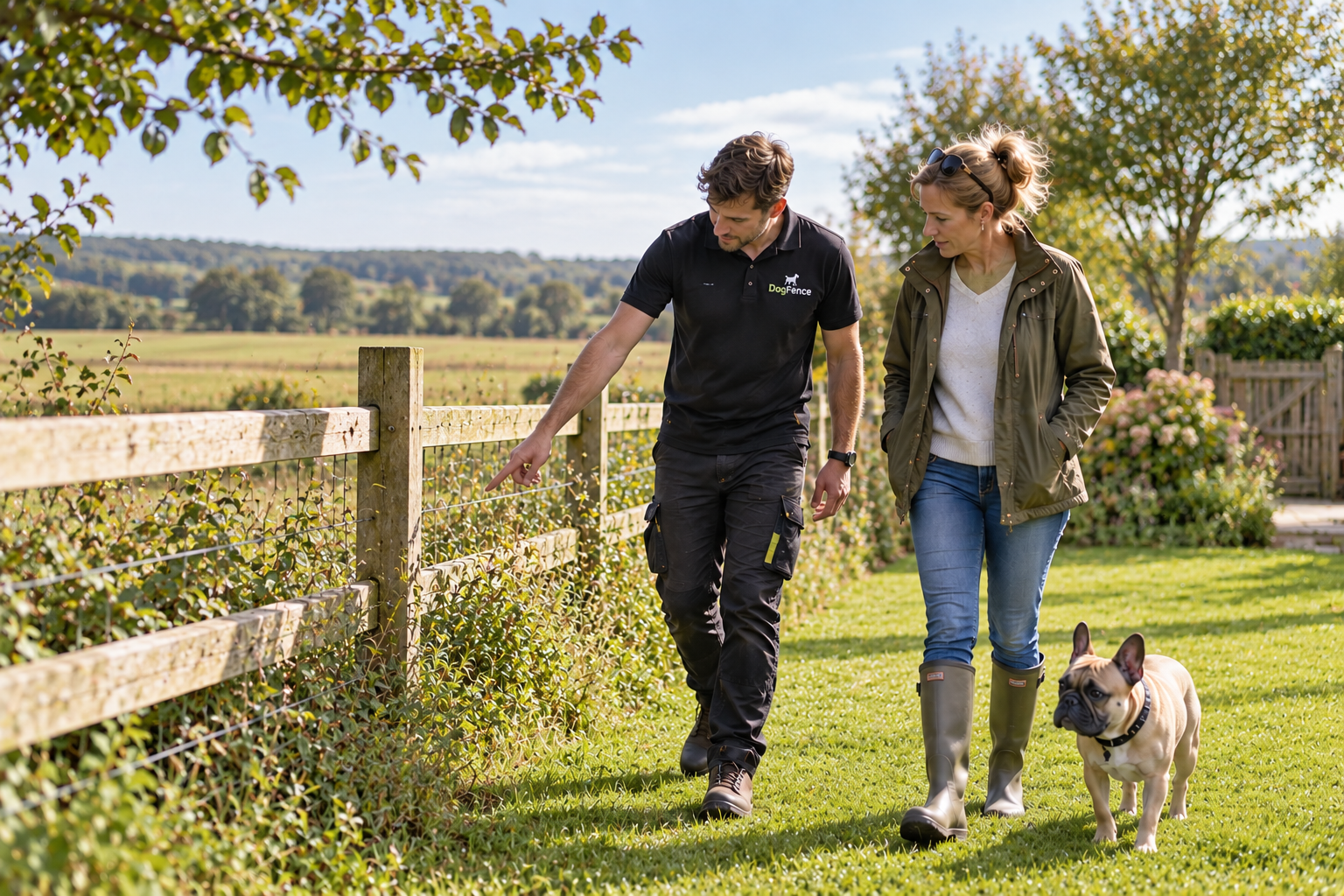
DogFence installer assessing a rural garden boundary fence with a customer and dog

1. Work Out How Your Dog Is Escaping

Before spending money changing your garden, work out exactly where the problem is.

Walk around the entire boundary and look at it from your dog’s point of view. Common escape routes include:

  • Gaps underneath fences and gates
  • Loose or damaged fence panels
  • Holes in hedges
  • Low walls and fences that can be jumped
  • Objects positioned near fences that can be used as a launch point
  • Open driveways
  • Gates that don’t close or latch securely
  • Areas where a determined dog has started digging

Different escape methods need different solutions. A taller fence may help a jumper, for example, but it won’t solve a problem at an open driveway.

2. Dog Proof Existing Fences, Walls and Hedges

Start with any physical boundaries you already have.

Repair damaged panels, close gaps, check gate latches and make sure there are no weak areas where your dog can squeeze through. Dense hedges can look secure to us while containing surprisingly large gaps at dog level.

If your dog jumps, avoid placing bins, garden furniture or other objects beside the fence that could give them extra height.

For dogs that regularly jump or climb, read our guide on how to stop a dog jumping the garden fence.

If digging is the problem, you may need to reinforce the bottom of the physical fence as well as address why your dog is digging. Our guide to stopping dogs digging under fences looks at this problem in more detail.

3. Consider a Hidden Dog Fence for Persistent Escape Problems

Sometimes making a physical fence higher or stronger still doesn’t solve the problem. This is particularly true with determined escape artists, large gardens, hedged boundaries and properties with open entrances.

A DogFence hidden dog fence creates a boundary around the area in which you want your dog to remain.

A professionally installed system uses a boundary wire installed discreetly around the property. The wire communicates with a small receiver collar worn by your dog. As your dog approaches the boundary, the collar gives an audible warning. Your dog is then professionally trained to recognise and respect that boundary.

The important part is that the system isn’t simply installed and your dog left to work it out. Training is a fundamental part of how DogFence works.

You can read a full explanation of the system on our How DogFence Works page.

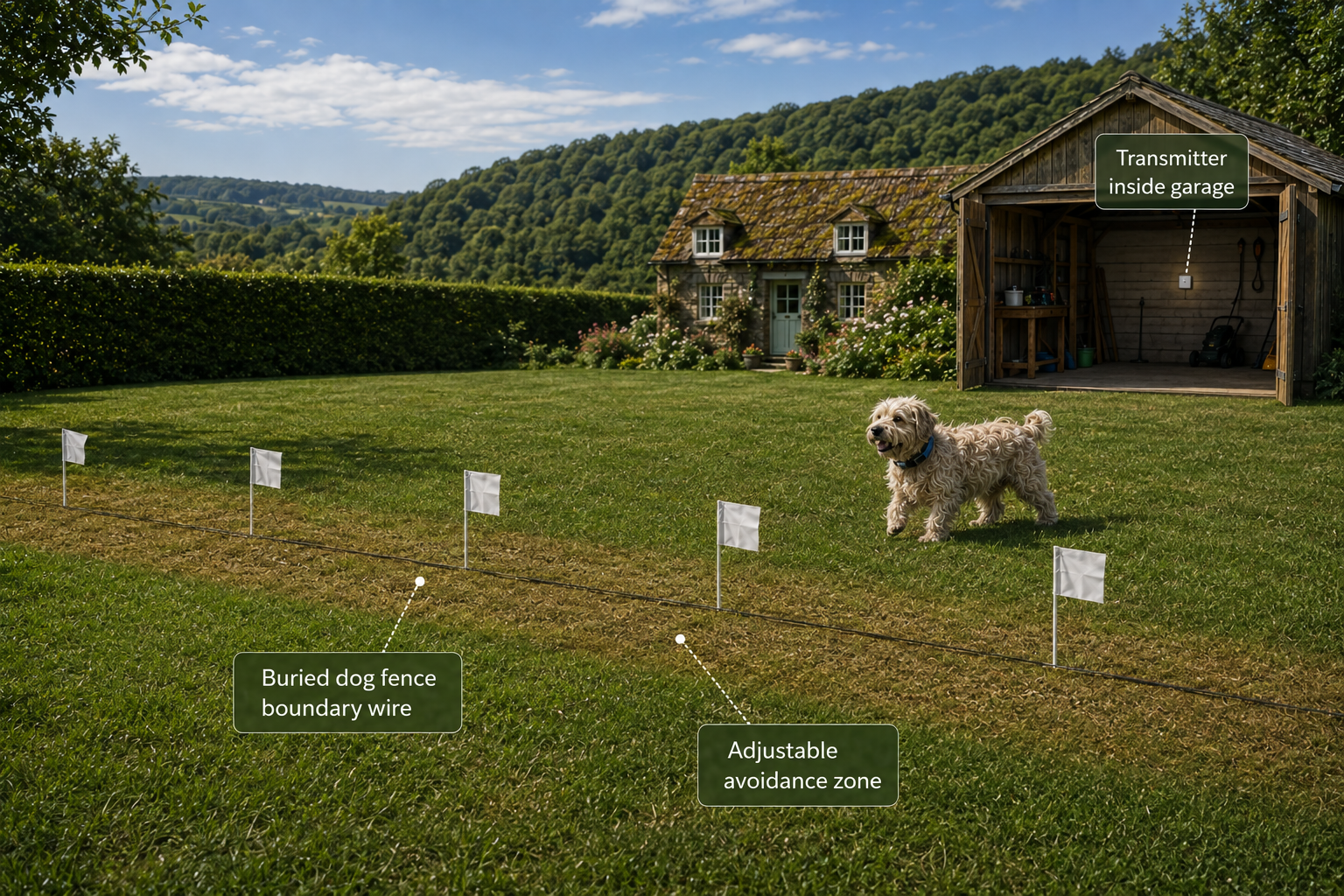
The DogFence system uses a buried boundary wire, training flags and a receiver collar to create a safe, clearly defined area for your dog.

Diagram showing DogFence buried boundary wire, training flags, transmitter and dog wearing receiver collar

The DogFence system uses a buried boundary wire, training flags and a receiver collar to create a safe, clearly defined area for your dog.

Why use a hidden fence if you already have a physical fence?

Because the two can work extremely well together.

Your existing fence, wall or hedge remains your visible boundary, while the hidden fence creates an additional trained boundary before your dog reaches it.

This can be particularly useful for dogs that:

  • Jump over conventional fencing
  • Dig underneath fencing
  • Push through hedges
  • Squeeze through gaps
  • Rush gates or open entrances
  • Have repeatedly found ways around previous attempts at dog proofing

For owners who don’t already have physical fencing, a hidden system can also provide containment without surrounding the property with new panels, wire mesh or high fencing.

Learn more about our professionally installed dog fence systems.

4. Dog Proof Open Driveways and Gates

Open driveways are one of the more difficult parts of a garden to dog proof with conventional fencing.

You may not want a physical gate, and in some locations a gate may be inconvenient or unsuitable. Even where gates are installed, there is always the possibility of somebody leaving one open.

A hidden dog fence boundary can cross a driveway, allowing the dog’s trained boundary to continue across the entrance without blocking access for people or vehicles.

This can also be incorporated into a wider boundary around the rest of the garden.

If you have an open driveway or electric gates, talk to us about the layout before installation so that the boundary can be designed appropriately for the property. See how to stop a dog running out of an open driveway or electric gate for more detail.

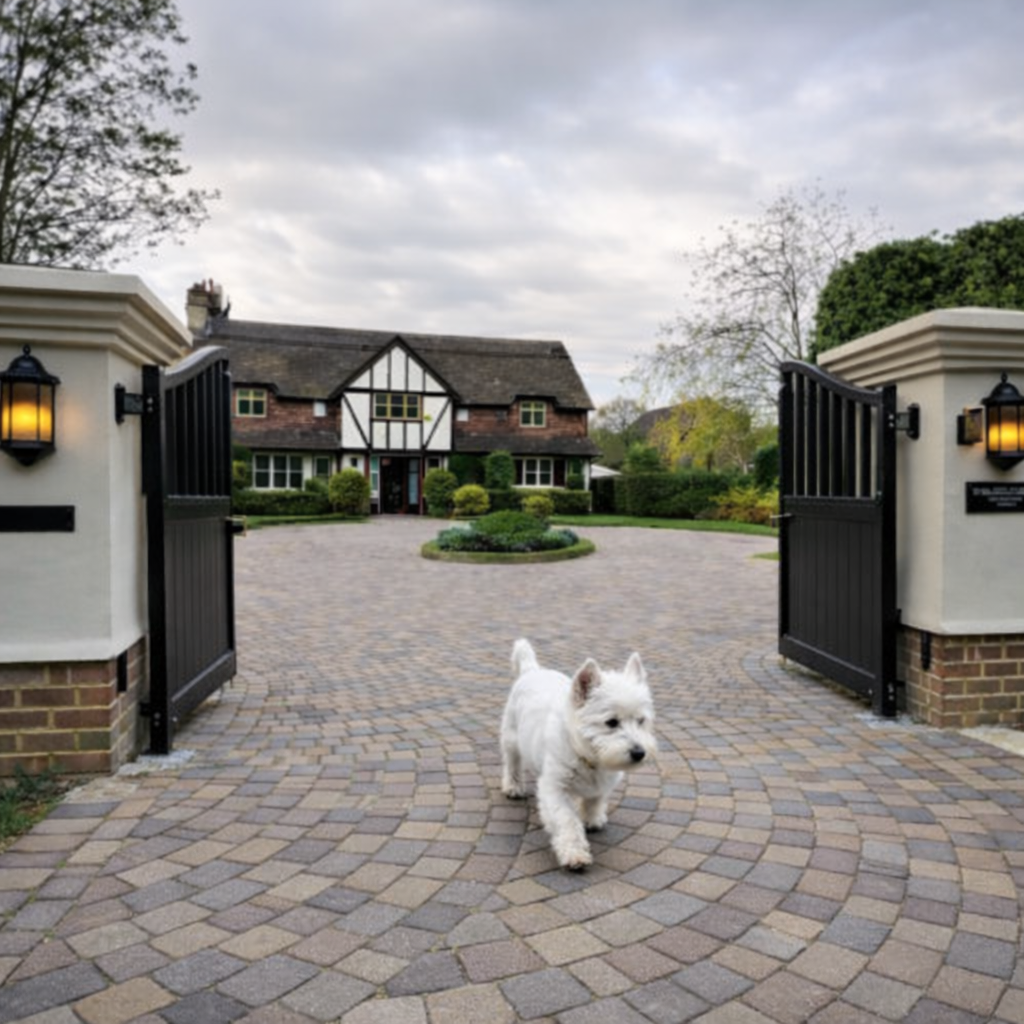
Dog walking out through open electric gates onto a driveway

A curious Westie walking through open electric gates — a common situation where dogs wander out of driveways when gates open for visitors.

Not sure which approach fits your garden? We’ll assess your property and dog’s specific escape pattern for free.

Request a Free Quote →

5. Create No-Go Zones Within Your Garden

Dog proofing isn’t only about keeping your dog inside the garden. Sometimes you also need to keep them out of particular parts of it.

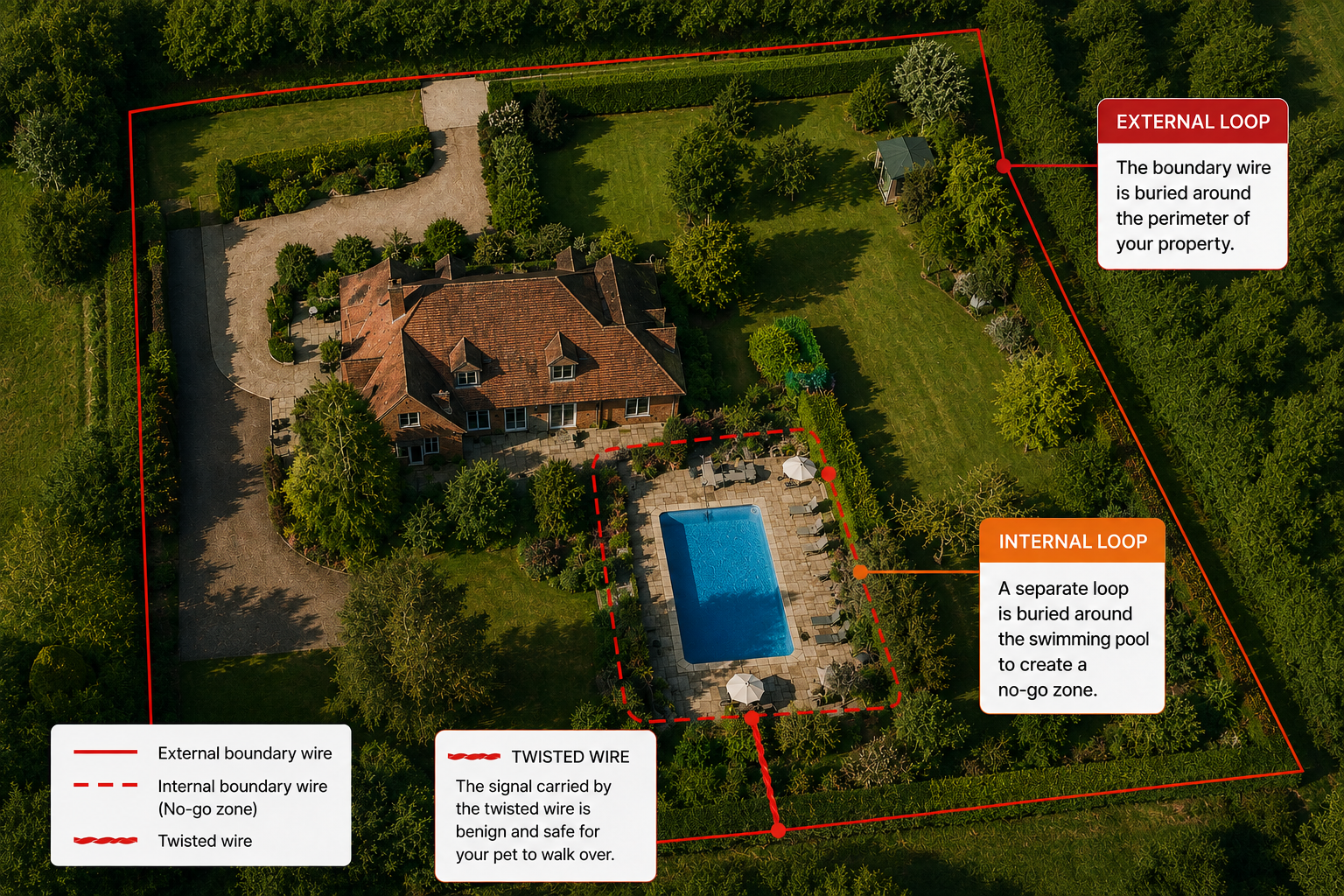
Depending on the property and layout, internal DogFence boundaries can be used to create exclusion or “no-go” areas around places such as:

  • Flower beds
  • Vegetable gardens
  • Ponds
  • Swimming pools
  • Compost areas
  • Children’s play areas
  • Other areas that aren’t suitable for your dog

This allows your dog to enjoy a larger part of the garden without necessarily having access to everything in it.

Aerial diagram of DogFence external boundary loop and internal no-go zone around a swimming pool

6. Remove Dangerous Plants and Garden Hazards

A secure boundary is only one part of creating a dog-safe garden.

Check the plants and products your dog can access. Some common garden plants can be harmful to dogs, including:

  • Foxglove
  • Yew
  • Azaleas
  • Rhododendrons
  • Daffodil bulbs

Garden chemicals, fertilisers, slug products, compost and other substances can also present risks.

We’ve put together a separate guide to toxic plants for dogs in the UK if you’d like to check your garden in more detail.

7. Give Your Dog Enough Exercise and Enrichment

Not every escape attempt is caused by inadequate fencing.

Dogs may dig, climb or look for a way out because they are bored, frustrated or interested in something beyond the garden.

Regular walks, play, training, scent games and other forms of enrichment can make the garden a much more interesting place to be.

Provide shade and fresh water and, if your dog enjoys digging, you could consider giving them an appropriate area where digging is allowed.

Behaviour and physical containment work best together. A secure garden doesn’t replace exercise and stimulation, but exercise alone won’t necessarily stop a determined escape artist.

8. Dog Proof Large and Rural Gardens

Large gardens and rural properties can present very different challenges from a small enclosed garden.

Boundaries may include hedges, woodland, fields, streams, post-and-rail fencing, long driveways and areas adjoining livestock.

Installing conventional dog-proof fencing around the entire perimeter can therefore be difficult, expensive or undesirable.

A wired hidden fence can follow an irregular boundary and cover much larger areas without changing the appearance of the landscape.

For countryside properties, see our dedicated Dog Proof Fencing for Rural Properties (UK Guide).

Secure rural garden boundary fence with livestock in adjoining field

Secure rural containment helps prevent livestock worrying incidents and protects dogs from legal and physical risk.

What Is the Best Way to Dog Proof a Garden?

There isn’t one answer that suits every dog or every property.

For a dog that doesn’t try particularly hard to escape, repairing gaps, improving gates and making an existing fence secure may be all that’s required.

For a dog that jumps or digs, you may need to modify the physical boundary or introduce an additional containment boundary.

For open driveways, hedged gardens, large properties or persistent escape artists, a professionally installed hidden dog fence can provide a practical alternative or addition to conventional fencing.

Often the most effective solution is a combination: good physical garden security, appropriate exercise and enrichment, plus a professionally designed containment system where additional security is needed.

Frequently Asked Questions About Dog Proofing a Garden

How can I stop my dog escaping from my garden?

First identify how your dog is getting out. Check for gaps, digging points, low fencing, weak gates and open entrances. The right solution depends on whether your dog is jumping, digging, squeezing through gaps or escaping through a driveway. For persistent escape problems, a hidden dog fence can provide an additional trained boundary.

How do I dog proof a garden for a dog that jumps fences?

Remove objects beside the fence that your dog can climb on, check whether the existing boundary is sufficiently secure and consider whether increasing the physical barrier is practical. A hidden fence can also establish a boundary before the dog reaches the physical fence.

How do I stop my dog digging underneath the fence?

Reinforce vulnerable areas at ground level and consider what is motivating the digging. If the digging is specifically an escape behaviour, a hidden boundary positioned inside the physical fence can help teach the dog not to approach the escape point.

How can I dog proof an open driveway?

A physical gate is one option, but a hidden dog fence can create a trained boundary across an open driveway without preventing vehicle access. The boundary wire is installed across the driveway as part of the wider garden layout.

Can a hidden dog fence work with my existing fence or hedge?

Yes. Many DogFence installations are used alongside existing fences, walls and hedges. The physical boundary remains in place while the hidden system creates an additional trained boundary for the dog.

Can I keep my dog away from a pond or flower beds?

Yes. Depending on the garden layout, a hidden fence can be designed with internal exclusion zones to prevent access to particular areas while allowing your dog freedom elsewhere in the garden.

Will a hidden dog fence spoil the appearance of my garden?

No visible perimeter fence is created by the DogFence system. The boundary wire is installed discreetly, making it particularly useful where owners want to retain open views, hedges or the existing appearance of a garden.

Ready to Make Your Garden Secure?

A genuinely dog-proof garden addresses the individual dog as well as the boundary — but you don’t need to work it out alone. Tell us about your dog, your garden and how they’re getting out, and our team can help you decide whether a hidden fence is appropriate and how the boundary could work in your particular space.

DogFence UK — giving dogs freedom and owners peace of mind since 2003.

Get Your Free DogFence Quote →

Call: 01628 476475  |  WhatsApp: 07917 034256

More Dog-Proofing Advice

Every dog and garden is different. If you’re dealing with a particular escape route or problem area, these DogFence guides will help:

For a complete explanation of the system itself, visit How DogFence Works.

Diagrams showing boundary wire layouts are illustrative and AI-generated to demonstrate how the system typically works. Other images are stock or example photography and may not depict actual DogFence customers or installations.