How Do I Stop My Dog Running Away?
How do I stop my dog running away? Start by working out why your dog is escaping, secure the weak points around your garden and combine a reliable boundary with appropriate training, exercise and mental stimulation. Dogs may run away because of prey drive, boredom, fear, mating instincts or simply because they have discovered an easy escape route.
For some dogs, repairing fences and improving recall is enough. For determined escape artists that jump, dig, squeeze through gaps or bolt through gates and driveways, a more consistent containment solution may be needed.
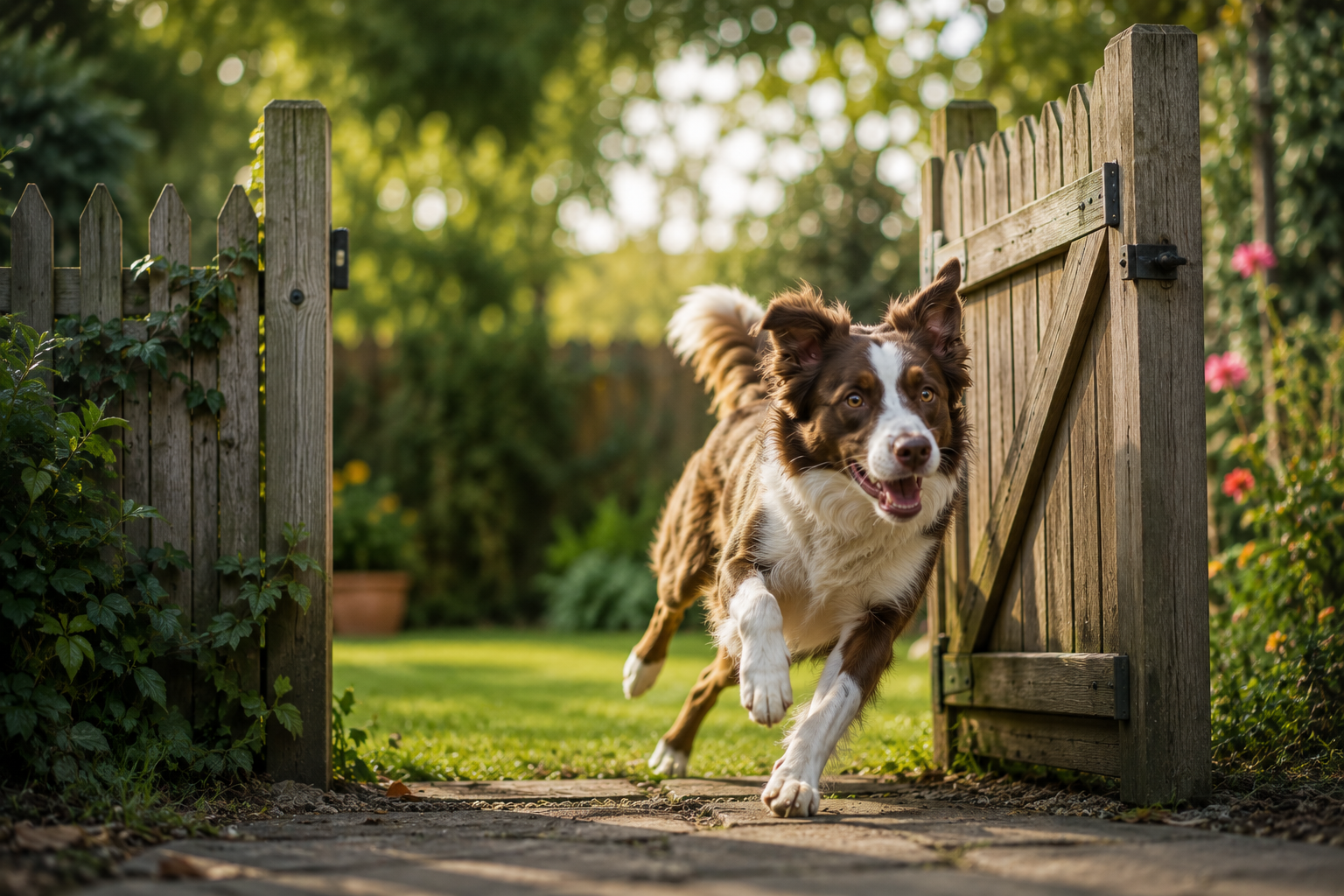
Quick Answer: How to Stop a Dog Escaping
If your dog keeps escaping, work through these steps:
- Identify what is triggering the escape behaviour.
- Check fences, gates, hedges and boundaries for weak points.
- Prevent digging underneath or climbing over physical fencing.
- Increase exercise, enrichment and mental stimulation.
- Work on recall and boundary training.
- Remove easy escape opportunities such as open gates and gaps.
- Consider a dedicated dog containment system if conventional fencing is not working.
The best solution usually combines management, training and a secure boundary. Fixing only one part of the problem can leave a determined dog free to find another escape route.
Why Does My Dog Keep Running Away?
Before you can stop repeated escapes, it helps to understand what is motivating your dog. Different causes need slightly different solutions.
Prey Drive, Wildlife and Interesting Scents
For many dogs, the temptation on the other side of the boundary is simply more exciting than staying in the garden. Rabbits, deer, foxes, livestock, neighbouring dogs and interesting scent trails can trigger an instinctive chase response.
Terriers, spaniels, hounds and many working breeds can be particularly persistent once something catches their attention. A dog may ignore excellent recall when their prey drive takes over.
If scents and wildlife are a major trigger, you may also find our guide to how to dog proof your garden useful.
Boredom and Lack of Stimulation
A dog left with too little exercise or mental stimulation may start creating their own entertainment. Digging, climbing, testing fence panels and searching for gaps can all become rewarding activities.
Young dogs and highly intelligent breeds are especially good at discovering weaknesses around a property. More exercise, scent work, structured play and enrichment can substantially reduce escape attempts caused by boredom.
Fear, Fireworks and Sudden Noise
Not every escape is driven by curiosity. Some dogs run because they are frightened.
Fireworks, thunderstorms, gunshots, construction noise or unfamiliar activity can trigger a flight response. A dog that normally respects the garden boundary may suddenly try to climb, dig or force their way out when panicked.
If your dog only escapes during particular events or seasons, addressing the underlying fear is just as important as securing the boundary.
Roaming and Mating Instincts
Hormonal behaviour can make some dogs extremely determined to roam. An unneutered dog may travel surprising distances if they detect another dog in season.
If this is a recurring problem, read our guide to stopping a dog escaping when in season.
My Dog Keeps Escaping the Garden – What Should I Check First?
Walk around the entire boundary and look at it from your dog’s point of view.
- Are there gaps underneath fencing?
- Are any panels loose or damaged?
- Can your dog squeeze between a gate and fence post?
- Are bins, sheds or garden furniture being used as climbing aids?
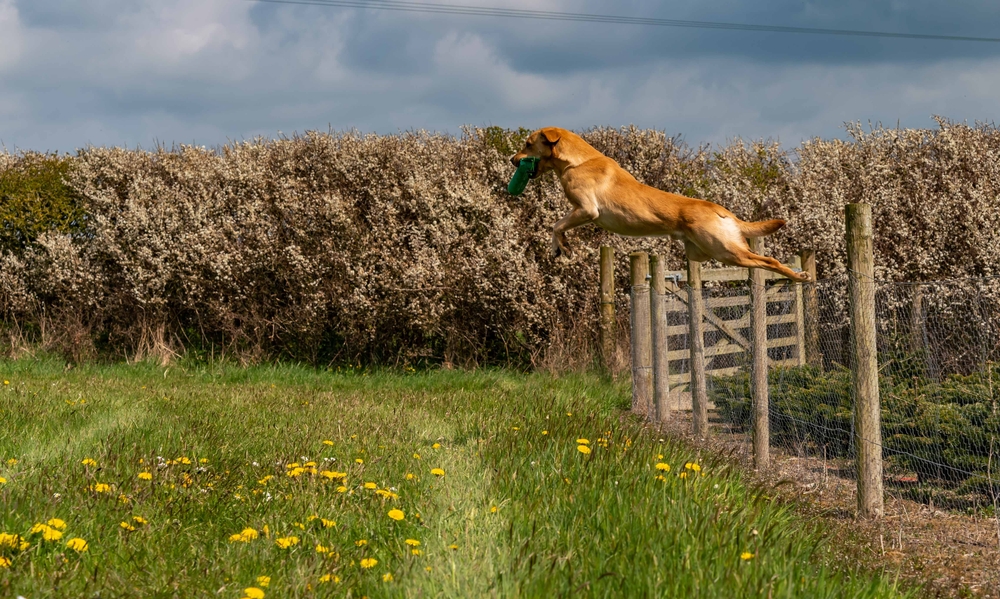
- Can your dog jump the existing fence?
- Does an electric or automatic gate create an open escape route?
- Can your dog push through hedging?
A determined dog often needs only one weak point. Fixing obvious gaps is therefore an important first step.
If digging is the main problem, see our guide to fencing for dogs that dig or escape.
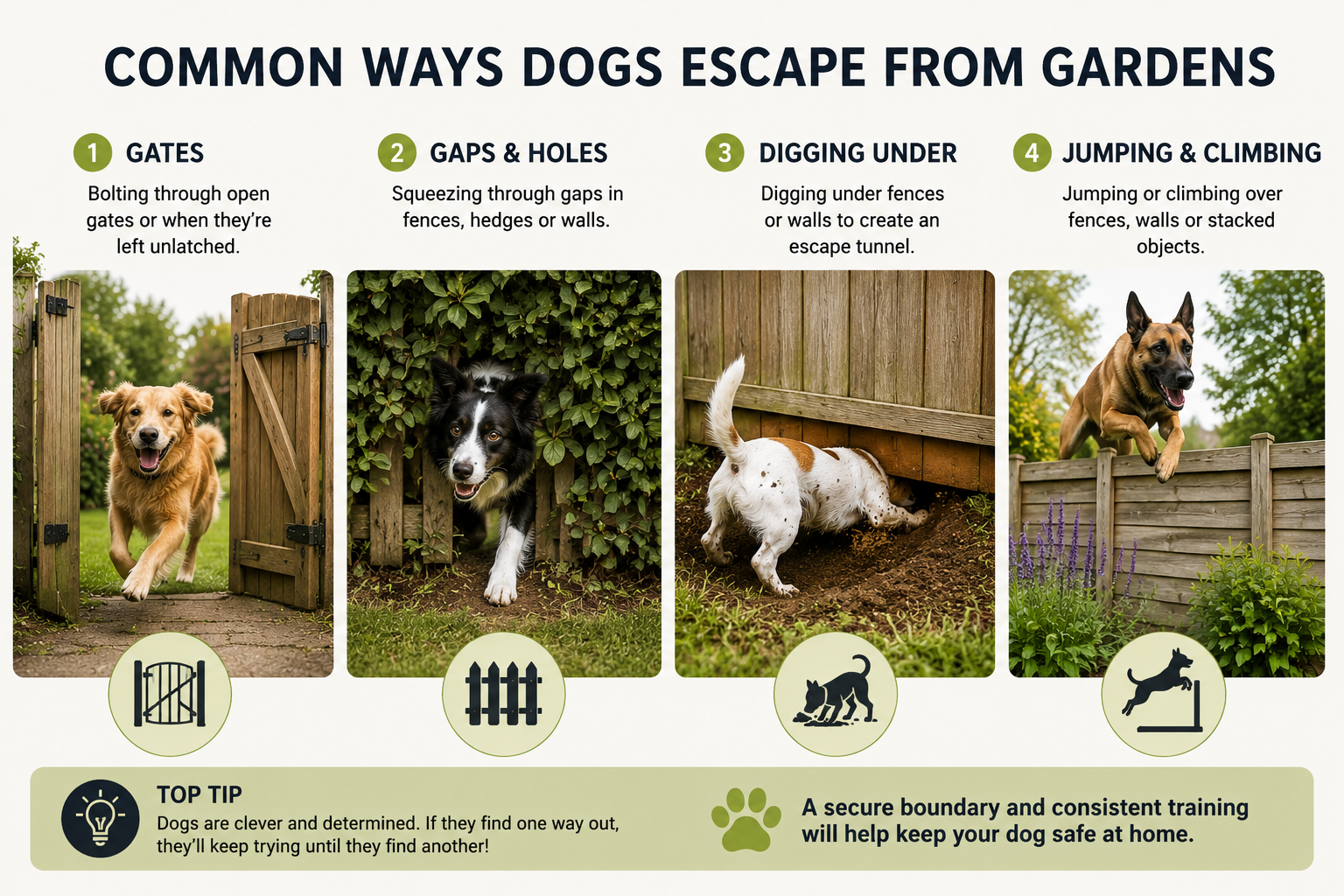
Stop Dog Escaping Garden Boundaries: Practical Solutions
1. Increase Exercise and Mental Stimulation
A physically and mentally satisfied dog is generally less motivated to go looking for entertainment elsewhere.
Daily walks, scent games, training sessions, puzzle feeders and interactive play can all help reduce escape behaviour caused by boredom or excess energy.
2. Secure Fences and Gates
Repair damaged fencing, close gaps and make sure gates latch securely. Dogs that dig may need the base of a physical fence reinforced, while dogs that jump may require a higher or differently designed boundary.
You can also read our guide on how high a dog fence should be.
3. Train a Reliable Recall
Recall training remains important even when you have a secure garden.
- Begin in a low-distraction environment.
- Reward your dog generously for returning.
- Never punish a delayed return.
- Increase distractions gradually.
Recall provides another layer of safety, but for a persistent escape artist it should not be relied upon as the only form of containment.
4. Identify the Trigger
Keep a note of when escapes happen. Is it when wildlife appears? When your dog is alone? During fireworks? When a gate opens?
Finding the pattern often makes the solution much clearer.
Dog Running Away Through Gates and Driveways
Open driveways and entrances are particularly difficult because they cannot always be secured with a permanent physical barrier.
Dogs may learn that the gate opening, a delivery arriving or somebody driving away creates a brief opportunity to bolt. Even a dog that normally stays close can be tempted by another dog, wildlife or activity across the road.
A containment boundary can be designed across driveways, gates and other access points without preventing people or vehicles from entering and leaving the property.
Dog Keeps Running Away Even After Training?
If you have improved recall, increased exercise and secured obvious weaknesses but your dog still escapes, it may be time to look at the boundary itself.
Some dogs become extremely skilled at defeating conventional fencing. They climb, jump, dig, squeeze through gaps or simply wait until somebody opens a gate.
In these cases, the problem may not be a lack of training. The physical boundary may simply be giving the dog too many opportunities.
Escape Proof Fence for Dogs: What Are the Options?
No physical fence is completely escape proof for every dog. Tall fencing may stop a jumper but still allow a determined digger underneath. Solid fencing may prevent squeezing through gaps but can be unsuitable for open rural properties, long boundaries, driveways or attractive gardens where owners do not want high fencing.
The right solution depends on:
- your dog’s size, breed and temperament;
- how your dog currently escapes;
- the size and layout of your property;
- whether you have gates or open driveways;
- whether conventional fencing is practical or permitted.
Dog Fence for Dogs That Escape
If traditional fencing, gates and training have not solved the problem, a dedicated dog fence for dogs that escape can create a consistent boundary around the property.
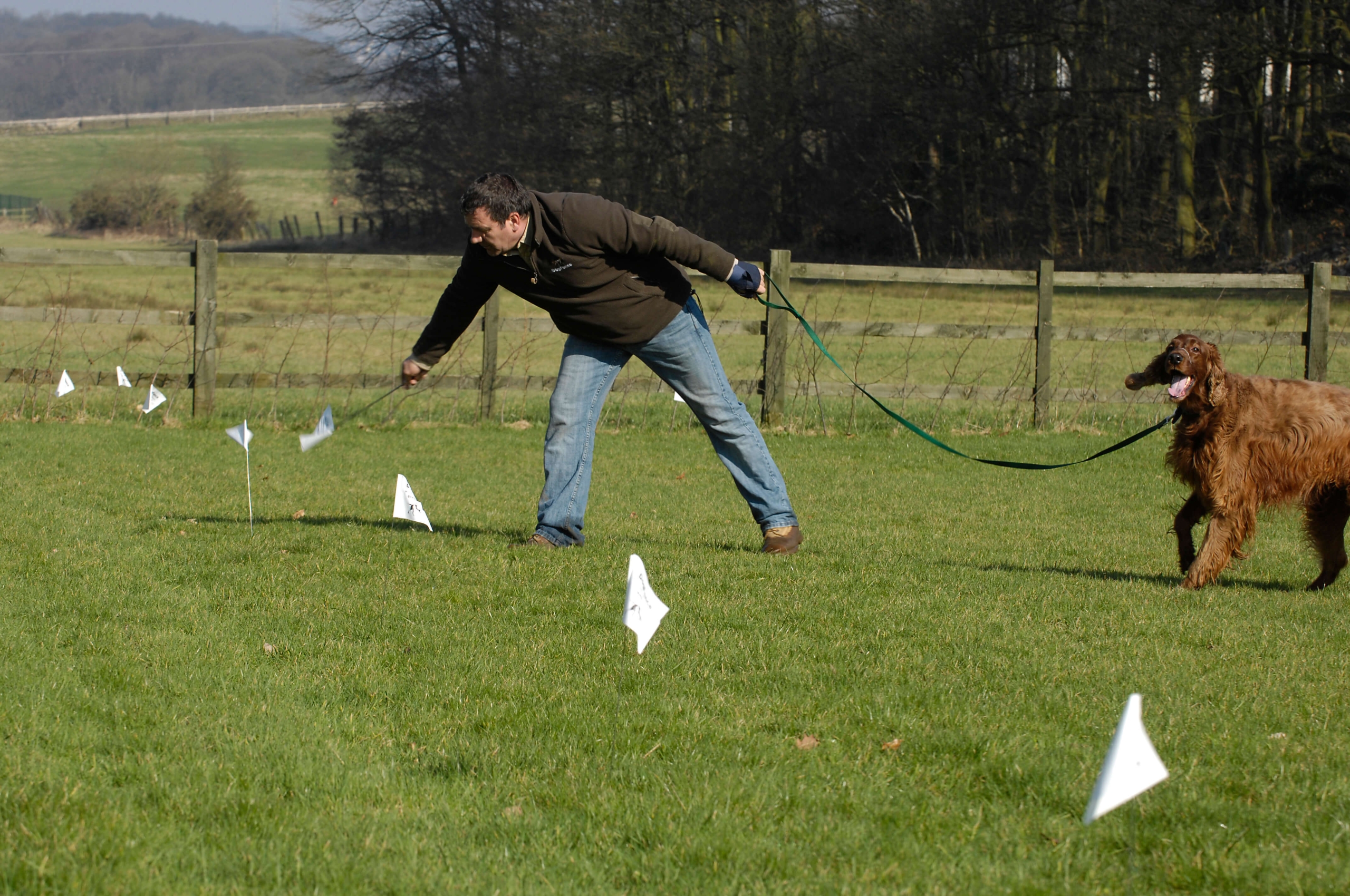
DogFence uses a discreet boundary wire together with a lightweight receiver collar and structured training. Your dog learns where the safe boundary lies while still being able to enjoy the garden freely.
The boundary can be designed around:
- gardens and lawns;
- hedges and woodland;
- open driveways;
- electric gates;
- large or rural properties;
- areas where conventional fencing is difficult or undesirable.
DogFence systems can also accommodate multiple pets, including dogs and cats, with individual receiver settings for each animal.
A Real Escape Artist: Max’s Story
Max, a lively Labrador from Hampshire, developed a habit of escaping from his garden. His owners repeatedly blocked holes and reinforced panels, but each time Max discovered another route out.
His motivation was food. Max had discovered the local pub garden and the generous supply of snacks available there.
For a while his owners knew where he was going, but one day Max ran across a busy road during one of his excursions and narrowly avoided being hit by a car. He was eventually picked up and taken to a local vet.
That close call changed everything.
His owners installed a professionally designed DogFence and Max was trained to recognise his new boundary. His unsupervised trips to the pub stopped — and as an unexpected bonus, without the extra chips and treats, Max lost 3kg too.
Max is a good example of why continually repairing individual escape points does not always solve the underlying problem. Some dogs simply move on and find the next weak spot.
How to Stop a Dog Escaping Without Building Higher Fences
If you do not want to surround your property with taller fencing, or if fencing is impractical because of the layout, a hidden dog fence provides another option.
The aim is not simply to create another physical obstacle. Instead, the dog is taught to recognise a consistent boundary around the area in which they are free to roam.
This can be particularly useful on larger properties, rural homes, landscaped gardens and properties with open entrances.
Find out more about how DogFence can help stop your dog escaping.
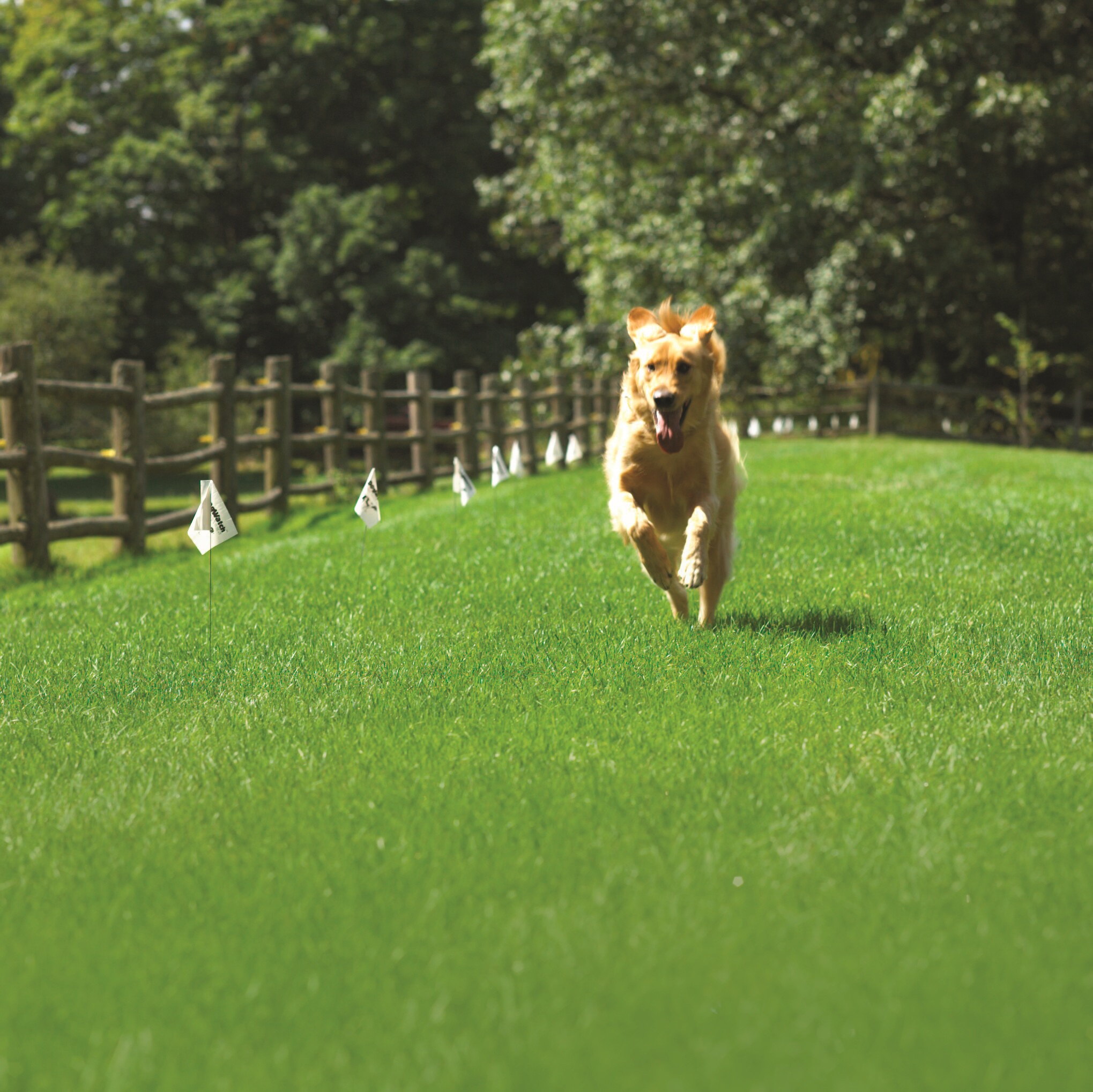
After gentle, consistent training, dogs gain confidence and freedom — safely contained within their DogFence boundary.
Frequently Asked Questions About Dogs Running Away
Why does my dog keep escaping from the garden?
Common causes include prey drive, boredom, fear, mating instincts, lack of exercise and discovering an easy escape route. Identifying the trigger will help you decide whether the priority is training, environmental management, physical repairs or improved containment.
How can I stop my dog digging under the fence?
Start by identifying why your dog is digging and reinforce obvious weak points. Determined diggers may simply move to another part of the boundary, so a containment system can be useful where repeatedly reinforcing fencing has failed.
How can I stop my dog jumping the fence?
Remove nearby objects that can be used as launch points and assess whether the fence is high enough for your dog’s size and athletic ability. Dogs capable of repeatedly clearing conventional fencing may benefit from an alternative boundary system.
Will a DogFence stop my dog escaping?
A correctly installed system combined with appropriate training is designed to teach your dog to remain within the selected boundary. The system can work across gates, driveways, hedges and areas where traditional fencing may have weak points.
Can a DogFence be used for more than one dog?
Yes. One boundary can be used for multiple pets. Each dog has their own receiver collar, which can be individually adjusted. DogFence can also be used for cats of different sizes, breeds and ages.
Can I install a DogFence myself?
Yes. DIY DogFence systems are available, or you can choose professional installation and training by our experienced team.
Can I take my DogFence with me if I move?
Yes. The main DogFence equipment can be taken to your new home. A new boundary wire can then be installed to suit the new property and your dog can be retrained to recognise the new boundary.
Related Guides for Dogs That Escape
If your dog has a particular escape technique, these guides may help:
Still Asking “How Do I Stop My Dog Running Away?”
If your dog keeps escaping, you do not have to choose between keeping them shut indoors and constantly worrying about where they have gone.
DogFence has been helping owners keep dogs safely at home since 2003. Whether your dog jumps fences, digs underneath them, squeezes through gaps or bolts through an open driveway, we can help you create a boundary designed around your dog and your property.
Give your dog the freedom to enjoy the garden — without the constant worry of them escaping.
How Do I Stop My Dog Running Away?
If you’re asking “how do I stop my dog running away?”, talk to our experienced team. We’ll help you understand how your dog is escaping and recommend the best way to secure your garden — tailored to your dog and your property.
Get expert advice on securing your garden and preventing escape
Call us on
01628 476475
|
Message us on WhatsApp
|
Request a Free Quote Online