Do Electronic Dog Fences Work for Large or Stubborn Dogs
Invisible Dog Fence for Stubborn Dogs: Can It Really Work?
Can an invisible dog fence for stubborn dogs really contain a determined escape artist? Yes, many strong-willed dogs can be successfully trained to an invisible dog fence, including dogs that jump fences, dig underneath them, squeeze through hedges or bolt through open gates. However, success depends on the right equipment, a carefully designed boundary and, most importantly, consistent professional training.
At DogFence UK, we’ve been installing hidden dog containment systems since 2003, helping owners find solutions for dogs that seem determined to escape. We’ve worked with thousands of pets, including many whose owners believed nothing would keep them safely in their gardens.
But there’s something important to understand: a stubborn dog doesn’t automatically need a stronger correction. A fast, consistent boundary signal, a correctly fitted receiver collar and an effective training programme are far more important than simply increasing the collar setting.
Quick Answer: Will an Invisible Dog Fence Work for a Stubborn Dog?
An invisible dog fence for stubborn dogs can be effective when:
- The boundary system provides a consistent warning signal.
- The receiver collar is correctly fitted and individually programmed.
- The warning zone is suitable for the dog’s speed and behaviour.
- The dog receives structured training using visual boundary flags and the audible warning.
- Training includes realistic distractions such as wildlife, visitors and passing dogs.
- The dog’s temperament and the property’s layout have been assessed for suitability.
Not every dog or property is suitable, and an invisible dog fence cannot guarantee containment in every situation. This is why professional assessment matters.
What Makes a Dog Stubborn Around Boundaries?
When owners describe their dog as stubborn, they’re often talking about a dog with a particularly strong motivation to escape.
Some dogs are natural explorers. Others have powerful hunting instincts, strong prey drive or a well-established habit of finding their way out of the garden.
For example:
- Terriers may dig beneath fences or squeeze through small gaps.
- Scent hounds can become completely absorbed in following an interesting smell.
- Gundogs may be distracted by birds, wildlife and movement.
- Sighthounds can have a powerful instinct to chase.
- Independent working breeds may be particularly determined when something attracts their attention.
However, breed alone doesn’t determine whether a dog will escape or whether a containment system will be suitable.
The Royal Kennel Club’s breed information can help owners understand common breed characteristics, but every dog must be considered individually.
Understanding why your dog escapes is an important first step towards finding an effective solution.
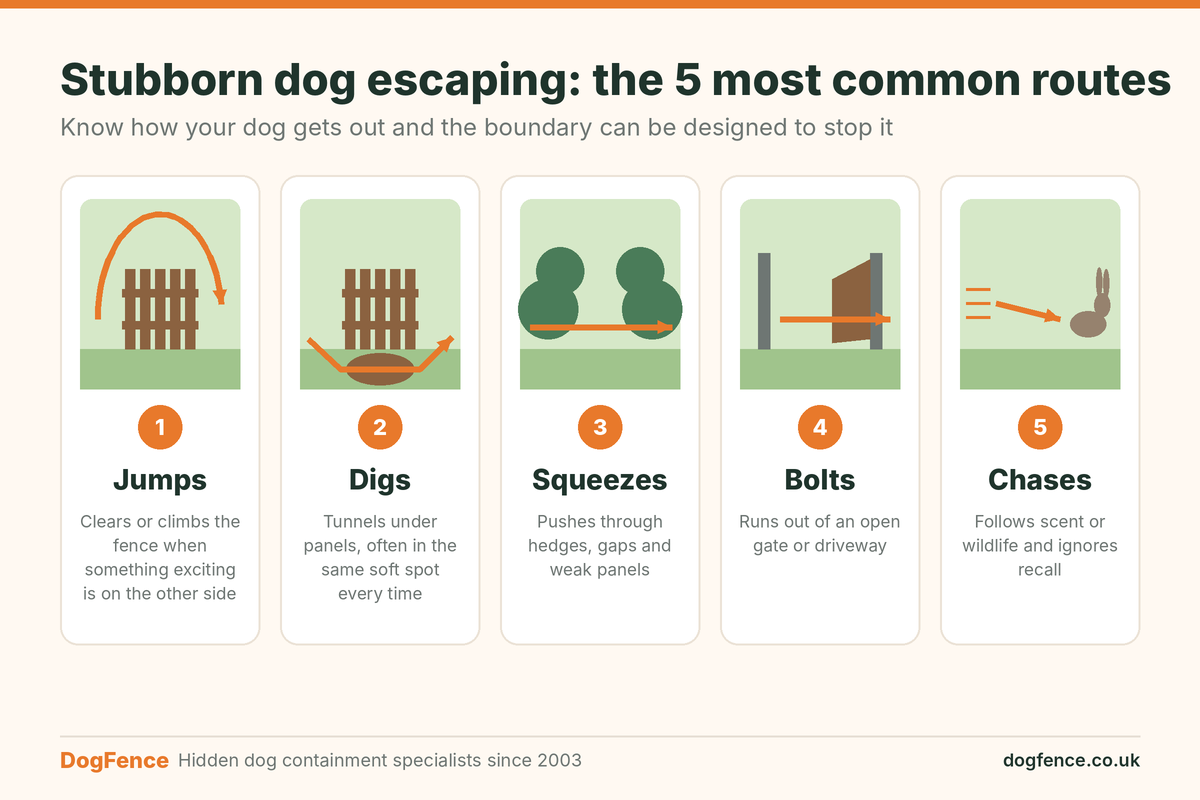
Five Signs You May Need a Dog Fence for Persistent Escapers
1. Your Dog Jumps or Climbs Over Fencing
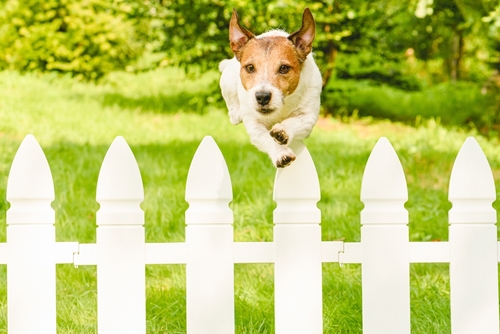
Some dogs become remarkably skilled at escaping over conventional garden fencing. Increasing the fence height may help, but determined dogs can sometimes find new launch points or climbing opportunities.
An invisible dog fence establishes a trained electronic boundary that doesn’t depend on the height of the physical fence.
If jumping is your dog’s preferred escape route, read our guide to how to stop a dog jumping a fence.
2. Your Dog Digs Under the Fence
Digging is another common problem, particularly with terriers and dogs that have discovered an established escape route.
Even substantial fencing can be vulnerable if a dog repeatedly excavates underneath it.
A professionally installed dog fence can reinforce the existing garden boundary, helping prevent access to the areas where your dog has previously escaped.
See our advice on stopping dogs digging under fences.
3. Your Dog Squeezes Through Hedges or Gaps
Hedges can create attractive natural boundaries, but they don’t always provide secure containment.
A hidden dog fence for strong-willed dogs can follow the perimeter of a hedge, wall or existing fence without requiring additional visible fencing.
This is particularly useful for rural properties, large gardens and homes where traditional fencing would be difficult or visually intrusive.
4. Your Dog Bolts Through Open Gates or Driveways
Open driveways are a frequent concern for owners of persistent escapees.
Visitors, delivery drivers and vehicles can create opportunities for a determined dog to leave the property.
An invisible dog fence can be designed to include driveway crossings, although dogs still need appropriate training and supervision.
Physical management remains important, especially when gates are open or vehicles are moving.
5. Your Dog Chases Wildlife
A squirrel, rabbit, deer or passing animal can provide a powerful distraction for a dog with strong chase instincts.
These dogs need particularly careful assessment and progressive distraction training.
The aim is to teach the dog that the boundary remains relevant even when something exciting is happening beyond it.
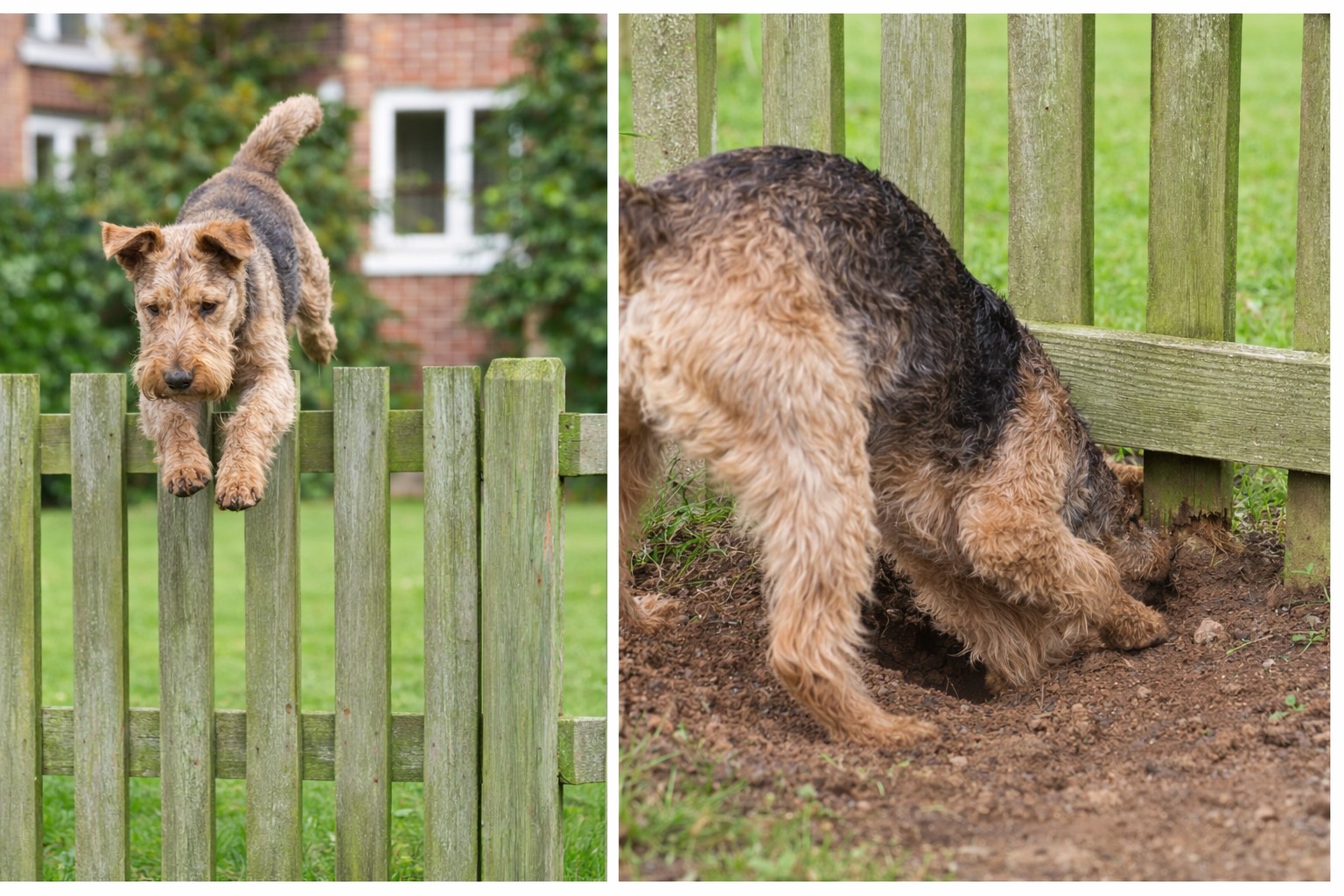
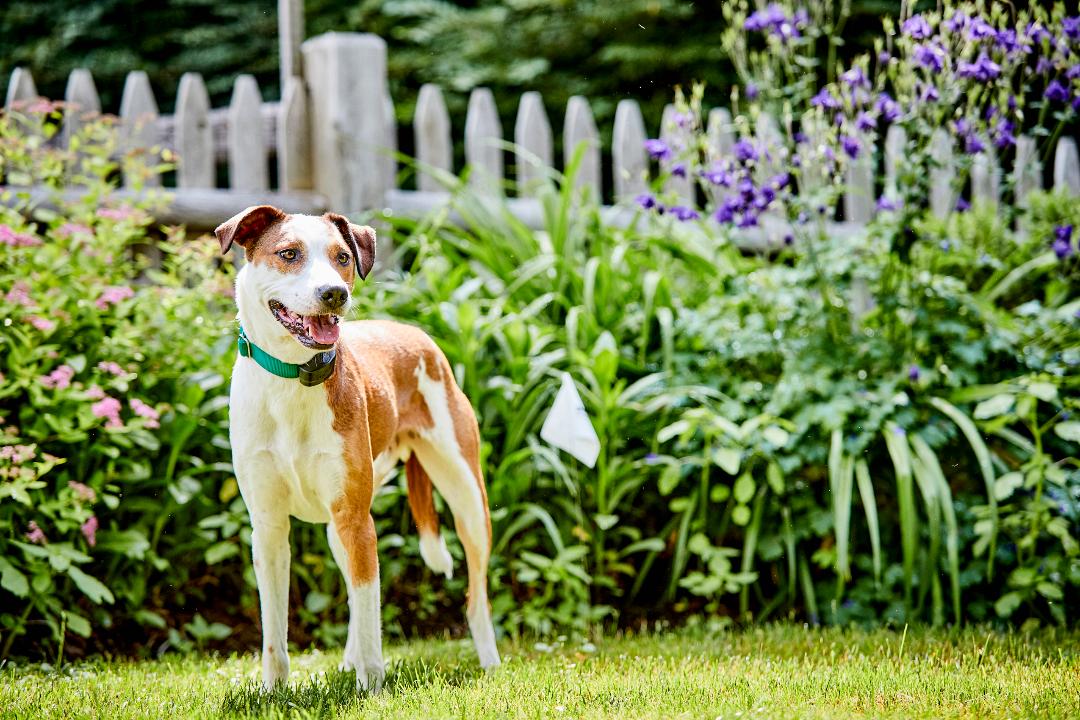
Jumping fences and digging underneath them are common escape behaviours in determined dogs. An invisible dog fence can help reinforce garden boundaries where traditional fencing has failed.
Why a Stronger Collar Isn’t the Answer to a Stubborn Dog
One of the biggest misconceptions about an invisible dog fence for determined dogs is that stubborn dogs automatically require higher stimulation levels.
That isn’t how we approach training at DogFence.
Before considering any adjustment to a receiver collar, we look at several factors:
- Is the receiver collar fitted correctly?
- Is the battery functioning properly?
- Is the boundary signal consistent?
- Is the warning zone suitable for the dog’s speed?
- Has the dog understood the relationship between the training flags and audible warning?
- Has the dog completed sufficient distraction training?
Simply increasing stimulation without understanding the problem can create unnecessary distress and may make training less effective.
Our priority is always to assess the individual dog and establish an appropriate training programme.
How Do You Train a Stubborn Dog to an Invisible Dog Fence?
Professional training is fundamental to successful containment, especially when working with persistent escapers.
At DogFence, our approach is based on three important principles:
Something to see. Something to hear. Something to feel.
Something to See: The Boundary Flags
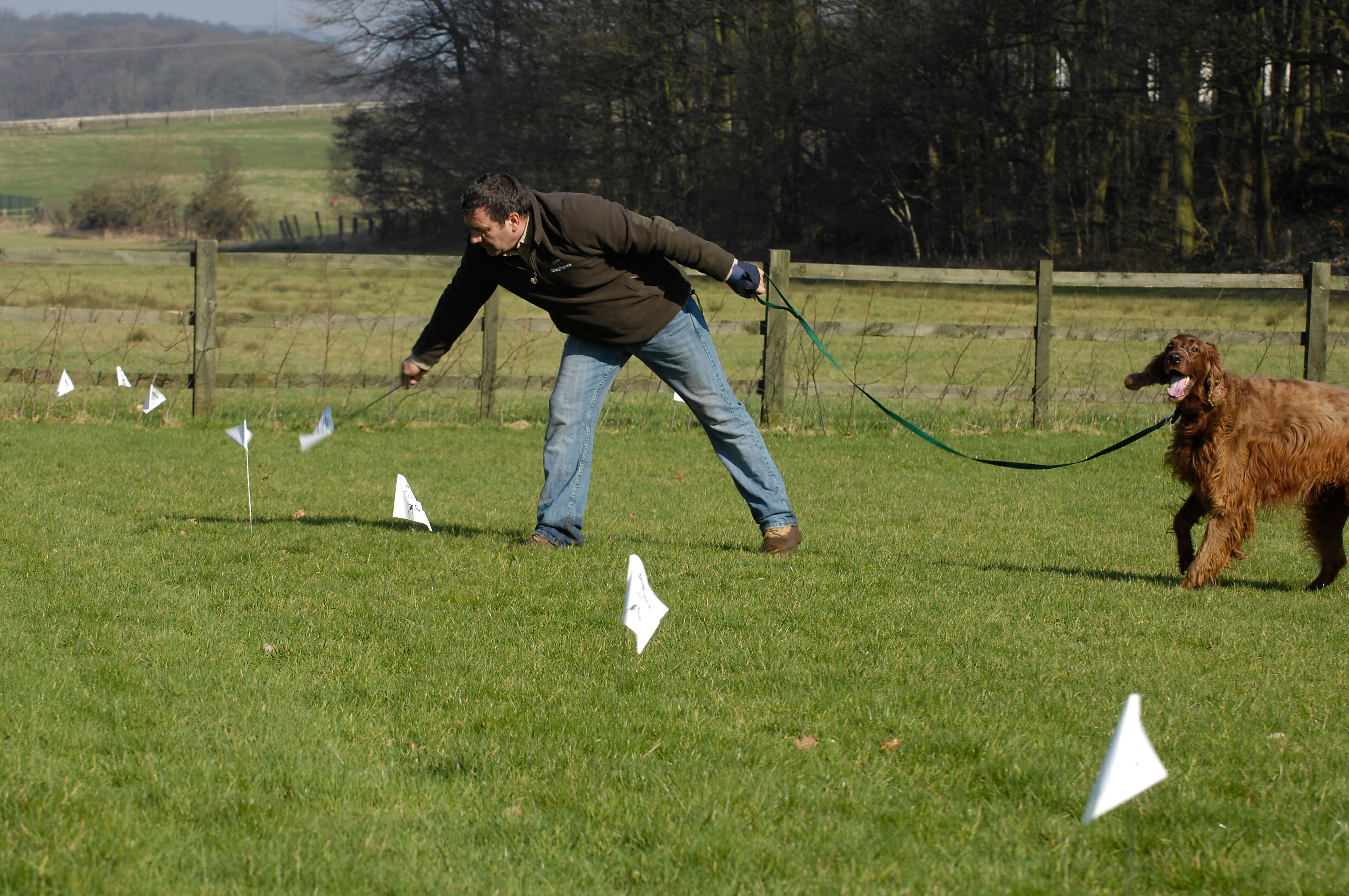
Small white training flags are positioned along the boundary where the receiver collar begins to emit its audible warning.
These flags provide a clear visual reference, allowing the dog to associate the physical markers with the hidden electronic boundary.
Something to Hear: The Warning Beep
Initial training begins with the receiver collar set to Level 0 (beep only).
At this stage, the dog receives an audible warning without static stimulation.
With the dog on a loose lead, the trainer gradually introduces the flagged boundary, helping the dog connect the sight of the flags with the warning beep.
The dog is gently guided back into the safe area using a consistent verbal command such as “Careful” or “Watch out”, followed by praise.
Something to Feel: Introducing Static Stimulation
Once the dog has begun associating the training flags with the warning tone, the trainer may introduce static stimulation as part of the supervised training programme.
The trainer begins at the lowest available setting and carefully observes the dog’s response.
A response may be subtle, such as a slight ear flick, head movement or brief pause. These signs can indicate detection, although the trainer must also assess the dog’s overall comfort and behaviour.
The aim is never to produce yelping, jumping, panic or distress. If these occur, training should stop and the approach should be reassessed.
From there, training progresses gradually, with the dog learning to return to the safe area and respond to the warning signals.
For the complete process, read our step-by-step invisible dog fence training guide.
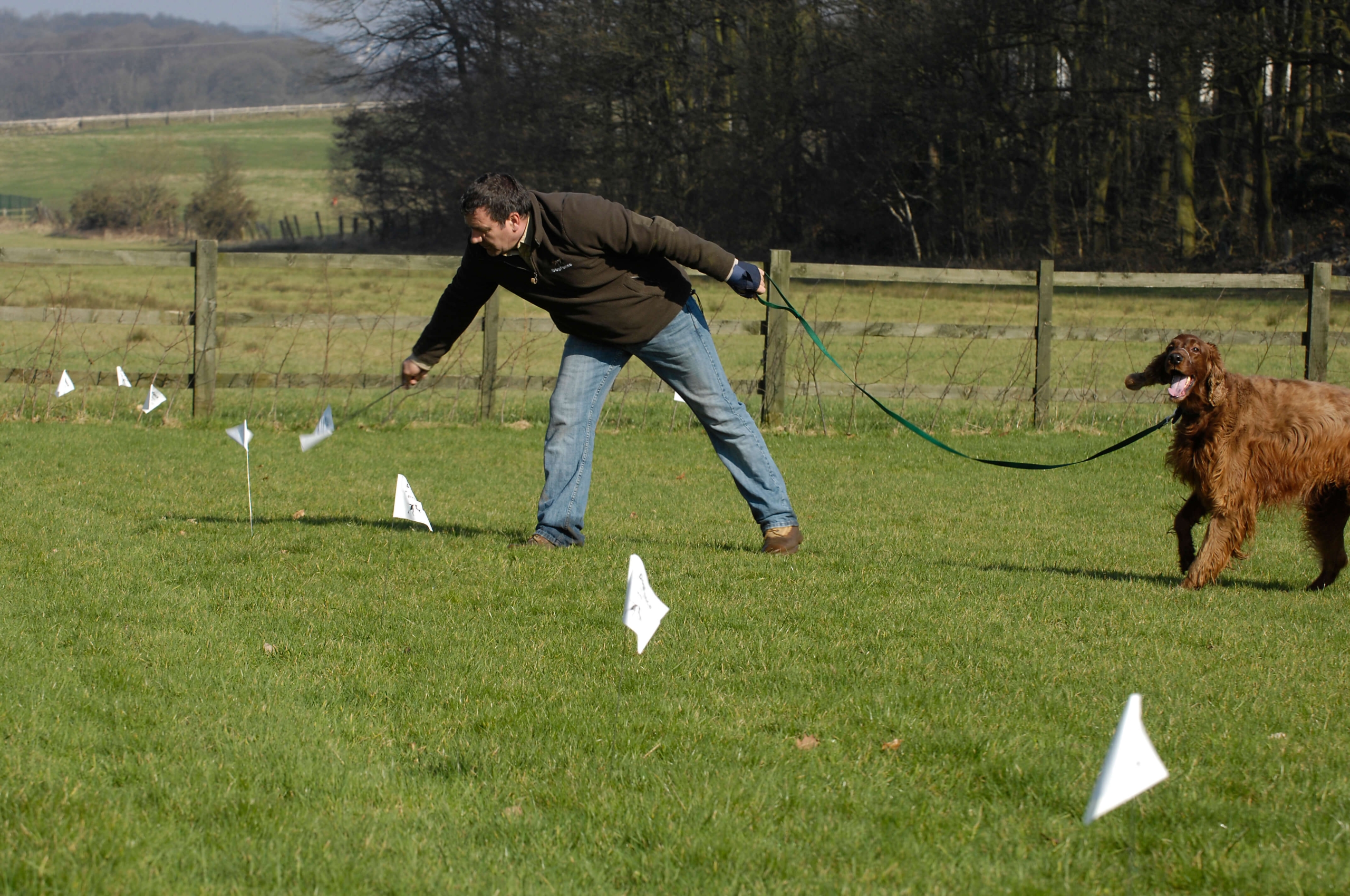
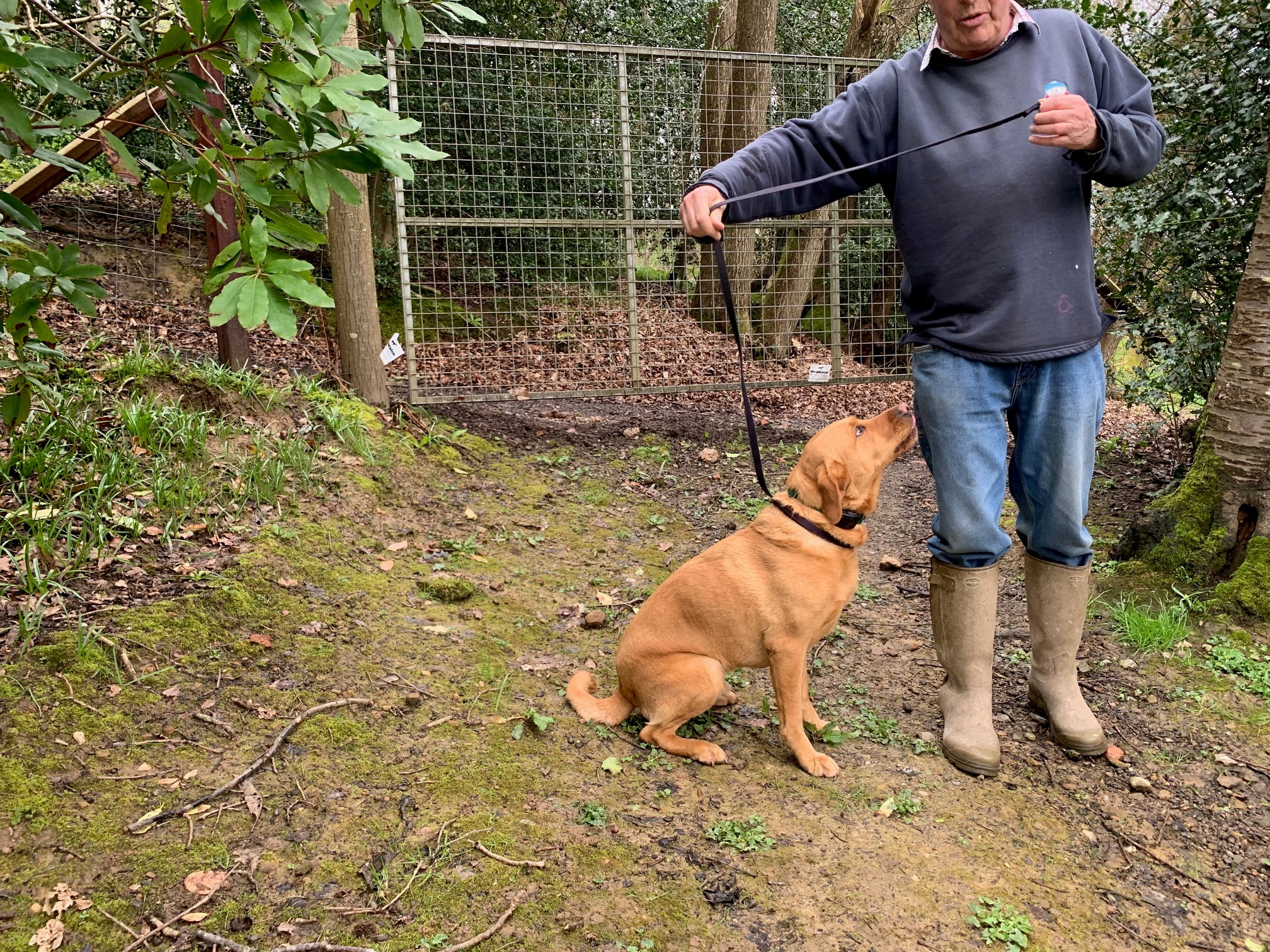
Professional DogFence training helps determined dogs associate the white boundary flags with the receiver collar’s audible warning before progressing to the next stage of training.
Why Distraction Training Matters for Persistent Escapers
For a determined dog, learning the boundary in a quiet garden is only part of the process.
The real challenge comes when something interesting happens outside the boundary.
This is why professional dog fence training for persistent escapers includes carefully controlled distractions.
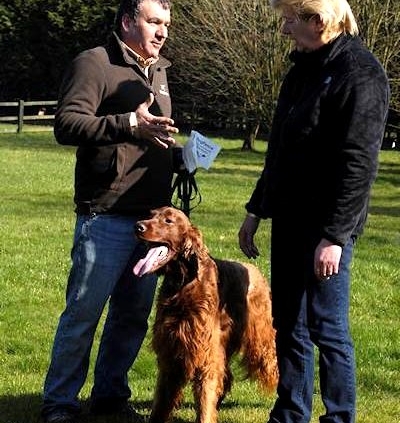
For example, a trainer may remain inside the safe area with the dog on a lead while the owner walks calmly on the opposite side of the boundary flags.
Never call or encourage the dog through the flags.
The purpose is to teach the dog to remain within the safe area without being drawn across the boundary by familiar people or other distractions.
Training can then progress to everyday situations, including visitors, wildlife and activity outside the property.
Some strong-willed dogs require additional time at this stage. There is no benefit in rushing the process.
Designing a Hidden Dog Fence for Strong-Willed Dogs
The layout of the boundary is just as important as the training programme.
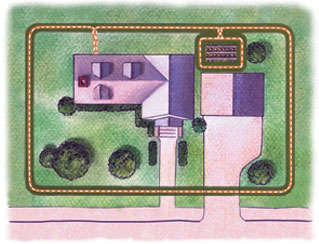
Every property is different, and a professionally designed dog fence should account for the dog’s behaviour and the areas where escapes are most likely.
An experienced DogFence installer will:
- Assess your dog’s temperament, speed and escape history.
- Identify weak points such as gates, hedges, driveways and existing fencing.
- Design an appropriate warning zone.
- Consider how your dog naturally moves around the garden.
- Fit and programme the receiver collar for the individual dog.
- Provide training and guidance for the owner.
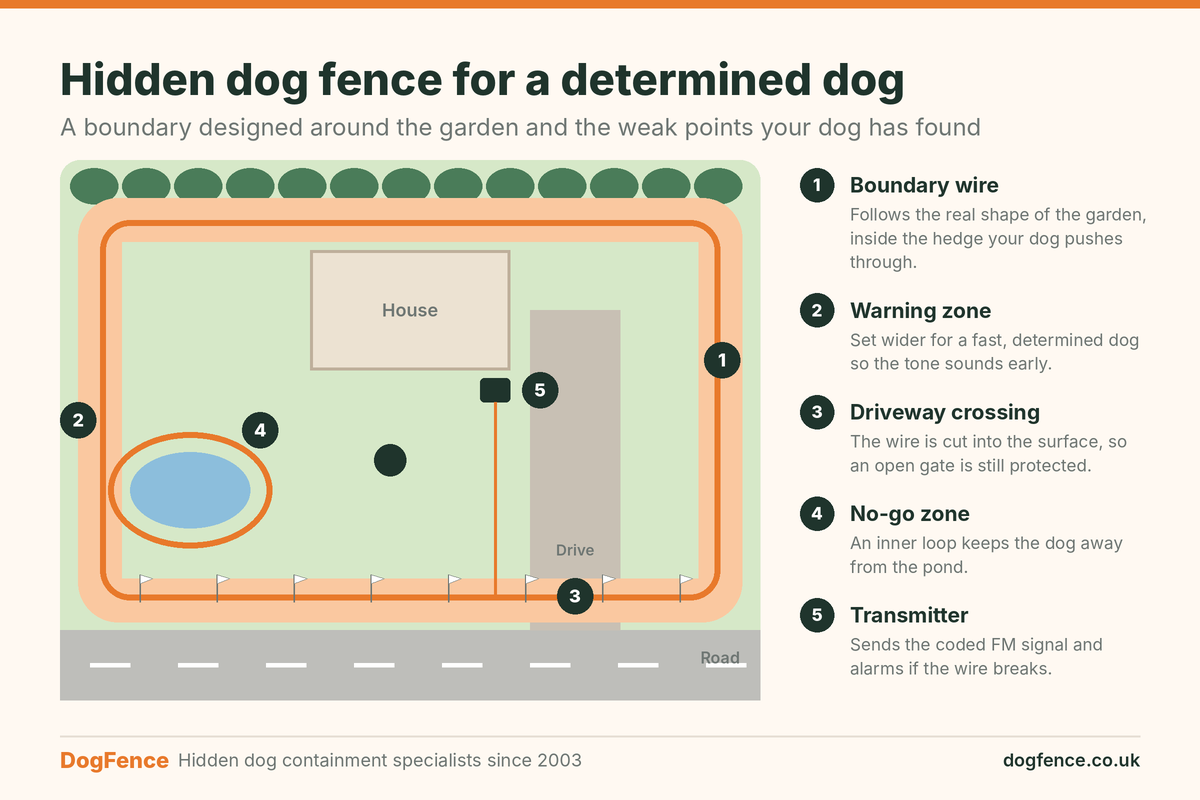
A hidden dog fence can also be installed alongside an existing physical fence, creating an additional trained boundary for dogs that have previously learned to jump, climb or dig through conventional barriers.
Find out more about our professional DogFence installation service.
Can a Dog Fence Stop Dogs That Keep Escaping?
For owners searching for a dog fence for dogs that escape, the most important consideration is whether the system addresses the dog’s particular behaviour.
A dog that digs under a fence presents a different challenge from one that bolts after wildlife or becomes anxious when left alone.
A professionally installed invisible dog fence may help with several common escape routes, but it does not remove the need to address boredom, fear, separation-related distress or other behavioural causes.
For persistent escapees, the best approach combines suitable containment, careful training and an understanding of what motivates the dog to leave the garden.
When an Invisible Dog Fence May Not Be Suitable
We would always rather explain why a system may not be appropriate than recommend the wrong solution.
An invisible dog fence may not be suitable where:
- The dog has a serious history of aggression towards people.
- The dog is extremely fearful or anxious.
- Medical or behavioural concerns make collar-based containment inappropriate.
- The property layout does not provide a sufficiently comfortable safe area.
- The owner cannot commit to the necessary training and supervision.
Remember that an invisible dog fence is not a physical barrier. It cannot prevent other animals or people entering the property and should not be relied upon as the sole barrier where public safety is at risk.
Read our article on when an invisible dog fence may not be suitable.
Frequently Asked Questions About Invisible Dog Fences for Stubborn Dogs
Will an invisible dog fence work for a stubborn dog?
Many strong-willed and determined dogs can be successfully trained to an invisible dog fence. Results depend on the individual dog’s temperament, correct installation, collar fit, appropriate settings and consistent training.
Do stubborn dogs need a stronger receiver collar setting?
Not necessarily. The first step is to check collar fit, battery condition, boundary configuration and training. Increasing stimulation should never be the automatic response to a dog crossing the boundary.
Can a dog fence stop a dog that jumps or digs?
An invisible dog fence creates a trained electronic boundary rather than a physical obstacle. This means it can help reinforce areas where a dog previously jumped over or dug underneath conventional fencing, although containment is not guaranteed.
How long does it take to train a stubborn dog?
Training times vary. Some dogs learn the boundary relatively quickly, while persistent escapees and dogs with strong chase instincts may need additional training and supervised practice around distractions.
Will an invisible dog fence stop my dog chasing wildlife?
It may be suitable for some dogs with strong chase instincts, but careful assessment and progressive distraction training are essential. No electronic containment system can guarantee that a highly motivated dog will never cross the boundary.
Is an invisible dog fence suitable for every stubborn dog?
No. Temperament, health, anxiety, aggression, previous escape behaviour and property layout should all be considered before recommending a system.
Is Your Dog a Determined Escape Artist?
If your dog jumps fences, digs underneath them, squeezes through hedges or simply cannot resist exploring beyond the garden, DogFence can help you assess whether an invisible dog fence is a suitable solution.
DOGFENCE UK • SINCE 2003
Stubborn Dog. Clever Solution.
Jumping, digging or escaping? Discover a dog fence designed around your dog and your garden.
☎ CALL US 01628 476475 | Chat with our team |
Some images within this guide are AI-generated illustrations designed to show typical hidden dog fence layouts and training flag positions