Tag Archive for: fencing for dogs

Training Your Dog to an Electronic Fence the Right Way

{
“@context”: “https://schema.org”,
“@type”: “Article”,
“headline”: “Training Your Dog to an Electronic Fence: A Positive Approach to Pet Safety”,
“image”: “https://dogfence.co.uk/wp-content/uploads/2018/10/ward-training-dog-caroline.jpg”,
“author”: {
“@type”: “Organization”,
“name”: “DogFence Ltd”
},
“publisher”: {
“@type”: “Organization”,
“name”: “DogFence Ltd”,
“logo”: {
“@type”: “ImageObject”,
“url”: “https://dogfence.co.uk/wp-content/uploads/2021/09/dogfence-logo.png”
}
},
“datePublished”: “2025-05-10”,
“dateModified”: “2025-05-10”,
“description”: “Training your dog to an electronic dog fence is an essential part of using any dog containment system. At DogFence Ltd, we offer professional and self-install kits, with full guidance and training to ensure your dog understands their boundaries and stays safely contained.”,
“mainEntityOfPage”: “https://dogfence.co.uk/posts/training-your-dog-to-an-electronic-fence-a-positive-approach-to-pet-safety/”,
“review”: {
“@type”: “Review”,
“author”: {
“@type”: “Person”,
“name”: “Edward Trewhella”
},
“datePublished”: “2024-06-05”,
“reviewBody”: “This company are top rank. They quoted over the phone, a gentleman came and installed the cable around a large area and trained the wayward dog to beware it. He was excellent with all our four dogs and extremely nice and helpful – he had also come a long way to install our system – in Cornwall. Since then the fence has worked fantastically with the dog hearing the audible warning and as far as we know has never even been ‘zapped’ such was the excellent training given by the installer. All in all a truly excellent experience, superlatives fail me.”,
“name”: “Excellent Training and Service”
},
keywords”: “electronic dog fence, dog fence training, self-install dog fence, pet containment, dog safety, dog training
}

Training Your Dog to an Electronic Fence: A Positive Approach to Pet Safety

Training your dog to an electronic dog fence is an essential part of using any dog containment system. Whether you have a professionally installed fence or a self-installed dog fence, proper training ensures your pet understands their boundaries and stays safely contained. At DogFence Ltd, we provide on-site training with all our professional installations, and offer full guidance for self-install kits, so your dog can be trained safely and successfully.

Why is training so important?

An electronic dog fence works by sending a radio signal through a wire placed around the boundary of your property. Your dog wears a small receiver collar which emits a warning tone as they approach the boundary. If they ignore the tone and continue forward, they receive a mild static impulse—enough to discourage them from crossing the line, but not strong enough to cause harm.

However, dogs don’t instinctively understand these signals. Without training, they may become confused or anxious, or simply ignore the warnings. That’s why the training process is so vital—it teaches your dog to understand the audio warning and to respond by retreating to the safe area.

Positive, dog-friendly training methods

We believe in kind, clear, and consistent training. Our methods are based on decades of experience and are designed to suit all dog breeds and temperaments. Here’s what makes our training so effective:

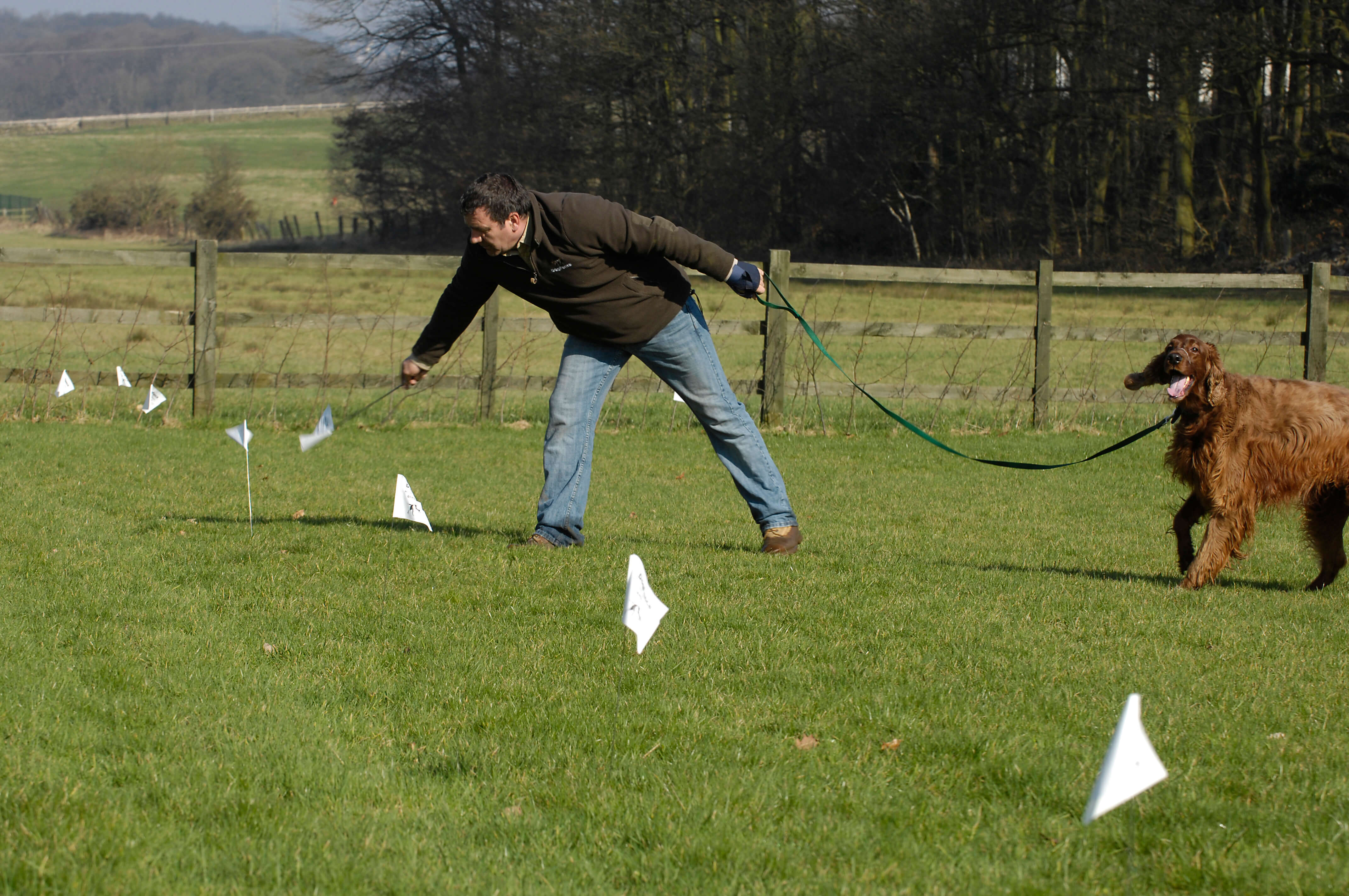
  • Gentle introduction: We start with visual cues (white training flags) and lead training before introducing the collar.
  • Step-by-step approach: Training is phased over several days so your dog can build confidence at their own pace.
  • Calm environment: We always begin training when the dog is relaxed and focused.
  • Owner involvement: You play a key role in reinforcing good behaviour with praise and encouragement.
Top Tip: Keep initial training sessions short and always end on a positive note. A few successful minutes is far more effective than a long, stressful session.

What to expect on installation day

If you choose a professionally installed system, one of our experienced trainers will guide you and your dog through the first training session. We’ll walk the boundary together, introduce the audio tone, and demonstrate how to guide your dog back to safety.

We also explain how to read your dog’s behaviour and how to build up off-lead confidence over the coming days. Most dogs learn the system within just a few sessions.

dog-fence-training-day.jpg

Dog in training to the electronic dog fence

Self-install kits: Can I train my dog myself?

Yes! Our self-install kits include comprehensive training guides, videos, and access to expert support. We’ll talk you through how to set up the system, fit the collar, and train your dog in a safe and structured way. Many owners choose this option and achieve excellent results.

The key is consistency—train your dog every day for short sessions, use clear commands and plenty of praise, and don’t rush the process.

Common training challenges (and how to overcome them)

  • My dog ignores the tone: Ensure the collar is fitted snugly and that you’re reinforcing the warning with leash guidance in the early stages.
  • My dog is nervous: Go slowly. Reassure your dog and use high-value treats and gentle praise to build confidence.
  • Multiple dogs: Train each dog individually before letting them out together. This helps avoid distraction and builds understanding.

What Our Customers Say

At DogFence Ltd, we pride ourselves on delivering exceptional service and training for every pet. Here’s what one of our customers had to say about their experience:

“This company are top rank. They quoted over the phone, a gentleman came and installed the cable around a large area and trained the wayward dog to beware it. He was excellent with all our four dogs and extremely nice and helpful – he had also come a long way to install our system – in Cornwall. Since then the fence has worked fantastically with the dog hearing the audible warning and as far as we know has never even been ‘zapped’ such was the excellent training given by the installer. All in all a truly excellent experience, superlatives fail me.”

– Edward Trewhella

We are proud to help pet owners across the UK, and this feedback is just one example of the great experiences our customers have with us. If you’d like to learn more about our systems or book an installation, don’t hesitate to get in touch.

A lasting result

With proper training, your dog will learn to stay within the boundaries—even without wearing the collar. It becomes a habit, a part of their understanding of the home environment. That means freedom for your dog and peace of mind for you.

Thousands of families across the UK trust DogFence to protect their pets. If you’re thinking about installing a dog fence, or if you’re unsure how to train your dog to an existing system, get in touch with us—we’re happy to help. Electronic pet fencing has been safely used for over 50 years but in the UK it is still relatively unheard of – read what the US Pet Meds say about electronic pet fences.


Want to speak with a dog training expert?
Call us on 01628 476060 or email info@dogfence.co.uk. We’re here to help you every step of the way.


dog fencing options

Affordable dog fencing – what are the options?

Affordable dog fencing

When it comes to affordable dog fencing there aren’t many options as fencing is actually quite expensive.  As with everything you get what you pay for and it depends on whether you want to get your hands dirty. Naturally, these fencing options are based on how large an area you need to fence. The landscape that you need to fence. And also the breed of the dog that requires the dog fencing!

Dog fencing for small areas

If you are looking to fence a small back garden then it is likely that you already have a fence or wall but it isn’t meeting your needs. Watch your dog and see if he is using something to climb up and scrabble over or is he climbing or digging. Consider installing trellis above your fence. This can be bought from any good DIY store and is relatively quick to install. If you have a digger add a concrete footer below your fence by pouring concrete along the edge of the fence and sinking the bottom of the fence into the concrete before it dries.  This is naturally a labour intensive job but should do the trick!

dog fencing using trellis on wall

Trellis placed on top of wall

If you are not sure where he is getting out then one of our DIY dog fences is going to be the cheapest way forward. These fences are under £250.00 and will cover a small urban garden. If you compare the price of re-fencing a complete rear garden versus adding an electronic dog fence the dog fence will win on price all day long!

For small gardens with low fences, you may be able to upgrade your fence to a close board fence. These fences start at around £38.00 per metre fully installed. You will need to check that you can install a fence of this height before ripping out the old fence.

Rural gardens and small paddocks

It goes without saying that dog fencing for rural areas can be a headache. Not only are you trying to stop your dog going out but the local wildlife is busy pushing its way in. If you have an issue with rabbits and small dogs then this could be a good option for you but it is not the cheapest! Rabbit fencing starts at approx £130.00 per 50m without installation! If you are covering a 1-acre site this will cost in the region of £690.00 just for the galvanised mesh without any posts of labour. Also unless it is extremely well-installed rabbit fencing can be damaged by larger mammals such as Badgers, Muntjack and larger Deer.

dog fencing for rabbits

Rabbit fence used as dog fencing

If you have hedges or areas with no existing fences then the cheapest form of fencing will be either a stock fence or an electronic dog fence. If you have horses or livestock then you will need to look at stock fencing options. Of course, if it is only a dog or a cat that needs containing then an electronic dog fence is by far the cheapest option.

Our DIY dog fence can be expanded up to an acre for an additional £100.00 and a Professionally Installed dog fence will cost in the region of £1000.00 depending on the location and number of dogs. This would work out more cost-effective than the galvanized or stock fencing and would also protect the driveways. Installing gates can also be very costly and of course, this relies on people shutting the gate when they come or go! Our Professionally installed fences have a lifetime warranty on the hardware and a containment promise for the dog.

Large estates and difficult terrains

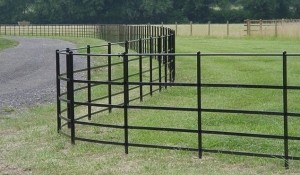
If it aesthetics then Estate fencing is most certainly the winner but you will need deep pockets to install this timeless classic! At around £80.00 per 2m panel + installation, it will very soon add up, especially on the large country estate! Again, you will need to think about gates and this type of fencing is not dog secure. Other popular types of fencing are post and rail with stock fencing below or chain link fencing. Chain link fencing is probably the cheapest starting from around £2500 for 1 acre + installation. Whereas if you are looking at fencing 10 acres using our Performance Series on a 10-acre site the cost would be circa £1800.00 including installation & training.

dog fencing used as estate fencing

Estate fencing

Riverbanks and Undulating Terrain

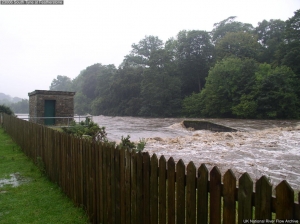
If your property goes down to the river you may be able to install a small picket fence. These will not stop all dogs as they tend to only be a 90 cm – 100cm high. Prices for Picket fencing start at around £12.00 per metre plus installation.  Alternatively, you can use our dog fence to run along the boundary. This will keep your dog out of the river without disrupting the view. If you have very undulating terrain then you will probably need to install a stock fence but there would be a hefty surge-charge to install this! Again, an invisible fence can be installed for a fraction of the cost.  The trencher used to install the invisible dog fence is extremely adaptable and be operated in both steep and undulating terrain. Images of the dog fence trencher can be seen on our installation & training page.

dog fencing by river using picket fence

Picket fence along river bank


Dog Fencing price summary

Based on an acre (and excluding gates)

    • Electronic dog fence (1 dog fully installed – covers gateways as well) – from £3.50 per metre installed.
    • Stock Fencing (no gates) – from £7.00 per metre installed
    • Rabbit Fencing (no gates) – from £8.00 per metre installed
    • Stock Fencing with post and rail (no gates) – from £12.00 per metre
    • Picket fencing (no gate) – from £20.00 per metre
    • Close board fence (no gate) – from £35.00 per metre installed
    • Estate fencing (no gate) from £40.00 per metre installed

Prices have been based on submissions from Companies in Berkshire (2019). Prices are based on properties in the local area and are a guide.

If you have been searching for dog fencing options then read our testimonials on our Trust Pilot reviews. If you would like more information or prices call us today on 03450 623623 or complete our quote form.


fencing for dogs

Fencing for dogs we explore the options for dog owners

Best fencing for dogs – what are the options?

When is comes to fencing for dogs it really depends on several important points. A big dog will need a big fence. A four foot fence is nothing to a big dog. Equally small dogs are excellent climbers. It is important to consider the dog breed when choosing a fence. Below are some points to consider when finding the best solution for your dog and environment. All dogs are different, your dog may be fine in your present home and then you move and something changes.  Ask yourself the following before choosing your dog fencing solution.

  1. Do you live in an urban area?
  2. Are you rural?
  3. What fencing do you currently have?
  4. What breed of dog do you have?
  5. Is the dog currently escaping?
  6. What size area requires fencing?

Below we have noted some of the most popular forms of fencing for dogs so that Fido stays safe at home where he should be!

Types of fencing for dogs

Chain Link Fences

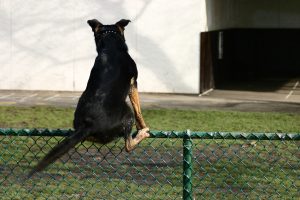
Arguably this is not the prettiest type of fencing but it is one of the most economical. Chain link fencing can be built to varying heights and can also be used to construct a dog run or pen. The issue chain link dog fencing being climbed by dogthat people often have with chain link fencing is that other larger wild animals (foxes and badgers) can cause damage to this type of fence.  When the fence is damaged this gives the dog  an open avenue to the outside worldwide.

Interestingly Terriers are particularly good climbers and often see chain link fences as an easy ladder to escape. the lovely links make great foot holds for both large and small dogs. Chain link fences tend to be a popular choice for more rural customers as they can be softened with foliage. If you have a large breed of dog the fence height should be a minimum of 6ft to prevent a “climb out”.

Close Board Wooden Fences

This is probably the most popular type of fencing for urban areas. A Close Board fence can be a good option because the dog cannot see the rabbits and squirrels living on the other-side! This may curtail his desire to wander but in some cases can increase anxiety. If a dog can hear but not see what is the other side of the fence this may increase his territorial behavior and lead to excessive barking.

When it comes to fencing it’s a mid priced option if you have a small town garden. This type of fencing for dogs is usually sufficient but if your dog is a digger or a climber then this may not be the best solution. A 6ft close board fence is usually only installed in the rear of the garden so you may have to look at other options for the front of the property. Take note if your dog is a digger you should also concrete below ground!

Stock  and Deer Fencing

Stocking and Deer fencing is usually only installed on large rural properties. When installing this type of fencing it is usually best to get the fence dug into the ground to prevent the dog and wildlife digging under it. This can be a costly exercise for large areas and depending on the breed may need to be quite high to prevent a “climb out”. Stock fences can be installed in front of hedges to give a secondary barrier. If you have a very small dog then a stock fence will be ineffective as the dog can squeeze through the wire.

Electronic dog fence

Incredibly, this type of fencing for dogs has been around for over 40 years. It is a little known fencing solution for dog owners in the UK but widely used in the USA. The advantage of an electronic dog fence is that it can be used on both large or small properties. The electronic dog fence is invisible and so does not create any unsightly barriers. There are several advantages that electronic fencing has over traditional methods.

  1. The dog cannot dig under or jumper over the electronic dog fence.
  2. It is cheaper than traditional fences.
  3. Does not obstruct views and is not unsightly.
  4. Can be taken with you if you move.
  5. Protects the drive even if the gate is open.

Even on most standard urban gardens and electronic dog fence is a most cost effective solution. It is simple to install and offers a safe and effective solution. Having been rigorously tested by Lincoln University these fences are have been proved safe and effective.

If you are intrigued but think how our fence may not work for you why not read some of our customer testimonials. If you would like to know more our experienced professionals can chat to you. We can then put together a bespoke estimate for your dog, property and budget.

For an  for an estimate call or contact DogFence on 03450 623623 or info@dogfence.co.uk


dog fence dogs

Fencing For Dogs Who Escape

What Is the Best Fence for Dogs That Escape?

The best fence for dogs that escape depends on how your dog is getting out. A dog that jumps needs a different solution from one that digs, squeezes through gaps or bolts through an open gate. For persistent escape artists, simply making a physical fence higher or stronger may not solve the problem.

In this guide, we look at the main fencing options for escaping dogs, their advantages and limitations, and what to consider when choosing a secure boundary for your garden.
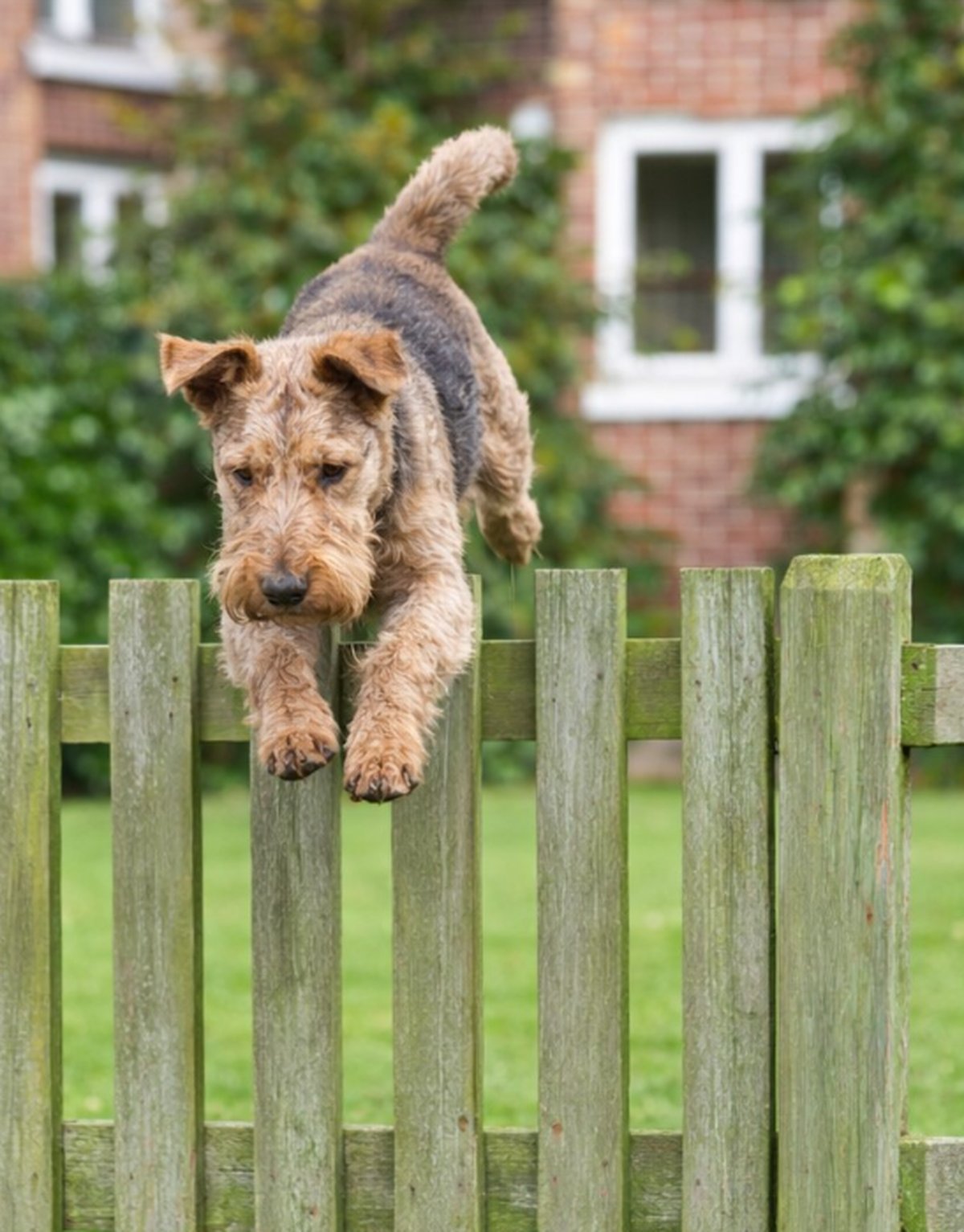
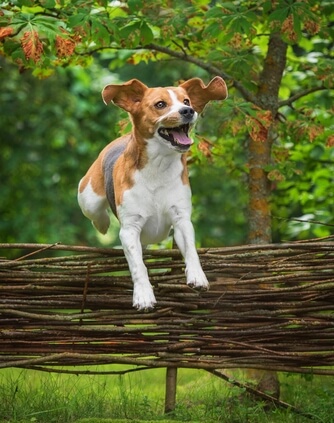
Fencing for dogs who escape – dog jumping over a garden fence

Quick Answer: What Is the Best Fence for Dogs That Escape?

For many dogs, a secure physical fence with no gaps and sufficient height will work perfectly well. However, dogs that repeatedly jump, climb, dig or escape through gates may need a different approach.

The main options are:

  • Solid wooden fencing – useful for dogs distracted by what they can see outside the garden.
  • Mesh or wire fencing – practical for larger gardens and rural properties.
  • Dig-proof fencing – designed for dogs that tunnel underneath boundaries.
  • Higher fencing – potentially useful for athletic dogs that jump.
  • A hidden dog fence – creates a consistent boundary that can work across fences, hedges, gates and driveways.

The right choice depends on your dog, how they escape and the layout of your property.

Why Do Some Dogs Escape Conventional Fencing?

Some dogs are remarkably good at finding weaknesses in garden boundaries. Fix one escape route and they simply start looking for another.

Common escape methods include:

  • jumping over fences;
  • climbing mesh or timber fencing;
  • digging underneath;
  • squeezing through small gaps;
  • pushing through hedges;
  • escaping when gates are opened;
  • bolting down open driveways.

Before spending money on new fencing, identify exactly how your dog is escaping. This will help you choose a solution that addresses the actual problem rather than just one particular escape point.

If you are not sure why your dog keeps getting out, read our guide to why dogs escape gardens.
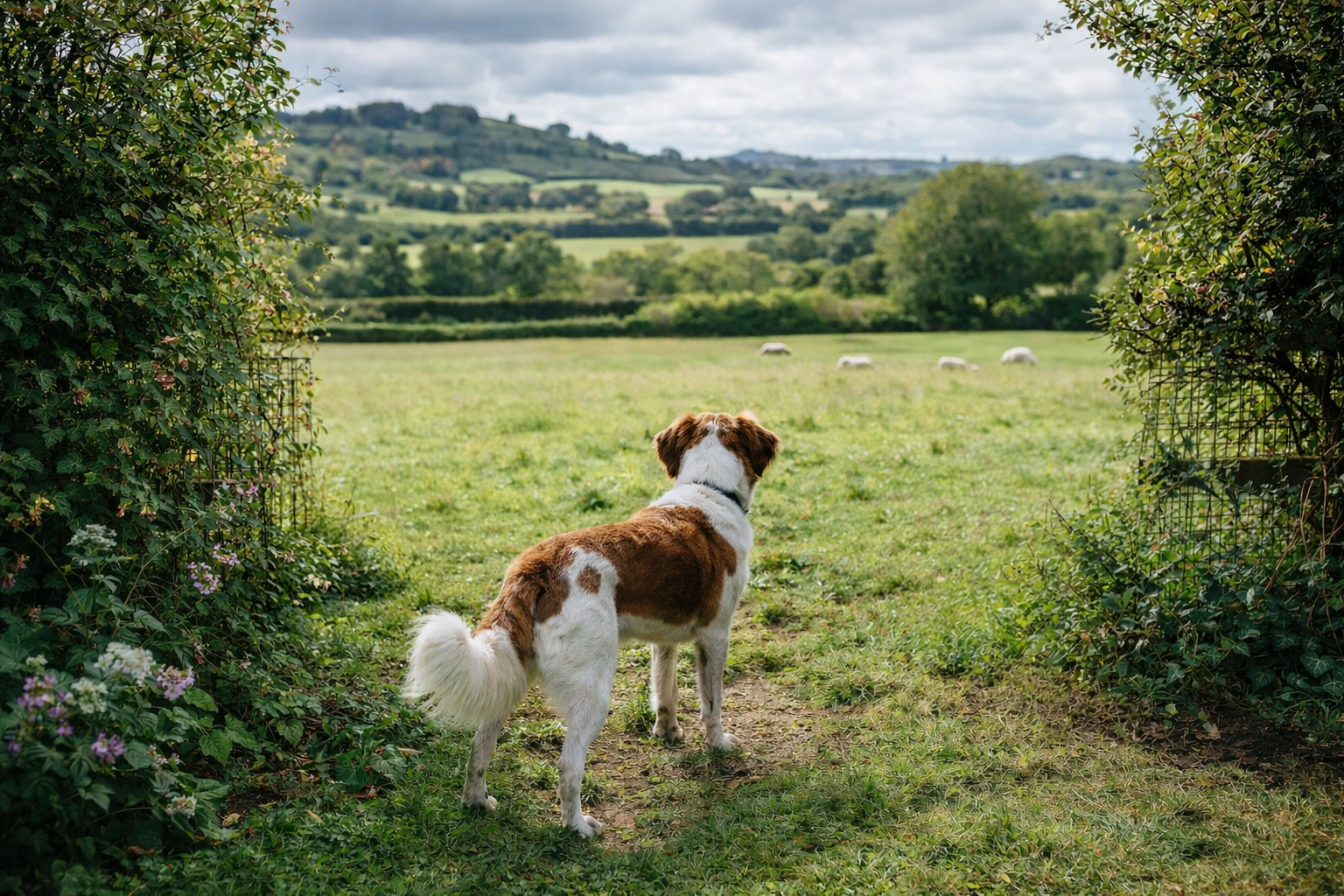
Fencing for dogs who escape – dog looking through an open garden boundary

Escape Proof Fence for Dogs: Does One Exist?

There is no single physical fence that can honestly be described as completely escape proof for every dog.

A six-foot fence may stop one dog but another may climb it. Reinforcing the bottom may prevent digging, while still leaving a gate or driveway as an escape route.

That is why the best escape proof fence for dogs is the one designed around both the dog’s behaviour and the individual property.

1. Wooden Fencing for Dogs That Escape

Solid wooden fencing is one of the most common choices for gardens. It provides a visible physical barrier and can also prevent a dog seeing distractions such as passing dogs, people or wildlife.

Advantages:

  • Creates a solid visual barrier.
  • Available in different heights.
  • Can reduce visual triggers outside the garden.
  • Works well for many ordinary residential gardens.

Potential problems:

  • Dogs can dig underneath it.
  • Athletic dogs may jump over it.
  • Some dogs learn to climb panels or nearby structures.
  • Damaged panels can create escape gaps.
  • It cannot normally solve an open driveway or frequently opened gate.

2. How High Should Fencing Be for an Escape Artist Dog?

If your dog jumps, increasing fence height may seem like the obvious answer. For some dogs, it is.

However, jumping ability varies enormously according to size, breed, athleticism and motivation. There isn’t one fence height that guarantees every dog will remain inside.

Also check for bins, sheds, walls, garden furniture and raised flower beds close to the fence. A dog may be using these as a launch point.

For more detail, see how high a dog fence should be and our guide answering can a dog jump a 6ft fence?

3. Dog Proof Fencing for Dogs That Dig

For a determined digger, fence height is largely irrelevant. The weak point is underneath the boundary.

Physical fencing may need to be extended or reinforced at ground level to make digging underneath more difficult. Regularly inspect the perimeter because some dogs simply move along the fence and start digging somewhere else.

If this sounds familiar, our guide to how to stop a dog digging under a fence looks specifically at this problem.

4. Mesh and Wire Fencing for Dogs

Mesh fencing can be a practical choice for large gardens, paddocks and rural properties where installing solid timber fencing around the entire boundary would be expensive or visually intrusive.

However, the mesh size and construction matter. Small dogs may squeeze through larger openings and some dogs are surprisingly capable climbers.

Large properties also introduce another challenge: the longer the boundary, the more potential weak points there are to maintain.

Owners of larger properties may find our guide to dog proof fencing for rural properties useful.

5. What About Gates and Open Driveways?

This is where conventional fencing often becomes difficult.

You may have excellent fencing around the entire garden but still need vehicles, deliveries and visitors to enter through a gate or open driveway.

A dog can quickly learn that an opening gate creates an opportunity to escape. For some owners, permanently closing or physically fencing an entrance simply isn’t practical.

A hidden dog fence can create a boundary across a driveway or gate without physically preventing vehicles or people from passing through.
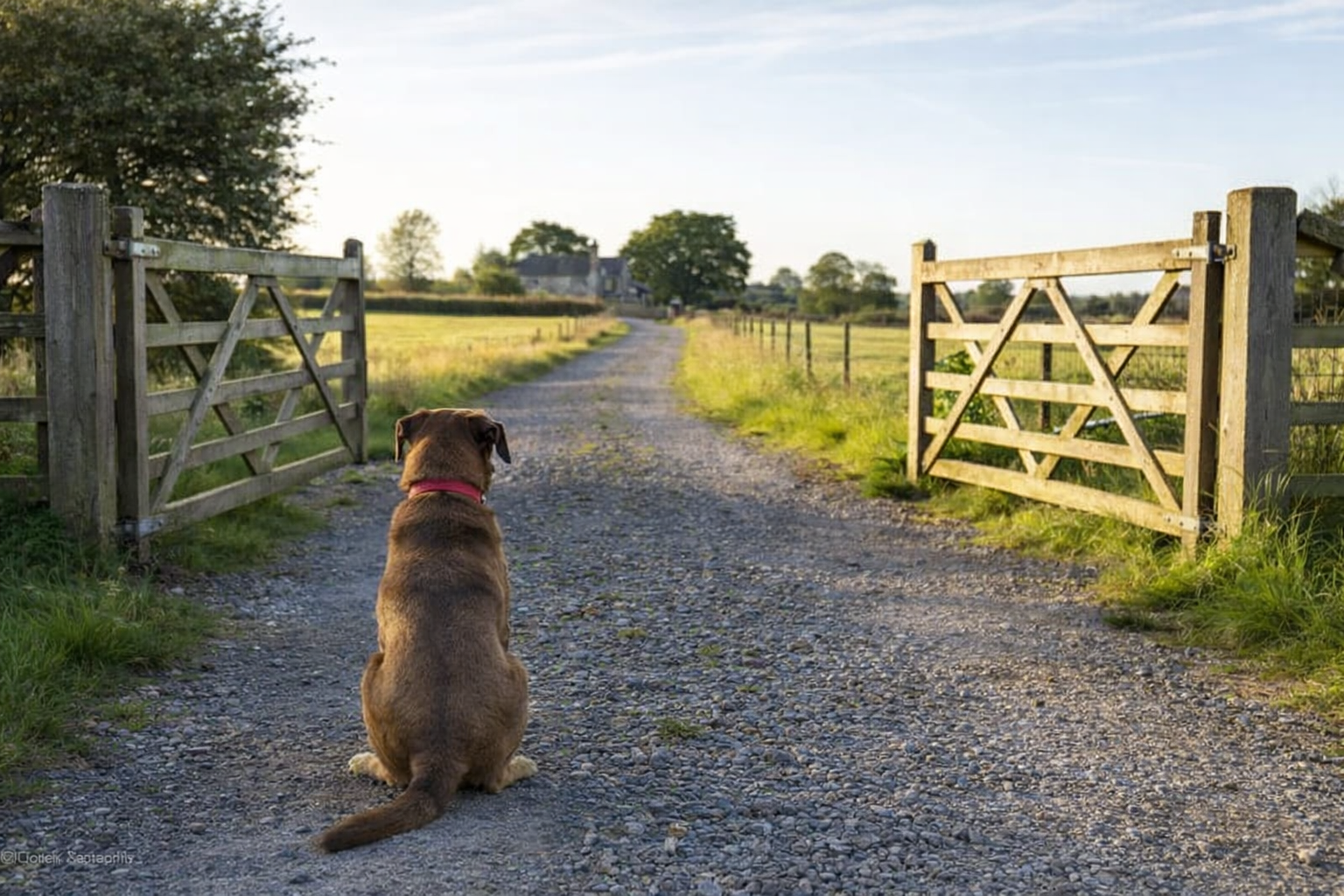
Escape proof fence for dogs – dog sitting beside an open driveway gate

6. Hidden Dog Fence for Dogs That Escape

For dogs that repeatedly defeat conventional fencing, a professionally installed hidden dog fence provides another option.

Rather than relying solely on the height or strength of a physical barrier, DogFence creates a consistent boundary that your dog is trained to recognise.

A discreet boundary wire is installed around the selected area of the property. Your dog wears a lightweight receiver collar and is introduced to the boundary through a structured training programme.

The boundary can be designed around:

  • existing fencing;
  • hedges;
  • gardens and lawns;
  • woodland;
  • open driveways;
  • electric gates;
  • large and rural properties;
  • specific areas within a garden.

If you have a persistent escape artist, see our dedicated dog fence for dogs that escape page for more information about how the system works for dogs that jump, dig, squeeze through gaps or bolt through entrances.

Wired or Wireless Dog Fence: Which Is Better?

Hidden dog fences can use either a wired boundary or a wireless system, but they do not provide the same flexibility.

A wired system allows the boundary to be designed around the individual property. It can follow irregular gardens, encompass larger areas and be positioned around existing landscaping, gates and driveways.

Wireless systems generally create a predetermined signal area around a transmitter. This can make them convenient in some circumstances, but the boundary shape is less flexible.

DogFence uses a professionally designed wired boundary because it allows us to tailor the layout to the dog and the property rather than asking the property to fit a predetermined boundary.

How Does a Hidden Dog Fence Work?

The principle is straightforward:

  1. A discreet boundary wire is installed around the area in which your dog can safely roam.
  2. The wire carries a radio signal.
  3. Your dog wears a lightweight receiver collar.
  4. Temporary training flags provide a visual reference during training.
  5. The collar gives an audible warning as your dog approaches the boundary.
  6. Your dog is taught to recognise the warning and move back into the safe area.
  7. The training flags are gradually removed once your dog understands the boundary.

The system is designed to work alongside appropriate training rather than simply relying on the equipment itself.

What Is the Best Dog Fence for a Large Garden?

For a large garden, acreage or rural property, the cost and practicality of installing traditional fencing around the entire perimeter can become significant.

A hidden dog fence can cover substantial and irregular areas without blocking views or requiring a high physical fence around the property.

It can also follow boundaries through hedges, woodland and other areas where conventional fencing may be difficult or undesirable.

What Is the Best Fence for a Dog That Jumps AND Digs?

This is where simply modifying a physical fence can become frustrating.

If you make the fence higher, your dog may start digging underneath it. Reinforce the bottom and they may discover a gap beside the gate. Block the gap and they may simply wait for somebody to open the driveway.

For dogs with several different escape techniques, a DogFence hidden dog fence can provide a different solution. Rather than trying to physically block every possible escape route, the DogFence creates a consistent boundary around the area where you want your dog to remain.

A discreet boundary wire is installed around the property and your dog wears a lightweight receiver collar. As your dog approaches the boundary, the collar gives an audible warning. During professional training, your dog learns to recognise that warning and retreat back into the safe area.

This means the same hidden dog fence can protect areas where a dog might otherwise jump over fencing, dig underneath it, squeeze through gaps or escape through an open driveway.

Importantly, a DogFence can also work alongside your existing garden fence, hedge, wall or gates. You do not necessarily need to remove the fencing you already have – the hidden boundary provides an additional layer of security for a determined escape artist.

For a dog that both jumps and digs, this can be particularly useful because you are creating one consistent dog boundary rather than continually trying to anticipate the next way your dog might escape.

See how it works on our dog fence for dogs that escape page.
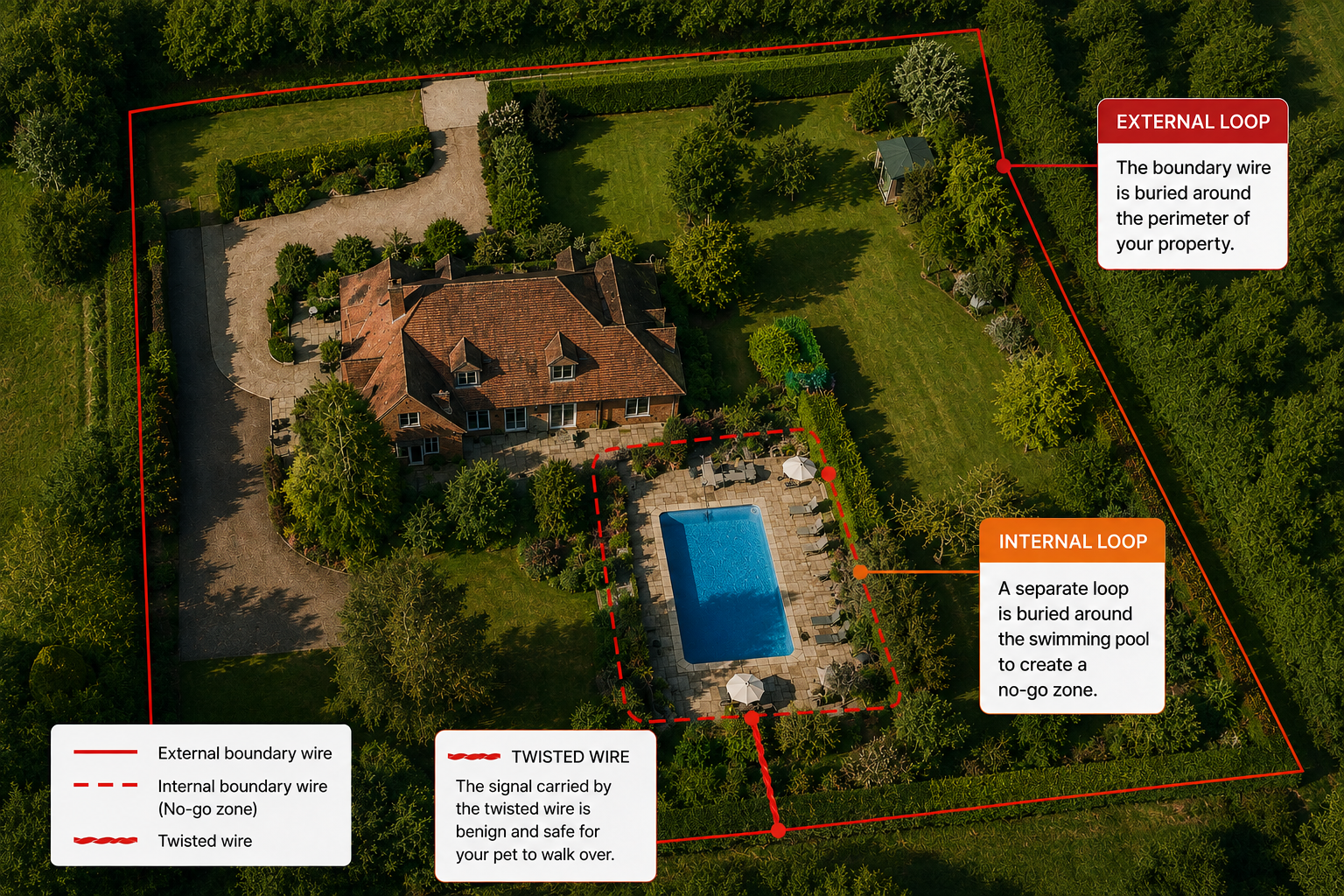
Aerial view of Escape-proof fencing for dogs showing a hidden boundary around the garden and a separate no-go zone around the swimming pool

A hidden dog fence can create both an external garden boundary and an internal no-go zone around your swimming pool. The twisted wire safely connects the two boundaries, allowing your dog to cross it without receiving a warning.

How Do I Choose the Best Fencing for My Dog?

Ask yourself five questions:

  1. How is my dog escaping? Jumping, digging, climbing, squeezing or bolting?
  2. Where are they escaping? Fence, hedge, gate or driveway?
  3. How large is the area? A small enclosed garden and a rural property require very different solutions.
  4. Do I want a visible physical fence? Appearance and planning considerations may influence your choice.
  5. Has my dog already defeated conventional fencing? If so, simply replacing it with something similar may not address the underlying problem.

The best fencing solution should suit your dog, your garden and the way you use your property.

Frequently Asked Questions About Fencing for Dogs That Escape

What is the best fence for dogs that escape?

The best fence depends on how the dog escapes. Solid fencing can suit many gardens, while diggers may need ground-level reinforcement and jumpers may need greater height. Dogs that repeatedly defeat physical fencing or escape through gates and driveways may benefit from a hidden dog fence combined with appropriate training.

What is the best escape proof fence for dogs?

No physical fence can be guaranteed escape proof for every dog. Determined dogs may jump, climb, dig or find gaps. The most appropriate solution is one designed around the dog’s particular escape behaviour and the property’s layout.

What fencing is best for a dog that digs?

A physical fence needs to be secure at ground level and regularly checked for new digging points. A hidden boundary can also be considered for persistent diggers that continually find new places to tunnel underneath conventional fencing.

What fencing is best for dogs that jump?

Increasing physical fence height can help, but the required height depends on the dog’s size and athletic ability. Remove objects that can act as launch points and consider whether the dog is likely to find another escape method if jumping is prevented.

Can a hidden dog fence cross a driveway?

Yes. A professionally designed wired boundary can cross driveways and entrances, allowing vehicles and people to continue using them while the dog is trained to recognise the boundary.

Can I use a DogFence with an existing fence?

Yes. A DogFence can work alongside existing timber, mesh or other garden fencing. It can provide an additional consistent boundary where a dog has learned to jump, dig underneath or exploit gaps in the existing fence.

Can one DogFence be used for several dogs?

Yes. Multiple pets can use the same boundary with individual receiver collars appropriate to each animal.

Which Fence Should I Choose for My Escape Artist?

If your existing fence already keeps your dog safely in the garden, there may be no reason to replace it.

But if you are continually blocking holes, increasing fence height, repairing gaps or worrying every time somebody opens the gate, it may be worth considering a different approach.

DogFence has been helping UK owners keep their dogs safely at home since 2003. We design boundaries around the individual dog and the individual property, including difficult gardens, driveways and large rural areas.

Looking for the Best Fence for a Dog That Escapes?

If your dog jumps, digs, squeezes through gaps or bolts through gates, talk to our experienced team. We’ll help you find the best way to secure your garden — tailored to your dog and your property.

Give your dog freedom in the garden — without constantly worrying about them escaping.

Call us on
01628 476475

|
Message us on WhatsApp

|
Request a Free Quote Online

Related posts