Tag Archive for: DogFence

Keep dogs safely away from garden ponds using a hidden dog fence

Can a Dog Fence Protect Ponds and Swimming Pools?

Can a Dog Fence Protect Ponds and Swimming Pools?

Can a dog fence protect ponds and swimming pools? Yes. A professionally installed hidden dog fence can create exclusion zones around ponds, swimming pools and other water features, helping to keep dogs away from ponds and restricted areas while still allowing them to enjoy the rest of the garden. The boundary can be designed specifically around your property and the areas you want your dog to access.

For dog owners with ponds or swimming pools, creating a safe garden can be a balancing act. You want your dog to have the freedom to run, play and explore, but you may not want them jumping into the pool, disturbing fish or wildlife, damaging pond plants or approaching deep water unsupervised.

The good news is that you don’t necessarily have to fence off an entire section of your garden. With careful planning and the right training, you can create safe boundaries around specific areas while leaving your dog plenty of outdoor space to enjoy.

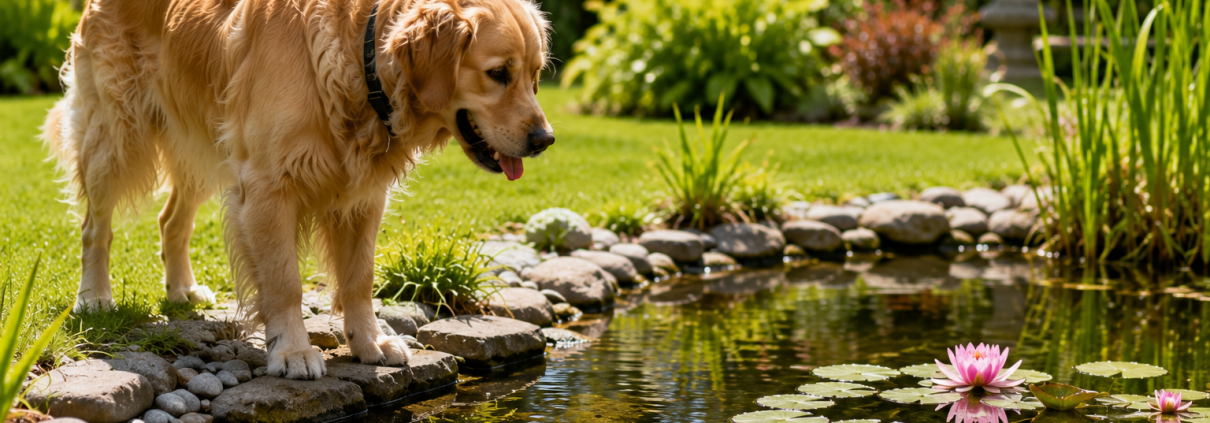
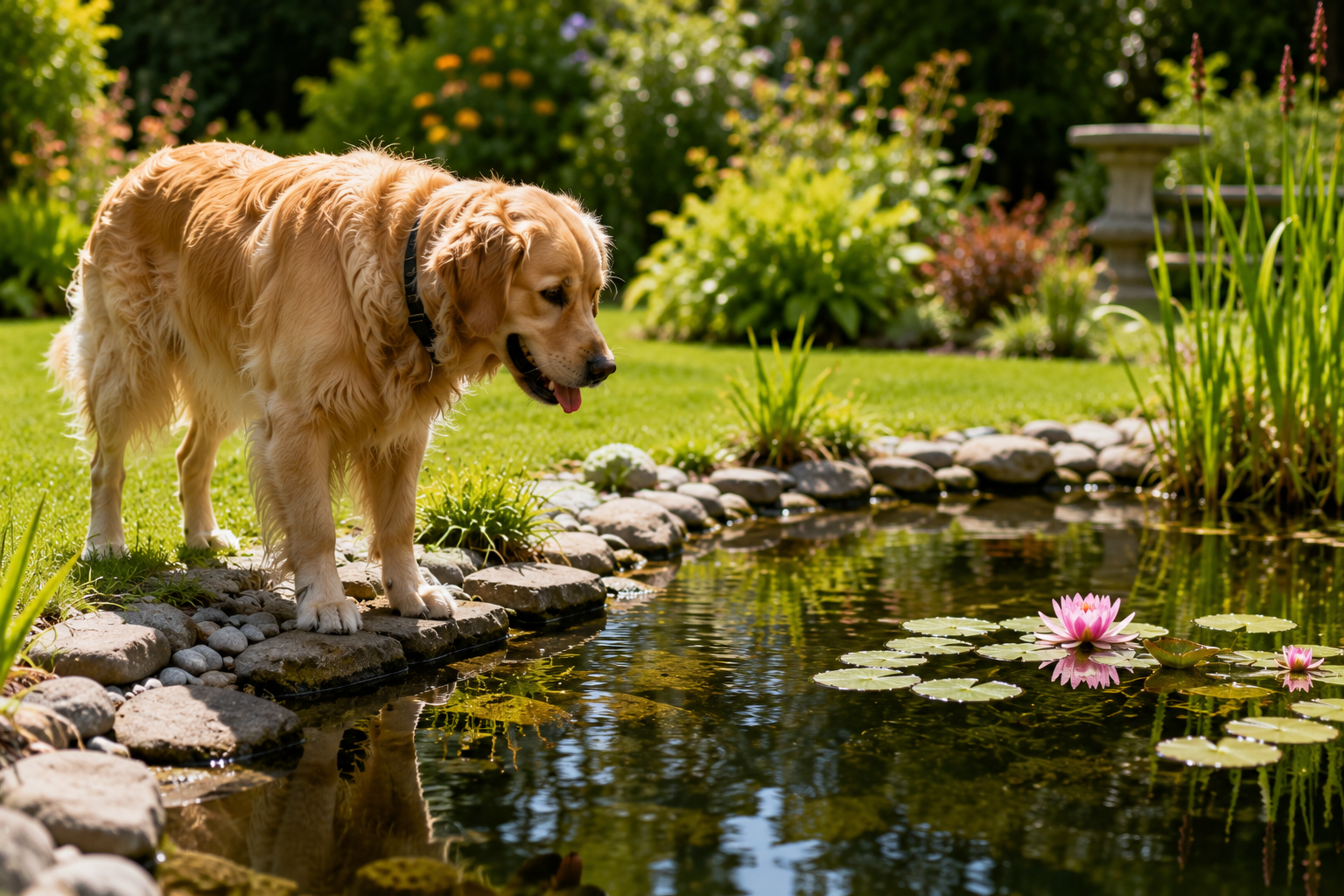
Dog looking at a garden pond with a hidden boundary keeping them safely away

Why Is Dog Pond Safety Important?

Garden ponds can be wonderful features, but they may also present risks for dogs. Puppies, older dogs and particularly curious pets may not always recognise where shallow water becomes deeper, while slippery pond edges can make it difficult for a dog to climb back out.

Garden pond safety for dogs should therefore take into account the individual dog as well as the design of the pond. Consider the depth of the water, how easily your dog could enter and exit, whether the edges are steep or slippery, and whether your dog is likely to chase wildlife into the water.

If you have a natural pond, stream or other water feature, you may also want to protect fish, ducks and other wildlife from an enthusiastic four-legged visitor.

Simple Ways to Keep Dogs Safe Around Ponds

  • Supervise puppies and dogs that are unfamiliar with the garden.
  • Make sure your dog has access to fresh drinking water so they aren’t tempted to drink from the pond.
  • Check that pond edges are stable and not dangerously slippery.
  • Consider whether your dog could safely climb out if they fell in.
  • Create a clearly defined exclusion zone if you don’t want your dog approaching the pond.

For more general advice on escape routes, boundaries and outdoor hazards, read our complete guide to how to keep a dog safe in the garden.

How Do You Keep a Dog Away From a Pond?

There are several ways to keep a dog away from a pond, from traditional fencing and landscaping to training and hidden boundaries. The best option will depend on your garden, your dog’s temperament and whether you want to restrict access permanently or only to a particular area.

A physical fence can work well, but it isn’t always desirable around an attractive pond or landscaped garden. Some owners don’t want to interrupt their view with fencing, while larger or irregularly shaped water features can be difficult to enclose.

A professionally installed DogFence can be designed to create an exclusion zone around the pond instead. Your dog is trained to recognise the boundary and avoid the restricted area while continuing to enjoy freedom elsewhere in the garden.

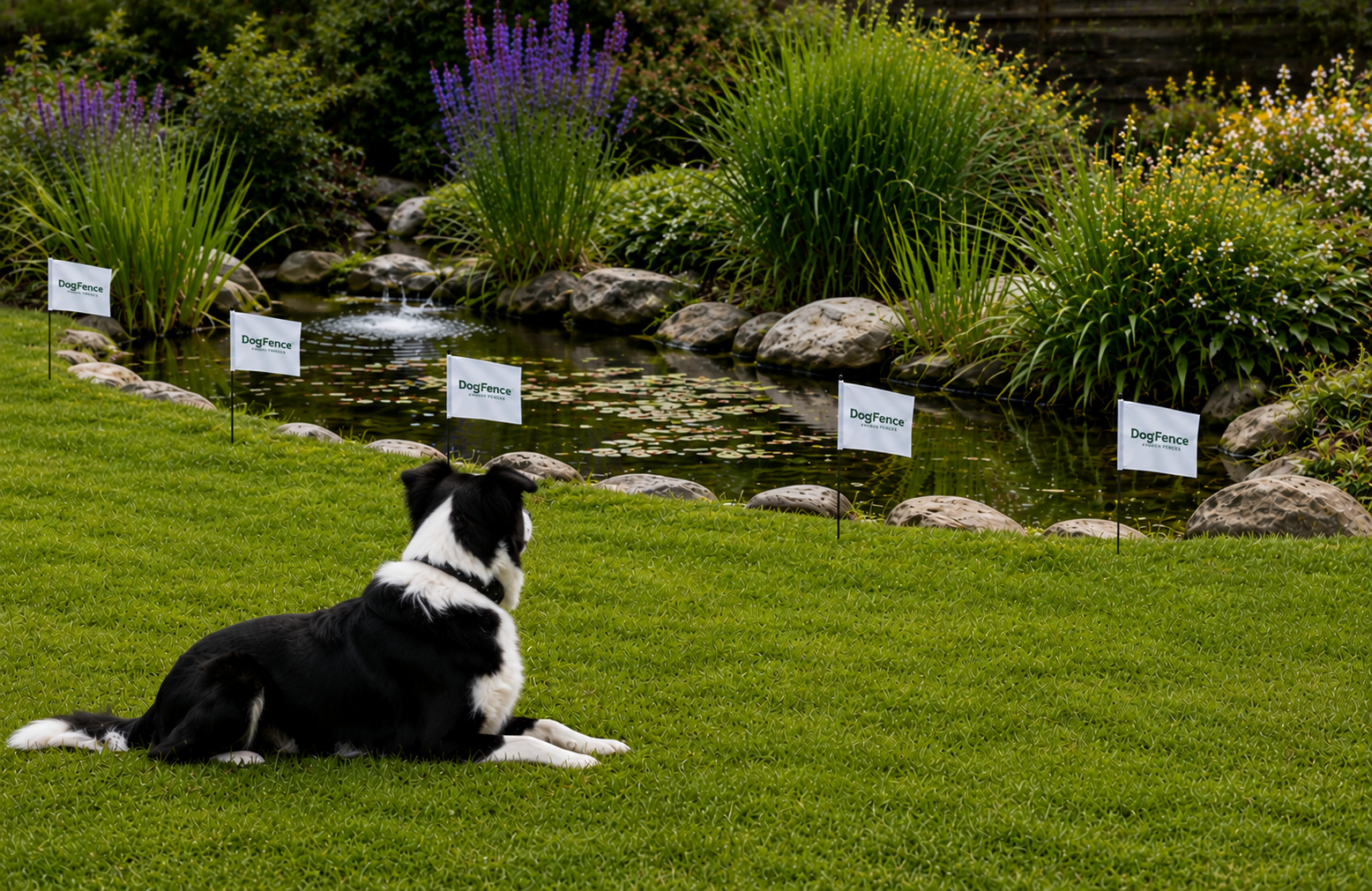
Dog learning a safe boundary around a garden pond during training

Can You Create a Hidden Boundary Around a Pond?

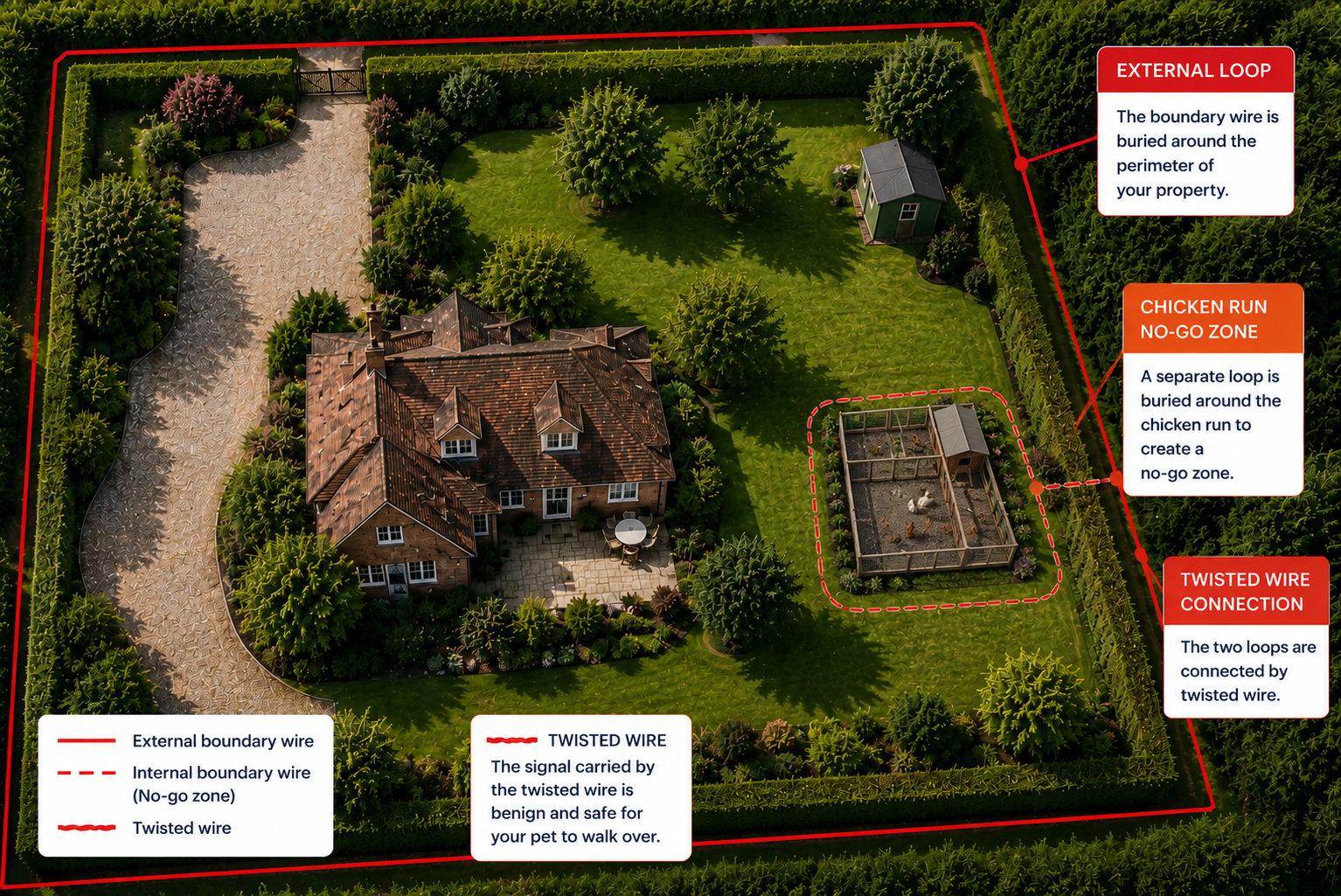
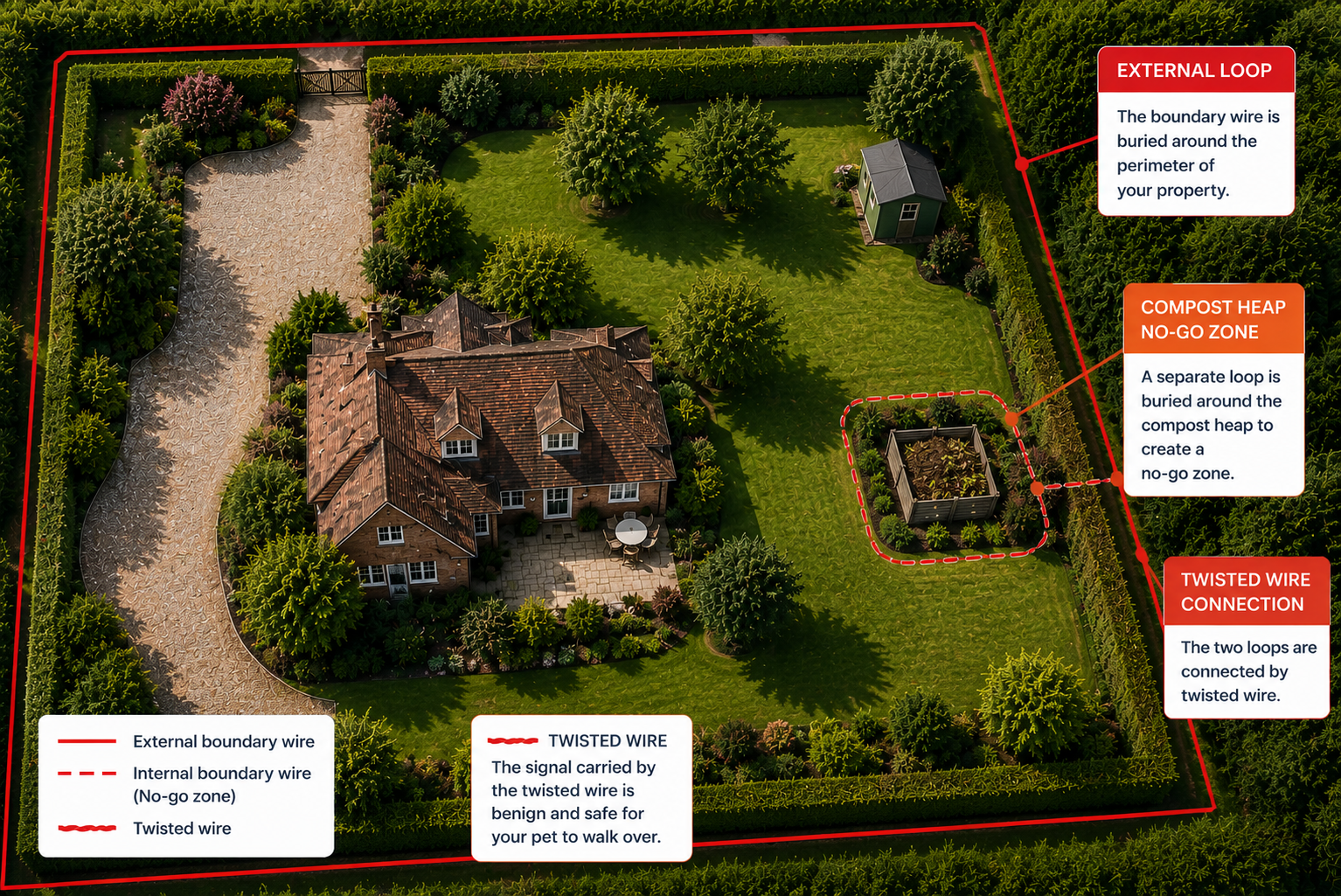
Yes. One of the advantages of a professionally designed hidden dog fence is its flexibility. The boundary doesn’t simply have to follow the perimeter of your property—it can also be configured around areas within the garden.

This means the layout can potentially protect:

  • Garden ponds and water features.
  • Swimming pools.
  • Wildlife areas.
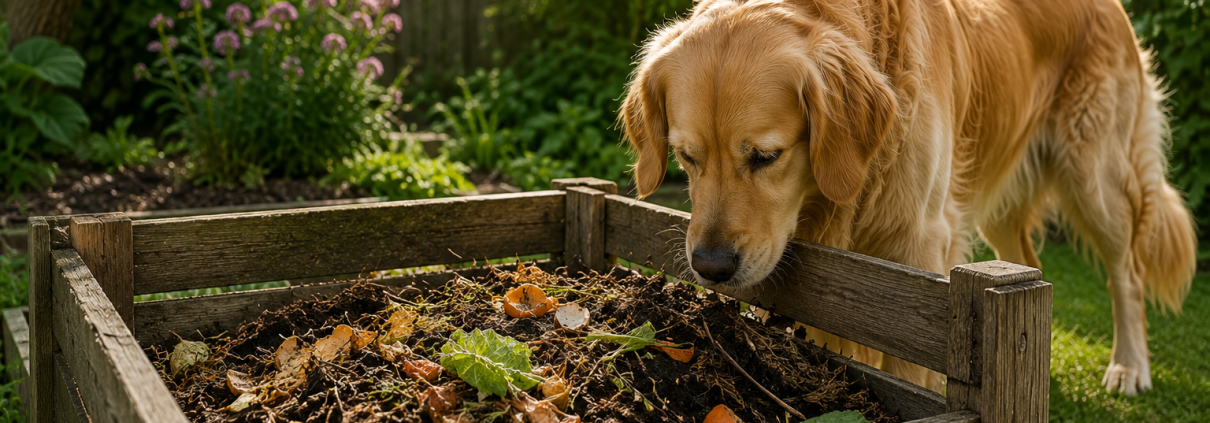
  • Flower beds and vegetable gardens.
  • Children’s play areas.
  • Other parts of the property where you don’t want your dog to go.

If you have a pond or water feature, an internal exclusion zone can be designed to follow its shape, helping your dog learn to stay away from the water while retaining freedom throughout the rest of the garden. Read our guide to keeping your dog away from a pond to see how a hidden DogFence can be used to create a discreet no-go zone around garden ponds and water features.

Every property is different, which is why the design of the boundary matters. Our team considers the shape of your garden, the location of the water and the areas where your dog needs freedom before designing the system.

If your property includes more complex natural features, you can also read our guide to installing a dog fence around trees, streams and woodland.

Swimming Pool Safety for Dogs

Swimming pool safety for dogs is particularly important if your dog has unsupervised access to the garden. Although some dogs are confident swimmers, that doesn’t mean every dog can safely enter and exit a swimming pool.

Pool covers, steep sides and slippery surfaces can all create potential hazards. Puppies, elderly dogs and dogs with mobility problems may be particularly vulnerable around water.

If you want to keep dogs away from swimming pools, creating a designated exclusion zone can prevent access to the pool area without restricting your dog from the entire garden. Learn more about how an invisible dog fence can be used to exclude your dog or cat from your swimming pool in our article on swimming pool safety.

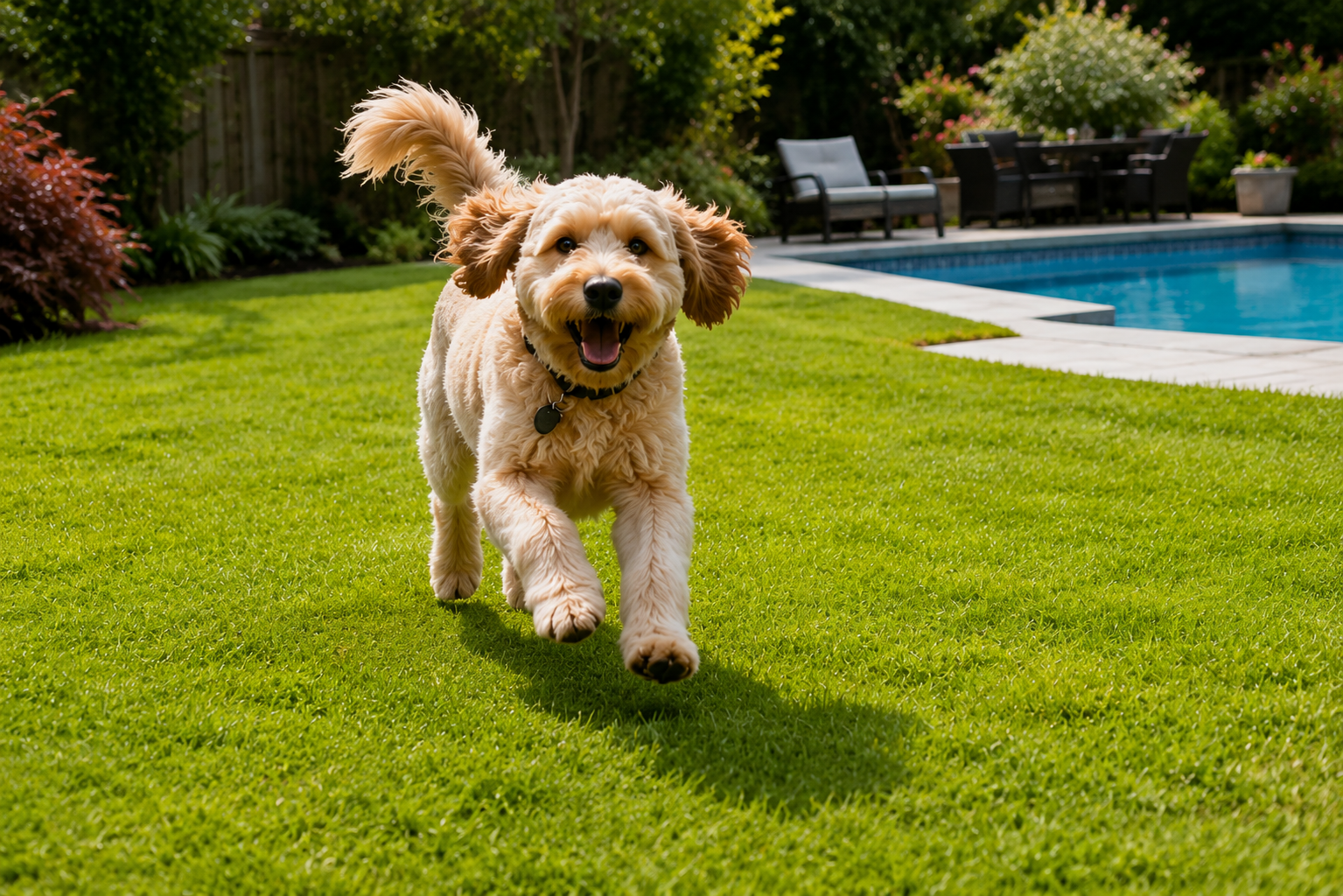
Dog Enjoying Garden Freedom Away from a Swimming Pool

Can My Dog Still Enjoy the Rest of the Garden?

Yes. That’s one of the main benefits of creating an exclusion zone rather than simply restricting your dog’s outdoor access.

Your dog can still run, sniff, play and relax throughout the permitted parts of the garden while learning that the pond or swimming pool is out of bounds. This allows you to protect potentially hazardous areas without unnecessarily limiting your dog’s freedom.

Training Your Dog to Avoid Water Areas

Creating a boundary is only part of the solution. Your dog also needs to understand where they can and cannot go.

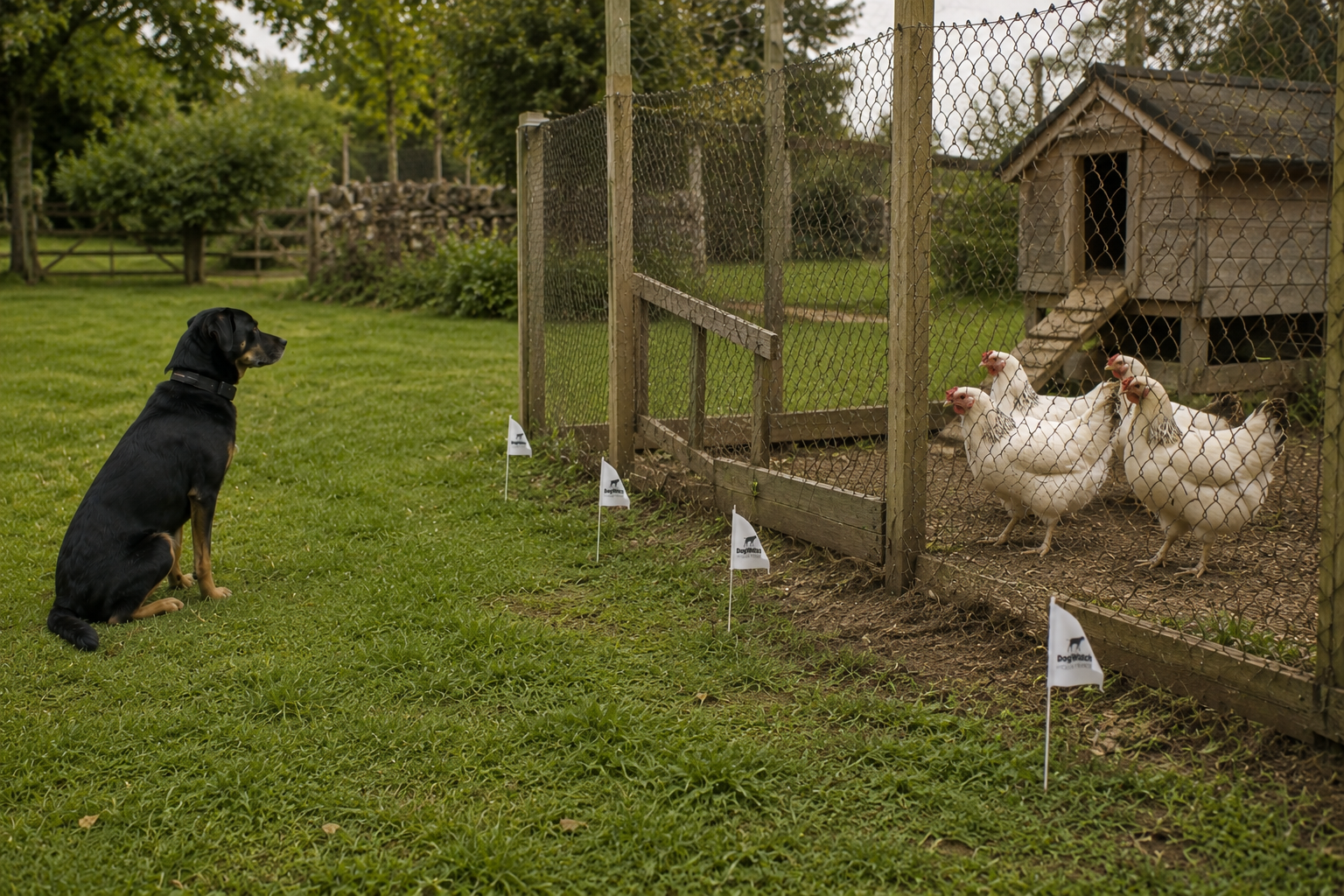
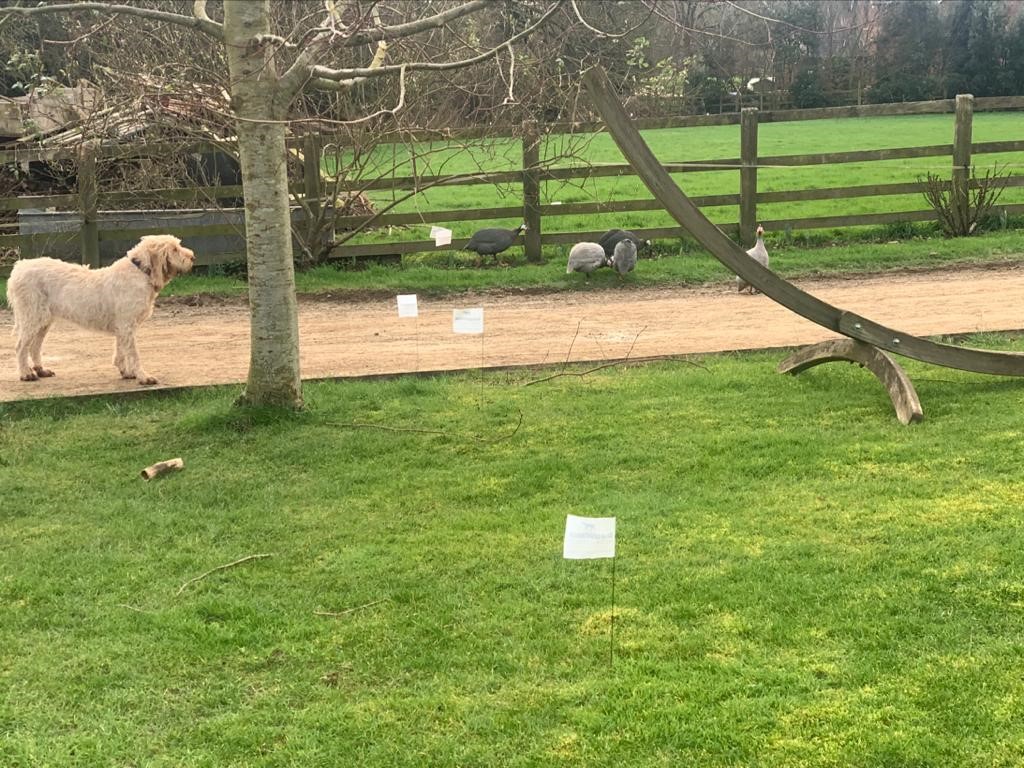
With a professionally installed DogFence system, training is an essential part of the process. Visual training flags initially help your dog recognise the boundary, while gradual, consistent training teaches them to understand and respect their new limits.

Every dog learns differently, so training should take into account their age, temperament and confidence. The aim is for your dog to understand the boundary clearly so they can enjoy the permitted areas of the garden without confusion.

If you’d like to understand more about the system and training process, visit our How It Works page or browse our Frequently Asked Questions.

Frequently Asked Questions

Can a hidden dog fence go around a pond?

Yes. A professionally designed hidden dog fence can be configured to create an exclusion zone around a pond or water feature, depending on the layout of your property. If Garden pond safety for dogs is a concern contact us today for a free quote.

Can I keep my dog away from a swimming pool without building a fence?

In suitable gardens, a hidden boundary system can provide an alternative way to restrict a dog’s access to the swimming pool area while allowing them to enjoy other parts of the garden.

Will my dog understand that the pond is out of bounds?

Training is an important part of creating an exclusion zone. Dogs are introduced gradually to their boundaries using visual markers and consistent training so they learn which areas of the garden they can safely enjoy.

Can I protect more than one area of my garden?

Depending on your property layout, a professionally designed system can create boundaries around multiple areas, such as ponds, pools, flower beds or other parts of the garden you want your dog to avoid.

Give Your Dog Freedom While Protecting Water Areas

Keeping your dog safe around ponds and swimming pools doesn’t have to mean keeping them indoors or restricting their enjoyment of the garden. By identifying potential hazards, providing appropriate supervision and creating clear boundaries, you can give your dog plenty of space to explore while protecting areas where you don’t want them to go.

A professionally designed DogFence system can be tailored to your individual garden, creating a discreet boundary around ponds, swimming pools and other restricted areas while preserving the appearance of your outdoor space.

Ultimately, the goal is simple: more freedom for your dog, greater protection around water and more peace of mind for you.

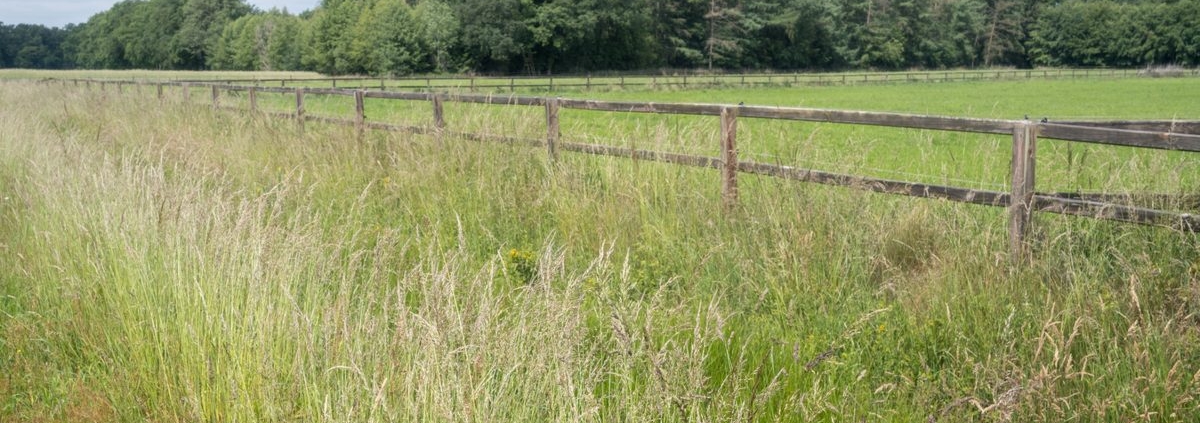
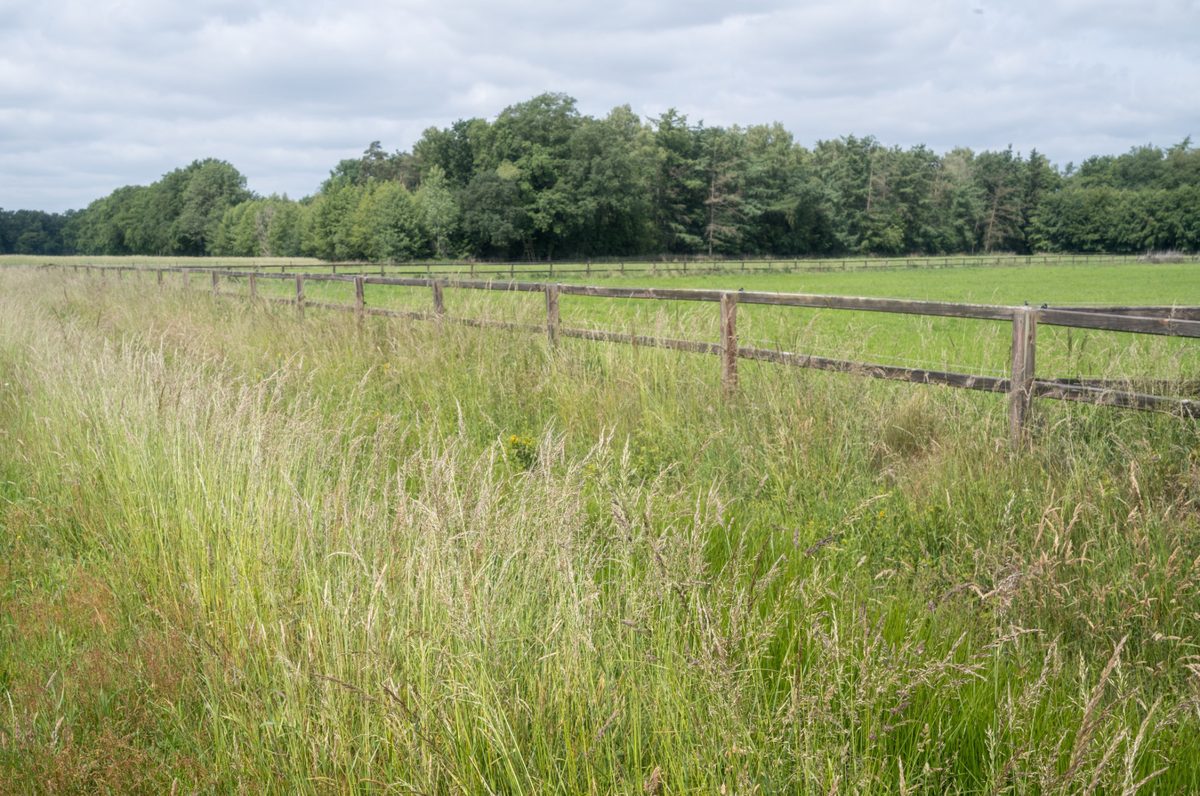
Long grass cut before a hidden dog fence installation to allow safe and efficient cable installation

How to Prepare for Your Hidden Dog Fence Installation

How to Prepare for Your Hidden Dog Fence Installation

Many customers ask, “How do I prepare my garden for a hidden dog fence?” Fortunately, there’s very little you need to do.Once you’ve booked your DogFence installation, a little preparation can help our installers work more efficiently and ensure the best possible result.

Every property is different. While many installations are straightforward, rural gardens, woodland boundaries and more natural landscapes may need a little preparation before our installer arrives.

Preparing the proposed cable route helps our team work safely and efficiently while ensuring your hidden dog fence is installed to the highest possible standard.

Cut Long Grass Before We Arrive

One of the simplest ways you can help is by cutting any long grass along the proposed installation route.

Ideally, grass should be less than 12 inches (30cm) high.

Our installers use specialist trenching equipment to bury the boundary wire at the correct depth. Very long grass can become tangled around the machine, making it difficult to see the ground clearly and preventing the equipment from working as efficiently as it should.

There’s no need to mow the entire garden—just the areas where the boundary cable is likely to be installed.

Long grass cut before a hidden dog fence installation to allow safe and efficient cable installation

Keeping long grass below 12 inches along the installation route helps ensure your hidden dog fence can be installed safely and efficiently.

Clear Brambles and Dense Vegetation

One of the biggest advantages of a hidden dog fence is that it can often follow natural boundaries where traditional fencing simply isn’t practical.

However, our installers still need safe access to the installation route.

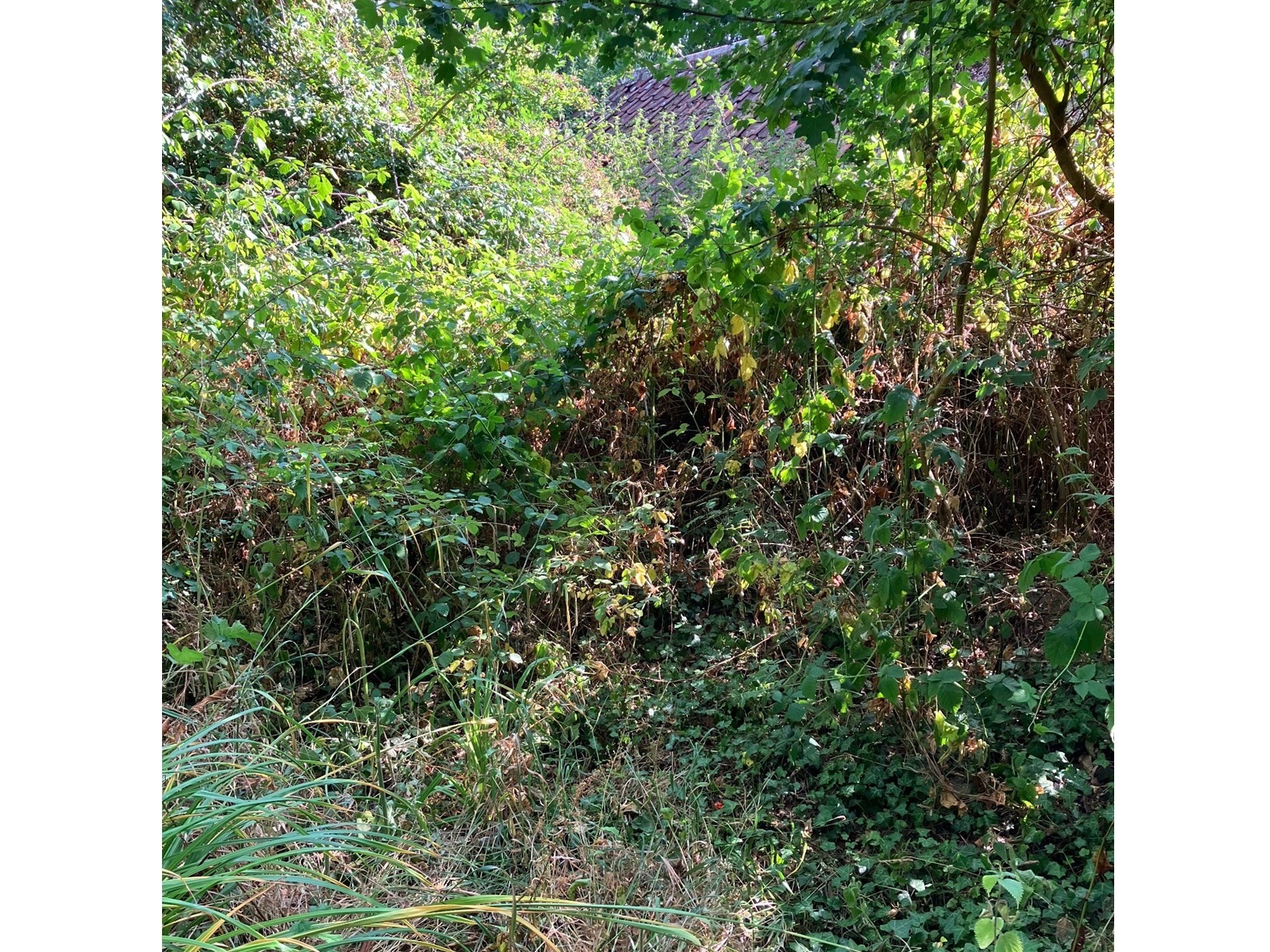
If your boundary has become heavily overgrown with brambles, nettles, thick shrubs or fallen branches, we recommend clearing these before installation day.

As a guide, allowing around 2 feet (60cm) of clear access along the cable route helps us complete the installation safely and efficiently.

This doesn’t mean clearing everything back to bare ground—just enough space for our installer and equipment to work comfortably.

Remove Fallen Branches and Garden Debris

Logs, piles of branches, old fencing materials and other obstacles can slow down an installation.

Removing these beforehand allows us to maintain a smooth cable route and complete your installation more efficiently.

Let Us Know About Underground Services

If you’re aware of any underground services, please let us know before installation.

These might include:

  • Irrigation systems
  • Garden lighting cables
  • Robot lawn mower boundary wires
  • Water pipes
  • Recently planted trees or shrubs
  • Internet Cables (if known)

We’ll always discuss the proposed cable route with you before work begins.

Overgrown garden boundary cleared before a hidden dog fence installation

Dense vegetation and overgrown boundaries should be cleared back before installation, allowing our installers to safely follow the boundary line and install your hidden dog fence as accurately and efficiently as possible.

Keep Dogs Safely Indoors

Installation day involves specialist equipment and our installer moving around your property.

For everyone’s safety, we recommend keeping your dog indoors or in another secure area until the installation has been completed and it’s time to begin the training process.

Every Garden Is Different

We regularly install hidden dog fences in:

  • Rural properties
  • Farms and smallholdings
  • Woodland gardens
  • Large country gardens
  • Gardens with mature trees and natural boundaries
  • Gardens with small streams

Some properties require very little preparation, while others may benefit from a little clearing before installation day.

If you own a larger or more challenging property, you may also find our guide Is a Hidden Dog Fence Suitable for Rural Properties?</a> helpful. It explains how hidden dog fences can be installed across fields, woodland, streams and other natural features.

If you’re unsure whether your garden needs any preparation, simply ask. We’re always happy to offer advice before your installation.

Every gate installation is different, so any information you can provide beforehand is always appreciated and helps us plan the best installation for your property.


A Little Preparation Makes a Big Difference

Preparing your garden doesn’t need to be a major project.

Cutting long grass, clearing heavy vegetation and providing good access along the proposed boundary allows us to work more efficiently and helps us deliver the highest quality installation possible.

Our aim is always the same—to leave you with a professionally installed hidden dog fence that blends naturally into your garden and provides years of reliable protection for your dog.


What About Electric Gates?

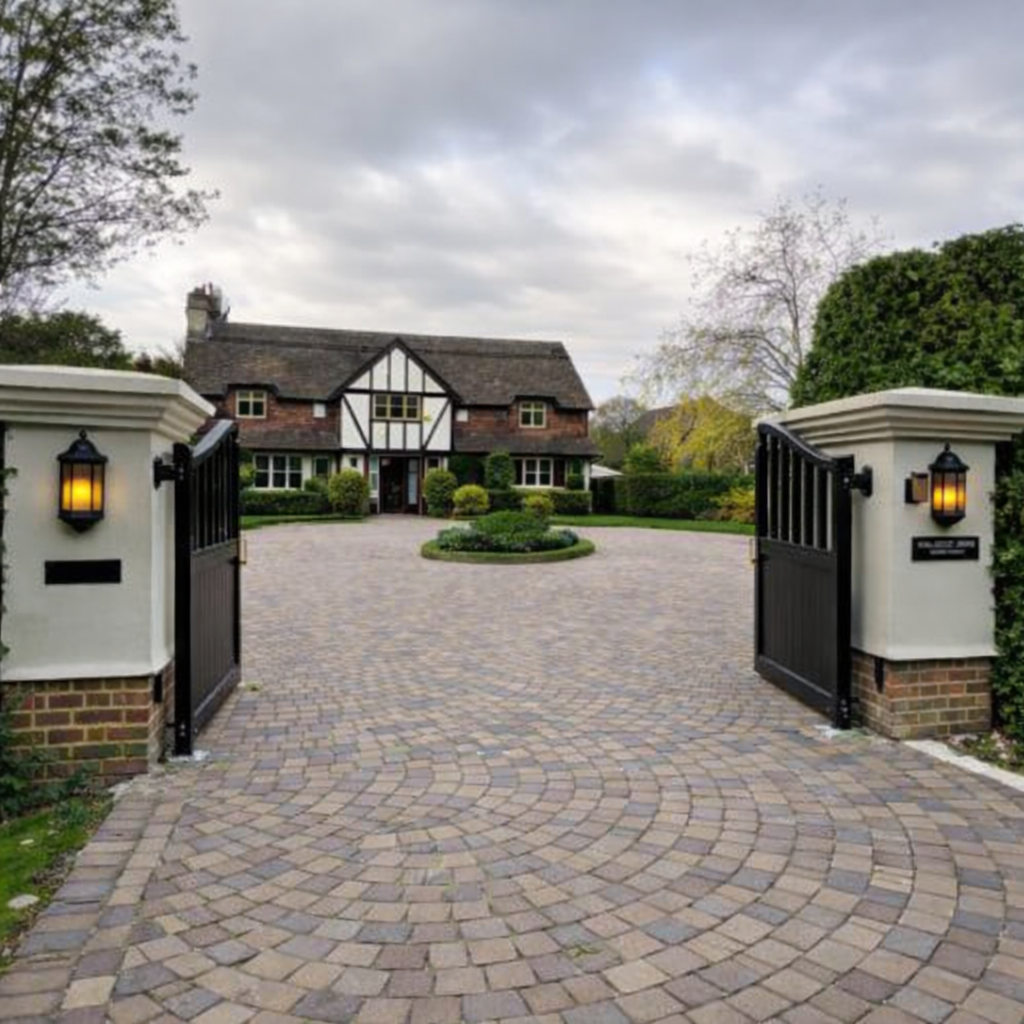
If your property has electric gates, there’s no need to worry. We install hidden dog fences on properties with automated gates every week.

When you book your installation, we’ll ask if you have electric gates so we can make a note of them. On the day, your installer will assess the gate area and may ask you a few additional questions to ensure your hidden dog fence works perfectly alongside your existing gate system.

Every gate installation is different, so any information you can provide beforehand is always appreciated and helps us plan the best installation for your property.

If your installation also needs to cross a driveway, let us know in advance so we can plan the most suitable cable route. You can also read our guide on how-will-the-dog-fence-wire-cross-my-driveway to see how we install across different driveway surfaces.

block paved driveway with electric gates showing where invisible dog fence cable can be installed across driveway entrance

Open electric gates and a circular block-paved driveway can create an easy escape route for dogs if there is no boundary in place.


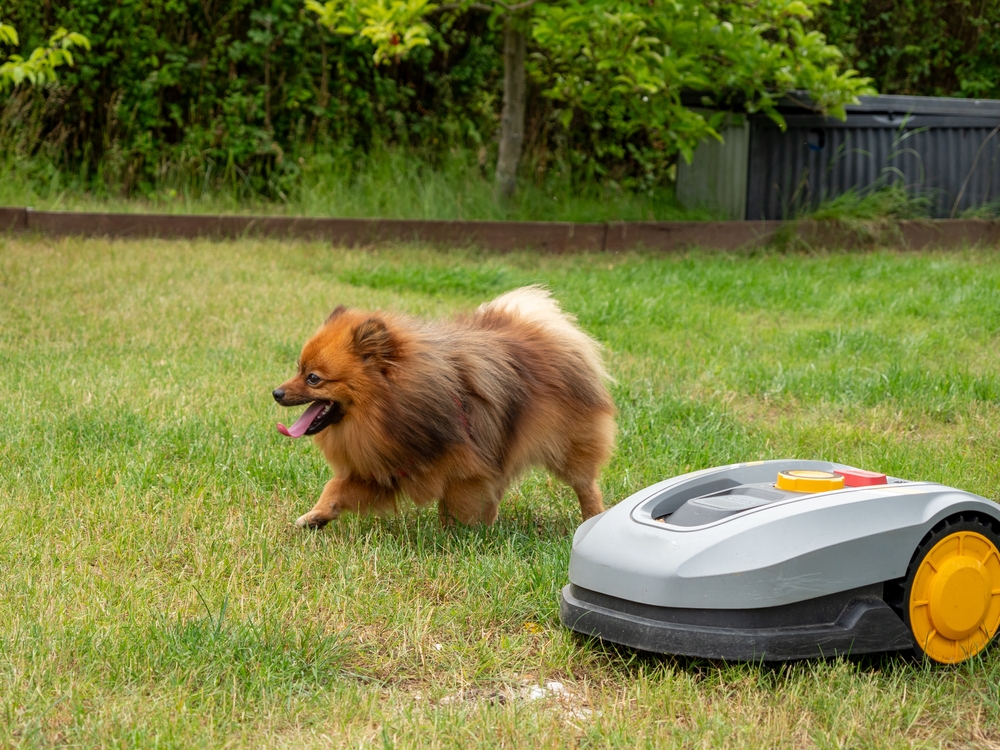
What If I Have a Robotic Lawn Mower?

Having a robotic lawn mower doesn’t usually prevent you from having a hidden dog fence installed.

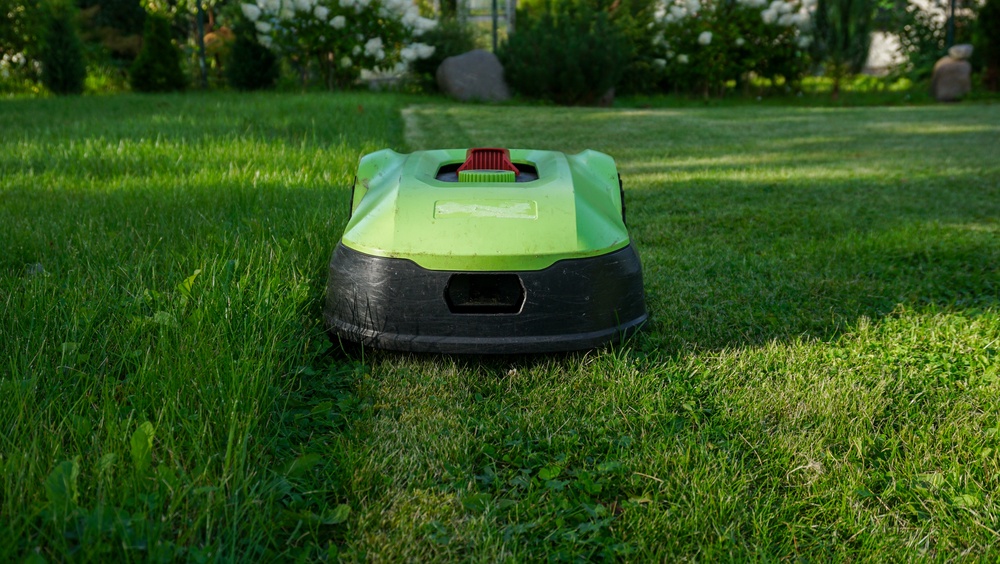
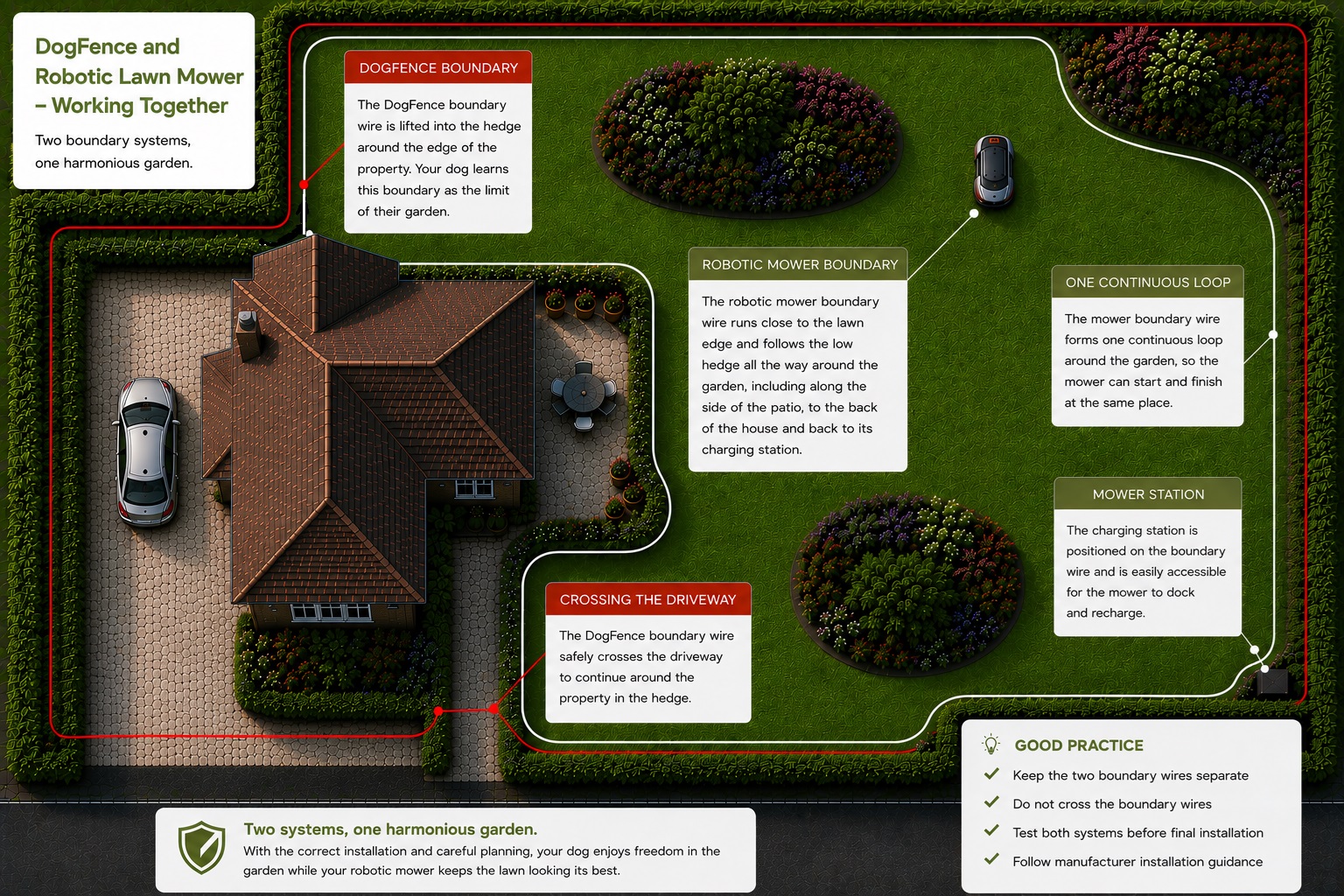
Robot mowers vary from manufacturer to manufacturer, but in most cases, as long as we keep our boundary wire approximately 2–3 feet (60–90cm) away from your mower’s boundary wire, there should be no issues.

The two systems cannot share the same cable. Most robotic mowers use an AM signal to detect their boundary wire and, if the cables are installed too close together, the mower may try to detect the signal from the hidden dog fence instead.

If you have a robotic mower, simply let us know when you book your installation. Our installer will discuss the layout with you on the day and make sure both systems work together reliably.

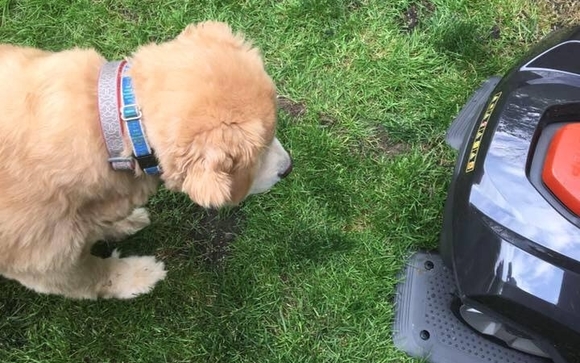
Robotic lawn mower operating in a garden with a hidden dog fence boundary

See a DogFence Installation in Action

Wondering what a hidden dog fence installation actually looks like?

Watch our short video below to see how a typical installation is carried out and hear some helpful advice on preparing your garden before installation day.

▶️ Watch here: https://www.youtube.com/watch?v=BzPLobnxzHc

Frequently Asked Questions

How do I prepare my garden for a hidden dog fence?

Simply cut long grass, clear heavy brambles along the cable route and let us know if you have electric gates or a robotic lawn mower.

Do I need to clear my whole garden?

No. We only need access along the planned installation route.

How short should the grass be?

Ideally, less than 12 inches (30cm) high where the boundary wire will be installed.

How much should I clear?

If possible, allow around 2 feet (60cm) of clear access along the installation route by cutting back heavy brambles and dense vegetation.

Can the Dog Fence be installed with electric gates?

Yes. In most cases, absolutely. We regularly install hidden dog fences on properties with electric gates and will assess your setup during installation to ensure everything works together correctly.

Hopefully this guide has answered the question, “How do I prepare my garden for a hidden dog fence?” but if you have any questions call us and one our team will be happy to answer any queries.


Ready for Your Hidden Dog Fence Installation??

A little preparation before installation day can make a big difference. Cutting long grass, clearing heavy vegetation and letting us know about features such as electric gates or robotic lawn mowers helps our installers work efficiently and achieve the highest standard of installation. If you have any questions before your installation, our friendly team is always happy to help

Call us on
01628 476475
|
Message us on WhatsApp
|
Request a Free Quote

How to keep a dog safe in the garden

How to Keep Your Dog Safe in the Garden

How to Keep a Dog Safe in the Garden

How to keep a dog safe in the garden starts with creating a secure outdoor space, checking for escape routes and hazards, and giving your dog clear boundaries. Good dog garden safety allows your dog to run, play and explore while reducing the risk of them escaping, reaching a road or wandering into areas where they could be at risk.

Every dog owner wants to see their dog enjoying the garden without constantly worrying about an open gate, a gap in the hedge or a tempting escape route. But every property – and every dog – is different. A determined digger needs a different approach from a dog that bolts through an open driveway, while rural properties can present completely different challenges from smaller suburban gardens.

The good news is that effective garden security for dogs doesn’t have to mean restricting their freedom. By identifying the risks around your property and creating boundaries your dog understands, you can work towards a safe off-lead garden where your dog has the freedom to enjoy being outdoors while remaining safely at home.

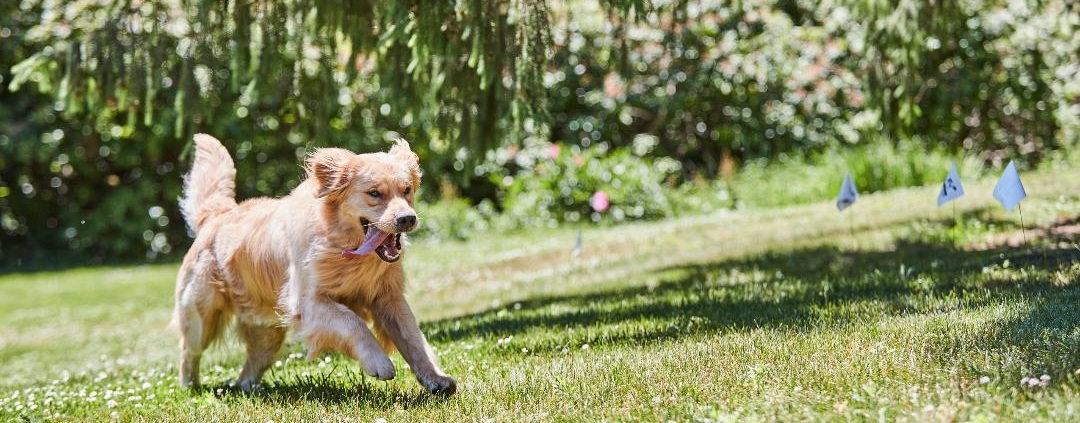
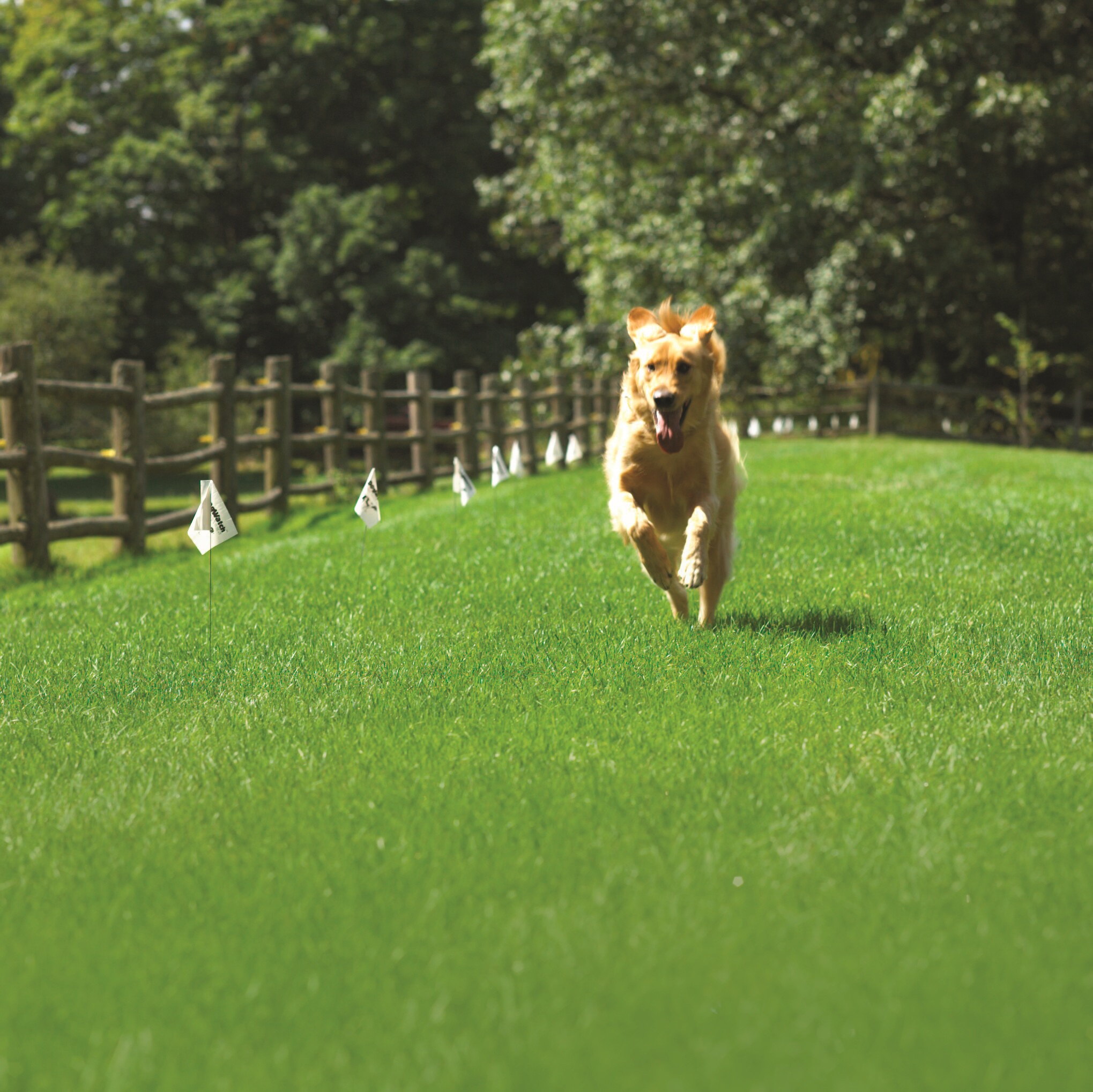
Happy dog running freely in a safe garden wearing a hidden dog fence collar

Quick Answer: How to Keep a Dog Safe in the Garden

To improve dog garden safety:

  • Check fences, walls, hedges and gates for potential escape routes.
  • Look for gaps where your dog could squeeze through or dig underneath.
  • Consider how your dog is secured when driveways or electric gates are open.
  • Identify ponds, pools and other areas that could present a risk.
  • Provide shade and fresh drinking water.
  • Supervise puppies, rescue dogs and dogs that are new to the property.
  • Consider nearby roads, wildlife and livestock when assessing your boundary.
  • Train your dog to understand where they can safely roam.
  • Consider a professionally installed hidden dog fence if you need additional security.

The aim is simple: create a secure garden that gives your dog as much safe outdoor freedom as possible.

Start Dog Garden Safety at the Boundary

The first step in learning how to keep a dog safe in the garden is to look at your property from your dog’s point of view.

Dogs are naturally curious, and some become remarkably good escape artists once they discover a weak spot. A tiny gap in a hedge may not look significant to you, but to an adventurous dog it could be an invitation to explore.

Walk around your entire garden and check for:

  • Gaps under fences and gates.
  • Loose or damaged fence panels.
  • Low walls or hedges that could be jumped.
  • Soft ground where your dog could dig underneath a boundary.
  • Open driveways and vehicle entrances.
  • Gaps leading into neighbouring gardens.
  • Areas where garden furniture or bins could help a dog climb over a fence.

Fixing a small problem before your dog discovers it is usually much easier than persuading an experienced escape artist to give up their new adventure.

If your dog already has a habit of disappearing beyond the garden, read our complete guide on how to stop your dog running away and prevent roaming.

Why Do Dogs Escape from Gardens?

Understanding why your dog wants to leave can be just as important as finding the physical escape route.

Dogs may escape because they are:

  • Following an interesting scent.
  • Chasing wildlife.
  • Trying to reach another dog or person.
  • Exploring beyond the property.
  • Frightened by an unexpected noise.
  • Bored or looking for stimulation.
  • Able to see an easy route out.

Some dogs are also simply more determined to explore than others.

Training and enrichment can help address some of these behaviours, but they don’t remove the need for a secure boundary. Even a dog with good recall can become distracted by something particularly exciting on the other side of the garden.

If your dog is regularly trying to leave the garden, understanding the reason behind the behaviour can help you choose the right solution. Read our guide on: Why Dogs Escape and How to Stop a Dog Running Away.  for a closer look at the most common causes of escaping, roaming and boundary-testing behaviour.

Garden Security for Dogs with Open Driveways and Electric Gates

One of the biggest challenges for garden security for dogs is an entrance that needs to remain open.

You may have secure fencing, walls or hedges around most of your property, but if the driveway is open, your dog still has a direct route to the road.

Electric gates can create a similar problem. A dog may only need a few seconds to slip through while the gates are opening for a car, delivery driver or visitor.

A professionally installed hidden dog fence can create a discreet boundary across an open driveway or work alongside existing electric gates. Your dog is trained to understand the boundary while cars, visitors and deliveries can continue to access the property normally.

For more information, read our guide to keeping dogs safe around open driveways and electric gates.

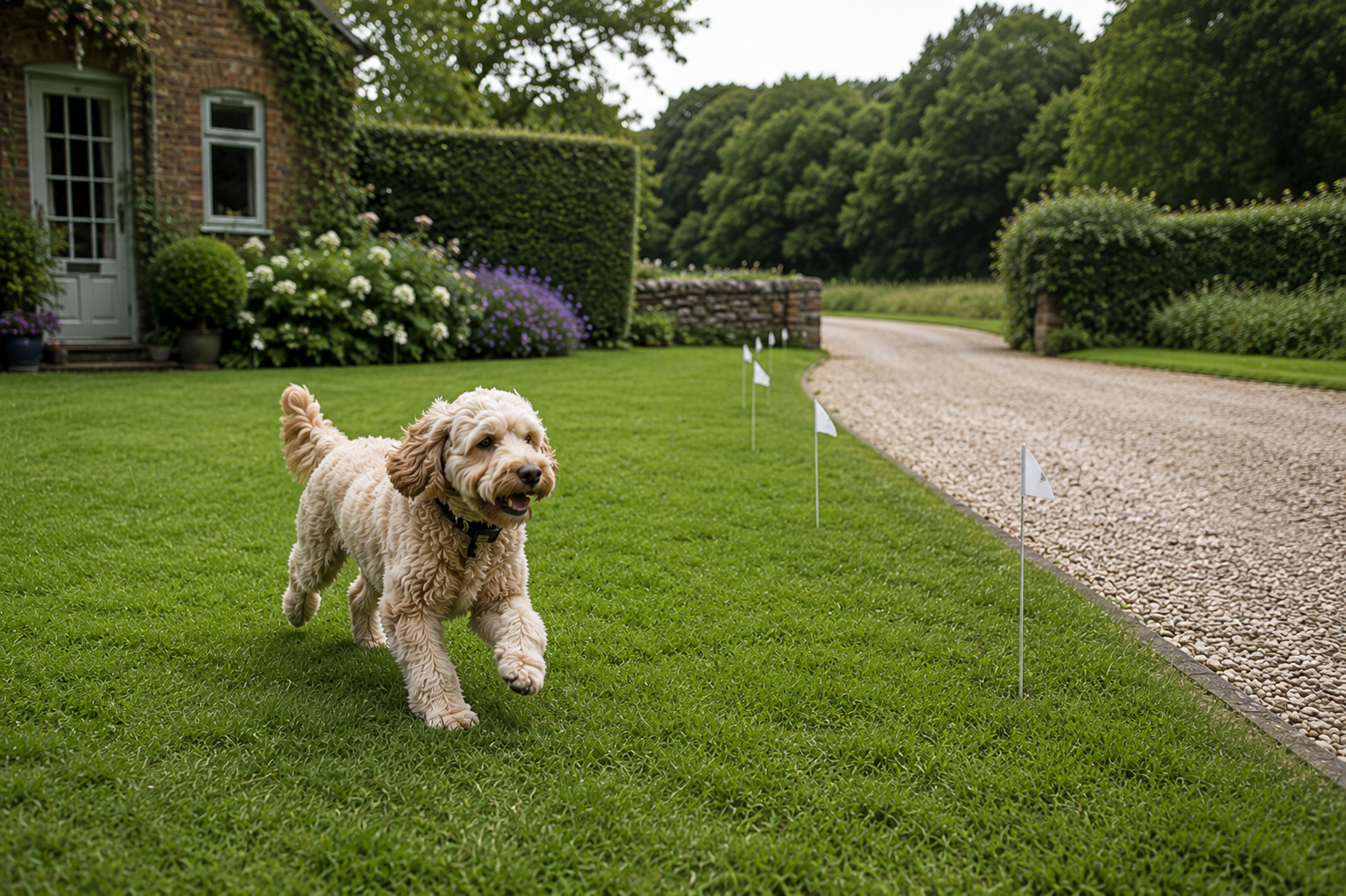
Cockapoo running safely in a garden with an open driveway and white boundary training flags

Can You Create a Safe Garden Without a Physical Fence?

Yes. Where conventional fencing is impractical, unsuitable or does not prevent a particular dog from escaping, a professionally installed hidden dog fence can create a secure boundary that the dog is trained to understand.

A hidden dog fence can also work alongside the physical boundaries you already have.

For example, your garden may already have fences, walls and hedges, but your dog might:

  • Dig underneath them.
  • Jump or climb over them.
  • Squeeze through small gaps.
  • Escape through an open driveway.
  • Run through electric gates as they open.

In these situations, the hidden boundary can provide an additional layer of garden security for dogs without replacing the existing features of the property.

If you’d like to understand the technology behind the boundary, visit our How DogFence Works page.

How to Create a Safe Off-Lead Garden

A safe off-lead garden is a secure outdoor area where your dog can run, sniff, play and explore without being permanently attached to a lead.

For many owners, this is the real goal of improving garden security: not to restrict their dog, but to give them more freedom.

A clearly defined boundary can allow a dog to enjoy a much larger area than they might otherwise have access to. This can be particularly valuable for dogs that would need to be kept on a long line or closely supervised whenever they went outside because of the risk of escape.

Creating a safe off-lead garden means finding the right balance between freedom and security. Your dog gets space to enjoy being a dog, while you have greater confidence that they will remain within their designated area.

Keeping Dogs Safe Around Garden Hazards

Dog garden safety isn’t only about preventing escapes. Some areas within a property may also need to remain out of bounds.

Depending on your garden, these could include:

  • Ponds and swimming pools.
  • Flower beds and vegetable gardens.
  • Wildlife areas.
  • Driveways and vehicle access.
  • Outbuildings.
  • Woodland or streams.
  • Boundaries adjoining farmland or livestock.

Depending on the layout of the property, a professionally designed DogFence can sometimes include exclusion zones around areas you don’t want your dog to enter.

This means you don’t necessarily have to restrict your dog’s access to the entire garden simply because one particular area needs protection.

What About Ponds and Swimming Pools?

Water can present a particular concern for some dog owners. Puppies, older dogs and dogs that are not confident swimmers may require additional care around ponds, swimming pools and other water features.

A professionally designed hidden dog fence may be able to create an exclusion zone around the water while leaving the rest of the garden available for your dog to enjoy.
For more advice, read our guide to keeping dogs safely away from ponds and swimming pools.

Dog Garden Safety Around Trees, Streams and Woodland

Large gardens and rural properties often contain natural features that don’t fit neatly behind a conventional garden fence.

Trees, streams, woodland and uneven terrain can all affect how a secure dog boundary needs to be designed.

One advantage of a professionally installed hidden dog fence is that the boundary can be designed around the individual property rather than requiring the landscape to be divided by additional physical fencing.

If your garden includes natural features, read our guide to installing an invisible dog fence around trees, streams and woodland.

Dog Garden Safety in Rural Properties

Rural properties can present very different challenges when trying to keep a dog safe.

Large gardens may include fields, hedges, woodland, uneven terrain and open driveways. Installing conventional fencing around several acres can also be expensive or impractical.

There may be more temptation beyond the boundary too. Rabbits, deer, pheasants and neighbouring livestock can all attract a dog’s attention.

Creating a clearly defined boundary can help prevent dogs from roaming beyond the property while still allowing them to enjoy the space available at home.

Our guide to dog-proof fencing and dog safety in rural areas looks more closely at securing dogs on countryside properties.

Keeping Dogs Safe Around Wildlife and Livestock

For dogs living near woodland, farmland or open countryside, wildlife can be an irresistible distraction.

A rabbit disappearing through a hedge or a deer crossing a neighbouring field can be enough to make even a normally responsive dog forget their recall.

Keeping your dog securely within their property can reduce opportunities for chasing and unwanted encounters. It can also help keep dogs away from neighbouring livestock.

A secure dog boundary can therefore protect more than your own pet. It may also help reduce disturbance to the animals living around you.

Read our guide to how to protect wildlife from dogs while giving your dog safe outdoor freedom.

What Makes a Dog-Friendly Garden?

A secure garden and a dog-friendly garden are closely connected, but they are not quite the same thing.

A secure garden focuses on preventing your dog from escaping and keeping them away from potential hazards.

A dog-friendly garden also considers how enjoyable and enriching the outdoor space is for your dog, including access to shade, fresh water and opportunities to sniff, explore and relax.

Ideally, your garden should be both safe and enjoyable.

According to the RSPCA’s guidance on dog welfare, dogs need appropriate opportunities for exercise and to behave naturally.

We’ve covered garden design and enrichment separately in our complete guide to creating a dog-friendly garden, including practical ideas for making your outdoor space safer and more enjoyable for your dog.

Why Training Is Essential for Dog Garden Safety

A hidden dog fence isn’t simply installed and left for the dog to work out. Training is a crucial part of creating a boundary your dog understands.

During the initial training period, the boundary is marked using visible training flags. Your dog is gradually introduced to the boundary so they learn where they can safely roam.

Every dog is different, which is why training should take account of the individual dog’s temperament, age and confidence.

As the dog learns where the boundary lies, they can become increasingly confident about the area in which they are free to run, play and explore.

The goal is a safe off-lead garden where your dog understands their boundaries and can enjoy outdoor freedom with greater confidence.

If you’re unsure whether DogFence could be suitable for your dog, our Frequently Asked Questions answer many of the questions owners ask before installation.

Labrador learning a safe garden boundary during DogFence training with white boundary flags

Frequently Asked Questions About Dog Garden Safety

How do you keep a dog safe in the garden?

To keep a dog safe in the garden, check for escape routes, secure vulnerable entrances, identify potential hazards and make sure your dog understands their boundaries. Where conventional fencing does not provide adequate security, a professionally installed hidden dog fence can provide an additional secure boundary.

How do I stop my dog escaping the garden?

Check for gaps, damaged fencing and places where your dog can dig, climb or jump. Pay particular attention to gates and open driveways. Understanding why your dog escapes and creating a secure boundary can help prevent future escapes.

Can I keep my dog safe without a physical fence?

Yes. A professionally installed hidden dog fence can create a secure boundary where conventional fencing is impractical or unsuitable. It can also work alongside existing fences, hedges, walls and gates.

What is a safe off-lead garden?

A safe off-lead garden is a secure outdoor area where a dog can run, play and explore without being permanently attached to a lead. It should have clearly defined boundaries that help prevent the dog from leaving the property.

Can a hidden dog fence work with existing fencing?

Yes. A hidden dog fence can work alongside existing physical fences, walls, hedges and gates to provide additional security, particularly for dogs that dig underneath, jump over or find gaps in conventional boundaries.

Can a hidden dog fence work in a large or rural garden?

Yes. A professionally designed hidden dog fence can be particularly useful for large and rural properties where conventional fencing may be difficult, expensive or visually intrusive. The boundary can be designed around the individual layout of the property.

Can I keep my dog away from certain parts of the garden?

Depending on the property layout, a professionally designed DogFence may be able to create exclusion zones around ponds, swimming pools, flower beds or other areas you want your dog to avoid while allowing them to enjoy the rest of the garden.

Enjoy More Freedom with Greater Peace of Mind

Learning how to keep a dog safe in the garden doesn’t mean limiting their freedom.

By identifying escape routes, securing vulnerable boundaries and providing appropriate training, you can create a secure outdoor space where your dog can run, play and relax with confidence.

Whether your property has conventional fencing, an open driveway, rural boundaries or several acres of land, the goal is the same: effective garden security for dogs that allows them to enjoy as much safe freedom as possible.

A professionally installed DogFence creates a discreet boundary designed around your individual property and your dog, helping you create a secure, safe off-lead garden without unnecessarily restricting their freedom.


Want to Keep Your Dog Safe in the Garden?

Every dog deserves the freedom to run, play and explore safely. A professionally installed DogFence creates a discreet hidden boundary, helping keep your dog safely contained while preserving the natural look of your garden.

Call us on
01628 476475
|
Message us on WhatsApp
|
Request a Free Quot