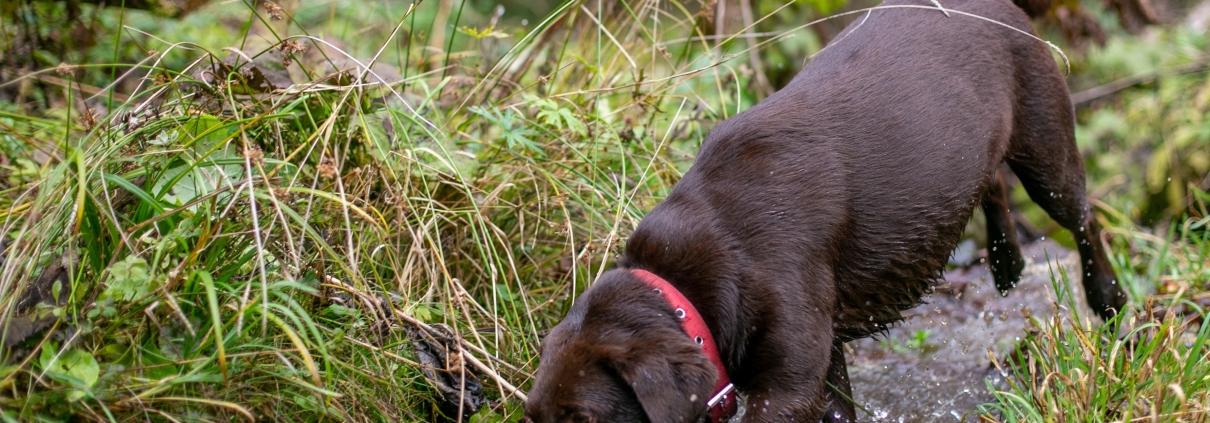
Invisible Dog Fence Around Trees, Streams & Woodland | DogFence UK
Can an Invisible Dog Fence Be Installed Around Trees, Streams and Woodland?
An invisible dog fence around trees, streams and woodland can usually be professionally installed without spoiling the look of your garden. Hidden dog fences, underground dog fences and electronic dog fence systems are designed to work with natural landscapes, including mature trees, wooded areas, ponds, streams, sloping ground and large rural gardens.
If you have a garden that is difficult to fence traditionally, an invisible dog fence may be one of the most practical ways to keep your dog safely contained while preserving the natural appearance of your property. Rather than relying on visible fence panels, posts or gates, the system uses a discreet boundary wire and structured training to teach your dog where they can and cannot go.
At DogFence, we have been helping UK dog owners keep pets safely contained since 2003. Our systems are particularly useful for country homes, woodland gardens, large properties, paddocks and homes where traditional fencing would be expensive, unattractive or difficult to install.
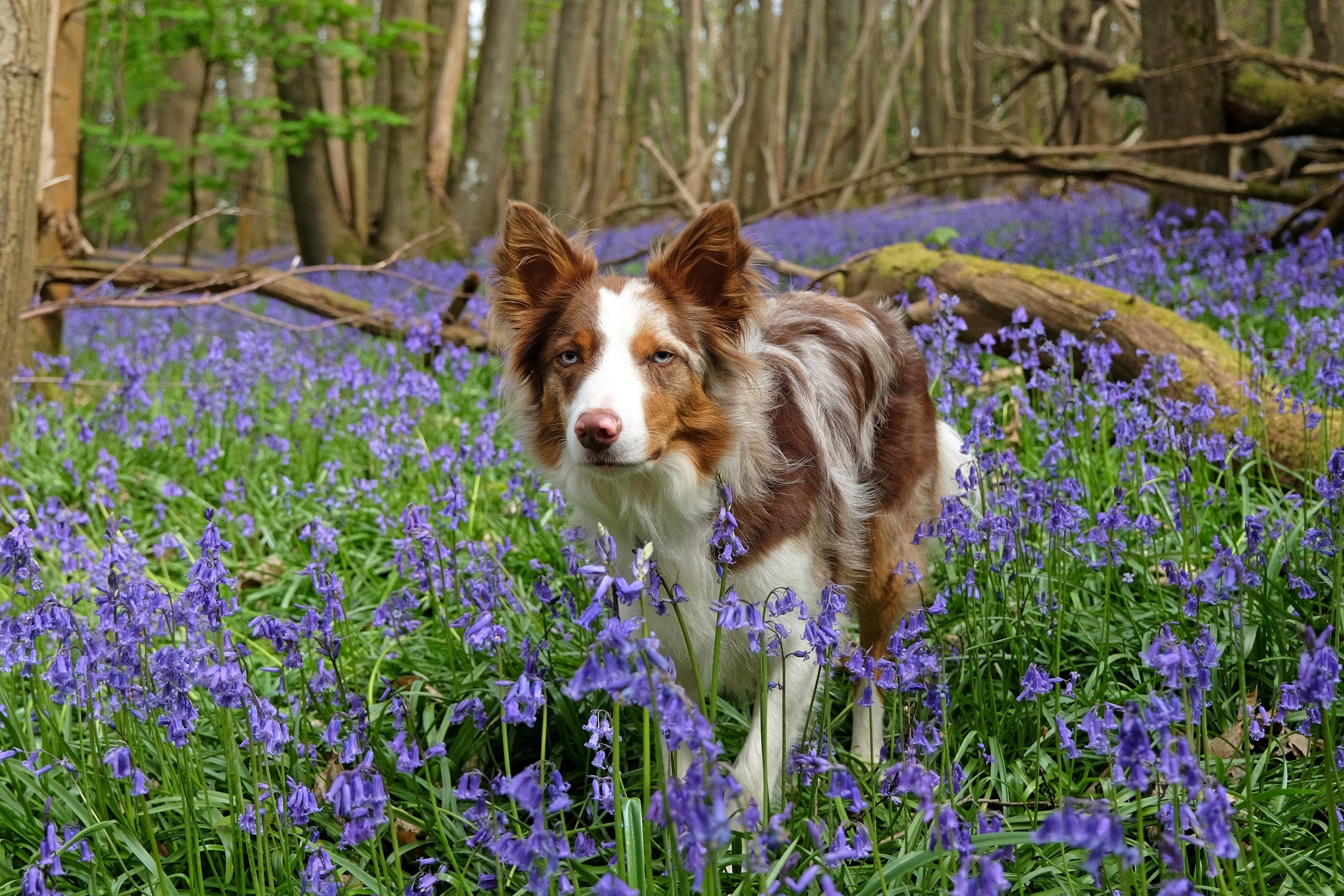
Why an Invisible Dog Fence Works Well Around Trees, Streams and Woodland
One of the biggest advantages of an invisible dog fence is flexibility. A traditional fence usually needs straight runs, posts, level ground and physical access for installation. A hidden dog fence is different because the boundary can follow the natural shape of your property.
This makes invisible dog fencing suitable for many gardens with:
- Mature trees
- Woodland paths
- Streams and ponds
- Sloping lawns
- Banks and ditches
- Large rural gardens
- Paddocks and open land
- Orchards and natural landscaping
Because the boundary wire is usually buried just below the surface, the finished result is discreet. Your garden still looks like your garden, but your dog learns a clear, safe boundary.
If you are new to this type of system, you may find our guide to how the DogFence system works helpful before deciding whether it is right for your property.
Can an Invisible Dog Fence Go Around Trees?
Yes, an invisible dog fence can usually go around trees. In many gardens, trees are not a problem at all. The boundary wire can be routed carefully around wooded areas, through natural paths or along existing garden edges without the need to remove trees or install visible fencing.
During a professional installation, care is taken to avoid major roots where possible. The route of the underground dog fence can be adjusted to suit the natural features of the garden, meaning mature trees can often remain completely undisturbed.
This is especially useful for owners who want their dogs to enjoy woodland areas safely. Instead of fencing off the trees, an invisible dog fence can include the woodland within the safe containment area, giving your dog space to explore while helping to stop them wandering beyond your boundary.
Can an Underground Dog Fence Cross Streams or Wet Ground?
In many cases, yes. An underground dog fence can often cross shallow streams, damp ground and other natural wet areas using suitable installation techniques. Water itself is not usually the deciding factor; the important point is choosing the right route and installation method for the property.
Every garden is different. A small stream in a rural garden may be simple to work with, while deeper water, moving banks or very boggy areas may need a more considered approach. That is why a professional survey is so valuable. It allows the installer to assess the safest and most reliable route for the boundary wire.
For properties with ponds, lakes or streams, the system can also be used to create internal avoidance zones. This means your dog can enjoy the garden but be trained to stay away from water hazards if needed.
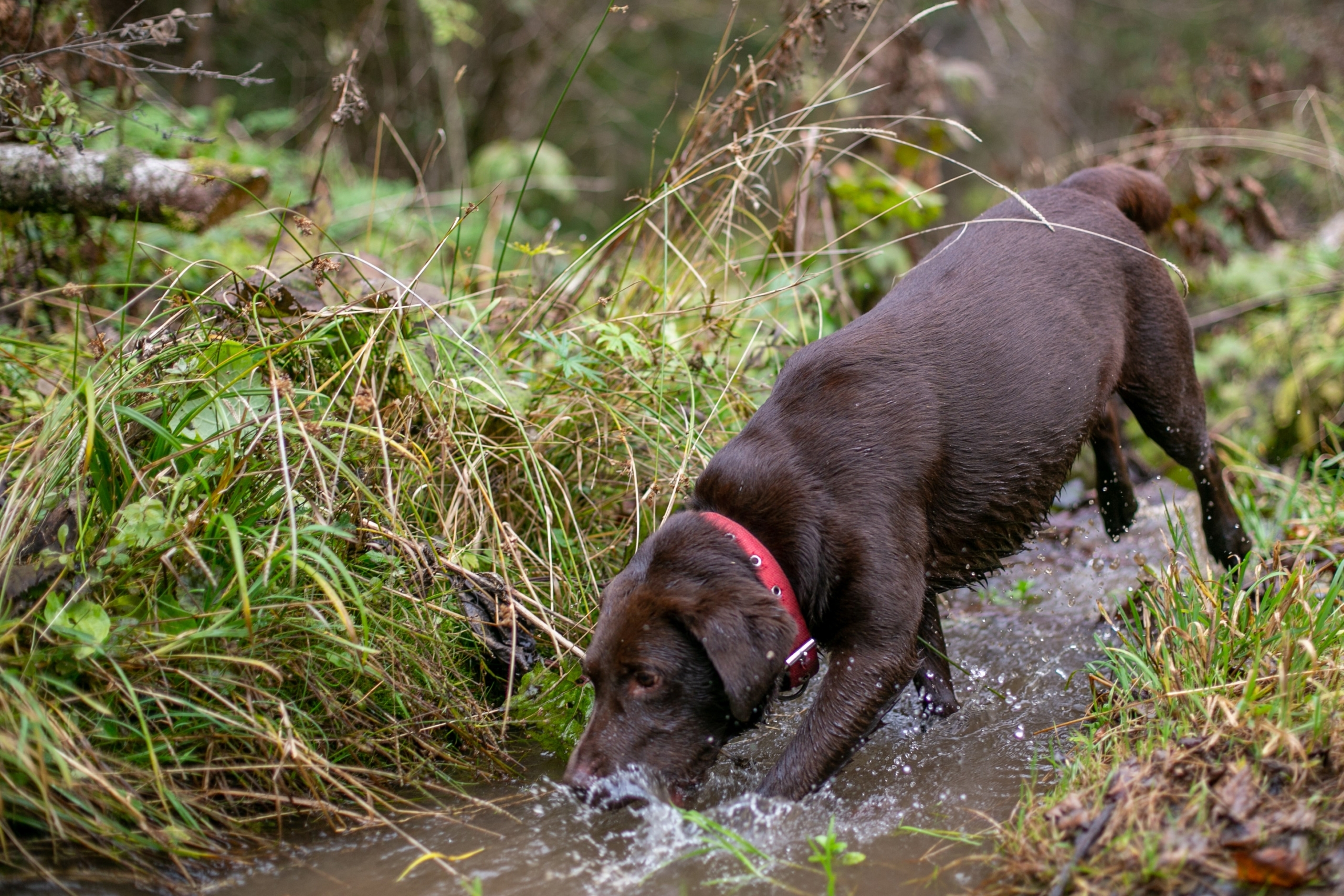
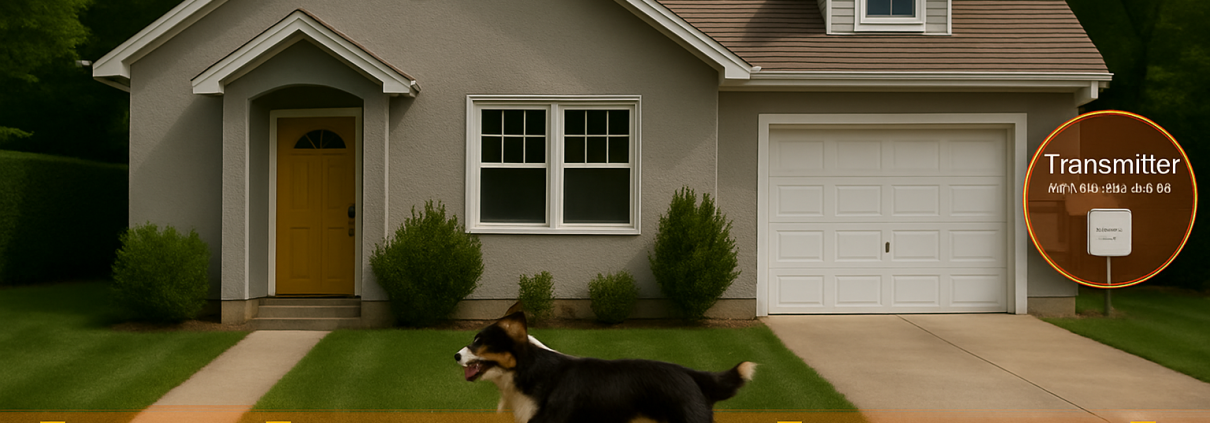
Dog Fence can be used to exclude dogs from streams or even run through small streams
Invisible Dog Fences for Woodland Gardens and Rural Properties
Woodland gardens and rural properties are often difficult and expensive to secure with traditional fencing. They may have uneven ground, dense planting, natural boundaries, wildlife corridors or planning considerations that make visible fencing less attractive.
An invisible dog fence for woodland gives owners a way to create a safe dog containment area without changing the character of the landscape. The boundary can often follow paths, hedgerows, tree lines or the edge of a property, depending on the layout.
This is one reason hidden dog fences are popular for:
- Country houses
- Large gardens
- Homes with woodland
- Rural estates
- Properties near fields or livestock
- Gardens where visible fencing would spoil the view
For larger or more complex properties, professional design is important. You can read more about our professional dog fence installation service and how we install systems across England.
Do Invisible Dog Fences Work on Slopes, Banks and Uneven Ground?
Yes. Sloping ground and uneven gardens are normally well suited to invisible dog fencing. Unlike timber fencing or metal panels, a hidden dog fence does not need the land to be level. The wire can follow the contours of the garden and can often be installed around awkward features that would make traditional fencing more difficult.
This makes an electronic dog fence a practical solution for gardens with:
- Hills and banks
- Ditches and dips
- Raised lawns
- Woodland paths
- Terraced garden areas
- Uneven rural boundaries
If you are comparing your options, our guide to installing dog fences on uneven ground, slopes and woodland gives more detail on why hidden fencing can be useful for challenging gardens.
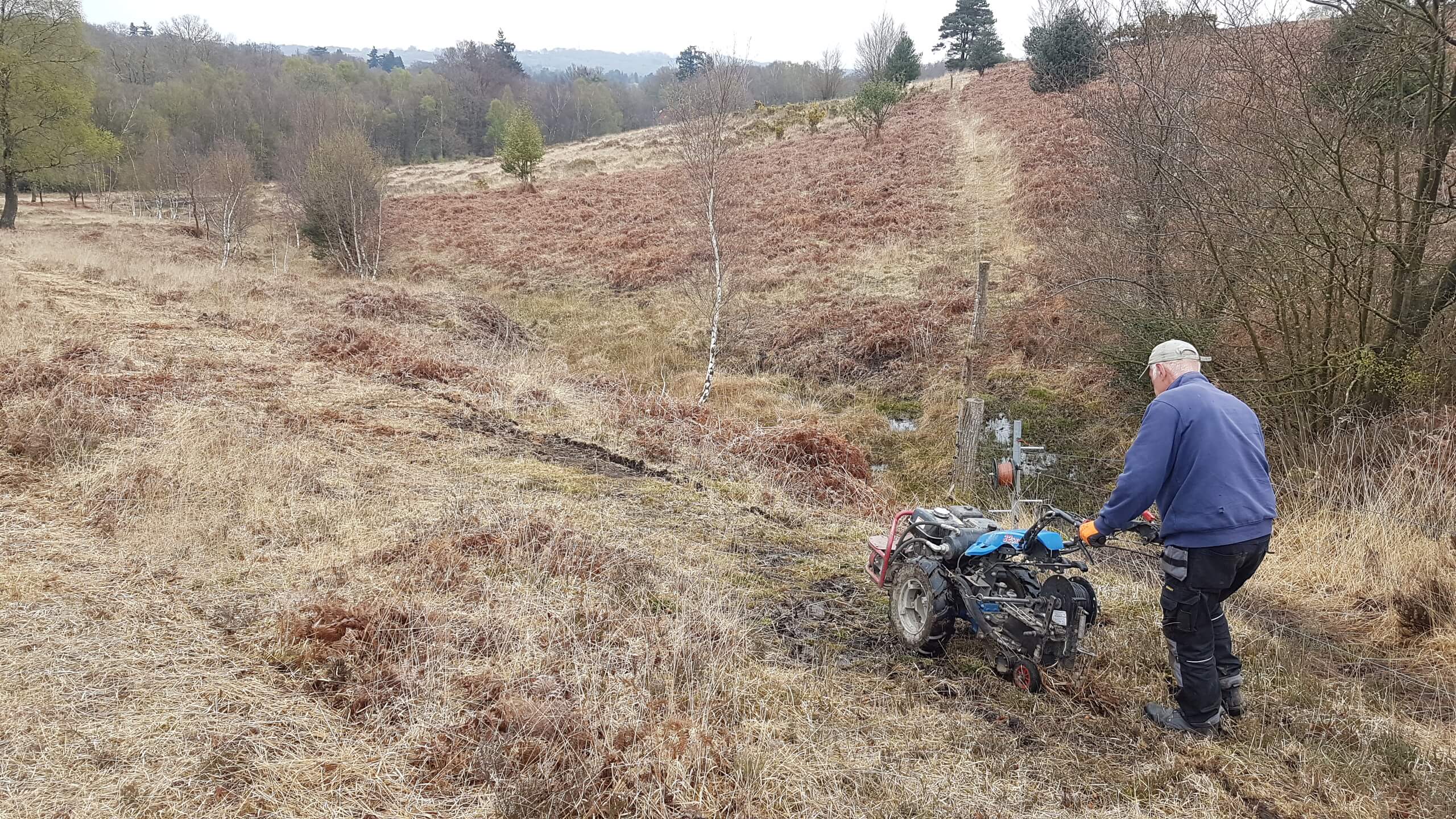
Dog Fences can be installed on even ground and slopes
Can an Invisible Dog Fence Protect Ponds, Streams, Flower Beds and Driveways?
Yes. An invisible dog fence does not only have to run around the outer edge of a garden. It can also be designed to keep dogs away from specific areas inside the property.
These internal avoidance zones are useful around:
- Streams
- Garden ponds
- Swimming pools
- Flower beds
- Vegetable gardens
- Children’s play areas
- Open driveways
- Electric gates
This allows your dog to enjoy more freedom while helping reduce the risk of accidents. For owners worried about dogs bolting through gates or driveways, our guide on keeping dogs safe around open driveways and electric gates explains how boundary training can help in high-risk areas.
Why Hidden Dog Fences Are Often Better Than Traditional Fencing in Natural Gardens
Traditional fencing can work well in some gardens, but it is not always the best solution for natural or rural properties. Timber fencing can be expensive over long distances, may need ongoing maintenance and can alter the appearance of the garden. It can also be difficult to install through woodland or around streams.
A hidden dog fence keeps the landscape open. There are no large panels blocking the view, no need to fence off attractive areas and no obvious change to the style of the property.
For owners of rural homes, this can be a major advantage. You can keep the natural look of the garden while still creating a reliable dog containment system. If appearance is one of your concerns, our article on how to secure your dog without ruining your garden’s curb appeal may also be useful.
How Professional Installation Helps on Complex Properties
Although some simple gardens may be suitable for DIY installation, more complex properties usually benefit from professional design and installation. Trees, streams, banks, driveways, outbuildings and multiple garden zones all need to be planned carefully.
A professional DogFence installation considers:
- The safest boundary route
- Where your dog naturally runs or explores
- Access points, gates and driveways
- Natural hazards such as water or drops
- How to avoid major tree roots
- Whether internal exclusion zones are needed
- The correct training approach for your dog
Training is just as important as the equipment. Dogs need to understand the boundary calmly and consistently. Our guide to training your dog to an electronic fence the right way explains why correct training makes such a difference.
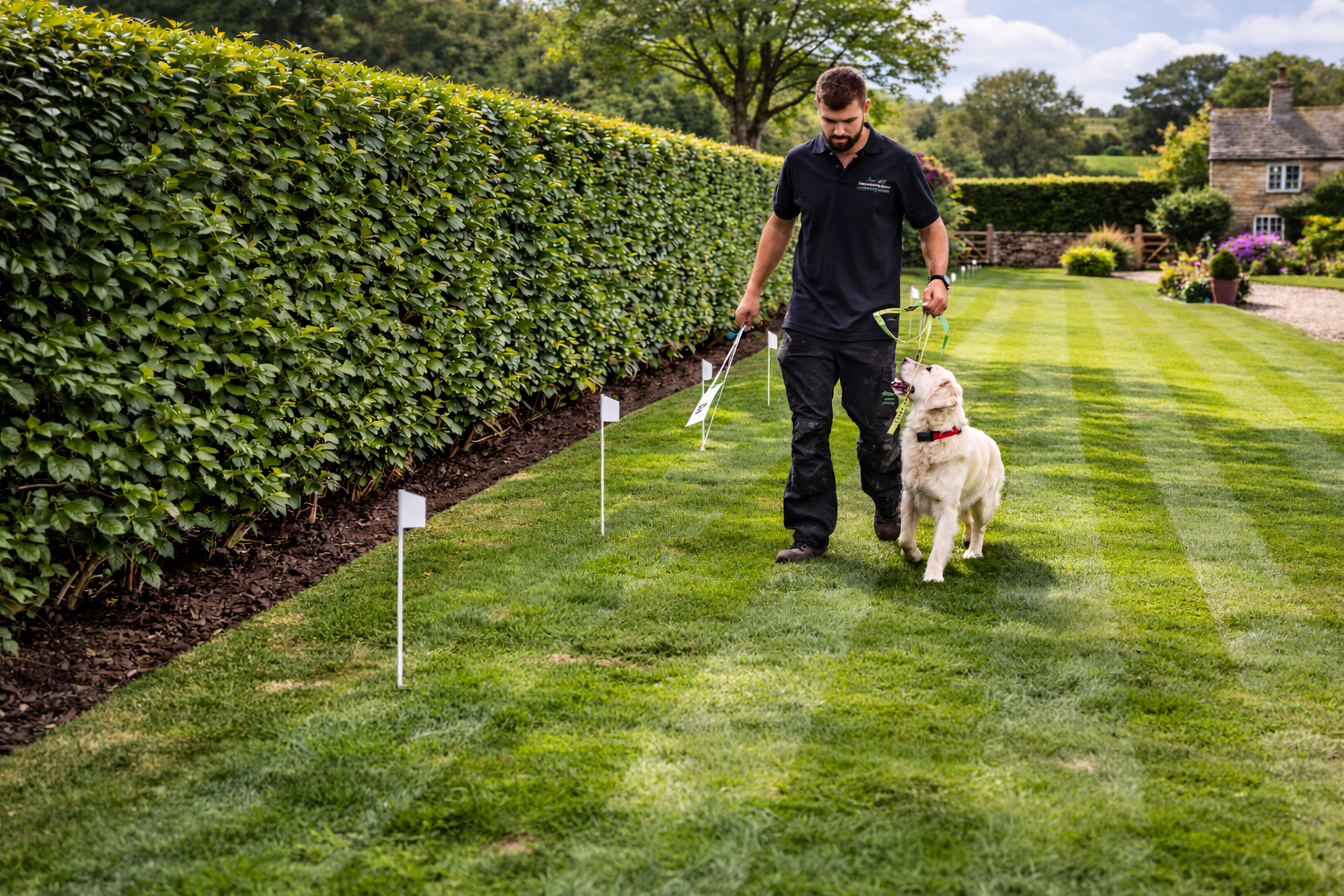
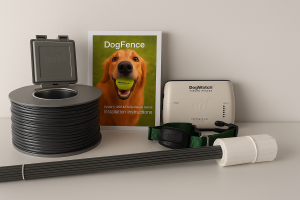
When we install your dog fence we also train your dog as part of our service
Is an Invisible Dog Fence Safe and Humane?
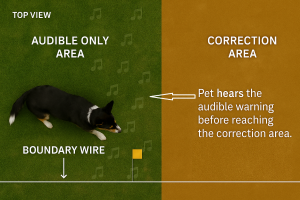
When used responsibly, professionally installed and supported with proper training, invisible dog fences are designed to help keep dogs safe within their home environment. The aim is not to frighten the dog, but to teach a clear boundary using a warning tone first, followed by a brief static correction only if the dog continues towards the boundary.
Most dogs quickly learn to respond to the warning tone and avoid the boundary. The system should always be introduced gradually and carefully, with guidance suited to the individual dog.
If welfare is a concern, you can read our full guide: Are Invisible Dog Fences Humane? Safety, Welfare and UK Law. For wider independent advice on responsible dog ownership and welfare, you can also visit the RSPCA dog care advice.
Frequently Asked Questions About Invisible Dog Fences Around Trees, Streams and Woodland
Can an invisible dog fence be installed in woodland?
Yes. An invisible dog fence can usually be installed in woodland because the boundary wire can follow natural paths, tree lines and existing garden edges. This allows dogs to enjoy wooded areas while remaining safely contained.
Can an invisible dog fence go around trees?
Yes. Trees are normally easy to work around. The boundary wire can be routed carefully to avoid major roots while still creating a reliable hidden dog fence around the garden.
Will tree roots damage the dog fence wire?
Tree roots do not usually damage the wire when the system is installed correctly. A professional installer will choose a route that avoids unnecessary disturbance to major roots and protects the long-term reliability of the boundary.
Can an underground dog fence cross a stream?
In many cases, yes. An underground dog fence can often cross shallow streams or damp areas using suitable installation methods. The best approach depends on the depth, banks and overall layout of the property.
Can an invisible dog fence keep my dog away from a pond?
Yes. Internal avoidance zones can be created around ponds, streams, swimming pools or other water features to help train your dog to stay away from those areas.
Does uneven ground affect an invisible dog fence?
No. Uneven ground, slopes and banks do not normally affect how an invisible dog fence works. The boundary wire can usually follow the natural contours of the land.
Is an invisible dog fence suitable for large gardens?
Yes. Invisible dog fences are often particularly suitable for large gardens, rural properties and country homes where traditional fencing would be expensive, impractical or visually intrusive.
Can I install an invisible dog fence myself in woodland?
Some practical owners can install simple systems themselves, but woodland, streams and uneven ground usually benefit from professional planning. If you are considering DIY, our self-installing dog fence guide explains what is involved.
Will an invisible dog fence spoil the look of my garden?
No. Once installed, the boundary is discreet and usually hidden from view. This is one of the main reasons owners choose hidden dog fencing for landscaped gardens, woodland and rural properties.
Why Choose DogFence for Woodland and Rural Dog Containment?
DogFence has been supplying and installing professional hidden dog fence systems across the UK since 2003. Our systems are designed for real homes, real gardens and real dogs, including properties with trees, streams, slopes, woodland and complex boundaries.
We can help you decide whether your property is suitable, where the boundary should run and whether any internal avoidance zones would be helpful. We also provide training guidance so your dog learns the system safely and confidently.
If you are looking for an invisible dog fence around trees, a hidden dog fence for woodland or an underground dog fence for a rural property, DogFence can help design a solution around your garden.
Ready to find out what is possible? Visit our professional installation page, read our Dog Fence FAQs, or contact DogFence for friendly advice.
Related Reading
- How the Dog Fence Works
- Professional Dog Fence Installation
- Keeping Dogs Safe Around Open Driveways and Electric Gates
- Installing Dog Fences on Uneven Ground, Slopes and Woods
- Training Your Dog to an Electronic Fence the Right Way
- Dog Fence FAQs: Installation, Safety and Cost
- Are Invisible Dog Fences Humane?
“`html
🌳 Think Your Garden Is Too Difficult?
Trees. Woodland. Streams. Slopes.
We’ve installed invisible dog fences in all of them.
Talk to our experts before you rule it out.
“`