Escape Artist Dog: How to Stop Jumping & Digging Under Fences
Escape Artist Dogs: Is Your Dog a Jumper, Digger or Both?
If you’re living with an escape artist dog, the first useful question isn’t “how do I stop this” — it’s “which kind of escape artist am I dealing with?” Most determined dogs specialise: they jump, they dig, or occasionally they do both. Once you know which, an invisible dog fence for your garden — a hidden boundary system that trains your dog to stay inside without relying on ever-taller fencing — can be set up to match.
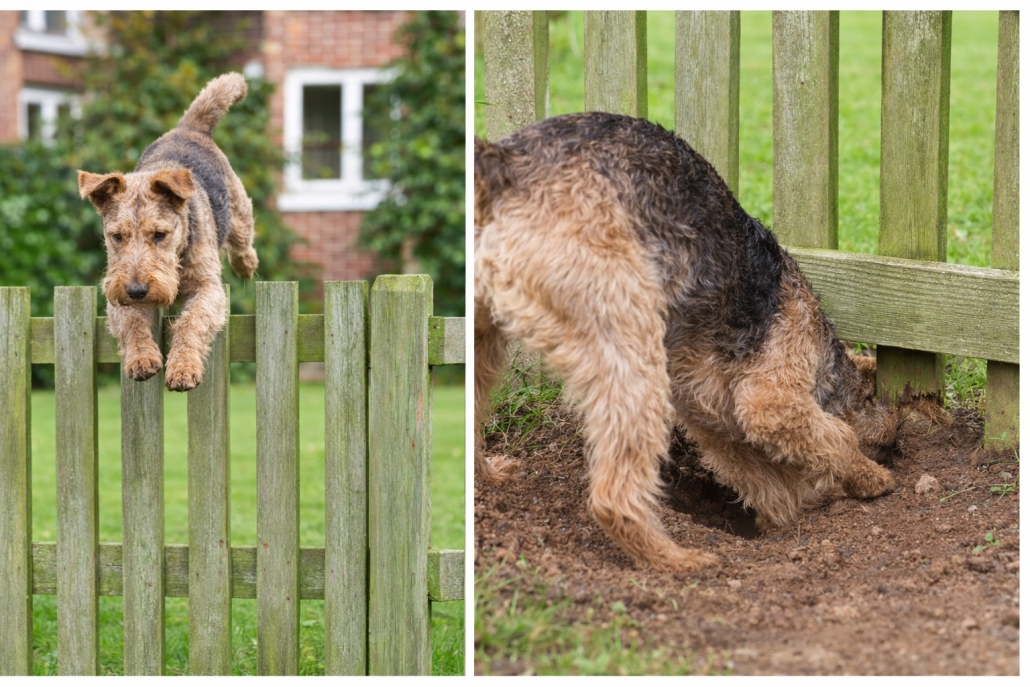
Some dogs squeeze through gaps. Some climb. Some dig. And some become what owners quickly describe as an escape artist — turning an ordinary garden fence into a daily challenge. These behaviours aren’t defiance; they’re instinct, often rooted in exactly what a breed was originally bred to do.
If your dog keeps escaping, you’re not dealing with a “bad” dog. You’re dealing with instinct, motivation, and learned behaviour — and understanding which type you have is the first step to choosing the right fix.
Jumper, Digger, or Both? Quick Ways to Tell
Before reaching for a fix, it helps to confirm what you’re actually dealing with:
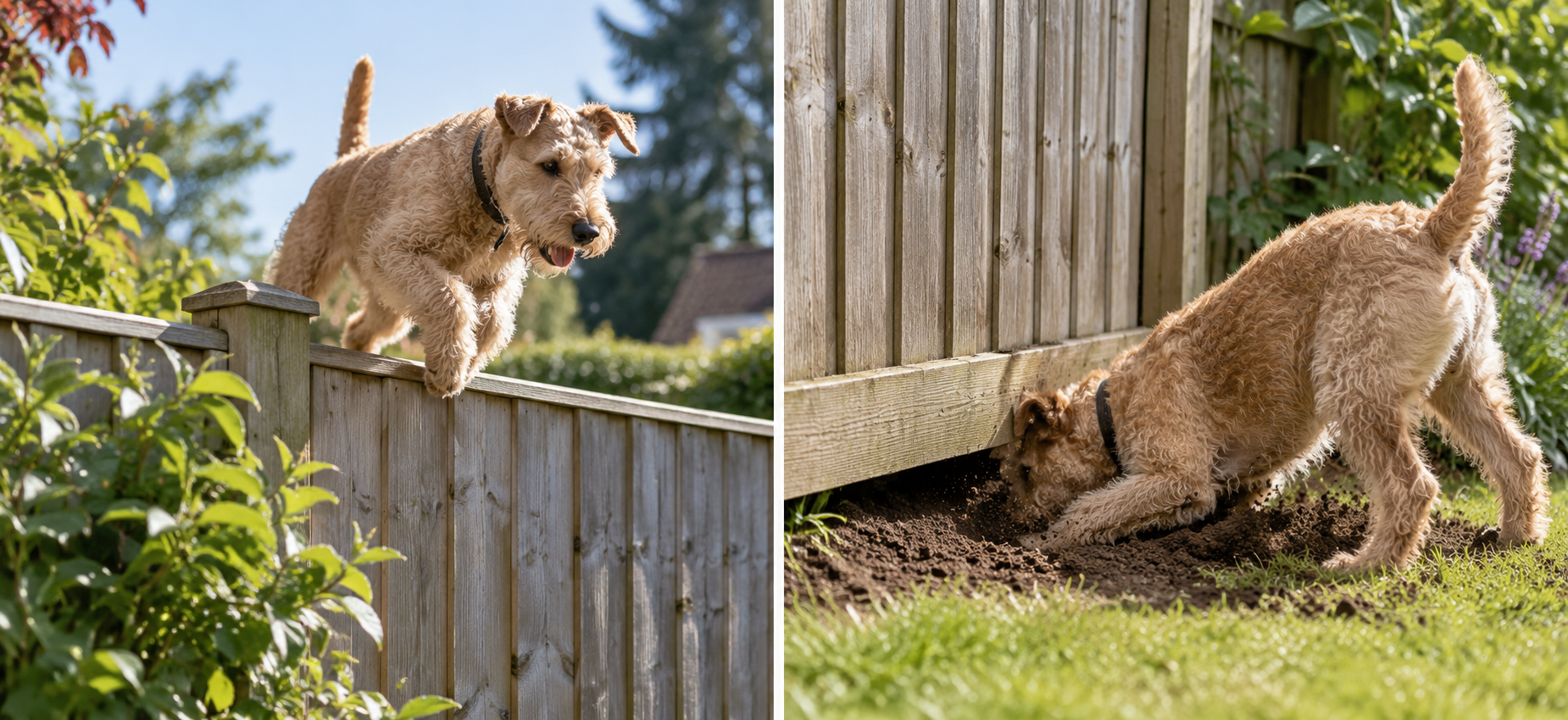
- Likely a jumper if your dog is athletic, becomes animated at movement beyond the fence, or you’ve found scuff marks partway up the panels
- Likely a digger if you’re finding fresh holes or disturbed soil concentrated along one section of the boundary, especially near a specific gap or corner
- Likely both if your dog patrols the fence line obsessively, has escaped more than once by different routes, or simply won’t stop testing the boundary regardless of what you block
Each type needs a slightly different approach — here’s a quick look at both before we point you to the right detailed guide.
The Jumper: Why Fence Height Isn’t Always Enough
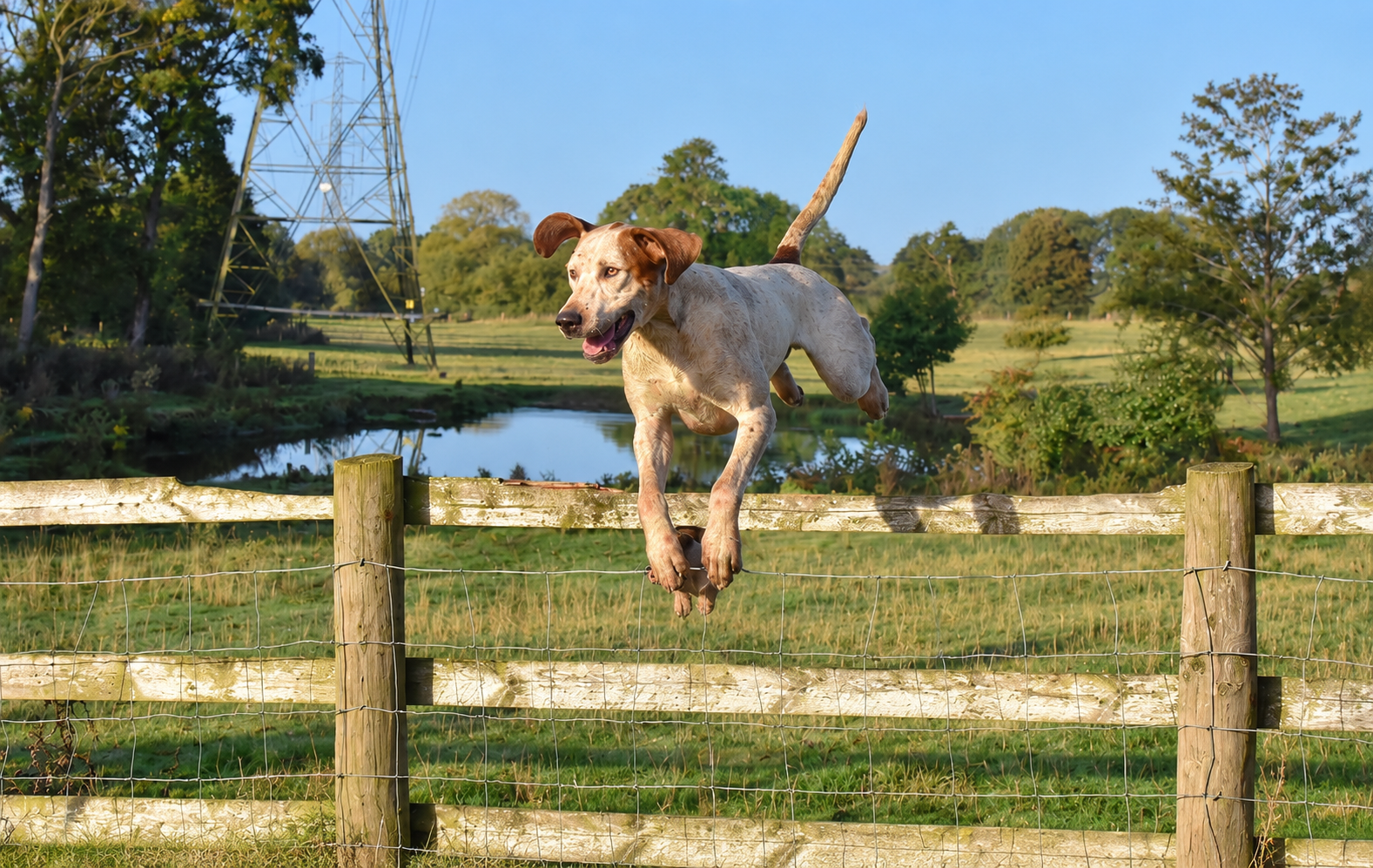
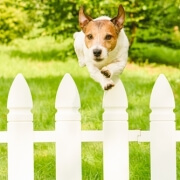
Athletic breeds — Labradors, Spaniels, Collies, Shepherds, Hounds — are capable of clearing surprising heights when sufficiently motivated. Prey drive, territorial behaviour, boredom, or separation anxiety can all trigger fence jumping.
Many owners assume “I’ll just make the fence higher” will solve it — but height reduces risk, it doesn’t remove intent. We regularly hear from owners whose dogs have cleared 6ft panels with ease. If you’re unsure whether 6ft is genuinely enough for your dog’s breed and size, see our detailed guide on whether a dog can jump a 6ft fence.
If jumping is your dog’s main escape method, our full guide covers the causes and fixes in detail: How to Stop Your Dog Jumping the Fence.
The Digger: Why Reinforcement Alone Often Fails

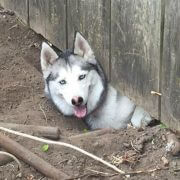
Some dogs will stop at nothing to escape – the best dog fence designs prevent digging with hidden underground protection.
Digging is instinctive. Terriers were bred to tunnel, Spaniels follow scent, and many breeds dig to regulate temperature. But when digging concentrates along the boundary line specifically, it usually means one thing: your dog is trying to get out.
Owners often respond by filling the hole, laying slabs, burying wire mesh, or adding gravel boards — all reasonable first steps toward a more dog proof fence, but often the digging simply moves sideways to a new spot rather than stopping. Digging behaviour is frequently linked to scent tracking and prey drive, as explained by the RSPCA’s guidance on understanding dog behaviour.
If digging is your dog’s main escape method, our full guide covers the causes and fixes in detail: How to Stop Dog Digging Under Fence.
What Is DogFence, and How Does It Actually Work?
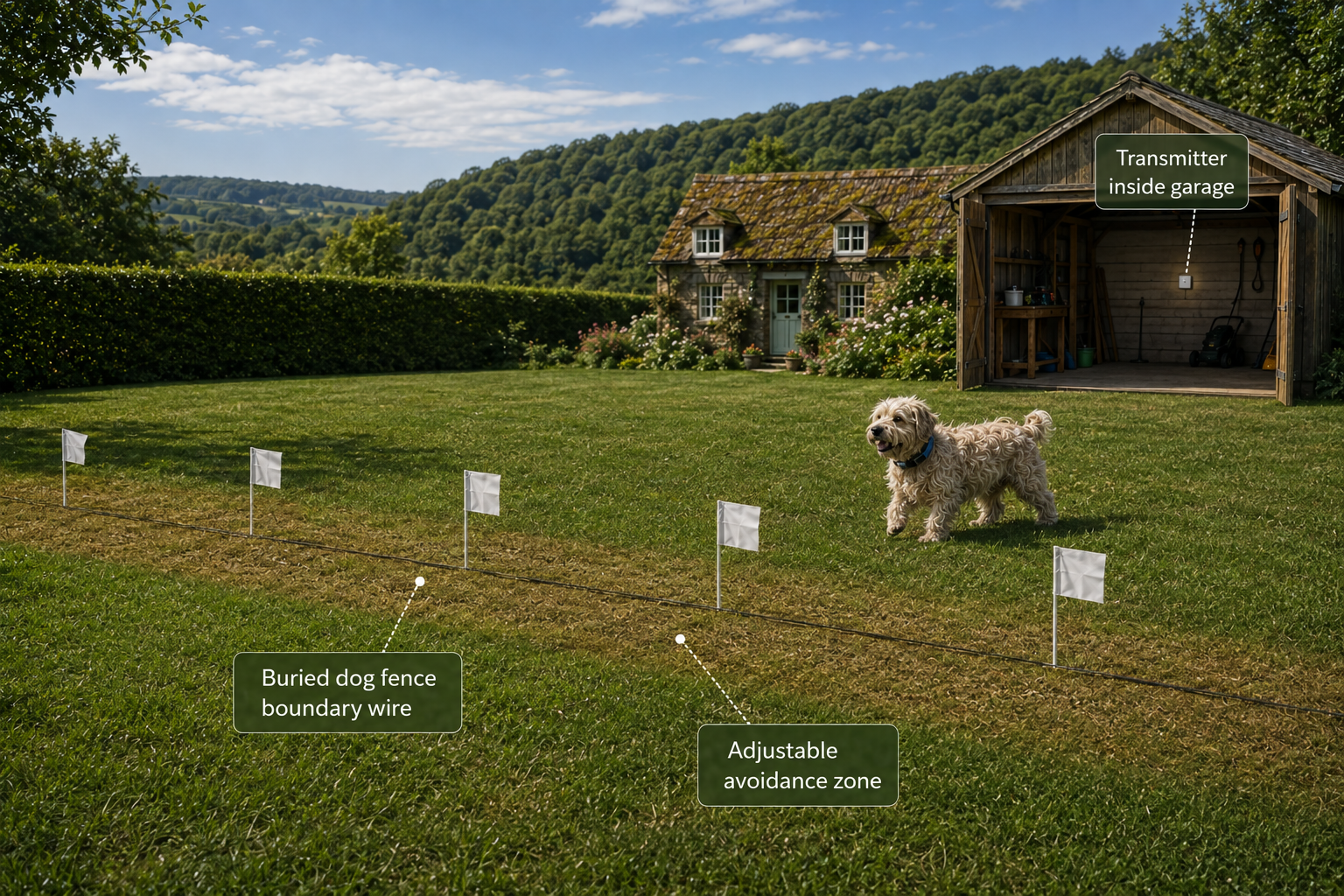
DogFence is an invisible dog fence: a thin dog boundary fence wire is buried discreetly around your garden — inside the line of your existing fence, hedge or wall — and connected to a small transmitter, usually housed in a garage or shed. Your dog wears a lightweight receiver collar. As they approach the trained boundary, the collar gives a clear audible warning well before they reach the physical fence. With consistent, structured training, most dogs learn to turn back at that point rather than testing the fence at all.
This is why it works for both jumpers and diggers: the boundary doesn’t depend on fence height or the depth of anything buried at ground level. The dog is trained to stop approaching the edge in the first place, so there’s no panel to clear and no gap to find.
Training is included as part of every installation, not left for you to work out afterwards. A DogFence installer visits your property, assesses the boundary, buries the wire, and then runs you and your dog through a structured training programme using temporary flags as visual markers, until your dog reliably respects the new limit.
What Does It Cost, and How Do You Buy One?
Cost depends on the size and shape of your garden, since pricing for a dog fence for garden use is based on the length of boundary wire needed and any awkward features (driveways, internal exclusion zones, multiple separate areas). Because of this, DogFence doesn’t publish a single flat price — every quote is based on an assessment of your specific property.
The process is straightforward: request a free quote online, by phone, or by WhatsApp, and a DogFence assessor will look at your garden and dog’s specific escape pattern to give you an accurate price before anything is booked in. Most installations are completed in a single visit, with no lengthy groundworks, and the collar and transmitter are yours to keep — meaning if you move house, the system can be uninstalled and set up again at your new property rather than being left behind like a fence would be.
Want an accurate price for your garden? DogFence will assess your property and dog’s specific pattern for free, with no obligation.
Escaping Every Way They Can? You Need the Full Picture
Some dogs don’t specialise — they jump when stimulated, dig when left alone, and generally treat the whole boundary as a challenge to be solved. If that sounds familiar, you’re dealing with motivation rather than a single structural weak point, and it’s worth stepping back to look at the whole garden rather than patching one method at a time.
Our two broader guides are the right starting point in that case:
- How to Stop Your Dog Escaping from the Garden — covers jumping, digging, gaps and open entrances together
- How to Dog Proof Your Garden Properly — a full garden-by-garden security check
Why Physical Fixes Struggle With a Determined Escape Artist
Most garden fencing is built for privacy, not determined containment. Wood warps, ground shifts, gates loosen — and dogs adapt. Once a dog learns there’s a weak point, that location becomes the focus. Once they experience the reward of escape, repetition becomes highly likely.
This is why so many “fixes” become an ongoing cycle of repair rather than a lasting solution — whether that’s raising panels higher for a jumper or burying mesh deeper for a digger. A dog boundary fence interrupts the intent to escape rather than just reacting to the method, which is what actually breaks the cycle regardless of whether your dog jumps, digs, or does both.
Frequently Asked Questions
Can a dog jump a 6ft fence?
Yes. Many medium and large breeds can clear a 6ft fence if sufficiently motivated — height alone does not guarantee containment. See our detailed guide on jumping a 6ft fence for more.
Why does my dog keep digging under the fence?
Digging along the boundary usually indicates an attempt to escape, often driven by scent, boredom, anxiety or prey drive. Our digging guide covers this in full.
How deep is the DogFence wire buried, and will it damage my garden?
The wire sits a few inches below the surface and is buried with a narrow blade, so there’s no trenching or major disruption to lawns, flower beds or existing landscaping.
How much does an invisible dog fence cost?
Price depends on your garden’s size and layout, since it’s based on the length of boundary needed. Request a free quote and an assessor will give you an accurate price for your specific property.
How long does installation and training take?
Most gardens are fitted in a single visit, followed by a structured training period so your dog learns the boundary confidently — training is included in every installation, not an optional extra.
Can I take the system with me if I move house?
Yes. Unlike a fence, the collar, transmitter and equipment aren’t fixed to the property — they can be uninstalled and set up again at your new home.
Can a dog be both a jumper and a digger?
Yes — some dogs try whichever method is available, especially if they’re highly motivated to leave. In that case, a dog boundary fence tends to work better than fixing one escape method at a time, since it isn’t tied to any single weak point in the fence.
Conclusion
Many owners repairing panels or refilling holes eventually realise they’re not dealing with faulty fencing — they’re living with an escape artist dog. Solving that starts with knowing whether you’re dealing with a jumper, a digger, or both, then choosing an approach built around your dog’s specific behaviour rather than the fence itself.
Escape Artist Dog? Let’s Stop the Jumping & Digging — For Good.
Get expert help creating a secure garden boundary with a proven pet containment system and calm, structured training.
Call us: 01628 476475 | WhatsApp: Message us | Request a Free Quote Online
Which Guide Do You Need?
- How to Stop Your Dog Jumping the Fence — for dogs that clear or climb the boundary
- How to Stop Dog Digging Under Fence — for dogs that tunnel underneath
- How to Stop Your Dog Escaping from the Garden — for dogs that try every method
- How to Dog Proof Your Garden Properly — a full garden-by-garden security check
- Can a Dog Jump a 6ft Fence? — if you’re relying on fence height alone
Some images used in this article are AI-generated or stock photography used to illustrate typical scenarios and are not necessarily taken at real DogFence installations.