British Dog Breeds That Struggle with Garden Boundaries
/in dog advice/by Sam FolleyUnusual British Dog Breeds: Why Our Native Dogs Still Struggle with Boundaries
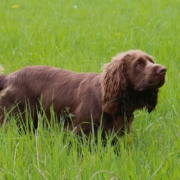
Britain is home to some of the world’s oldest and most distinctive dog breeds. Long before fences, roads and neat garden boundaries existed, these dogs were developed to work across open countryside — tracking scent, covering ground and thinking independently.
Today, many of those same instincts remain. And for modern dog owners, particularly in rural and semi-rural parts of the UK, this can lead to a familiar challenge: dogs that wander, escape or simply don’t recognise where “home” ends.
This blog series explores unusual British dog breeds — not because they are new or fashionable, but because they are increasingly rare in everyday homes and often misunderstood in modern settings.
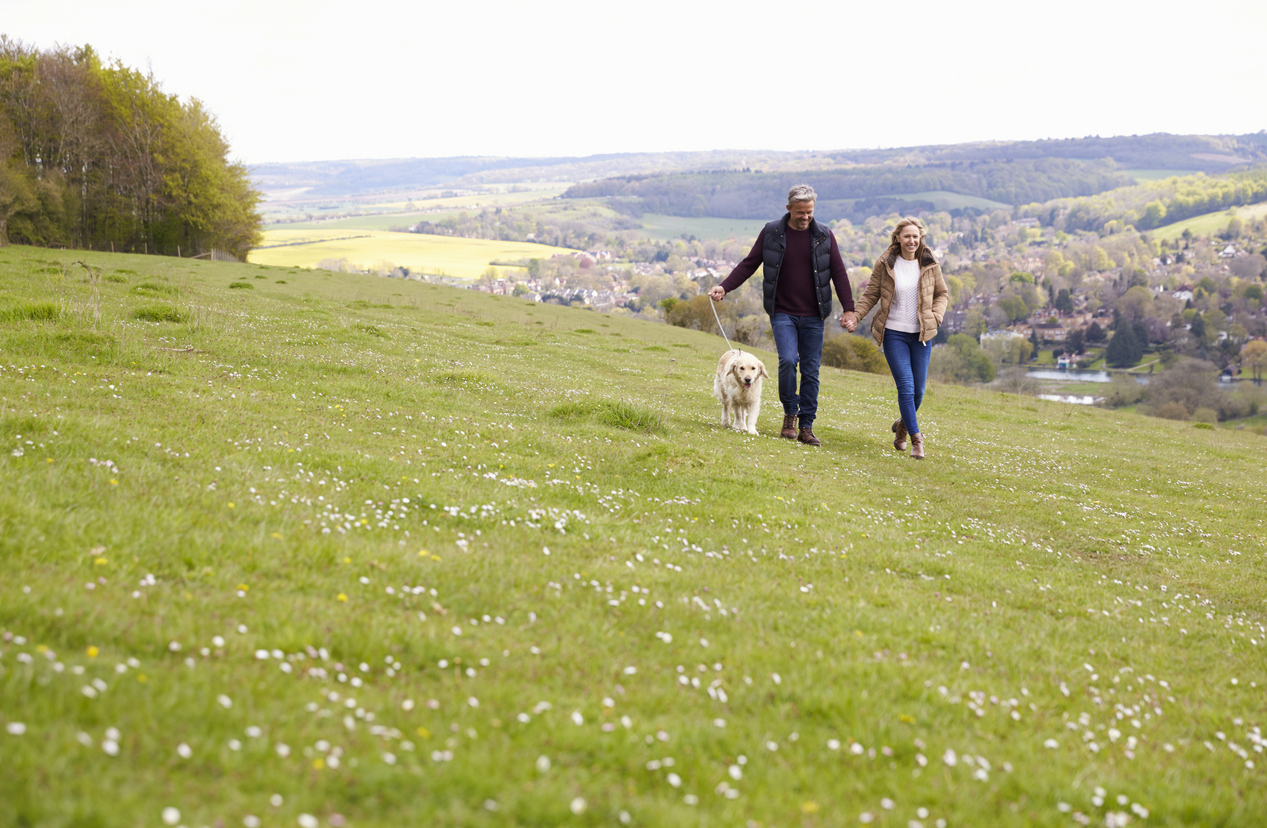
Mature Couple Taking Golden Retriever For Walk
What Makes a Dog Breed “Unusual” in Britain Today?
When we talk about unusual British dog breeds, we’re not necessarily referring to dogs that are rare in history. In fact, many were once familiar working companions on farms, estates and country properties across Britain.
Breeds such as the Otterhound, Clumber Spaniel, Sealyham Terrier, Lakeland Terrier and English Foxhound all played practical, everyday roles in rural life. They were bred to track, range, hunt or work independently over large areas of land — often far beyond the sight of their handlers.
They are considered “unusual” today because:
- They are less commonly kept as household pets
- Their original working roles are no longer widely understood
- They are often overshadowed by imported or designer breeds
- Their behaviour doesn’t always fit neatly into modern lifestyles and garden boundaries
These breeds haven’t changed — but the way we live with dogs has.
How Britain’s Landscape Shaped Its Dogs
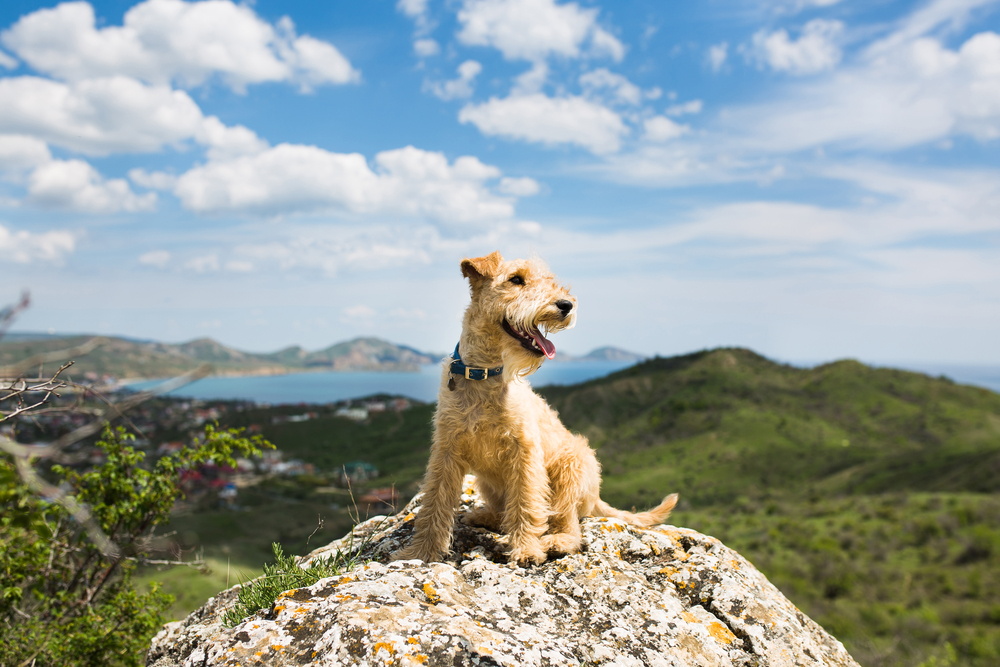
British dog breeds were shaped by the land itself.
For centuries, dogs in Britain were developed not for confinement, but for function. Before modern roads, fences and clearly defined property boundaries, much of the countryside was open, shared or loosely managed. Dogs were expected to work across large areas of land, often without direct supervision.
Across generations, breeders selected dogs that could:
- Track scent over long distances, sometimes for miles at a time
- Work independently, making decisions without constant human input
- Ignore distractions while staying focused on a task
- Move freely across farms, moorland, estates and waterways, adapting to varied terrain and conditions
These traits were essential for success. A dog that hesitated, waited for instruction or stayed close at heel was often less effective in a working role.
The result was a group of dogs that are intelligent, determined and highly instinct-driven. They were bred to think for themselves, follow their nose or their eye, and keep going even when their handler was out of sight.
In today’s world, those same qualities can clash with modern expectations. Fences, garden boundaries and recall training are relatively recent concepts, while instinct is deeply ingrained. What once made these dogs exceptional workers can now appear as wandering, boundary testing or selective listening — not because the dog is disobedient, but because it is behaving exactly as it was designed to.
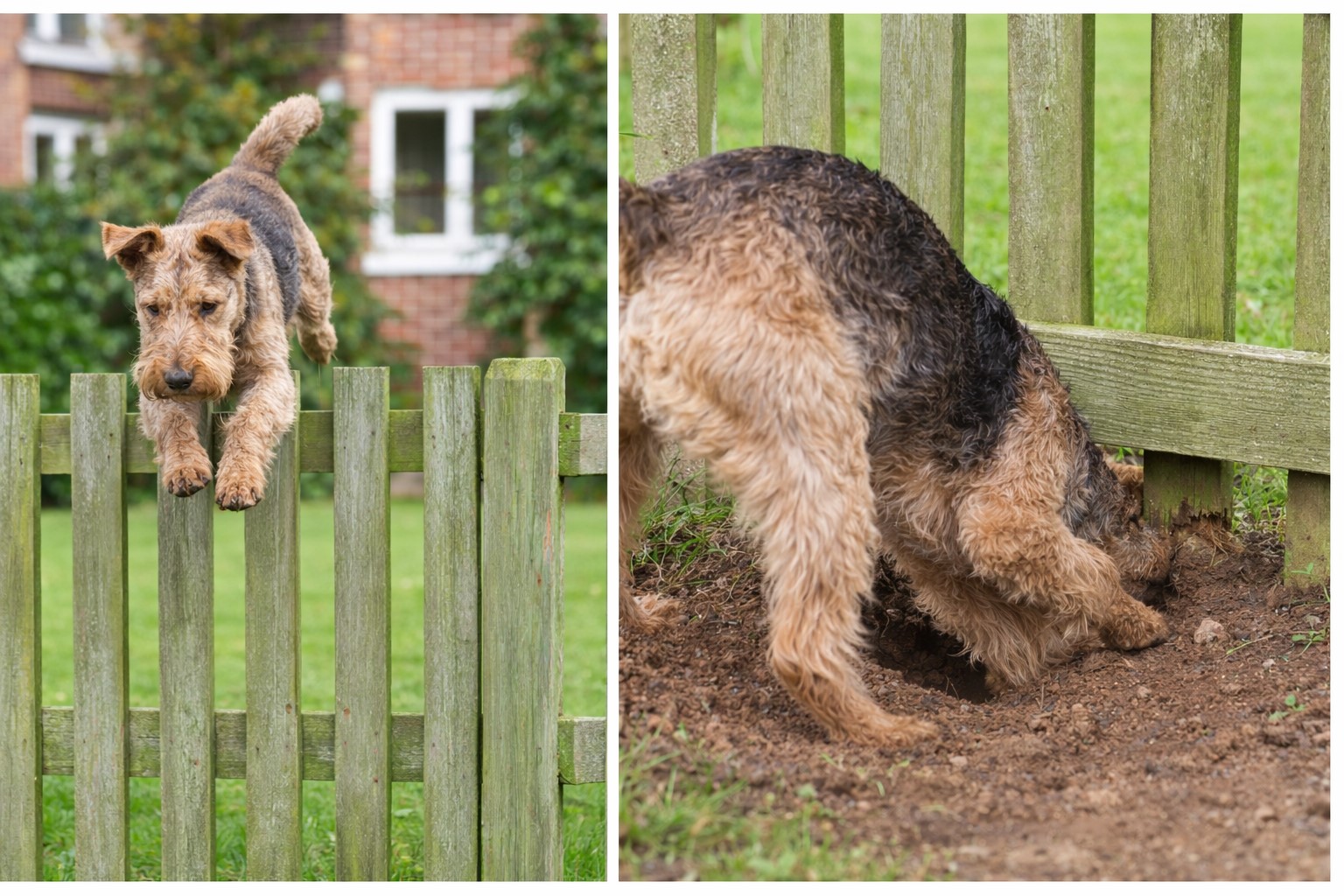
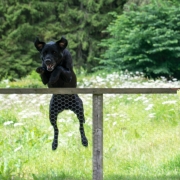
Instinct-driven behaviours like digging and jumping are not defiance — they’re rooted in how working dogs were bred to interact with their environment.
Instinct Is Not Bad Behaviour
One of the most important messages of this series is this:
A dog following instinct is not being naughty.
Many British breeds were never intended to stay within visible limits. When those instincts surface, it doesn’t mean training has failed or that an owner has done something wrong.
In reality, it means the dog is doing exactly what it was bred to do — just in a very different world.
Understanding this distinction is essential for:
- Safer management
- Better training outcomes
- Reduced stress for both dogs and owners
Why We’re Writing This Series
After years of working with dogs across the UK — particularly in rural and semi-rural settings — the same patterns appear again and again.
Certain British breeds:
- Are more likely to roam
- Struggle with traditional fencing
- Require a different approach to boundaries
- Benefit from management that respects instinct rather than fighting it
This series is not about promoting quick fixes or labelling breeds as “difficult”.
It’s about education, realism and responsible ownership.
British Dog Breeds We’ll Be Exploring
Each month, we’ll focus on a different native British breed, looking at:
- Where they came from
- What they were bred to do
- Why those instincts still matter today
- Common challenges UK owners face
- Practical, welfare-led considerations for modern homes
Breeds we’ll be covering include:
- The Otterhound
- The Sealyham Terrier
- The Clumber Spaniel
- The Lakeland Terrier
- The English Foxhound
- The Gordon Setter
Each article will stand alone, but together they form a broader picture of how Britain’s dog-breeding heritage still influences behaviour today.
Looking Ahead
If you live with one of Britain’s traditional working breeds — or are considering one — understanding instinct is key to keeping them safe, settled and fulfilled.
This series is designed to help owners make informed, compassionate decisions that respect both heritage and modern life.
The first breed in the series will explore one of Britain’s rarest native dogs — the Otterhound — and why its remarkable nose still leads it far beyond garden boundaries.
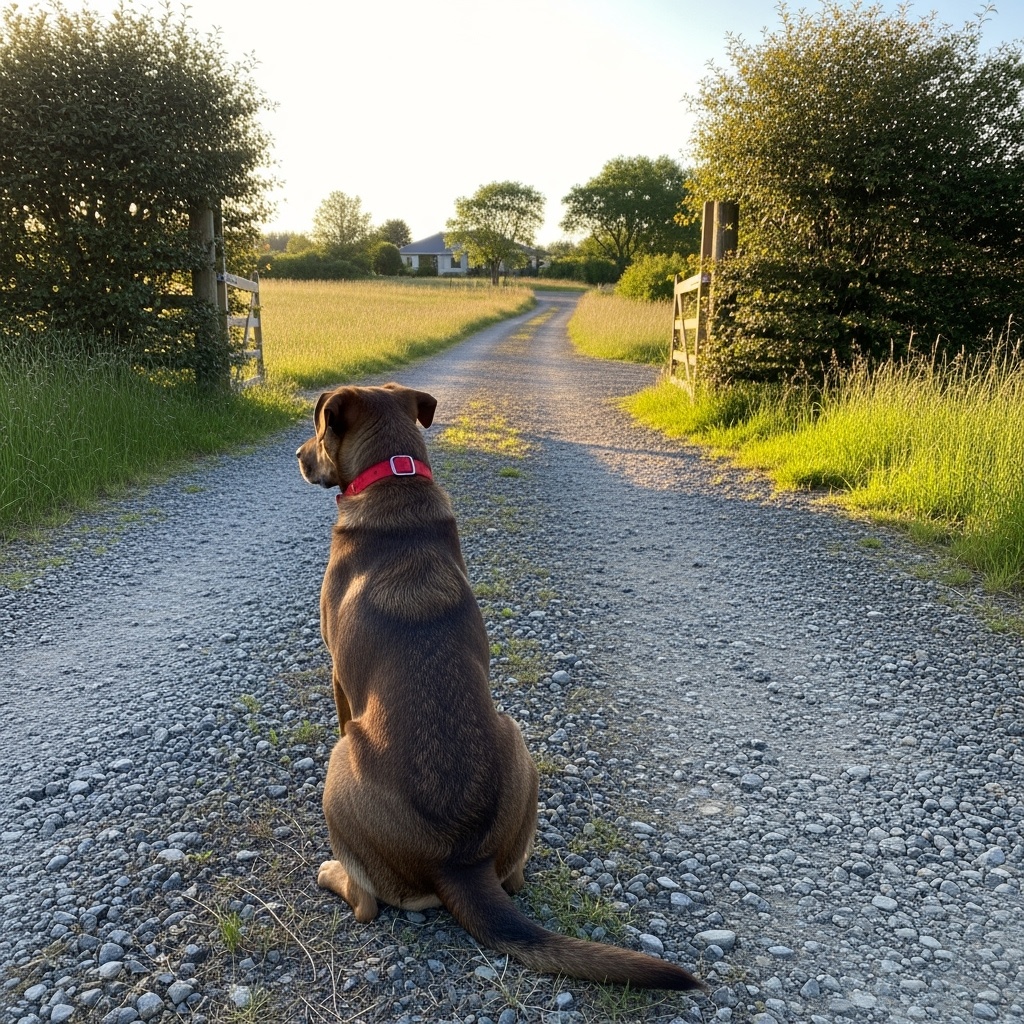
Understanding instinct is the first step to helping dogs feel settled and safe at home.
When boundaries are clear and consistent, even highly driven dogs can relax — not because their instincts have been suppressed, but because they know exactly where they stand.
For owners of traditional British breeds, the goal isn’t restriction. It’s freedom with clarity, designed around how dogs actually think and behave.
If you’re worried about your dog testing garden boundaries, escaping, or heading towards roads, livestock or neighbouring land, a calm conversation can make all the difference.
Ready to Keep Your Pet Safe?
Call us on
01628 476475
|
Message us on WhatsApp
|
Request a Free Quote Online