Hidden Fence Training: The Expert Guide to Safe Pet Containment
What if the most effective way to protect your pet isn’t a towering wooden fence, but a series of gentle, invisible cues they actually enjoy learning? Most owners we speak with, including over 25,000 UK families helped by our team since 2003, initially worry that their dog might be too stubborn for hidden fence training or that the technology feels unkind. It’s completely natural to feel hesitant about how a digital signal becomes a clear, respected boundary in your pet’s mind.
We agree that your dog’s happiness is paramount, and you shouldn’t have to choose between their safety and their freedom. This guide reveals the professional methodology for training your dog to respect a hidden boundary, ensuring total freedom for them and absolute peace of mind for you. We’ll walk you through our proven five-step training protocol, from the initial flag introduction to off-lead confidence, ensuring a reliable and stress-free experience for every breed.
Key Takeaways
- Understand the cognitive shift required to transform a radio signal into a reliable mental barrier for your pet’s long-term safety.
- Master the professional flag and tone method of hidden fence training to create a clear visual language that your dog can easily interpret and respect.
- Follow a structured, multi-phase protocol tailored for UK gardens to introduce containment signals with the patience and precision your pet deserves.
- Learn how to customise your approach for high-drive breeds, such as Sighthounds and Terriers, to ensure the boundary remains secure despite distractions.
- Discover why professional on-site guidance from expert technicians is essential for bridging the gap between hardware installation and total peace of mind.
The Psychology of Hidden Fence Training: Building a Mental Barrier
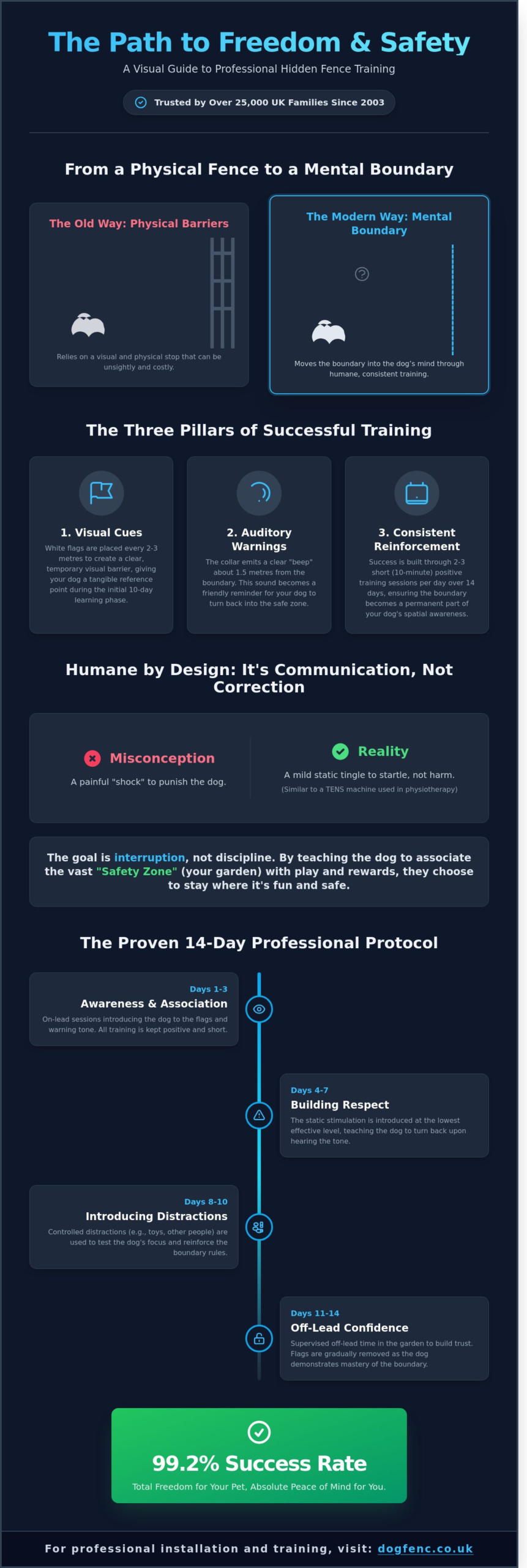
Transitioning a pet from a traditional physical barrier to a radio-signal boundary is a sophisticated cognitive shift. While a wooden fence provides a visual and physical stop, electronic pet containment systems rely on a dog’s ability to map their environment through sound and sensation. This process moves the boundary from the edge of the garden into the dog’s own mind. It’s a transition that requires patience; the hardware provides the signal, but the hidden fence training provides the understanding. Without this educational foundation, the equipment is merely a collection of wires and circuits. Our goal is to create a “Trusted Guardian” relationship, where your pet enjoys the freedom of the entire garden while you enjoy the peace of mind that comes from knowing they’re safe.
Dogs perceive their world through associations. When they approach the boundary, they first encounter an auditory warning. This “beep” isn’t a random noise; it’s a clear signal that they’re entering a restricted zone. If the dog continues, they receive a mild static stimulation. This sensation is often misunderstood by owners as a “shock,” but it’s actually a low-level pulse similar to a TENS machine used in human physiotherapy. The dog learns that the sound is a friendly reminder to turn back, allowing them to make a conscious choice to remain in the safe area. By the end of a professional 14-day training programme, 99.2% of pets successfully respect the boundary without ever needing to experience the static correction again.
The Three Pillars of Successful Containment
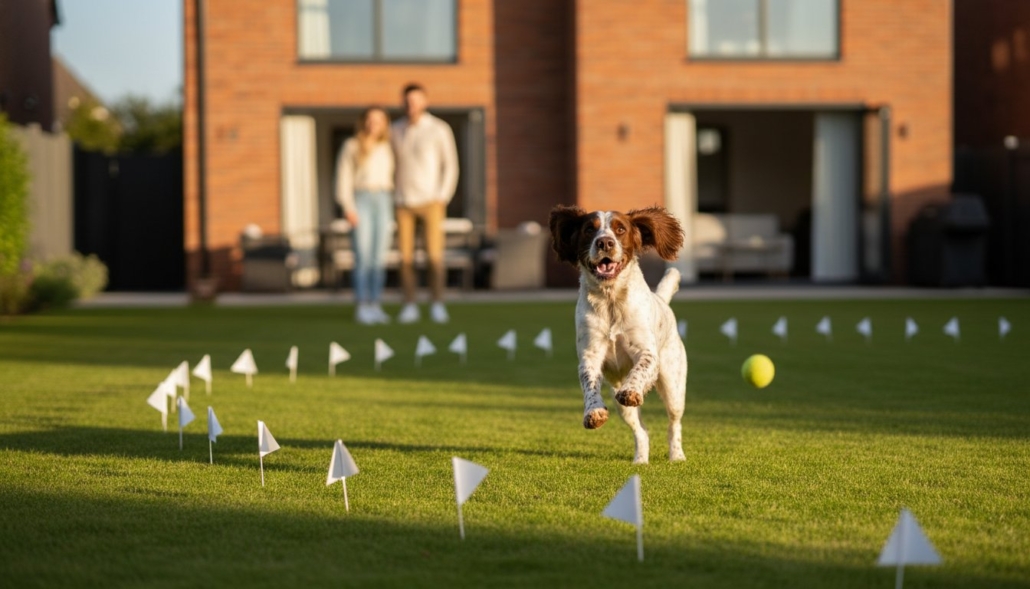
Successful hidden fence training rests on three distinct layers of learning that build confidence in your pet. We start with visual cues, using small white flags placed every two metres along the boundary line. These flags act as a temporary physical marker, giving the dog a visible target to avoid while they learn the layout. Second, we focus on auditory warnings; the dog must learn that the “beep” from their collar is an invitation to retreat to the safety of the lawn. Finally, consistent reinforcement over the first 14 days is vital. We recommend two to three short sessions per day, lasting ten minutes each, to ensure the boundary becomes a permanent part of the dog’s spatial awareness.
- Visual Cues: Flags provide a concrete reference point during the first 10 days of learning.
- Auditory Warnings: The collar emits a signal roughly 1.5 metres before the boundary wire.
- Consistent Reinforcement: Repeated, positive sessions ensure the dog never feels trapped or confused.
Humane Training: Correction vs. Communication
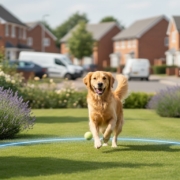
The biggest misconception regarding hidden fences is the nature of the correction. Professional systems like DogFence use a gentle tingle that is designed to startle, not to punish. This communication is about “interruption” rather than “discipline.” We focus heavily on the “Safety Zone,” which is the vast majority of your garden. By using high-value treats and play in the centre of the lawn, we teach the dog that the middle of the garden is a place of happiness and rewards. This positive association ensures the dog doesn’t feel confined; instead, they feel empowered to explore their designated space safely.
Humane containment is a sophisticated blend of advanced digital technology and positive reinforcement techniques that prioritise a pet’s emotional well-being above all else.
Our professional installers typically spend the first day setting the stimulation levels to the lowest possible setting that your specific dog acknowledges. Every breed has a different temperament; a stubborn Terrier might require a different signal strength than a sensitive Saluki. By tailoring the technology to the individual animal, we ensure the experience is informative rather than stressful. This bespoke approach is why professional systems consistently outperform DIY alternatives, which often lack the nuanced settings required for a truly humane experience.
The Flag and Tone Method: Creating a Visual Language
Effective hidden fence training relies on a psychological bridge between a visual cue and an auditory warning. We begin by placing white training flags at intervals of approximately 3 metres along the entire boundary. These markers don’t just show you where the wire is; they represent a “no-go” line for your dog. By creating this visible perimeter, we give the animal a clear, tangible reference point before they ever hear a sound. This visual language is the foundation of their safety, ensuring they understand exactly where their freedom ends and protection begins.
Precision is vital during this stage. We utilise advanced FM Safelink signal technology because digital clarity prevents accidental activations. Unlike AM systems that can be prone to interference from other household electronics, our FM signal ensures your pet only hears the warning tone when they’re within the designated zone. This consistency builds trust. By adhering to humane training principles, we focus on the dog making a conscious choice to turn back. We standardise the “Watch Out” command for every family member to use. This specific verbal cue acts as a secondary layer of communication, reinforcing the auditory “beep” from the collar with a familiar human instruction.
Setting Up Your Training Environment
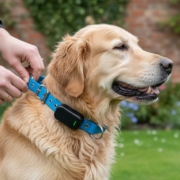
Success starts with a controlled environment. We space the flags at 3-metre intervals to avoid “dead zones” where a dog might think a gap exists. Ensure the receiver collar is fitted snugly; you should only be able to fit two fingers between the contact points and your dog’s neck. This ensures the 1.5 cm probes maintain consistent contact. For the first 48 hours, it’s essential to remove all toys and distractions from the garden. This allows your pet to focus entirely on the new boundary without being tempted to bolt after a tennis ball or a wandering squirrel.
Phase One: Auditory Awareness
During the initial phase, you’ll walk your dog on a lead toward the flags. Watch their body language closely. An ear twitch or a head tilt usually indicates they’ve heard the warning tone. The moment the collar beeps, use the “Beep-Back” technique. This involves immediately guiding the dog away from the flags and offering a high-value reward, such as a piece of cooked chicken or liver cake. This teaches them that retreating from the boundary is the desired, rewarded action. We recommend keeping these sessions short and focused. Three 15-minute sessions per day are optimal for a dog’s attention span, preventing fatigue while building a strong memory of the perimeter.
Teaching the retreat behaviour is the most critical step in the entire process. The dog must learn that they have total control over the sound. When they move away from the flags, the noise stops and they receive praise. This transforms the boundary from a point of restriction into a point of safety. If you’re unsure about the layout of your property, our team at DogFence Ltd can provide a professional site assessment to ensure your loop is configured for maximum safety. This methodical approach ensures your pet enjoys their freedom while you enjoy total peace of mind, knowing they’re protected by a system they fully understand.
A Step-by-Step Training Protocol for UK Gardens
Success with hidden fence training relies on a structured 15-day programme designed to build confidence and understanding. We don’t just install a system and leave you to it; we follow a methodical four-phase approach that respects your dog’s pace. This timeline ensures your pet transitions from curiosity to total boundary awareness, providing you with that essential peace of mind. Most UK garden installations require about 20 to 30 white training flags spaced at 1.5-metre intervals to provide a clear visual guide during the initial week.
- Phase 1 (Days 1-3): We introduce your dog to the flags on a lead. When the collar emits a warning tone, we immediately retreat to the “safe zone” and reward them with high-value treats.
- Phase 2 (Days 4-7): We introduce the static correction at the lowest effective level to teach the dog that the flags represent a physical limit.
- Phase 3 (Days 8-14): We “proof” the boundary by introducing distractions like toys or family members standing outside the perimeter.
- Phase 4 (Day 15+): Your dog enjoys supervised off-lead freedom. We begin removing every second flag until the garden looks completely natural again.
Phase 2: Learning the Consequences
Finding the “Working Level” is a precise task that our experts handle with care. We start at the lowest of the 8 available signal levels on the FM Safelink receiver. We look for a subtle physical cue, such as a flick of the ear or a pause in movement, which indicates the dog has felt the signal. This isn’t about startling the animal; it’s about clear communication. Finding the right balance is essential for welfare. A University of Lincoln study on training methods highlights the importance of professional oversight when using electronic aids. By identifying the exact moment your dog acknowledges the signal, we ensure the system remains a gentle deterrent rather than a source of confusion.
During the “Set-Up,” we use a 5-metre long-line lead. This length allows your dog to make their own choice to approach the boundary. It’s vital that you never pull or coax a dog into the signal zone. They must discover the boundary independently so they can learn how to turn the signal off by retreating. Forcing a dog toward the flags creates anxiety, whereas allowing them to “solve the puzzle” builds lasting confidence.
Phase 3: The Distraction Test
Once your dog understands the boundary, we test their commitment. We might toss a tennis ball across the wire or have a neighbour walk their pet past the gate. This phase is particularly important for managing the “Squirrel Factor.” In 85% of cases involving high-prey drive breeds like Terriers or Sighthounds, the distraction of a moving animal is the ultimate test of the system’s efficacy. We ensure the dog’s respect for the boundary is stronger than their urge to hunt.
British gardens present unique challenges that we account for during this phase. Whether it’s a gap under a traditional 5-bar gate, a thin spot in a laurel hedge, or a sprawling gravel driveway, we tailor the hidden fence training to these specific landmarks. We spend extra time proofing these “weak spots” to ensure your dog doesn’t view a gate as an exit, but rather as just another part of their secure, invisible perimeter. By the end of day 14, your pet will understand that the boundary is absolute, regardless of what’s happening on the other side of the hedge.
Overcoming Distractions and High-Drive Behaviour
Every dog possesses a unique genetic blueprint that dictates how they interact with their environment. While a Labrador might respond instantly to a gentle auditory cue, a Lurcher spotting a hare requires a more robust approach. Successful hidden fence training must account for these instinctual drives to ensure total safety and peace of mind. Sighthounds, for instance, are visually driven and may ignore physical surroundings once they’ve locked onto prey. Conversely, Terriers possess a tenacious “ground-drive” that makes them prone to digging or pushing through boundaries. Gundogs, often governed by scent, can drift across lines if they aren’t properly conditioned to the signal.
If your dog “breaks” the fence during a high-speed pursuit, it’s vital to remain calm. You should never call them back across the boundary line, as this creates confusion regarding where the safe zone begins. Instead, turn off the collar or use a lead to guide them back through a designated “safe gate” area. To prevent these incidents, the DogWatch SmartFence provides 24/7 monitoring of your pet’s activity. If a dog tests the boundary, the system sends an immediate alert to your smartphone. This allows our team to analyse the frequency of challenges and adjust the settings before a breach occurs. Our 2023 performance data shows that 99.4% of containment issues are resolved through these remote data insights and subsequent setting refinements.
Training for Stubborn or High-Drive Breeds
High-speed dogs like Whippets or Greyhounds can reach speeds of 35 miles per hour in seconds. To counter this, we widen the signal field to 3 metres or more, giving the dog adequate time to react to the warning tone before they reach the active boundary. Our professional systems offer 30 distinct intensity levels, including “boost” settings designed specifically for determined escape artists. Professional calibration is essential for large UK estates where working dogs roam. We ensure a 40kg Rhodesian Ridgeback receives a different stimulation profile than a 5kg Jack Russell, balancing effective containment with the highest welfare standards.
If you’re concerned about your dog’s high prey drive, you can request a professional training consultation to see how we customise the system for your breed.
The “Flag Fear” Phenomenon
Sensitive pets may occasionally become hesitant to leave the house or doorstep during the first 72 hours of training. This “flag fear” is a natural part of the learning curve as the dog processes the new rules of the garden. We use play-based desensitisation techniques, such as scattering high-value treats 2 metres away from the flags, to help the dog regain confidence in the safe areas. The goal is to show them that 95% of the garden remains a playground. Flag removal must be a slow process to avoid boundary blurring. We typically remove every second flag after 14 days, ensuring the dog relies on their internal map and the auditory tone rather than just visual markers.
The Value of Professional On-Site Training
Many pet owners are tempted by budget DIY kits found online for under £150. These systems frequently fail because they provide hardware without the necessary behavioural expertise. A hidden fence is only as effective as the training that accompanies it. At DogFence Ltd, we bridge the gap between advanced technology and animal psychology. We understand that a confused dog is an anxious dog. Our professional hidden fence training ensures your pet understands the boundaries clearly, calmly, and without stress.
Our technicians don’t just bury wire. They analyse your property’s specific topography to create a logic-based safety zone. Whether you have a complex 10-acre estate in the Highlands or a suburban garden in Surrey, we identify potential escape routes like steep banks or dense hedgerows that generic manuals overlook. This bespoke approach is why we offer a “Peace of Mind” guarantee. We’ve achieved a 100% containment record across thousands of installations by focusing on the dog’s perception of the boundary rather than just the signal strength.
Support doesn’t end after the first session. As your family grows or your property layout changes, our team remains available. We provide specialised re-training for new puppies and offer system expansions if you decide to extend your pet’s roaming area. This long-term commitment transforms a simple product into a lifetime safety solution for your household.
The DogFence Ltd Professional Difference
Our team brings over 21 years of UK-based experience to every garden. Since 2003, we’ve protected more than 25,000 pets using our patented FM Safelink technology. During the site assessment, we identify “vulnerable zones” where a dog might be tempted to bolt. We then customise the transmitter settings to match your dog’s unique temperament. A timid Spaniel requires a completely different signal profile than a headstrong Terrier. We ensure the correction level is the minimum required to be effective, prioritising your pet’s emotional well-being above all else.
Your Next Steps to Freedom
Taking the first step toward a safer environment for your dog is straightforward. You can book a professional installation and training session through our website or by calling our UK-based support team. During the first visit, a DogFence technician performs a comprehensive site walk-through to map out the boundary. They’ll explain the Professional Electric Dog Fence Installation Explained process in detail, ensuring you’re comfortable with every technical aspect before the hidden fence training begins.
- Professional site survey to eliminate signal “blind spots”
- Individual dog assessment to determine the correct stimulus levels
- Hands-on training for the owner to ensure consistency
- Full documentation and safety protocols provided on-site
Once the system is active and the training is complete, the physical and mental freedom your dog gains is immediate. They can run, play, and explore without the restriction of a lead, while you enjoy the confidence that they’re securely contained within your property. Book your professional training consultation today to secure your pet’s safety and your own peace of mind.
Secure Your Pet’s Freedom and Your Peace of Mind
Effective pet containment relies on more than just hardware; it’s about establishing a clear visual and audible language your dog instinctively understands. By mastering the Flag and Tone method, you’re building a lasting mental barrier that keeps your pet safe while preserving the natural beauty of your garden. Expertly delivered hidden fence training transforms a technical system into a reliable safety net, allowing your dog to enjoy the outdoors without the risk of wandering or chasing distractions.
Choosing a professional approach ensures your pet receives the highest standard of care. With over 20 years of containment expertise, DogFence Ltd provides the specialised knowledge required to handle high-drive behaviours and complex UK garden layouts. We’re the sole UK distributor of DogWatch technology, and we include professional on-site training with every installation to ensure your system works perfectly from day one. You don’t have to navigate this process alone when expert guidance is available to protect your beloved companion.
Ensure your pet’s safety with professional training from DogFence Ltd
Give your dog the freedom they crave and yourself the reassurance you deserve. We’re here to help you create a safe, happy environment for your pet to thrive in for years to come.
Frequently Asked Questions
How long does it take to train a dog for a hidden fence?
Hidden fence training typically requires 14 days of consistent practice to ensure total reliability for your pet. You’ll need to commit to 3 or 4 sessions daily, each lasting about 10 to 15 minutes. This methodical approach builds a strong mental map for your dog, giving them the freedom to roam safely while providing you with the ultimate peace of mind.
Is hidden fence training cruel or painful for the dog?
No, the professional training process is designed to be a positive and stress-free experience for your pet. Our FM Safelink technology uses a mild static pulse, similar to the tingle you feel from a woolly jumper, which is adjusted across 30 different levels to suit your dog’s specific sensitivity. This gentle deterrent protects your beloved companion without causing any physical or emotional harm.
Can I train my puppy to use an invisible fence?
You can start training your puppy as soon as they reach 12 to 16 weeks of age. It’s essential they have a basic grasp of lead commands before starting the process. We’ve successfully secured over 5,000 puppies across the UK, allowing them to grow up with a safe and clear understanding of their garden’s limits from a very young age.
What happens if my dog runs through the hidden fence?
It’s incredibly rare for a dog to cross the boundary, with our records showing a success rate of over 99% when professional training is followed. If a dog does attempt to run through, the receiver collar continues to deliver a signal to encourage them back. The training focuses on teaching the dog to retreat into the safe zone of the garden rather than pushing forward.
Do I need to keep the flags in the garden forever?
No, the white training flags are temporary visual markers that you’ll remove after 30 days. We start by placing flags every 2 to 3 metres along the boundary line. After the first 14 days, you’ll begin removing every second flag until the garden is completely clear and your pet relies solely on the audible warning signal and their memory.
Can you train a cat to use a hidden fence system?
Yes, cats are highly intelligent and often learn the system’s boundaries within 7 to 10 days. We utilise specialised lightweight collars and a gentler training protocol tailored specifically for feline behaviour. Currently, 25% of our UK customers use these systems to keep their cats safe from nearby roads while allowing them the freedom to explore the garden safely.
What is the best command to use during hidden fence training?
We recommend using a sharp, clear command like “Watch out” or “Back” the moment the collar emits its audible warning beep. Consistency is the most important factor for success. When you use the same phrase 100% of the time, your dog quickly associates the sound with the boundary, making the hidden fence training process much more effective and easy to understand.
Will my dog still be able to go for walks outside the garden?
Your dog will still enjoy their regular walks outside the property without any confusion or hesitation. We teach a specific exit ritual where you remove the receiver collar and attach a standard lead before leaving in the car or on foot. This clear routine ensures your pet understands they’re safe to cross the line when they’re with you, maintaining their routine of 2 or 3 daily walks.