
Can I Create a No-Go Zone with a Hidden Dog Fence?
Can I Create a No-Go Zone with a Hidden Dog Fence?
Can I create a no-go zone with a hidden dog fence? Yes. A professionally designed hidden dog fence can create an internal boundary around a particular part of your garden, helping your dog learn which areas are out of bounds while still allowing them to enjoy the rest of the property.
This type of dog exclusion zone can be designed around ponds, swimming pools, flower beds, vegetable patches, children’s play areas and other garden features. It provides a discreet way to keep dogs away from garden features without surrounding each area with visible fencing.
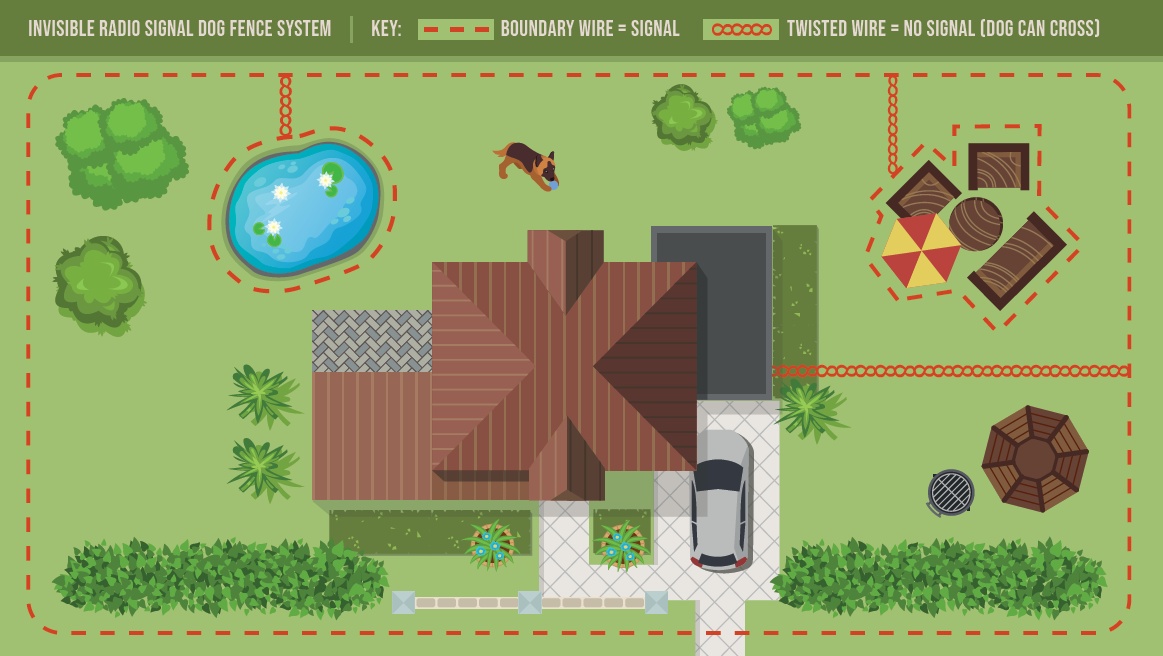
Example of a hidden dog fence creating internal no-go zones around a pond and patio while allowing the dog to enjoy the rest of the garden.
What Is a Dog Exclusion Zone?
A dog exclusion zone is an area within your property that your dog is trained not to enter. Unlike the main boundary, which helps prevent your dog from leaving the property, an internal no-go zone is used to protect areas of the garden from dogs.
The size and shape of the zone can be adapted to the feature being protected. It could surround a small flower bed, follow the edge of a swimming pool or create a larger boundary around a wildlife area.
How Does a Hidden Dog Fence Create a No-Go Zone?
Hidden dog fence exclusion zone is created by installing an additional loop of boundary cable around the area your dog needs to avoid. This internal boundary is connected to the main DogFence system and designed specifically around the layout of your garden.
One of the clever features of a professionally installed hidden dog fence is that the same boundary cable is used to create both your main garden boundary and any internal dog exclusion zones. There is no need for a separate system.
To create a no-go zone, the cable is taken from the main garden boundary to the area you want to protect as a tightly twisted pair. Although the signal is still travelling through the cable, the twisting prevents the boundary signal from being broadcast, allowing your dog to cross this section safely without receiving a warning.
Once the cable reaches the area you want to protect, such as a pond, flower bed or vegetable garden, the wires separate to create an active boundary around that feature. This creates a discreet dog exclusion zone, helping to protect specific areas of your garden while still giving your dog the freedom to enjoy the remaining space.
This clever design allows you to protect areas of the garden from dogs while still giving them the freedom to enjoy the rest of the garden.
Your dog wears the same lightweight receiver collar used for the main property boundary. When they approach the dog garden exclusion area, the collar gives an audible warning. If they continue towards the boundary, the collar provides a brief correction that encourages them to move back into the permitted part of the garden.
As with the main boundary, professional training helps your dog understand where the new limit is located. You can learn more about the boundary, collar and training process on our How the Dog Fence Works page.
What Areas Can a Hidden Dog Fence Exclusion Zone Protect?
A hidden dog fence exclusion zone may be suitable for keeping dogs away from:
- Garden ponds and swimming pools
- Streams and other water features
- Flower beds and planted borders
- Vegetable gardens and fruit patches
- Newly seeded lawns
- Children’s play areas
- Wildlife areas and nesting sites
- Chicken runs, beehives or small animal enclosures
- Compost heaps and garden machinery
Every property is different, so the most suitable cable layout will depend on the position of the feature, the main garden boundary and the areas your dog still needs to access.
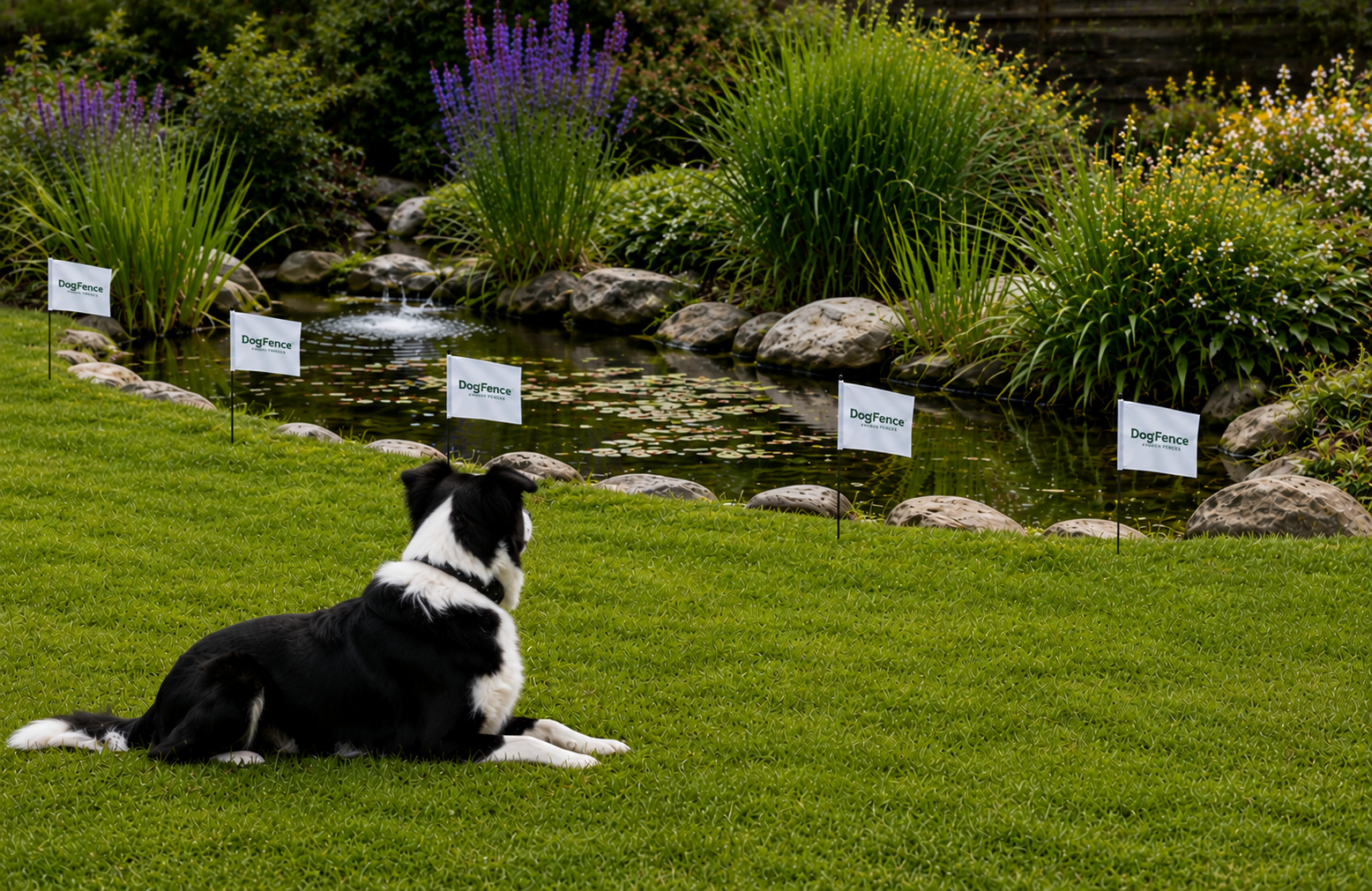
A hidden dog fence creates a discreet no-go zone around a garden pond, allowing the dog to enjoy the rest of the garden safely.
Can a No-Go Zone Keep My Dog Away from Water?
Yes. An internal dog garden exclusion area can often be created around a pond, pool, stream or water feature. This may be particularly helpful for puppies, older dogs, dogs that cannot swim confidently or dogs that repeatedly enter muddy water.
For more information about designing boundaries around natural garden features, read our guide to installing an invisible dog fence around trees, streams and woodland.
Can I Keep Dogs Away from Garden Features Without Building Another Fence?
In many cases, yes. One of the main advantages of an internal boundary is that it can keep dogs away from garden features without adding panels, gates or wire fencing within the garden.
This allows you to preserve your view and maintain the natural appearance of the property. It can be especially useful in landscaped, rural or open gardens where a physical barrier would be expensive, intrusive or difficult to install.
Can I Create More Than One Dog Garden Exclusion Area?
Depending on the property layout, it is nearly always possible to create more than one dog garden exclusion area. For example, you may want to protect a pond in one part of the garden and a vegetable patch in another. The zones will all be connected by a series buried of twisted wires that link back to the main outer loop.
The system must be professionally planned so that the internal loops work correctly alongside the main boundary. Our team will discuss which areas you want your dog to enjoy and which areas need to remain out of bounds before recommending the most appropriate layout.
Why Use a Hidden Boundary to Protect Areas of the Garden from Dogs?
Creating internal boundaries can help protect areas of the garden from dogs while avoiding the need to restrict their access to the whole garden.
Your dog can still run, play and explore within the permitted space, while more vulnerable or potentially hazardous areas remain protected. It offers a flexible solution for owners who want to keep dogs away from garden features without reducing their overall freedom unnecessarily.
Frequently Asked Questions
Can I create a no-go zone with a hidden dog fence?
Yes. A professionally designed DogFence can create an internal dog exclusion zone around certain areas of your garden while allowing your dog to use the remaining space.
Will my dog understand an internal no-go zone?
Yes. Your dog is introduced to the boundary through the same structured training process used for the main DogFence. Training flags will be used initially to make the new boundary clear and easy to understand.
Can the exclusion zone be added to an existing DogFence?
Yes in most cases, an internal loop can be added to an existing system. The installation will need to be assessed to confirm the most suitable cable route and ensure that the hidden dog fence exclusion zone works correctly with the original boundary.
Can a no-go zone protect flower beds and vegetable gardens?
Yes. Internal boundaries can be designed to protect areas of the garden from dogs, including planted borders, flower beds, vegetable patches and newly landscaped areas.
Ready to Decide Which Parts of Your Garden Are for Paws—and Which Are Not?
Your dog can enjoy freedom without having access to every pond, border, vegetable patch or sensitive garden area. At DogFence, every installation is individually designed around your property, your priorities and your dog.
Tell us where your dog can go, show us where they cannot, and we’ll design a discreet boundary that brings the two together.
Request your free DogFence quote today, call us on 01628 476475 or WhatsApp 07917 034256 to start planning your dog’s safe garden freedom.