Underground Dog Fence for Several Acres | UK Guide
Can an Underground Dog Fence Work Across Several Acres?
Yes. A professionally installed underground dog fence can work across several acres and is often particularly well suited to large or irregular UK properties. A boundary wire follows the actual perimeter through fields, woodland, slopes, hedges and open driveways. Unlike a GPS boundary, its position is fixed and does not depend on satellite positioning.
The size of the property is only one part of the calculation. The system also needs the right transmitter capacity, boundary-wire specification and layout, followed by structured training for every dog. DogFence has installed containment systems on properties ranging from small gardens to estates of up to 200 acres.
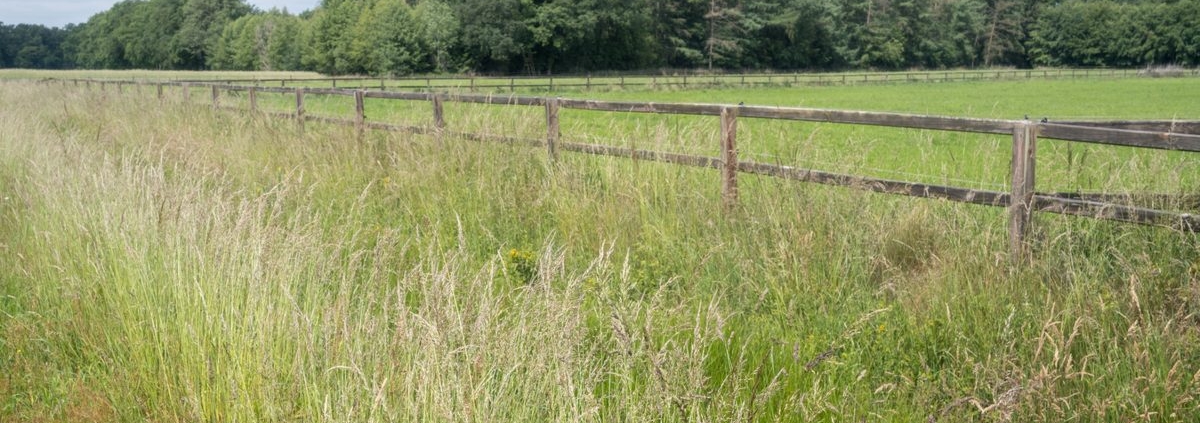
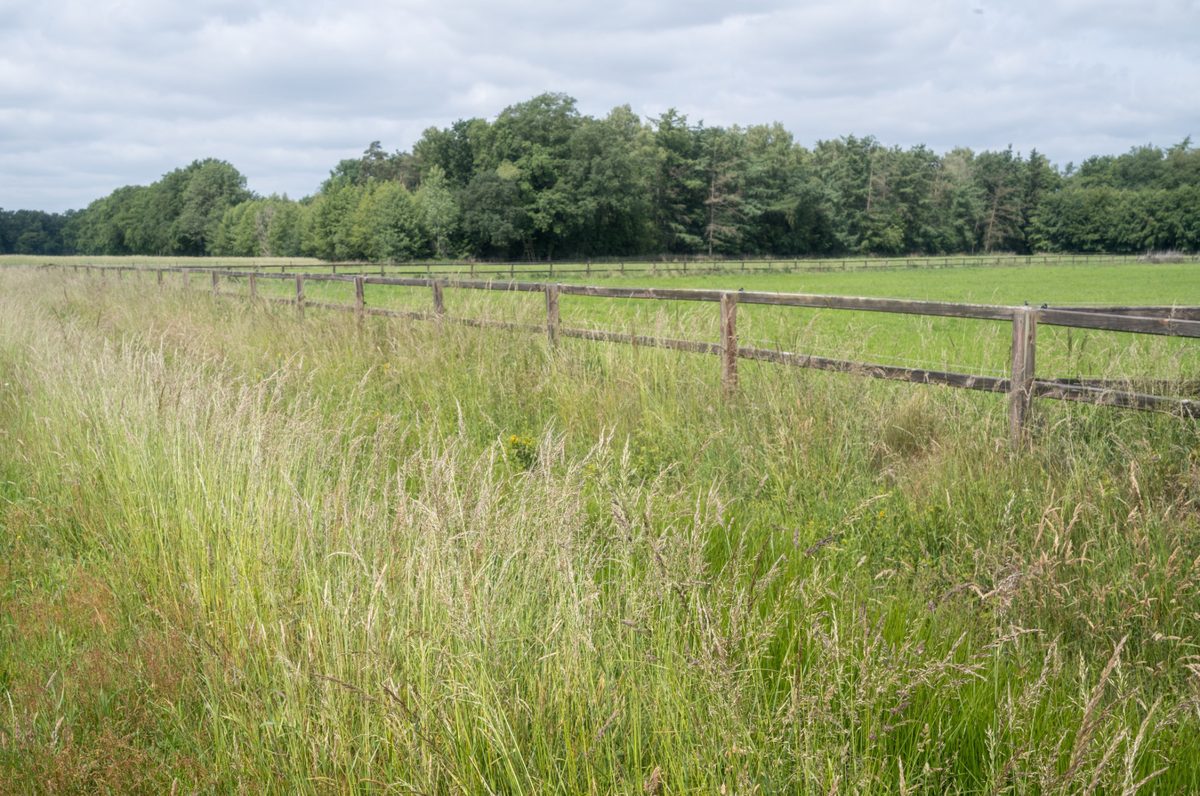
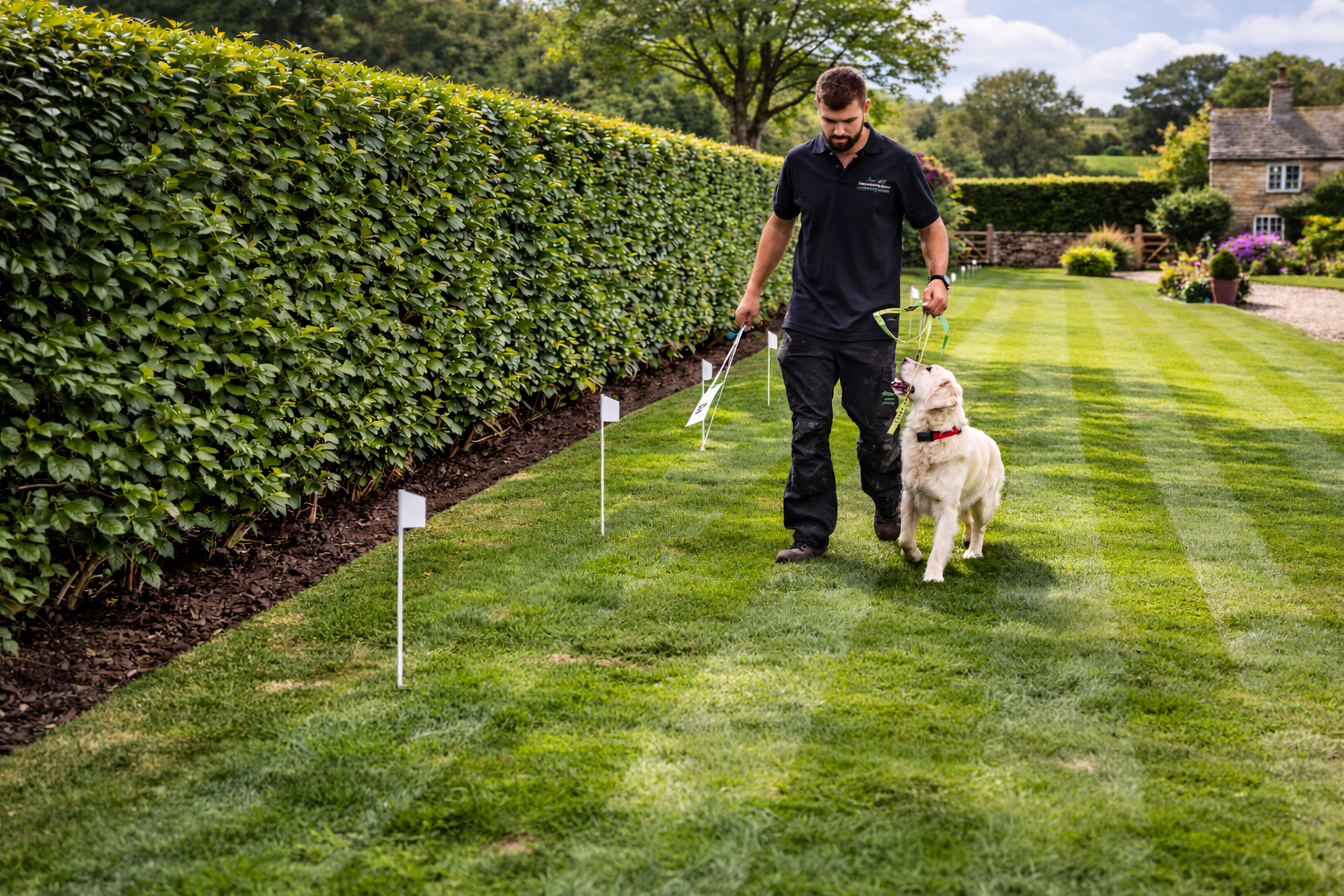
A professionally installed underground dog fence can safely contain dogs across several acres, with training flags helping them learn their new boundary
Quick answer: For a large property, a professionally designed wired dog fence normally offers a more precise and dependable boundary than a circular wireless base station or a GPS-only collar. It can follow the real shape of the land, including narrow sections and exclusion zones.
Acreage is not the only measurement that matters
Two properties can both cover ten acres but require very different systems. A compact, roughly square plot has a much shorter perimeter than a long, narrow or highly irregular plot of the same area. Boundary length, rather than acreage alone, determines how much cable is required.
A professional survey should also consider:
- the full boundary length and shape;
- woodland, roots, rock and changes in ground level;
- driveways, gateways, tracks and watercourses;
- existing walls, hedges, stock fencing and buildings;
- areas the dog must not enter, such as ponds, livestock fields or gardens;
- the dog’s breed, age, temperament and previous escape behaviour; and
- where the transmitter and power supply can be located.
This is why a large-property system should be designed around the land and the dog rather than bought simply by acreage.
Why a wired dog fence suits large properties
A wired system creates a radio field close to a cable installed around the chosen boundary. The dog wears a small receiver collar. During training, the dog learns that a warning tone means it should turn back towards the safe area. If it continues, the collar delivers a brief, adjustable static correction.
Because the boundary is defined by a physical cable, it stays where it was installed. It can usually follow bends, woodland edges, field boundaries and non-circular gardens far more accurately than systems that radiate a circle from a base unit.
| Option | Large-property strengths | Important limitations |
|---|---|---|
| Professionally installed wired dog fence | Fixed, precise boundary; follows irregular land; can include internal exclusion zones; suitable for very large areas. | Requires installation and proper training; does not keep other animals or people out. |
| Wireless base-station fence | Quick to set up on a small, open and approximately circular area. | Usually creates a circular boundary and may not match the property line or protect narrow areas. |
| GPS dog fence | Portable and does not require a boundary cable. | Boundary accuracy can fluctuate with satellite conditions, tree cover and buildings; needs regular charging. |
| Physical fencing | Creates a visible barrier and can also deter other animals or people. | Can be expensive and visually intrusive over long boundaries; gates, digging and jumping remain potential weak points. |
For a fuller comparison, read our guide to wired, wireless and GPS dog fences.
Will it work through woodland, slopes and around buildings?
Usually, yes. A wired boundary does not require a clear view of the sky or a line of sight between the dog and a base station. The cable can be routed around trees, down slopes, beside hedges and around buildings while maintaining a consistent boundary in the chosen position.
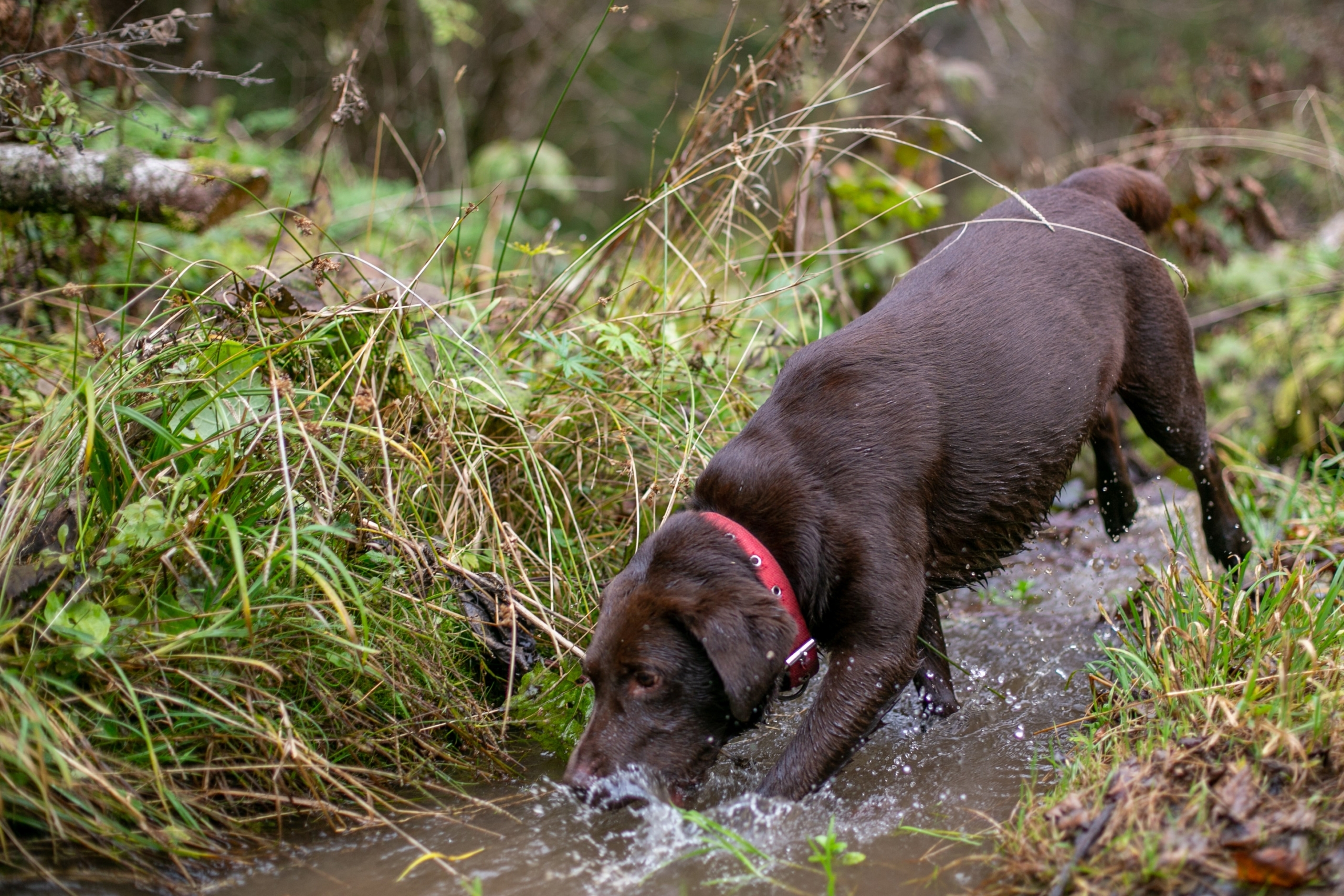
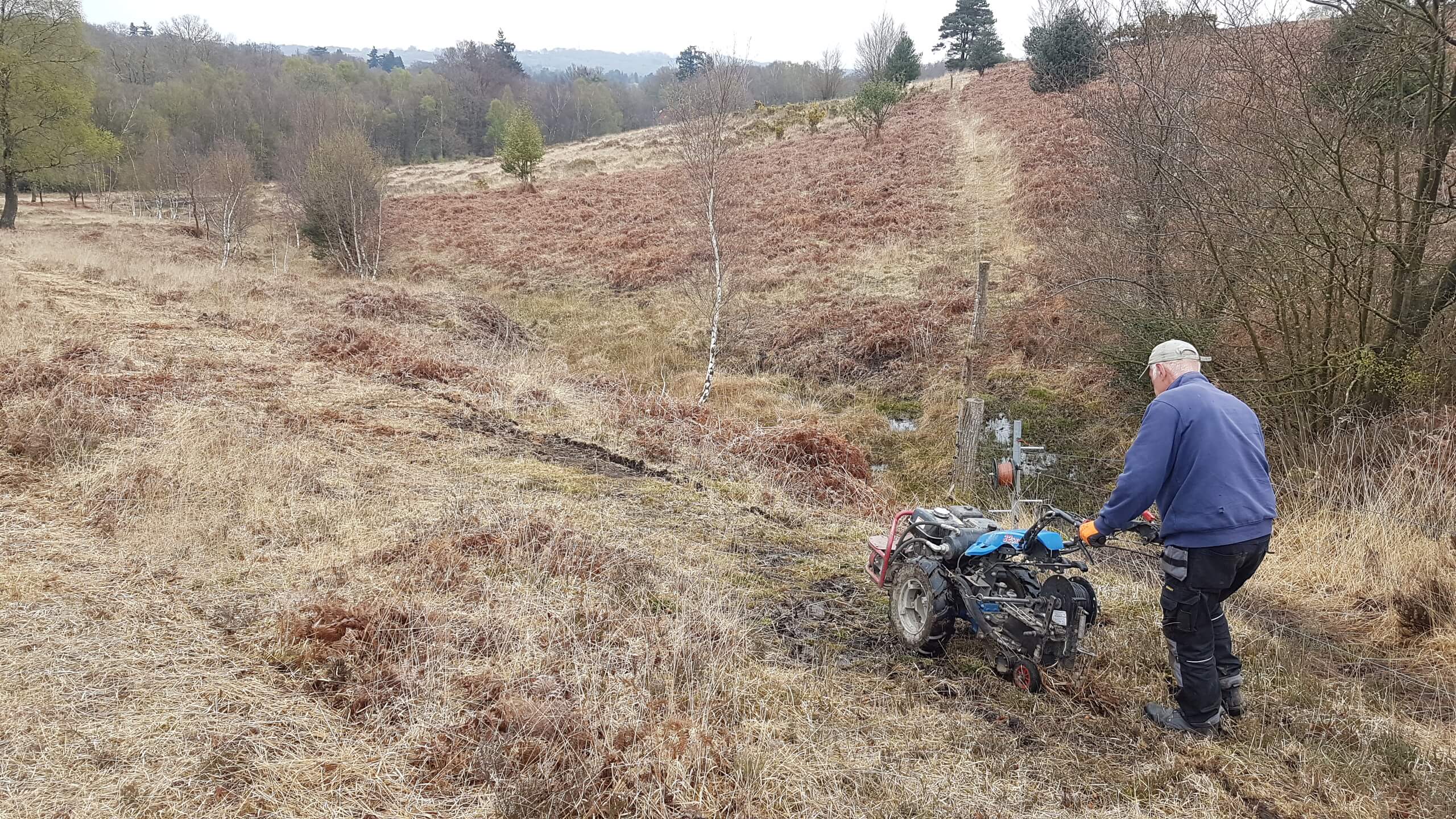
Installation methods can change with the terrain. Cable may be shallow-buried in lawns, secured discreetly beside suitable existing fencing, or routed through woodland using methods appropriate to the ground. Roots, rock, roads and streams can add work and must be assessed individually, but they do not automatically rule out a system.
For more detail, see how a dog fence can work around trees, streams and woodland and on uneven ground and slopes.
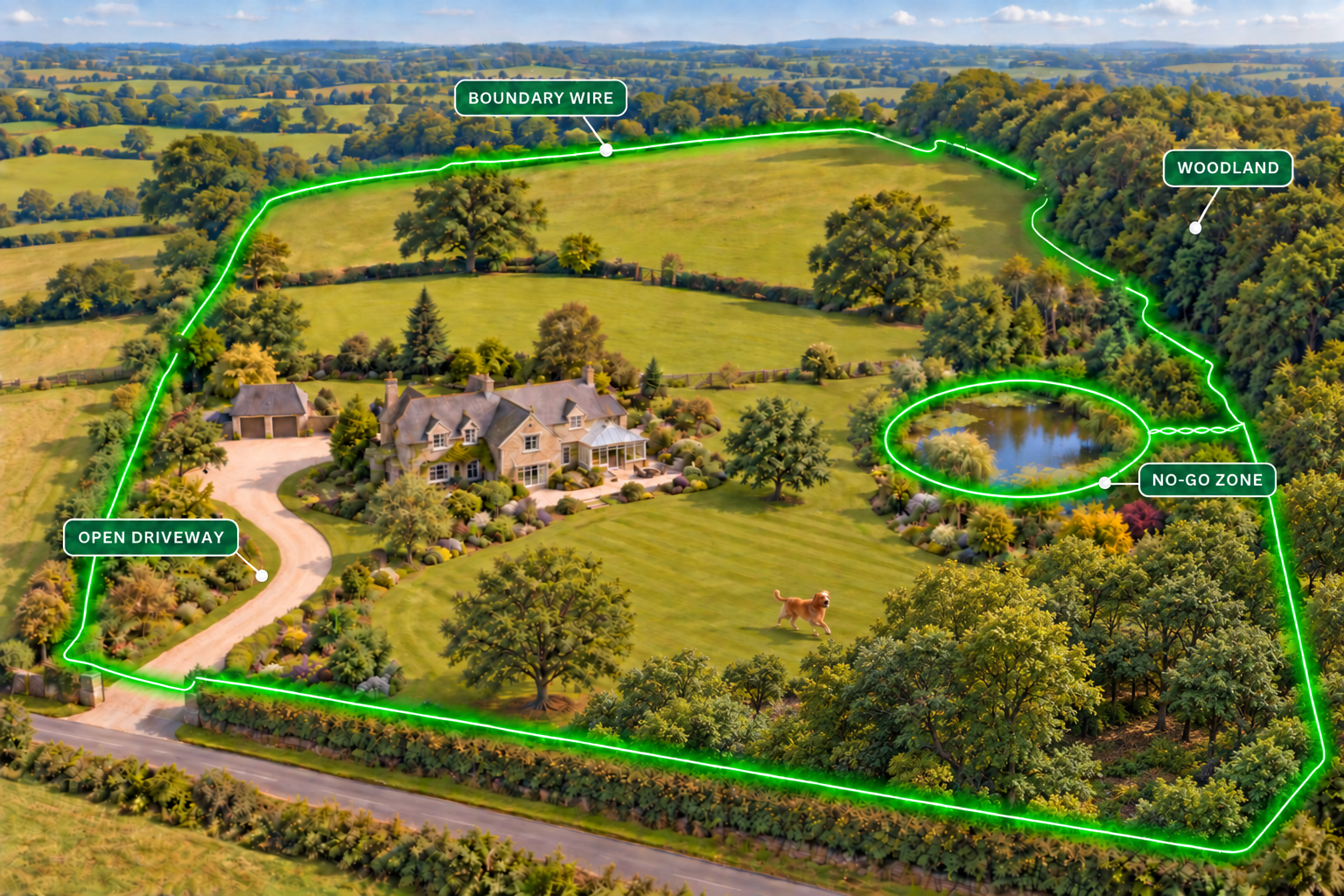
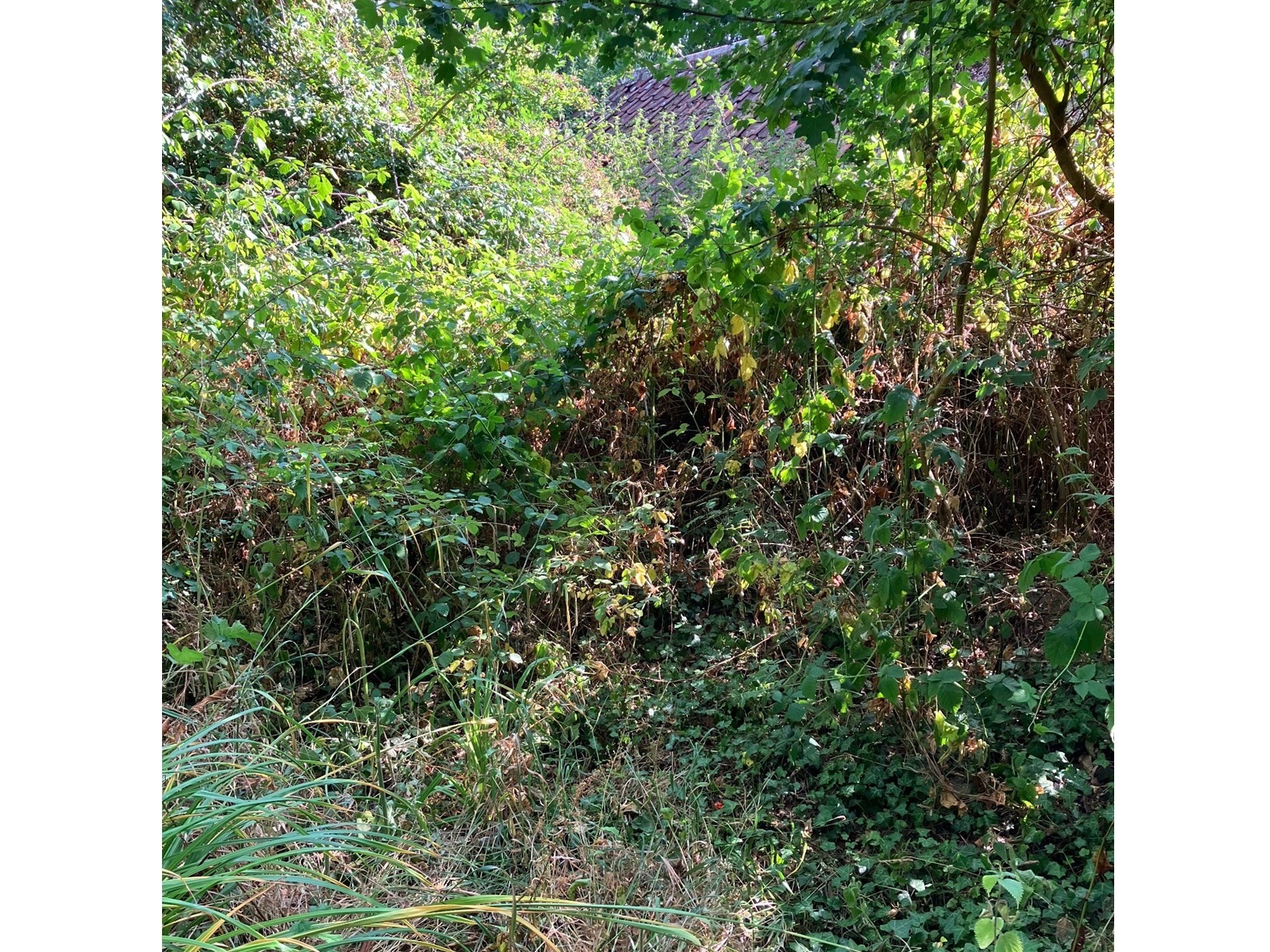
A wired dog fence can follow a large property boundary but also allow access to woodland, cross an open driveway and create an internal no-go zone around a pond.
What about open driveways and gateways?
Open access points are often the reason owners of country properties first contact us. A wired boundary can cross a driveway so the containment area remains continuous without installing a physical gate. The exact installation method depends on the surface and how the driveway is used.
The boundary can also be planned to keep the dog away from a main entrance, delivery area or farm track. Read our guide to stopping a dog running out of an open driveway.
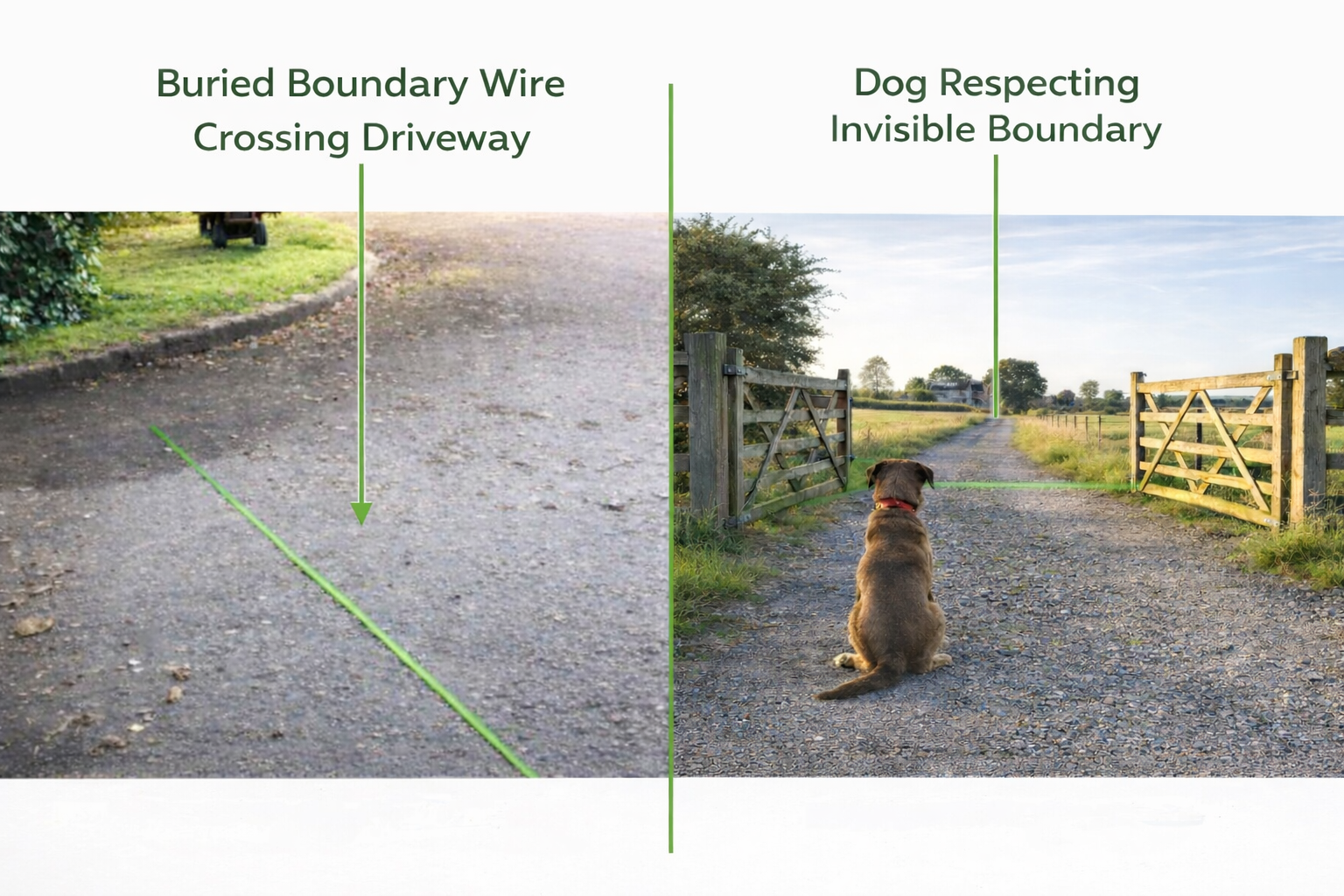
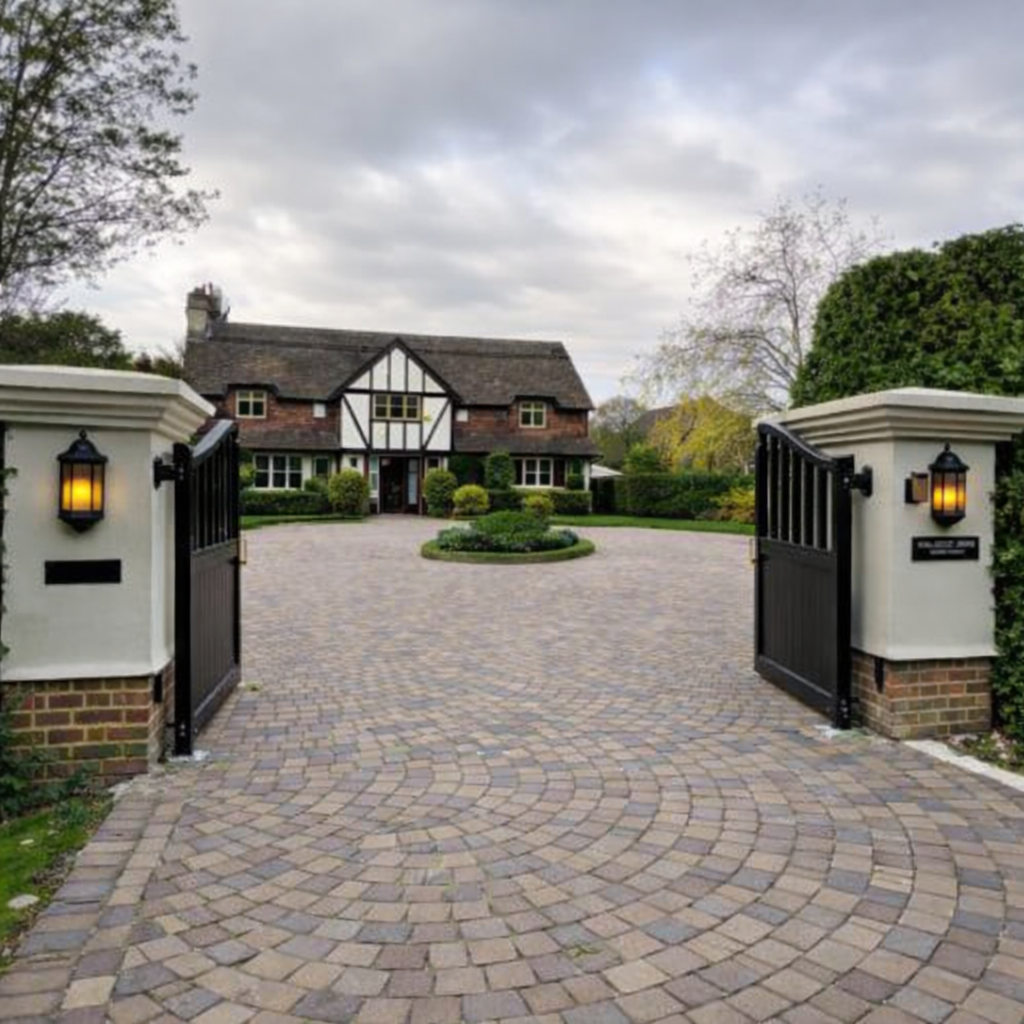
Buried boundary wire crossing a driveway and a trained dog calmly respecting the invisible boundary — even with the gate open.
Can one system contain several dogs?
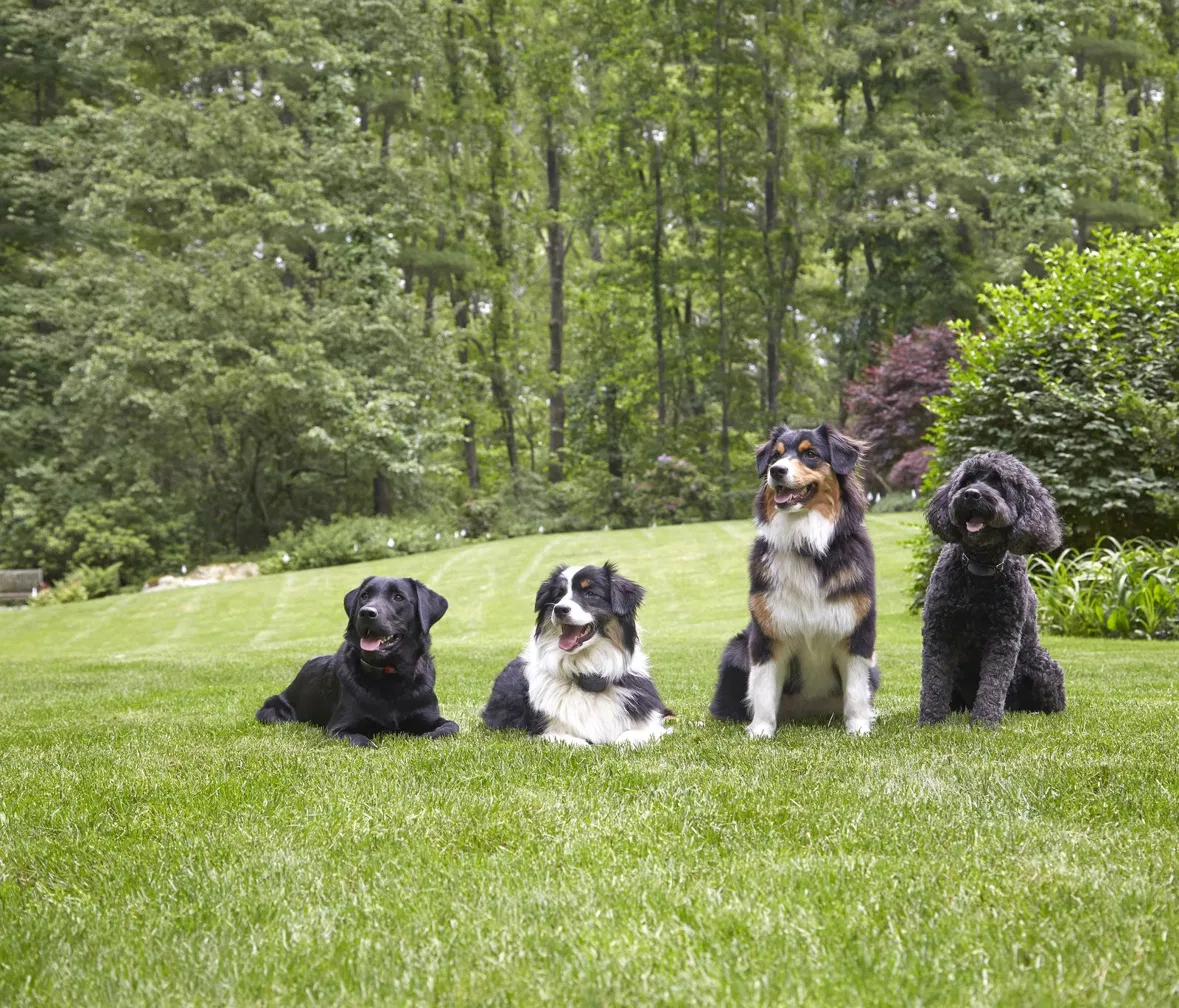
Yes. One boundary system can usually protect multiple dogs, with an individually programmed receiver collar for each dog. This matters because dogs differ in coat, sensitivity, confidence and behaviour. Each dog should be trained separately and the collar settings should be selected for that individual—not copied automatically from another dog.
Internal “no-go” zones can also be created within the main boundary. Depending on the layout, these can help keep dogs away from ponds, vegetable gardens, machinery, livestock or other sensitive areas. Complex layouts and narrow corridors need careful design so the dog always has an obvious, comfortable safe route. See our guide to creating a no-go zone with a hidden dog fence.
Does the signal weaken on a very large site?
Not when the system has been specified correctly for the boundary length. A professional installer calculates the cable run and matches it to a transmitter designed to support that scale. The signal is generated along the wire, so the dog does not need to remain close to the house or transmitter.
This is an important difference from small wireless base-station products, where usable coverage is limited by the radius around the unit. On a wired system, the safe area can extend far from the house while the boundary remains in its planned position.
Training matters even more across several acres
The equipment creates the boundary, but training teaches the dog how to respond to it. A dog should never simply be fitted with a collar and left to discover the boundary alone.
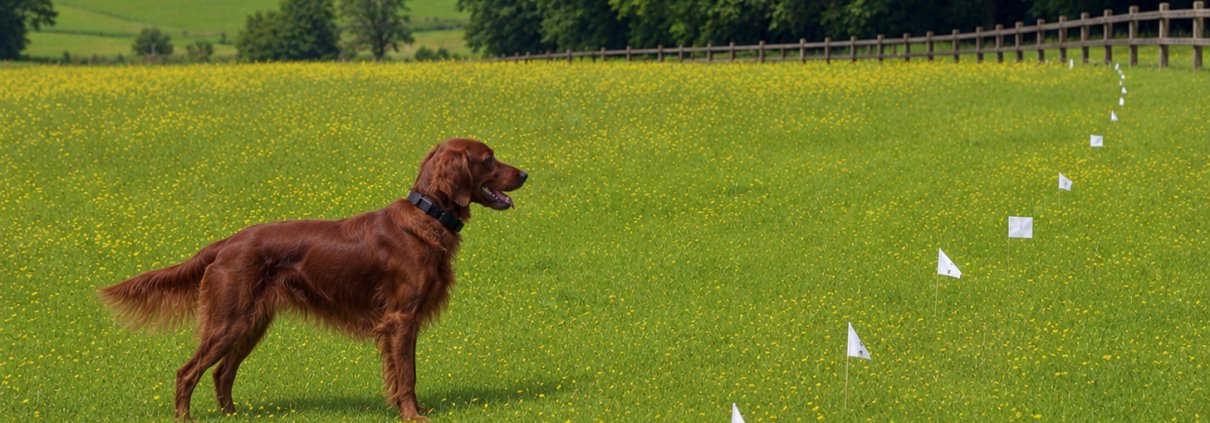
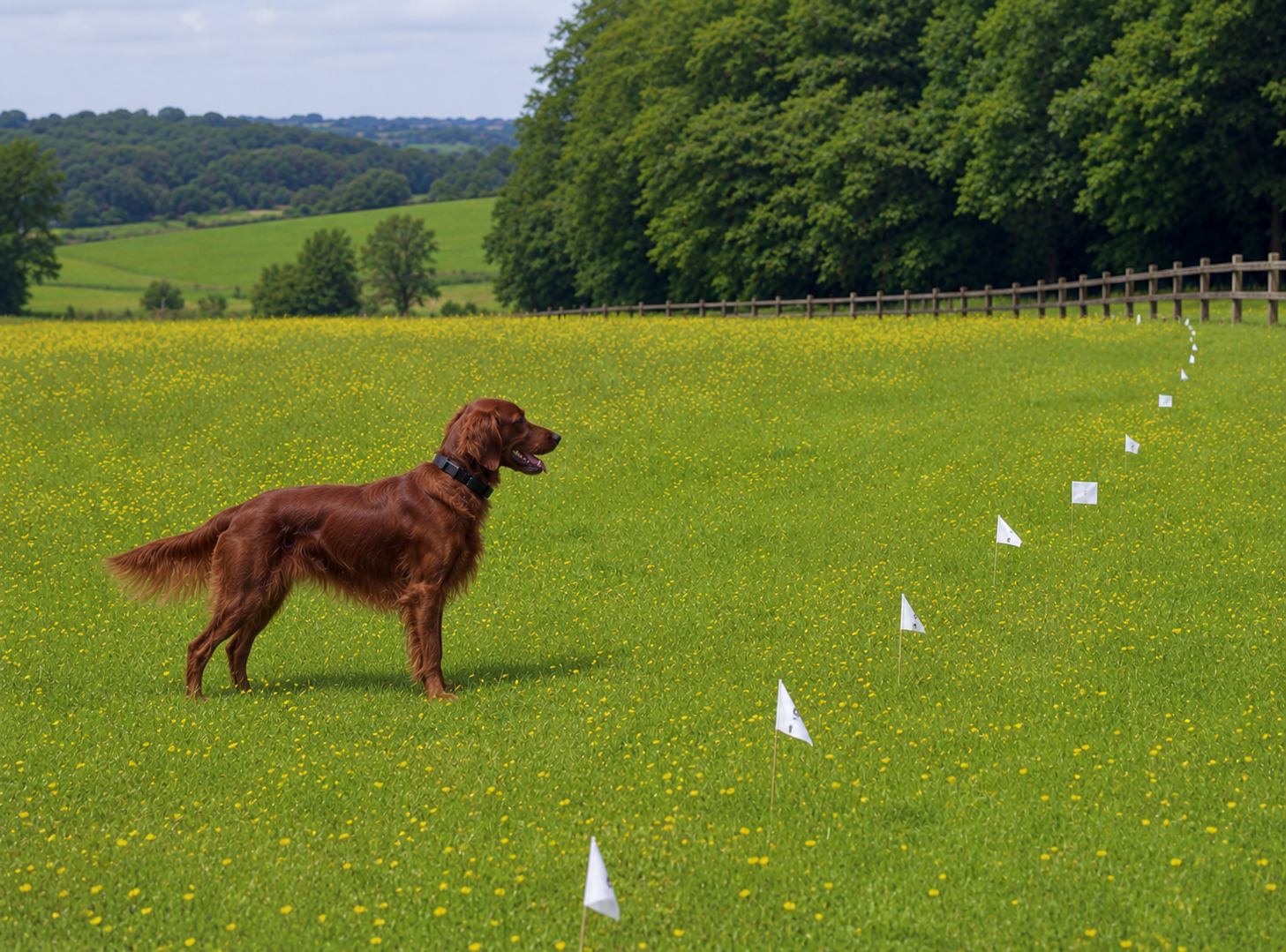
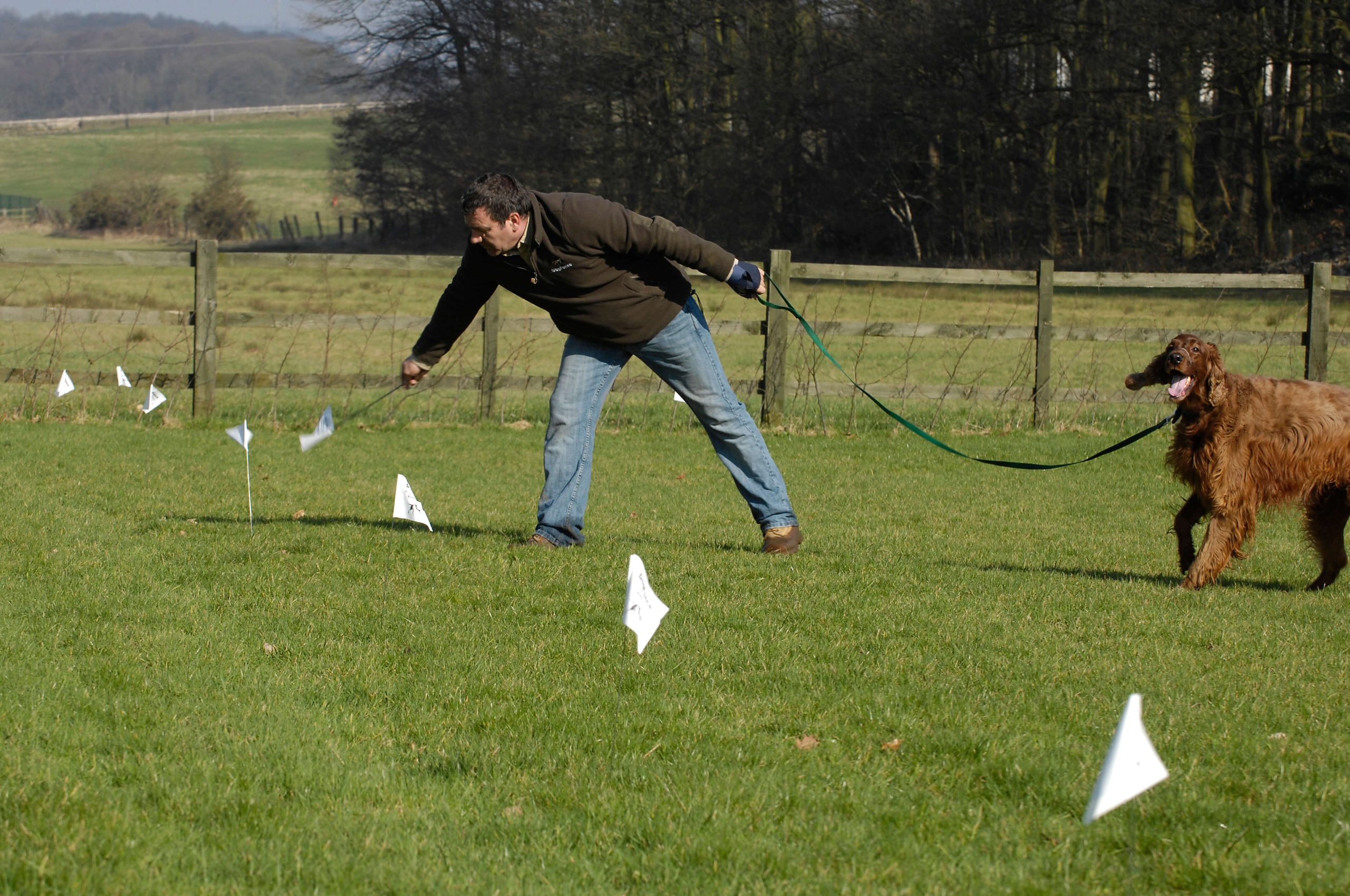
At installation, temporary training flags make the otherwise hidden boundary visible. Training begins in a controlled area and teaches the dog to recognise the warning tone and retreat into the safe zone. Distance and freedom are then increased gradually as the dog demonstrates that it understands.
On a large property, the training plan should include the places the dog is most likely to test: a driveway, a favourite woodland route, livestock, neighbouring dogs or a known escape point. Consistent training around those distractions is more valuable than trying to walk every metre of a very long boundary on the first day.
How much does a dog fence for several acres cost?
Cost depends more on the perimeter, ground conditions and layout than on acreage alone. The number of dogs, internal exclusion zones, driveway crossings and installation method also affect the quotation.
For context, our current worked example for an average one-acre Home Counties property with one dog is around £1,450 including VAT, equipment, professional installation and training. A larger or more complex property is surveyed and quoted individually, however the price does not increase significantly and a 10 acre site will come in circa £4,000 – £7,000k depending on the number of dogs and terrain . See our full UK dog fence cost guide for what is normally included.
What an underground dog fence cannot do
An underground dog fence is a training-based containment system, not a physical barrier. It does not prevent other dogs, wildlife or people from entering the property. It also does not remove the need for responsible supervision, collar checks and ongoing maintenance.
It may not be appropriate where a dog is medically unsuitable, where the owner cannot complete the training, where the layout would create a dangerously narrow safe area, or where keeping other animals out is essential. A reputable installer should be willing to say when a system is not the right answer. Read more about when an invisible dog fence may not be suitable.
Frequently asked questions
How many acres can an underground dog fence cover?
A professionally specified wired dog fence can cover very large properties. DogFence has installed systems on estates of up to 200 acres. The practical limit depends on total boundary length, layout, cable specification and transmitter capacity rather than acreage alone.
Will trees or buildings interfere with the boundary?
A wired system does not rely on GPS or line of sight, so trees, slopes and buildings do not move the installed boundary. The cable route and nearby services still need to be assessed during installation.
Can the boundary cross a driveway or stream?
Often, yes. Driveways can usually be crossed using a method suited to the surface. Streams and other water features need an individual site assessment to select a safe, durable cable route.
Can it work alongside stock fencing or hedges?
Yes, in many cases the boundary cable can follow existing stock fencing, walls or hedges. This can reinforce weak sections and protect gateways without replacing the entire physical boundary.
Is GPS better for a property with several acres?
GPS may suit owners who need a portable system and accept some variation in boundary position. For a permanent home boundary—especially around trees, buildings, narrow areas or an open driveway—a professionally installed wired system normally gives a more precise fixed line.
Does every dog need its own collar?
Yes. The property needs one boundary system, but each dog requires a compatible receiver collar programmed and fitted for that individual dog, followed by its own training.
The right system starts with the property, not the acreage
A several-acre garden, smallholding or country estate is not too large for an underground dog fence simply because of its size. In fact, the ability to follow an irregular perimeter without constructing kilometres of physical fencing is one of the main reasons owners of larger properties consider a wired system.
The decisive questions are whether the boundary can be designed safely, whether the equipment is specified for the full cable length and whether each dog can be trained carefully. A site-specific assessment should answer all three before any installation is recommended.
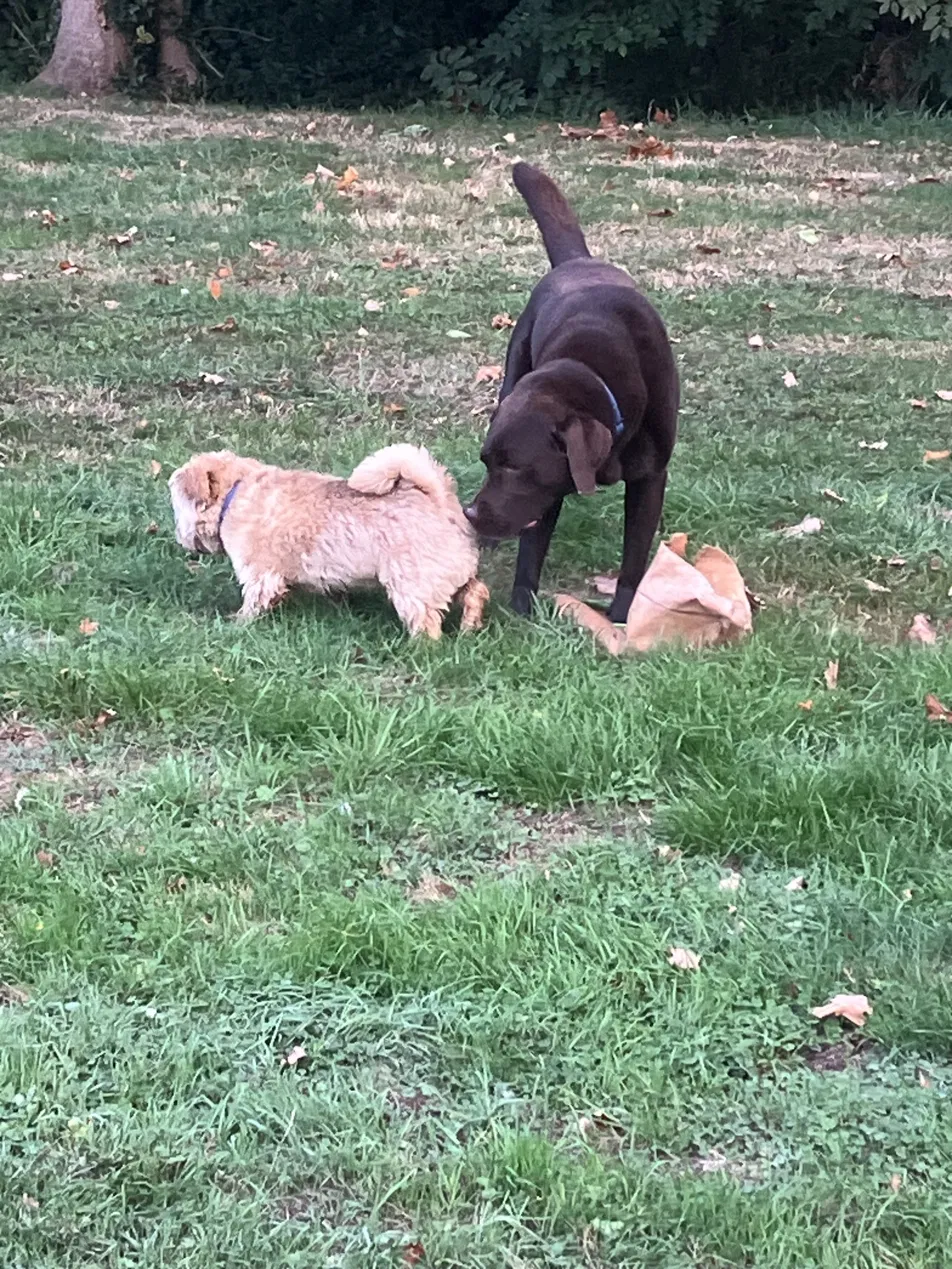
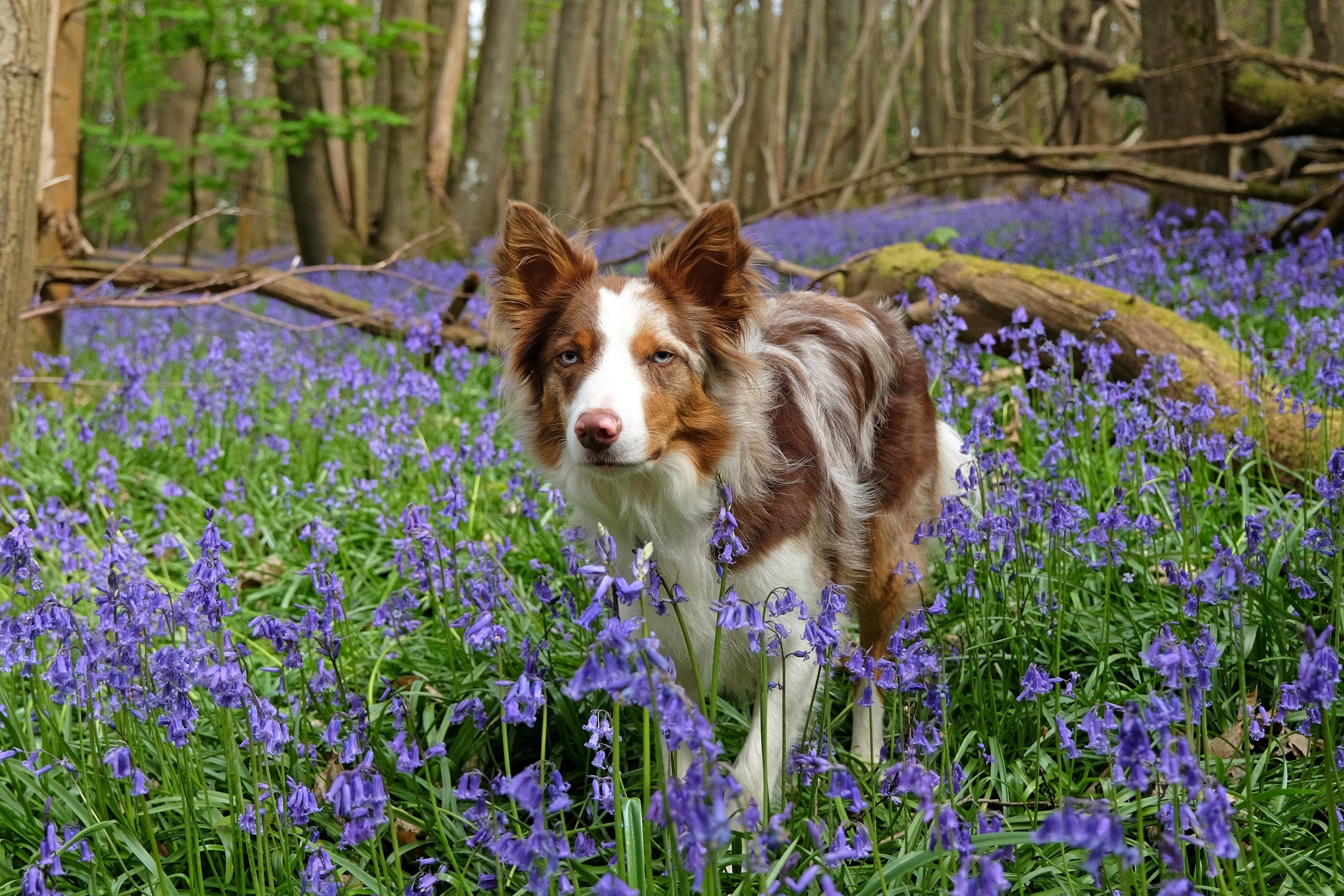
With the right boundary in place, dogs can explore every corner of a large garden safely.
Would a DogFence work on your property?
Tell us about your dog, your garden and what you’re trying to achieve. With more than 20 years’ experience in pet containment, we’ll tell you whether we think a DogFence is suitable – and we’ll tell you if we don’t.
📞 Call us on 01628 476475
💬 Chat to us on WhatsApp
No pressure. No one-size-fits-all solution. Just experienced advice about the safest way to give your dog more freedom.
Some illustrative images on this page may be AI-generated. All advice is based on DogFence Ltd’s practical pet-containment experience since 2003.