Tag Archive for: garden boundaries

How to keep a dog safe in the garden

How to Keep Your Dog Safe in the Garden

How to Keep a Dog Safe in the Garden

How to keep a dog safe in the garden starts with creating a secure outdoor space, checking for escape routes and hazards, and giving your dog clear boundaries. Good dog garden safety allows your dog to run, play and explore while reducing the risk of them escaping, reaching a road or wandering into areas where they could be at risk.

Every dog owner wants to see their dog enjoying the garden without constantly worrying about an open gate, a gap in the hedge or a tempting escape route. But every property – and every dog – is different. A determined digger needs a different approach from a dog that bolts through an open driveway, while rural properties can present completely different challenges from smaller suburban gardens.

The good news is that effective garden security for dogs doesn’t have to mean restricting their freedom. By identifying the risks around your property and creating boundaries your dog understands, you can work towards a safe off-lead garden where your dog has the freedom to enjoy being outdoors while remaining safely at home.
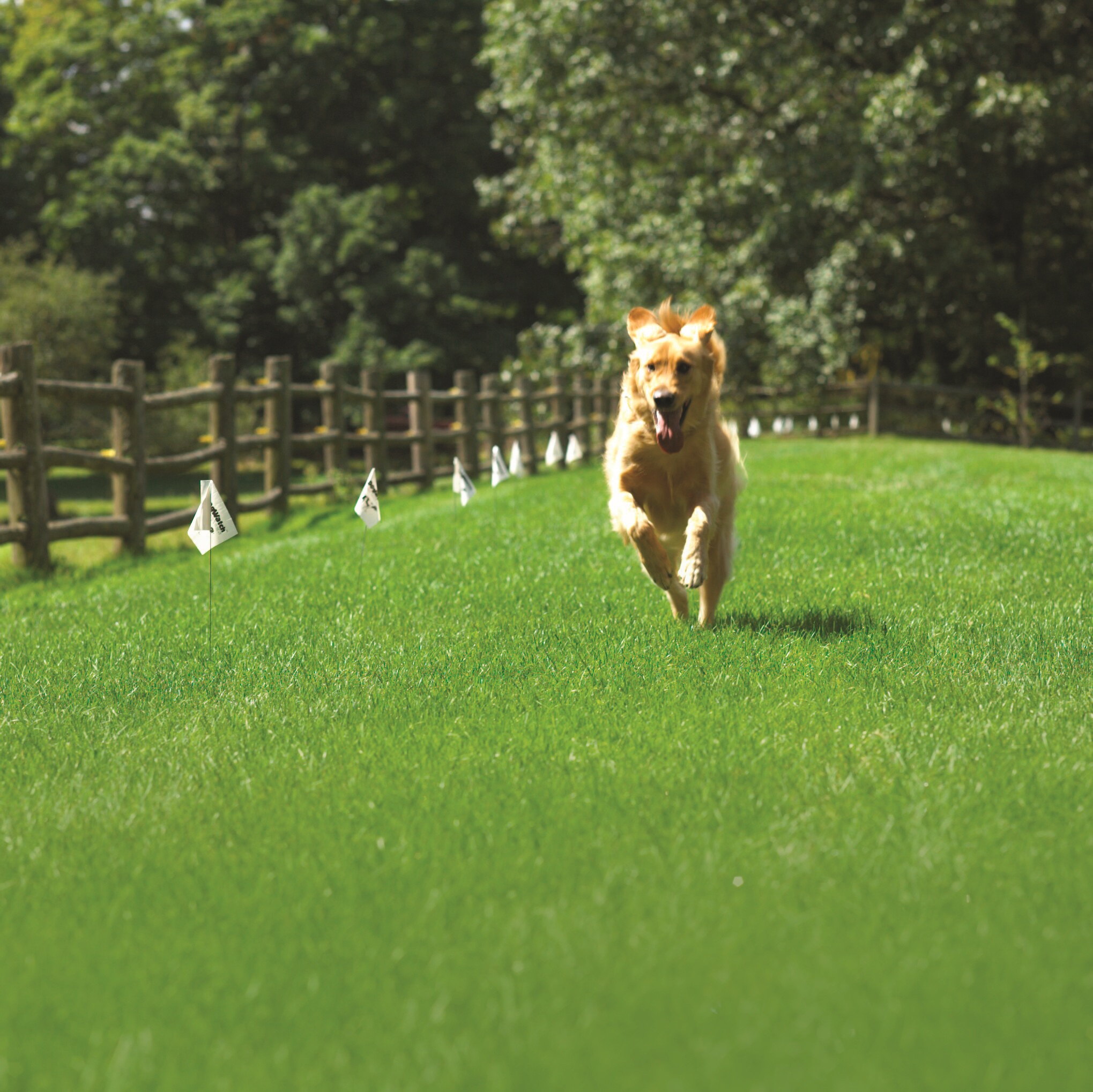
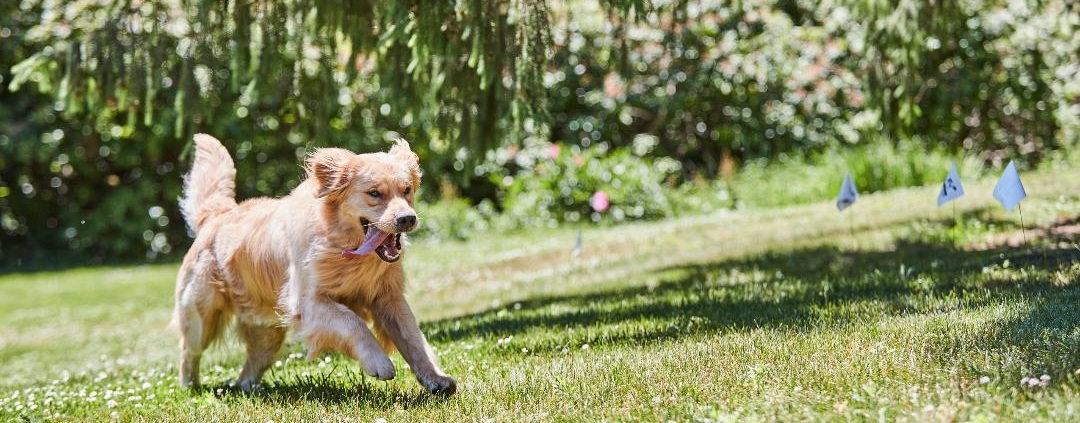
Happy dog running freely in a safe garden wearing a hidden dog fence collar

Quick Answer: How to Keep a Dog Safe in the Garden

To improve dog garden safety:

  • Check fences, walls, hedges and gates for potential escape routes.
  • Look for gaps where your dog could squeeze through or dig underneath.
  • Consider how your dog is secured when driveways or electric gates are open.
  • Identify ponds, pools and other areas that could present a risk.
  • Provide shade and fresh drinking water.
  • Supervise puppies, rescue dogs and dogs that are new to the property.
  • Consider nearby roads, wildlife and livestock when assessing your boundary.
  • Train your dog to understand where they can safely roam.
  • Consider a professionally installed hidden dog fence if you need additional security.

The aim is simple: create a secure garden that gives your dog as much safe outdoor freedom as possible.

Start Dog Garden Safety at the Boundary

The first step in learning how to keep a dog safe in the garden is to look at your property from your dog’s point of view.

Dogs are naturally curious, and some become remarkably good escape artists once they discover a weak spot. A tiny gap in a hedge may not look significant to you, but to an adventurous dog it could be an invitation to explore.

Walk around your entire garden and check for:

  • Gaps under fences and gates.
  • Loose or damaged fence panels.
  • Low walls or hedges that could be jumped.
  • Soft ground where your dog could dig underneath a boundary.
  • Open driveways and vehicle entrances.
  • Gaps leading into neighbouring gardens.
  • Areas where garden furniture or bins could help a dog climb over a fence.

Fixing a small problem before your dog discovers it is usually much easier than persuading an experienced escape artist to give up their new adventure.

If your dog already has a habit of disappearing beyond the garden, read our complete guide on how to stop your dog running away and prevent roaming.

Why Do Dogs Escape from Gardens?

Understanding why your dog wants to leave can be just as important as finding the physical escape route.

Dogs may escape because they are:

  • Following an interesting scent.
  • Chasing wildlife.
  • Trying to reach another dog or person.
  • Exploring beyond the property.
  • Frightened by an unexpected noise.
  • Bored or looking for stimulation.
  • Able to see an easy route out.

Some dogs are also simply more determined to explore than others.

Training and enrichment can help address some of these behaviours, but they don’t remove the need for a secure boundary. Even a dog with good recall can become distracted by something particularly exciting on the other side of the garden.

If your dog is regularly trying to leave the garden, understanding the reason behind the behaviour can help you choose the right solution. Read our guide on: Why Dogs Escape and How to Stop a Dog Running Away.  for a closer look at the most common causes of escaping, roaming and boundary-testing behaviour.

Garden Security for Dogs with Open Driveways and Electric Gates

One of the biggest challenges for garden security for dogs is an entrance that needs to remain open.

You may have secure fencing, walls or hedges around most of your property, but if the driveway is open, your dog still has a direct route to the road.

Electric gates can create a similar problem. A dog may only need a few seconds to slip through while the gates are opening for a car, delivery driver or visitor.

A professionally installed hidden dog fence can create a discreet boundary across an open driveway or work alongside existing electric gates. Your dog is trained to understand the boundary while cars, visitors and deliveries can continue to access the property normally.

For more information, read our guide to keeping dogs safe around open driveways and electric gates.
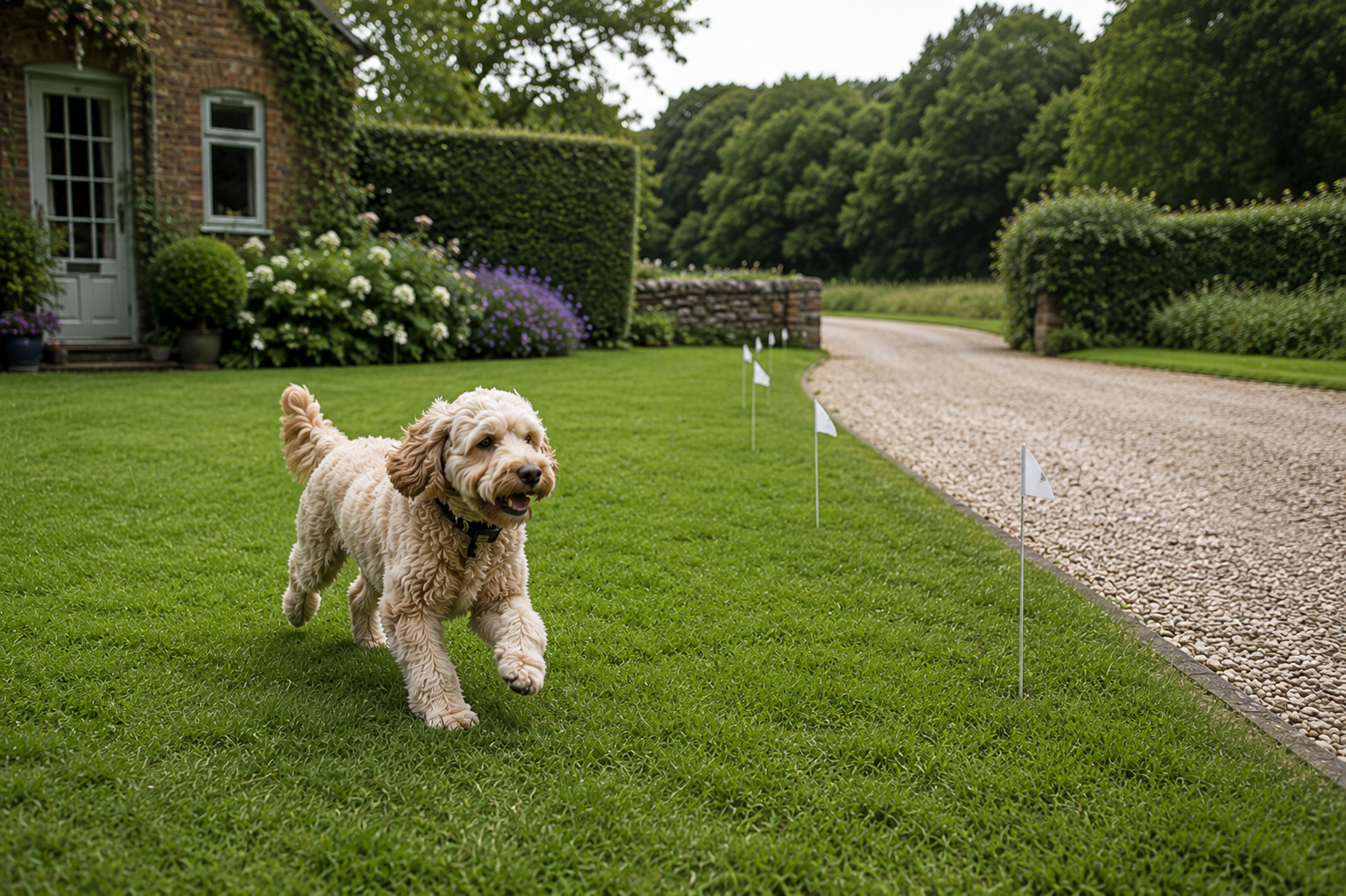
Cockapoo running safely in a garden with an open driveway and white boundary training flags

Can You Create a Safe Garden Without a Physical Fence?

Yes. Where conventional fencing is impractical, unsuitable or does not prevent a particular dog from escaping, a professionally installed hidden dog fence can create a secure boundary that the dog is trained to understand.

A hidden dog fence can also work alongside the physical boundaries you already have.

For example, your garden may already have fences, walls and hedges, but your dog might:

  • Dig underneath them.
  • Jump or climb over them.
  • Squeeze through small gaps.
  • Escape through an open driveway.
  • Run through electric gates as they open.

In these situations, the hidden boundary can provide an additional layer of garden security for dogs without replacing the existing features of the property.

If you’d like to understand the technology behind the boundary, visit our How DogFence Works page.

How to Create a Safe Off-Lead Garden

A safe off-lead garden is a secure outdoor area where your dog can run, sniff, play and explore without being permanently attached to a lead.

For many owners, this is the real goal of improving garden security: not to restrict their dog, but to give them more freedom.

A clearly defined boundary can allow a dog to enjoy a much larger area than they might otherwise have access to. This can be particularly valuable for dogs that would need to be kept on a long line or closely supervised whenever they went outside because of the risk of escape.

Creating a safe off-lead garden means finding the right balance between freedom and security. Your dog gets space to enjoy being a dog, while you have greater confidence that they will remain within their designated area.

Keeping Dogs Safe Around Garden Hazards

Dog garden safety isn’t only about preventing escapes. Some areas within a property may also need to remain out of bounds.

Depending on your garden, these could include:

  • Ponds and swimming pools.
  • Flower beds and vegetable gardens.
  • Wildlife areas.
  • Driveways and vehicle access.
  • Outbuildings.
  • Woodland or streams.
  • Boundaries adjoining farmland or livestock.

Depending on the layout of the property, a professionally designed DogFence can sometimes include exclusion zones around areas you don’t want your dog to enter.

This means you don’t necessarily have to restrict your dog’s access to the entire garden simply because one particular area needs protection.

What About Ponds and Swimming Pools?

Water can present a particular concern for some dog owners. Puppies, older dogs and dogs that are not confident swimmers may require additional care around ponds, swimming pools and other water features.

A professionally designed hidden dog fence may be able to create an exclusion zone around the water while leaving the rest of the garden available for your dog to enjoy.

For more advice, read our guide to keeping dogs safely away from ponds and swimming pools.

Dog Garden Safety Around Trees, Streams and Woodland

Large gardens and rural properties often contain natural features that don’t fit neatly behind a conventional garden fence.

Trees, streams, woodland and uneven terrain can all affect how a secure dog boundary needs to be designed.

One advantage of a professionally installed hidden dog fence is that the boundary can be designed around the individual property rather than requiring the landscape to be divided by additional physical fencing.

If your garden includes natural features, read our guide to installing an invisible dog fence around trees, streams and woodland.

Dog Garden Safety in Rural Properties

Rural properties can present very different challenges when trying to keep a dog safe.

Large gardens may include fields, hedges, woodland, uneven terrain and open driveways. Installing conventional fencing around several acres can also be expensive or impractical.

There may be more temptation beyond the boundary too. Rabbits, deer, pheasants and neighbouring livestock can all attract a dog’s attention.

Creating a clearly defined boundary can help prevent dogs from roaming beyond the property while still allowing them to enjoy the space available at home.

Our guide to dog-proof fencing and dog safety in rural areas looks more closely at securing dogs on countryside properties.

Keeping Dogs Safe Around Wildlife and Livestock

For dogs living near woodland, farmland or open countryside, wildlife can be an irresistible distraction.

A rabbit disappearing through a hedge or a deer crossing a neighbouring field can be enough to make even a normally responsive dog forget their recall.

Keeping your dog securely within their property can reduce opportunities for chasing and unwanted encounters. It can also help keep dogs away from neighbouring livestock.

A secure dog boundary can therefore protect more than your own pet. It may also help reduce disturbance to the animals living around you.

Read our guide to how to protect wildlife from dogs while giving your dog safe outdoor freedom.

What Makes a Dog-Friendly Garden?

A secure garden and a dog-friendly garden are closely connected, but they are not quite the same thing.

A secure garden focuses on preventing your dog from escaping and keeping them away from potential hazards.

A dog-friendly garden also considers how enjoyable and enriching the outdoor space is for your dog, including access to shade, fresh water and opportunities to sniff, explore and relax.

Ideally, your garden should be both safe and enjoyable.

According to the RSPCA’s guidance on dog welfare, dogs need appropriate opportunities for exercise and to behave naturally.

We’ve covered garden design and enrichment separately in our complete guide to creating a dog-friendly garden, including practical ideas for making your outdoor space safer and more enjoyable for your dog.

Why Training Is Essential for Dog Garden Safety

A hidden dog fence isn’t simply installed and left for the dog to work out. Training is a crucial part of creating a boundary your dog understands.

During the initial training period, the boundary is marked using visible training flags. Your dog is gradually introduced to the boundary so they learn where they can safely roam.

Every dog is different, which is why training should take account of the individual dog’s temperament, age and confidence.

As the dog learns where the boundary lies, they can become increasingly confident about the area in which they are free to run, play and explore.

The goal is a safe off-lead garden where your dog understands their boundaries and can enjoy outdoor freedom with greater confidence.

If you’re unsure whether DogFence could be suitable for your dog, our Frequently Asked Questions answer many of the questions owners ask before installation.
Labrador learning a safe garden boundary during DogFence training with white boundary flags

Frequently Asked Questions About Dog Garden Safety

How do you keep a dog safe in the garden?

To keep a dog safe in the garden, check for escape routes, secure vulnerable entrances, identify potential hazards and make sure your dog understands their boundaries. Where conventional fencing does not provide adequate security, a professionally installed hidden dog fence can provide an additional secure boundary.

How do I stop my dog escaping the garden?

Check for gaps, damaged fencing and places where your dog can dig, climb or jump. Pay particular attention to gates and open driveways. Understanding why your dog escapes and creating a secure boundary can help prevent future escapes.

Can I keep my dog safe without a physical fence?

Yes. A professionally installed hidden dog fence can create a secure boundary where conventional fencing is impractical or unsuitable. It can also work alongside existing fences, hedges, walls and gates.

What is a safe off-lead garden?

A safe off-lead garden is a secure outdoor area where a dog can run, play and explore without being permanently attached to a lead. It should have clearly defined boundaries that help prevent the dog from leaving the property.

Can a hidden dog fence work with existing fencing?

Yes. A hidden dog fence can work alongside existing physical fences, walls, hedges and gates to provide additional security, particularly for dogs that dig underneath, jump over or find gaps in conventional boundaries.

Can a hidden dog fence work in a large or rural garden?

Yes. A professionally designed hidden dog fence can be particularly useful for large and rural properties where conventional fencing may be difficult, expensive or visually intrusive. The boundary can be designed around the individual layout of the property.

Can I keep my dog away from certain parts of the garden?

Depending on the property layout, a professionally designed DogFence may be able to create exclusion zones around ponds, swimming pools, flower beds or other areas you want your dog to avoid while allowing them to enjoy the rest of the garden.

Enjoy More Freedom with Greater Peace of Mind

Learning how to keep a dog safe in the garden doesn’t mean limiting their freedom.

By identifying escape routes, securing vulnerable boundaries and providing appropriate training, you can create a secure outdoor space where your dog can run, play and relax with confidence.

Whether your property has conventional fencing, an open driveway, rural boundaries or several acres of land, the goal is the same: effective garden security for dogs that allows them to enjoy as much safe freedom as possible.

A professionally installed DogFence creates a discreet boundary designed around your individual property and your dog, helping you create a secure, safe off-lead garden without unnecessarily restricting their freedom.


Want to Keep Your Dog Safe in the Garden?

Every dog deserves the freedom to run, play and explore safely. A professionally installed DogFence creates a discreet hidden boundary, helping keep your dog safely contained while preserving the natural look of your garden.

Call us on
01628 476475
|
Message us on WhatsApp
|
Request a Free Quot

 

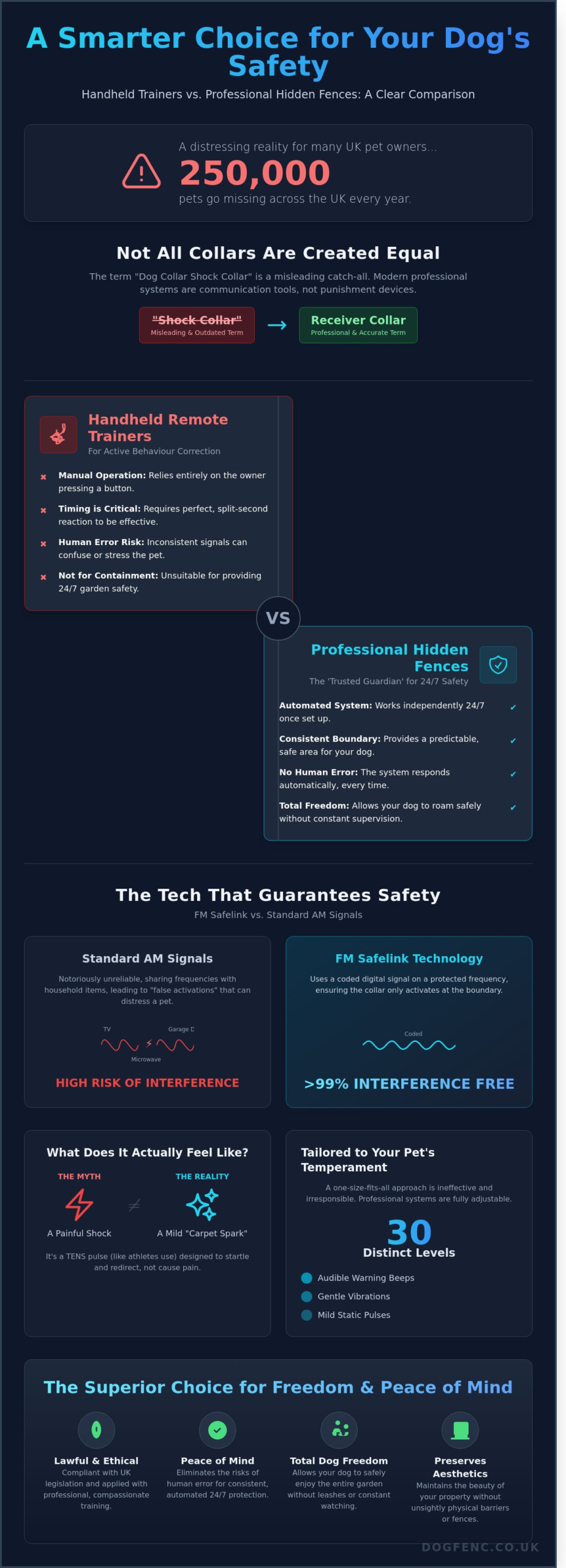
Dog Collar Shock Collars vs. Hidden Fences: A Guide to Pet Safety

Dog Collar Shock Collars vs. Hidden Fences: A Guide to Pet Safety

Last Tuesday, a spirited Labrador in Oxfordshire cleared a two-metre garden fence in seconds, leaving his owners in a state of total panic. It’s a distressing reality for many; data shows approximately 250,000 pets go missing across the UK every year. You likely share this frustration and want a reliable way to keep your companion safe without compromising their happiness. You might have considered a dog collar shock collar but felt hesitant due to recent headlines or the fear of causing your pet unnecessary discomfort.

We believe every dog deserves the freedom to roam their own garden safely. This guide explains the vital differences between handheld remote trainers and professional hidden fence systems, helping you understand the nuances of UK law. You’ll discover how bespoke technology and expert training provide a gentle, effective alternative to traditional fencing. We’ll examine the technical precision of FM Safelink signals and how professional support ensures your pet remains secure and confident within their boundaries.

Key Takeaways

  • Understand the vital distinctions between a standard dog collar shock collar and professional receiver collars to make an informed, safety-first choice for your pet’s well-being.
  • Learn why advanced FM Safelink technology provides a more reliable and secure boundary than traditional AM signals, ensuring your dog remains safely within your garden.
  • Discover how professional containment systems eliminate the risks of human error associated with handheld devices, providing consistent and automated protection 24/7.
  • Gain clarity on current UK legislation and the ethical application of static stimulation to ensure your training methods are both lawful and compassionate.
  • Explore how hidden fencing offers your dog total freedom and peace of mind for you, while preserving the aesthetic beauty of your property without unsightly physical barriers.

Understanding Dog Collar Shock Collars: Definitions and Differences

The terminology surrounding pet safety technology is often misunderstood by UK pet owners. Many people use the phrase dog collar shock collar as a catch-all term for any device that delivers a signal to a pet. However, there’s a vital distinction between a generic “shock” device and a professional receiver collar. For a broader context on the history and mechanics of these tools, Wikipedia’s overview of shock collars provides a useful technical baseline regarding their evolution and various applications.

In a professional context, the word “shock” is misleading. It suggests an aggressive or painful jolt. Modern systems, particularly those using FM Safelink technology, deliver a precise digital signal. This isn’t a tool for punishment; it’s a communication device. Our “Trusted Guardian” approach prioritises the emotional bond between you and your pet. We focus on providing freedom within a safe environment. Since 2003, we’ve helped thousands of UK families secure their gardens, moving away from the idea of “correction” and toward the reality of “containment.”

What is a Handheld Remote Trainer?

A handheld remote trainer is designed for active behaviour correction. The owner holds a transmitter and must press a button to deliver a signal at the exact moment a dog displays an unwanted habit. These tools require manual operation and near-perfect timing to be effective. Because they rely on human intervention, they’re typically used for specific training goals, such as recall in open fields, rather than 24/7 garden safety.

What is a Hidden Fence Containment Collar?

A hidden fence receiver collar is an automated safety solution. It works independently of the owner once the initial training period is complete. The system responds to a pre-set boundary wire buried around your property. Unlike a manual dog collar shock collar used for correction, a containment collar provides a consistent, predictable signal that alerts the dog as they approach a boundary. It’s a reliable way to prevent wandering and ensure your pet stays safely away from roads or hazards without constant supervision.

Choosing the right system means understanding these technical differences. A professional containment system offers peace of mind because it removes the risk of human error. It provides a “safety net” that allows your dog to enjoy their garden with total freedom, while you remain confident they’re protected by a disciplined, expert-led solution.

How Electronic Stimulation Technology Actually Works

Understanding the difference between a crude dog collar shock collar and a professional hidden fence starts with the physics of the signal. Our receivers use static stimulation, a technology that feels remarkably like the “carpet spark” you experience after walking on nylon and touching a door handle. It’s technically a Transcutaneous Electrical Nerve Stimulation (TENS) pulse, similar to the devices human athletes use for muscle recovery. This sensation is designed to startle or signal a change in direction, rather than cause physical pain or distress.

FM Safelink vs. Standard AM Signals

Most budget containment systems rely on AM (Amplitude Modulation) radio signals. These are notoriously unreliable because they share frequencies with common household items like garage door openers, older television sets, or even microwave ovens. This overlap leads to “false activations,” where a pet receives a correction for no reason while simply relaxing in the kitchen. Our FM Safelink technology uses a coded digital signal, reducing the risk of external interference by over 99%. This ensures the receiver only reacts when it detects the specific 10.7 MHz frequency emitted by your hidden boundary wire, providing your pet with consistent and predictable boundaries.

Customising Stimulation to Your Pet’s Sensitivity

Every dog possesses a unique temperament; a “one size fits all” approach isn’t just ineffective, it’s irresponsible. Unlike a generic dog collar shock collar bought online, our professional systems offer up to 30 distinct levels of interaction. These range from audible warning beeps and gentle vibrations to very mild static pulses. A 2020 study on training collar effectiveness conducted by the University of Lincoln highlighted how professional guidance and tailored settings are vital for animal welfare.

We use professional calibration to find the lowest possible setting that your pet acknowledges. This ensures they remain happy and confident within their garden without being overwhelmed. If you’re unsure which setting suits your specific breed, our team provides expert guidance on pet safety during the initial professional installation. This bespoke approach guarantees that the system acts as a gentle reminder of the boundary, fostering a sense of freedom for the dog and total peace of mind for you.

Comparing Methods: Handheld Training Collars vs. Professional Containment

Understanding the distinction between a reactive tool and a proactive safety net is vital for any pet owner. Handheld devices rely on a human being to spot a behaviour and press a button. This manual approach is fraught with risk. If you’re distracted by a phone call or a neighbour, you miss the critical window for correction. Professional containment removes the variable of human error entirely. Our systems use digital signal precision to ensure the boundary is absolute, working at the speed of light rather than the 0.25-second average human reaction time.

The Risk of DIY ‘Shock’ Devices

Generic handheld devices, often marketed as a budget dog collar shock collar, create significant welfare concerns due to inconsistent timing. When a correction is delayed by even a few seconds, the dog cannot associate the sensation with their action. This confusion often leads to “collar shyness” or generalised anxiety. The UK government addressed these specific concerns through The Animal Welfare (Electronic Collars) (England) Regulations 2023, which prohibits remote-controlled training collars. Beyond the legal risks, cheap £30 imports lack the FM Safelink technology required to prevent accidental activation from stray radio signals.

The Professional Containment Advantage

A professionally installed system offers a permanent lifestyle upgrade for your beloved pet. It provides a level of protection that manual training cannot match. While a handheld collar is designed to “stop” a specific behaviour, our hidden fence creates boundary awareness. This allows your dog to roam the garden safely 24 hours a day. You don’t need to be watching from the patio to ensure their safety. The system is always on duty, providing constant protection even when you aren’t there.

  • Continuous Safety: The boundary works 24/7 without any owner intervention required.
  • Expert Integration: Our protocols are tailored to your dog’s specific temperament by professional trainers.
  • Technical Reliability: Systems include internal lightning protection and a lifetime equipment warranty for peace of mind.

Choosing a professional solution means investing in your pet’s long-term happiness. You’re not just buying hardware; you’re securing a programme that has been refined over 40 years to ensure every dog feels confident and secure within their home territory. This approach transforms the garden into a sanctuary of freedom rather than a place of restriction.

Dog Collar Shock Collars vs. Hidden Fences: A Guide to Pet Safety

Safety, Ethics, and the Law: Using Electronic Collars in the UK

Choosing a containment system involves more than just selecting hardware; it requires a deep commitment to your pet’s emotional and physical health. We understand that the term dog collar shock collar often carries negative connotations rooted in the use of outdated, unregulated devices. In the UK, the conversation around pet safety is rightly governed by the Animal Welfare Act 2006, which demands that owners protect their animals from pain, suffering, and injury. Our approach doesn’t just meet these legal requirements; it exceeds them by prioritising a “safety first” methodology that fosters trust between you and your dog.

DogFence Ltd operates under strict self-imposed ethical codes and aligns with the standards set by the Electronic Pet Training Association (EPTA). These guidelines ensure that every system is installed with the animal’s temperament in mind. We don’t believe in a one-size-fits-all solution. Instead, we provide a sophisticated tool designed to offer your pet the freedom of the garden while maintaining the highest level of protection. By using precise FM Safelink technology, we eliminate the risk of accidental activation from outside interference, a common flaw in cheaper, non-professional alternatives.

The Importance of Professional Pet Training

The hardware you purchase is only 50% of the safety solution. The remaining 50% lies in the DogWatch training programme, which is gentle, repetitive, and rooted in positive reinforcement. We use white boundary flags to give your dog a clear visual cue of where their limits lie. This visual aid, combined with a distinct audible warning from the collar, allows the dog to “see” the invisible boundary. Most pets learn the system within four to five short, 15-minute sessions. This methodical process ensures the dog understands how to avoid the correction entirely, turning the fence into a source of confidence rather than confusion.

UK Welfare Standards and Best Practices

Adhering to UK welfare standards means rejecting the “set and forget” mentality. A professional installation is not a shortcut; it’s a foundation for long-term success. We provide ongoing support because we know that life changes. Whether you’re introducing a new puppy or moving to a different property, re-training is essential to maintain safety. Our team provides the expert guidance needed to ensure your system remains a humane tool for life. We’ve helped over 15,000 UK pet owners find peace of mind through this expert-led approach.

Ready to provide your pet with a safe, secure environment? Discover our professional installation and training services today.

Why Professional Hidden Fencing is the Superior Choice for Freedom

Choosing a containment system isn’t about restriction; it’s about providing your pet with the liberty to explore their own garden without risk. Many owners start their search looking for a dog collar shock collar because they want a quick fix for a wandering pet. However, our professional hidden fencing offers a sophisticated, welfare-first alternative. We focus on long-term pet happiness rather than simple correction. Moving away from the stigma of a basic dog collar shock collar allows you to embrace a system built on professional training and advanced digital technology.

Traditional timber or metal fences often ruin the view of a well-manicured British garden. Our system stays hidden underground, preserving your home’s kerb appeal while acting as a “Trusted Guardian” for your dog. You won’t have to deal with the maintenance of rotting wood or the harsh look of chain links. Your pet learns their limits through clear, consistent cues that respect their well-being and your garden’s unique design.

The DogWatch 1200Fence Difference

The 1200Fence system relies on proprietary technology designed for safety and longevity. We use an FM Safelink signal to prevent accidental activation from other electronic devices, ensuring the system only reacts when it’s supposed to. Our high-performance batteries last up to two years, which is significantly longer than the three-month lifespan often found in retail alternatives. We offer automated replacement programmes so you never have to worry about a lapse in protection. This system works perfectly for 50-acre country estates or compact town gardens alike.

Creating Your Pet-Friendly Garden

Organising your outdoor space becomes much easier when you can define specific pet-free zones. You can protect your prized flower beds or keep the dog away from a swimming pool without installing ugly internal barriers. This safety creates a stronger emotional bond; you’ll feel more relaxed, and your dog will enjoy the confidence that comes with clear boundaries. It’s a lifestyle upgrade that brings genuine peace of mind to the whole family. If you’re ready to secure your property, book a professional site assessment with DogFence Ltd today to see how we can transform your garden into a safe haven.

Choosing a Safer Path for Your Pet’s Freedom

Deciding how to protect your pet in the garden is a significant responsibility that requires a balance of technology and empathy. While a basic dog collar shock collar relies on manual, often inconsistent corrections, a professional hidden fence provides a reliable boundary that works even when you aren’t watching. We’ve spent over 20 years as the UK’s leading experts in pet containment; we’ve seen first-hand how the right technology ensures safety never comes at the expense of your dog’s happiness. Our systems utilise the exclusive DogWatch FM Safelink technology, which employs a unique digital signal to eliminate signal interference and prevent false corrections.

Every installation we perform includes a full professional setup and a bespoke pet training programme. This ensures your dog understands their new boundaries clearly and calmly. This methodical approach has helped thousands of British owners transition from constant worry to total confidence. You don’t have to settle for basic hardware when a comprehensive, expert-led solution is available to transform your outdoor space into a secure haven. We’re here to help you achieve that perfect blend of pet freedom and owner peace of mind.

Discover the safe, professional alternative to shock collars

Frequently Asked Questions

Is a shock collar the same as an invisible fence collar?

No, a professional hidden fence receiver is fundamentally different from a standard dog collar shock collar. While a traditional shock collar is often a hand-held device used for manual punishment, our system acts as a sophisticated boundary tool that uses a gentle, automated stimulus. We utilise patented FM Safelink technology to ensure your pet only receives a correction from our specific digital frequency, which prevents the accidental triggers common in lower-quality systems.

Will an electronic collar hurt my dog or cause distress?

The stimulus is designed to be surprising rather than painful, similar to the static touch you feel from a car door. It’s a safety tool that provides your pet with freedom while ensuring they stay within a protected zone. Data from our 20,000 UK installations shows that 99% of dogs adapt to the system within the first week of training without showing signs of long-term distress. Our goal is to provide peace of mind through a system that respects your dog’s well-being.

Are electric dog collars legal in the UK in 2026?

Yes, professional containment systems remain entirely legal for use across the United Kingdom. While the Animal Welfare (Electronic Collars) (England) Regulations 2023 sought to address hand-held remote trainers, hidden fence systems are recognised as vital safety tools for pet protection. We ensure every installation complies with the Animal Welfare Act 2006, focusing on the positive outcome of keeping pets safe from road traffic accidents and livestock worrying.

Can any breed of dog use a hidden fence containment system?

We’ve successfully contained breeds of all sizes, from 2kg Chihuahuas to 85kg Irish Wolfhounds. The flexibility of our receiver means we can calibrate the signal to suit the specific temperament of your pet, whether they’re a sensitive spaniel or a stubborn terrier. Because we’ve worked with over 30 different breeds in various UK landscapes, we possess the specific expertise to tailor the system to your dog’s unique personality and physical requirements.

How long does it take to train a dog to use a hidden fence?

Most dogs fully understand their new boundaries within 10 to 14 days of consistent training. You’ll only need to dedicate approximately 15 minutes twice a day to the process, following our proven 4-step training protocol. This methodical approach ensures your pet associates the audible warning with the boundary line, allowing them to enjoy their freedom safely. Our professional team provides full support during this period to ensure a 100% success rate for your household.

What happens if the power goes out or the wire breaks?

Our transmitters include an audible and visual alarm that triggers immediately if the boundary wire is severed. To handle power cuts, we provide a battery backup system that maintains the signal for up to 48 hours, ensuring your pet’s protection isn’t compromised by a local outage. This level of reliability is why many owners choose our professional grade hardware over a cheaper, unmonitored dog collar shock collar found online.

Do I need a licence to use an electronic dog collar in my garden?

You don’t need any form of official licence or permit to install a hidden fence on your private property. Current UK legislation focuses on the responsible use of pet technology rather than a blanket licensing scheme for containment systems. By choosing a professionally installed system, you’re meeting the high standards of care expected under British animal welfare guidelines, providing a safe environment for your pet to exercise without the need for physical tethering.

Can I use an indoor pet barrier with the same collar?

Yes, our advanced receivers are fully compatible with our range of indoor boundary discs. You can use the same collar to keep your dog away from the kitchen counters or the sofa while still allowing them full access to the garden. One receiver can manage multiple zones across your property, providing a seamless safety solution that protects both your home interiors and your pet’s outdoor freedom.