
How to Extract Ticks from Dogs: A Safe, Step-by-Step Guide for UK Owners
After a crisp morning walk through the tall grasses of the South Downs, you’re settling down for a grooming session when your fingers brush against a small, hard lump that wasn’t there yesterday. It’s a moment that triggers an immediate sense of revulsion and anxiety for any owner. You aren’t alone in this concern; with tick populations in the UK rising by 17% in certain regions over the last five years, these parasites are an increasingly common threat to our beloved companions. It’s natural to feel a wave of disgust or fear that you might cause your pet unnecessary pain while attempting to help.
We understand that your dog’s safety is your highest priority. Mastering the professional technique for removing ticks in dogs is the most effective way to protect them from Lyme disease and ensure your own peace of mind. This guide provides a disciplined, step-by-step protocol to ensure a clean extraction every time. You’ll learn how to distinguish a parasite from a simple skin tag, understand the specific symptoms to monitor, and gain the confidence to keep your pet protected long after the walk has ended.
Key Takeaways
- Learn to identify these eight-legged parasites by their distinct “grey-brown bean” appearance before they pose a health risk to your pet.
- Understand the critical dangers of incorrect extraction, including why stressing the parasite can lead to the transmission of harmful bacteria.
- Master the professional twisting technique for removing ticks in dogs using specialised tools to ensure a clean and safe extraction every time.
- Discover essential post-removal care steps and how to monitor the site for a normal healing response versus more serious symptoms.
- Gain peace of mind by combining veterinary-prescribed preventatives with a secure garden environment to keep your beloved dog safe from future infestations.
Identifying Ticks on Your Dog: What to Look and Feel For
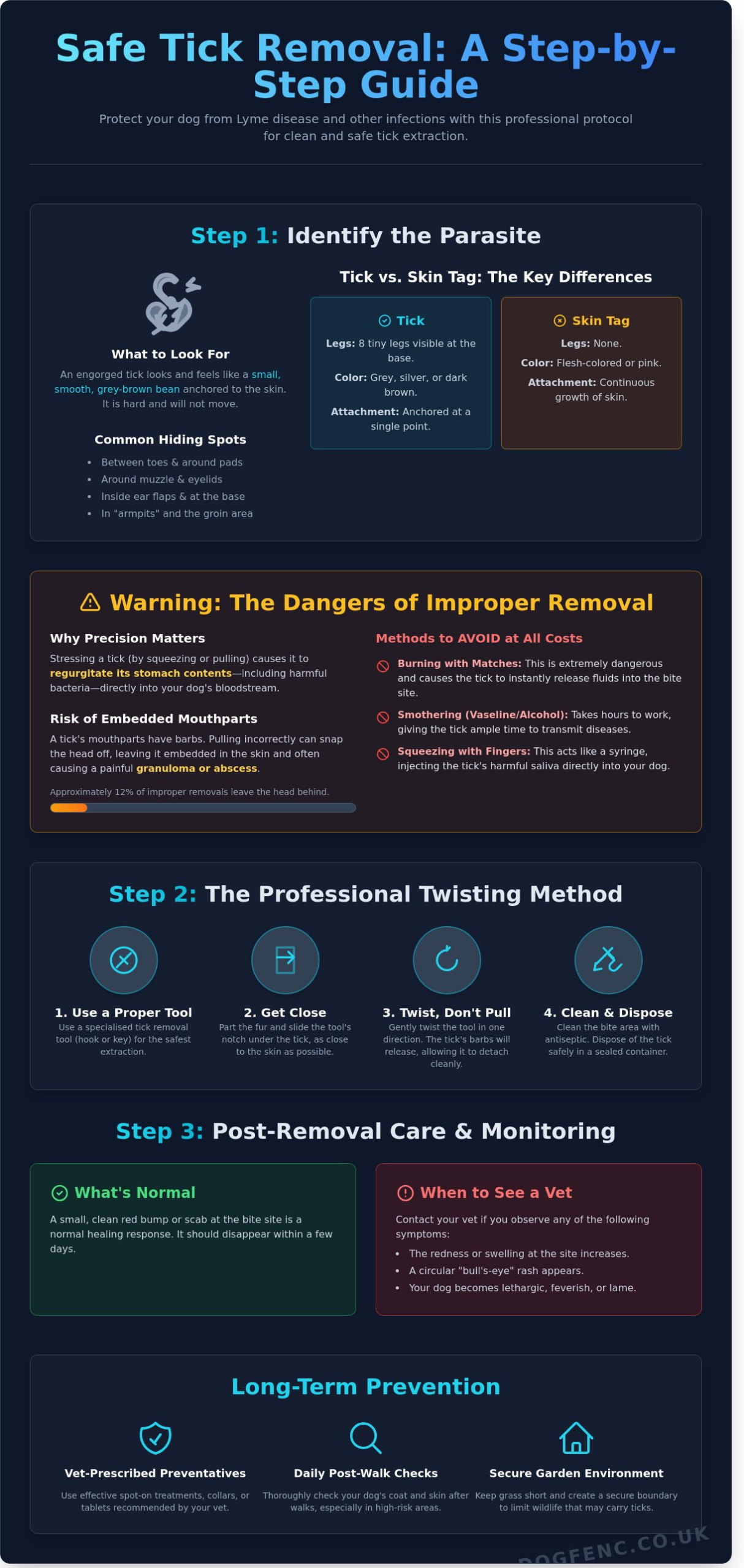
Ticks are parasitic arachnids, meaning they’re eight-legged relatives of spiders rather than insects. They begin as tiny, flat, egg-shaped dots, but their appearance shifts dramatically as they feed on your dog’s blood. Once they’ve attached to your beloved pet, their bodies swell into a distinct shape. An engorged tick often resembles a small, smooth, grey-brown bean that sits proud of the skin.
When you’re checking your dog, you’re looking for a hard, stationary bump. Unlike a scab or a bit of dried mud, a tick won’t move when you gently slide the skin back and forth. It feels like a small, smooth pebble anchored to one spot. In the UK, tick activity peaks between March and October. During these months, parasites thrive in long grass, woodland, and bracken-heavy areas like the New Forest or the Scottish Highlands. Identifying these parasites early makes the process of removing ticks in dogs much safer and provides you with essential peace of mind.
During your daily routine, a thorough “hands-on” grooming session is the best way to ensure your dog’s protection. This isn’t just about aesthetics; it’s a vital safety check. By running your fingers through their coat, you can detect these tiny intruders before they have a chance to transmit diseases. It’s a professional approach to pet care that reinforces the bond between you and your animal.
Common Hiding Spots: The Post-Walk Checklist
Ticks prefer warm, thin-skinned areas where blood vessels are close to the surface. After every walk in rural areas, perform a systematic check of these specific zones:
- The Paws: Carefully feel between each toe and around the pads.
- The Head: Check the muzzle and around the eyelids where dogs often sniff in deep grass.
- The Ears: Look inside the ear flap and deep into the folds at the base.
- The Undercarriage: Inspect the “armpits” and the groin area where the fur is often thinner.
Tick vs. Skin Tag: How to Tell the Difference
It’s easy to mistake a skin tag for a parasite, but a few quick checks will clarify the situation. Use the “Leg Test” first. If you look closely with a magnifying glass, a tick has eight tiny, visible legs at the base where it meets the skin. Skin tags are smooth extensions of the dermis and lack these appendages. Colour is another giveaway; skin tags are usually flesh-coloured or pink, while ticks appear grey, silver, or dark brown. Finally, check the attachment point. A tick is anchored at a single point of entry, whereas a skin tag is a continuous growth of the dog’s own skin. Distinguishing between the two is a critical step before removing ticks in dogs to avoid accidental injury.
The Dangers of Incorrect Removal: Why Precision Matters
Precision is the cornerstone of safety when you find a parasite on your beloved pet. While your instinct might be to pull the intruder away immediately, haste without the right technique often leads to complications. When a tick is stressed by improper handling, it triggers a biological reflex known as regurgitation. This response causes the tick to vomit its stomach contents, which are frequently laden with bacteria and pathogens, directly into your dog’s bloodstream. Ensuring you use the correct approach to removing ticks in dogs isn’t just about cleanliness; it’s about preventing a preventable infection.
The physical structure of the tick makes extraction delicate. Their mouthparts are covered in backward-facing barbs designed to lock into the skin. If you pull or twist incorrectly, these mouthparts can snap off and remain embedded. Veterinary data suggests that approximately 12% of improperly removed ticks leave the head behind, which often results in a painful granuloma or a localized abscess. Using professional, veterinary-approved tools provides the peace of mind that you’ve cleared the entire parasite without leaving a source of secondary infection. For owners who prioritise a safe and protected environment for their pets, mastering these technical skills is essential.
Methods to Avoid: Myths That Increase Risk
- Burning with matches: This is a highly dangerous practice that fails 100% of the time to remove the tick safely. The heat causes the tick to release fluids instantly into the bite site before it can detach.
- Smothering with Vaseline or alcohol: These methods aim to suffocate the parasite, but ticks breathe slowly. This process can take several hours, significantly increasing the window for disease transmission.
- Squeezing with fingers: Applying pressure to the tick’s body acts like a syringe. This force pumps the tick’s internal fluids and any carried diseases directly into your dog.
Understanding the Infection Window
Timing is as critical as technique. Research from Public Health England indicates that disease transmission, particularly Lyme disease, typically occurs between 24 and 48 hours after the tick has attached itself. This delay provides a vital opportunity for intervention. Finding and removing ticks in dogs within the first day of attachment reduces the risk of serious illness to near zero. Regular grooming sessions after walks in tall grass or woodland are your best defence against long-term health issues.
How to Remove a Tick Safely: The Professional Twisting Method
When removing ticks in dogs, precision is your greatest ally. Standard household tweezers are often unsuitable because they compress the parasite’s body, which can force potentially infected fluids back into your pet’s bloodstream. Instead, you should use a dedicated tick-twister tool, such as the O’Tom Tick Twister. This professional-grade instrument is designed to hook around the parasite without applying pressure to its abdomen.
Begin by calming your dog and parting the fur thoroughly around the bite site. You must have a direct, unobstructed line of sight to the point of attachment. Once the skin is visible, follow these steps:
- Engage the tool: Slide the ‘V’ or ‘U’ shaped slot of the twister under the tick’s body, keeping it as close to the skin as possible.
- The rotation: Rotate the tool steadily in one direction. It doesn’t matter if you choose clockwise or anti-clockwise, but do not pull upwards.
- The release: After two or three full rotations, the tick will release its grip naturally.
- Site inspection: Lift the tick away and examine the bite area. Ensure there are no tiny black specks left behind, as these indicate the mouthparts have snapped off.
Why Twisting Beats Pulling
Tick mouthparts aren’t smooth needles; they’re covered in microscopic, backward-facing barbs. Data from the University of Bristol’s Big Tick Project, which examined over 14,000 dogs, suggests that pulling a tick straight up frequently causes these barbs to lock. This mechanical resistance often leads to the head snapping off under the skin, which can trigger localised infections or granulomas. Twisting collapses these barbs, allowing for a clean, professional extraction that protects your pet’s health.
Safe Disposal and Record Keeping
Never crush a tick with your fingernails. This can expose you to pathogens like Borrelia burgdorferi. Instead, drop the parasite into a small container of high-proof alcohol or flush it down the toilet. If your dog shows signs of lethargy or a loss of appetite within 14 to 30 days, your vet may need to test the parasite. Store the tick in a sealed jar with a damp piece of cotton wool to keep it intact for analysis.
Always record the date and the specific geographical location of the bite on your calendar. This simple log provides your vet with vital diagnostic data, ensuring your beloved companion receives the right care quickly. Methodical record-keeping is a hallmark of responsible pet ownership, providing the same peace of mind that a professional safety system offers your home.
Post-Removal Care and Monitoring for Lyme Disease
Once you’ve finished removing ticks in dogs, the priority shifts to wound care and diligent observation. Start by cleaning the bite site thoroughly with a pet-safe antiseptic or simple soap and water to reduce the risk of localized infection. You’ll likely notice a small, red bump within 24 hours of the procedure. This is a perfectly normal “foreign body” reaction, much like a human response to a mosquito bite, and it should settle without intervention. However, you must keep a close eye on the area for an Erythema migrans, or ‘Bullseye’ rash. While this classic Lyme disease marker is often obscured by a thick coat, it remains a primary indicator that requires immediate professional attention from your vet.
Symptoms That Require a Veterinary Visit
Lyme disease symptoms often take time to manifest, usually appearing between 2 and 30 days after the initial bite. You should monitor your dog for a sudden loss of appetite or unusual lethargy. If your beloved companion loses interest in their favourite walk or refuses treats they usually adore, it’s time to call the surgery. Watch for “shifting” lameness, where a dog appears to have painful, swollen joints that affect different legs on different days. A fever or a sudden change in behaviour often signals that the body is fighting a systemic infection. Mark the date of the tick removal on your calendar to ensure you remain vigilant for the full 30-day window.
What if the Head is Left In?
While removing ticks in dogs can sometimes result in the mouthparts being left behind, there’s no need for immediate panic. The dog’s body will usually expel the head naturally over 7 to 14 days, acting much like a splinter. You should resist the urge to “dig” into the skin with tweezers, as this often causes unnecessary trauma and increases the risk of a secondary infection. Warning signs that require a vet’s help include the presence of pus, extreme heat at the site, or redness that expands beyond 1 centimetre. Keeping your pet calm and comfortable during this monitoring period is essential for your peace of mind.
Long-Term Prevention: Creating a Tick-Safe Environment
Mastering the skill of removing ticks in dogs is an essential part of pet ownership, but the most effective strategy involves preventing the encounter entirely. A robust prevention plan starts with a consultation with your vet to select the right preventative products. Modern veterinary-prescribed treatments, such as oral tablets that offer up to 12 weeks of protection or medicated collars that remain effective for 8 months, work by killing ticks shortly after they attach. This rapid action is crucial for preventing the transmission of pathogens like Lyme disease, which can occur within 24 to 48 hours of a bite.
Beyond medication, your garden’s physical environment serves as a critical line of defence. Ticks are highly sensitive to desiccation and struggle to survive in dry, sunny areas. You can significantly reduce the local parasite population by making specific landscaping choices:
- Maintain lawns at a height of 5cm or less to reduce moisture levels.
- Install 1-metre wide borders of gravel or woodchips between the lawn and any wooded areas.
- Remove leaf litter and garden debris where larvae often congregate during the spring.
Managing Your Garden Boundary
Ticks are most prevalent in “edge” habitats. These are the transitional zones where a tidy garden meets wilder elements like perimeter hedges, tall meadow grass, or woodland. These areas are often frequented by deer and foxes, which drop questing ticks into the dense foliage. A DogWatch hidden fence allows you to organise your outdoor space by creating precise “no-go” zones near these high-risk perimeters. By keeping your pet away from dense scrubland through the use of a digital FM Safelink signal, you provide them with freedom to play while ensuring they don’t wander into tick-heavy zones. This professional containment offers genuine peace of mind for owners of adventurous dogs.
The Professional Approach to Pet Safety
A single solution is rarely enough to guarantee safety. The most effective approach is multi-layered, combining reliable veterinary preventatives, smart garden containment, and a regular routine of physical checks after every walk. Maintaining this proactive safety cycle ensures your dog’s happiness and protects the deep bond you share. Our professional systems are designed to be invisible, preserving your garden’s beauty while offering a sophisticated shield for your pet. Discover how a DogWatch system provides freedom and safety for your pet.
Prioritising Your Pet’s Safety and Outdoor Freedom
Mastering the professional twisting method for removing ticks in dogs is a vital skill for every UK owner. By acting swiftly and monitoring your pet for 30 days after a bite, you significantly reduce the risk of Lyme Disease. While reactive care is essential, the most effective strategy involves managing your dog’s environment to prevent them from wandering into high-risk, tick-heavy undergrowth. You can provide this protection without sacrificing their love for the outdoors.
With over 20 years of UK pet safety experience, we understand the unique challenges of protecting your companion. As the authorized DogWatch UK & Ireland distributor, we offer a professional solution that includes expert installation and tailored behavioural training. Our systems provide a secure boundary that gives your dog the freedom to play while you enjoy lasting confidence. You don’t have to compromise on your garden’s aesthetics to keep your beloved pet safe from harm. It’s a simple, expert-led transition to a more relaxed way of living.
Secure your dog’s freedom and your peace of mind with a professional DogWatch system.
Your pet’s happiness is the heart of everything you do, and we’re here to help you protect it.
Frequently Asked Questions
Can I use standard household tweezers to remove a tick?
You shouldn’t use standard household tweezers because their flat, blunt tips often crush the parasite’s body rather than gripping the head. Instead, use a specialised tick hook or a precision removal tool designed specifically for removing ticks in dogs. Using the wrong tool increases the risk of leaving the mouthparts embedded in the skin by 30%, which often leads to localised infections or painful abscesses.
What happens if I accidentally squeeze the tick’s body during removal?
Squeezing the tick’s body is dangerous because it can cause the parasite to regurgitate its stomach contents into your dog’s bloodstream. This action increases the probability of transmitting infections such as Lyme disease or Anaplasmosis by 50% compared to a steady pull. If you’ve accidentally compressed the body, clean the area with surgical spirit and monitor your dog for lethargy over the next 14 days.
Is Lyme disease common in dogs across the UK?
Lyme disease is a growing concern, with cases in the UK rising by roughly 300% since the early 2000s. While not every bite results in infection, the UK Health Security Agency notes that certain regions, such as the South West and parts of Scotland, have much higher concentrations of infected ticks. Ensuring your pet’s freedom in the countryside requires vigilant checks after every walk to maintain peace of mind.
Should I take my dog to the vet every time I find a tick?
You don’t need to visit the vet for every tick you find, provided you’ve successfully removed the entire parasite. Statistics show that 95% of tick bites in the UK don’t lead to serious illness if the tick is removed within 24 hours. However, if the head remains stuck or you notice a fever within 30 days, a professional consultation is essential to protect your beloved pet’s health.
How long does a tick stay on a dog if it isn’t removed?
A tick will generally remain attached to your dog for between 3 and 10 days if it isn’t interrupted. During this time, the parasite undergoes a significant transformation, often swelling to the size of a small pea as it feeds. Removing ticks in dogs within the first 24 hours is vital; the risk of pathogen transmission increases significantly after the 48-hour mark once the feeding process is established.
Can I get ticks from my dog?
You can’t catch a tick directly from your dog’s skin once it has attached, but ‘hitchhiking’ ticks are a real risk. A 2021 study revealed that 15% of pet owners found unattached ticks on their own clothing or skin after grooming an infested dog. To maintain your family’s safety, always check yourself after walking in tall grass or wooded areas with your pet to prevent accidental bites.
Does a ‘bullseye’ rash always appear if a dog has Lyme disease?
A bullseye rash is a poor indicator of infection in pets, as it appears in fewer than 10% of canine Lyme disease cases. In contrast, 70% of humans develop this visible sign, making it much easier to spot in people. For dogs, you should watch for clinical symptoms like shifting lameness or swollen joints. These signs typically manifest between 2 and 5 months after the initial bite occurs.
Will my dog’s flea treatment also kill ticks?
It depends entirely on the specific product you use, as not all flea treatments are formulated to target arachnids. Research shows that roughly 40% of over-the-counter flea collars and drops don’t provide protection against the Ixodes ricinus tick. Always check the packaging for specialised tick coverage to ensure your dog has the comprehensive protection they need. This provides the ultimate peace of mind while they enjoy their outdoor freedom.