

Fencing For Dogs Who Escape
What Is the Best Fence for Dogs That Escape?
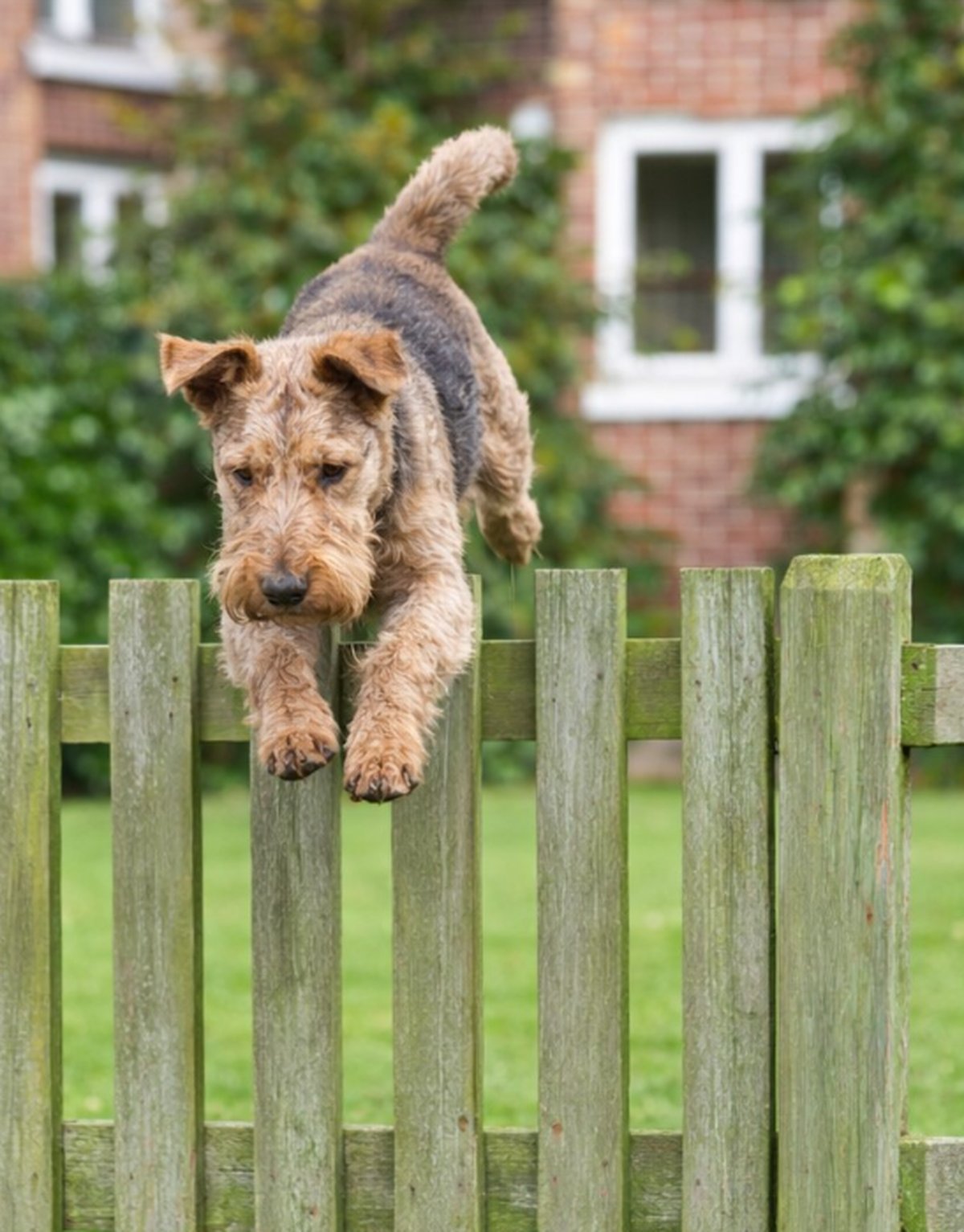
The best fence for dogs that escape depends on how your dog is getting out. A dog that jumps needs a different solution from one that digs, squeezes through gaps or bolts through an open gate. For persistent escape artists, simply making a physical fence higher or stronger may not solve the problem.
In this guide, we look at the main fencing options for escaping dogs, their advantages and limitations, and what to consider when choosing a secure boundary for your garden.
Quick Answer: What Is the Best Fence for Dogs That Escape?
For many dogs, a secure physical fence with no gaps and sufficient height will work perfectly well. However, dogs that repeatedly jump, climb, dig or escape through gates may need a different approach.
The main options are:
- Solid wooden fencing – useful for dogs distracted by what they can see outside the garden.
- Mesh or wire fencing – practical for larger gardens and rural properties.
- Dig-proof fencing – designed for dogs that tunnel underneath boundaries.
- Higher fencing – potentially useful for athletic dogs that jump.
- A hidden dog fence – creates a consistent boundary that can work across fences, hedges, gates and driveways.
The right choice depends on your dog, how they escape and the layout of your property.
Why Do Some Dogs Escape Conventional Fencing?
Some dogs are remarkably good at finding weaknesses in garden boundaries. Fix one escape route and they simply start looking for another.
Common escape methods include:
- jumping over fences;
- climbing mesh or timber fencing;
- digging underneath;
- squeezing through small gaps;
- pushing through hedges;
- escaping when gates are opened;
- bolting down open driveways.
Before spending money on new fencing, identify exactly how your dog is escaping. This will help you choose a solution that addresses the actual problem rather than just one particular escape point.
If you are not sure why your dog keeps getting out, read our guide to why dogs escape gardens.
Escape Proof Fence for Dogs: Does One Exist?
There is no single physical fence that can honestly be described as completely escape proof for every dog.
A six-foot fence may stop one dog but another may climb it. Reinforcing the bottom may prevent digging, while still leaving a gate or driveway as an escape route.
That is why the best escape proof fence for dogs is the one designed around both the dog’s behaviour and the individual property.
1. Wooden Fencing for Dogs That Escape
Solid wooden fencing is one of the most common choices for gardens. It provides a visible physical barrier and can also prevent a dog seeing distractions such as passing dogs, people or wildlife.
Advantages:
- Creates a solid visual barrier.
- Available in different heights.
- Can reduce visual triggers outside the garden.
- Works well for many ordinary residential gardens.
Potential problems:
- Dogs can dig underneath it.
- Athletic dogs may jump over it.
- Some dogs learn to climb panels or nearby structures.
- Damaged panels can create escape gaps.
- It cannot normally solve an open driveway or frequently opened gate.
2. How High Should Fencing Be for an Escape Artist Dog?
If your dog jumps, increasing fence height may seem like the obvious answer. For some dogs, it is.
However, jumping ability varies enormously according to size, breed, athleticism and motivation. There isn’t one fence height that guarantees every dog will remain inside.
Also check for bins, sheds, walls, garden furniture and raised flower beds close to the fence. A dog may be using these as a launch point.
For more detail, see how high a dog fence should be and our guide answering can a dog jump a 6ft fence?
3. Dog Proof Fencing for Dogs That Dig
For a determined digger, fence height is largely irrelevant. The weak point is underneath the boundary.
Physical fencing may need to be extended or reinforced at ground level to make digging underneath more difficult. Regularly inspect the perimeter because some dogs simply move along the fence and start digging somewhere else.
If this sounds familiar, our guide to how to stop a dog digging under a fence looks specifically at this problem.
4. Mesh and Wire Fencing for Dogs
Mesh fencing can be a practical choice for large gardens, paddocks and rural properties where installing solid timber fencing around the entire boundary would be expensive or visually intrusive.
However, the mesh size and construction matter. Small dogs may squeeze through larger openings and some dogs are surprisingly capable climbers.
Large properties also introduce another challenge: the longer the boundary, the more potential weak points there are to maintain.
Owners of larger properties may find our guide to dog proof fencing for rural properties useful.
5. What About Gates and Open Driveways?
This is where conventional fencing often becomes difficult.
You may have excellent fencing around the entire garden but still need vehicles, deliveries and visitors to enter through a gate or open driveway.
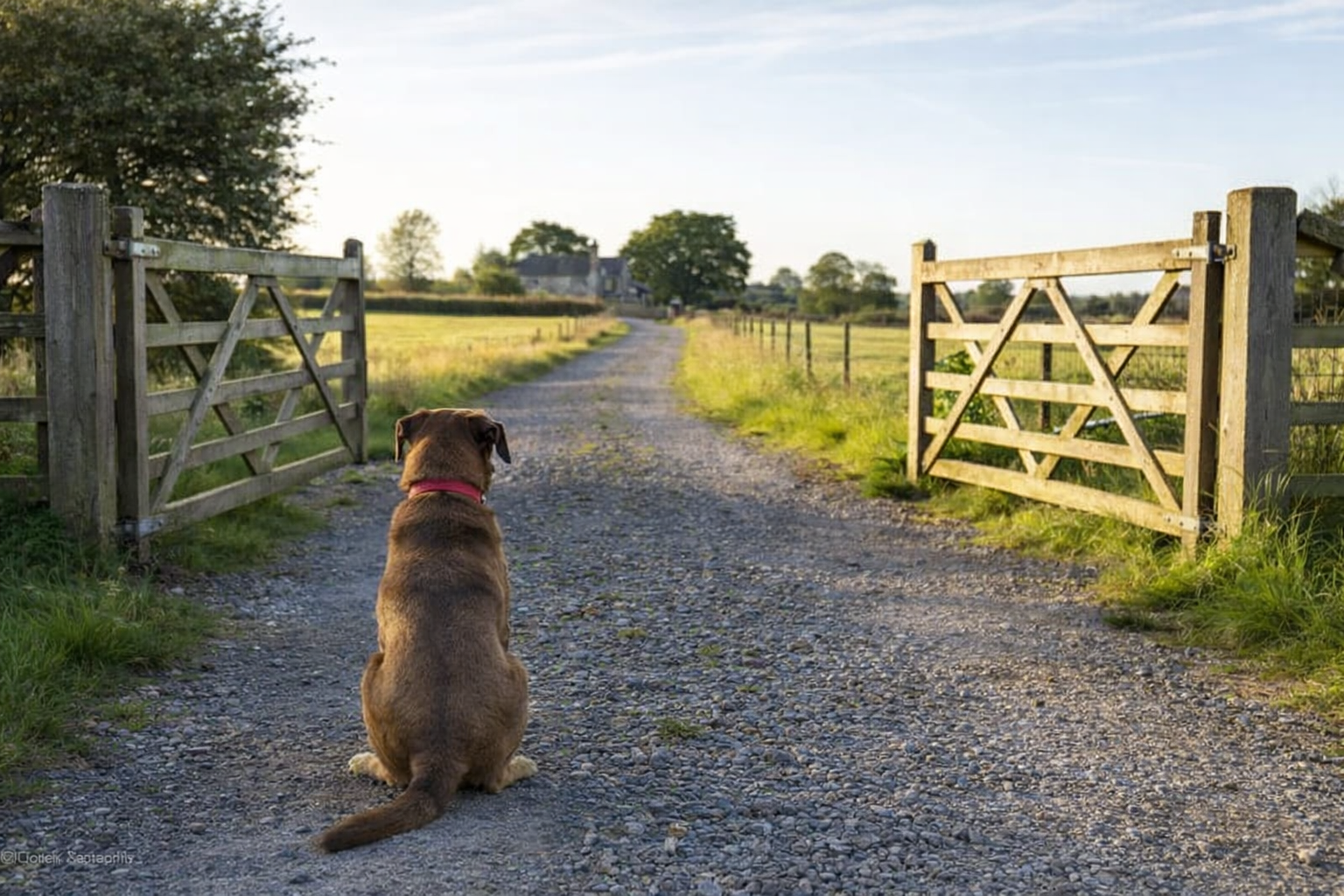
A dog can quickly learn that an opening gate creates an opportunity to escape. For some owners, permanently closing or physically fencing an entrance simply isn’t practical.
A hidden dog fence can create a boundary across a driveway or gate without physically preventing vehicles or people from passing through.
6. Hidden Dog Fence for Dogs That Escape
For dogs that repeatedly defeat conventional fencing, a professionally installed hidden dog fence provides another option.
Rather than relying solely on the height or strength of a physical barrier, DogFence creates a consistent boundary that your dog is trained to recognise.
A discreet boundary wire is installed around the selected area of the property. Your dog wears a lightweight receiver collar and is introduced to the boundary through a structured training programme.
The boundary can be designed around:
- existing fencing;
- hedges;
- gardens and lawns;
- woodland;
- open driveways;
- electric gates;
- large and rural properties;
- specific areas within a garden.
If you have a persistent escape artist, see our dedicated dog fence for dogs that escape page for more information about how the system works for dogs that jump, dig, squeeze through gaps or bolt through entrances.
Wired or Wireless Dog Fence: Which Is Better?
Hidden dog fences can use either a wired boundary or a wireless system, but they do not provide the same flexibility.
A wired system allows the boundary to be designed around the individual property. It can follow irregular gardens, encompass larger areas and be positioned around existing landscaping, gates and driveways.
Wireless systems generally create a predetermined signal area around a transmitter. This can make them convenient in some circumstances, but the boundary shape is less flexible.
DogFence uses a professionally designed wired boundary because it allows us to tailor the layout to the dog and the property rather than asking the property to fit a predetermined boundary.
How Does a Hidden Dog Fence Work?
The principle is straightforward:
- A discreet boundary wire is installed around the area in which your dog can safely roam.
- The wire carries a radio signal.
- Your dog wears a lightweight receiver collar.
- Temporary training flags provide a visual reference during training.
- The collar gives an audible warning as your dog approaches the boundary.
- Your dog is taught to recognise the warning and move back into the safe area.
- The training flags are gradually removed once your dog understands the boundary.
The system is designed to work alongside appropriate training rather than simply relying on the equipment itself.
What Is the Best Dog Fence for a Large Garden?
For a large garden, acreage or rural property, the cost and practicality of installing traditional fencing around the entire perimeter can become significant.
A hidden dog fence can cover substantial and irregular areas without blocking views or requiring a high physical fence around the property.
It can also follow boundaries through hedges, woodland and other areas where conventional fencing may be difficult or undesirable.
What Is the Best Fence for a Dog That Jumps AND Digs?
This is where simply modifying a physical fence can become frustrating.
If you make the fence higher, your dog may start digging underneath it. Reinforce the bottom and they may discover a gap beside the gate. Block the gap and they may simply wait for somebody to open the driveway.
For dogs with several different escape techniques, a DogFence hidden dog fence can provide a different solution. Rather than trying to physically block every possible escape route, the DogFence creates a consistent boundary around the area where you want your dog to remain.
A discreet boundary wire is installed around the property and your dog wears a lightweight receiver collar. As your dog approaches the boundary, the collar gives an audible warning. During professional training, your dog learns to recognise that warning and retreat back into the safe area.
This means the same hidden dog fence can protect areas where a dog might otherwise jump over fencing, dig underneath it, squeeze through gaps or escape through an open driveway.
Importantly, a DogFence can also work alongside your existing garden fence, hedge, wall or gates. You do not necessarily need to remove the fencing you already have – the hidden boundary provides an additional layer of security for a determined escape artist.
For a dog that both jumps and digs, this can be particularly useful because you are creating one consistent dog boundary rather than continually trying to anticipate the next way your dog might escape.
See how it works on our dog fence for dogs that escape page.
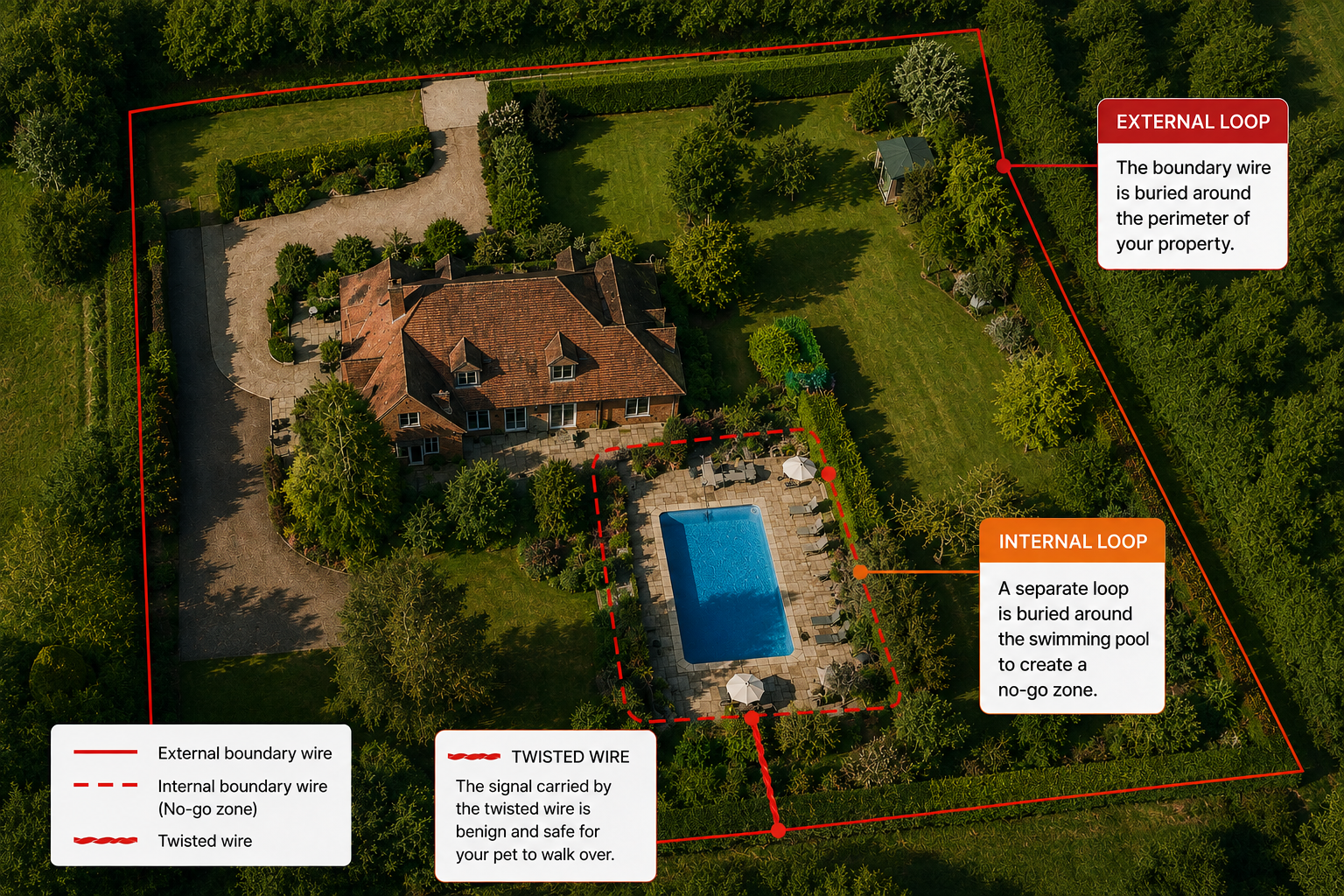
A hidden dog fence can create both an external garden boundary and an internal no-go zone around your swimming pool. The twisted wire safely connects the two boundaries, allowing your dog to cross it without receiving a warning.
How Do I Choose the Best Fencing for My Dog?
Ask yourself five questions:
- How is my dog escaping? Jumping, digging, climbing, squeezing or bolting?
- Where are they escaping? Fence, hedge, gate or driveway?
- How large is the area? A small enclosed garden and a rural property require very different solutions.
- Do I want a visible physical fence? Appearance and planning considerations may influence your choice.
- Has my dog already defeated conventional fencing? If so, simply replacing it with something similar may not address the underlying problem.
The best fencing solution should suit your dog, your garden and the way you use your property.
Frequently Asked Questions About Fencing for Dogs That Escape
What is the best fence for dogs that escape?
The best fence depends on how the dog escapes. Solid fencing can suit many gardens, while diggers may need ground-level reinforcement and jumpers may need greater height. Dogs that repeatedly defeat physical fencing or escape through gates and driveways may benefit from a hidden dog fence combined with appropriate training.
What is the best escape proof fence for dogs?
No physical fence can be guaranteed escape proof for every dog. Determined dogs may jump, climb, dig or find gaps. The most appropriate solution is one designed around the dog’s particular escape behaviour and the property’s layout.
What fencing is best for a dog that digs?
A physical fence needs to be secure at ground level and regularly checked for new digging points. A hidden boundary can also be considered for persistent diggers that continually find new places to tunnel underneath conventional fencing.
What fencing is best for dogs that jump?
Increasing physical fence height can help, but the required height depends on the dog’s size and athletic ability. Remove objects that can act as launch points and consider whether the dog is likely to find another escape method if jumping is prevented.
Can a hidden dog fence cross a driveway?
Yes. A professionally designed wired boundary can cross driveways and entrances, allowing vehicles and people to continue using them while the dog is trained to recognise the boundary.
Can I use a DogFence with an existing fence?
Yes. A DogFence can work alongside existing timber, mesh or other garden fencing. It can provide an additional consistent boundary where a dog has learned to jump, dig underneath or exploit gaps in the existing fence.
Can one DogFence be used for several dogs?
Yes. Multiple pets can use the same boundary with individual receiver collars appropriate to each animal.
Which Fence Should I Choose for My Escape Artist?
If your existing fence already keeps your dog safely in the garden, there may be no reason to replace it.
But if you are continually blocking holes, increasing fence height, repairing gaps or worrying every time somebody opens the gate, it may be worth considering a different approach.
DogFence has been helping UK owners keep their dogs safely at home since 2003. We design boundaries around the individual dog and the individual property, including difficult gardens, driveways and large rural areas.
Looking for the Best Fence for a Dog That Escapes?
If your dog jumps, digs, squeezes through gaps or bolts through gates, talk to our experienced team. We’ll help you find the best way to secure your garden — tailored to your dog and your property.
Give your dog freedom in the garden — without constantly worrying about them escaping.
Call us on
01628 476475
Related posts
- How Do I Stop My Dog Running Away? — this is your strongest broad companion guide and directly supports the escape intent.
- Why Dogs Escape Gardens (And How to Stop a Dog Running Away) — very relevant because it deals with the reasons dogs jump, dig, squeeze through gaps and use gates.
- Escape Artist Dog: How to Stop Jumping & Digging Under Fences — excellent match for this blog because it targets determined escape artists and different escape methods.
- How to Stop Dog Digging Under Fence — gives us a much more specific long-tail internal link.
- Can a Dog Jump a 6ft Fence? — another good long-tail supporting article for dogs that jump or climb.
- How to Stop a Dog Running Out of an Open Driveway or Electric Gate — particularly useful because we’ve just added the driveway discussion/image to this blog.