Tag Archive for: dog fence collar

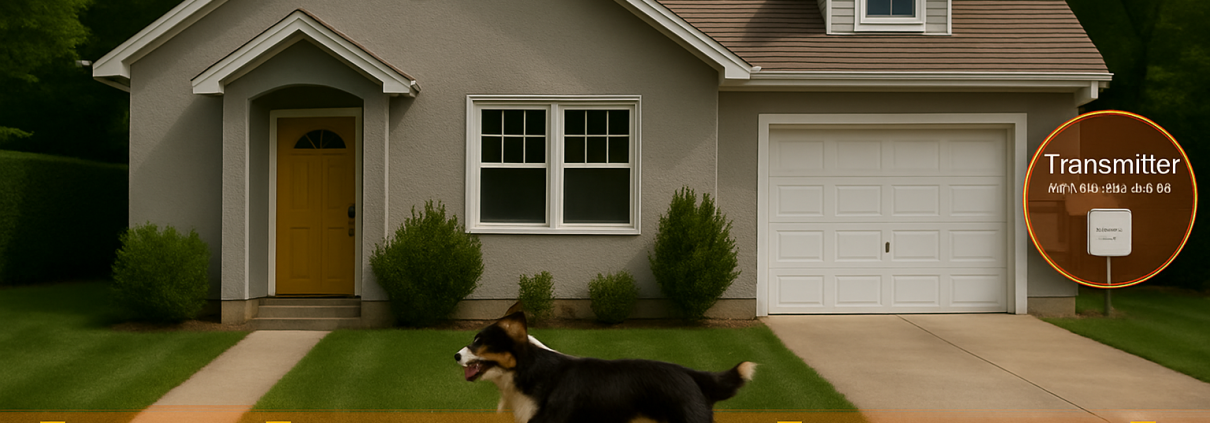
Diagram showing how the dog fence collar works

How Does a Dog Fence Collar Work? A Simple Guide for Dog Owners

How Does a Dog Fence Collar Work? A Simple Guide for Dog Owners

How does a dog fence collar work is one of the first questions owners ask when considering an electronic pet containment system. Understanding how the collar communicates with the boundary, how your dog learns the safe zone, and why the system is so effective helps reassure owners that the technology is both safe and humane.

At DogFence Ltd, we’ve safely contained over 20,000 dogs and cats across the UK. Our invisible dog fence collars are part of a modern, reliable FM radio containment system that gives pets complete freedom in the garden while preventing escapes. This guide explains exactly how the collar works and why it is one of the safest options available for dog owners.


How Does an Invisible Dog Fence Collar Work?

An invisible dog fence collar works by communicating with a buried boundary wire powered by a small transmitter box, usually installed in a garage or outbuilding. The transmitter sends a coded FM radio signal around the boundary. The collar detects this signal and responds with:

  1. A warning beep as your dog approaches the boundary.
  2. A gentle static sensation if they continue moving forward.
  3. Retreat behaviour, which your dog is trained to perform by stepping back into the safe area.

This clear sequence teaches your dog exactly where the boundary is. You can see the full system layout on our detailed How It Works page.


The Role of the Boundary Wire and Transmitter

The invisible dog fence relies on a strong, stable perimeter signal. This is produced by the transmitter, which sends a continuous FM radio frequency through the buried wire. FM technology is much more reliable than AM or GPS, which is why DogFence systems activate faster, avoid interference, and prevent false corrections.

Because the system uses a closed loop, it is accurate to within inches — something GPS dog collars cannot achieve.
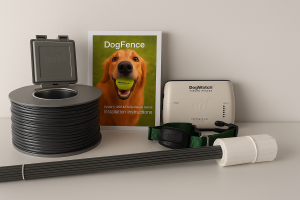
DogFence transmitter, boundary wire and receiver collar showing how an invisible dog fence system works.”


What Happens When the Dog Approaches the Boundary?

When your dog enters the alert area near the boundary, the collar gives a clear warning beep. This is the main training cue and the one dogs learn to respond to most quickly.

If your dog ignores the beep and continues forward, the collar gives a gentle, harmless static sensation — similar to a light TENS pulse. This sensation is enough to encourage your dog to step back. Once they retreat, both the beep and the sensation stop immediately.

With correct training, dogs quickly learn to stop at the beep, making physical corrections rare.
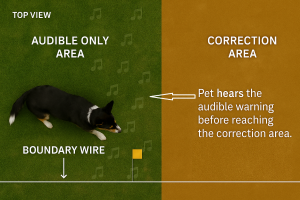
Diagram showing the audible warning zone and correction area in an invisible dog fence boundary


How the Collar Makes Contact: Stainless Steel Posts or Comfort Contacts

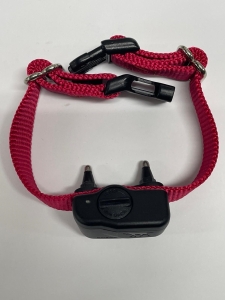
The collar uses either rounded stainless-steel contacts or our optional Smooth Comfort Contacts (for short-coated dogs). Just like a TENS machine pad, the collar needs gentle skin contact to allow the communication to work consistently. The probes are not spikes or prongs — they are simply contact points.

Good contact means the collar can be set to gentle, low levels, keeping training calm and humane. For more on achieving the correct fit, see our guide How Tight Should a Dog Fence Collar Be?.


Training: How Dogs Learn the Boundary

Training is simple, positive, and structured. During the training sessions, your dog is introduced to the warning beep, shown how to retreat to the safe zone, and rewarded with praise. Most dogs learn their boundary within just a couple of sessions.

Because the system is predictable and clear, dogs understand exactly what is expected of them. This is one of the key reasons invisible dog fences are so effective for escape artists and determined roamers.


Is the Collar Safe for Dogs?

Yes. Multiple independent scientific studies — including Newcastle University’s DEFRA-funded research (Cooper et al.) and the UK Government’s own analysis (DEFRA) — confirm that invisible dog fence collars are safe when used correctly.

They do not cause long-term stress, behavioural problems, anxiety, or physical harm. Dogs learn quickly, become confident in their boundaries, and enjoy the freedom to explore safely.

For a full breakdown of the research and safety features, read our main guide: Are Dog Fence Collars Safe?


Why Invisible Dog Fence Collars Work Better Than Physical Fencing

Invisible dog fence collars are ideal for dogs who:

  • dig under or jump over fences
  • chase livestock or wildlife
  • bolt through gates
  • live on large or uneven properties
  • cannot use physical barriers due to layout or planning restrictions

Because the system creates a consistent, invisible boundary, your dog always knows where the “edge” is — even when gates are open.


Professional Installation Ensures Reliability

Our Professional Installation service includes boundary design, collar fitting, system tuning, and complete dog training. This ensures your system works perfectly from day one and that your dog learns gently and confidently.


Keep Your Dog Safe With a Trusted DogFence System

Call us on
01628 476475
|
Chat to us on WhatsApp
|
Request a Free Quote Online
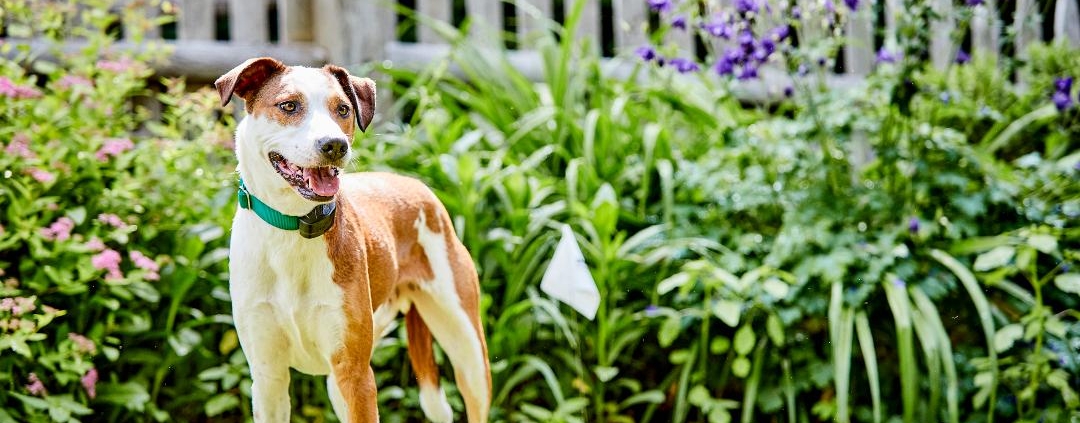
 

Dog safely enjoying garden freedom with invisible dog fence system

Are Dog Fence Collars Safe? What Owners Need to Know for Peace of Mind

Are Dog Fence Collars Safe for Dogs? A Complete Expert Guide

Are dog fence collars safe is one of the most common questions dog owners ask when researching an invisible dog fence. With so much conflicting information online, it’s natural to want straightforward, fact-based reassurance. The truth is that dog fence collars are safe when used correctly, professionally installed, and fitted properly. At DogFence Ltd, we have safely contained more than 20,000 dogs and cats, and our system has been independently tested by the UK Government, confirming there are no adverse effects when used as intended.

This guide explains how the collar works, why the technology is safe, and how correct fitting ensures comfort, humane training, and long-term reliability.

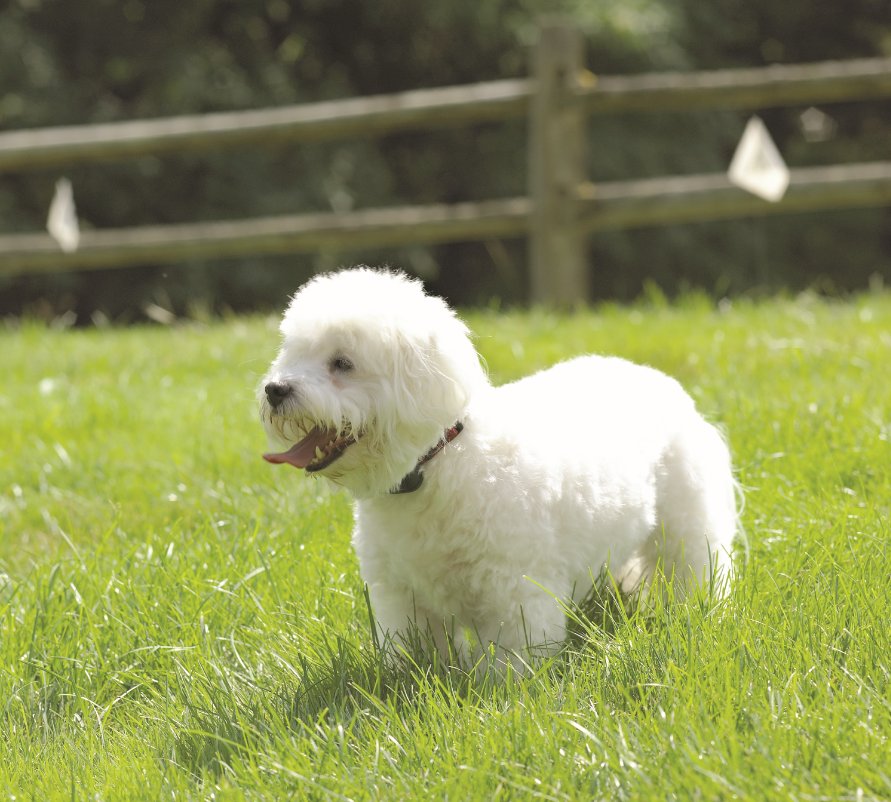
Small dog wearing a safe dog fence collar enjoying the garden during gentle boundary training

Gentle DogFence training helps even small or sensitive dogs enjoy their garden safely and confidently


Are Dog Fence Collars Safe? (The Short Answer)

Yes — dog fence collars are safe. They use a gentle, momentary static sensation that feels similar to a light TENS machine pulse rather than a “shock”. It is not painful, not harmful, and the training process is designed to be calm, controlled, and dog-friendly.

Scientific research — including multiple Government studies and DEFRA-funded research from Newcastle University (Cooper et al.) — shows that properly used electronic containment collars:

  • Do not cause physical harm
  • Do not create long-term stress
  • Do not cause behavioural problems
  • Are not associated with anxiety or fear when used correctly

In fact, many owners report calmer, happier dogs because they can enjoy safe outdoor freedom without constant supervision. Our How It Works page explains more about why invisible fencing is both safe and effective.


How Do Dog Fence Collars Work?

A dog fence collar works together with a boundary wire and a small transmitter unit, which is usually installed in a garage, shed, or outbuilding. The transmitter sends a coded FM radio signal through the buried wire, creating a precise, stable boundary around your garden.

When your dog approaches the boundary during training, the collar responds in a predictable sequence:

  1. Warning beep – alerts the dog that they are nearing the boundary.
  2. Gentle static sensation – similar to a light TENS pulse, and only if they continue forward.
  3. Retreat behaviour – with training, your dog learns to step back to turn off the warning.

This combination of sound + mild sensation teaches your dog to retreat calmly and consistently. The goal is not to “correct” the dog repeatedly — it is to teach them where the safe area is. Most dogs learn this within a few training sessions.

More detail on the technology is available on our How It Works page.


Why Dog Fence Collars Are Safe (Backed by Independent Research)

The question “are dog fence collars safe?” has been thoroughly examined by scientists, veterinarians, and behaviour specialists. DEFRA-funded research, including the well-known Cooper et al. study, concluded that electronic containment systems:

  • did not increase long-term cortisol (stress hormone) levels
  • did not cause behavioural signs of distress
  • were used successfully without negative welfare impact

The Government’s own summary confirmed the same findings. When used correctly, dog fence collars are safe, humane, and effective.


Modern Safety Features Built Into Our Collars

Our collars use advanced DogWatch FM technology, which is specifically designed for safety, reliability, and fast response. This ensures clean communication between the collar and boundary wire without interference or false activations — issues more commonly seen with AM or GPS-based systems.

Key safety features include:

  • Soft-start training levels for timid or sensitive dogs
  • 15-second safety shut-off to prevent continuous activation
  • Anti-linger mode to avoid unnecessary corrections
  • Fail-safe radio encoding to prevent interference
  • Waterproof and robust collar casings

This combination ensures the system remains humane, predictable, and safe for long-term use.


Contact Posts: Why Proper Fit Matters for Safety

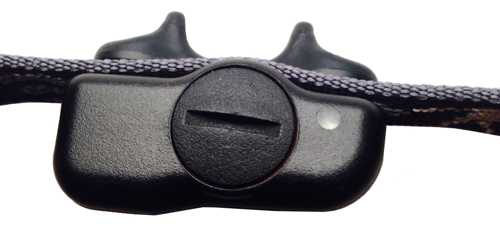
As with a TENS machine used for humans, the gentle static sensation needs light contact with the skin. The rounded stainless-steel contact posts on the collar simply ensure this connection — they may look like prongs but they sit comfortably when the collar is fitted correctly— they are smooth and rounded probes and designed simply to reach through the coat so the collar can communicate correctly.

Dog fence collar with stainless steel contact posts showing the safe, comfortable fit for pets

The DogFence collar uses rounded stainless steel contact posts to provide safe, consistent skin contact for gentle boundary training

The probe length is chosen to suit your dog’s coat type:

  • Short-coated dogs use standard contacts
  • Long-coated dogs may need slightly longer contacts so they reach the skin

When the collar is fitted correctly and snugly, the contact is consistent, comfortable, and does not cause rubbing. A well-fitted collar also means the training level can be set lower, because the signal is clearer and more reliable.

Smooth Comfort Contacts for short-coated or smooth-coated dogs

We also offer Smooth Comfort Contacts — conductive plastic probes designed to look softer and more discreet. They deliver the same gentle training sensation but offer a more aesthetically pleasing option for owners of smooth-coated breeds. We can advise whether your dog is suitable during your installation or consultation.

Smooth Comfort Contacts for short-coated dogs demonstrating how safe dog fence collars are when fitted correctly

Smooth Comfort Contacts provide gentle, reliable skin contact, helping to ensure dog fence collars are safe and effective for pets


Why Professional Installation Makes Dog Fence Collars Safer

The safety of a dog fence collar depends heavily on the quality of the installation, the layout design, and the training. That’s why DogFence Ltd provides:

  • On-site boundary surveys
  • Professional training tailored to your dog’s personality
  • Correct collar fitting guidance
  • Support for nervous or sensitive dogs
  • Follow-up assistance whenever required
  • Our exclusive Containment Guarantee

This ensures your dog learns calmly, confidently, and safely. More information is available on our Professional Installation page.


The Benefits of Using a Dog Fence Collar

Because dog fence collars are safe and humane, they offer significant real-world advantages:

  • Prevents escapes and road accidents
  • Stops livestock chasing
  • Allows safe off-lead freedom
  • Works where traditional fences fail
  • Ideal for large, awkward, or open gardens
  • More accurate and reliable than GPS collars

Most importantly, dogs gain the freedom to enjoy their garden while staying safely within your boundary.


Ready to Keep Your Dog Safe?

Keep Your Dog Safe With a Trusted DogFence System

Call us on
01628 476475
|
Chat to us on WhatsApp
|
Request a Free Quote Online