
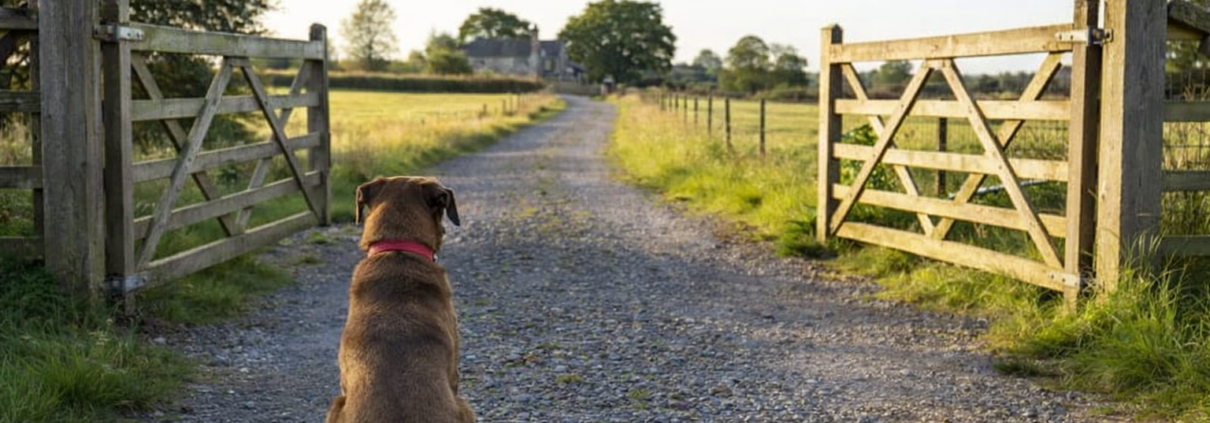
Dog Proof Fencing for Rural Properties (UK Guide)
Dog Proof Fencing for Rural Properties (UK Guide)
Dog proof fencing for rural properties requires more than standard garden panels — countryside environments present unique escape risks that demand stronger, smarter solutions.
Unlike suburban gardens, rural homes often have post-and-rail fencing, five bar gates, livestock boundaries and long driveways. These features look beautiful — but they can create gaps, weak points and climb opportunities for determined dogs.
If your dog has already attempted to escape, start with our complete guide on How Do I Stop My Dog Running Away (for good).
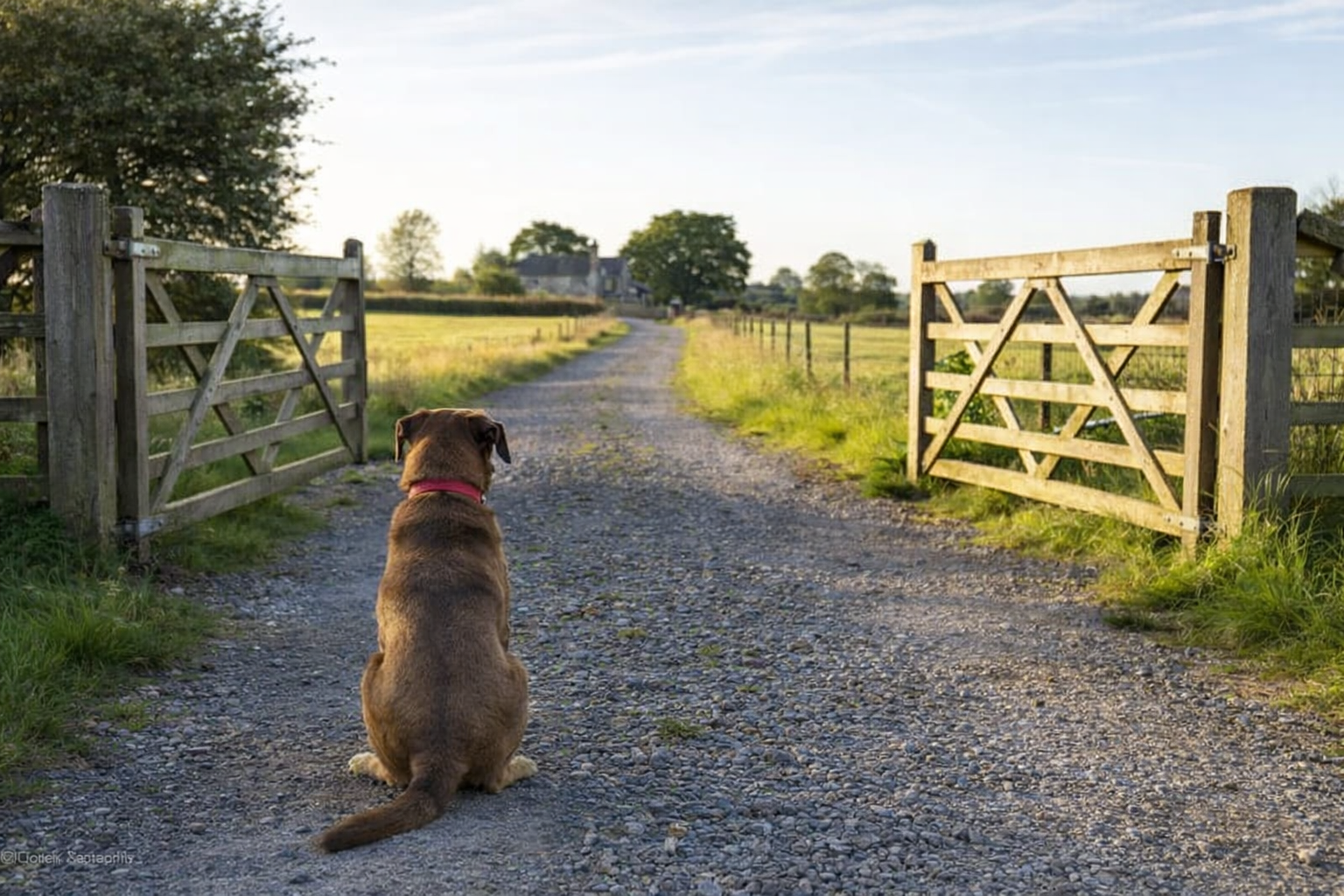
Why Standard Fencing Often Fails in Rural Settings
Dog proof fencing for rural properties must address:
- Large gaps between rails
- Open driveway entrances
- Sloping or uneven terrain
- Livestock fencing not designed for pets
- Five bar gate gaps
Traditional agricultural fencing is built to contain livestock — not motivated dogs.
If your dog is squeezing through gaps, read how to stop a dog squeezing through a gate.
If digging is the issue, see how to stop dog digging under fence.
Wildlife Damage: The Hidden Weak Point in Rural Fencing
In rural settings, dog proof fencing for rural properties must also account for wildlife.
Badgers, foxes and deer frequently push through or damage wire fencing, especially along field boundaries and hedgerows. Over time, this creates gaps, lifted sections or weakened posts — often unnoticed until a dog finds them.
Even well-maintained rural fencing can deteriorate quickly when wildlife regularly passes through it. A small opening created overnight can become a reliable escape route for a determined dog.
This is particularly common with:
- Stock fencing and wire mesh
- Post-and-rail boundaries with wire backing
- Hedge lines with hidden gaps
- Sloping ground where soil shifts beneath fencing
In countryside properties, fencing isn’t static — it is constantly tested by both wildlife and weather.
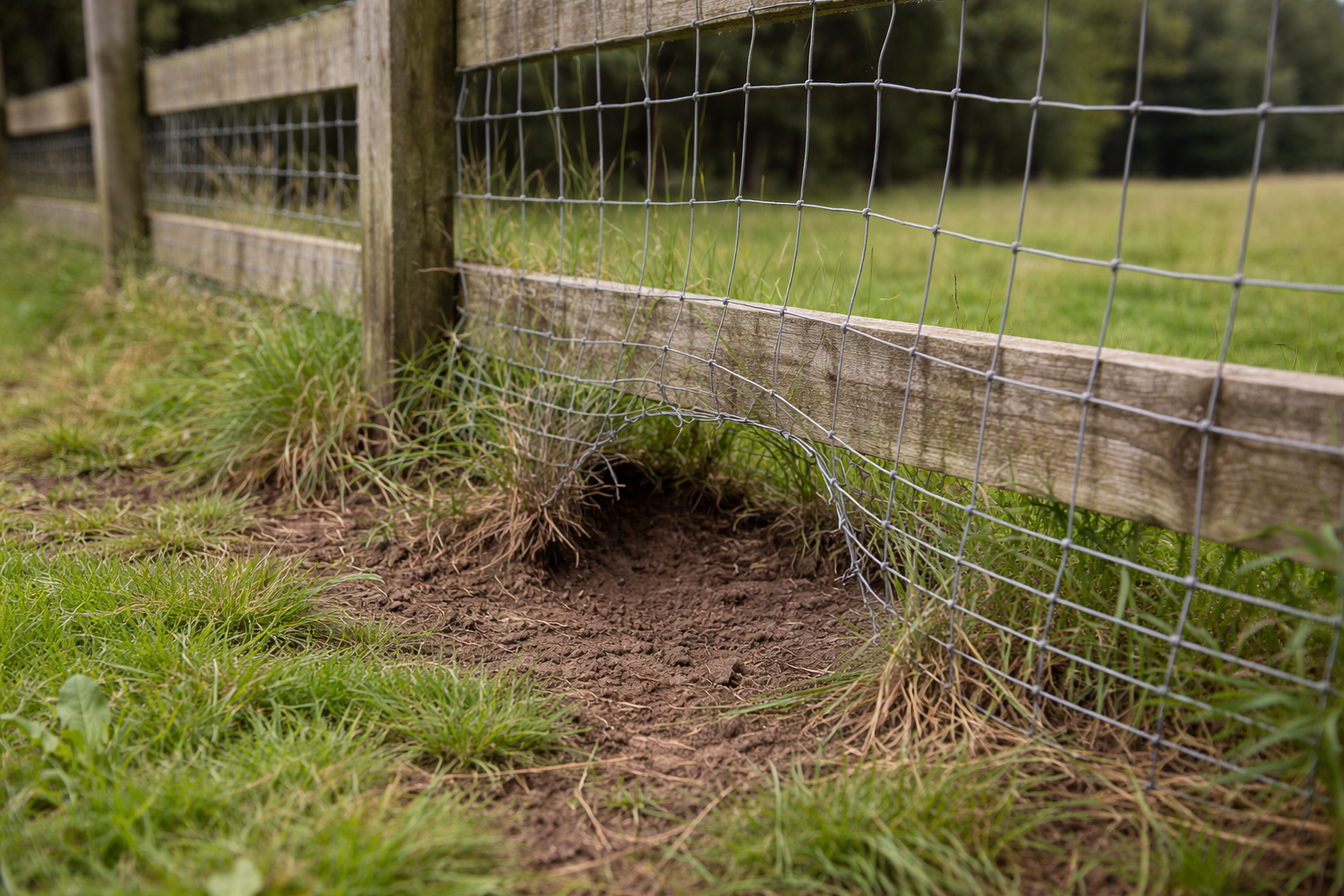
Wildlife regularly damages stock and wire fencing in rural areas, often creating hidden gaps that become escape routes for dogs.
Post and Rail Dog Containment Challenges
Post and rail fencing is common in the countryside but leaves large open sections underneath and between rails.
To improve secure rural fencing for dogs, owners often:
- Add mesh infill
- Install kickboards
- Bury ground barriers
- Increase height
However, reinforcing hundreds of metres of boundary can become expensive and visually intrusive.
If you’re unsure whether your current boundary is high enough, read our guide on can a dog jump a 6ft fence? to understand which breeds and situations pose the highest escape risk.
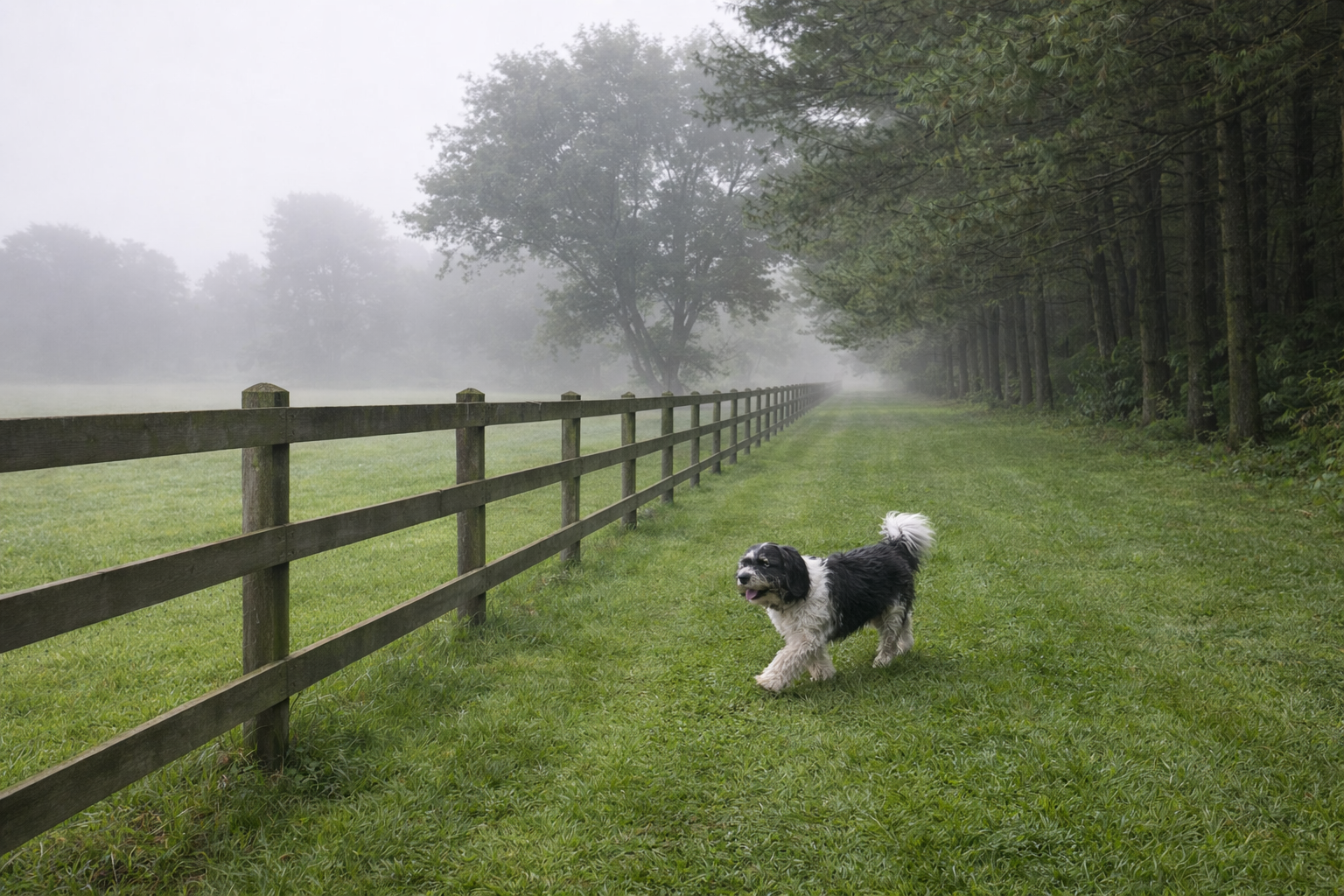
Five Bar Gate Dog Proofing Solutions
Five bar gates are a frequent weak point in rural dog escape prevention.
Common problems include:
- Wide hinge gaps
- Open bottoms
- Uneven ground beneath gates
Temporary fixes may include:
- Timber boards
- Mesh panels
- Automatic gate closers
But these do not always prevent highly motivated dogs from testing boundaries.
Driveways: The Most Overlooked Escape Route
Long gravel driveways and open entrances are one of the biggest rural containment challenges.
Dog proof fencing for rural properties must account for:
- Vehicles entering and exiting
- Gates left open
- Deliveries
- Visitors unfamiliar with gate routines
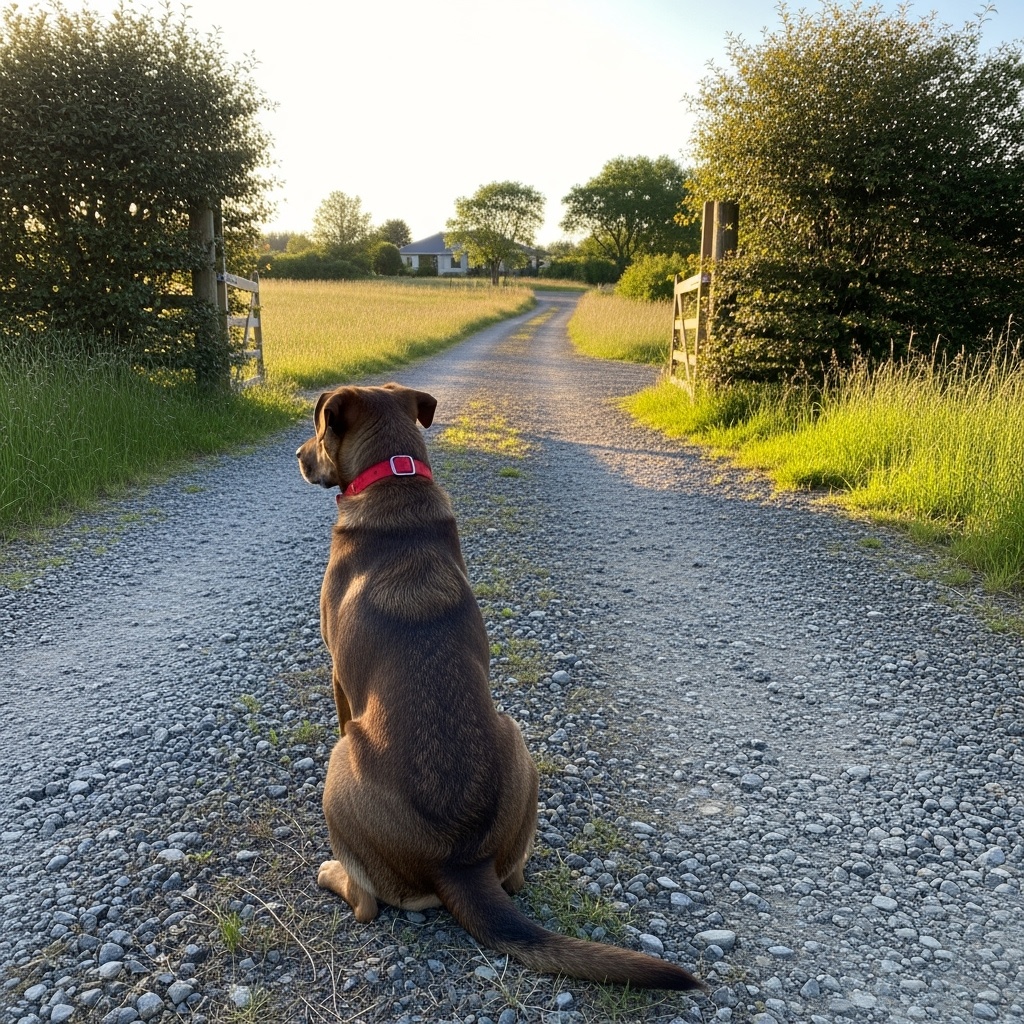
For many countryside homes, fully enclosing long driveways is impractical. In these situations, a professionally installed electronic dog fence offers a practical alternative. Instead of relying on physical barriers, the containment boundary can be laid discreetly across open driveway entrances, wide gateways and even irregular ground. This means your dog remains safely contained — even when gates are open for deliveries or vehicles — without altering the appearance of your property or installing intrusive fencing across large rural spaces.
A Smarter Approach to Rural Dog Containment
Rather than relying solely on physical barriers, many rural homeowners choose a professionally installed electronic dog fence system.
These systems can:
- Secure post-and-rail fencing
- Protect five bar gates
- Cover open driveways
- Adapt to uneven ground
- Preserve the appearance of rural properties
Learn more about the technology in our guide on how electronic dog fences work.
Final Thoughts: Secure Rural Fencing for Dogs
Effective dog proof fencing for rural properties requires:
- Structural reinforcement
- Behaviour understanding
- Clear perimeter definition
At DogFence, we’ve worked with rural homes across England for over two decades. When the full perimeter is clearly defined and properly introduced, escape attempts typically settle — even in high-drive breeds.
If you’d like tailored advice on rural dog containment solutions, contact our team for a free, no-obligation assessment.
Need Dog Proof Fencing for a Rural Property?
If you have post-and-rail fencing, five bar gates or open driveways, we can help you create secure rural fencing for dogs without altering the appearance of your countryside home.
Our professionally installed electronic dog fence systems cover open areas, long driveways and uneven ground — giving you reliable rural dog containment and complete peace of mind.
Call us on
01628 476475
|
Message us on WhatsApp
|
Request a Free Quote Online