
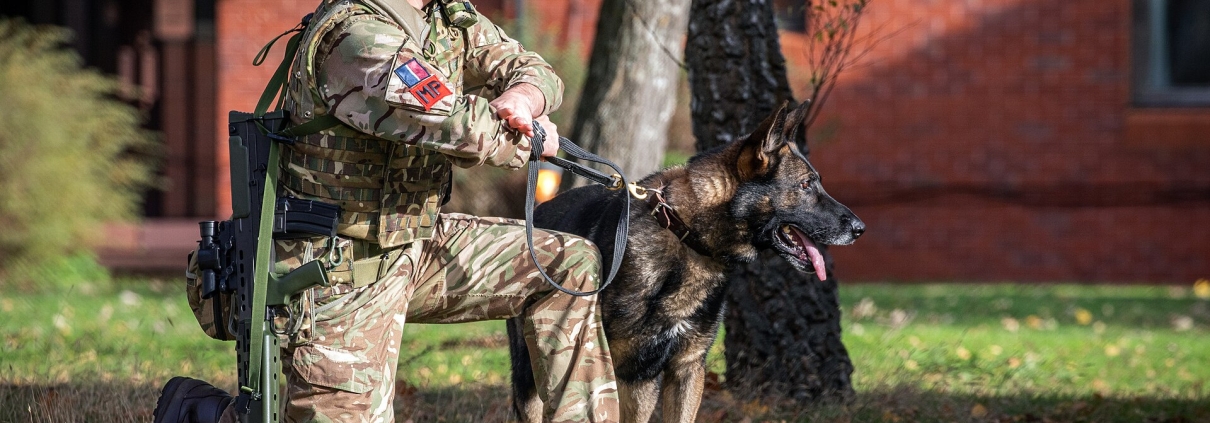
Service Dogs Through the Ages: Honouring the Dogs Who Served
From the battlefields of the First World War to modern search-and-rescue missions, service dogs have played an extraordinary role in protecting and saving human lives.
Every November, as Remembrance Day approaches, we pause to honour those who served and sacrificed their lives in conflict. Yet alongside the soldiers, sailors and airmen were countless animals whose courage, loyalty and devotion are sometimes overlooked.
Dogs have carried messages through gunfire, searched bomb-damaged buildings for survivors, detected explosives and provided companionship in some of the most difficult circumstances imaginable.
Today, working and assistance dogs continue that remarkable tradition, using their intelligence, senses and training to make a difference to people’s lives.
This Remembrance Day, we look back at the history of service dogs through the ages, remembering the animals who served and celebrating the enduring bond between dogs and people.
Before the World Wars: The Earliest Military Working Dogs
Dogs have accompanied people into conflict for centuries. Long before modern communication systems, surveillance equipment or sophisticated detection technology, armies recognised the value of a dog’s remarkable senses.
Dogs were used to guard camps, watch over supplies, accompany patrols and warn of approaching danger. Their acute hearing and sense of smell could alert people to movement long before it became visible.
But their contribution was not purely practical. For soldiers far from home, dogs could also provide companionship and reassurance.
These early relationships helped establish a tradition of military working dogs that would become increasingly important during the twentieth century.
World War One: Messenger Dogs and the Heroes of the Trenches
During the First World War, dogs became invaluable to military operations, particularly along the Western Front.
Communication was notoriously difficult. Telephone wires were destroyed by shellfire, roads became impassable and human runners risked their lives carrying messages between military positions.
Messenger dogs could travel across dangerous terrain carrying vital information. Their speed, agility and specialist training made them useful when conventional communication methods failed.
Other dogs served as sentries, helped locate wounded soldiers or provided companionship to men living through the terrible conditions of trench warfare.
These animals faced artillery fire, injuries, disease and exhaustion. Many never returned.
We’ve explored their remarkable contribution in greater detail in our dedicated article about dogs in World War One and the unsung heroes of the trenches, including the vital role of messenger dogs and the companionship they offered soldiers.
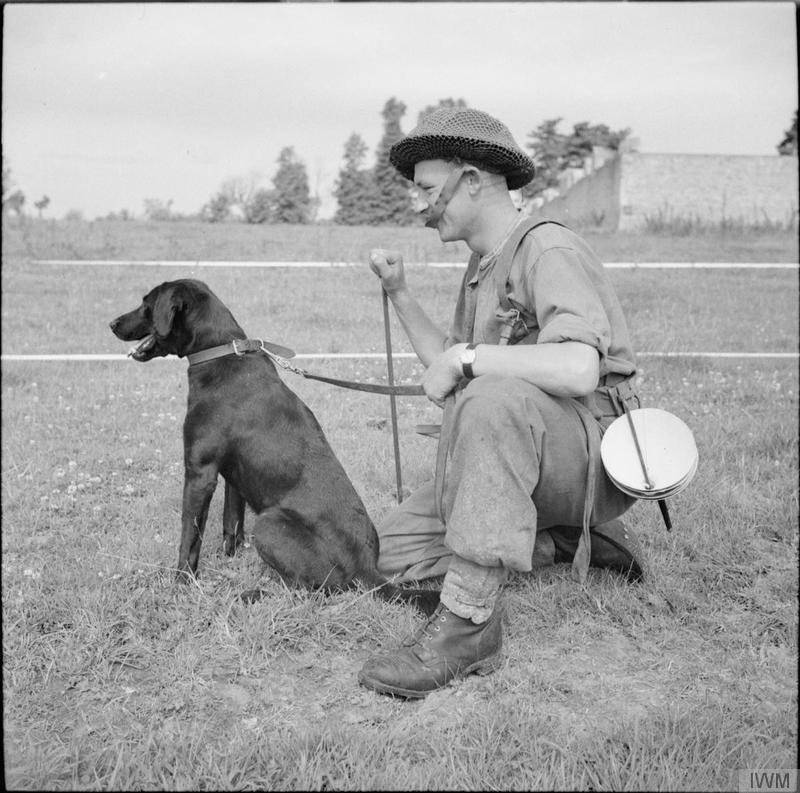
Bobs, a Royal Engineers mine-detection dog, working in Normandy in July
World War Two: Dogs Who Saved Lives During the Blitz
By the Second World War, working dogs had taken on an even wider range of responsibilities.
Military dogs guarded installations, patrolled dangerous areas and helped detect threats. On the Home Front, search-and-rescue dogs played an important role in locating people trapped beneath bomb-damaged buildings.
Some of the most remarkable stories of canine bravery emerged from this period.
Rip: The Stray Dog Who Became a Blitz Rescue Hero
In 1940, a stray terrier cross was discovered among the devastation of an air raid in Poplar, East London.
Named Rip, he was adopted by a local Civil Defence team and soon demonstrated an extraordinary ability to locate people trapped beneath rubble.
Despite having no formal search-and-rescue training, Rip became an invaluable member of the team during the London Blitz.
He is believed to have helped save more than 100 people and was awarded the PDSA Dickin Medal in 1945.
His story is a moving reminder that extraordinary courage can come from the most unexpected places.
Read more about Rip’s remarkable wartime service on the PDSA website.
Judy: The Dog Who Survived as a Prisoner of War
Another extraordinary wartime dog was Judy, an English Pointer who served as a ship’s mascot during the Second World War.
Following the sinking of HMS Grasshopper in 1942, Judy survived alongside members of the crew before enduring captivity in Japanese prisoner-of-war camps.
She became a source of comfort and companionship to fellow prisoners, particularly Leading Aircraftman Frank Williams, with whom she formed an exceptionally close bond.
Judy survived the war and was awarded the PDSA Dickin Medal in 1946 for her courage and endurance.
Her remarkable story demonstrates that the contribution of service dogs extends beyond physical tasks. Sometimes, simply being there can make an enormous difference.
Discover Judy’s extraordinary story on the PDSA website.
The PDSA Dickin Medal: Honouring Animal Bravery
In 1943, Maria Dickin, founder of the PDSA, established an award recognising outstanding bravery and devotion to duty by animals serving with the Armed Forces or Civil Defence.
Known as the PDSA Dickin Medal, it is often described as the animals’ equivalent of the Victoria Cross.
The medal carries two particularly poignant inscriptions:
FOR GALLANTRY
WE ALSO SERVE
Recipients have included dogs, horses, pigeons and a cat, recognising the remarkable contribution animals have made during conflict.
Today, the award continues to honour exceptional acts of animal courage.
Learn more about the PDSA Dickin Medal and the animals who received it.
Modern Military Working Dogs: From Iraq to Afghanistan
The role of military working dogs did not end with the Second World War.
In more recent conflicts, specially trained dogs have helped detect explosives, locate dangerous materials, search buildings and protect military personnel.
Their extraordinary sense of smell can identify threats that may be difficult for humans or equipment to detect.
Two British military working dogs in particular demonstrate the continued importance of these remarkable animals.
Treo: The Labrador Who Detected Hidden Explosives
Treo, a black Labrador serving with the Royal Army Veterinary Corps, worked as an arms and explosives search dog in Afghanistan.
In 2008, Treo located dangerous improvised explosive devices, helping protect British soldiers from potentially devastating attacks.
His actions were credited with saving lives, and he received the PDSA Dickin Medal in 2010.
Treo’s story illustrates how the exceptional scent-detection abilities of dogs can be combined with specialist training to protect people in dangerous environments.
Kuno: The Military Dog Who Survived Life-Changing Injuries
Kuno, a Belgian Malinois serving with British forces, was seriously injured during an operation in Afghanistan in 2019.
Despite coming under fire and sustaining severe injuries, Kuno continued his work, helping protect the personnel he was accompanying.
His injuries required extensive veterinary treatment and the loss of a rear paw, but he survived and subsequently retired.
In 2020, Kuno received the PDSA Dickin Medal in recognition of his extraordinary service.
Read Kuno’s story and his remarkable recovery.
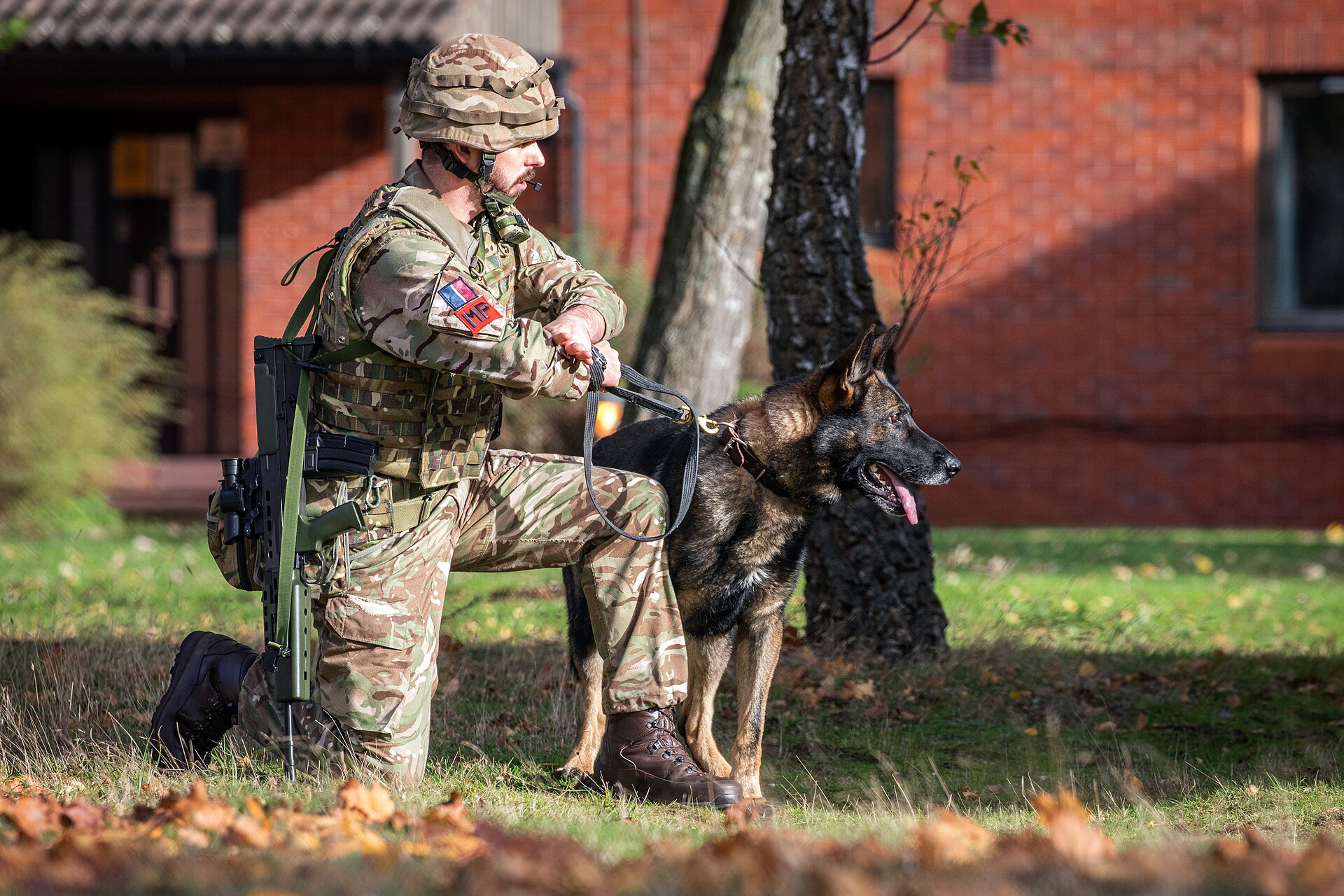
A modern RAF military working dog and handler training together in Britain.
Beyond the Battlefield: Service Dogs Saving Lives Today
Although military working dogs are an important part of Remembrance history, the contribution of trained dogs reaches far beyond the Armed Forces.
Today, working and assistance dogs perform an extraordinary range of roles.
Search-and-Rescue Dogs
Search-and-rescue dogs help locate missing people in woodland, mountains, collapsed buildings and other challenging environments.
Their ability to detect human scent can help search teams cover difficult terrain and identify areas that need closer investigation.
Police Dogs
Police dogs assist with searching for missing or vulnerable people, detecting substances, locating evidence and supporting specialist police operations.
Different dogs are trained for different tasks, with each working partnership requiring dedication and ongoing training.
Medical Detection and Assistance Dogs
Dogs can also make an extraordinary difference to people living with disabilities or medical conditions.
Guide dogs support people with sight loss, hearing dogs alert deaf people to important sounds, and assistance dogs help with everyday activities.
Some specially trained medical alert dogs can recognise particular scent changes associated with specific health events and alert their handlers.
Organisations such as Guide Dogs, Hearing Dogs for Deaf People and Medical Detection Dogs demonstrate how dogs continue to transform lives.
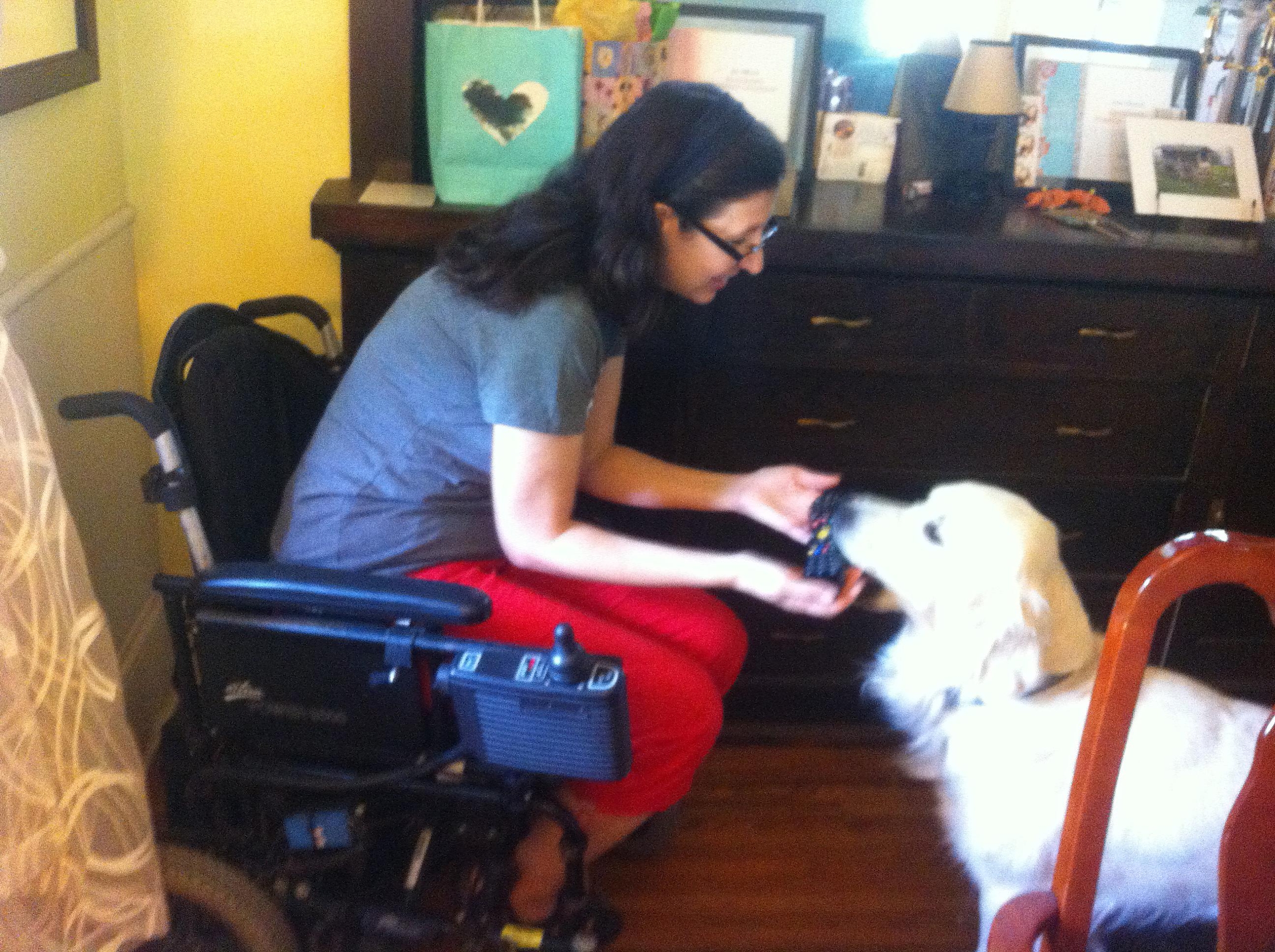
Modern assistance dogs provide practical support and independence to people with disabilities.
What Makes Working Dogs So Extraordinary?
From wartime messenger dogs to modern assistance dogs, several qualities have made dogs exceptional partners to humans.
- An extraordinary sense of smell: Dogs can detect and distinguish scents far beyond ordinary human capabilities.
- Intelligence and adaptability: Dogs can learn complex tasks through carefully structured training.
- Communication: Working dogs learn to recognise cues, routines and expectations from their handlers.
- Trust and companionship: Strong relationships between dogs and handlers are fundamental to successful partnerships.
- Individual abilities: Different breeds and individual dogs have strengths suited to different working roles.
Of course, not every dog is suited to demanding service work. Careful selection, appropriate training and a strong commitment to animal welfare are essential.
But the intelligence and ability to learn that make working dogs so remarkable are also qualities we recognise in our own family pets.
The Human-Dog Bond: A Legacy That Continues
For centuries, people and dogs have developed relationships based on companionship, communication and cooperation.
The extraordinary achievements of military and service dogs demonstrate just how much dogs can learn when they receive appropriate training and support.
At DogFence UK, we’ve worked with dogs and their owners since 2003. While our work is very different from that of military or assistance dog handlers, we share an appreciation for the intelligence of dogs and the importance of clear, consistent training.
Whether teaching a family pet to understand a garden boundary or preparing a specialist working dog for a demanding role, training should always consider the individual animal, its welfare and its ability to understand what is being asked.
Remembrance Day: Honouring the Dogs Who Served
On 11 November, we pause to remember the people who gave their lives in service.
We should also remember the animals who accompanied them.
The messenger dogs who crossed dangerous battlefields. The rescue dogs who searched for survivors. The military working dogs who detected hidden threats. And the countless companions whose presence brought comfort during the darkest moments of war.
Many of their names have been lost to history, but their contribution should not be forgotten.
Today, as working dogs continue to protect lives and support people around the world, their legacy lives on.
WE ALSO SERVE
In remembrance of the animals who served and those who never came home.
Lest we forget.
DOGFENCE UK • SINCE 2003
A Lifelong Bond Built on Trust
Every dog deserves to feel safe. Discover how our professionally installed dog fencing systems and personalised training help protect the dogs we love.
☎ CALL US 01628 476475 | Chat with our team |
Some images in this article may be AI-generated for illustrative purposes.