
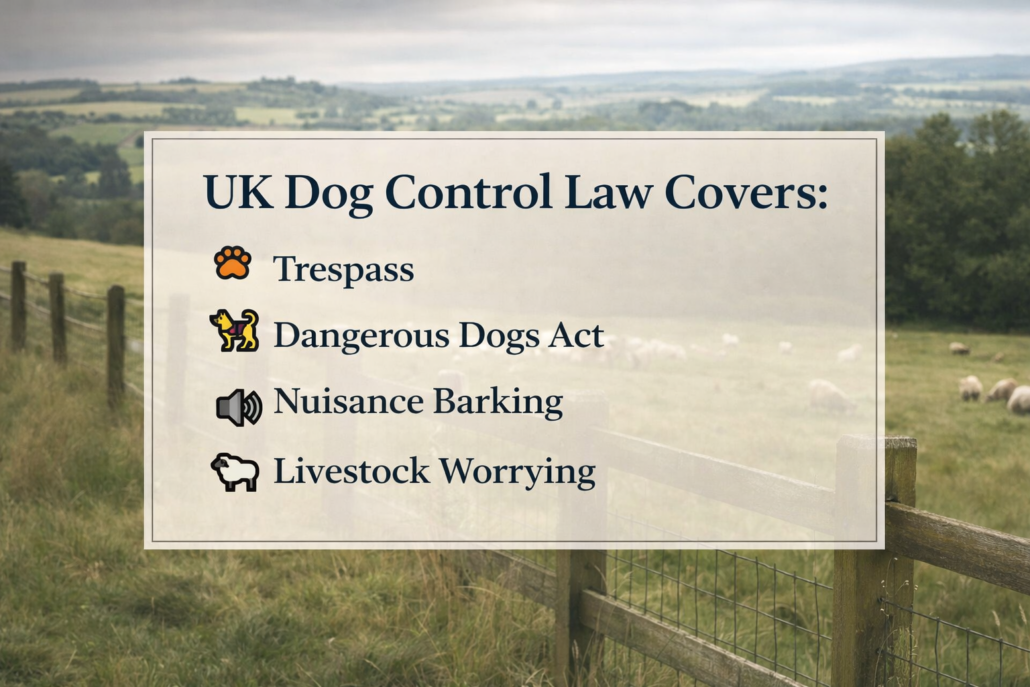
UK Dog Fence Law: Your 2025 Guide to Legal Compliance
UK Dog Fence Law: Are Dog Fences Legal in the UK? (2025 Guide)
Are Dog Fences Legal in the UK?
Yes. Electronic dog fences are legal in the UK.
Electronic containment systems — often called invisible dog fences or underground dog fences — are not banned under UK law. The confusion arises from legislation that banned certain hand-held remote training collars, not containment systems.
Understanding UK dog fence law is essential before installing any boundary system. This guide explains what is legal, what is banned, and how responsible containment fits within UK animal welfare legislation. Many owners also ask, are invisible fences humane, particularly in light of the UK electric collar ban.
What Does the UK Electric Collar Ban Actually Cover?
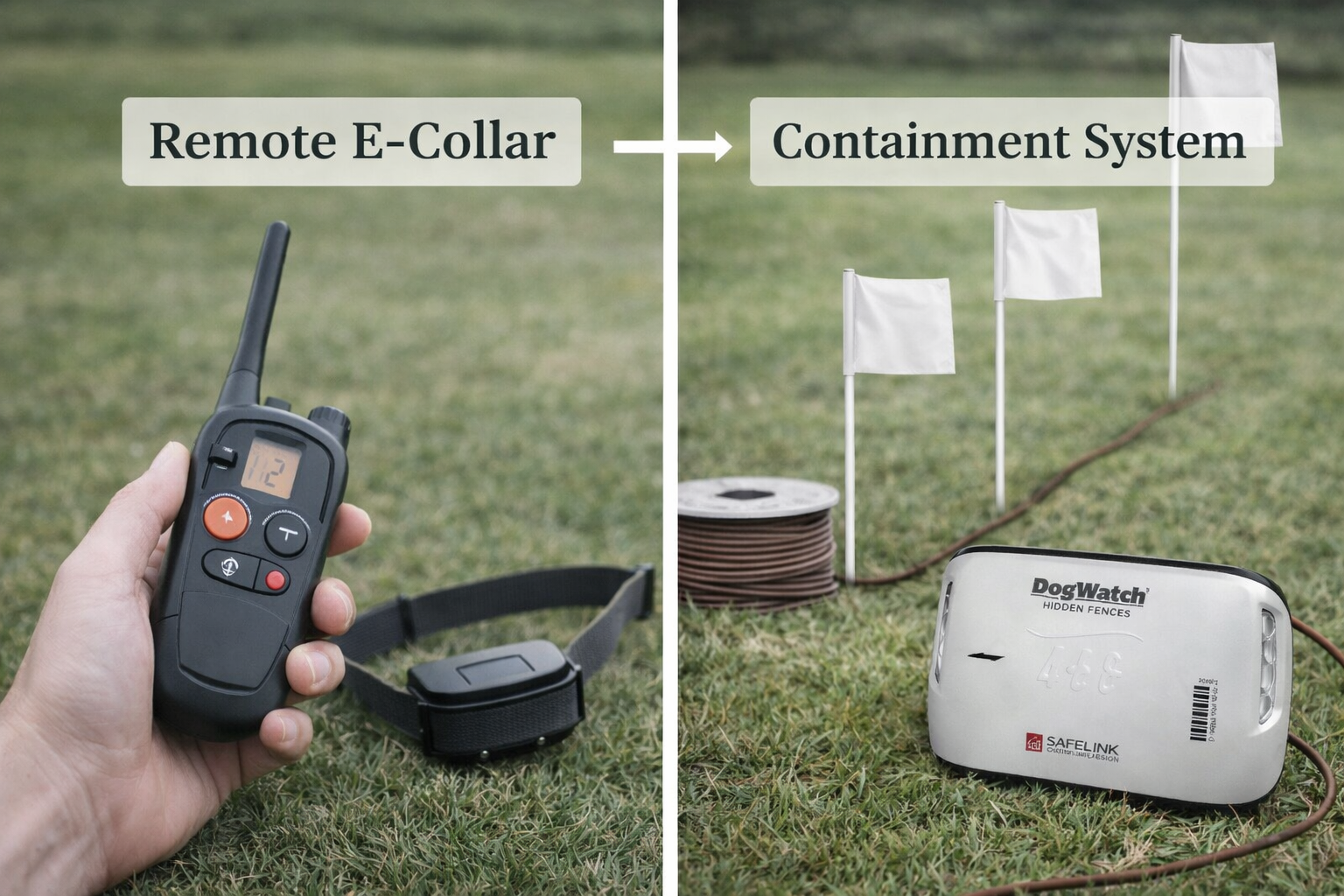
In 2018, the UK government announced a ban on hand-held remote controlled e-collars under amendments to the Animal Welfare Act 2006.
The key distinction:
- ❌ Hand-held remote training collars (designed to deliver a stimulus at the press of a button) — restricted.
- ✅ Electronic containment systems (automatic boundary systems triggered by crossing a defined line) — not banned.
The government stated clearly it did not intend to ban invisible fencing containment systems.
This is the critical legal distinction many articles fail to explain.
What Law Governs Dog Fences in the UK?
Several areas of UK legislation apply when considering whether dog fences are legal in the UK. Electronic containment systems are not regulated by a single “dog fence law”, but instead fall under broader animal welfare, dog control, and livestock protection legislation. Understanding how these laws interact helps clarify the legal status of invisible and electric dog fences in England. Dog fences fall under general animal welfare and control legislation, including:
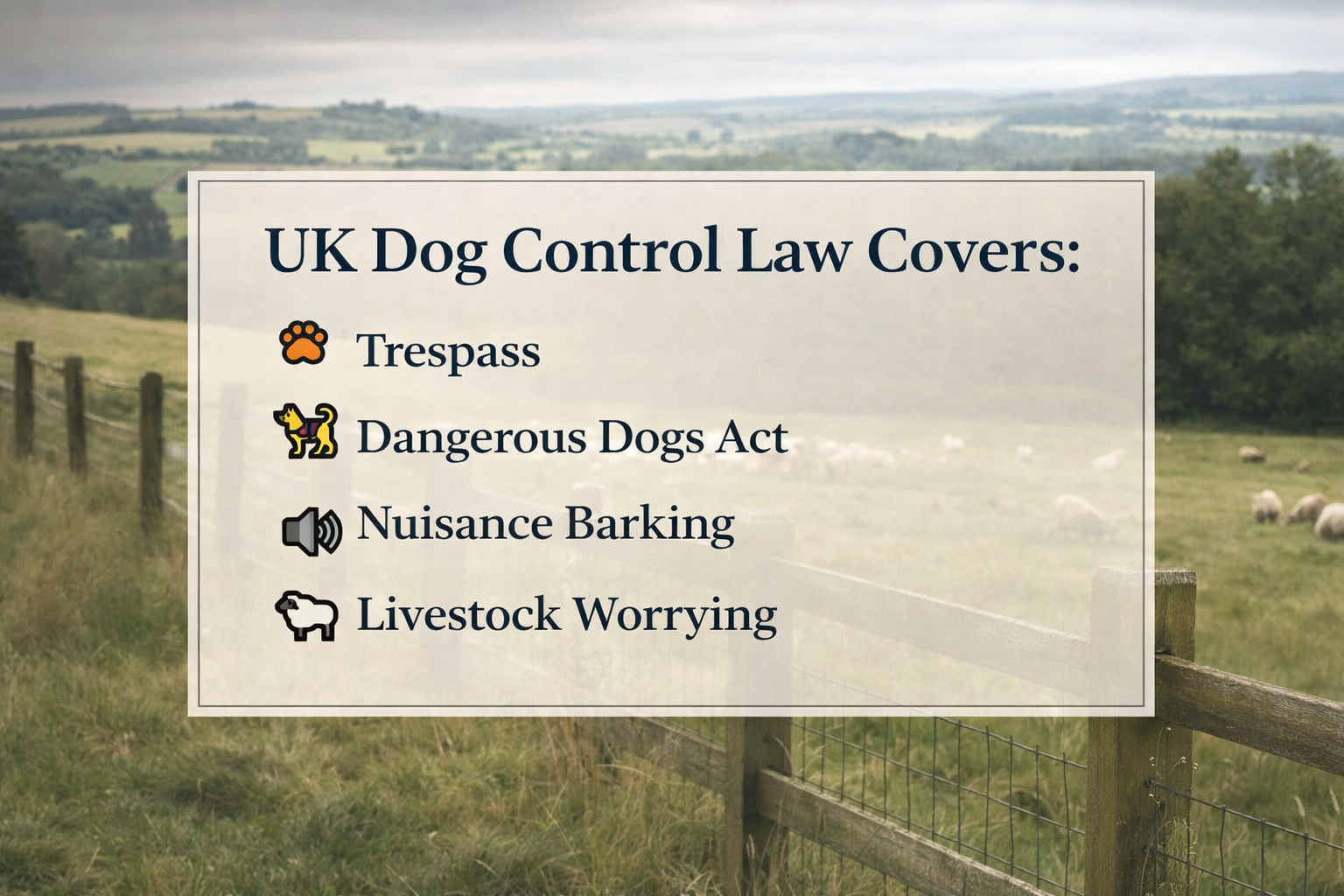
- Animal Welfare Act 2006
- Dangerous Dogs Act 1991
- Dogs Act 1871
- Animals Act 1971
- Protection of Livestock Act 1953
None of these prohibit containment systems.
However, owners remain legally responsible for:
- Keeping their dog under control
- Preventing livestock worrying
- Preventing injury to people or property
A containment fence can support compliance — but it does not replace responsible ownership. Owners regularly ask, “Can I use an electric dog fence in the UK?” The answer is yes — provided it is used responsibly and in line with animal welfare legislation.
Are Electric Dog Fences Illegal?
No. Electric dog fences are legal in England.
They are classed as containment systems, not remote punishment devices.
The key legal and welfare factors are:
- The system must be used responsibly
- Training must be appropriate
- The dog must not suffer unnecessary harm
- The system must be suitable for the dog’s size and temperament
Poor installation or misuse could raise welfare concerns under the Animal Welfare Act 2006 — but the system itself is not unlawful.
Are Invisible Fences Humane?
When professionally installed and correctly introduced, containment systems are widely considered humane because they:
- Use a warning tone before correction
- Deliver a brief, proportionate static stimulus (not a continuous shock)
- Stop correction immediately once the dog retreats
- Create a predictable, consistent boundary
The differences between an invisible dog fence over an electric collar:
- Use a warning tone before correction
- Deliver a brief static stimulus (not continuous shock)
- Stop correction once the dog retreats
- Prevent dogs entering dangerous areas
In rural settings especially, containment can help prevent:
- Road accidents
- Livestock worrying offences
- Legal disputes with neighbouring landowners
Used correctly, they function as a boundary training tool rather than a punishment device.
Do I Need Planning Permission for a Dog Fence?
Underground containment systems do not require planning permission because they involve no visible structure and do not alter boundary height.
- There is no visible physical structure
- No permanent fence panels are erected
- No height restrictions apply
This makes containment particularly attractive in:
- Conservation areas
- Listed properties
- Open countryside
- Large rural estates
What About Rural Properties and Livestock Law?
Under the Protection of Livestock Act 1953 and Animals Act 1971, dog owners are legally responsible if their dog worries livestock.
A secure boundary system can significantly reduce the risk of:
- Criminal prosecution
- Civil compensation claims
- A farmer exercising legal defence rights
In this context, containment systems often act as a preventative legal safeguard rather than merely a convenience.
Can Using a Dog Fence Help Me Stay Within the Law?
Yes — if used correctly.
A well-installed containment system can:
- Demonstrate proactive control measures
- Reduce escape risk
- Protect livestock
- Protect neighbouring property
- Support responsible ownership
However, no system removes your legal responsibility entirely.
You must still:
- Train your dog
- Maintain equipment
- Supervise appropriately
Common Questions About UK Dog Fence Law
Are dog fences banned in England?
No.
Are invisible fences illegal?
No.
Is the UK electric collar ban the same thing?
No. The ban relates to hand-held remote trainers, not automatic containment boundaries.
Can I install one myself?
Yes, but professional installation ensures correct calibration and welfare compliance.
The Bottom Line on UK Dog Fence Law
Electronic dog fences are legal in the UK. The UK electric collar ban did not include electronic containment systems.
They are not included in the electric collar ban and remain lawful when used responsibly under existing animal welfare legislation. Much of the confusion comes from misunderstanding the difference between remote training collars and fixed containment systems.
When professionally installed and correctly introduced, a containment fence can:
- Improve safety by preventing escapes
- Reduce legal risk and potential liability
- Support compliance with UK dog control and livestock laws
- Protect neighbouring property and livestock
- Give owners peace of mind in both rural and residential settings
However, no system replaces responsible ownership. Proper training, correct collar fitting, and ongoing management are essential to ensure both legal compliance and animal welfare.
A well-implemented containment system is not about restriction — it is about creating safe, clear boundaries that protect dogs, livestock, and owners alike.
Stay Safe. Stay Legal. Protect Your Dog.
If you’re unsure whether a dog fence is legal for your property, or want to ensure full compliance with UK dog fence law, our experienced team can guide you clearly and responsibly.
Call us on
01628 476475
|
Message us on WhatsApp
|
Request a Free Quote Online