
When Is an Invisible Dog Fence Not Suitable for Your Dog?
When Is an Invisible Dog Fence Not Suitable for Your Dog?
When is an invisible dog fence not suitable for your dog? It is a question we believe every responsible dog containment company should be prepared to answer. Invisible dog fences can provide safe outdoor freedom for many dogs, but they are not suitable for every dog, every garden or every situation.
At DogFence, we have been installing and training dogs and cats to electronic containment systems since 2003. Over that time, we have also advised dog owners not to install a system when we don’t believe the dog, garden layout or proposed boundary is suitable.
Sometimes the right advice is not to buy a dog fence.
Quick Answer: When Should You NOT Use an Invisible Dog Fence?
An invisible dog fence may not be suitable if:
- The garden is so small that the dog would have insufficient safe space inside the boundary.
- The proposed layout creates multiple confusing containment or exclusion zones.
- The dog would have to pass through very narrow corridors between boundary signals.
- The dog has a serious history of aggression or attacking people and a physical barrier is required for public safety.
- The owner is unable or unwilling to complete the boundary training.
However, blindness or deafness does not automatically make a dog unsuitable. We have successfully trained both blind and deaf dogs by adapting our training programme to the individual animal.
The important question isn’t simply, “Will an invisible fence work?” It is:
Is an invisible fence appropriate for this particular dog, owner and property?
Dog Fence Suitability: What Do We Look At?
Before recommending an electronic dog fence, we look at the dog, the available space and how the boundary will work in everyday life. The aim isn’t simply to get a fence installed; it is to create a clear boundary that keeps dogs safe while still giving them useful freedom within the garden.
- Is there enough safe space? Will the dog have a comfortable area well inside the boundary?
- Is the boundary easy to understand? Can we create a clear distinction between the dog’s safe area and the boundary?
- Are there narrow corridors? Will the dog have to pass between boundary signals that are too close together?
- Is there a serious aggression risk? Is traditional fencing or another physical barrier necessary to protect other people?
- Can the owner complete the training? Is someone prepared to introduce the dog to the boundary correctly so the dog learns what the warning means?
If the answer to one or more of these questions causes concern, we would rather discuss another solution than install a dog containment system that isn’t right for that particular dog or garden.
1. Is an Invisible Dog Fence Suitable for a Small Dog or Small Garden?
It can be suitable for a small dog, but a very small garden is a different consideration.
An invisible dog fence in a small garden needs sufficient space between the boundary signal and the areas where the dog normally eats, plays, rests and enters or leaves the house.
Remember that an electronic dog fence does not create a physical wall. It creates a boundary that the dog is trained to recognise and avoid.
If the garden is so small that the boundary takes up a significant proportion of the usable area, the dog may have nowhere sensible to go.
In that situation, we would rather tell an owner that an invisible dog fence is not suitable than squeeze a system into a garden simply because it is technically possible to install the wire.
Installation should be designed around the dog’s usable safe space, not simply around the dimensions of the garden.
If you’re unfamiliar with how an invisible dog containment system works, our How the DogFence System Works guide explains how the boundary wire, receiver collar and training work together.
2. Can You Create Several Different Zones With an Invisible Dog Fence?
Technically, an electronic boundary can be configured in many different ways.
That doesn’t mean every possible layout is a good idea.
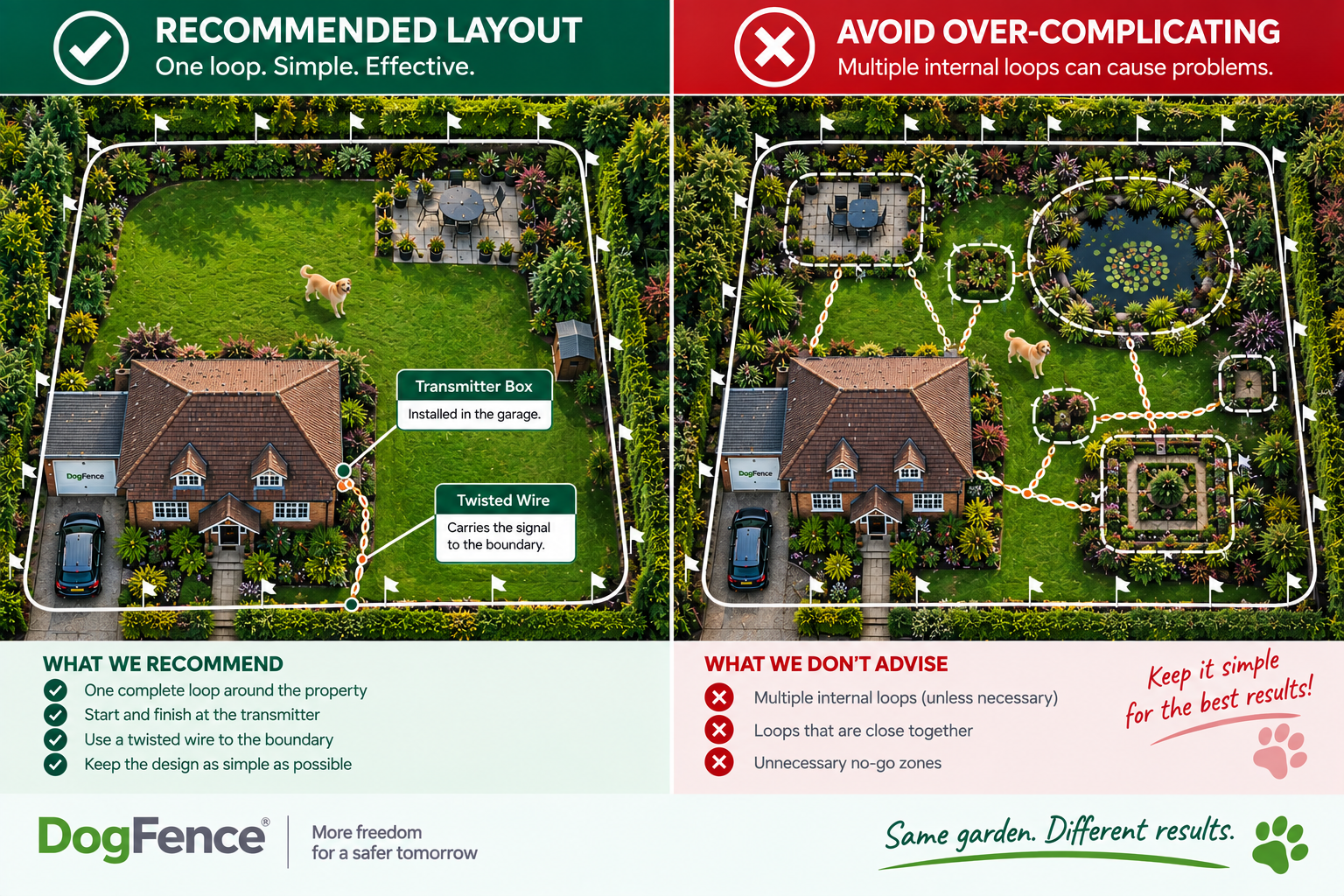
We are sometimes asked to design multiple dog fence zones within one garden: perhaps keeping the dog out of one area, containing them within another, creating another exclusion area elsewhere and then providing routes between them.
Our starting point is always the dog.
The dog needs to be able to understand where it is safe to go.
If a proposed dog containment system creates so many separate boundaries that the permitted area becomes difficult for the dog to understand, we will simplify the design or advise against it.
The purpose of the training is that the dog learns a clear, consistent boundary. Creating a complicated maze of different permitted and prohibited areas can work against that objective.
This is an important distinction between what an invisible fence can technically do and what we believe it should do.
3. Why Are Narrow Corridors and Alleyways a Problem for Hidden Dog Fences?
We would also be cautious about creating narrow walkways between two electronic boundaries.
Imagine asking a dog to walk down an alleyway with a boundary signal running close to it on both sides.
Even if there is technically a safe strip down the middle, the dog has very little margin for error and may become reluctant to use the route at all.
A good hidden dog fence layout should give the dog a clear and understandable safe area.
This is why professional boundary design matters. We don’t simply look at where we can put the cable or how quickly we can get the fence installed. We consider how the dog will actually move around the garden once the system is operating.
Large and unusually shaped properties can often be accommodated very successfully. A wired system can follow complex boundaries, slopes, woodland, driveways and natural landscaping. But complexity should have a purpose; it shouldn’t make the boundary confusing for the dog.
4. Is an Invisible Fence Suitable for an Aggressive Dog?
This is one of the most important limitations to understand.
We would not recommend relying on an invisible dog fence as the sole barrier for a dog with a serious history of attacking people or significant human-directed aggression.
An electronic containment system creates what is ultimately a learned or psychological boundary. It is not a physical wall, gate or fence.
For the overwhelming majority of family pets, that distinction is part of the system’s advantage: the dog can enjoy the garden without additional physical fencing.
But where there is a genuine risk of a dog injuring another person, the consequences of containment failure are very different.
In those circumstances, public safety comes first. Appropriate secure traditional fencing or another physical barrier should be used, and owners dealing with serious aggression should seek appropriately qualified professional behavioural advice.
The UK Government provides guidance on an owner’s responsibilities for keeping a dog under control. You can read the official GOV.UK guidance on controlling your dog in public.
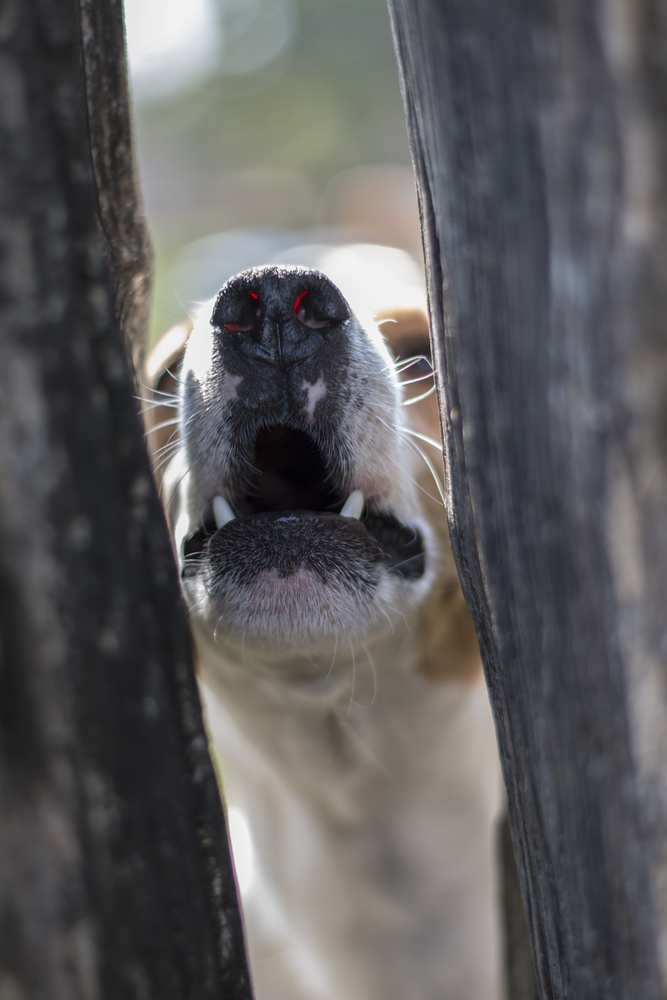
For dogs with a serious history of aggression towards people, a secure physical barrier should be used rather than relying on an invisible dog fence alone.
What About a Reactive Dog or an Escape Artist?
A reactive dog or determined escape artist is not automatically an aggressive dog.
A dog barking at passing dogs, chasing squirrels, digging under fencing or becoming highly excited by something outside the garden may still be perfectly suitable for an electronic containment system.
We would want to understand the individual behaviour before deciding whether an invisible dog fence is suitable for that dog.
There is an important difference between a dog with high prey drive, a habitual escape artist and a dog with a history of serious human-directed aggression.
5. What If the Owner Doesn’t Want to Do the Invisible Dog Fence Training?
Then we don’t believe an invisible dog fence is the right solution.
Training is not an optional extra. It is part of the containment system.
Dogs should not simply be fitted with fence collars and allowed to discover an invisible boundary by trial and error.
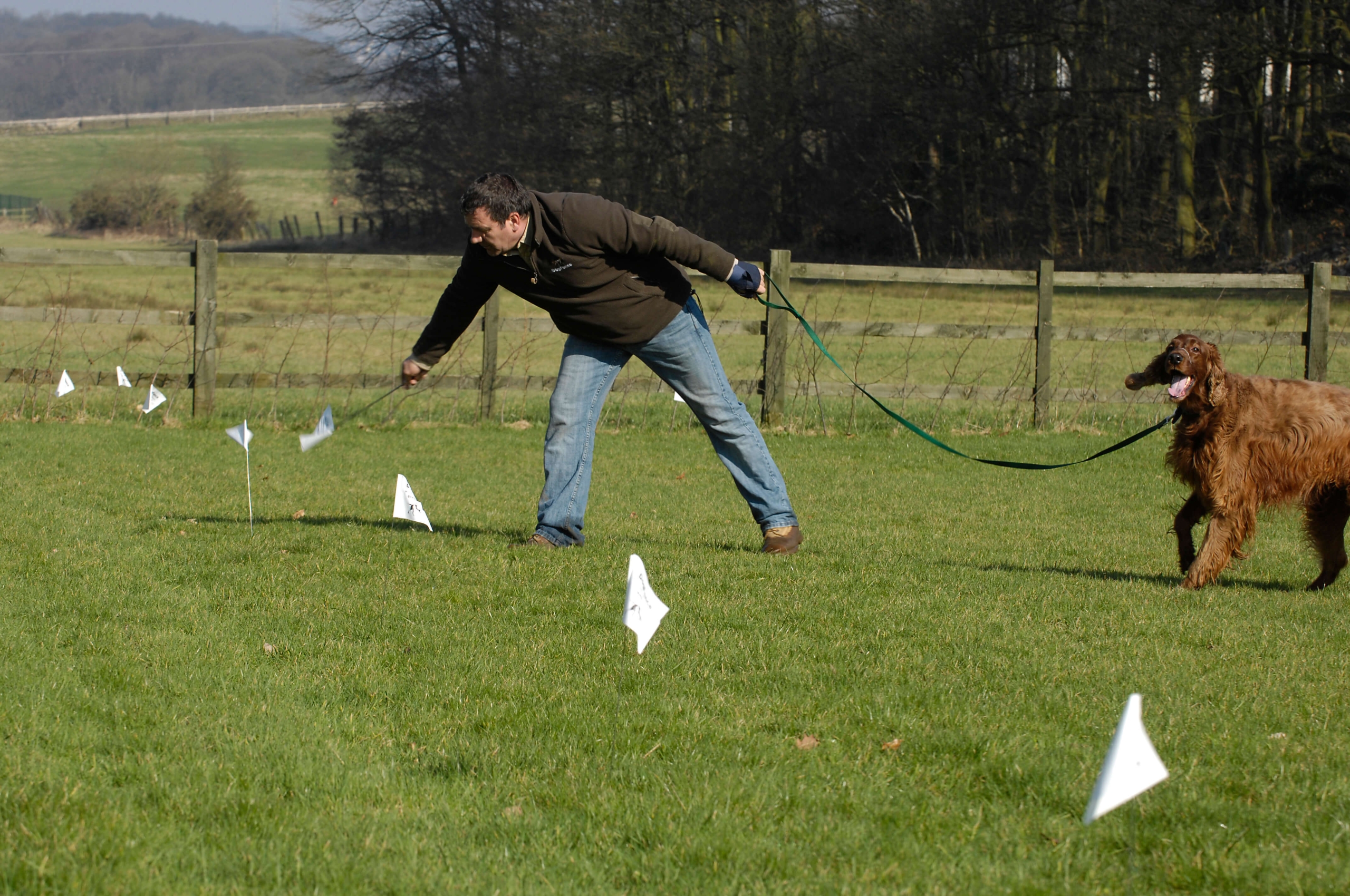
Our training programme introduces the boundary progressively using visual training flags and the audible warning from the receiver collar before moving through the later stages of training.
The objective is that the dog learns:
“I hear the warning – I stop and turn back into my safe area.”
This also explains why we don’t judge dog fence suitability purely by breed, size or age. The owner’s willingness to follow the training programme is part of the assessment too.
The UK Government has specifically considered electronic containment fences separately from hand-held remote training collars. In its consultation response, DEFRA discussed the importance of correct installation and appropriate training with containment systems. You can read the UK Government consultation and response on electronic collars and containment systems.
For more information about the receiver collar and what happens as the dog approaches the boundary, see our guide to how a dog fence collar works.
6. Can a Blind Dog Use an Invisible Dog Fence?
Yes, in some cases a blind dog can be successfully trained to an invisible dog fence.
This often surprises dog owners.
Over the years, we have trained blind dogs by adapting our normal training programme to suit the individual dog.
Loss of sight therefore does not automatically mean that an invisible dog fence is unsuitable.
What matters is assessing the individual animal and ensuring the dog has a clear, consistent way of learning and recognising its safe area.
We’ll cover this separately in our forthcoming guide to training a blind dog to an invisible fence, because it deserves much more explanation than we can give it here.
7. Can a Deaf Dog Be Trained to an Invisible Dog Fence?
Yes. Deafness does not automatically prevent a dog from learning an invisible boundary.
The standard audible warning obviously cannot be relied upon in the same way for a dog that cannot hear it, so the training approach needs to be adapted.
We have trained deaf dogs successfully by modifying the programme according to the individual dog’s needs.
Again, this isn’t something we believe should be approached as a one-size-fits-all installation. We’ll explain our experience and the adaptations involved in a separate guide to invisible dog fences for deaf dogs.
How Do We Decide Whether an Invisible Dog Fence Is Suitable?
We don’t believe dog fence suitability can be decided from the dog’s breed alone.
Before recommending a system, the important considerations include:
The dog: its behaviour, temperament, escape history and individual needs.
The garden: its size, shape, access points and the amount of genuinely usable safe space.
The proposed boundary: whether it creates a simple, understandable containment area rather than a confusing maze of zones.
The risk: particularly where there is a known history of serious aggression towards people.
The owner: whether they are willing and able to follow the training programme so the dog learns the boundary correctly.
That is why two apparently similar properties may receive completely different recommendations.
When Is an Invisible Dog Fence a Good Alternative to Traditional Fencing?
The fact that an invisible fence isn’t suitable for every situation doesn’t mean its uses are narrow.
A professionally designed dog containment system can be particularly useful where traditional fencing is difficult, unattractive or has already failed to keep the dog contained.
We regularly deal with properties involving open driveways, hedges, large gardens, woodland and determined escape artist dogs that have learned to jump, dig or exploit weaknesses in conventional fencing.
If escaping is the reason you’re considering containment, our guide to how to stop a dog escaping from the garden looks at the different ways dogs find their way out and the options available.
A wired boundary can also be designed around the actual shape of a property rather than requiring a simple predetermined area. You can see how the system works on our How DogFence Works page.
A good dog fence installation is not about putting a boundary everywhere you can. It is about creating a clear, usable safe area that the individual dog can understand.
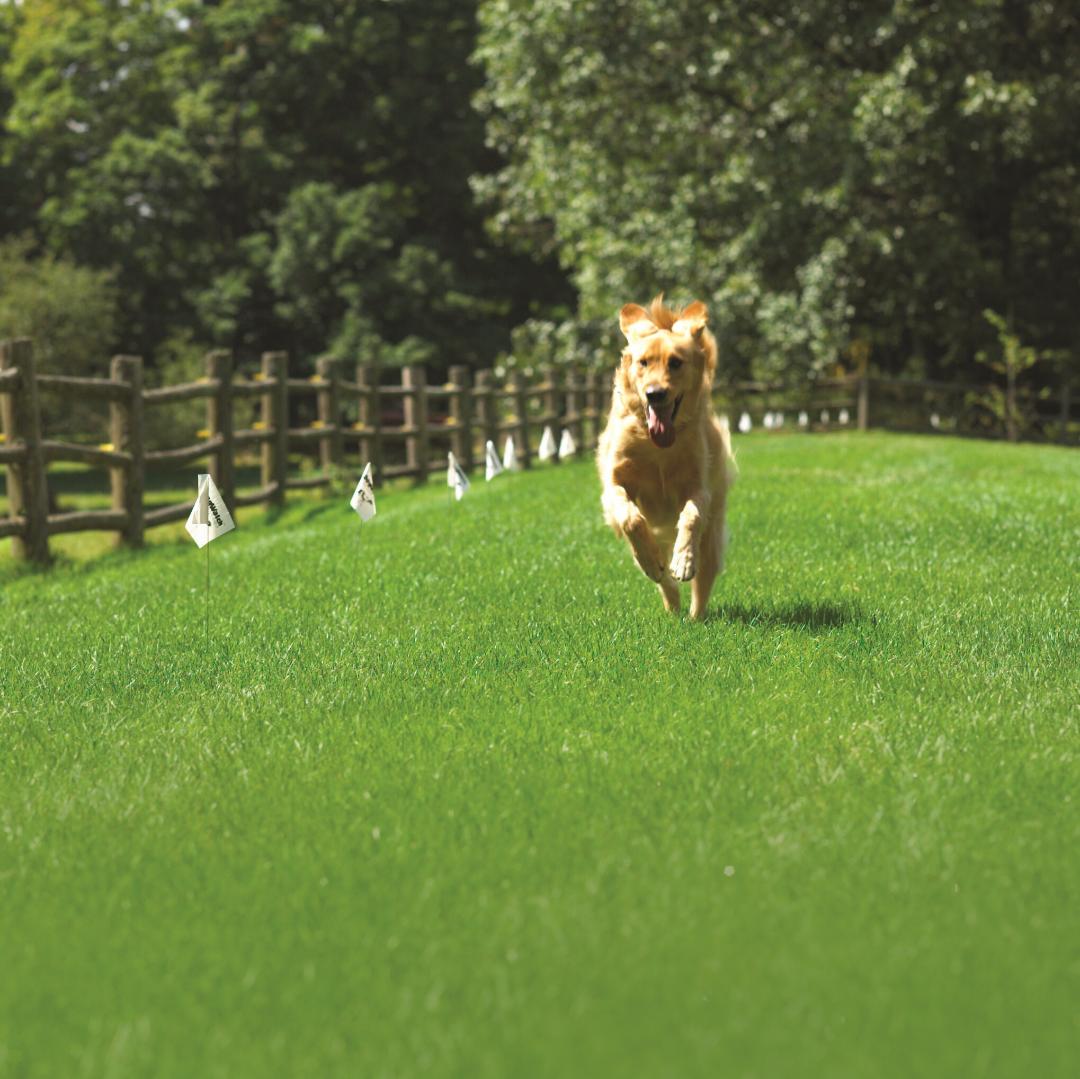
With the right garden layout and training, an invisible dog fence can give dogs plenty of safe space to enjoy.
Frequently Asked Questions About Dog Fence Suitability
Are invisible dog fences suitable for every dog?
No. Invisible dog fences are not suitable for every dog or every property. Garden size, boundary layout, the dog’s behaviour, safety considerations and the owner’s ability to undertake the training should all be assessed before installation.
Is my garden too small for an invisible dog fence?
It may be. The important factor isn’t a single minimum measurement; it is whether the proposed boundary leaves your dog with sufficient comfortable, usable safe space. If the boundary would dominate a very small garden, another solution may be more appropriate.
Are invisible dog fences suitable for small dogs?
Yes, a small dog can potentially be trained to an invisible dog fence. The dog’s size and the size of the garden are separate considerations. The important factors include the individual dog’s suitability, the available safe area, correct receiver collar fit and appropriate training.
Can an invisible dog fence have several different zones?
It is technically possible to create different containment and exclusion areas, but too many boundaries can become confusing. We prefer a clear, simple boundary layout that makes it obvious to the dog where its safe area is.
Can I create a narrow pathway between two invisible boundaries?
We generally advise against very narrow corridors with active boundaries close to both sides. Even if technically possible, the dog needs enough safe space to move comfortably without repeatedly approaching a warning zone.
Can an invisible fence contain an aggressive dog?
An invisible fence should not be relied upon as the sole barrier for a dog with a serious history of attacking people or significant human-directed aggression. In those circumstances, secure physical or traditional fencing and appropriate professional advice should take priority.
Can a blind dog use an invisible fence?
Potentially, yes. Blindness does not automatically make a dog unsuitable. We have trained blind dogs by adapting the normal boundary-training programme to their individual needs.
Can a deaf dog use an invisible fence?
Potentially, yes. We have also trained deaf dogs using an adapted training programme. Because the standard audible warning cannot fulfil its normal role, the dog’s individual training needs must be considered carefully.
Does an invisible dog fence work without training?
We don’t recommend using one that way. Training is how the dog learns where the boundary is, what the warning means and how to return to its safe area. The dog should never simply be left to discover an invisible boundary for itself.
Sometimes the Best Advice Is “No”
We’ve specialised in dog containment since 2003, and part of doing that responsibly is recognising when an invisible dog fence is not suitable.
If we think your garden is too small, your proposed layout is too complicated, or your dog’s circumstances mean traditional fencing or another physical barrier would be more appropriate, we’ll tell you.
Equally, don’t assume your dog can’t use a DogFence because they are blind, deaf, a determined escape artist or because your property is unusual. Some of the situations that initially look the most difficult can simply require a different boundary design or an adapted approach to training.
🐾 Not Sure Whether a DogFence Is Right for Your Dog?
Don’t guess – ask us.
Tell us about your dog, your garden and what you’re trying to achieve. With more than 20 years’ experience in pet containment, we’ll tell you whether we think a DogFence is suitable – and we’ll tell you if we don’t.
📞 Call us on 01628 476475
💬 Chat to us on WhatsApp
No pressure. No one-size-fits-all solution. Just experienced advice about the safest way to give your dog more freedom.