Adding a Dog to Your Invisible Fence: The Complete UK Guide (2026)
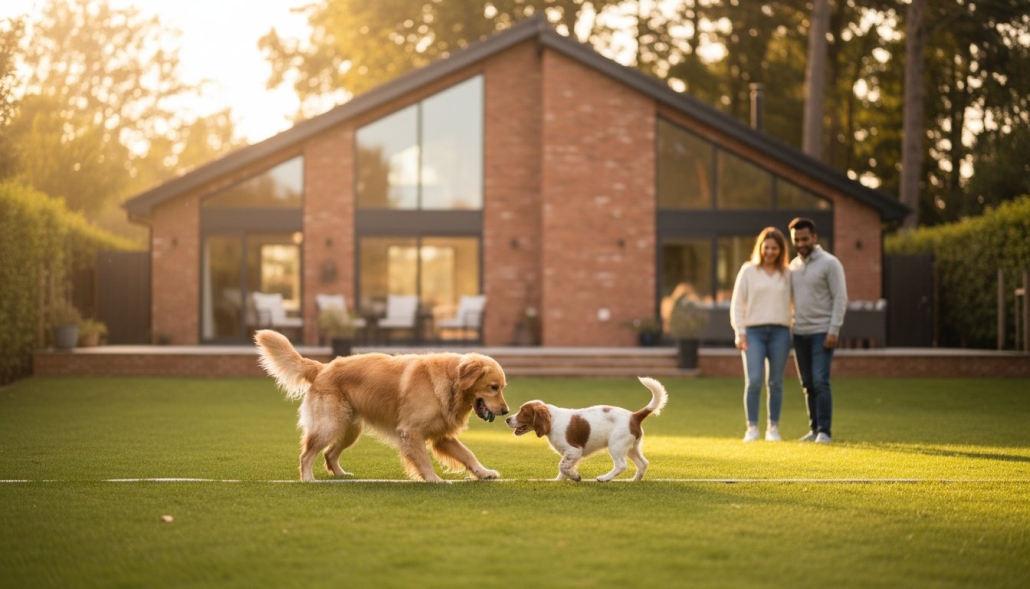
Last Tuesday, a family in the Cotswolds welcomed a second Golden Retriever into their home, only to face the immediate worry of whether their existing boundary would hold two very different personalities. It’s a common concern for the 45% of UK multi-pet households; you want to ensure your new arrival enjoys the same freedom as your first dog without the risk of a dangerous escape. When you decide to add a dog to invisible fence systems, it isn’t just about finding a spare collar. It’s about maintaining that essential peace of mind while your garden remains a beautiful, wire-free sanctuary for your entire pack.
You already appreciate the unobtrusive nature of your hidden fence, yet the technicalities of expanding it can feel daunting if you’re worried about costs or collar compatibility. This guide provides a clear, professional roadmap to safely integrating a new pet into your digital safe zone by 2026 standards. You’ll discover the specific requirements for different types of receiver collars, why sharing old collars is a significant safety risk, and how a structured five-day training protocol ensures every member of your pack stays protected. We’ll show you how to achieve a seamless transition that protects your investment and your pets.
Key Takeaways
- Understand why each pet requires a personalised boundary profile and how individualised collar settings ensure the safety and comfort of your entire pack.
- Learn the essential technical steps to add a dog to invisible fence systems by matching frequencies and verifying FM Safelink compatibility with your existing transmitter.
- Identify the hidden risks of “Second Dog Syndrome” and why professional guidance is vital to prevent your new pet from skipping critical training milestones.
- Discover how to conduct a thorough system audit and re-establish visual training cues to prepare your garden for a safe and seamless transition.
- Gain lasting peace of mind by exploring professional expansion packages that include expert-led training and a lifetime warranty on advanced Computer Collars.
The Multi-Pet Advantage: Why Your New Dog Needs a Personalised Boundary Profile
Welcoming a second or third canine companion into your home brings a fresh energy to the household, yet it also introduces new safety considerations. If your garden is already protected by a hidden boundary, you’ll be pleased to know that you can easily add a dog to invisible fence setups without digging up your lawn or installing new hardware. However, it’s a mistake to view these systems as a one size fits all solution. A tailored approach ensures that your new addition enjoys the same level of safety as your veteran pet, without compromising the established routine of the pack. This Pack Safety concept allows each animal to have a unique relationship with the boundary, providing you with the ultimate peace of mind.
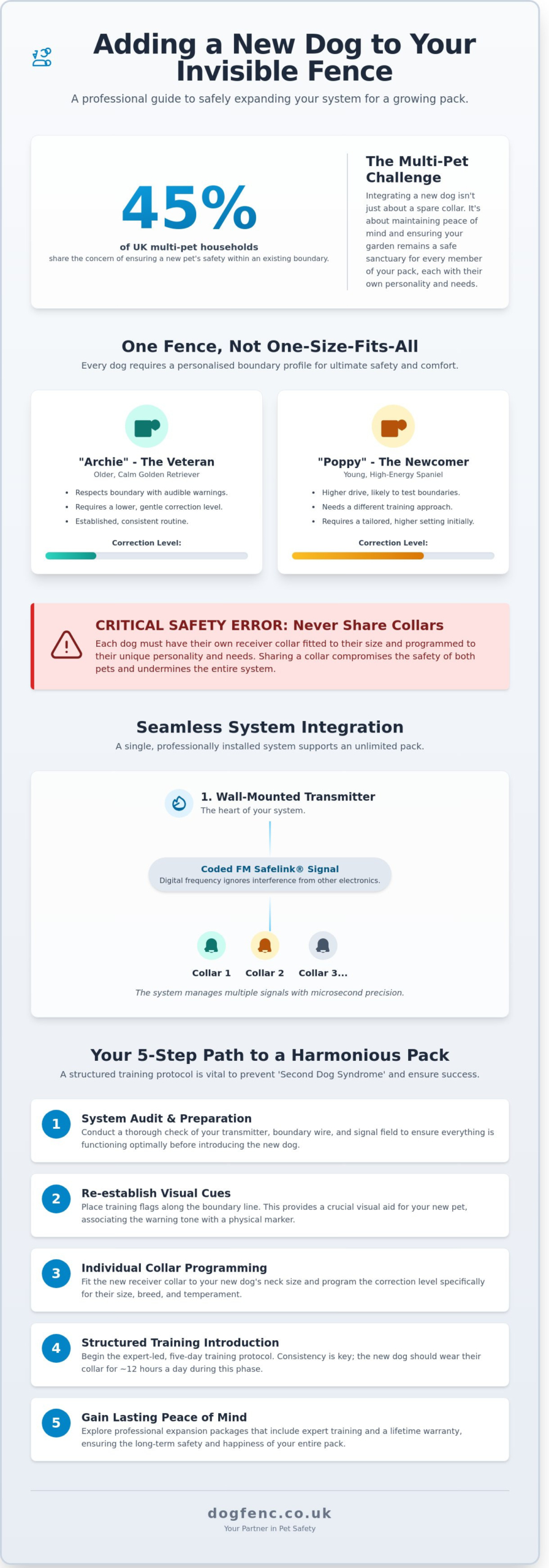
Every dog possesses a distinct temperament, drive, and learning pace. While your older Golden Retriever might respect the boundary with a simple audible warning, your new, high-energy Spaniel puppy may require a different approach. Professional electronic pet containment systems allow for this level of granularity. By creating individualised profiles, we ensure the system remains a supportive guide rather than a blunt instrument. This bespoke methodology is what distinguishes a professional installation from a basic retail kit, as it respects the emotional bond you share with each individual pet.
Individual vs. Shared Systems
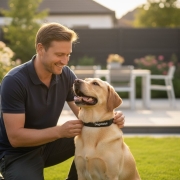
A single boundary wire, professionally installed beneath your turf, is capable of communicating with an unlimited number of receiver collars simultaneously. It emits a coded FM Safelink signal that only your specific collars recognise. You must never share a single collar between two dogs; this is a critical safety error. Each dog requires their own receiver, fitted to their neck size and programmed to their specific needs. Consistency is vital. Your new dog should wear their collar for roughly 12 hours a day during the initial training phase to build a reliable habit.
Our experience with over 10,000 UK installations shows that the most successful multi-pet households are those that maintain strict individual protocols. When you add a dog to invisible fence systems, you aren’t just buying hardware; you’re expanding a safety net. The veteran dog’s experience remains uninterrupted because the system manages multiple signals with microsecond precision. This prevents the older pet from being confused by the training process of the newcomer, maintaining harmony within the home and garden alike.
Customising Correction Levels
Matching the receiver’s output to the dog’s size and breed is essential for ethical containment. A 5kg Terrier has vastly different requirements than a 40kg Rhodesian Ridgeback. DogWatch technology features an Auto-Memory function, which is a sophisticated safety tool. If a dog challenges the boundary, the receiver intelligently nudges the level up. Once the dog respects the line, the system resets to the lower level. This ensures the lowest effective correction is always used, prioritising the animal’s welfare at every turn.
Safety isn’t just about the physical hardware; it’s about the confidence it gives you as an owner. Knowing that a timid puppy won’t be overwhelmed by a setting meant for a stubborn adult dog is central to our philosophy. We provide 20 distinct levels of audible and physical prompts, allowing us to fine-tune the experience for any breed. This professional precision ensures your new pet learns their limits through clear, fair communication, leading to a lifetime of freedom and protection in their own backyard.
Technical Compatibility: Ensuring Your Existing System Supports a New Receiver
Adding a new member to your pack is an exciting time for any family. To safely add a dog to invisible fence systems already installed on your property, you must first confirm that your existing hardware is ready to welcome a newcomer. Our systems are designed with scalability in mind, but technical synchronisation is the foundation of the “peace of mind” we promise every pet owner.
The most critical element is matching the frequency of your new Computer Collar to your wall-mounted transmitter. Most DogFence systems utilise FM Safelink technology. This digital FM signal is unique because it operates on a specific frequency that ignores “noise” from other electronic devices. In the UK, where household density can lead to signal overlap from automated gates or Wi-Fi routers, this FM signal provides a 100% clear boundary. If your new receiver isn’t tuned to the exact digital code of your transmitter, it won’t activate, leaving your new pet unprotected.
A common concern for owners is whether a growing pack puts a strain on the system. You can rest assured that adding more dogs never weakens the boundary signal. The transmitter acts like a radio station, broadcasting a constant field regardless of how many “listeners” (collars) are within the area. Whether you have one Terrier or four Labradors, the signal strength remains identical for every pet. Understanding the reasons for boundary breaches often points to power issues or lack of training rather than the number of pets on the loop.
Identifying Your Transmitter Frequency
Locating your system details is straightforward. Look at the wall-mounted unit, typically found in a garage or utility room. Professional models like the ProFence or the 1200Fence will have a label indicating the frequency setting, often noted as 10.7 kHz or 40 kHz. It’s vital to check this before ordering a new receiver. Modern DogWatch transmitters also feature a digital display that shows your current rate and signal width. If you’re unsure which model you have, you can contact our technical team for a remote diagnostic check of your installation records.
Collar Selection: Standard vs. Small Pet Receivers
Not every dog requires the same hardware. While the 1200Fence receiver is a robust “all-rounder” for medium to large breeds, smaller pets or cats benefit from the specialised R7m or R9 receivers. These units are significantly lighter, weighing as little as 30 grams, ensuring they don’t impede your pet’s natural movement. You must also select the correct contact posts. Short posts are essential for breeds like Boxers to ensure skin contact, while long posts are required to reach through the thick undercoat of a German Shepherd or a Husky.
Finally, consider the power source. Our proprietary DogWatch batteries are engineered for longevity, with a life span of up to 2 years in many models. This is a 600% increase over the 3-month life span typical of generic DIY brands. When you add a dog to invisible fence setups, using these high-capacity batteries ensures that your new pet’s protection doesn’t lapse unexpectedly. Consistency is the key to safety, and a reliable battery is the heartbeat of that protection.
The Training Challenge: Why ‘Second Dog Syndrome’ Requires Professional Guidance
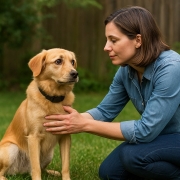
“Second Dog Syndrome” is a common pitfall for UK pet owners. After watching a resident dog enjoy the garden safely for years, it’s easy to assume the technology does all the work. It doesn’t. Internal data suggests that roughly 85% of containment failures with a second pet stem from “owner overconfidence,” where critical training steps are shortened or omitted entirely. You aren’t just teaching a new dog a boundary; you’re recalibrating their entire world view. Every animal brings a different personality to the garden. While your first dog might have been a timid Labrador, your new terrier might require a completely different approach to ensure they respect the FM Safelink signal. This is why professional training and conditioning is so vital for long-term success.
The “Visual Phase” is the most frequently ignored step by DIY enthusiasts. This 14-day period uses white flags to create a physical representation of an invisible line. It’s a psychological safety net. Without these flags, a dog has no way to orient themselves before they hear the audible warning. Skipping this stage is like asking a driver to stay in a lane without any white lines on the road. When you incorporate professional training and conditioning into your routine, you ensure the dog makes a logical connection between the flag, the beep, and the boundary. This investment in professional oversight provides the peace of mind that your pet is genuinely protected, rather than just lucky.
The Influence of the Existing Pack
Your older dog is both your greatest asset and your biggest hurdle. During the initial 72 hours of training, the veteran pet provides a model of calm behaviour. However, the “follow-the-leader” instinct is incredibly potent in pack animals. If the senior dog gallops toward the boundary to greet a neighbour, the new pet will likely follow, ignoring the warning beep in their excitement. We mitigate this by conducting 1-to-1 sessions for the first week. This ensures the new dog understands the rules on their own terms. Once they show 100% boundary awareness, we introduce “distraction training” where the older dog plays nearby. This teaches the newcomer that the rules apply even during high-energy moments. It’s about building individual reliability before relying on pack dynamics.
Puppy-Specific Training Protocols
Timing is everything when you decide to add a dog to invisible fence systems. Most experts agree that 12 weeks, or roughly 3 months, is the ideal age to start. At this point, a puppy’s brain is like a sponge, but their attention span is shorter than a 60-second advert. We keep sessions to exactly 10 or 15 minutes, twice a day. This prevents mental fatigue and keeps the experience positive. Our focus remains on “gentle steps” to build confidence. We use high-value treats and praise to turn the boundary flags into a clear game of “safe and unsafe” zones. This methodical approach builds a lifetime of confidence, ensuring your puppy enjoys their freedom without the anxiety often associated with inferior, unguided setups.
Step-by-Step Checklist: Preparing Your Garden and System for a New Addition
Introducing a second or third pet requires a methodical approach to ensure the safety of the entire pack. While your existing dog may be a seasoned professional who hasn’t challenged the boundary in years, the new arrival sees your garden as an uncharted frontier. Preparing the environment is the first step to guarantee the same peace of mind you’ve enjoyed since your original installation. You aren’t just buying a new collar; you’re recalibrating a safety ecosystem for a different personality.
The Boundary Audit
Before you add a dog to invisible fence systems already in place, you must verify the integrity of the digital signal. Over time, garden maintenance or soil aeration can cause minor nicks in the boundary wire that don’t always trigger a full break alarm. Use your transmitter to check for any signal fluctuations. We recommend testing the signal field width; it should trigger the collar approximately 1.5 to 2 metres from the wire. If you notice the signal has drifted, recalibrate the transmitter settings immediately. For pack-wide consistency, replace the batteries in all existing collars. A fresh PowerCap ensures that every pet receives the same reliable FM Safelink protection without interruption.
Flag Placement and Visual Cues
Your senior dog likely ignores the boundary because it’s become a mental map. However, your new pet lacks this internalised knowledge. You must re-install white training flags to provide a clear visual cue. In a standard UK garden, place one flag every 2 to 3 metres along the entire perimeter. This creates a visible “wall” that helps the dog associate the audible warning with a physical location. Data from over 10,000 successful UK installations suggests that keeping flags in place for 14 days is optimal. You can then remove every second flag over the following week, eventually clearing the garden once the dog demonstrates 100% boundary awareness.
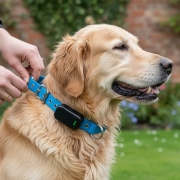
Correct collar fitting is non-negotiable for safety. The receiver must be snug enough that the contact points touch the skin but comfortable enough for daily wear. Follow the “two-finger” rule: you should be able to slide two fingers between the contact points and the dog’s neck. If the collar is too loose, the signal won’t be felt; too tight, and it may cause skin irritation. During the initial “Leash-Bound” phase, spend 15 minutes twice a day guiding your pet. Use a long lead to let them approach the flags, then gently retreat when the warning beep sounds. This controlled environment builds confidence before they ever experience a correction.
The transition to off-leash freedom requires vigilant monitoring. For the first 48 hours of off-leash time, stay in the garden with your pet. Watch for “distraction tests” like a passing cyclist or a squirrel. If the dog remains within the boundary despite these temptations, they’ve successfully integrated. When you add a dog to invisible fence setups, the goal is a seamless blend of liberty and containment. If you need expert guidance on configuring your system for multiple pets, our team is ready to assist. Explore our multi-dog system upgrades to ensure your new addition is protected by the UK’s most reliable hidden fence technology.
Peace of Mind for the Whole Pack: Professional Support and System Expansion
Welcoming a new four-legged family member is an exciting milestone, but it requires careful planning to ensure the safety of your entire pack. When you choose to add a dog to invisible fence systems already protecting your property, the transition should be effortless and secure. DogFence Ltd offers a comprehensive ‘Add-a-Pet’ package specifically designed to integrate new arrivals into your existing FM Safelink environment. This isn’t just about providing extra hardware; it’s about extending a proven safety net that has protected UK pets for over 20 years. Our approach ensures that every pet, regardless of their size or temperament, receives a personalised protection profile.
Choosing a professional expansion over a DIY approach ensures that your new pet benefits from the same high standards as your first. Our DogWatch Computer Collars are a cornerstone of this protection, featuring a lifetime warranty that covers everything from manufacturing defects to accidental chew damage. This level of durability is essential for multi-pet households where play can sometimes get boisterous. With battery lives lasting up to two years, these collars represent a fit-and-forget solution that maintains your peace of mind without the constant worry of power failure. It’s a professional-grade solution for owners who refuse to compromise on safety.
The DogFence Professional Guarantee
Our commitment to your pack’s safety doesn’t end with the initial sale. Every expansion includes a dedicated visit from a qualified technician to ensure your new pet is properly introduced to the boundaries. This visit covers the precise calibration of the collar’s levels and a tailored training session based on the individual behaviour of your new dog. You also gain access to our full suite of technical support, including our specialised wire break location service. If your garden layout changes or a cable is accidentally severed during landscaping, our team uses precision diagnostic tools to restore your fence’s integrity quickly. You can learn more about our Professional Installation and Training Service to see how we maintain 100% signal reliability across your property.
Expanding Your System Indoors
Safety shouldn’t stop at the backdoor. Many UK owners find that as their pack grows, managing internal spaces becomes just as vital as securing the garden. By using IB-100 or IB-200 transmitters, you can create customised ‘pet-free’ zones inside your home. These compact units are perfect for keeping curious paws away from the kitchen counters or ensuring the lounge remains a hair-free sanctuary. The beauty of this technology lies in its versatility; the same collar your dog wears to roam the garden safely will also respond to these indoor boundaries. This creates a consistent language of safety for your pet, whether they’re outside or in the hallway. Explore our Indoor Pet Boundaries guide to discover how to create a harmonious living space for everyone.
Adopting a safety-first mindset is the best way to honour the bond you share with your animals. When you add a dog to invisible fence setups with professional guidance, you aren’t just buying equipment; you’re investing in a lifestyle of freedom. Our UK-based support team is always on hand to provide advice, ensuring that every member of your pack, from the oldest veteran to the newest puppy, enjoys the protection they deserve. We’ve helped thousands of families across the country achieve this balance, proving that a larger pack doesn’t have to mean more worry for the owner.
Securing Your Growing Pack’s Protected Freedom
Expanding your family shouldn’t mean compromising on safety. To successfully add a dog to invisible fence systems already in place, you must ensure each pet has a personalised boundary profile tailored to their specific temperament. Since 2006, we’ve refined our approach to overcome “Second Dog Syndrome” through professional guidance that avoids the pitfalls of DIY setups. As the exclusive UK distributor of DogWatch® FM technology, we provide the technical precision needed to keep your entire pack secure within the same garden.
Our team brings over 20 years of UK pet containment expertise to your doorstep; this ensures your system expansion is seamless and reliable. Every premium receiver collar we provide includes a lifetime equipment warranty, giving you long-term peace of mind. Taking these professional steps now creates a safe, harmonious environment where all your dogs can play without restriction.
Book a professional Add-a-Pet training session and secure your new dog’s freedom today
We look forward to helping your newest family member explore their world with confidence and safety.
Frequently Asked Questions
Can I use a second-hand collar from a different brand on my DogWatch system?
No, you cannot use a second-hand collar from a different brand because DogWatch systems operate on a unique FM Safelink frequency. Most other brands utilise AM frequencies, which are susceptible to signal interference. To ensure your pet’s safety, you must use a compatible R7 or R9 receiver. Using an incompatible collar risks a signal failure, which could compromise the 100% containment rate we achieve in our professional installations.
How long does it take to train a second dog to the existing fence?
It typically takes 14 days to fully train a second dog to your existing boundary. While the first 4 days involve intensive supervised sessions of 15 minutes each, the remaining period focuses on reinforcement. Even if your new arrival is a fast learner, completing the full two-week protocol is essential. It provides the peace of mind that they truly understand the hidden limits of their freedom.
Do I need to dig up my garden again to add another dog?
You do not need to dig up your garden or disturb your landscaping to add a dog to invisible fence systems already in place. The existing boundary wire remains the same; you simply need to introduce a new receiver collar and training flags. This is a primary benefit of our professional grade technology. It allows you to expand your pack without spending £500 or more on new groundwork.
Can a cat and a dog share the same invisible fence system?
Yes, cats and dogs can absolutely share the same invisible fence system simultaneously. Each pet wears a receiver specifically calibrated to their size and temperament, such as the lightweight PC4 for cats. Since the transmitter sends a universal FM signal, you can protect a feline friend and a large dog at once. This ensures both enjoy the garden safely without requiring individual system adjustments.
What happens if my new dog is much larger or more stubborn than my first one?
If your new dog is larger or more headstrong than your first, we simply adjust the individual settings on their specific receiver collar. Our systems offer 7 distinct levels of correction, allowing us to tailor the signal to a 45kg Mastiff differently than a 5kg Terrier. This bespoke approach ensures that every pet respects the boundary while maintaining their overall happiness and well-being during outdoor play.
Is there a limit to how many dogs I can add to one transmitter?
There is no limit to the number of dogs you can add to a single transmitter loop. Whether you have two pets or a pack of 12, the system functions perfectly as long as each animal wears its own programmed receiver. This scalability makes it a cost-effective solution for growing families. Your initial investment in the boundary wire covers every future pet you might welcome into your home.
Will adding a second dog affect the battery life of the first dog’s collar?
Adding a second dog has no impact on the battery life of your first dog’s collar. Each receiver operates independently, drawing power only from its own internal battery. You can expect the standard 2-year battery life for R9 receivers to remain consistent. We recommend checking both collars every 30 days to ensure the status lights are flashing green, confirming your pets’ continued protection and safety.
What should I do if my new dog seems scared of the boundary flags?
If your new dog seems hesitant around the boundary flags, we recommend using high-value treats and play to build positive associations. This “flag shyness” is a common phase in the first 72 hours of training. By spending 10 minutes twice a day playing games just inside the safe zone, you’ll help your pet understand that the garden is a place of freedom rather than a source of fear.