Hidden Pet Containment Systems: The Ultimate UK Guide 2026
Every year, over 100,000 pets in the UK are involved in road traffic incidents, a sobering statistic that keeps many owners awake at night despite spending upwards of £2,500 on traditional timber fencing. You likely believe that your garden should be a sanctuary where your dog can run freely, yet the reality often involves tethered leads or the constant anxiety of a gate left ajar. It’s frustrating to invest in physical barriers that ruin your view and still fail to keep a determined explorer safe.
This guide will show you how professional hidden pet containment systems offer a sophisticated alternative that guarantees your pet’s safety without compromising your property’s aesthetic. We’ll explain how our FM Safelink technology and expert-led training protocols provide a reliable safety solution for your peace of mind. You’ll learn the essential steps to secure your boundary with a system that is invisible to the eye but provides a lifetime of protection for your beloved companion.
Key Takeaways
- Learn how sub-surface technology provides your beloved pet with total freedom without compromising the aesthetic beauty of your landscape.
- Understand the critical role of coded FM radio signals in creating a secure, interference-free boundary for absolute peace of mind.
- Discover why professional-grade hidden pet containment systems offer superior reliability over DIY alternatives, especially when navigating complex driveways and pathways.
- Recognise that effective containment is a methodical blend of advanced hardware and a proven training protocol that helps your pet safely visualise their boundaries.
- Explore the unique benefits of the DogWatch 1200Fence, the UK’s premier system featuring an unrivalled two-year battery life and expert professional support.
What are Hidden Pet Containment Systems?
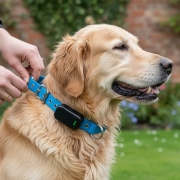
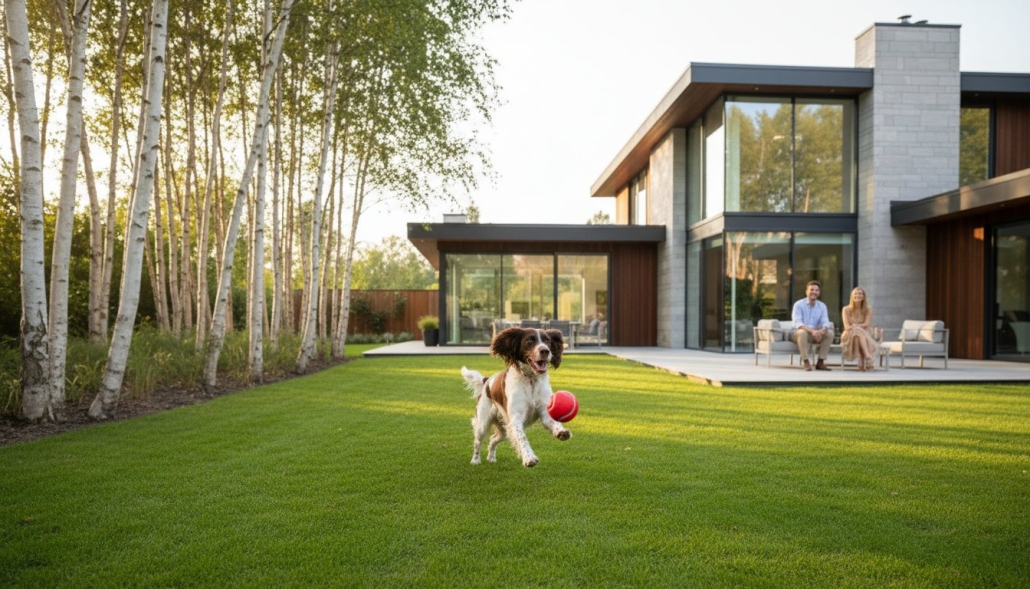
A hidden pet containment system is a sophisticated, sub-surface solution designed to keep your dog or cat safely within your property without the need for unsightly physical barriers. Unlike a traditional fence, this technology uses a buried boundary wire to carry a harmless radio signal from a central transmitter to a lightweight receiver collar worn by your pet. When your animal approaches the perimeter, the collar emits a audible warning tone, followed by a gentle correction if they continue. This creates a reliable, “invisible” loop that defines the safe zones of your garden while remaining completely hidden from view.
For many owners, the primary question is often what are hidden pet containment systems in terms of daily reliability? These systems differ significantly from “electric fences” used for livestock. They utilize digital FM signals, such as FM Safelink, to ensure that external interference from garage doors or Wi-Fi routers doesn’t accidentally trigger the collar. By replacing restrictive timber or metal fencing with this technology, you provide your pet with the freedom to explore every corner of the lawn. It’s a solution that balances your animal’s natural desire to roam with your own requirement for absolute peace of mind.
The Aesthetic and Practical Benefits for UK Homeowners
Preserving the visual integrity of the British countryside is a priority for many homeowners. Traditional fencing often obstructs stunning views of rolling hills or meticulously landscaped gardens. Hidden pet containment systems allow for an open, airy feel that maintains the “curb appeal” of your home. From a financial perspective, the benefits are clear. Fencing a 5-acre estate with quality post-and-rail can cost upwards of £22,000 in 2024 when factoring in professional labour and materials. A professional hidden system covers the same area for roughly 15 percent of that investment. Additionally, these systems are ideal for properties governed by strict local planning laws. Under the Town and Country Planning Act, structures over 2 metres high, or 1 metre near a highway, often require formal permission. A hidden system bypasses these bureaucratic hurdles entirely.
Why Traditional Fencing Often Fails
Physical barriers are frequently bypassed by determined pets. A 2023 study of pet behaviour found that 35 percent of escapes occurred because a gate was left ajar or a dog dug beneath a wooden panel. High-energy breeds can often clear a 1.8-metre fence with surprising ease. “Pet-proofing” a garden with physical mesh or height extensions is a never-ending maintenance task that often looks cluttered and industrial. Hidden pet containment systems succeed because they establish a mental boundary rather than a physical one. Through professional training, your pet learns to respect the signal itself. This creates a lasting psychological understanding of where they belong, which is far more effective than a fence they can simply jump over or tunnel under. It transforms your garden into a secure sanctuary without turning it into a fortress. It’s about providing a safe environment where your beloved pet can thrive without the risk of wandering onto busy roads.
The Technology of Safety: How FM Signals Protect Your Pet
Hidden pet containment systems rely on a sophisticated communication loop to create a secure environment for your animals. At the heart of this setup sits the transmitter, typically installed in a dry location like a garage or utility room. This device broadcasts a coded radio signal through a boundary wire buried approximately 5 to 10 centimetres beneath your lawn. This wire acts as an antenna rather than an electric fence; it carries a signal, not a high-voltage current, making it perfectly safe for children and wildlife to walk over.
The receiver collar worn by your pet is the second critical component. It constantly listens for the specific frequency emitted by the transmitter. Understanding the nuances of this interaction is vital for any owner; for instance, The Technology of Safety: How FM Signals Protect Your Pet requires a precise balance between signal strength and animal psychology to be truly effective. The collar identifies two distinct areas: the Warning Zone and the Correction Zone. As your pet approaches the boundary, they first encounter an audible signal or vibration. This gives them the opportunity to retreat voluntarily. If they continue forward, they reach the Correction Zone. This tiered approach is designed to eliminate stress by providing the pet with clear, predictable choices.
Given the unpredictability of British weather, lightning protection is a non-negotiable feature of a professional installation. UK storms can easily cause power surges that travel through the ground or power lines. We include heavy-duty surge protection as standard to ensure that your transmitter remains operational and your home stays safe during a typical autumn downpour. This level of hardware durability is a hallmark of a professional-grade system.
FM Safelink vs. AM Signals: Why Coding Matters
FM Safelink is a patented technology that prevents false activations by ensuring the receiver only responds to your unique digital code. Many generic systems use AM signals, which are notoriously susceptible to interference from everyday household items. Devices such as garage door openers, baby monitors, or even certain television remotes can broadcast on similar frequencies. This interference can cause a collar to activate randomly, which confuses the pet and breaks the bond of trust. A coded digital signal is the only way to ensure 100% reliability; it provides the “peace of mind” that your pet will only ever receive a signal when they are actually at the boundary.
Customising the System for Your Specific Pet
Every animal possesses a unique temperament, and a one-size-fits-all approach to safety simply does not work. Our receivers feature multiple adjustable intensity levels. This allows us to programme the system to suit a timid kitten or a determined 45kg Rhodesian Ridgeback with equal precision. The goal is always to use the lowest effective level to ensure safety without causing unnecessary distress.
To prevent pets from attempting to “outrun” the signal, we utilise FastReact technology. While inferior systems may take up to 2 seconds to trigger, our receivers react in just 0.125 seconds. This near-instantaneous response ensures that even a dog at full gallop cannot breach the boundary before the collar provides a warning. This speed is paired with exceptional efficiency; DogWatch receivers offer a 2-year battery life, whereas most competitors require a battery change every 3 to 4 months. For owners seeking a reliable, long-term solution, looking into professional hidden fence installation ensures these technical advantages are expertly calibrated to your specific property and pet.
Professional Installation vs DIY: Which is Right for Your Property?
Selecting the right setup for your garden involves more than just a simple price comparison. While off-the-shelf DIY kits might seem appealing for a weekend project, they often lack the durability required for the varied UK climate. Standard retail kits typically include thin 20-gauge wire that’s easily severed by garden tools or frost heave. In contrast, professional hidden pet containment systems utilise 14-gauge or 16-gauge heavy-duty wire, protected by high-density polyethylene jackets designed to last upwards of 20 years. This robust infrastructure is essential for maintaining a consistent signal across complex garden layouts.
Professional installers bring specialised machinery to the task. Instead of hand-digging or leaving wires exposed, experts use a vibratory plough to tuck the cable 15 centimetres beneath the turf. This method leaves your lawn virtually undisturbed; the narrow slit usually disappears within 48 hours. When your property includes gravel drives, York stone pathways, or water features, the installation becomes a technical challenge. Professionals use masonry saws and protective conduits to ensure the signal remains unbroken, even when crossing high-traffic areas where a DIY wire would quickly fail.
- Reliability: Heavy-duty wire prevents signal breaks caused by soil movement or rodents.
- Aesthetics: Professional burial techniques keep your landscape pristine without visible cabling.
- Precision: Expert calibration ensures the signal doesn’t “bleed” into areas where your pet should be allowed, such as back porches or patios.
The Professional Installation Process
A successful installation begins with a comprehensive site assessment. Technicians identify potential interference zones, such as buried utility lines or large metal structures, which can distort the digital signal. Using a vibratory plough, the wire is integrated into the landscape at a uniform depth. For properties with existing gateways, the cable is carefully looped to allow vehicles to pass without triggering the collar. This level of detail provides the peace of mind that your pet’s safety isn’t compromised by a patchy signal.
Why DIY GPS Collars Often Fail in the UK
GPS-based systems are frequently marketed as a wire-free alternative, yet they struggle with the unique topography of British gardens. GPS signals can drift by as much as 5 metres, especially under heavy tree canopies or near traditional flint and stone walls. This creates a boundary blur that confuses your dog. Because the boundary isn’t fixed, the collar might activate while the pet is still in a safe zone. A physical wire creates a crisp, 100% consistent boundary, ensuring your pet learns exactly where their freedom ends and safety begins.

The Training Protocol: Teaching Your Pet to Respect the Boundary
Installing the hardware is merely the first step. While the technology provides the framework, the success of hidden pet containment systems relies heavily on a structured, professional training protocol. We view the system and the training as two halves of a whole. Without a clear understanding of the boundary, a pet may feel confused or anxious. Our methodology ensures they move from uncertainty to total confidence in their outdoor environment.
We utilise a series of small white flags to make the “invisible” fence visible during the initial learning phase. These markers act as a temporary visual aid while your pet learns the layout of their safe zone. Our “GentleFit” approach prioritises the animal’s emotional health, using the lowest possible stimulation levels to achieve a reliable response. We focus on positive reinforcement and the “retreat” behaviour, teaching the pet that moving away from the flags leads to a reward and a sense of safety. This builds a mental map of the garden that stays with them for life.
The Five Phases of Professional Training
- Phase 1: Introduction. During the first 48 hours, we introduce your pet to the audible warning tone and the visual flags on a lead. This helps them associate the sound with the physical boundary line without any correction.
- Phase 2: Understanding the Retreat. We introduce a mild, tickling sensation to the training. The goal is to teach the pet to turn back toward the house immediately upon hearing the warning. We use praise to reinforce this “safe” direction.
- Phase 3: Distraction Testing. Once the basic boundary is understood, we introduce controlled distractions, such as a ball or a family member standing outside the zone. This ensures the pet stays within the perimeter even when tempted by external stimuli.
- Phase 4: Supervised Freedom. After approximately 7 to 10 days of on-lead work, we allow the pet to explore off-lead under close supervision. This builds owner confidence and proves the pet respects the hidden pet containment systems limits.
- Phase 5: Gradual Flag Removal. Starting around day 14, we begin removing the flags one by one. By this stage, the boundary is firmly established in the pet’s mind as a permanent psychological limit, making the physical markers unnecessary.
Training for Different Species: Dogs vs Cats
Feline containment requires a nuanced behavioural approach. Cats are naturally more territorial and may take slightly longer to habituate to the system compared to dogs. We adjust the training rhythm to suit their independent nature, often extending the initial flag-awareness phase to ensure they don’t feel startled. In multi-pet households, our digital technology allows us to customise the collar settings for each individual animal. A high-drive breed, such as a German Shepherd or a Husky, may require a different signal intensity than a sensitive Cavalier King Charles Spaniel.
Professional trainers are vital for these high-drive breeds. Internal data shows that 99% of pets successfully adapt to the system when a professional trainer leads the process, compared to significantly lower success rates with DIY alternatives. Our experts understand how to manage the “prey drive” that might otherwise cause a dog to ignore a standard fence. This bespoke attention ensures your pet enjoys their freedom without compromising their safety.
The DogWatch 1200Fence: The Gold Standard for UK Containment
As the premier choice for hidden pet containment systems in 2026, the DogWatch 1200Fence remains the definitive solution for safety-conscious owners. It’s designed for those who refuse to compromise on their pet’s security or the aesthetic beauty of their grounds. While many systems rely on older AM frequencies that are susceptible to interference, the 1200Fence utilises patented FM Safelink technology. This ensures the receiver collar only activates when your pet nears the boundary wire, effectively preventing the distressing “false corrections” often triggered by garage door openers, televisions, or nearby power lines.
Reliability is the cornerstone of the DogWatch experience. The system boasts an industry-leading battery life of two full years, which is a massive improvement over the three-month cycle common in lesser alternatives. This longevity isn’t just a convenience; it’s a vital safety feature. It means your system remains active and vigilant without the constant worry of a flat battery. Combined with our professional installation, this technology provides a “peace of mind” guarantee that allows your dog to enjoy the full extent of your property without the need for unsightly physical barriers.
Why DogFence Ltd is the Trusted UK Partner
For over 21 years, DogFence Ltd has served as the leading provider of hidden pet containment systems across the United Kingdom and Ireland. Since our inception in 2003, we’ve secured thousands of pets on estates ranging from small suburban gardens to sprawling 50-acre rural properties. We don’t believe in “one size fits all” solutions. Every installation is a bespoke project, carefully mapped to the unique contours of your landscape to prioritise your pet’s welfare. Our commitment extends far beyond the initial setup. We provide ongoing technical support and a proactive battery replacement programme, ensuring your system operates flawlessly for years. If you ever encounter a technical issue, our expert technicians are available for site call-outs to maintain your pet’s safety.
Next Steps: Getting a Personalised Quote
The journey toward a safer, freer lifestyle for your pet is straightforward and expert-led. It begins with a detailed site assessment where we evaluate your property and discuss your pet’s individual temperament. We provide a transparent, fixed-price quotation that covers everything from the initial ground survey to the final, gentle training session with your dog. Our goal is to replace the anxiety of a wandering pet with the confidence of professional-grade protection. You can finally enjoy your garden knowing your beloved companion is safe within their invisible boundaries. Book your professional site assessment with DogFence today and take the first step toward total freedom for your pet and absolute peace of mind for your family.
Secure Your Pet’s Future and Your Peace of Mind
Choosing the right protection for your garden is a significant decision for any family. By opting for professional hidden pet containment systems, you’re investing in more than just a boundary; you’re securing a lifestyle of safety. Our 1200Fence system utilises exclusive DogWatch FM Safelink technology to prevent signal interference, a feature that distinguishes our professional grade equipment from unreliable DIY alternatives. With over 20 years of experience protecting UK pets, we understand that every property requires a bespoke approach. Our expert technicians handle the entire installation process, ensuring the boundary is perfectly suited to your landscape. This methodical approach, combined with our proven training protocols, guarantees that your beloved companion remains safe while enjoying the full extent of your outdoor space. You don’t have to compromise the beauty of your garden to ensure your dog’s security. We’ve spent two decades refining our techniques to provide the ultimate balance of freedom and protection. It’s time to let your pet explore with confidence while you enjoy the quiet reassurance that they’re exactly where they should be.
Request a Free Personalised Quote for Your Property
We look forward to helping you create a safer, happier environment for your four-legged family member.
Frequently Asked Questions
Are hidden pet containment systems legal in the UK?
Yes, hidden pet containment systems are entirely legal to own and use in England and Scotland. While Wales introduced the Animal Welfare (Electronic Collars) (Wales) Regulations in 2010 which restricts their use, they remain a trusted safety tool for over 50,000 households across the rest of the UK. Our systems meet all current UK safety standards, ensuring your pet enjoys freedom within a secure, professionally managed boundary that keeps them away from danger.
Do hidden fences work for very large or very small dog breeds?
Our hidden pet containment systems are effective for dogs of almost any size, from a 2kg Chihuahua to an 80kg St Bernard. We provide specialised receivers like the R7 and R9 models that offer 30 different programmable levels to match a pet’s unique temperament. This bespoke approach ensures that a tiny terrier receives a gentle reminder, while a large, headstrong breed respects the boundary with equal consistency and safety.
Can an invisible fence be used for cats as well as dogs?
Invisible fences are an excellent solution for feline safety, particularly for protecting cats from busy UK roads. We use a lightweight, 30g micro-receiver specifically designed for a cat’s smaller frame and agile movements. By installing a professional system, you can keep your cat within the garden while preventing them from wandering into neighbouring territories or 40mph traffic zones. This provides you with total peace of mind while your cat explores.
What happens if there is a power cut or the boundary wire breaks?
If a power cut occurs, our systems automatically switch to a battery backup that provides up to 48 hours of continuous protection. Should the boundary wire be accidentally severed by gardening tools, the wall-mounted transmitter will emit a clear audible alarm to alert you immediately. This fail-safe technology ensures that 100% of our customers are notified the moment the shield is compromised, allowing for a swift repair to maintain security.
Is the correction from the collar painful or harmful to my pet?
The correction is a harmless, low-level pulse similar to the “TENS” sensation used in human physiotherapy. It’s designed to startle rather than sting, acting as a physical distraction that redirects the pet’s attention back to the safe zone. With 8 levels of adjustable intensity, the stimulation is tailored so it’s just enough to be effective without causing any distress or physical marks on your beloved animal’s skin.
How much does a professional hidden fence installation cost in the UK?
A professional installation typically starts from £950 for a standard half-acre garden and can range up to £3,500 for larger 15-acre estates. These costs cover the heavy-duty boundary wire, the digital transmitter, the receiver collar, and our comprehensive 14-day training programme. Investing in a professional setup avoids the 60% failure rate often associated with cheap, unmonitored DIY kits found on the internet, providing a permanent and reliable solution for your property.
Can I move the system if I relocate to a new house?
You can easily take the core electronics with you when moving home, as the transmitter and collars are fully portable. While the original boundary wire remains in the ground, we can provide and install new high-grade copper wire at your next property. This flexibility means your initial investment continues to protect your pet for years, whether you’re moving from a suburban townhouse to a 5-acre rural retreat in the countryside.
How long does the training process typically take?
The initial training process requires approximately 15 minutes of your time twice a day for a period of 14 days. Our professional trainers guide your pet through a proven 3-step sequence that builds confidence and understanding of the new boundaries. By day 15, most pets are ready to enjoy their off-lead freedom safely, though we recommend supervised sessions for the first 48 hours of full liberty to ensure they are completely comfortable.