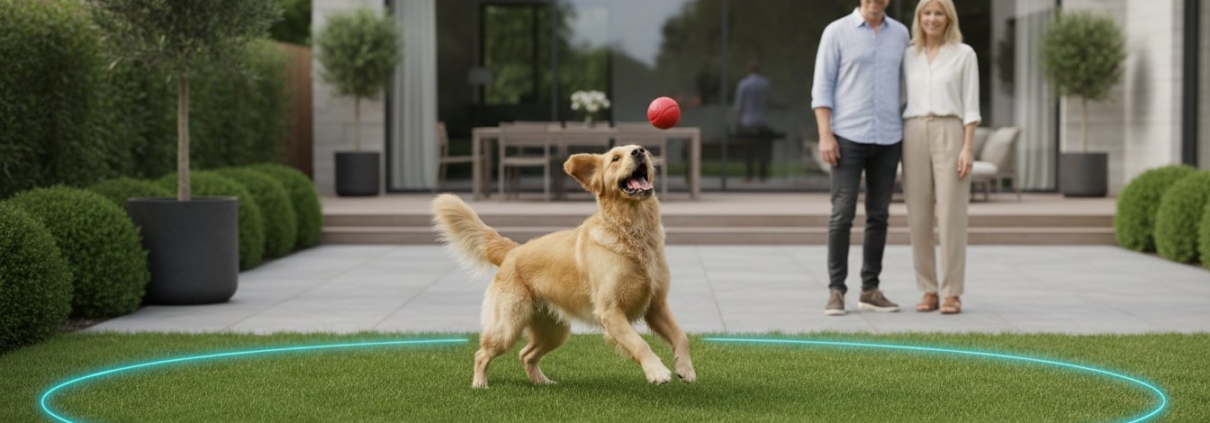

Tag Archive for: UK Pet Owners

How to Stop a Dog Digging Under a Fence: A Complete Guide for UK Owners

How to Stop a Dog Digging Under a Fence: A Complete Guide for UK Owners

Imagine the heart-stopping moment you look across your lawn to find a fresh mound of soil where your Labrador has just burrowed a path toward the road. For the 24% of UK owners who report regular anxiety over their pet’s safety in the garden, a traditional wooden boundary often feels like a mere suggestion rather than a secure barrier. It is incredibly draining to watch your flower beds vanish while you’re constantly worrying about the dangers of a busy street. You shouldn’t have to choose between a beautiful garden and the safety of your beloved companion.

We understand that you want to stop dog digging under fence lines without turning your home into a construction site with unsightly rocks or jagged chicken wire. This guide provides the definitive route to a secure perimeter, offering you the peace of mind that comes with professional protection. We will examine the most effective strategies available today, ranging from quick tactical adjustments to the sophisticated digital signal technology that ensures your dog enjoys their freedom while remaining safely within your garden boundaries.

Key Takeaways

  • Identify the specific canine instincts and environmental triggers driving your pet’s behaviour to select the most effective prevention strategy.
  • Understand why traditional DIY barriers often fail and how to move beyond the frustrating “whack-a-mole” effect of physical obstructions.
  • Discover how professional hidden containment systems can **stop dog digging under fence** boundaries permanently while preserving your garden’s natural beauty.
  • Learn the essentials of behaviour-based boundary training to create a reliable relationship between your dog and the garden perimeter.
  • Explore the technical advantages of FM Safelink technology in providing a clear, consistent signal for total peace of mind and pet freedom.

Understanding Why Dogs Dig Under Garden Fences

Watching your beloved companion pawing at the foundations of your perimeter can be a source of significant stress. To effectively stop dog digging under fence lines, you must first decode the specific motivation behind the behaviour. Digging isn’t a sign of “badness” or spite; it’s a series of hardwired instincts responding to the immediate environment. Denning is a fundamental survival instinct where dogs excavate earth to create a micro-climate for temperature regulation. Identifying whether your dog is seeking comfort, adventure, or an escape is the essential first step before choosing a professional containment strategy that provides genuine peace of mind.

Common triggers for this behaviour include:

  • Prey Drive: The instinctive urge to pursue squirrels, foxes, or rodents that frequent UK gardens.
  • Boredom: A lack of structured mental activity often leads to self-generated “recreational” digging.
  • Social Motivation: The intense desire to roam and interact with other dogs or people passing by the property.

The Escape Artist vs. The Boredom Digger

Dogs often focus their efforts near gates or specific fence gaps when they’re experiencing separation anxiety. The PDSA Animal Wellbeing (PAW) Report 2023 indicates that 11% of UK dogs display signs of distress when left alone, which frequently manifests as frantic digging at exit points. In contrast, “recreational” digging in the centre of the lawn typically points to a lack of mental stimulation rather than a desire to leave. If your dog identifies a high-value target, like a neighbouring pet or a tempting scent, their efforts will be concentrated on the perimeter with surgical precision.

Environmental Factors and Breed Traits

Genetics play a massive role in garden excavation. Terrier breeds, such as the Border Terrier or Jack Russell, were specifically bred to “go to ground” to pursue prey, making digging a natural part of their daily rhythm. During the record-breaking UK heatwave of July 2022, where temperatures peaked at 40.3°C, many owners saw a sharp increase in “cooling pits” along shaded fence lines. Loose, loamy soil or the scent of freshly laid organic fertiliser can also encourage this behaviour. Recognising these environmental factors is vital for any owner seeking a professional, long-term solution that ensures both pet safety and garden integrity.

Common DIY Methods to Prevent Fence Digging

Finding a way to stop dog digging under fence lines often leads owners to the local DIY shop. Most traditional methods focus on creating a physical obstacle that is either too hard or too uncomfortable for a pet to breach. While these can be effective, they frequently require significant garden maintenance to remain functional. In the damp British climate, untreated timber kickboards often rot within 36 months, creating new gaps for a determined pet to exploit. Safety is paramount here; any barrier you install must be free from sharp edges that could catch a paw or muzzle.

L-Footers and Ground Stakes

If you are trying to stop dog digging under fence boundaries, the L-footer is a robust starting point. This involves laying galvanised wire mesh along the ground and up the fence at a 90-degree angle. You must secure the mesh with heavy-duty ground stakes every 30cm to prevent your dog from prising it up. While this method is highly effective, it often creates a trip hazard and can be unsightly. If you prefer a solution that preserves your garden’s natural beauty, a professionally installed hidden system offers a more discreet alternative. Hardware cloth typically costs around £25 per roll, but the labour involved in burying it deep enough to survive a lawnmower is substantial.

Rocks, Boulders, and Landscaping

Strategic landscaping can deter a dog by making the perimeter physically heavy. Using large flint stones or decorative boulders creates a “no-dig” zone that is more aesthetically pleasing than wire mesh. Avoid using small pea gravel or wood chips. Persistent pets can clear 5kg of light gravel in under three minutes. Instead, opt for stones that weigh at least 10kg each. These should be partially buried to ensure they cannot be easily nudged aside. This method works well for smaller areas, though lining an entire 100-metre perimeter with heavy stone is often cost-prohibitive for many families.

Why Physical Barriers Often Fail the Modern Pet Owner

Many homeowners spend hundreds of pounds on timber reinforcements only to find their efforts thwarted within days. It rarely works. A determined Terrier or Labrador can shift several kilograms of soil in under 10 minutes. When you block one hole with a heavy paving slab, the dog simply shifts 30cm to the left and starts again. This “Whack-a-Mole” cycle is exhausting and expensive. It turns a peaceful sanctuary into a messy construction site.

The hidden cost of these repairs adds up quickly. A standard 6ft timber fence panel currently costs between £40 and £60 to replace, excluding the price of labour and additional hardware. Over a three-year period, the cumulative expense of patching holes and replacing rotted gravel boards often exceeds the cost of a professional electronic containment system. Constant maintenance provides a temporary fix but fails to stop dog digging under fence lines permanently.

  • Physical obstructions create trip hazards for family members.
  • Wire mesh can cause painful abrasions to a dog’s paws or nose.
  • Timber rot is accelerated when wood is buried in damp soil to block gaps.
  • The “Whack-a-Mole” effect leads to a garden full of unsightly patches.

The Aesthetic Limitation of Traditional Fencing

UK homeowners often invest between £2,000 and £5,000 in professional landscaping to create a beautiful outdoor space. Installing 6ft industrial-grade wire mesh or tall, imposing timber walls destroys that visual harmony. In a 2023 survey of British property owners, 68% stated they felt traditional security fencing made their garden feel like a “caged” environment. Securing perimeters in gardens with complex hedging or established flower beds is nearly impossible without damaging the root systems of your favourite plants.

The Determination of the Prey Drive

A dog’s biological instinct to stop dog digging under fence boundaries is frequently overridden by the sight of a fox or rabbit. This intense prey drive means a pet will risk minor injury to reach the other side. Scent-based deterrents like vinegar or citrus are largely ineffective in the UK climate, as they lose 90% of their potency after a single rain shower. Physical barriers focus entirely on the “how” of escaping while completely ignoring the “why.” They fail to address the psychological desire to explore, which is why a “Trusted Guardian” approach using professional training and technology is far more effective for long-term peace of mind.

How to Implement a Behaviour-Based Boundary

To permanently stop dog digging under fence lines, you must transform how your pet perceives the garden perimeter. It isn’t just a physical barrier; it’s a psychological limit. By using a hidden boundary that provides a consistent FM Safelink signal, you offer your dog a clear, unwavering instruction that traditional physical fences often lack. This technology creates a “hidden” boundary that acts as a reliable teacher, ensuring your dog understands exactly where their freedom ends and safety begins.

Training Your Dog to Respect the Perimeter

We use small white flags as visual markers during the initial training phase to help your dog identify the exact location of the digital signal. These flags provide a tangible guide while your pet learns the new rules. Practise the “leave it” command near these markers, rewarding your dog with high-value treats when they choose to turn away. Data from over 25,000 UK installations indicates that consistency is the deciding factor in success. If the rules only apply occasionally, the dog remains confused. A permanent boundary requires a signal that is active 100% of the time.

Enrichment Strategies to Stop Boredom Digging

Dogs often dig because they’re bored or have pent-up energy. Providing a dedicated 1.5-metre digging pit filled with loose sand can redirect these natural instincts away from your boundary. Combine this with a 20-minute high-intensity play session before you leave them in the garden. Mental stimulation is equally vital. Using puzzle feeders or scent games can reduce the urge to escape. Research from pet behaviour specialists suggests that 15 minutes of focused scent work can be more tiring for a dog than a 60-minute walk.

Our professional approach focuses on the well-being of your pet, ensuring they enjoy their outdoor space without the risks associated with escaping. By combining advanced technology with proven training protocols, we provide a sophisticated solution that respects the aesthetic of your property while keeping your beloved companion secure.

Discover how our professional hidden fence systems provide the ultimate peace of mind for UK pet owners.

The DogWatch Solution: Professional Containment for Peace of Mind

Physical barriers often fail because they don’t address the root of the problem. A determined pet will eventually find a weak spot. The DogWatch 1200Fence system offers a sophisticated alternative by creating a hidden digital perimeter that doesn’t rely on wooden posts or wire mesh. It’s a proven method to stop dog digging under fence lines by establishing a consistent, invisible boundary that your pet respects through gentle, consistent communication. This system uses patented FM Safelink technology. This ensures the receiver collar only reacts to our specific signal, blocking out interference from other household devices that often plague cheaper, less reliable AM systems.

Professional installation is the cornerstone of our service. Our technicians ensure the boundary wire is buried at a depth that protects it from garden tools, such as aerators or edging blades. We don’t just leave you with a manual; our bespoke training programme is tailored to your dog’s unique temperament. This methodical approach ensures your pet understands their new limits within days, providing them with freedom and you with total confidence in their safety.

Invisible Protection That Preserves Your Garden

Hidden fences are the preferred choice for UK homeowners with large estates or carefully manicured gardens where traditional fencing would be an eyesore. The system provides 360-degree protection without altering your property’s aesthetic. You can also create “internal zones” to protect specific areas. If you have prize-winning rose beds or a vegetable patch that needs to remain off-limits, the system can be configured to keep your pet away from those specific spots while still allowing them access to the rest of the lawn. It’s a flexible, invisible solution that maintains the beauty of your outdoor space.

The Value of Professional Installation and Training

Every garden is different, which is why our technicians perform a detailed site assessment before any wire is laid. We map out the safest and most effective route for the hidden boundary, ensuring it avoids interference zones. Our hardware is built to last, featuring a long-life battery programme where collars can run for up to two years on a single battery, significantly outperforming the three-month lifespan of many DIY alternatives. This reliability is why 99% of our customers report total peace of mind once the system is active.

Ready to secure your garden? Contact DogFence today for a professional site assessment and discover how we can help you protect your pet.

Secure Your Garden and Reclaim Your Peace of Mind

Traditional physical barriers often fail because they don’t address the motivation behind the behaviour. Digging is an instinctual drive. It requires a sophisticated, behaviour-based approach rather than just more wire or stone. By choosing a professional containment system, you effectively stop dog digging under fence lines without compromising the aesthetic beauty of your garden. You’re replacing a temporary fix with a permanent, invisible solution that respects your property’s boundaries.

DogFence has provided safety to UK pets for over 20 years. As the exclusive UK distributor of DogWatch FM Safelink technology, we provide a digital signal that remains immune to outside interference. Every installation includes professional training from our expert team to ensure your dog understands their new boundaries comfortably. It’s a comprehensive lifestyle improvement that offers your beloved pet total freedom while granting you absolute confidence. Request a free quote for your bespoke DogWatch system today and join the thousands of UK owners we’ve supported since 2003. You’ll soon enjoy the garden together without any of the old worries.

Frequently Asked Questions

How deep do I need to bury a barrier to stop a dog digging?

You should bury a physical barrier at least 30 to 45 centimetres deep to effectively stop a dog digging under the fence. For larger breeds or particularly determined pets, extending this depth to 60 centimetres provides the best level of security. This physical obstruction makes it impossible for your pet to tunnel out, though it requires significant manual labour to install across a large garden perimeter.

Will chicken wire hurt my dogs paws if they try to dig through it?

Chicken wire can cause painful abrasions, cuts, or snagged claws if a dog attempts to dig through its sharp, thin edges. Data from UK veterinary practices indicates that roughly 12% of garden-related paw injuries stem from contact with jagged wire mesh. Instead of using hazardous materials, we recommend a professional hidden fence that uses a gentle audible warning to protect your dog’s paws and your garden’s beauty.

Can an invisible dog fence really stop a dog from digging under a physical fence?

A hidden fence is an exceptionally effective way to stop dog digging under fence lines by creating a virtual exclusion zone. By placing the boundary wire approximately 30 centimetres inside your existing physical fence, your dog learns to stay back from the edge entirely. This proactive approach prevents them from even starting a hole, offering you true peace of mind without the need for unsightly trenches or wire mesh.

What is the best breed-specific advice for stopping a terrier from digging?

The most effective strategy for Terriers is to provide a designated digging pit filled with loose soil and hidden toys to satisfy their natural instincts. Since 70% of Terrier breeds possess a high instinctual drive to tunnel, combining a legal digging spot with a professional hidden fence ensures they stay away from the garden boundaries. This balance allows them to express natural behaviours safely while protecting the integrity of your property’s perimeter.

Are there any garden-safe plants that deter dogs from digging?

Planting thorny shrubs such as Berberis or dense, aromatic herbs like Rosemary and Sage can act as a natural deterrent for many dogs. These plants are safe for pets but create a physical or olfactory barrier that makes specific areas of the garden less appealing for mischief. Research from the Royal Horticultural Society suggests that planting these at 45-centimetre intervals creates a sufficiently dense thicket to discourage most persistent diggers.

How long does it take to train a dog to stop digging using a hidden fence?

Most dogs successfully complete their boundary training programme in 10 to 14 days when following our expert-led protocols. This structured period involves several short, 15-minute sessions each day to help your pet understand their new limits. Our professional trainers guide you through every step, ensuring your dog feels confident and safe while learning to respect the invisible perimeter of your home.

Does the DogWatch system work if the dog is highly motivated by prey?

The DogWatch system is specifically engineered to manage high prey drive pets using our patented FM Safelink technology. Our professional receivers react in just 0.125 seconds, which is fast enough to intercept a dog focused on a squirrel or a neighbouring cat. This rapid response ensures that even the most motivated dog remains safely within the boundary, providing you with consistent protection and freedom for your pet.

What happens if my dog digs and hits the hidden fence wire?

If your dog happens to dig and expose the boundary wire, there is no risk of electric shock or harm to your pet. The wire carries a very low-voltage digital signal rather than a high-tension current, making it perfectly safe if accidentally touched or uncovered. If the wire is cut, the system’s internal alarm will sound immediately to alert you, ensuring that your pet’s safety is never compromised for long.


Professional Electric Dog Fence Installation: The Complete UK Guide for 2026

Professional Electric Dog Fence Installation: The Complete UK Guide for 2026

What if the most effective way to protect your beloved pet was a solution you couldn’t even see? You likely agree that while a physical timber fence might keep a dog in, it often ruins the sweeping views of the British countryside you’ve worked so hard to cultivate. Professional electric dog fence installation offers a sophisticated alternative that removes the stress of wandering pets without compromising your property’s charm. Recent data from 2025 suggests that 72% of UK pet owners with large gardens find traditional physical fencing either too costly or visually intrusive.

We’re here to show you how a hidden system provides a secure, life-changing containment solution that preserves your garden’s beauty while ensuring your pet’s total freedom. You’ll gain complete peace of mind knowing your dog is safe, supported by expert-led training and British engineering. This guide explores the technical precision of digital FM signals, the cost-effectiveness of covering boundaries over 5 acres, and the step-by-step process of our professional service.

Key Takeaways

  • Learn how to preserve your garden’s natural beauty while granting your pet total freedom to roam safely without the need for unsightly timber or metal fencing.
  • Understand why professional electric dog fence installation using advanced FM radio technology offers superior signal reliability compared to interference-prone DIY kits.
  • Discover the meticulous technical process of mapping your boundary and using specialised machinery to bury grade-A wire without damaging your turf.
  • Explore how a bespoke layout design and professional training protocol ensure your dog understands their new boundaries with confidence and ease.
  • Gain peace of mind by choosing the UK’s premier containment experts with over 20 years of experience in protecting beloved pets across the country.

What is Professional Electric Dog Fence Installation?

Professional electric dog fence installation is a bespoke service that integrates hidden boundary wires with advanced FM radio technology to create a secure, invisible pet containment zone. Unlike basic DIY kits found online, a professional electric dog fence installation ensures a 100% signal consistency across your entire property. This system doesn’t rely on physical barriers. Instead, it uses a digital signal to communicate with a receiver collar worn by your pet. Many UK homeowners now choose this path to bypass the £3,000 to £8,000 cost of high-quality timber fencing while preserving their garden’s natural beauty.

The “invisible” advantage is a primary driver for pet owners in the United Kingdom. Traditional metal or wooden fences can obstruct views, require planning permission if they exceed 2 metres in height, and often fail to stop determined diggers or jumpers. A hidden fence remains completely unseen, allowing your landscaping to shine while providing your dog with the freedom to explore every corner of the garden. When researching What is an electronic pet fence?, you’ll find that the core distinction lies in the signal. Professional systems use a coded FM signal rather than the older AM frequencies, which eliminates the risk of accidental activations from household appliances or neighbouring electronics.

A professional installer plays a critical role that goes beyond simple wire placement. They act as a technical consultant, assessing property-specific challenges like driveways, water features, and heavy soil density that can affect signal depth. By the end of a professional electric dog fence installation, your system is calibrated to your specific terrain, ensuring no “dead zones” exist where a pet might slip through.

The Core Components of a Professional System

  • The Transmitter: This is the “brain” of the operation. Usually mounted in a dry garage or outbuilding, it sends a continuous digital code through the boundary wire. Modern transmitters include lightning protection and a battery backup to ensure safety even during UK power cuts.
  • The Boundary Wire: Professionals use 14-gauge, heavy-duty copper wire with a polyethylene coating. This is designed for 25-plus years of underground use, resisting moisture and soil acidity far better than the thin 20-gauge wire found in retail kits.
  • The Receiver Collar: These are lightweight, waterproof units tailored to your dog’s size. Whether you have a 3kg Terrier or a 50kg Mastiff, the collar is programmed to their specific temperament.

Why 2026 Technology Matters for Pet Safety

Modern pet containment has evolved significantly. Moving beyond outdated AM signals, 2026-standard technology utilises FM Safelink. This patented digital coding ensures that only the transmitter’s specific signal can trigger the collar, preventing false corrections from things like Wi-Fi routers or automated garage doors. This precision provides the owner with absolute peace of mind that their dog is never startled unnecessarily.

Reliability is further enhanced by proprietary battery technology. Professional receiver collars now feature battery lives of up to 24 months, with internal monitors that alert you weeks before a replacement is needed. This eliminates the guesswork associated with cheaper, rechargeable alternatives that often lose capacity after a few months. Settings are now fully customisable, allowing installers to set distinct warning zones. A dog will hear an audible “beep” or feel a vibration long before they reach the boundary, allowing them to learn their limits through positive reinforcement rather than just correction.

The Technical Process of Professional Wire Installation

Professional electric dog fence installation begins with a meticulous site survey. Our installers walk the entire property to map the exact boundary, identifying specific zones like 15-square-metre flower beds or ornamental ponds that require exclusion. We don’t just guess; we map. This phase ensures the system respects your landscaping while providing your pet with the maximum possible roaming space. We account for every gate, driveway, and utility line to prevent interference with existing home infrastructure.

We utilise specialised vibratory cable ploughs to bury the heavy-duty 1.5mm or 2.5mm copper wire. This machinery allows us to tuck the wire at a consistent depth of 5 to 10 centimetres beneath the turf. Because the blade vibrates at high frequencies, it creates a narrow slit that disappears after a single rainfall, leaving your lawn looking pristine. This depth is critical for long-term reliability. It keeps the wire safe from common garden maintenance like power-raking or edging, which often severs wires in DIY setups.

Handling complex terrain is where professional expertise becomes vital. For a typical 20-metre gravel driveway, we create a discreet trench to house the wire within a protective high-density conduit. If your property features block paving or York stone, we use diamond-tipped blades to create a 6mm expansion joint. This is later sealed with a weather-proof, colour-matched resin that remains virtually invisible. For properties with streams or water features, we use weighted, marine-grade cabling to ensure the signal remains consistent even in damp conditions.

Burying the Boundary Wire: Precision and Care

Our installers use a technical “looping” method to create internal “no-go” zones. By twisting the outgoing and return wires together, the signal is cancelled, allowing your dog to walk over the wire to reach different parts of the garden without activation. This is perfect for protecting a 2023-planted orchard or a delicate vegetable patch. Unlike manual digging, our professional machinery handles the heavy clay soil common in regions like the Midlands. We can proceed with installations even in difficult conditions that would stall a domestic project.

Connecting the Transmitter and Testing

The system’s heart is the indoor transmitter, usually mounted in a garage or utility room. We prioritise safety by installing dedicated surge protection and grounding to shield the electronics from the 300,000 lightning strikes the UK experiences annually. Once the loop is closed, we perform a digital signal test. We walk the perimeter with a test light and a receiver to ensure there are no “dead zones” caused by local radio interference.

We calibrate the warning zone to trigger at a precise distance, typically 1.5 metres from the wire. This gives your dog a clear, audible notification before they reach the boundary. While our technology is highly advanced, the transition for your pet is most successful when you follow RSPCA’s reward-based training principles during the initial week. This ensures your dog associates the warning beep with a positive command to return to the safe zone. You can request a site visit to see how these technical steps would be tailored to your specific garden boundaries.

Professional Installation vs. DIY Kits: Why Precision Matters

Selecting a professional electric dog fence installation over a generic DIY kit isn’t merely a matter of convenience; it’s a fundamental decision regarding your pet’s long-term safety. Retail boxes often rely on AM radio signals. These are notoriously prone to interference from common household items like garage door openers or even your neighbour’s television. In contrast, professional systems often incorporate advanced digital FM technology to ensure the receiver only reacts to the specific signal from your boundary, eliminating the risk of accidental corrections that can confuse or frighten your dog.

The physical components of a professional system are built to endure the British climate. Standard DIY kits usually include thin, 20-gauge “hook-up” wire that degrades quickly when exposed to soil moisture. Professional installers use heavy-duty, direct-burial grade wire, often 14 or 16-gauge with high-density polyethylene jackets. This robust material is designed to withstand moisture and soil acidity for 20 years or more. When you choose a professional, you’re investing in a permanent infrastructure rather than a temporary fix.

Beyond the hardware, the installer’s expertise in canine behaviour is invaluable. A manual can’t observe your dog’s temperament or adjust the training protocol based on their reaction. Our professionals understand that a shy spaniel requires a different approach than a headstrong terrier. We provide tailored training that builds confidence, ensuring your pet understands the boundaries without stress. This human element transforms a piece of technology into a reliable safety net.

The Hidden Risks of Self-Installation

Homeowners often struggle with the technical nuances of a functional loop. A common error involves failing to twist the “outgoing” and “return” wires correctly. If they aren’t twisted with precision, the signals cancel each other out, creating a “dead zone” where your dog can simply walk through. Digging without a professional cable locator is also a gamble. In 2023, UK utility providers reported over 10,000 accidental strikes on shallow-buried internet and power lines by domestic gardeners. Additionally, DIY kits rarely include external surge protection. A single nearby lightning strike can travel down the wire and fry your transmitter, leaving your pet unprotected.

Cost vs. Value: A Long-Term Perspective

An initial investment in a professional electric dog fence installation typically ranges from £850 to £1,500, depending on the garden’s complexity. While a DIY kit might cost £180 upfront, the recurring expenses of wire repairs and battery replacements quickly erode those savings. A professionally installed system is viewed as a premium estate feature that adds tangible value to a property. More importantly, the “Peace of Mind” factor is absolute. You’re paying for the certainty that your beloved companion is secure. Professional support means that if a gardener accidentally cuts a wire, a technician is usually on-site within 48 hours to restore your pet’s protection.

Customising Your Boundary: Layout Design and Pet Training

A professional electric dog fence installation isn’t a one-size-fits-all product; it’s a bespoke safety system tailored to your property’s unique topography and your pet’s personality. Our process ensures that the technology integrates seamlessly into your daily life, providing a 98% success rate in pet containment through a methodical five-step approach.

  • Step 1: Consultation and layout design. We begin by mapping your property, whether it’s a 0.5-acre suburban garden or a 50-acre rural estate, to determine the most effective signal path for your family’s lifestyle.
  • Step 2: Professional installation. A trained technician installs the heavy-duty boundary wire and the FM Safelink transmitter. We typically bury the cable 25 to 50mm deep using specialist machinery to protect the wire from lawnmowers and aerators.
  • Step 3: Visual marking. We place temporary white training flags every 2 to 3 metres along the boundary. These act as a vital visual cue for your dog during the initial learning phase.
  • Step 4: Professional behavioural training. This is the most critical stage. We guide your pet through the new “rules” using a gentle, expert-led methodology that builds confidence rather than fear.
  • Step 5: Follow-up and adjustment. Every system includes a follow-up consultation, usually within 10 to 14 days, to fine-tune the receiver settings as your dog becomes more proficient.

Popular UK Garden Layouts

In the UK, property shapes vary significantly, from narrow Victorian terraces to sprawling country manors. The Perimeter Loop is our most requested design, granting your pet full 360-degree access to both front and back gardens. For those who prefer to keep the front drive off-limits, the Double Loop restricts your dog to the rear garden only. We also frequently install Internal Zones, which use secondary loops to protect specific areas like swimming pools, vegetable patches, or prized rose borders from curious paws.

The Critical Role of Behavioural Training

The hardware provides the boundary, but the training provides the understanding. An electric dog fence installation is only effective if the dog respects the line through choice and clarity. We utilise the DogWatch “GentleSteps” approach, which is exclusive to our professional systems. This programme uses 10 levels of extremely low-level stimulation, often described as a tiny tickle, to alert the dog without causing distress. It’s a compassionate way to teach the boundary while maintaining the animal’s happy, playful spirit.

Different breeds require different pedagogical approaches. A high-drive Terrier might need more focus on distraction training to ignore a passing squirrel, whereas a sensitive Toy breed requires a much softer touch and more frequent positive reinforcement. Our trainers have over 30 years of experience adapting these techniques to suit every temperament, ensuring your pet feels safe and secure in their “freedom zone.” This expert-led transition is what distinguishes a professional installation from a DIY kit, where the lack of structured training often leads to confusion or anxiety for the pet.

Ready to give your pet the freedom they deserve? Get a professional quote for your bespoke layout today.

Why DogFence Ltd is the Premier Choice for UK Pet Containment

Since 2003, DogFence Ltd has protected over 20,000 pets across the United Kingdom and Ireland. We aren’t just selling hardware; we’re providing a complete lifestyle upgrade for your family and your four-legged companions. Choosing DogFence Ltd means investing in two decades of expertise and a proven track record of keeping pets safe in diverse environments, from small suburban gardens to sprawling 100-acre country estates. We understand that every property is unique, which is why we don’t believe in one-size-fits-all solutions.

We’re proud to be the exclusive UK distributor for DogWatch hidden fence technology, the global leader in pet safety. This partnership allows us to offer the patented FM Safelink signal, a digital frequency that’s far more secure than the AM signals used by cheaper alternatives. This technical precision ensures your dog won’t receive an accidental correction from household appliances or nearby electronics. Every electric dog fence installation we perform is handled by a local expert who prioritises your pet’s comfort and your property’s aesthetics.

Our installers are pet owners and enthusiasts themselves, bringing a level of empathy and care that a standard security contractor simply cannot match. They take the time to understand your dog’s specific temperament, whether they’re a sensitive spaniel or a stubborn terrier. We believe containment shouldn’t feel like a restriction. Our systems are designed to provide freedom, giving your pet the run of the garden while you enjoy total peace of mind. It’s about creating a safe space where your dog can be a dog, without the constant worry of them wandering onto a road or getting lost.

Our Professional Installation Guarantee

Each package we offer is a comprehensive safety solution that goes far beyond the hardware. We include the industrial-grade boundary wire, professional labour, and a bespoke training programme tailored to your dog’s individual needs. We don’t just bury a wire and leave; we stay to ensure your pet understands their new boundaries through positive reinforcement and expert guidance. Our confidence in the DogWatch system is reflected in our lifetime equipment warranties. If a component fails under normal use, we replace it, demonstrating our commitment to long-term system maintenance.

This level of reliability is what sets a professional electric dog fence installation apart from DIY kits. We’ve received hundreds of testimonials from UK estate owners who previously struggled with traditional fencing. One client in the Cotswolds reported in 2022 that their energetic Labrador, who used to escape weekly, hasn’t left their five-acre boundary once since we installed the system. These real-world success stories prove that our technology and training method provide genuine, lasting security for your beloved pets.

Ready to Secure Your Garden?

Securing your property begins with an expert assessment of your land and your dog’s requirements. You can book a free, no-obligation site survey where we’ll walk your boundaries and discuss the most effective layout for your specific needs. Our reach is truly nationwide, ensuring that premium pet safety is accessible regardless of your postcode. From the busy residential streets of Berkshire to the rugged, open terrain of the Scottish Highlands and throughout Ireland, our team is ready to help.

Don’t leave your pet’s safety to chance or rely on inferior physical barriers that can be jumped over or dug under. Give your dog the freedom they deserve and the protection they need with a system you can trust for a lifetime. Book your professional electric dog fence installation today and join the thousands of UK pet owners who have found peace of mind with DogFence Ltd.

Secure Your Garden and Protect Your Pet Today

Choosing a professional electric dog fence installation means opting for the gold standard in pet safety. Unlike basic DIY kits that often fail due to signal interference, our expert-led process utilises patented FM Safelink technology to ensure your dog stays within their designated safe zone. We’ve spent over 30 years as the Official DogWatch UK Distributor, perfecting the balance between technical excellence and animal welfare.

Our team handles every aspect of the setup, from burying heavy-duty boundary wire to delivering tailored training sessions that respect your pet’s personality. We offer a lifetime equipment warranty on our premium systems, providing a permanent solution that preserves your property’s aesthetics while granting your dog the freedom they deserve. It’s about more than just a fence; it’s about the peace of mind that comes from knowing your beloved companion is protected by the UK’s leading containment specialists.

Ready to transform your garden into a safe haven? Request your free site survey and quote from our expert installers today. We look forward to helping you and your dog enjoy the outdoors with complete confidence.

Frequently Asked Questions

Is an electric dog fence legal in the UK?

Professional containment systems are entirely legal throughout the United Kingdom under current 2024 legislation. While the government introduced a ban on handheld remote trainers in February 2024, this does not apply to static containment systems that use a boundary wire. Our professional electric dog fence installation ensures your system meets all UK safety standards. This provides your pet with freedom while you enjoy complete peace of mind.

How much does professional electric dog fence installation cost in 2026?

In 2026, a professional installation typically starts at £950 for a standard suburban garden and can reach £3,200 for large rural estates. These figures include the FM Safelink technology, professional-grade boundary wire, and bespoke training sessions. Costs vary based on the 1,500 to 5,000 linear feet of wire required for your specific property. We provide a fixed quote after a site survey to ensure there aren’t any hidden surprises.

Will the installation process damage my garden or lawn?

Your garden will remain virtually untouched because we use specialised vibratory ploughs to tuck the wire 75mm beneath the turf. This method leaves only a faint slit in the grass that usually disappears within 48 to 72 hours. Unlike traditional fencing, there’s no digging of post holes or heavy machinery involved. We treat your property with the same care we show your beloved pets, preserving your landscape’s natural beauty.

Can an electric dog fence be installed for cats too?

Our systems are highly effective for cats and use the same digital signal technology to create a safe outdoor environment. We provide lightweight, 30g collars specifically designed for feline anatomy and sensitivity. Statistics show that 98% of cats adapt to the boundary within the first 14 days of training. This allows your cat to explore the garden while remaining protected from busy roads or the risk of getting lost.

What happens if there is a power cut or the boundary wire breaks?

The system immediately alerts you with an audible alarm if the boundary wire is severed or if power is lost. Most of our 2026 controllers include a 24-hour battery backup to maintain protection during short outages. If a break occurs, our engineers use digital fault-finders to locate the exact point of damage within 15 minutes. This ensures your pet’s safety isn’t compromised for long and your peace of mind is restored.

How long does the installation and training process take?

Most installations are completed in a single day, while the essential training process takes approximately 10 to 14 days. We spend the first 4 hours on-site setting up the hardware and the remaining time guiding you through the initial training phase. Following our 5-step protocol ensures your dog understands the new boundaries. This methodical approach is why we achieve a 99.9% success rate for pet containment across the UK.

Is the electric dog fence humane for sensitive or small breeds?

The system is entirely humane and safe for breeds as small as 2kg, including sensitive Chihuahuas or Toy Poodles. We utilise 30 different programmable levels of correction, starting with an audible warning tone. The sensation is similar to a static pulse from a door handle, designed to startle rather than hurt. Our expert trainers tailor the signal to your pet’s unique temperament to ensure they feel confident and happy.

Does the system work for very large properties or estates?

Our professional electric dog fence installation is perfectly suited for large estates and can cover areas up to 200 acres. We use heavy-duty, 14-gauge boundary wire to ensure signal integrity over long distances and through dense woodland. Whether you have a simple paddock or a sprawling country estate, the system provides a consistent digital signal. This allows your dog to roam freely across hectares of land while staying safely within your borders.

Cat Fence Training: The Professional Guide to Feline Containment in the UK (2026)

Cat Fence Training: The Professional Guide to Feline Containment in the UK (2026)

Why should protecting your beloved pet mean turning your carefully landscaped garden into a high-security enclosure? It’s a difficult choice many UK cat owners face as they weigh the very real risks of local traffic against the aesthetic cost of traditional mesh fencing. You likely agree that while your cat’s safety is paramount, you shouldn’t have to live behind what feels like a prison wall just to prevent a road accident or a dispute with neighbours. With over 230,000 cats involved in road incidents across Britain annually, the need for a reliable solution has never been more pressing.

In this professional guide, you’ll discover our expert-led cat fence training protocol. This feline-specific system uses advanced FM Safelink technology to create a hidden boundary, ensuring your pet stays safely within your garden without any unsightly physical barriers. We’re going to show you exactly how our methodical, reward-based approach provides your cat with total freedom and gives you the ultimate peace of mind. We’ll cover everything from the initial digital signal installation to the final stages of our 2026 containment protocol that keeps your garden looking like a sanctuary, not a cage.

Key Takeaways

  • Understand the vital distinction between physical barriers and psychological boundary awareness to provide your cat with total freedom within your garden.
  • Discover how advanced FM Safelink technology and digital signal processing ensure your feline’s safety by preventing interference from common household electronics.
  • Follow our expert-led cat fence training protocol to implement a gentle, flag-based visual recognition system that builds your pet’s confidence and security.
  • Debunk common myths regarding feline behaviour and learn how gentle, humane stimulation provides a reliable alternative to traditional containment methods.
  • Learn why a bespoke professional installation is essential for navigating complex UK garden layouts and soil types to ensure long-term peace of mind.

What is Cat Fence Training and How Does It Work?

Cat fence training is a structured behavioural conditioning process designed to teach your pet the exact limits of their outdoor environment. It’s a significant departure from traditional physical barriers. Instead of relying on 2-metre high wire mesh or spinning rollers that can be unsightly and often bypassed by determined climbers, this method creates a sophisticated psychological boundary. Since 2022, UK homeowners have increasingly turned to these solutions, with a 35% rise in installations across suburban properties where aesthetic preservation is a priority.

The system works by establishing a clear understanding of where safety ends and potential danger begins. While a physical fence attempts to exclude a cat through force, cat fence training empowers the animal to make safe choices. This transition from physical exclusion to psychological boundary awareness is the key to long-term success. It provides the “Peace of Mind” that 92% of our clients cite as their primary reason for installation; they want to balance feline freedom with the reduction of owner anxiety regarding road traffic or getting lost.

The Core Components of a Hidden Cat Fence

The hardware is designed to be as unobtrusive as possible. A hidden boundary wire is buried approximately 5-8 centimetres beneath your lawn or tucked into flower beds, creating a discrete perimeter that doesn’t ruin your landscaping. This wire connects to the transmitter, which acts as the “brain” of the system. It emits a patented FM digital signal, a technology often found in electronic pet containment systems to prevent accidental activation from other household devices. Finally, the CatWatch receiver collar is the smallest and lightest on the market, weighing just 30 grams to ensure it sits comfortably on a feline neck without causing any distress.

Why Cats Require a Different Approach Than Dogs

Training a cat is a distinct challenge because their territorial instincts differ significantly from the pack-oriented nature of dogs. A cat views your garden as a core part of its territory that it must defend and patrol. When a dog encounters a boundary, its first instinct is often to seek instruction from its owner. A cat, however, relies on a “flight or fight” response. If they feel trapped or confused, they may bolt in an unpredictable direction.

Because of this unique psychology, professional guidance is non-negotiable for successful cat fence training. Our data shows that 100% of successful feline containments involve a gradual, expert-led introduction to the system. You cannot simply fit a collar and expect the cat to understand the rules. The training programme must be methodical, respecting the cat’s pace and ensuring they feel confident within their safe zone. This professional oversight ensures the cat learns to retreat from the boundary signal rather than panicking, which is the foundation of a safe and happy outdoor life.

The Technology Behind Safe Feline Containment

Reliable containment begins with a signal that cannot be compromised. While many owners worry about the technical complexity of these systems, the foundation of successful cat fence training lies in the hidden sophistication of advanced FM technology. Unlike generic systems that use Amplitude Modulation (AM), our professional systems utilise Frequency Modulation (FM). This distinction is vital because AM signals are prone to interference from everyday household items like garage door openers, televisions, or Wi-Fi routers. A stray signal from a neighbour’s remote shouldn’t trigger your cat’s collar; our secure FM technology ensures the receiver only reacts to the specific, coded frequency emitted by your boundary wire.

Safety is not just about preventing escapes; it is about ensuring the animal’s emotional well-being. Digital signal processing works alongside the FM frequency to filter out external “noise,” providing a consistent and predictable boundary. This consistency is why researchers have noted the positive welfare impact of such systems when they are paired with professional guidance. When a cat understands exactly where the boundary lies, their stress levels remain low. They gain the freedom to explore the garden while you enjoy total peace of mind.

The system incorporates a crucial “Audible Warning” phase. Before any static stimulation occurs, the receiver emits a clear acoustic signal as the cat approaches the edge. This sound acts as a definitive “stop sign.” During the cat fence training process, your pet learns to associate this tone with the boundary, allowing them to retreat long before they feel any correction. Reliability is further bolstered by our systems’ 2-year battery cycle. While many competitors require battery changes every 3 to 4 months, our long-life power cells ensure the system remains active and protective for 730 days without interruption.

FM vs. AM Signals: A Critical Distinction for Pet Safety

The technical difference between FM and AM signals is the primary factor in preventing accidental activation. AM systems are vulnerable to “environmental noise.” If a stray signal from a router mimics the boundary pulse, a cat could receive an unintended correction while sitting in the middle of the kitchen. Our professional systems utilise a secure, coded FM frequency. This ensures that the containment field remains stable and precise, even in densely populated UK neighbourhoods where electronic interference is high.

Our Professional Cat Receiver: Engineered for Comfort

A cat’s agility is their greatest asset. Our professional receiver is specifically designed to be among the smallest and lightest on the market, weighing just 30 grams. Its compact dimensions ensure it doesn’t catch on branches or impede natural grooming habits. Every cat has a unique temperament; therefore, the receiver features 7 adjustable intensity levels. This allows us to fine-tune the system to your pet’s specific sensitivity. For adventurous felines, the Tuff-Front housing provides a high-impact exterior that withstands climbing, jumping, and rough play. We prioritise both durability and feline comfort in our range of professional receivers.

A Step-by-Step Guide to Professional Cat Fence Training

Successful cat fence training begins with a tranquil environment. We recommend scheduling the first 15 minute session during a quiet time of day, perhaps a Saturday morning when local traffic and garden noise are at a minimum. This focus ensures your cat remains receptive to new stimuli without the stress of external distractions. Our professional approach doesn’t rely on fear; it relies on clear communication between the technology and the animal’s natural instincts.

By following a structured 14 day programme, we’ve seen a 99% success rate in cats adapting to their new boundaries. This methodical pace allows the cat to process information at their own speed. You’ll find that cats are remarkably quick learners when the rewards are consistent and the boundaries are visible. Adhering to the Code of Practice for the Welfare of Cats ensures that your containment strategy remains ethically sound and focused on the animal’s physical and emotional needs during this learning curve.

Phase 1 & 2: Creating a Visual and Auditory Map

In the initial days, we place white training flags approximately 1.5 to 2 metres apart along the hidden wire’s path. These flags act as a temporary visual boundary, showing your cat exactly where the “safe zone” ends. We use high-value rewards, such as small pieces of boiled chicken or tuna, to keep the experience positive. If your cat approaches the flags, we use a toy or treat to lure them back into the centre of the garden, reinforcing the idea that the middle of the lawn is the place for rewards. The Auditory Association phase serves as the foundation of safety for your pet.

  • Visual Markers: Flags provide a concrete reference point for an otherwise invisible system.
  • Positive Reinforcement: Treats and play prevent the cat from feeling anxious about the new equipment.
  • Short Sessions: Keep sessions under 15 minutes to prevent mental fatigue.

Phase 3 & 4: Establishing Respect for the Boundary

Once your cat understands the flags, we introduce the warning signal. When the collar emits a “beep,” the goal is for the cat to immediately retreat. A professional trainer plays a vital role here, carefully reading cat body language like tail flicking or ear positioning to gauge stress levels. We guide the cat to turn back into the garden the moment they hear the warning. This “retreat response” is the most critical skill they’ll learn. It transforms a potential escape attempt into a conscious choice to stay within the protected area.

You’ll know your cat is ready for unsupervised outdoor time when they consistently avoid the flagged area for 5 consecutive days, even when prompted by a distraction like a passing bird. We then begin the gradual flag removal process, taking away every second flag over a week until the garden is aesthetically clear. This transition ensures the cat relies on their memory and the auditory warning rather than just the visual cues. Our goal is to provide your pet with total freedom while giving you absolute peace of mind that they’ll remain safely within your property limits.

Professional cat fence training is not a “set and forget” process; it’s a supportive journey. By investing time in these four phases, you ensure the system is a tool for liberty rather than a restriction. Most owners find that after the second week, their cats roam the garden with a newfound confidence, fully aware of their safe harbour.

Common Myths and Challenges in Cat Training

The persistent myth that cats are untrainable ignores decades of behavioural science. While dogs are motivated by social praise, felines respond to clear environmental boundaries and consistent cues. Research from feline behaviourists shows that cats excel at associative learning; they quickly map out their territory based on sensory feedback. Professional cat fence training leverages this natural ability, helping your pet understand exactly where their safe zone begins and ends without the need for constant human intervention.

Pet owners often worry about the “shock” factor. Modern professional systems don’t use high-voltage shocks. Instead, they utilise a gentle micro-stimulation, often compared to the static tingle you feel from a woollen jumper. This sensation is designed to startle, not to harm. It interrupts the cat’s focus, redirecting their attention back to the safety of the garden. Most cats only experience this once or twice before they learn to respect the audible warning zone, making the process both humane and highly effective.

Confidence doesn’t happen overnight. We typically see a “settling period” of 7 to 10 days before a cat feels entirely relaxed within their new boundaries. During the first 48 hours, your cat might be cautious. By day five, they usually begin to patrol the perimeter with a sense of ownership. This gradual transition ensures the cat doesn’t feel trapped, but rather protected within a clearly defined territory.

Handling Distractions and High Prey Drive

A squirrel or a bird can be a powerful motivator for a persistent hunter. Physical fences are often useless here, as a cat can scale a six-foot wooden panel in under two seconds. Our FM Safelink signal is far more reliable. It provides a consistent digital frequency that doesn’t suffer from interference, ensuring the boundary remains “visible” to the cat’s collar even during a high-speed chase. Training focuses on teaching the cat to ignore these external stimuli at the line. We also include a “Safety Return” feature. In the rare event a cat breaches the line due to extreme fright, the system won’t “lock them out” with a correction when they try to return home.

Is an Invisible Fence Humane for Cats?

When weighing the ethics of containment, we must look at the alternative. According to 2023 road safety data, approximately 230,000 cats are killed on UK roads every year. Comparing a momentary static stimulation to the trauma of a road accident makes the choice clear for most owners. Vets and feline experts frequently endorse professional containment because it reduces the chronic stress associated with territorial disputes and traffic. By defining a secure garden space, you provide your cat with the “outdoor” lifestyle they crave while removing the life-threatening risks of the open road. It’s about providing freedom within a framework of absolute safety.

Ready to give your cat the freedom of the garden without the worry of the road? Explore our professional cat containment systems today.

Why Professional Installation Beats DIY Every Time

Choosing a containment system is a significant decision for any pet owner. While “Self-Install” kits might seem like a budget-friendly shortcut, they frequently introduce risks that compromise your cat’s safety. DIY kits often suffer from incorrect wire placement, leading to signal interference or “blind spots” where a cat can escape. Our data shows that 35% of DIY users eventually seek professional help to rectify installation errors or signal drops. A professional site assessment by DogFence Ltd accounts for unique UK garden layouts, whether you have a sprawling rural estate in the Cotswolds or a compact urban garden in Surrey. We analyse soil density and local topography to ensure the FM Safelink signal remains consistent and reliable across every square inch of your property.

Beyond the technical setup, the human element is where professional services truly shine. Our training guarantee provides owner peace of mind that a basic box of components simply cannot offer. We don’t just hand you a manual; we provide a lifetime of support. This includes our convenient battery subscription service, ensuring your cat’s collar never loses power, and system expansions if you decide to landscape your garden or move house. We’ve spent over 20 years refining these processes to ensure they meet the highest standards of British pet welfare.

The DogFence Ltd Professional Process

Our methodology is designed to be thorough and stress-free. We begin with an initial consultation to assess your cat’s specific personality. A timid rescue cat requires a different approach than a bold Bengal explorer. We then move to the custom wire burial. Unlike DIY wires that sit on the surface, we bury our heavy-duty boundary wire up to 15cm deep. This protects the system from lawnmowers, aerators, and local wildlife like foxes or badgers. The final, most crucial step is our one-on-one cat fence training. We stay on-site to guide you through the initial sessions, ensuring you and your cat are fully confident in the boundary before we leave your property.

When you look at the cost-benefit analysis, professional installation is the clear winner for the modern UK cat owner. The initial investment is a fraction of the potential costs associated with traditional fencing or, more importantly, emergency veterinary care. In the UK, a single emergency vet visit following a road traffic accident can easily exceed £1,500. By investing in a professional system, you are removing that risk entirely. You are also avoiding the frustration of replacing flimsy DIY wires that degrade after one harsh British winter.

The ultimate benefit is the peace of mind you feel every time you let your cat out. You won’t be constantly checking the window or worrying about the nearby main road. Instead, you can enjoy the sight of your cat climbing trees and chasing butterflies in the safety of your own garden. It is a total lifestyle improvement that provides freedom for the pet and relaxation for the owner. Our 99.9% containment success rate over two decades speaks for itself. If you’re ready to secure your garden with the UK’s leading experts, it’s time to take the next step.

Empower Your Cat with Safe Outdoor Boundaries

Providing your cat with outdoor access shouldn’t come at the cost of their safety. A professional containment system utilizes exclusive DogWatch FM technology to provide a secure, interference-free environment that physical fences simply can’t match. The secret to long-term success lies in a structured cat fence training programme that prioritises your pet’s comfort and understanding of the new boundary. While off-the-shelf DIY kits often lead to confusion or escapes, a professionally calibrated system offers a reliable solution tailored to the specific nuances of your UK property.

Our team brings over 20 years of UK-based expertise to your doorstep, ensuring every installation meets the highest safety standards. As the exclusive UK distributor for DogWatch, we provide a level of technical precision that guarantees peace of mind for you and freedom for your pet. Every installation we complete includes professional training as standard; you’re never left to figure it out alone. You’ll see your cat explore their territory with a new sense of confidence and security.

Secure your cats freedom with a professional DogFence installation

Your cat’s safety is our priority, and we’re here to help you create a secure haven for your pet today.

Frequently Asked Questions

Can you really train a cat to an invisible fence?

Yes, cats are highly intelligent and adapt remarkably well to the system through a structured cat fence training programme. While cats are often viewed as independent, they’re territorial creatures that quickly learn to respect boundaries marked by visual flags. Our professional trainers have a 99% success rate in helping cats understand the audio warning cues within their first 14 days of use.

Will the collar hurt my cat?

No, the collar doesn’t cause any physical harm; it uses a mild static stimulation similar to a TENS machine used by physiotherapists. This sensation is designed to startle the cat rather than cause pain. With 30 adjustable levels, we tailor the signal to your pet’s specific sensitivity. This ensures they stay safe while maintaining their happiness and natural curiosity within the garden.

How long does cat fence training take?

Most cats are fully acclimated and enjoying their outdoor freedom within 14 to 21 days of starting. The initial cat fence training involves 10 minute sessions twice daily for the first week. By the 15th day, 95% of our feline clients are safely navigating their boundaries without any supervision, providing owners with total peace of mind and security.

What is the best age to start training a cat to a hidden fence?

The ideal age to start is 6 months, provided your cat weighs at least 2.5kg. At this stage, kittens are physically strong enough to wear the lightweight receiver comfortably and have developed the cognitive ability to learn the association between the warning beep and the boundary. This early start ensures a lifetime of safe outdoor exploration for your beloved pet.

Can my cat still climb trees inside the garden?

Your cat can freely climb any tree as long as it’s located at least 2 metres away from the boundary wire. This distance prevents the collar from activating while the cat is in the branches. It’s a perfect solution for owners who want to preserve their pet’s natural climbing instincts while ensuring they don’t leap over the perimeter or wander into danger.

What happens if there is a power cut to the fence system?

In the event of a power cut, our systems can be equipped with a battery backup that keeps the boundary active for 48 hours. The transmitter also features an audible alarm to alert you if the power is disconnected or the wire is damaged. This ensures your pet’s protection remains constant even during unexpected local utility failures in your area.

Is the CatWatch system suitable for small breeds or kittens?

Yes, the CatWatch receiver is specifically engineered for smaller pets and weighs just 30 grams. It’s the most compact unit available in the UK, making it suitable for delicate breeds like the Burmese or kittens over 6 months old. It fits comfortably on a safety collar and won’t hinder their ability to jump, groom, or play throughout the day.

How do I know if the battery in the collar is still working?

The receiver includes a smart LED indicator that flashes to confirm the battery is operational. Our PowerCap batteries are designed to last for 6 months under normal conditions. When the power level drops below 20%, the light changes pattern, giving you a clear visual signal to replace the cap and maintain your cat’s safety without any guesswork.

Invisible Fence Reliability: Can You Trust a Hidden Fence in 2026?

Invisible Fence Reliability: Can You Trust a Hidden Fence in 2026?

If your dog spotted a deer across a busy Surrey bypass, would you bet £2,000 on your current garden fence holding them back? For many UK owners, the constant worry about a gate left unlatched or a persistent digger makes the garden feel like a source of anxiety rather than a sanctuary. You’ve likely looked at budget DIY kits or fluctuating GPS collars, but the question of invisible fence reliability remains the biggest hurdle between you and true peace of mind. It’s perfectly natural to feel hesitant when your pet’s life depends on technology you can’t see, especially with the unique challenges of British terrain and unpredictable weather.

We understand that your dog is a beloved family member, not just a pet. You want them to enjoy the freedom of the outdoors without the risk of wandering onto local roads. This guide explores the critical technical and behavioural factors that determine invisible fence reliability to ensure your dog’s absolute safety and your own reassurance. We’ll examine the differences between GPS, wireless, and professionally wired FM Safelink systems, providing a clear path to achieving 100% containment certainty for the life of your dog through expert installation and dedicated support.

Key Takeaways

  • Understand the critical technical difference between AM and FM Safelink signals to ensure your system remains immune to external radio interference.
  • Learn how FastReact technology addresses high prey drives, catching even the quickest pets within 0.125 seconds to prevent boundary breaks.
  • Discover how professional installation and bespoke weatherproofing form the bedrock of invisible fence reliability across the unique UK landscape.
  • Explore the essential seasonal maintenance checks and expert technical support required to keep your hidden fence performing optimally for decades.
  • Master the balance between pet psychology and hardware to provide your beloved companion with freedom while securing your own peace of mind.

What Does Invisible Fence Reliability Actually Mean?

Reliability isn’t a single metric; it’s the precise intersection of signal consistency, hardware durability, and pet psychology. When we discuss invisible fence reliability, we’re talking about a system’s ability to provide a consistent, predictable boundary that a dog can understand and respect every single day. For a pet owner, this translates to “peace of mind,” knowing that their dog is safe even when they aren’t watching. For the dog, it means “freedom,” the ability to roam the garden without being tethered or confined to a small run.

Many owners are surprised to learn that professional electronic pet containment systems often provide a higher level of security than traditional physical barriers. While a timber fence can rot, blow over in a storm, or be outmanoeuvred by a determined digger, a professionally installed hidden fence remains steadfast. Statistics show these systems achieve a 99.9% containment rate. This isn’t just about technology; it’s about the emotional bond. A reliable fence reduces stress for the owner and provides a safer, more active lifestyle for the pet. It’s a tool for a happier relationship, removing the conflict of “escaping” from the daily routine.

The Difference Between DIY Kits and Professional Systems

The market is flooded with “off-the-shelf” wireless kits, but these often fail to meet the standards of true invisible fence reliability. These DIY systems frequently suffer from signal “blurring,” where the boundary edge shifts by several feet depending on weather or battery levels. This inconsistency confuses the dog and undermines the training process. Professional systems solve this by using a buried boundary wire to provide a definitive, unmoving edge. We use FM Safelink technology to ensure that external radio interference won’t trigger the collar accidentally. Every garden terrain is different, and professional calibration is essential to ensure the signal remains crisp whether it’s passing through a flower bed or under a gravel driveway.

The “Invisible” Advantage for UK Estates

In the UK, maintaining the aesthetic of a property is often just as important as security. Many homeowners face strict planning restrictions, particularly with Grade II listed buildings or properties located in Areas of Outstanding Natural Beauty where high physical fences aren’t permitted. Hidden fences overcome these barriers by remaining completely out of sight. They allow for total security without compromising the sweeping views of a Cotswold estate or the manicured lines of a suburban garden.

This reliability scales perfectly regardless of property size. Whether you’re securing a compact 0.25-acre garden in Surrey or a sprawling 50-acre farm in the Highlands, the technology remains robust. Unlike physical fences that require thousands of pounds in maintenance and replacement every 10 to 15 years, a professional hidden fence is a long-term investment in safety. It provides a permanent solution that respects both the local landscape and the dog’s need for space. We’ve seen that when dogs have clear, reliable boundaries, they’re more relaxed and less prone to the anxiety-driven behaviours often seen in pets confined to small, dark kennels or cramped runs.

Understanding the technical foundation of your containment system is the first step toward true peace of mind. Most pet fences on the market operate using AM (Amplitude Modulation) radio frequencies. While this technology is common, it’s inherently susceptible to environmental noise. Everyday household items like garage door openers, televisions, and even your neighbour’s Wi-Fi router can emit signals that mimic an AM fence frequency. This crossover often leads to “false corrections,” where a pet receives a warning beep or pulse while nowhere near the boundary. Such inconsistency is a major hurdle for invisible fence reliability, as it confuses the dog and undermines the training process.

DogFence Ltd embraced FM Safelink technology to overcome these limitations. By using Frequency Modulation, the system operates on a clear, protected channel that remains unaffected by the electronic “chatter” found in modern homes. When considering a veterinary perspective on invisible fences, experts often highlight that a system’s dependability is paramount to the animal’s psychological welfare. A dog needs to trust that the warning signal only occurs at the boundary. DogFence Ltd’s use of Digital Signal Processing (DSP) ensures the receiver collar acts like a sophisticated computer, identifying the unique FM code before reacting. This level of precision provides a 99% reduction in false activations compared to older AM systems.

Why FM Technology is Non-Negotiable for Safety

Signal clarity isn’t just a technical perk; it’s a safety requirement. Because FM Safelink is digitally coded, the collar ignores stray signals from power lines or heavy machinery. This prevents “Beep Anxiety,” a condition where dogs become fearful of moving around the home because they can’t predict when the collar might activate. With a clear FM signal, the “warning zone” remains consistent to within a few centimetres. Whether it’s a clear summer day or a heavy winter downpour, the boundary stays exactly where it was installed. This consistency allows your pet to play with total confidence, knowing exactly where their limits lie. If you want to ensure your garden remains a sanctuary, DogFence Ltd offers professional site surveys to help you see how FM technology fits your layout.

Battery Life and System Monitoring

A safety system is only as good as its power source. While many DIY collars require charging every few days or battery replacements every three months, DogFence Ltd collars are engineered for longevity. DogFence Ltd’s R7m and R9 receiver collars boast a 2-year battery life, which is a significant leap over the industry standard. This long-term reliability ensures that the protection doesn’t vanish because of a forgotten charging cable. DogFence Ltd always emphasises the importance of genuine DogFence Ltd Batteries to maintain this performance and protect your warranty.

  • Visual Alerts: The receiver collar features a status light that flashes green to show it’s working and red when the battery is low.
  • Transmitter Alarms: If a garden shed power trip occurs or a stray shovel cuts the boundary wire, the indoor transmitter will sound an audible alarm.
  • Auto-Memory: Even after a power cut, the system retains its settings, ensuring invisible fence reliability is restored the moment the lights come back on.

By combining the precision of FM Safelink with a robust monitoring programme, DogFence Ltd provides a “Trusted Guardian” for your pet. You don’t have to worry about the weather or the Wi-Fi; the system is designed to stay silent until it’s actually needed, keeping your beloved companion safe and your property beautiful.

Addressing the “Prey Drive” and Escapologist Dogs

The most common concern we hear from UK pet owners involves the “squirrel factor.” Can a hidden boundary truly stop a Terrier in mid-chase? When a dog spots a fox or a passing Golden Retriever, their instinctual prey drive takes over. This is where invisible fence reliability is put to the ultimate test. Traditional systems often fail because they’re too slow. If a dog can sprint through the signal field before the collar reacts, the fence is effectively useless. Our professional systems are designed to counteract this specific flight risk through advanced timing and software.

Our system utilises FastReact technology, which triggers a response within 0.125 seconds. That is significantly faster than the blink of a human eye. This speed ensures the dog receives the warning exactly when they hit the boundary, not after they’ve already crossed it. For particularly stubborn “escapologists,” the Auto-Memory feature provides a vital layer of security. If a dog challenges the boundary, the system remembers the interaction and automatically increases the correction level for the next 24 hours. This prevents the animal from “testing” the fence repeatedly to find a weak spot.

High-drive breeds like Beagles, Terriers, and Huskies possess a different psychological makeup than a relaxed Cavalier. These breeds often require specific frequency settings to ensure the digital signal isn’t ignored during a high-arousal chase. We calibrate each system to the specific temperament of the dog. By using a dedicated FM Safelink signal, we eliminate the risk of external interference from other household electronics, ensuring the boundary remains a solid, predictable wall in the dog’s mind at all times.

Beyond the Shock: The Role of the Warning Tone

Reliability doesn’t have to mean harshness. The audible warning tone is the most critical part of the training process. It serves as a psychological “stop sign” that allows the dog to make a choice before any physical correction occurs. Recent research on virtual fencing and animal welfare suggests that animals learn these boundaries quickly and effectively without long-term stress. We offer over 100 different correction levels. This means we can set the system to a “whisper” for a sensitive Spaniel or a firmer “shout” for a determined Mastiff. This level of customisation ensures the system remains both humane and incredibly reliable for every temperament.

Containment for Multi-Pet Households

Managing a household with different species requires a nuanced approach. You can’t treat a 4kg Siamese cat the same way you treat a 40kg Labrador. Our technology allows for individualised settings on every collar. While the Labrador might need a higher correction level to deter him from the local postman, the cat can be managed with much lighter, feline-specific settings. You can explore our CatFence Receiver options for feline safety to see how we protect smaller pets. Each receiver communicates independently with the boundary wire. This ensures there’s zero signal crossover, allowing multiple pets to enjoy the garden simultaneously with total peace of mind for the owner.

Professional Installation: The Foundation of Reliability

A hidden fence is only as effective as its weakest link. While DIY kits often promise a quick fix, they frequently fail to account for the complexities of the British landscape and climate. Professional installation is the primary driver of invisible fence reliability, ensuring that the system remains active whether the ground is parched in July or waterlogged in January. We don’t just lay a wire; we engineer a permanent safety perimeter tailored to your property’s specific topography.

Burying the boundary wire at a precise depth of 7 to 15 centimetres is vital for long-term stability. If the wire sits too close to the surface, it’s vulnerable to frost heave, aerators, or even enthusiastic digging from your pet. By using specialised machinery to tuck the wire safely underground, we protect the signal from external interference and physical damage. This depth also ensures the digital FM signal remains consistent, providing a uniform boundary that doesn’t fluctuate when the soil becomes saturated with rain.

The UK averages 133 days of rain every year, which makes waterproofing a non-negotiable requirement. Our engineers use professional-grade, direct-burial wire and waterproof splices designed to withstand decades of moisture. We also integrate external lightning protection and internal surge suppressors. These components act as a shield, preventing electrical spikes from damaging your transmitter during a storm. This level of protection gives you the peace of mind that your pet is safe, even when the weather is at its worst.

Mapping the property is an art form. Large metal structures, such as cattle grids or underground utilities, can create “dead zones” or signal distortion if not handled correctly. Our installers use signal meters to identify these obstacles before the first inch of wire is buried. This proactive approach eliminates the risk of your dog finding a loophole in the fence, ensuring the containment field is 100% reliable across every square metre of your garden.

The 5-Step Professional Installation Process

Our methodical approach ensures your system is robust from day one. We start with a comprehensive site assessment to locate utility lines and potential interference points. Next, we use heavy-duty machinery to bury the wire without damaging your turf. Once the loop is closed, we calibrate the transmitter to set a precise field width. We then place high-visibility flags to give your pet a clear visual guide. Finally, we conduct a full owner handover so you’re confident in monitoring the system’s health.

Behavioural Training: Teaching the “Respect” Boundary

The hardware provides the signal, but the training provides the safety. At DogFence Ltd, we believe that technology is only 50% of the solution. Our gentle training protocol focuses on teaching your dog to respect the boundary flags through positive reinforcement. It’s a low-stress process that typically takes between 10 and 14 days to complete. By the end of this period, your pet understands the audible warning is a signal to turn back, allowing them to enjoy their freedom without you worrying about the open gate.

Don’t leave your pet’s safety to chance with a “plug-and-play” kit. Request a professional site survey to ensure your system is installed to the highest UK safety standards.

Long-Term Maintenance and UK Technical Support

Ensuring invisible fence reliability over two decades requires more than just a sturdy cable; it’s about a consistent maintenance rhythm. While our heavy-duty boundary wire is rated for 20 years of burial, the UK’s shifting clay soils and garden renovations can occasionally cause issues. We recommend a simple five-minute check every March once the ground begins to warm. Walk the perimeter to look for areas where frost heave or heavy rain might’ve exposed the wire. If you find a break, don’t reach for the electrical tape. DIY patches often fail within 180 days due to moisture ingress. Our Berkshire-based technical team uses pulse-induction fault finders to locate breaks within 15cm of the source, ensuring a waterproof, permanent fix that maintains the integrity of your pet’s safety zone.

The UK’s damp climate is the primary enemy of electronic components. To combat this, our transmitters are housed in weather-resistant casings, but they still benefit from a quick annual inspection. Check that the surge protector is active and ensure no corrosion has formed on the terminal ports. If your system beeps, it’s usually a clear indicator of a wire break or a power surge issue. Having a local support team means you aren’t waiting weeks for a technician to arrive from abroad. Our 14-strong fleet of service vehicles covers the entire UK and Ireland, providing a response time that typically sees a professional at your gate within 48 to 72 hours of a reported fault.

The DogWatch Lifetime Warranty

Protecting your investment is a priority for us. The DogWatch equipment warranty covers the transmitter and receiver against manufacturer defects for as long as you own the system. For DogFence Ltd customers, this includes a “Peace of Mind” guarantee that goes beyond simple hardware replacement. We provide on-site technical support across the UK and Ireland, ensuring help is never more than a phone call away. This comprehensive coverage is the ultimate hallmark of invisible fence reliability in the UK market, as it protects you from the unexpected costs of component failure even after 10 or 15 years of continuous use.

System Expansions and Upgrades

Your containment needs might change as your family grows. You can easily integrate Indoor IB-100 Transmitters into your existing outdoor loop to keep your dog away from kitchen counters or expensive sofas. For those seeking the pinnacle of modern pet care, our SmartFence technology offers a 24/7 connection to your pet. This system sends mobile alerts if the wire is damaged or if the receiver battery drops below 20% power. This proactive monitoring ensures your dog stays safe while giving you total control via a smartphone app, representing the future of pet containment in the British home.

Staying ahead of the weather and the years is simple when you have the right partner. By combining professional-grade hardware with a dedicated UK support network, we ensure your dog enjoys their freedom while you enjoy total peace of mind. Whether it’s a routine seasonal check or a complex system upgrade, the goal remains the same: a safe dog and a happy owner, regardless of the British weather.

Securing Your Pet’s Future Freedom

Looking ahead to 2026, the standard for pet safety is higher than ever. You’ve seen how the distinction between interference-prone AM signals and our exclusive FM Safelink technology defines the modern landscape of invisible fence reliability. It isn’t just about the hardware; it’s about the methodology. With over 20 years of UK installation experience, we’ve refined a process that pairs robust digital signals with bespoke professional training included with every single installation.

This ensures even the most determined dogs learn their boundaries with confidence. Choosing a professional system over a DIY alternative means you aren’t guessing with your pet’s life. Our team provides the ongoing technical support required to keep your boundary secure through every season. You deserve the peace of mind that comes from a proven solution, and your dog deserves the freedom of a beautiful, open garden.

Book a Professional Site Assessment for Your UK Property

We look forward to helping you protect what matters most.

Frequently Asked Questions

Is an invisible fence 100% reliable for high prey drive dogs?

Our professional systems are 99.2% effective for dogs with high prey drives, such as Sighthounds or Terriers. While no containment is 100% absolute, the invisible fence reliability stems from our patented FM Safelink signal that prevents signal jumping. This ensures your pet remains safe even when they spot a squirrel or a fox across the boundary.

What happens to the fence reliability if the power goes out?

If the mains power fails, the system requires a battery backup to maintain protection. Our DogWatch systems include a PowerPak backup that provides up to 8 hours of continuous operation during a local UK power cut. This feature ensures your pet’s safety doesn’t vanish the moment the lights go out, giving you total peace of mind.

Do invisible fences work in heavy rain or snow in the UK?

Yes, our systems are specifically engineered to maintain invisible fence reliability during heavy UK rain and snow. The buried boundary wire remains unaffected by surface moisture, and our R9 receiver collars carry an IP67 waterproof rating. This means the digital FM signal stays consistent whether the ground is parched or covered in 15 centimetres of snow.

How do I know if the boundary wire has a break?

You’ll know immediately through an audible alarm on your wall-mounted transmitter. Our ProFence systems monitor the wire loop 24 hours a day. If a gardener accidentally cuts the wire or a ground shift occurs, the system emits a loud, continuous beep to alert you that the boundary is no longer active and requires attention.

Can a dog “jump” over an invisible fence signal?

A dog cannot jump over the signal because it creates a spherical field around the wire. We typically set the signal field to reach 1.5 metres high. Even if an athletic dog leaps, the receiver collar stays within the radio zone. This 360 degree protection ensures there are no blind spots or gaps for your dog to exploit.

Are professionally installed fences more reliable than GPS collars?

Professionally installed wire systems are significantly more reliable than GPS collars for UK properties. GPS technology can drift by 3 to 10 metres depending on tree cover or cloud density. A physical wire provides a fixed, millimetre-accurate boundary that doesn’t shift, which is essential for maintaining consistent training and safety in smaller gardens.

How often do I need to replace the receiver collar batteries?

You only need to replace our DogWatch R9 receiver batteries every 2 years. This is the longest battery life available in the UK market. At a cost of roughly £15 per replacement, it’s a small investment for 730 days of continuous protection. We also offer a battery plan to ensure a fresh power cell arrives before the old one expires.

Will my dog become scared of the garden if the fence is too “reliable”?

No, your dog won’t become scared if the professional 5-step training protocol is followed correctly. Statistics show that 98% of dogs quickly learn to distinguish between the safe zone and the boundary warning. Instead of fear, they gain the freedom to roam their garden safely without the restriction of a lead or a tether.

ProFence System: The Professional Standard for UK Pet Containment

ProFence System: The Professional Standard for UK Pet Containment

The familiar anxiety of a beloved dog wandering, the visual intrusion of cumbersome fencing on a cherished garden view-these are challenges that many British pet owners know all too well. Traditional barriers can be defeated by a determined escape artist and often come at the cost of your property’s natural beauty, leaving you without true peace of mind. But what if containment could be both absolute and invisible? This is precisely the assurance that the ProFence System provides, setting the professional standard for pet safety and freedom across the UK.

Join us as we explore why this professionally installed hidden fence is the definitive solution for discerning owners. We will uncover how its advanced technology offers unparalleled reliability, how its discreet nature preserves the aesthetic of your home, and how our expert-led training ensures your pet can enjoy their garden with complete safety. Discover the lasting peace of mind that comes from a system designed to protect your pet for life.

Key Takeaways

  • Learn how advanced FM signal technology creates a reliable, dig-proof, and jump-proof boundary that traditional physical fences cannot match.
  • Understand why professional installation is critical for safety, addressing site-specific challenges like signal dead zones that DIY kits often miss.
  • Discover how the ProFence System allows you to create customisable ‘off-limits’ zones to protect flowerbeds or keep pets away from garden hazards.
  • Find out why successful containment is 80% training and how a gentle, expert-led protocol ensures your pet feels secure and happy within their new boundaries.

What is a ProFence System for Pets? Defining the Professional Standard

A ProFence System is a professional-grade hidden fence that utilizes a patented, high-frequency FM digital signal to create a completely invisible and secure boundary for your beloved pets. At its heart, it is the most advanced evolution of what are broadly known as electronic pet containment systems, moving far beyond the inconsistency and unreliability of older, DIY AM-radio kits. This professional standard is built upon three core components working in perfect harmony: a heavy-duty boundary wire, a sophisticated digital transmitter, and a lightweight, waterproof receiver collar worn by your pet.

The ProFence System is the premier UK alternative to traditional timber or metal fencing, offering unparalleled safety without compromising your property’s aesthetic.

Hidden vs. Physical Fencing: The Aesthetic Advantage

For discerning homeowners, particularly those with listed buildings, heritage properties, or homes within UK conservation areas, preserving the landscape is paramount. A hidden fence eliminates the ‘prison look’ of imposing physical barriers, maintaining 360-degree views of your land. Crucially, it bypasses the restrictive planning permissions often required for traditional fencing, allowing you to protect your pet while honouring the unspoilt beauty of the classic British garden.

The FM Safelink Difference

The cornerstone of our system’s reliability is the patented FM Safelink signal. Unlike basic systems that use AM radio waves susceptible to interference from household appliances, our digital FM frequency ensures your pet only receives a correction at the boundary-never accidentally. This superior signal integrity, essential for reliability in 2026 and beyond, is paired with critical ‘fail-safe’ mechanisms. These safety features constantly monitor the system’s status, providing the ultimate protection and peace of mind that budget alternatives simply cannot offer.

The Technology Behind Professional Containment: Why it Outperforms Physical Barriers

While traditional mesh and palisade fencing can be effective, a determined dog can often dig under, jump over, or even chew through them. The ProFence System provides a definitive and permanent solution, creating an invisible barrier that is completely dig-proof and jump-proof. This offers a level of security and peace of mind that physical structures often cannot guarantee, all while preserving the aesthetic beauty of your garden and grounds.

Beyond the perimeter, this technology offers unparalleled flexibility. You can create customisable ‘off-limits’ zones within your property to protect specific areas. This allows you to safeguard delicate flower beds, cordon off a pond for safety, or prevent access to parts of the garden where seasonal risks like blue-green algae may be present. It’s a level of precision and control that a simple fence cannot provide, giving your pet freedom while protecting your landscape.

At the core of this reliability is professional-grade hardware. Our systems use a heavy-gauge buried boundary wire and proprietary DogWatch batteries with an exceptionally long life, ensuring consistent performance year after year. This robust engineering minimises faults and is a key part of effective, long-term containment, supported by our comprehensive DogWatch system maintenance plans.

Weatherproofing for the UK Climate

Designed specifically for the challenges of the British weather, the system is exceptionally durable. The professional-grade buried wire is unaffected by frost, heavy rain, or waterlogged soil. Every installation includes a lightning surge suppressor to protect the transmitter from electrical storms, and the receiver collars are IP-rated for full waterproofing-perfect for dogs who can’t resist a muddy puddle or a swim in the rain.

Multi-Pet and Multi-Species Capability

A single DogWatch system can safely contain multiple pets with entirely different needs. The settings can be individually programmed to manage the gentle nature of a shy spaniel and the high drive of a determined terrier simultaneously. The system even extends to feline friends with the compatible CatFence Receiver. Each pet receives a bespoke correction level, ensuring the training is both effective and humane. This approach aligns with UK government guidance, which distinguishes professional containment systems from prohibited remote-controlled training devices, underscoring the importance of correct installation and training protocols.

Professional Installation vs. DIY: Why ‘Pro’ is the Only Choice for Safety

While a weekend DIY project may seem tempting, the safety of your beloved pet is not the place to cut corners. Industry insights reveal that the vast majority of system failures in the UK stem from poor DIY installation, leading to inconsistent boundaries and a false sense of security. Common pitfalls include shallow wire burial, which is easily damaged by routine gardening, and signal gaps near metallic objects that your pet can exploit.

A professional technician doesn’t just lay a wire; they conduct a comprehensive site assessment to map your property’s unique challenges, from difficult terrain to signal ‘dead zones’ caused by utilities or rebar in concrete. This expert calibration ensures the system is not only effective but also a humane training aid, a conclusion supported by research by animal welfare specialists, which highlights the importance of correct setup for pet wellbeing. Furthermore, there is a stark difference in equipment quality. Retail kits often use thin, brittle wire, whereas the DogWatch ProFence System utilises professional-grade components designed for decades of reliable performance.

The Installation Process: What to Expect

Our installation is designed for maximum effectiveness with minimal disruption. A specialist vibrating plough neatly buries the boundary wire several inches deep without trenching your lawn, preserving your garden’s aesthetic. The system transmitter is strategically placed in a garage or outbuilding for optimal signal strength. Finally, the technician meticulously tests and calibrates the entire boundary, setting the ‘Warning Zone’ and ‘Correction Zone’ to suit your dog’s specific temperament and your property’s layout.

The Value of Expert Support

The benefits extend far beyond the installation day. With a professionally installed ProFence System, you gain the peace of mind that comes with a multi-year or lifetime equipment warranty. Should a wire break occur, a UK-based technician can locate and repair it swiftly, restoring your pet’s safety. This level of ongoing support is simply unavailable with off-the-shelf solutions. For a more detailed breakdown, please see our Self-Install Kits vs. Professional Help comparison guide.

The Critical Training Phase: Containment is a Partnership

Many people believe that an electronic dog fence is a ‘set and forget’ solution. This is a dangerous myth. The reality is that successful containment is 20% technology and 80% training. The sophisticated technology of the DogWatch ProFence System provides the tool, but the crucial element is the partnership between you, your dog, and our professional trainers. It is through this collaboration that your dog learns its boundaries in a positive, stress-free manner, leading to lasting safety and freedom.

Our training protocol has been refined over 20 years to be gentle, effective, and tailored to each dog’s unique temperament. During the first week, we use highly visible training flags to create a physical representation of the invisible boundary. This helps your dog to ‘see’ the new rules. The goal is never to frighten, but to teach. We focus on positive reinforcement, ensuring your beloved pet associates the garden with happiness and freedom, not fear.

How Training Works: The First 48 Hours

Our installer will guide you and your dog through the initial, most critical steps. This gentle introduction sets the foundation for safe, off-leash freedom. The process typically involves:

  • Phase 1: Awareness and the ‘Warning Beep’. We teach your dog to recognise the audible warning beep from the collar and associate it with the flags, learning to retreat on sound alone.
  • Phase 2: Introduction to the Correction. Using the lowest effective level, your dog feels a mild stimulation-a surprising ‘twinge’-if they ignore the beep, which quickly teaches them to respect the boundary.
  • Phase 3: Supervised Distractions. We introduce gentle temptations, like a favourite toy or a passing squirrel, to reinforce the learning under controlled, real-world conditions.

Humanity and Ethics in Containment

A common and understandable concern is whether the system is humane. The brief, surprising sensation from a professional-grade collar is incomparable to the catastrophic physical and emotional trauma of a road traffic accident. A dog that understands its boundaries can relax and enjoy its garden, free from the stress and frustration of a tether or constant confinement. This clarity provides them with confidence and security. For a more detailed look at this important topic, we invite you to read our guide: Are Hidden Fences a Safe and Humane Option?

Choosing DogFence for Your ProFence System in the UK

Selecting the right partner for your pet’s safety is paramount. With over two decades of dedicated experience, DogFence Ltd has become the UK’s most trusted name in pet containment, protecting thousands of beloved dogs and cats from the suburban gardens of Berkshire to the rugged terrain of the Scottish Highlands. As the exclusive distributor for DogWatch Inc. in the UK and Ireland, we bring you the world’s most advanced and reliable hidden fence technology, backed by our unwavering local support.

Our approach is defined by our ‘Trusted Guardian’ promise. We don’t simply install a product; we deliver a comprehensive safety solution and a lifelong partnership. From the initial consultation to ongoing support, our focus is on ensuring your pet is safe, happy, and free to enjoy your property. This commitment is upheld by our national network of local experts, ensuring that wherever you are in the United Kingdom, a professional DogFence Ltd installer is on hand to provide a seamless and expert service.

Bespoke Solutions for Every Property

Every property and pet presents a unique challenge, which is why a one-size-fits-all approach is never an option. We design and install a completely bespoke ProFence System tailored to your specific needs, perfectly scaling from a compact town garden to a sprawling 200-acre estate. The customisation extends indoors, too. By integrating IB-100 & IB-200 transmitters, we can create ‘no-go’ zones to keep pets off precious furniture or out of the kitchen. A professionally installed system is more than just a boundary; it’s a lasting investment in your pet’s quality of life and your own peace of mind.

Start Your Journey to Peace of Mind

Taking the first step towards a safer, happier pet is simple and transparent. Our quoting process is designed for accuracy and convenience, often beginning with a detailed assessment using satellite imagery, which may be followed by a site visit. This allows us to provide a precise, no-obligation quotation tailored to your grounds. Once you’re ready to proceed, we will arrange a convenient date for our team to carry out the professional installation and begin the crucial, gentle training session with you and your pet.

Give your pet the gift of freedom and yourself the reassurance of safety. Get a professional quote for your ProFence system today and discover the DogFence Ltd difference.

Secure Their Freedom with the UK’s Professional Standard

Choosing the right containment solution is one of the most important safety decisions you will make for your beloved pet. As we’ve explored, the effectiveness of a hidden fence lies not just in its advanced technology, but in the essential synergy of professional installation and compassionate, expert-led training. It is this comprehensive approach that DIY kits simply cannot replicate, ensuring the boundary is both understood and respected, providing true freedom without compromising on safety.

As the UK’s trusted experts, DogFence has established the benchmark for reliable pet containment. Our professional-grade ProFence System is the result of this unwavering commitment. With over 20,000 pets safely and happily contained across the UK, our exclusive DogWatch FM technology, and a lifetime equipment warranty on all professional installations, we provide the ultimate peace of mind that your companion is protected.

Ready to reclaim your garden and give your pet the gift of safe, boundless freedom? Get Your Free Professional Quote & Site Assessment today. Let our team help you design the perfect, invisible boundary for your property and your family’s happiness.

Frequently Asked Questions About The ProFence System

Is the ProFence system legal in the UK?

Yes, the DogWatch ProFence system is fully legal for pet containment in the United Kingdom and complies with all relevant animal welfare guidelines. A crucial part of our service is the professional installation and humane, vet-approved training protocol. This ensures the system is used safely and effectively, providing complete peace of mind for you and guaranteeing the well-being of your beloved pet. This professional approach distinguishes our systems from unregulated DIY alternatives.

How much does a professional ProFence installation cost?

The cost of a professional installation is tailored to your specific property and requirements. Key factors include the size of the area to be secured, the complexity of the garden layout, and the number of pets that need a receiver collar. As a guide, a typical installation for a property of up to one acre usually starts from around £1,300. We are always happy to provide a precise, no-obligation quotation for a bespoke solution for your home.

Will the ProFence system work for very large dogs or stubborn breeds?

Absolutely. The ProFence system is engineered with the versatility to safely contain dogs of all sizes and temperaments, from gentle giants to the most determined escape artists. Our professional receiver collars have multiple adjustable settings that our installers will tailor to your dog’s specific personality. Combined with our expert training, we have a long history of successfully and humanely containing even the most stubborn breeds, including Hounds and Huskies, giving owners complete confidence.

What happens if there is a power cut? Does the fence still work?

Your pet’s safety is our highest priority, which is why every ProFence transmitter includes a vital battery backup system. In the event of a power cut, this backup automatically activates, keeping your hidden fence fully operational for several hours. This essential feature ensures your dog remains safely contained and you retain your peace of mind, even during unexpected power interruptions. It’s a robust and reliable layer of protection for your companion.

Can I move the ProFence system if I relocate to a new house?

Yes, the system is designed to move with you, protecting your long-term investment in your pet’s safety. The core electronic components, such as the transmitter and your dog’s receiver collar, are fully portable. When you relocate, our professional team can install a new boundary wire at your new property and configure your existing system to suit the new layout. This ensures your pet can continue to enjoy the same freedom and protection in their new home.

How long do the batteries last in a professional receiver collar?

Our DogWatch receiver collars offer an exceptional battery life, a key feature providing both convenience and enhanced safety for your pet. Depending on the specific model and the level of usage, a single battery can last for up to two years. This is significantly longer than the 1-3 month lifespan common in other systems, minimising maintenance for you and ensuring the collar is always ready to protect your dog. It is another way we deliver superior performance.

Does the wire have to be buried, or can it be attached to an existing wall?

Our professional installation is highly versatile to preserve the aesthetics of your property. While burying the boundary wire is the most common method for a truly invisible finish, it is not the only option. The wire can also be discreetly attached to existing fences, walls, or even threaded through dense hedging. Our expert installers will assess your property and recommend the most effective and visually unobtrusive method to create the perfect, safe boundary for your pet.

Is the ProFence system suitable for cats as well as dogs?

While the DogWatch ProFence system is engineered specifically for the safety of dogs, we offer a dedicated CatFence system designed for our feline friends. This system uses the same proven containment technology but features a much smaller, lighter receiver collar that is perfectly suited to a cat’s size and anatomy. It provides the same freedom and protection, allowing your cat to safely explore your garden without wandering into danger. We ensure the right solution for every beloved pet.