
Can an Invisible Dog Fence Work With an Existing Fence?
Can an Invisible Dog Fence Work With an Existing Fence?
Yes. An invisible dog fence can work alongside an existing wooden fence, hedge, wall, post-and-rail fence, stock fence or other physical boundary. In fact, combining an existing fence with a professionally installed hidden dog fence can be particularly useful for dogs that jump over fences, dig underneath them, squeeze through gaps or push through hedges.
The physical fence remains in place, while the hidden dog fence creates a consistent electronic boundary that your dog is trained to recognise and respect.
This means you do not necessarily have to replace an existing fence simply because your dog has discovered a way over, under or through it.
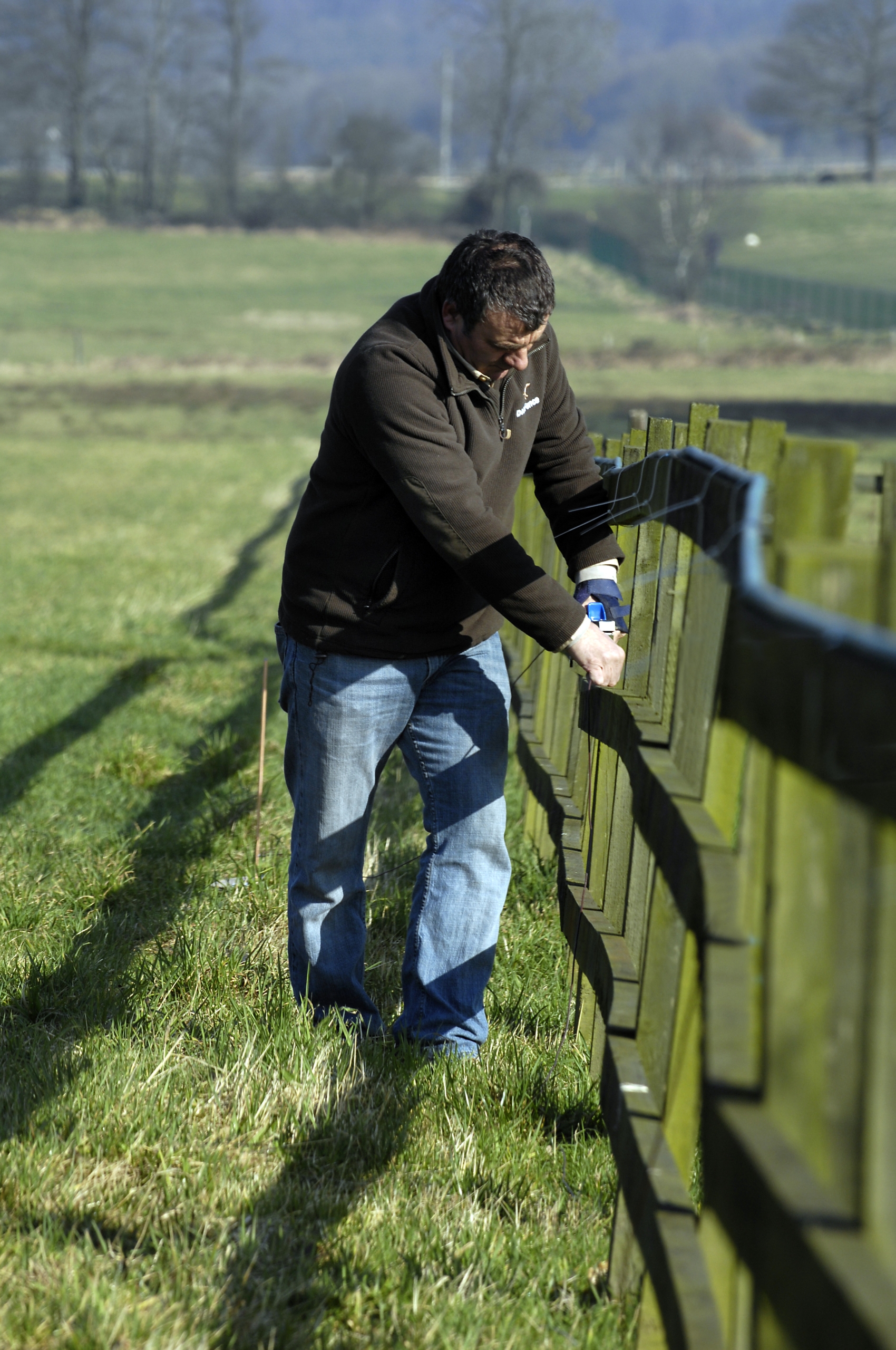
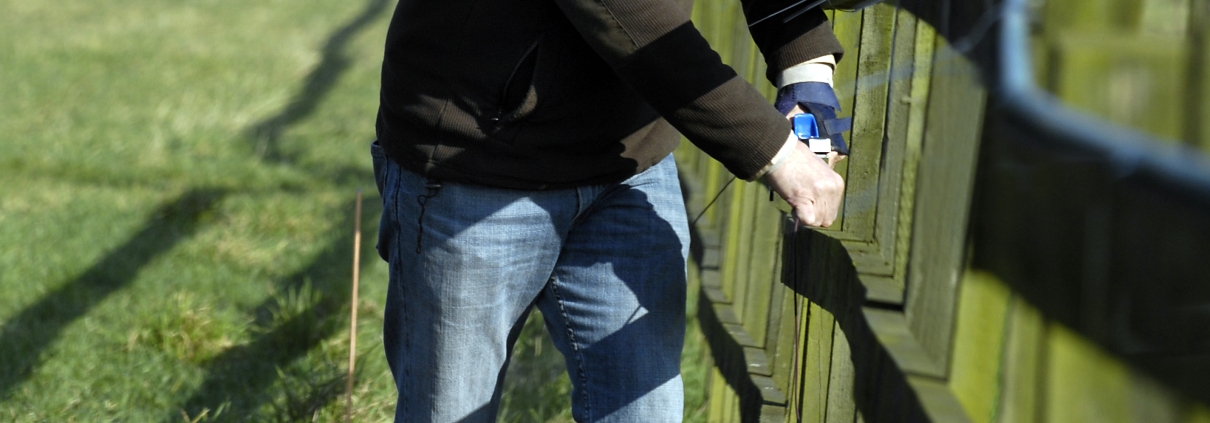
A DogFence hidden boundary can be installed alongside existing fencing, hedges, walls and other physical boundaries.
How Does an Invisible Dog Fence Work With a Physical Fence?
A professionally installed invisible dog fence uses a boundary wire to define the area in which your dog can safely roam. Your dog wears a small receiver collar that responds as they approach the trained boundary.
The boundary wire can often be installed alongside an existing fence, hedge or wall, creating a consistent containment boundary around the property.
During training, temporary flags help your dog learn where that boundary is located. The dog learns to respond to the receiver’s warning and turn back towards the safe area.
If you are new to electronic containment, our How a DogFence Works page explains the system in more detail.
Why Use an Invisible Dog Fence If I Already Have a Fence?
Because a physical fence is only effective while your dog cannot find a way around it.
Dogs can be remarkably inventive escape artists. Common problems include:
- digging underneath fence panels
- jumping or climbing over fencing
- squeezing through gaps
- pushing through hedges
- escaping through gates
- running through an open driveway
- finding damaged or weak sections of fencing
An invisible dog fence approaches the problem differently. Instead of relying entirely on the height, strength or construction of the physical fence, it creates a trained boundary that the dog learns not to cross.
Can an Invisible Dog Fence Stop a Dog Digging Under an Existing Fence?
It can be particularly useful for dogs that repeatedly dig underneath physical fencing.
Reinforcing the bottom of a fence can help, but determined dogs sometimes simply move along the boundary and begin digging somewhere else.
A hidden dog fence creates a boundary around the containment area rather than relying on the fence panel itself. The dog is trained to turn away from that boundary before reaching the point where they would normally start digging or attempting to escape.
If digging is your particular problem, read our complete guide to how to stop a dog digging under a fence.
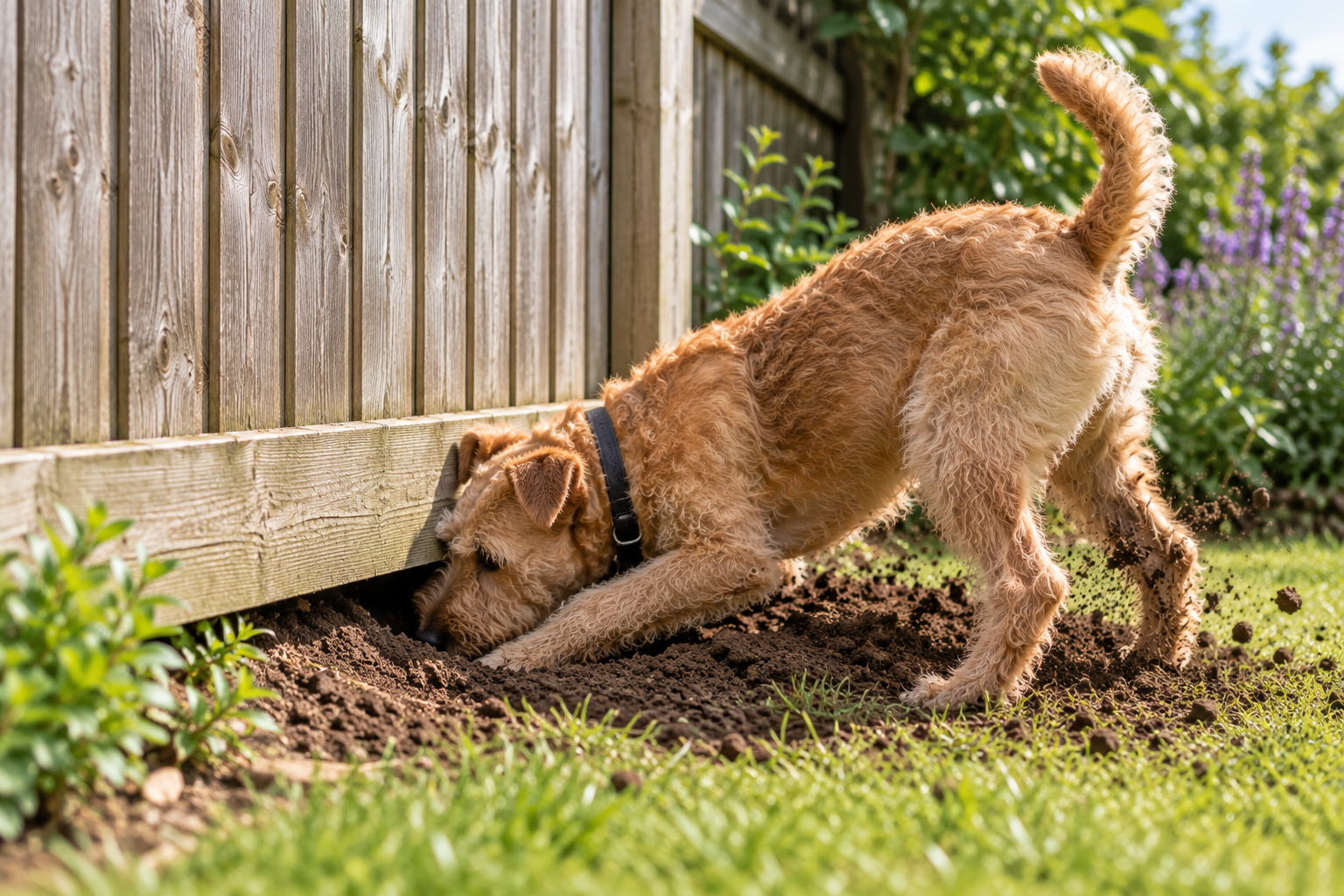
Dogs that dig under existing fencing can be difficult to contain. A hidden DogFence creates a trained boundary before the dog reaches the physical fence.
Can It Stop a Dog Jumping Over an Existing Fence?
For dogs that jump or climb, simply making a fence higher is not always the answer. Some dogs learn to use horizontal rails, bins, garden furniture or other objects as launching points.
A hidden dog fence can create a trained boundary before the dog reaches the physical fence, helping prevent the dog from approaching it closely enough to attempt the jump.
For persistent jumpers, see our guide on how to stop a dog jumping a fence.
Will Metal or Stock Fencing Interfere With a DogFence?
No. One of the advantages of the DogFence system is that its signal is not affected by metal or stock fencing.
This means a DogFence can be installed alongside existing metal fencing, wire mesh or stock fencing without the fencing interfering with the containment signal.
This can be particularly useful on rural properties, farms and larger gardens where stock fencing is already in place. Rather than replacing an existing boundary, the DogFence can work alongside it to provide an additional trained containment boundary for your dog.
It also means owners with a mixture of boundary types — for example hedges, wooden fencing, post-and-rail and stock fencing — can potentially create one consistent DogFence boundary around the property.
Can an Invisible Fence Work With a Hedge?
Yes. Hidden dog fences can work particularly well alongside hedges.
A mature hedge may look completely secure to us but contain surprisingly large gaps at dog level. Dogs may push underneath branches, squeeze through gaps or create their own routes through the hedge.
Because the electronic boundary does not depend on the hedge being completely impenetrable, it can provide a consistent containment line alongside it. The DogFence cable can be buried just in front of the hedge or threaded through the hedge, either way the boundary will be secured.
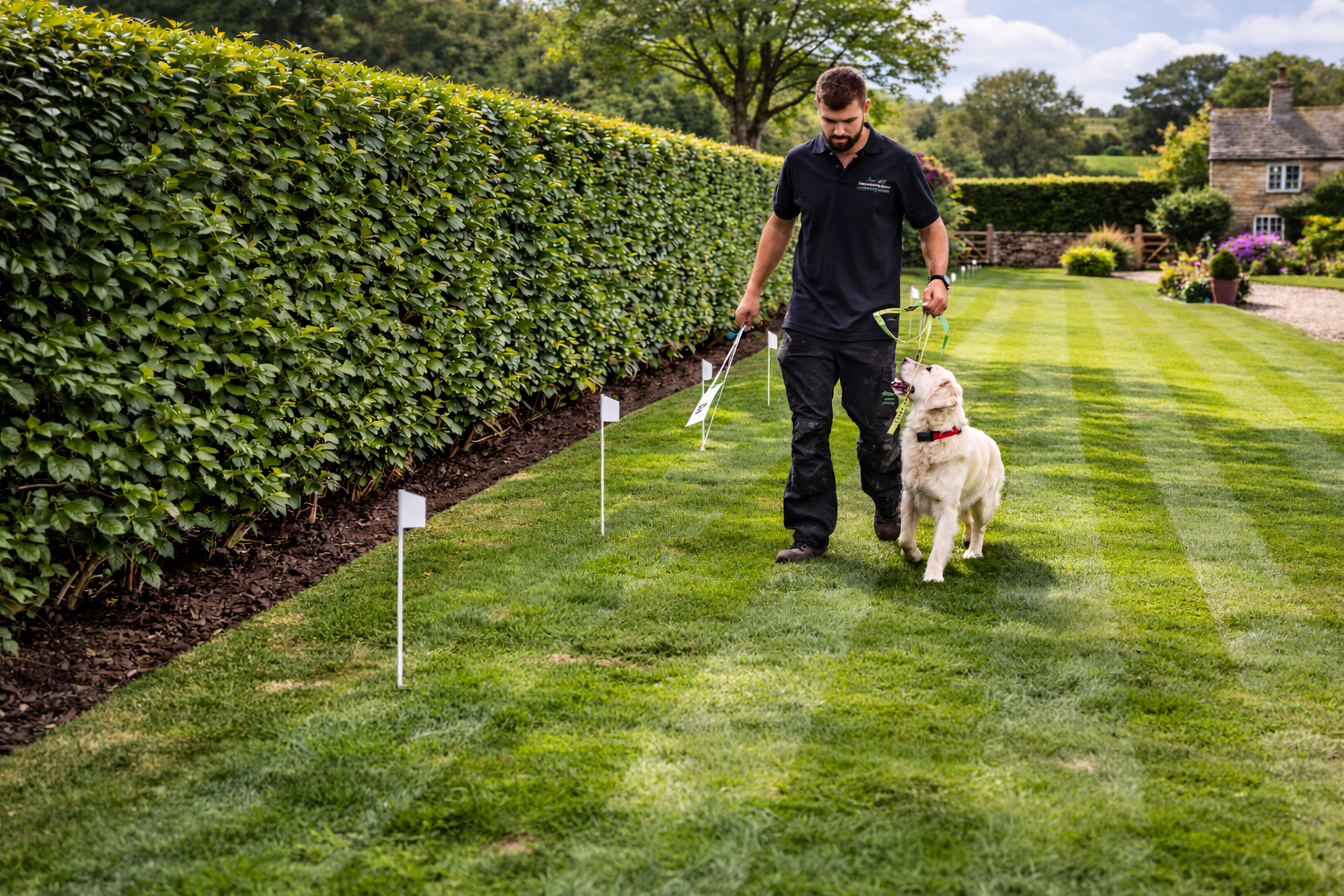
A hidden DogFence can work alongside an existing hedge, creating a consistent trained boundary even where a dog could find gaps or push through the hedge.
Can a Hidden Dog Fence Work With Post-and-Rail Fencing?
Yes. Post-and-rail fencing is common on rural properties and larger gardens, but the gaps between the rails obviously do not physically contain many dogs.
A hidden dog fence can be installed alongside the existing boundary so owners can retain the appearance of post-and-rail fencing while creating a trained containment area for their dog.
What About Gates and Open Driveways?
This is one area where combining physical fencing with a hidden boundary can be especially useful.
You may have excellent fencing around most of the garden but still need an entrance for cars, deliveries and visitors. A gate may also occasionally be left open.
A properly designed hidden dog fence can continue the dog’s trained boundary across entrances and driveways without preventing vehicles or people from passing through.
For a broader look at securing different types of garden boundaries, see our guide to how to dog proof your garden.
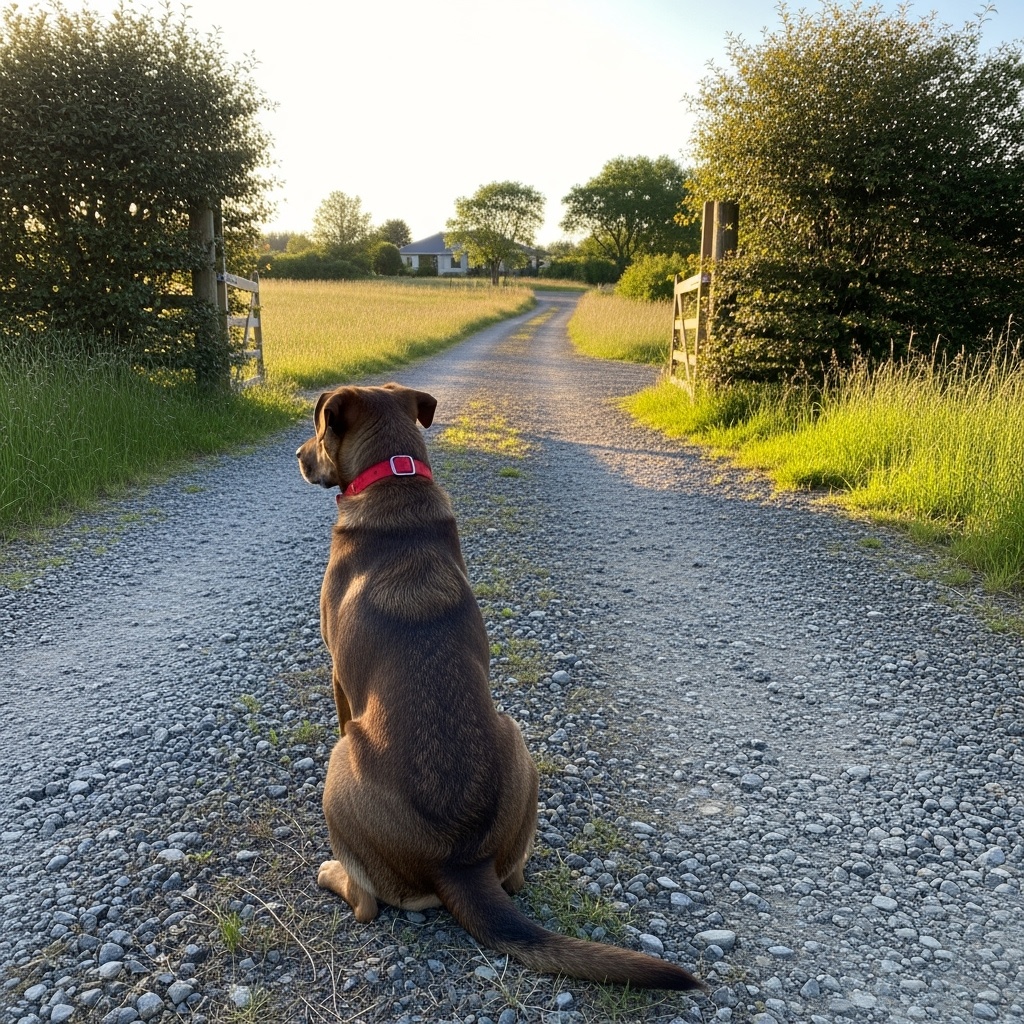
A hidden DogFence boundary can continue across an open driveway or gateway, helping contain a dog without restricting access for cars, deliveries or visitors.
Does the Existing Fence Need to Be Removed?
No. In most cases there is no reason to remove a suitable existing fence simply because a hidden dog fence is being installed.
The two systems perform different jobs and can complement one another.
The existing fence provides a visible and physical boundary. The hidden fence provides a consistent trained boundary that does not depend on the dog being physically unable to climb, jump, dig or squeeze through the existing structure.
Is the Existing Fence Electrified?
No. An invisible dog fence does not turn your existing garden fence into an electric fence.
The boundary wire carries a radio signal which is detected by the receiver worn by the dog. The physical fence, hedge or wall itself is not electrified.
The UK Government has previously distinguished invisible containment systems from hand-held remote-controlled electronic training collars and has emphasised the importance of professional setup and appropriate training. Read the Government’s published guidance on electronic containment systems here.
Is an Invisible Dog Fence Suitable for Every Existing Fence?
Every property is different.
The existing boundary, garden layout, driveway, gates, terrain and the individual dog’s behaviour all need to be considered when designing the containment area.
Likewise, electronic containment is not appropriate for every dog or every situation. We explain this in more detail in When an Invisible Dog Fence Is Not Suitable.
So, Can an Invisible Dog Fence Work With an Existing Fence?
Yes. An invisible dog fence can be installed alongside many existing fences, walls and hedges. The physical boundary can remain in place while the hidden dog fence creates an additional trained boundary for the dog.
This combination can be particularly useful when a dog has learned to:
- dig underneath fencing
- jump or climb over it
- squeeze through gaps
- push through hedges
- escape through gates or entrances
The important factors are correct boundary design, appropriate receiver setup and, most importantly, structured training so the dog understands exactly where its safe area ends.
Frequently Asked Questions
Can you install an invisible dog fence next to a wooden fence?
Yes. A hidden dog fence can often be installed alongside an existing wooden fence so the physical fence remains in place while the dog learns an additional trained boundary.
Can an invisible dog fence be used with a hedge?
Yes. This can be particularly useful where a hedge contains gaps or where a dog has learned to push through or underneath it.
Will a hidden dog fence stop my dog digging under my fence?
A hidden dog fence can help contain dogs that escape by digging because the dog is trained to respect the containment boundary rather than relying solely on the physical fence being impossible to dig underneath.
Can an invisible fence stop a dog jumping a physical fence?
It can provide an additional trained boundary before the dog reaches the physical fence. Correct system design and training are particularly important for dogs with established jumping or climbing behaviour.
Do I have to remove my existing garden fence?
No. Existing fencing, hedges and walls can normally remain in place. A hidden dog fence can complement rather than replace a physical boundary.
Can an invisible dog fence cross a driveway?
Yes. A professionally designed wired boundary can incorporate driveways and entrances, allowing the dog’s containment boundary to continue without physically blocking vehicle access. The cable can be installed into a tarmac drive with a thin slot, laid into a gravel drive or run between the expansion joints on a block paved drive.
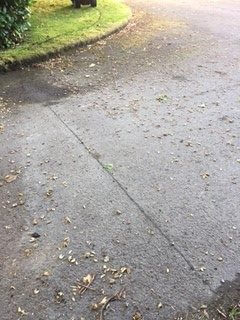
Where a DogFence boundary crosses a tarmac driveway, a narrow cut can be made in the surface for the boundary wire and then sealed after installation. And I like that you’ve added the sentence about block paving above it too. It mak
ALREADY HAVE A FENCE BUT YOUR DOG STILL ESCAPES?
If your dog jumps your fence, digs underneath it, pushes through a hedge or finds every possible weak point, you may not need to replace your existing boundary.
Tell us about your dog, your existing fencing and your garden layout. DogFence has been installing hidden dog containment systems in the UK since 2003, and we’ll explain whether a hidden boundary could work alongside what you already have.
CAN DOGFENCE WORK WITH MY EXISTING FENCE?
No pressure. Just experienced advice about the best way to make your existing garden boundary safer for your dog.