
Digital Dog Fence: Reliable Boundaries for UK Gardens
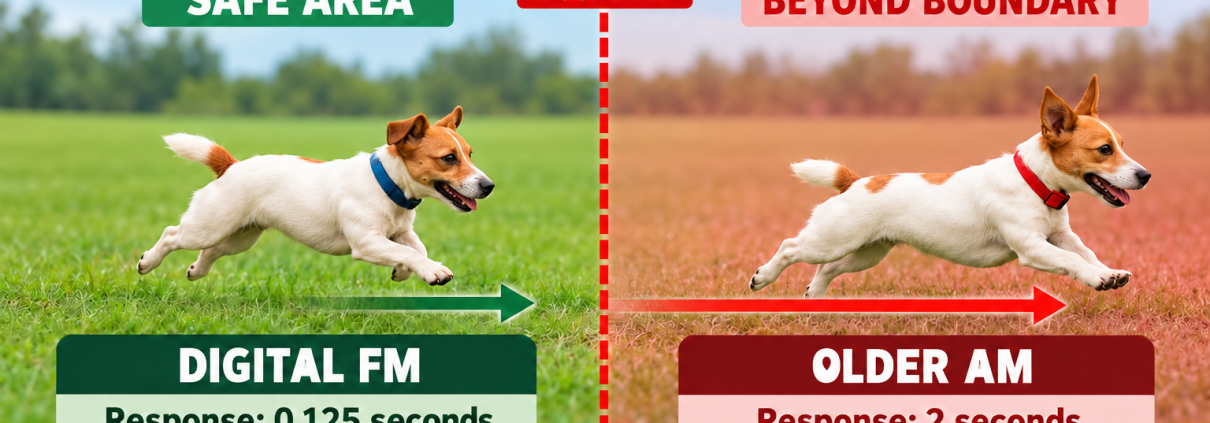
Why are digital FM dog fences more reliable than older AM dog fence systems?
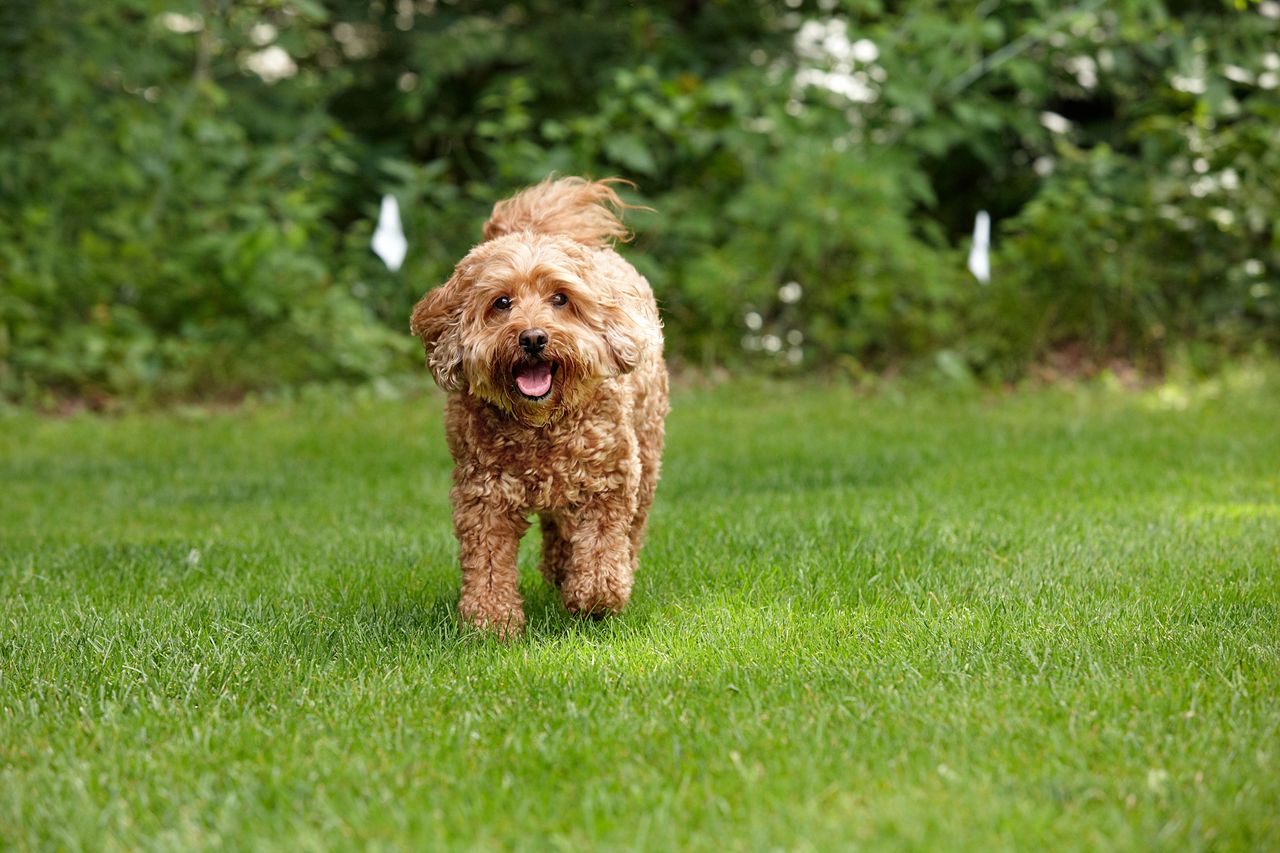
A digital FM dog fence creates a reliable boundary without obstructing the garden.
What is a digital FM dog fence?
A digital FM dog fence uses a transmitter to send a coded FM signal through a boundary cable installed around the permitted area.
The cable acts as an antenna. It is not an electrified wire and it does not place electricity into the garden or soil.
The dog wears a compatible receiver collar programmed to recognise the boundary signal. As the dog approaches the warning zone:
- The receiver detects the coded FM signal.
- The collar gives an audible warning.
- The dog uses its training to turn back towards the safe area.
- If the dog continues, the collar provides its individually programmed response.
- The response stops when the dog retreats into the safe area.
The dog is therefore learning a defined boundary, not simply reacting to a collar.
You can read a general explanation of the complete system on our How a Dog Fence Works page.
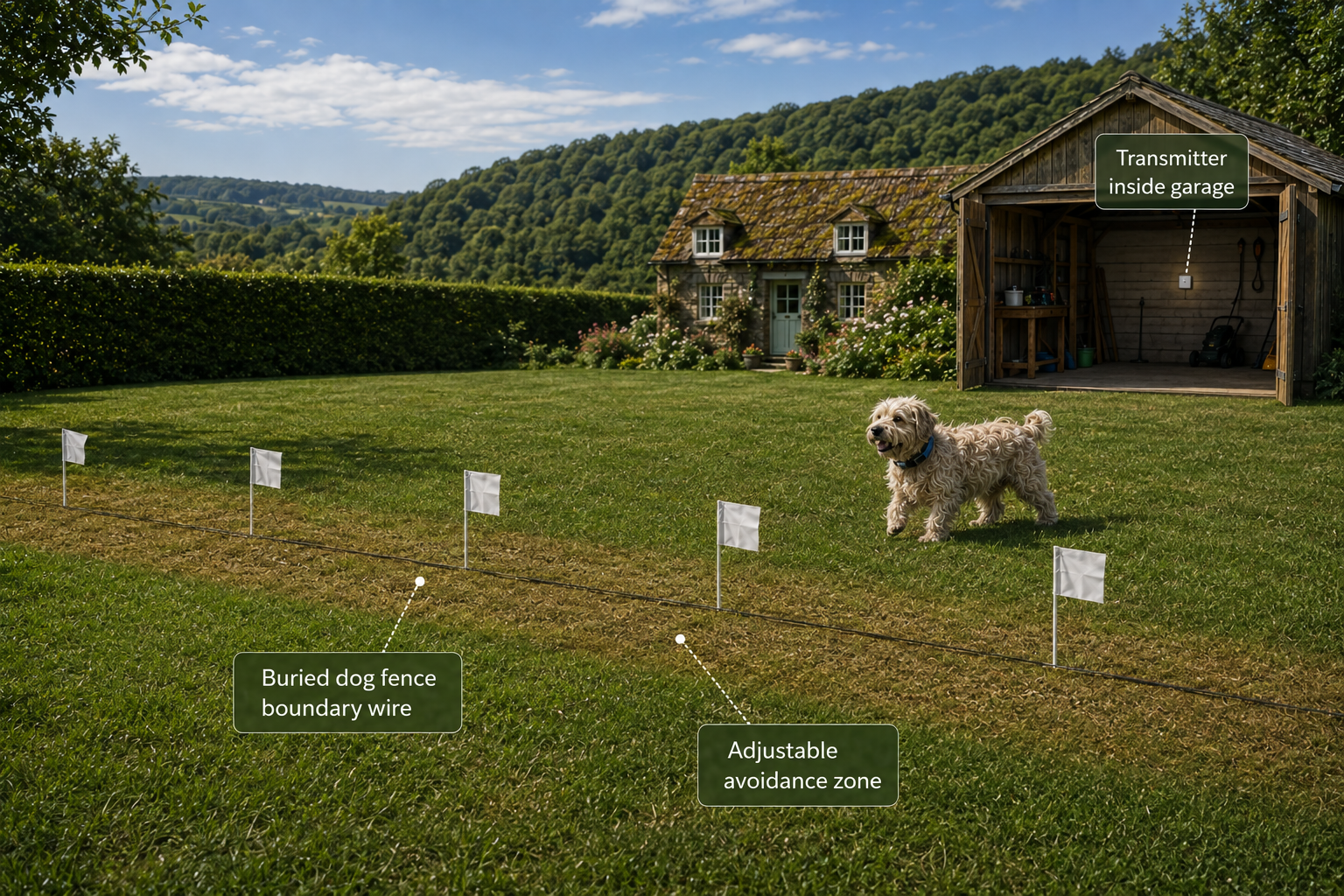
A digital FM dog fence creates a consistent hidden boundary, allowing dogs to play freely and safely within the garden.
Why does digital FM dog fence technology matter?
A dog needs the boundary warning to occur predictably. If the activation point feels inconsistent, moves unexpectedly or continues after the dog has made the correct decision, training can become confusing.
DogFence installs professional DogWatch systems using digital FM SafeLink technology. The compatible receiver collar is designed to recognise the signal generated by the installed system and disregard unrelated background interference.
This helps provide:
- a clearly defined warning zone;
- consistent activation around the installed boundary;
- accurate communication with the receiver collar;
- individual settings for different dogs using the same boundary;
- fast recognition when the dog approaches the cable; and
- appropriate shutdown when the dog retreats.
The equipment is manufactured by DogWatch, while DogFence designs, installs, trains and supports the systems in the UK. More information about the underlying technology is available from the official DogWatch website.
Can buildings, trees or the shape of the land affect a dog fence?
Buildings, mature trees, woodland, slopes and uneven ground can cause difficulties for some satellite-based or wireless containment systems.
A wired digital FM dog fence does not rely on GPS coordinates, mobile reception or an uninterrupted view of the sky. Its boundary follows the physical route of the installed cable.
This means the boundary can usually be designed around:
- buildings and outbuildings;
- mature trees and woodland;
- sloping or undulating gardens;
- streams and ponds;
- irregularly shaped properties;
- long rural boundaries; and
- compact urban gardens.
The boundary does not have to be circular or rectangular. It can be designed around the property and the areas the dog should be allowed to use.
See how a wired boundary can be installed around trees, streams and woodland.
Can damp soil or UK weather interfere with a dog fence?
Rain, cloud cover and damp soil do not normally cause a professionally installed wired boundary to move.
However, installation quality still matters. Water entering a poor cable connection, accidental damage from gardening or unsuitable external components can create a fault.
A professional installation should therefore use:
- boundary cable suitable for the property;
- proper waterproof connections;
- a carefully planned cable route;
- appropriate protection at driveways and vulnerable areas;
- surge and lightning protection where specified; and
- complete signal testing after installation.
Owners should also follow routine maintenance and testing guidance. Our dog fence maintenance and safety checklist explains what should be checked.
Can metal gates and driveways affect the boundary?
Metal gates, reinforced surfaces, underground services and electrical equipment should be considered when designing the boundary.
This does not necessarily mean that a dog fence cannot be installed. It means the route, signal width and equipment must be assessed rather than guessed.
A professionally installed boundary can normally cross gravel, concrete, block paving or tarmac. The installation method should protect the cable while preserving the surface as neatly as possible.
Read how we install dog fence wire across a driveway.
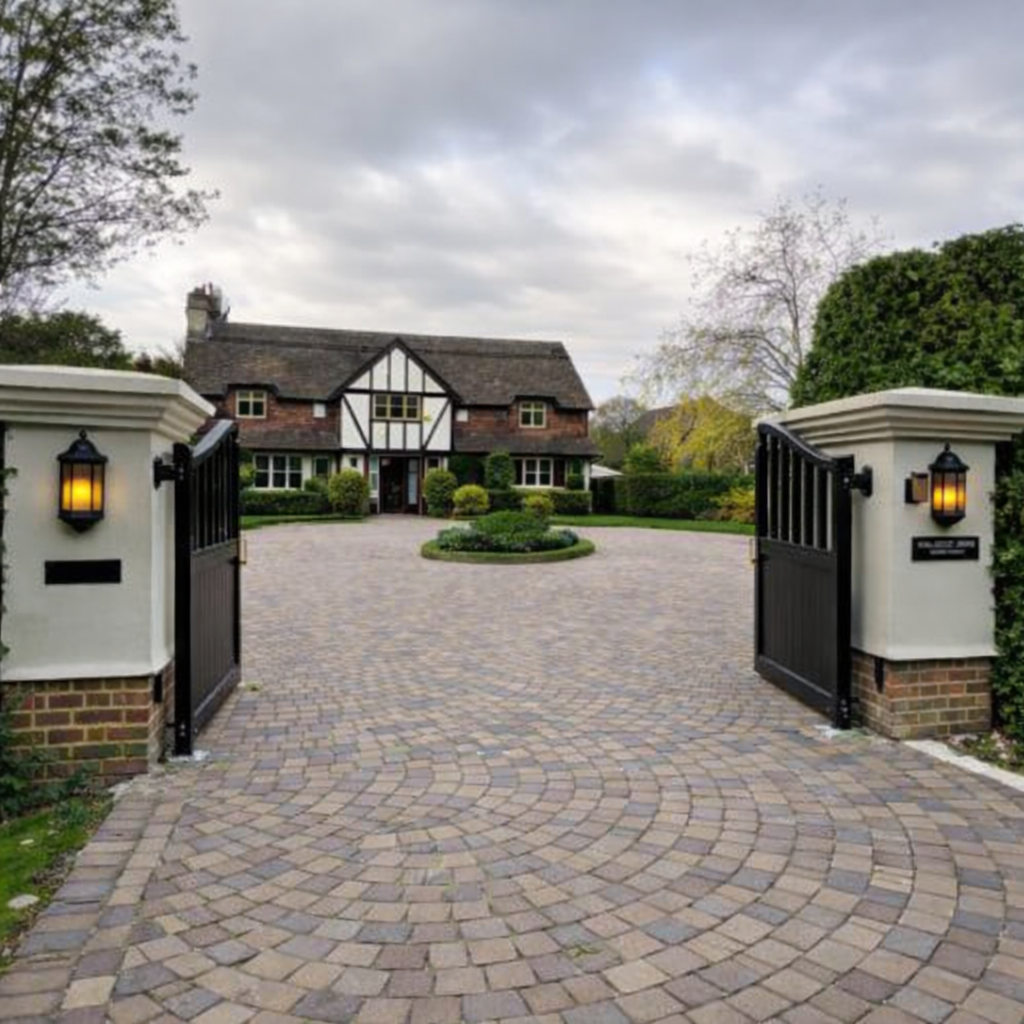
A professionally installed digital FM dog fence can create a consistent boundary across a block-paved driveway and electric-gate entrance. The cable route and nearby metalwork should be assessed during installation.
Why does dog fence collar response time matter?
A dog running at 20 mph travels approximately 14.7 feet in half a second. Response time therefore matters, particularly for fast dogs or properties close to roads and other hazards.
When comparing dog fence systems, owners should ask:
- How quickly does the receiver recognise the boundary signal?
- How wide can the warning zone be set?
- Does the collar give an audible warning first?
- What happens if the dog immediately turns around?
- How quickly does the response stop after the dog retreats?
- Can the receiver setting be tailored to the individual dog?
Some containment collars may continue activating briefly after a dog has turned back. This is sometimes described as response “hang-on” time.
The dog should receive clear feedback for approaching the boundary and equally clear feedback that retreating was the correct decision. Activation and shutdown behaviour should therefore be considered together.
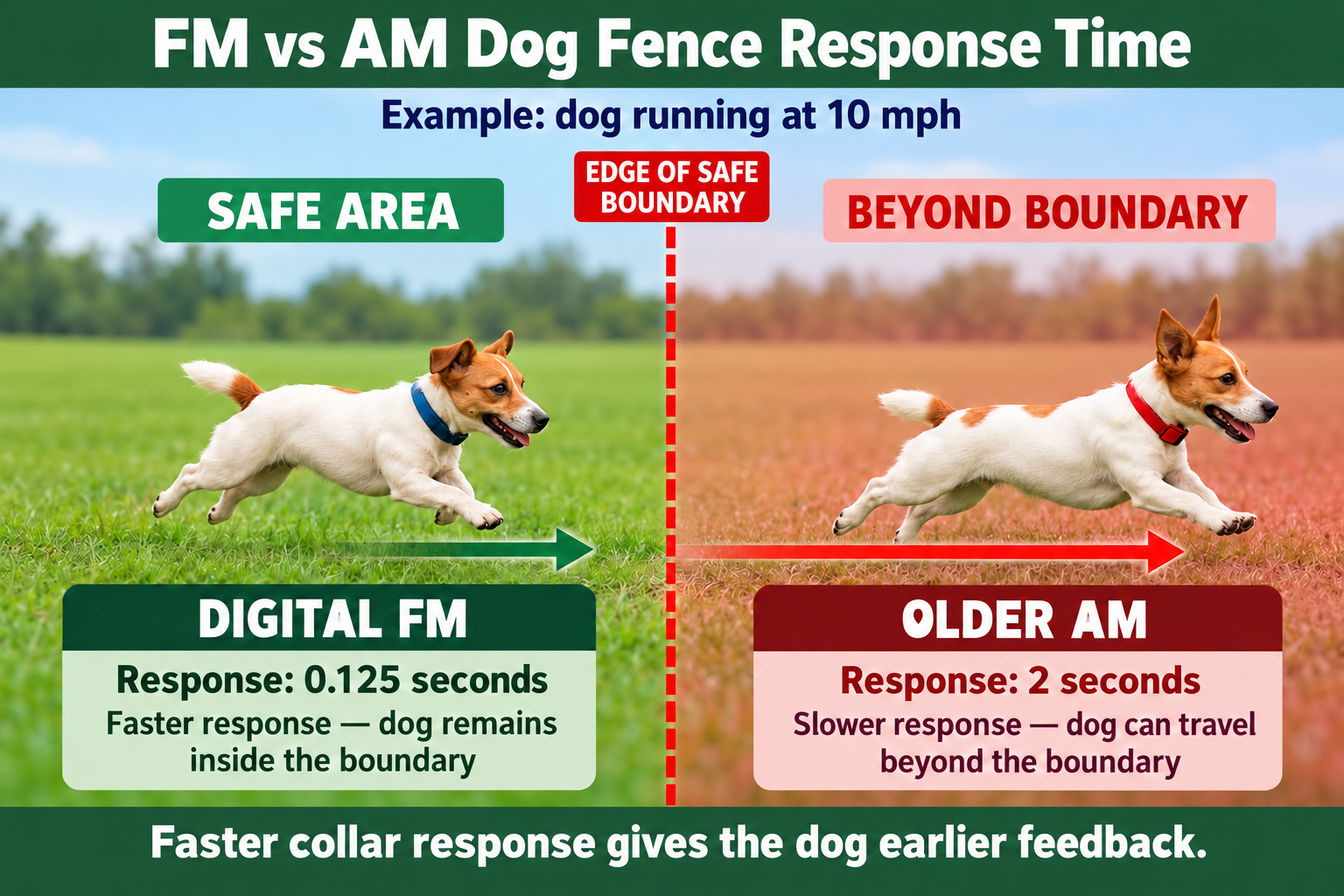
A digital FM dog fence responds more quickly than an older AM system, giving a running dog earlier feedback before it crosses the safe boundary.
Is a digital FM dog fence safer beside a busy road?
No containment provider should describe any product as completely failure-proof. The consequences of an escape are greater beside a busy road, railway, cliff or livestock field, so the entire containment plan must be assessed carefully.
For these higher-risk properties, we consider:
- the distance between the trained boundary and the hazard;
- the dog’s previous escape behaviour;
- the dog’s speed, temperament and prey drive;
- the reliability and condition of existing physical boundaries;
- the proposed warning-zone width;
- collar fit and individual programming;
- the owner’s ability to complete the training; and
- whether additional physical precautions are required.
The aim is not simply to sell equipment. It is to decide whether the property and dog are suitable and then design several layers of protection where the consequences of failure are serious.
Read more about when an invisible dog fence may not be suitable.
Does a digital FM dog fence work for an ordinary UK garden?
Yes. Professional containment is not only for country estates or unusually difficult properties.
A correctly designed system can also help in an everyday suburban or urban garden where a dog:
- jumps an otherwise serviceable fence;
- digs beneath one vulnerable section;
- squeezes through a hedge or gate gap;
- runs towards an open driveway;
- needs to stay out of a front garden; or
- repeatedly finds weaknesses in mixed fencing.
The boundary can reinforce existing fences, walls, gates and hedges without requiring the owner to replace every physical boundary.
For straightforward properties and owners who are confident installing and training the system themselves, an appropriate self-install option may also be considered. Professional installation is more valuable where the layout, surfaces, risks or dog’s behaviour require specialist input.
Digital FM, GPS or wireless dog fence: which is more reliable?
| System | How the boundary is created | Potential advantages | Points to consider |
|---|---|---|---|
| Wired digital FM dog fence | Installed boundary cable | Precise irregular layouts, stable boundary, internal exclusion zones and no satellite dependency | Requires cable installation and boundary maintenance. Fast response time. Accurate boundary. |
| GPS dog fence | Satellite coordinates | Portable and no buried perimeter cable | Accuracy may be affected by trees, buildings, terrain and satellite conditions; check boundary drift and response time. Easily portable. |
| Circular wireless dog fence | Signal radiating from a central transmitter | Quick setup for a suitable simple property | Usually creates a circular boundary and may not follow an irregular garden or exclude individual features. Slow response time. Easily portable. |
There is no single best system for every owner. The right choice depends on the property, risks, required boundary shape, dog and level of support needed.
For a fuller comparison, see how GPS dog fences work and our guide to wireless versus wired dog fences.
What is SmartFence monitoring?
SmartFence combines the installed wired boundary with monitoring designed to give owners greater reassurance.
Depending on the installed system, connected monitoring can provide information about:
- a break in the boundary wire;
- loss of power to the transmitter;
- the condition of the receiver-collar battery;
- communication or connectivity issues; and
- system status requiring attention.
This does not replace owner testing, collar checks or training. It provides an additional layer of information so potential problems can be identified earlier.
That can be especially valuable for owners with large boundaries, multiple pets or dogs living close to high-risk hazards. Watch our SmartFence to see how the system helps owners monitor their dog fence, including boundary-wire, power and receiver-collar battery alerts.
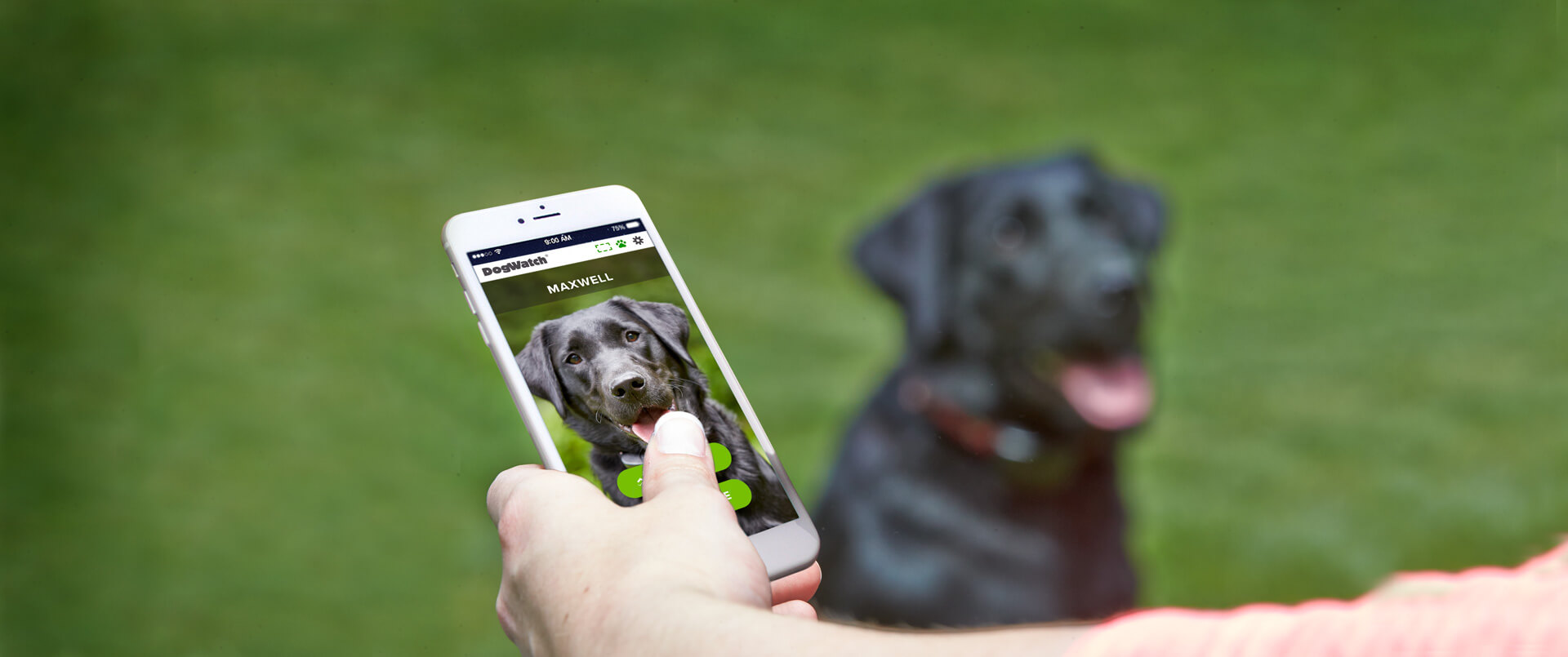
DogWatch SmartFence connects the wired dog fence to a smartphone, helping owners monitor boundary-wire, power and receiver-collar battery alerts.
Can one digital FM dog fence contain several pets?
Yes. Multiple compatible receiver collars can use the same installed boundary.
Each collar can be programmed for the individual pet rather than using one universal setting. This means the same boundary may be suitable for:
- dogs of different sizes and temperaments;
- two or more dogs;
- dogs and cats within the same household; and
- pets requiring different permitted or excluded areas.
Each animal must be fitted and trained individually. A second pet should not simply be released into the garden because the first pet understands the boundary.
Learn more about adding another dog to an existing dog fence.
How are dogs trained to a digital FM boundary?
The system is not installed and switched on without explanation to the dog.
Training flags temporarily mark the boundary. The dog is introduced on a lead and learns that the warning tone means it should turn back towards the safe area. Praise and rewards reinforce the correct retreat.
Training then progresses gradually through different boundary points and controlled distractions before supervised off-lead freedom is considered.
The collar setting, speed of progression and level of distraction should be adapted to the individual dog. Nervous, anxious or highly driven dogs may require a slower programme or an alternative solution.
Read our complete guide to training a dog to a hidden boundary.
What happens if the dog fence fails?
A responsible containment plan considers possible failures before installation.
Potential problems can include:
- accidental damage to the boundary wire;
- a depleted or incorrectly installed collar battery;
- power loss;
- an incorrectly fitted receiver collar;
- changes to the garden or boundary route;
- insufficient training; or
- an unusually strong distraction.
Protection comes from using suitable equipment, professional boundary design, clear transmitter warnings, SmartFence monitoring where selected, regular owner checks and structured training.
If a dog challenges or crosses the boundary, the cause should be investigated. Simply increasing the receiver level without checking the equipment, fit, signal and training is not an appropriate response.
See what to check if a dog runs through an invisible fence.
Frequently asked questions about digital FM dog fences
Is a digital FM dog fence affected by trees?
The wired boundary follows the installed cable and does not require a clear view of satellites. Trees should still be considered when planning and protecting the cable route.
Does damp soil move the dog fence boundary?
Damp soil does not normally move a professionally installed wired boundary. Cable condition, waterproof connections and correct installation remain important.
Can a digital FM dog fence cross a metal gate?
It can normally protect a gateway, but metal, underground services and the proposed cable route should be assessed during the design process.
Will it work in a small garden?
It may do, provided the dog is left with enough comfortable safe space. If the warning zone would dominate the usable garden, another form of containment may be more appropriate.
Can the boundary protect an open driveway?
Yes. A professionally installed cable can normally cross a driveway and create a trained boundary across an open entrance.
Does SmartFence stop a dog escaping?
SmartFence monitoring helps owners identify certain system issues. Containment still depends on the installed boundary, receiver collar, correct fit, routine checks and dog training.
Can the same system be used for dogs and cats?
Potentially, yes. Each animal needs a compatible, individually programmed receiver and species-appropriate training.
Is a digital FM dog fence suitable beside a busy road?
It may be, but the higher consequences require an individual assessment of the property, setback, dog, equipment, training and any additional physical safeguards.
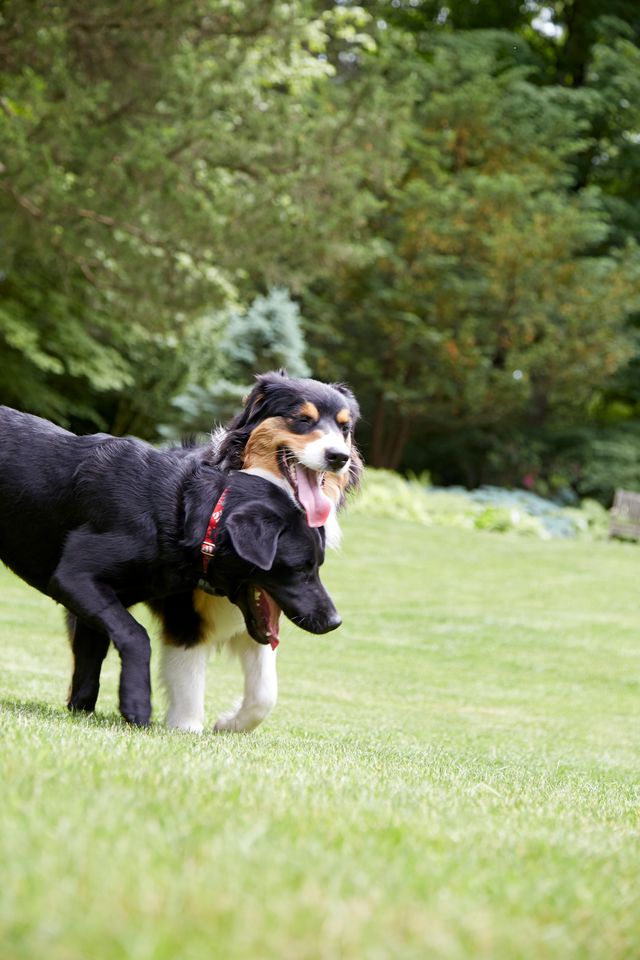
Freedom to play safely at home—an expertly installed digital FM dog fence provides a reliable boundary without changing the appearance of the garden.
Is a digital FM dog fence right for your property?
DogFence has installed and supported professional DogWatch containment systems in the UK since 2003. We assess the dog, garden, boundary risks and required training before recommending a system.
Call: 01628 476475
WhatsApp: 07917 034256
Every dog and property is different. A hidden boundary should only be used where the dog can be trained comfortably and the property provides sufficient safe space. Some illustrative images on this website may be AI-generated.