Tag Archive for: livestock worrying law UK

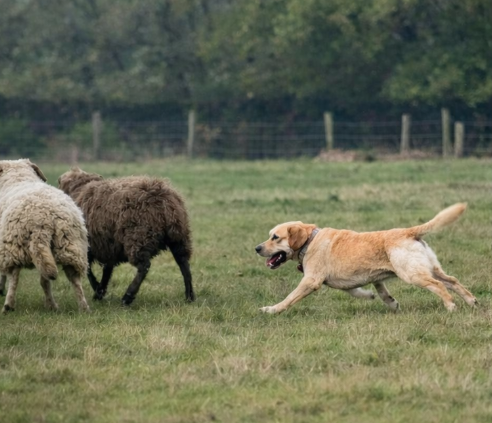
Dog chasing sheep in rural field illustrating livestock worrying offence UK

What Happens If My Dog Attacks Livestock UK? Law, Fines & Farmer Rights

What Happens If My Dog Attacks Livestock in the UK?

If your dog attacks livestock in the UK, you may face prosecution under the Protection of Livestock Act 1953, fines, compensation claims, and in serious cases criminal charges. Livestock worrying is a criminal offence, even if no animal is killed.

Many rural dog owners ask: can a farmer shoot my dog in the UK if it runs into a livestock field? Particularly, after hearing about penalties for dog attacking sheep UK or cases involving livestock worrying offence UK. Under the Protection of Livestock Act 1953, owners are legally responsible for preventing livestock incidents. In severe cases, questions also arise such as can a farmer shoot my dog UK if livestock are under threat. Understanding the law is essential before an incident ever occurs, as a rural dog owner it is essential to know how to prevent livestock worrying and keep both your dog and livestock safe.
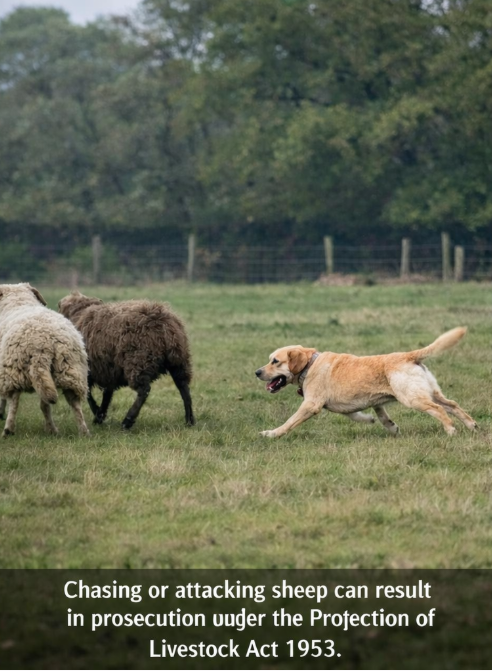
Dog chasing sheep in field illustrating livestock worrying offence UK


What Counts as a Livestock Worrying Offence UK?

Under UK law, livestock worrying does not only mean killing or injuring sheep.

It includes:

  • Chasing livestock
  • Attacking or biting livestock
  • Being at large in a field containing sheep or cattle
  • Causing animals to panic, scatter, or miscarry

This is defined under the Protection of Livestock Act 1953.

Even if no sheep are physically harmed, chasing alone can result in prosecution.


Penalties for Dog Attacking Sheep UK

If your dog attacks livestock, you may face:

Criminal Prosecution

Livestock worrying is a criminal offence. Police may become involved if:

  • Sheep are injured or killed
  • Farmers report repeated incidents
  • There is evidence of reckless behaviour

Fines

Magistrates’ courts can impose fines of up to £1,000 under the Protection of Livestock Act 1953.

Compensation Claims

You may be required to pay:

  • Veterinary costs
  • Value of dead livestock
  • Loss of future breeding value
  • Associated farming losses

In some cases, compensation far exceeds the criminal fine.


Can a Farmer Shoot My Dog UK?

In severe circumstances, yes.

Under the Animals Act 1971, a farmer may lawfully shoot a dog that is actively worrying livestock if there is no other reasonable way to stop it.

This is not a first response. It is a legal defence used when livestock are under immediate threat.

We explain this fully in our guide to when farmers can act to protect livestock.
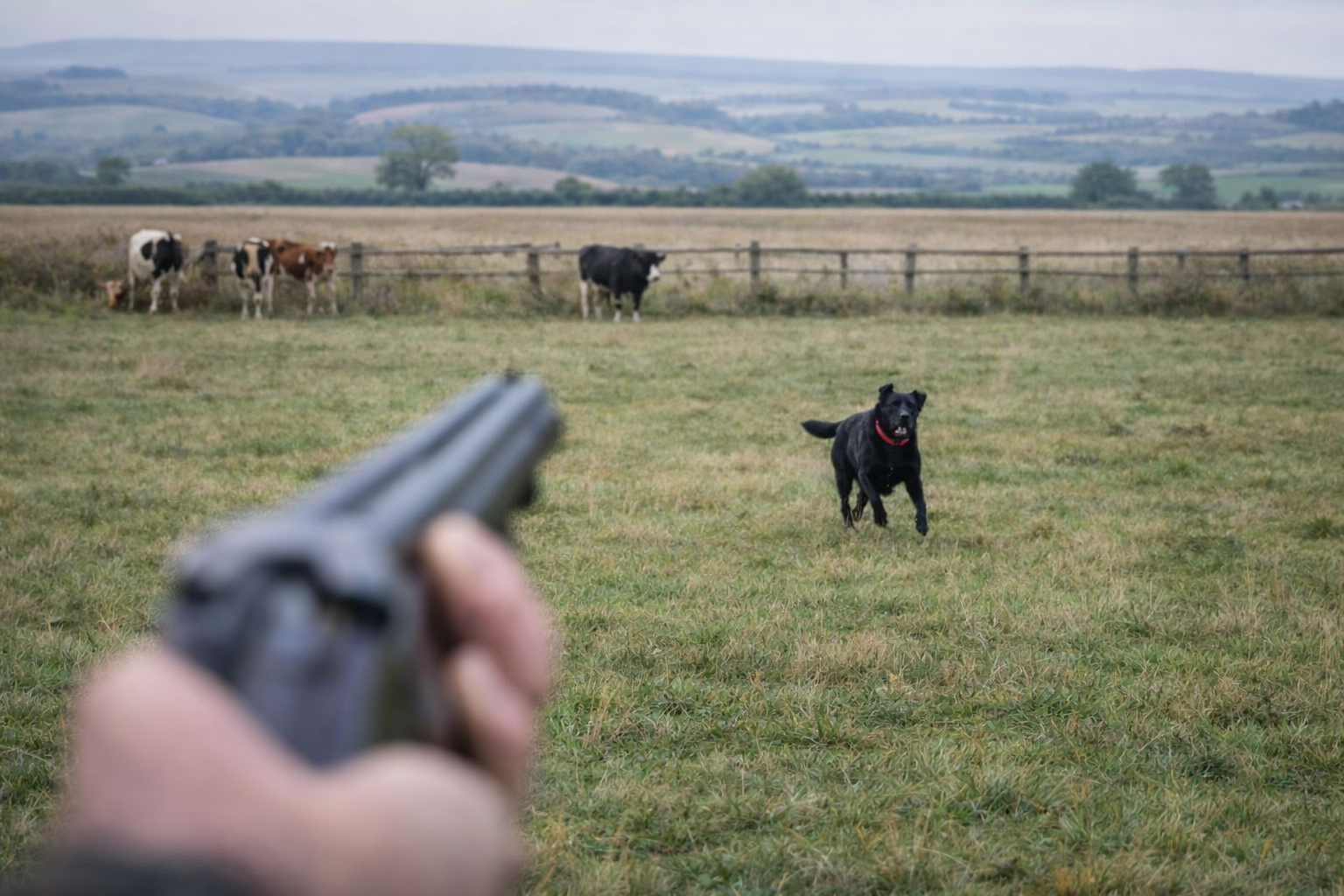
Loose dog running in cattle field illustrating farmer legal defence under the Animals Act 1971 UK

Under the Animals Act 1971, a farmer may have a legal defence if a dog is worrying livestock on their land — even if the dog’s owner is nearby.


Civil Liability Beyond Criminal Charges

In addition to prosecution under livestock worrying offence UK legislation, owners may face civil claims.

This can include:

  • Damages for loss of flock value
  • Compensation for aborted lambs
  • Ongoing loss of income

Farmers depend on livestock for their livelihood. The financial consequences can be significant.


Does It Matter If It Was an Accident?

Many owners say:

  • “He’s never done that before.”
  • “She just slipped the lead.”
  • “He got through a gap in the hedge.”

Unfortunately, intention does not remove liability.

Under UK law, you are responsible for preventing your dog from attacking livestock.


How to Prevent Dog Attacking Livestock

The safest answer to what happens if my dog attacks livestock UK is to ensure the situation never arises.

Most livestock incidents begin with escape — not deliberate aggression.

Prevention includes:

Keep Dogs on Leads Near Sheep

Even well-trained dogs should be placed on a lead when walking near livestock. Instinct can override recall.

Secure Rural Garden Boundaries

Many cases involving livestock worrying offence UK start at home. Common weaknesses include:

  • Gaps in hedging
  • Open driveways
  • Stock fencing designed for sheep, not dogs
  • Sloped or uneven rural terrain

Reinforcing garden boundaries is one of the most effective ways to prevent a dog from accessing neighbouring livestock fields.

Consider Purpose-Built Rural Containment

For properties bordering farmland, structured containment systems create a defined boundary that prevents dogs from crossing into livestock — here’s how electronic dog fence systems work to secure rural properties.

Unlike traditional fencing, properly installed containment adapts to:

  • Large rural plots
  • Uneven ground
  • Driveway openings
  • Open countryside boundaries

This isn’t about restriction — it’s about preventing one escape from becoming a legal and emotional crisis.

Address Chasing Behaviour Early

By looking at how to prevent livestock worrying early owners can safeguard their dogs and neighbouring livestock. Dogs with prey drive require structured management before they access livestock.

For a broader legal explanation, see our complete guide to livestock worrying law UK.

(Internal link to pillar.)


Why Acting Early Matters

Livestock worrying incidents are preventable.

They rarely begin with aggression.
They begin with opportunity.

Taking steps to secure your dog protects:

  • Your pet’s life
  • Farmers’ livelihoods
  • Livestock welfare
  • You from criminal prosecution

Responsible rural ownership means thinking ahead, not reacting after harm occurs. In rural areas, proactive containment is often far more effective than relying on recall alone.
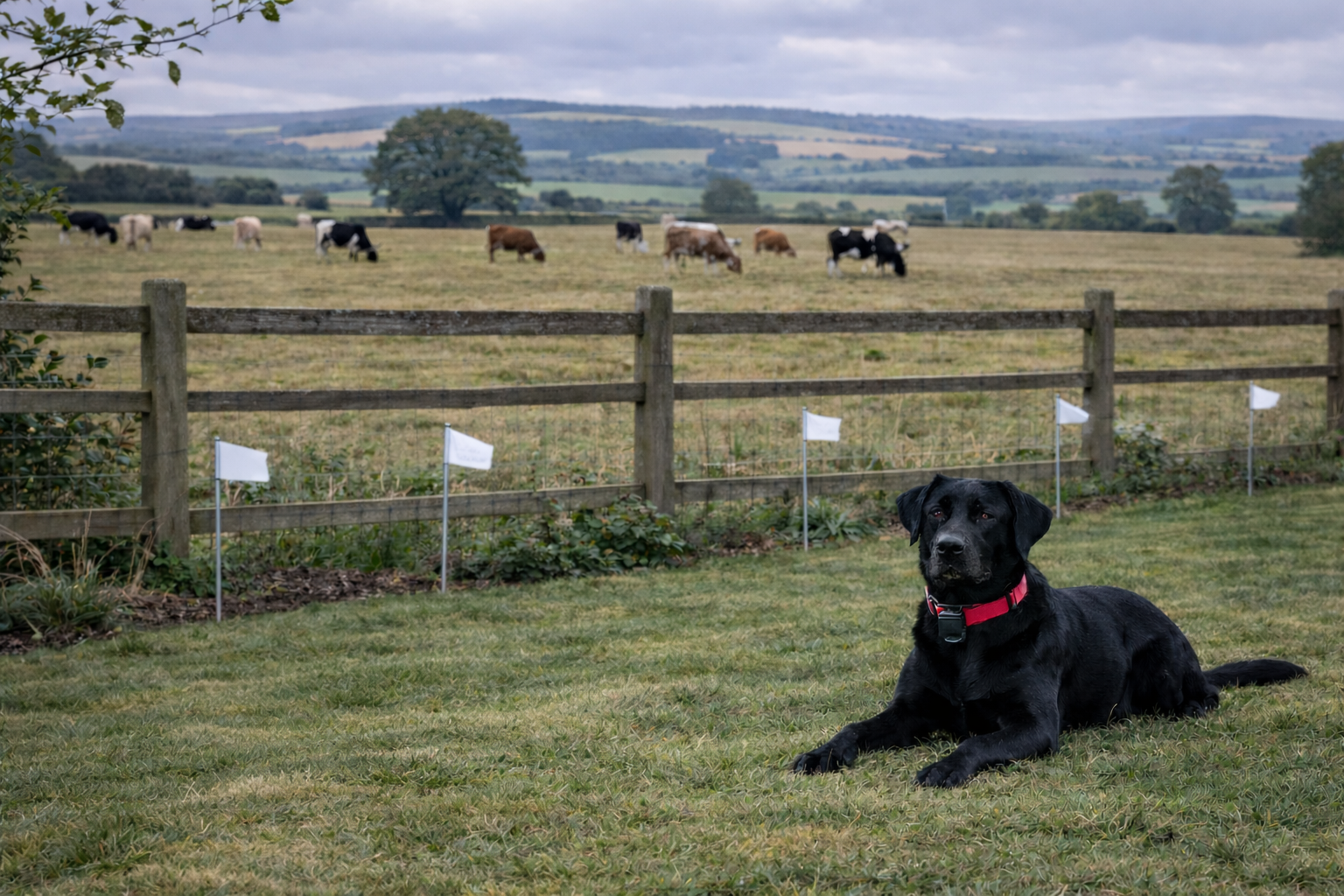
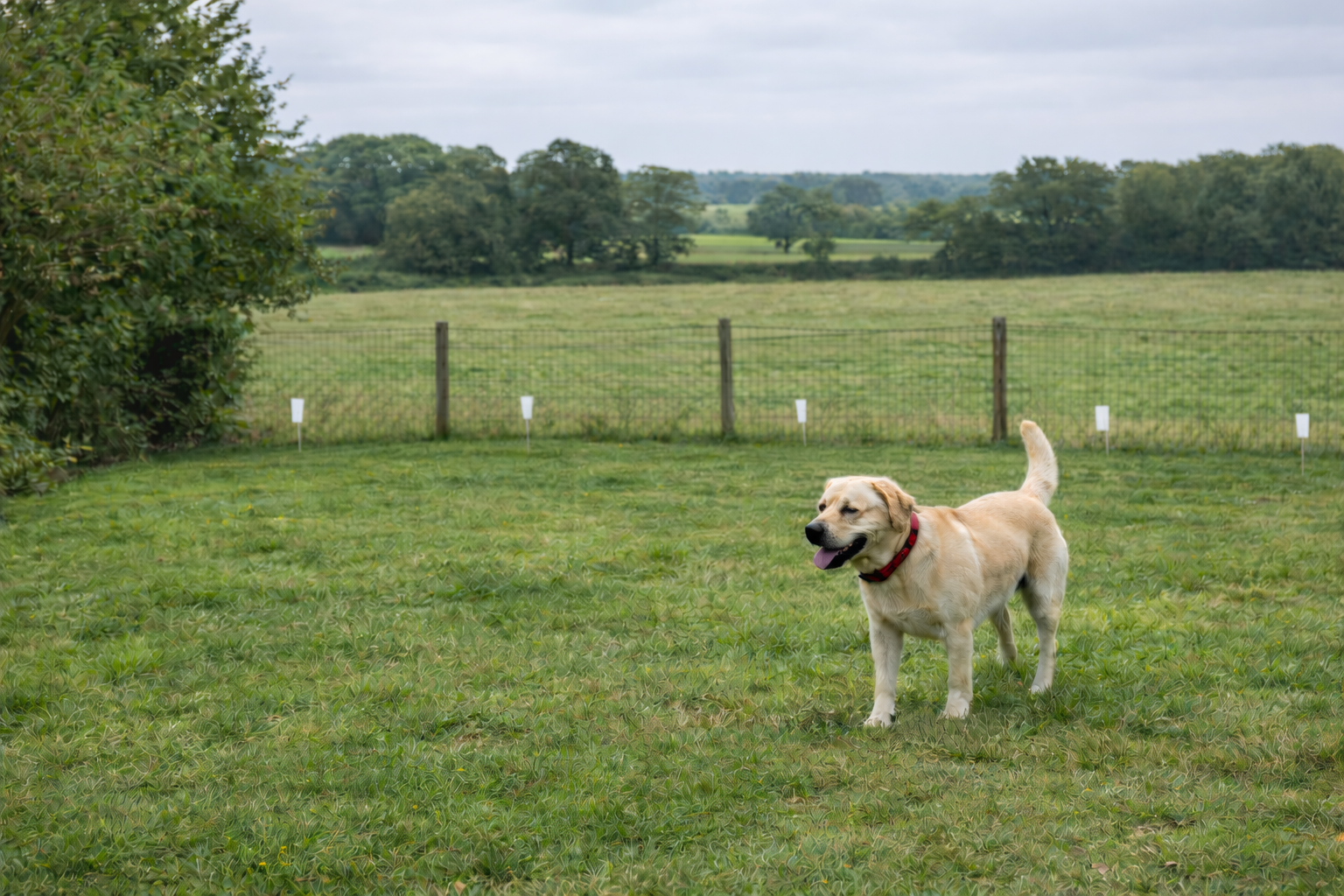
Black Labrador wearing containment collar safely inside rural garden with livestock field beyond

A secure rural boundary keeps dogs safely inside their own garden — protecting livestock, preventing legal risk, and giving owners peace of mind.
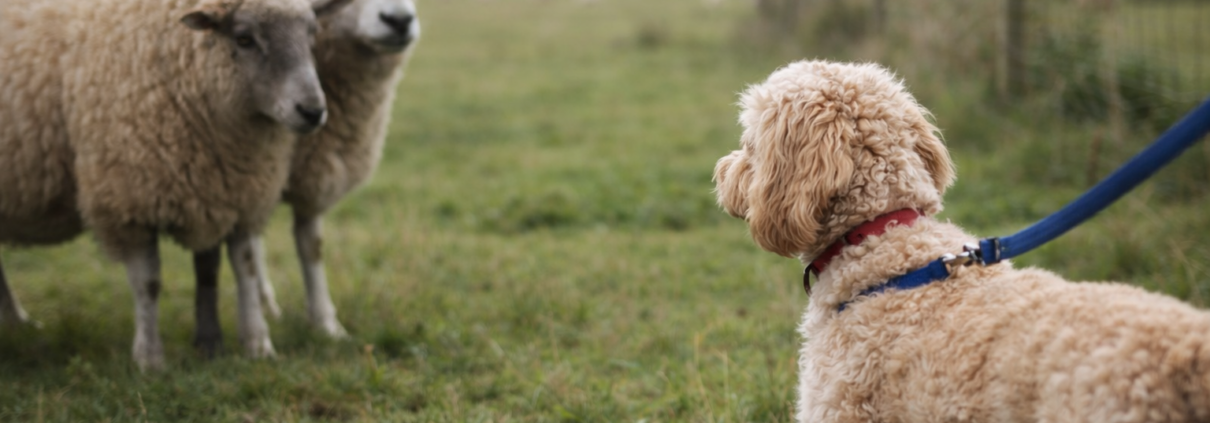
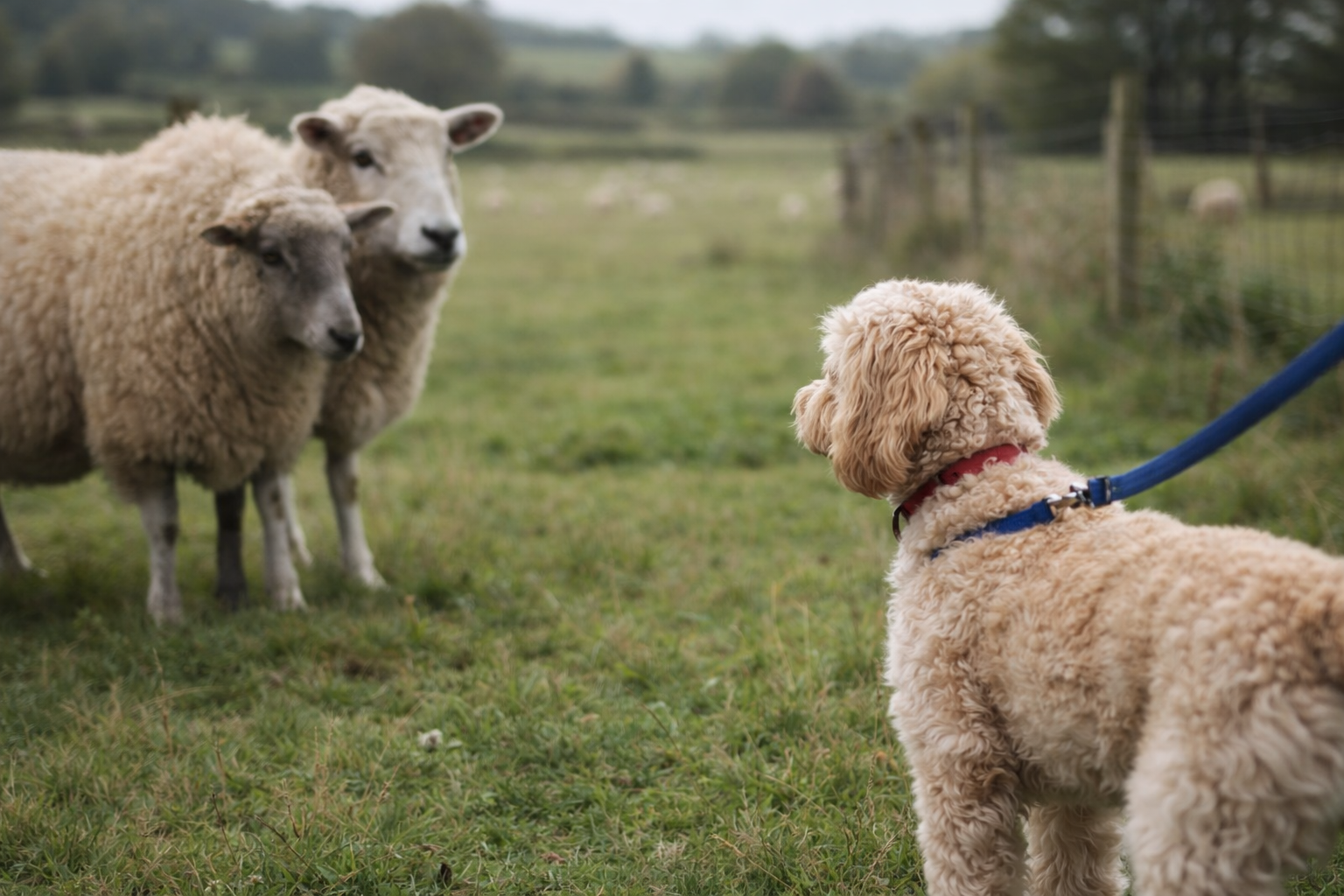
Cockapoo on lead near sheep in rural field illustrating livestock worrying law UK

Livestock Worrying Law UK: What Every Rural Dog Owner Must Know (2026 Guide)

Livestock Worrying Law UK: What Every Dog Owner Must Know

The livestock worrying law UK is one of the most serious areas of dog ownership legislation, yet many responsible owners only discover how strict it is after an incident has occurred. Under livestock worrying law UK, a dog chasing sheep, cattle, goats, or other farm animals can lead to criminal penalties, civil claims, and in certain circumstances, a farmer legally shooting the dog. Understanding livestock worrying law UK — and how to prevent dog worrying livestock — is essential for anyone living near farmland or open countryside to know what practical rural dog containment solutions are available.

Cockapoo on lead near sheep in rural field illustrating livestock worrying law UK

Even friendly family breeds like Cockapoos can trigger livestock worrying under UK law if not properly controlled near sheep.


What Is Livestock Worrying Under UK Law?

Under the Protection of Livestock Act 1953, livestock worrying includes:

  • Attacking livestock
  • Chasing livestock in a way that may cause injury, suffering, miscarriage, or weight loss
  • Being “at large” (not on a lead or under close control) in a field containing livestock

Importantly, a dog does not need to bite or injure an animal to commit an offence. Chasing alone can constitute livestock worrying under UK law. Understanding your obligations under UK livestock worrying law is part of wider UK dog fence law and legal responsibilities for pet owners, particularly if you live near farmland.

Many owners assume that “he wouldn’t hurt them” is enough. Legally, it is not.

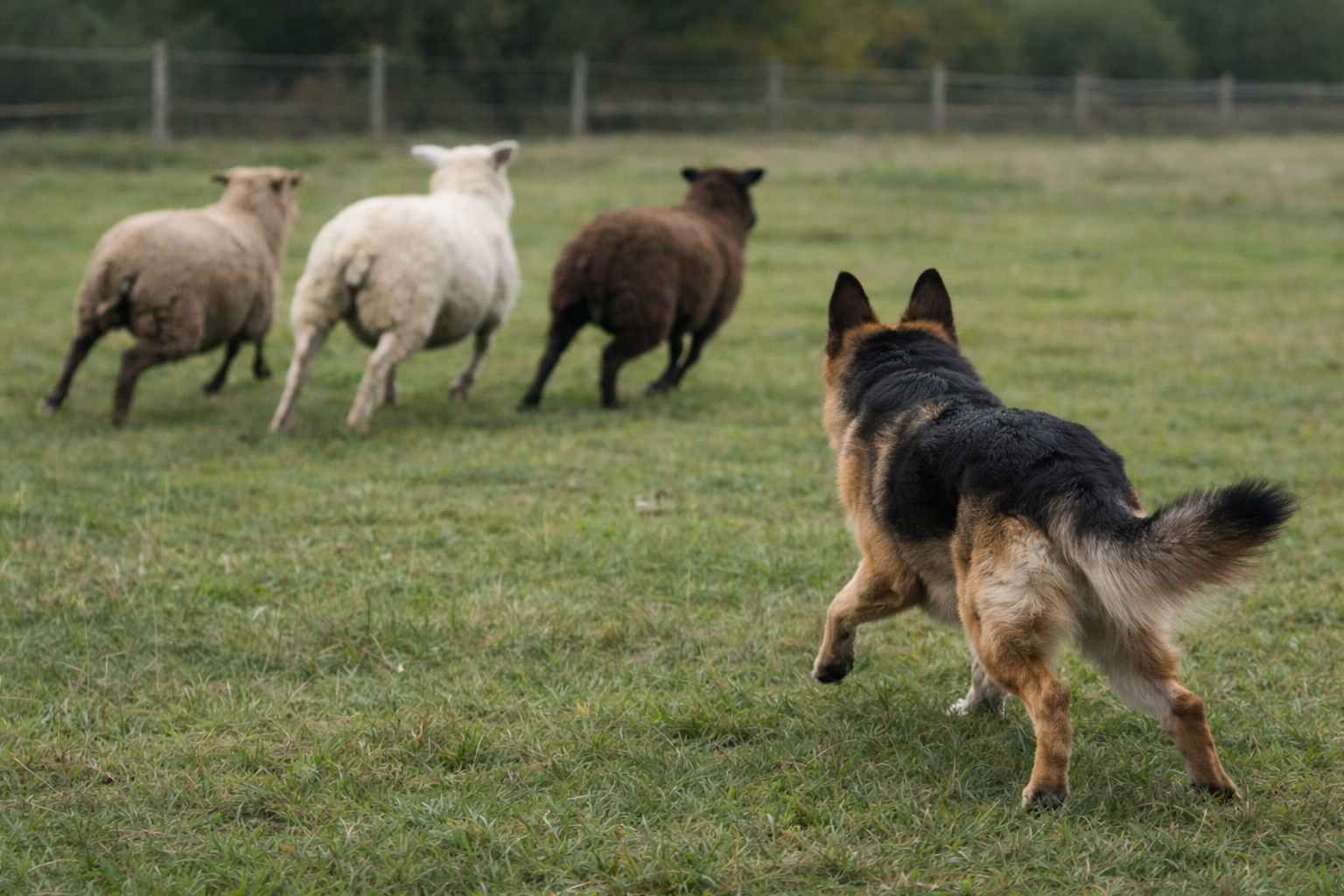
German Shepherd chasing sheep in rural field illustrating livestock worrying law UK

Chasing livestock alone can constitute an offence under livestock worrying law UK, even without physical injury.


Can a Farmer Shoot Your Dog Under Livestock Worrying Law UK?

Yes — under specific circumstances.

Many owners specifically ask whether a farmer can legally shoot their dog if it chases sheep. We answer that fully in our guide: Can a Farmer Shoot My Dog in the UK? Under the Animals Act 1971, a farmer has a legal defence if they shoot a dog that is actively worrying livestock, provided:

  • The dog is worrying or about to worry livestock
  • There are no other reasonable means to stop it
  • The action is necessary and proportionate

This is not a routine action, and it is not taken lightly. However, it is lawful within the framework of livestock worrying law UK.

For rural dog owners, this reality underscores the importance of prevention rather than reaction.


What Are the Penalties for Livestock Worrying?

Penalties for livestock worrying law UK offences can include:

  • Fines of up to £1,000
  • Compensation for injured, miscarried, or killed livestock
  • Court costs
  • Criminal record
  • Civil liability under the Animals Act

In cases where a dog is deemed dangerously out of control, the Dangerous Dogs Act 1991 may also apply.

Beyond legal penalties, there is reputational damage and distress for all parties involved — including the owner.


Why Do Dogs Chase Sheep and Livestock?

Understanding behaviour is key to preventing breaches of livestock worrying law UK.

Dogs chase livestock because of:

  • Natural prey drive
  • Movement triggers
  • Reinforcement from previous chasing behaviour
  • Weak or inconsistent boundary control
  • Escape opportunities from fencing gaps

Even well-loved family dogs can react instinctively in open countryside.

This is not about bad ownership.
It is about unmanaged risk.


Are Containment Fences Legal in the UK?

There is often confusion between remote-controlled electronic collars and electronic containment fences. Under current UK legislation, the ban introduced in England applies to hand-held remote e-collars — not to professionally installed electronic containment systems.

Containment fences remain legal because they are designed to prevent dogs from straying, reduce livestock worrying incidents, and protect dogs from harm. When used responsibly and in line with the Animal Welfare Act 2006, they are recognised as a preventative safety measure rather than a punishment tool.

For a full breakdown of the legal position, see our guide to UK dog fence law and legal responsibilities for pet owners.


Livestock Worrying Law UK and Rural Responsibility

If you live near fields, bridleways, or farmland, your responsibility increases.

Livestock worrying law UK applies whether:

  • Your dog escapes your garden
  • Your dog slips a lead near sheep
  • Your fencing fails
  • Your dog enters neighbouring farmland

The law places responsibility firmly on the owner.

That is why secure boundaries are not simply a convenience — they are a legal safeguard.


How to Prevent Dog Worrying Livestock

Prevention is always safer than legal defence.

Lead Control Near Livestock

Even dogs with excellent recall should be placed on a lead around sheep or cattle. Instinct can override obedience in seconds.

Regular Boundary Checks

Rural properties often contain:

  • Hedge gaps
  • Driveway openings
  • Uneven terrain
  • Stock fencing not designed for dogs

Physical barriers may slow a determined dog — but may not stop one.

Early Behaviour Intervention

Dogs that show early signs of chasing behaviour require structured management before the behaviour becomes self-rewarding.

Secure Your Garden Properly

If you live in the countryside, prevention begins at home.  Many livestock incidents begin when owners underestimate how easily a determined dog can escape. Our guide on how to stop a dog running away from the garden explains the behavioural and boundary factors involved.


Rural Dog Containment: A Legal Safeguard

In rural environments, boundary failure is one of the most common triggers behind livestock incidents. Understanding livestock worrying law UK is essential — but preventing a breach before it happens is what truly protects dogs and livestock.

A secure containment solution reinforces your existing boundary and reduces the risk of escape into neighbouring farmland. Professional rural dog containment solutions create a defined boundary that prevents dogs from entering neighbouring livestock fields and keeps both dogs and livestock safe.

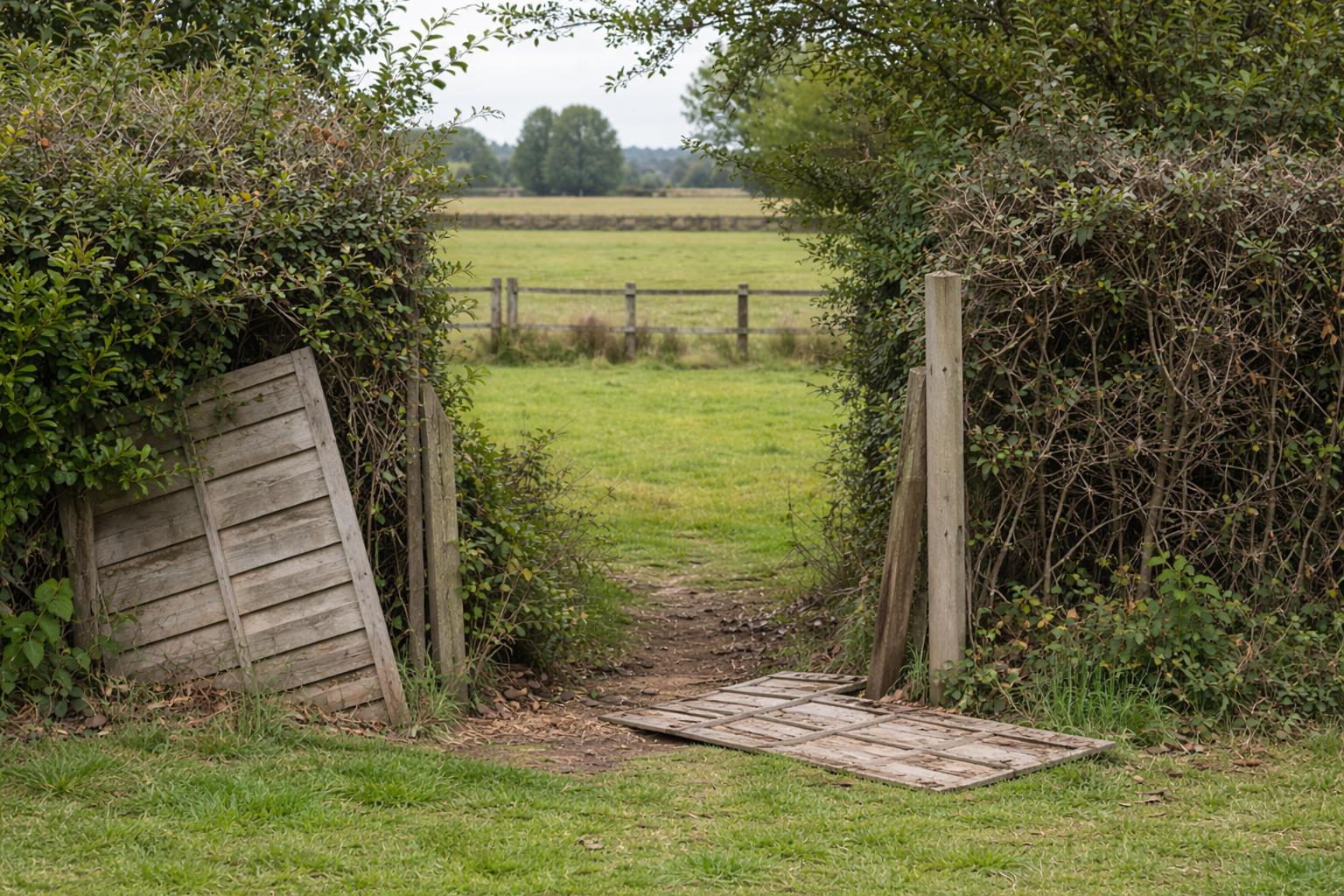
Rural hedge gap creating dog escape risk under livestock worrying law UK

Many livestock worrying incidents begin with a simple boundary weakness at home.


How a Dog Fence Protects Both Dogs and Livestock

Over two decades working with rural properties across England, we have seen that livestock incidents rarely begin in the field — they begin at home.

A loose gate.
A hedge gap.
Stock fencing designed for sheep, not dogs.
A momentary lapse in supervision.

Once a dog gains access to livestock, instinct can take over rapidly. Understanding how electronic dog fences create secure rural boundaries can help owners prevent livestock worrying incidents before they happen

A professionally installed containment fence acts as a preventative safeguard. It creates a learned boundary that the dog understands and respects before reaching open countryside.

This layered approach strengthens responsible ownership.

When properly installed and supported by correct training, a containment system can:

  • Prevent dogs escaping into sheep or cattle fields
  • Reduce the likelihood of livestock worrying offences
  • Protect dogs from road traffic accidents
  • Reduce the risk of a dog being lawfully shot while actively worrying livestock
  • Protect livestock from stress, injury, and loss
  • Protect owners from fines, prosecution, and compensation claims

Unlike physical fencing alone, containment creates boundary awareness. On large rural plots — where slopes, hedgerows, and driveways create weak points — this reinforcement can be critical. Many rural owners are now focusing on designing a secure garden for dogs in rural properties, particularly where fields border their boundary.

Livestock worrying law UK places legal responsibility on the owner. A secure containment system is one practical way to meet that responsibility proactively.

Prevention protects everyone.

Labrador wearing containment collar safely playing in secure rural garden under livestock worrying law UK

Secure rural containment helps prevent livestock worrying incidents and protects dogs from legal and physical risk.


Frequently Asked Questions About Livestock Worrying Law UK

Is chasing sheep illegal in the UK?

Yes. Under the Protection of Livestock Act 1953, chasing sheep can constitute livestock worrying even if no physical injury occurs.

Can a farmer legally shoot my dog?

Under the Animals Act 1971, a farmer may lawfully shoot a dog actively worrying livestock if the action is necessary and proportionate.

What counts as livestock worrying?

Attacking livestock, chasing livestock in a way that may cause suffering, or being at large in a field containing livestock.

Can I be fined if my dog escapes into a sheep field?

Yes. Fines, compensation claims, and court costs may apply under livestock worrying law UK.

How do I prevent my dog worrying livestock?

Secure boundaries, responsible lead use near sheep, early behaviour management, and reinforced containment systems reduce risk.


A Responsible Owner Understands the Law

Livestock worrying law UK exists to protect farmers, livestock, rural livelihoods — and ultimately dogs.

Most owners never intend for their dog to chase sheep. In many cases, it begins with a preventable boundary failure.

Taking steps now to secure your property and manage behaviour is not about restriction. It is about responsibility.

Live Near Livestock? Protect Your Dog Before One Escape Changes Everything.

We’ve helped thousands of UK owners keep dogs safely at home — reducing escape risk, protecting livestock,
and giving you real peace of mind.

Call:
01628 476475
|
WhatsApp us
|
Request a Free Quote

Not sure if your boundary is secure? We’ll talk you through the safest options for your property.