
DIY Dog Fence Installation Guide
Installing a dog fence yourself can be a cost-effective way to create a safe boundary for your dog while keeping the natural look of your garden. At DogFence, we supply high-quality self-install dog fence systems with clear instructions, ongoing support, and training guidance to help you get the best result.
Our DIY dog fence kits are designed for homeowners who are happy to carry out the installation themselves, while still benefiting from professional-grade equipment and expert advice when needed.
Can You Install a Dog Fence Yourself?
Yes — many customers successfully install their own dog fence. A self-installation can work well if you are practical, have time to plan the boundary carefully, and are confident laying the wire around your property.
A DIY dog fence installation is often best suited to:
• straightforward garden layouts
• clearly defined boundaries
• customers comfortable with digging or cable laying
• homeowners looking for a lower upfront cost
If your property includes driveways, complex landscaping, large areas, or awkward terrain, you may prefer to consider our professional installation service.
What Is Included in a DogFence DIY Kit?
Our self-install dog fence systems are designed to give you more reliability and flexibility than many standard online DIY fence kits.
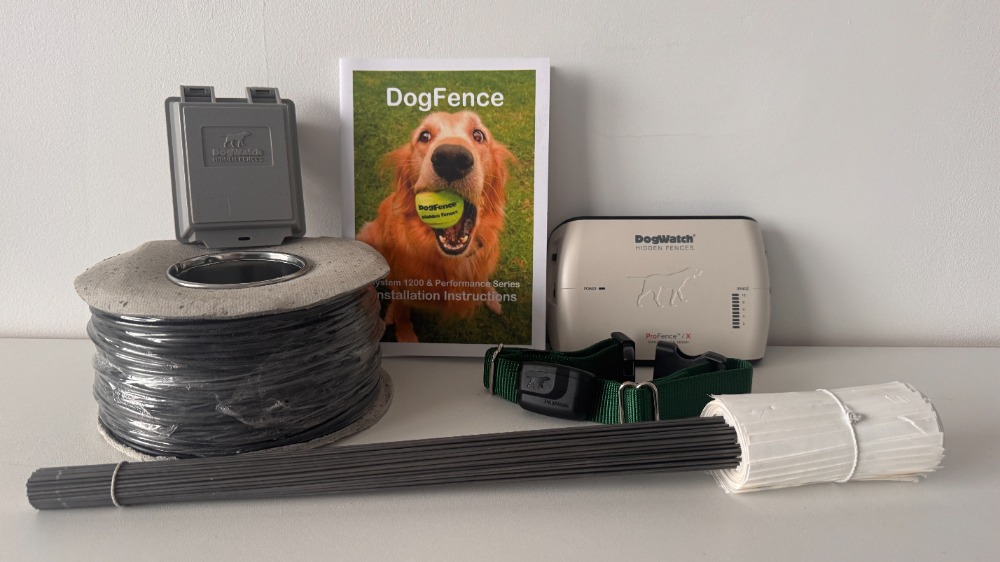
Depending on the system you choose, your DogFence DIY package can include:
• professional-grade boundary wire
• a high-quality transmitter
• receiver collar(s)
• training flags
• installation instructions
• training guidance and support
With our professional range systems, you benefit from heavier-duty cable, longer warranties, and higher specification equipment than many low-cost DIY alternatives.
How to Install a Dog Fence Yourself
1. Plan Your Boundary
Start by deciding exactly where you want your dog’s boundary to run. Think carefully about the overall shape of your garden, access points, driveways, flower beds, ponds, and any areas you want to keep your dog away from.
A well-planned boundary is one of the most important parts of a successful dog fence installation.
2. Choose the Right System
Select the dog fence system that suits your property size, layout, and your dog’s needs. A higher-quality system gives you more flexibility, greater reliability, and better long-term durability.
3. Install the Transmitter
The transmitter should be installed indoors in a dry location, ideally near a power source. Many customers place it in a garage, utility room, or outbuilding.
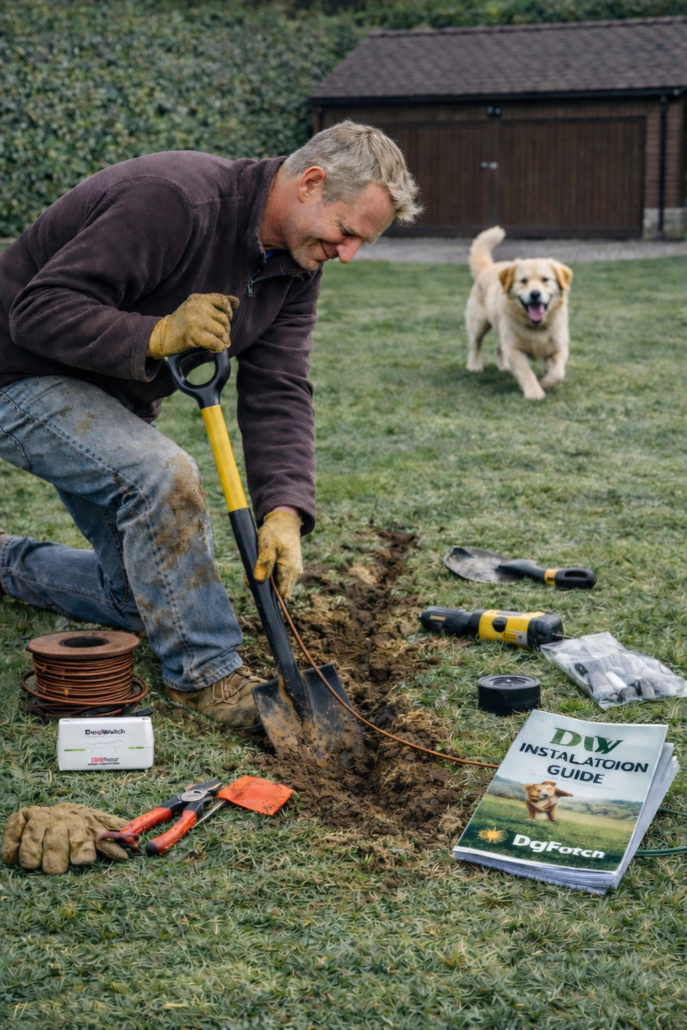
4. Lay the Boundary Wire
The boundary wire is then laid around the edge of the containment area. Depending on the surface, it can be buried, stapled neatly along a fence line, or installed through hedges and soft ground.
Training flags should be placed along the boundary to give your dog a clear visual guide during the training process.
5. Train Your Dog
Once the system is installed, the next step is training. This is essential. Your dog must learn where the new boundary is and understand how to respond to the warning signal.
Consistent, calm training is the key to success. We provide guidance to help you introduce the system properly and support your dog as they learn.
6. Test and Adjust
After installation, test the system carefully to make sure the signal is working consistently around the whole boundary. You may need to adjust settings such as boundary width or correction level to suit your dog and your layout.
Why Quality Matters with DIY Dog Fence Installation
Not all DIY dog fence systems are equal. Cheaper online kits can come with lighter cable, limited flexibility, shorter warranties, and less reliable performance.
DogFence DIY systems are designed to offer a more dependable and longer-lasting solution. Our professional-grade equipment helps reduce the common problems often seen with lower-quality DIY systems, such as:
• inconsistent signal strength
• poorly defined boundaries
• weak cable
• difficult setup and training
• limited support after purchase
We are also available to support you if you need help during installation or training.
DIY or Professional Installation?
A DIY dog fence can be a good option for the right property and the right customer. However, many people choose professional installation to save time, avoid guesswork, and ensure the system is set up correctly from the start.
Professional installation may be the better choice if:
• your property is large or complex
• you have driveways or hard surfaces to cross
• you want the boundary planned for you
• you would like installer-led dog training
• you want the system installed and ready in one visit
Get Help Choosing the Right Option
Not sure whether to install a dog fence yourself or choose our professional service?
Call 01628 476475 to discuss your property, or visit our Professional Dog Fence Installation page to see how our expert service works